



Straight hair can make a shag look cleaner, sharper, and a little more expensive-looking than wavy hair ever does.
It can also expose a bad cut in a hurry. Every layer shows. Every blunt corner shows. Every bit of over-thinning near the ends shows, too, and then the whole thing starts to look like someone took a pair of scissors to a long bob and hoped for the best.
That is why the best shag haircuts for straight hair are built with control, not chaos. You want movement, but you also want shape. You want piecey texture, but you do not want the ends to go wispy and weak. On straight strands, the difference between “cool lived-in shag” and “why does this feel unfinished?” comes down to where the weight sits, how high the layers start, and whether the fringe supports the rest of the cut.
A good shag on straight hair usually needs a little styling help, too. Not a lot. Just enough bend at the ends, a bit of root lift, and a cut that already knows where it wants to fall. That balance is what makes these 20 versions worth asking for.
1. Chin-Length Shag With Piecey Ends
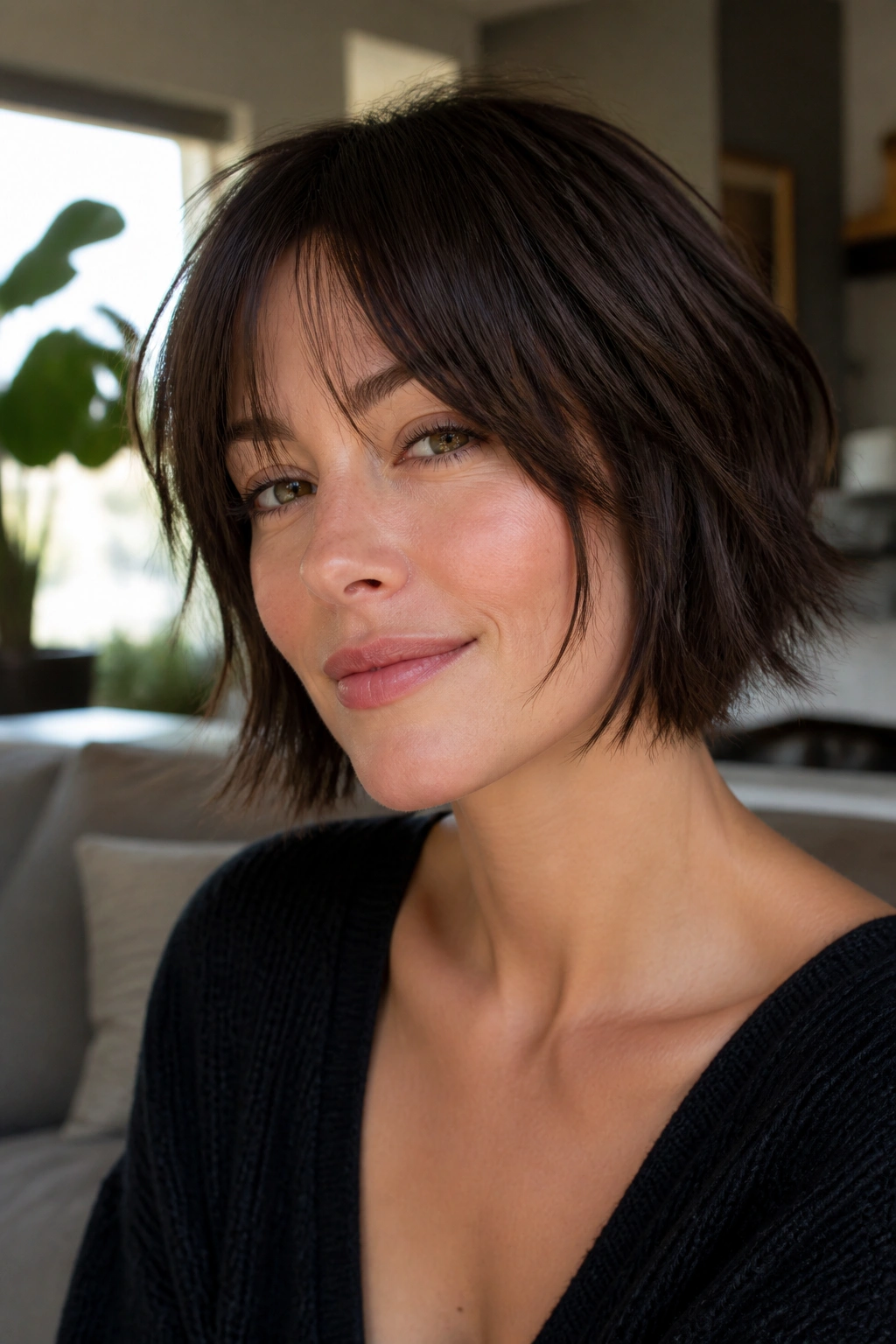
A chin-length shag is one of the smartest places to start if your straight hair tends to fall flat by noon. The shorter length gives the layers something to do, and the ends stay lively instead of dragging the whole cut down.
Why It Works on Straight Hair
The jawline length keeps the shape crisp, while the internal layers add air. On straight hair, that matters. Without that lift, short layers can look like a helmet. With it, the cut gets movement without losing the clean edge around the face.
What to Ask For
- A blunt-ish outline at the chin
- Soft, choppy layers through the crown
- Point-cut ends so the finish looks broken up, not hacked
- A fringe that can split naturally or sit slightly off-center
Best for: fine to medium straight hair that needs a little lift.
Style tip: Bend the ends outward with a 1-inch iron for 5 seconds per section. That tiny bend changes everything.
2. Long Shag With Curtain Bangs
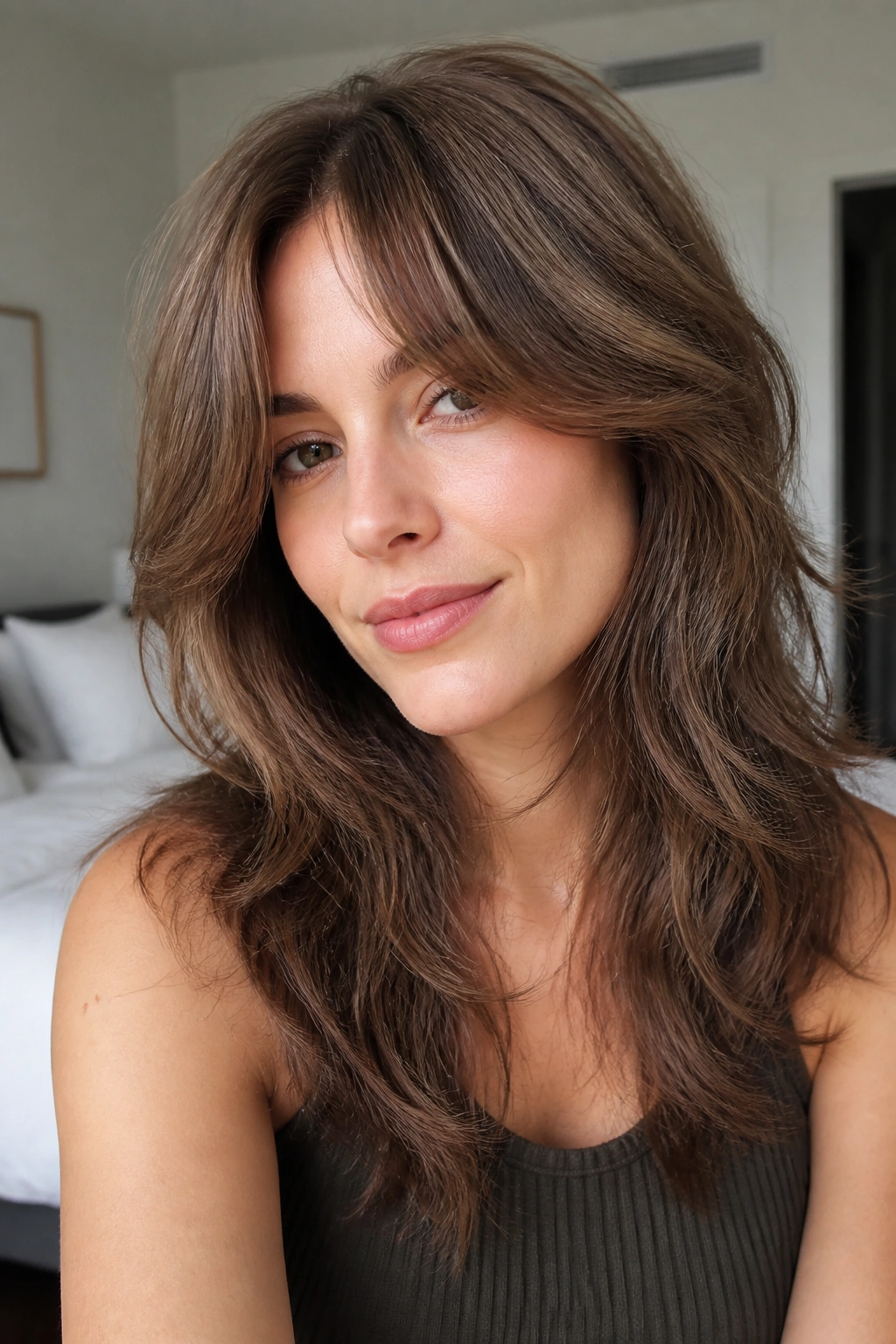
Why do curtain bangs work so well here? Because straight hair shows them off without much fuss. They frame the face, break up a long length, and keep the cut from feeling heavy from top to bottom.
The long shag is the version I reach for when someone wants movement but refuses to give up length. Fair enough. The layers usually start somewhere around the cheekbones or collarbone, which keeps the top from looking too chopped up. That matters on straight hair, where too many short layers can slide into stringy territory fast.
How to Wear It
The trick is to keep the curtain bangs soft and long enough to split. If they’re too short, they can look abrupt against straight strands. If they’re too heavy, the whole thing feels dated. A center part helps, but a slight off-center part can make the cut read more relaxed.
A quick blow-dry with a round brush around the fringe gives it that open, face-framing shape. Nothing fussy. Just enough curve to keep the layers from lying dead-straight.
3. Collarbone Shag With Feathered Layers
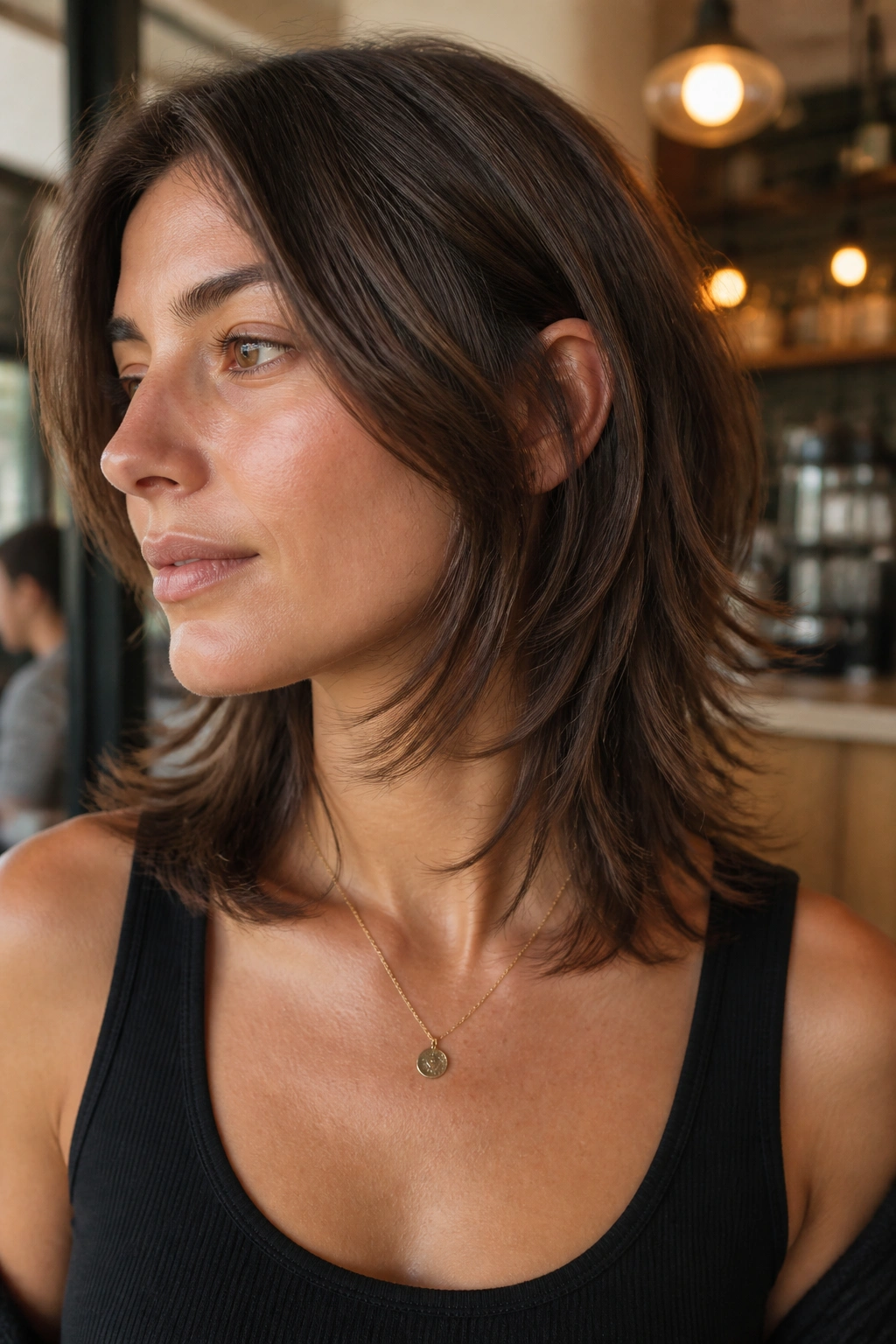
Picture this: you want texture, but you also want hair that still looks polished when it’s tucked behind one ear. That is where the collarbone shag lives.
The length is forgiving, and the feathering gives straight hair a softer edge. Instead of chunky steps, the layers blend into one another. That makes the cut feel lighter without turning it into feathers in the old-school sense. It is cleaner than that. More modern. Less “TV makeover,” more “I know what my hair is doing.”
The Shape Matters Here
- Collarbone length keeps weight at the ends
- Feathered mid-length layers stop the cut from collapsing
- A soft face frame keeps the front from looking boxy
- The outline stays long enough to gather into a clip or low bun
This is a strong choice if you want a shag that can move between casual and put-together without a full restyle. A light mist of texture spray through the mid-lengths is enough. Do not pile it on.
4. Sleek Shag With Micro Fringe
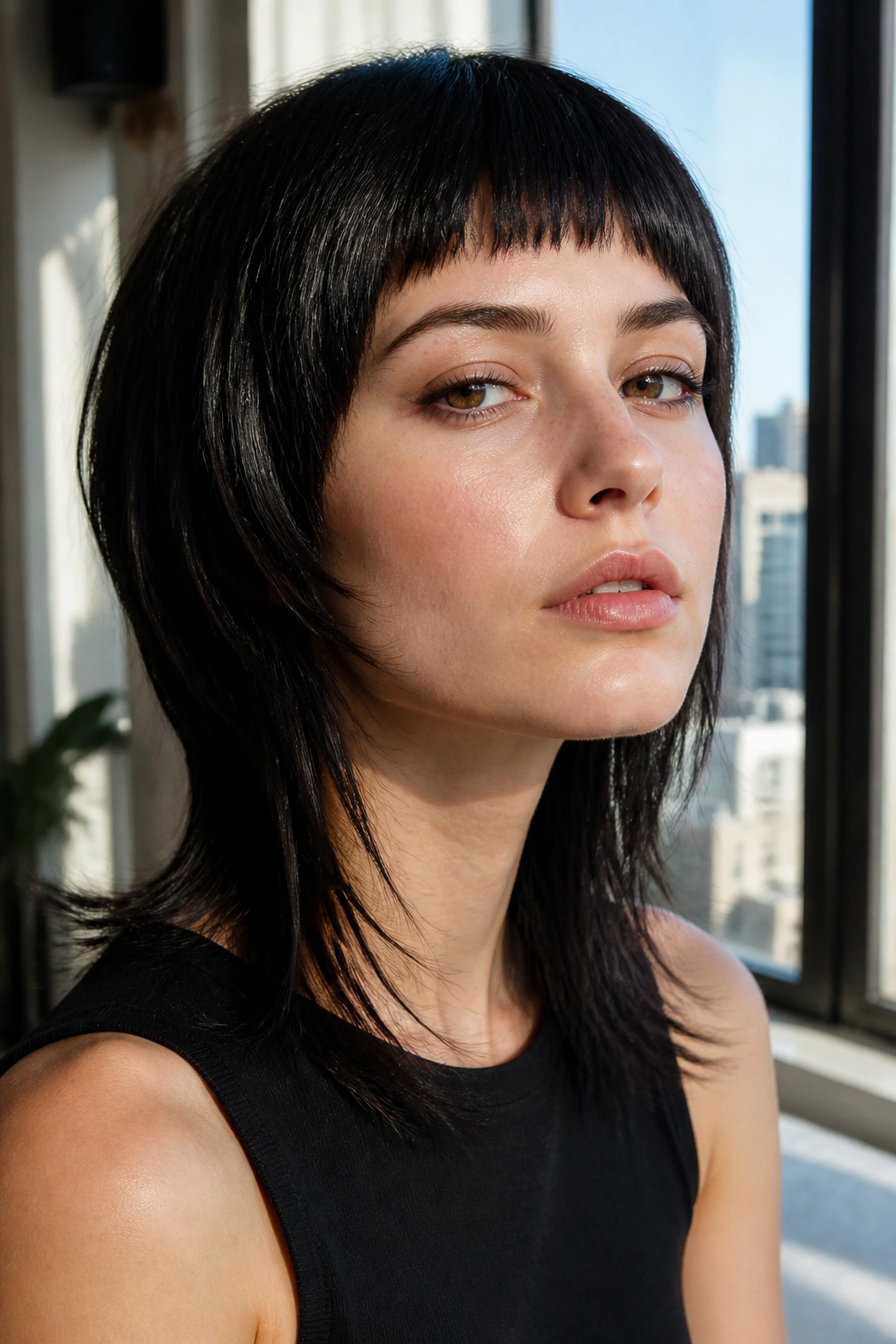
A micro fringe on straight hair is not subtle, and that is the point.
The whole cut becomes more graphic when the bangs sit high on the forehead and the layers stay sharp underneath. Straight hair helps here because it holds the line of the fringe without a lot of effort. You end up with a shag that feels deliberate, not sleepy, and that clean contrast can be excellent if your style leans a little bold.
The rest of the haircut should stay fairly tidy. I prefer short internal layers around the crown and cheekbones, then a longer perimeter that keeps the shape grounded. If everything is chopped too short, the cut loses its edge and starts to look airy in a bad way.
This version is best if you like a little attitude in your haircut and do not mind getting the bangs trimmed often. Micro fringe grows fast. Annoyingly fast.
A flat brush and a quick pass with a blow-dryer are enough on most days. The bangs should sit straight, not puffed.
5. Soft Wolf-Inspired Shag
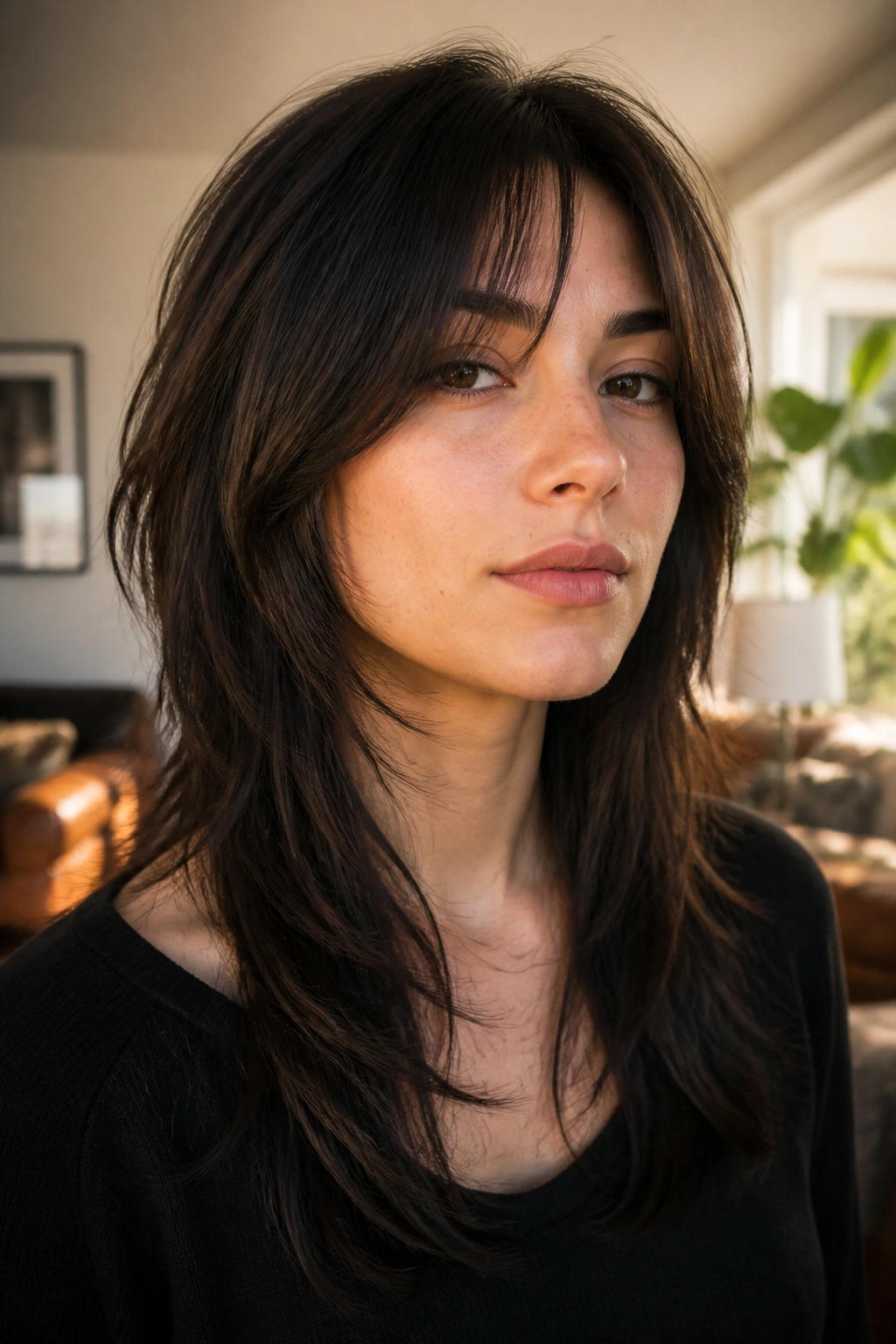
This is the one for people who like the wolf cut idea but do not want to go all the way there. A soft wolf-inspired shag keeps the crown a touch shorter, then leaves the length more intact through the back.
Unlike a full wolf cut, this version does not rely on heavy contrast. That matters on straight hair, because too much difference between the crown and the ends can make the haircut look disconnected. Here, the trick is restraint. You get the shape and the attitude, but the line still feels wearable.
Who It Suits Best
- Medium to thick straight hair
- People who want movement without short bangs
- Hair that lies flat at the crown
- Anyone who likes a bit of edge but still needs ponytail length
If you want the most flattering version, keep the face-framing pieces soft and long enough to skim the cheekbones. A dry texture spray at the roots will help the top stay off the scalp. The cut should move when you turn your head, but it should not look overworked.
6. Shoulder-Length Shag With Face-Framing Ribbons

A shoulder-length shag is one of those cuts that looks easy even when it is doing a lot of work.
The ribbons around the face are what make it special. They bend away from the cheeks and jaw, which is useful if straight hair tends to fall in one flat curtain. Those front pieces also keep the rest of the layers from taking over. The haircut stays light, but not thin. There’s a difference.
What I like most is how adaptable it is. You can wear it with a middle part, then switch to a soft side part when you want more lift on one side. You can air-dry it if you do not mind a straighter finish, or rough-dry the roots and flick the ends with a round brush if you want more shape.
Ask for a shoulder-length baseline with long, sliding face-framing layers. If the front is cut too short, the ribbons can feel harsh. If they’re too long, the whole point of the cut disappears.
7. Razor-Cut Shag for Fine Straight Hair

Can fine straight hair handle a shag? Yes — if the cut is done with a light hand.
A razor-cut shag can work very well here because it removes bulk without making the outline look heavy. The blade creates softer edges than scissors alone, so the layers blend in a way that suits hair that already lies close to the head. The danger is overdoing it. Too much razor work and the ends start to fray. That is not texture. That is damage pretending to be a haircut.
How to Get the Most From It
Ask for internal layering, not a forest of tiny pieces. The crown should lift a little, but the ends need enough weight to stay visible. Fine hair needs structure more than it needs aggression.
A lightweight volumizing mousse at the roots helps this cut more than thick creams do. Heat the roots with a dryer, then let the ends fall straight. That contrast gives the haircut its shape.
What to Watch For
- Avoid over-thinning the bottom 2 inches
- Keep the fringe soft, not chopped blunt
- Use a nozzle when drying
- Trim every 6 to 8 weeks if the ends fray quickly
8. Blunt-Perimeter Shag

A blunt-perimeter shag sounds contradictory, and that is exactly why it works.
The perimeter gives the haircut a strong base, while the interior layers create movement underneath. On straight hair, that strong outline is gold. It stops the haircut from looking stringy and gives the eye something solid to land on. Without it, some shags turn wispy very quickly.
I like this version for people who have been burned by too much layering before. You get the shag feel, but the ends still look deliberate. There is also a nice styling shortcut here: if the day gets away from you, the cut still has a shape. It does not fall apart as fast.
The best way to wear it is with a slight bend through the front and a straighter finish in the back. That contrast keeps it modern. If everything is curled, it can start to look over-styled. If everything is poker straight, the layers disappear.
9. Midi Shag With Bottleneck Bangs
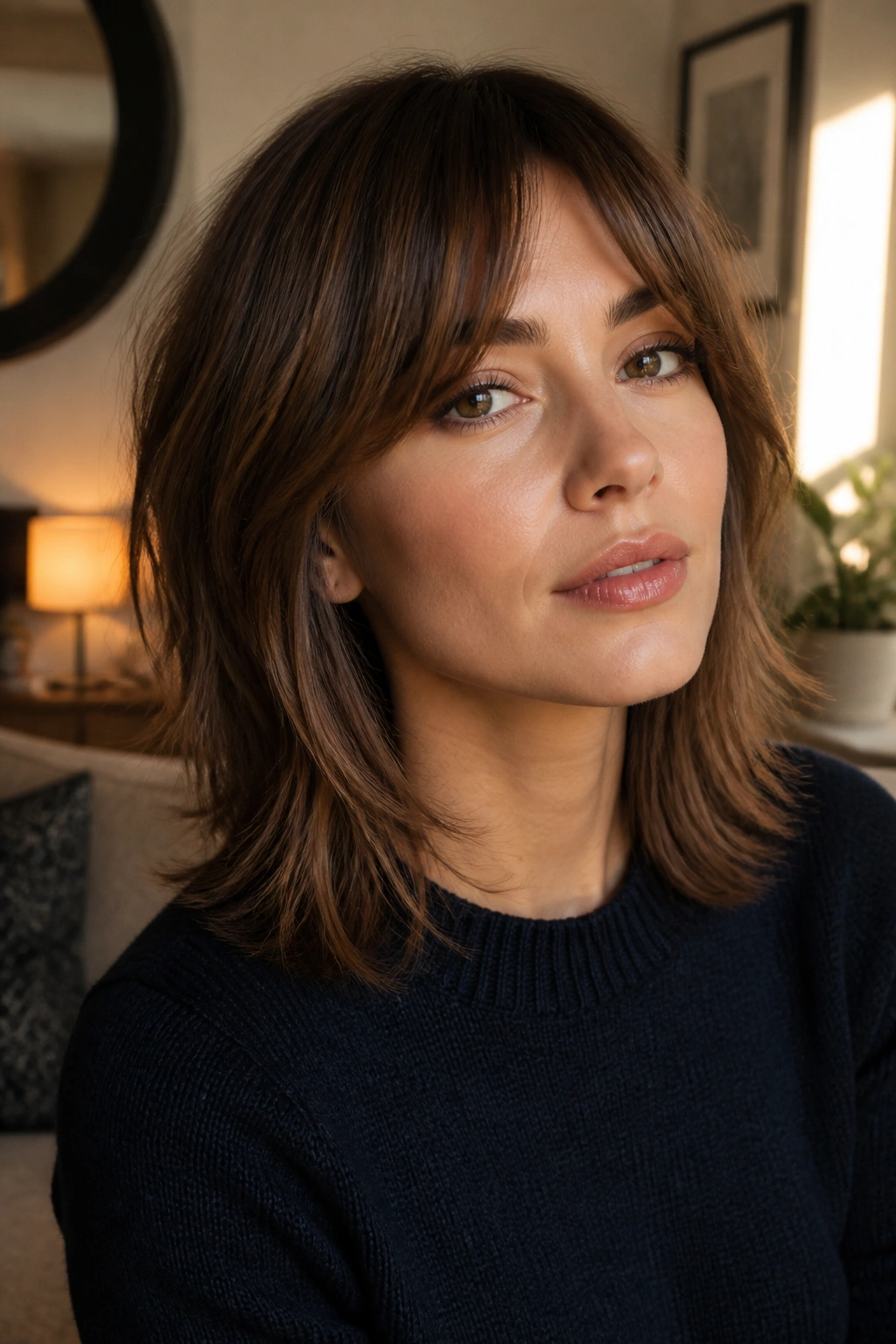
Bottleneck bangs are a quiet little trick. They start narrower at the center, then open slightly near the temples, which makes the forehead look softer without swallowing the face.
On a midi shag, that fringe adds shape exactly where straight hair often needs it most. The rest of the cut usually sits somewhere between the jaw and collarbone, with layers that move but don’t jump out at you. That balance matters. A shag on straight hair does not need to announce every layer. It just needs to keep the silhouette from going flat.
What sells this cut is the way it frames the eyes and cheekbones without making the front too heavy. It works especially well if you want something softer than a blunt bang but more interesting than long face-framing pieces alone.
Dry the bangs first. Seriously. If they dry in the wrong direction, they can split in a stubborn way, and then the rest of the haircut has to fight that shape all day.
10. Airy Shag With Invisible Layers
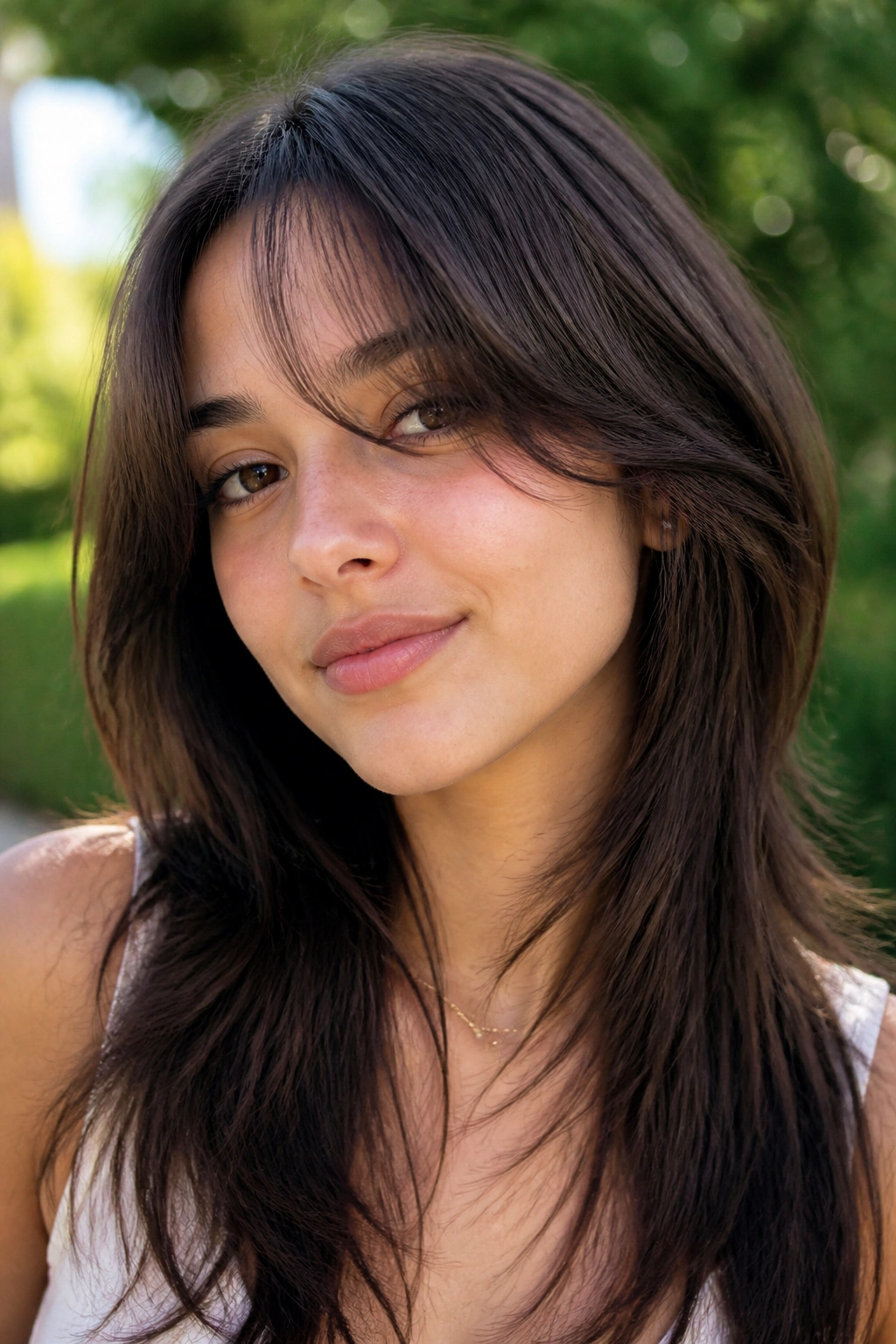
Invisible layers are exactly what they sound like: shaping that you feel more than you see.
That is the appeal for straight hair. The haircut keeps its clean outline, but the inside is carved enough to move. Nothing looks choppy from the outside. Nothing screams “layered haircut” from across the room. You just get a softer fall and a little swing when you walk.
This version is especially good if you like straight hair that still feels light around the face and crown. The layers should be placed with care — too high, and the cut loses density. Too low, and the haircut starts to feel like a long one-length style with a few random snips hidden inside.
I’d ask for invisible layers if you want something low-drama. It is a quieter shag. Less obvious, more useful.
Keep the styling simple: a smoothing cream through the mid-lengths, a round brush at the ends, and a fast blast of cool air at the crown. That’s enough.
11. Razored Shag Bob
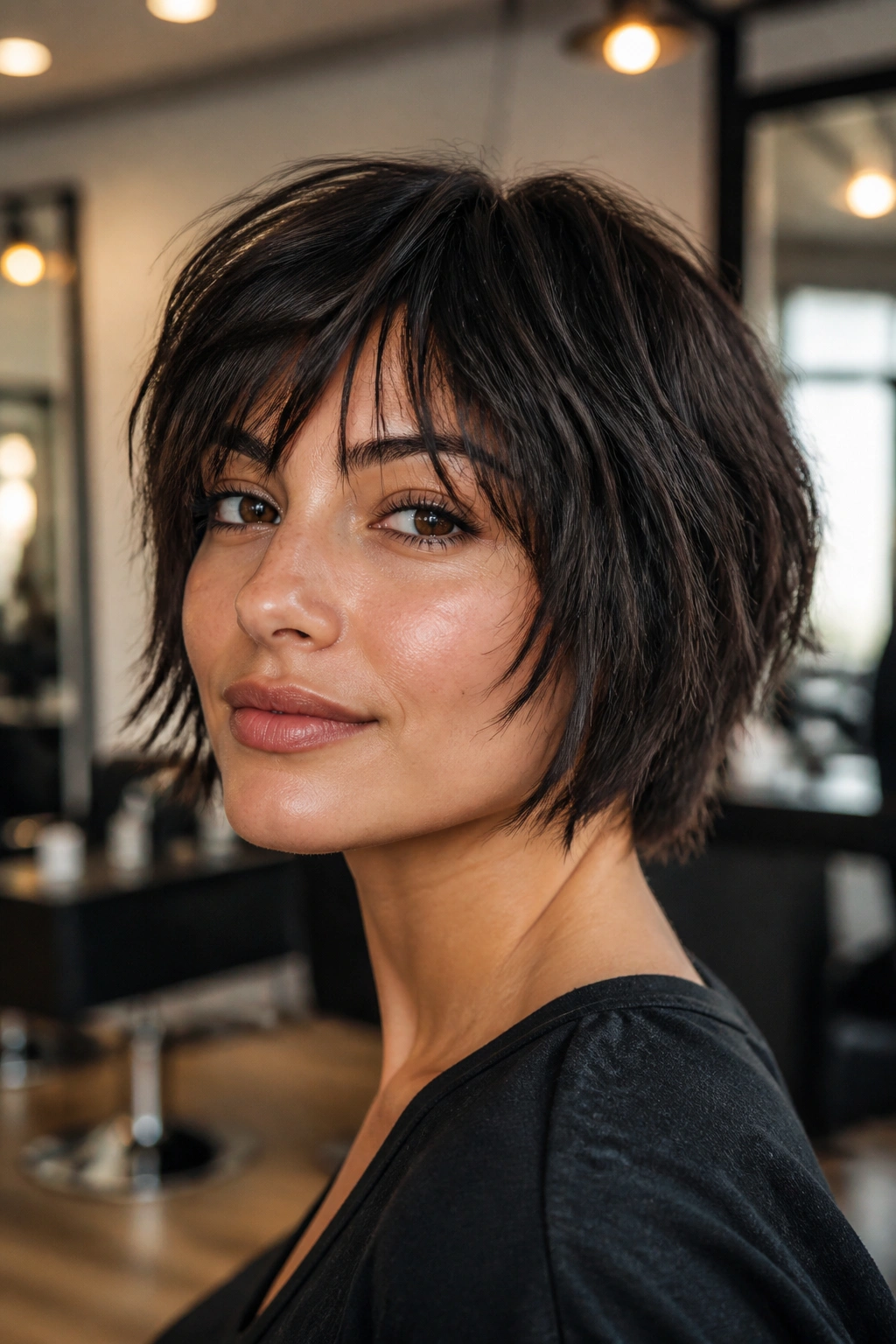
The razored shag bob is a good choice when you want a short cut that still has personality.
It sits close to the jaw or just below it, so the line stays strong. Then the razor work softens the surface and creates movement through the top and sides. On straight hair, that contrast is what keeps the bob from looking stiff. You get the neatness of a bob and the looseness of a shag. Not a bad combination.
Why It Feels Different
- It opens the neck and jawline
- It keeps the shape compact, not bulky
- It works well with side parts and center parts
- It can look polished or rough-dried, depending on your mood
This cut suits straight hair that holds its shape but needs a little break-up at the ends. If your hair is very thick, the razored finish helps reduce weight. If your hair is fine, just ask for a softer version so the perimeter does not look too broken.
A small round brush and a dab of paste at the ends can make the texture show up without making the bob stiff.
12. Long Layered Shag With a Side Part
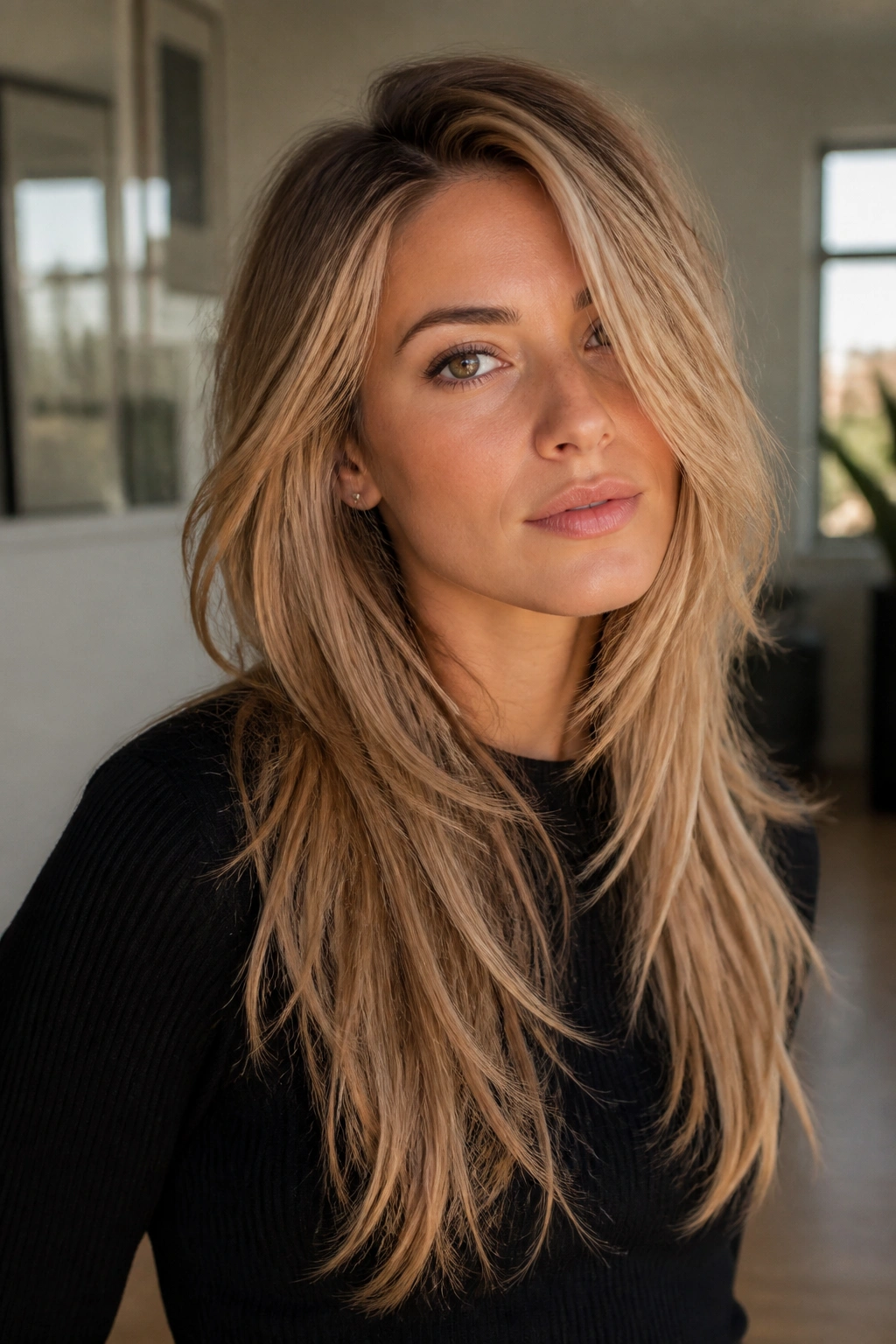
Why does a side part change a shag so much? Because it gives the layers a place to fall.
Straight hair can sometimes lie too evenly across the head, which flattens a long shag. A side part breaks that symmetry and gives the cut instant lift near the crown. It also helps long layers show up more clearly, especially if the face frame is heavier on one side than the other.
The best version of this cut keeps the back long and the front soft. That way, the side part creates some drama without turning the haircut into a severe asymmetrical shape. If you’ve ever wanted a shag that feels a little more grown-up and a little less festival poster, this is it.
How to Wear It
- Blow-dry the roots against the part for lift
- Tuck the heavier side behind the ear for shape
- Use a flat iron only on the front pieces if they need a bend
- Keep the layers long enough to move, not chatter
The cut reads strongest when the hair swings as a unit, not as separate chopped pieces.
13. Outgrown Shag With a Soft Mullet Shape
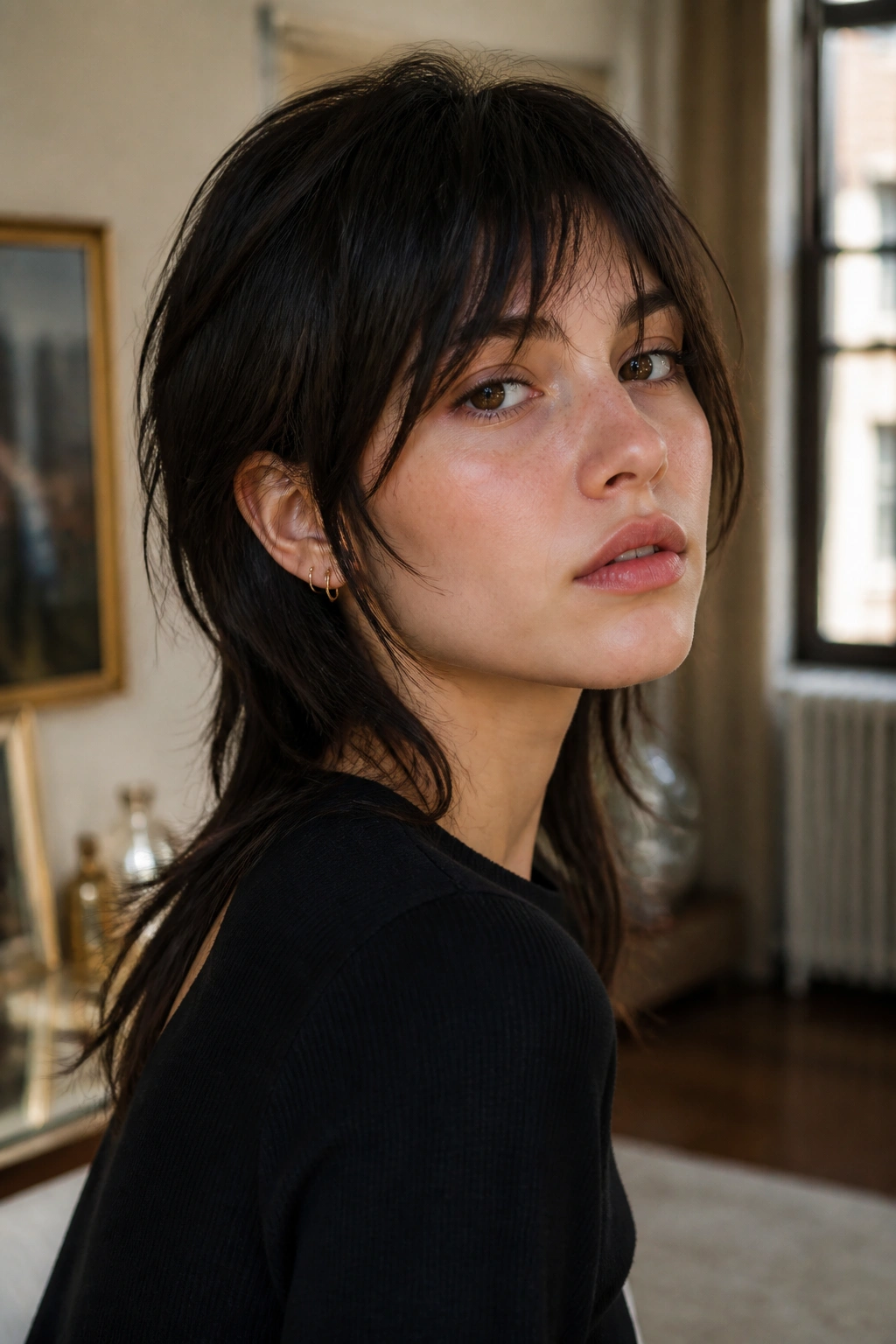
Some people hear “mullet” and picture something loud. This is not that.
A soft mullet-shaped shag is about longer length in the back, shorter texture up top, and a face frame that keeps the whole thing from feeling too retro. Straight hair can pull this off because the cleaner surface shows the shape clearly. You see the difference between the crown and the nape without needing curl or wave to explain it.
The outgrown version is especially appealing if you hate cuts that look too fresh and perfect. It has a lived-in feel built in. The trick is to keep the transition gentle. If the crown is too short and the back too long, the haircut can feel theatrical. If the shift is gradual, it looks cool and easy.
This is one of those styles that gets better after a few weeks, which is rare and worth mentioning. The layers soften, the fringe settles, and the whole cut starts to feel more natural.
14. Classic 70s Shag Reworked for Straight Hair
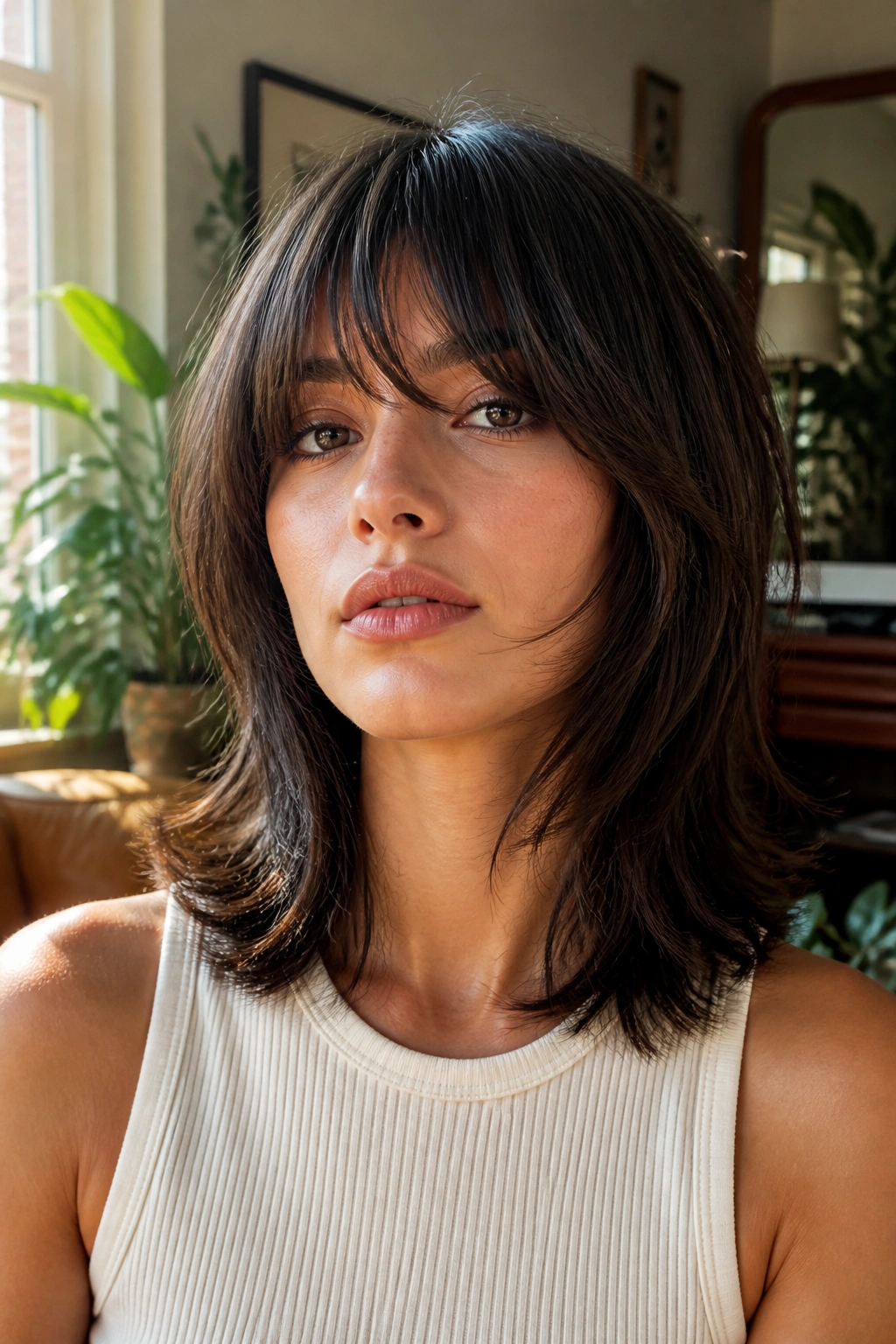
The original shag had a certain swagger, and straight hair gives it a different edge.
Instead of relying on bend and frizz, this version leans on clean layering, cheekbone-grazing fringe, and a little flip through the ends. The result feels more precise than the old reference, but the spirit is still there. You get volume at the crown, movement around the face, and enough length to make the haircut read as shag rather than just layered hair.
What I like here is the honesty of it. Straight hair shows the architecture. There is nowhere to hide, which is exactly why a well-cut version feels so satisfying. The bangs should be soft, not choppy to the point of distraction. The top layers should lift, not puff. And the ends need enough weight to curve rather than fly apart.
A round brush is your friend with this one. So is a little patience.
15. Polished Office-Friendly Shag

Not every shag needs to look like you rolled out of bed and never checked a mirror.
A polished office-friendly shag keeps the layers controlled and the edges neat. The movement is still there, but it reads as intentional and tidy. On straight hair, that can be a huge win if you want a haircut with personality that still plays nicely with a blazer, a button-down, or a simple black sweater.
This version usually works best at shoulder length or just below, with soft layers that begin low enough to preserve density. The face frame should be subtle. The fringe, if you wear one, should blend instead of shouting. You want enough motion to keep the cut from feeling stiff, but not so much that it looks undone before noon.
Best of all, this style is easy to fake into neatness. A quick pass with a flat brush and a smoothing serum at the ends is often enough. It does not need to be perfect. It just needs to look considered.
16. Heavy Fringe Shag

A heavy fringe changes the whole mood of a straight-hair shag.
Instead of the softer curtain-bang feel, you get a fuller bang line that sits right at the forehead and gives the haircut weight up top. That can be excellent if your face needs more frame or if your hair tends to go limp at the roots. The fringe creates a focal point. The rest of the shag supports it with layers that keep the haircut from feeling too boxy.
The catch is maintenance. Heavy fringe grows into your eyes faster than people expect, and on straight hair the line stays obvious. So if you choose this shape, commit to regular trimming or be ready to pin it back on the off days.
I like this cut on straight hair with medium density. Fine hair can wear it too, but the bangs should be kept soft enough not to look sparse at the sides. Thick straight hair? That’s where it really shines, because the fringe can hold a fuller shape without collapsing.
17. Textured Lob Shag
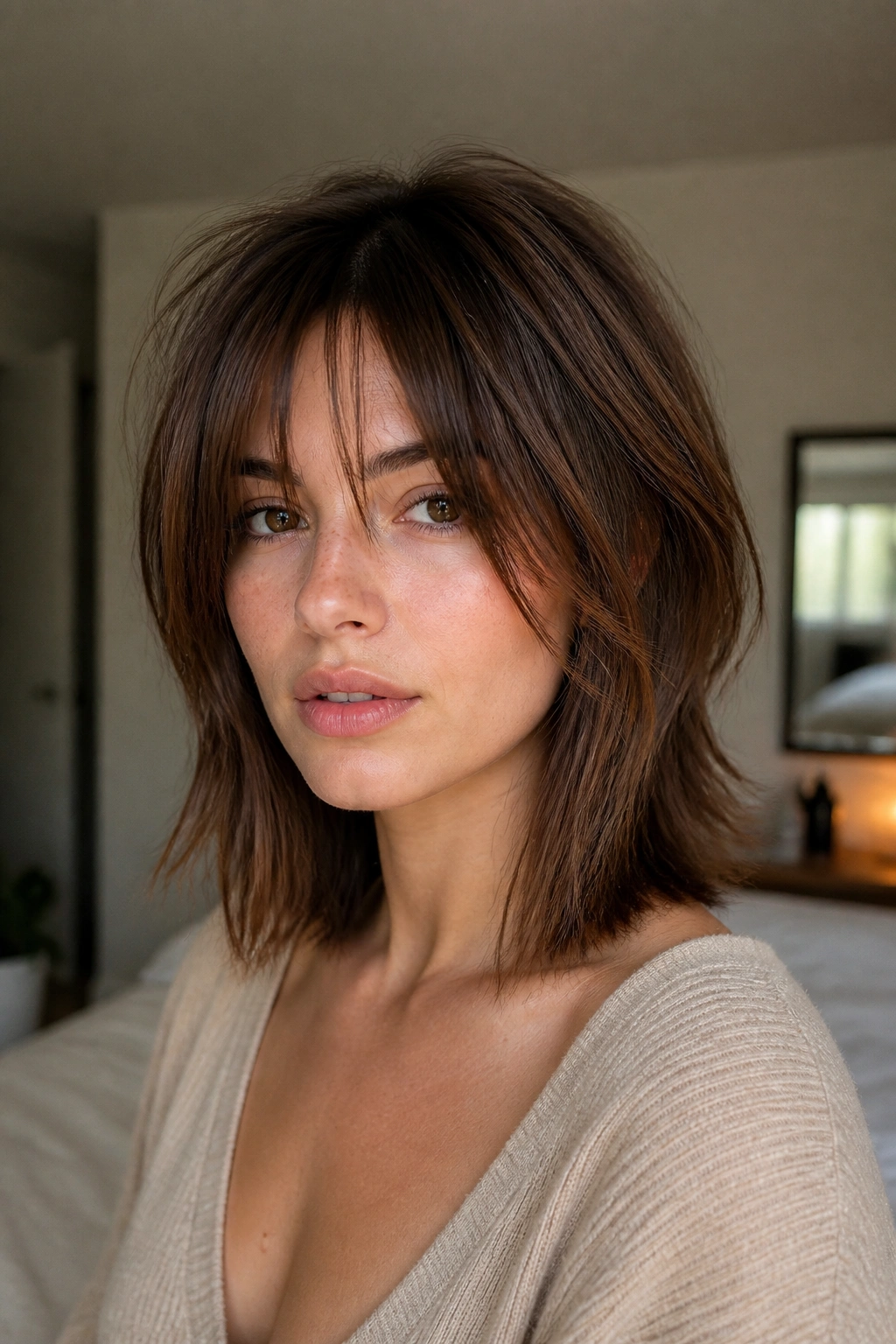
Can a lob be shaggy without losing its neat shape? Absolutely.
This is the version for people who want a collarbone-length cut with texture that does not turn messy. The lob gives you a reliable outline, and the shag layers break up the body so it never feels heavy. On straight hair, that combination is useful because the cut still looks clean even when you do almost nothing to it.
What Makes It Different
The layers are usually longer than in a classic shag, which keeps the ends from looking thinned out. That is the key. If the haircut gets too choppy, it stops reading as a lob and starts reading as a stack of pieces. Not the same thing.
How to Style It
A center part gives it a calm, modern feel. A side part makes the layers move more. You can also tuck one side behind the ear and leave the other loose — that simple move gives the haircut shape in about five seconds. If you want extra body, flip the head upside down and dry the roots for 30 seconds before smoothing the top back down.
It’s one of the easiest shag ideas to live with.
18. Short Crop Shag
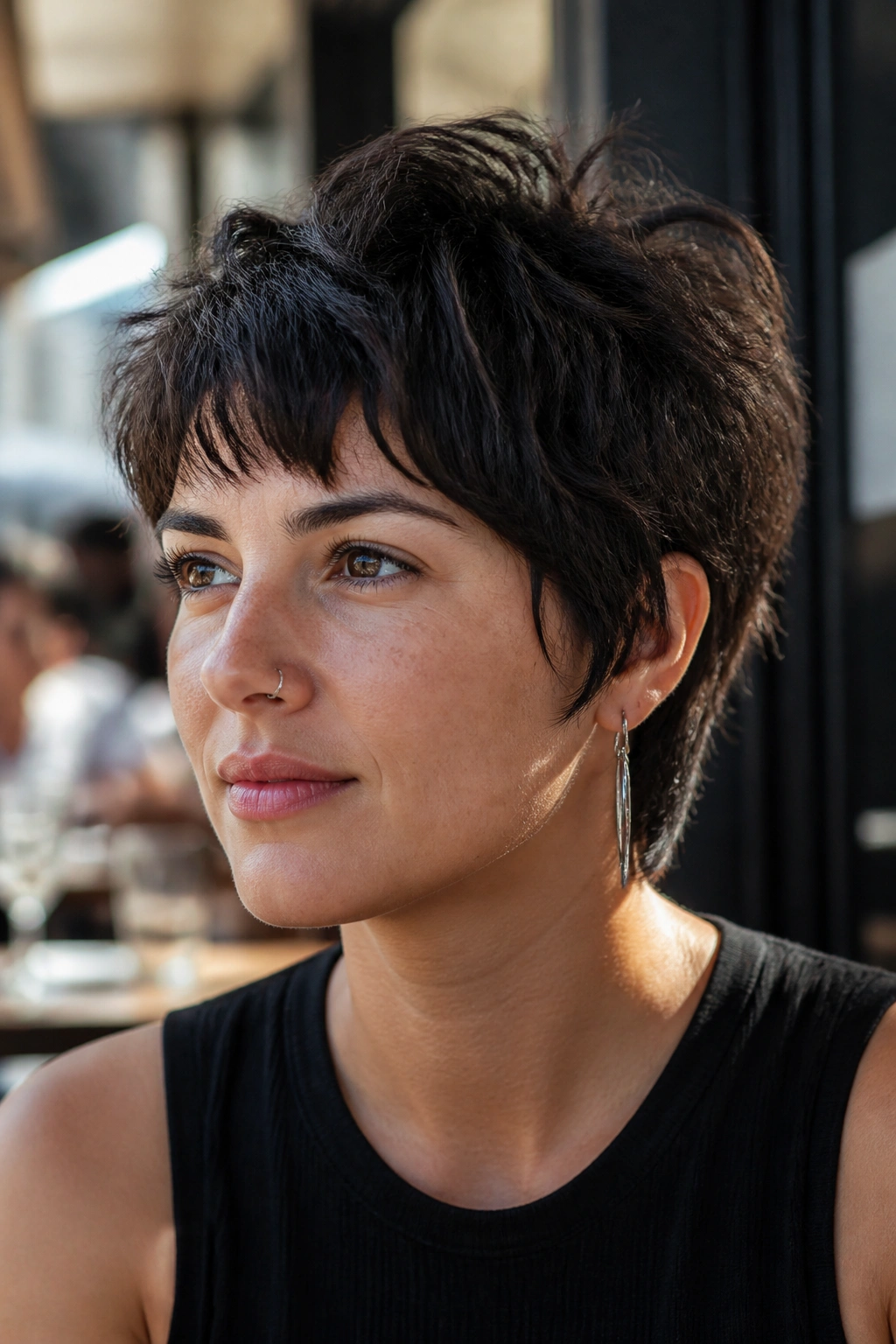
Short shag cuts on straight hair need confidence. There’s no hiding behind length.
The upside is that they look sharp fast. A short crop shag can open the face, show off the neck, and make straight hair feel lighter without going full pixie. The layers are the whole story here, so placement matters more than anything. You want movement at the crown, softness around the ears, and enough edge to keep the shape interesting.
This cut is strongest when the sides are kept close and the top has a little more texture. That creates a nice push-pull effect. Too much volume on top and the shape can feel puffy. Too little and it just becomes a short bob with confusion.
Good Signs to Look For
- A clean neckline
- Soft texture around the temples
- Some lift at the crown, but not a giant mound
- Fringe that blends into the top instead of sitting like a separate piece
This is not the shy option. It’s the one that makes a statement without needing long hair to do it.
19. Face-Opening Shag for Round Faces

A shag can be very flattering on a round face if the layers are placed to lengthen, not widen.
That means keeping the volume a little lower on the sides and a little higher at the crown. Straight hair makes this even more important, because the shape sits plainly on the head. If the front pieces stop at the widest part of the cheek, the cut can feel boxy. If they drop past the cheekbones and skim toward the jaw, the whole face looks longer.
I’d lean toward long curtain pieces, collarbone length, and soft layering through the top. A center part can work, but a slight off-center part often gives the face a stronger vertical line. The whole cut should feel open around the face, not crowded.
The best version avoids hard edges around the cheeks. That one detail matters more than people think. Clean, slim face-framing pieces make the haircut feel lighter and more balanced. Heavy side pieces do the opposite.
20. Low-Maintenance Wash-and-Go Shag
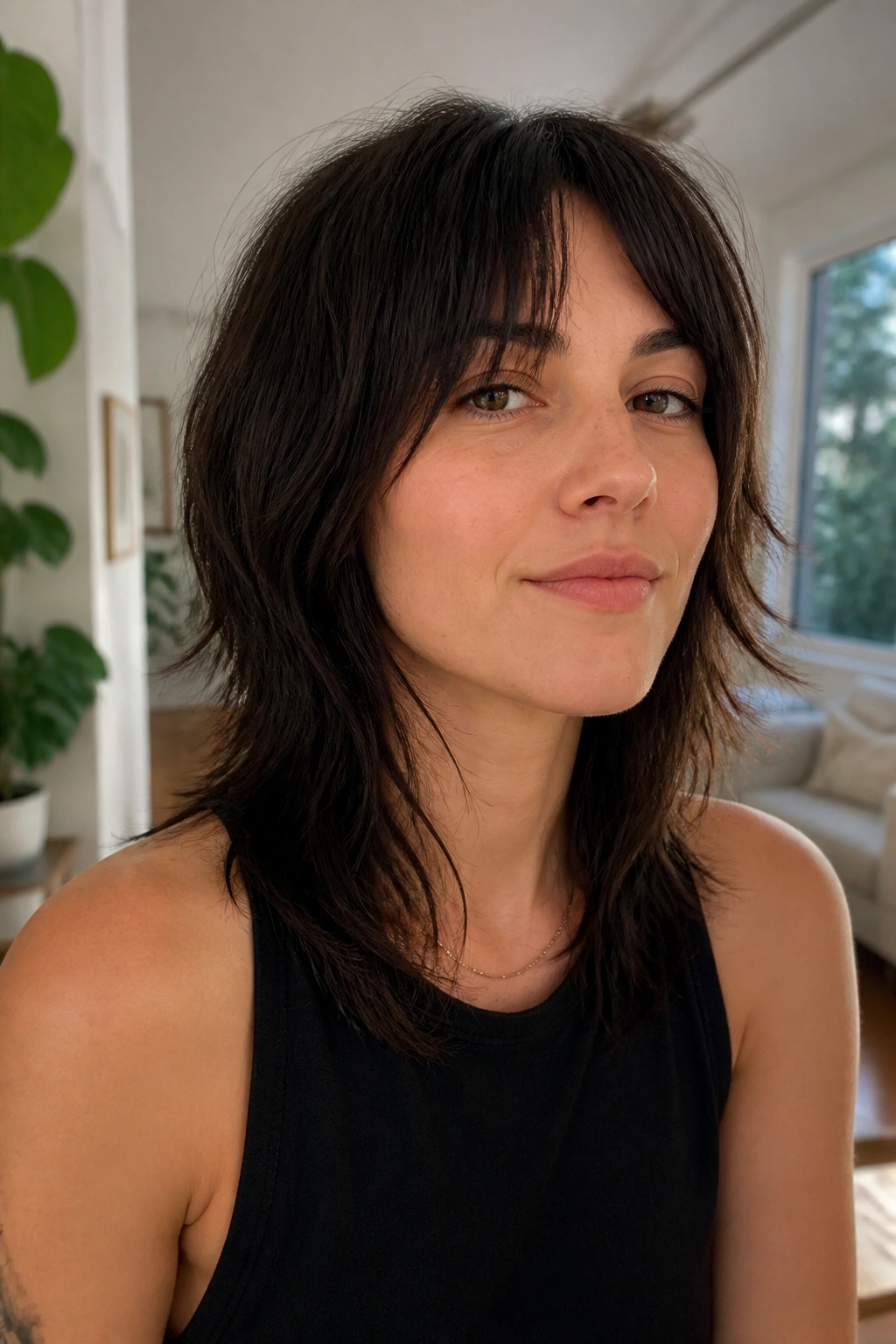
This is the shag for people who want the vibe without the morning routine.
A wash-and-go shag on straight hair still needs a good cut, because straight strands will not fake movement for you. But once the shape is right, it can fall into place with very little effort. The layers should be soft, the ends should keep enough weight to stay visible, and the fringe should be easy to separate with your fingers. If the haircut relies on daily hot tools to make sense, it is not really low-maintenance. It is high-maintenance with good marketing.
What makes this version work is restraint. The best wash-and-go shags are not overloaded with short layers. They have enough break-up to avoid flatness, but not so much that the hair needs rescue every morning. A little leave-in, a quick air-dry, maybe a small bend at the front if you feel like it. That’s the rhythm.
And honestly, that is the whole appeal of a good straight-hair shag: it should look like it has personality even when you have not spent twenty minutes negotiating with a round brush.
