



Pixie haircuts for fall have to do two jobs at once. They need to sit cleanly under a coat collar, and they need to keep some shape when the air gets dry and the wind starts poking at every loose strand.
That is why the best short cuts for cooler weather are rarely the most severe ones. A little length at the crown, a smart fringe, or a soft taper at the nape can make the difference between a haircut that looks intentional and one that just got flattened by a scarf. I’ve always liked pixies for that reason: they’re small, but they’re not fussy if the cut is built well.
The good ones also grow out in a civilized way. That matters more than people admit. A pixie that turns shaggy in ten days is a bad investment, no matter how nice it looks on day one.
1. Classic Cropped Pixie Haircut
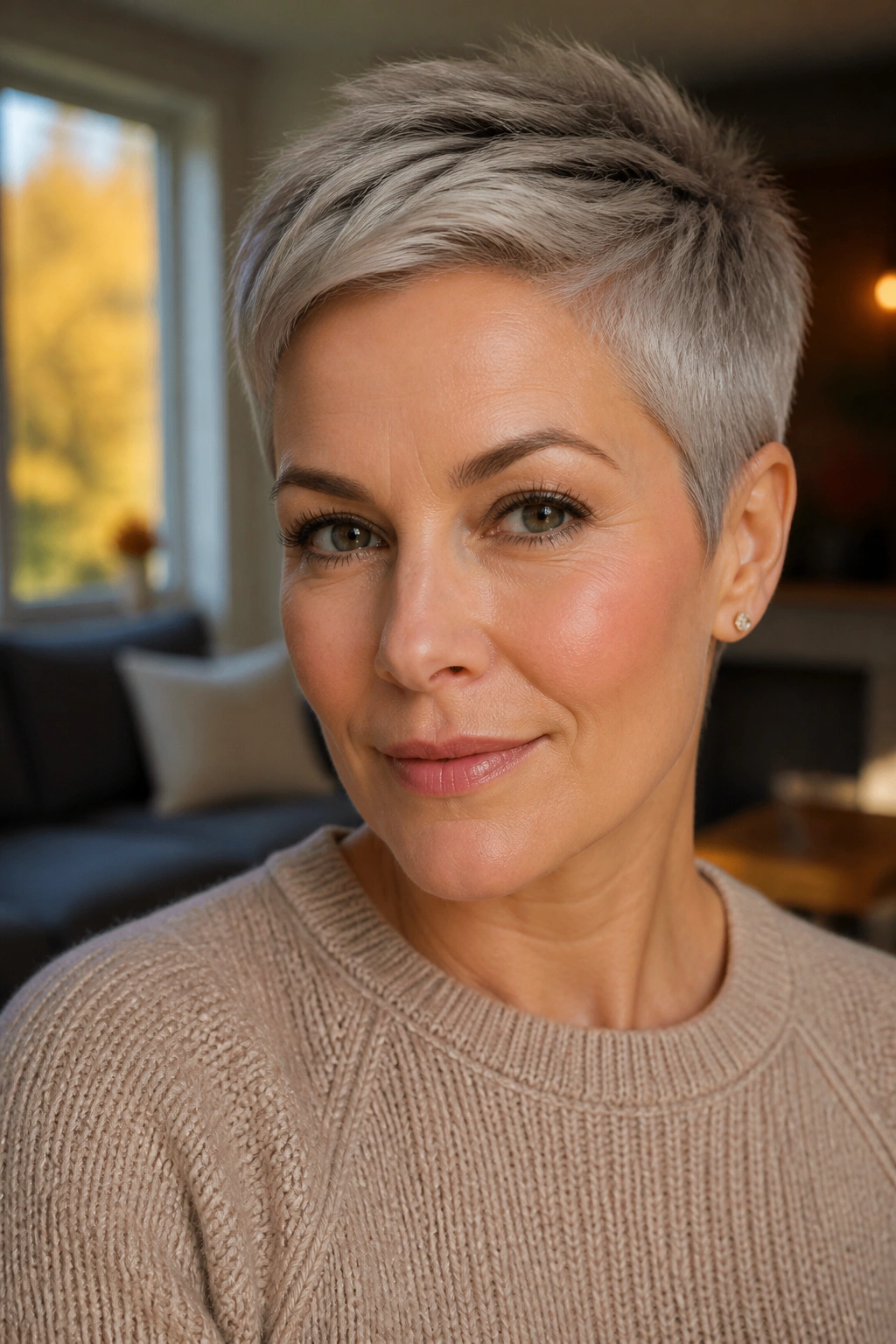
A classic cropped pixie is the cut I reach for when I want the shape to do the talking. It sits close to the head, keeps the sides neat, and leaves just enough lift on top to avoid that flat, helmet-like look that short hair can get after a long day under a hat.
Why It Works in Cooler Weather
The clean outline is the point. The back stays short enough to clear collars, while the top gives you room to style with a pea-sized dab of pomade or paste. I like this cut on straight and softly wavy hair because it shows the shape without asking for a lot of coaxing.
A good version usually has 1.5 to 2.5 inches on top and tighter sides that are softened with scissors rather than clipped to the skin. If your hairline at the nape gets fluffy fast, ask for a neat taper there. It makes the whole cut behave.
- Best for: straight, fine, or medium hair
- Styling time: about 3 minutes
- Trim schedule: every 4 to 5 weeks
- Product: matte paste for separation, light cream for shine
Pro tip: Ask your stylist to keep the crown slightly longer than the front. That tiny bit of extra length keeps the cut from looking too severe once sweater season starts.
2. Side-Swept Pixie Haircut

This is the pixie I recommend when someone wants short hair but still wants a little drama around the face. The long, side-swept fringe gives you movement, and it hides the weird little cowlicks that love to show up when the air is dry.
The beauty of this cut is how little it asks from you on busy mornings. Blow-dry the fringe in the direction you want it to sit, then bend the ends with a small round brush or your fingers. A light cream or soft wax is enough; heavy product will make the front collapse, and that is a shame because the front is the whole point here.
I also like this cut with glasses. It gives the face a clean frame instead of fighting with the frames.
3. Choppy Textured Pixie
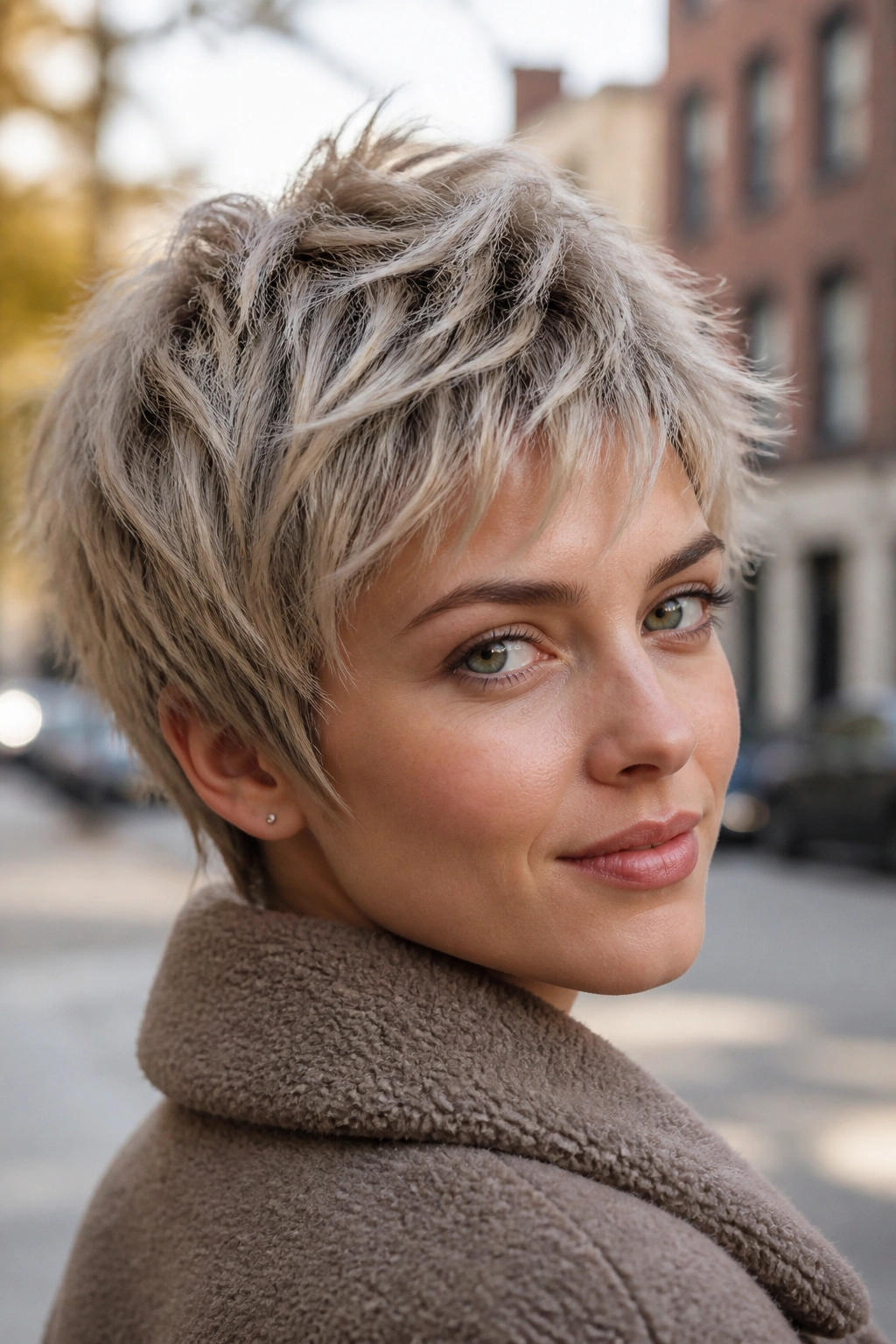
Why does this cut keep working when everything else starts feeling stale? Because the texture gives your hair somewhere to go. Instead of one solid shape, you get tiny broken layers that catch light, move with your head, and refuse to look too precious.
What Makes It Different
A choppy pixie usually has point-cut ends and a slightly messier top, often around 2 to 3 inches long. That extra separation is useful when dry indoor air makes hair feel a little brittle. The cut never needs to look polished to look good.
How to Style It
Use sea salt spray on damp hair, rough-dry with your fingers, then pinch a small bit of matte paste through the ends. Don’t rake everything back at once. Work in little pieces, or the texture turns into a puff.
- Best for: fine hair that needs lift
- Good with: natural wave
- Avoid: thick cream that blurs the texture
- Trim schedule: every 5 to 6 weeks
One of the nicest things about this cut is that it forgives a bad hair day. Not a miracle. Just forgiving.
4. Layered Pixie for Thick Hair
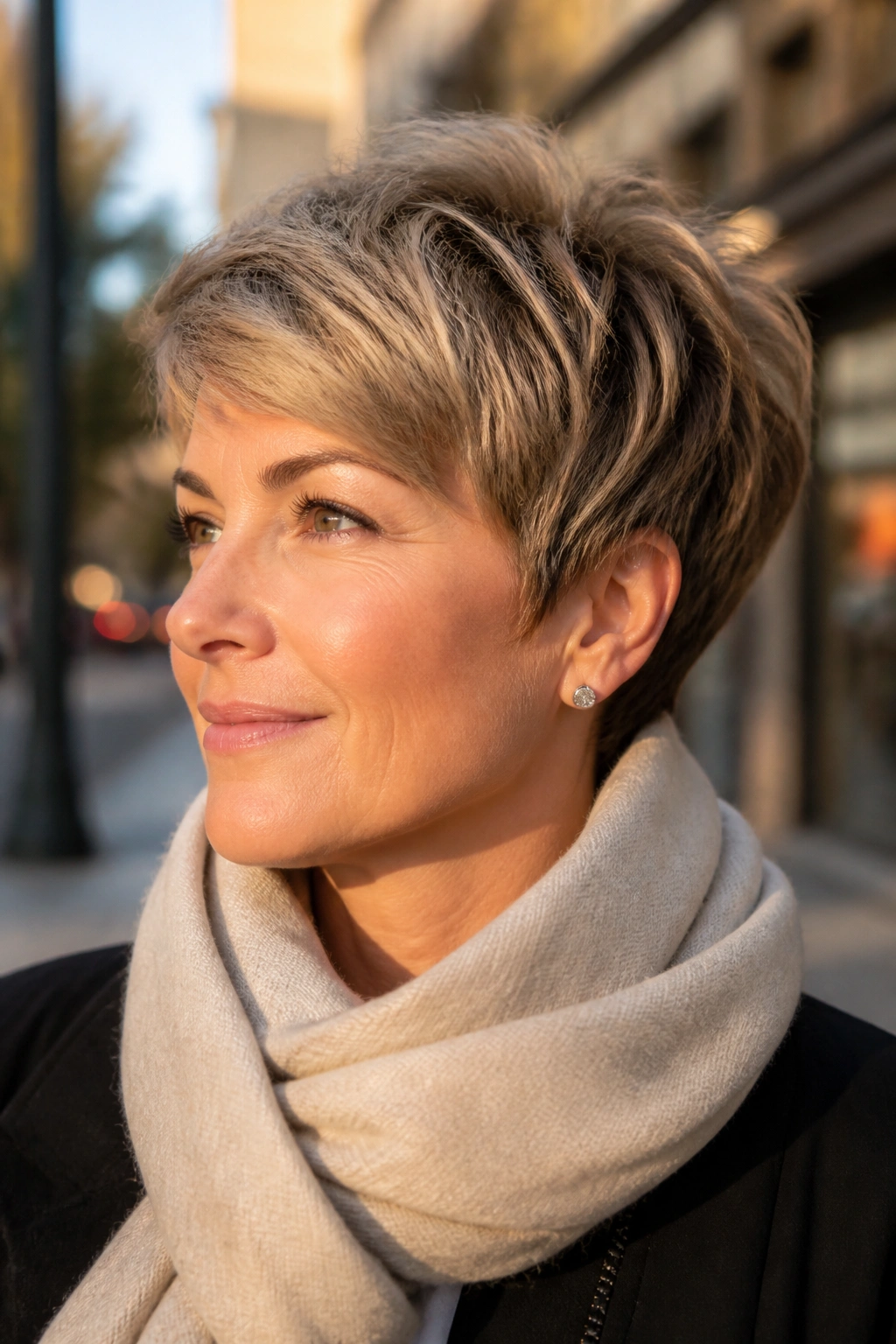
If your hair springs back the second the blow dryer leaves it, you need more than a simple crop. You need a layered pixie that removes bulk in the right places, especially through the crown and behind the ears.
The trick is not to thin everything indiscriminately. That usually leaves thick hair looking frayed at the ends and puffy at the top, which is the opposite of what you want. A smarter cut keeps weight where it helps the shape and takes volume out where it makes the head look wide.
Ask For This at the Salon
- Internal layers, not just surface thinning
- Slight graduation at the nape
- 3 to 4 inches through the top
- Softening around the ears so the silhouette doesn’t flare out
I like this pixie because it wears well with coats and scarves. Thick hair can get bulky fast. This cut cuts that problem off before it starts.
5. Feathered Pixie
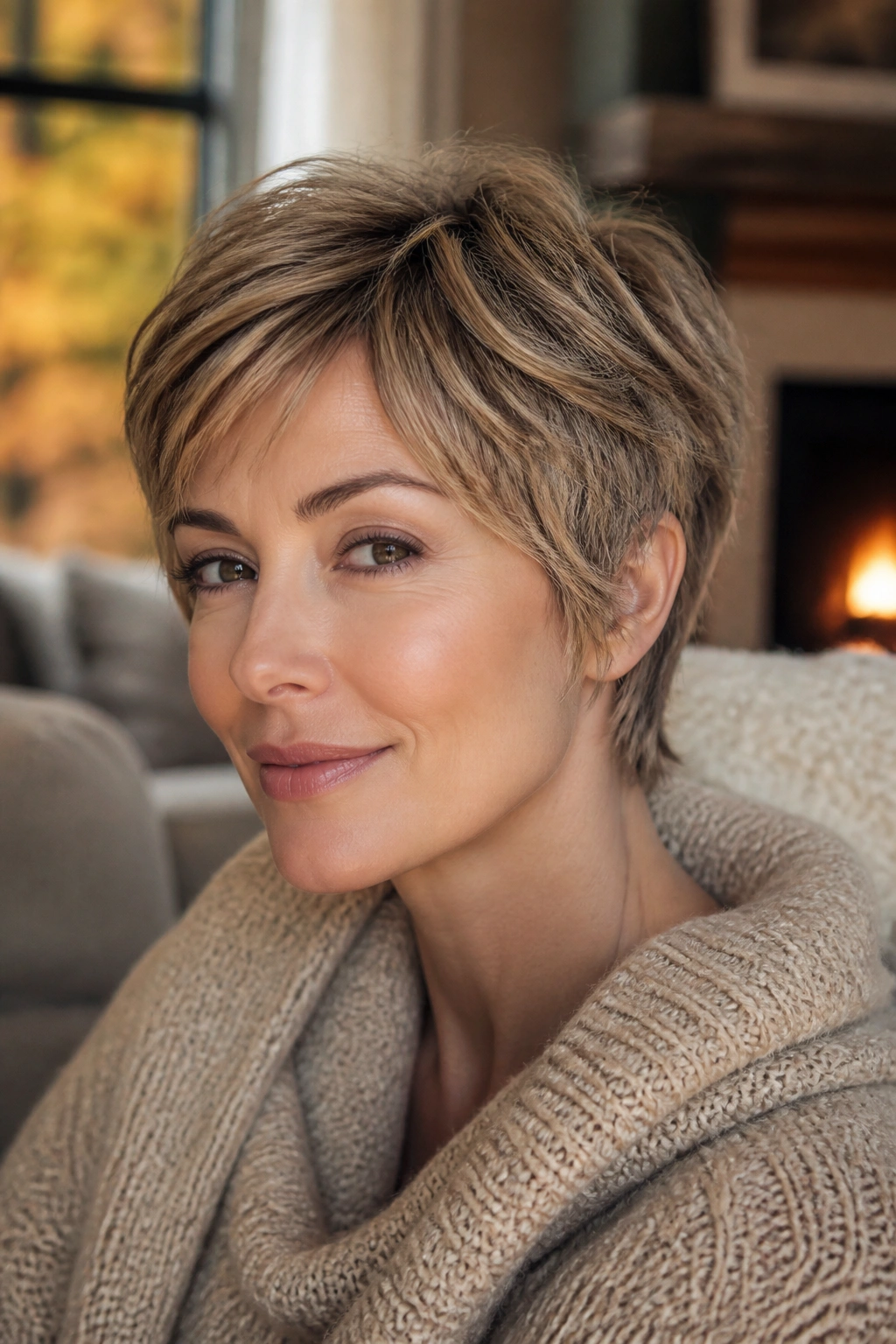
Feathered ends give a pixie a softer edge, and I have a weakness for that. The hair moves in little wisps instead of sitting in one hard line, which makes the whole cut feel lighter around the cheekbones and neck.
That softness matters when the weather turns dry. Sharp ends can look chipped if your hair is parched, but feathering blends the shape into something that looks deliberate even when you have only brushed it with your fingers. A small round brush and a little mousse can do a lot here. You don’t need a heavy styling routine.
I also like feathering on people who wear a lot of knitwear. Big collars and scarves can make a blunt pixie feel boxy. Feathered edges sit more gently against that fabric and keep the cut from getting swallowed by it.
The only caution: don’t overdo the thinning. Feathered does not mean wispy to the point of fraying. There’s a difference, and it matters.
6. Curly Pixie
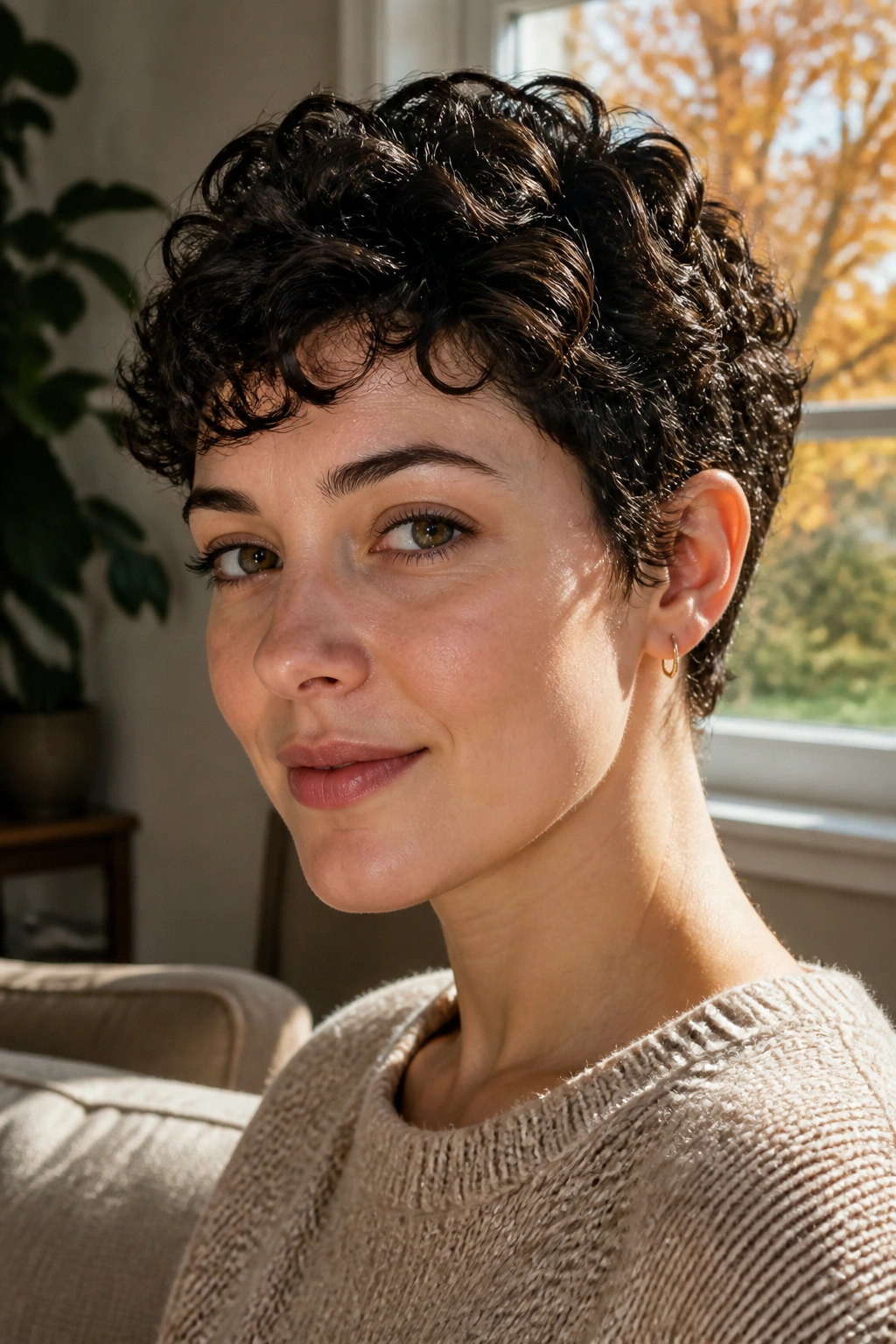
A curly pixie is not the same haircut with curls forced into it. It needs room for shrinkage, room for bounce, and a shape that respects the curl pattern instead of fighting it.
If your hair lands anywhere from loose waves to springier curls, ask for a cut that is shaped while dry or at least partly dry. Wet curls lie. They stretch, then bounce back in a way that can ruin a short cut if the stylist guesses too small. Leave the crown a touch longer, and keep the sides tidy enough that the whole shape still reads as a pixie rather than a puff.
How to Wear It
- Use a diffuser on low heat
- Scrunch in a curl cream, not a heavy butter
- Leave the top slightly longer than you think you need
- Trim every 6 to 8 weeks to keep the outline sharp
This is the cut for someone who wants texture to be the feature, not the problem. And honestly, when curls are shaped well, they do a lot of the work for you.
7. Curved Fringe Pixie
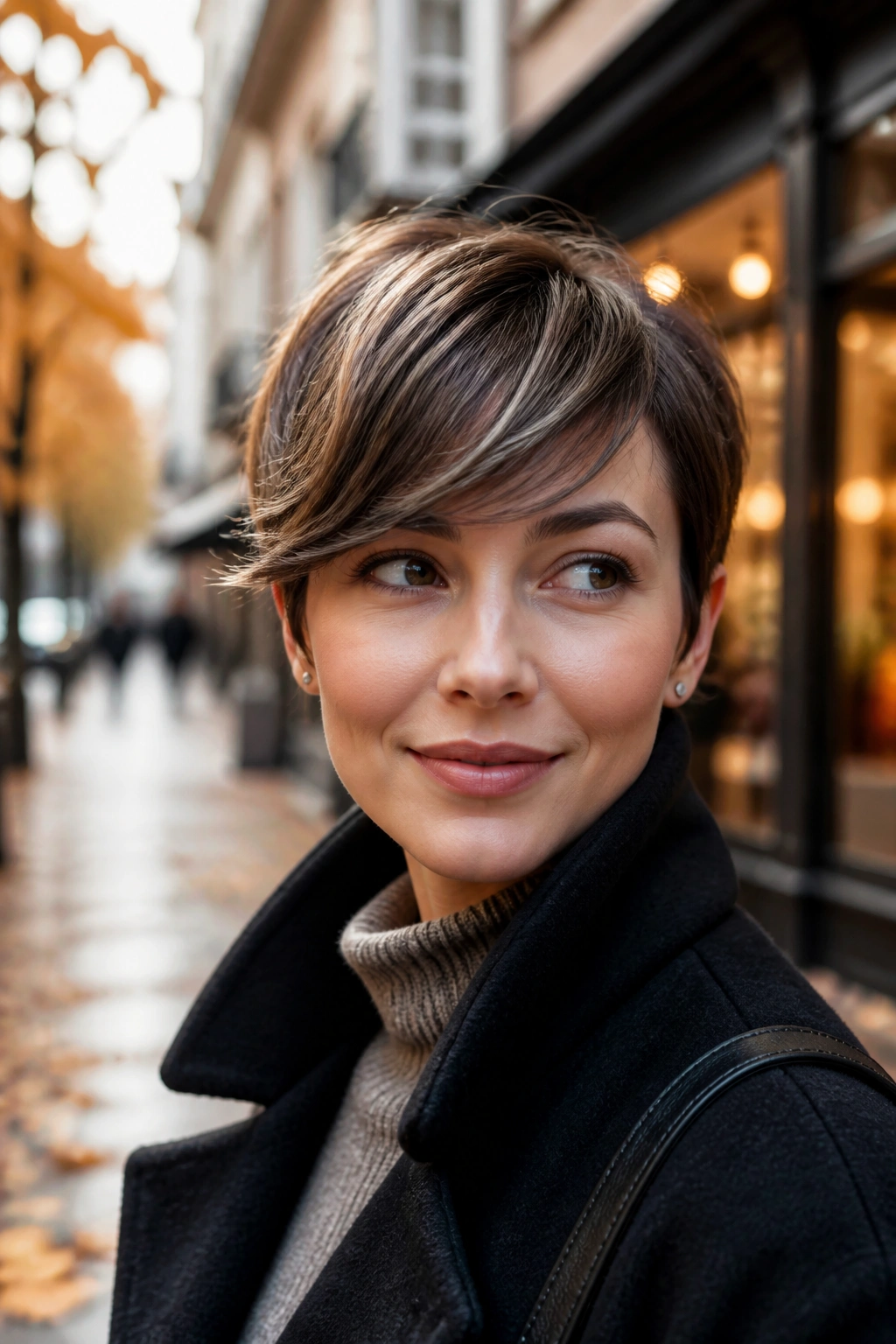
A curved fringe changes the face more than most people expect. It bends softly across the forehead, follows the line of the brow, and keeps the front of the cut from looking blunt or boxy.
What I like most is the way it behaves when the wind hits it. It doesn’t split into two awkward pieces the way a straight fringe can. Instead, it falls into a soft arc that feels calm, even when the rest of the hair has a little movement. That makes it a good choice for fall, when you’re stepping in and out of dry air all day.
Use a round brush about 1 inch wide if you want a little bend, or flat-wrap the fringe with your fingers if you want it looser. A touch of smoothing cream goes a long way. Too much, and the curve disappears.
This style suits longer faces especially well, but I’ve seen it work on square faces too when the fringe is kept airy.
8. Asymmetrical Pixie Haircut
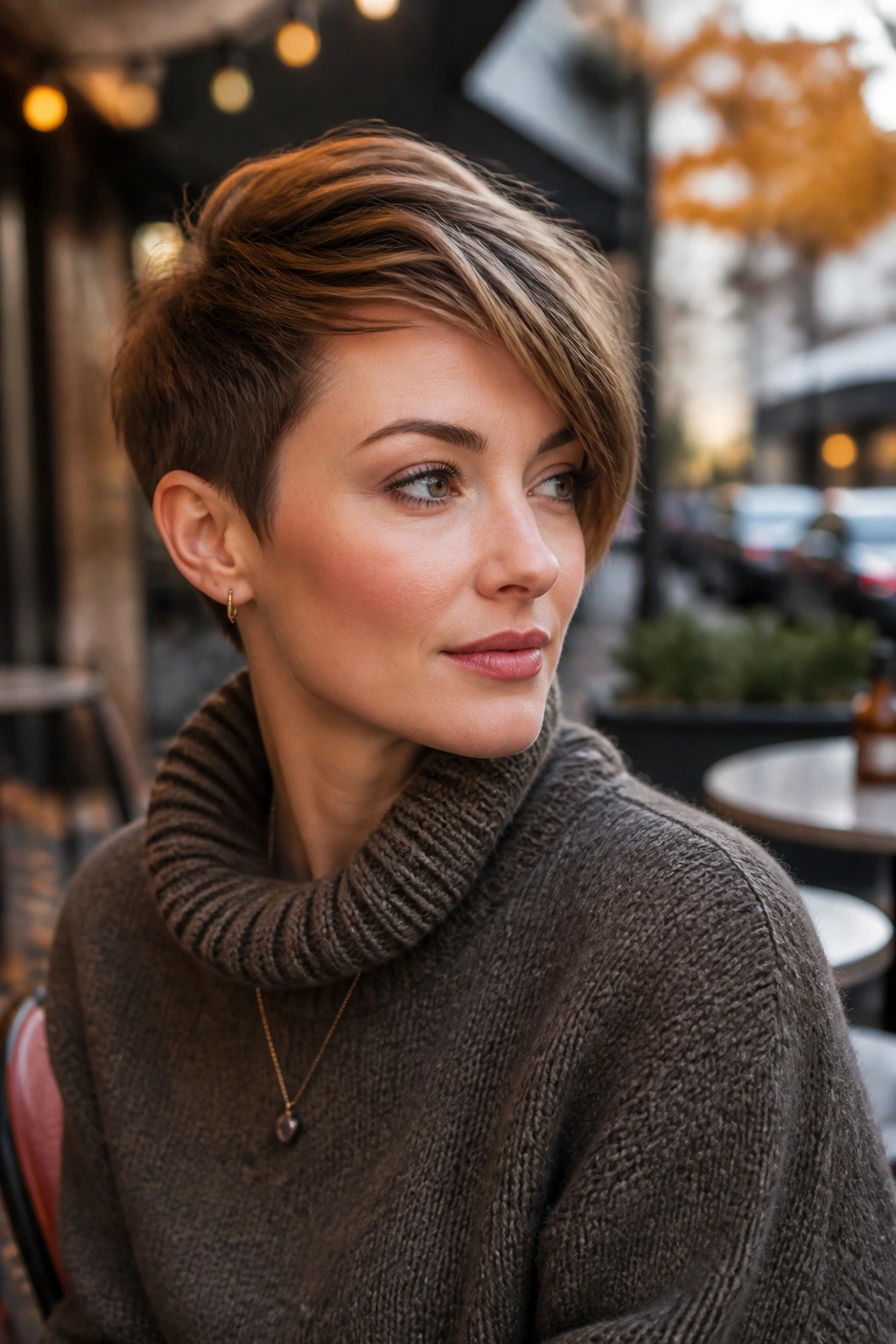
A little asymmetry makes a pixie look sharper without making it loud. One side sits shorter, the other side drapes a bit longer, and the whole cut gets a diagonal line that pulls the eye upward.
That shape is useful if you want short hair but hate a cut that sits too square around the face. The longer side can skim the cheekbone, soften a jawline, or tuck behind one ear while the other side stays closer and more graphic. It’s a tiny bit of visual tension, and that’s what gives it life.
I would not go too extreme here. A dramatic asymmetrical crop can be fussy to maintain, and fall clothes do not always play nicely with extra length on one side. Keep the difference to about 1 to 2 inches unless you enjoy styling.
This one is best for someone who likes a haircut with a clear point of view. If you’re looking for quiet, skip it.
9. Pixie Bob Hybrid
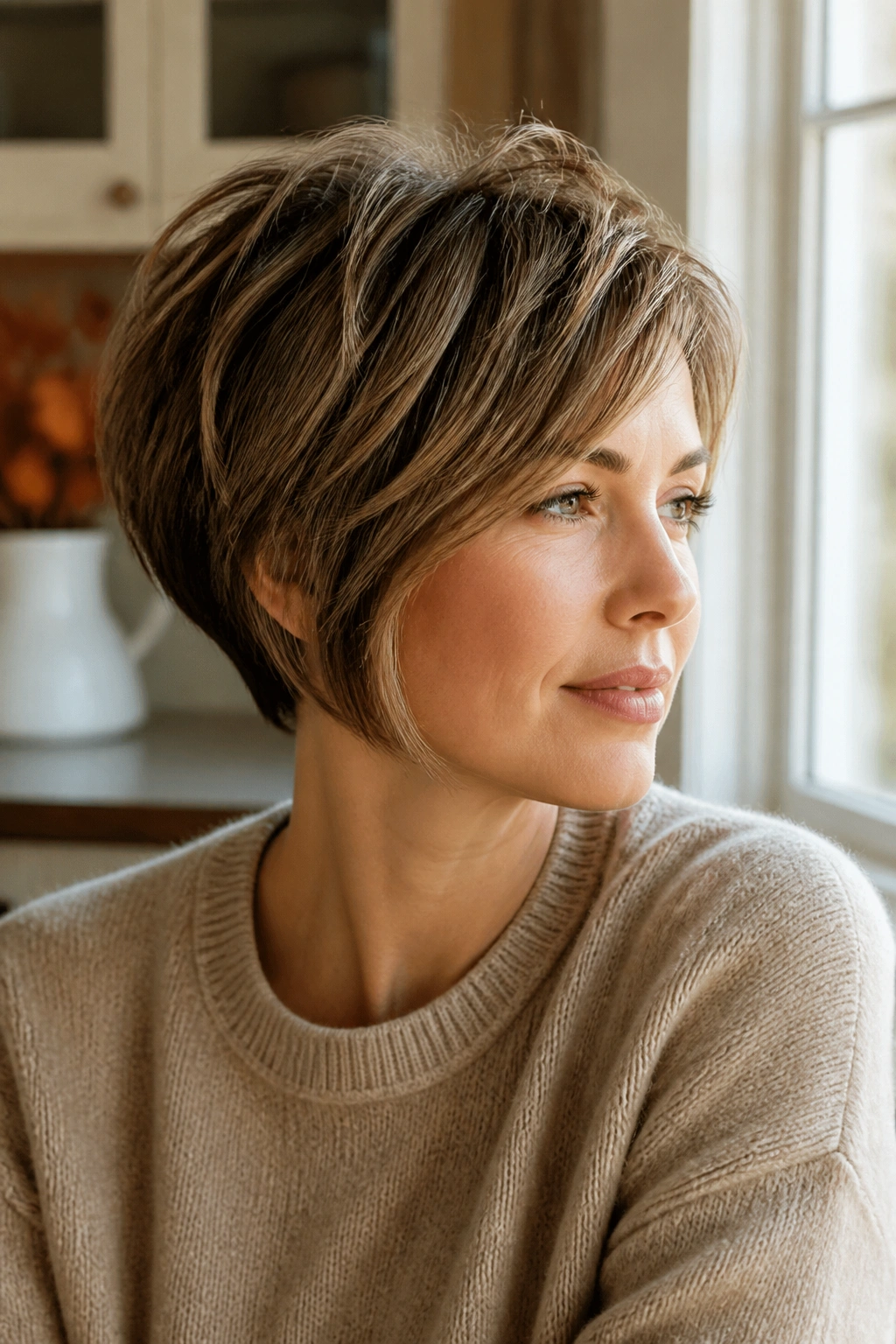
When does a pixie stop acting like a pixie and start borrowing from a bob? Right about the point where the sides reach the ear or just brush the jaw and the top still feels short and lifted.
That hybrid shape is one of my favorite choices for people who are nervous about going really short. It gives you the security of a little extra length around the face, but it still reads as cropped and light. The neck stays open, the crown stays movable, and you can tuck one side behind the ear without losing the cut.
Who It Suits
- Anyone growing out a bob
- People who want a short cut with a softer outline
- Hair that falls straight or slightly wavy
- Anyone who wants to keep enough length for clips or pins
Style it with a light air-dry cream and a side tuck. That’s enough. If you spend too much time trying to force polish into it, you’ll lose the relaxed charm that makes this shape work.
10. Undercut Pixie
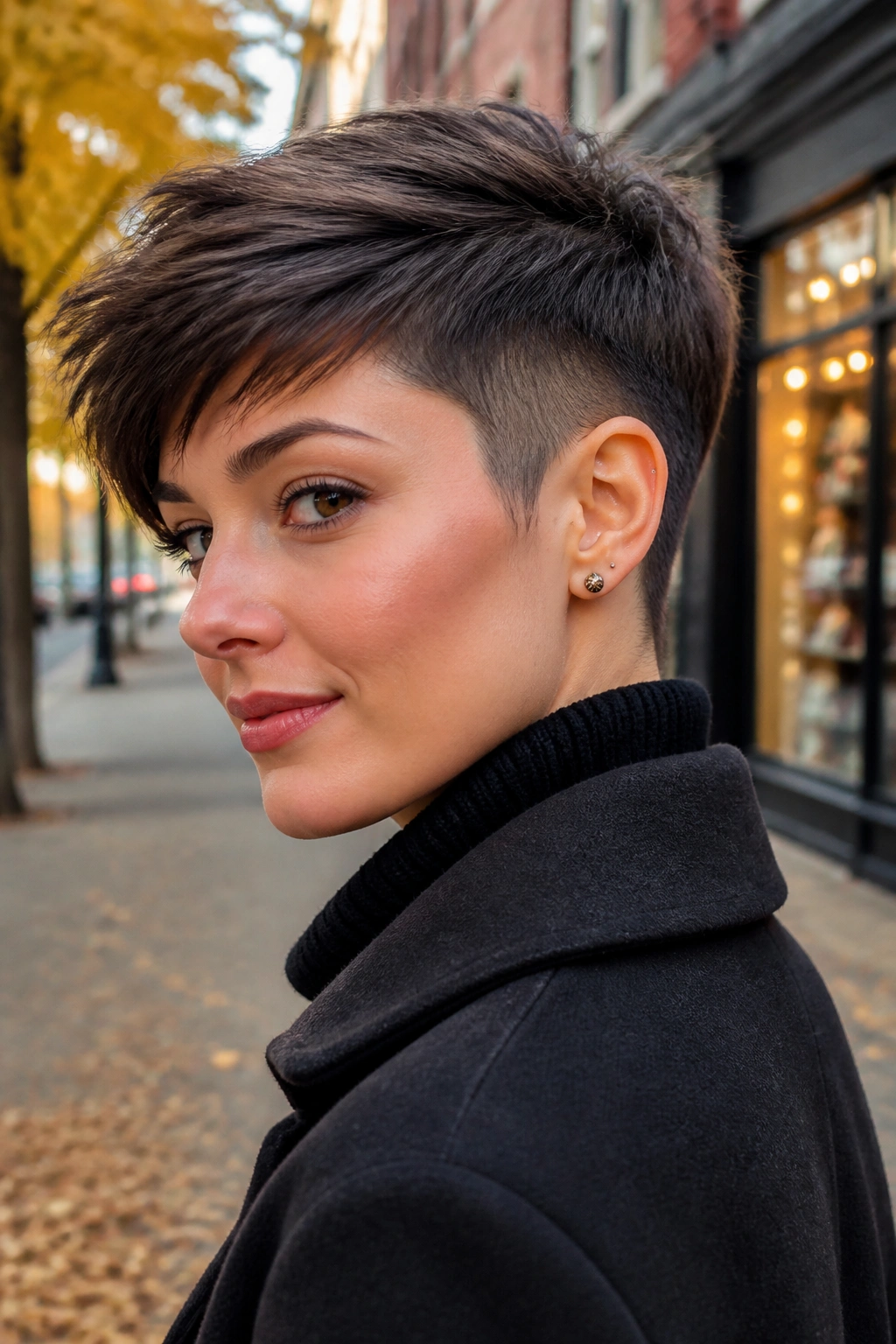
If the back of your hair gets puffy under a beanie, an undercut pixie can save your sanity. The clipped sides and nape remove the bulk, while the top stays long enough to style forward, to the side, or straight up if you’re feeling brave.
This cut has a little edge to it. Not fake edge. Real edge. You can see it the second the head turns and the shorter sections show beneath the longer top. That contrast is what makes it feel clean, especially with thick hair or strong growth at the nape.
What to Ask For
- Clippered or very short sides
- A blended transition at the crown
- 2 to 4 inches left on top
- Soft edges if you do not want it to feel severe
Maintenance matters here. Plan on a trim every 3 to 4 weeks if you want the undercut to stay crisp. Let it grow too long, and the balance disappears fast.
11. Tapered Nape Pixie
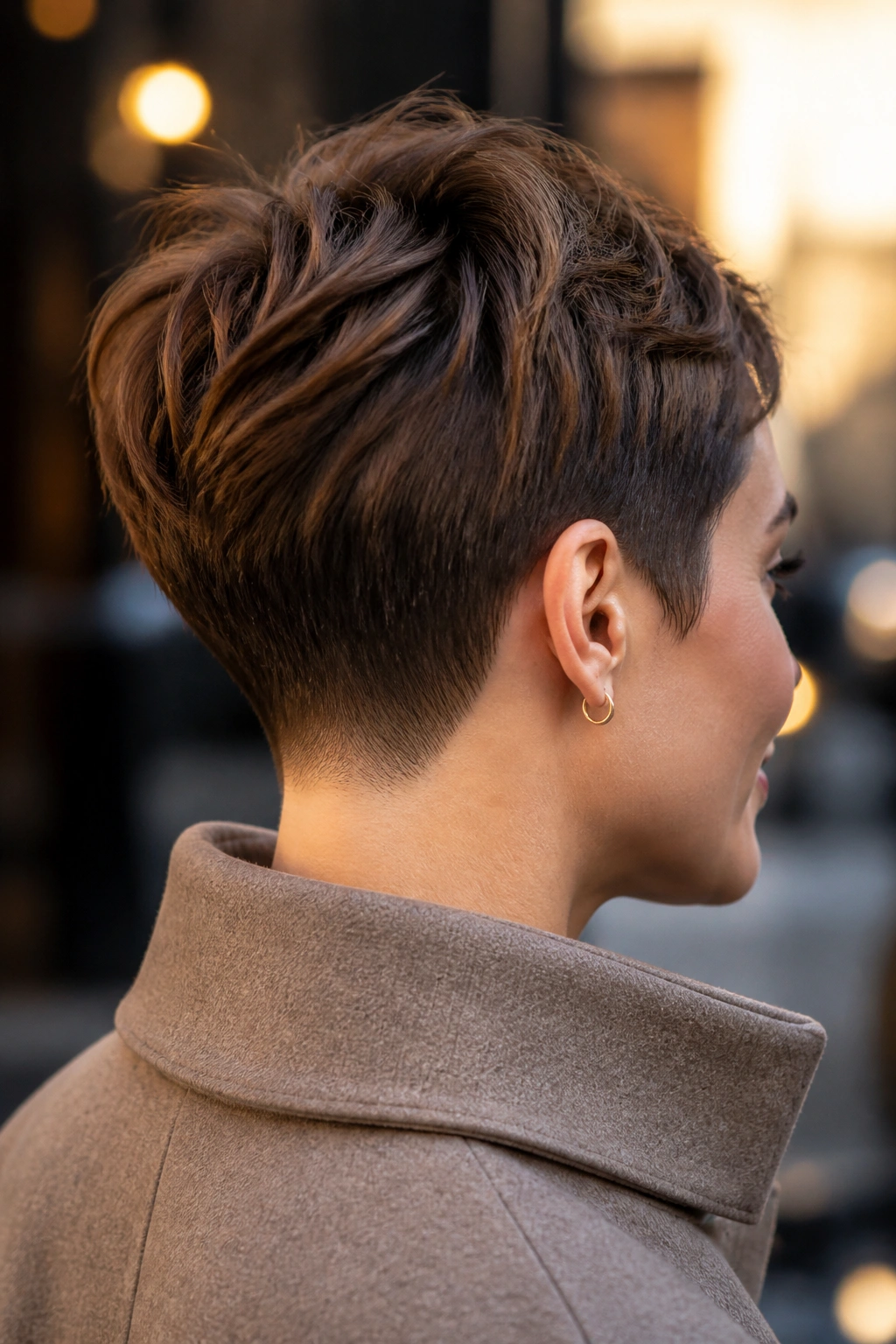
The tapered nape is the detail that makes a pixie feel finished. The hair gets gradually shorter at the neck, so the back lies flat instead of kicking out, which is a lifesaver when you’re wearing high collars or scarves.
This is a quieter cut than an undercut. Less contrast. More shape control. I tend to like it on fine to medium hair because it creates a neat line without stealing too much body from the crown. The head looks clean from every angle, and that matters more than people think.
A blow dryer with a nozzle helps here. Aim the air downward at the nape, then smooth the hair with a small brush or comb while it’s still warm. That’s enough to keep the taper looking tidy. If you need product, use a light styling cream, not a wax that makes the neck piecey.
It’s a good choice when you want the cut to look expensive without looking like it took effort. That sounds snobby, but it’s true.
12. Micro Pixie
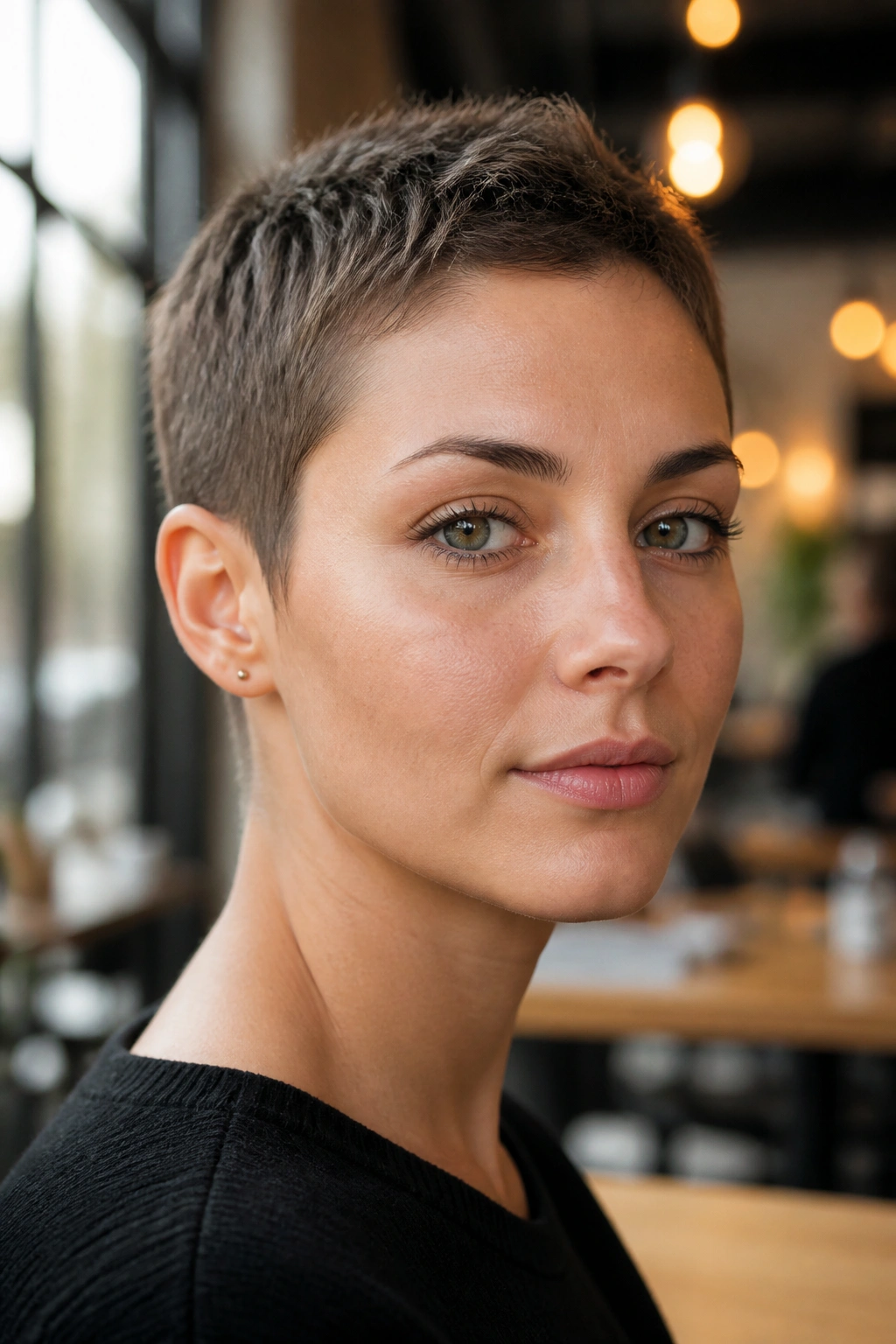
A micro pixie is for the person who wants hair off the face, off the ears, and mostly off the shoulders of the whole haircut conversation. It’s short. Very short. The kind of cut that exposes the shape of the head and puts the facial features front and center.
Compared with a longer pixie, this one has less margin for error. The outline needs to be neat, and the ends need to be softened so it doesn’t read as clipped instead of cut. I like a tiny bit of length left at the crown—about 1 to 2 inches—so you still have something to push around with your fingers.
It suits strong brows, sharp cheekbones, and people who hate hair in their eyes. It does not suit anyone who wants to hide behind length, which is fair. Not every cut needs to be diplomatic.
Use a small amount of paste, warm it in your hands, then press and lift the hair rather than combing it flat. That keeps the texture alive instead of sanding it down.
13. Shaggy Pixie
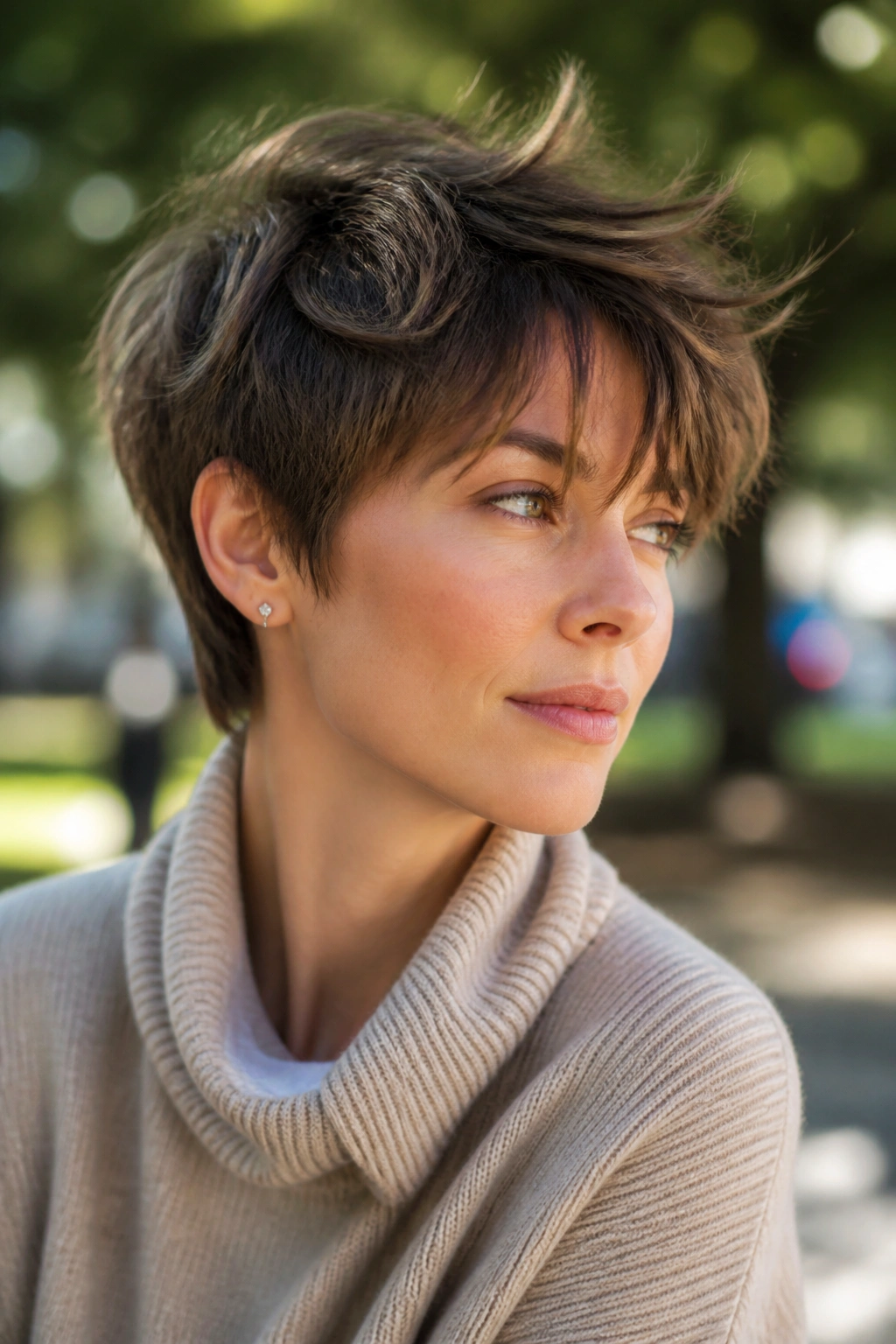
A shaggy pixie has a more relaxed shape, and that is exactly why it works when the weather turns dry and a little messy. The layers are broken up, the ends are choppy, and the whole cut looks like it would behave well if you just let it air-dry and walked away.
What Makes It Different
This cut leans on movement instead of clean lines. A razor or point-cut finish gives the top some separation, while the nape stays light enough to stop the shape from getting bulky. It’s a good fit for wavy hair, but straight hair can wear it too if you add texture with a little spray.
How to Get the Most From It
- Ask for piecey layers, not smooth ones
- Keep the fringe slightly longer if you wear glasses
- Use a texturizing spray on damp hair
- Scrunch, then stop touching it
I like this cut because it does not demand a perfect styling routine. It wants a little mess. Fine by me.
14. Slicked-Back Pixie
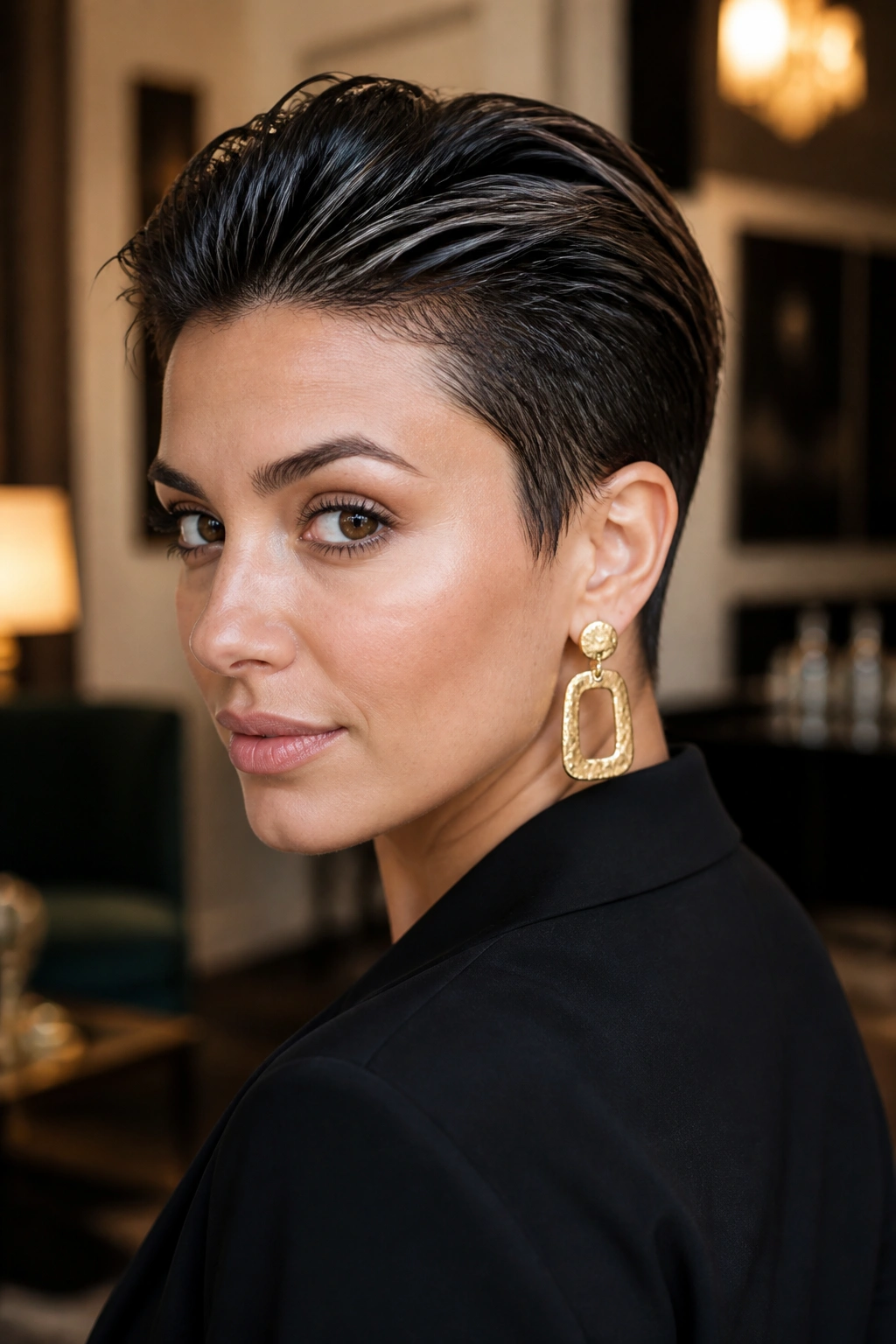
A slicked-back pixie is one of the easiest ways to make short hair look deliberate when your day has been hard on it. Flat roots from a coat collar? Frizz from dry air? This style turns both problems into part of the look.
Use damp hair, a small comb, and a gel with medium hold. Push the hair back from the forehead toward the crown, then smooth the sides flat with your palms or a soft brush. The shape should look controlled, not crunchy. If it looks helmet-hard, you used too much product.
This cut is especially useful for evenings, but it also works on mornings when the front won’t behave. I would not wear it every single day if your hair is very dry, because gel can make brittle ends feel worse. Still, for a clean, sharp finish, it’s hard to beat.
It pairs well with bold earrings and a strong brow. No surprise there.
15. Long Pixie with Ear-Length Sides
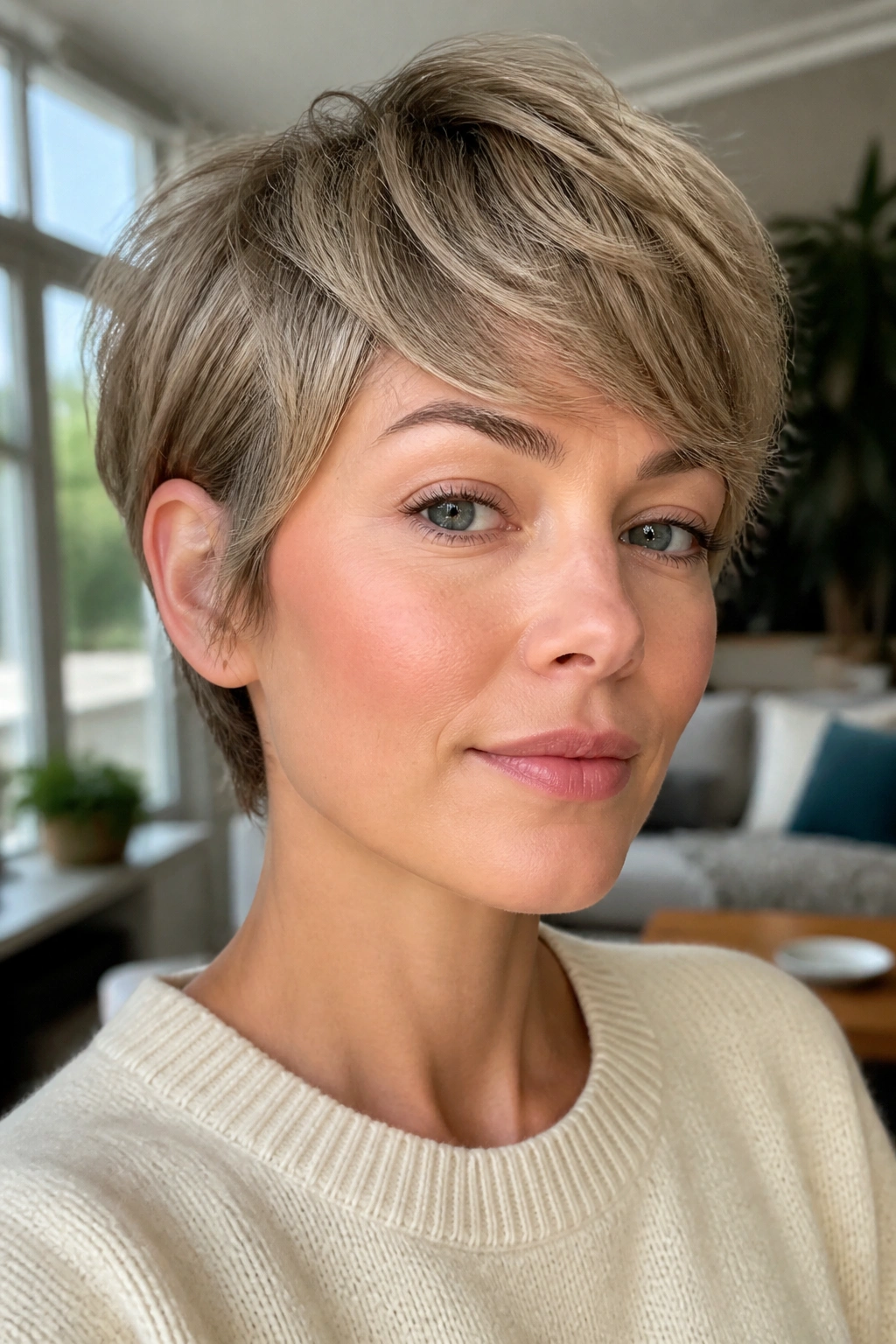
Want a pixie that still lets you tuck hair behind your ears? Keep the sides at ear length and the crown shorter. That shape sits in the sweet spot between cropped and grown-out, and it’s a good one for people who aren’t ready to go super short.
The ear-length sides matter because they give you options. You can tuck them, curve them forward, or let them sit loose under a hat without the whole style collapsing. The crown keeps enough lift to preserve the pixie feel, while the sides add softness around the face.
Styling Notes
- Blow-dry the crown first for lift
- Use a light mousse if your hair is fine
- Smooth the sides with a round brush if you want polish
- Leave the ends a little soft so the cut doesn’t look blocky
This is also a smart transition cut if you’re coming out of a bob. It doesn’t feel like a leap.
16. Wispy Bangs Pixie
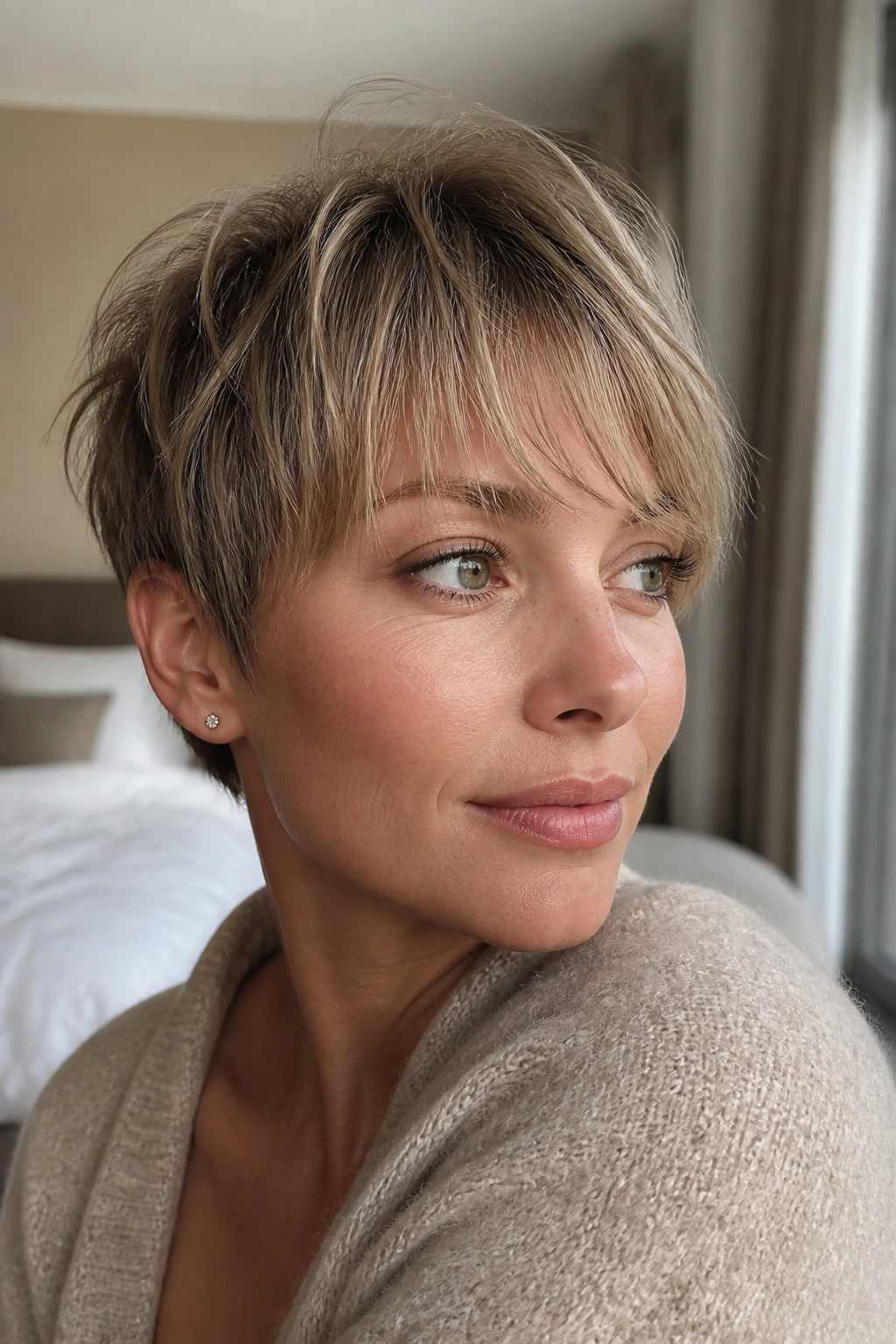
Forehead-framing fringe can change a pixie more than an extra inch of length ever will. Wispy bangs lighten the front, soften the face, and make the cut feel less severe, which is useful if you like short hair but not hard lines.
The key is keeping the bangs airy. Too dense, and they become a wall. Too short, and they stick up the moment the air dries out. I usually like a fringe that falls somewhere around the middle of the forehead or just brushes the brows when dry. That gives you room to move it around.
A mini flat iron can help if the fringe bends the wrong way, but use it lightly. One pass is enough. Then tap a tiny bit of texturizing spray into the ends and stop. The whole point is softness, not precision.
It’s a good choice for broader foreheads, but it also works on people who just want a little face framing without giving up the short cut.
17. French Pixie
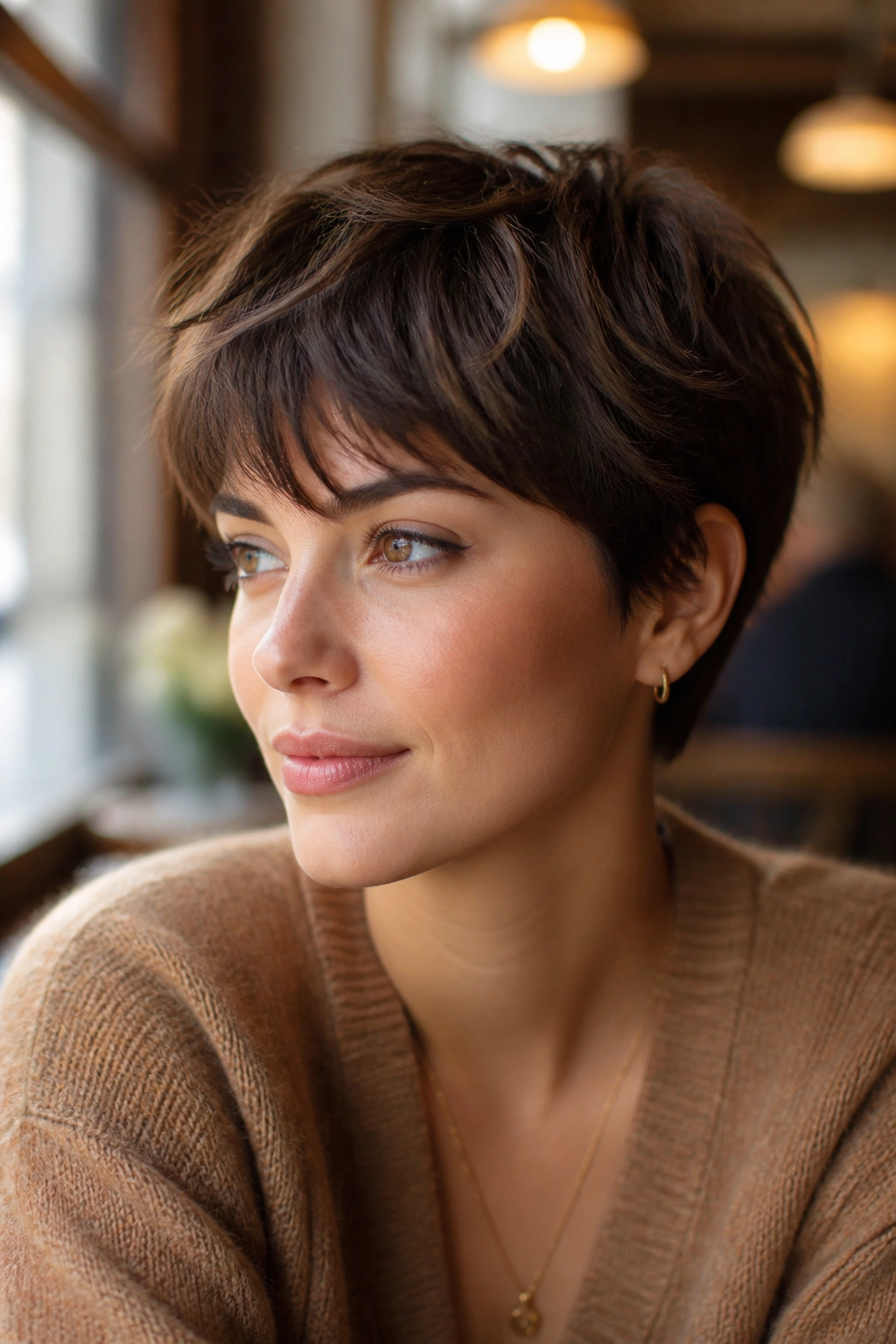
The French pixie has a softer, cooler feel than a crisp crop. It usually keeps the back close, leaves the fringe a touch longer, and lets the texture stay a little imperfect. I like that attitude. It feels lived in, not overworked.
This cut thrives on natural movement. A bit of bend in the fringe, a little taper around the ears, and a softly stacked back are usually enough. You do not need to polish every strand into place. In fact, the shape looks better when a few pieces fall where they want to.
That makes it useful during cooler months, when hats and scarves can flatten hair in odd ways. A French pixie survives that better than a blunt, over-sprayed shape. It has room to shift and still look like the same haircut.
If you want something with a softer mood, this is a lovely place to start. It feels casual in the best sense.
18. Piecey Pixie with Deep Side Part
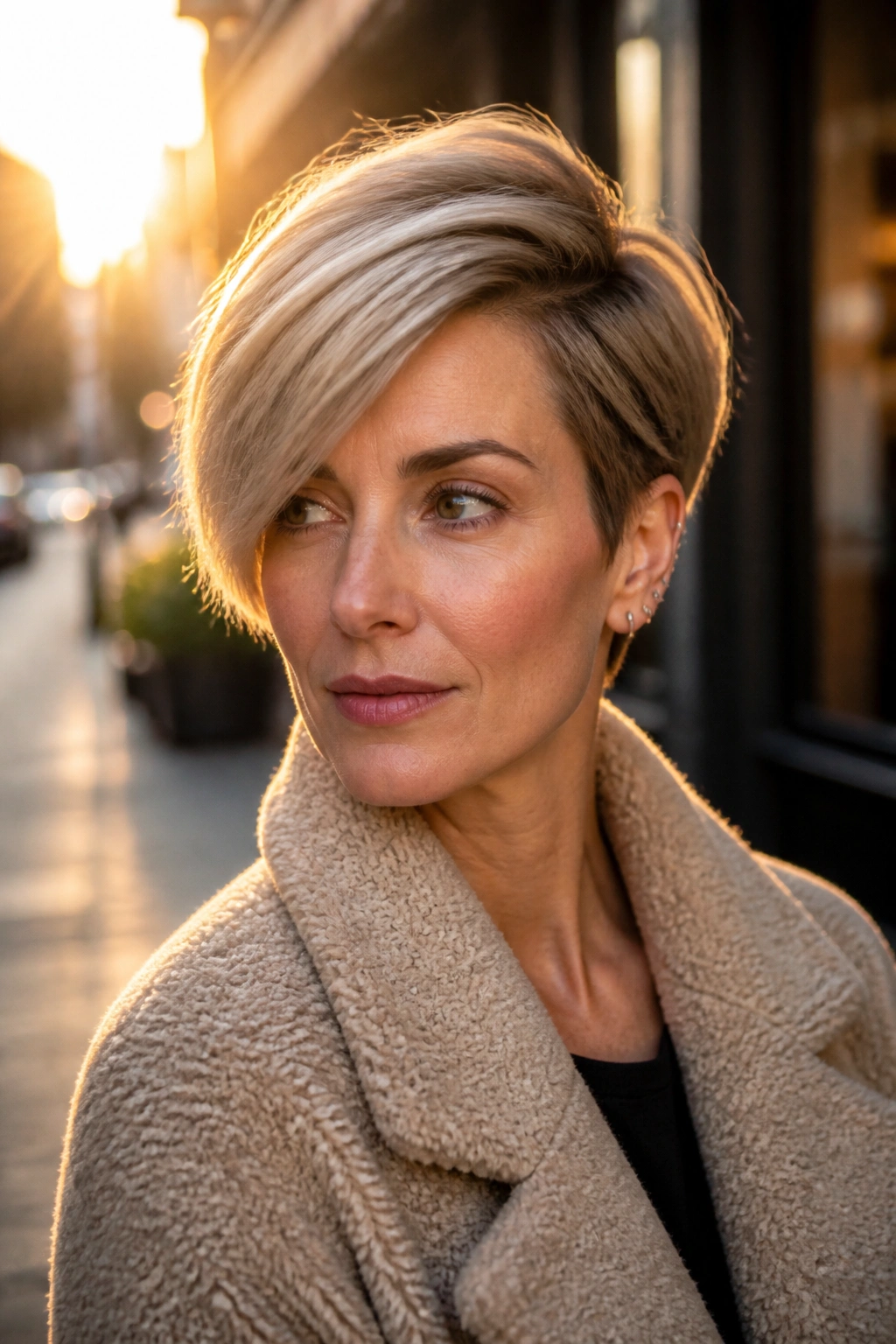
A deep side part changes the geometry of a pixie fast. Suddenly the crown gets a little lift, the face gets a diagonal frame, and the whole haircut feels less symmetrical in a way that can be more flattering than you expect.
Unlike a center-pushed crop, this style gives one side more height and the other side more sweep. That makes it good for fine hair that needs volume at the roots. It also helps if one side of your hair naturally lies flatter than the other. Work with that, not against it. Hair has opinions.
What to Ask For
- Length left on top for a deep sweep
- Soft, not blunt, weight around the temple
- A crown that can be redirected with a blow dryer
- Enough length to tuck one side if needed
Use root-lift spray at the base, blow-dry the hair in the opposite direction first, then flip it back. That little trick makes the part look fuller without piling on product.
19. Rounded Pixie for Fine Hair
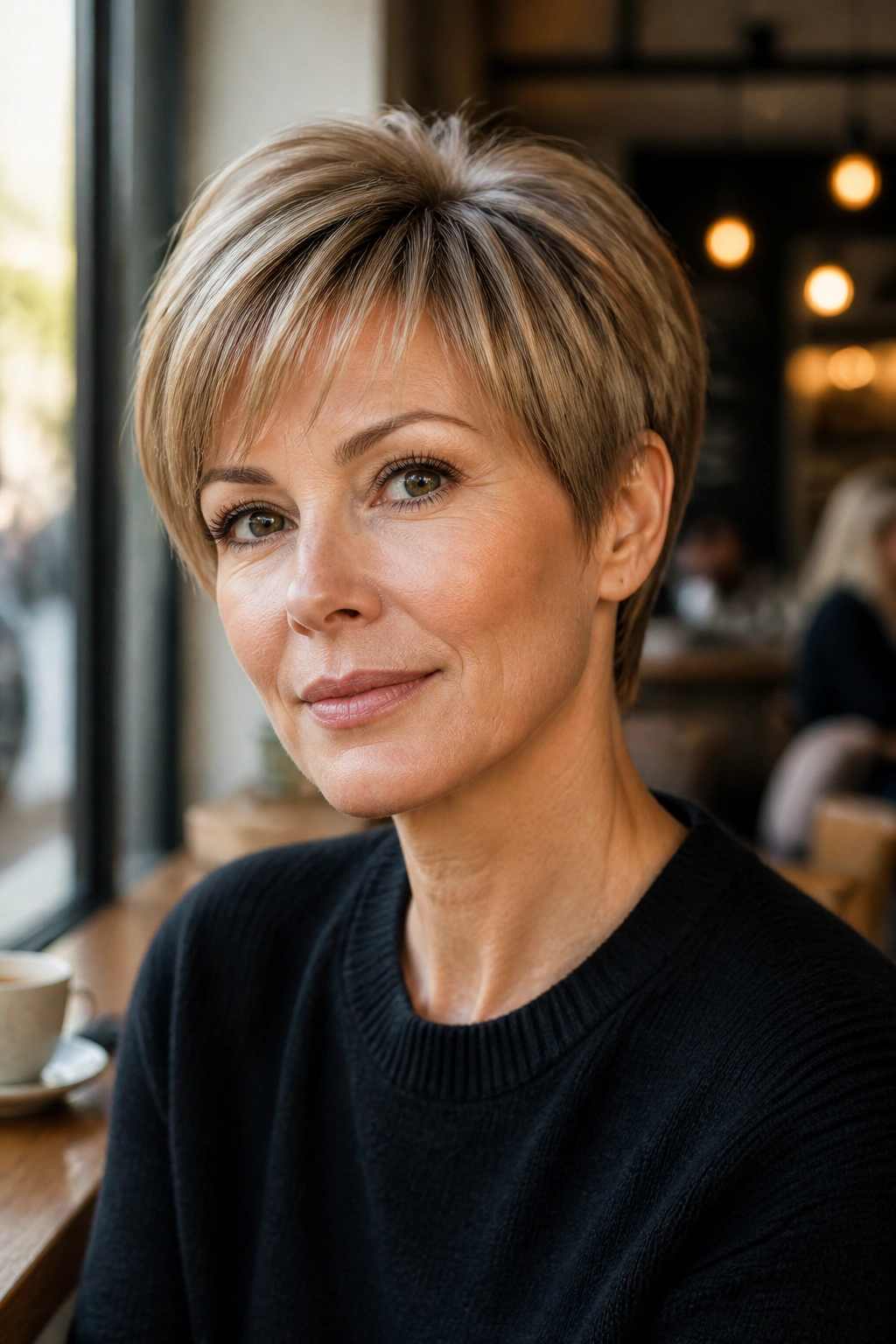
A rounded pixie gives fine hair a shape that feels fuller from the outside in. Instead of hugging the head too tightly, it keeps a soft curve around the crown and sides so the haircut looks like it has body.
Why It Works
The roundness is doing the heavy lifting. Fine hair often looks best when the cut creates the illusion of density, and a rounded silhouette helps by avoiding hard corners. That means less scalp show-through at the top and less flatness at the sides.
Quick Details That Matter
- Leave 2 to 3 inches at the crown
- Avoid heavy thinning shears
- Use a light volumizing mousse
- Blow-dry with a small brush to lift the roots
I like this cut more than most people do because it behaves quietly. It is not flashy, but it makes fine hair look cared for. And in dry weather, that counts for a lot.
Best tip: Ask for soft layering, not aggressive texturizing. Fine hair can lose its shape fast when it gets overcut.
20. Blunt-Fringe Pixie Haircut
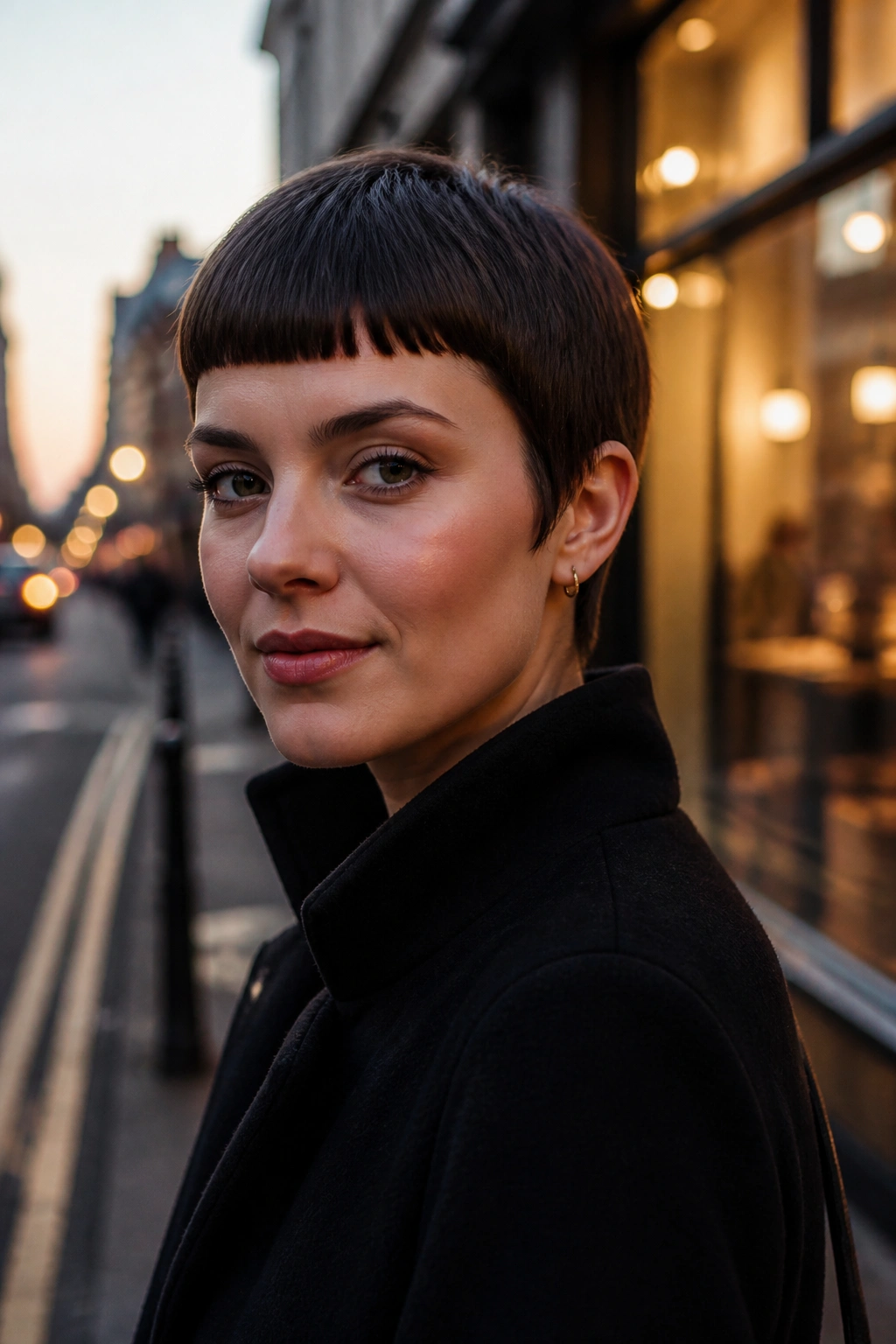
A blunt fringe changes the whole mood of a pixie. It gives the cut a sharper front, a cleaner line, and a more graphic feel that can look brilliant when the rest of the hair stays close and tidy.
This is not a shy haircut. The fringe sits straight across, usually thick enough to read as a real shape rather than a few floating pieces. That makes it especially good for straight hair and strong brows. It can also hide a broad forehead without making the rest of the cut too heavy.
The downside is upkeep. Blunt fringe grows fast, and once it starts dropping into the eyes, the whole look loses its edge. Plan on trims every 3 to 4 weeks if you want it to stay crisp.
I would skip this one if your hair has a stubborn cowlick right at the front. The fight is not worth it.
21. Soft Bixie
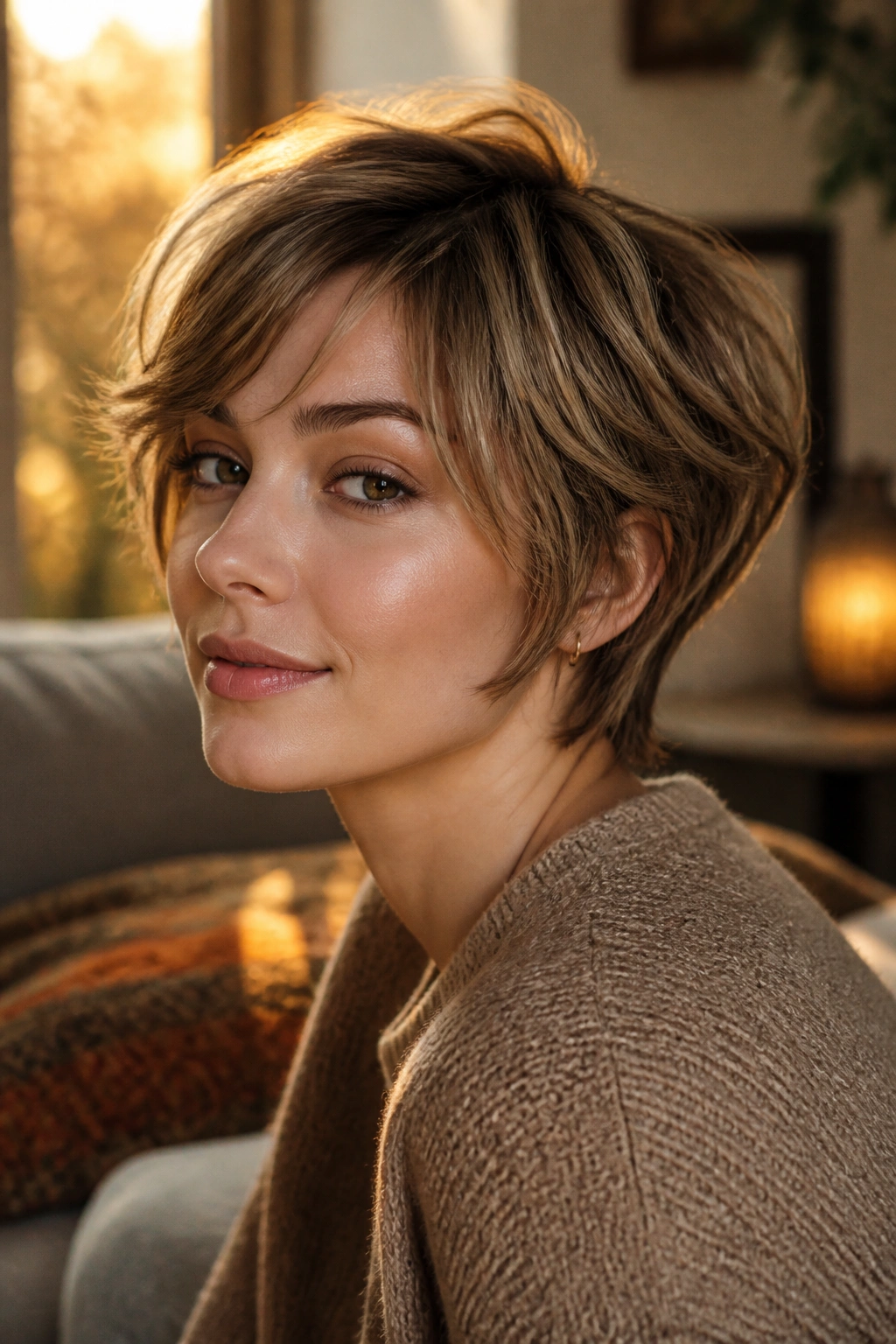
When does a pixie start borrowing from a bob? Usually when the sides get a little longer, the nape stays soft, and the crown keeps enough movement to avoid that tight cropped feel.
That’s the bixie sweet spot. It has more length than a classic pixie, but it still feels lighter than a bob. If you are nervous about short hair, this is one of the safest ways in. It leaves room around the face, which is nice when coats and turtlenecks are already adding visual weight.
How to Style It
Use a mousse on damp hair, then either air-dry or rough-blow-dry with your fingers. If you want more shape, add a quick bend with a round brush at the ends. Keep the finish soft. Too much polish and it starts looking too styled for its own good.
- Great for: first-time short-hair wearers
- Good with: wavy or straight hair
- Maintenance: trim every 6 to 8 weeks
- Mood: relaxed, not severe
This is one of those cuts that looks better when you stop trying to make it perfect.
22. Grow-Out Pixie
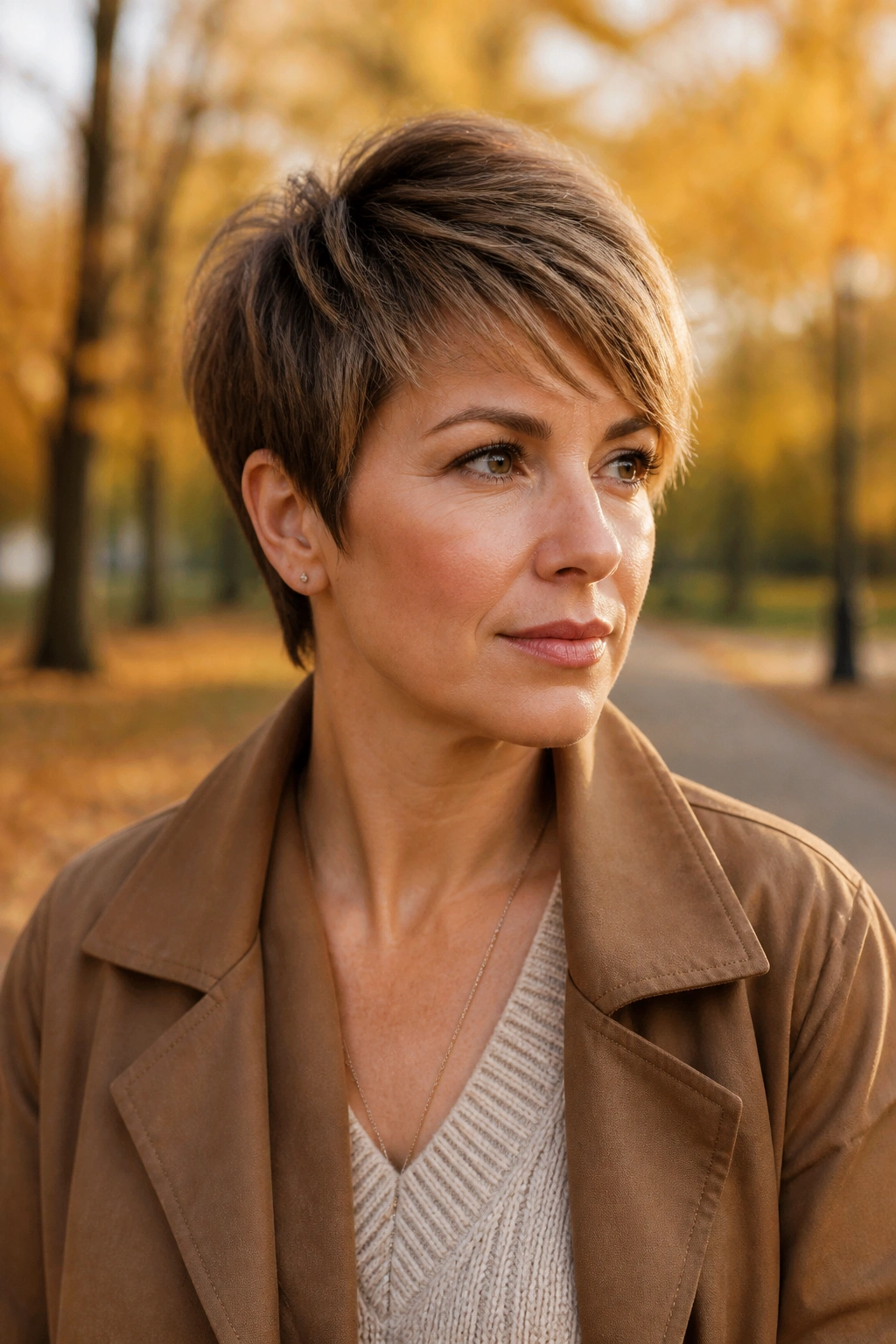
The smartest pixie is the one that still looks decent six weeks after the cut. A grow-out pixie is built for that. It keeps a little more length at the crown and fringe, tapers the nape cleanly, and avoids hard edges that turn awkward as soon as the hair starts to move.
That makes it a strong choice if you know you will want a bob later or if you simply do not want to live at the salon. The shape should stretch gracefully. That means the front can drop into a side sweep, the sides can tuck back, and the back can stay neat enough to avoid the mushroom effect that ruins a lot of short hair as it grows.
What Helps It Grow Well
- Keep the fringe a little longer than usual
- Ask for soft layering, not a blunt perimeter
- Use a light styling cream while it grows
- Book trims every 6 to 8 weeks to clean the neck and ears
There’s a real satisfaction in a cut that ages well. Most styles do not.
Final Thoughts
The best pixie haircuts for fall are the ones that still look intentional after a scarf, a coat collar, and a few hours of dry indoor air. That usually means some thought in the fringe, some shape at the nape, and no blind faith in a one-length crop.
If you want a safe place to start, pick the cut that matches how much styling you’ll actually do on a weekday morning. That is the part people skip, and it is the part that decides whether a pixie feels chic or annoying.
Short hair can be blunt, soft, sharp, or a little messy. The good versions know exactly which one they are.
