



Messy pixie cuts work because they don’t ask your hair to behave like it’s posing for a passport photo. A little lift here, a few uneven pieces there, and suddenly the whole cut feels alive instead of stiff.
That’s the part people often miss. A good messy pixie is not random hair that got caught in a wind tunnel. It’s shape plus texture, with the weight removed in the right places so you can ruffle it with your fingers and still look put together.
The cut also solves a real problem for a lot of people: short hair that needs too much maintenance. If your morning routine has room for one product, maybe two, and about three minutes of effort, a textured pixie can be a relief. Fine hair gets more lift. Thick hair gets some breathing room. Curly hair gets a shape that doesn’t fight the curl pattern every single day.
Some versions lean soft and feminine. Some feel sharp and punky. A few sit right in that sweet spot where they look effortless but still have enough structure to hold up in daylight, office lighting, and bad weather. The details matter more than the label, and the right messy pixie is usually the one that matches your texture, not the one that looks coolest in a photo.
1. Choppy Crown Pixie
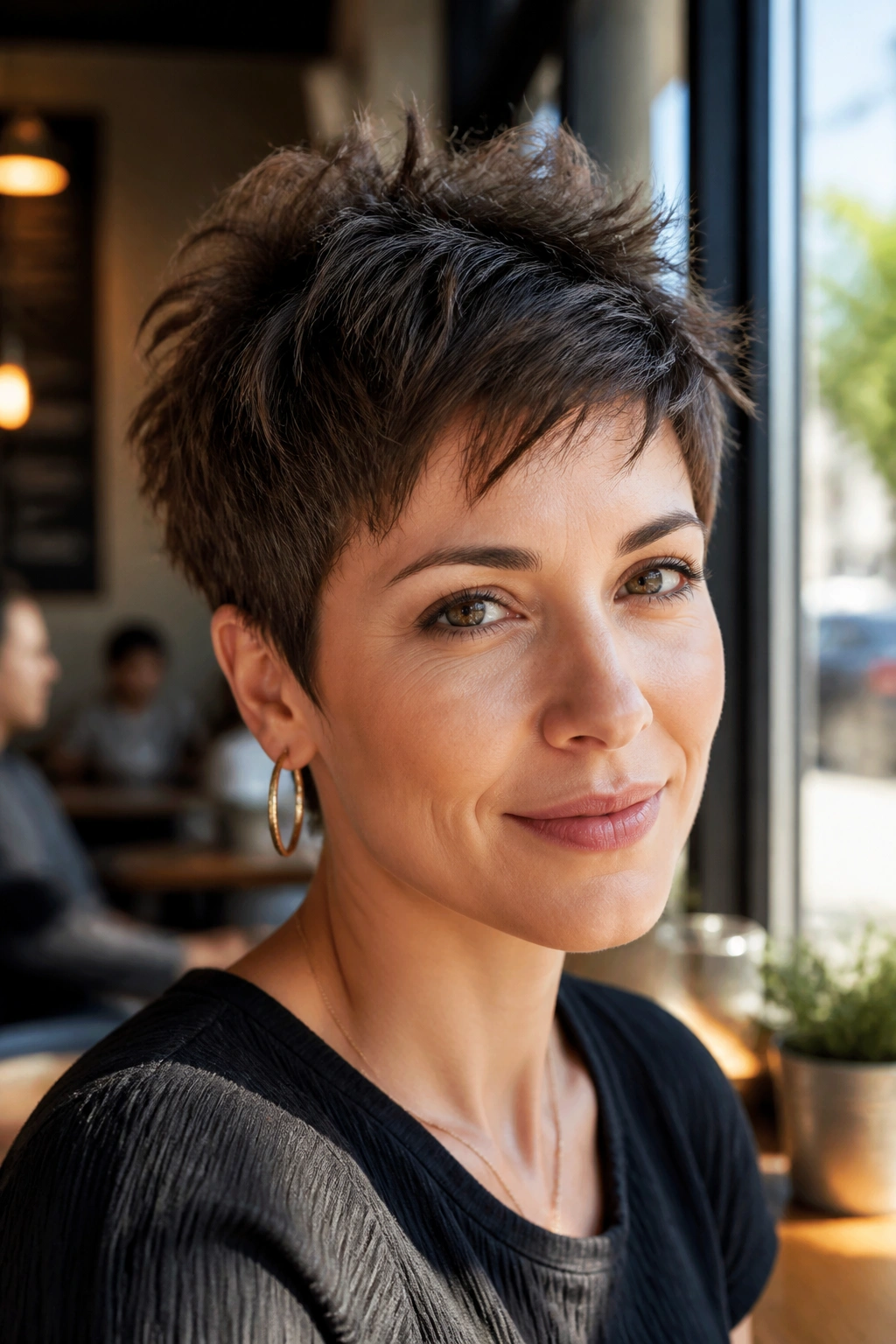
The crown is where this cut earns its keep. Shorter, choppier pieces at the top create instant lift, and the tighter sides keep the shape from puffing out like a mushroom. It has that slightly undone look people want from messy pixie cuts, but the backbone is still there.
Why It Works
The top is cut in uneven, broken layers so it can separate naturally when you run a matte paste through it. That gives you texture without making the whole head look overstyled. The nape stays neat, which keeps the cut from drifting into shag territory.
A pea-sized amount of paste is enough for fine hair. Medium hair can take a little more, but start small. Too much product at the crown will crush the height you’re trying to build.
Best for: fine hair, narrow faces, and anyone who wants volume without teasing.
Styling time: about 3 minutes.
Ask for: short, shattered layers on top with a tapered nape.
Pro tip: Work product into dry hair, not damp hair, if you want the crown to stay airy.
2. Tapered Bedhead Pixie
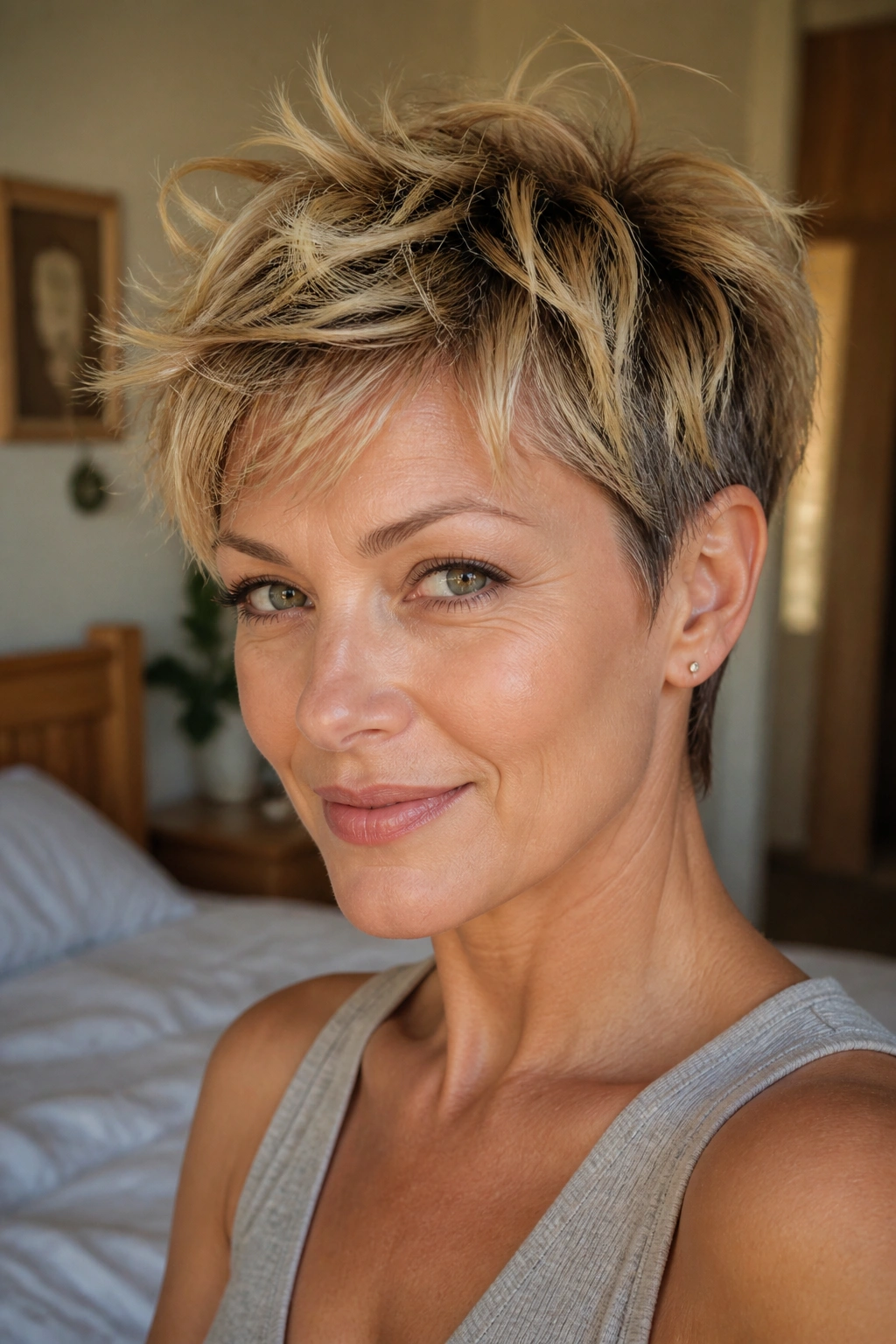
This is the cut that makes lazy mornings look intentional. The taper around the ears and neckline gives the shape a clean frame, while the top stays loose enough to bend and separate in a few swipes.
The magic is in the contrast. A tidy perimeter keeps the cut from looking sloppy, and the rough texture on top gives you that slept-in finish people always seem to want but rarely get right. You do not need a lot of product here. A small dab of cream or soft clay rubbed between your palms is enough to push a few pieces forward and leave the rest alone.
It also grows out better than a super-sculpted pixie. That matters more than people admit. A lot of short cuts look great the week they’re cut and awkward three weeks later. This one usually keeps its shape longer because the taper gives the hair somewhere to fall.
Best on oval and heart-shaped faces, especially if your hair has a little natural bend. Straight hair can wear it too, but the styling finish needs more separation than shine.
3. Side-Swept Fringe Pixie
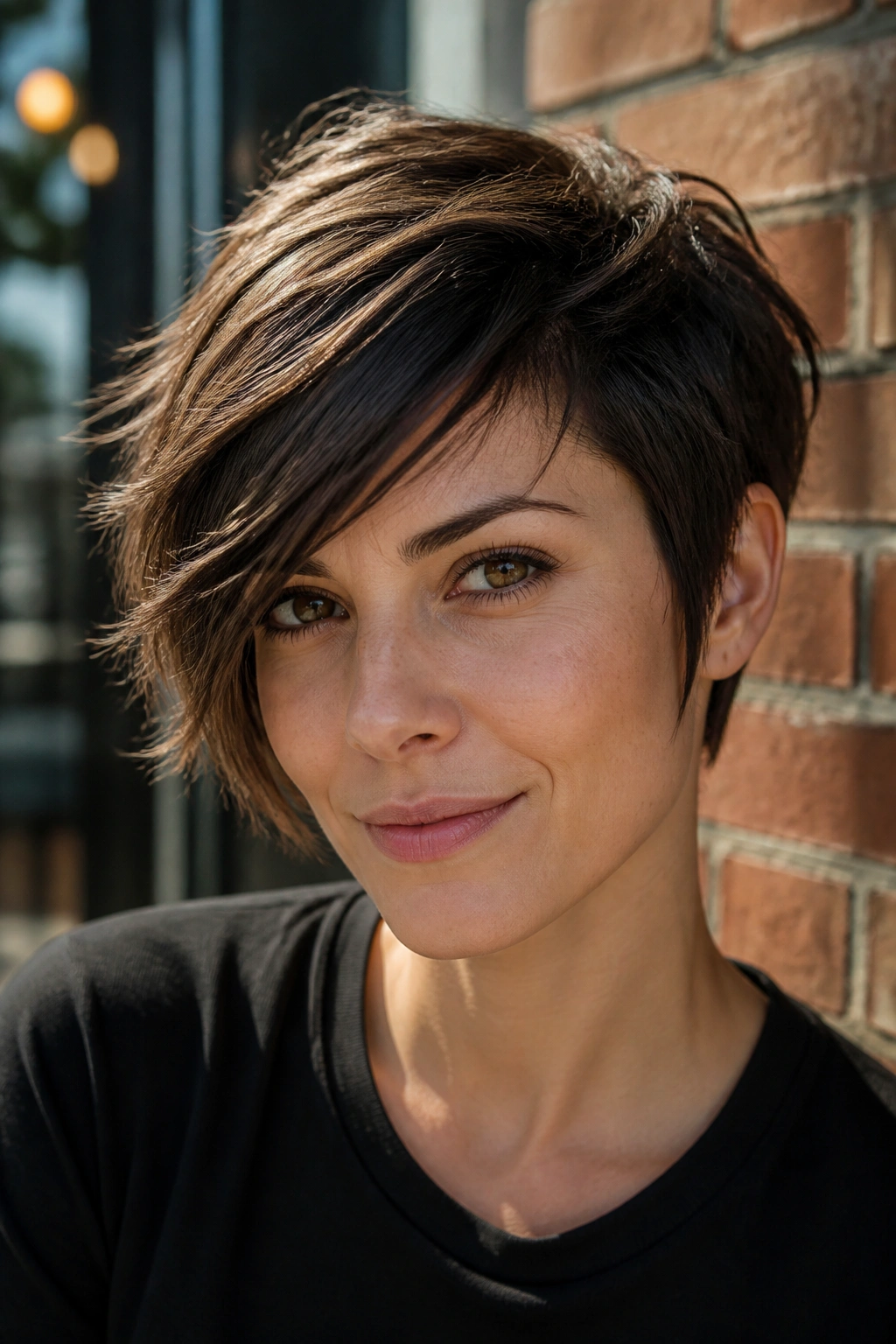
What if you want softness around the face without losing the short-crop feel? A side-swept fringe solves that problem quickly. It keeps the front longer, then lets the rest of the cut stay choppy and light around the ears and crown.
How to Style It
Dry the fringe in the direction you want it to sit, using your fingers or a small round brush. A quick bend with a flat iron works too, but don’t press it flat. You want a curved sweep, not a helmet.
Then tuck a tiny amount of texture cream into the shorter pieces behind the fringe so the front reads as the focal point. That contrast is what makes this cut feel modern. If the whole head is equally fluffy, the fringe loses its job.
A side-swept pixie is a good choice if you like your hair to soften the face line near the cheekbone or jaw. It also helps when you’re growing out a shorter crop and want one area to stay longer on purpose.
One strong side sweep can change the whole cut.
4. Piecey Micro-Fringe Pixie
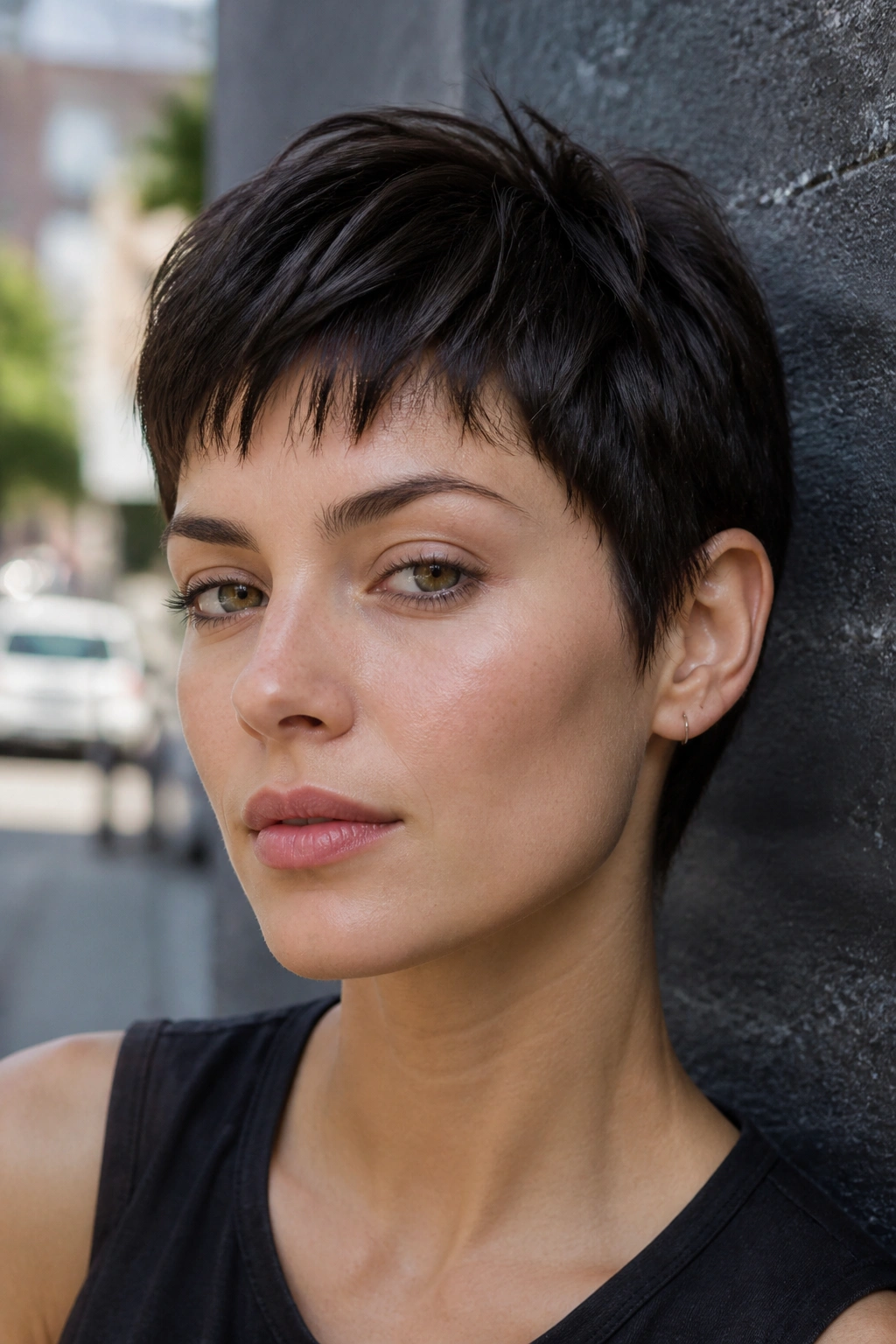
Picture a sharp little fringe sitting just above the brows, with the top broken into narrow pieces instead of one smooth wave. That’s the whole point here. The cut reads a bit fashion-forward, a bit artsy, and it works especially well when you want the eyes and brows to stay the center of attention.
The micro fringe keeps the forehead partly covered, but not in a heavy way. Because the top is cut in separated sections, the style can still look airy instead of blunt. That balance is a big deal. A heavy fringe plus a messy top usually turns into a helmet. This version avoids that by keeping the ends chipped and soft.
Key Details
- Best on straight to slightly wavy hair.
- Needs trims every 4 to 6 weeks to keep the fringe from dropping too low.
- Works well with dry texturizing spray instead of glossy serum.
- Looks strongest when the bangs are separated with fingertips, not brushed smooth.
The face impact is specific, too. This cut can make rounder features look sharper and gives longer faces a little horizontal line near the eyes. Tiny fringe, big attitude. That’s the whole equation.
5. Grown-Out Messy Pixie
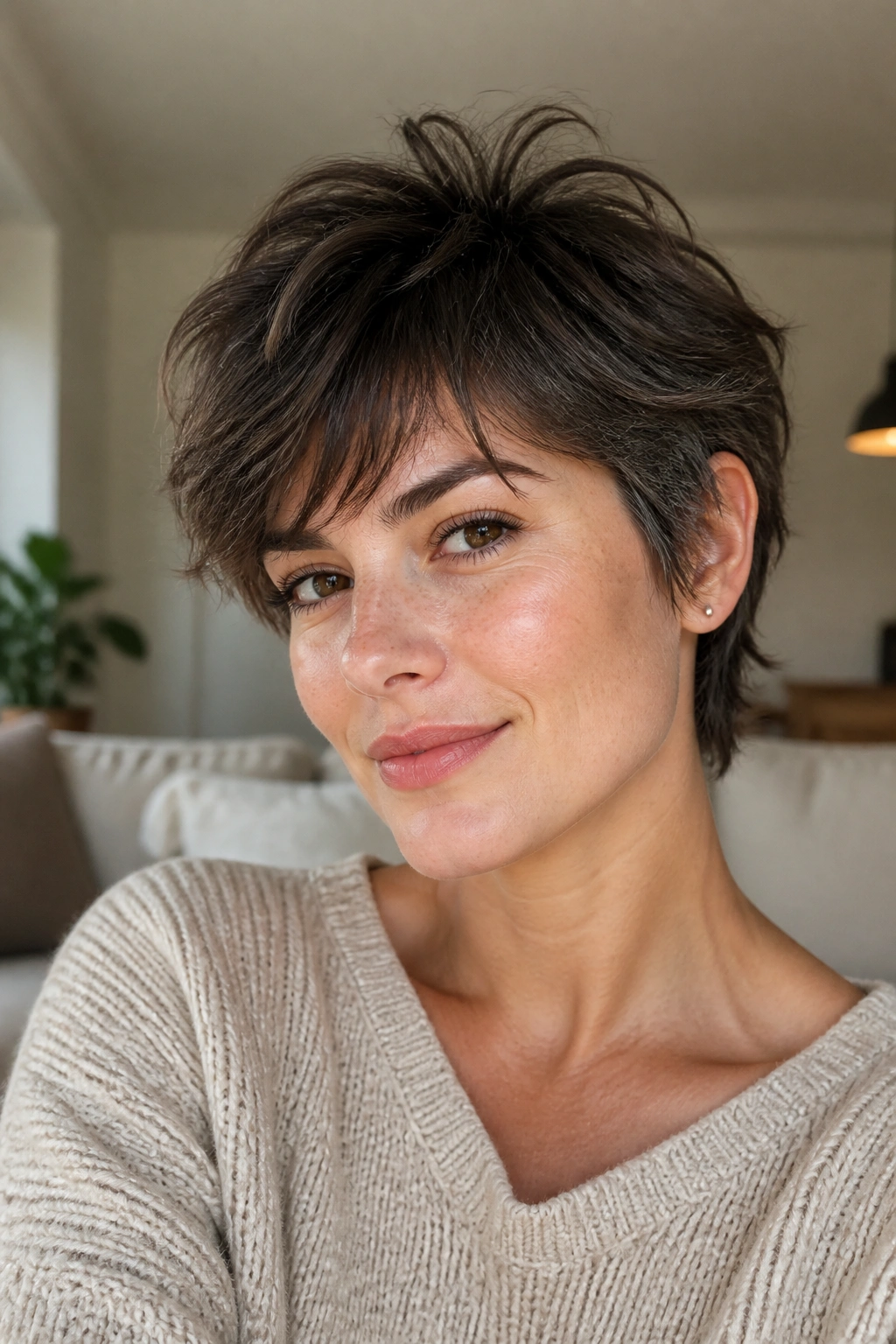
Some short cuts feel like a constant appointment reminder. This one does not. A grown-out messy pixie sits in that in-between stage where the sides are still short, the top has enough length to bend, and the whole cut feels relaxed instead of freshly clipped.
The best thing about it is how forgiving it is. If your hair gets a little flat on day two, a mist of dry shampoo at the roots usually brings it back. If the front flips weirdly, a finger twist near the part can fix it faster than a full restyle. That makes this a smart choice for people who do not want to fuss with precision every morning.
It also has a softer silhouette than a super-short crop. The extra length around the front and crown blurs the line between pixie and bob, which is useful if you’re nervous about going too short. A grown-out texture looks especially good on fine hair, because it can make the cut seem fuller than it really is.
The trick is to keep the neckline clean. If the back gets too shaggy, the style stops looking intentional and starts looking overdue.
6. Undercut Messy Pixie
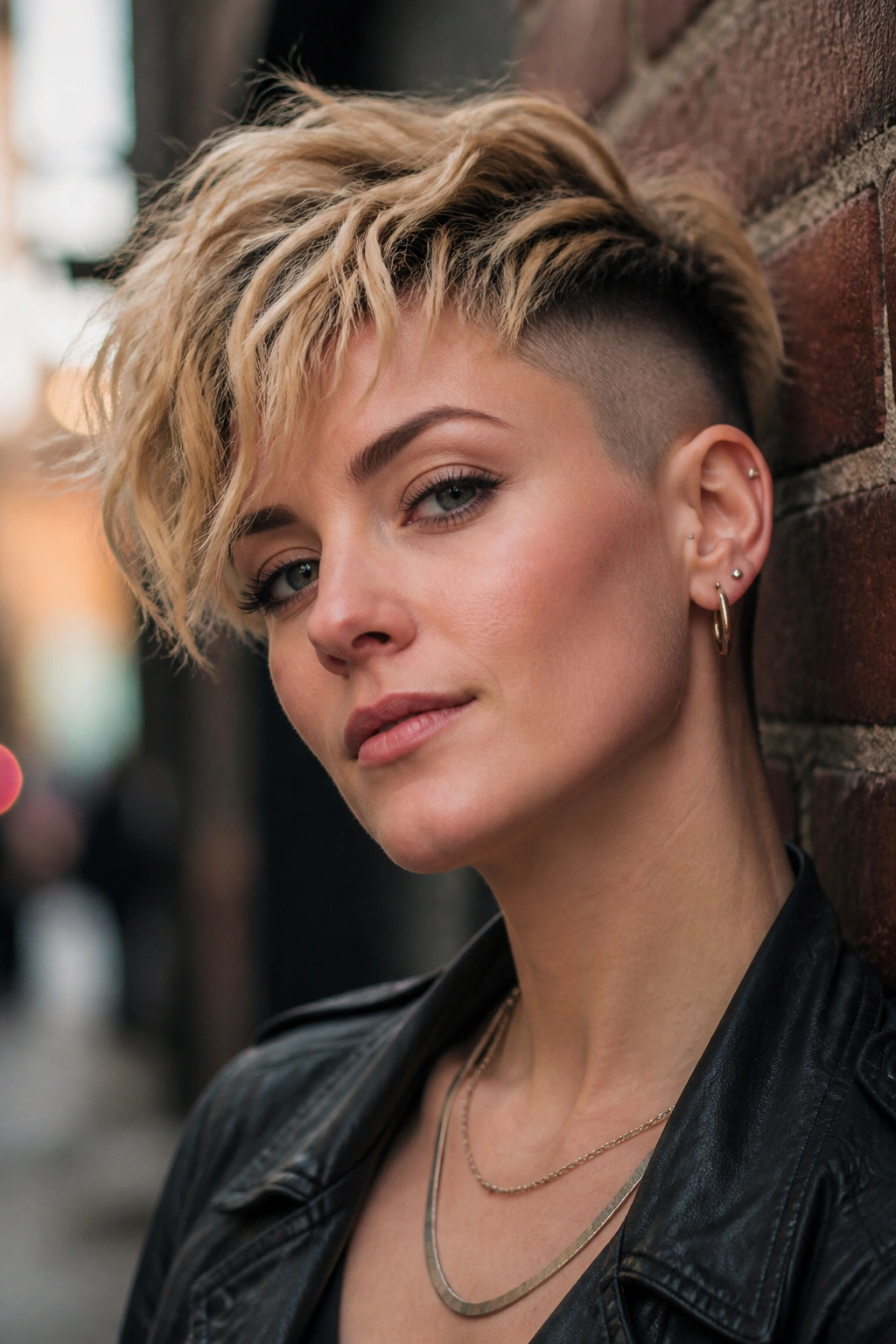
If your hair is thick, this one earns its keep fast. An undercut removes bulk from the lower layers, which means the top can stay messy and piecey without ballooning out on the sides.
Unlike a soft pixie, this version has a bit of edge baked in. The shaved or closely clipped section under the top layers creates a stronger shape and makes the longer pieces above it easier to push around. That’s useful if your hair tends to sit heavy at the ears or puff at the crown.
It’s also a good match for active people. Short sides dry quickly. Sweat dries fast too, which sounds boring until you’ve had a day where your hair refuses to settle back down after a workout.
Who it suits best? Strong cheekbones, thicker hair, and anyone who likes a slightly tougher finish. Who should think twice? If you want softness around the sides of your face, an undercut can feel too exposed unless the top is left a little longer.
A little matte paste on the top layer is enough. Keep the undercut hidden or visible on purpose. Halfway is where it starts to look accidental.
7. Feathered Lift Pixie
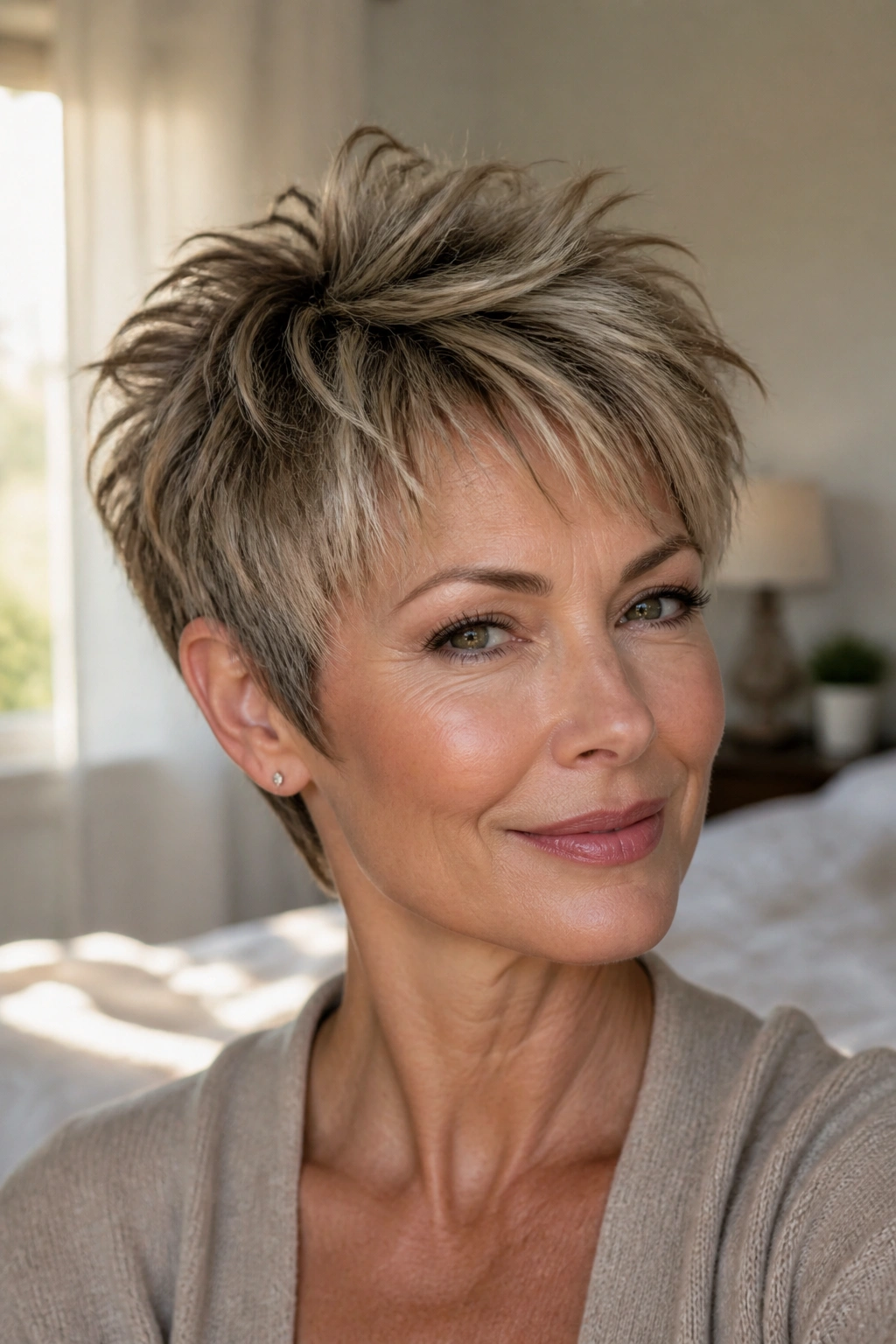
Feathered texture gives the cut movement without making the ends look blunt. That matters more than people think, because blunt short hair can feel heavy fast if the shape is not balanced.
Crown Lift
Ask for short, feathered layers through the top and crown, with the longest pieces left just long enough to flip in different directions. A blow dryer aimed at the roots for 20 to 30 seconds can make a huge difference here. You do not need a full salon blowout. Just enough lift to stop the top from sitting flat.
Around the Ears
The hair at the sides should stay light and slightly narrow. If the area near the ears gets too wide, feathered texture loses its shape and the cut starts to look puffy. A stylist usually controls this with careful point cutting or razor work.
This is one of the easiest short cuts to wear with fine hair, because the layers create the illusion of density without piling too much weight on top. A little volumizing spray at the roots and a touch of cream on the ends is usually enough. Nothing dramatic. That’s the charm.
8. Curly Tousled Pixie
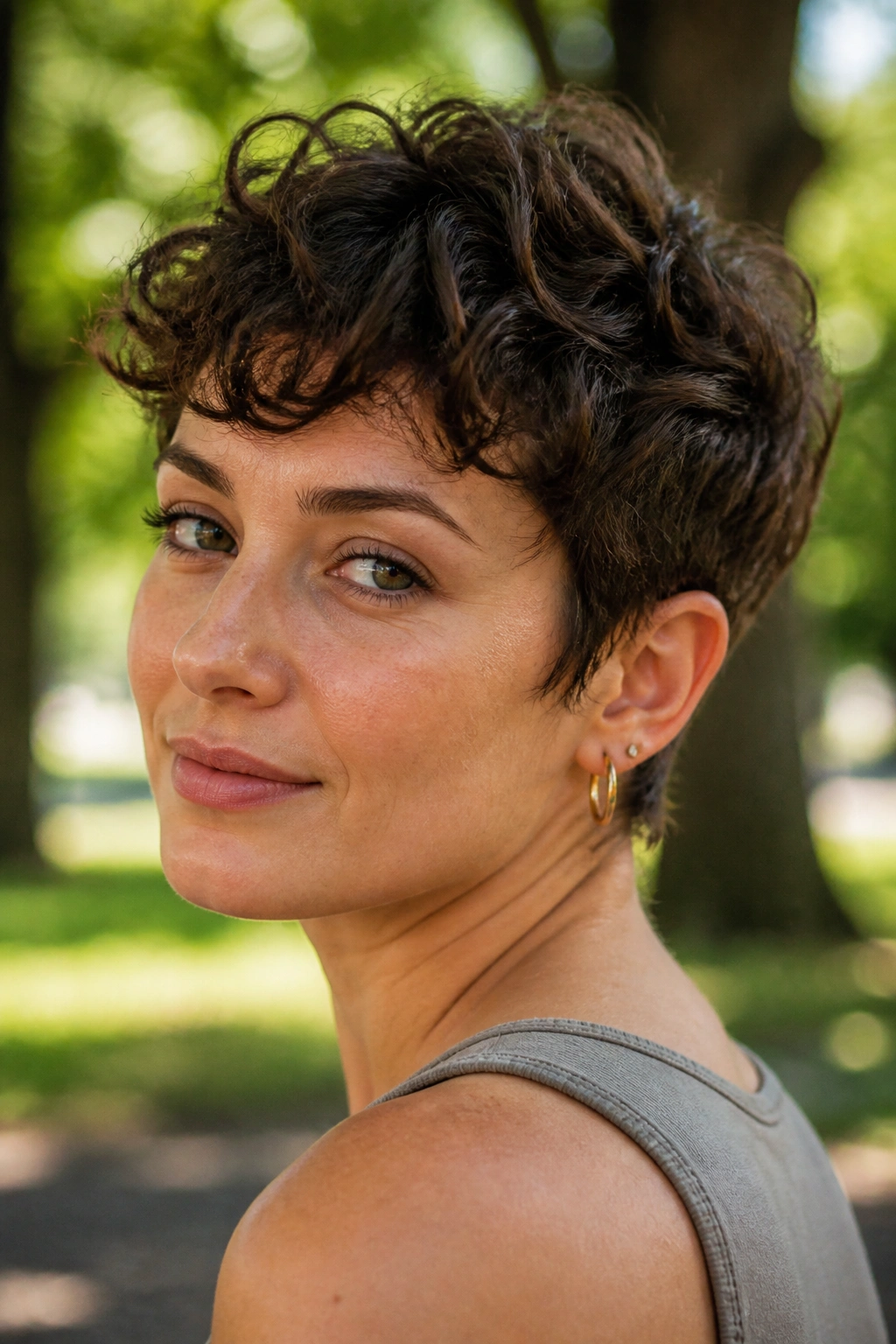
Curly hair and messy pixie cuts get along better than a lot of people expect, but only when the cut respects the curl pattern. If the top is cut too short or the sides are too bulky, the whole thing can turn fuzzy in a hurry.
The best version keeps enough length on top for curls to spring rather than clamp. That means you want soft layering, not a blunt chop. The shape should follow where the curls want to sit when they’re dry, because wet curls always lie.
A leave-in conditioner or curl cream works better than a heavy wax here. Scrunching with your hands while the hair is damp helps the curl clumps form, and a diffuser on low heat can keep the texture lifted instead of smashed against the scalp. If you like a messier finish, break up a few curls at the crown once the hair is dry. Don’t overdo it. Curly pixies can go from cute to frizzy fast.
Best move: cut curl by curl, or at least very carefully, so the shape isn’t guessed at while the hair is stretched straight.
9. Slick-Root Texture Pixie
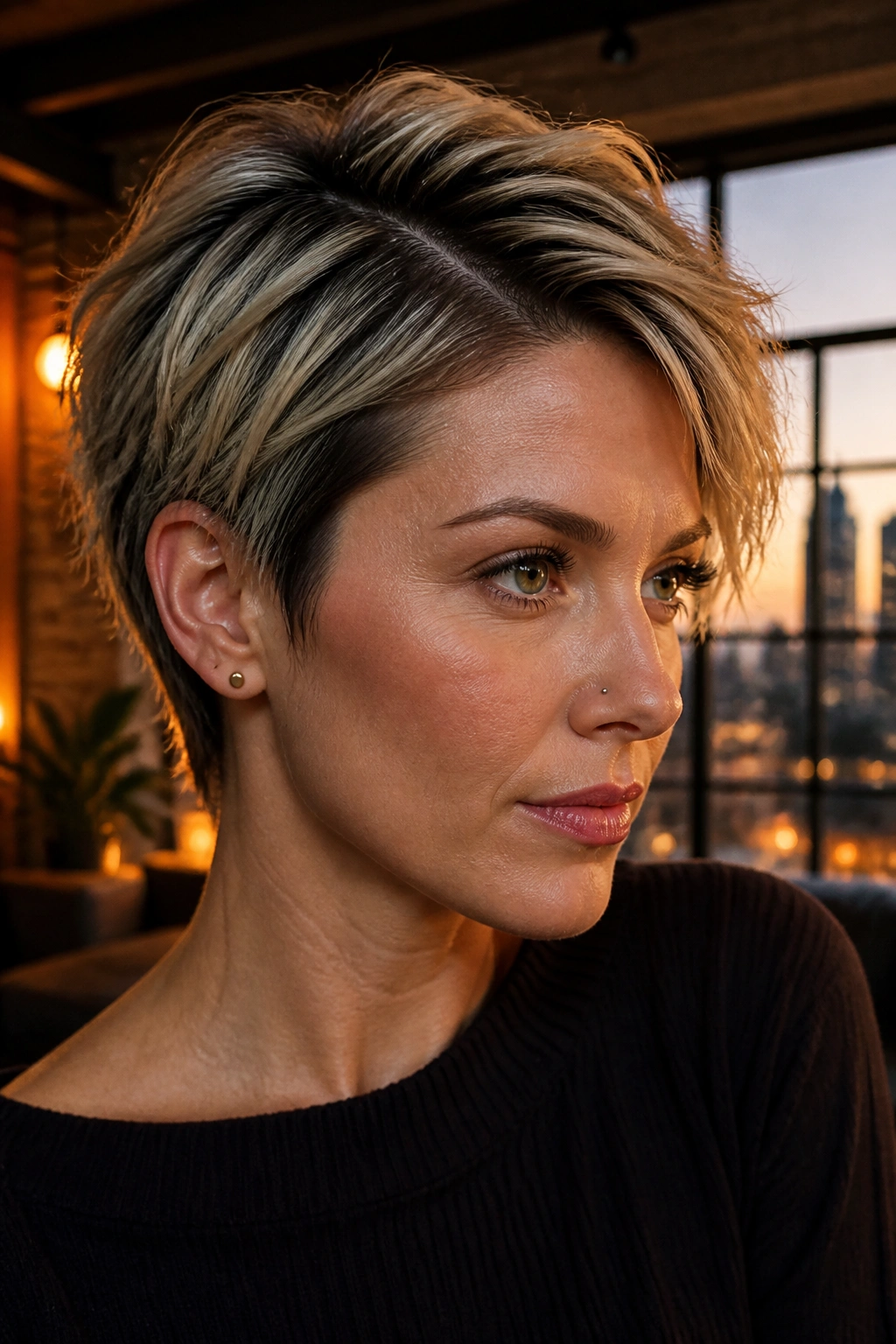
A little smoothness at the roots makes the messy parts look better. Strange, but true. If the whole head is equally rough, there’s no contrast, and contrast is what keeps this style from looking flat.
The idea is simple: keep the hair near the hairline a bit smoother, then push the texture into the mid-lengths and ends. That creates a polished base with loose movement on top. It works especially well for thick hair, because the slicker roots stop the style from ballooning outward.
This cut also has a nice evening feel. Add a side part, smooth the first inch or so near the scalp with a small amount of pomade, then twist the top pieces for separation. You end up with something that looks deliberate without being stiff. Not glossy. Not crunchy. Better.
For makeup-heavy looks or sharper clothes, this version gives the face a cleaner outline. It’s one of the few short styles that can move from casual to dressed up with a tiny change in product.
10. Asymmetrical Messy Pixie
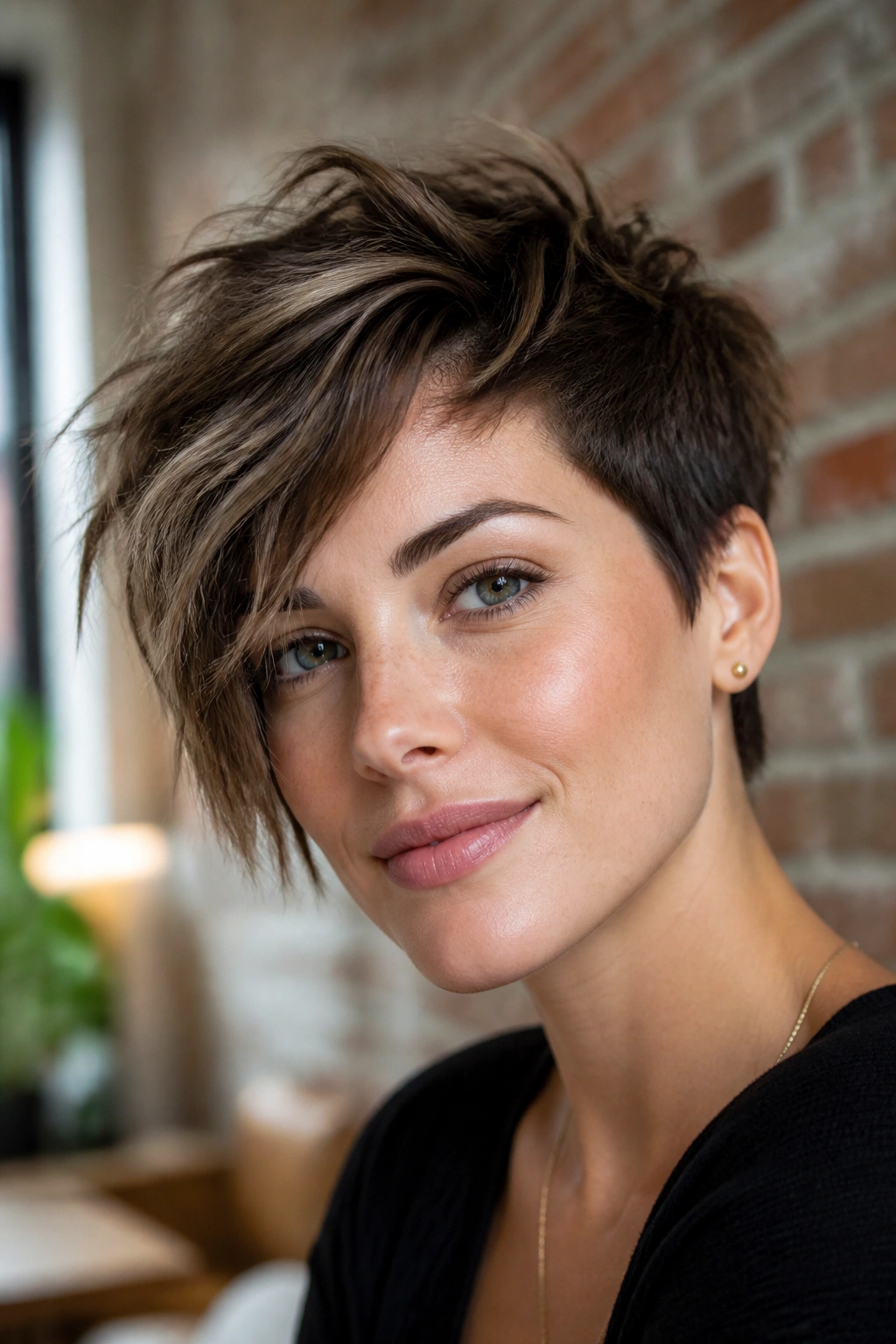
One side longer, one side tighter. That’s the basic shape, and it does a lot of work without asking much from you.
The diagonal line pulls the eye upward, which gives the cut some tension. Messy texture softens that line so it doesn’t feel severe. I like this version for people who want a short cut with a little drama but do not want a full undercut or spiky finish.
What to Watch For
- The longer side should skim the cheekbone or jaw, not hang into bob territory.
- The shorter side needs clean edges so the shape reads on purpose.
- A light wax or paste helps keep the long side from collapsing.
- The crown should still have movement, or the asymmetry can feel too rigid.
This cut plays well with strong brows and bold earrings, because the off-balance shape leaves room for accessories to matter. It can also help if one side of your face is a bit fuller than the other. The longer side acts like a frame, and the messy top keeps it from looking overmanaged.
11. Shaggy Pixie Mullet Hybrid
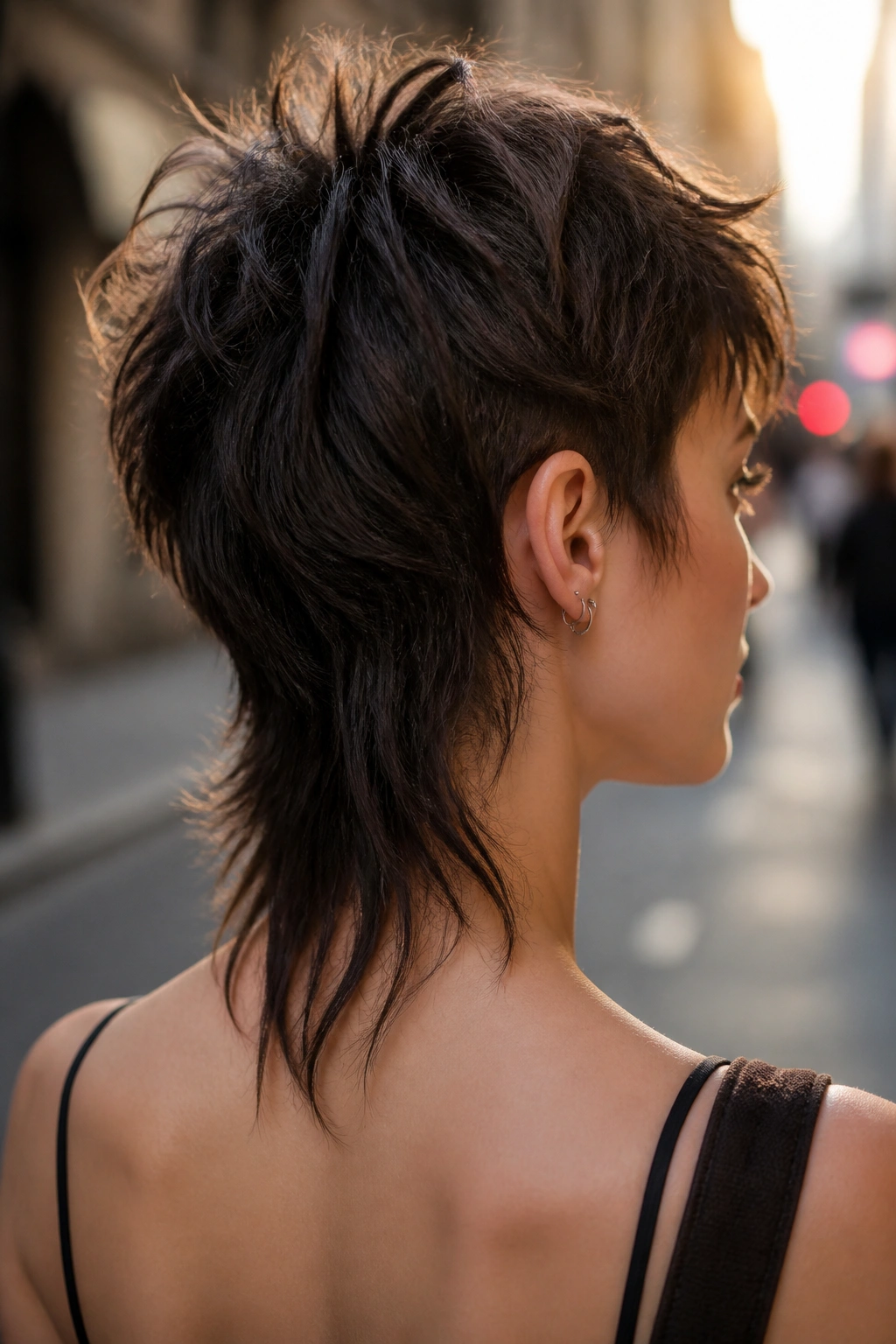
This is the boldest option in the group, and it knows it. Shorter on the sides, longer in the back, and full of broken-up texture, the pixie mullet hybrid gives you that shaggy finish without giving up the ease of short hair up front.
The back length is what changes the mood. It stops the cut from feeling neat in the classic sense and gives the silhouette a little movement when you turn your head. The top stays piecey, the nape gets a little extra length, and the whole thing feels rebellious without needing much styling time.
It works best when the layers are carved with purpose. If the back is too long and the top too short, the cut can look disconnected. If the texture is balanced, though, it’s one of the most interesting messy pixie cuts around because it changes shape as you move.
This is a good pick for people who like a slightly punk look, or anyone who wants their hair to feel less buttoned up. You don’t need perfect symmetry. In fact, that would miss the point.
12. Razored Soft Pixie
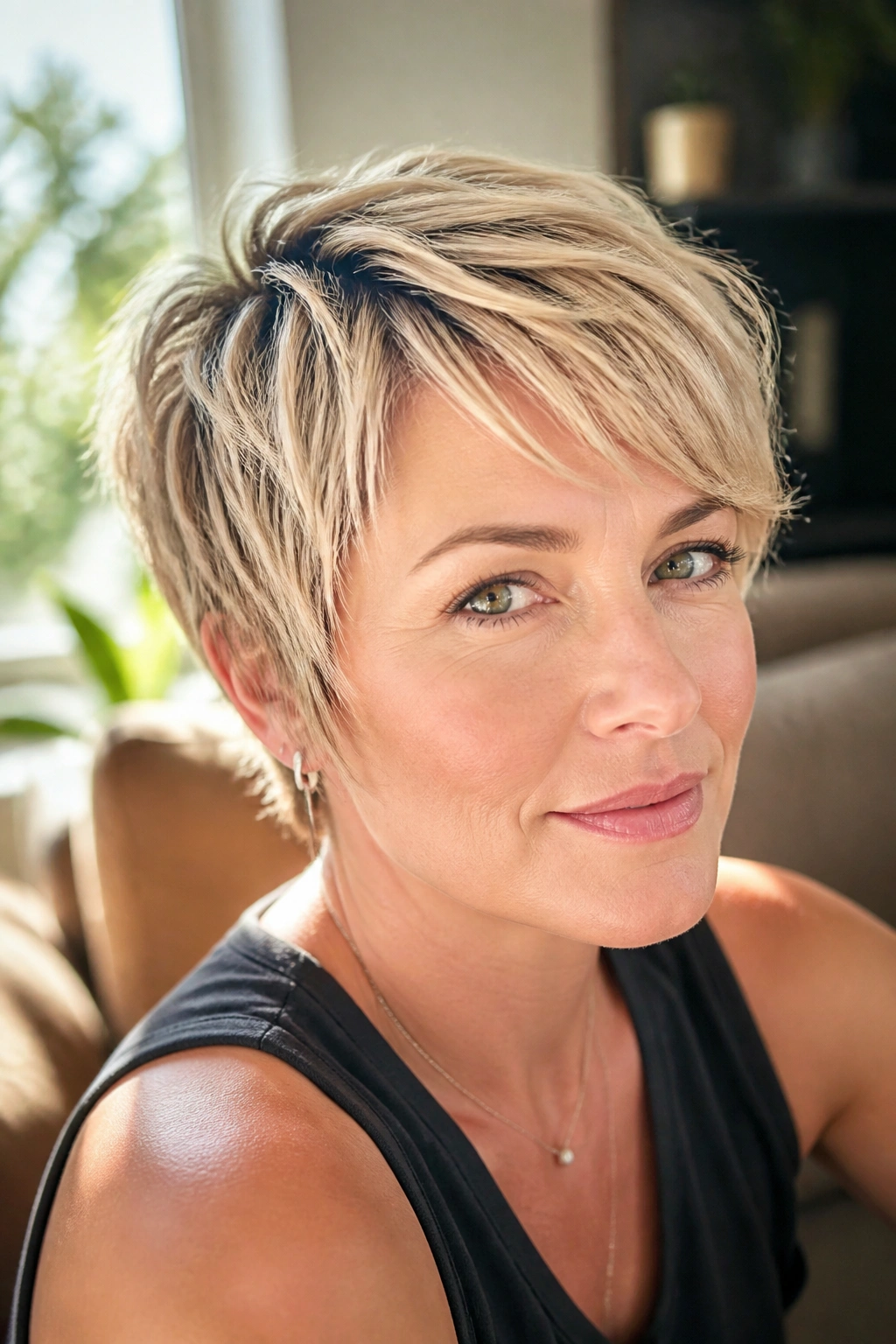
Why does a razor-cut pixie feel lighter than a scissor-cut one? Because the ends taper instead of sitting as one solid line. That subtle difference changes how the hair falls, especially around the crown and temples.
How to Ask for It
Tell the stylist you want soft, feathered ends rather than blunt pieces. The goal is a cut that has movement even when you haven’t styled it. A razor can help, but only in the hands of someone who knows how your hair reacts. Very fine hair may get too wispy if it’s over-razored, and very curly hair can frizz if the cut is too aggressive.
The finished style usually needs a small amount of cream or serum rubbed just through the ends. Skip heavy root product. That would flatten the one thing this cut is good at: airy movement.
A razored pixie is especially useful if you want softness around the jaw and neck. The edges blur a little, which keeps the cut from feeling sharp or severe. It’s a quiet style. Not boring. Just quieter than the spiky, high-texture versions.
13. Spiky Volume Pixie
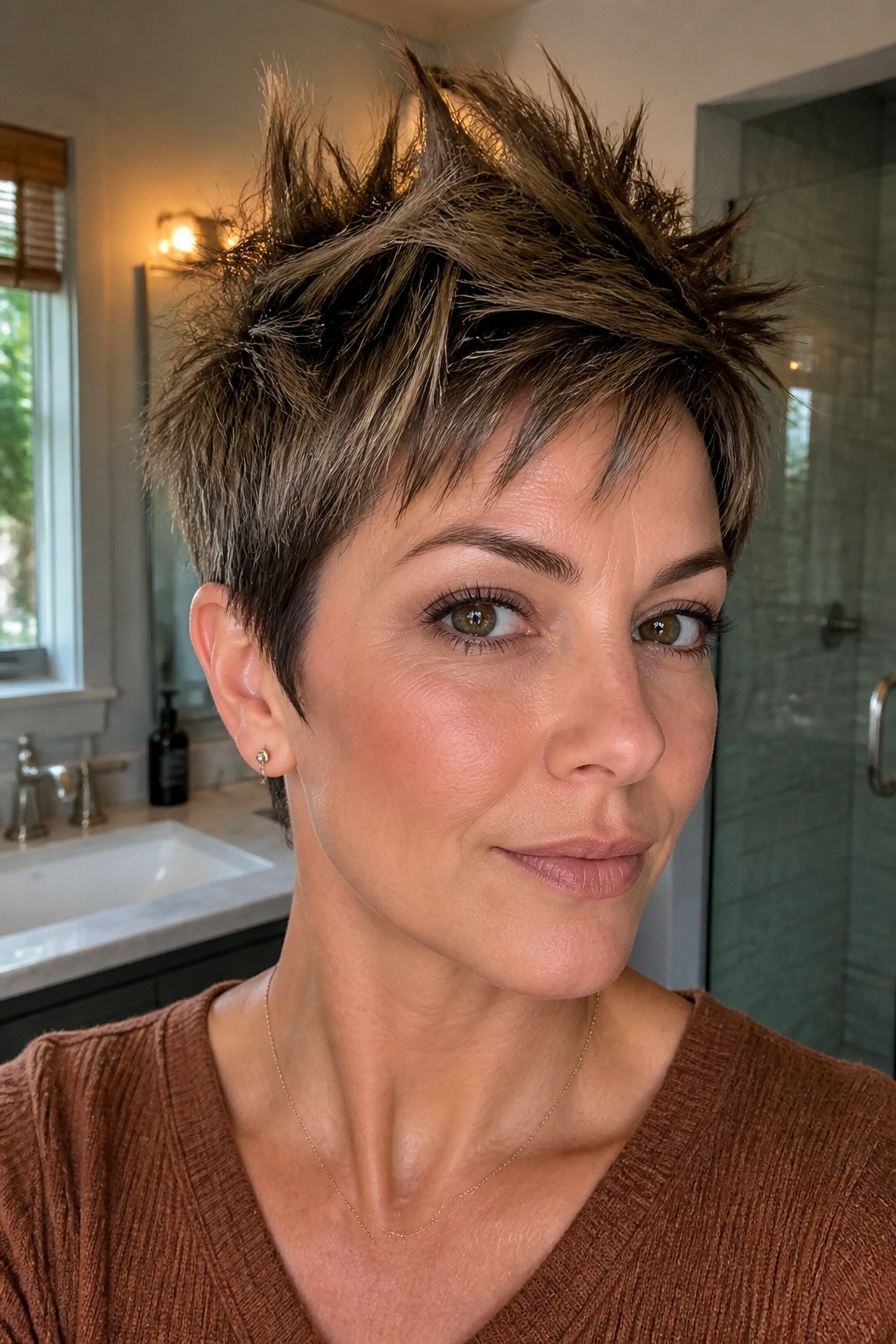
A lot of people picture spiky hair as stiff and dated. This version fixes that by keeping the spikes soft, separated, and a little irregular.
The volume comes first, then the texture. Blow-dry the roots up and forward, not straight back, so the top has some lift without looking like it’s trying too hard. After that, use a matte paste to pinch a few pieces into place. You want movement, not little helmets of gel.
Unlike a classic spiky pixie, this one doesn’t rely on hard edges or shiny product. It looks better when some strands fall out of line. That makes it easier to wear every day, especially if your hair has a natural bend or you don’t want to spend time making every piece stand up evenly.
It’s a strong choice for oval and square faces because the height adds length and the broken texture softens the outline. If your hair is very straight, a bit of root spray helps. If it’s thick, a little thinning near the top can keep the spikes from clumping together.
14. Air-Dried Wavy Pixie
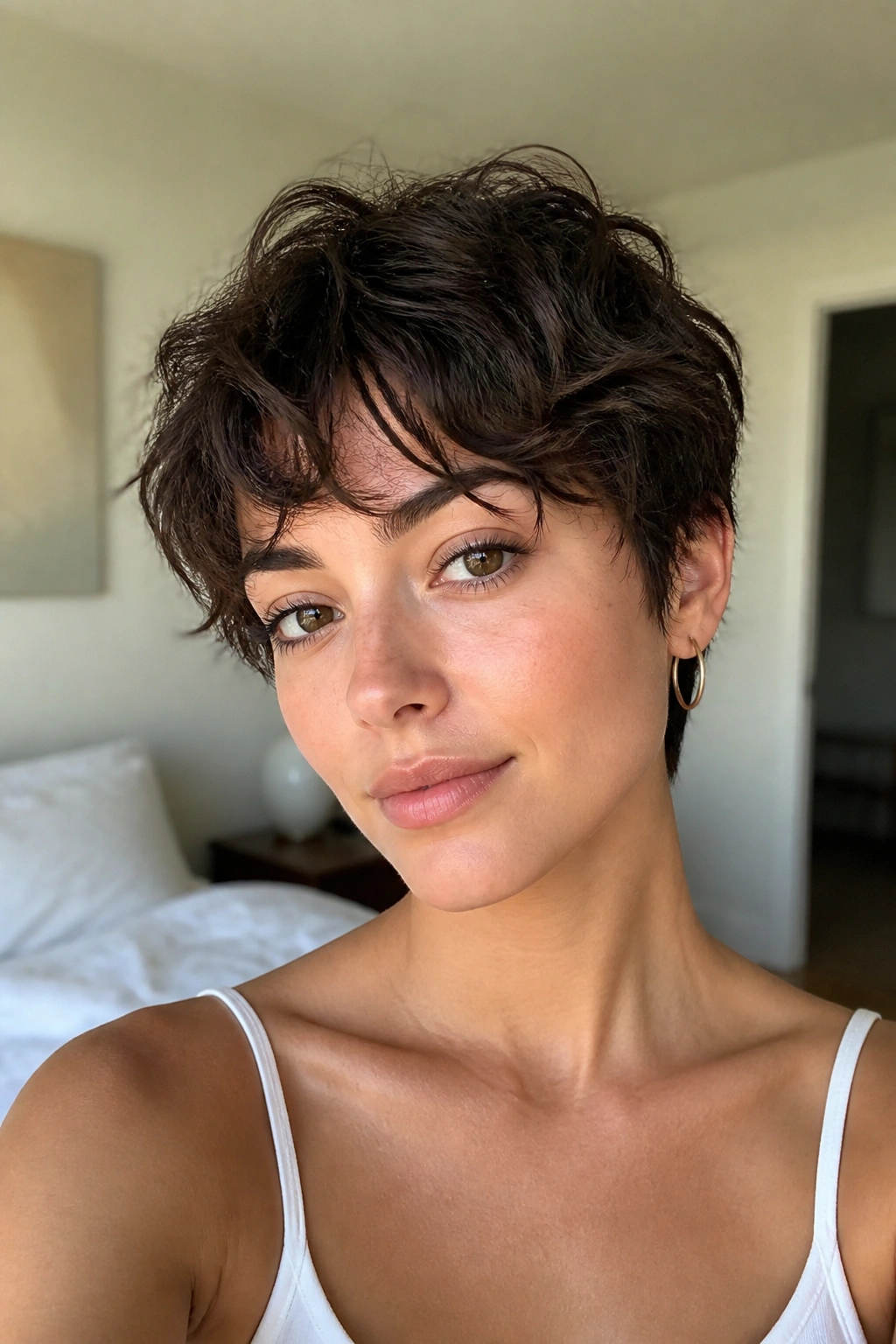
Some cuts are built for the blow dryer. This one is happier left alone. If your hair has a natural wave, a shorter crop with a bit of length on top can dry into a messy shape on its own, which is one reason it has such an easygoing feel.
The key is not overworking it while it’s wet. A light leave-in, a small amount of wave cream, and gentle scrunching are usually enough. Then let the hair dry with minimal touching. Once the waves set, you can break up a few pieces with dry fingers or a tiny drop of paste at the ends.
This cut works because it follows the wave pattern rather than forcing it into a different shape. Hair that wants to bend will do that better when the layers are soft and not too short. If the top is cut too blunt, the waves can bunch up and make the style puff. If the top is too long, the shape loses that clipped, pixie feel.
There’s a nice honesty to an air-dried wavy pixie. It looks like hair, not a project.
15. Rounded Messy Pixie
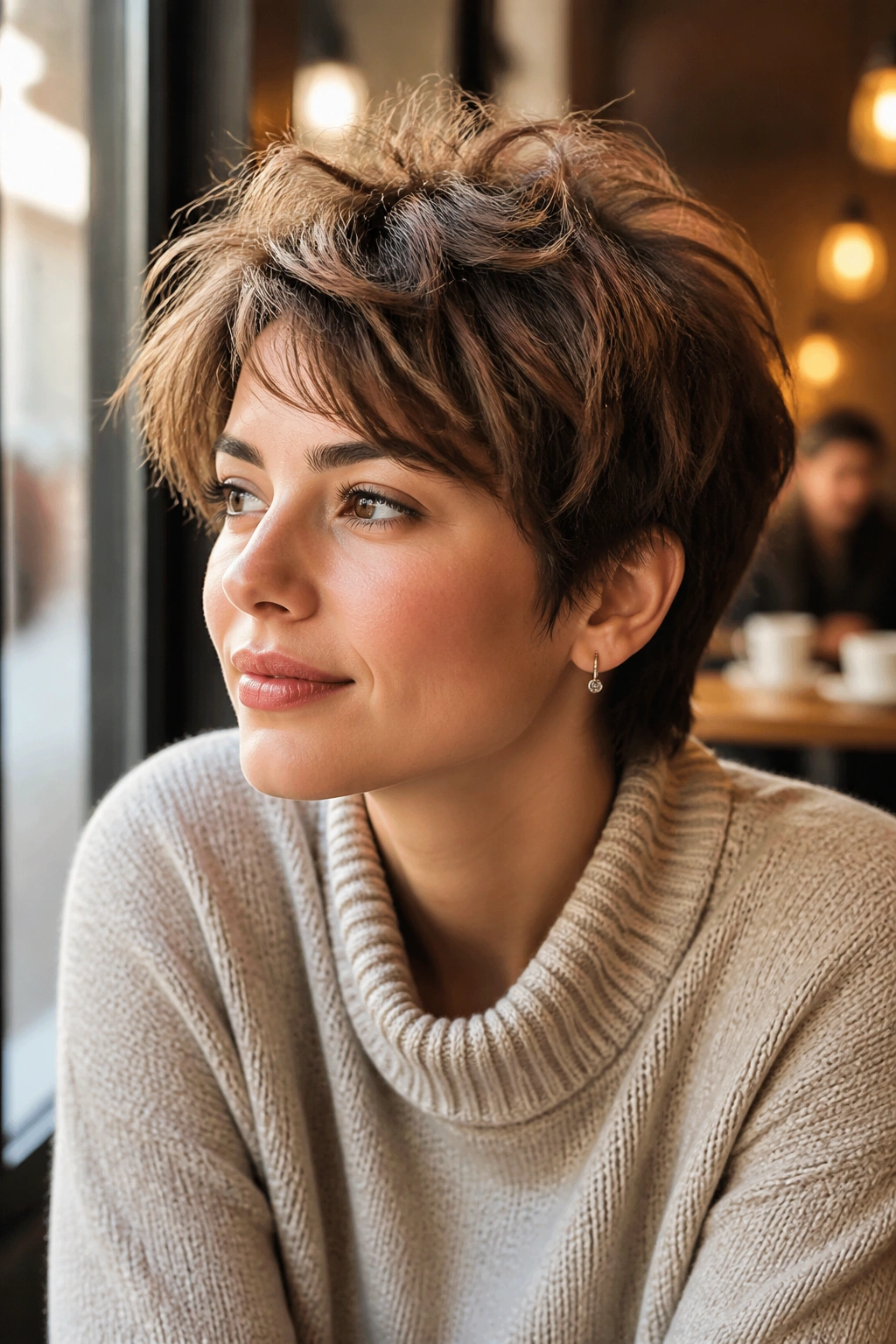
A rounded messy pixie is for anyone who wants softness without giving up short hair. The outline curves gently around the head, so the style feels fuller and less angular than a sharply cut crop.
Why It Feels Softer
The round shape helps balance strong cheekbones, narrow chins, or a face that looks better with some width near the temples. The texture on top still stays messy, but the perimeter stops the cut from feeling too severe. That mix is the whole appeal.
A lot of people think rounded shapes mean helmet hair. They don’t, if the layers are light enough. The top should still have pieces that move in different directions. The back and sides just need enough curve to keep the silhouette smooth.
Good Signs to Ask for
- Soft layering through the crown.
- Narrower sides near the ears.
- A neckline that follows the natural curve of the head.
- Texture products with a matte or satin finish, not high shine.
This cut is one of the easiest to wear with glasses, too. The curved shape gives frames room to sit without competing with the hair.
16. Platinum Textured Pixie
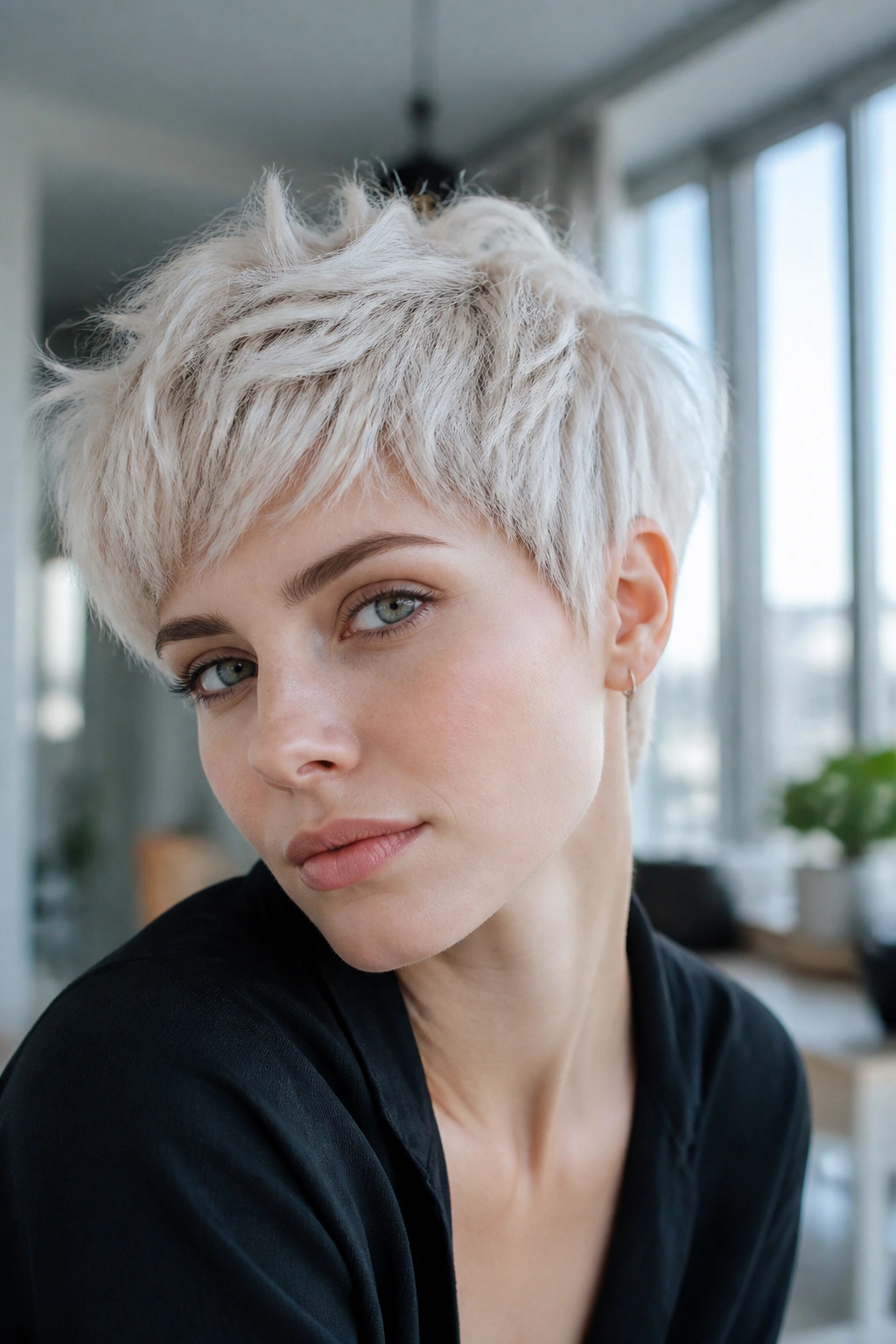
Light color and messy texture are a strong pair when the cut has enough shape. Platinum blond hair shows every layer, every chipped end, every tiny bend at the crown, which means texture gets a lot of visual help.
That can be a blessing and a curse. A bad cut looks worse in a light color because nothing hides. A good cut looks sharper because each piece stands out. If the layers are choppy and the edges are softened, platinum brings the whole thing to life without any extra styling tricks.
Maintenance is part of the deal. Light hair needs toning and care to stay from turning brassy or dry, and short platinum hair can show breakage faster than darker shades. Keep the ends moisturized and avoid piling on dry shampoo every day. That stuff can make the hair feel chalky fast.
This version suits people who like a bold finish but still want easy styling. A platinum pixie with texture looks best when the color and cut are working together. If one is lazy, the other can’t save it.
17. Deep-Brunette Piecey Pixie
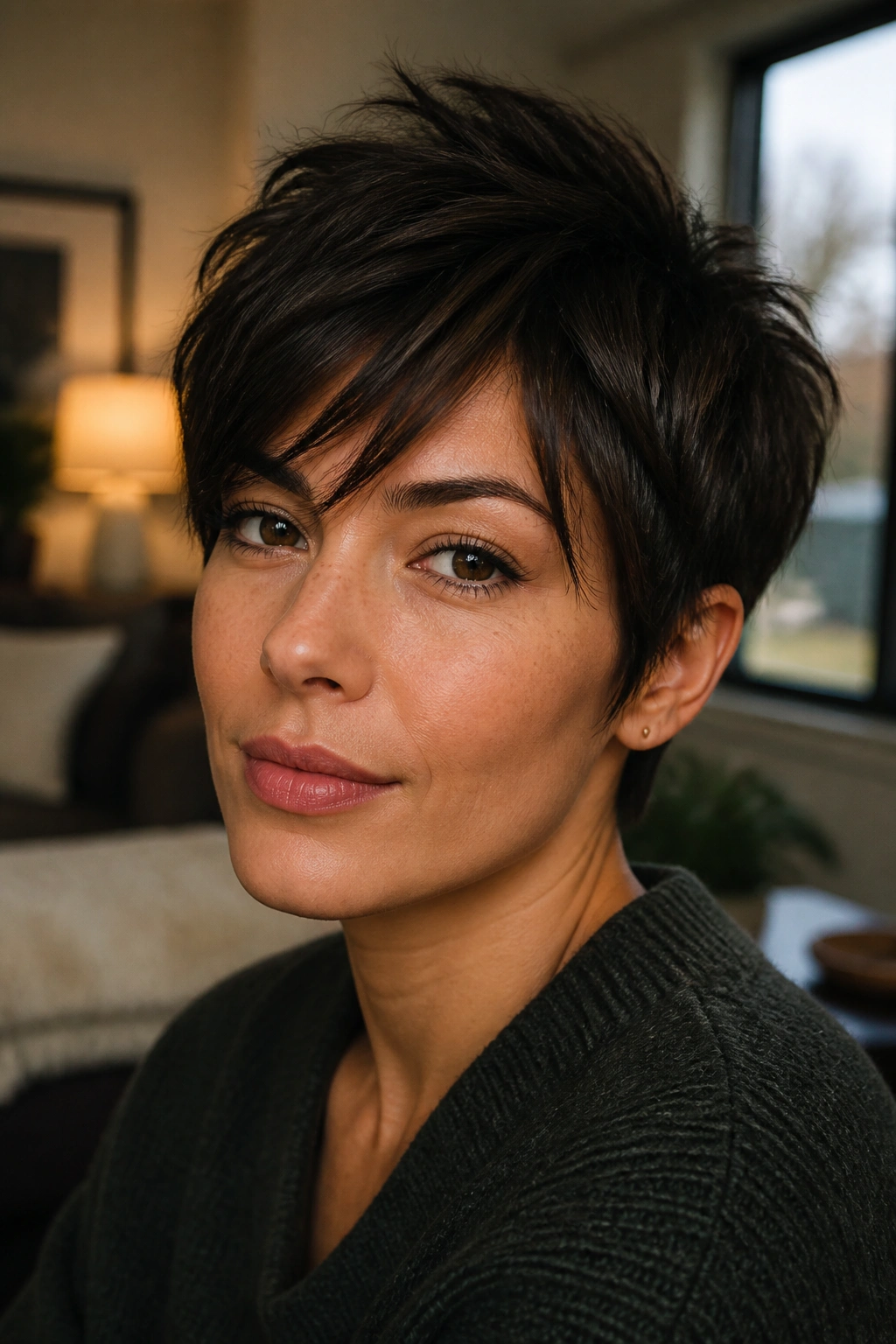
Brunette texture has a different feel from blond texture. The darker color makes the pieces look chunkier, so a piecey pixie can feel richer and a little more grounded without needing extra volume.
The cut itself usually benefits from short, controlled layers at the crown and a slightly longer fringe or front piece. That gives the darker shade somewhere to catch light, even if the color is one solid tone. A matte paste works well, but don’t overload it. Too much product can make brunette hair look dull in a hurry.
How to Keep It From Looking Flat
Use a root lift spray before drying, then push the front pieces in different directions with your fingers. That tiny bit of disorder creates separation. If the top sits too smooth, the dark color can swallow the shape.
This is a great option if you want a polished version of a messy pixie cut. It can look chic, casual, or a little moody depending on how much lift you give the front. The darker tone makes the texture feel more grounded. Less airy. More defined.
18. Long-Top Messy Pixie
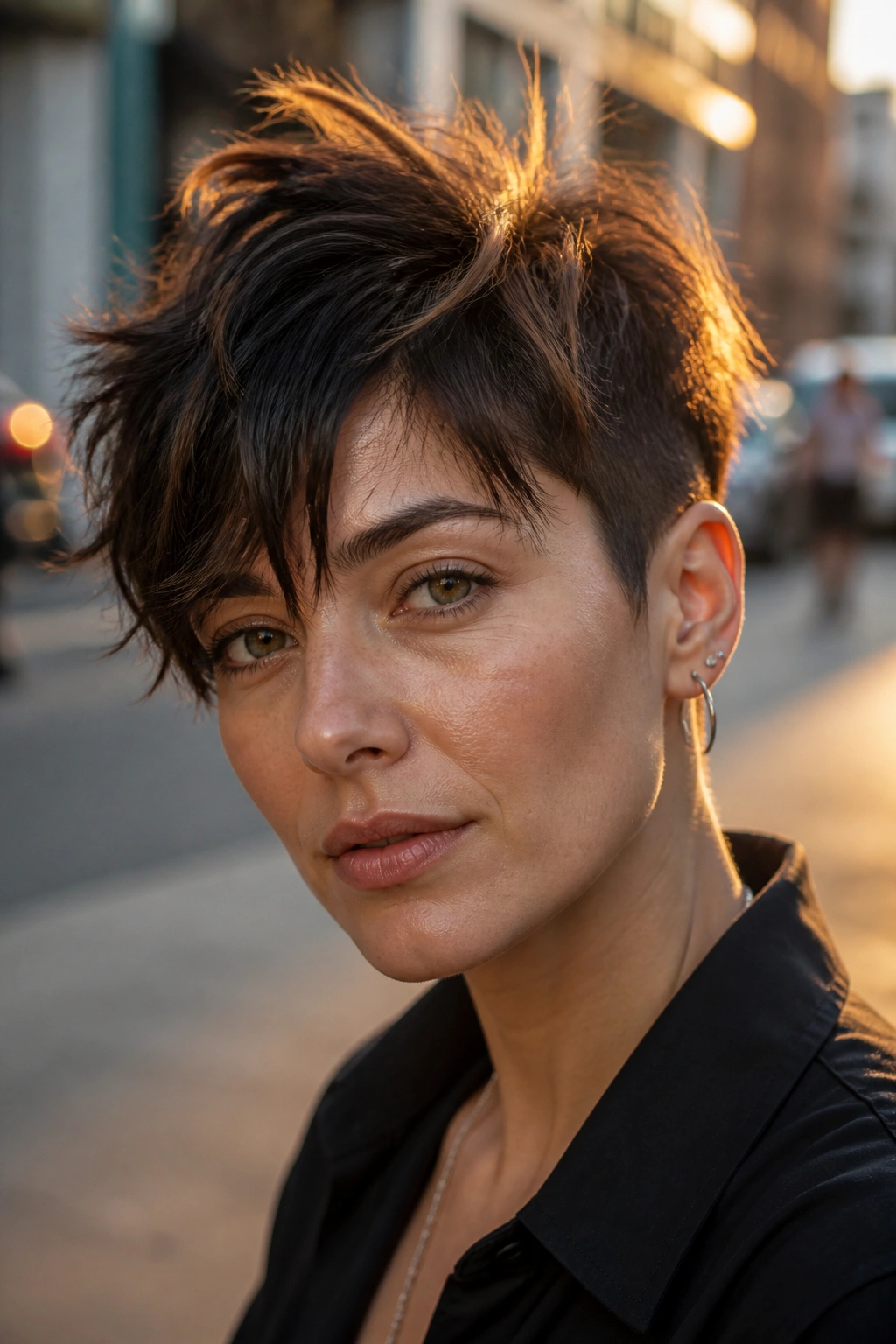
A long-top messy pixie is the easiest version for people who want short hair without going all the way in. The sides stay cropped, but the top has enough length to part, sweep, spike, or tuck behind the ear.
That extra length is the reason it works so well for styling. You can wear it messy one day, smoother the next, and slightly side-swept when you want the face to feel softer. It also gives you room to grow into the cut instead of panicking when the salon day slips by a little.
The shape looks best when the top isn’t all one length. Choppy layers keep it from turning into a flat bowl cut, and a slightly tighter nape keeps the silhouette neat. If your hair is thick, ask for some internal weight removal so the top doesn’t swell. If it’s fine, keep the layers soft and use a light volumizing spray at the roots.
This is the version I’d hand to someone who says, “I want a pixie, but I’m nervous.” Fair enough. It gives you room.
Messy pixie cuts work because they respect texture instead of fighting it. The best ones look quick, but they’re not careless. That’s the difference that matters.
If you’re choosing one, think less about the photo and more about the way your hair actually behaves after you wash it. That part decides whether the cut feels easy or annoying by day three.
