



Fine hair and a pixie cut get along better than most people think. The catch is shape. If the cut is too soft, too layered, or too long in the wrong places, fine strands go limp fast and start looking tired by lunch.
The best pixie cut ideas for fine hair do one thing well: they build the illusion of density without asking the hair to be something it isn’t. Fine hair is about strand thickness, not necessarily how much hair you have, and that distinction matters more than people realize. A head of fine hair can look full when the cut keeps weight in the right spots and removes it where it causes collapse.
I’ve seen plenty of pixies ruined by one mistake: too much thinning at the ends. That can leave the whole cut see-through, especially around the crown and sides where fine hair already needs help. A sharper perimeter, a bit of texture on top, and a clean shape around the nape usually do more for volume than a dozen choppy layers ever will.
So the real question is not whether fine hair can wear a pixie. It can. The better question is which version gives you lift, movement, and a shape that still looks good when you skip a full styling routine. The answers are below, and they’re not all the same cut with a different name.
1. Choppy Pixie Cut for Fine Hair
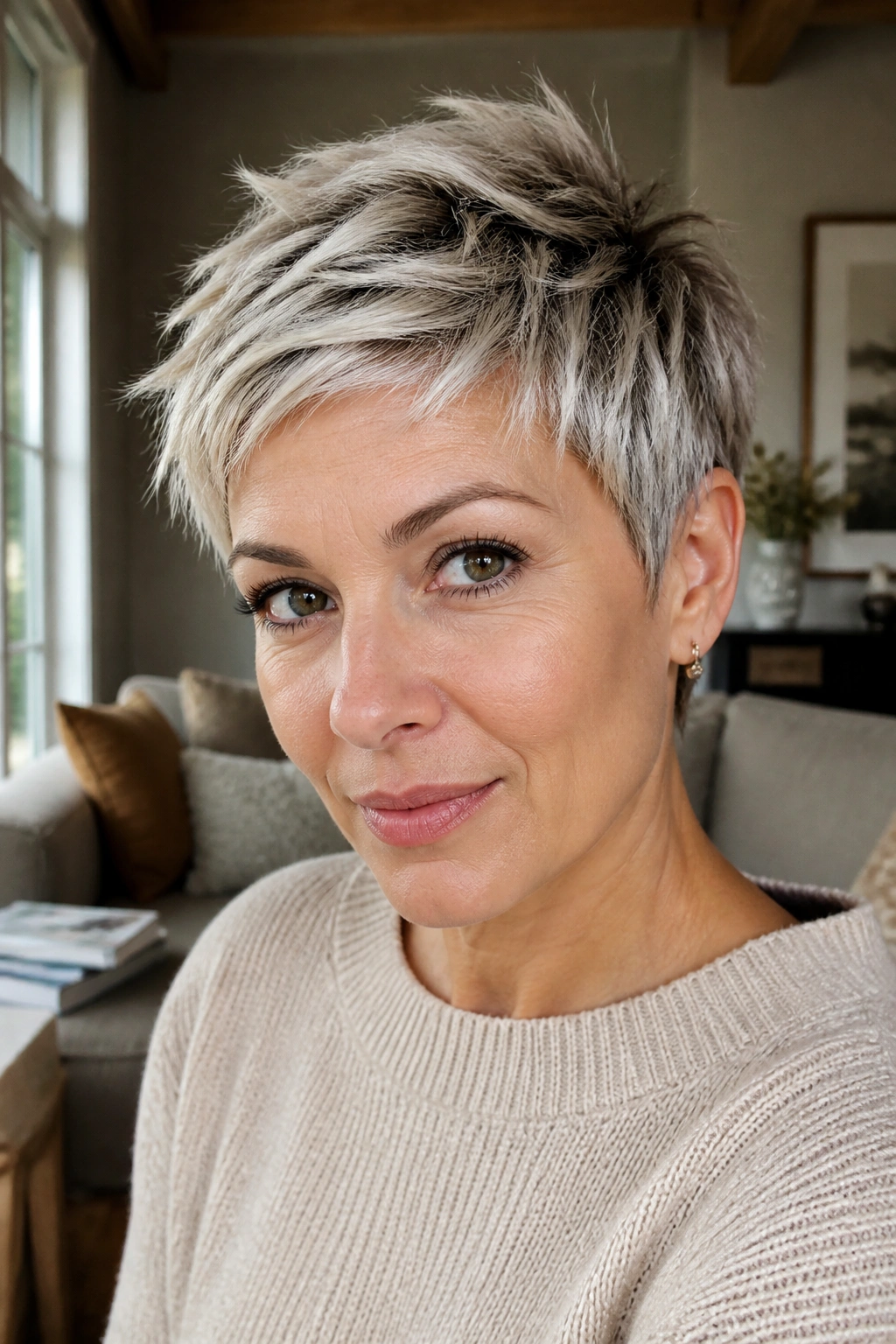
A choppy pixie cut for fine hair works because it gives the eye something to read as fullness. The little breaks in the line matter. Soft, uneven ends catch light differently than a blunt sheet of hair, so the style looks busier and therefore thicker.
Why It Works
The sweet spot is texture, not frizz. Ask for point-cutting through the top and a slightly longer crown, usually around 2.5 to 3.5 inches, with the sides kept closer to the head. That balance keeps the silhouette from puffing out in the wrong places. If the cut is too short everywhere, it can start to look sparse. Too long, and it loses the whole point.
- Keep the nape tidy and short.
- Leave enough length on top to pinch and lift with paste.
- Ask for broken-up ends, not heavy razor thinning.
- Dry it with your fingers first, then polish only the pieces that need it.
Best move: use a pea-size dab of matte paste, rub it between your palms until it disappears, and press it into the top layer only. Too much product will make fine hair collapse fast.
2. Side-Swept Pixie With a Long Fringe
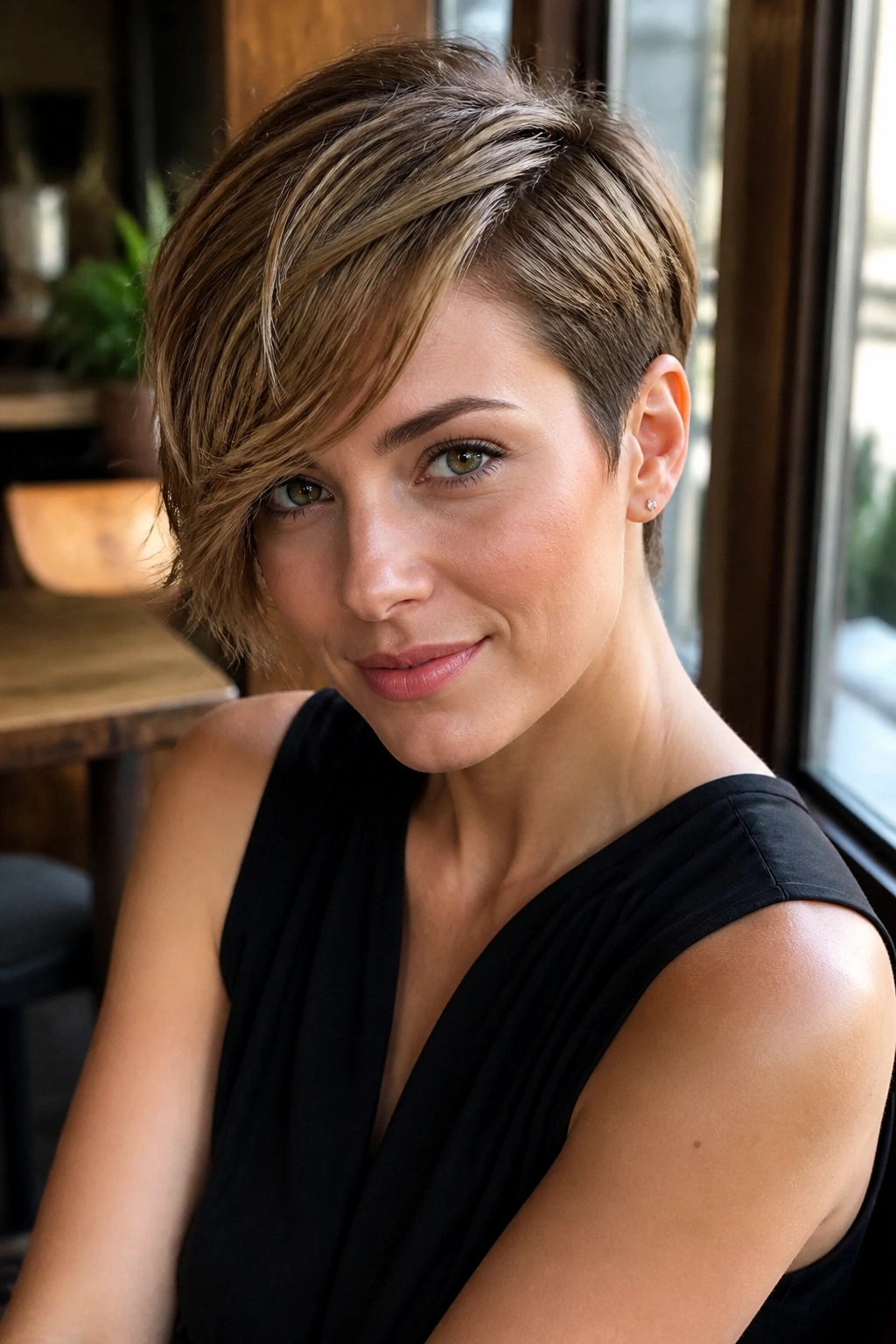
A long fringe changes everything when your hair is fine. It gives the front of the cut a sense of weight, and that weight keeps the style from feeling floaty or unfinished. The side sweep also softens the hairline, which is useful if your forehead is wider or if your front hair grows in a little irregularly.
The best version keeps the fringe long enough to brush across one eyebrow, then tapers it gently into the temple. Not too sharp. Not too shaggy. The result should look deliberate even when it’s messy.
This cut is also forgiving on mornings when you do not have time to fuss. Blow-dry the fringe in the direction you want it to fall, then let it cool in place. That small bit of setting makes a bigger difference than people expect. Fine hair forgets its shape quickly, so cooling matters.
A side-swept pixie is also one of the easiest ways to hide a cowlick at the front. If your hair pushes up at the hairline, this style turns that annoyance into lift.
3. Tapered Pixie With a Clean Nape
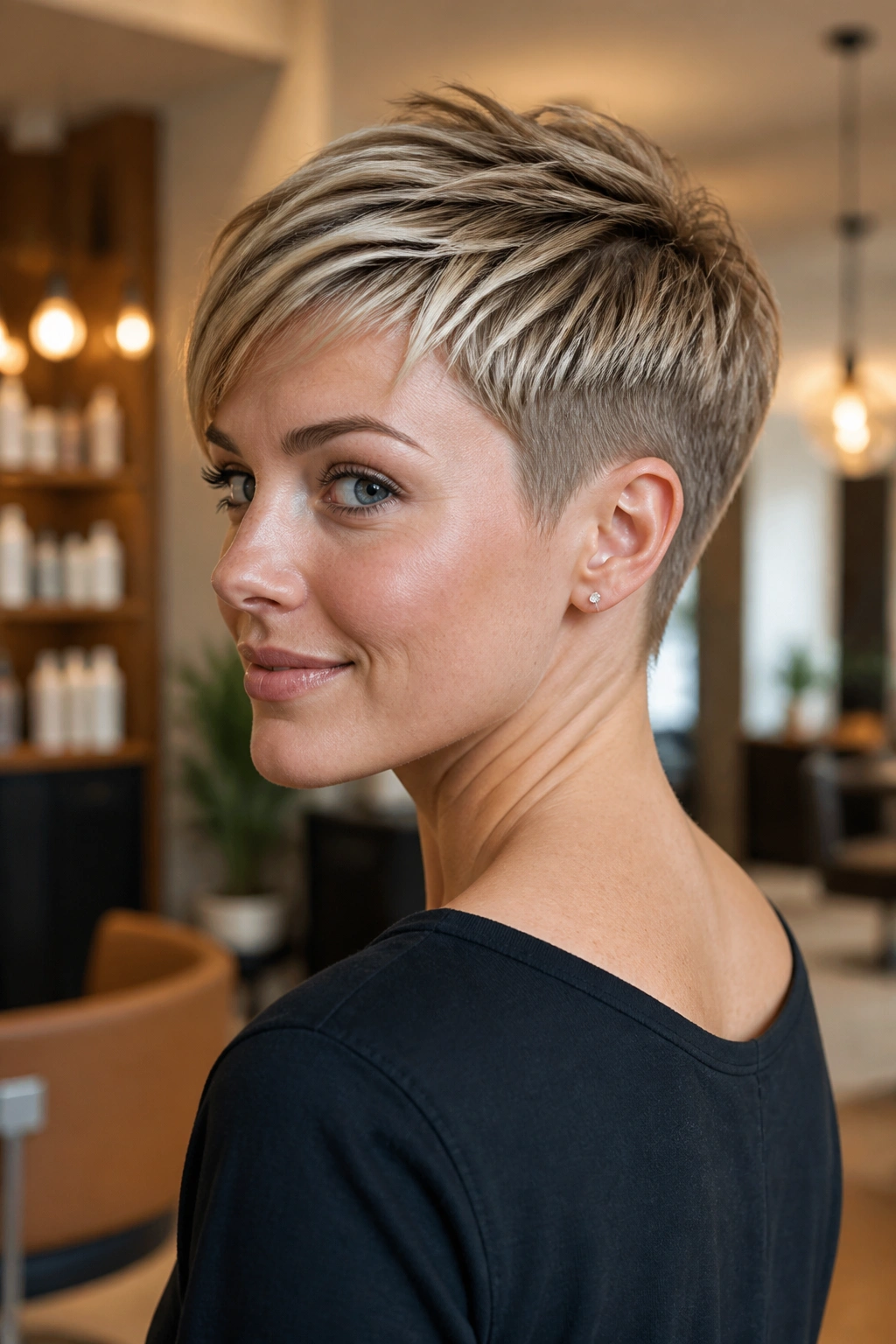
A tapered nape can make fine hair look denser everywhere else. That sounds backward, but it’s true. When the bottom edge is clean and close, the top looks fuller by contrast.
This version keeps the neckline snug, with the hair gradually lengthening as it moves toward the crown. The silhouette feels crisp. That crispness is useful on fine hair because loose, fuzzy edges are what make short cuts read thin. A good taper removes that problem before it starts.
How to Style It
Dry the back first. Seriously. Start with a small round brush or even just your fingers and aim the dryer downward at the nape so the short hairs sit flat instead of flipping out. Then lift the crown with a little root spray or mousse at the base.
A tapered pixie looks best when the sides are neat and the top is not overworked. If you keep combing it, it starts to separate in a bad way. One or two passes with your hands is usually enough.
This cut is a favorite for people who want something sharp but not fussy. It feels polished without needing a lot of product, and that matters when your hair type gets weighed down by the smallest thing.
4. Longer-Top Pixie With Short Sides
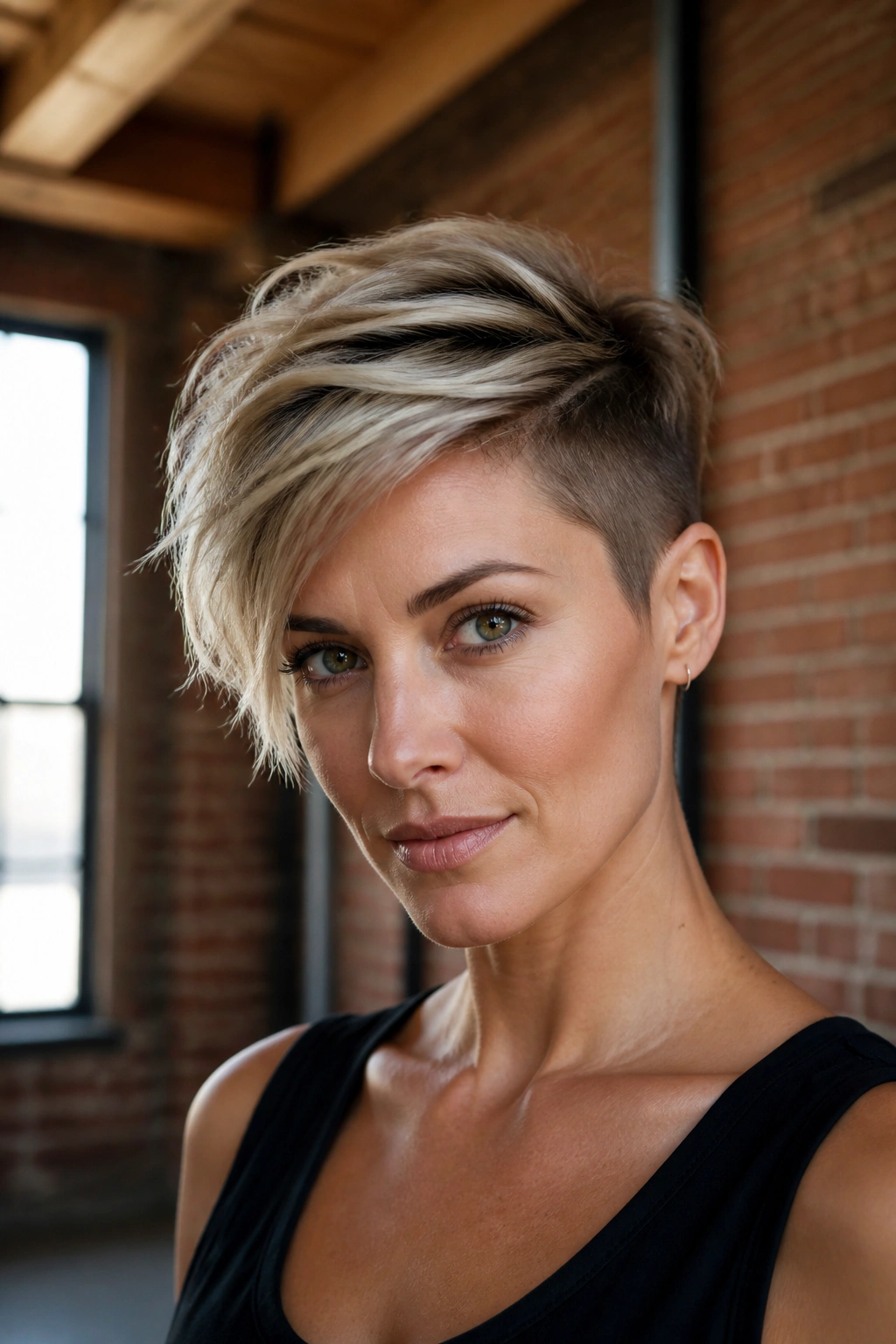
A longer top gives you room to play. That’s the whole appeal here. Fine hair often needs a little extra length on top so it can be pushed, flipped, or swept into shape without going flat the second you touch it.
The sides stay short, usually around the ear or just above it, while the top reaches 4 to 5 inches. That ratio helps the head look taller and the crown fuller. If the top and sides are the same length, the cut tends to sit there. No lift. No shape.
What to Ask For at the Salon
- Short, clean sides that hug the head.
- A top section long enough to move, not so long that it droops.
- Minimal thinning through the crown.
- Soft blending near the temples so the cut doesn’t look boxy.
This version works especially well if you like to switch between sleek and piecey styling. A side part one day, a forward brush the next. Two very different looks from one cut. That flexibility is why a lot of fine-haired people end up staying with it longer than they expected.
5. Feathered Pixie With Airy Ends
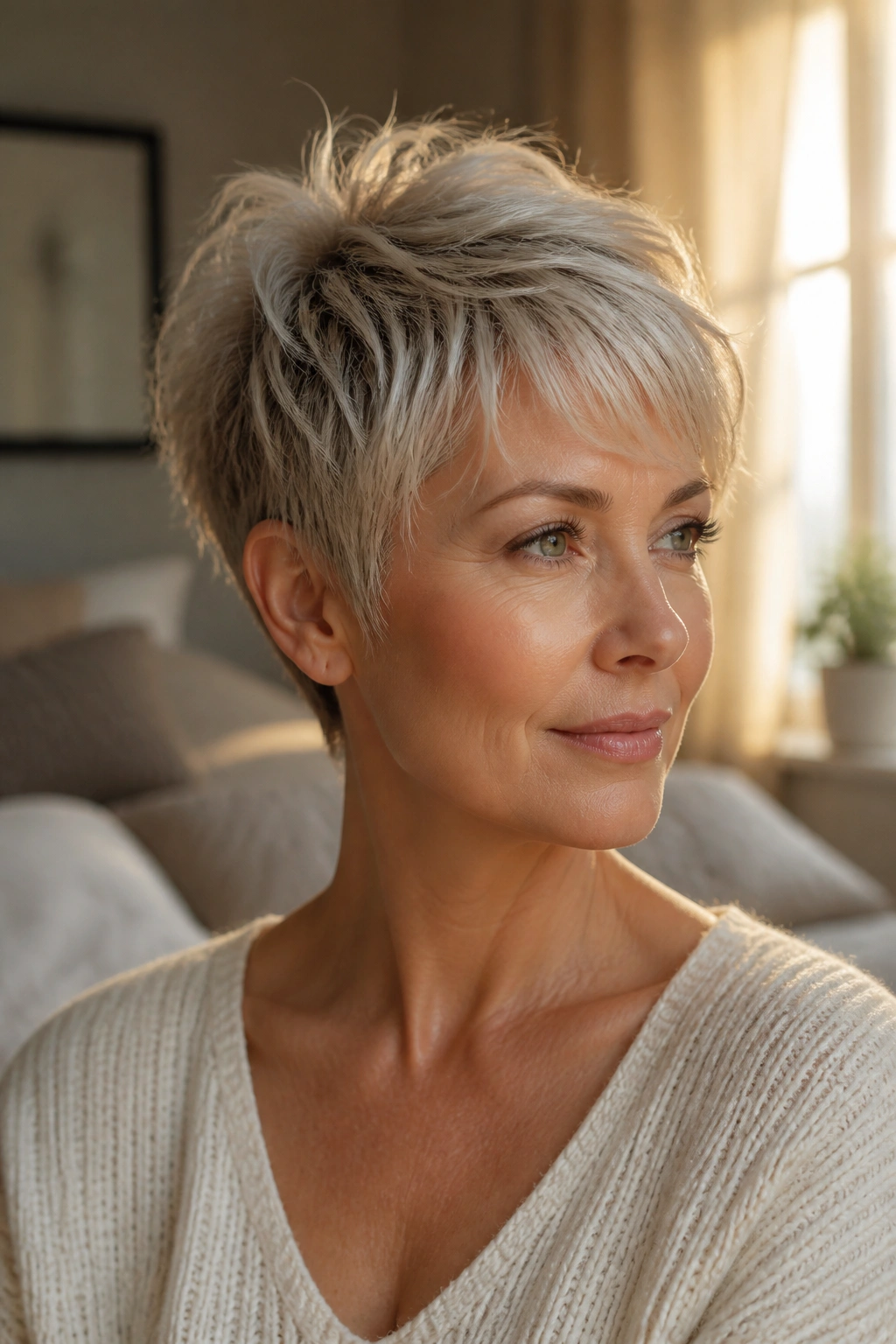
Feathering can be a gift to fine hair when it’s done with restraint. Not shredded. Not over-thinned. Just soft, light edges that move when you turn your head. The cut feels airy, which is not the same as fragile. There’s a difference.
I like this version for hair that lies flat but still has a little bend. A feathered pixie gives those bends somewhere to go. The top is often left slightly longer, then softened with light slide cutting so the ends don’t sit in one blunt line. That keeps the whole shape from looking blocky around the crown.
The trick is to avoid overdoing the texturizing. Fine hair can go wispy fast, and once it does, there is no volume left to work with. Ask for softness at the surface, not a heavy thinning through the interior. The outline should still feel whole.
A feathered pixie also ages well between trims. Even when it grows out, the shape stays forgiving because the layers blend instead of stacking up into a shelf. That matters more than people think. A cut that looks good at week one and week seven is worth keeping.
6. Bixie With a Broken-Up Edge
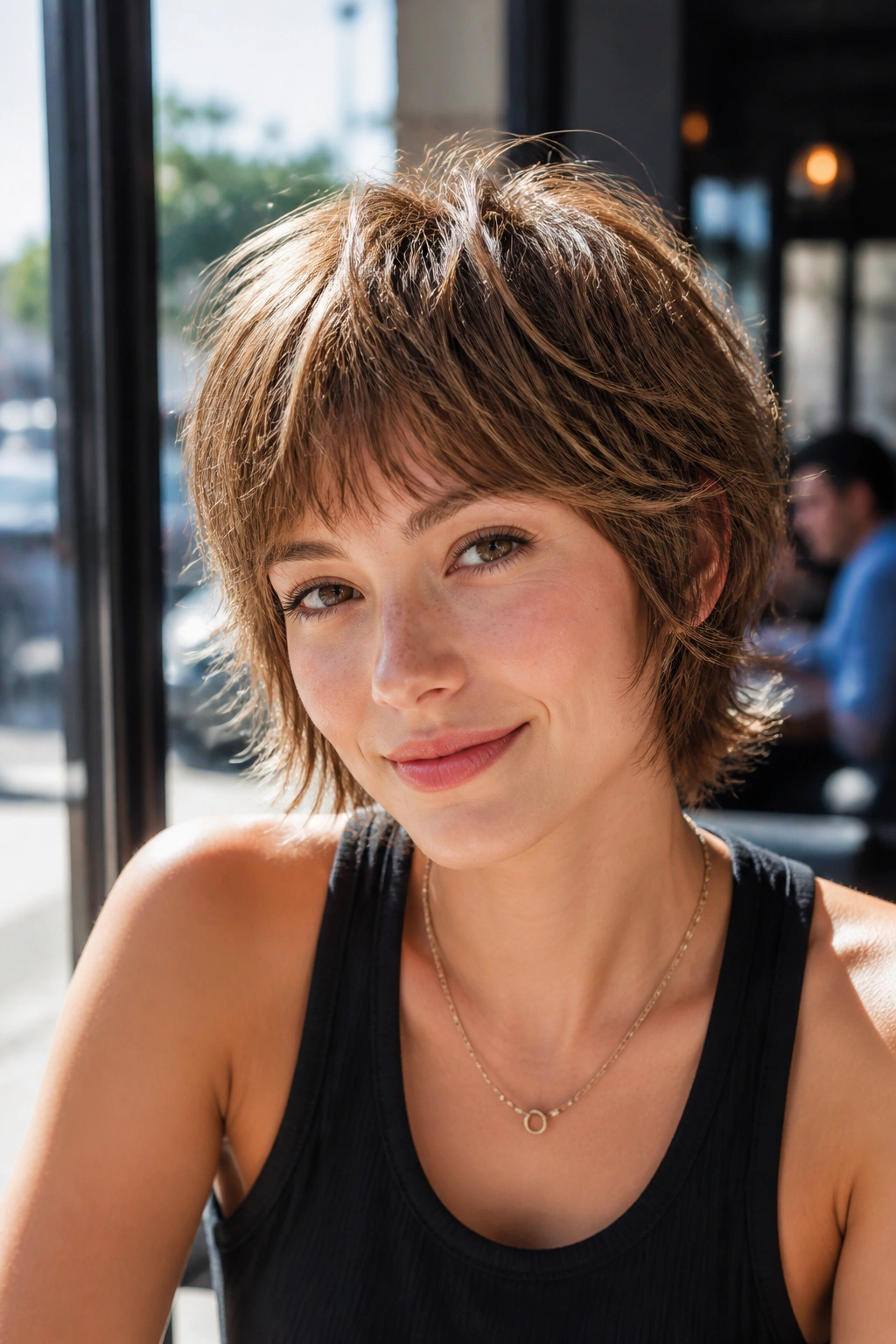
A bixie sits between a bob and a pixie, and on fine hair that middle ground can be very smart. You get more length around the jaw and ears, which helps the style feel fuller, while the top stays short enough to keep the head from looking weighed down.
Unlike a strict pixie, the bixie lets the ends hang a little. That can be a relief if you like short hair but do not want your neck fully exposed. It also gives fine strands more visible shape because there’s more hair on the perimeter. More perimeter usually means more presence.
This is the cut I’d point to if someone says they want short hair but worries about scalp show-through. The answer is not always “go shorter.” Sometimes it is “keep a little more length in the right places.” The broken-up edge helps, too. A solid line can look thin. A soft, fractured line looks thicker.
It’s best for someone who wants a short style with room to tuck behind the ears and still enough length to fake a bob on lazy days. Not a compromise. A smart middle path.
7. Undercut Pixie That Lifts the Crown
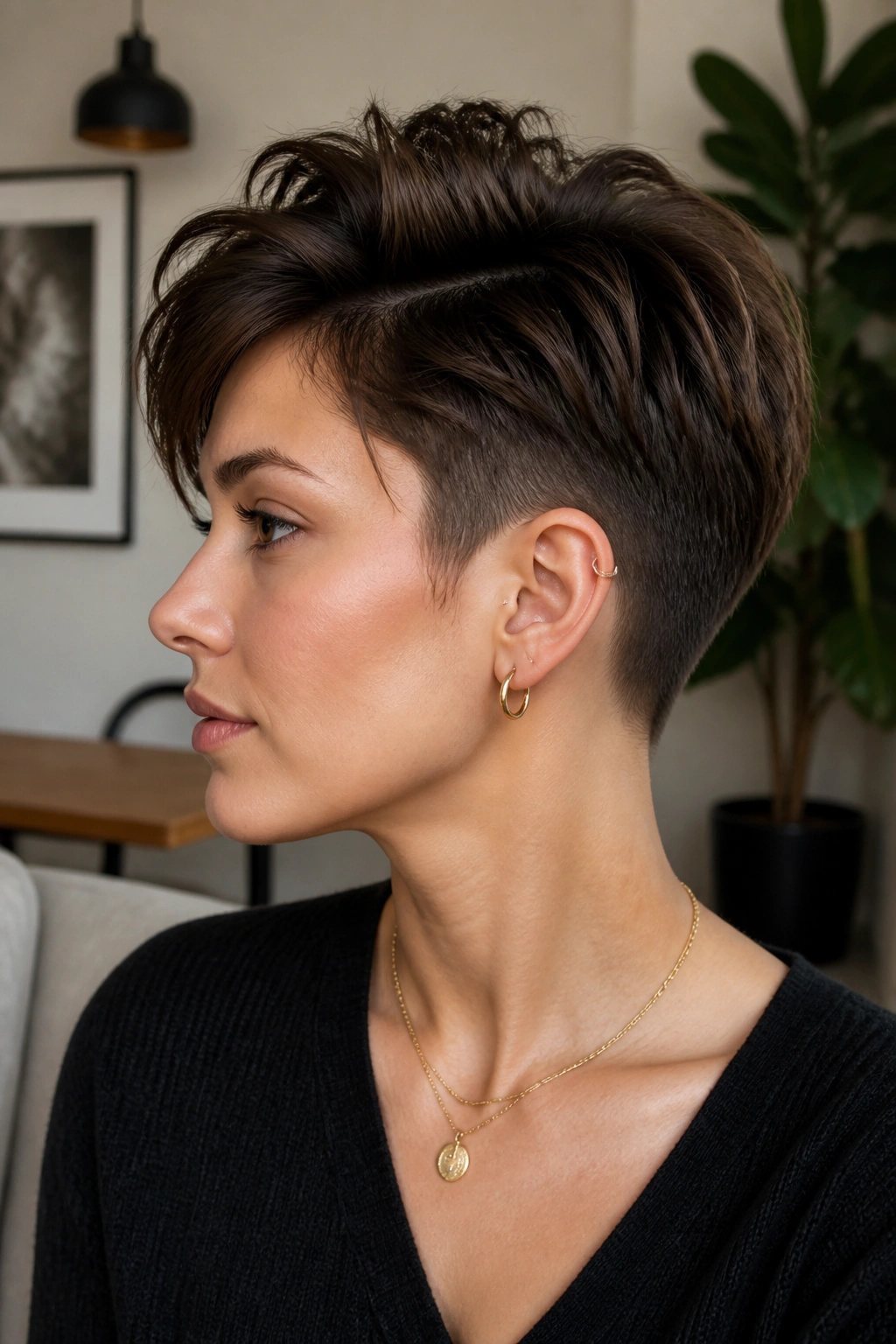
An undercut can help fine hair, but only when it’s used with a light hand. That’s the part people miss. A wide shaved section on genuinely sparse hair can make the top look even smaller. A narrow undercut at the nape or around the lower sides, though, can remove bulk where it isn’t helping and let the top sit higher.
Why It Works on Fine Hair
The structure matters more than the shave. Keep the top sections long enough to lift—usually 3 to 4 inches—and ask for the undercut to stay hidden unless the hair is tucked up. That way you get the clean shape without advertising every millimeter of the cut.
- Best for fine hair with decent density, not patchy density.
- Great if your crown tends to lie close to the scalp.
- Needs trimming more often, since short undercut sections grow out fast.
- Looks strongest with a matte finish, not a glossy one.
There’s a blunt truth here: if your hair is very sparse around the back, this one may not be your friend. But if your fine hair is full enough and just wants help with lift, it can be a sharp, very flattering choice.
8. Curtain Fringe Pixie With a Soft Part
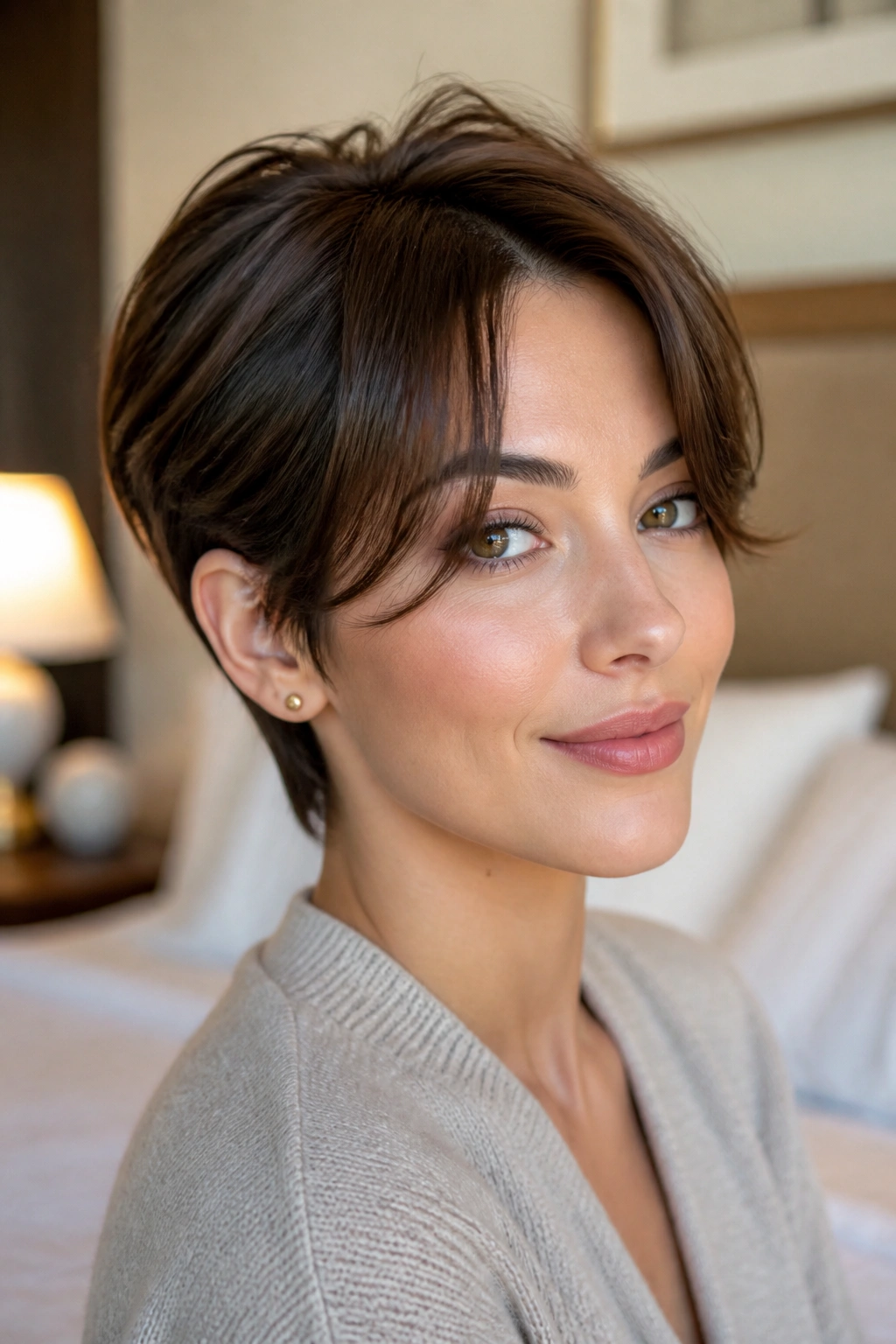
Curtain fringe is not only for longer cuts. On a pixie, it can soften the forehead and make the front of the hairstyle feel thicker without loading it up with heavy bangs. The part sits just off center, and the fringe falls away from the face in two loose pieces. That shape is sneaky. It adds balance where fine hair often needs it most.
The cut works because the front doesn’t sit as one flat line. Instead, the shorter pieces move outward, which creates a little frame around the eyes and cheekbones. For fine hair, that kind of framing is useful because it gives the illusion of width at the front without adding bulk all over the head.
A small amount of root spray at the part helps a lot. Blow-dry the fringe forward first, then split it with your fingers and push each side outward. That keeps the shape soft instead of helmet-like. I’d avoid heavy creams here. They make the front collapse.
This is also one of the easiest pixie cut ideas for fine hair if you hate the look of baby bangs. It has more give, and it grows out cleanly.
9. Slicked-Back Pixie With Length on Top
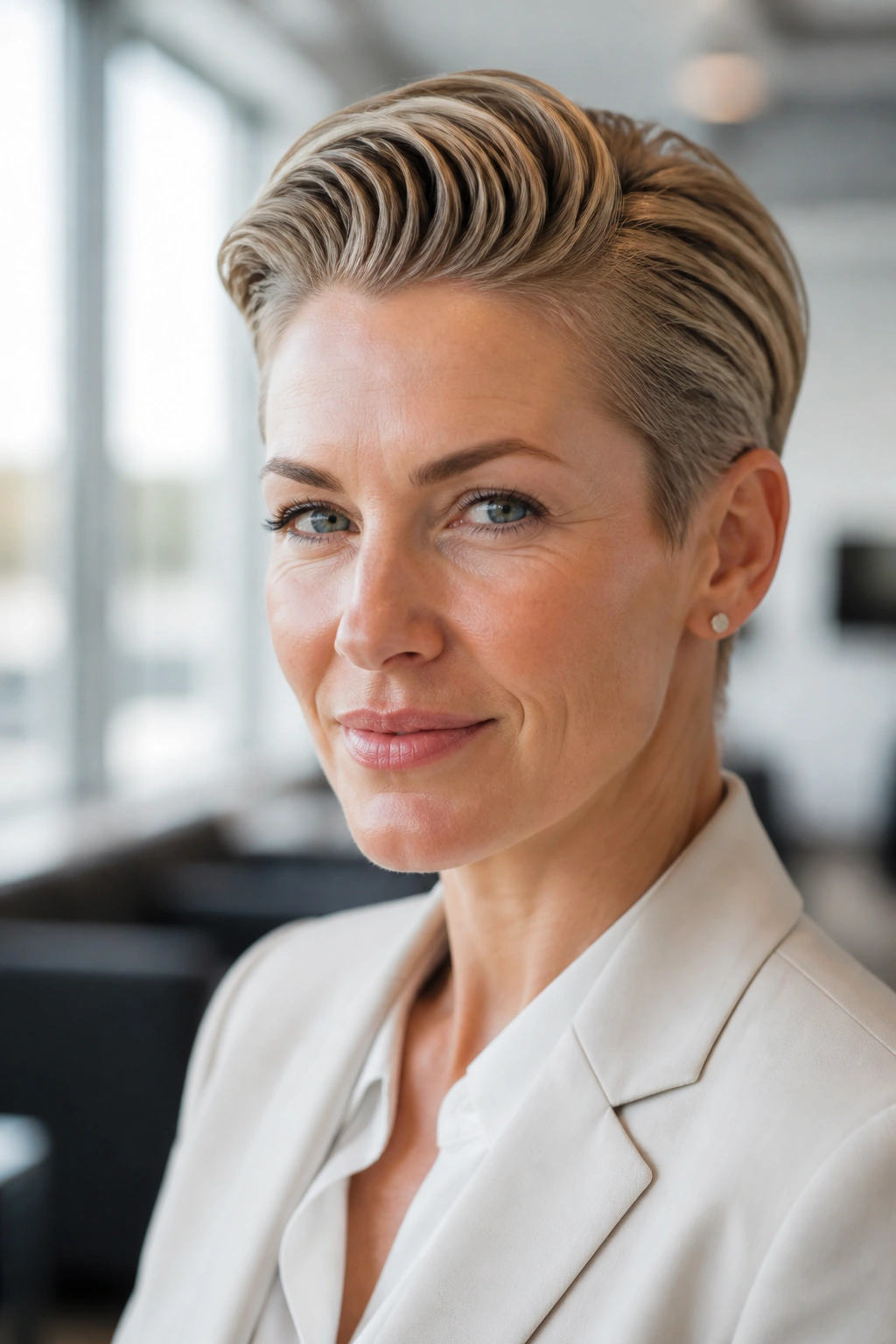
Not every fine-haired pixie needs to fake fluff. Some of them look better when they go sleek. A slicked-back top can make fine strands look intentional and sharp, which is a useful trick if your hair tends to split into see-through pieces when you try to volumize it too hard.
The key is leaving enough length on top—about 4 inches, sometimes a touch more—so the hair can be directed backward without sticking straight up. Shorter sides keep the profile neat, and a small amount of gel or cream seals the shape. Small amount. Not a palmful. Fine hair does not forgive overuse.
This style works well for evenings, office settings, or anyone who likes a more graphic look. It also plays nicely with strong brows and clean makeup because the hair gets out of the way. No fussing around the face.
If you have a tricky cowlick, the slicked-back pixie can actually be easier than a soft, fluffy style. The hair is being trained to move in one direction, so the cowlick has less room to misbehave. That alone makes it worth trying.
10. Rounded Crop Pixie With a Soft Outline
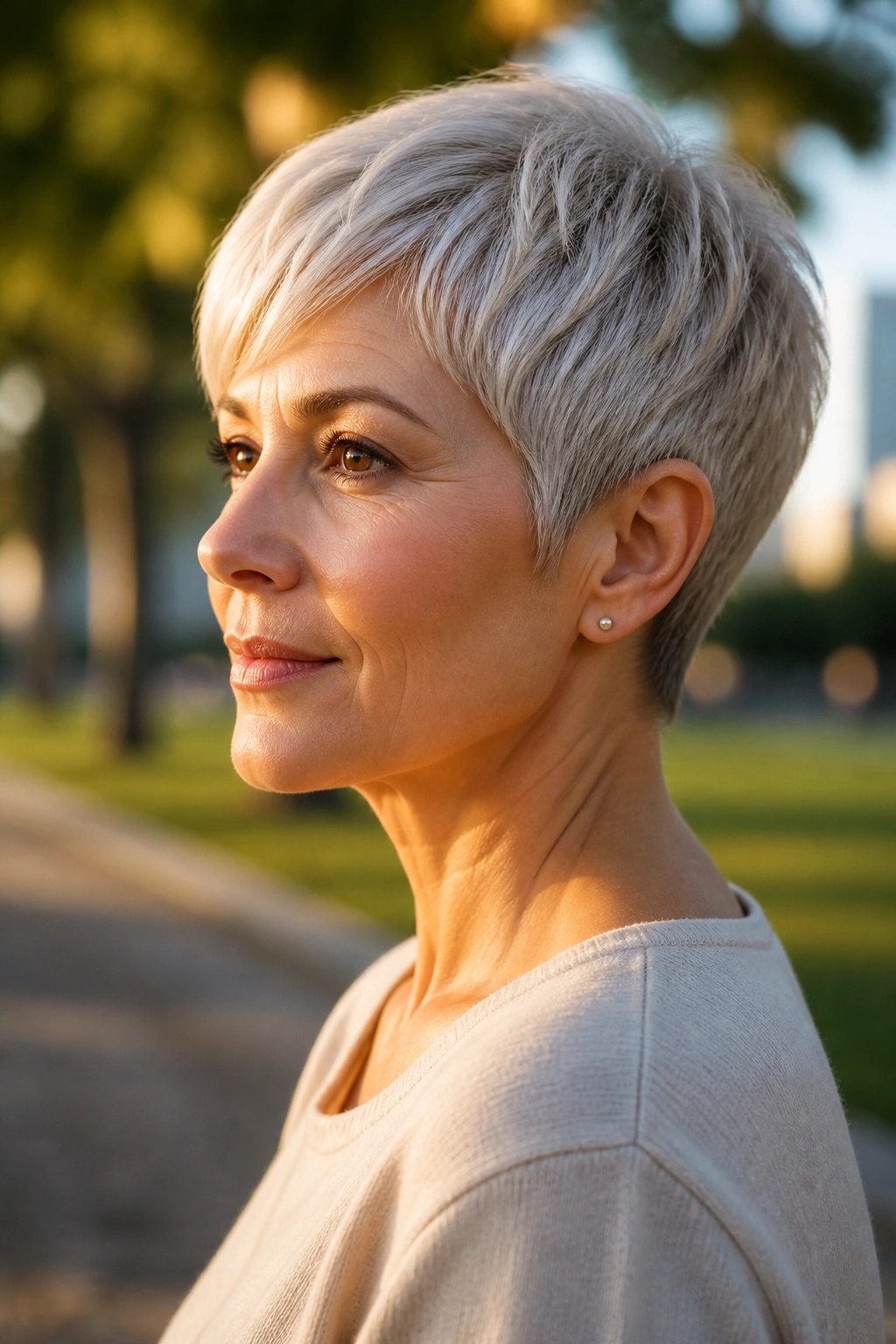
A rounded crop gives fine hair a fuller silhouette because the shape is controlled from every angle. The outline curves gently around the head instead of flaring out at the sides or collapsing at the crown. That rounded effect can make the hair look denser, especially if the perimeter stays crisp.
The mistake people make here is over-layering. A rounded crop should feel compact, not shaggy. Too many sliced-up pieces and the shape loses its body. Keep the crown soft, yes, but let the outer line stay present. That edge is doing a lot of work.
A Few Things to Request
- A softly rounded crown, not a flat top.
- Short sides that follow the head shape.
- A neat outline around the ears.
- Light internal layering only where the hair needs movement.
This cut is especially kind to fine hair that grows in different directions. The curve hides unevenness better than a strict geometric line. It’s a calm haircut. There’s nothing loud about it, which is part of the appeal.
One more thing: it photographs well from the side, not because it is dramatic, but because the shape stays readable. In person, that matters more than people realize.
11. Razor-Cut Pixie With Piecey Ends
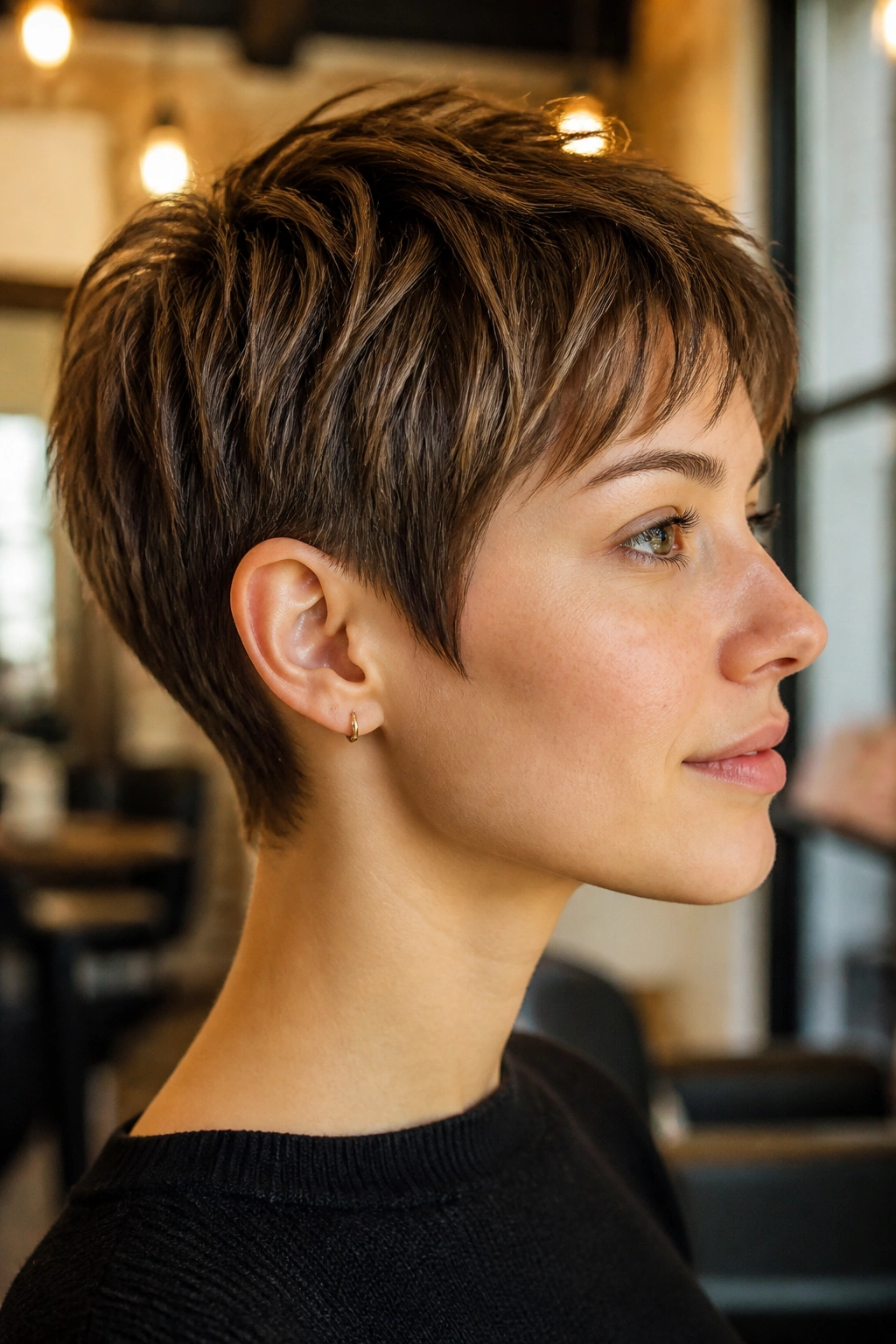
A razor-cut pixie can look amazing on fine hair when the stylist uses the razor lightly and with purpose. The goal is not to shred the ends. The goal is to make the hair sit in small, separated pieces that move instead of clinging together in one flat sheet.
This style suits hair that is straight or only slightly wavy. If your hair is already fragile, dry, or prone to fraying, a razor may be too much. That part is worth saying plainly. Fine hair can still be healthy, but it does not need rough treatment. A clean point cut can sometimes do the same job with less risk.
The finished look should have visible separation at the top and a smoother, cleaner edge near the nape. That contrast helps the cut feel styled even when it’s not. A tiny dab of styling cream at the fingertips is enough. Work it through the ends, then stop touching it. Too much touching pulls the shape apart.
This is one of those cuts that can look edgy without being fussy. Light, not flimsy. That distinction matters.
12. Asymmetrical Pixie That Cheats Density
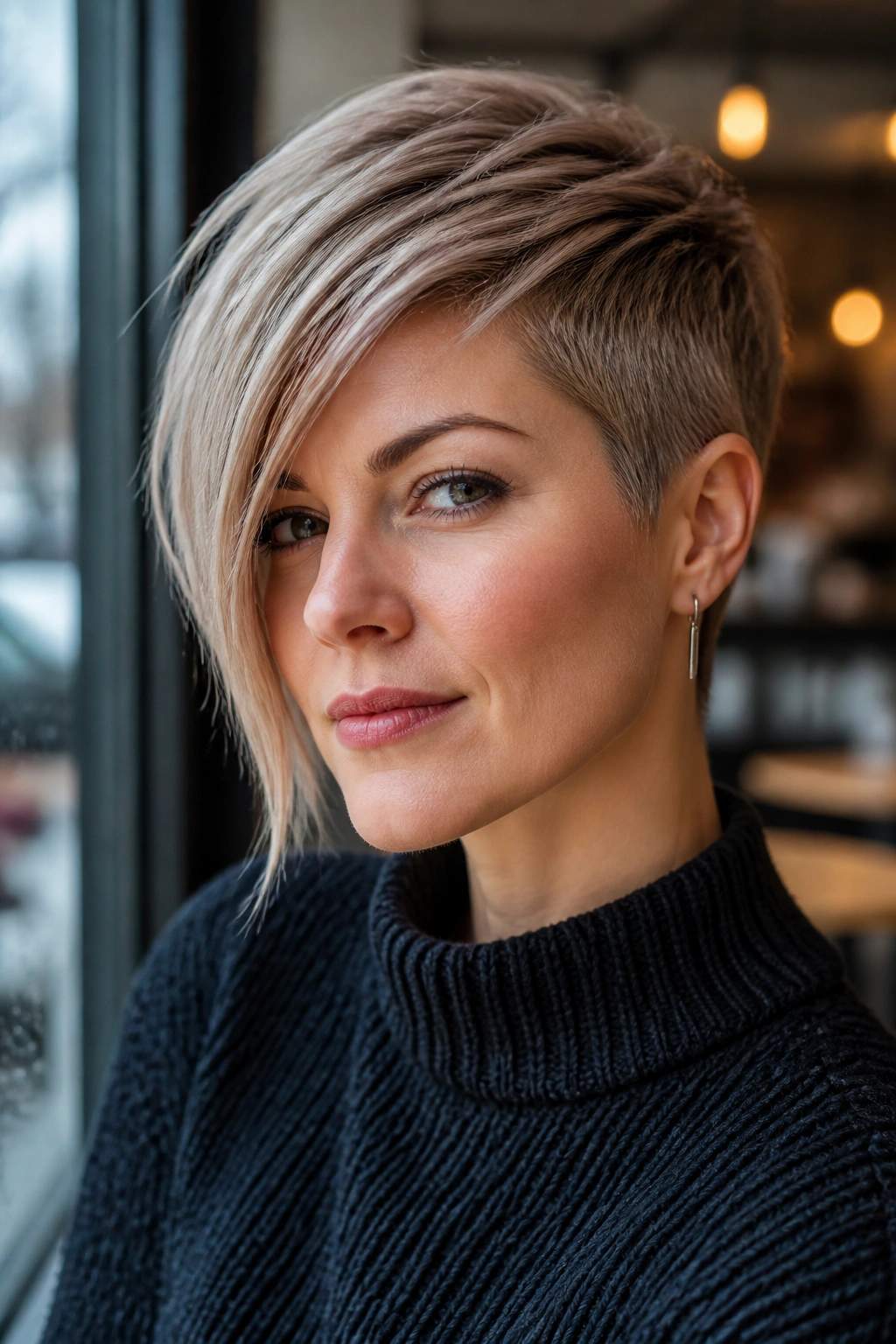
An asymmetrical pixie is one of the smartest tricks for fine hair because the eye stops reading both sides at once. One side is longer, the other is tighter, and the unevenness creates the illusion of more hair and more shape. The head looks intentional. It looks styled. It does not look like the hair gave up halfway through.
What Makes It Different
The longer side usually falls around the cheekbone or jaw, while the shorter side hugs the ear. That contrast adds interest right where the face needs it. On fine hair, interest is useful. It keeps the cut from disappearing into the head.
This style also gives you a built-in way to change the mood of the cut. Tuck the long side behind the ear and it feels polished. Leave it loose and it feels softer. Shift the part an inch and it changes again. Not many short cuts give you that much movement.
Best for someone who likes a little edge but doesn’t want full spikiness or a harsh undercut. If your hair is fine and straight, this can be a real confidence cut. If your hair is fine and very soft, make sure the shorter side stays clean enough to prevent puffing.
13. Wavy Pixie That Uses Natural Bend
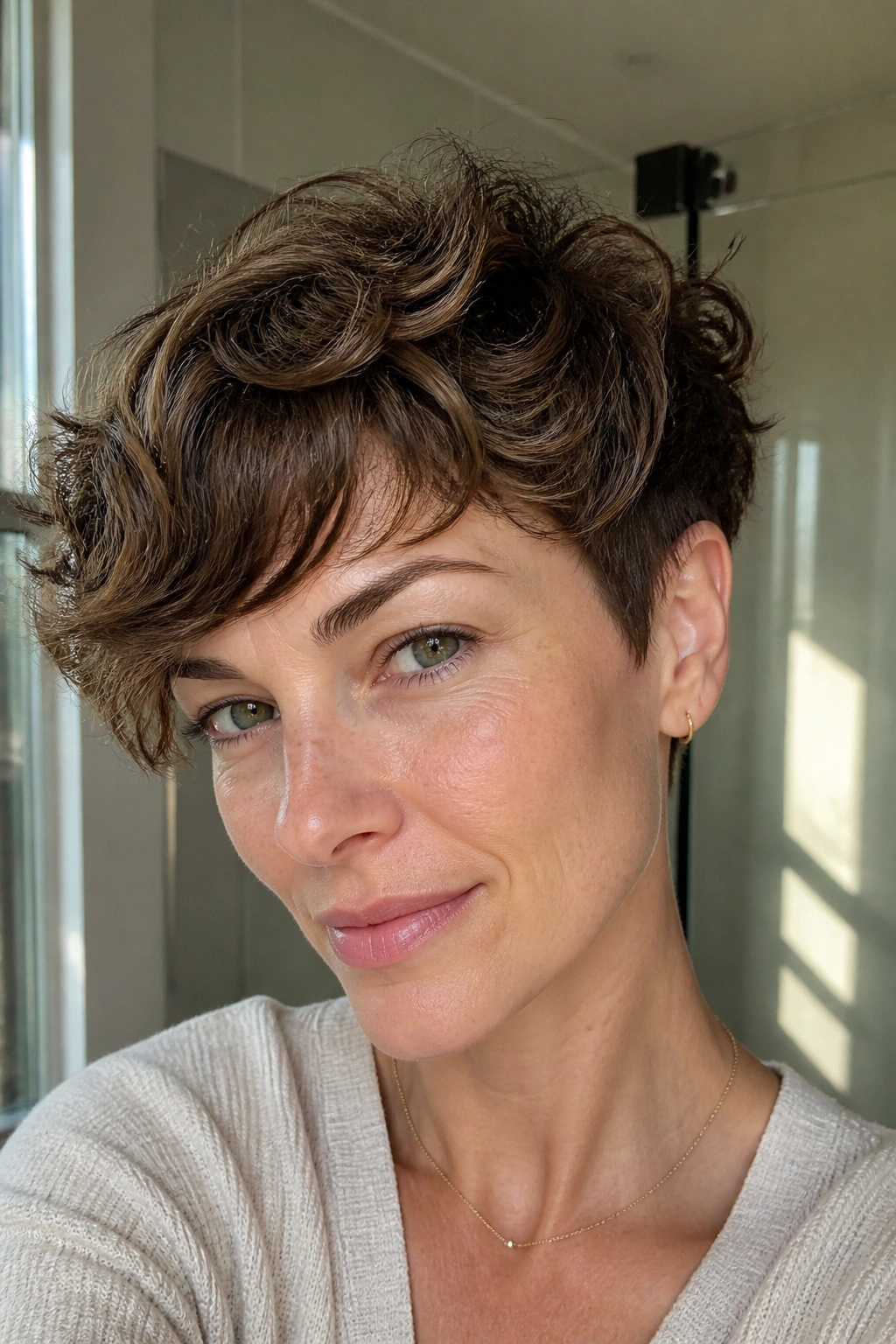
If your fine hair has even a little wave, use it. Fighting it is a waste of time. A wavy pixie works because the bend gives the cut body without product overload, and fine hair usually behaves better when it’s not being forced into a shape it resents.
The best version keeps the sides light and the top long enough to show the wave pattern, usually around 3 to 4 inches. The ends should be soft, not blunt. A blunt edge can make waves look boxy, while a softer edge lets them stack naturally.
How to Keep the Wave From Collapsing
Dry the hair to about 80 percent, then stop. That last bit of drying should happen with your hands, scrunching the top and front into place. A sea-salt spray can help, but keep it light. Too much and the hair gets sticky, which is a mess on fine strands.
This cut is best when it looks a little imperfect. Over-smoothing it kills the point. Let a piece fall forward. Let another one flip out. Fine hair often looks thicker when it moves instead of sitting flat and obedient.
14. French Pixie With a Soft Fringe
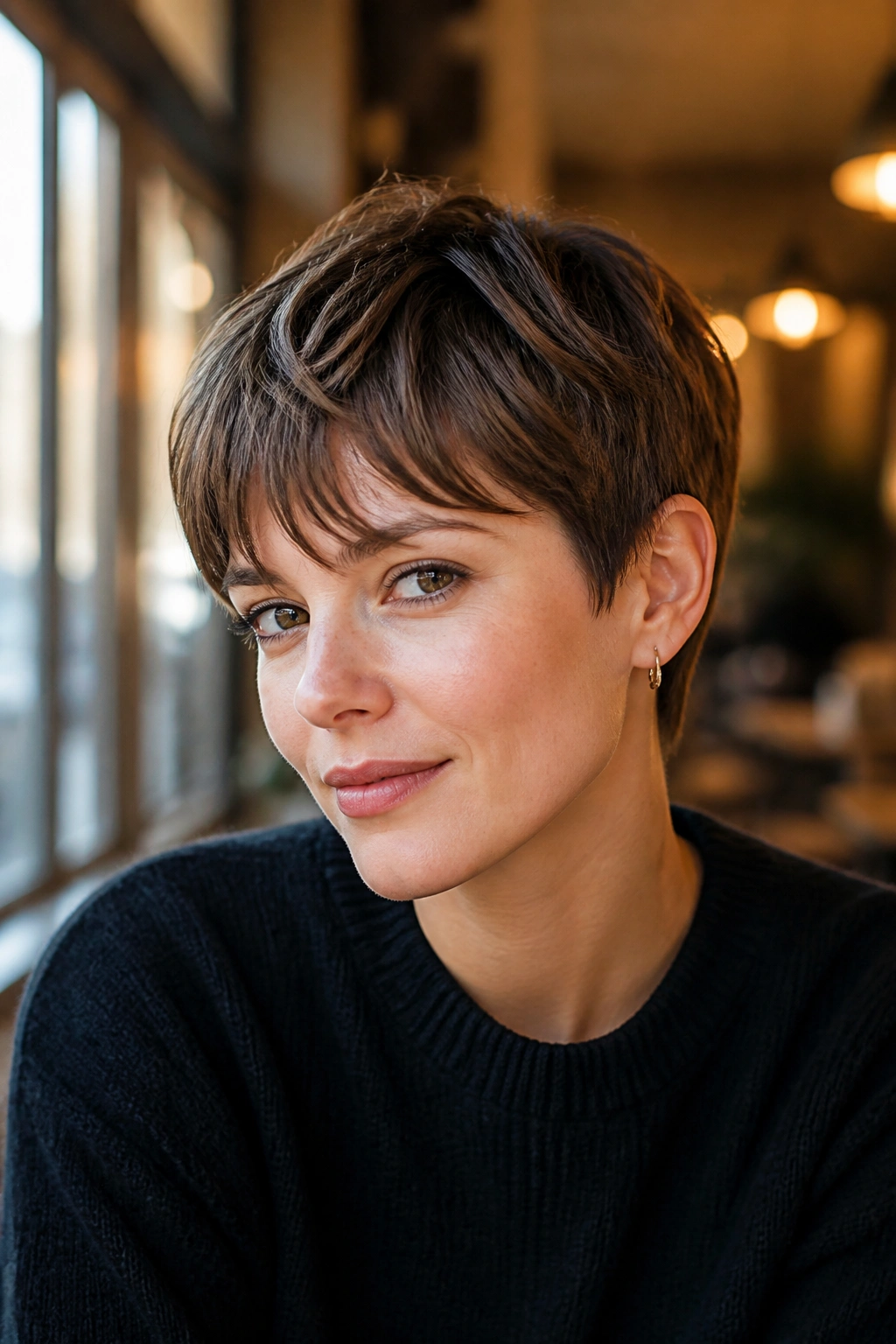
A soft French pixie has enough attitude to feel chic and enough softness to work on fine hair without turning severe. The fringe usually sits a little longer at the front, then fades into shorter sides and a close nape. The whole shape feels casual, but not careless.
What makes this version useful is the balance between softness and structure. The fringe gives the front some visual weight. The short sides keep the cut from looking helmet-shaped. That combination is especially kind to hair that doesn’t hold volume for long.
Ask for the fringe to be cut with slight irregularity, not straight across. A tiny bit of unevenness helps the hair look fuller. A perfectly even line can expose how fine it is. That’s one of those little salon details that changes everything.
It’s a good choice if you like hair that falls into place with your fingers rather than a brush. A quick spritz of texture spray and a rough dry are usually enough. Easy is the point here.
15. Crown-Heavy Pixie With Hidden Layers
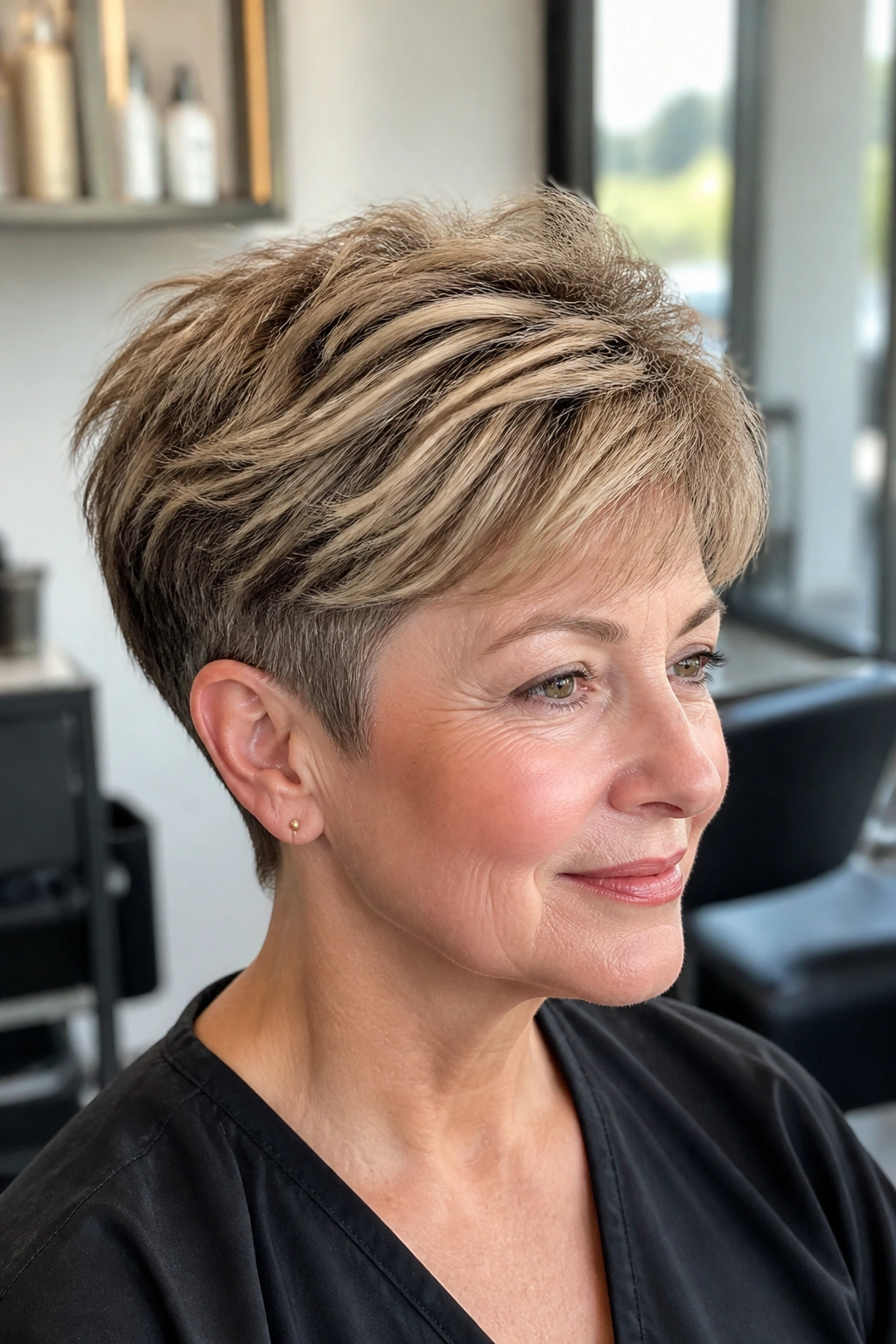
A crown-heavy pixie is one of the strongest pixie cut ideas for fine hair when the problem is flatness at the top. The weight sits higher, so the eye reads more height and more fullness. Hidden layers do the lifting without leaving the ends too thin.
The important part is where the layers live. They should sit mostly near the crown and upper back of the head, not scattered everywhere. Fine hair can look airy in a bad way if the layers go too far down the length. Keep the lower outline fairly clean. That gives the top room to breathe.
Why This One Works So Well
- The crown gets visible lift.
- The sides stay controlled.
- The ends keep enough density to look full.
- Styling takes less time because the cut itself does half the work.
A root-lift spray at the crown, followed by blow-drying upward with a small brush, usually does the trick. If you tend to avoid volume products because they make hair feel crunchy, skip the big mousse and go for a lighter mist. Fine hair often likes less than you think.
This cut is not flashy. It is practical. And practical haircuts, when they’re well shaped, usually age better than trendy ones.
16. Ear-Tucked Pixie With Wispy Sides
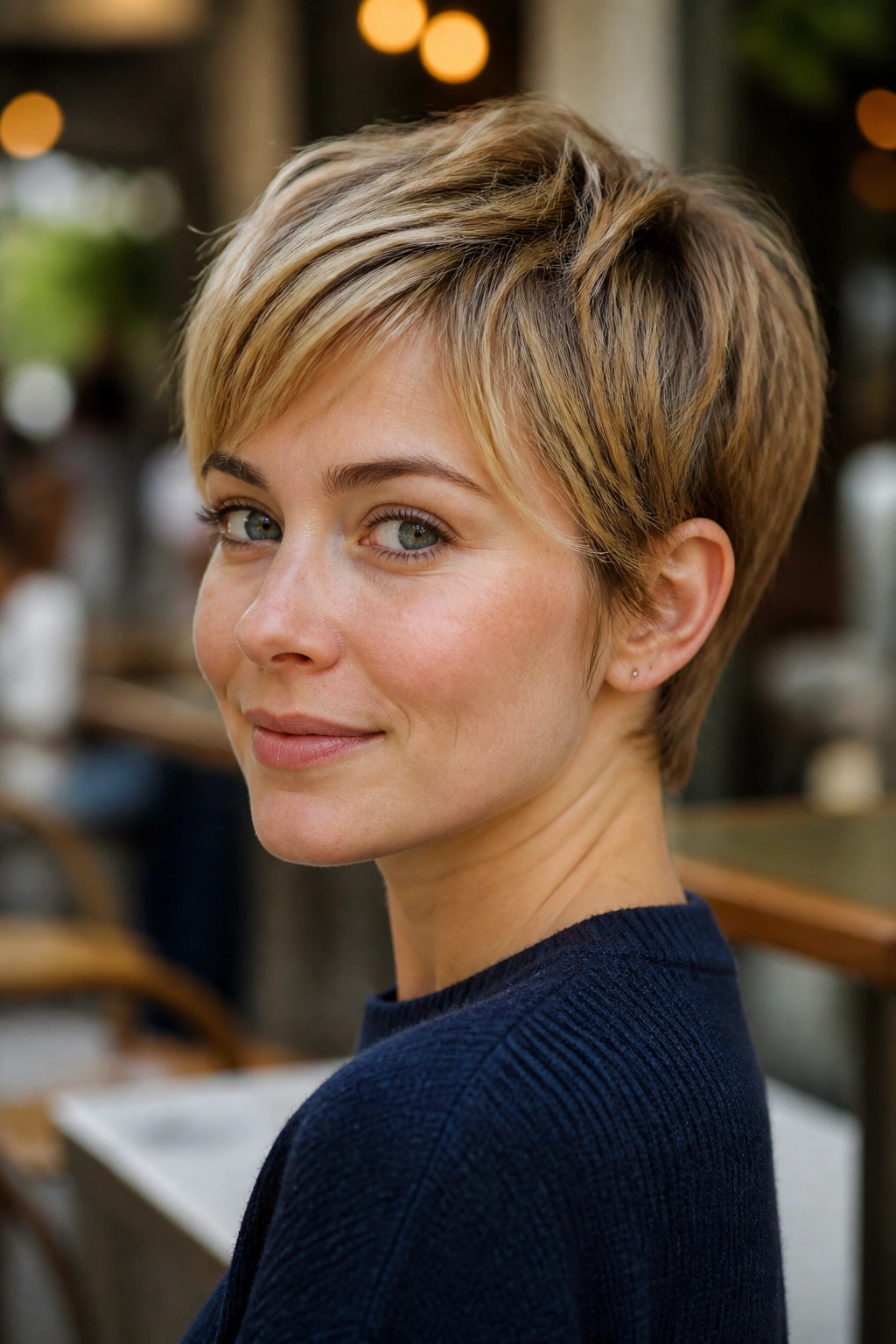
An ear-tucked pixie gives fine hair a clean shape and a little openness around the face. The sides stay light enough to tuck behind the ears, while the top keeps enough length to move. That little bit of skin showing around the ears can make the rest of the hair feel fuller by comparison.
The wispy side pieces are the key. They soften the transition from top to side so the cut does not look choppy in a bad way. You want movement, not a hole in the silhouette. The hair around the temple should fall lightly, almost like a small curtain that you can tuck away when you want a neater look.
This is one of those styles that works with glasses, earrings, and strong cheekbones. It leaves room for all of that. If your face tends to disappear under hair, this cut opens things up without going full buzzed or severe.
I like this one for people who want a short cut but still want to touch their hair and feel some softness. That matters more than people admit. A good pixie should still feel like hair, not helmet.
17. Soft Bowl Pixie With a Light Fringe
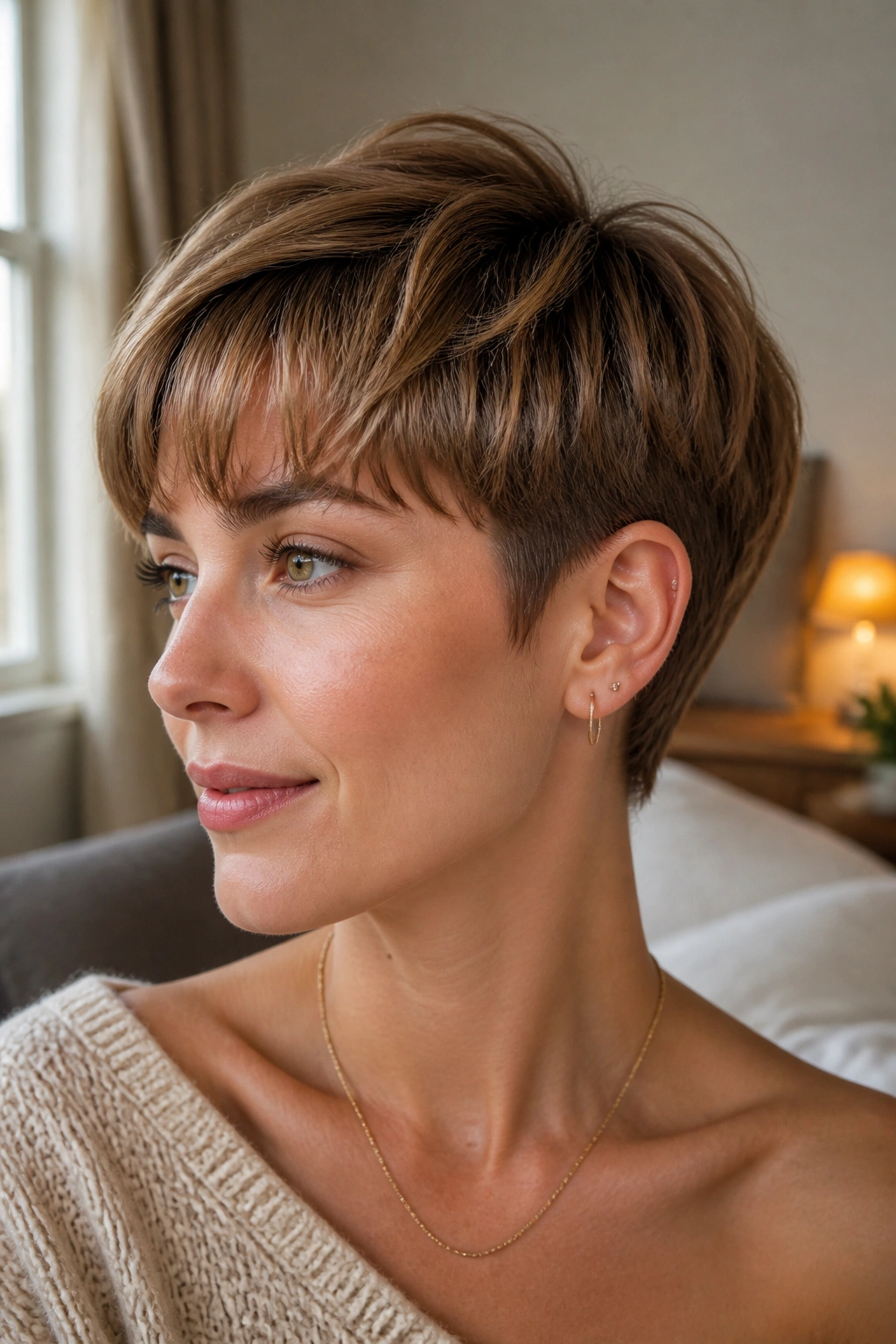
A soft bowl-inspired pixie can sound risky, but on fine hair it can be brilliant if the edges are handled carefully. The shape gives the illusion of density because the perimeter is kept controlled and rounded, not feathered away into nothing. The fringe stays light, so the cut doesn’t get heavy across the forehead.
The trick is avoiding the hard, old-school bowl line. You want a curved outline, softened at the temples and nape, with just enough interior layering to stop it from feeling stiff. Think rounded shape, not costume haircut. That difference is huge.
How It Should Feel
The hair should sit close to the head but still have enough lift at the crown to avoid a flat cap look. If the top is too flat, this style turns severe fast. If the fringe is too heavy, it can drag the whole thing down. So the balance has to be exact.
This cut is best for people who want something a little fashion-forward without chasing volume every morning. It does not need a huge amount of styling. A light blow-dry and a touch of cream at the ends usually do the work.
18. Spiky Crop Pixie With Bold Texture
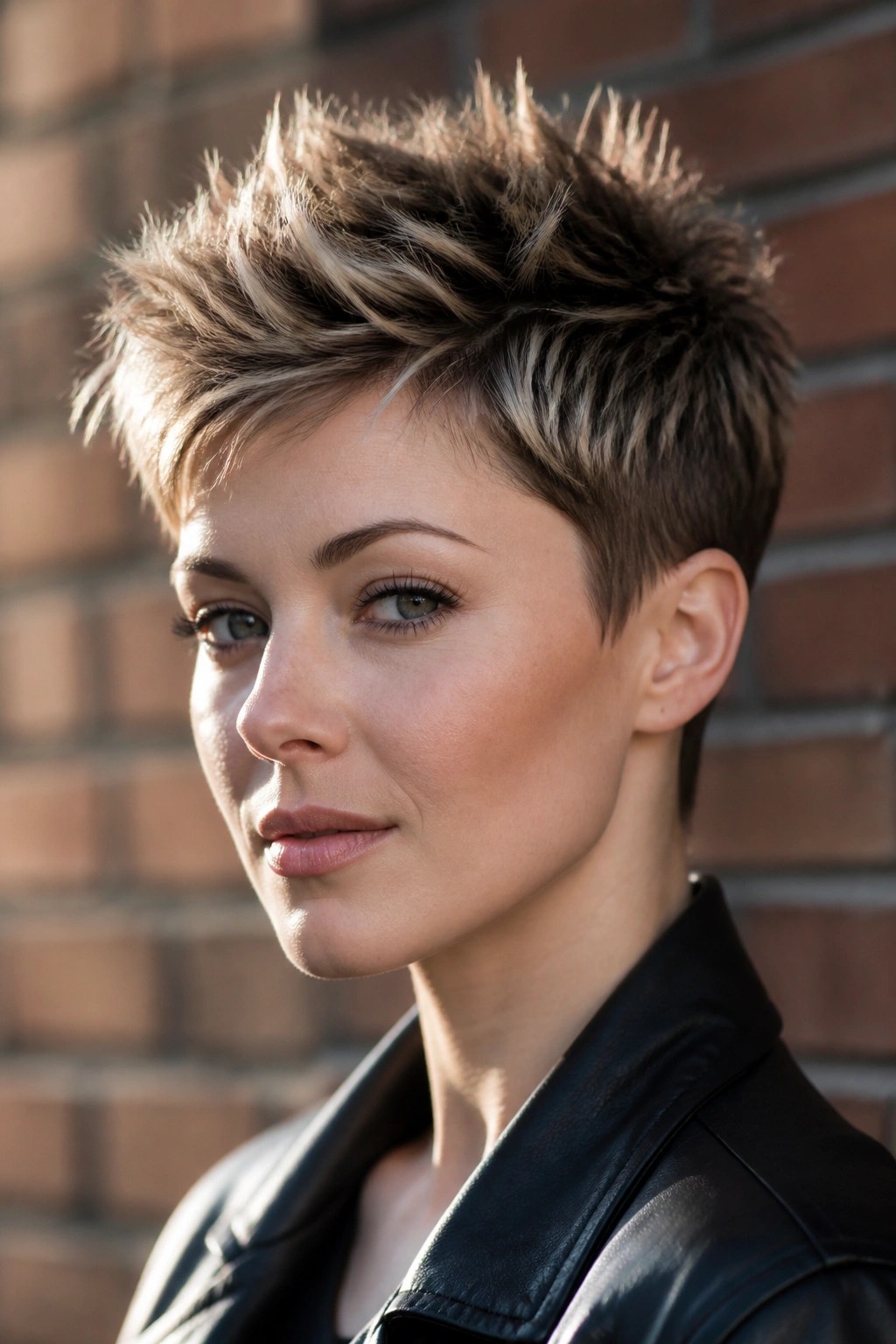
A spiky crop is not for everyone, and that’s part of its charm. Fine hair can actually do well with this shape because shorter pieces are easier to lift, separate, and direct upward. The style looks sharp, energetic, and a little rebellious when the top is cut short enough to stand on its own.
The key is not making the top too long. Around 1.5 to 2.5 inches is often enough. Any longer and the spikes start to flop instead of hold. The sides should stay snug so the top gets all the attention. A small amount of firm paste or wax does the rest.
This is one of the rare styles where fine hair can look almost stronger than thicker hair, because there’s less weight fighting the shape. The pieces separate cleanly, and that separation creates visual texture. It’s a bit like pointillism, if you want the art-school version. Tiny marks. Big effect.
If you like a cut that looks different the second you push it in another direction, this is a good one. It’s not soft. It is not timid. Sometimes that’s exactly what a short haircut needs.
19. Layered Pixie With Face-Framing Taper
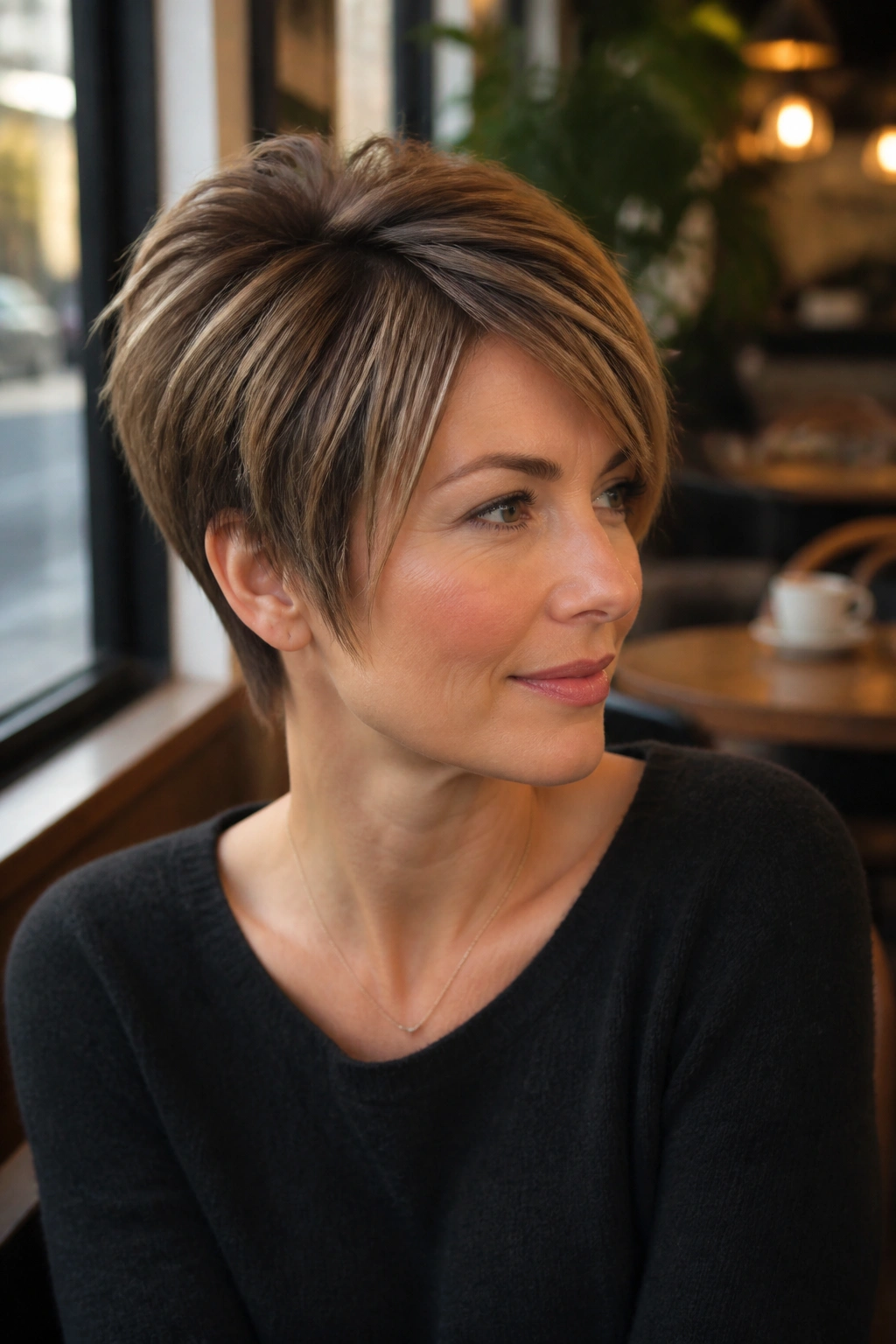
A layered pixie with face-framing taper is a good answer when you want softness around the front without losing the density fine hair needs. The shorter pieces near the cheeks and temples create shape, while the rest of the cut stays compact enough to look full.
Why the Face Frame Matters
A tiny angle near the cheekbone can do more than a heavy fringe ever will. It draws the eye forward and makes the hair look more intentional around the face. That’s useful if your hairline is fine or if the front area tends to separate into little stringy sections.
- Keep the face-framing pieces soft, not chunky.
- Let the nape stay cleaner and shorter.
- Avoid too much thinning through the temples.
- Use a fingertip amount of styling cream, then stop.
This cut is nice for people who want movement but not chaos. It has enough structure to hold up, but the taper around the face keeps it from feeling severe. If you wear your hair tucked back half the time anyway, this one is worth a look.
It also grows out gracefully. The front pieces keep the shape readable even when the back has started to get a little longer. That is not glamorous, but it is useful. Sometimes useful wins.
20. Grown-Out Pixie That Rolls Into a Bob
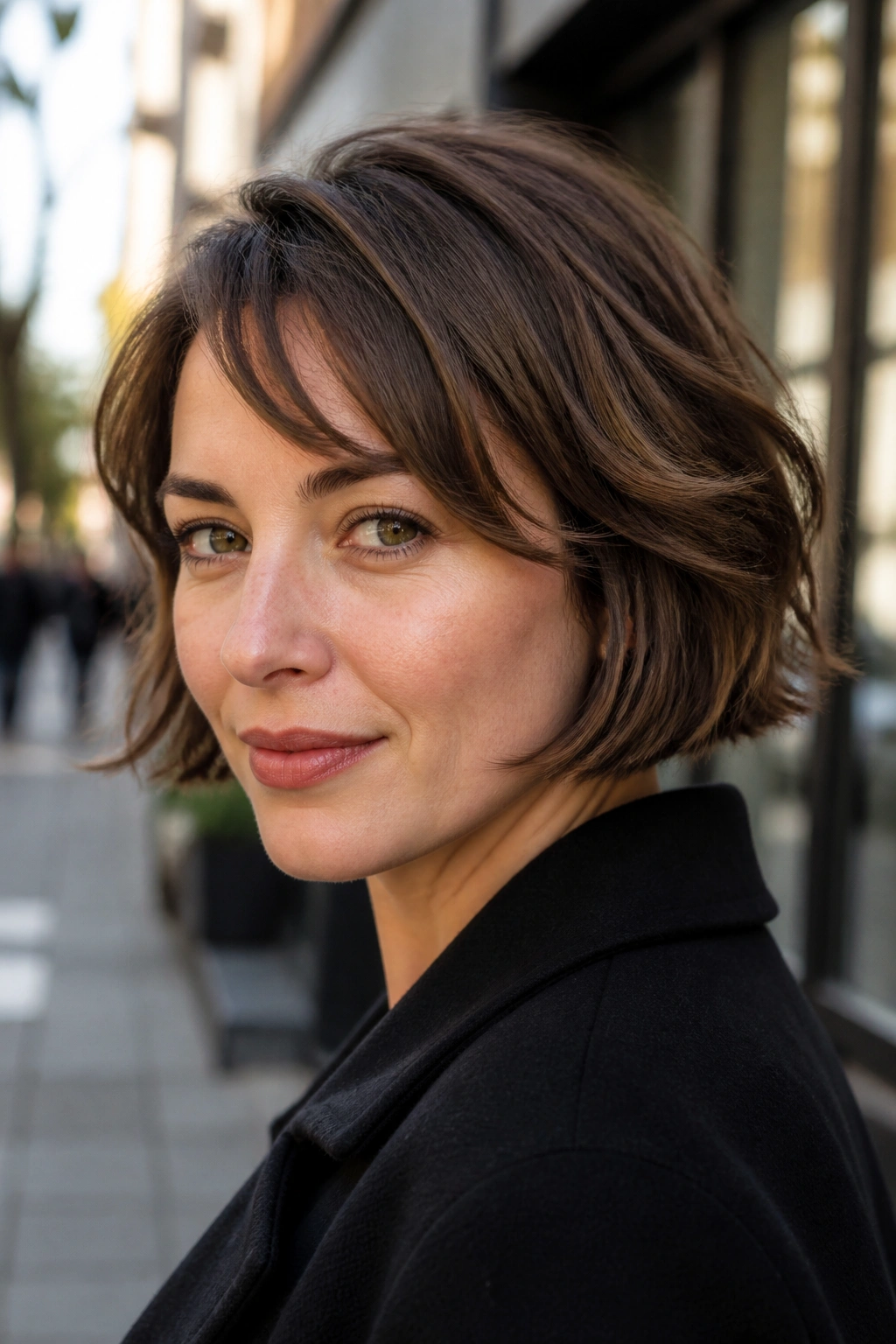
A grown-out pixie is one of the easiest styles to live with if you hate the constant trim cycle. For fine hair, it can be a smart transition cut because it keeps enough length to avoid stringiness while still holding a clear shape. The hair at the nape stays shorter, the top and sides keep more length, and the whole thing gradually moves toward a soft bob line.
The most important part is keeping the ends blunt enough. Fine hair can look wispy when the perimeter is too broken up, especially as it grows. A cleaner edge gives the style a little substance, even when the length is changing. That’s what makes this one forgiving.
This cut is also nice if you want flexibility. One week it looks like a pixie. A month later it brushes the ears and starts behaving like a short bob. You can tuck it, part it, smooth it, rough it up. Not many short cuts give you that kind of range without a lot of effort.
If you’re choosing a pixie for fine hair and you want the least dramatic maintenance path, this is the one I’d keep near the top of the list. It has room to breathe, and hair that fine often likes a little room.
