



A curly pixie cut can look sharp, soft, or gloriously messy, and the difference usually comes down to one thing: whether the cut was shaped for the curl pattern or fought against it.
Shrinkage is the whole story.
A fringe that looks eyebrow-grazing in the chair may bounce up an inch or two once it dries. Sides that seem neatly tucked can swell into a halo if the weight is left in the wrong place. That is why curly pixie cuts need more thought than a straight-hair crop. The silhouette has to work with spring, bend, and density, not just with a comb and a pair of scissors.
The good versions feel easy. The bad ones look like someone took too much off one area and left the rest guessing. There’s a big difference between a pixie that flatters curl and one that just got short.
Some people want edge. Some want softness. Some want a cut they can wash, scrunch, and leave alone. The trick is matching the shape to the curl type, the hairline, and how much styling you’re willing to do on an ordinary Tuesday morning. Once you know where the weight should sit, the options open up fast.
1. Classic Curly Pixie With Tapered Sides
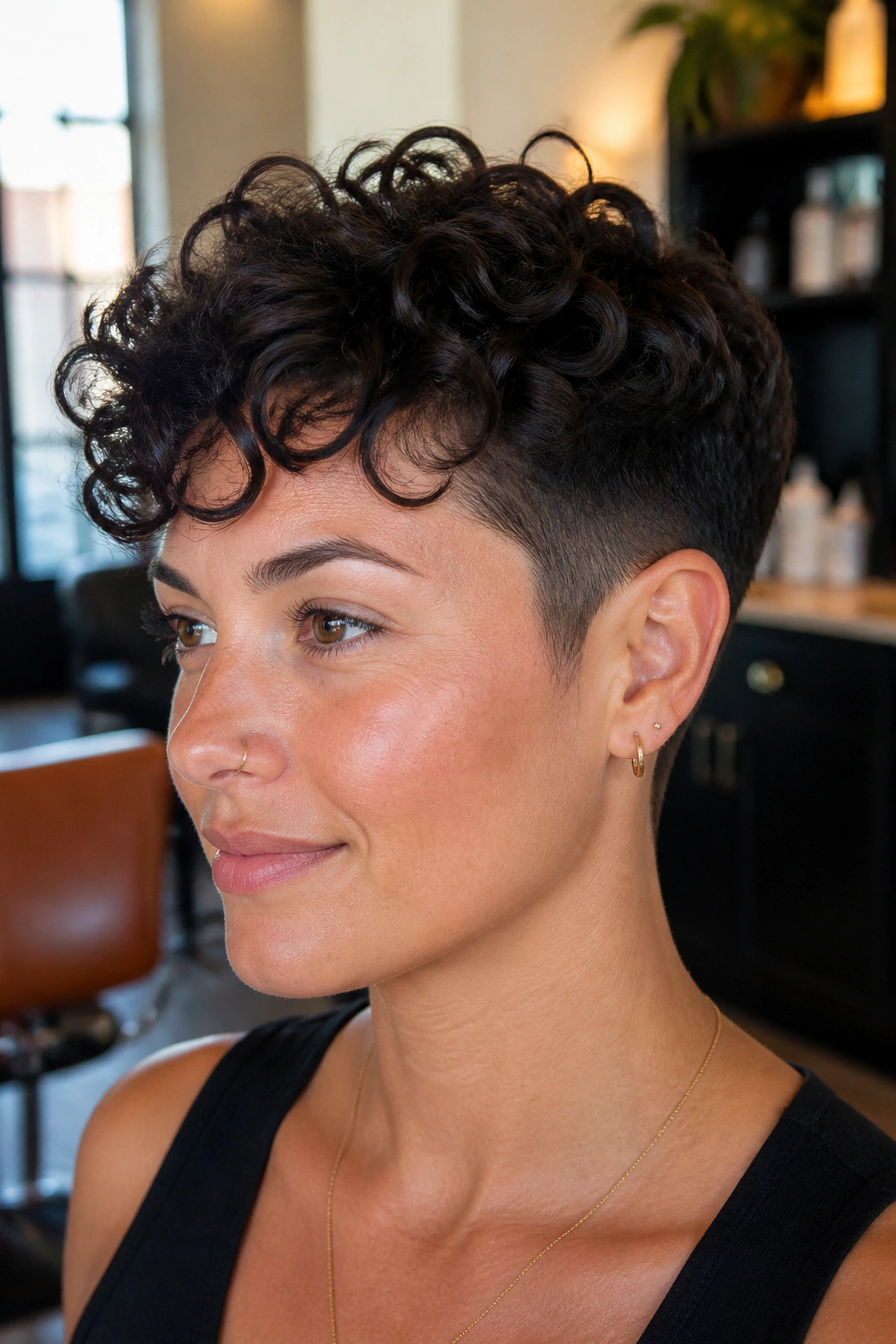
A classic curly pixie cut with tapered sides is the one I keep coming back to when someone wants short hair but not a fussy haircut. The sides sit close enough to clean up the shape, while the crown keeps enough length for the curl to do its thing. That balance matters more than the trendier stuff.
Why It Works
The taper gives the haircut a clear outline, which stops curls from puffing out around the ears. The top stays soft and touchable, so you still get movement instead of a helmet shape. It works especially well for curls that are medium in density and not too tight.
- Best for: 3A to 3C curls that need shape, not heavy layering.
- Styling note: A small amount of curl cream on damp hair keeps the crown from frizzing out.
- Salon cue: Ask for the taper to be soft at the temples, not clipped too high.
- Maintenance: A cleanup every 4 to 6 weeks keeps the line crisp.
Pro tip: If your curls spring up hard at the front, leave the fringe slightly longer than you think you need. It will shrink.
2. Curly Pixie With Micro Bangs
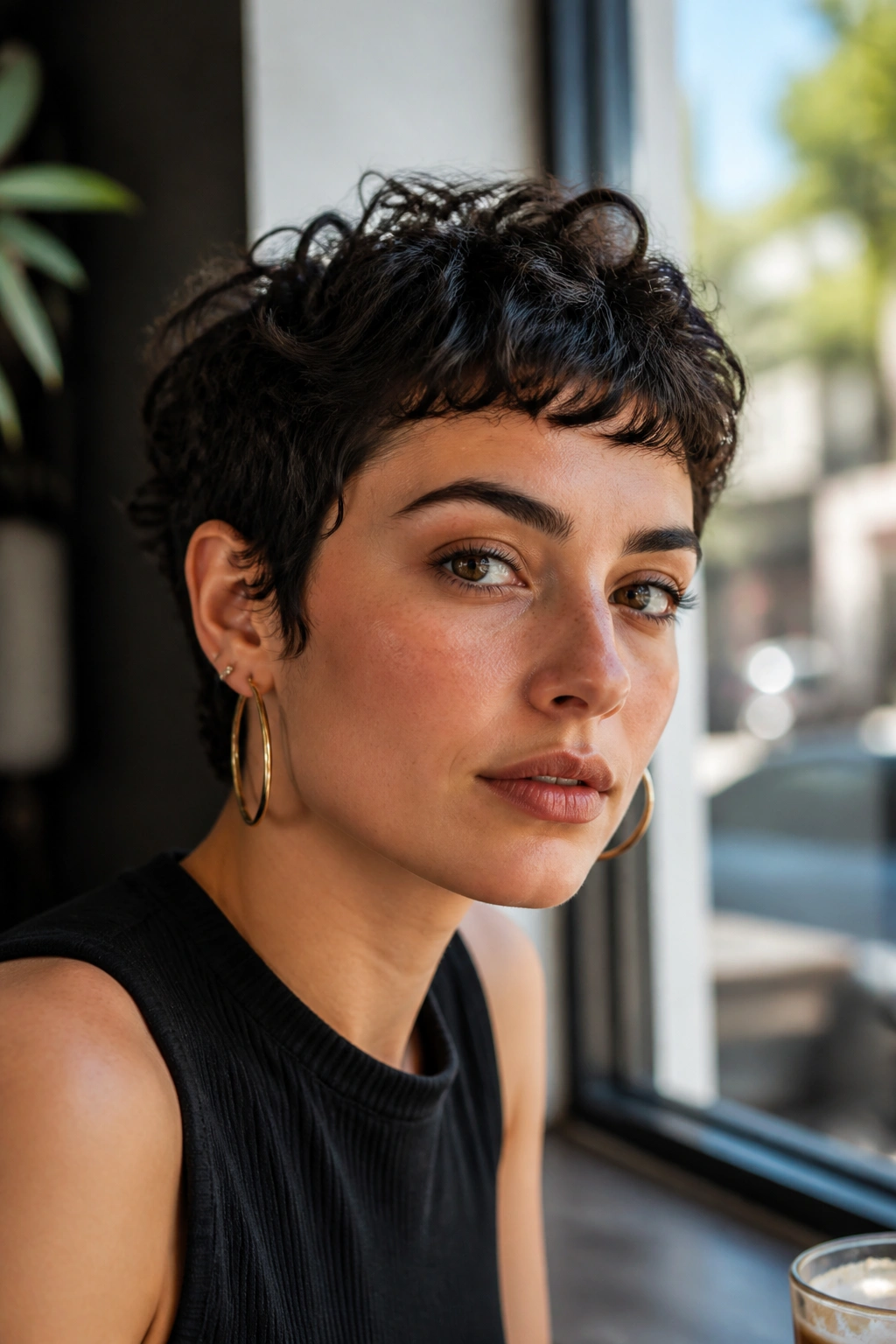
Micro bangs on curly hair are a bold move, and that is exactly why they work. The short fringe throws all the attention to the eyes and brow line, while the rest of the cut stays neat and cropped. When the curl pattern is good, the result feels sharp without getting stiff.
The catch is shrinkage. Micro bangs on curls can jump from “cute and short” to “way shorter than expected” after they dry, so the cut has to be measured with that spring in mind. A dry cut helps here because the stylist can see where the fringe really sits, not where it lands wet.
Wear this version when you want the haircut to do the talking. It looks strong with a clean brow, a little mascara, and nothing else trying too hard. Keep the texture soft on top so the fringe does not look disconnected. If your curls are very tight or uneven at the hairline, leave a few millimeters more than you think. That tiny bit saves the whole shape.
3. Rounded Curly Pixie With a Soft Nape Taper
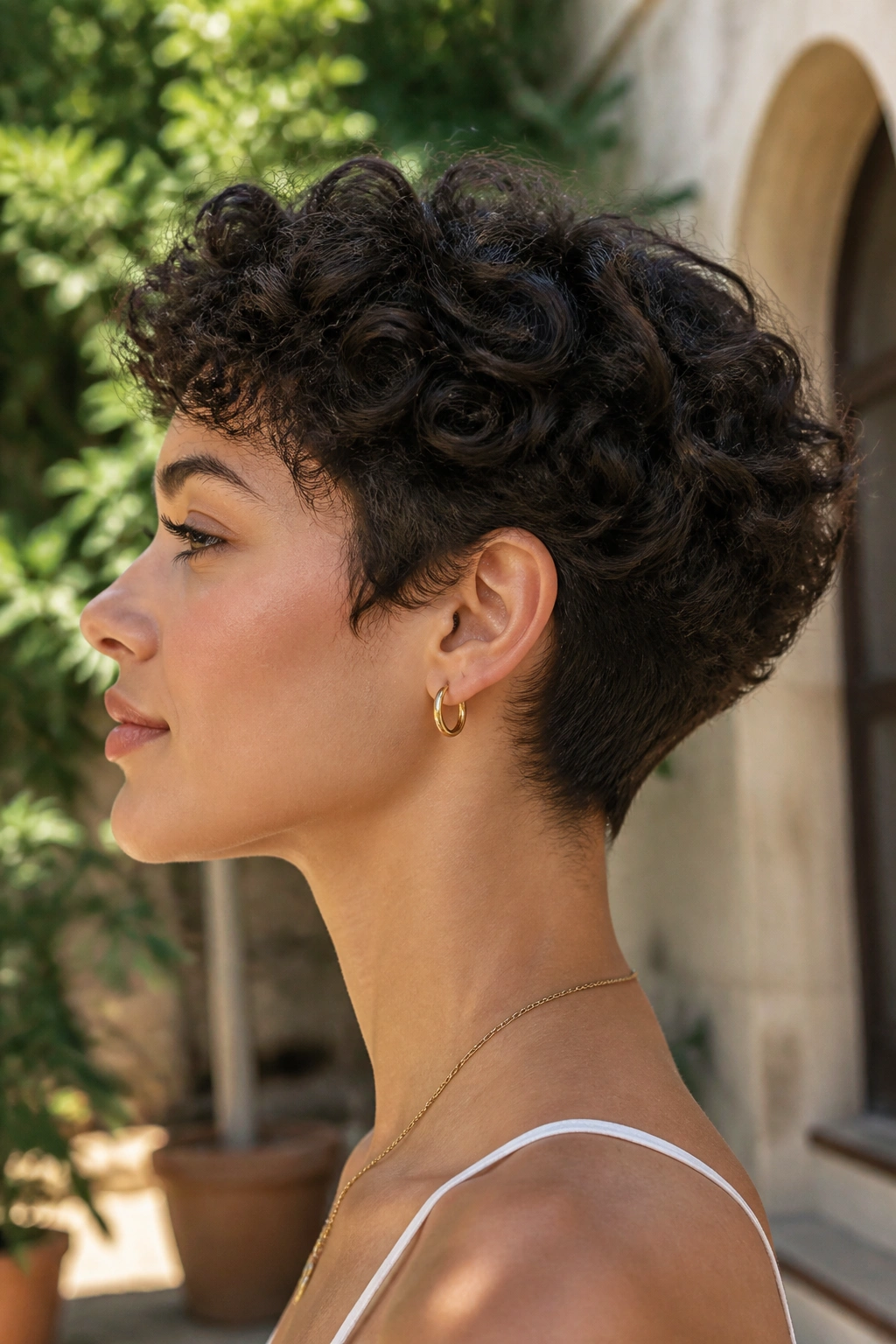
Why do some short curly cuts feel sweet instead of severe? The rounded pixie is the answer. It follows the curve of the head, so the style feels fuller at the crown and cleaner at the neck without looking shaved down to nothing.
The soft nape taper keeps the back from kicking out. That matters with curls because the underside can swell if it is left too blunt. A gentle taper also gives the cut a cleaner finish when you wear collars, scarves, or crewneck tops that sit high on the neck.
How to Wear It
Let the top dry with a diffuser or air-dry it in loose sections, then separate the curls with your fingers once they’re fully dry. Don’t rake too hard. You’ll only pull apart the curl clumps and make the crown frizzier.
This shape suits people who like a polished outline but still want the hair to look soft from the side. It is one of the easier curly pixie cuts to live with because the shape does a lot of the work for you.
4. Curly Pixie With an Asymmetrical Side Sweep
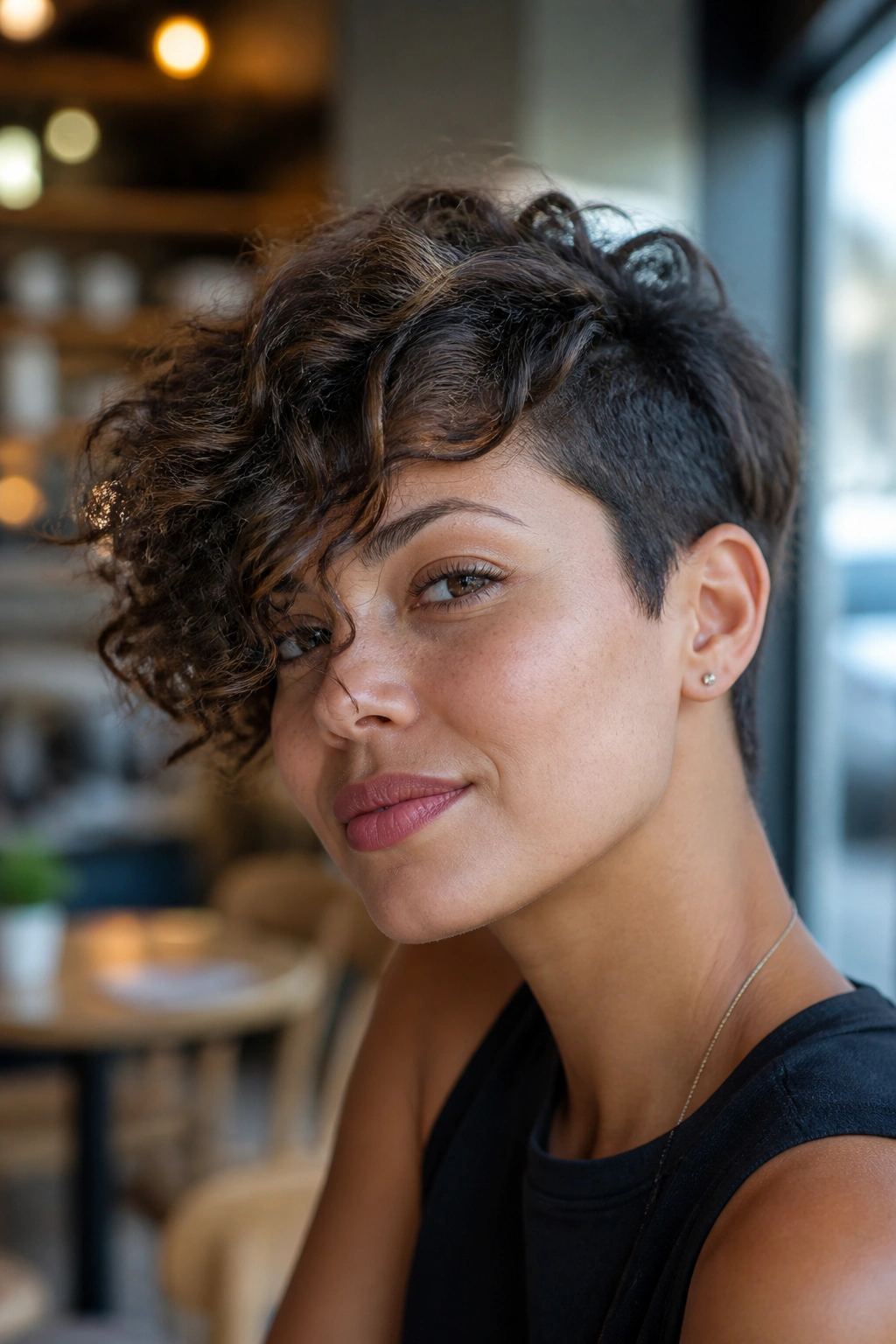
A side sweep changes everything. One side drops a little longer across the forehead, and the other side stays clipped tighter, which gives the cut a lean, one-sided shape that feels modern without being flashy for the sake of it.
I’ve seen this work beautifully on people who hate a flat front. The longer side adds movement around the face, and the shorter side keeps the haircut from ballooning out at the temples. If your face reads round or square, that diagonal line can be a nice little cheat.
- Ask for: a longer front section that lands near the cheekbone.
- Keep in mind: the shorter side should still have enough length to show curl, not look buzzed unless that’s the point.
- Good styling partner: a light mousse or foam for lift at the roots.
- Avoid: heavy waxes that make the sweep stick in place.
The whole cut lives or dies on balance. Too much contrast and it turns dramatic in a way you may not want. Too little, and the asymmetry disappears.
5. Tapered Curly Pixie With a Long Crown
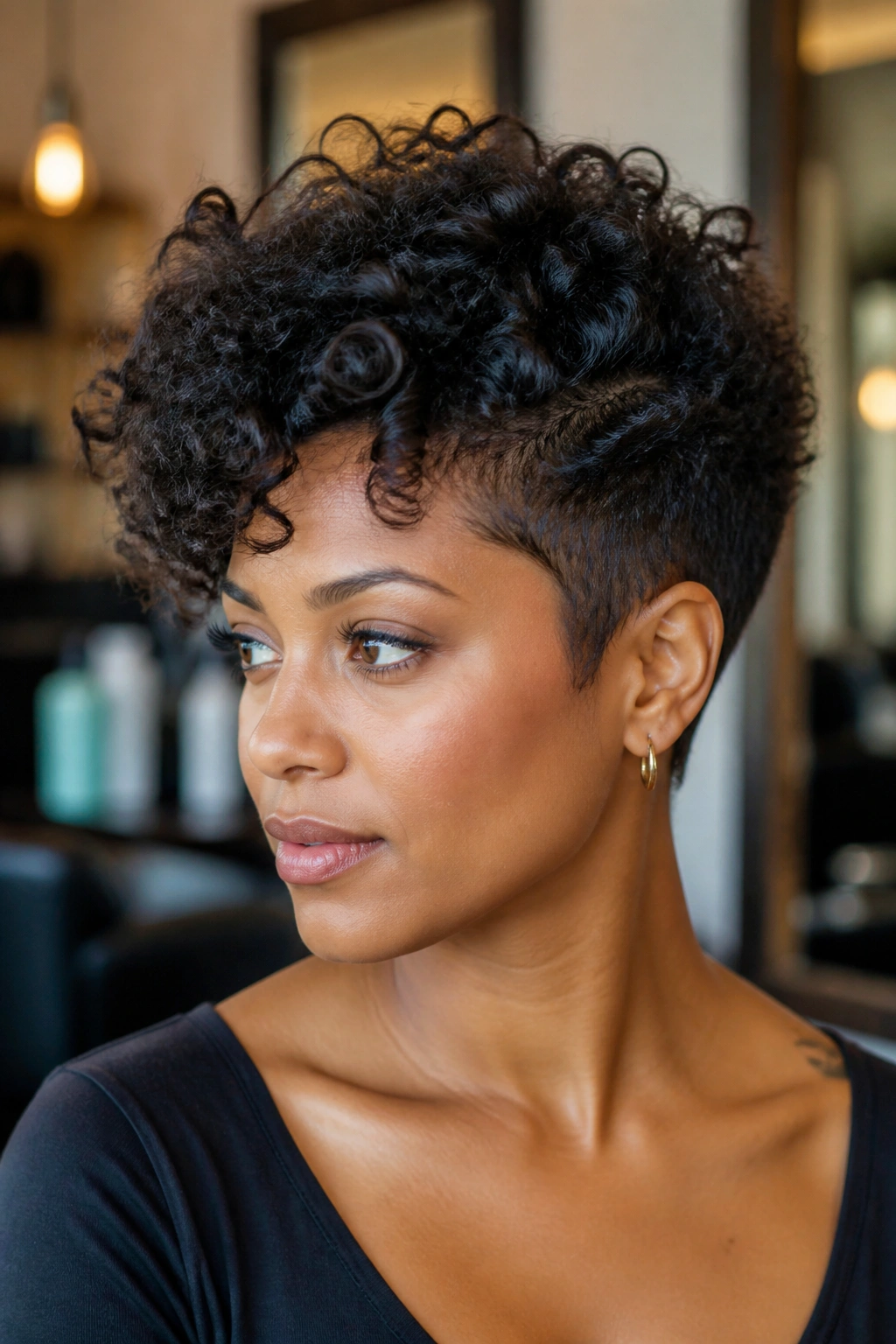
This is the one for anyone who likes a little lift up top. The crown stays longer, the sides are snug, and the back is shaped so the curl can rise instead of collapsing into the head. It’s a smart cut for dense curls that need room to breathe.
What I like about this shape is the way it moves when you turn your head. The top catches light differently from the sides, not in a glossy magazine way — just in a real, lived-in way that makes the haircut look intentional. A good stylist will layer the crown internally, not just chop at the surface.
That internal shaping matters. If the crown is left too heavy, you get a lump. If it’s thinned too much, the curls lose their body and the top starts to look thin by the second day. A small amount of weight at the apex gives the curl somewhere to sit, and that keeps the silhouette from going wild.
6. Curly Pixie With Shaved Sides
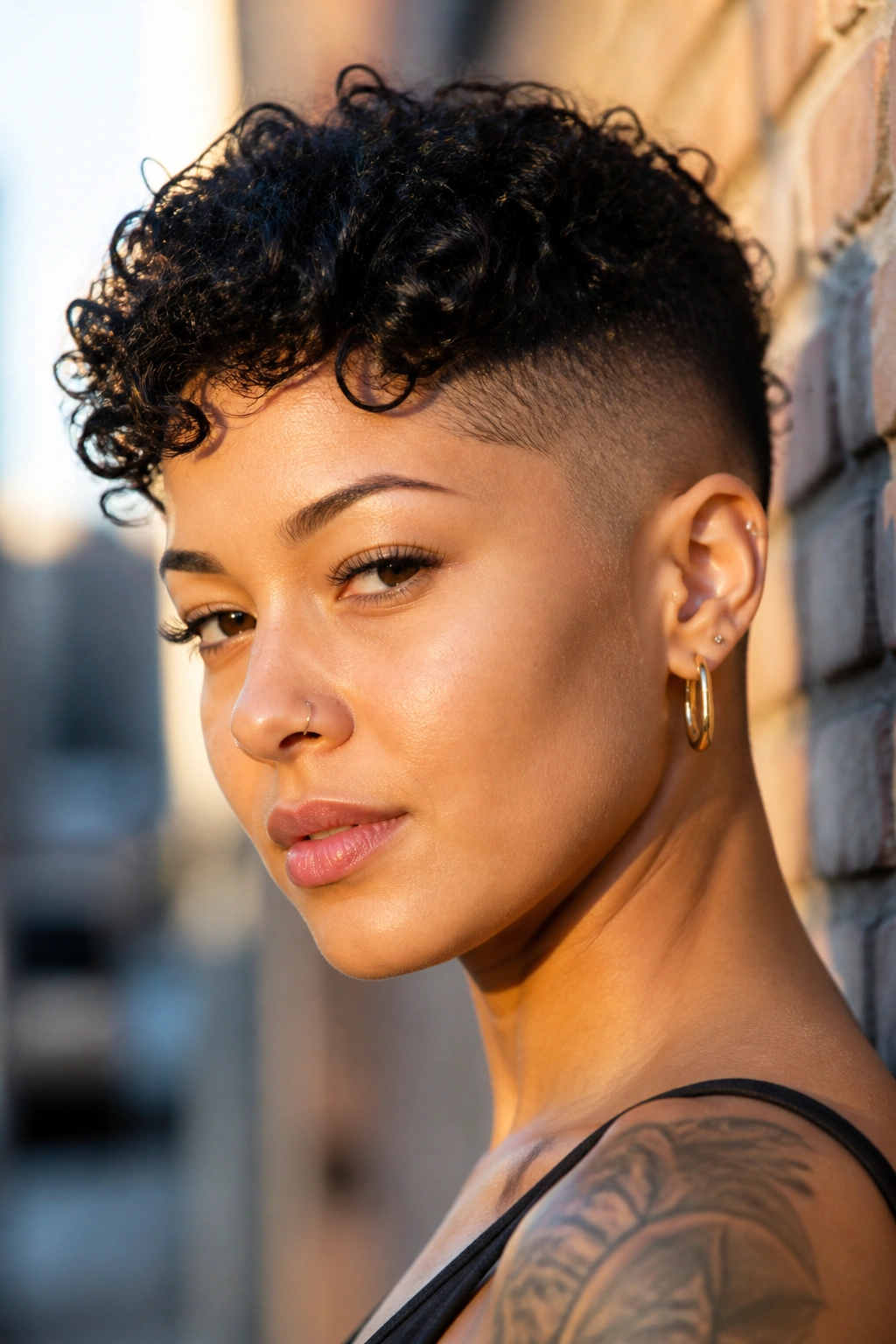
Shaved sides are not subtle. That’s the point. They strip away bulk fast, which makes the top curl stand out harder and dries the whole cut quicker after washing. If you have thick hair and you’re tired of spending forever diffusing it, this version can feel like relief.
Compared with a soft taper, the shaved side gives cleaner contrast and a more graphic line around the ear. It also puts more attention on the crown, so the top has to be good. If the curl pattern there is uneven, the style can look unfinished instead of edgy.
This cut suits people who like strong shape and do not mind upkeep. The sides usually need a trim every 2 to 3 weeks if you want the line to stay crisp. Let the top be the star, and keep the rest neat enough to support it. A little leave-in cream on the crown keeps it from looking dry against the short sides.
7. Layered Curly Pixie With a Fluffy Fringe
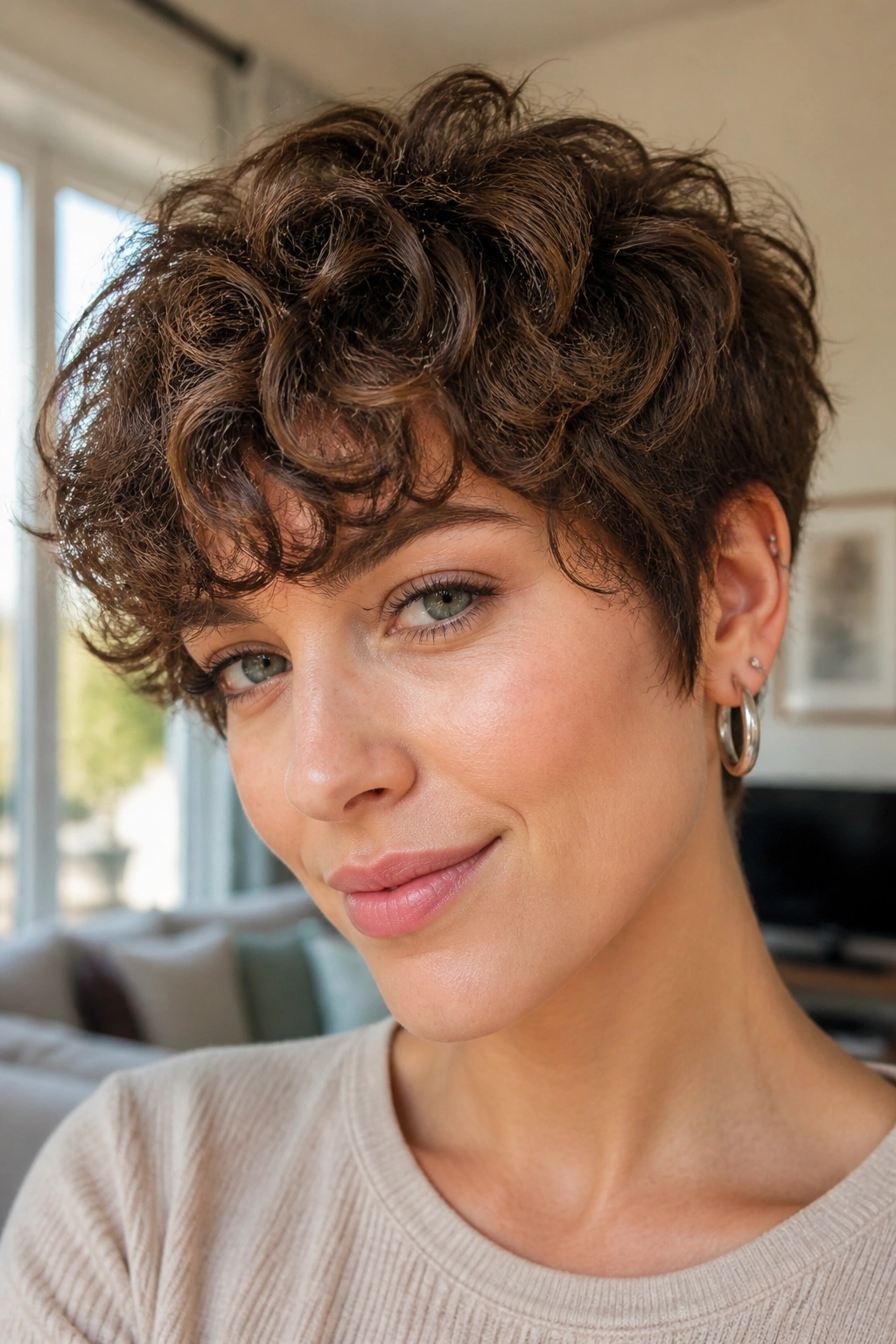
A fluffy fringe gives a curly pixie some softness right where the eye lands first. Instead of a blunt line across the forehead, the front breaks into small, airy layers that move around the face and keep the cut from feeling harsh.
What Makes It Different
The fringe is cut to sit in pieces, not in one solid block. That means the curls can fall a little differently each time you style them, which is part of the charm. It also helps if your forehead is on the shorter side and you do not want a heavy bang sitting too low.
Use a light cream or foam, then scrunch the front upward with your fingers while it dries. If the fringe looks too dense, resist the urge to keep adding product. That usually makes the front hang lower and lose the floaty feel. This cut is friendly to people who like a romantic shape but still want the practicality of short hair.
8. Finger-Coiled Curly Pixie
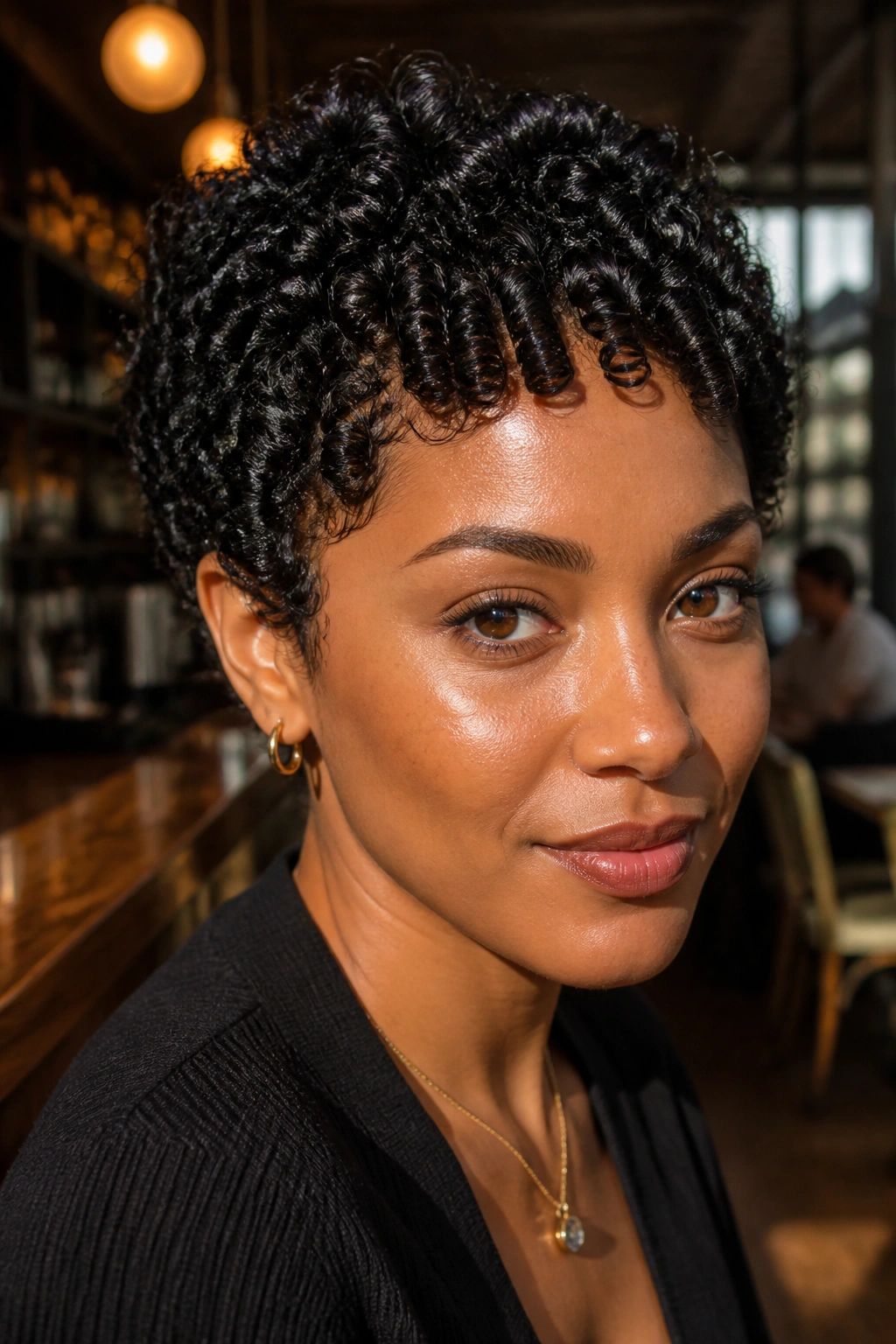
A finger-coiled pixie is for the person who likes definition and does not mind spending a little time in the mirror. Each curl gets shaped by hand, so the haircut looks neat, tidy, and deliberately curled instead of loose and fluffy.
The payoff is control. Coils sit where you place them, which can be useful if your curl pattern is uneven or your front pieces do odd things when left alone. It also works well when you want the pixie to look finished for an event, a meeting, or any day when you want your hair to behave.
Keep the sections small and the product light. A gel with a soft hold is enough for most curl patterns; too much will make the ends feel crunchy and the root area look flat. This style is not the fastest to do, but it gives a very clear shape. Clean. Precise. Easy to refresh with a bit of water the next morning.
9. Tousled Curly Pixie With Face-Framing Pieces
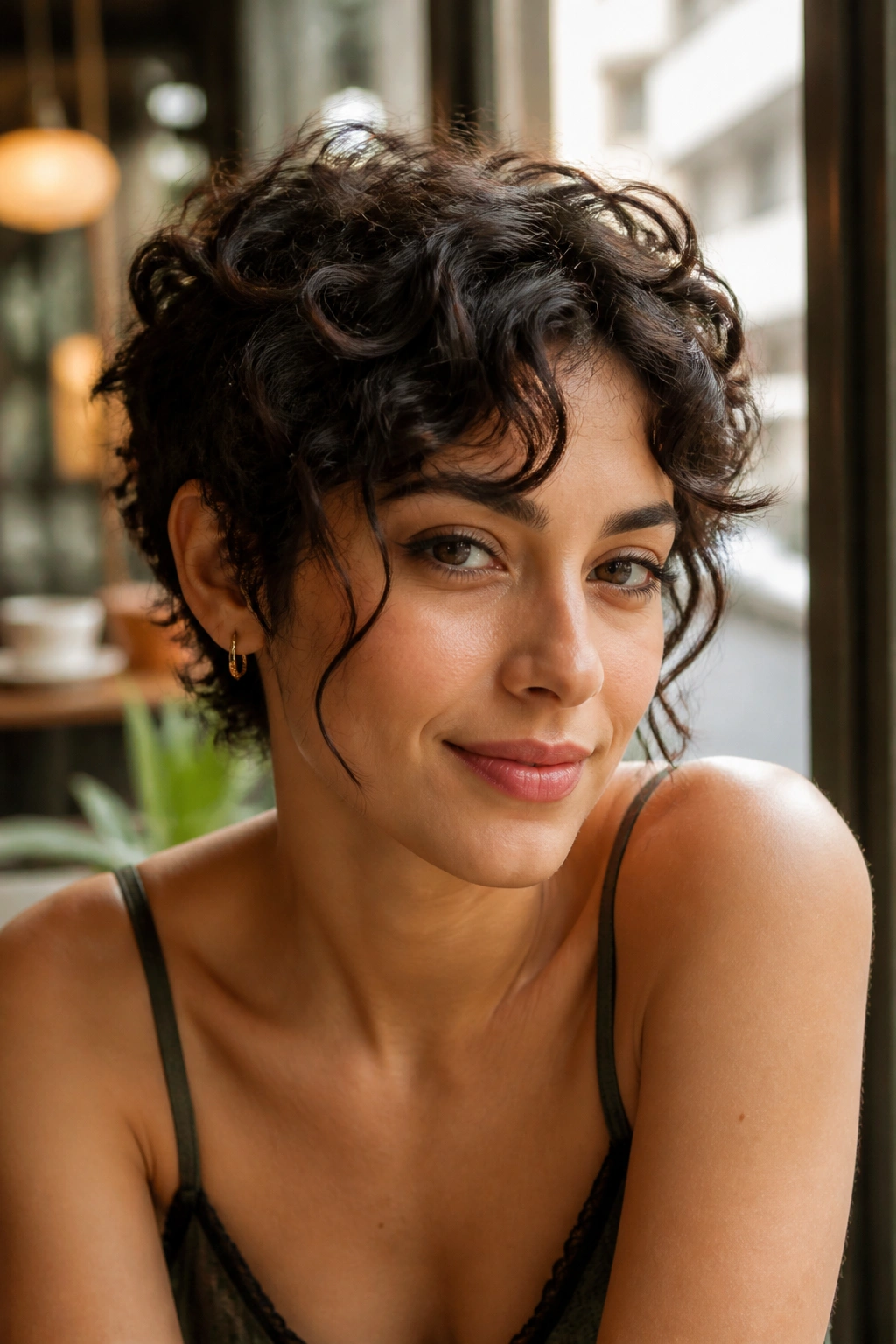
A tousled pixie is what you reach for when you want the haircut to feel a little undone on purpose. The front pieces land around the cheeks and jaw, which softens the face and makes the short length feel less severe.
Think of the face-framing sections as the quiet part of the haircut. They don’t need to be long, just long enough to break the outline and pull attention toward the eyes or cheekbones. That can help if your features feel sharp and you want something softer around them.
The style works best when the curls are separated just enough to show texture, but not so much that each strand becomes frizzy. A curl cream on damp hair, then a tiny touch of gel on the ends, usually does the job. This is one of those cuts that looks better when you stop fussing with it. Messy, but not careless.
10. Curly Pixie Cut With a Deep Side Part
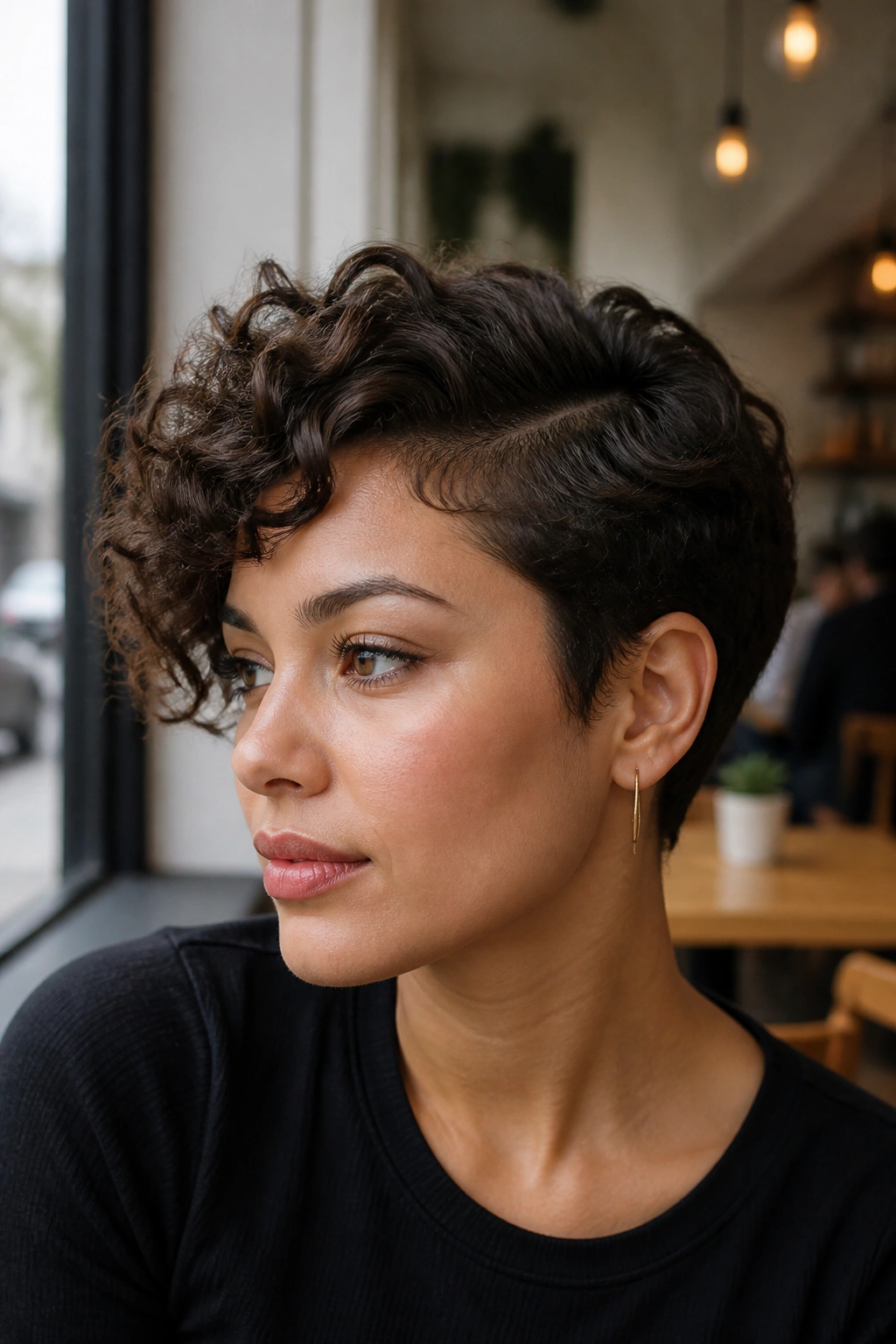
A deep side part gives a curly pixie a clean shift in direction, and that alone can change the whole mood. The front lifts on one side, the other side settles lower, and the part line gives the haircut a little drama without needing extra length.
The part also helps with volume at the root. When curls are trained to fall away from one side, the top tends to stand up better, which is useful if your hair lies flat after washing. This shape works especially well on curls that need help away from the crown because the part creates a natural lift point.
Wear it with a side-swept fringe if you want the face to look softer. Wear it tighter if you want the haircut to feel sharper. Either way, the part should be clean but not severe. If the line is too exact, the cut starts looking formal in a way most curly pixies do not need.
11. Soft Afro Pixie
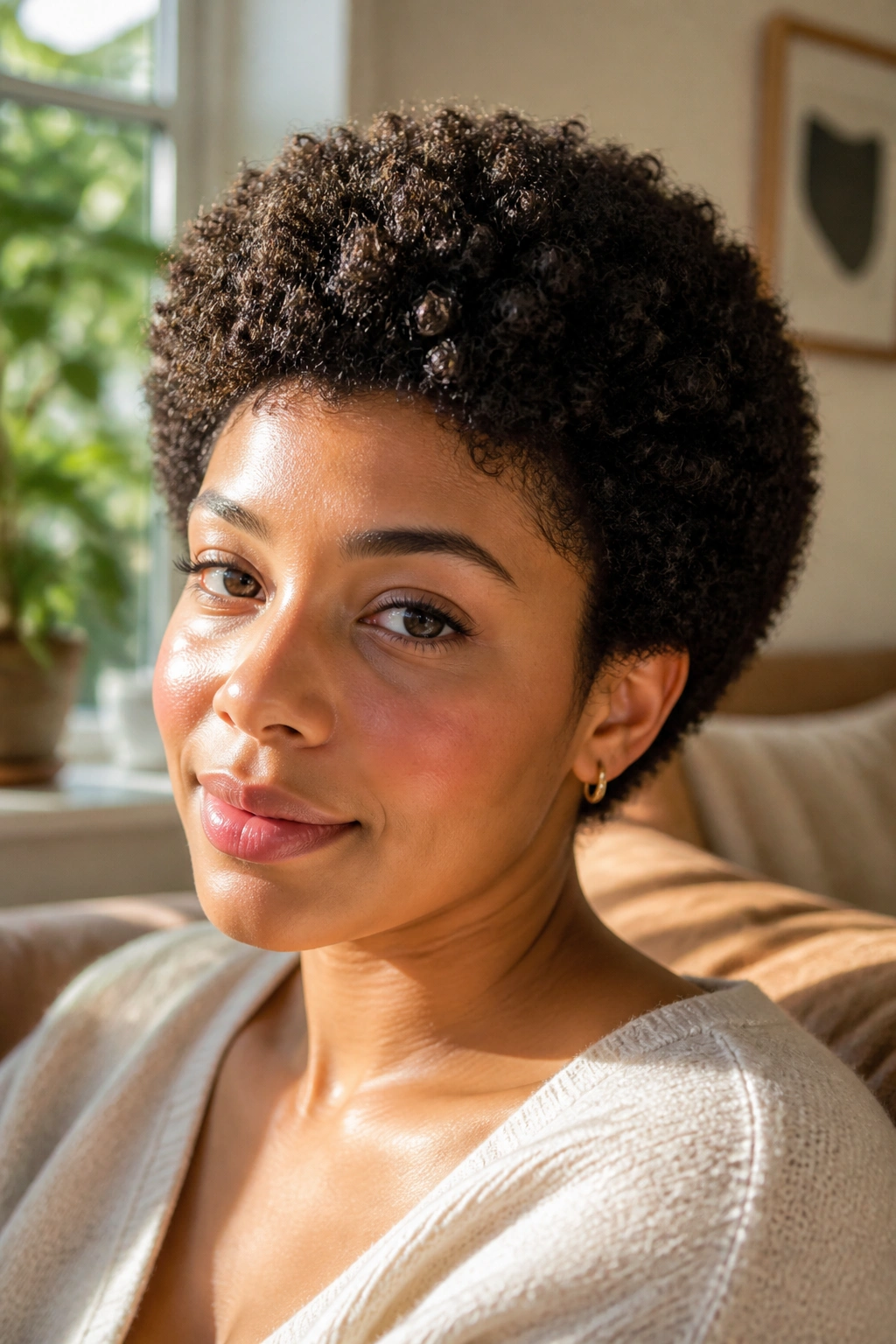
A soft afro pixie keeps the edges round and the texture full, which is a different feel from a tight tapered crop. The goal is shape, not reduction. You still get short hair, but the outline stays plush and rounded around the head.
That shape is especially kind to tighter curl patterns because it lets the hair keep its natural body. A stylist will usually remove bulk from the inside rather than hacking away at the outside line. That keeps the silhouette from becoming triangular, which is the mistake people make when they think “short” means “short everywhere.”
If you like a little fluff and a lot of texture, this version makes sense. It doesn’t need much product — a leave-in and a light oil on the ends can be enough. The real work happens in the cut itself. And that’s the good part. When the shape is right, mornings get simpler.
12. Curly Pixie With a Stacked Back
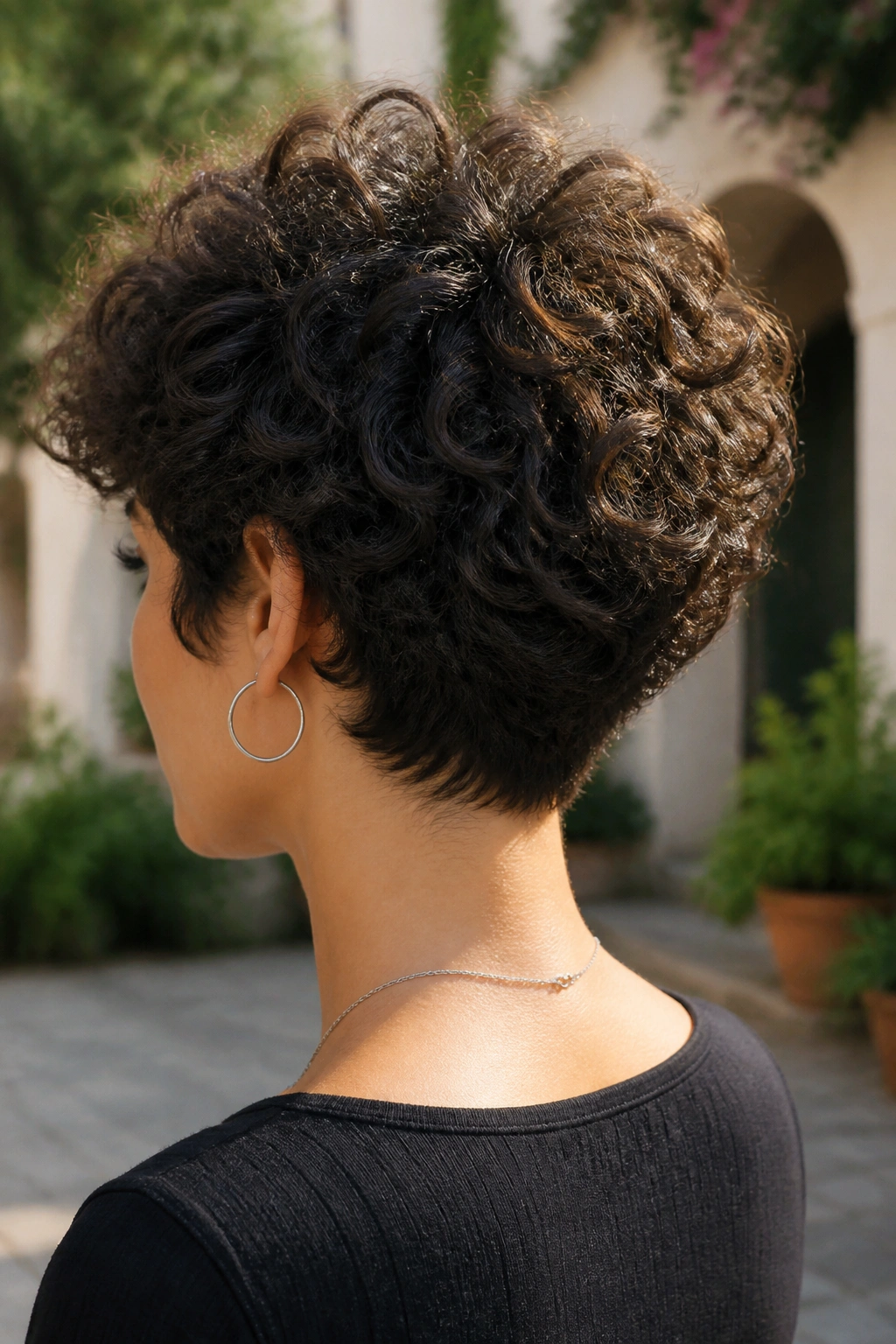
The stacked back gives the haircut a little architecture. Shorter layers build up through the nape area, so the back sits higher and the crown gets a small lift. It’s a good fix when the back of a pixie looks too flat or too heavy.
Shape Notes
- Best for: dense curls that need weight removed low on the head.
- Styling move: diffuse the back first so the stacked layers keep their lift.
- Salon detail: ask for internal graduation, not a blunt shelf.
- Watch out for: over-layering, which can make the back puff out.
The stacked shape also makes a curly pixie show better from the side. That matters more than people think. A short cut is seen from behind, in profile, in motion. If the back drops cleanly into the neck, the whole haircut looks finished.
This is a strong choice if you like the neck area to feel neat but still want a little body at the crown. It’s practical, but not boring.
13. Wet-Look Curly Pixie
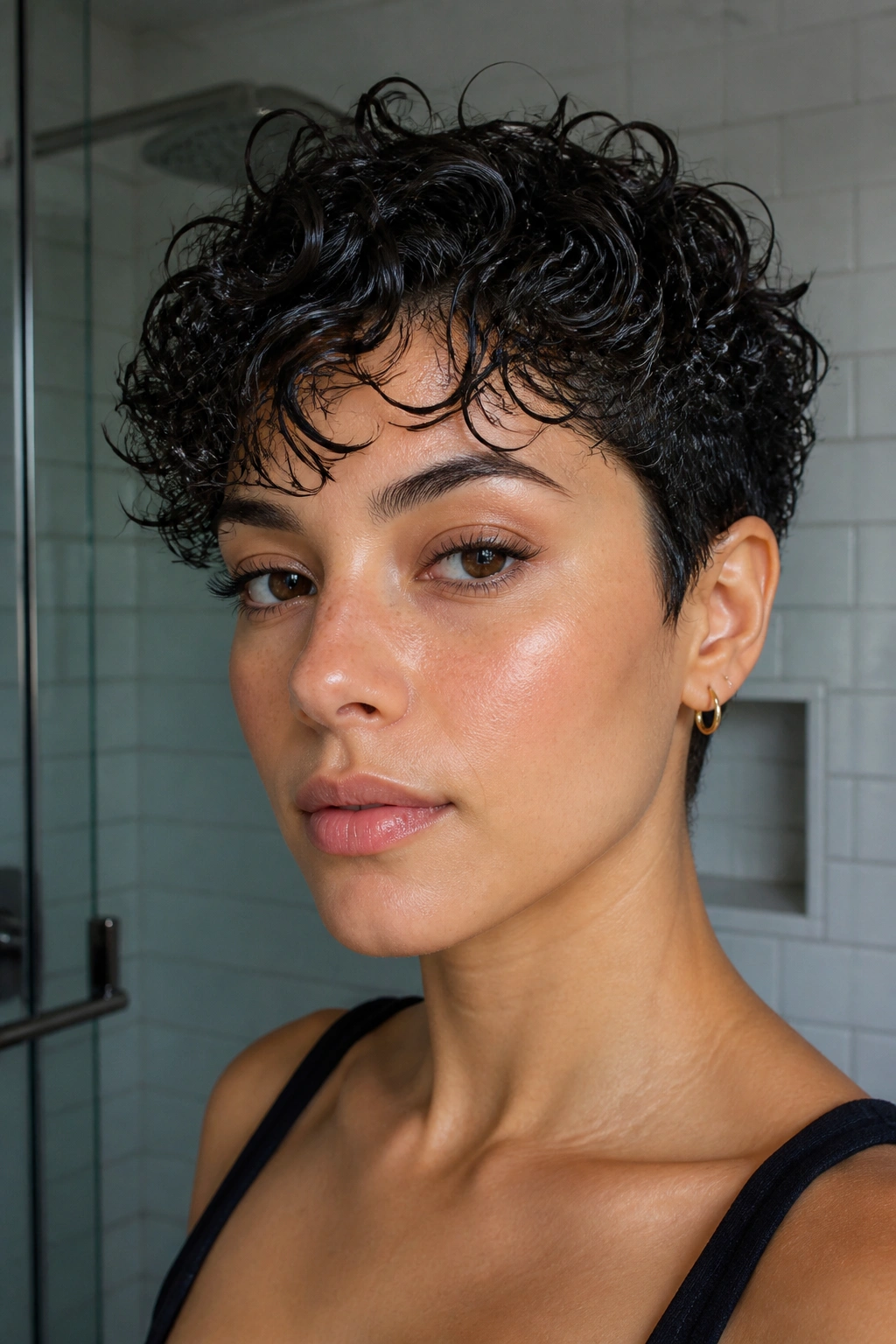
Wet-look curls are slick, defined, and a little dramatic. They rely on gel, damp hair, and enough hold to keep the curl clumps together while the shape sets. On a pixie, that creates a polished surface with visible texture underneath.
The trick is to use enough product to define, but not so much that the hair turns sticky. Start with soaking-wet hair, rake in a strong-hold gel, then scrunch lightly and leave the curls alone while they dry. If you keep touching them, the finish gets frizzy and patchy fast.
This style works when you want the cut to look intentional and a little dressy. It’s also a solid choice for tighter curls that naturally group well. I would not push it if your hair is very fine and low-density, because the product weight can flatten the top and make the pixie look limp. Clean roots, shiny curl clumps, done.
14. Choppy Curly Pixie With Piecey Ends
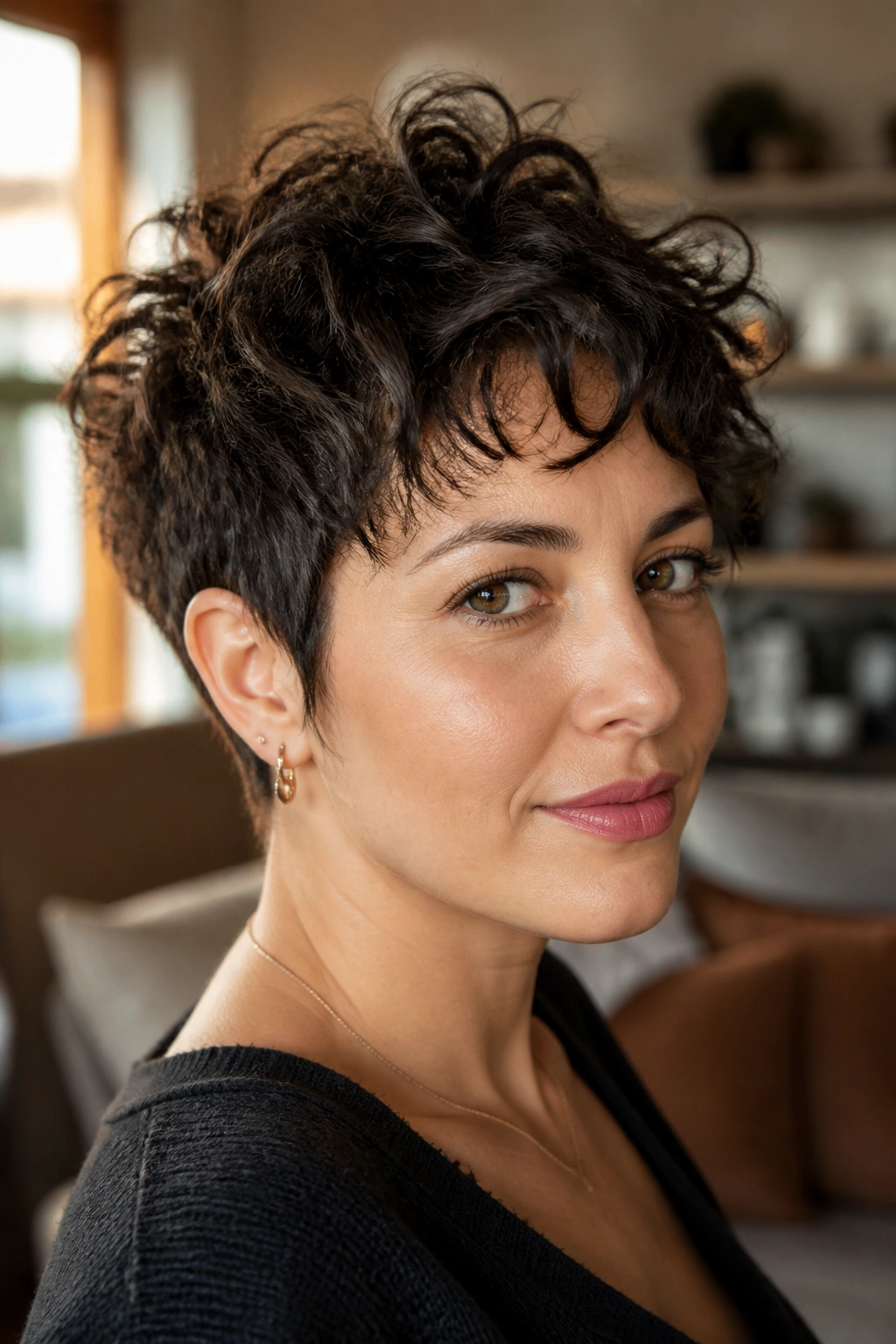
Why does a choppy pixie feel less precious than a soft one? Because the ends are broken up on purpose. The cut has little changes in length throughout, which keeps the curl pattern from settling into one smooth shape.
That piecey finish is useful if your curls tend to form in odd directions. Instead of fighting the variation, the cut uses it. A razor or point-cutting technique can help, though it has to be handled carefully on curls so the ends do not fray.
How to Get the Most From It
Let the hair dry partway before you separate the curls. Full separation while the hair is soaking wet usually makes the pieces too wide and too fuzzy. A small amount of styling balm on the ends can help keep the shape broken up without turning crunchy.
This cut has a little edge, but it is still wearable. It’s one of the easier curly pixie cuts to style if you like a lived-in finish and don’t want your hair to look too neat every day.
15. Curly Pixie With Long Sideburns
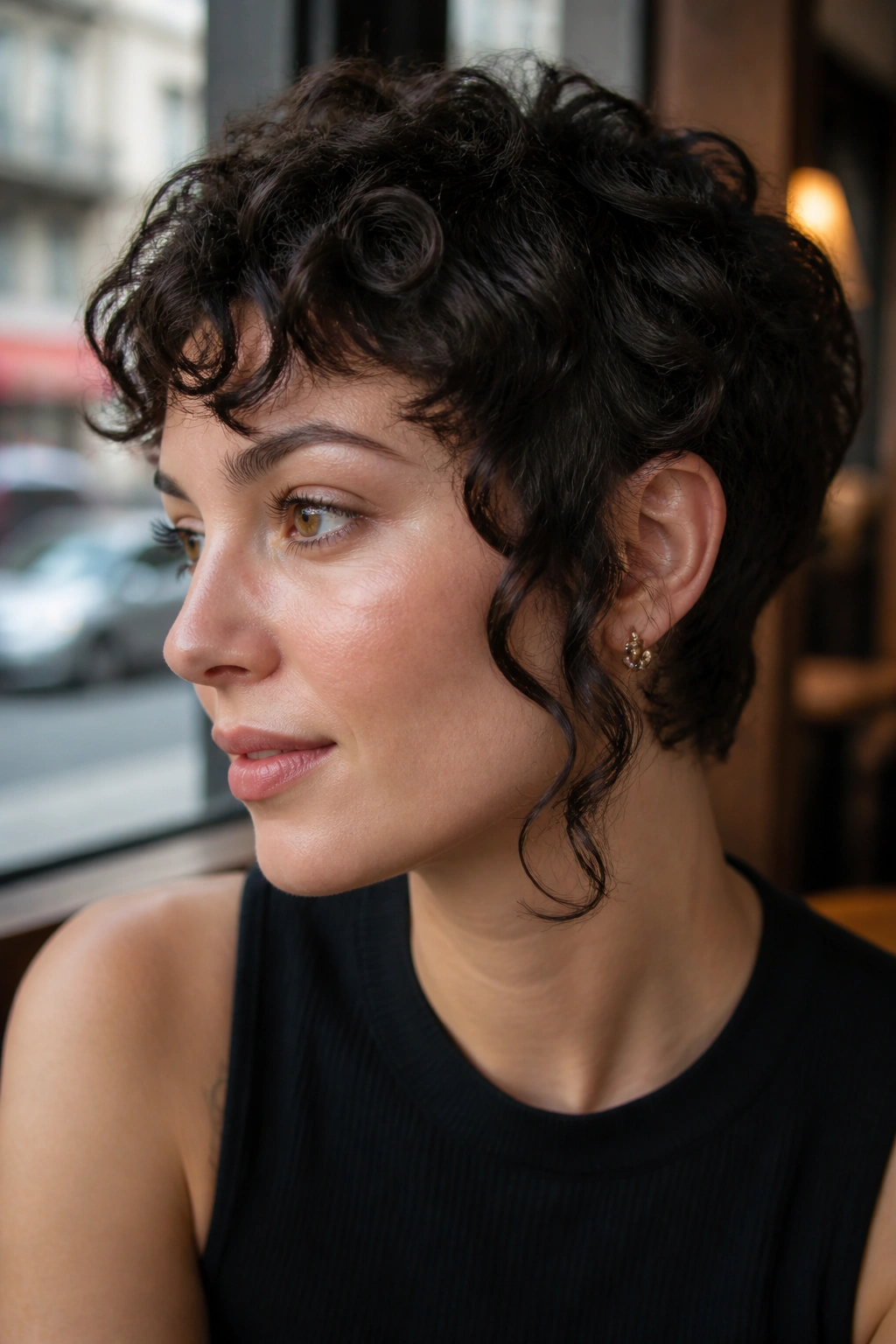
Long sideburns do more than people think. They draw the eye down the face, soften a strong jaw, and keep a short curly cut from feeling boxed in around the ears. They also give the haircut a nice side profile, which matters when the rest of the style is cropped close.
I like this shape on people who want a pixie but still want a little softness near the cheek. The sideburns can be curly, stretched, or left a bit straighter depending on the texture. Either way, they act like a frame.
This version is useful when your hairline needs a little cover at the temples or when you want the cut to grow out more gracefully. Long sideburns buy you time. They also make the style feel less severe on days when you tuck one side behind the ear and leave the other side loose.
16. Pixie Mullet for Curls
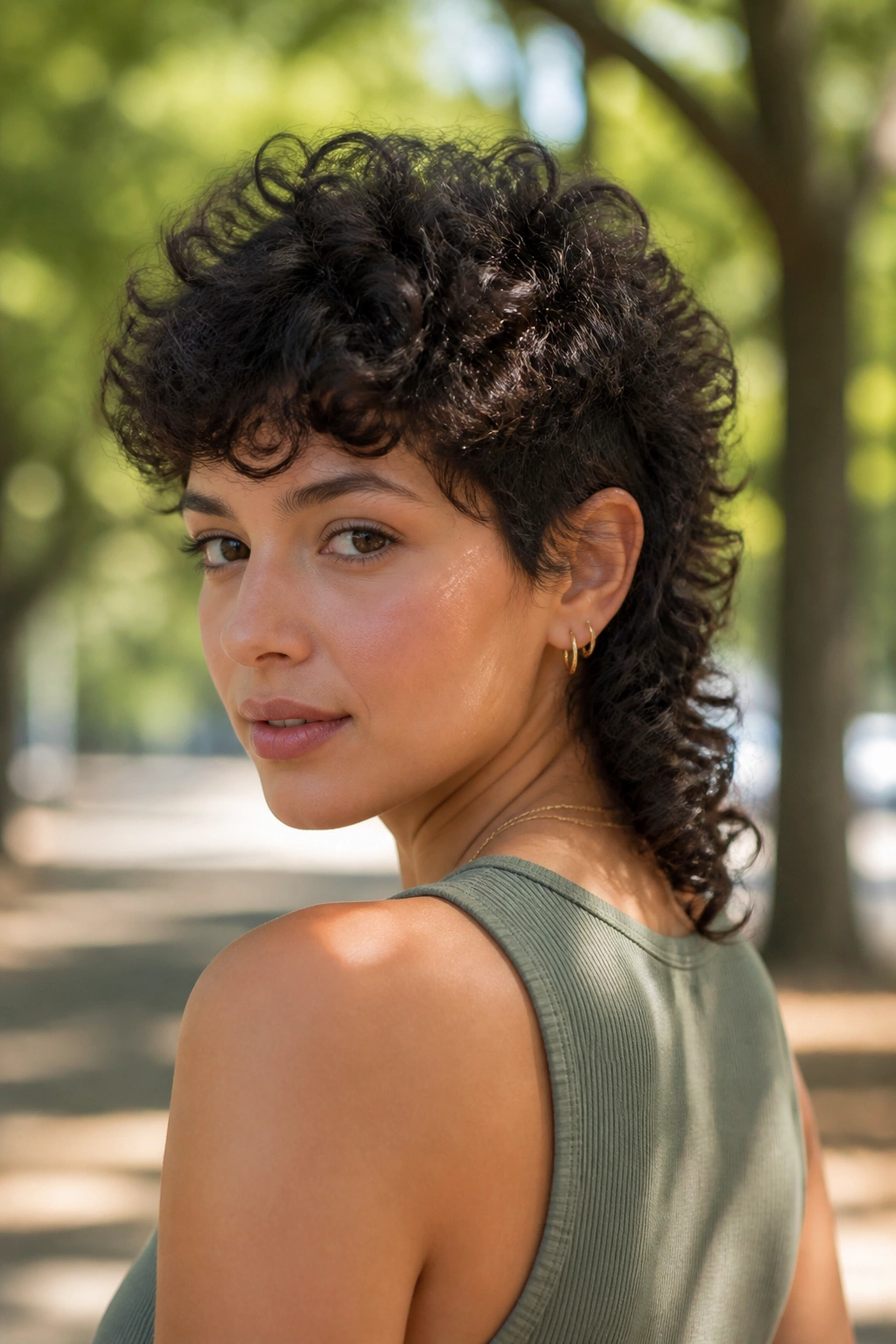
The curly pixie mullet is not shy. Shorter through the front and sides, longer through the back, it keeps the curl moving in more than one direction, which is exactly why it has such personality. It is a good fit for anyone who wants short hair with a little rebellion in it.
Compared with a classic pixie, this shape gives more length where curls often need it most: at the nape and through the back crown. That extra bit can stop the cut from looking too cropped or too round. It also makes the silhouette feel longer when viewed from the side.
This one works best when the top layers are controlled and the back is allowed to swing a little. If the front is too short and the back too heavy, the cut can feel lopsided in a bad way. Get the proportions right and it looks cool, not costume-y. That distinction matters.
17. Curly Pixie With Baby Bangs
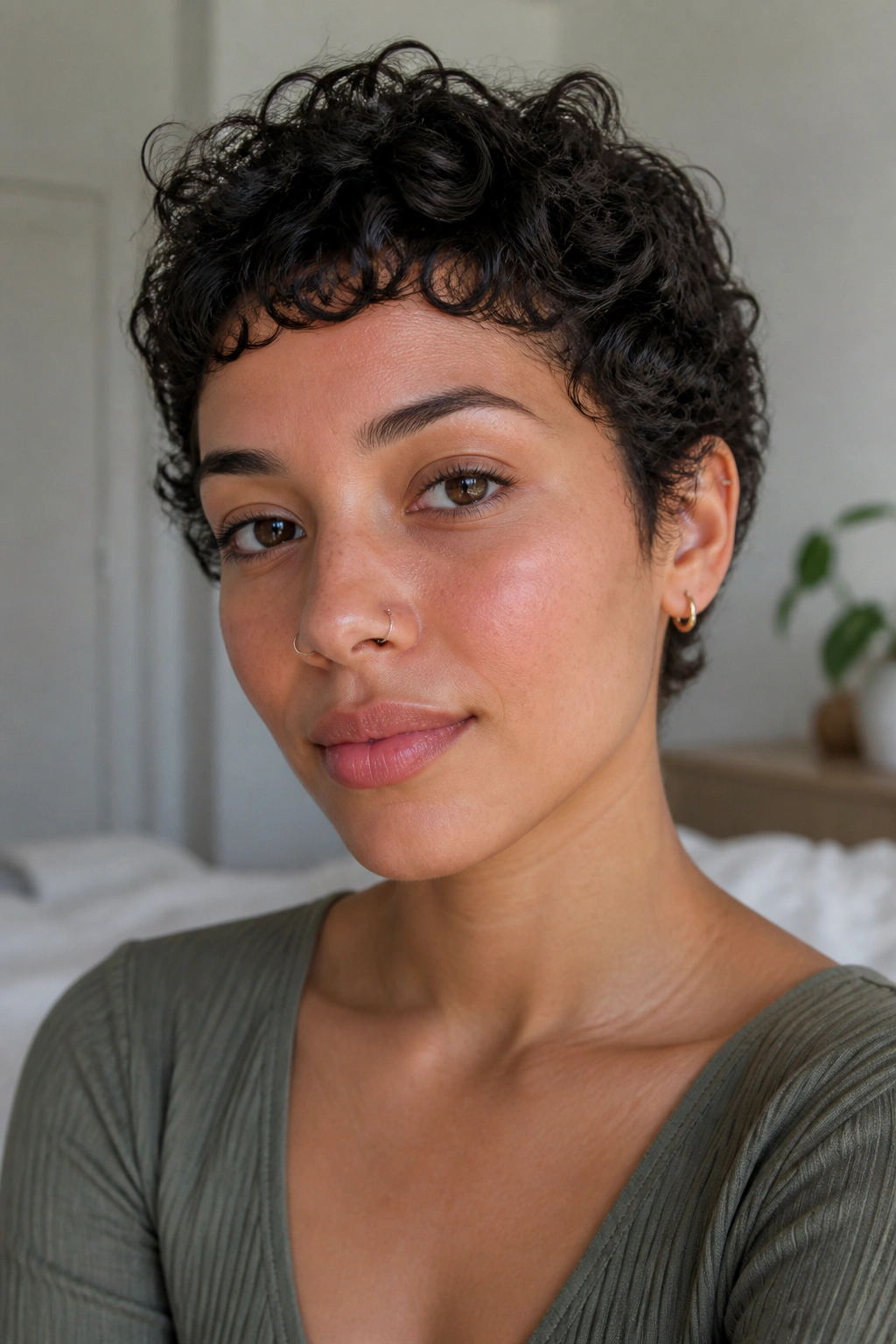
Baby bangs on curls are tiny, direct, and impossible to ignore. The fringe sits high on the forehead, which puts the focus on the curl texture and the face instead of on length. When done well, they look crisp and playful.
Why People Choose Them
- They make a short haircut feel sharper.
- They show off the brow line.
- They work well with defined curls that spring up evenly.
- They need regular trimming because shrinkage changes the length fast.
The important bit is proportion. If the bangs are too thick, they swallow the forehead and make the face feel smaller than it is. If they are too wispy, the style loses its punch. A light, carefully sectioned fringe keeps the effect clean.
This cut suits someone who is happy to be noticed. It is not a background haircut. Pair it with a strong brow, a bare face, or a simple necklace and let the bangs do the work. They already have enough attitude.
18. Sculpted Curly Pixie With Defined Sides
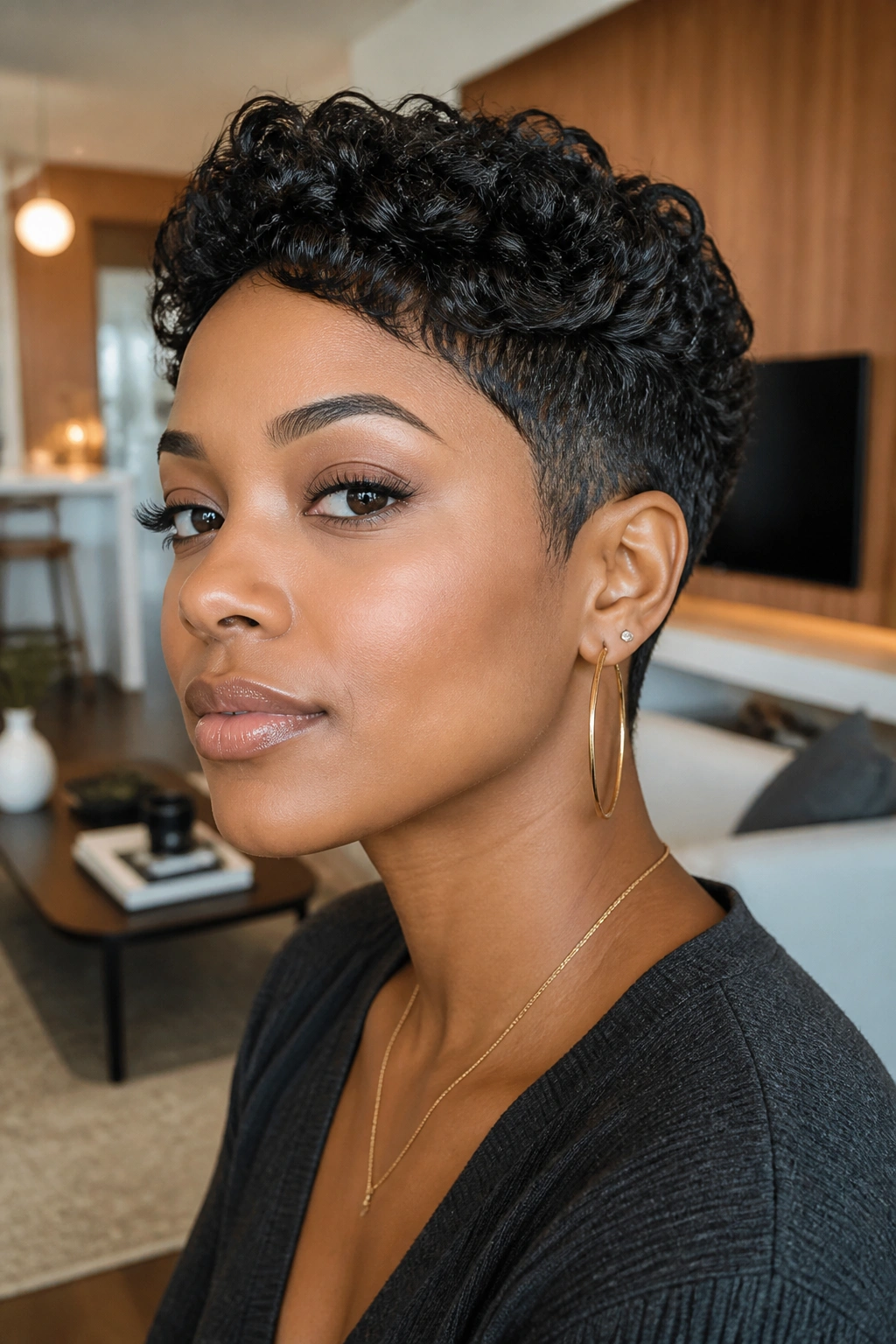
A sculpted pixie keeps the sides close and the top carefully shaped, which gives the whole cut a tidy, almost tailored feel. The curls are still there, but they sit in a more controlled outline. That is useful if your hair has a mind of its own.
The sides should be shaped with real intention. If they are too flat, the cut loses life. If they are too bulky, the head looks wide at the temples. A clean temple area, a controlled nape, and defined crown curls keep the style from drifting into puffiness.
This is one of the better curly pixie cuts for people who like structure. A diffuser, a small round brush only at the roots, and a medium-hold cream can keep the shape in line. It looks especially sharp when the curls are separated enough to show pattern but still sit together as a unit.
19. Low-Maintenance Wash-and-Go Curly Pixie
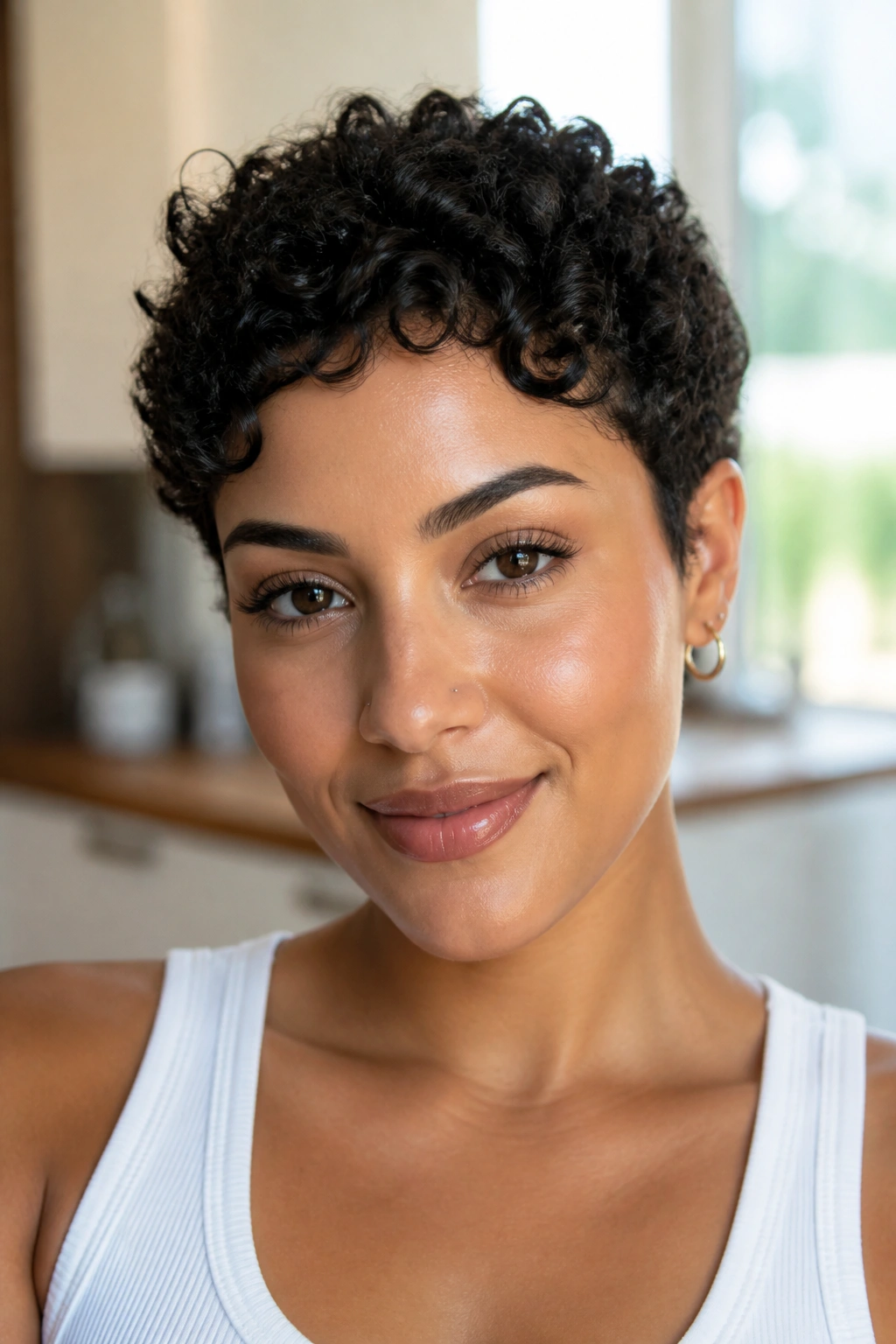
A wash-and-go pixie is the haircut you pick when you do not want your mornings to become a styling project. The cut is built so the curls fall into place with minimal help, which means the shape has to be smart from the start.
That usually means keeping enough length on top to show curl pattern, but not so much that the crown collapses. The sides stay clean so the style doesn’t puff outward while it dries. If a haircut needs a lot of rescue work every day, it is not low-maintenance. It is just short.
This version shines for people who want a neat outline with a natural finish. Use a leave-in, a small amount of curl cream, and let the hair do the rest. If you need to leave the house in ten minutes, this cut can still look finished. That’s worth more than a fancy shape that takes half an hour to behave.
20. Curly Pixie With a Halo Shape
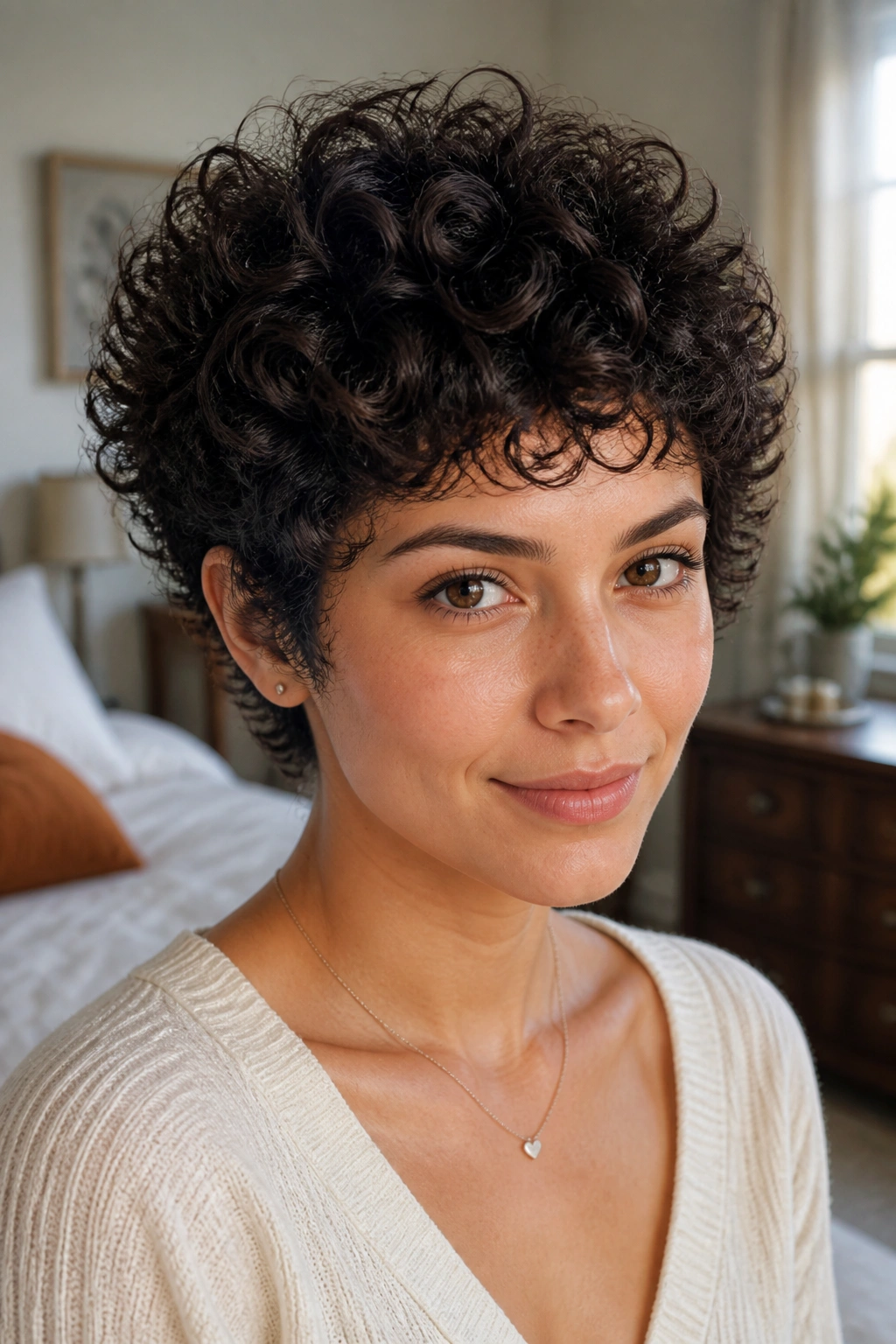
A halo-shaped pixie wraps the curls around the head in a soft ring, so the outline feels rounded and airy instead of tight or angular. It’s a lovely choice for dense curls that want room without turning into a mushroom shape.
The balance comes from keeping the top full and the sides carefully controlled. You want lift through the crown, but you do not want the outline to stick out at the widest point of the head. A good stylist will remove weight in the inner layers and leave the outer silhouette intact.
Does this shape suit everyone? No. It favors curls that naturally stack into a rounded pattern and hair that has enough density to hold shape. But when it works, it feels easy to wear and soft around the face. A halo pixie has presence without looking like it’s trying hard.
21. Pixie With an Undercut Design
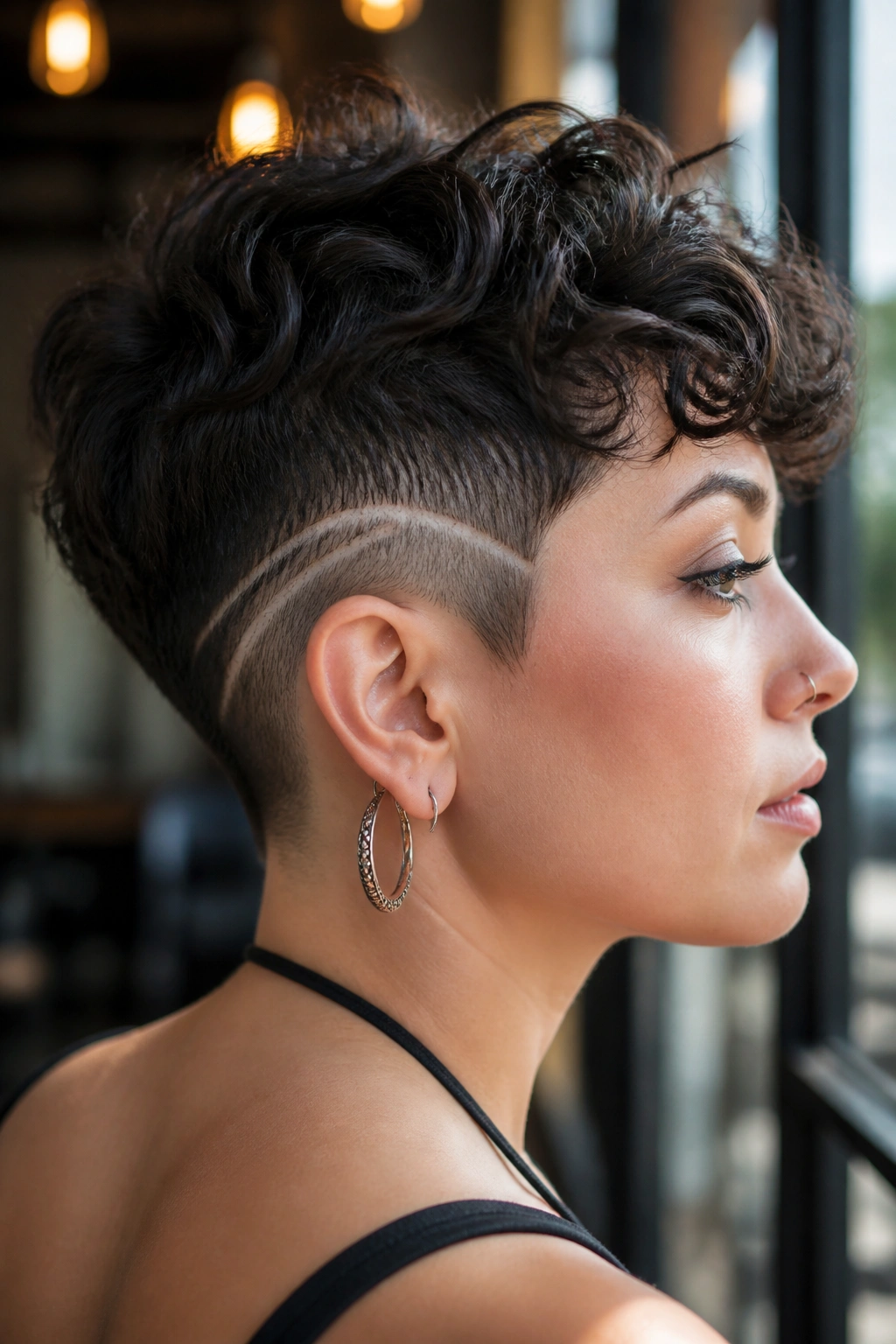
An undercut design turns the haircut into something personal. One side, the nape, or a hidden panel can be clipped shorter, sometimes with a line, curve, or small etched shape. It gives the pixie a hidden detail that shows when the hair moves.
The design part should be a choice, not an afterthought. If the top curls are already busy, keep the undercut simple. A single line or a clean fade is often enough. If the top is soft and round, the undercut can carry a little more edge.
This style suits someone who likes contrast and does not mind visiting the salon a bit more often. The design area grows out fast, and curly hair can blur the line quicker than straight hair. Still, the payoff is real. It gives the haircut a bit of attitude without forcing the whole head into an extreme shape.
22. Grown-Out Curly Pixie
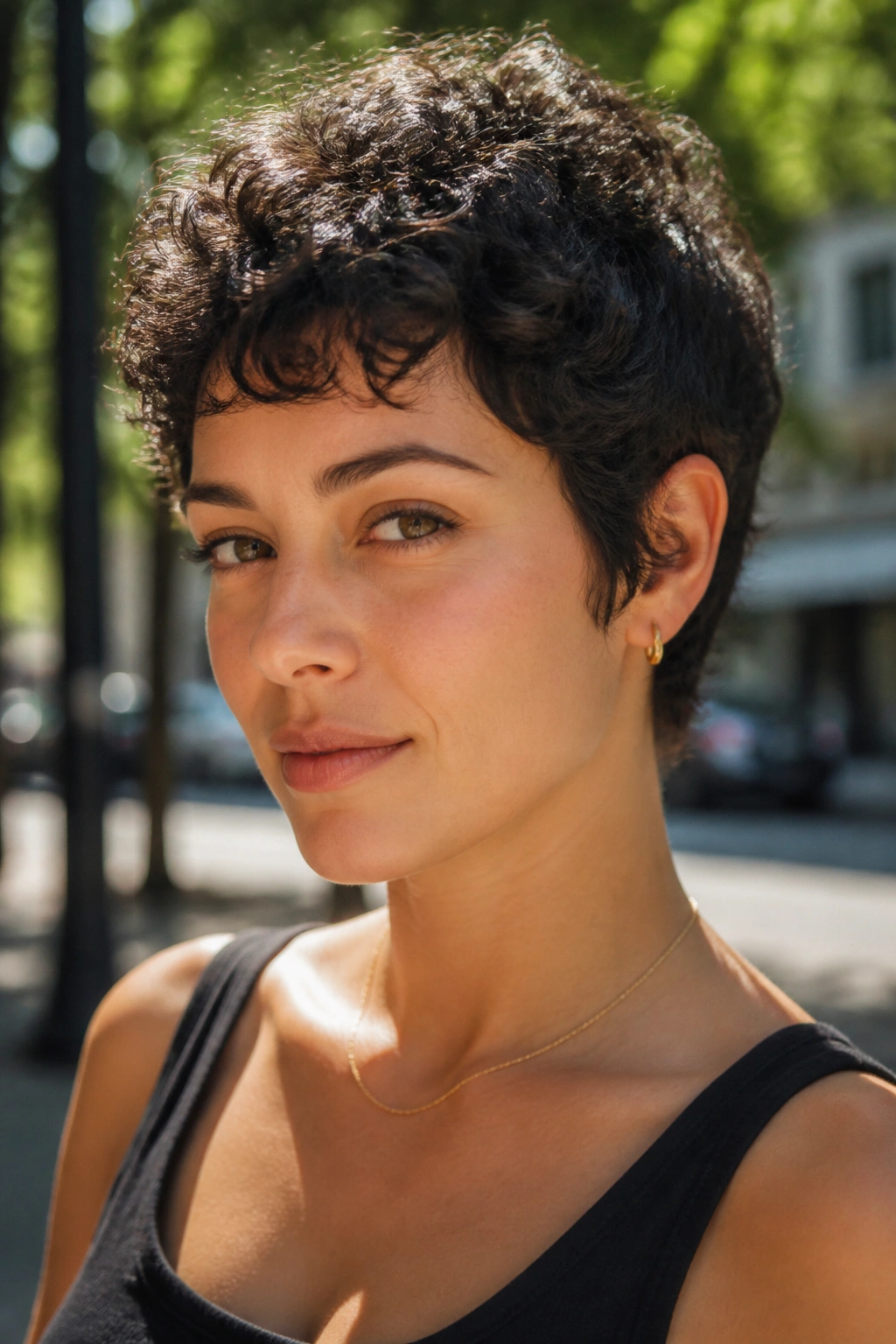
A grown-out curly pixie is one of the more underrated shapes on the list. It keeps the basic pixie structure but lets the top and sides soften as they grow, which can look even better than the original cut if the length is handled well.
The danger zone is that awkward middle stage when the sides swell and the top starts to sit in a lump. The fix is usually a light trim around the edges, not a total restart. Cleaning the nape, opening the ears a little, and keeping the top from getting too heavy can make the grow-out look deliberate.
This style is ideal if you want to stretch time between full haircuts. It also gives you room to switch between a neater and messier finish depending on how you style it. Some days it reads polished. Other days it reads a little wild. That’s part of the charm, and honestly, that’s why people keep it around.
Final Thoughts
Curly pixie cuts work when the shape respects the curl pattern instead of flattening it into something it is not. That usually means a dry or curl-by-curl cut, a smart taper, and a plan for shrinkage before the scissors ever come out.
The best short curly styles do not all look the same. Some lean soft and rounded, some go sharp at the sides, and some use bangs or sideburns to change the balance around the face. Pick the one that fits your texture first. The attitude comes after that.
Bring a stylist a clear photo, yes, but also talk about how much time you want to spend styling. That part changes everything. A good curly pixie should feel like it belongs to your hair, not like your hair is being ordered around.
