



A long pixie cut can look clean on day one and fussy by week six if the shape is wrong. The best long pixie cuts that grow out beautifully do not rely on one perfect styling trick; they rely on smart architecture—soft corners, a little weight at the nape, and fringe that can bend instead of stand up and argue with you.
Hair grows about half an inch a month on average, which is not much until you watch a blunt temple corner or a shaved nape start shifting after a few weeks. That tiny amount changes the whole mood of the cut. A soft line turns into a longer version of itself. A hard line turns into a problem.
I like short hair with a little room built in. Give me a long pixie with enough top length to tuck, sweep, or scrunch, and I’m happy; give me one that depends on perfect styling every morning, and I lose interest fast. The styles below stay interesting when they’re fresh from the salon and when they’ve had some time to live a little.
Some are better on fine hair, some behave better on curls, and some are plain smarter if you hate frequent trims. What they share is a forgiving shape—the kind that still looks intentional when the fringe is past your eyebrows and the nape is no longer tightly cropped.
1. Side-Swept Long Pixie With a Soft Grow-Out
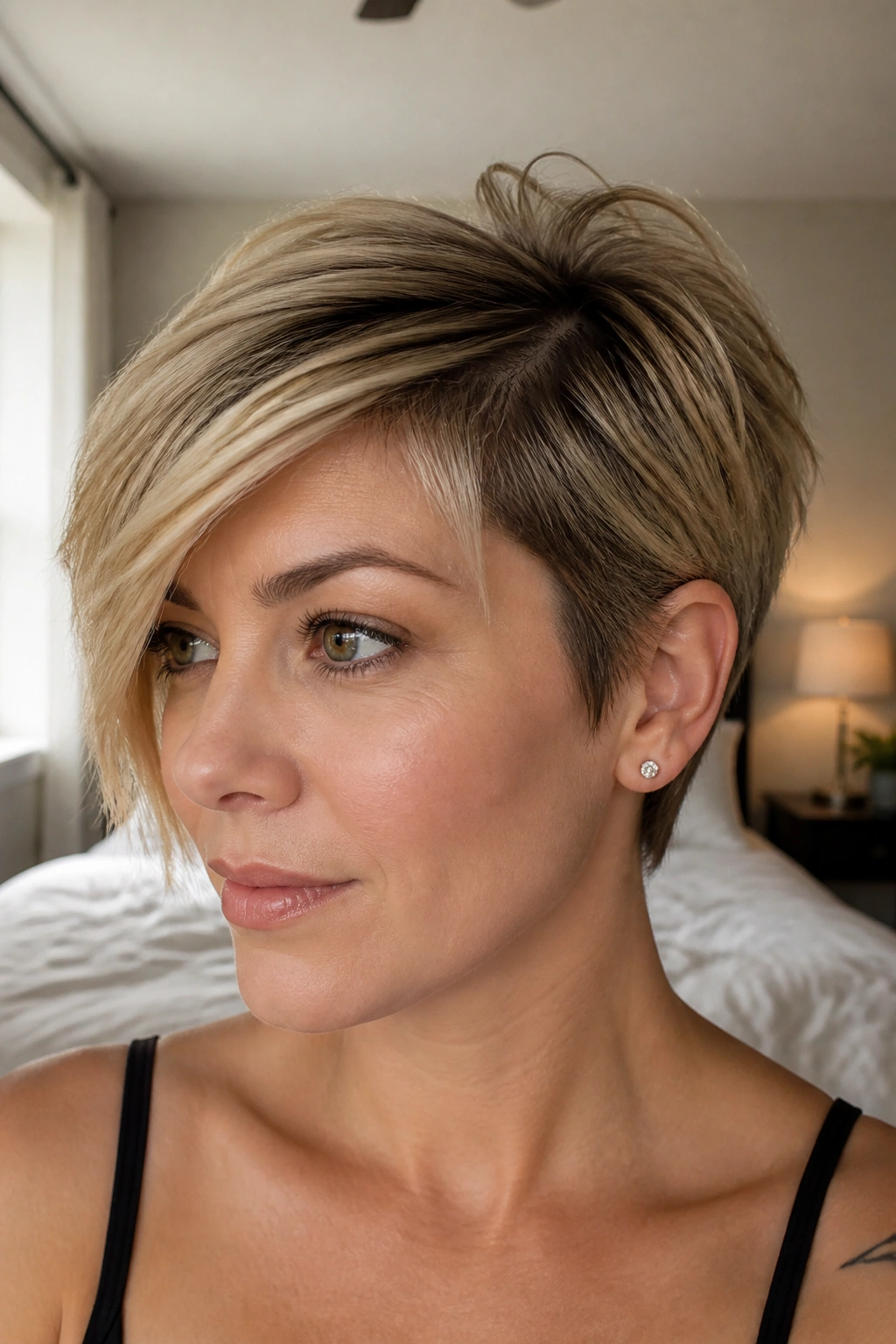
Start here if you want short hair without drama. A side-swept fringe gives you cover, movement, and a built-in escape hatch on the mornings when you do not want to fuss with a brush.
Why It Grows Out Cleanly
A side-swept fringe ages better than a blunt mini-bang because it can slide into a longer part line instead of hanging there like a shelf. Keep the top around 3 to 4 inches, leave the front longest at the temple, and taper the nape softly rather than shaving it bare. When the cut grows, the line just gets looser. It does not fall apart.
- Best on straight to wavy hair, especially if your hair lies flat on one side.
- Ask for a deep side part and point-cut ends around the face.
- Works well if you like tucking one side behind the ear.
- The grow-out phase usually looks more like a softer crop than a misshapen pixie.
Tip: avoid a hard corner at the temple; that single detail is what keeps this cut from looking boxy in a few weeks.
2. Choppy Layered Long Pixie With Crown Lift
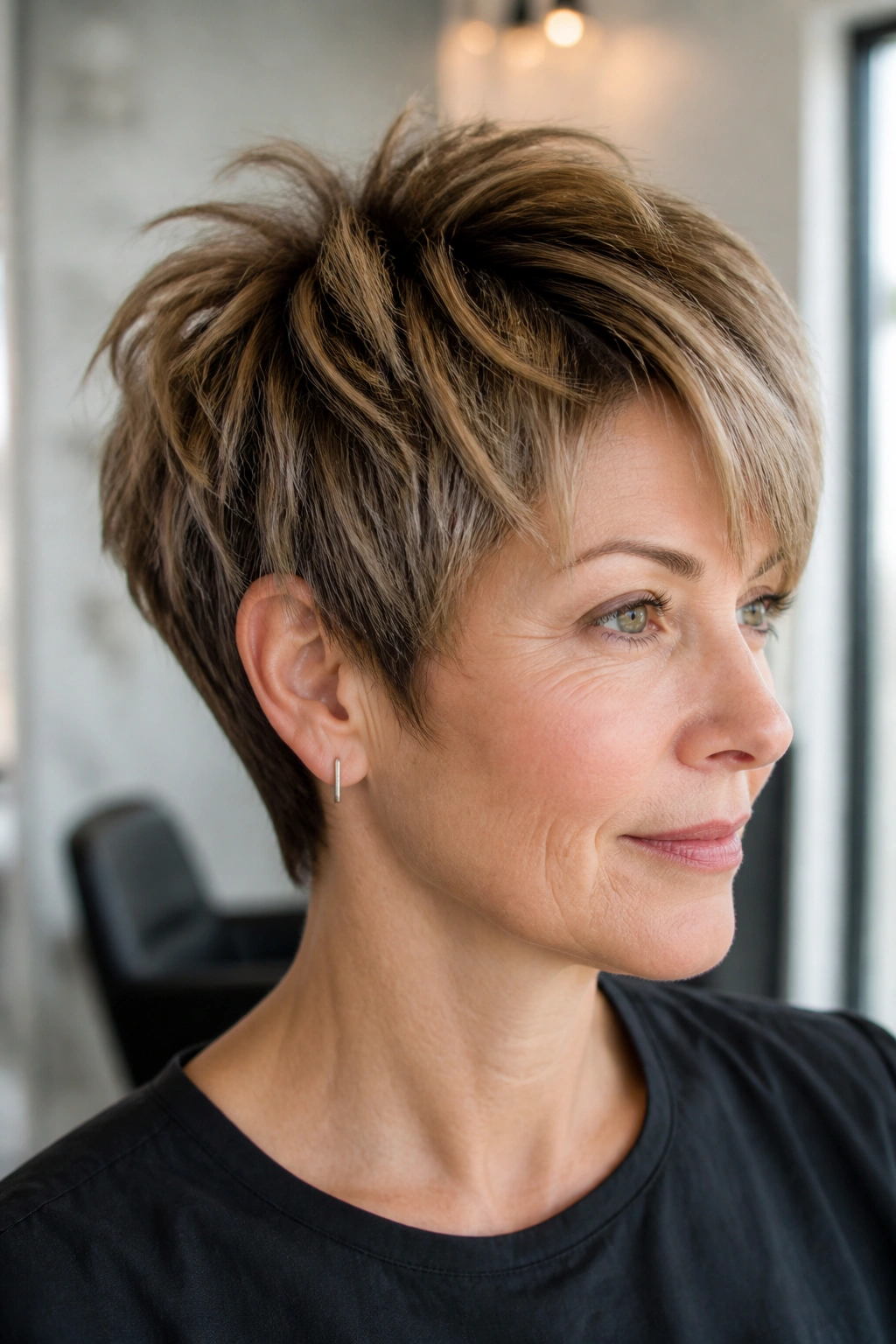
Fine hair looks fuller in this cut. Short, uneven layers around the crown create the look of thickness without making the whole head feel bulky, and that matters because thin hair can go limp fast once it loses its salon-fresh shape.
The trick is not to carve the top into tiny bits and call it texture. You want separation, not chaos. A good choppy long pixie has enough length on top to move, plus shorter interior layers that stop the crown from collapsing by lunch. If your hair tends to sit flat against your head, this is the cut that gives you a little lift without forcing a lot of styling.
A pea-size dab of matte paste on dry ends is enough. More is a mess.
I’d use a root-lifting mousse at the roots, rough-dry until the hair is about 80 percent dry, then pinch the top with your fingers instead of brushing it smooth. That keeps the ends piecey and makes the grow-out look deliberate. When the shape gets a little longer, it shifts toward a soft shag rather than a floppy in-between cut.
3. Tapered Nape Long Pixie That Stays Neat
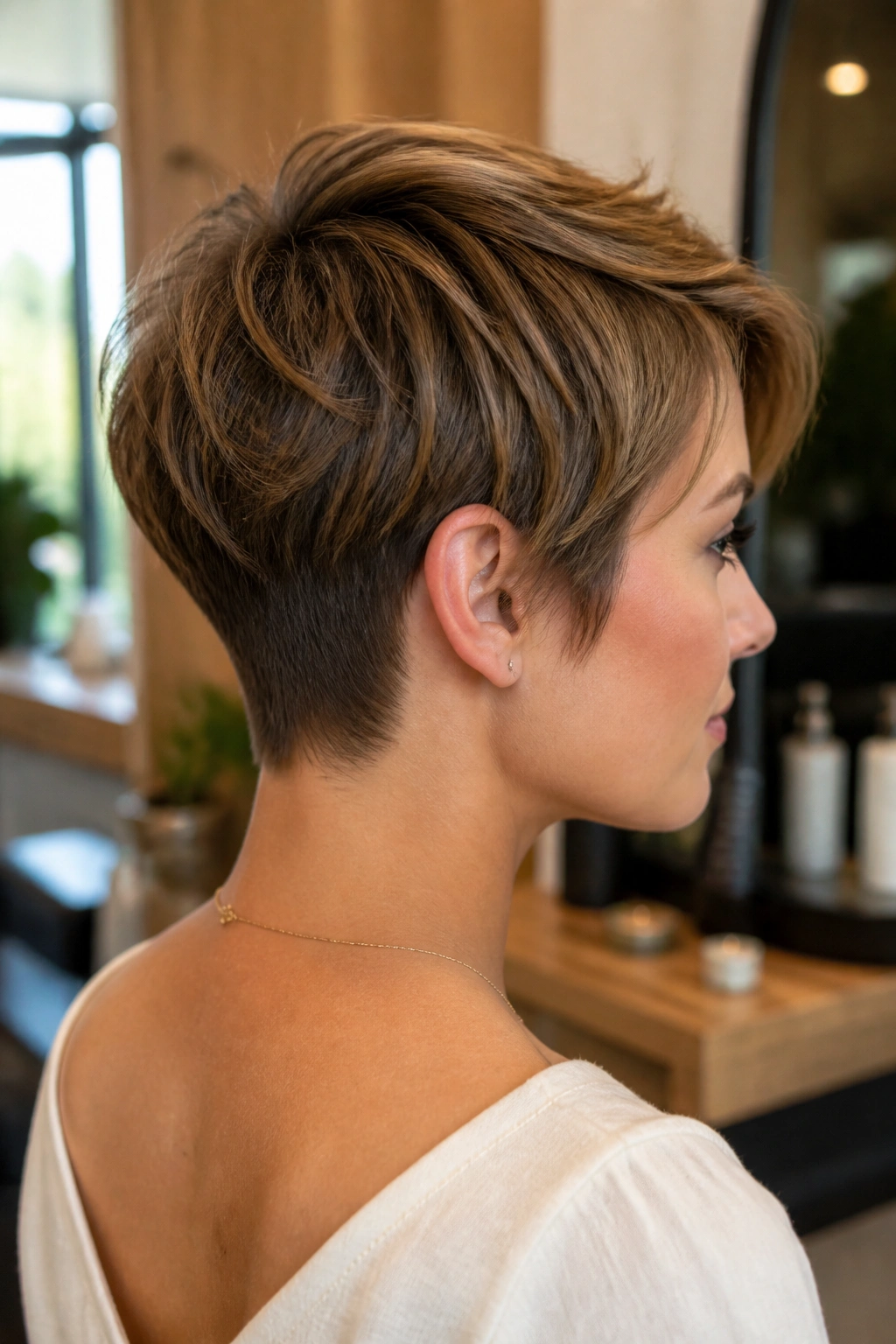
Why does one pixie keep its shape while another turns fuzzy? The nape. That tiny strip at the back of the neck carries more visual weight than people think.
What to Ask for at the Chair
Ask for a soft taper at the nape, not a skin-close fade. You want the hair to lie close to the neck without disappearing, because a little length there buys you time as the cut grows. Keep the top longer so the silhouette stays balanced, and let the sideburns stay soft enough to brush rather than spike.
- Nape cropped close, but not shaved.
- Top left long enough to sweep forward or tuck back.
- Side edges softened with scissors, not a blunt line.
- Neckline follows the shape of the neck instead of cutting straight across.
That shape matters under collars, scarves, and coat collars too. A hard nape can start looking choppy the minute your hair brushes against fabric. A tapered one just looks like the haircut has relaxed a bit.
Good for: anyone who wants a neat back view without the upkeep of a razor-short crop.
4. Asymmetrical Long Pixie With a Diagonal Line
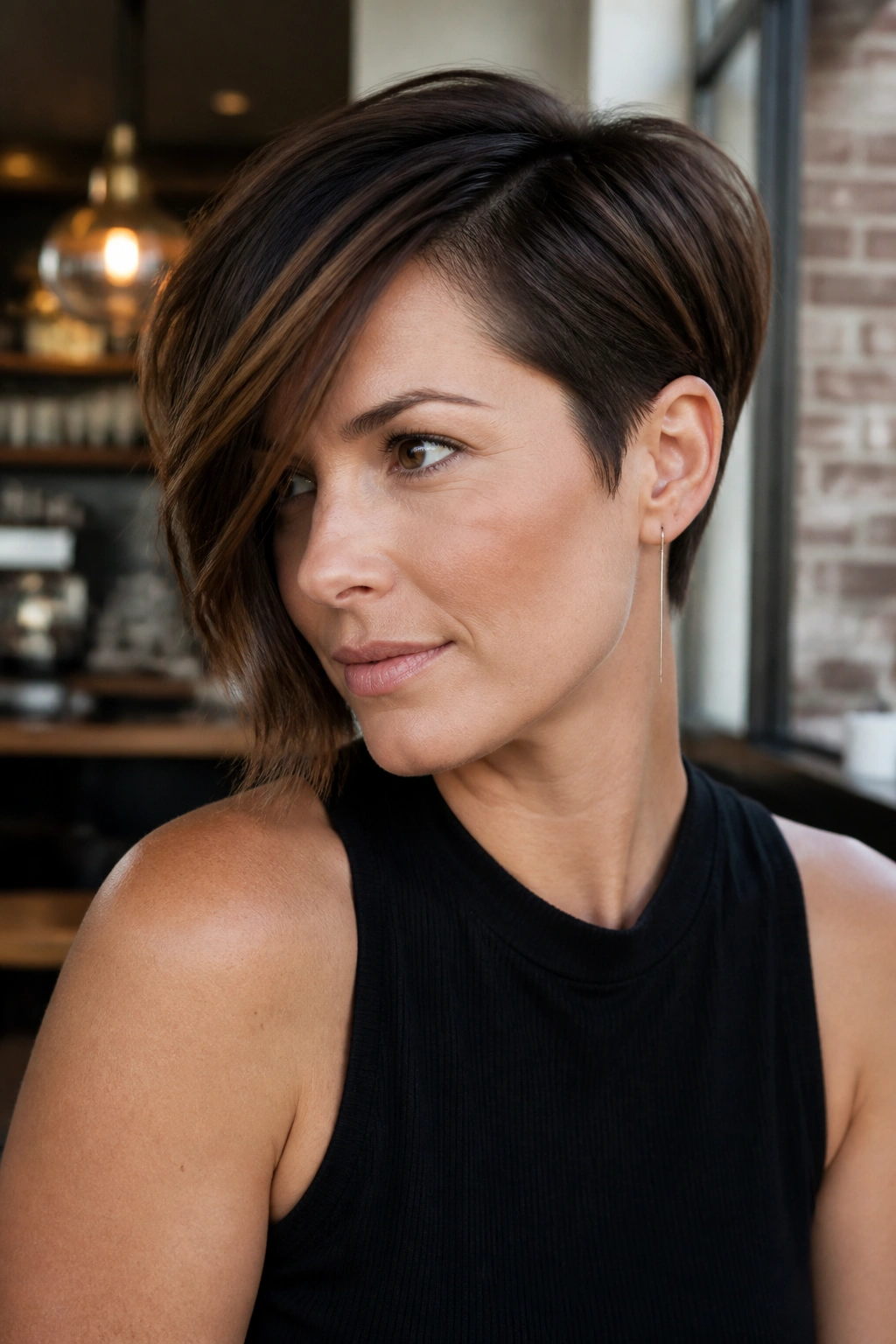
One side skimming the jaw, the other tucked behind the ear—this cut has a little swagger. It also grows out better than a perfectly even pixie because the diagonal shape keeps the eye moving, which hides the fact that the pieces are lengthening at different speeds.
The asymmetry does not have to be extreme. In fact, the softer version is the one I like most. Keep one side slightly longer through the front and temple, then shorten the opposite side just enough to create a visible slope. That line feels modern without being fussy. If one side of your face is stronger or your part always falls the same way, this is an easy way to work with that instead of fighting it.
- Best when the longer side lands around the cheekbone or jaw.
- Keep the shorter side soft at the ear so it does not look clipped.
- Flat iron a gentle bend through the front if your hair is straight.
- Works especially well with a deep side part.
When this grows, the asymmetry turns into a longer front section rather than a random half-grown cut. That is the whole point. It still looks chosen.
5. Curly Long Pixie With a Rounded Top
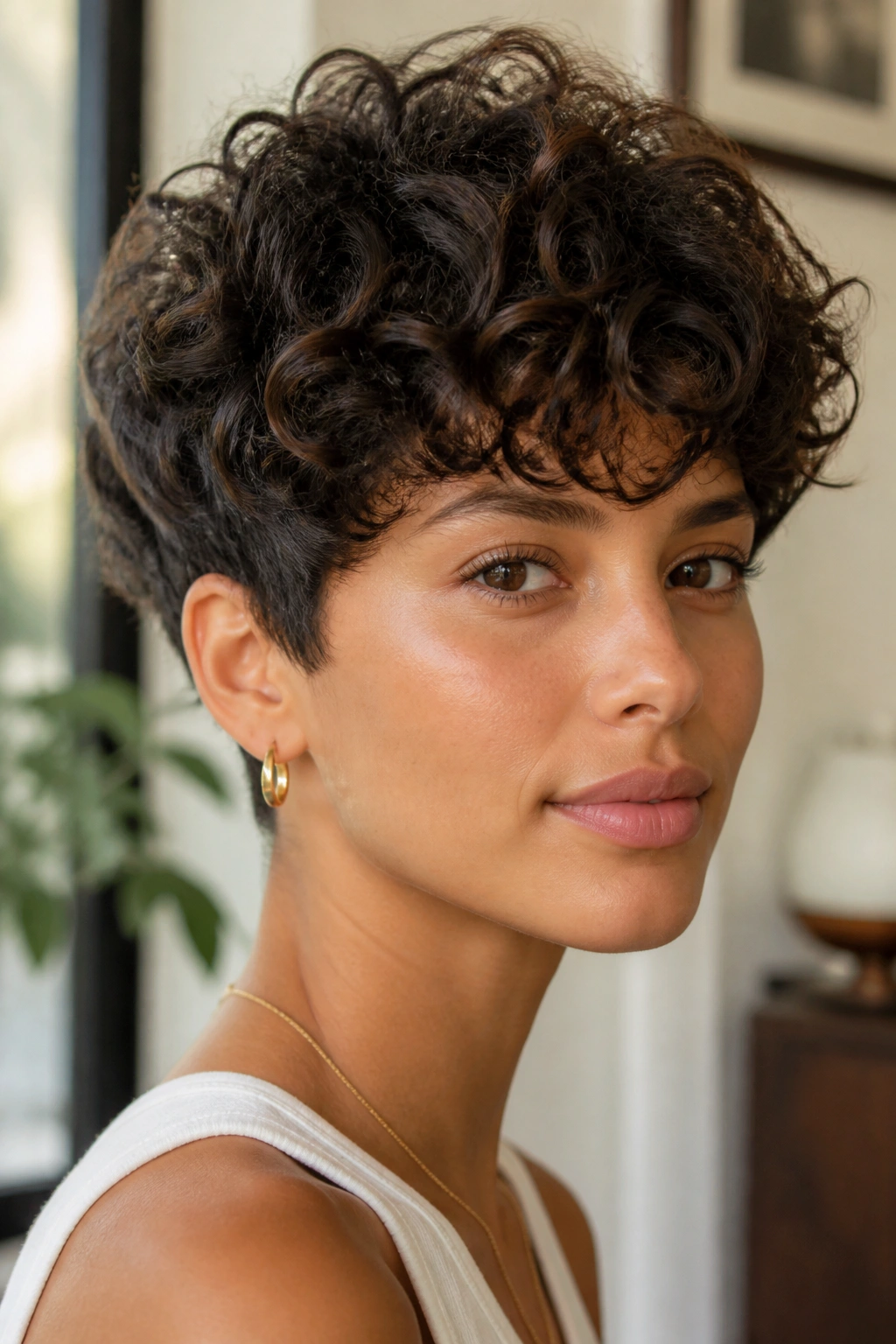
Shrinkage is the whole game. Curly hair can look far shorter than it is, which is exactly why a long pixie with a rounded top works so well: it leaves enough room for curls to stack without puffing out into a triangle.
The mistake people make is cutting curls too short when they’re wet. Then the hair springs up, and suddenly the crown is tiny while the sides balloon. A better version keeps the top a touch longer, softens the perimeter, and lets the curls form their own shape around the head. It feels airy, not helmet-like.
I like this cut with a diffuser and a light cream, nothing heavy. Heavy product drags the curl pattern down and makes the top greasy before lunch. If your curl pattern is looser, a mousse can give more shape. If it’s tighter, a cream plus a little gel on the ends usually works better.
As it grows out, this cut tends to become a compact curly shag. That is a good thing. It means the shape keeps moving instead of turning into a triangle with a bad attitude.
6. Feathered Long Pixie for Thick Hair
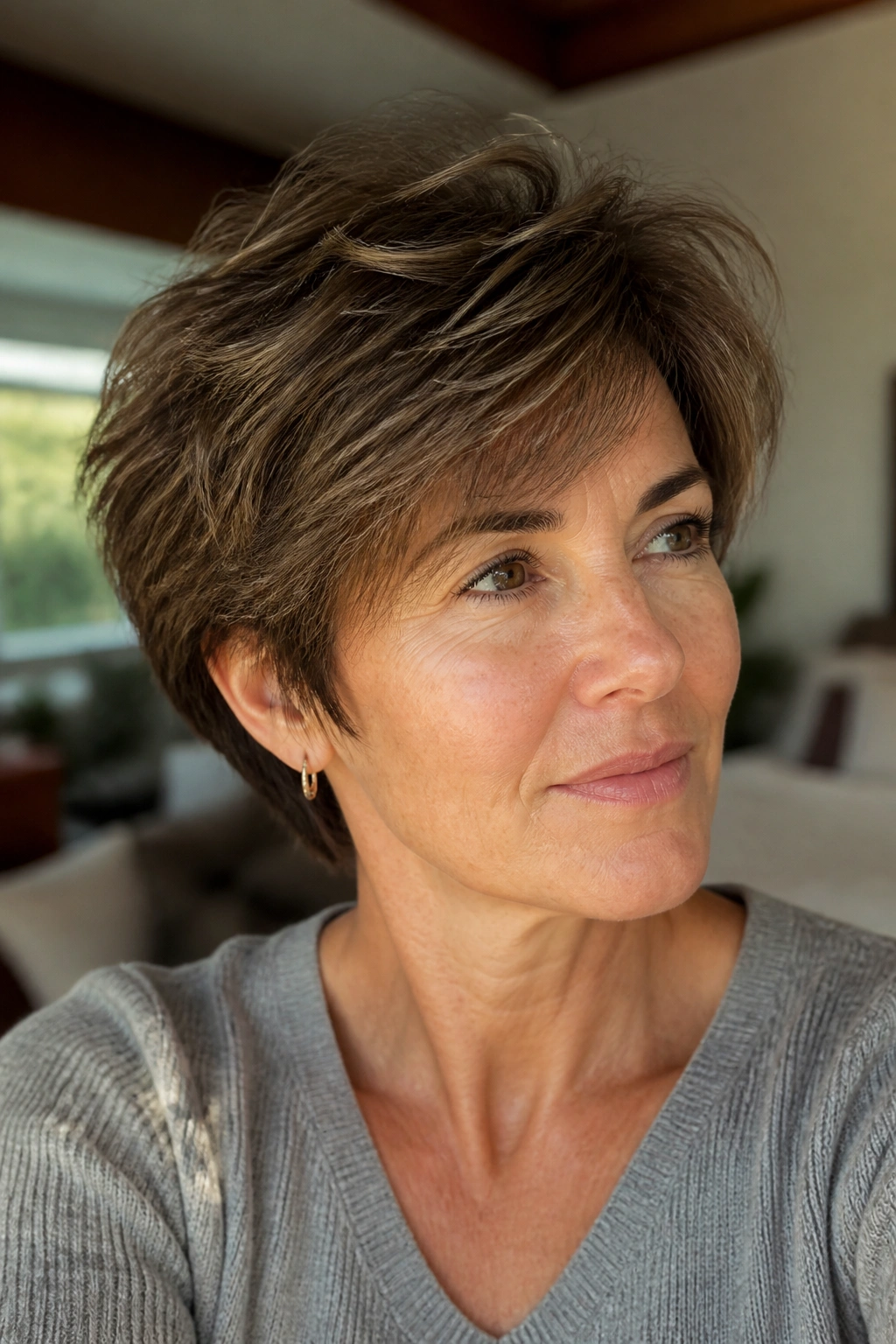
Unlike choppy layers, feathering keeps the ends airy rather than spiky. That’s the difference between hair that looks light and hair that looks like it has been attacked with thinning shears.
Thick hair can hold a lot of shape, which sounds nice until the cut starts to sit like a block. Feathering removes bulk in a softer way, especially through the sides and crown. The finish is smoother around the face, and when the cut grows, the layers blend instead of stacking into a blunt shelf. I’d choose this when the hair is dense, coarse, or simply too much for a straight-up short crop.
Why It’s Easier to Live With
A feathered pixie tends to dry faster and needs less product than a heavily layered choppy cut. The movement comes from the cut itself, not from forcing each piece into place. A vent brush and a light cream are usually enough.
It’s also kinder to people who hate a choppy outline around the ears. The edges are softer. The whole thing looks less severe.
If your hair is thick and you want a long pixie that still feels feminine and easy to push into shape with your fingers, this is the one I’d put near the top of the list.
7. Curtain-Bang Long Pixie That Slides Toward a Bob
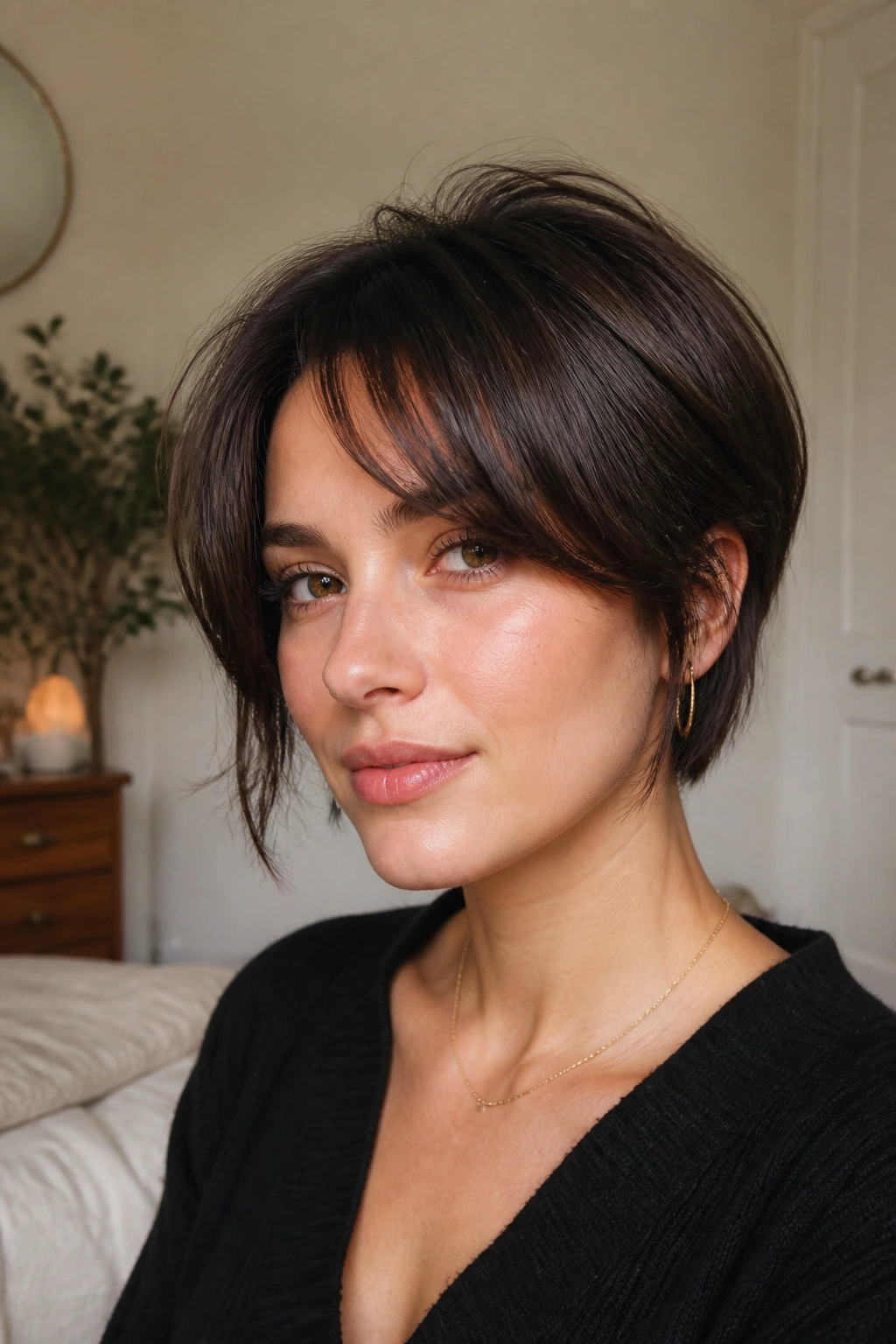
What if you want a short cut that can drift toward a bob without a rude phase? Curtain bangs are the answer. They give the front enough length to split open, tuck aside, or soften into a face frame when the rest of the cut starts getting longer.
This version works because the fringe is doing two jobs at once. It sits as a pixie bang when fresh, then starts reading like a mini curtain fringe once it grows. Keep the center a little shorter and the sides longer so the bang falls away from the face instead of sitting flat across the forehead. That keeps the transition easy.
How to Wear It
- Blow the fringe away from the face with a 1.25-inch round brush.
- Keep the side pieces long enough to hit the cheekbone.
- Use a flat iron bend, not a hard curl, if your hair is straight.
- Let the part stay a little loose instead of forcing symmetry every day.
This cut is especially good if you want a softer line around the eyes and you like the idea of being able to part your hair differently as it grows. It feels flexible. That’s the whole appeal.
8. Sleek Long Pixie Tucked Behind the Ear
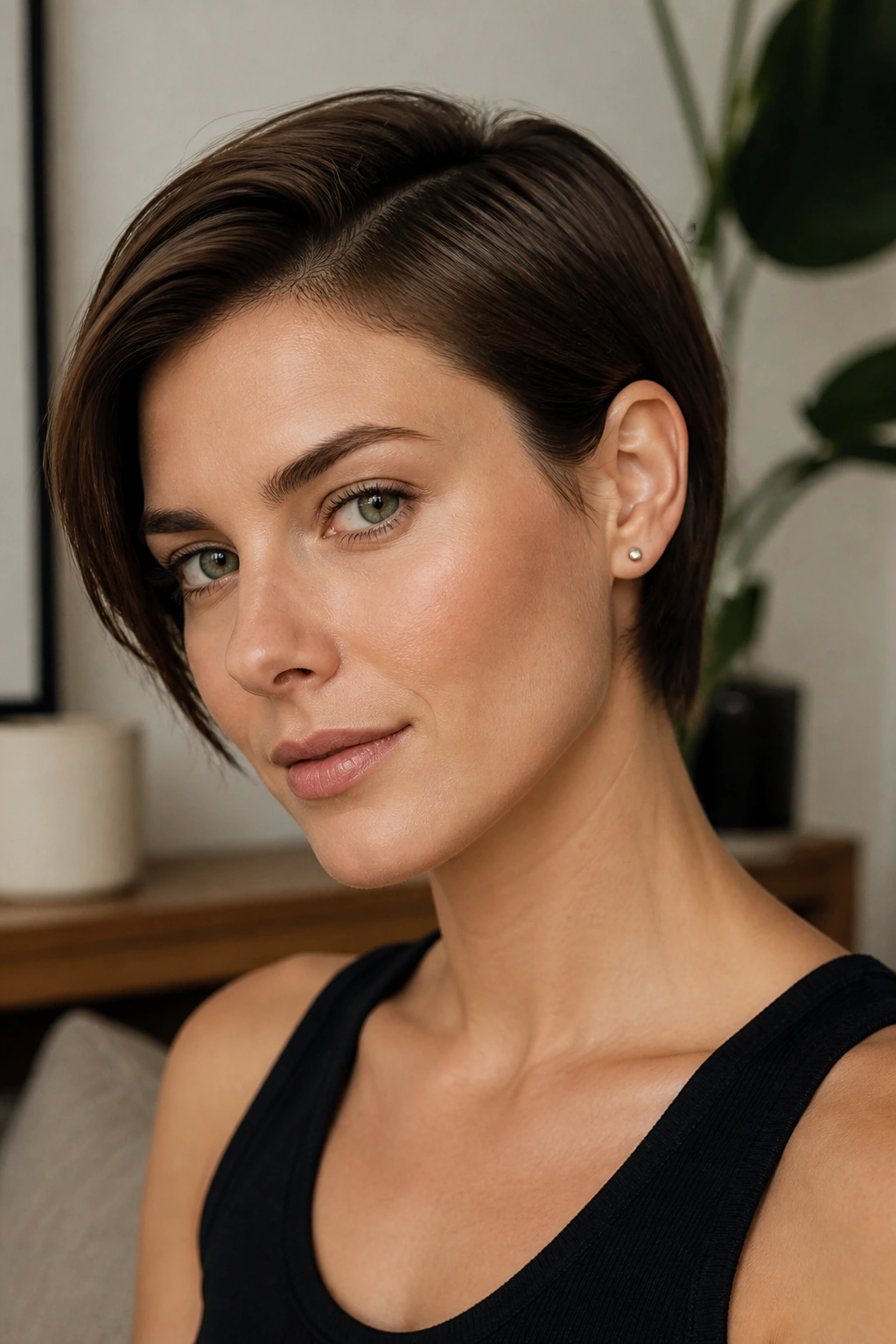
This cut looks polished because the ear tuck is part of the design, not an accident. The front and side are left long enough to slip behind the ear cleanly, which makes the whole silhouette feel neat even when the hair has a little movement.
I like this shape on straight hair or hair that can be blow-dried smooth without a battle. The line should skim the jaw or sit just above it, then disappear behind the ear on one side. That little tuck creates a sharp edge without needing a harsh undercut. If you wear earrings, this cut does you a favor. It lets them show.
Heavy oil flattens it.
Use a small amount of shine cream through the mid-lengths, not the roots, and finish with a flat brush or a paddle brush if you want the ends to sit close to the head. The grow-out is forgiving because the tucked side simply becomes a longer tuck. You’re not staring at a broken outline every time you pass a mirror.
This one is for people who like clean lines and do not mind a little smoothing in the morning.
9. Undercut Long Pixie With Hidden Weight
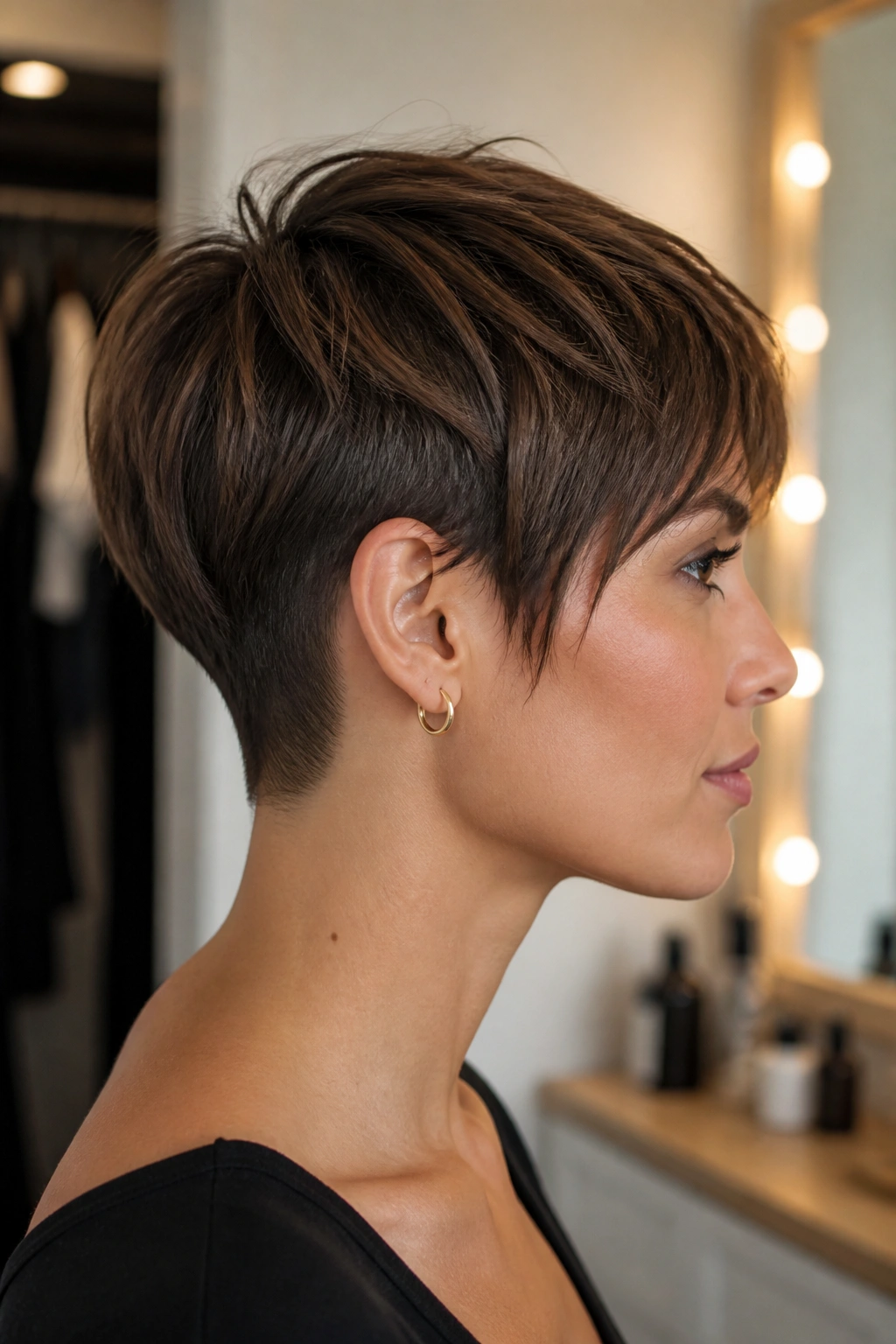
An undercut can grow out cleanly—if the top is long enough to cover the short section. That part matters. Too many people get a dramatic undercut, then act surprised when the grow-out needs regular attention. The smarter version hides the shortest section where it makes the most sense, often at the nape or just behind the ears.
The Catch
This cut is brilliant for thick hair because it removes bulk where the head feels widest. It also helps the top layers sit better, which can make the whole shape easier to style. But it is not a lazy haircut. The undercut itself still wants upkeep if you want it crisp. If you let it blur, the top has to be long enough to cover that change.
- Best if your hair feels heavy at the back.
- Good when you want the top to stay long and movable.
- Easier to wear with a side part or tucked style.
- Less ideal if you hate returning for tidy-ups.
The upside is that the grow-out often looks intentional because the top stays long and the short section disappears under it. It’s one of the few edgy cuts that does not panic when it stops being freshly cut.
10. Shaggy Long Pixie With Soft Ends
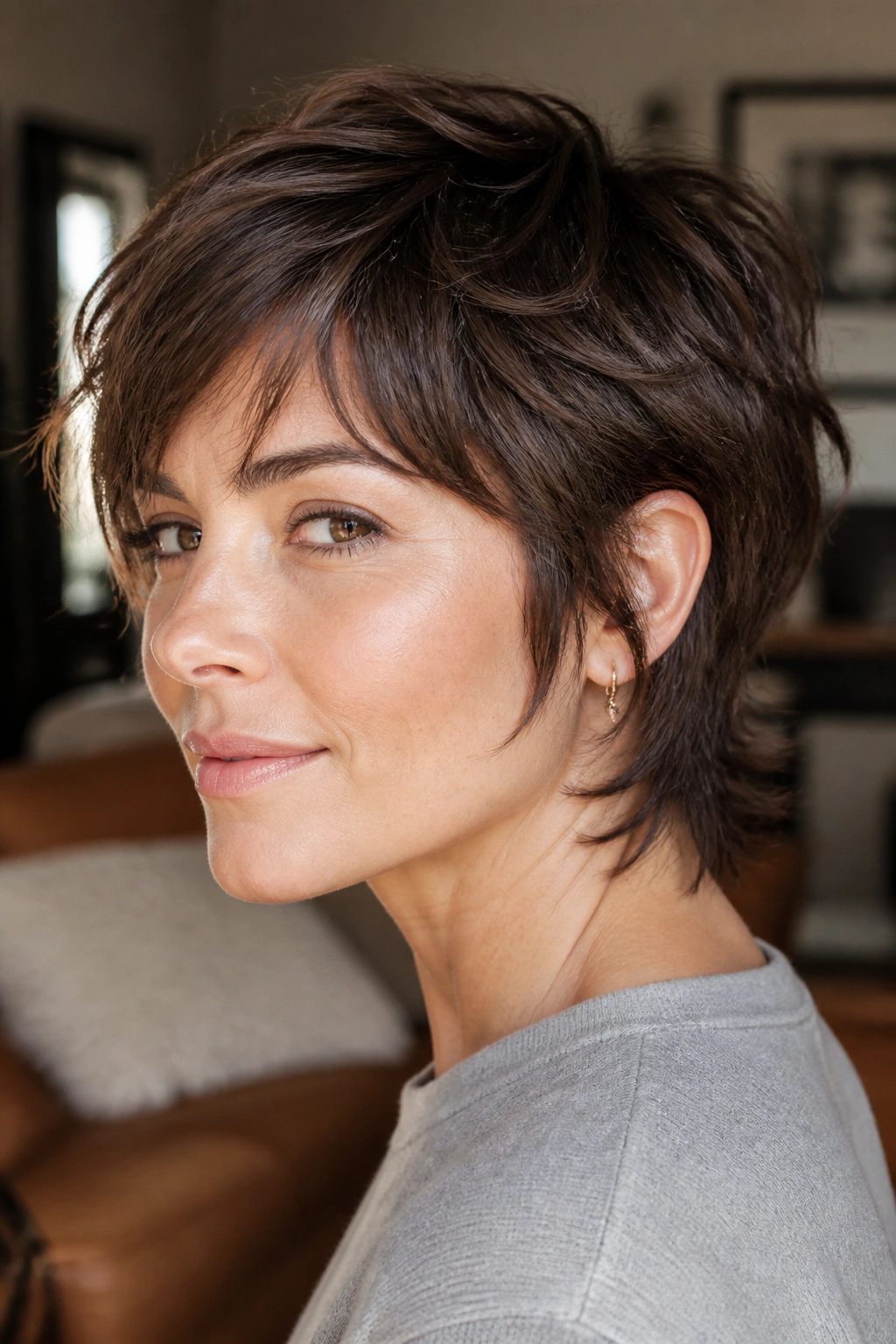
If your hair goes flat by lunch, this is the cut that gives you some attitude back. A shaggy long pixie keeps the top loose, the sides broken up, and the ends soft enough to move instead of sticking in place.
The shape borrows from the shag without turning into a full shag haircut. You still get the short length and the easy neck line of a pixie, but the texture reads messier in a good way. It works especially well on wavy hair because the wave pattern helps the layers separate on their own. Straight hair can wear it too, but it usually needs a little texture spray or a rough blow-dry to get the same piecey look.
What Makes It Work
- Short internal layers at the crown give lift.
- Soft ends keep the shape from looking too chopped.
- A little bend around the fringe helps the cut land better.
- It grows into a mini shag instead of a limp in-between style.
I like this cut for people who prefer their hair to look a little lived-in. It has personality even on a lazy day.
11. Pixie-Bob Hybrid for a Slower Grow-Out
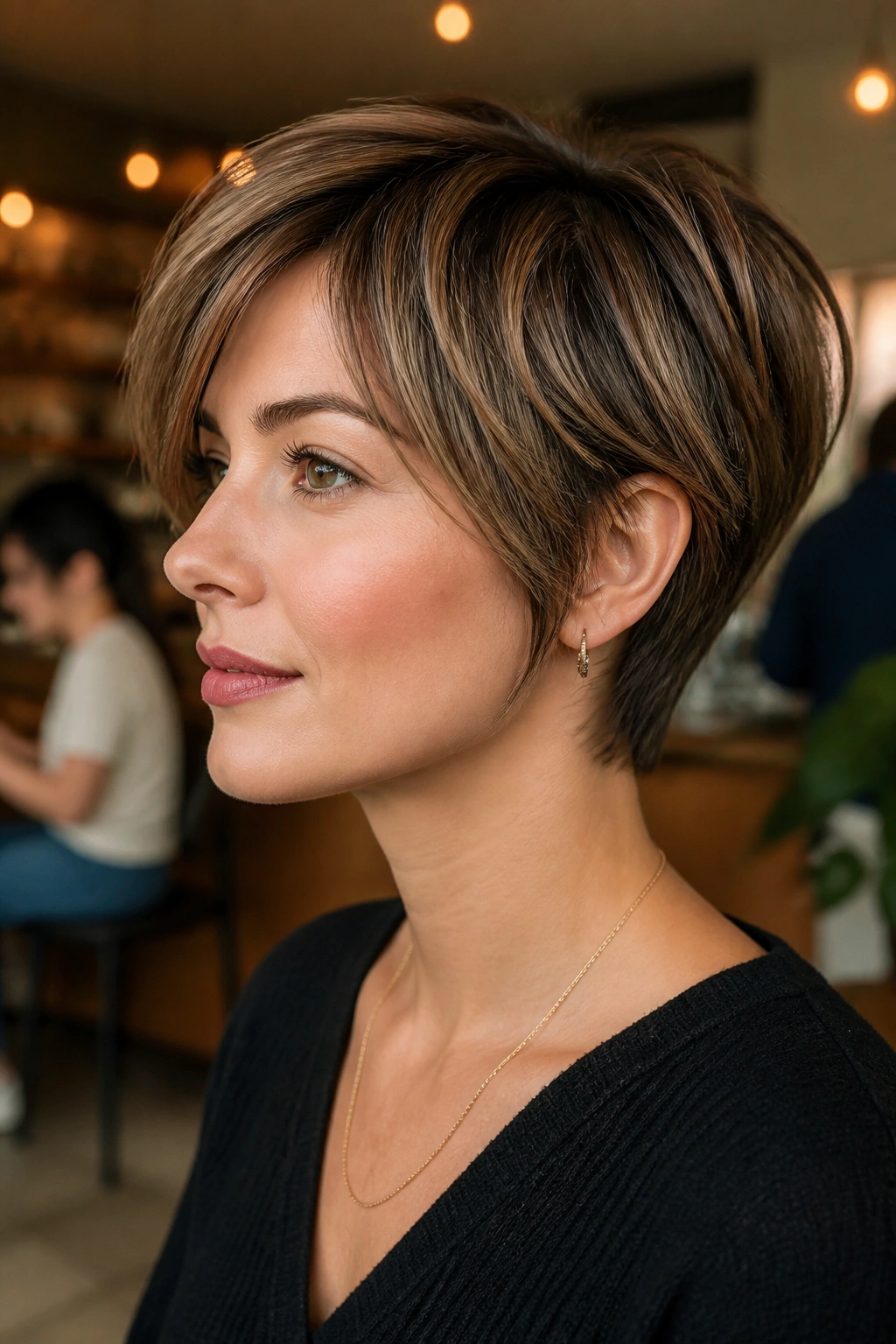
A pixie-bob is what happens when the front decides to keep a little dignity. The silhouette stays short enough to feel light, but the longest pieces start drifting toward the jawline, which makes the cut feel less abrupt than a classic pixie. That matters if you get nervous two weeks after a big chop.
This is probably the calmest choice on the list. You still get the lift and ease of short hair, but there is more length around the face, and that extra inch or two changes everything. The cut does not scream “I’m growing out a pixie.” It whispers it. Then it keeps moving.
The best version has a softly layered back and a longer front that sits somewhere between the cheekbone and the chin. That keeps the shape from turning wedge-like. If the nape is left too short and the front too blunt, the whole thing starts to feel dated fast. A better pixie-bob blends the two lengths so the transition looks deliberate.
If you’re the kind of person who likes change but does not want the sharp shock of a very short crop, this is the one I’d point you toward. It gives you room to keep going longer without needing a full restart.
12. Piecey Long Pixie With Crown Volume
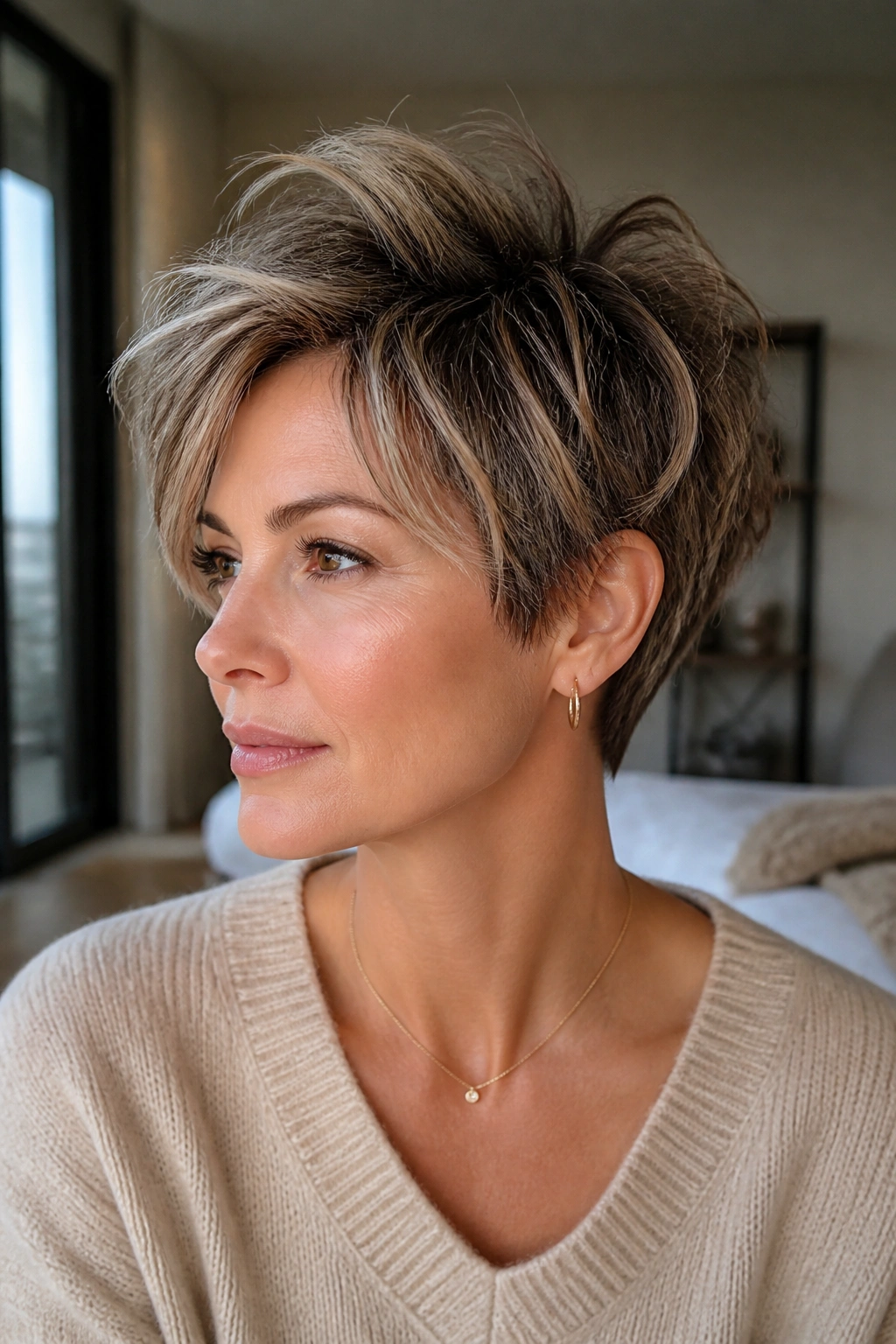
Volume at the crown changes the whole cut. A piecey long pixie with lift at the top looks lighter, taller, and more alive than one that sits flat, and the difference is obvious the second you step away from the chair.
What to Ask Your Stylist
Ask for shorter internal layers through the crown and softly separated ends around the front. You want the top pieces to move on their own instead of all falling into the same line. That creates separation without frizzing up the outline.
- Keep the crown long enough to pinch and direct.
- Layer the top more than the sides.
- Leave the front pieces soft, not blunt.
- Avoid heavy thinning if your hair is already fine.
Styling is straightforward. Flip the head forward while blow-drying the roots, then lift the crown back into place with your fingers. A small amount of texture spray at the ends helps separate the pieces without making them crunchy. If you like a little height at the top and a little softness at the temples, this cut gives you both.
It also grows out well because the crown stays visually interesting. Even when the sides get longer, the top keeps the haircut from collapsing into one flat shape.
13. Wispy Fringe Long Pixie for a Soft Face Frame
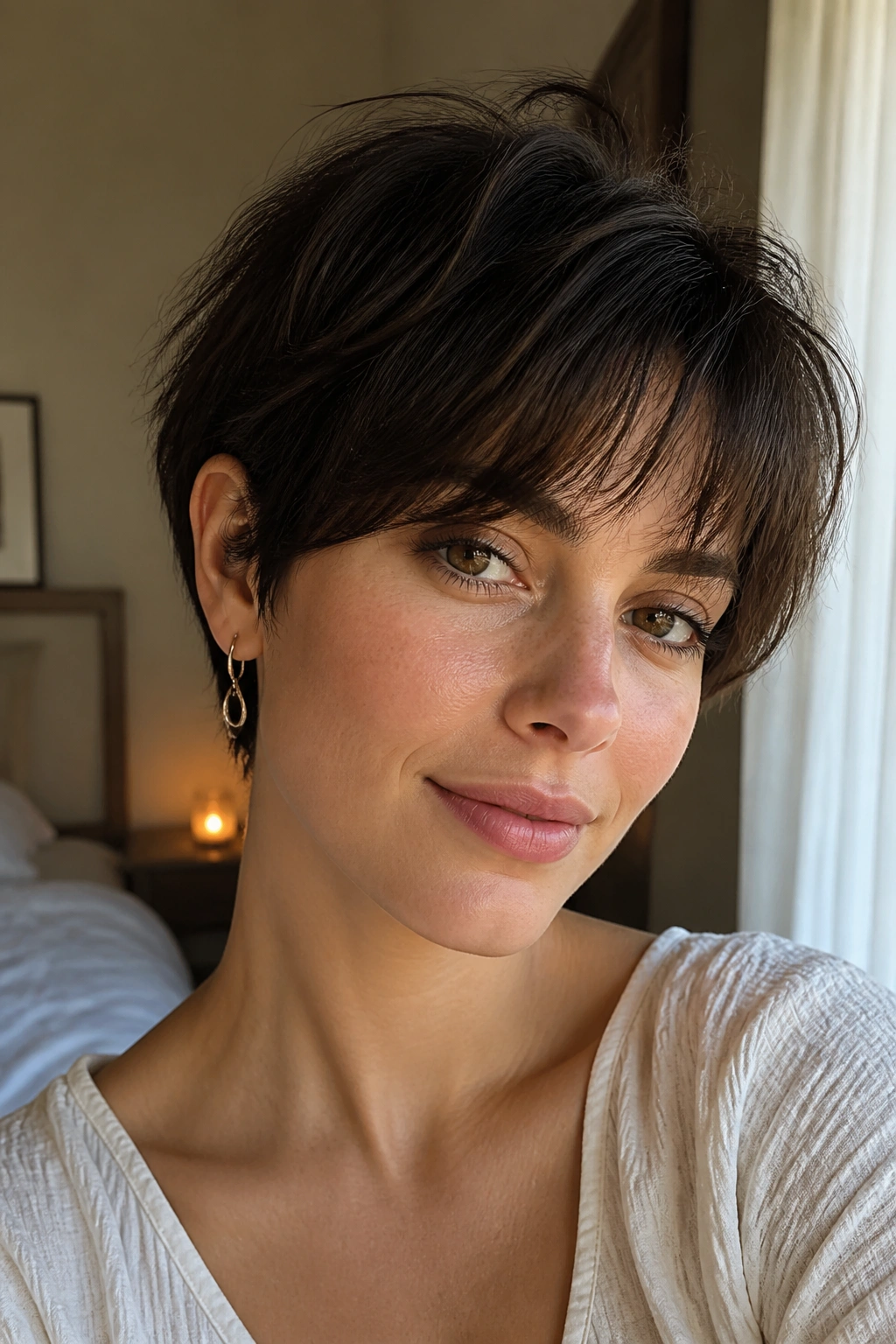
Need a face frame that does not feel heavy? Wispy fringe is the move. The whole point is to keep the front light enough to skim the forehead, not cover it like a curtain.
This version is kinder to people who want some forehead coverage but hate the feeling of a full bang. The fringe should look softly point-cut, with little gaps and softer ends so the hair moves when you turn your head. I like it when the shortest pieces sit around the brow and the longer strands drift toward the lashes. That gives you shape without weight.
Good Reasons to Choose It
- It softens a strong forehead without hiding your face.
- It works well with glasses because the fringe stays airy.
- It needs less daily styling than a blunt bang.
- The grow-out phase usually blends into longer face-framing pieces.
The catch is that wispy fringe can look sparse if it is cut too short or too thin. Tell your stylist you want texture, not a see-through bang. That small distinction matters a lot.
14. Long Pixie With Soft Sideburns
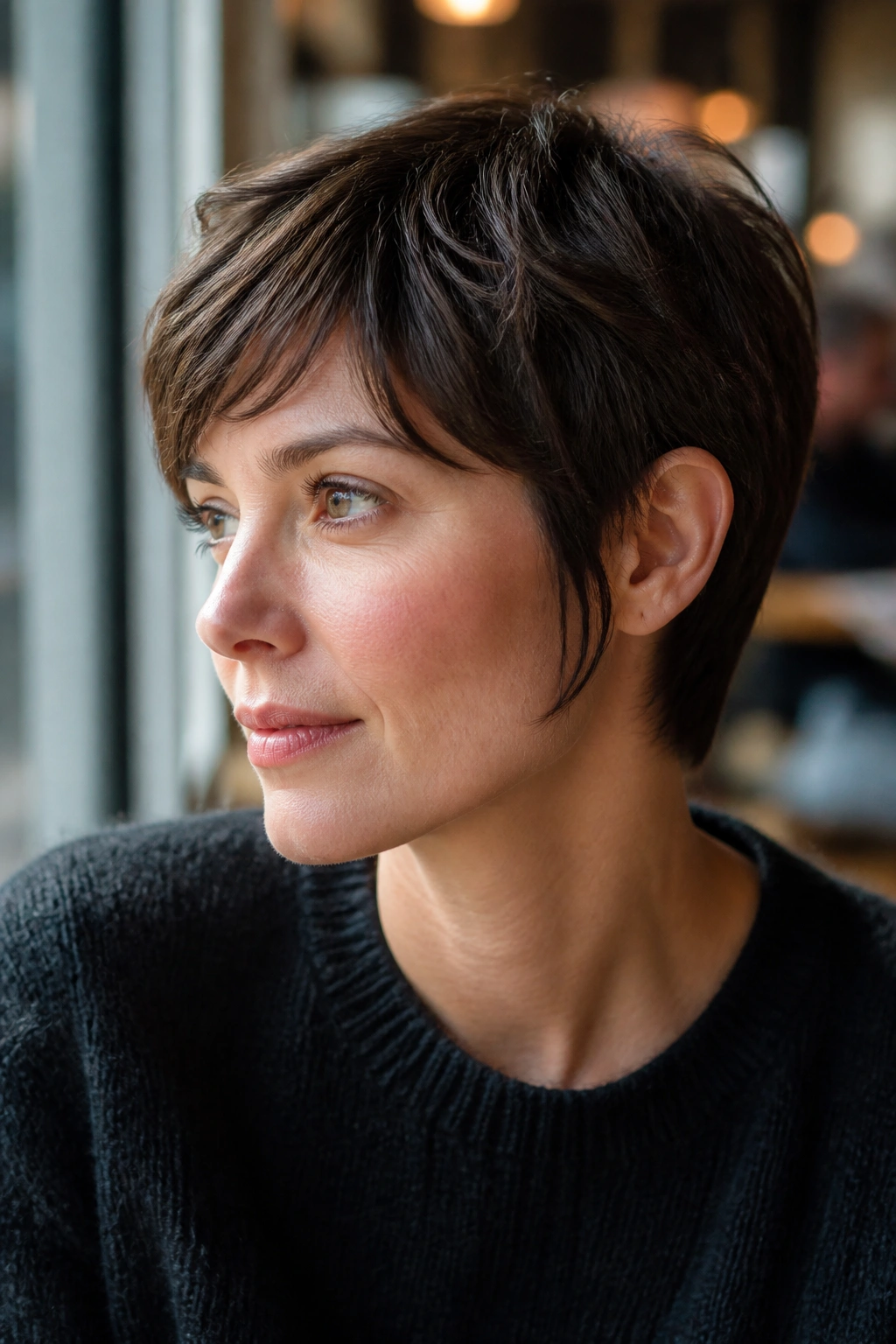
Sideburns are the quiet hero here. People often chop them off too short and then wonder why the cut feels abrupt around the ears and cheeks. Keeping them soft and slightly longer gives the whole pixie a better bridge from the face to the neckline.
This is one of my favorite details for grow-out, because the sideburn area is where a short haircut starts to look obvious first. Leave that section at cheekbone or jaw length and it starts behaving like a face frame instead of a clipped edge. It’s small, but it changes the whole balance.
Soft sideburns also work well with glasses, earrings, and strong jawlines. They keep the haircut from feeling too exposed. On curly or wavy hair, the sideburns can curl or bend gently, which is even better because straight, sharp sideburns can look a little severe when the rest of the cut is loose.
If you’re growing into a bob later, these side pieces help the transition feel planned. They’re the link between the pixie phase and the next shape.
15. The Softest Grown-Out Long Pixie
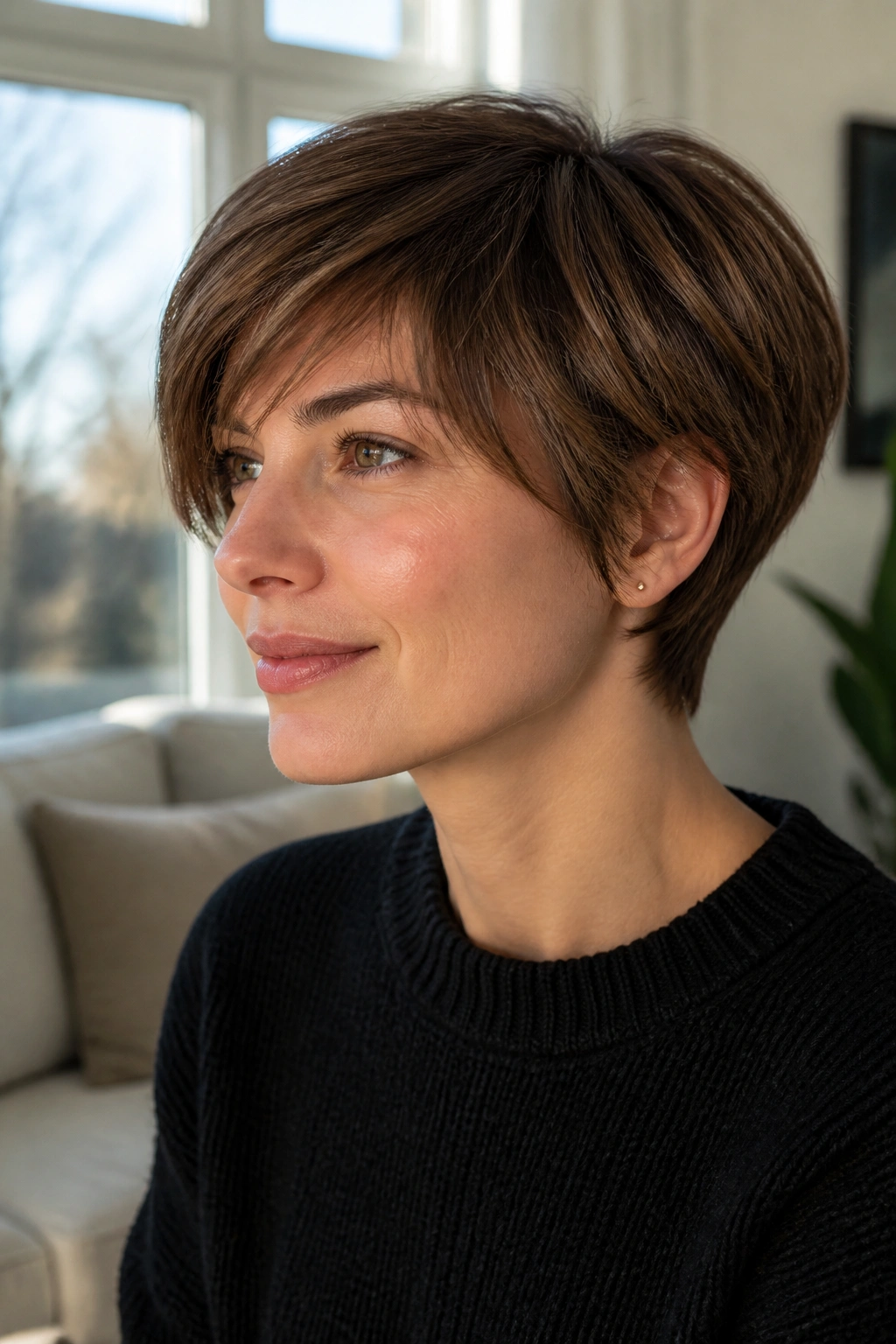
This is the cut for people who want the least fuss. The shape is built from soft corners, blended layers, and a perimeter that never gets too sharp, which means the haircut still looks like a choice even when you have gone a few weeks longer than planned.
A good grown-out long pixie does not need a hard visual trick to work. It just needs enough length on top to move, enough softness at the nape to avoid a blunt line, and enough face framing to keep the front from collapsing. That’s it. No drama. No weird shelf at the back of the head. No ear line that screams for attention.
The best version usually has a rounded silhouette and a slightly longer front than the rest of the cut. That lets the hair slide forward, tuck back, or fall to the side without making the grow-out awkward. If you want to stretch salon visits, ask for a soft perimeter, blended sideburns, and a nape that is tapered rather than stripped short.
That is the real trick.
A pixie like this does not fight the calendar. It settles in, gets a little looser, and still looks like you meant to wear it that way.
