



A good pixie haircut does not apologize. The best pixie haircuts look sharp from across the room and clean up even better up close.
That sounds simple, but it isn’t. A pixie lives or dies on tiny details: the way the nape is tapered, how the fringe sits against the brow, whether the crown has lift or collapse, and whether the ears are framed or exposed on purpose. Miss those pieces and the cut can look rushed. Get them right and the whole thing reads as crisp, confident, and finished.
I’ve always liked short hair that looks like somebody thought about it. Not fussy. Thoughtful. A pixie can be soft, edgy, glossy, or a little tomboyish, but the polished versions all share the same backbone: shape control. The haircut should look good when you shake it out, tuck it behind one ear, or leave the house with a little product and a prayer.
Some of these looks are low-maintenance. Some are not. A few need a trim every four weeks to stay clean around the hairline, and that’s the price of the look. Worth it, though. Short hair is unforgiving, yes, but it also rewards precision in a way longer cuts rarely do.
1. Feathered Pixie With Side-Swept Fringe
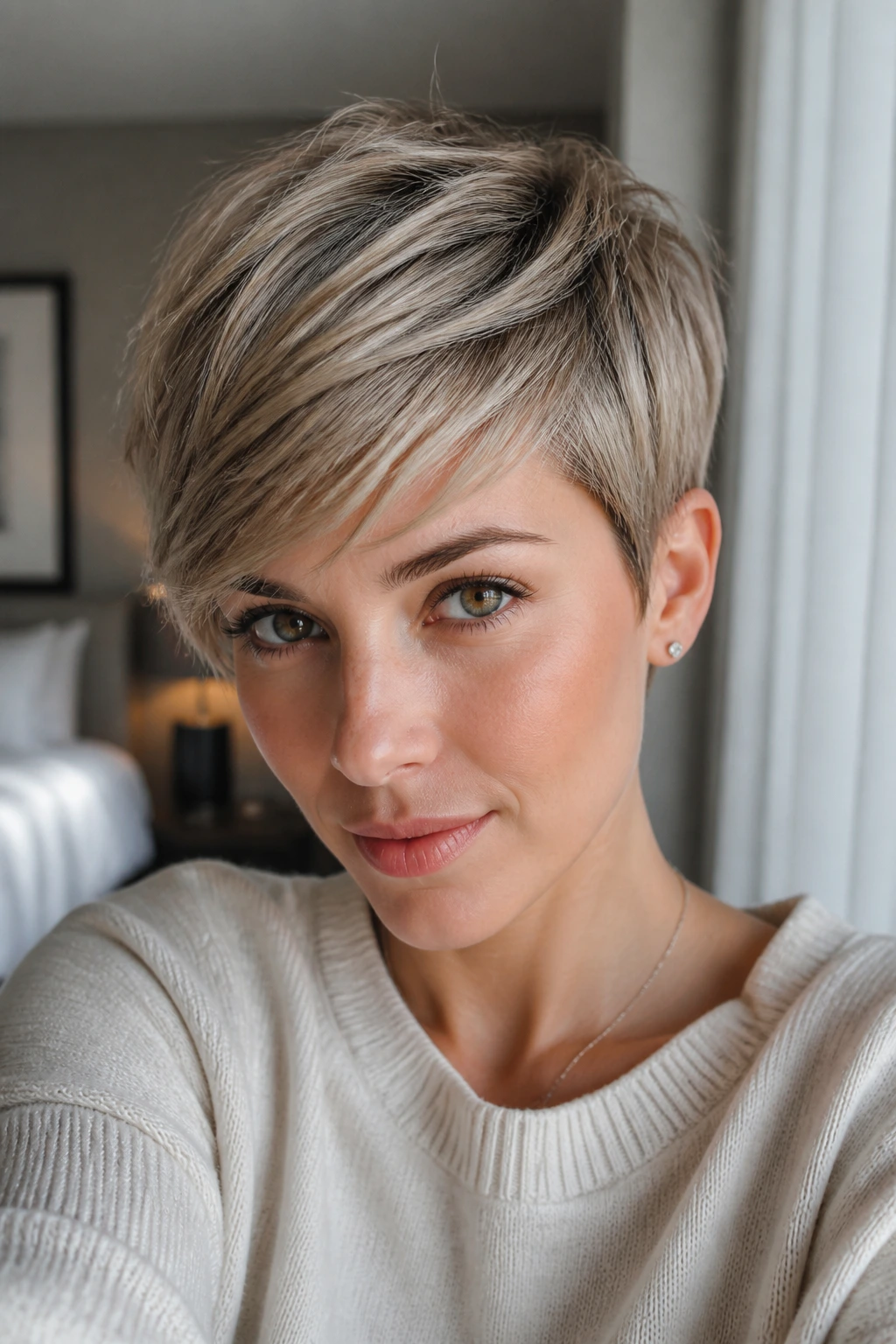
A feathered pixie is what I recommend when someone wants softness without losing structure. The layers are light at the crown, the ends are broken up instead of blunt, and the fringe sweeps across the forehead in a way that keeps the cut from feeling severe.
Why It Looks So Easy to Wear
The trick is in the feathering around the temples and top. Those short, wispy pieces stop the haircut from sitting like a helmet, which is a risk with a lot of cropped cuts. A side-swept fringe also gives you a little movement near the eyes, which is often where a pixie can feel too bare.
This cut works especially well on fine to medium hair. It creates the illusion of fullness without needing a ton of product, and it behaves nicely with a round brush or even your fingers if you’re in a hurry.
- Best for: fine, medium, or slightly wavy hair
- Styling time: about 5 to 10 minutes
- Good products: lightweight mousse, a pea-size smoothing cream, soft-hold hairspray
- Salon note: ask for the fringe to stay long enough to sweep, not drop straight down
My blunt advice: keep the fringe a touch longer than you think you need. It sits shorter once the hair dries, and a feathered pixie looks much cleaner when the front still has a little motion.
2. Micro Pixie Haircut With Clean Edges
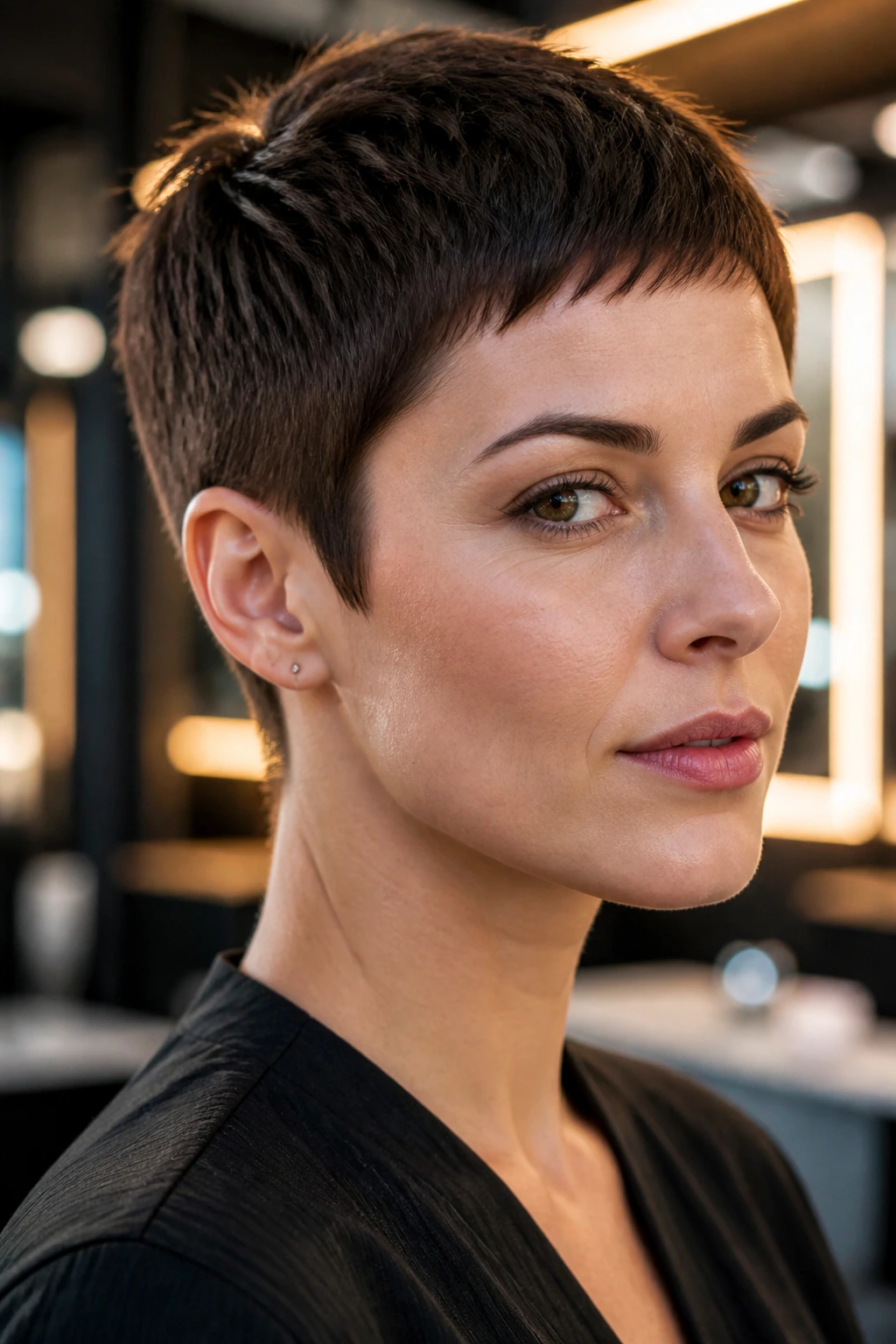
The shortest pixie is often the sharpest one. That’s the part people don’t always expect. When the sides are cropped close and the neckline is crisp, the whole cut starts to look deliberate instead of merely short.
The appeal is in the edges. A micro pixie shows off the hairline, ears, and jaw in a way that can feel very refined if the cut is tidy. It’s not a forgiving style, and that’s exactly why it reads polished. There’s nowhere for roughness to hide, so every line matters.
This is the one I like on people who are comfortable with regular salon visits and want a cut that feels clean even with almost no styling. A tiny bit of styling wax, rubbed between the fingers and pressed only where needed, is usually enough. Heavy cream can blur the shape and make the whole thing slump.
If you want low effort, skip this one. If you want a short cut that looks precise with a side part, a bare forehead, or a pair of good earrings, this is the one that keeps paying off.
3. Tapered Pixie With Longer Top
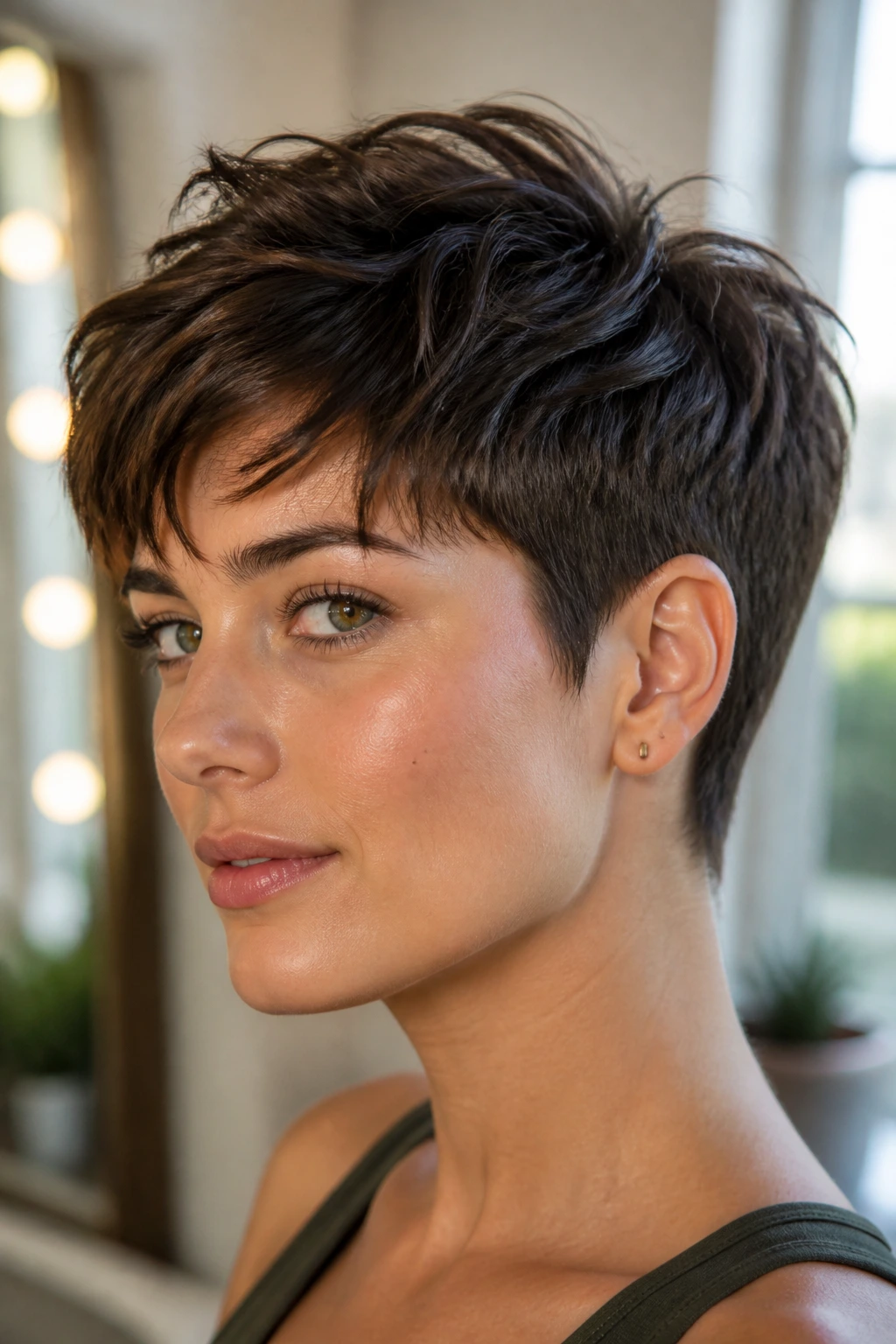
Why does this pixie haircut always look finished? Because the shape does the work for you.
The sides and back are tapered close to the head, while the top stays noticeably longer — usually around 2 to 3 inches, sometimes a little more if the hair is thick. That contrast makes the silhouette feel neat without flattening the whole style. It also gives you enough length on top to change the look from day to day, which matters more than people admit.
How to Style It
A tapered pixie like this likes direction. Blow-dry the top with a small round brush or your fingers, pushing the front slightly forward and then lifting it at the root. That keeps the crown from sticking flat to the scalp, which is the fastest way to make the cut look tired.
- Use a heat protectant and a medium round brush if you want soft volume.
- Use matte paste if you want separation and a little grit.
- Use a tiny amount of shine cream if you want the top to lie smooth and controlled.
This is the pixie I’d call the safest starting point for someone nervous about going short. It still has movement. It still looks polished. And when it grows out, it usually does so without turning into a shape-less puff.
4. Choppy Pixie With Piecey Texture
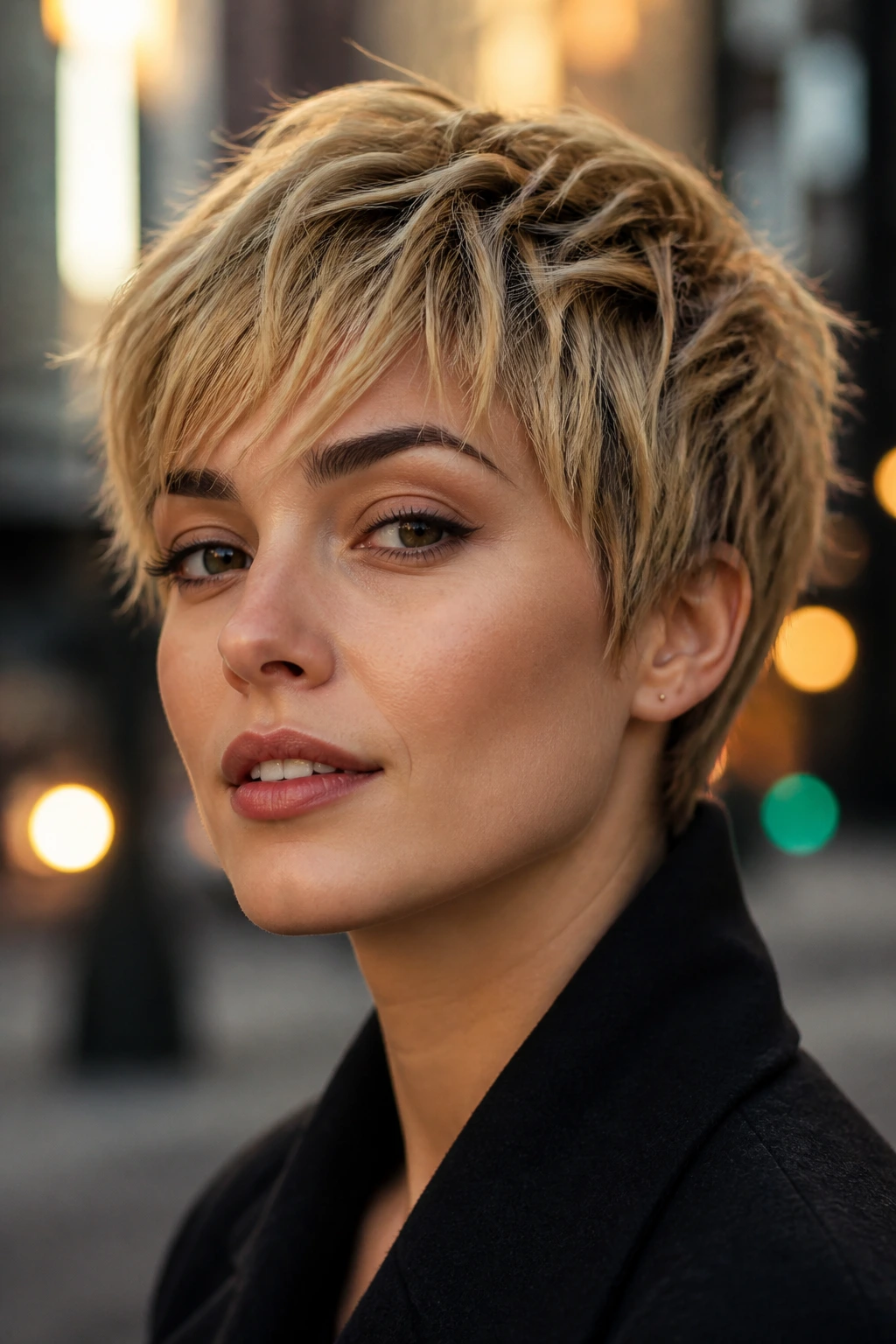
Picture hair that moves instead of sitting there. That’s the whole point of a choppy pixie.
This cut gets its edge from irregular layers and slightly razored ends, which leave the hair looking broken up in a good way. The finish is piecey, not fluffy. That distinction matters. Piecey means the strands are separated on purpose; fluffy usually means the style has lost control.
I like this version on hair that has some natural bend or a little thickness, because the texture gives the haircut momentum. A small amount of paste, warmed between the palms and pinched through random sections, creates that separated look without turning the hair greasy.
- Best for: wavy hair, medium-density hair, or straight hair that tends to fall flat
- Avoid if: you want one smooth, glossy surface
- Product to use: texturizing spray at the roots, then paste at the ends
- Trim schedule: every 5 to 7 weeks to keep the texture from growing fuzzy
The important part is this: choppy does not mean careless. The neckline still has to be clean, the ears still need a shape, and the crown still needs balance. Messy on purpose is one thing. Actually messy is another.
5. Curly Pixie That Respects Natural Texture
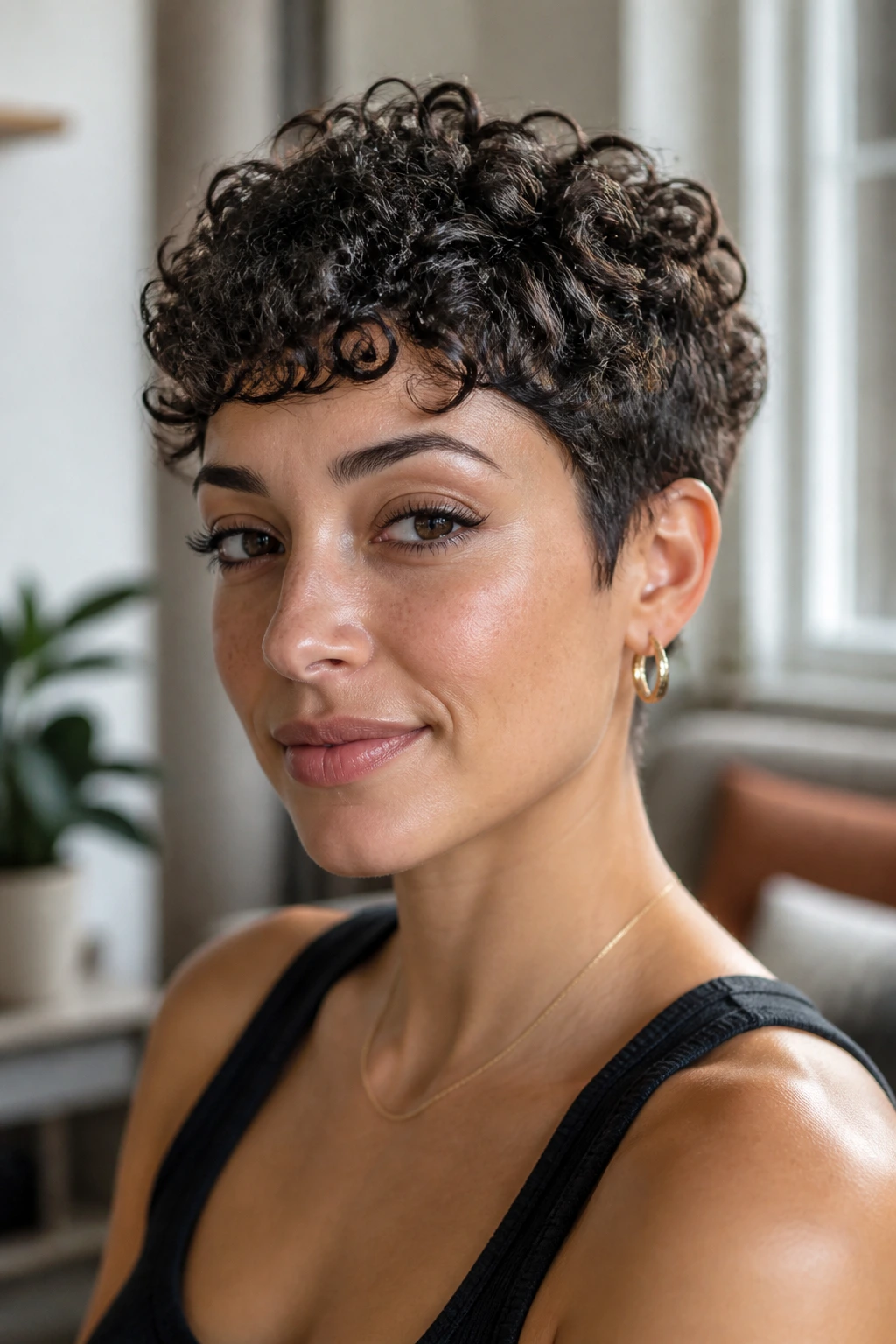
Curls need room.
That’s the first rule with a curly pixie, and honestly, it saves a lot of bad haircuts. If you chop curly hair too tight, the shape can spring up into a triangle, or worse, it can puff out at the sides while collapsing at the crown. A good curly pixie keeps enough length on top for the curl pattern to do its own thing.
The polished version of this cut is all about restraint. The edges around the nape and ears stay neat, but the top is left long enough to curl, coil, or wave without being bullied into a shape it does not want. That is why this cut can look both relaxed and polished at the same time. It has movement, but it also has boundaries.
Dry-cutting or at least dry-checking the shape helps a lot, because curls shrink in ways that are hard to judge on wet hair alone. I also like a curl cream followed by a tiny bit of gel at the ends. Too much product makes short curls look wet and heavy. Not enough product, and the halo frizz takes over.
A curly pixie is one of those cuts that rewards a stylist who actually understands texture. The right version looks effortless. The wrong version looks like an argument.
6. Undercut Pixie With Soft Top
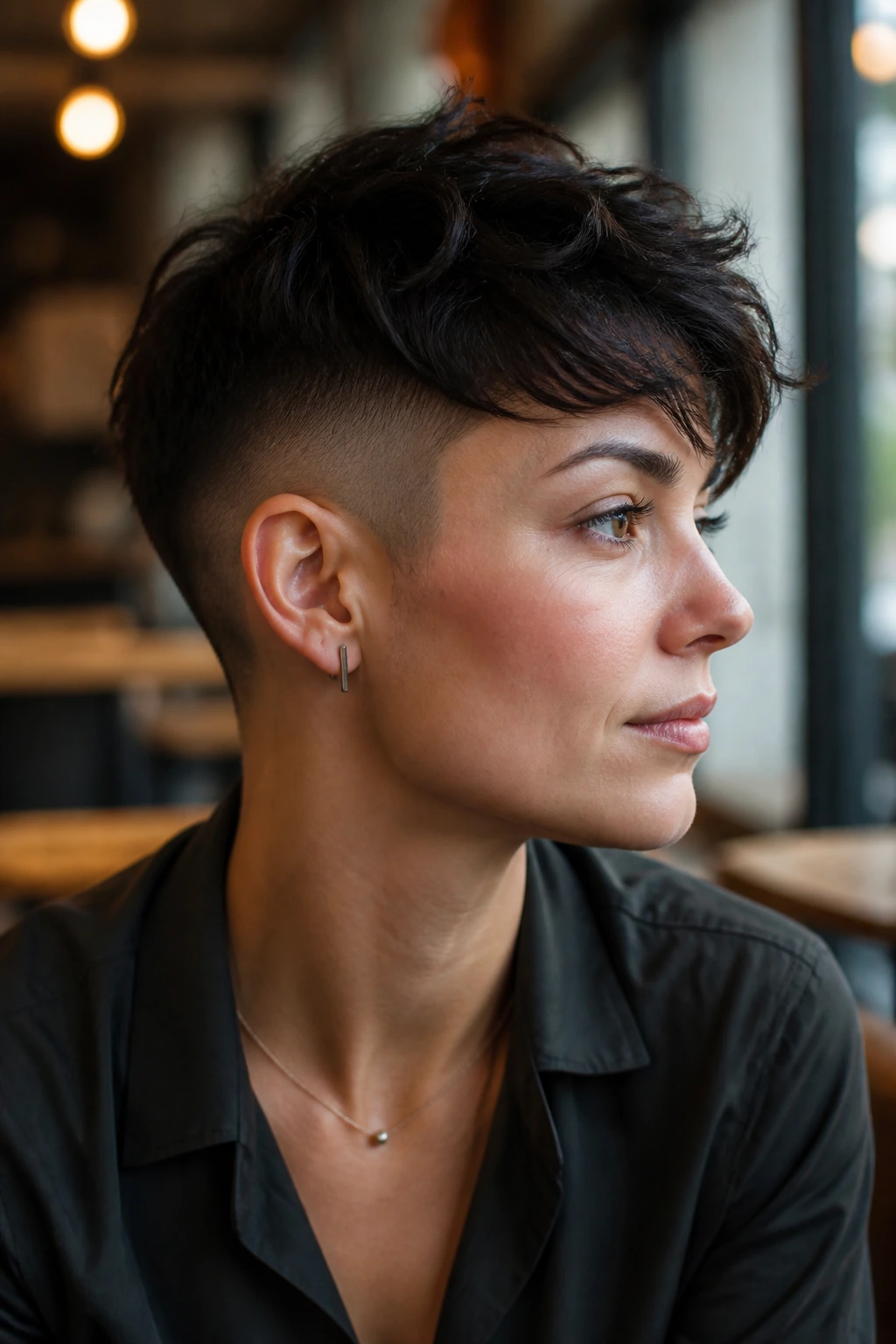
Compared with a fully shaved look, this version feels a little more controlled. That’s why I like it.
An undercut pixie keeps the bulk off the sides and nape with clipper work, but the top stays soft enough to sweep, fluff, or smooth over the shorter sections. The contrast is what gives it shape. You get the clean outline of an undercut without the starkness of a full buzzed side.
If your hair is dense, this cut can feel like a relief. A clipper guard around #2 or #3 on the sides removes a surprising amount of weight, which helps the top sit better and keeps the whole style from ballooning out by midday. The top can be left longer — 3 to 4 inches is common — so you still have styling room.
This is also a good pick if you like sharp clothing, statement glasses, or earrings that deserve some breathing room. The haircut frames those things instead of competing with them.
I’d choose this over a harsher undercut when you want edge without losing softness. It grows out a little easier too, which matters if you do not want to be in the salon every few weeks.
7. Pixie Bob Hybrid With Jaw-Skimming Sides
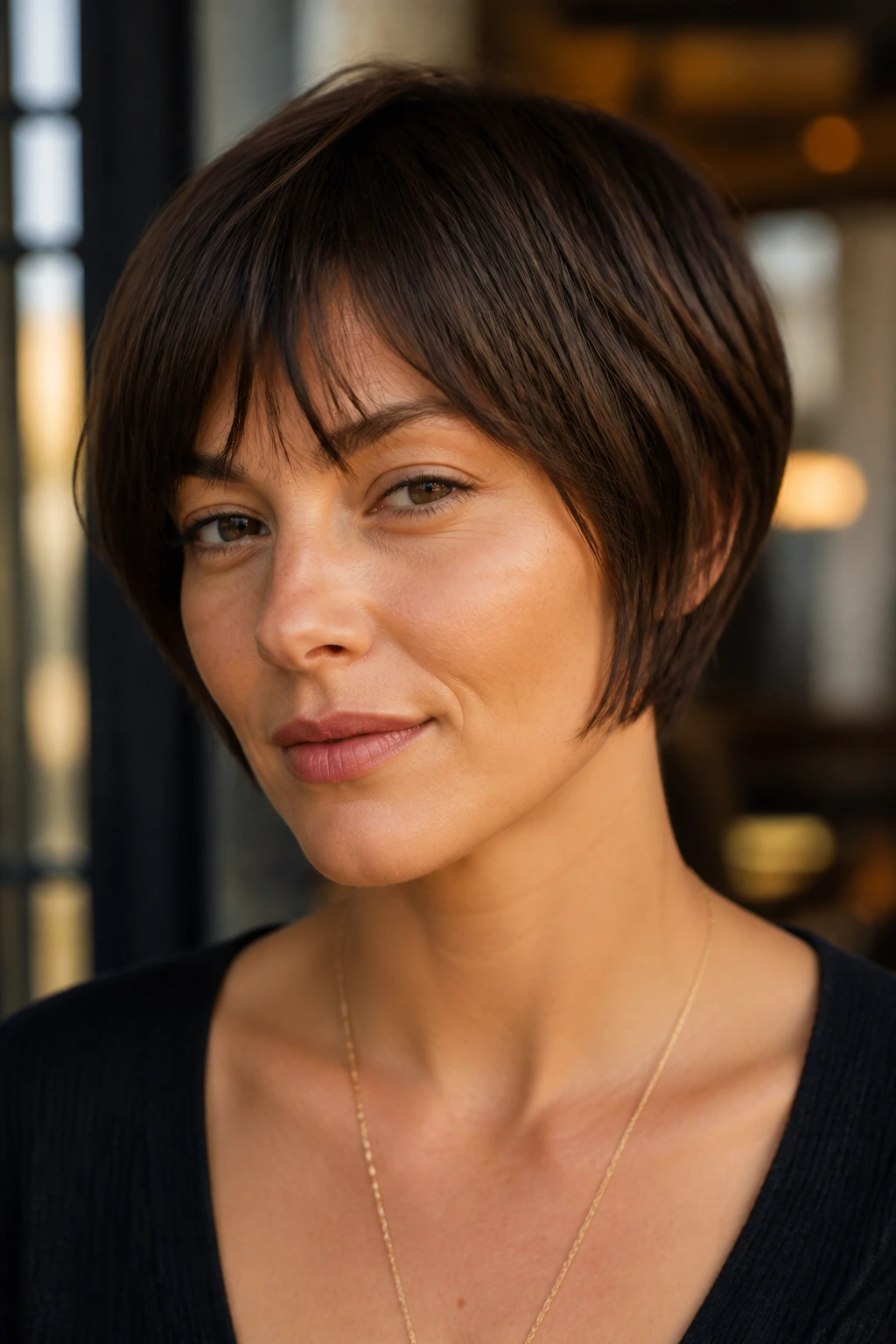
A pixie bob is the haircut people ask for when they want short hair without the panic.
It sits in that useful middle ground between a cropped pixie and a chin-length bob. The sides skim the jaw or cheekbone, the nape stays shorter, and the top keeps enough body to avoid looking flat. It feels polished because the outline is neat, but it gives you more coverage than a classic super-short crop.
Why It Works
The extra length around the face softens the transition from hair to skin. That makes the cut easier to wear if you’re new to short hair, or if you want something that still tucks behind the ear on one side and falls forward on the other.
It’s a smart choice for straight or slightly wavy hair, especially if you like a side part and a smoother finish. A smoothing cream through damp hair, followed by a blow-dry with the nozzle pointed downward, keeps the ends tidy. If the hair is thick, a stylist can remove bulk underneath so the surface sits flatter.
- Good for: anyone easing into short hair
- Styling note: tuck one side behind the ear for an instant cleaner line
- Best finish: smooth, not overly round
- Maintenance: trim the neckline before it starts to flip outward
This one is a quiet favorite. Not flashy. Just clean, flattering, and easier to grow out than most pixies.
8. Slicked-Down Pixie for Glossy Finish
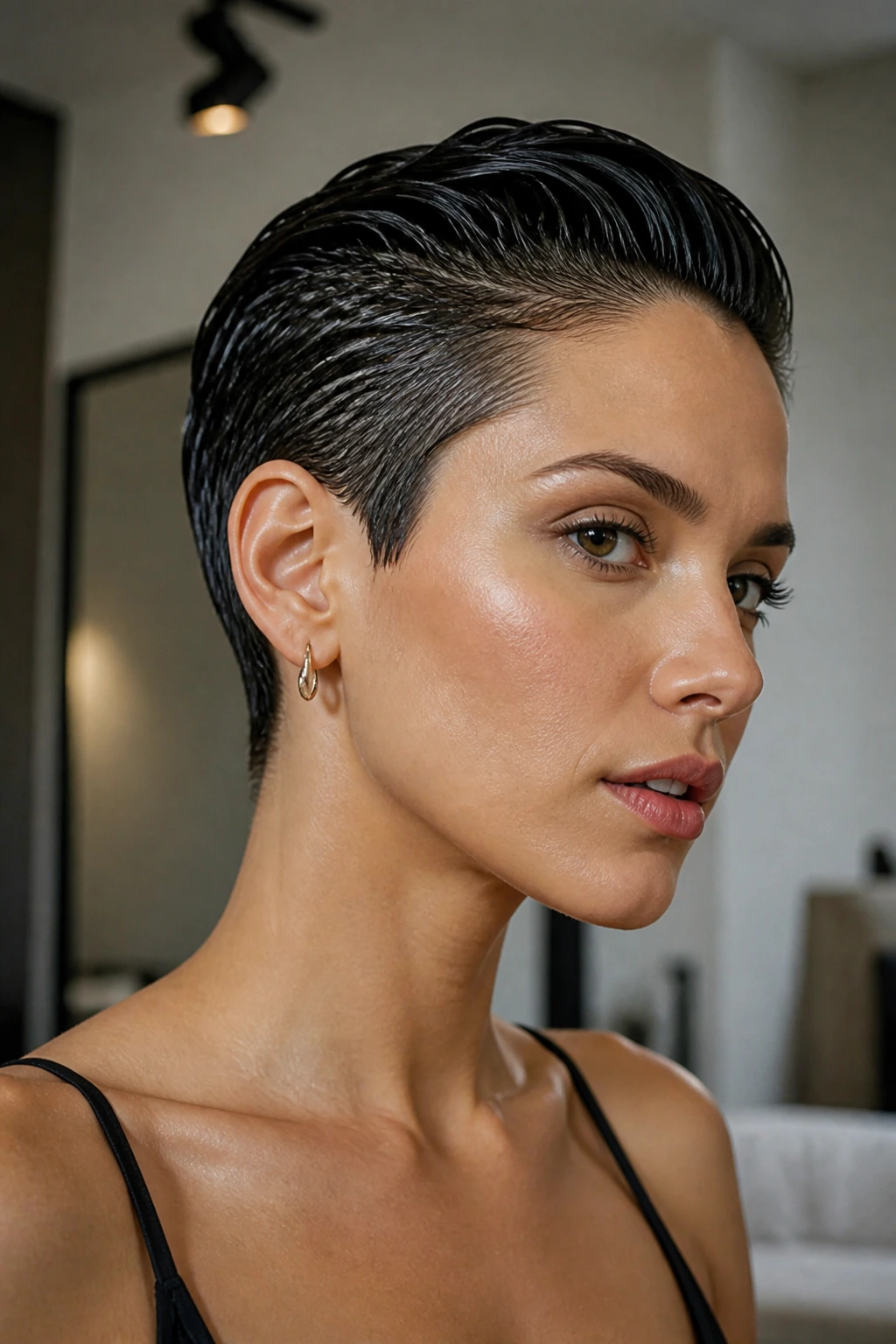
A slicked-down pixie is not shy.
The whole look depends on control: damp hair, a strong comb, and enough gel or styling cream to hold the strands close to the head without turning them crunchy. When it’s done right, the style looks sleek and intentional, almost like a short sculpted shape rather than a casual haircut.
I like this on straight hair most of all, though a strong wave pattern can work too if you’re willing to press it down with product and a comb. The finish is polished because every piece has a job. Nothing is floating around for decoration.
This is a good choice for evenings, formal events, or any time you want the haircut to feel a little dramatic. It also exposes the hairline, so you have to keep the edges tidy. Regrowth shows faster here than it does in a fluffier cut. That’s the tradeoff.
Use a fine-tooth comb to direct the hair back or to one side, then smooth a tiny bit of shine serum only through the outer layer. Too much, and the style slips. Too little, and it looks dry instead of glossy. Tiny margin. Big difference.
9. Asymmetrical Pixie With One Longer Side
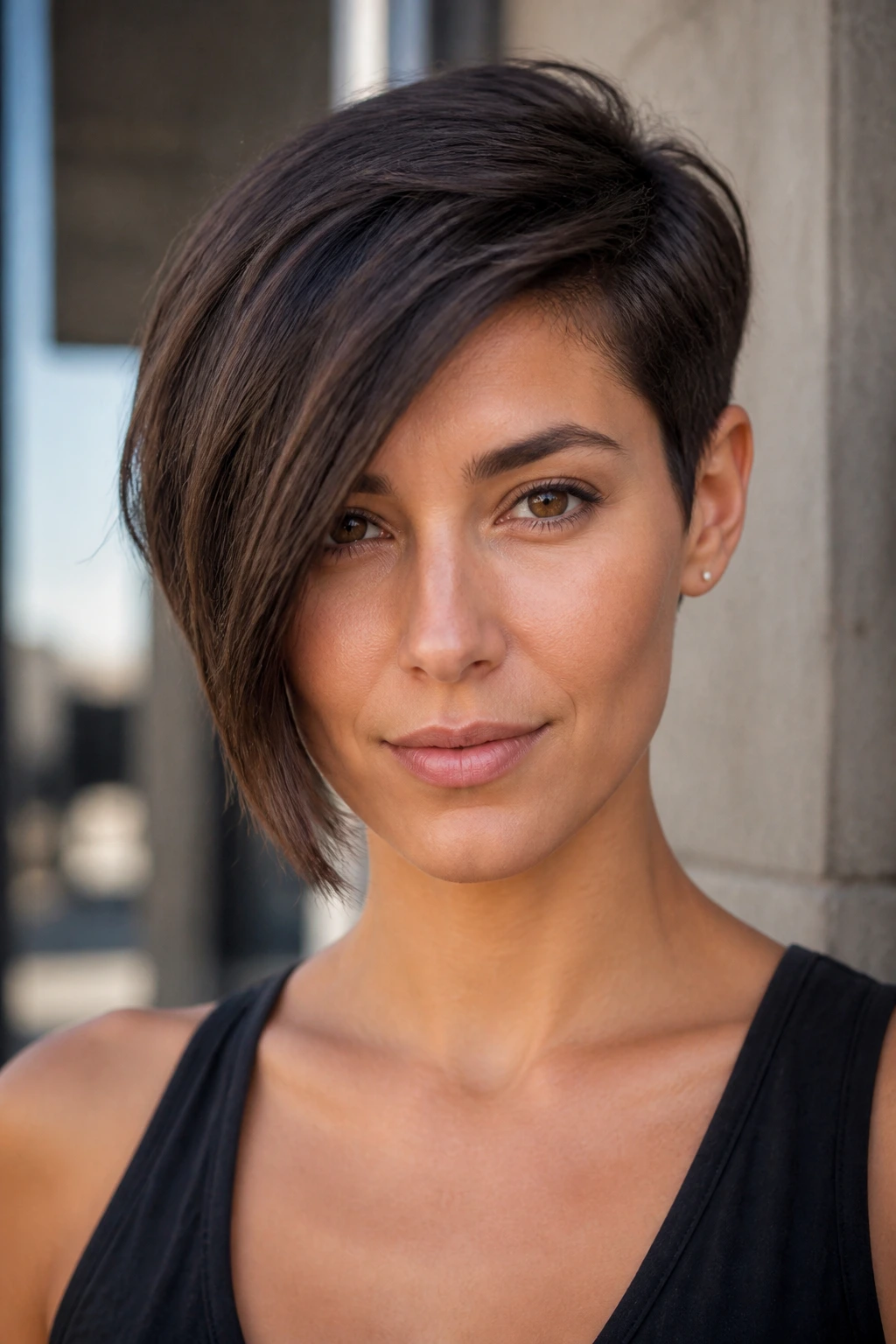
One side grazing the cheekbone while the other sits closer to the head can change the whole face.
That’s the appeal of an asymmetrical pixie. The line is not even, and that’s the point. The longer side pulls the eye diagonally, which can soften a strong jaw, add interest to a round face, or give a straight haircut a little movement without adding real length everywhere.
This cut feels bold, but not wild. There’s still structure in the shorter side and usually a neat nape, which keeps the style from drifting into chaos. The longer side can be tucked behind the ear, curled slightly under with a flat iron, or left to fall forward in a clean arc.
What to Watch For
- Keep the length difference obvious enough to read on purpose.
- Ask for the longer side to fall where you want the attention — cheekbone, jaw, or brow.
- Use a light cream or smoothing balm so the long side stays sleek.
- Trim the shorter side regularly, because stubble-like growth ruins the contrast fast.
This is not the most subtle option, and I would not pretend it is. But if you want a pixie that looks styled even when you did almost nothing, asymmetry does a lot of heavy lifting.
10. Shaggy Pixie With Wispy Layers
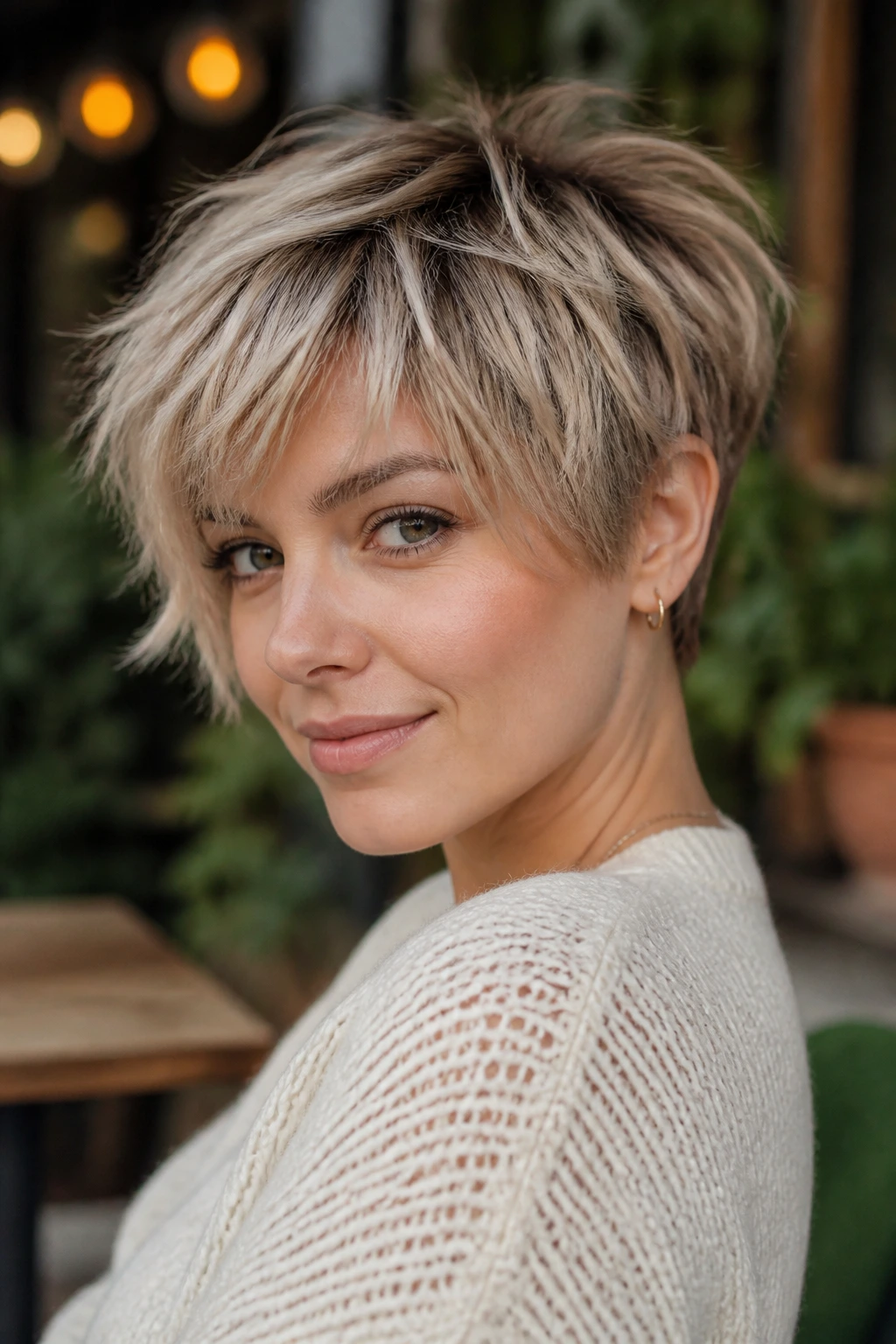
A shaggy pixie has a little more air in it, and that’s exactly why it works.
The wispy layers keep the cut from sitting too neatly against the head, which can be a blessing if your hair is coarse, wavy, or simply stubborn. Instead of trying to force everything into a smooth finish, the haircut lets the texture stay visible. That creates movement without looking overbuilt.
Messy on purpose.
That tiny shift changes the whole mood. A shaggy pixie still needs shape at the nape and around the ears, but the top and crown are left softer, with short layers that break up the outline. If the layers are too aggressive, the crown can start to look thin, so the balance matters more here than people think.
I like a mousse at the roots and a little texture spray through the top, then a quick pinch with matte paste at the ends. Air-drying works well if your natural texture is decent. Diffusing helps if the hair needs lift at the crown.
This cut is a good choice when you want polish with a bit of looseness. It doesn’t have the hard lines of a micro pixie, and that is the point.
11. Sleek Italian-Inspired Pixie
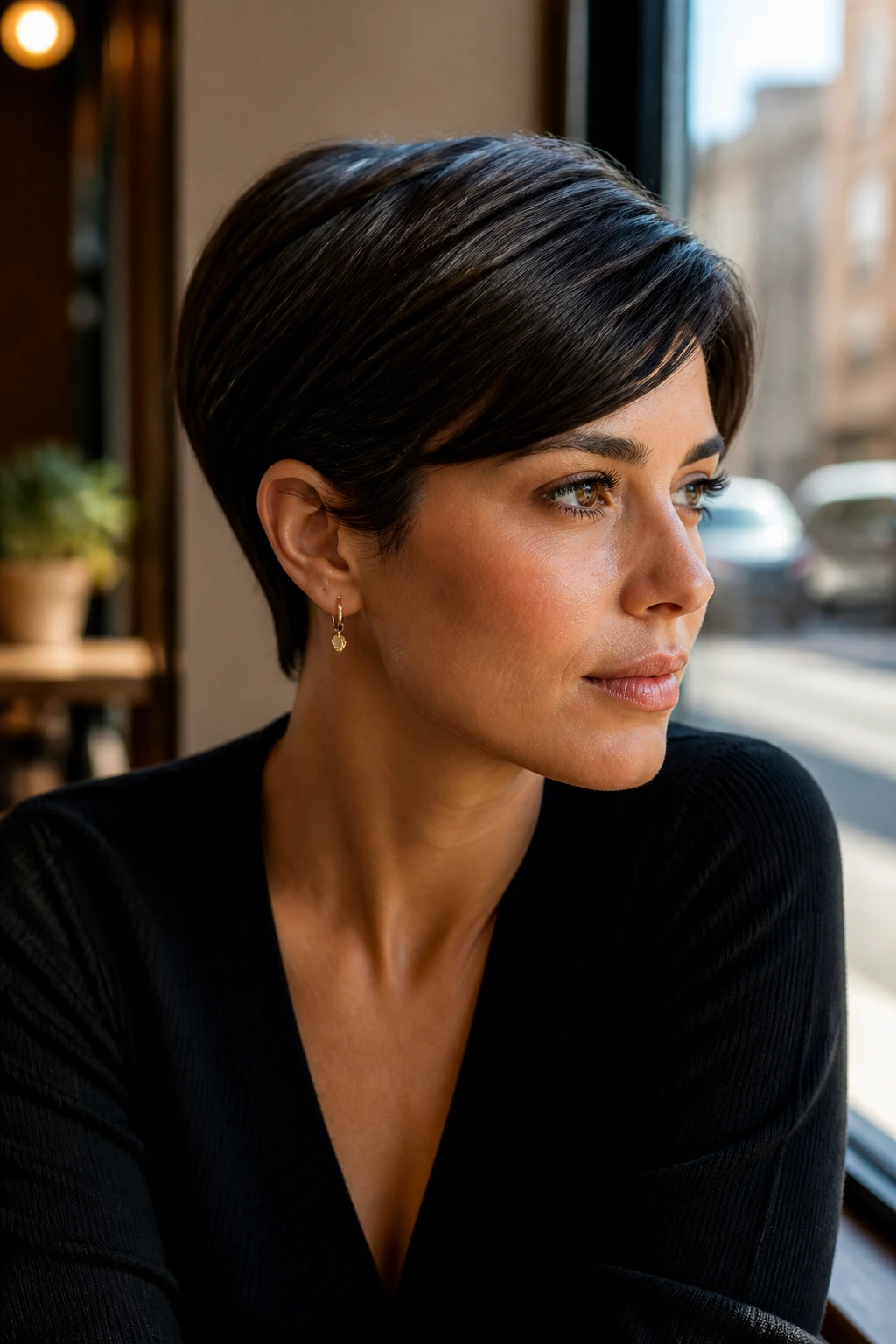
Compared with a shaggy pixie, this one is all about smooth lines and shine.
Think tailored, not fluffy. The sleek Italian-inspired pixie usually has a deep side part, a clean sweep across the forehead or temple, and enough length on top to lie close without looking stiff. The effect is neat and a little dramatic, especially when the hair has natural density.
What makes it different is the finish. The shape is often more deliberate around the sideburns and fringe, and the top is blown smooth so the haircut reads as controlled from every angle. On thick straight hair, that can look expensive without trying very hard. On finer hair, it can look thin if the cut is too flat, so the proportion matters.
This is the pixie I reach for when someone wants a short cut that can handle a silk blouse, sharp blazer, or a bare neck and good lipstick. It has a bit of old-school glamour, but it is still practical if you keep the sides tidy and use a heat protectant before blow-drying.
A small flat iron can help at the ends, but don’t overdo it. The charm here is the smoothness, not pin-straight stiffness. Leave a little bend. It looks more alive that way.
12. French Crop Pixie With Short Fringe
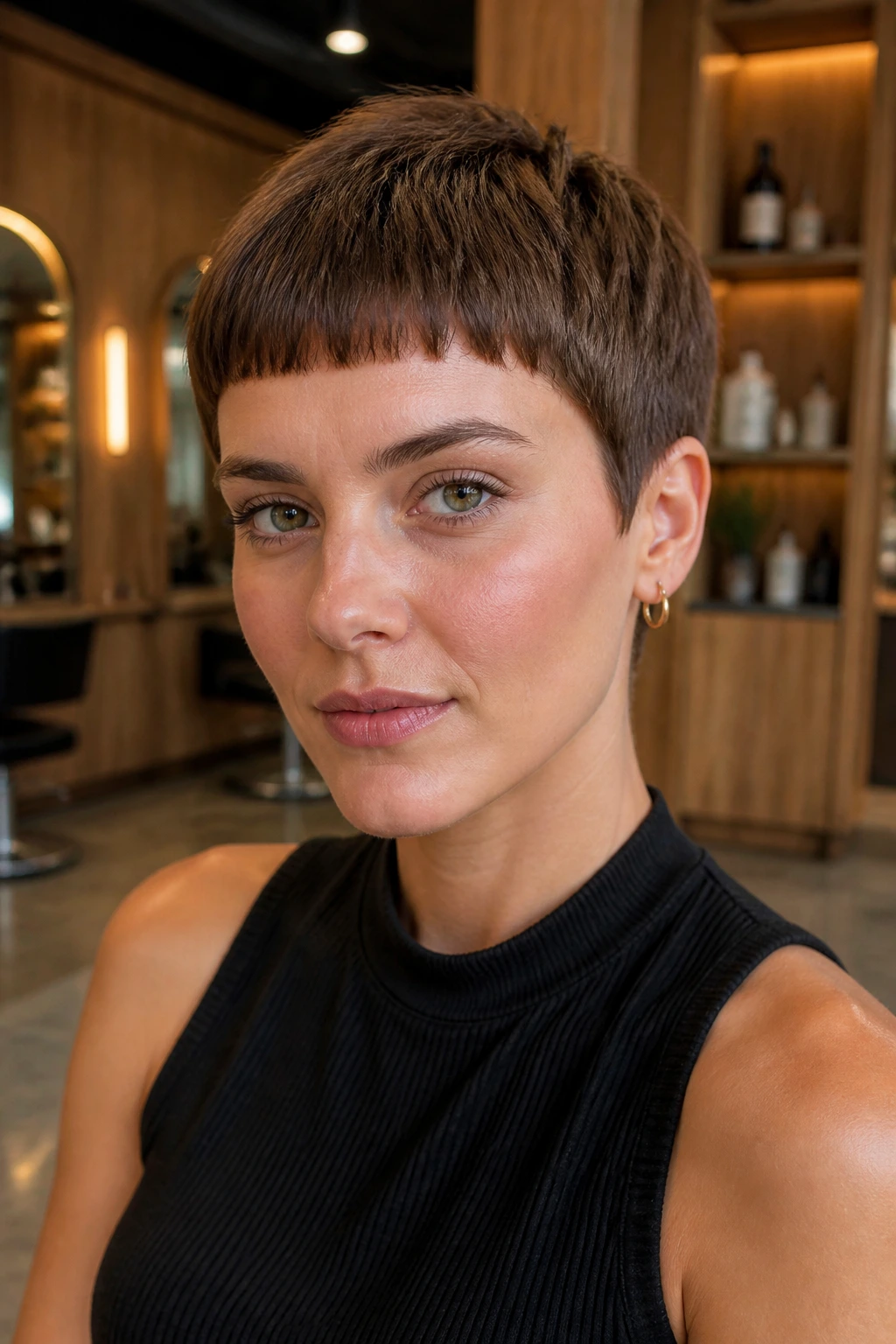
The fringe is the whole point here. Remove it, and the haircut loses its edge.
A French crop pixie keeps the sides close and the top fairly short, then finishes with a blunt or softly blunt fringe that sits just above the brows, or even higher if you want something sharper. It puts the focus on the eyes and the brow line, which is why it looks strong on people with good bone structure or a face that can handle a bit of contrast.
This cut feels crisp because the fringe creates a clean horizontal line while the rest of the shape stays compact. It works especially well on straight hair or soft waves. Curly hair can wear it too, but the fringe has to be shaped carefully or it can spring away from the forehead.
I’d ask for the fringe to be checked dry before the final trim. Short bangs lie to you when they’re wet. They shrink, twist, and suddenly look half an inch shorter than planned. A trim every 4 to 6 weeks keeps the line neat, which matters a lot when the bangs are the centerpiece.
Use only a small amount of paste here. Too much product makes the fringe separate in odd places, and that kills the clean effect fast.
13. Platinum Pixie With High Contrast Color
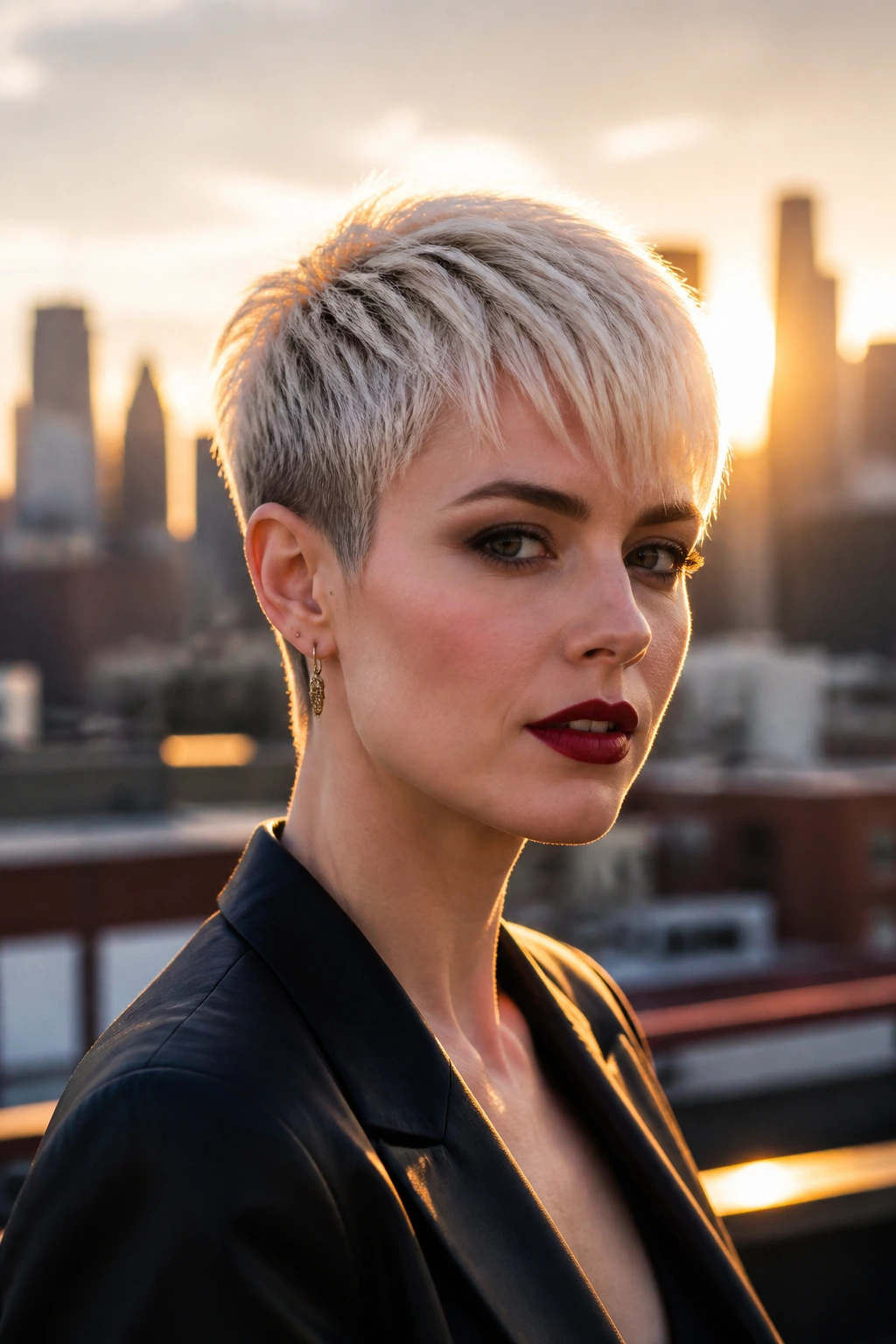
Why does platinum make a pixie look sharper? Because light hair shows every line, and that cuts both ways.
A platinum pixie is unforgiving in the best possible sense. The shape has to be good, because the color exposes everything: the precision at the nape, the blend around the ears, the texture on top, even the way the fringe falls. When the haircut is clean, the pale color makes it look almost etched in. When the haircut is sloppy, the color shows that too.
This is the style for someone who likes a little drama and doesn’t mind the upkeep. Lightening short hair still demands care, and if the hair is already fragile, the color work needs to be handled gently. A bond-building treatment, a purple shampoo once a week, and a trim schedule that keeps the shape tight are all part of the deal.
How to Keep It Looking Sharp
- Use a violet-toned cleanser no more than once a week so the hair does not go dull or flat.
- Keep heavy oils off the roots; they can make pale hair look greasy fast.
- Ask for a soft root shadow if you want the grow-out to look less abrupt.
- Trim the outline often, because regrowth on platinum reads fast.
This cut has bite. It can look icy, clean, and expensive in a very direct way — as long as the haircut underneath earns it.
14. Copper Pixie With Soft Volume
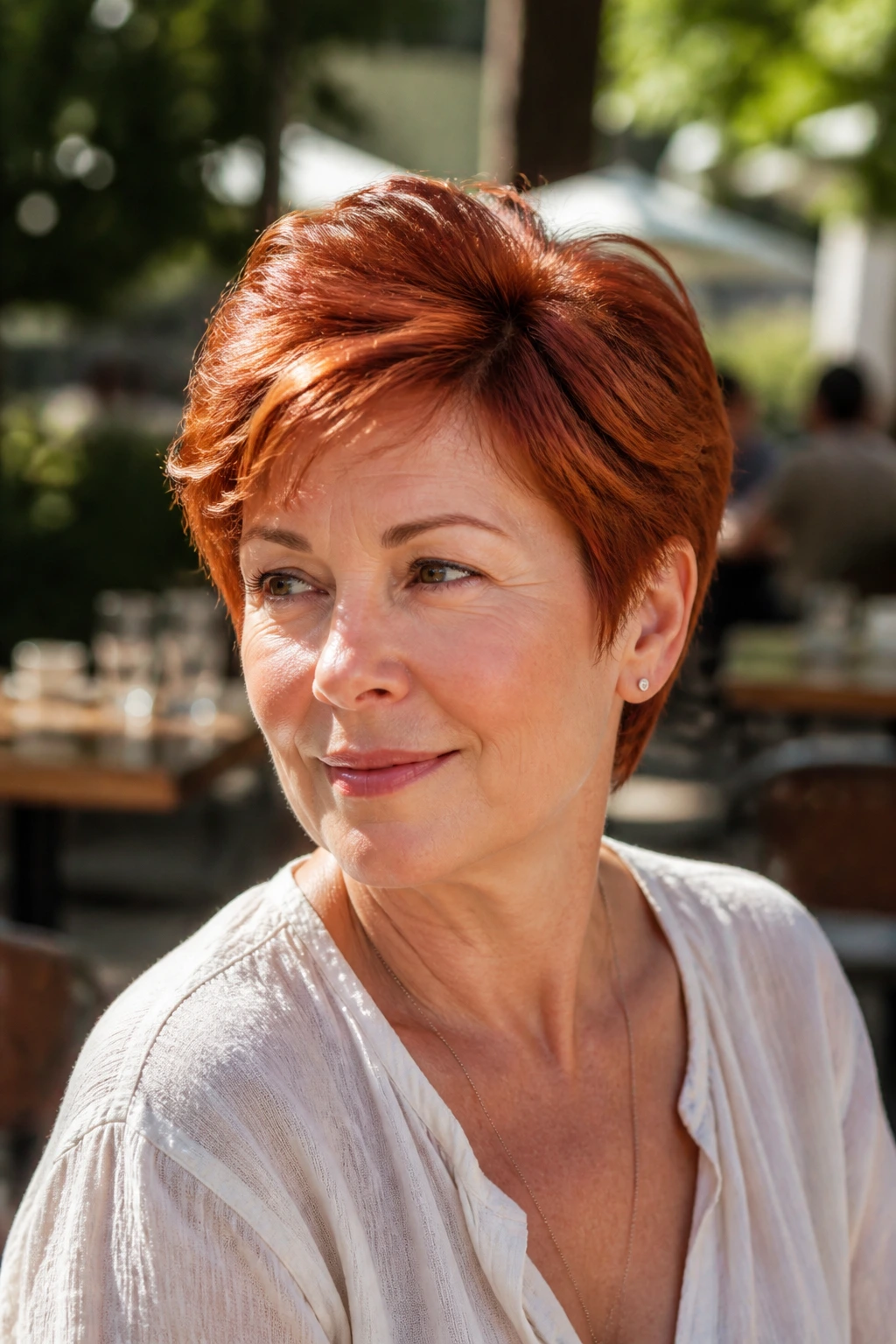
Copper makes short hair warmer, and that changes the whole mood of the cut.
A copper pixie with soft volume feels friendlier than a severe dark crop or a high-contrast platinum version. The warmth in the color gives the layers a glow, while the volume at the crown keeps the silhouette airy instead of flat. I like this especially when the haircut has feathering or a gentle taper, because the color catches all those small shape changes.
Why It Looks So Balanced
The best copper pixies are not piled high at the root. They have lift, yes, but it’s controlled. A root-lift spray, a round brush, and a short blow-dry through the top are usually enough to keep the profile light. If the hair is fine, the warmth of the color itself can make the cut look fuller. If the hair is thick, a little internal shaping helps the style sit better.
- Good for: fine hair that needs warmth, or thick hair that needs a softer edge
- Maintenance: gloss or color refresh every 6 to 8 weeks
- Styling product: lightweight volume mousse, not heavy cream
- Finish: soft, clean, and slightly lifted at the crown
I’ve always thought copper works best when the haircut is simple enough to let the color speak. Too many layers, and the look turns busy. Keep the shape clean. Let the shade do the talking.
15. Classic Tapered Pixie With Ear Tuck and Nape Detail
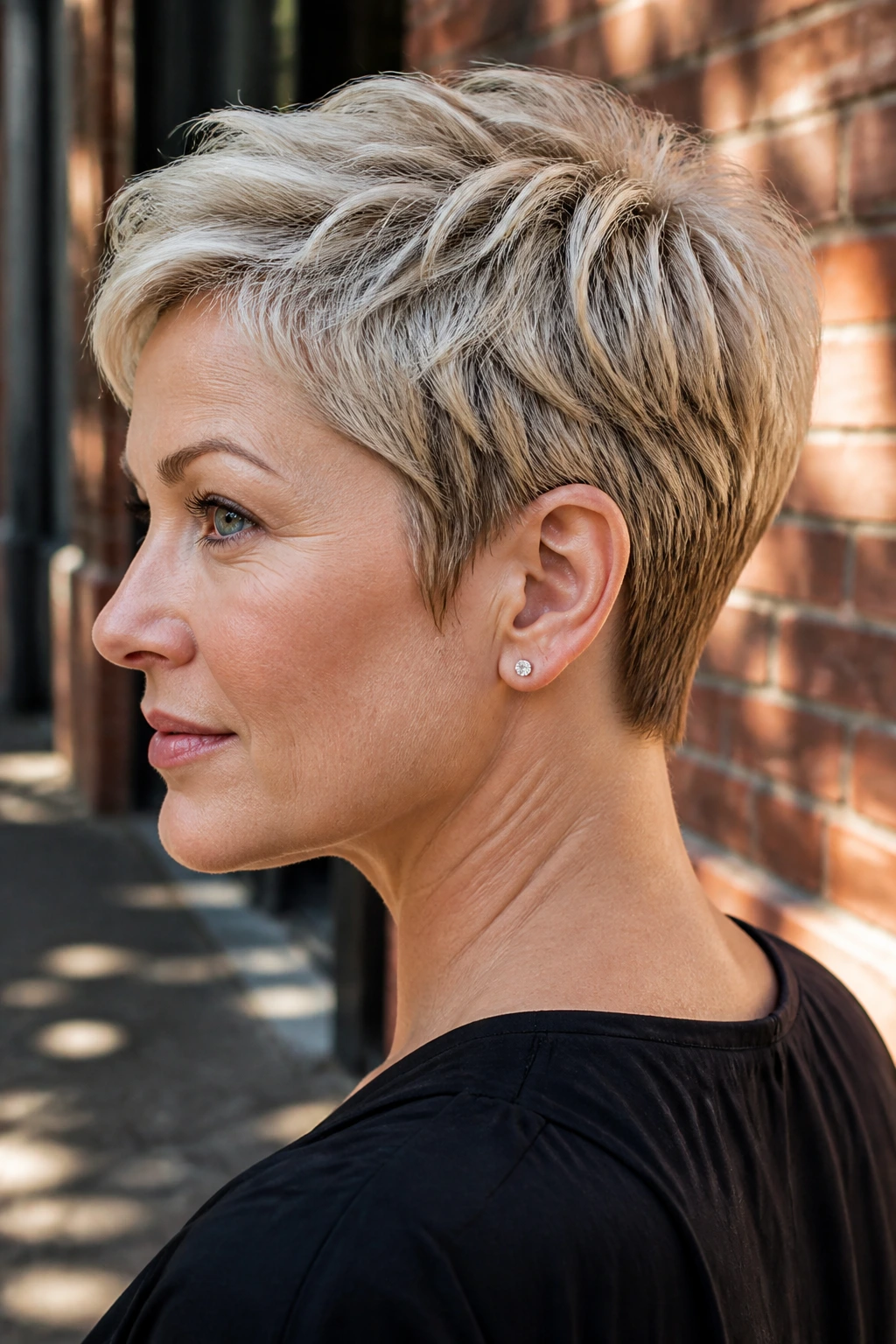
The classic tapered pixie is the one that keeps earning its place.
It isn’t trying to shock anyone. It doesn’t chase drama. Instead, it leans on the details that make a short haircut look finished: a close, tidy nape, soft tapering around the ears, and enough length on top to tuck one side behind the ear or sweep it forward when you want a little shape. That ear tuck is tiny, but it changes everything. The cut suddenly looks intentional, not just short.
This is the pixie I trust when someone wants a shape that can move from crisp to casual without much effort. Leave the top smooth and it feels refined. Push it forward with a touch of paste and it feels a little easier, a little more lived-in. The haircut itself does not fight you, which is probably why it stays around. It behaves.
A classic tapered pixie also grows out more gracefully than a lot of trendy cuts. The neckline can be cleaned up before it gets shaggy, and the top usually has enough length to keep going for a while. That matters if you prefer your appointments spaced out or you simply do not enjoy a haircut that starts misbehaving the second it grows a quarter inch.
If you want one short style that still looks polished on ordinary days — not just on the day you leave the salon — this is the one I’d put near the top of the list. It is plain in the best way. Clean lines. Good shape. No drama needed.
