



A pixie cut can be the sharpest haircut in the room—and the easiest to regret if the shape is off by half an inch. That is why the pixie style hair ideas women are trying split into such different camps: soft and face-framing, choppy and cool, sleek and close-cropped, or just long enough to tuck behind one ear.
A good pixie is not one haircut. It is a whole family of cuts built from the same parts: the fringe, the crown, the sides, and the nape. Change one of those pieces and the feel changes fast. A soft side-swept fringe can make the same cut read gentle; a tight nape can make it feel crisp; a little extra length at the temples can make growing it out less annoying. Half an inch matters. Sometimes more.
The smartest versions also respect hair texture instead of fighting it. Fine hair needs lift at the crown. Thick hair needs weight removed near the ears. Curly hair needs room to spring up. Straight hair often needs texture so it does not fall flat and look like a helmet. That is the part most people miss when they ask for “a pixie” and hope the rest sorts itself out.
These 15 ideas cover the styles that keep showing up in salons for a reason. Some are polished, some are messy, some are barely there around the ears, and one or two have enough edge to make a boring ponytail look insulting. Start with the cropped version that looks neat without trying too hard.
1. Classic Pixie Style With Soft Sideburns
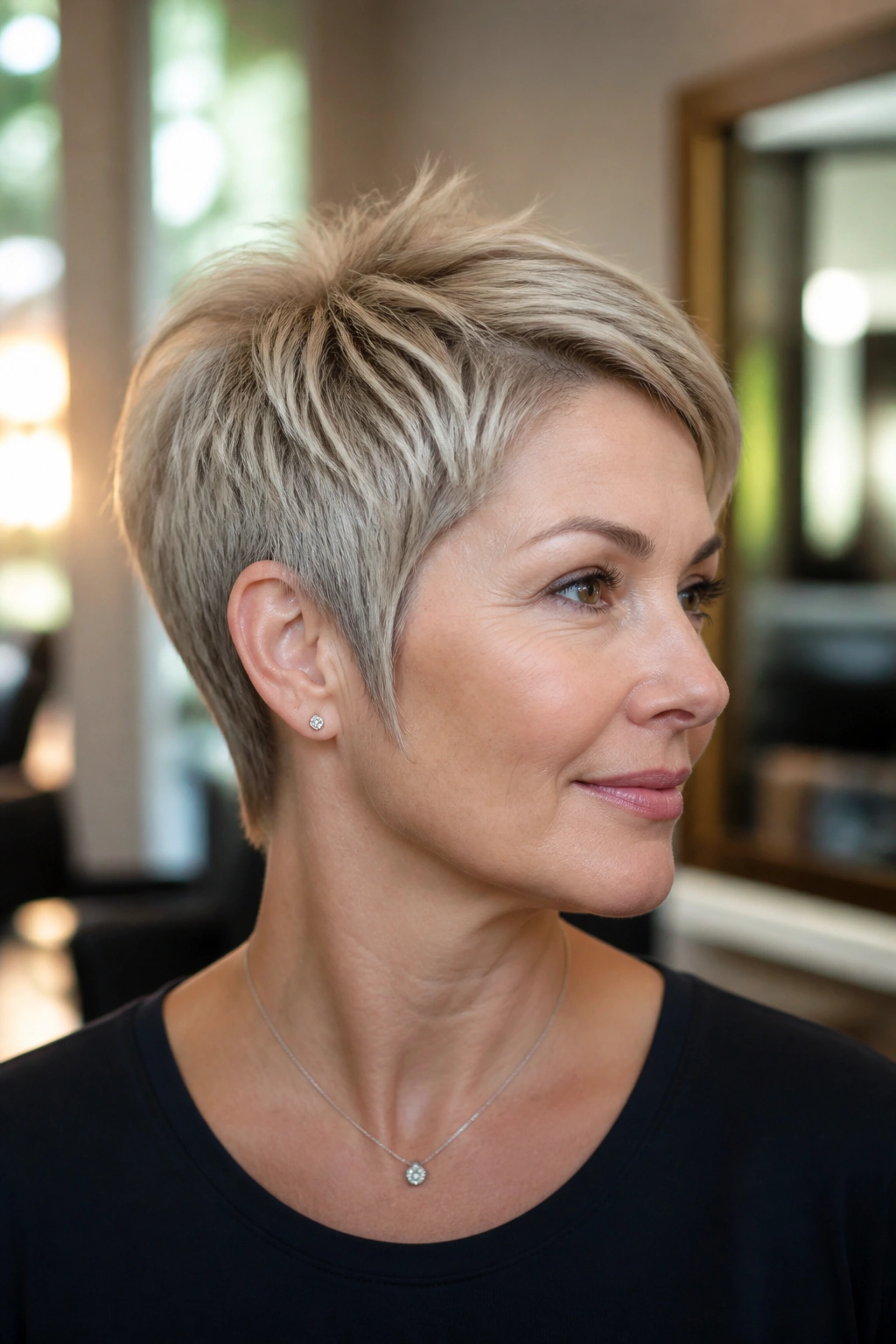
This is the cut that makes a pixie look intentional the second you step out of the chair. The sides sit close, the crown keeps a little lift, and the sideburns stay soft instead of sharply squared off. That small detail changes everything.
Why It Works
A classic cropped pixie is easy to wear because it does not ask the hair to do much. The shape does most of the work. If your hair is straight or only slightly wavy, you can often get away with a little cream and a quick finger-dry.
The best version usually keeps about 1.5 to 2.5 inches on top, with the sides shorter and snug against the head. That gives you enough room to move the fringe around without creating a heavy curtain. It also grows out in a calmer way than a super-short crop.
- Ask for soft sideburns that skim the jaw instead of ending in a hard edge.
- Keep the crown lightly textured so it does not collapse by noon.
- Use a pea-sized amount of styling cream on damp hair, then rake it through with your fingers.
- Plan on a trim every 4 to 5 weeks if you want the shape to stay crisp.
One small ask at the salon matters here: tell your stylist you want the cut to look neat, not severe. That single word usually saves the whole result.
2. Side-Swept Pixie Style With A Long Fringe
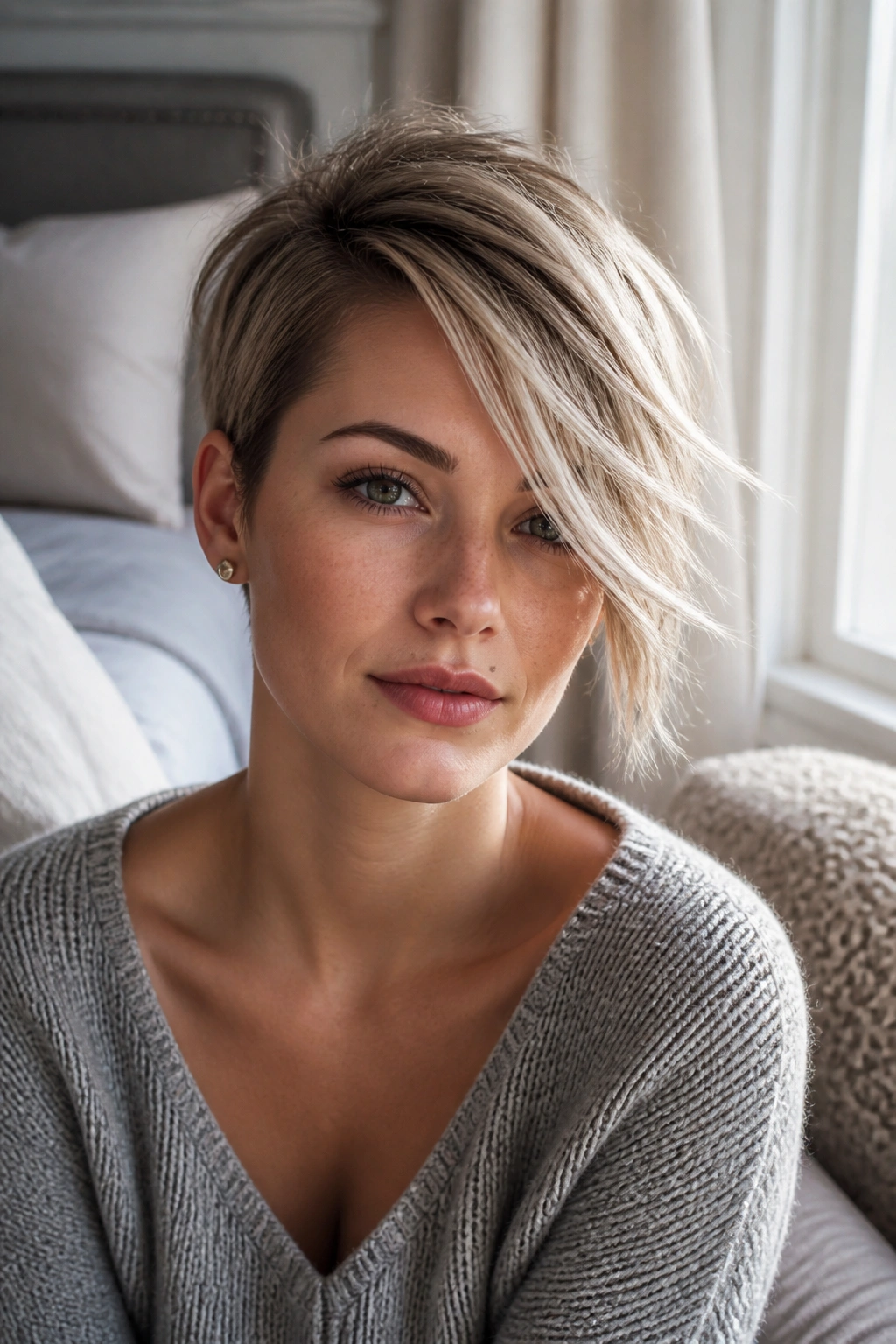
A long fringe changes everything. It gives a short cut a little swing, a little softness, and a place to fall when you do not want all your hair off your face.
The version women keep asking for usually leaves 3 to 4 inches through the front, then tapers the sides shorter so the fringe has room to sweep across one brow. It is a smart move if you like the idea of a pixie but want something you can tuck, push, or pin when the mood changes. It also flatters a lot of face shapes because the diagonal line softens the forehead and draws the eye sideways.
This cut looks best when the front is cut with some movement, not sliced into a blunt shelf. A round brush and a quick blow-dry can lift the root just enough so the fringe does not stick to the skin. If your hair is fine, a light volumizing spray at the roots helps. If it is thick, a flat iron on the front section can keep the sweep polished without making the rest of the head too flat.
I like this one for anyone who wants a short haircut with a little bargaining power. You can wear it smooth to dinner, or messy and tucked for daytime.
3. Choppy Pixie Style With Piecey Ends
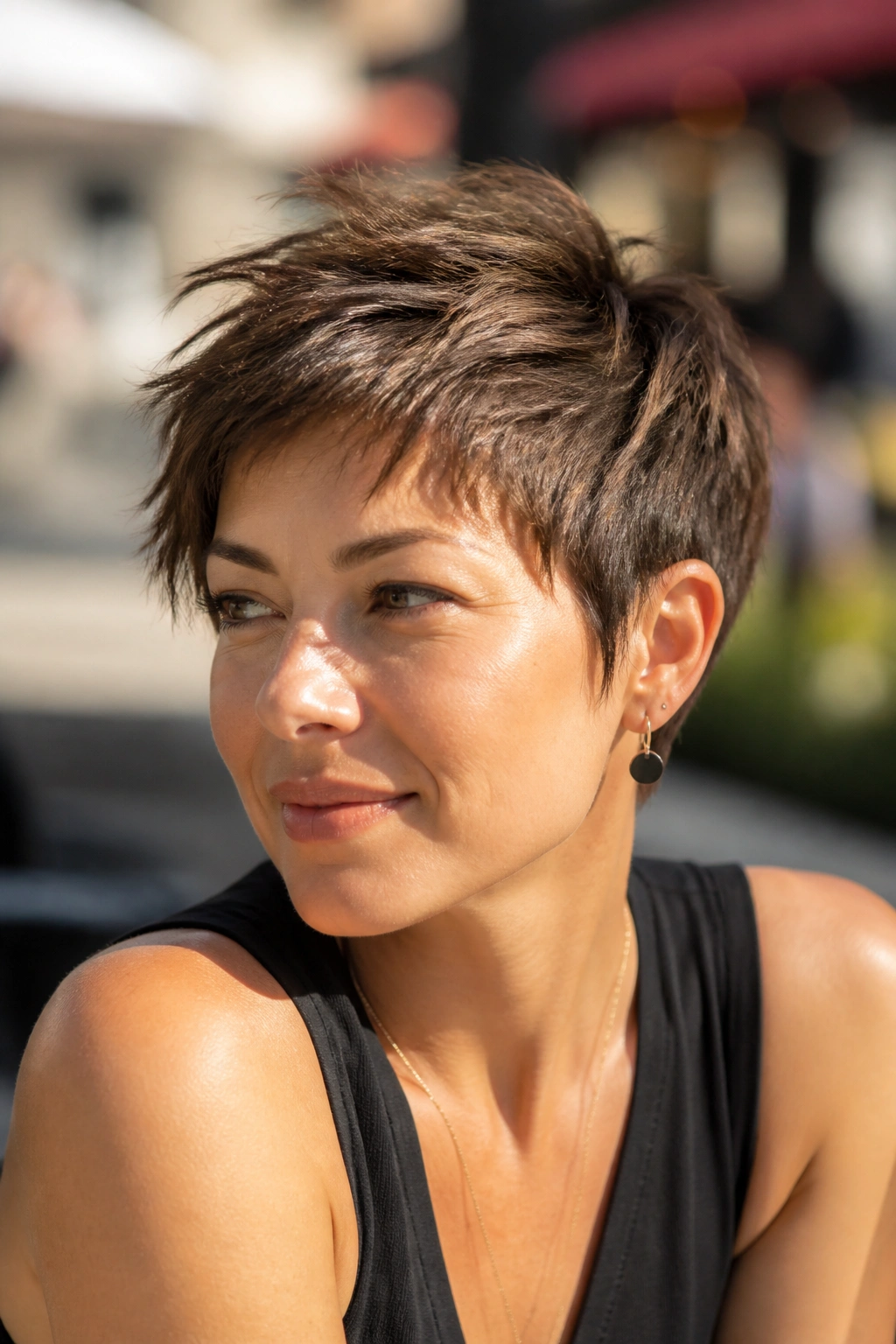
Why do some pixies look full even on fine hair? Texture. Plain and simple.
A choppy pixie uses small, broken-up layers to make the hair look lighter and more lifted. Instead of one smooth outline, the ends are point-cut or sliced so they separate a little when you work in a matte paste. That separation creates the feeling of volume without adding actual bulk, which is a useful trick when the hair tends to lie flat at the roots.
How to Wear It
The cut usually works best when the top stays slightly longer than the sides, somewhere around 2 to 3 inches, with shorter, jagged bits around the ears. I like to see this style air-dried halfway, then roughed up with the fingertips. If you blow-dry it until every strand sits perfectly in place, you lose the whole point.
A tiny dab of paste or clay goes farther than people expect. Warm it between your palms first, then press it into the ends rather than smoothing it over the top. That keeps the texture separated instead of greasy.
- Best for fine to medium hair that needs lift.
- Works well if your hair has a few cowlicks you do not want to fight all day.
- Needs a trim every 5 to 6 weeks to keep the choppy edge from turning fuzzy.
- Looks especially good with a loose side part.
There is a reason this one keeps hanging around. It is short, yes, but it still feels like hair with personality.
4. Tapered Pixie With A Clean Nape
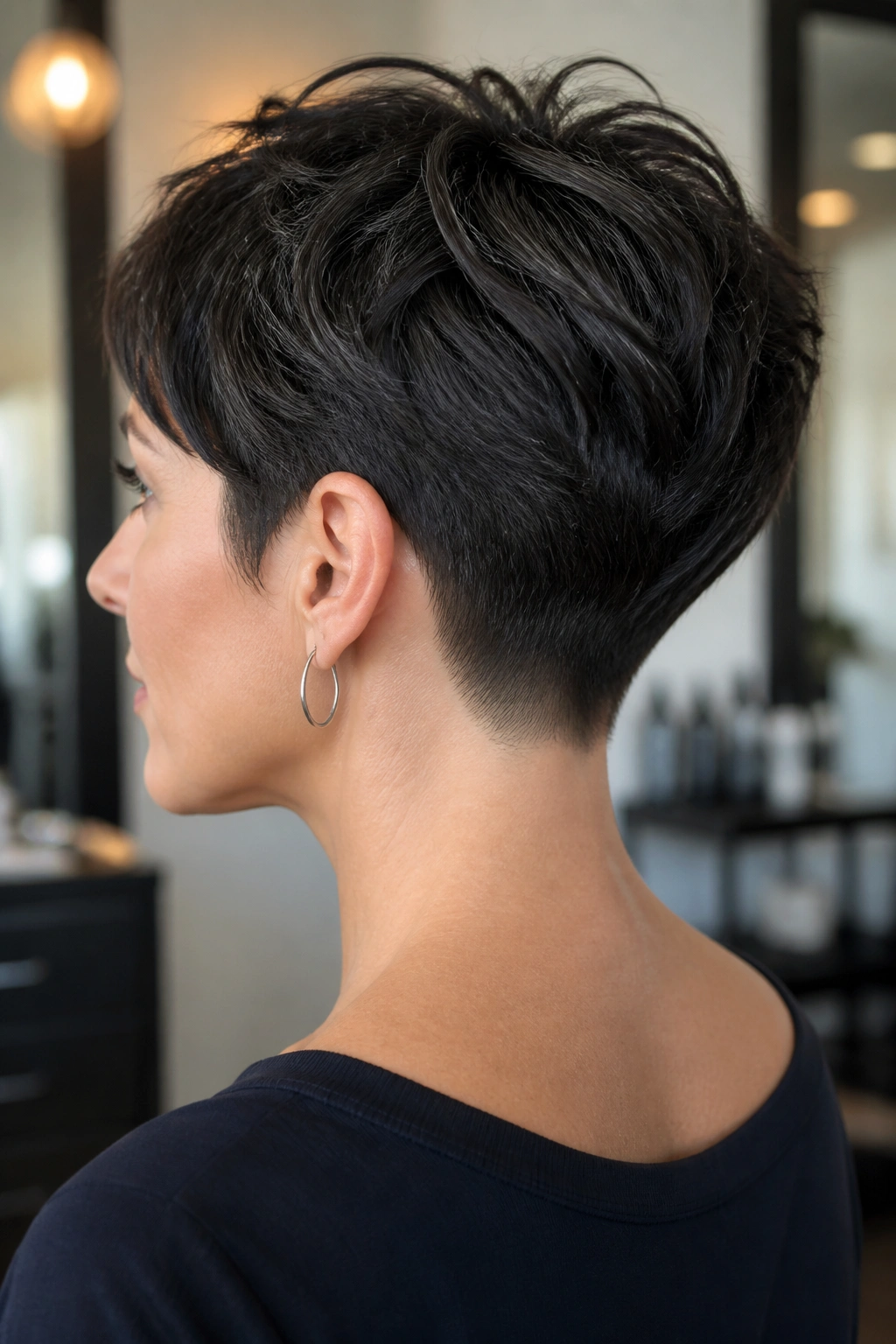
If you have ever gotten a short haircut and hated the little puff at the back of your neck, this is the fix. A tapered nape makes the whole cut feel sharper, cooler, and more deliberate.
Picture a neckline that stays tidy even after a windy commute. That is the appeal.
The haircut gets shorter as it moves down the head, so the nape hugs close and the crown keeps more length. This shape works especially well on thick hair because it removes the heavy block that can sit at the back of a standard short cut. Ask for a soft taper rather than a hard fade if you want the style to stay feminine and easy to grow out.
A lot of stylists will clean this up with scissors near the nape and a clipper around the very bottom, often using a #1 or #2 guard if the hair is dense. That keeps the bottom neat without making the cut look shaved. The line around the ears should be clean, but not stiff.
- Good choice if your hair grows fast at the neck.
- Helps thick hair dry faster.
- Needs a cleanup about every 3 to 4 weeks.
- Stays neat with a small amount of smoothing cream.
The whole point is control. Nothing fancy. Just a back view that still looks tidy when you turn around.
5. Curly Pixie That Lets Your Texture Lead
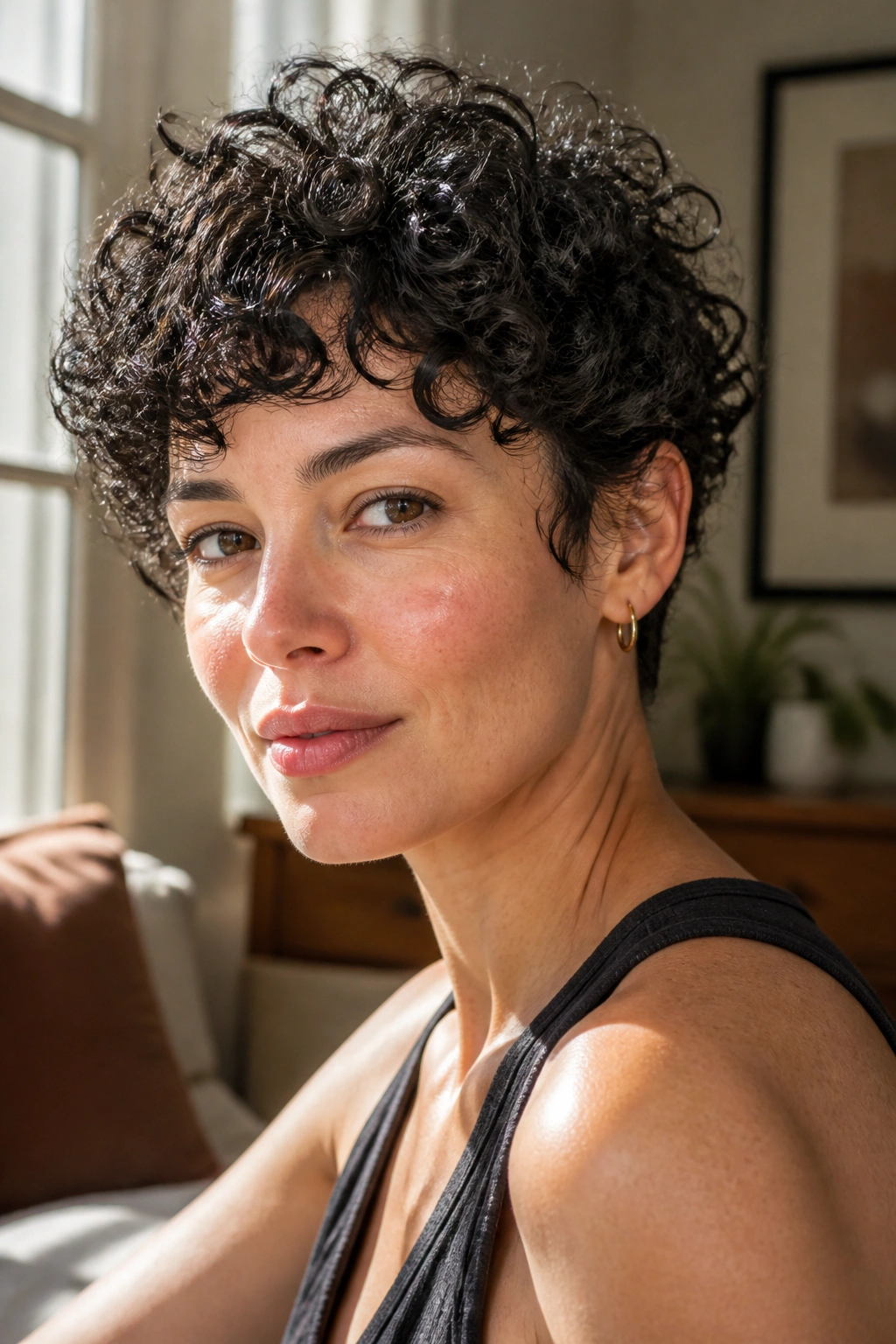
Curly hair and pixies can get along beautifully, but only if the cut respects the curl pattern. Too many short curly cuts are shaped like straight hair, which leaves the crown puffy and the sides awkward. That is a waste.
The better version follows the curl, not a ruler. It keeps enough length on top for the curl to form cleanly, usually around 2 to 4 inches, then softens the sides so the hair can spring instead of bulge. A curly pixie should look like it was designed around your texture, not trimmed down in spite of it.
I prefer this cut when the stylist works on hair that is either damp or dry in its natural state, because curls lie about their length when they are wet. A wet cut can still work, but the final shaping matters a lot. The stylist should check where each curl lands as it dries and leave room for bounce around the crown and temples. If the layers are too short at the top, the shape turns triangular fast.
A curl cream, a little gel, and a diffuser are usually enough. Scrunch the product in, tip your head, and let the curls set before you touch them too much. That last part is annoying, I know. It matters.
6. Asymmetrical Pixie With One Longer Side
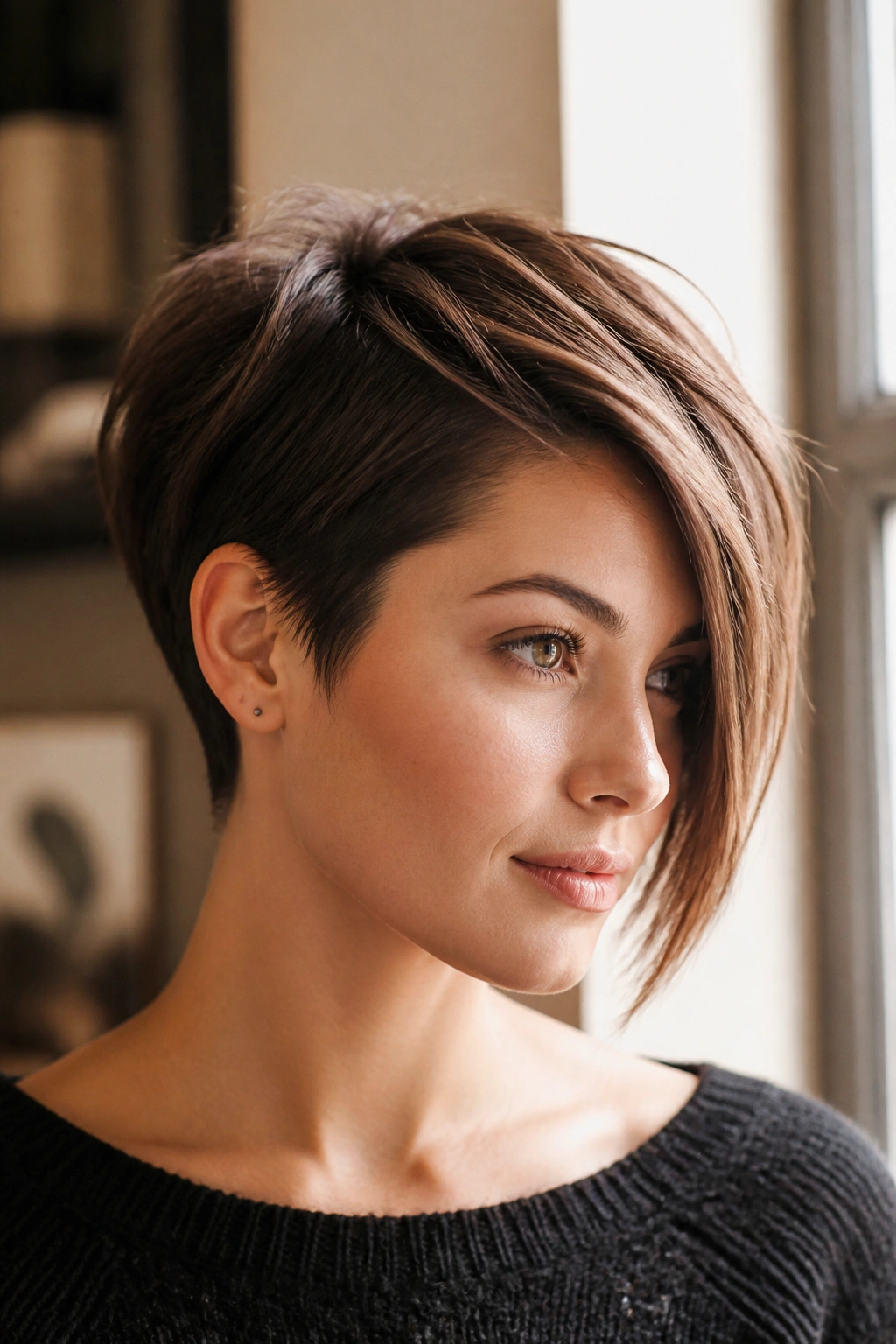
Unlike a balanced pixie, an asymmetrical cut makes one side do the talking. That single longer side gives the style a built-in angle, which can sharpen a round face or soften a strong jaw depending on where the length falls.
The trick is keeping the difference obvious enough to matter, but not so extreme that the haircut starts looking lopsided. A gap of about 1 to 2 inches between the shorter and longer side is usually enough. The shorter side can tuck close behind the ear, while the longer side skims the cheekbone or jaw. That line is what gives the cut motion when you turn your head.
It is a smart pick if you want something a little edgy without going full avant-garde. The asymmetry does the work for you, so you do not need much styling to make it interesting. A small round brush, a blow-dryer, and a touch of smoothing serum on the longer side are usually enough.
This one is best for someone who likes clear shape and does not mind a haircut that gets noticed. If you want a style that blends into the background, skip it. If you want a pixie that looks deliberate from every angle, this is a strong choice.
7. Platinum Pixie With Dark Roots
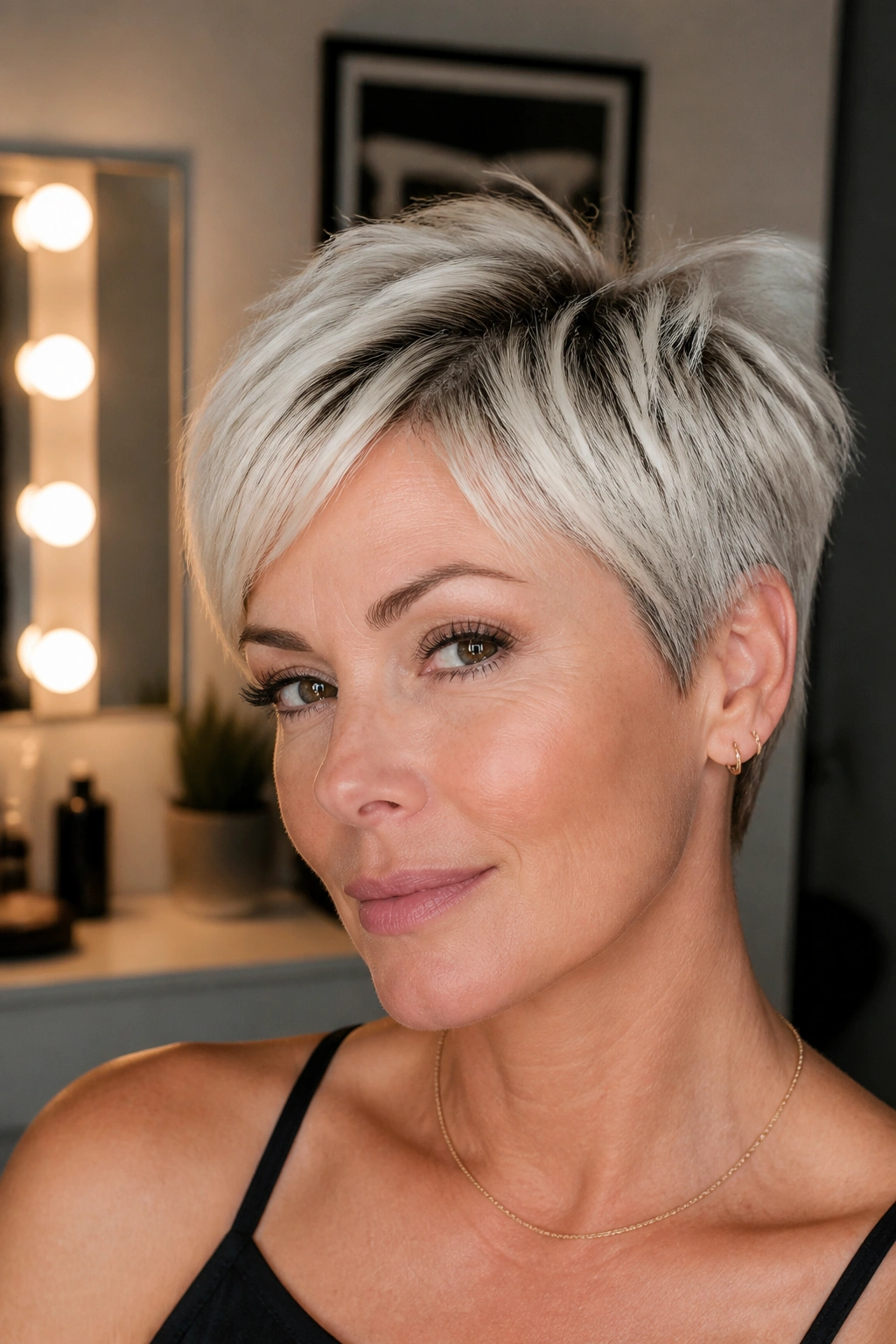
Bleach on a short cut shows everything. The upside is that a platinum pixie can look crisp and expensive-looking in a way longer blonde hair sometimes cannot. The downside is that there is nowhere for damage to hide, so the hair has to stay in good shape.
What To Know Before You Go Light
A platinum pixie usually looks best when the roots are either kept close to the scalp color or softened with a shadow root. That little bit of depth makes the cut easier to wear and saves you from a harsh stripe as it grows. It also means you can stretch appointments a bit longer without the color looking abandoned.
- Keep a bond-building treatment in the weekly routine if the hair was lightened more than once.
- Use purple shampoo only when the tone starts looking yellow, not every wash.
- Ask for the top to stay slightly longer if the stylist needs room to blend the color.
- Plan on a color refresh every 3 to 5 weeks if you want the blonde to stay bright.
A platinum pixie works best when the haircut is precise. Loose ends, patchy layering, and fried texture show faster on blonde. If you want this look, the cut and the color have to be treated like one job, not two separate ones.
8. Undercut Pixie That Removes Bulk
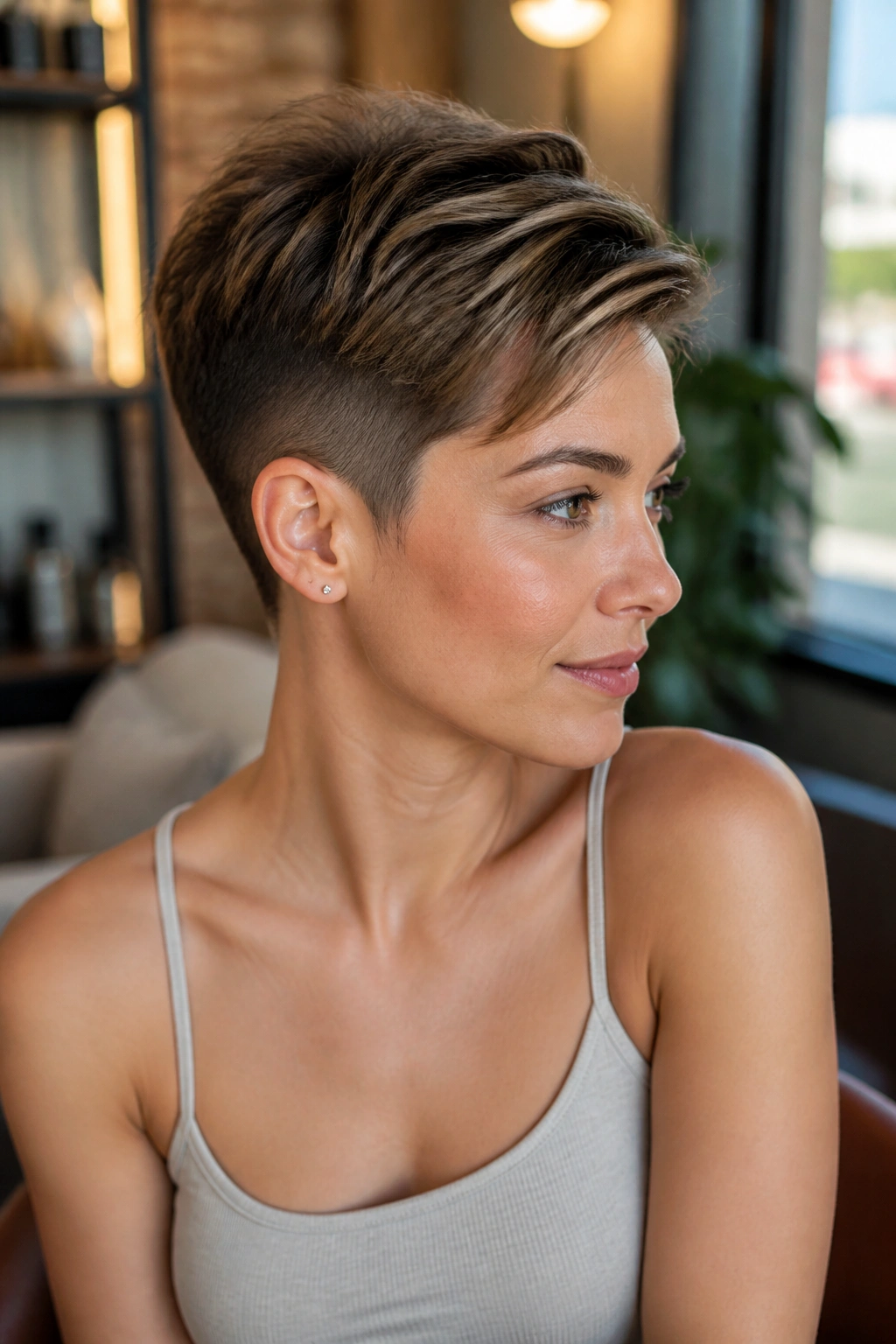
Bulk is the enemy here, and the undercut fixes it.
A pixie with an undercut removes weight from the sides, back, or even just the temple area, while keeping the top longer. That gives thick hair somewhere to go instead of letting it puff out like a triangle by mid-afternoon. It also makes the neck feel cooler, which is a bigger deal than most people admit.
The hidden version is the one I usually like best. It keeps the undercut tucked underneath the longer top layers, so you get the lightness without a visible shave line. If you want something bolder, the undercut can be exposed around the ear or at the nape. A #1 or #2 clipper guard is common for the short section, while the top might stay at 4 to 5 inches.
This is not the softest pixie idea on the list. It has edge. It also has real function, especially for dense hair that hates to sit flat. If you live in a warm climate or just get tired of hair hanging at the neck, this cut earns its keep fast.
The grow-out is manageable if the top was left long enough. Without that, the shape can feel awkward around week four.
9. Feathered Pixie With Airy Layers
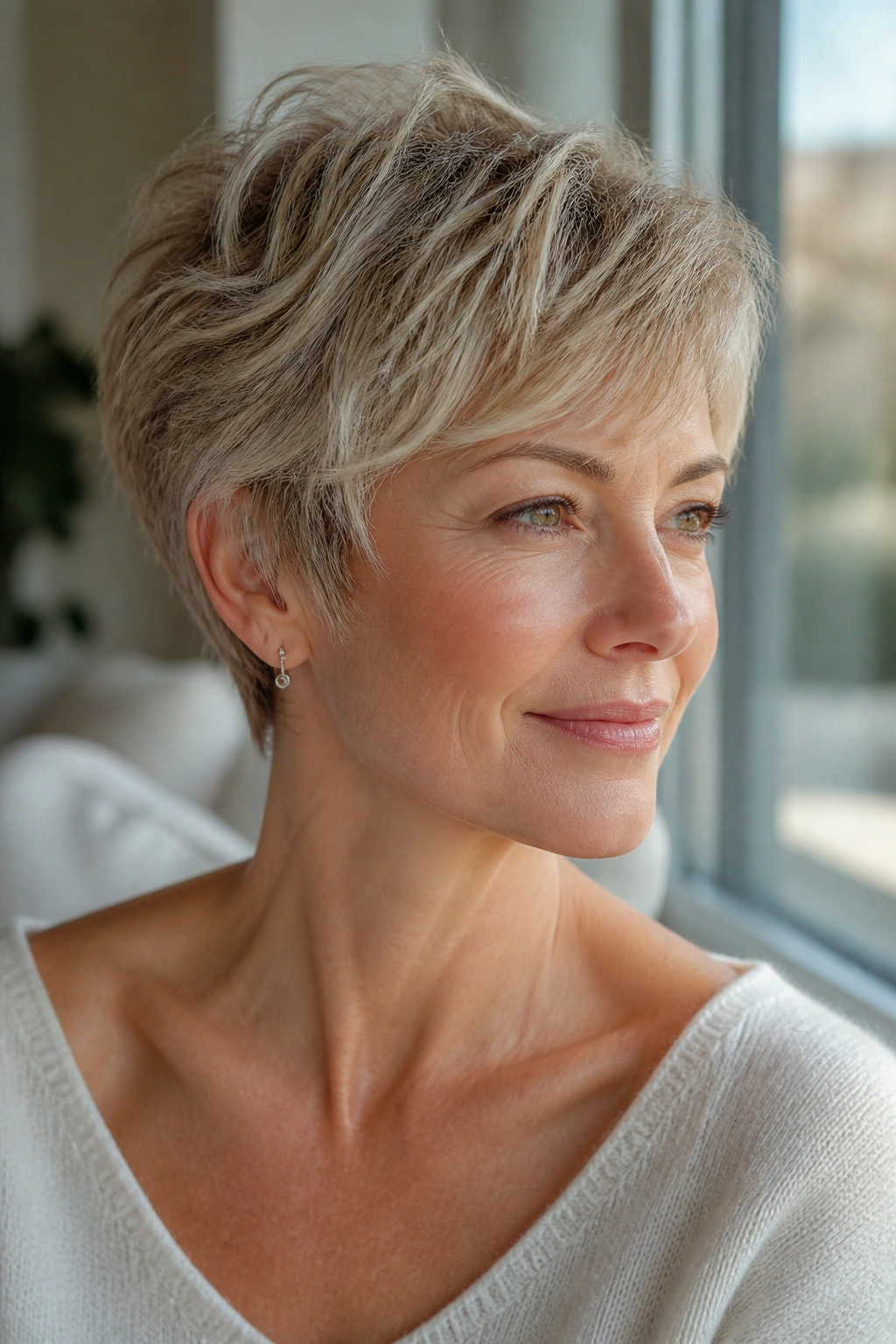
What makes feathered layers look softer than choppy ones? The ends are blended to move, not to spike.
A feathered pixie keeps the outline light around the temples and crown, then uses longer, wispy layers so the hair flips a little instead of standing in obvious pieces. It has a softer feel than a jagged crop, and that matters if you want short hair without a hard edge. Think movement, not mess.
The shape works especially well when the front is brushed forward and then nudged sideways, because the pieces overlap and create a little flutter around the forehead. A small round brush and a quick pass with a blow-dryer help, but the cut should still look decent if you air-dry it with a touch of mousse. That is the real test. Some haircuts only look good with a full styling session, and that gets old fast.
How To Get The Movement
Ask for point-cutting through the top and soft graduation near the back. The stylist should avoid turning the ends blunt, because blunt ends kill the feathered effect. A light spray, not heavy wax, keeps the layers separated.
This cut is a good middle ground for anyone who wants softness without turning to a bob. It feels a little retro, a little airy, and a lot easier to live with than it sounds.
10. Bixie Cut That Sits Between A Pixie And Bob
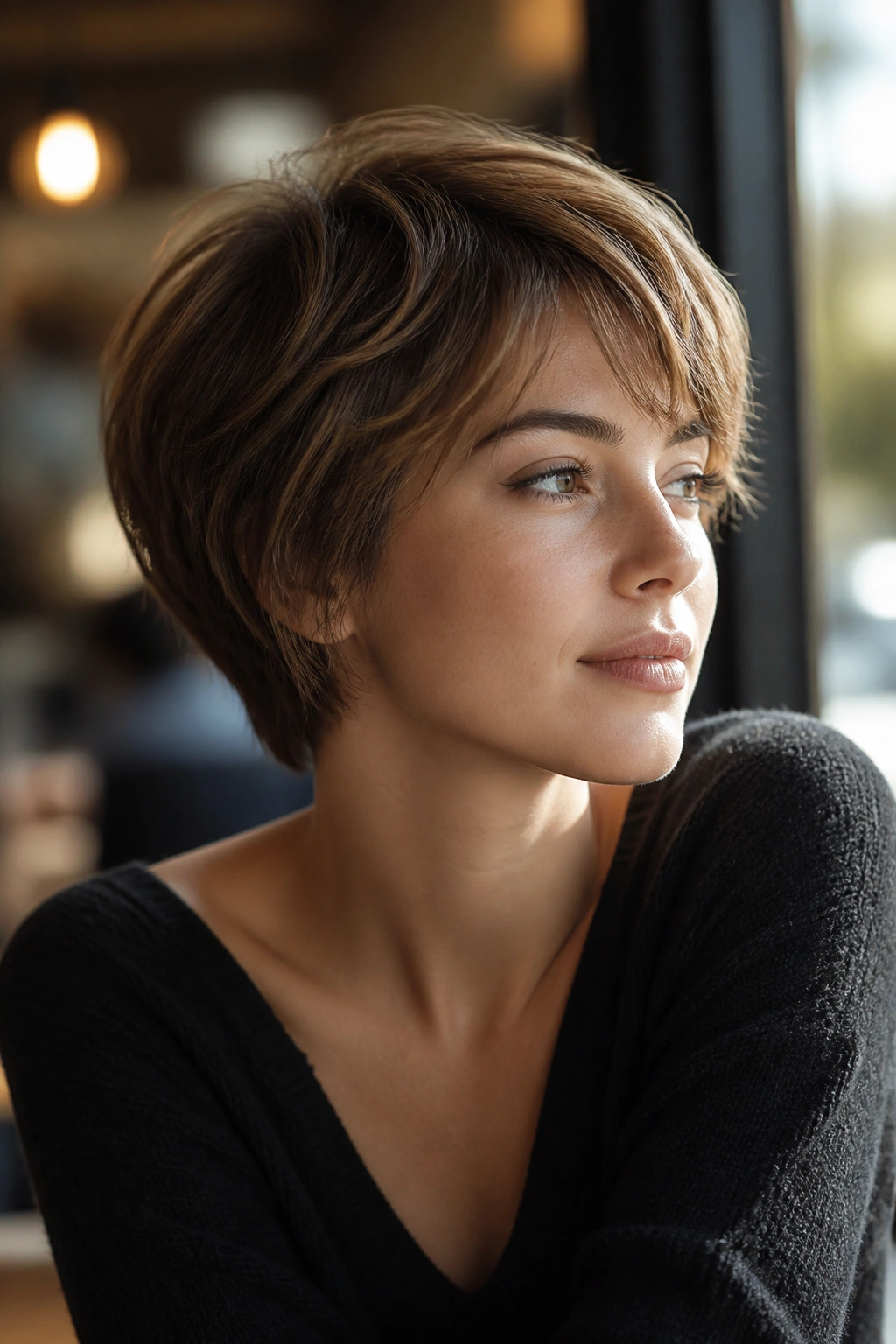
The client who is not ready for a full chop usually lands here. The bixie gives you the shortness of a pixie with a little more length around the ears and jaw, so it never feels too abrupt.
That extra length makes a difference in day-to-day life. You can tuck it, twist it, clip it back, and still have enough hair to change the shape of the front. It also grows out in a calmer way, which is part of why so many people like it after a bad bob experience or a first-time short cut. The line is softer. The panic level drops.
- The length usually hits around the ear lobe to jawline.
- The crown stays layered so the top does not flatten.
- It works well on waves that want a little body.
- It is easier to grow into a bob than a very short crop.
A bixie suits someone who likes the idea of shorter hair but still wants movement around the face. It can be polished with a round brush, or bent and messy with sea-salt spray. I would call it the safest short haircut on this list, and I mean that in a good way.
11. Slicked-Back Pixie For Clean, Sharp Styling
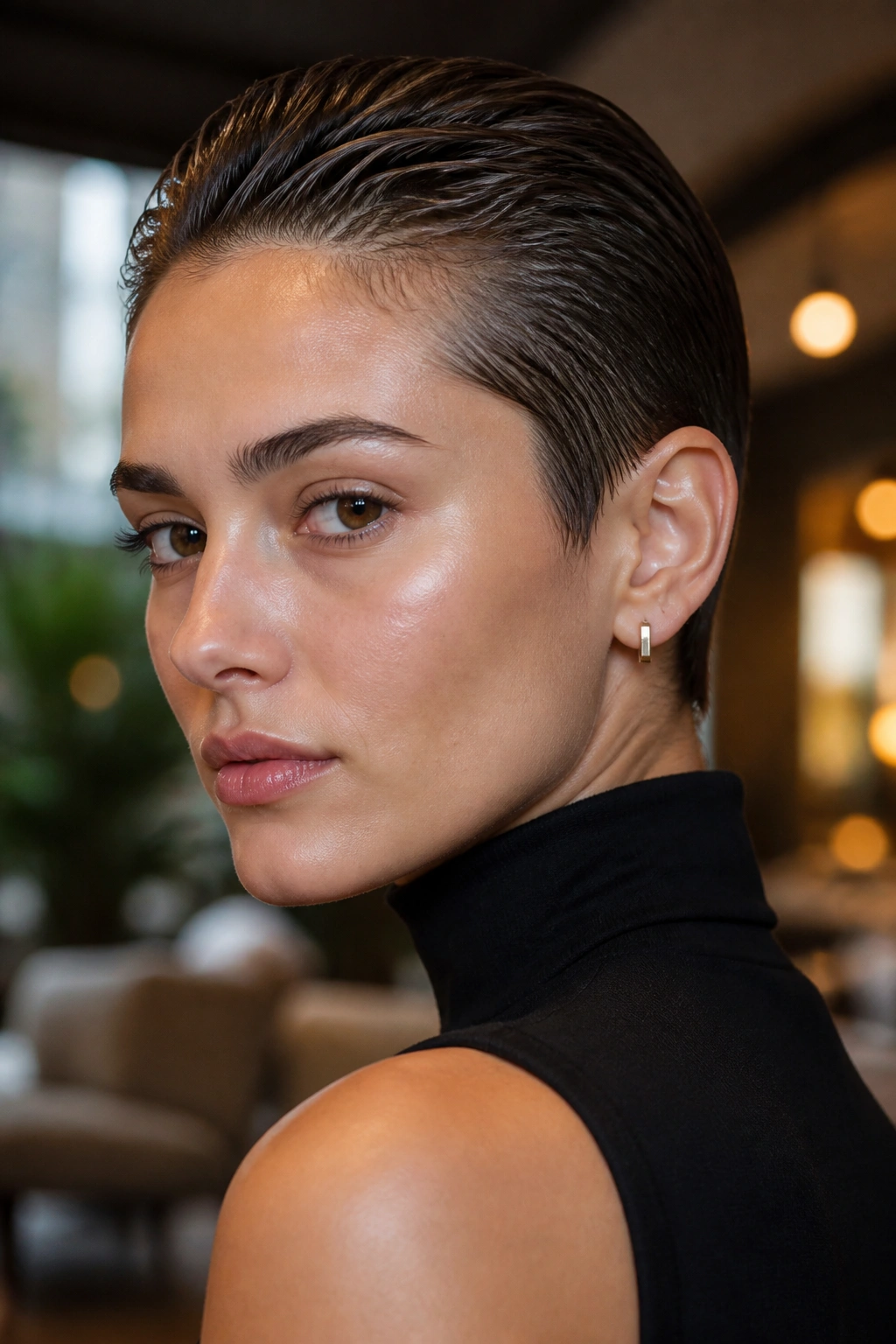
A slicked-back pixie is a shortcut to drama without changing the cut itself. No layers are hiding. No fringe is disguising the forehead. The whole point is to pull the hair back and let the face do the talking.
This style works best on day-two hair or on a fresh wash that has been dried about 70 to 80 percent. Put a small amount of gel or pomade through the roots, then comb everything back with a fine-tooth comb or your fingers. The finish can be glossy, matte, or somewhere in between, but the hair should stay close to the head with no fluffy bits sticking out at the hairline.
One thing people get wrong: they use too much product at the front and too little at the crown. That makes the roots greasy and the top dry. Better to warm the product first, then work it from the roots back in thin layers. If you need extra hold, a light mist of setting spray over the top will keep the shape in place.
I like this for evenings, events, and those days when a blowout feels insulting. It is clean, bold, and far easier than it looks.
12. Pixie With Piece-Y Bangs And Soft Separation
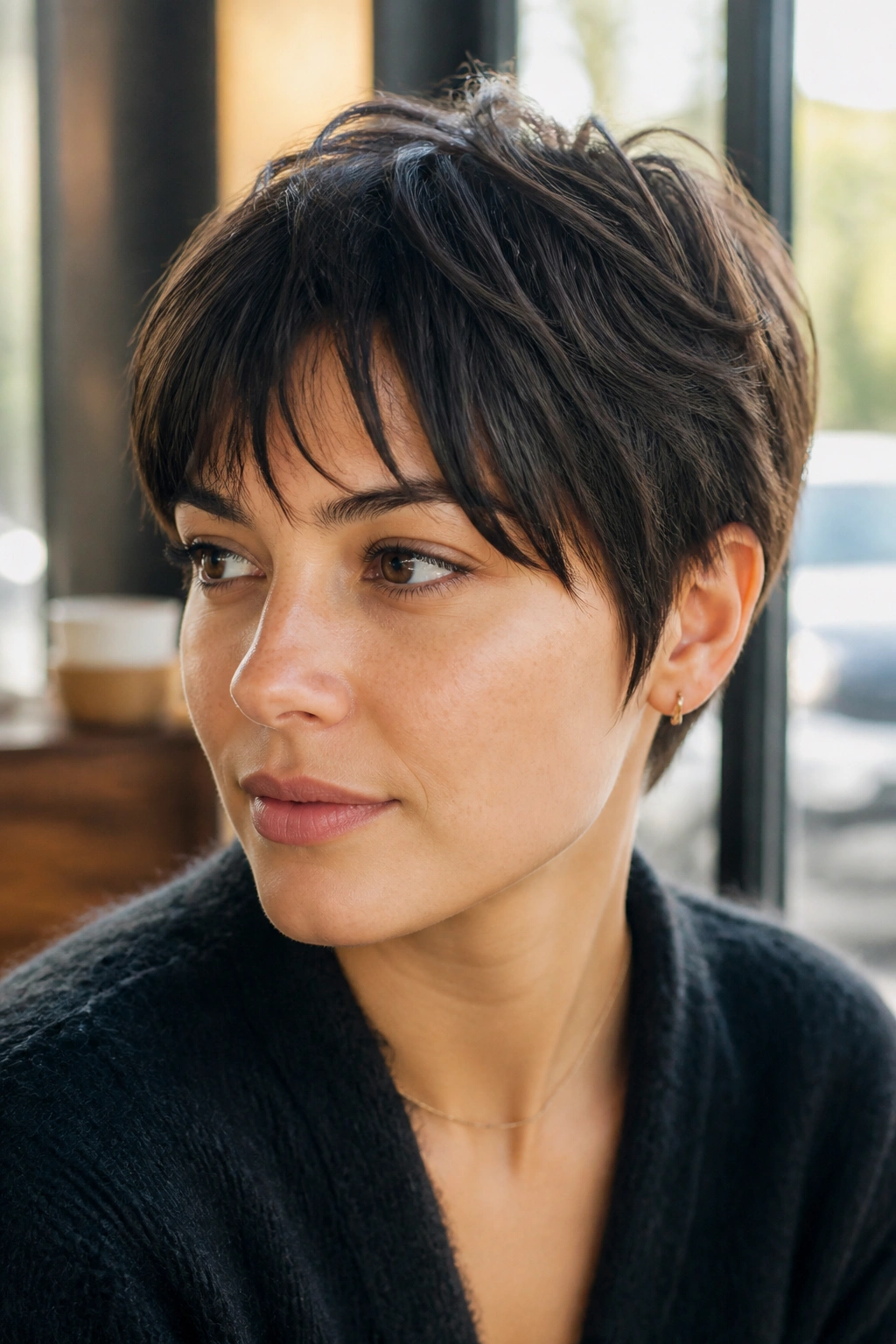
Unlike blunt bangs, piece-y bangs give the forehead room to breathe. The line is broken up, not carved straight across, so the front feels lighter and less heavy on the face.
This version suits people who want a little coverage without the commitment of a full fringe. The bangs can land anywhere from the brow to just above it, but the important part is the separation between the pieces. That separation keeps the cut modern and stops the front from turning into one hard strip. A stylist usually creates that look with point-cutting or a razor used lightly at the ends.
It is especially useful if you have a cowlick at the front, because a broken fringe is easier to redirect than a blunt one. A tiny flat iron, used on the lowest heat that actually works, can bend the pieces without flattening them into one line. A touch of wax on the fingertips helps define the ends without making them stiff.
If your forehead is the part you like to soften, this is a good bet. If you hate anything hanging in your eyes, keep the bangs a little shorter and the layers around them more open.
13. Micro Pixie With A Tiny Fringe
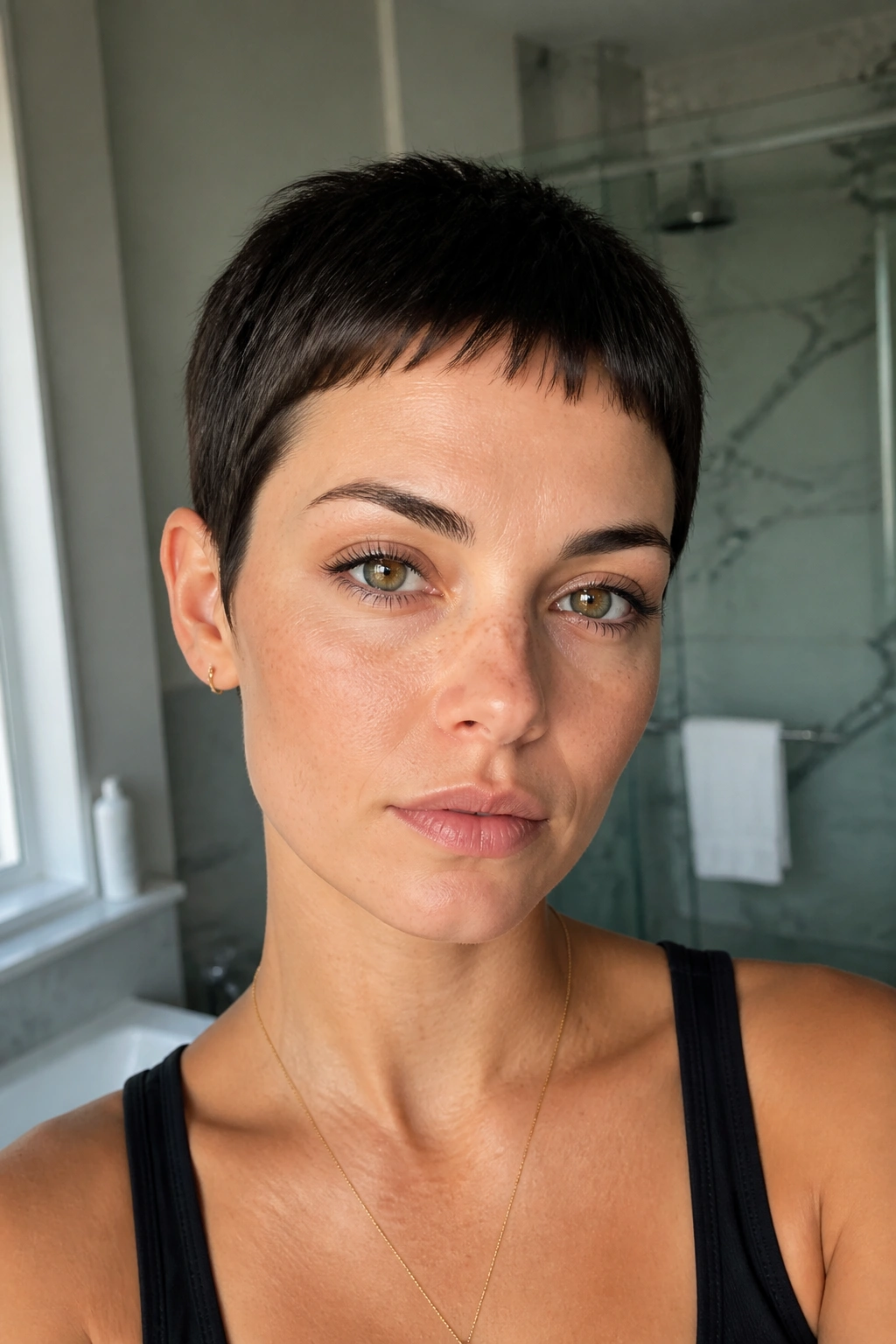
A micro pixie is not shy. It puts the face on display and trims the hair down enough that the shape of the head matters as much as the haircut itself.
Who It Flatters
This cut tends to look strongest on people with sharp cheekbones, a confident hairline, or a face shape that benefits from less hair around it. The fringe can be almost nothing—sometimes only half an inch to 1 inch of soft texture in front—or it can be slightly longer and brushed forward. Either way, the haircut stays close and compact.
- Works best when the hair is cut every 3 to 4 weeks.
- Needs very little styling, often just a dab of cream or balm.
- Shows off earrings, brows, and jawline in a big way.
- Makes thick hair feel lighter fast if the bulk is the problem.
The appeal here is simplicity, but it is not a lazy cut. The lines have to be clean, the edges tidy, and the ears balanced. If the outline is uneven, you notice it immediately. If the outline is good, the whole thing looks sharp with almost no effort.
I would not call this the best starter pixie. I would call it the best one for someone who already knows short hair suits them and wants the shortest version that still feels feminine.
14. Shaggy Pixie With Mullet Edge
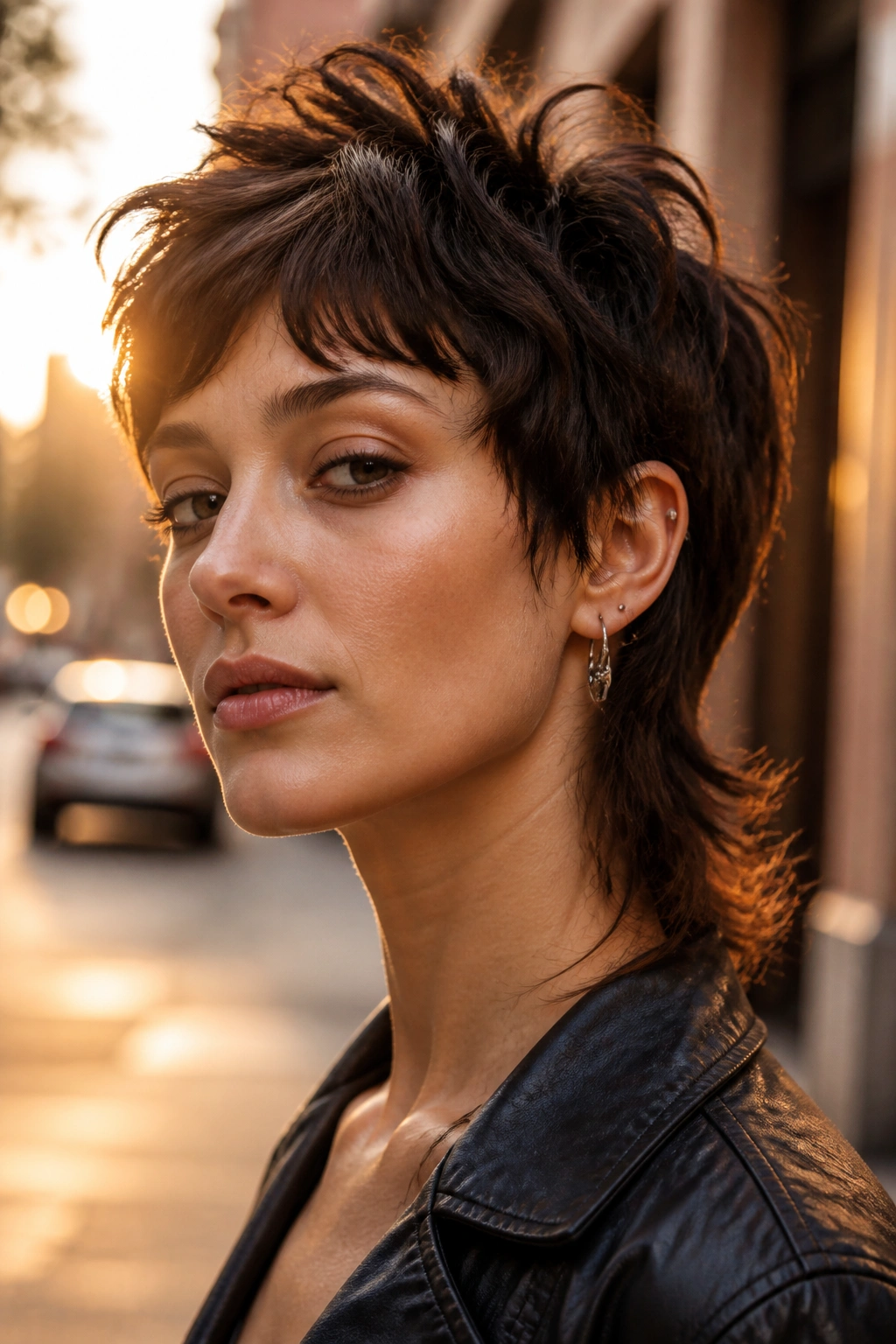
Messy is the point here, and that is why it works.
This cut mixes a short pixie shape on top with a longer, slightly ragged nape and softer, broken layers around the ears. The result lands somewhere between a shag and a pixie, which sounds odd until you see how easy it is to wear. The crown gets lift, the back keeps a little tail, and the whole thing moves instead of sitting still.
The style looks best when it is left a little imperfect. A salt spray or texture mist on damp hair, then a rough dry with the fingers, usually gives the right finish. You do not want the layers all clumped together. You want them separated enough that the top lifts and the back stays soft. Too much shine kills the effect.
This one loves wavy hair and can also help straighter hair look less flat. It is not the neatest cut on the list, but it is one of the most interesting. The grow-out is forgiving too, because the longer nape has a place to go as the haircut lengthens.
If you like a short cut with a bit of attitude, this is the one that keeps its shape without begging for perfection.
15. Soft Rounded Pixie With A Gentle Outline
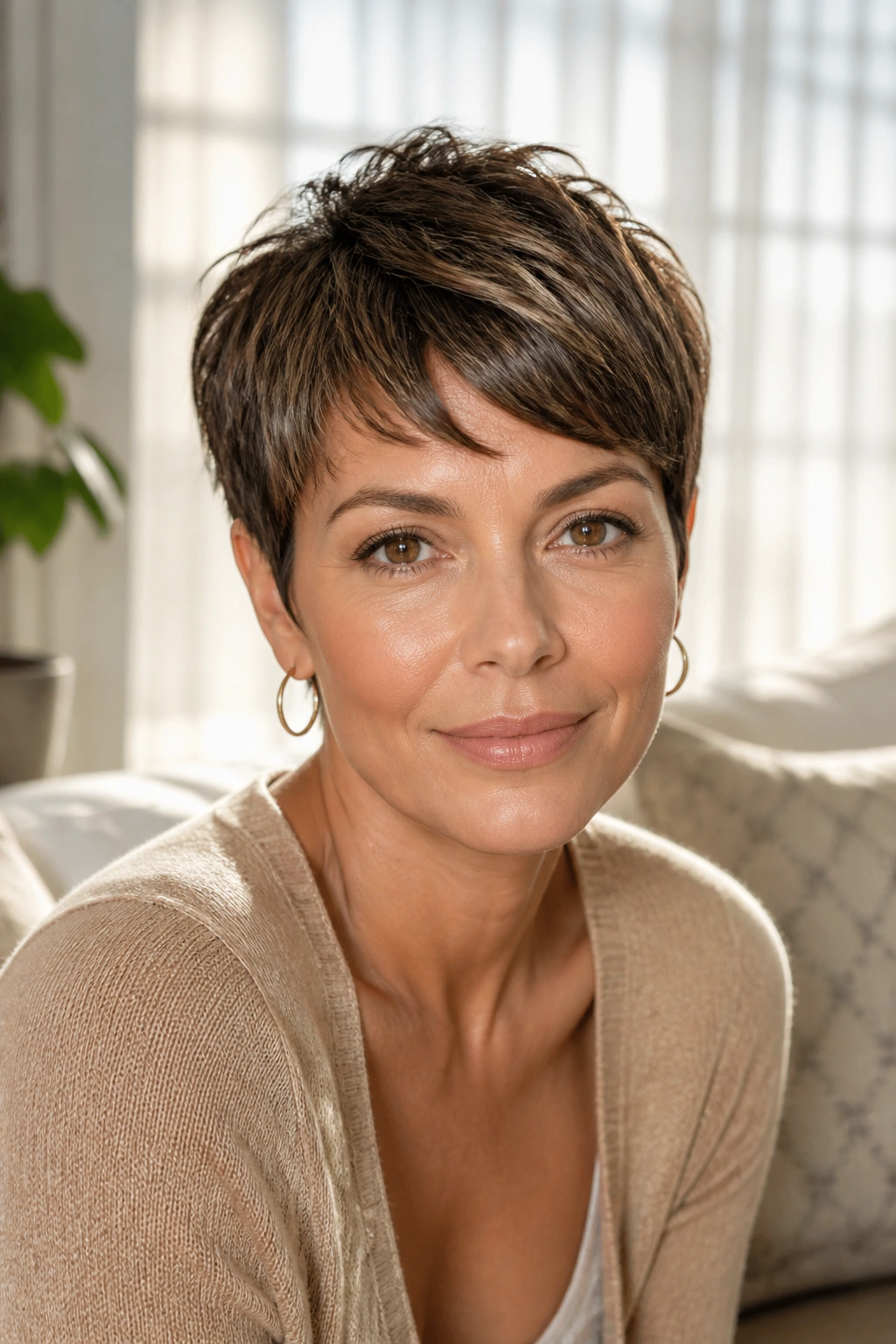
Want a pixie that still feels gentle around the face? A rounded shape does that job better than most people expect.
The outline curves instead of slicing straight across, so the cut hugs the head in a softer way. The crown gets a little fullness, the temples stay blended, and the nape is clean without feeling sharp. It is one of the few short cuts that can look polished with almost no styling if the hair is cut well. A small amount of cream, brushed through damp hair, can be enough.
This style works especially well when the hairline is a little uneven or when you want the cut to read softer from the front. The rounded crown adds height without making the top spiky. That matters because some pixies get too narrow at the sides and too tall at the top, which is a strange shape on almost everyone.
Ask for the perimeter to stay curved and the layers to be blended, not chopped. A trim every 4 to 6 weeks keeps the silhouette from losing that soft arc. If your hair is fine, a root-lifting spray at the crown helps. If it is thick, remove weight inside the shape rather than taking the outside too short.
A good pixie should feel like it belongs to your head, not like it was pasted on from a mood board. That is the difference between a haircut you keep touching and one you stop thinking about because it already does the right thing.
