



A square face can look startlingly good in a pixie cut, but only when the cut knows what to do with the jaw.
Too many short cuts stop at the wrong place. They hit the jawline, mirror the forehead, and make a strong face feel boxier than it really is. That is the mistake. The fix is usually simpler than people think: move the line off-center, keep some softness at the temples, and let the top do a little visual work.
Square faces usually have a broad forehead, a firm jaw, and similar width through most of the face. That symmetry is part of the appeal, but it also means a blunt pixie can feel heavy fast. A good pixie cut for square face shapes is rarely about hiding the angles; it’s about giving them something better to do.
So the cuts below lean on fringe, texture, lift, and a little asymmetry. Some are tidy. Some are messy in the best way. None of them rely on that stiff old idea that short hair has to sit like a helmet.
1. Side-Swept Pixie With a Long Fringe
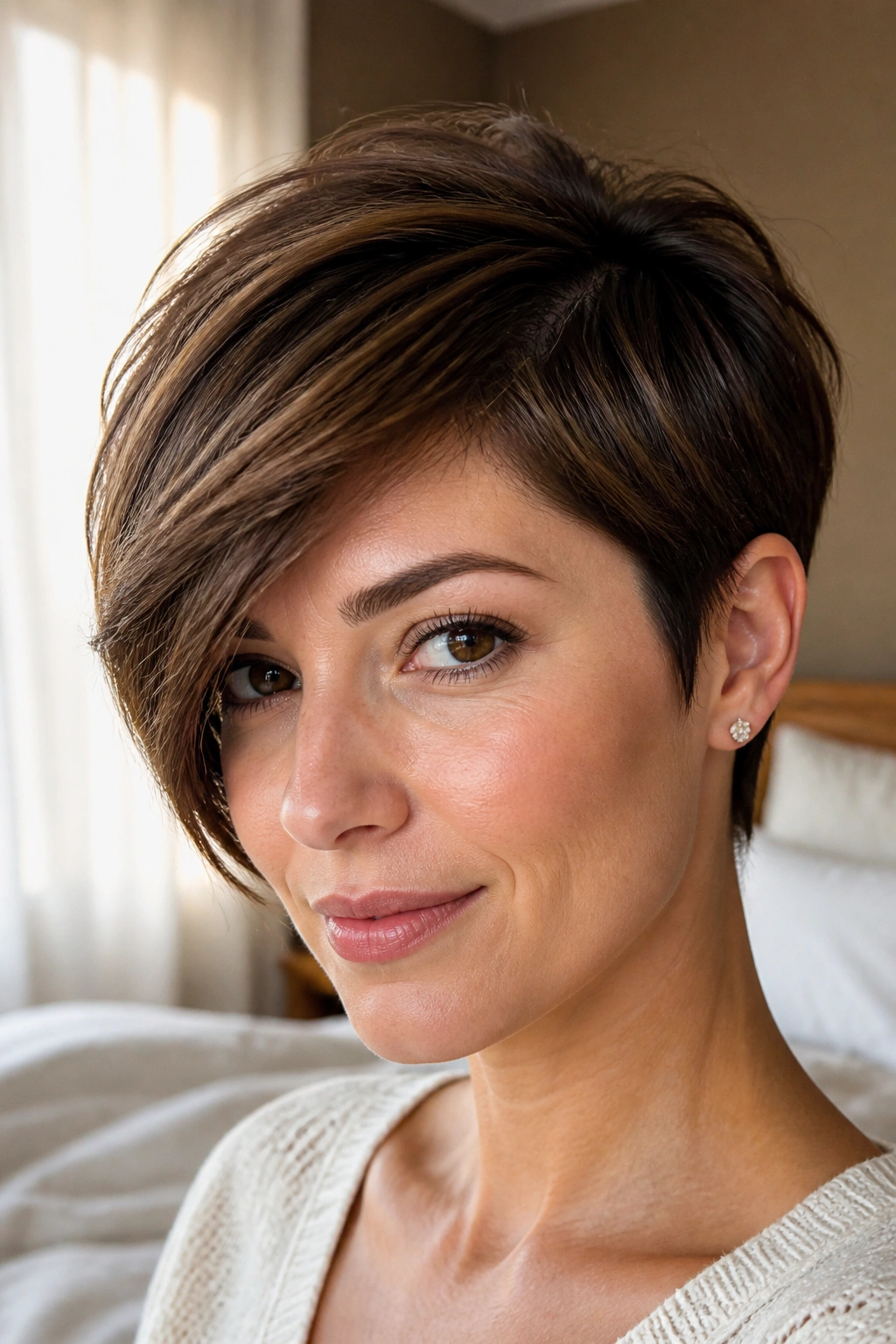
A long side-swept fringe is one of the easiest ways to soften a square face without losing the clean feel of a pixie. The diagonal line does a lot of quiet work. It breaks up the forehead, pulls the eye away from the jaw, and keeps the haircut from feeling too even.
Why It Works
The magic is in the angle, not the length.
A fringe that sweeps across the face creates a slant where a square face usually has strong straight lines. That matters more than people think. The eye follows the fringe before it notices the jaw, and the whole face feels a little less rigid.
- Best on straight, wavy, or lightly bent hair
- Works well when the fringe lands between the brow and cheekbone
- Looks better when the side part is a touch off-center, not dead center
- Needs a soft taper around the ears so the sides do not puff out
Ask for a fringe that can tuck behind one ear. That little bit of flexibility makes the cut easier to style on rushed mornings, and it stops the front from feeling too heavy.
I like this shape for anyone who wants a pixie but still wants something feminine and easy to move around with. It is polished without feeling stiff. And that’s the point.
2. Choppy Pixie With Crown Height
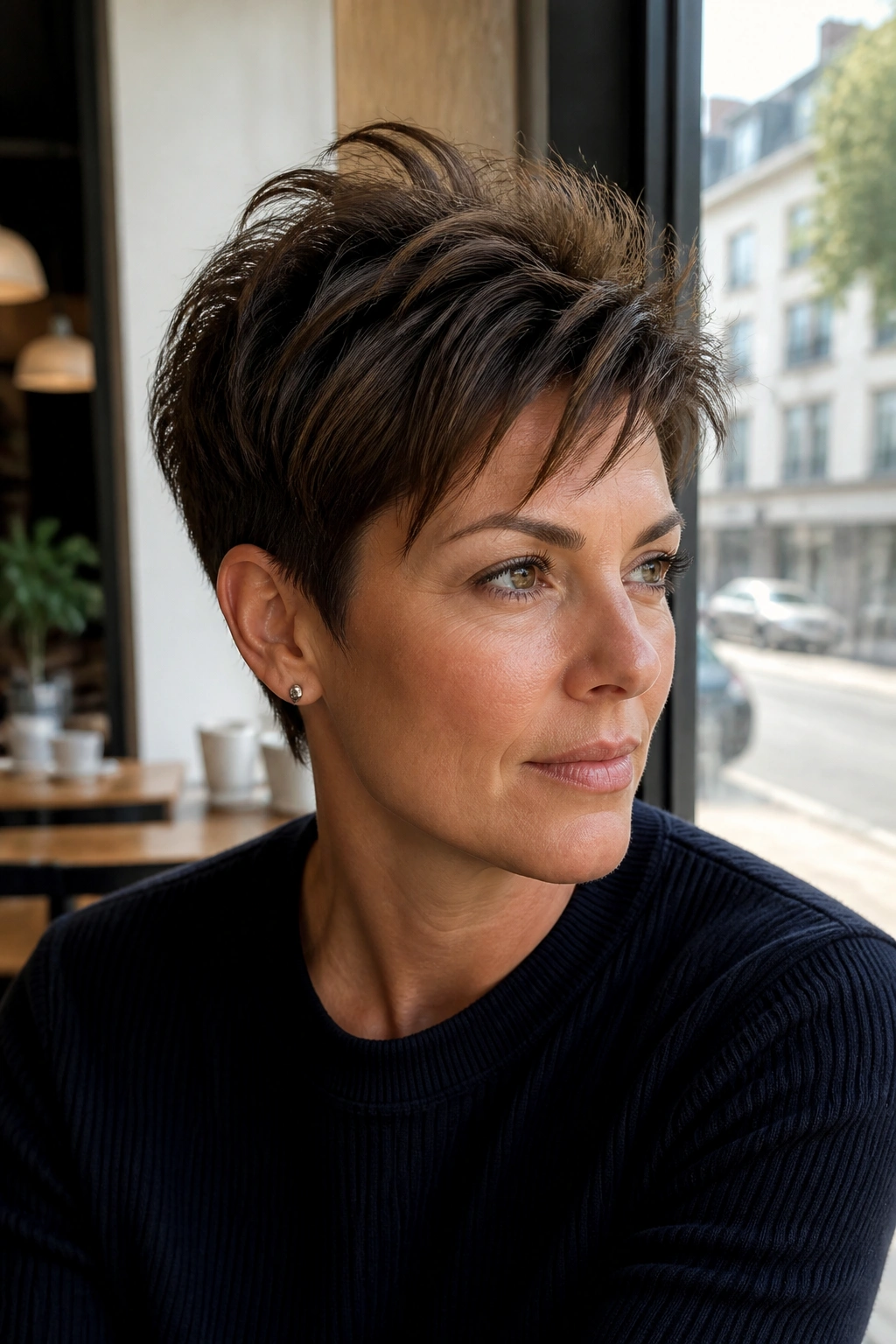
A choppy top is friendlier to a square face than a smooth, flat finish ever will be. Height at the crown changes the silhouette immediately, which matters when the jaw is strong and the sides already have enough width on their own.
The texture should look broken up, not spiky for the sake of being spiky. Tiny uneven layers keep the cut lively. If the top lies flat, the face looks wider. If the top lifts a little, the whole head shape feels longer and lighter.
This is a smart choice for fine hair because the chopped layers can fake density without adding bulk at the sides. It also works on thicker hair, but the ends need to be thinned carefully. Too much weight around the temple area turns the cut into a triangle. Nobody wants that.
A pea-size amount of matte paste is usually enough to get the front moving. Work it through dry hair, pinch the top pieces upward, and leave the fringe slightly uneven. Not messy. Just not rigid.
3. Asymmetrical Pixie With One Longer Side
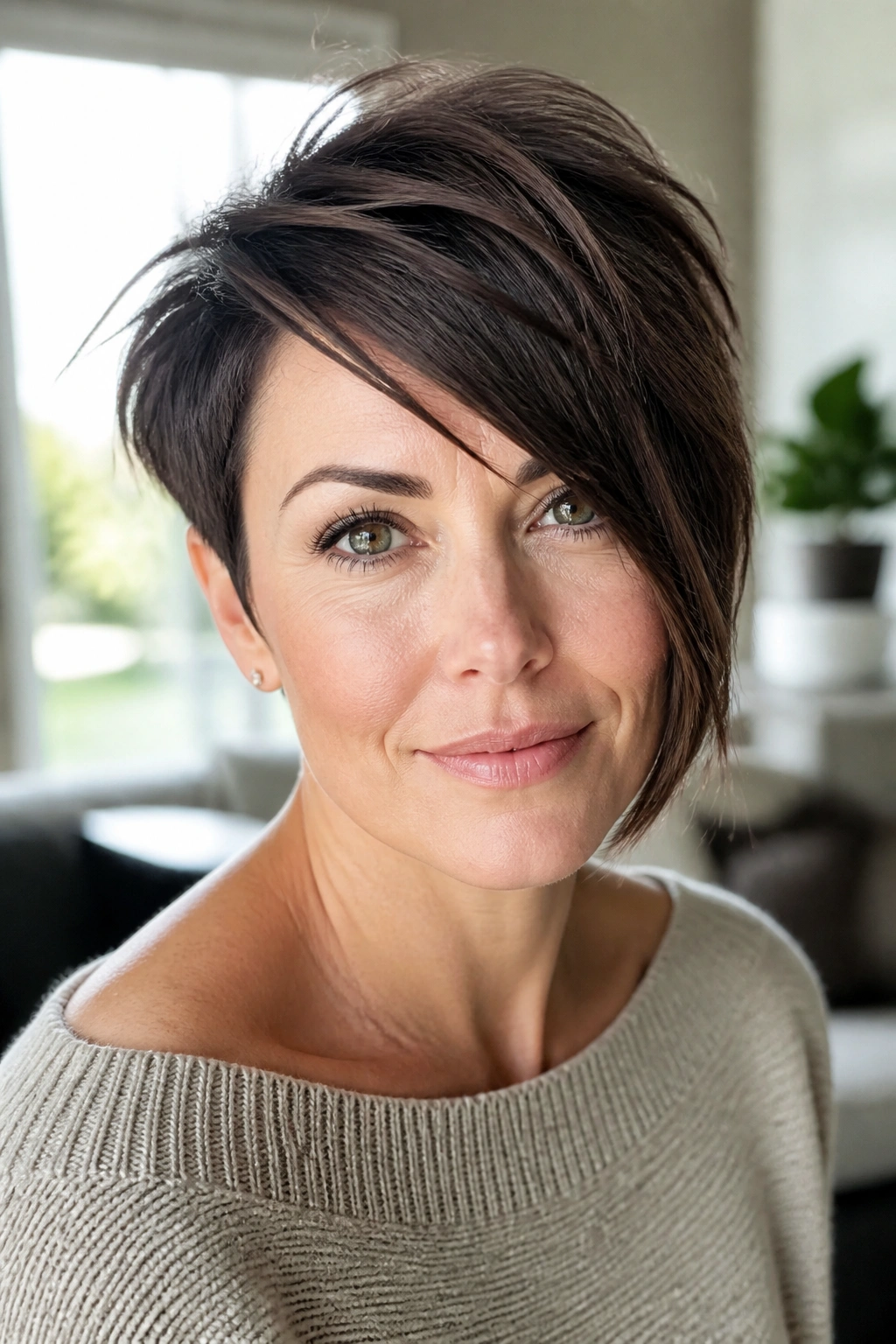
Why does an asymmetrical pixie flatter square faces so often? Because it breaks symmetry with intention.
Square faces already have a balanced structure. That can be beautiful, but it also means a haircut that mirrors the face too closely can feel boxy. One longer side shifts the eye across the face instead of straight down it, and that tiny change makes the jaw look less square. The face still looks strong. It just looks softer around the edges.
How to Ask for It
Tell your stylist you want one side cut closer and the other side left long enough to skim the cheekbone or jaw, depending on how dramatic you want it. The longer side should move, not hang like a curtain. If it sits too still, it reads heavy.
- Shorter side should sit close to the head
- Longer side should bend around the cheekbone
- Top can stay layered, but not wispy
- Part should sit off-center to keep the line from looking forced
This cut is especially good if you wear glasses. The asymmetry gives the frames room to exist instead of crowding them. It also looks sharp with a tuck behind the ear on the short side. One little move. Big difference.
4. Feathered Pixie With Temple Softness
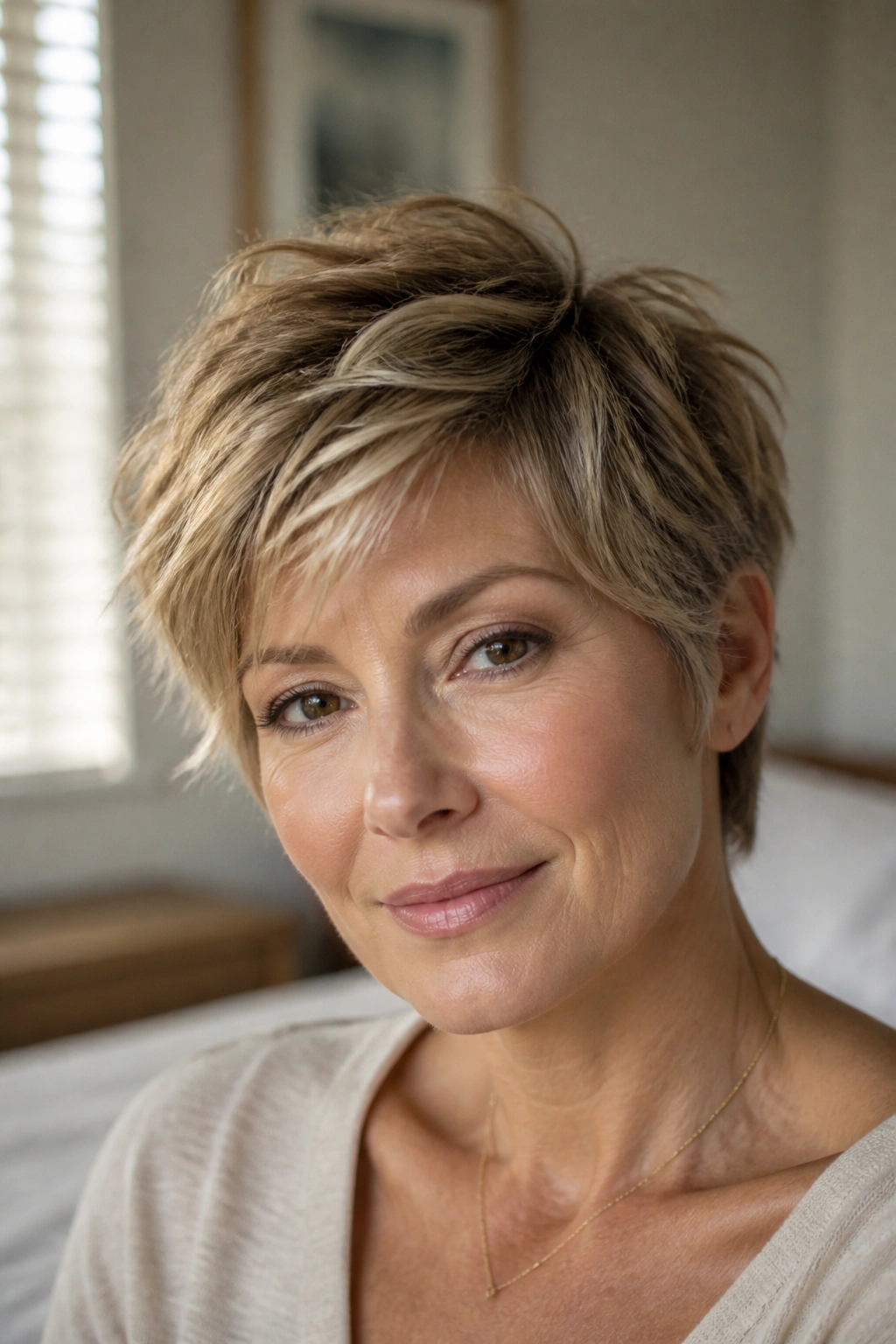
You know that awkward moment when a short cut looks great from the front, then the sides flare out at the temples? That is exactly what feathering fixes.
Feathered layers soften the transition from forehead to cheekbone to jaw, which is a useful trick on a square face. The cut should feel light around the temples and a bit airier at the edges. Not shaggy. Just broken up enough that the outline doesn’t read as one hard shape.
What to Look For
A good feathered pixie has motion in the front and restraint at the sides.
- Short, wispy layers around the temples
- Longer pieces at the fringe
- A lightly tapered nape
- Soft point-cut ends rather than blunt lines
This one is especially kind to thick hair that likes to puff. Feathering takes away some of that weight without making the cut look thin. If you have coarse hair, ask your stylist to keep the top slightly longer so the shape has room to fall instead of sticking straight out.
The style can look almost delicate, which is funny because the face shape itself is often the opposite. That contrast works.
5. Tapered Pixie With Lifted Top
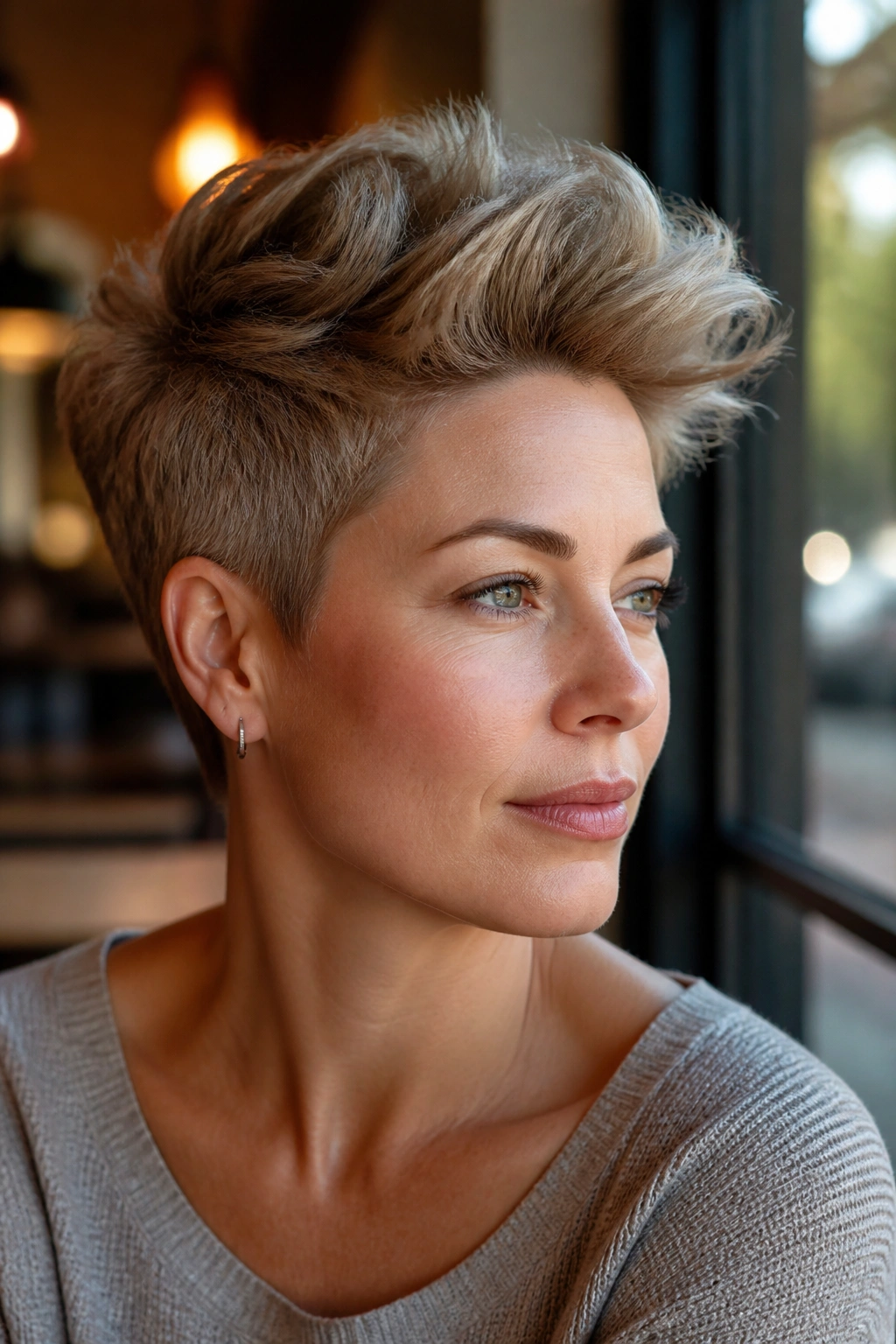
A tapered pixie with height on top is one of those cuts that looks simple until you see it in motion. Then you realize how much shape it carries.
The close sides keep the haircut neat. The longer top gives the face breathing room. On a square face, that vertical lift is gold. It makes the head shape feel longer, which balances a strong jaw better than a super short, evenly clipped crop ever could.
I especially like this cut on coarse hair, because coarse strands hold the shape without collapsing by lunchtime. Fine hair can wear it too, but the top should not be over-thinned. You need enough hair left up there to create a clean line. If the crown gets too sparse, the whole cut loses its point.
A round brush helps here, though you do not need a salon blowout every day. Dry the hair up and back at the crown, then smooth the ends with a small dab of cream or light wax. Keep the sides tight, but not shaved down so hard that they expose every angle of the face.
6. Curly Pixie With Controlled Width
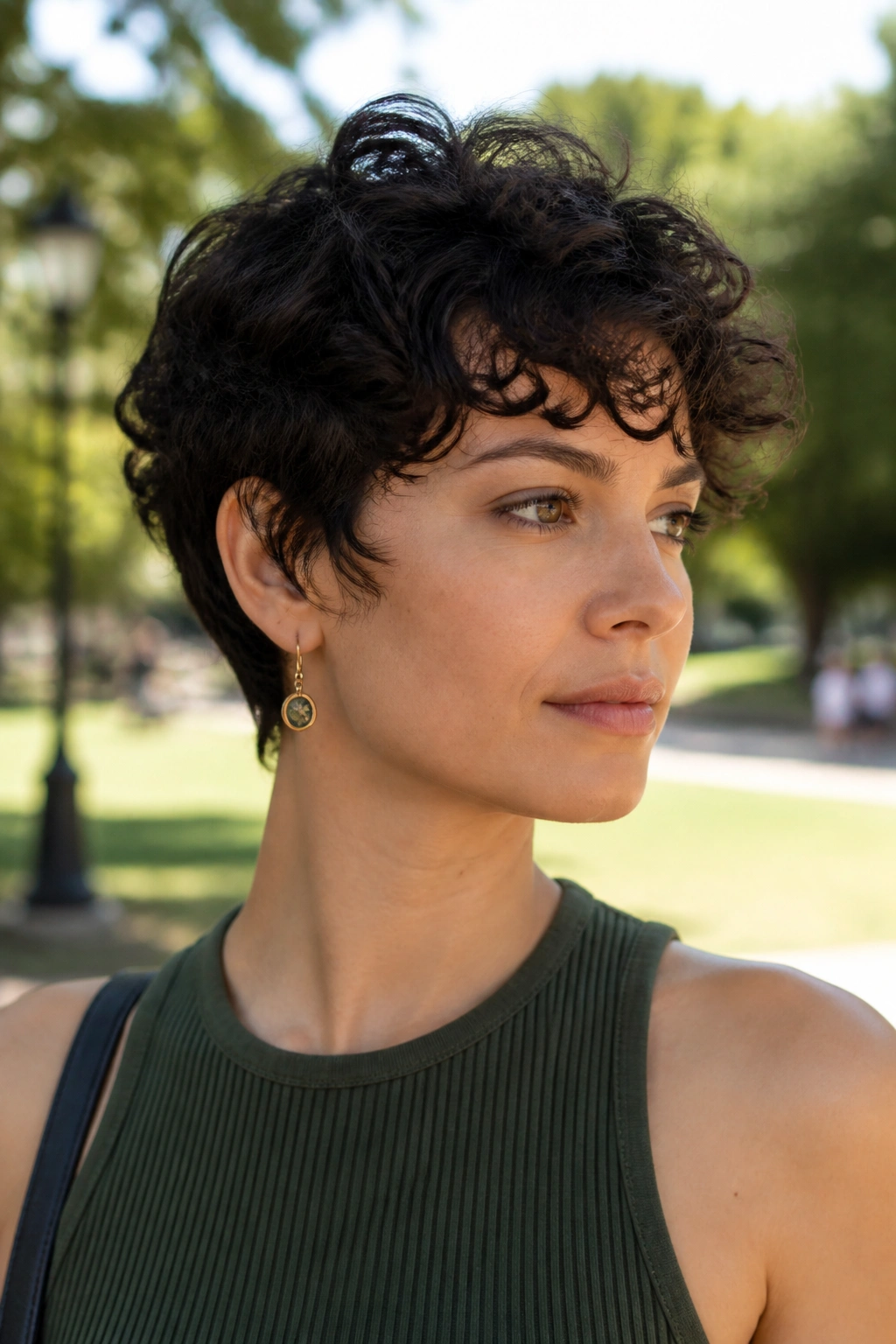
Curly hair and square faces can be a very good match, but only if the shape is controlled with some care. The wrong curly pixie spreads outward at the sides and makes the face look wider. The right one keeps the curl where it helps most: around the crown, the front, and a little at the cheekbone.
That means your stylist should cut curl by curl, not just chop the whole head into a rough shape and hope for the best. The curls need room to spring, but the width at the jaw should stay narrow. That part matters. A square face already has enough structure down low.
Unlike a straight pixie, this one does not need to look neat to work. A little bounce is the point. If your hair has loose curls, a curl cream plus a light gel cast can keep the pattern from frizzing out. If your hair is tighter, ask for enough length on top to let the curl form without sitting too close to the scalp.
The sides should be tidy. The top can have a little wildness. That balance is what keeps the cut from turning into a mushroom.
7. Undercut Pixie With a Long Top Layer
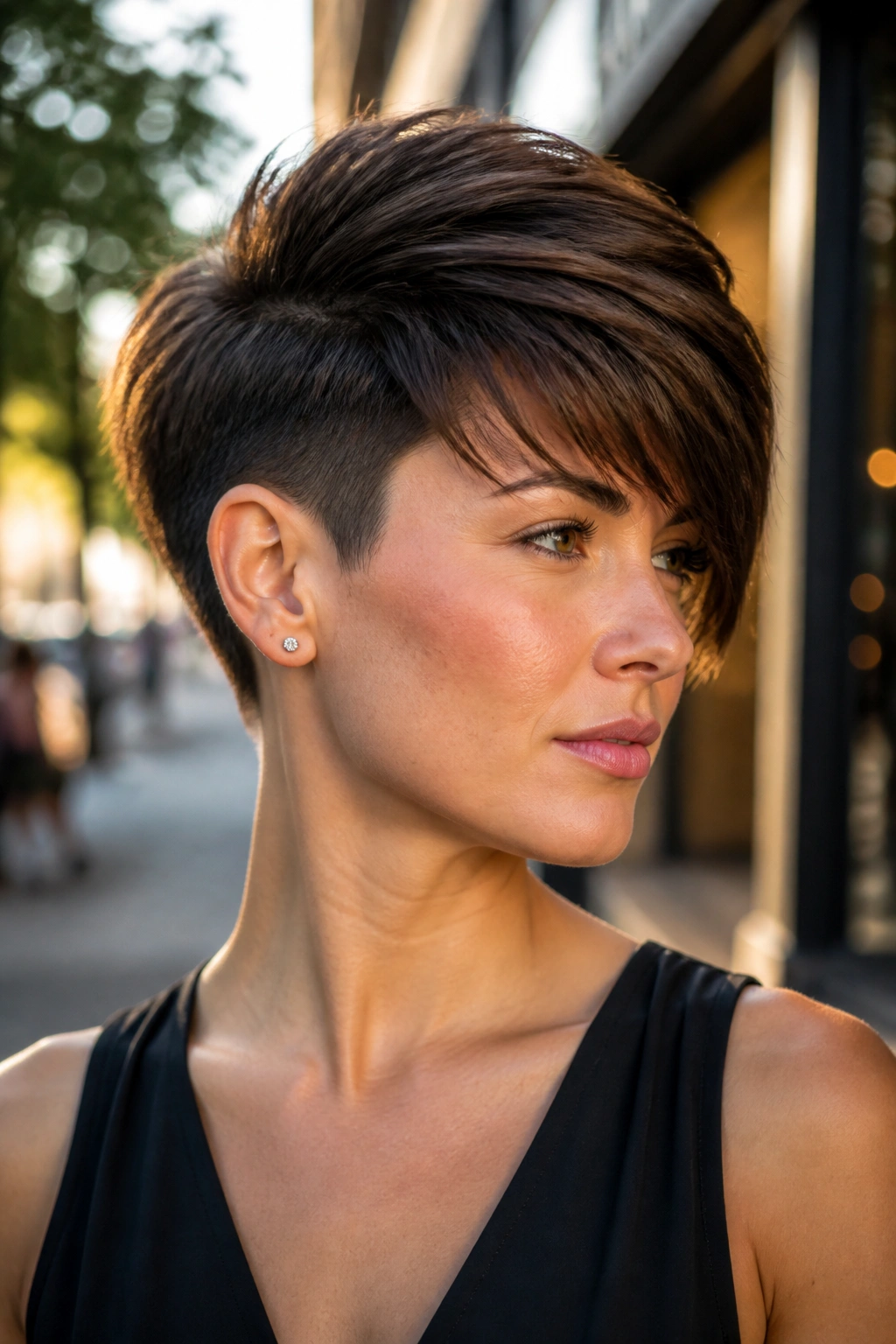
I reach for an undercut when someone has thick hair and does not want the sides stealing the show.
A square face can handle a sharper pixie if the bulk is removed in the right places. The undercut clears out the nape and lower sides, then leaves a longer top layer to sweep across the forehead or lift upward. That keeps the hair from adding width where the jaw already has it.
What Makes It Different
The undercut changes the silhouette more than the surface.
It gives the haircut a leaner base, which is useful when the hair naturally puffs at the sides. It also makes styling easier. A little mousse at the roots, a quick blow-dry, and the top behaves better because it is not fighting a heavy lower layer.
- Best for dense, coarse, or very full hair
- Top layer can be styled forward, sideward, or up
- Sides should be blended, not chopped bluntly
- Needs regular upkeep if you want the undercut to stay crisp
This is not the softest option on the list. It is sharper, cleaner, and a bit more modern in feel. If you like a cut with some edge, this one earns it.
8. Shaggy Pixie With Broken Ends
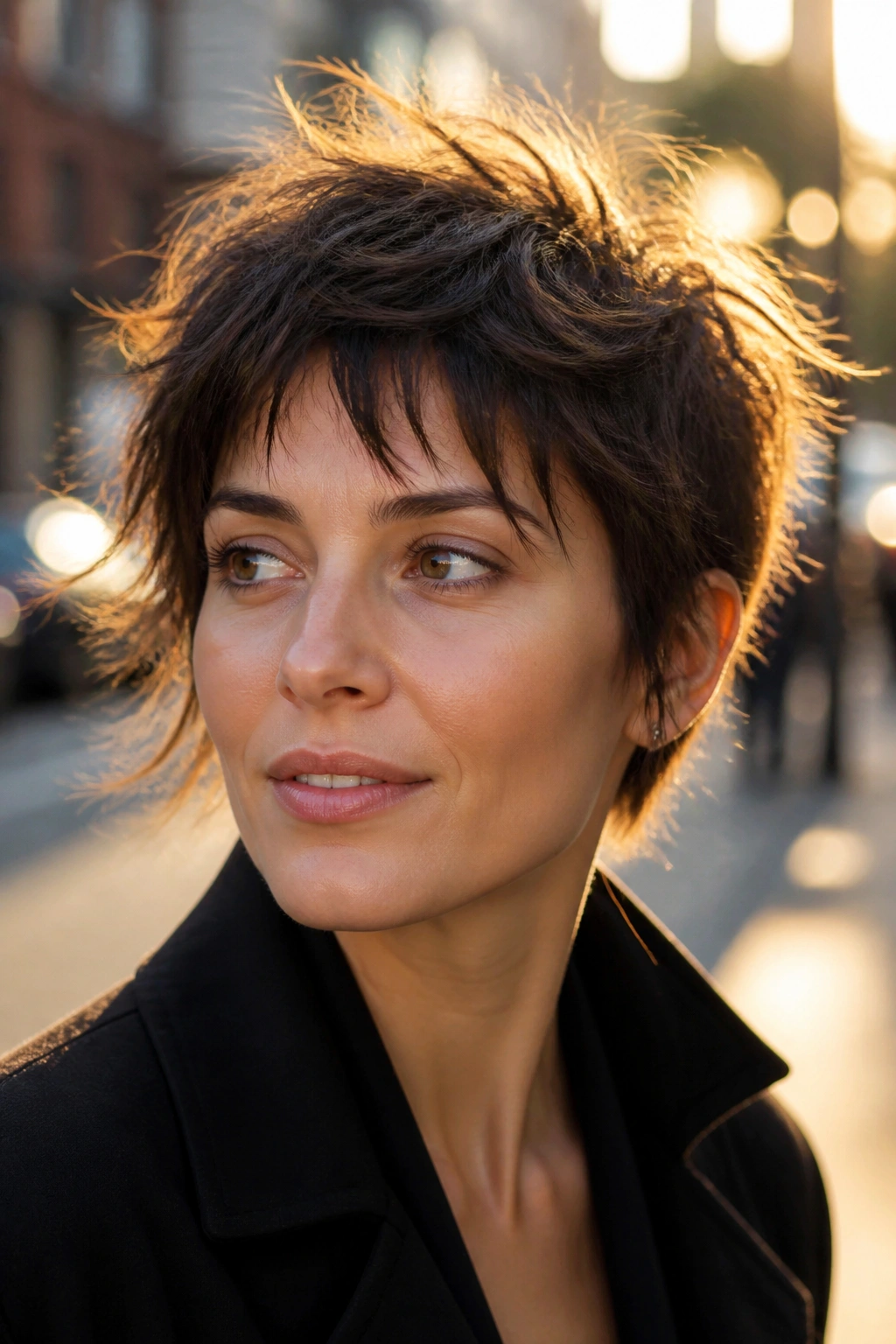
A shaggy pixie sounds casual, and it is, but that casualness does a lot of face-shaping work.
The broken ends stop the haircut from reading as one hard block. On a square face, that matters because hard edges at the jaw and forehead can make the whole face feel too angular. A shaggy pixie keeps the perimeter loose. It bends, flicks, and moves instead of sitting in one fixed line.
This style is especially good for wavy hair, because the natural bend makes the whole thing feel effortless without becoming messy. It also grows out well. That is a practical thing, and I care about it. A cut that only looks good for ten days is a pain, no matter how nice it is in the mirror on day one.
One warning: do not over-texturize fine hair. Too much razor work can leave the ends looking wispy and see-through. The haircut should look broken up, not moth-eaten. If your hair is thick, a little extra texture can help. If it is fine, keep the layers softer and let the shape do the work.
9. Rounded Pixie With Tucked Sides
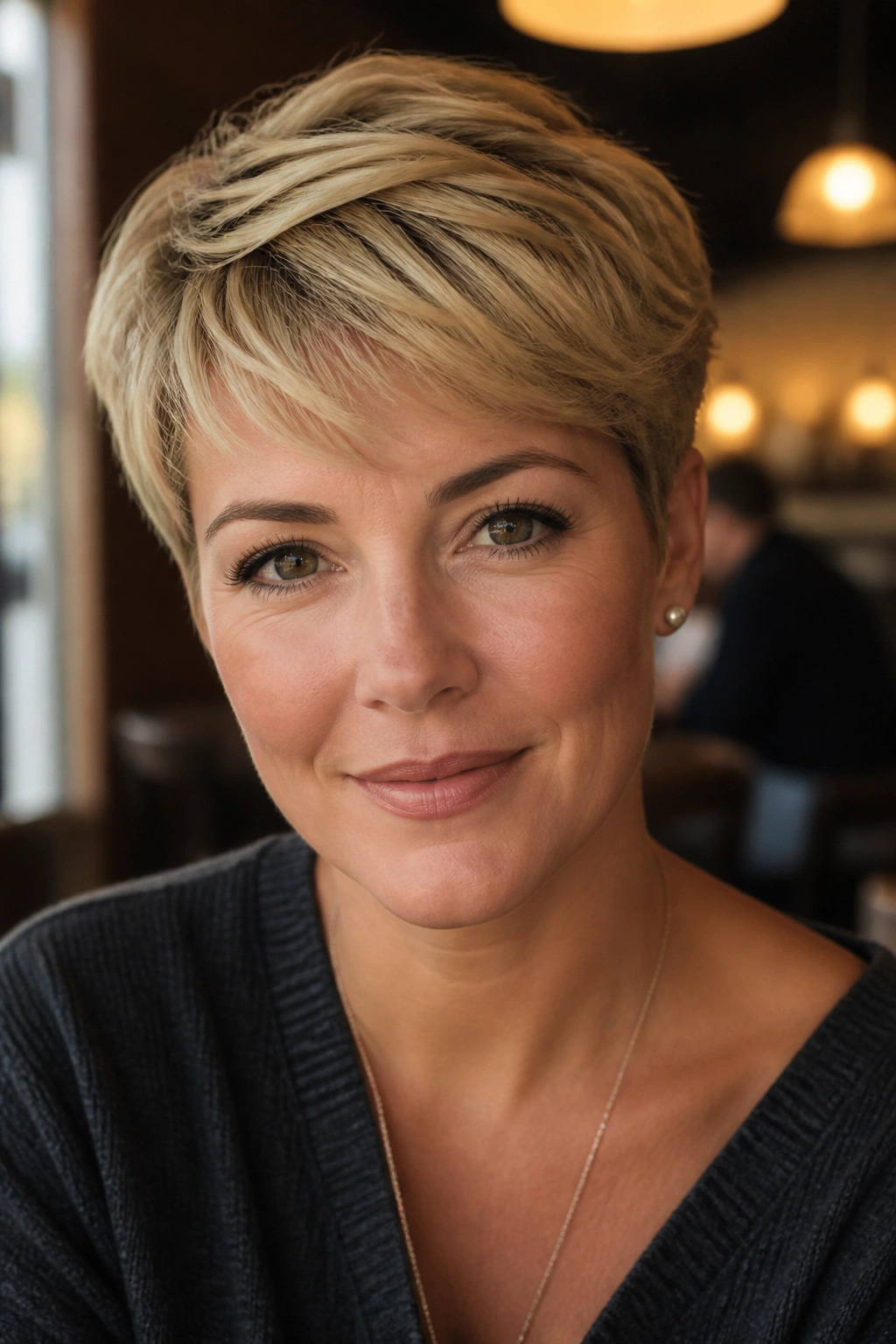
A rounded pixie is the opposite of the boxy crop people often picture on square faces.
Instead of building hard corners, it curves around them. The sides stay tucked, the top stays airy, and the whole cut forms a gentle oval shape around the head. That is useful when the jaw is already strong and you want the haircut to soften the outline rather than echo it.
This style works well if your features are sharply defined. Straight brows, strong cheekbones, angular jaw? The rounded pixie gives those features a little room. It does not fight them. It just keeps the haircut from competing.
The trick is to keep the top from looking helmet-like. If the crown is too full and the sides are too flat, the shape starts to feel dated. You want a soft dome, not a mushroom. A side part helps. So does a few longer pieces near the temples that can bend toward the face instead of away from it.
I like this one for people who want short hair but still want something gentle around the face. It feels calm. That might sound boring, but sometimes calm is exactly what a square face needs.
10. French Crop Pixie With Soft Full Bangs
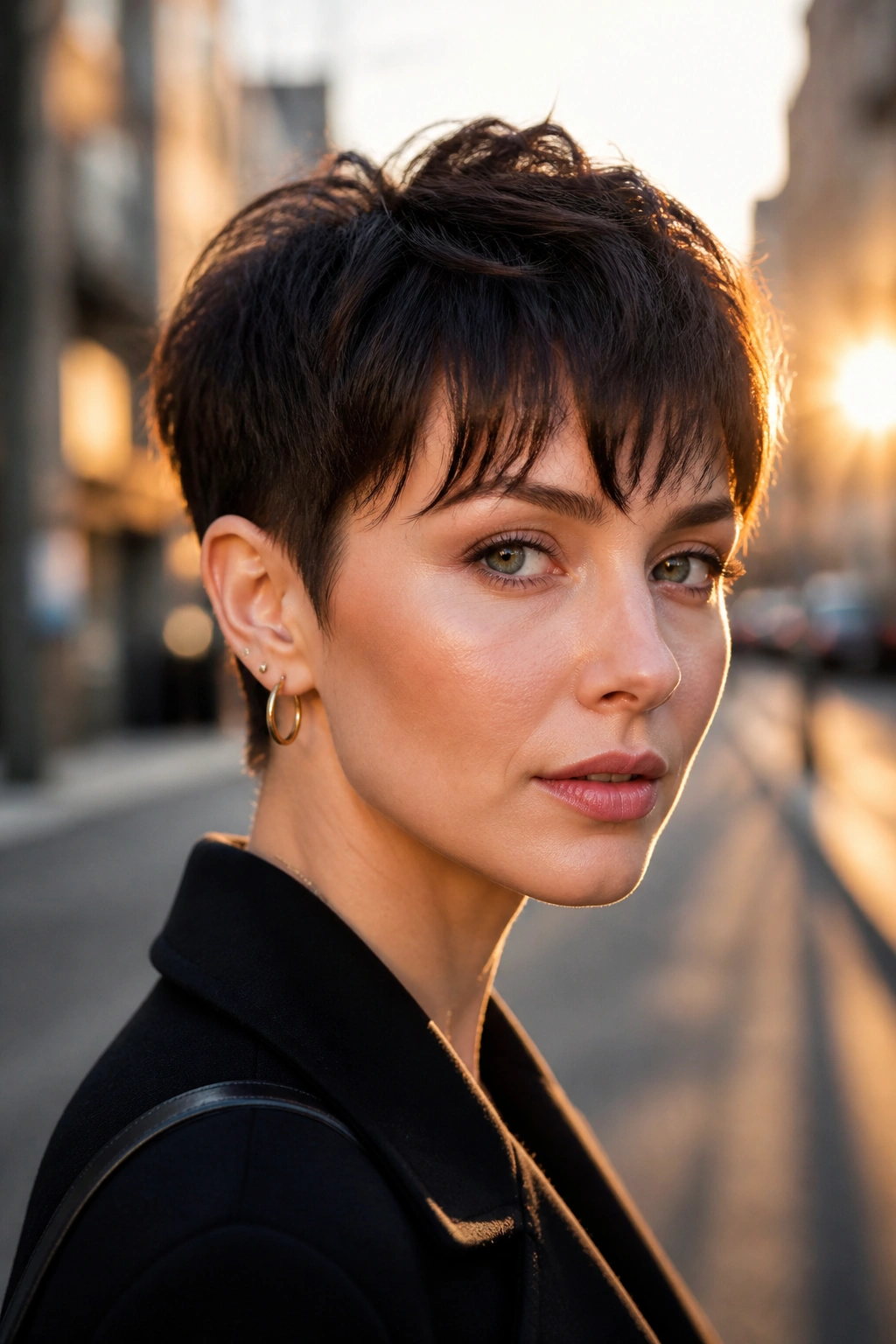
Can full bangs work on a square face? Yes, if they are cut soft enough to move.
A blunt fringe across a square face can look heavy fast. A French crop pixie avoids that by keeping the bangs piecey, airy, and a touch uneven at the ends. The line is there, but it doesn’t feel rigid. That matters. The face gets coverage at the forehead without losing all of its shape.
How to Keep It Light
Ask for the bangs to be point-cut, not sliced into one dense block. The weight should sit in the middle, with little bits that can break apart when you style them. If your hair is thick, this helps a lot. If it is fine, it keeps the fringe from swallowing your face.
- Best on straight or slightly wavy hair
- Fringe should graze the brow, not sit deep in the eyes
- Sides need to stay close and tidy
- Crown can be flat or lightly lifted, depending on how much volume you want
This cut is for someone who likes a sharper look but still wants the front softened. It has attitude, which is part of the fun.
11. Pixie Bob With Jaw-Skimming Ends
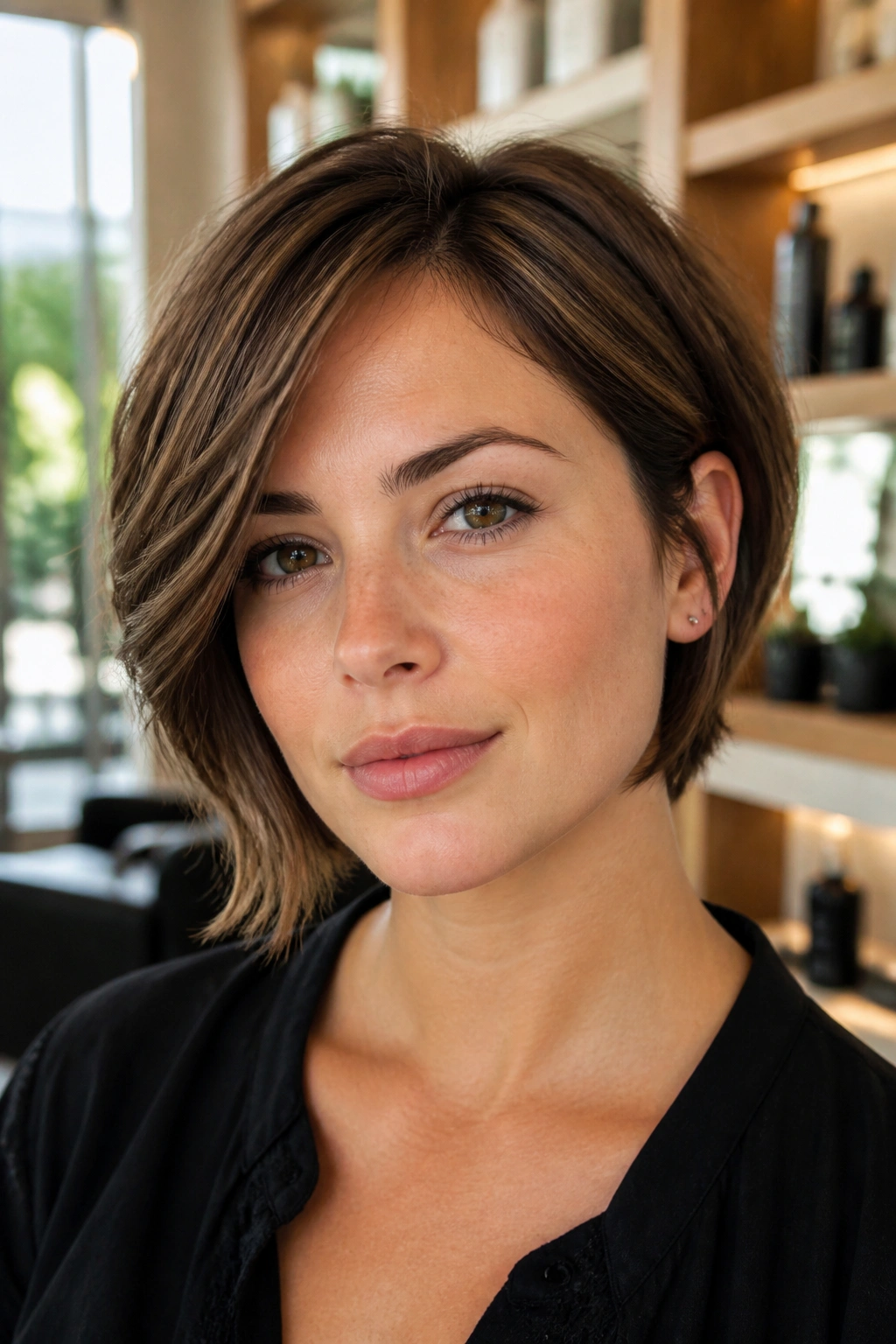
If you’re not ready for a very short pixie, the pixie bob is the friendly middle ground.
A little extra length around the jaw can help a square face more than people expect. The ends skim instead of stop abruptly, so the face feels less boxed in. That small difference changes the whole mood of the haircut. It reads softer, but not fluffy. Clean, but not severe.
The best version keeps the perimeter shattered a bit so the ends don’t draw a hard line exactly at the jaw. That’s the trap with a bob on a square face. If the cut ends in one blunt shelf, it can make the lower face look broader. Break up the line, and the problem goes away.
This style suits people who like to tuck one side behind the ear or wear a small wave through the front. It also plays well with a side part, especially if your hair has a little natural bend. If your hair is pin-straight, a round brush or a quick bend with a flat iron on the front pieces can keep the shape from looking too heavy.
It’s not as daring as a cropped pixie. That is fine. Not every good haircut needs to shout.
12. Spiky Pixie With Directional Texture
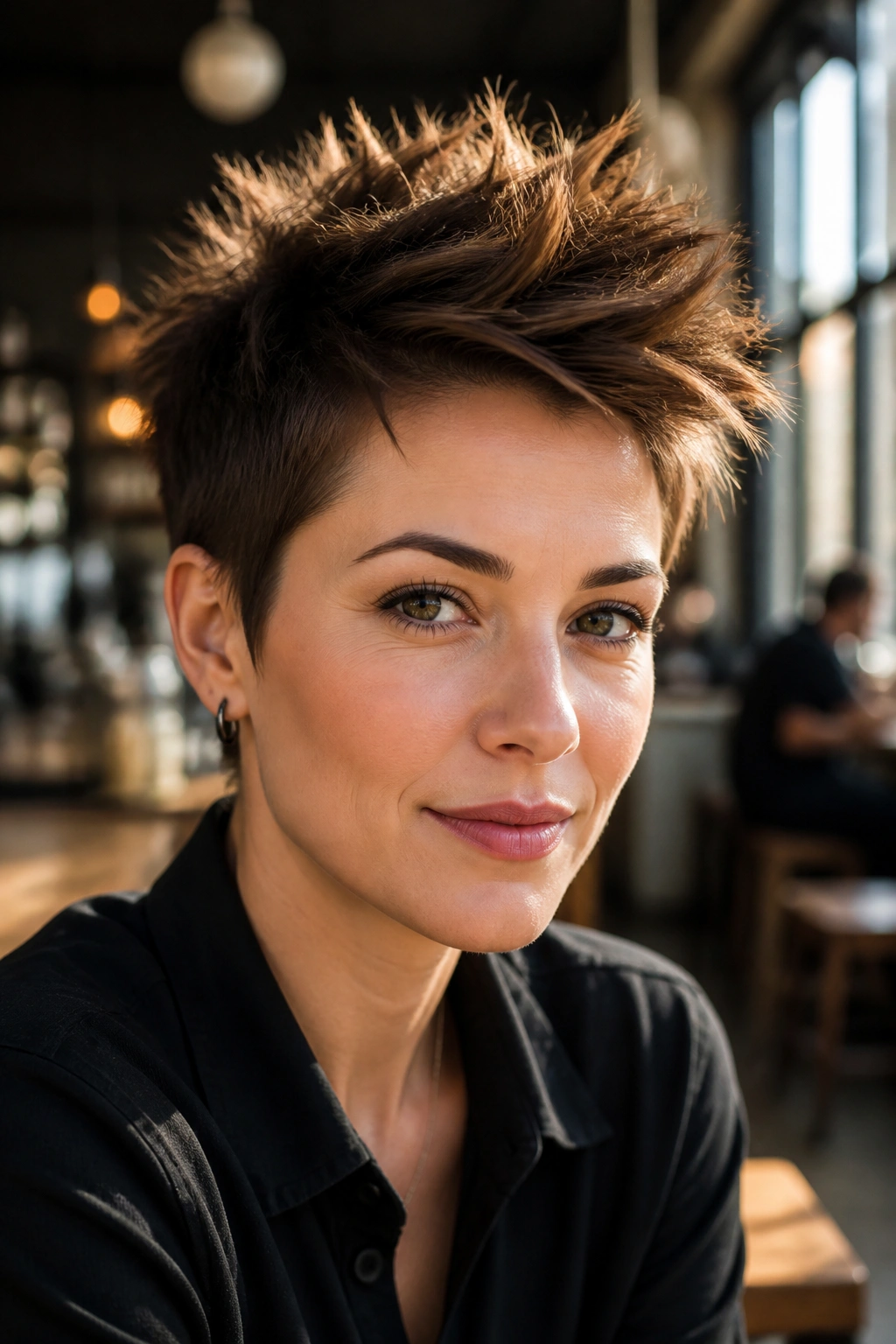
A spiky pixie can flatter a square face better than a smooth one, if the spikes move upward and off to one side instead of outward.
That difference matters. Outward texture adds width. Upward, directional texture adds height. Height helps square faces. It pulls the eye along the length of the face and eases the visual weight at the jaw. The cut ends up feeling energetic instead of harsh.
This is a strong option for fine hair because texture products can give it grip fast. A pea-size amount of matte paste is enough for most heads of hair. Warm it between your fingers first, then press it into the top and front pieces. Don’t smear it all over. You want little bits of lift, not stiff, crunchy points.
I would skip this cut if you like sleek hair and low effort. It needs a hand most mornings. But if you like a little edge and don’t mind spending two minutes shaping the top, it works. The trick is to keep the sides controlled so the style doesn’t spread at the temples.
13. Sleek Pixie With a Deep Side Part
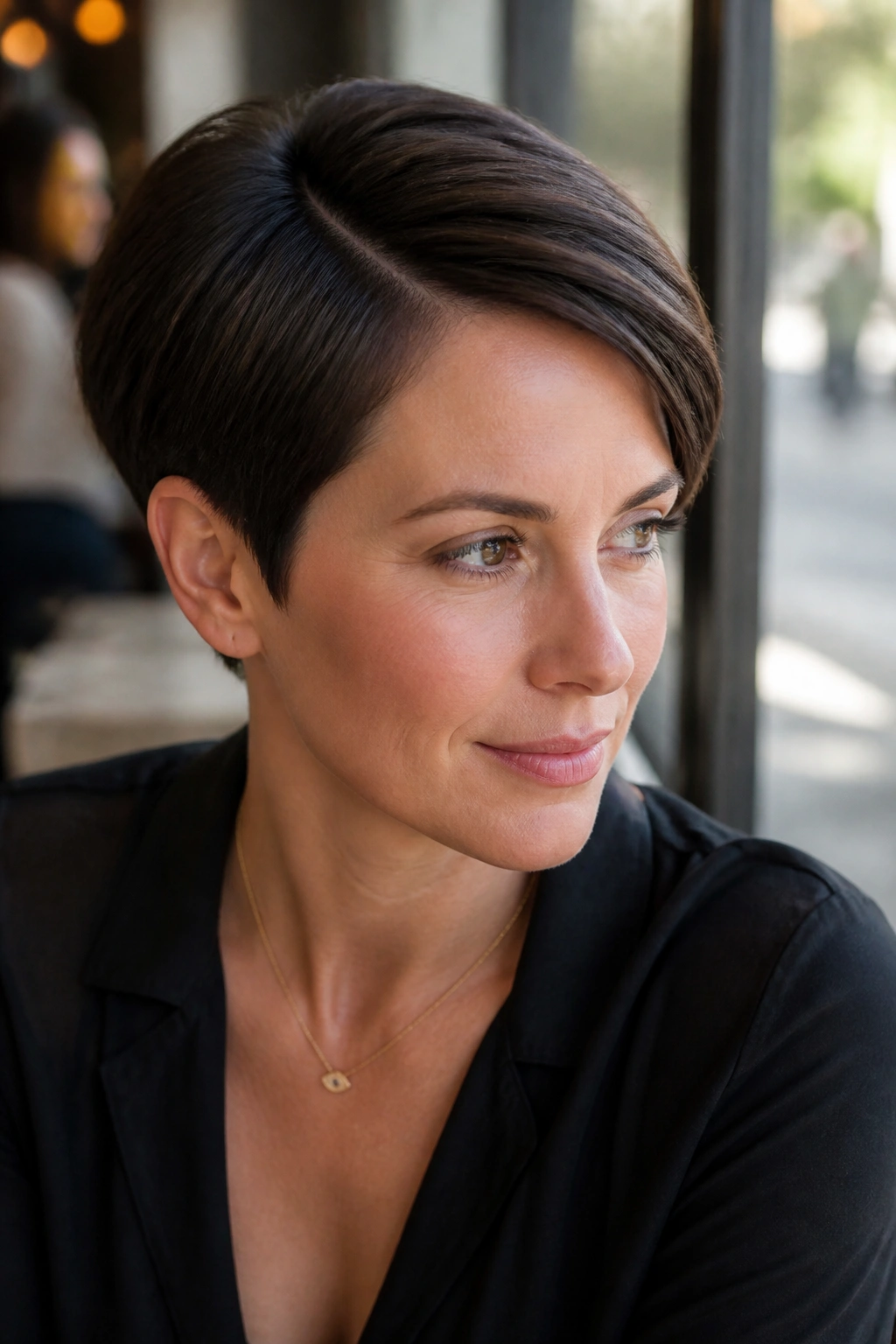
A deep side part is one of the oldest tricks in the book for a reason. It still works.
On a square face, the off-center line cuts across the forehead and makes the face feel less symmetrical in a good way. That little shift takes attention off the jaw and keeps the silhouette from becoming too even. The style can be sleek, almost polished, as long as the sides stay close and the front has some bend.
This version is especially good for thick, straight hair. Thick hair can hold a deep part without collapsing, and straight strands keep the line crisp. If your hair tends to puff, ask for soft layering through the top so the part can sit without pushing the shape wider.
A tiny bit of serum on the ends helps, but don’t go heavy. Too much product flattens the crown and turns the whole cut limp. The goal is a controlled sweep, not a greasy sheet. That would be a shame, because the shape itself is strong when it’s done right.
I like this haircut for people who want clean lines without the hard-box effect.
14. Micro-Fringe Pixie With Airy Sides
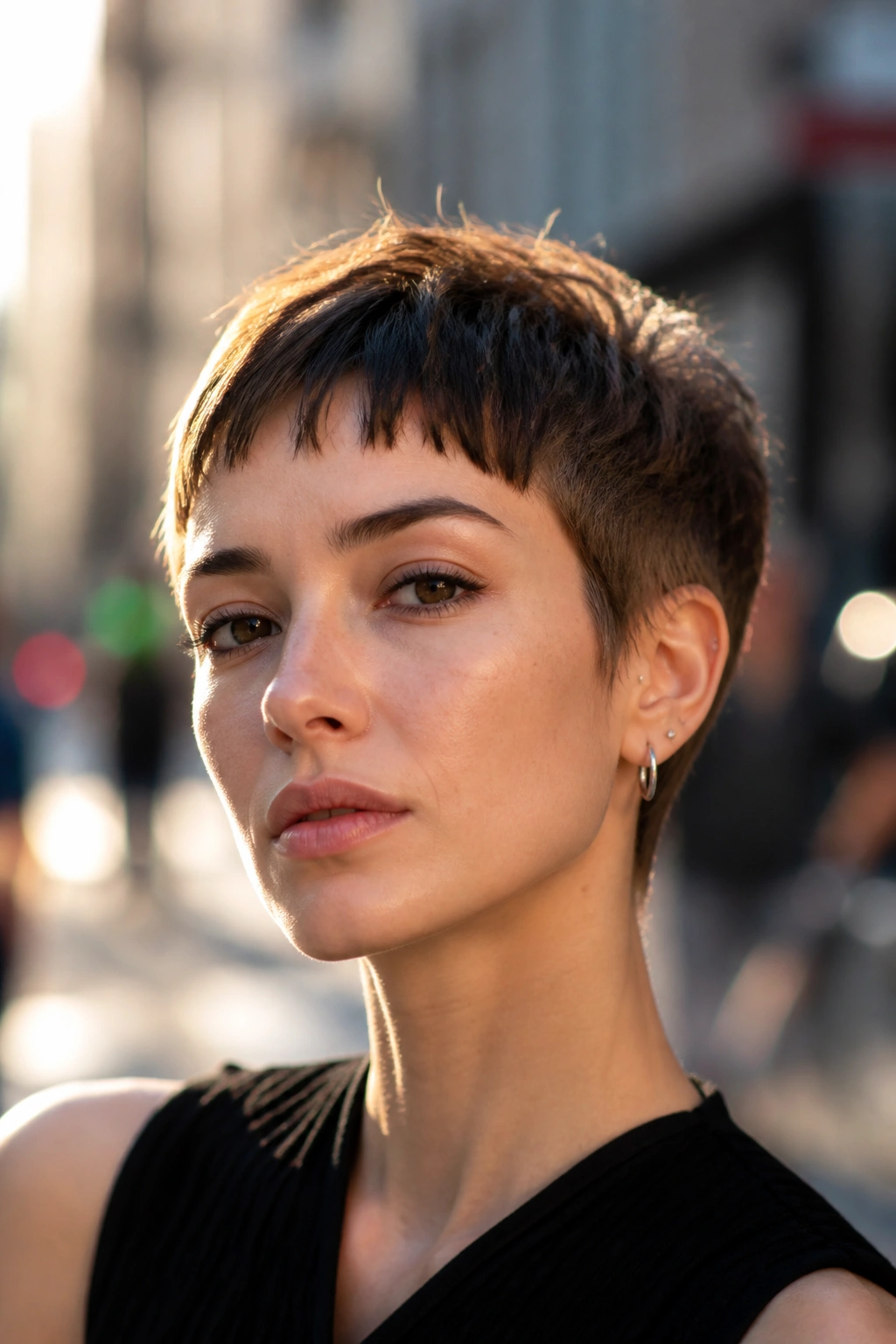
Do very short bangs work on a square face? Sometimes, yes — if the sides stay soft.
A micro-fringe brings attention upward, which can be useful when you want the jaw to take a step back. The danger is that a sharp little fringe can look too severe if the rest of the haircut is equally hard. That is why the sides matter so much here. They should be airy, close, and lightly textured so the whole style feels intentional rather than clipped into place.
Best Way to Wear It
Keep the fringe thin enough that you can see a little forehead through it. That keeps it from looking like a solid bar across the face. The top can be slightly lifted, and the temples should have some movement so the cut doesn’t become all edge and no shape.
- Works best if you like a bold, fashiony look
- Good on straight hair and some coarse textures
- Needs regular trims because short bangs grow fast
- Not ideal if you want to hide the forehead
I would not call this the easiest pixie on the list. It has a point of view. But when it suits someone, it looks sharp in a way that is hard to fake.
15. Wavy Pixie With Face-Framing Pieces
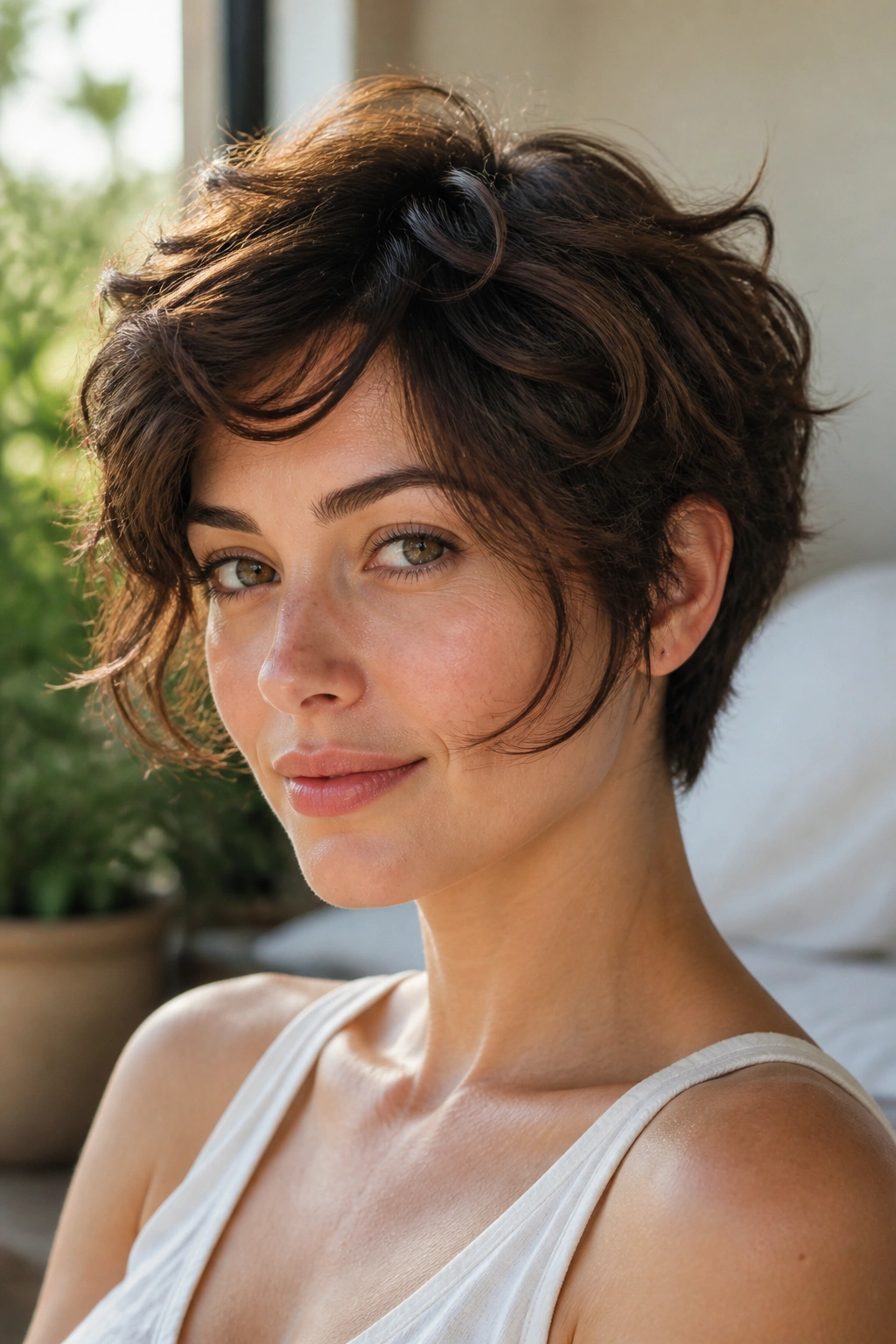
Wavy hair can be a gift on a square face, especially when the cut leaves just enough length around the front to frame the cheekbone.
The wave keeps the shape from looking flat, and the face-framing pieces soften the line without turning the haircut into a bob. That balance is hard to get wrong if the length is managed well. The front should skim the face, not hang on it. Around the temples, a little extra softness goes a long way.
This is the easiest cut on the list to live with if your hair already bends on its own. A little curl cream, a quick scrunch, and you’re halfway there. If you air-dry, lift the roots with your fingers while the hair is still damp so the top doesn’t collapse. If you diffuse, keep the airflow low and stop when the waves are still a touch damp. That prevents frizz from turning the sides too wide.
I like this one because it feels relaxed without looking unfinished. The wave does the heavy lifting. The face-framing pieces just steer it.
Final Thoughts
Square faces do not need a pixie that hides the jaw. They need a cut that stops shouting in the same shape as the face. That means side parts, broken lines, soft edges, or a bit of height where the eye can move.
The best pixie cuts for square face shapes are the ones that shift attention upward or diagonally, not straight across. If a cut feels too blunt in the mirror, it probably is. If it looks better after you tuck one side, bend the fringe, or rough up the top a little, you’re on the right track.
Bring photos to the salon, but point to the parts that matter: the fringe, the crown, the sides, and the neckline. That is where the face shape gets balanced. Not in some vague “make it softer” way. In the actual cut.
