

Fine hair loves a good shortcut, and pixie bob hairstyles for fine hair are one of the few cuts that can make strands look fuller without turning your morning routine into a project. The sweet spot is that in-between length: short enough to lift, long enough to move. That matters more than people think.
Fine hair and thin density are not the same thing, by the way. Fine hair means each strand is small in diameter, so it collapses easily; thin density means fewer strands on the head. A cut can help both, but it helps them in slightly different ways, and this is where so many bad haircuts go sideways. Too much thinning at the ends, and the shape goes wispy. Too much length, and the whole thing hangs flat.
The smartest pixie bob shapes build volume where you want it — at the crown, around the cheekbones, and just behind the ears — while keeping the perimeter clean enough to look intentional. That’s the whole trick. Shorter does not automatically mean smaller.
Some of these cuts are polished. Some are messy in the good way. A few are for people who want to air-dry and walk out the door, while others need a quick round-brush blowout and two minutes with a texturizing spray. The first style below is the safest place to start if you want something that flatters fine hair without asking for much back.
1. Classic Stacked Pixie Bob for Fine Hair
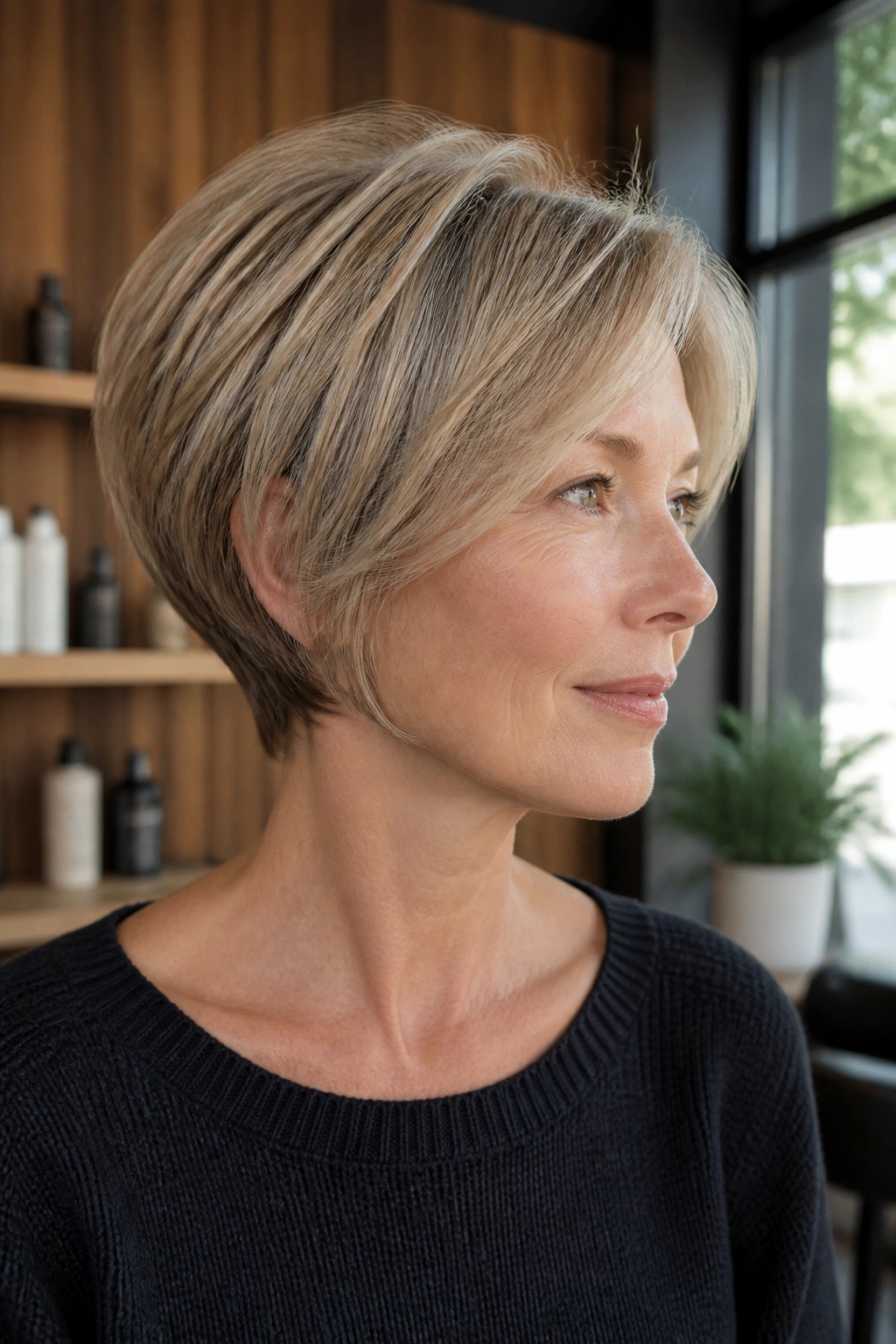
A classic stacked shape is the haircut version of good lighting. It quietly does the work for you.
Why It Lifts Fine Hair So Well
The short, graduated back builds a little shelf at the nape, which makes the top layers look fuller without piling on bulk. That matters for fine hair because the weight has to go somewhere, and if it sits at the bottom, the whole cut collapses.
Ask for a soft stack at the back, not a hard wedge. The difference is huge. A gentle stack keeps the silhouette round and modern, while a too-sharp angle can make the back look old-fashioned fast.
- Keep the nape cropped close, around 1 to 1½ inches.
- Leave the crown slightly longer so it can rise off the head.
- Use a light mousse at the roots.
- Finish with a small round brush for lift, not curl.
Pro tip: if your hair grows out quickly around the neck, this is the easiest pixie bob to keep looking neat between trims.
2. Side-Swept Fringe Pixie Bob
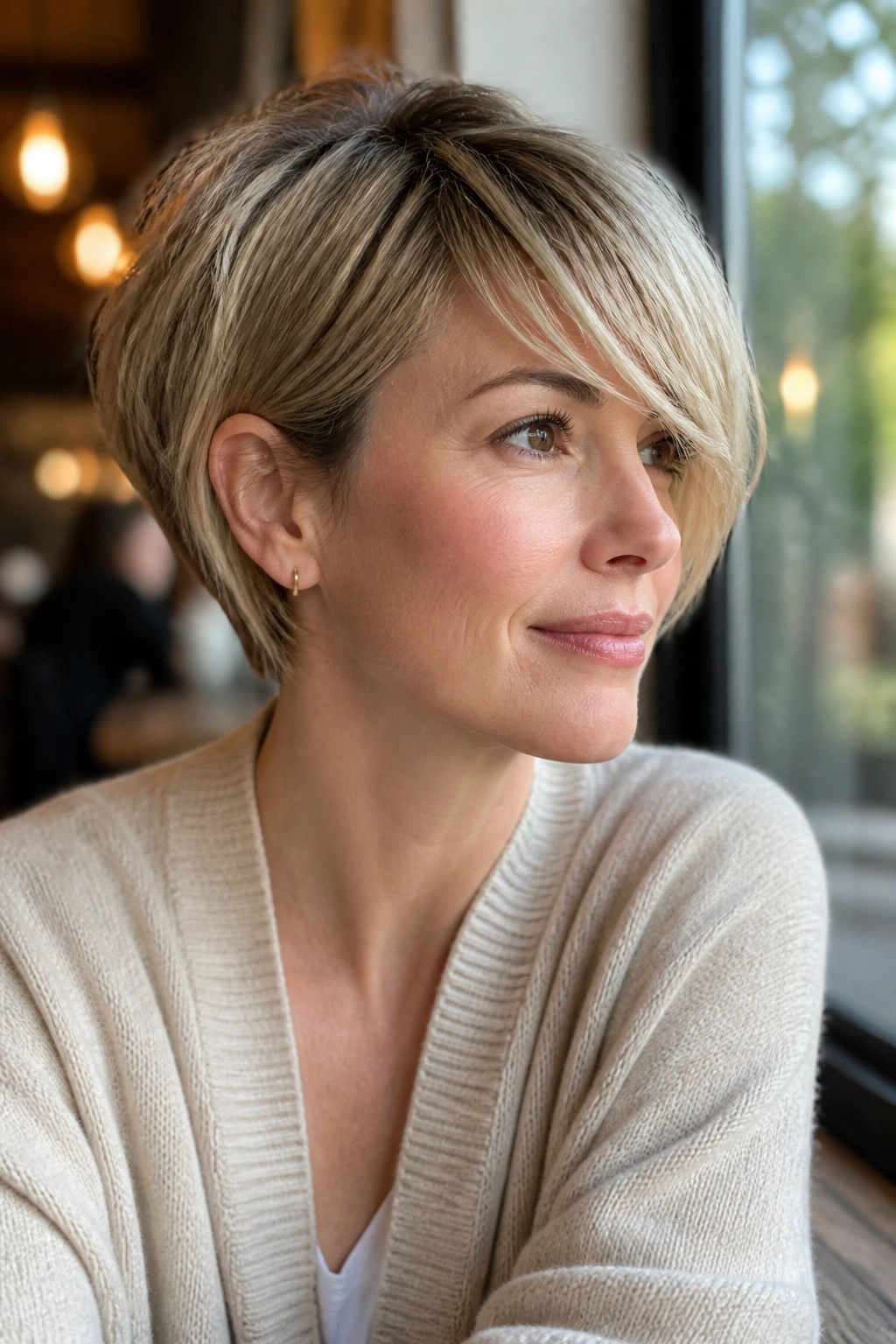
A long fringe does more for fine hair than another inch of length ever will. It gives the front some weight, and that’s the part people see first.
Side-swept bangs soften the forehead and pull attention toward the eyes, which is useful when fine strands need a little visual presence near the face. The shape also helps hide weak spots at the temples if your hair tends to look sparse there. Keep the fringe light, though. Heavy bangs sit flat and make the cut feel tired.
What I like about this version is that it looks polished even when the rest of the hair is slightly undone. A quick blow-dry with the fringe directed across the forehead, then a touch of serum on the ends, is usually enough.
The cut works especially well if you wear glasses or like a side part. It feels tidy. Not fussy.
3. Choppy Piecey Pixie Bob
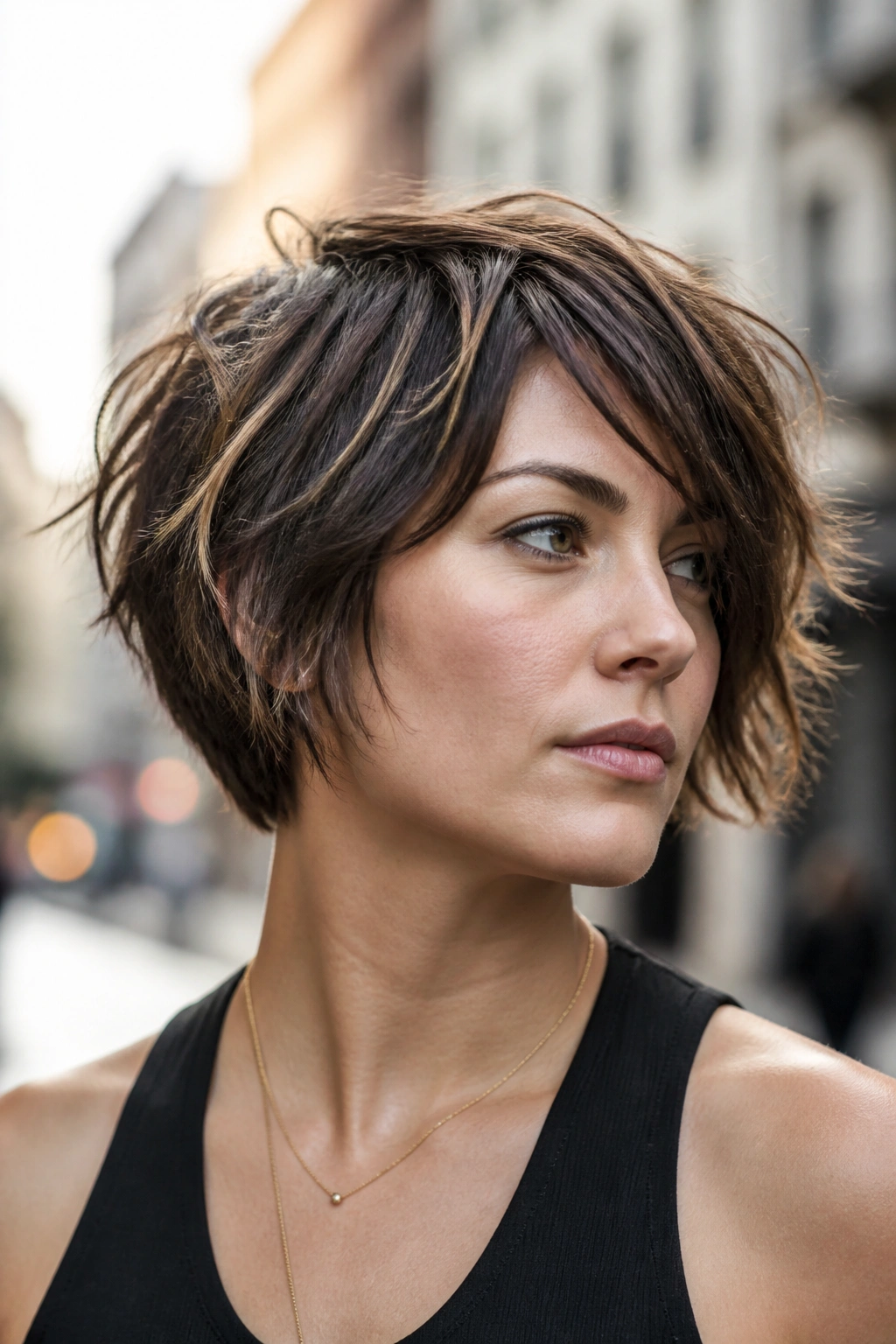
Want movement without making the ends look scraggly? This is the one.
The magic is in the pieces, not the layers everywhere. Choppy ends create tiny shifts in length that catch the eye and keep fine hair from reading as one flat sheet. A stylist usually gets there with point cutting, not aggressive texturizing. That detail matters a lot. Over-thinned fine hair can go see-through in a week.
How to Wear It
Use a pea-sized amount of matte paste and pinch out a few sections at the top and around the temples. You do not need to separate every strand. That makes the cut look overworked.
A choppy pixie bob suits people who like a little edge but don’t want a full shag. It also grows out well, because the irregular ends keep the shape from turning blocky. If your hair is pin-straight, this version can still work, but a tiny bend at the ends helps the pieces show up.
4. Feathered Pixie Bob
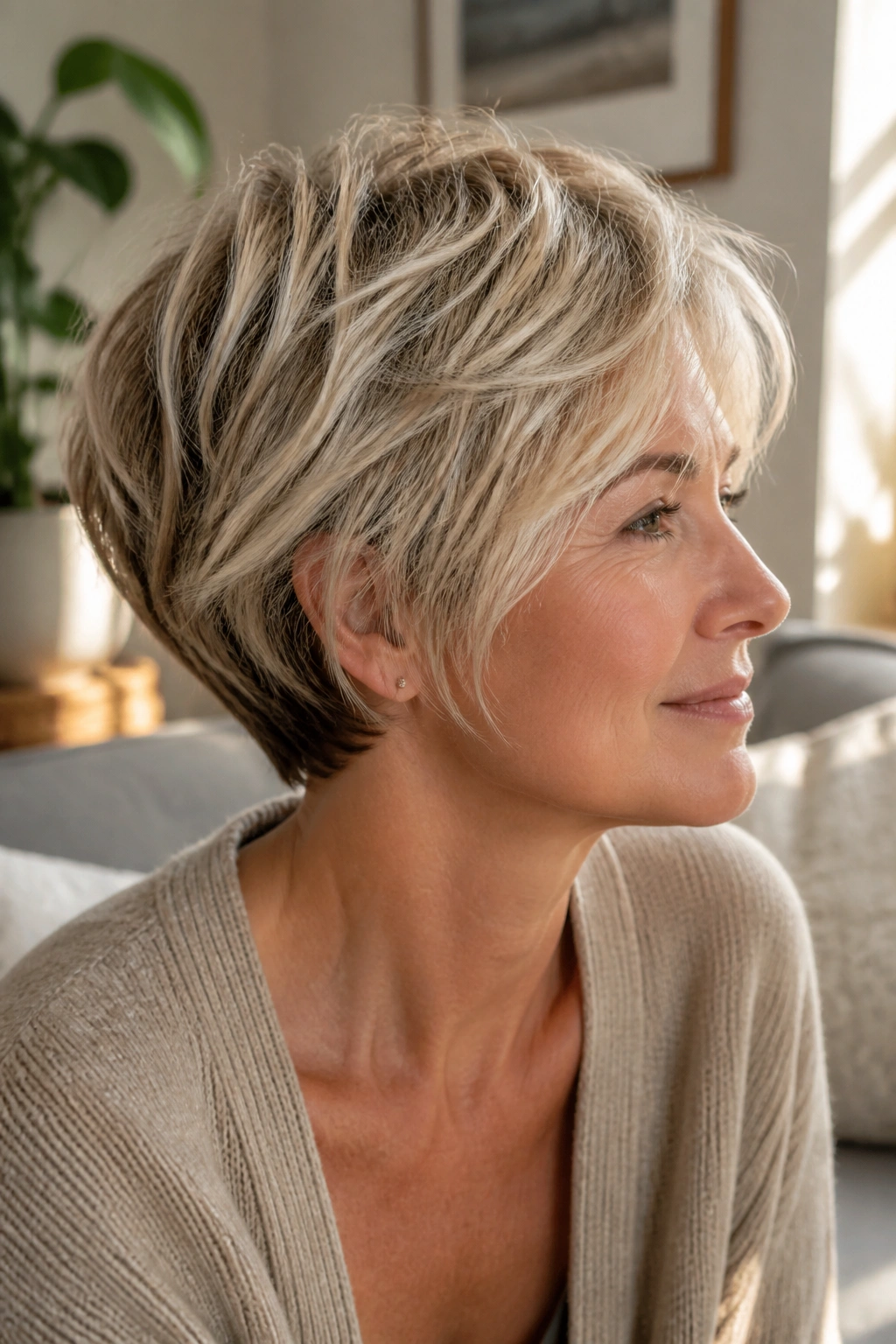
Feathering is the oldest trick in the book, and honestly, it still earns its keep on fine hair.
The goal is soft movement that doesn’t chew up density. A feathered pixie bob uses light, airy layers that flick away from the face and crown, which gives the cut a lighter feel without making it look sparse. That’s the balance. Not fluffy, not choppy. Just soft.
Picture a cut that moves when you turn your head, but doesn’t fall apart in humidity. That’s what feathering can do when it’s handled with restraint.
- Best on hair that dries smooth.
- Works well with a round brush and low heat.
- Needs very little product — a touch of cream, not wax.
- Looks best when the ends are kept soft instead of razor-sharp.
Small warning: too much feathering on truly fine hair can look frayed, so keep the layers controlled and close to the head.
5. Asymmetrical Pixie Bob
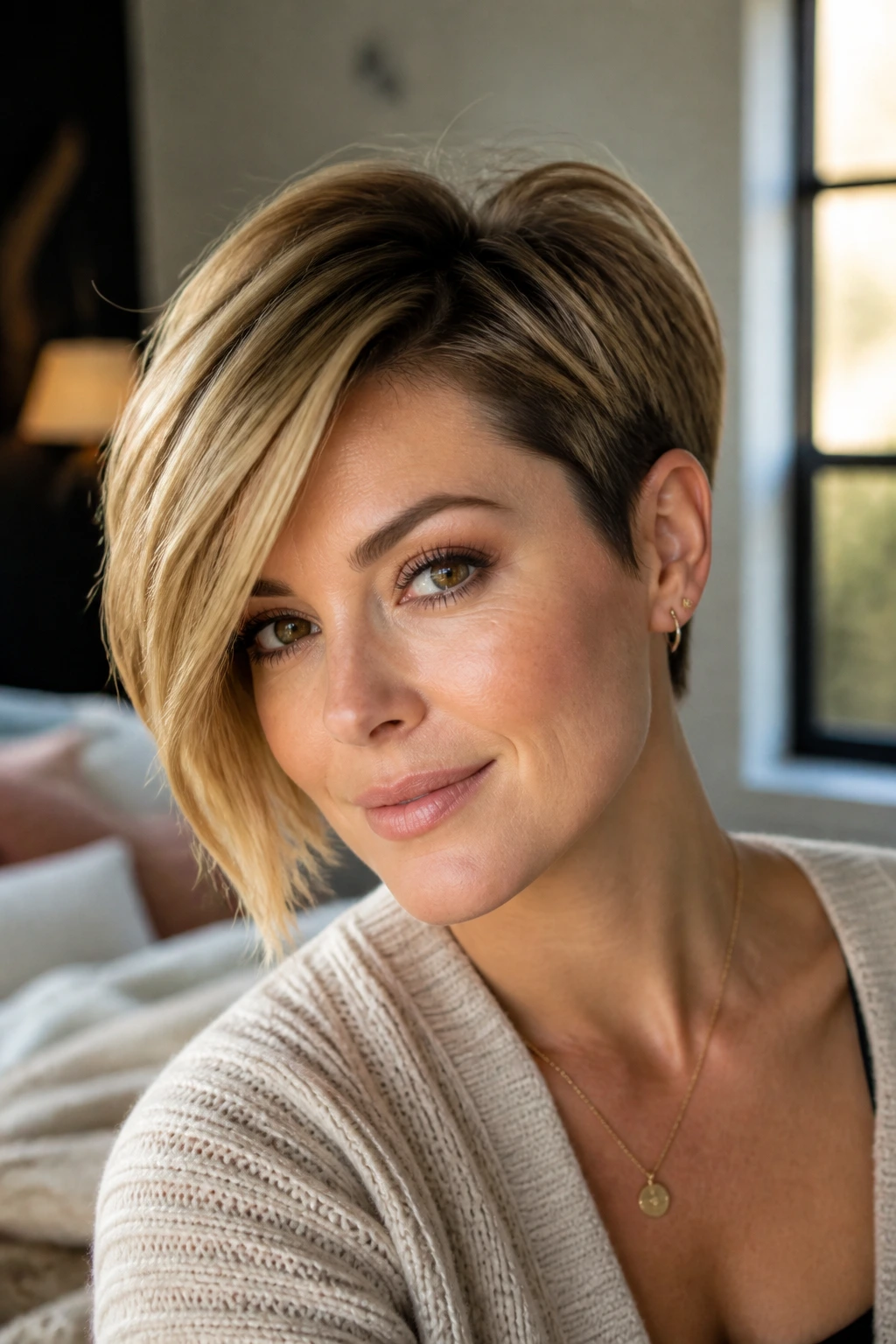
One side longer, one side shorter. Simple idea. Big payoff.
An asymmetrical cut gives fine hair a built-in line, and that line creates the illusion of density. It also pulls the eye sideways instead of straight down, which is handy if your hair tends to lie flat against the scalp. The longer side can skim the jaw, the shorter side can open up the cheekbone area, and the whole cut feels deliberate.
This version looks especially good if your face is round, square, or heart-shaped, because the off-balance shape softens strong angles without hiding the face. Keep the longer side controlled, though. If it drops too far past the chin, you lose the pixie bob feeling and slide toward a grown-out bob.
The best part? You can style it sleek for work or rough it up with a bit of texture spray for a more casual finish. Two different moods. Same haircut.
6. Undercut Pixie Bob
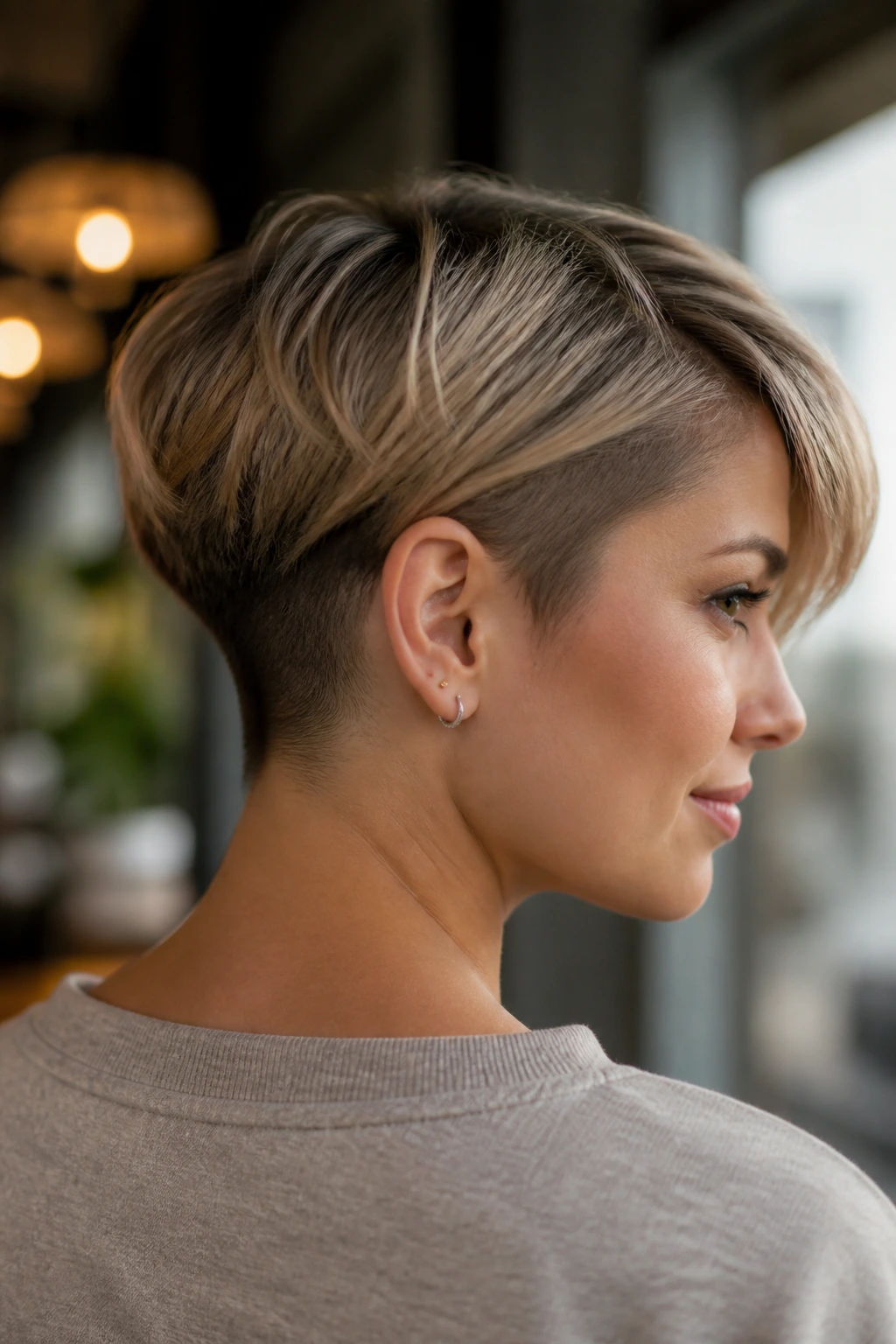
An undercut is not about being dramatic. It’s about removing dead weight where the hair puffs out and looks heavy.
That makes it a smart choice for fine hair that still has a stubborn bulk in the back or under the crown. Unlike a full stack, which builds shape with graduation, an undercut clears space underneath so the top layers can sit better. The result is cleaner and often easier to style in less time.
It’s also a good move if you hate that fuzzy halo some fine hair gets at the nape. Shaving or clipping the lowest section close to the head keeps the silhouette crisp for weeks.
Best if you want:
- Less bulk at the neck
- A sharper outline
- Faster drying time
- A cut that feels lighter in warm weather
Not great if you want softness everywhere. This one has edge, and it shows.
7. Tapered Nape Pixie Bob for Fine Hair
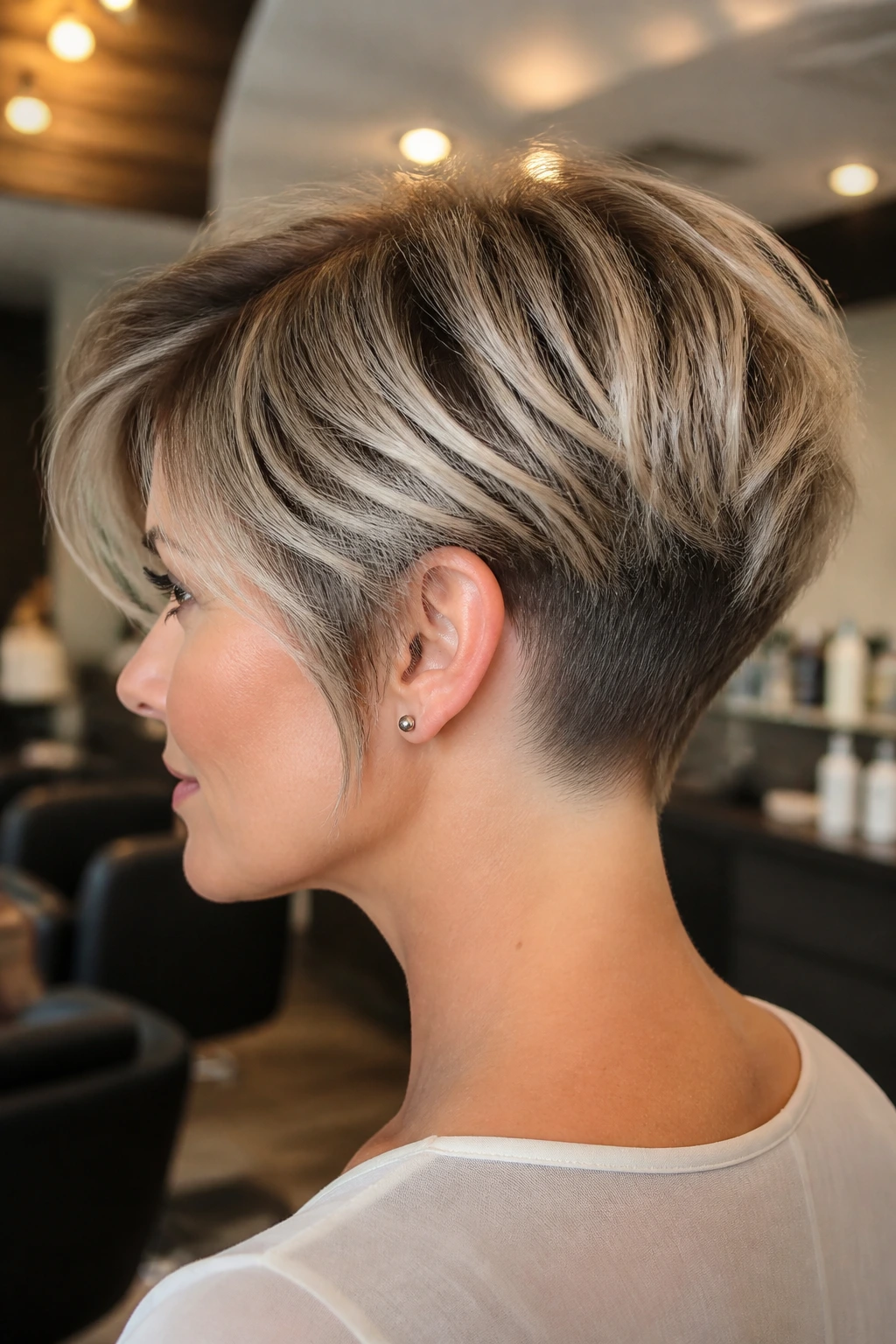
The nape makes or breaks this haircut.
A tapered back gives the neck a clean line and lets the top layers do the lifting. For fine hair, that means you get shape without the bulky triangle effect that happens when the bottom grows too full. Keep the taper soft, though. You want a smooth fade into the neckline, not a hard clipper line unless that’s your thing.
What to Ask For
- Shorter layers at the nape, trimmed close to the head
- Slight graduation through the back
- Longer pieces around the ears
- A top section that stays light enough to move
The cut is neat, tidy, and low-drama. That’s the appeal. It also grows out in a controlled way, which is a blessing if you don’t want a monthly salon commitment. Use a small blow-dry brush and lift the crown forward and up. That tiny step changes everything.
8. Wavy Bend Pixie Bob
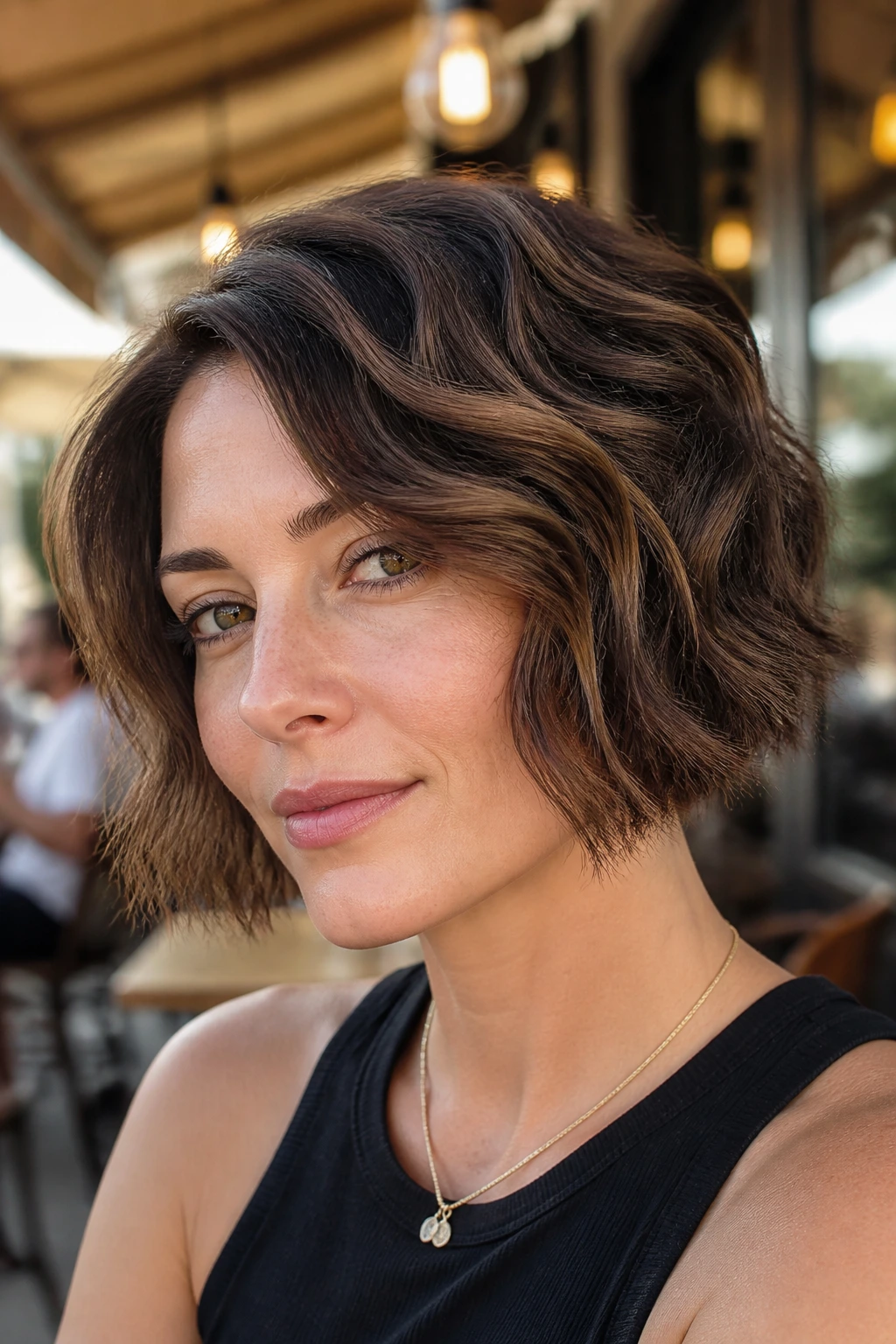
A soft wave can rescue fine hair from looking too literal. Straight-on, the shape can seem sparse; with a bend, the cut suddenly has texture and body.
This is not about creating ringlets. A loose wave through the mid-lengths and ends is enough. A 1-inch curling iron, wrapped for 5 to 8 seconds, usually does the job. Leave the ends a little straighter if you want the look to stay modern. Full-on curls can make a pixie bob feel too round.
The trick is to place the bend where you want the eye to land — usually around the cheekbone or jawline. That gives the haircut a fuller outline without stuffing it with product.
If your hair is naturally wavy, even better. Use a light mousse, scrunch with a microfiber towel, and stop before the shape gets crunchy. Fine hair needs hold, not helmet hair.
9. Sleek Straight Pixie Bob
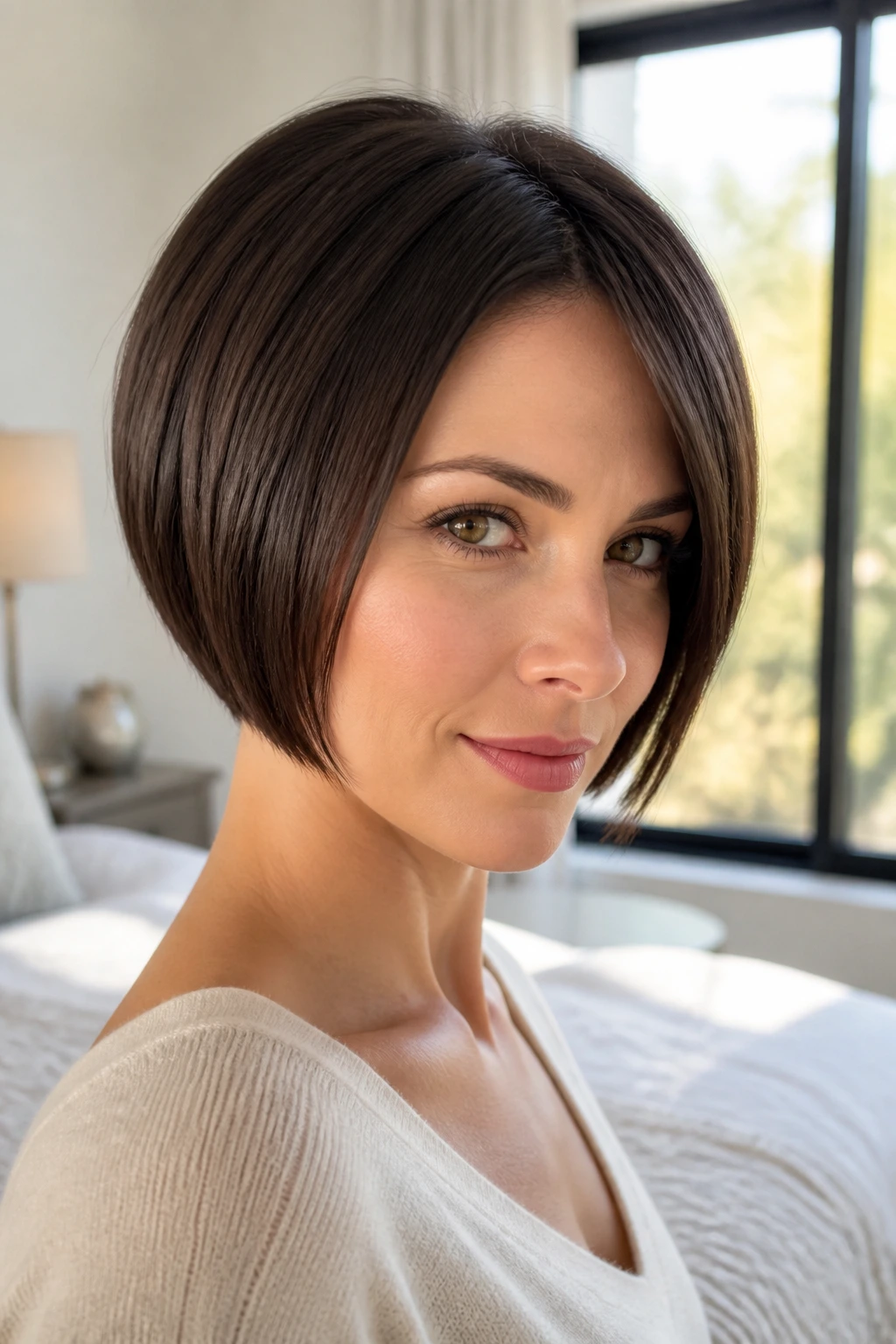
Sleek does not mean flat. That’s the whole point of this cut.
A smooth pixie bob can make fine hair look thicker because the line reads clean and dense instead of airy and broken. When the ends are sharp and the surface is polished, the haircut looks intentional. A blunt-ish perimeter helps here, especially around the jaw and ears.
Why It Works
Fine strands often look fuller when they’re grouped into a solid shape. Loose, piecey styling can be lovely, but straight and smooth gives you visual weight. A blow-dry with a nozzle and a small flat brush keeps the root direction tidy, and a drop of serum on the ends stops flyaways from making the cut look thin.
If your hair tangles easily, this is one of the easiest versions to keep neat. The downside is obvious: it shows every cowlick. So if your hair has a stubborn bend near the part, you’ll need a little root clip or a quick pass with heat.
10. Micro-Bang Pixie Bob
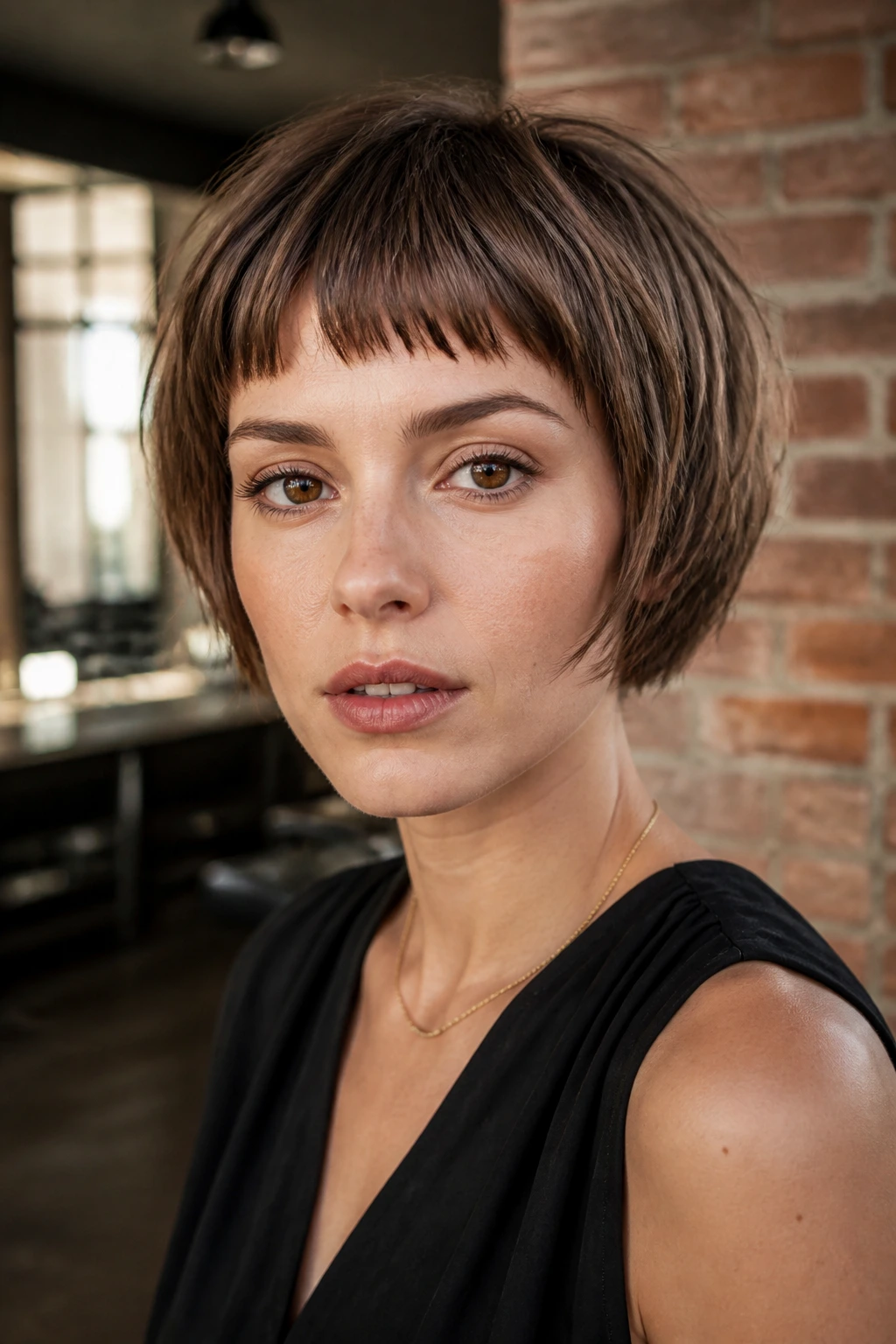
Micro bangs are bold, yes, but they can be surprisingly useful on fine hair.
A short fringe creates a strong front line, and that line can make the whole cut feel denser. It also pulls attention upward, which helps if your crown is a little sparse or if you want to show off your eyes. Keep the fringe soft and slightly irregular so it doesn’t look too severe.
What I like about this shape is the contrast. The front is short and graphic, while the rest of the cut stays airy and movable. That mix keeps the hairstyle from feeling too heavy.
- Best when the bangs sit around mid-forehead.
- Works well with a clean, narrow side section.
- Needs tiny trims to stay crisp.
- Looks sharper with straight hair than with fluffy waves.
If you’re nervous, ask for a longer micro bang first. You can always go shorter. Growing them out is the part nobody enjoys.
11. Curtain-Bang Pixie Bob
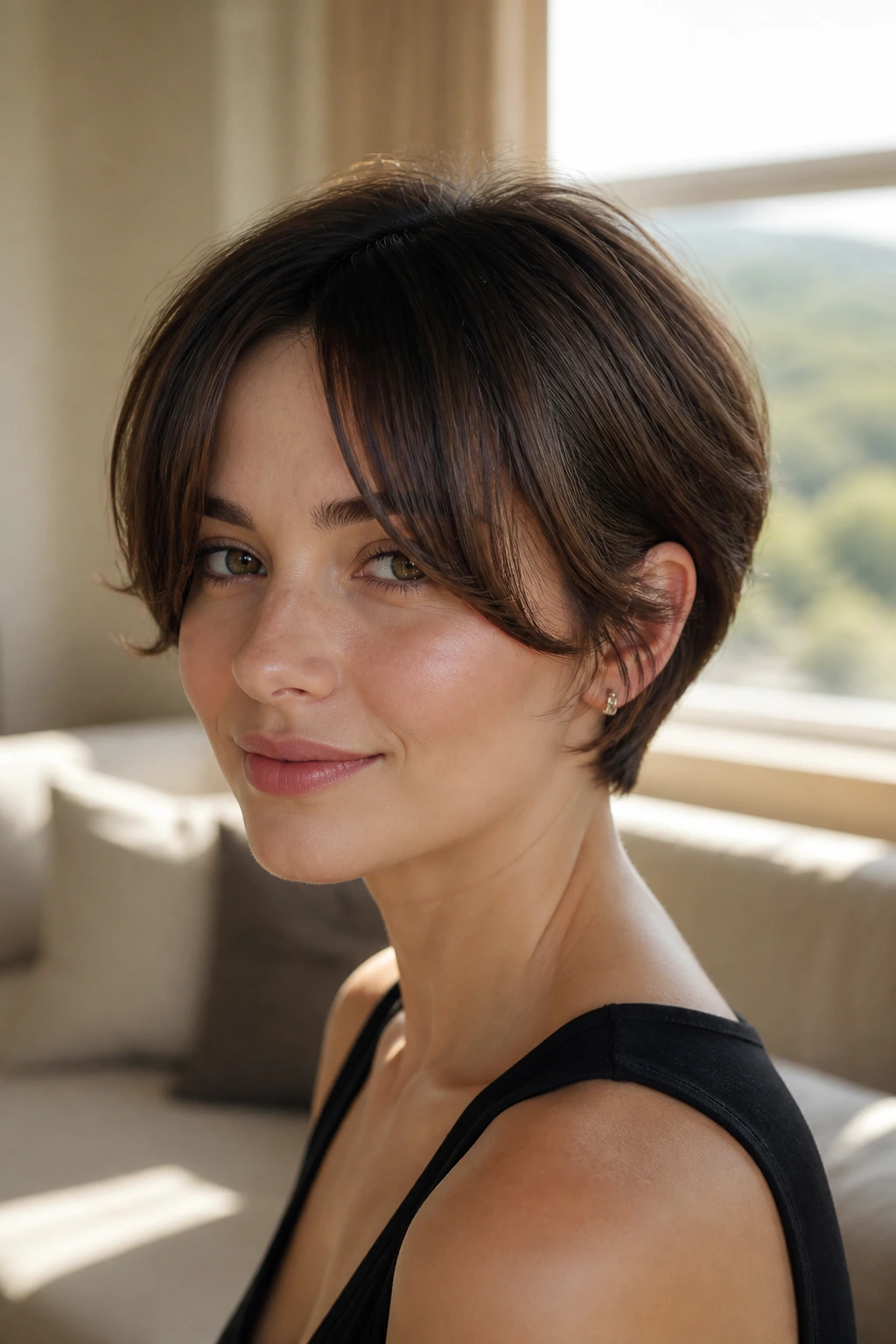
Curtain bangs are the least annoying way to soften a short haircut.
They split the front and frame the face without swallowing fine hair in a heavy fringe. That matters because fine hair can’t always carry thick bangs without losing lift at the roots. Curtain bangs keep the front open, then drop into the sides with a gentle sweep.
The best version starts a little below the brow and tapers into the cheekbone area. Too short, and they lose that soft opening effect. Too long, and they can disappear into the rest of the cut.
I like this shape for anyone who wants some face framing but hates the feeling of hair sitting on the forehead. It also works well with glasses because the bangs can part around the frames instead of fighting them. Use a round brush or blow-dry brush to bend them away from the center, then let them cool in place. That part is not optional. Cooling sets the shape.
12. Deep Side-Part Pixie Bob
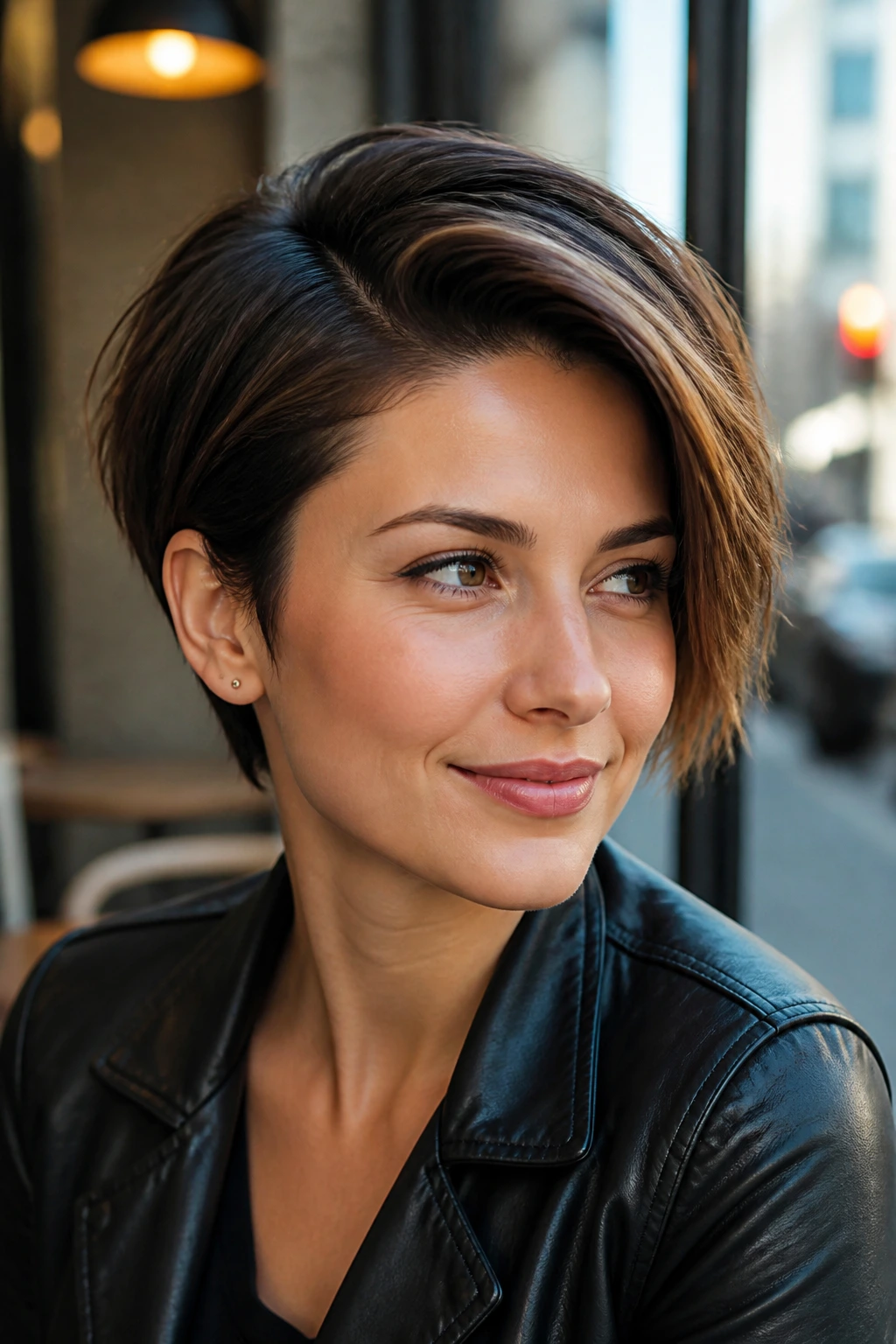
A deep side part can make fine hair look like it borrowed volume from somewhere else.
That sounds dramatic, but it’s true. Moving the part off center shifts the root direction and gives the top section an instant lift. It also creates a strong sweep across the forehead, which helps the haircut feel fuller on one side instead of evenly limp everywhere. A center part can work, sure, but it often exposes too much scalp on fine hair.
This version is especially good if one side of your hair naturally falls flatter than the other. Work with that. Clip the roots at the deeper side while the hair cools after blow-drying, and you’ll get a better bend that lasts longer.
It’s a simple change, and it can save a haircut that feels too ordinary. Sometimes the shape isn’t wrong. It just needs a different part.
13. Razor-Cut Pixie Bob
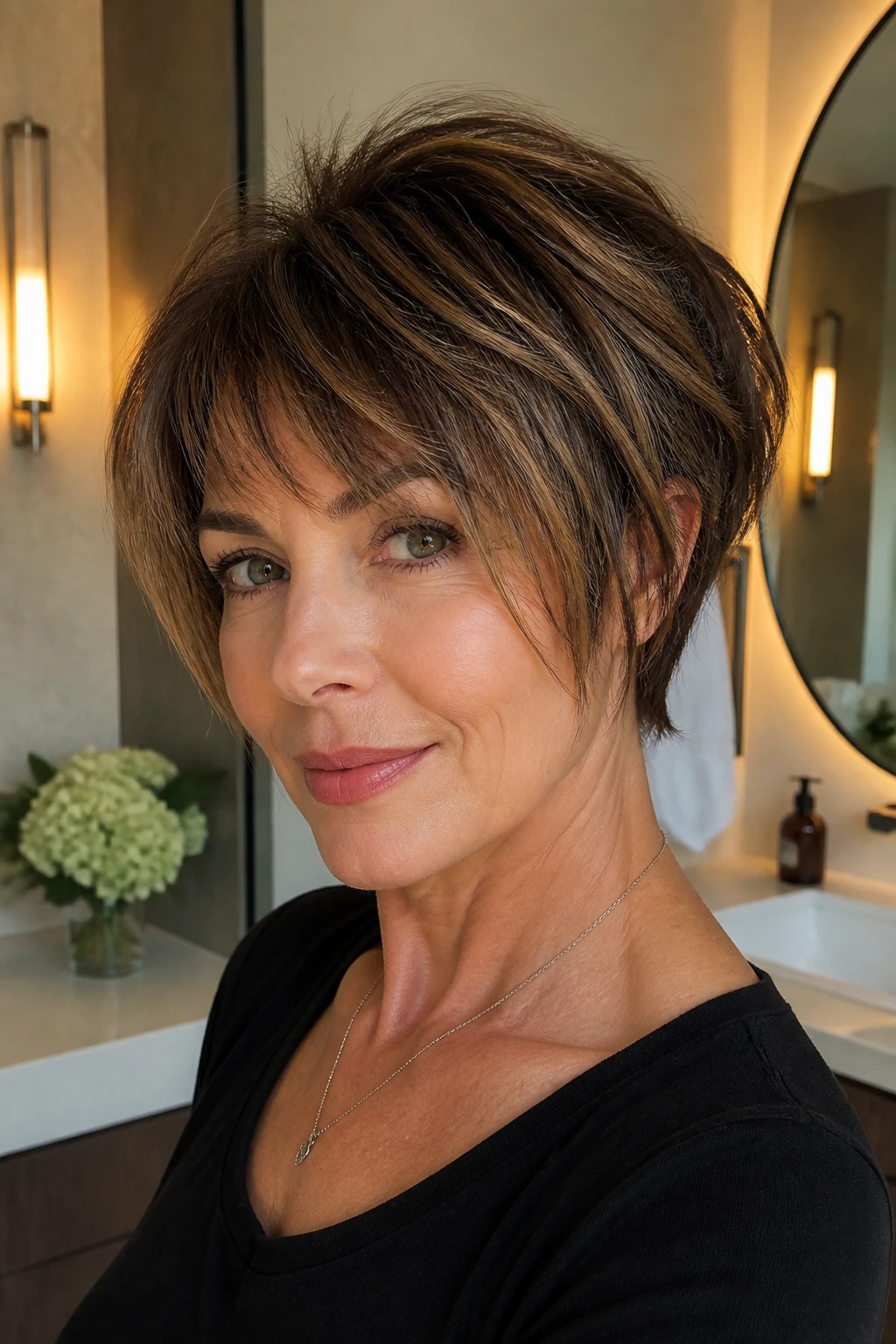
A razor cut can look airy and sharp at the same time, which is useful on fine hair if it’s done with restraint.
The blade removes a bit of bulk and leaves soft edges, so the hair moves more easily. But here’s the catch: over-razoring fine hair can make the ends look see-through and dry. That’s not a cute effect. It’s a warning sign.
What Makes It Different
- The ends look softer than scissor-cut lines.
- The layers can feather around the face.
- It works well on straight to slightly wavy hair.
- It should be avoided if your hair already breaks easily.
A good razor-cut pixie bob still keeps structure around the perimeter. That part matters. The haircut should move, not collapse. If you want the airy feel without the damage, ask for point cutting in the front and minimal thinning through the back. Same lightness, less risk.
14. Bixie-Inspired Layered Pixie Bob for Fine Hair
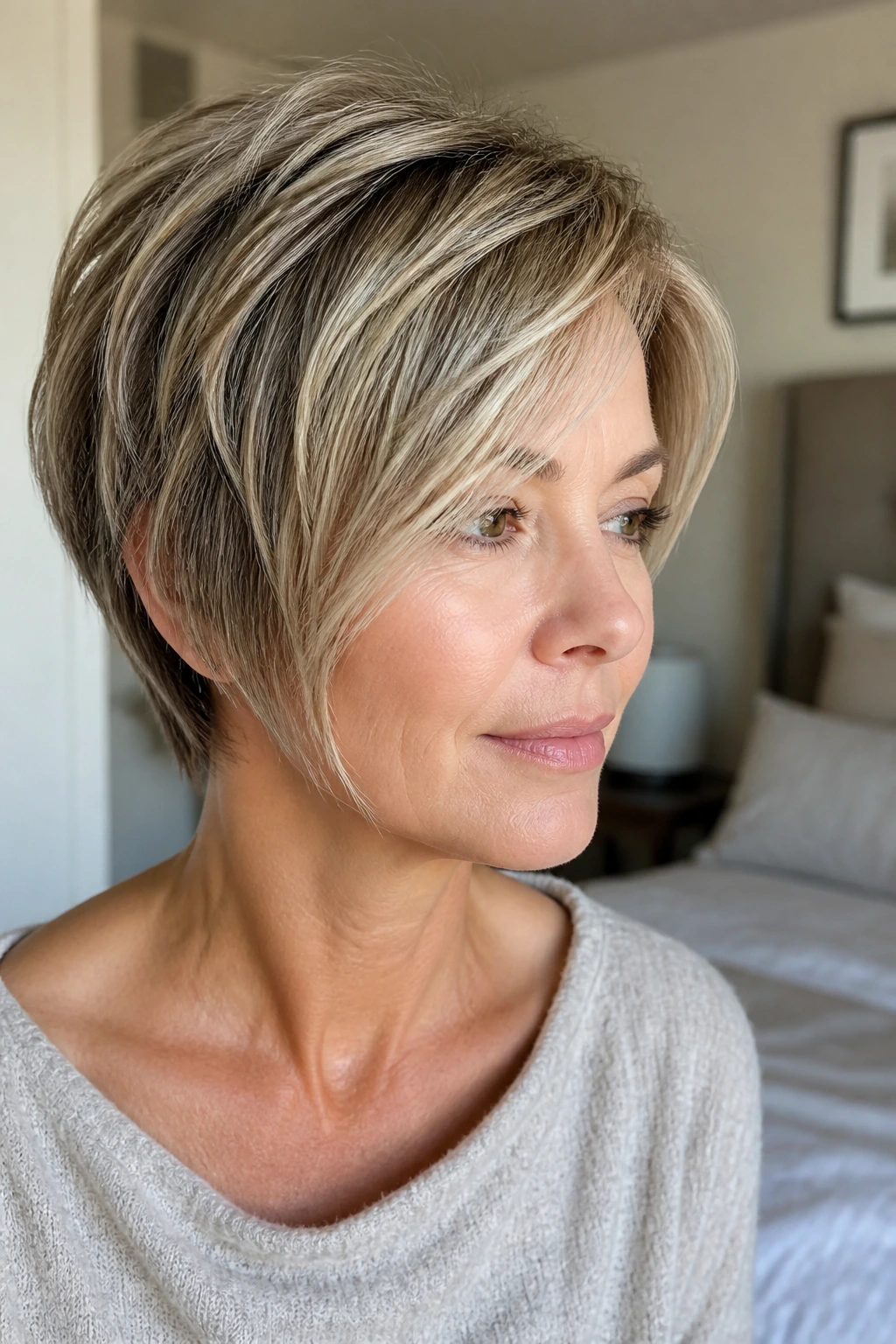
If you can’t decide between a bob and a pixie, this is the compromise that actually makes sense.
The bixie-inspired shape keeps a little more length through the sides and front, which helps fine hair stay touchable and versatile. At the same time, the layers are short enough to create lift at the crown and around the temples. It sits in that useful middle ground where you can tuck it, sweep it, or rough it up.
This cut is especially good if you’re growing out a shorter crop and don’t want to look stuck in an awkward stage. The extra length around the face gives you options, and options are underrated. One day you can wear it smooth; the next, you can push it messier and call it deliberate.
Ask for internal layers, not stacked bulk. That distinction changes the entire mood. The cut should feel light and flexible, not fluffy.
15. Brushed-Forward Pixie Bob
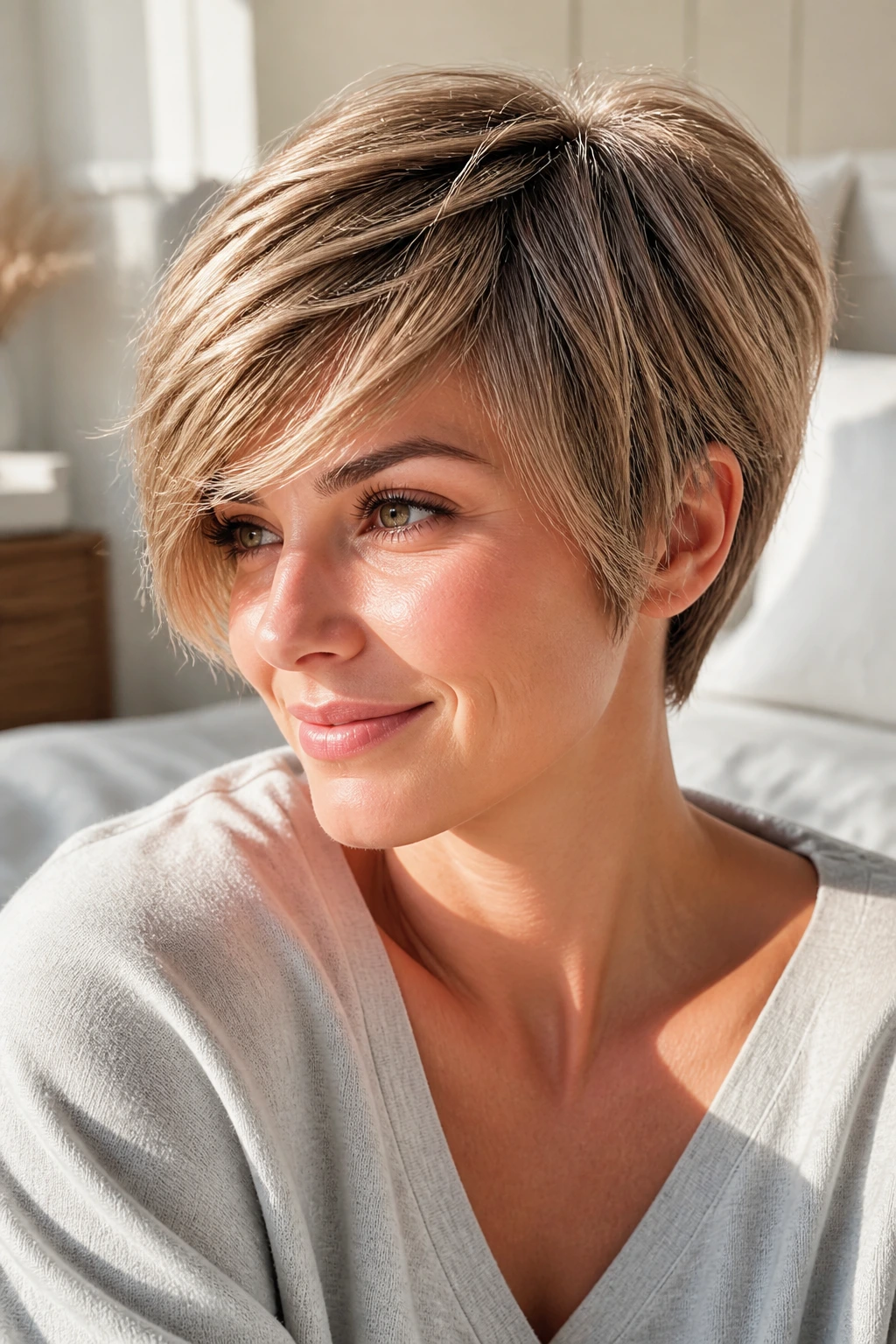
Pushing the hair forward sounds small. It is not.
A brushed-forward pixie bob puts the visual weight toward the face and forehead, which can make fine hair look fuller where people notice it most. It’s a smart move if the crown is flat, because the top doesn’t have to stand up on its own all day. The front does some of the work.
How to Style It
Blow-dry the hair forward from the crown, then use your fingers to break up the top once it cools. That gives you lift without making it look overstyled. A tiny bit of styling cream through the ends keeps the front from fraying.
This shape suits people who like a youthful, slightly undone look. It can also hide a narrow hairline or a bit of thinning at the temples. The one thing to watch: if the fringe gets too heavy, the style loses its airy feel fast. Keep the top soft and the outline clean.
16. Tousled Beachy Pixie Bob
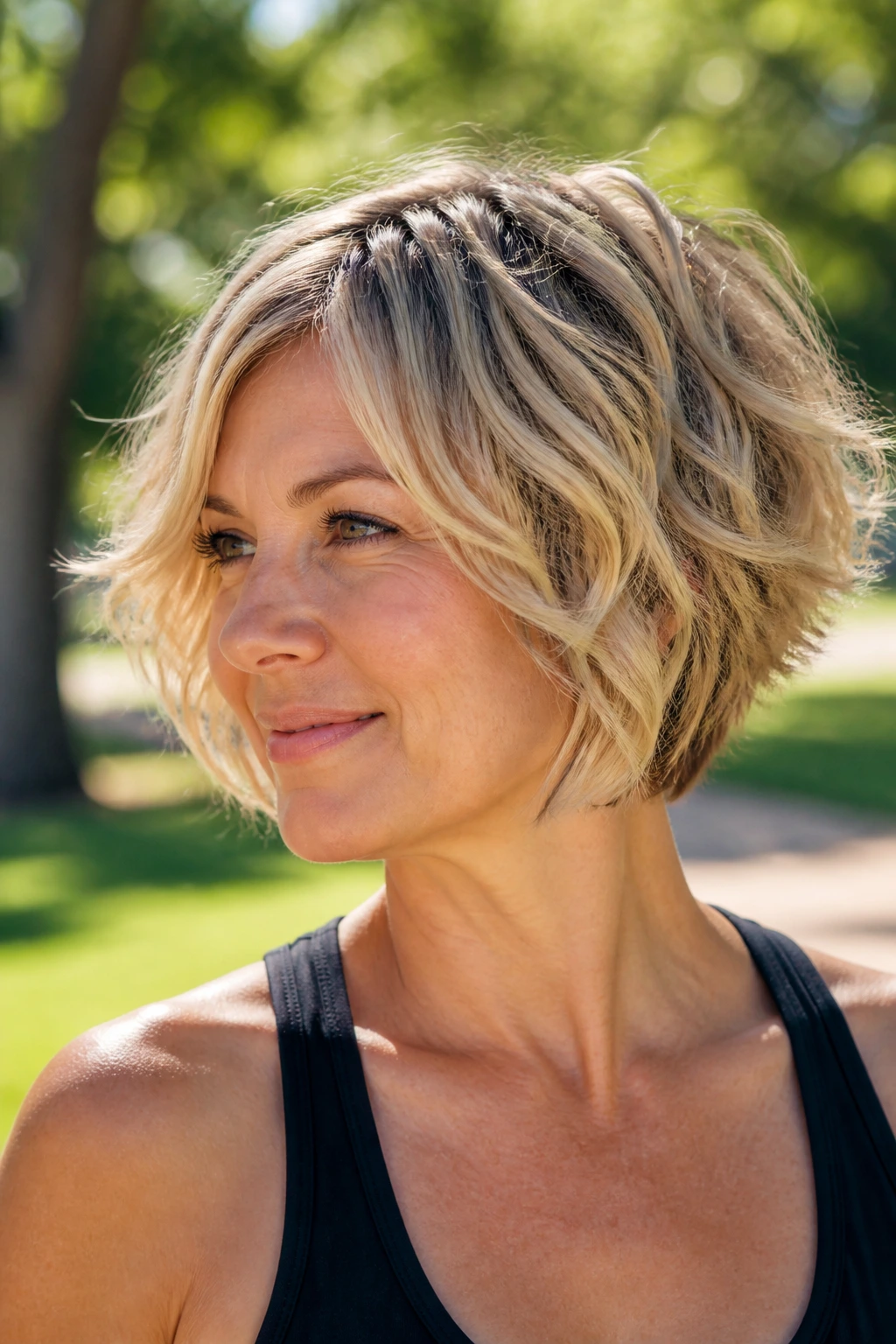
Messy hair only works when the mess is controlled. That’s the secret most people miss.
A tousled pixie bob gives fine hair texture and movement, but it needs a base cut that still holds together. Salt spray alone won’t do much on fine strands. In fact, too much can leave the hair dry and stringy. A little mousse at the roots first, then a light texture spray through the mid-lengths, usually gives a better finish.
The goal is a broken-up shape with a bit of separation. Not frizz. Not crunch.
- Use a diffuser if your hair bends naturally.
- Scrunch the ends lightly, then stop.
- Keep the crown lifted with fingers, not a brush.
- Finish with a tiny bit of wax on the ends if needed.
This is one of the most forgiving pixie bob hairstyles for fine hair because it doesn’t demand a perfect blowout. It just needs energy. Some days that’s enough.
17. Ear-Tucked Pixie Bob
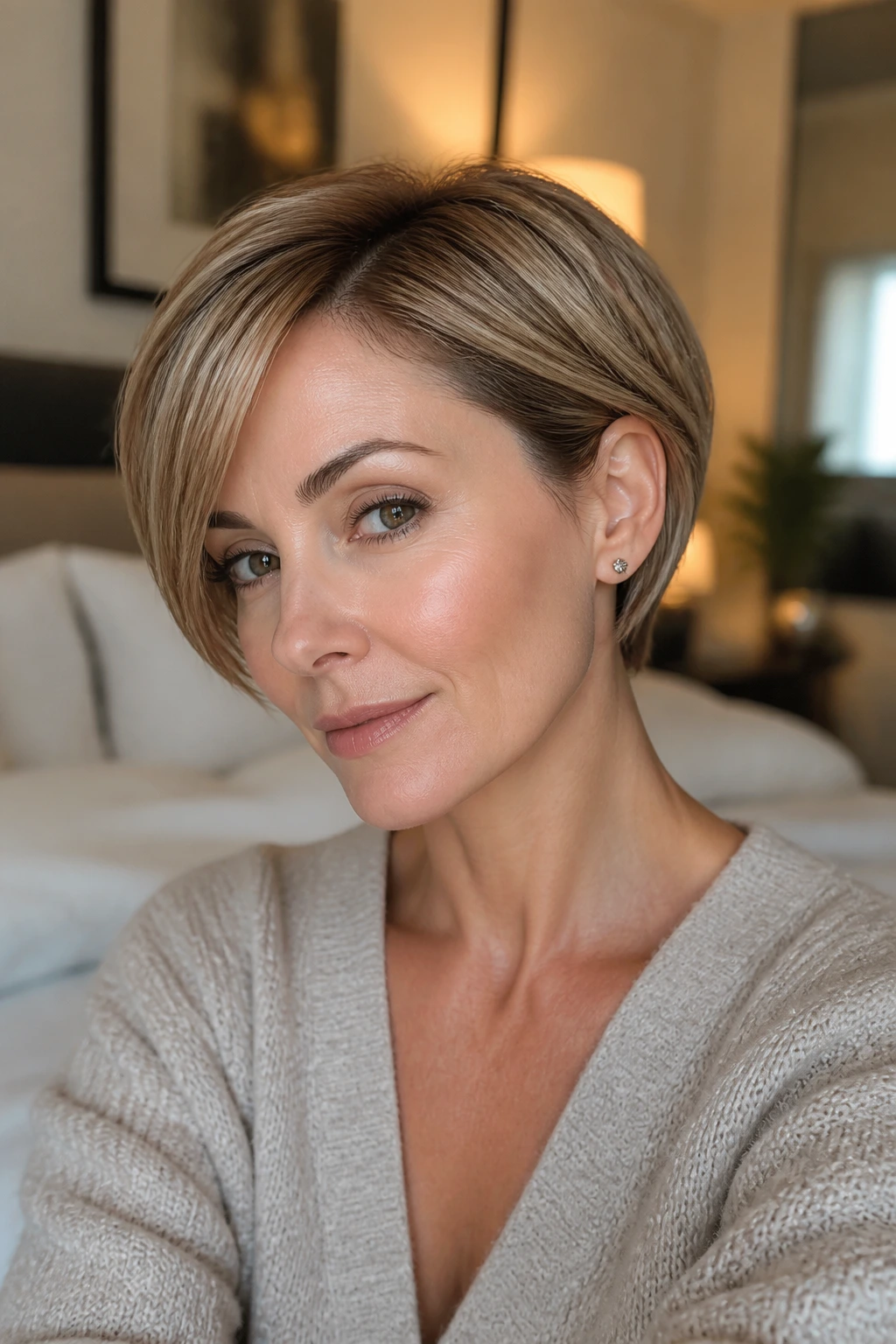
Tucking the hair behind the ear is one of those tiny styling moves that changes the whole face.
With a pixie bob, ear-tucked styling shows off the jawline and keeps the sides from swallowing fine hair. It also makes the haircut feel cleaner and a little sharper, especially if you wear earrings or glasses. The important part is leaving enough length around the ears to tuck in the first place. Too short, and the look disappears.
This version works beautifully for straight or slightly wavy hair. A light smoothing cream on the sides helps the tuck stay in place without looking greasy. If one side tends to flip out, that’s usually a sign the section needs a little longer or a softer edge.
The appeal is subtle. You still get movement on top, but the sides stay neat. That balance can make fine hair look tidier and denser at the same time.
18. Rounded Crown-Volume Pixie Bob
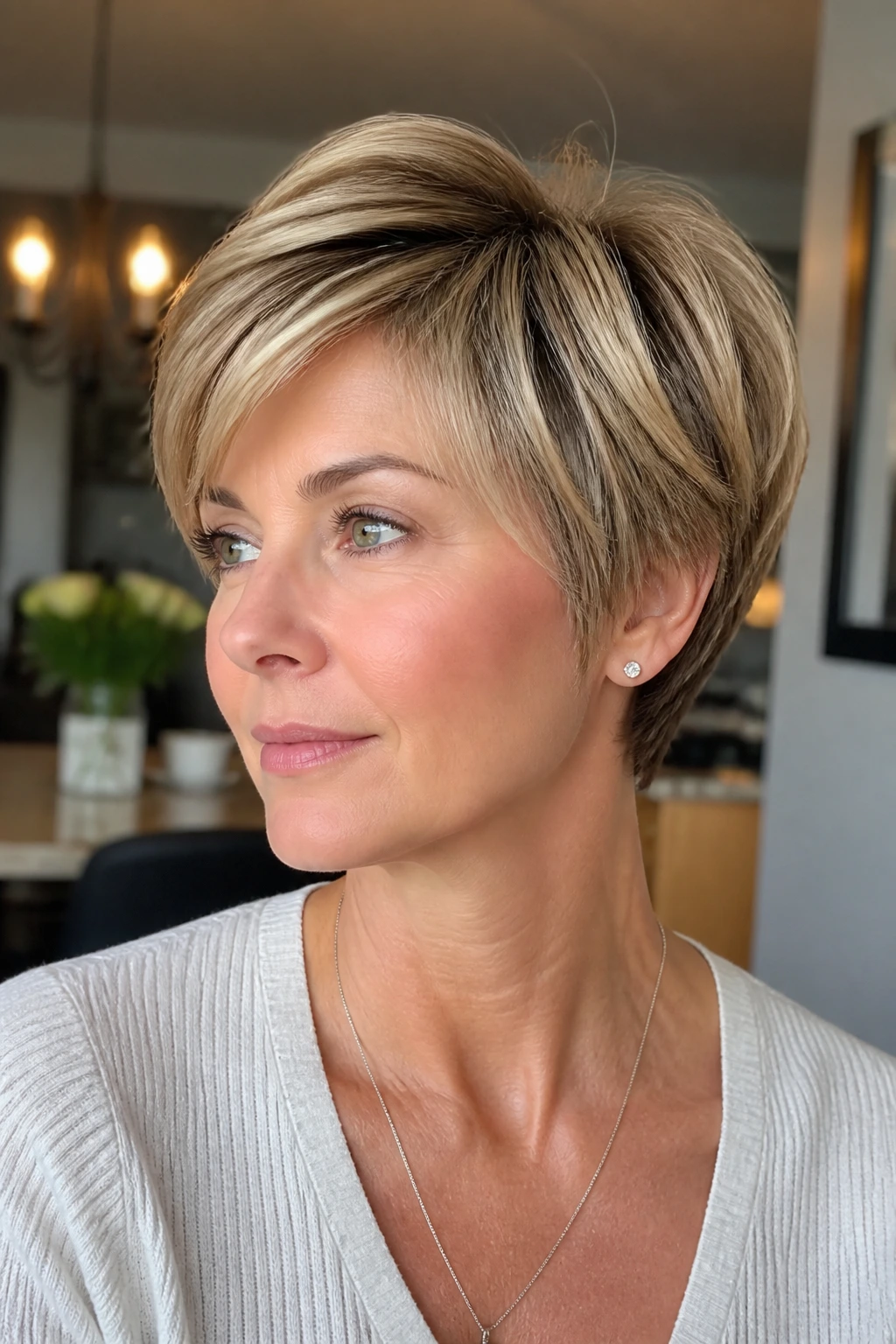
If your hair lies flat at the crown, build the shape there first.
A rounded crown-volume pixie bob lifts the top into a soft dome instead of letting it collapse toward the scalp. That creates a fuller silhouette from the side, which is exactly where fine hair often looks limp. The trick is gentle graduation through the crown, not a lot of stacking through the back.
What to Ask For
- More lift through the top two inches
- Softer sides that don’t hug the head too tightly
- A rounded, not boxy, outline
- Light texturizing only where the hair needs movement
This cut is a good match for people with flatter head shapes or anyone who feels like their hair disappears from the side profile. It also works well with a round brush and a cool shot at the end of the blow-dry. The cool air helps the crown keep its shape longer.
19. Blunt-Line Pixie Bob
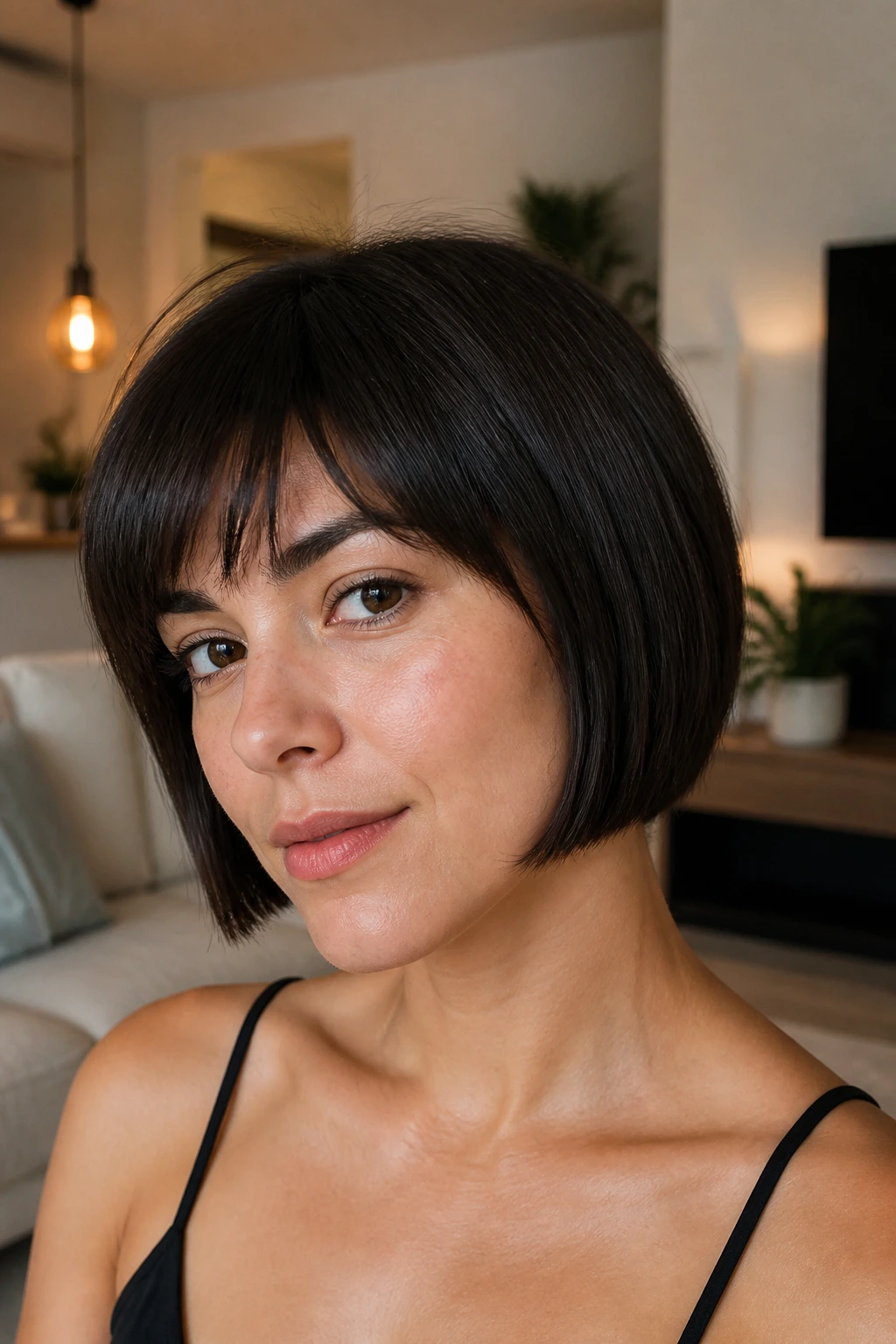
A blunt edge can make fine hair look thicker than a lot of fancy layering ever will.
That sounds almost too simple, but it works because the eye reads a solid line as density. When the ends are kept clean and even, the haircut doesn’t break apart visually. Fine hair usually benefits from this more than from over-textured cuts, especially if the strands are fragile.
Quick Facts
- Best on straight or lightly wavy hair
- Keeps the perimeter looking full
- Needs regular trims to stay sharp
- Looks best when the ends sit at the jaw or just above it
The blunt-line version is not the right choice if you want a lot of movement around the face. It’s more controlled than playful. Still, that control can be a relief. If your hair tends to fray at the ends, a blunt shape gives it a stronger finish and a little more presence.
20. Shaggy Pixie Bob
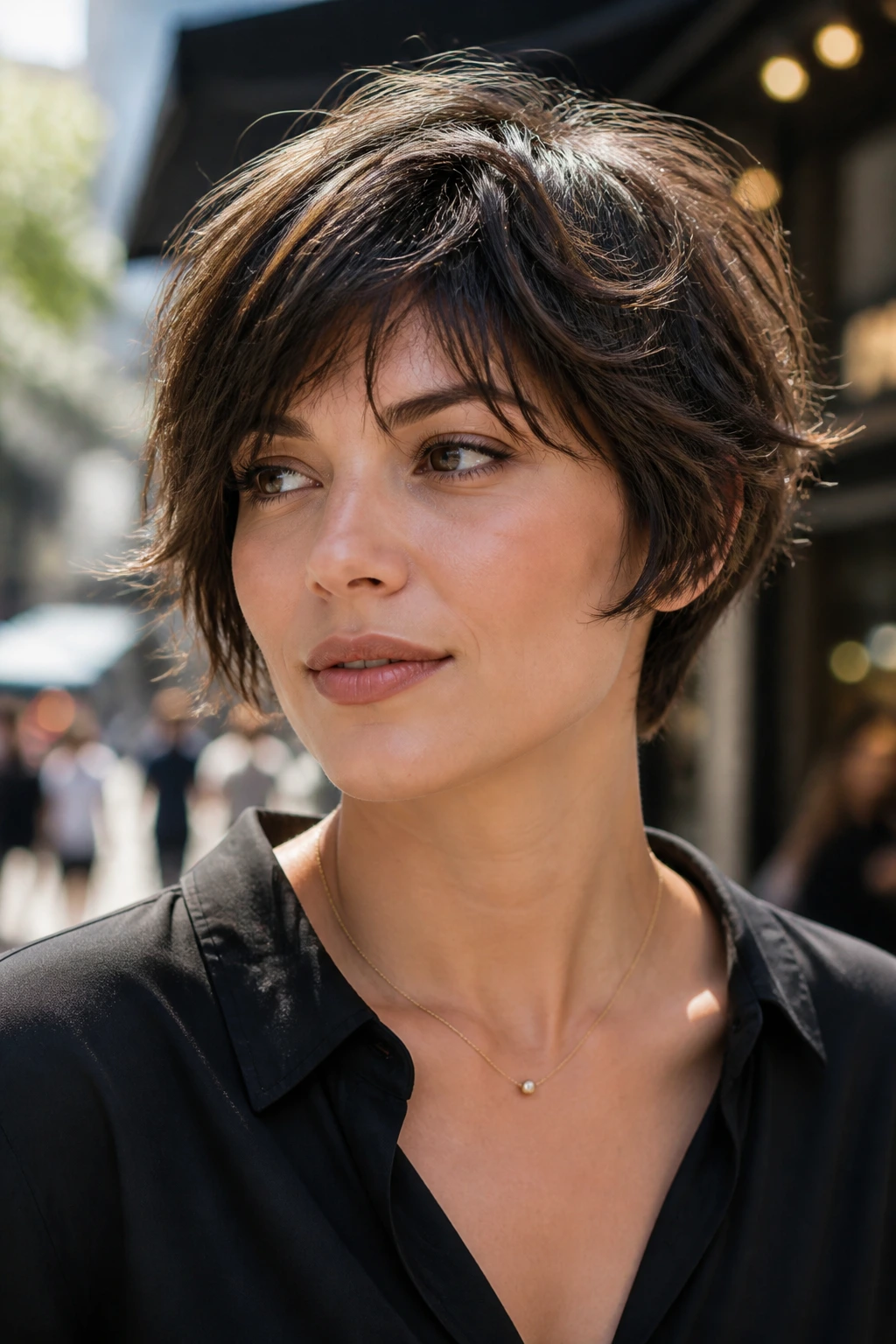
A shaggy shape can be lovely on fine hair, as long as the layers aren’t stripped out.
The point of this cut is irregular movement. Shorter pieces around the crown, softer layers near the cheeks, and a slightly messy finish give the hair a lived-in feel. Fine hair likes this when it has a natural bend, because the broken-up texture keeps everything from falling into one flat plane.
The mistake people make is asking for too much thinning. That turns shaggy into sparse. Not the same thing. Keep the layers close enough together that the cut still reads full, then style with a bit of cream or lightweight paste to separate the pieces.
If you like hair that looks better after being worn for a few hours, this one fits the brief. It does not need to be perfect. In fact, that would spoil it.
21. Face-Framing Elongated Pixie Bob
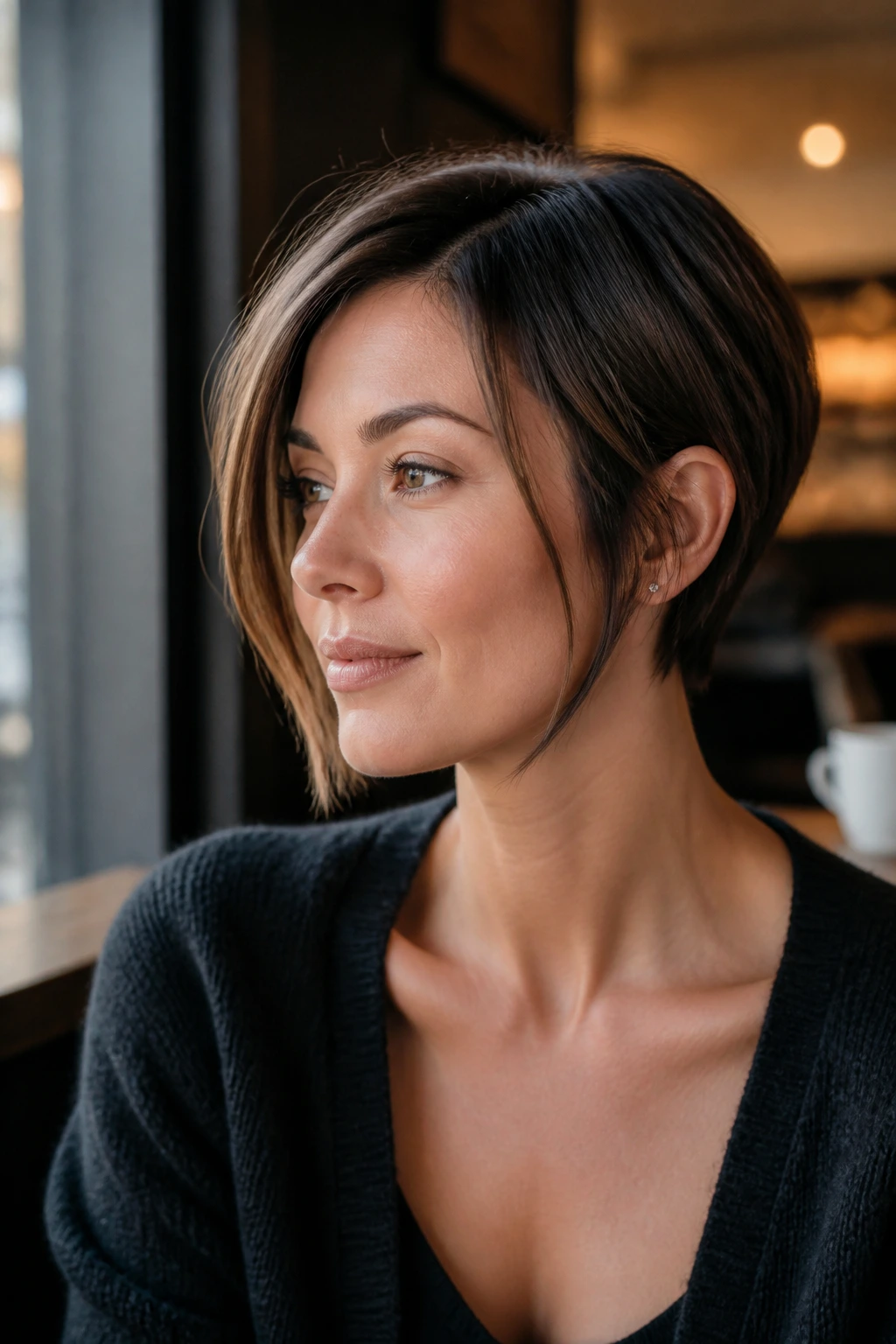
Longer pieces in front can change the whole mood of a short cut.
A face-framing pixie bob keeps the back neat while letting the front graze the jaw or cheekbones. For fine hair, that extra length at the front adds visual weight where it counts, and it gives you a little more to work with on days when you want a softer shape. It also helps if you’re easing into shorter hair and don’t want a sudden chop.
Where the Length Should Sit
Aim for the longest pieces to land between the cheekbone and the jawline. That zone softens the face without dragging the haircut down. The back can stay cropped and clean so the whole shape still feels light.
This cut works well with a side part, but it can also be worn tucked behind one ear for a cleaner finish. If your hair is fine but not very dense, this is one of the least risky ways to get a pixie bob without losing the feeling of length.
22. Grown-Out Low-Maintenance Pixie Bob for Fine Hair
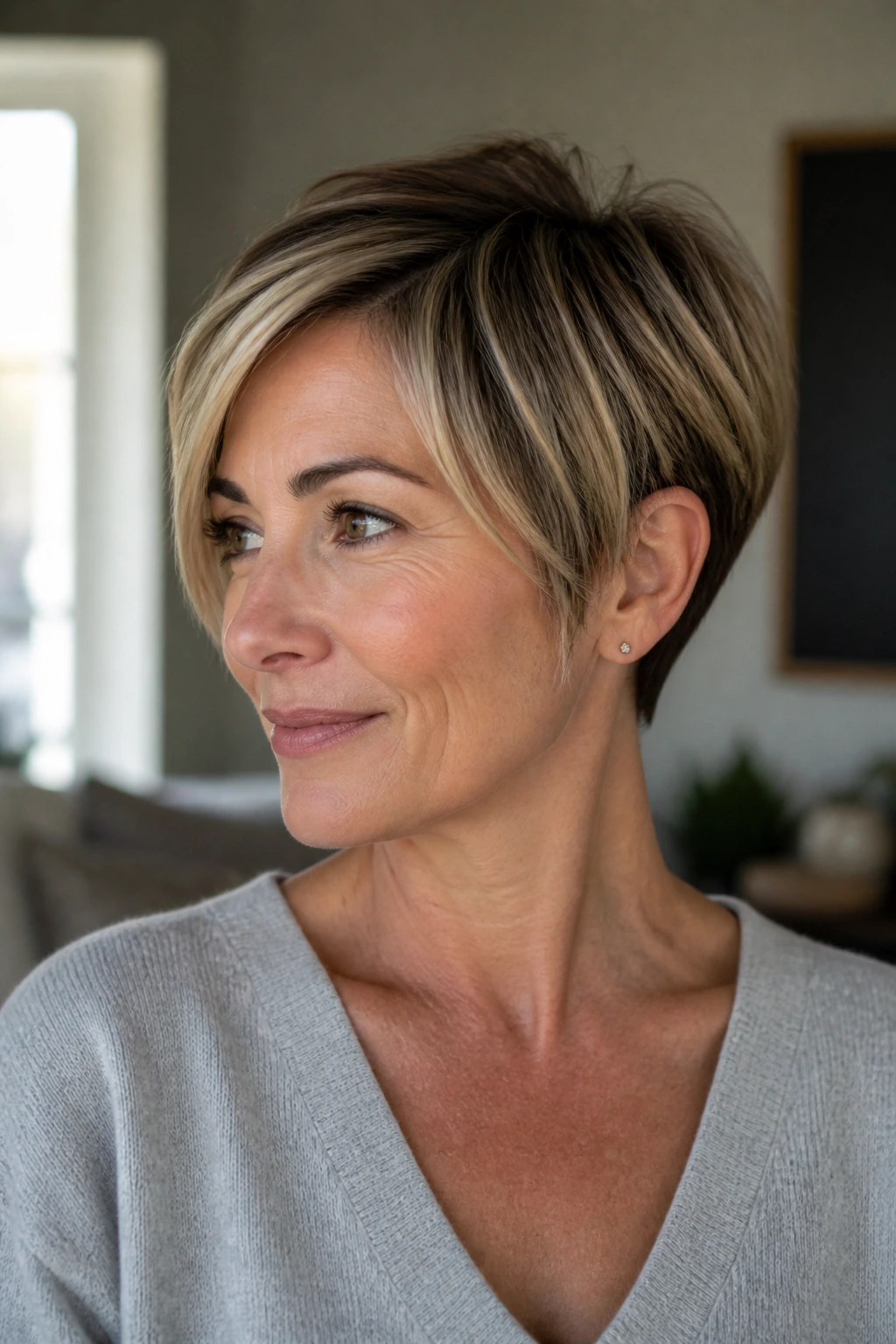
Some haircuts look good only on day one. This is not one of them.
A grown-out pixie bob is for people who want a shape that survives real life: skipped wash days, imperfect blow-drying, and the awkward few weeks between trims. The cut keeps enough length around the front and sides to stay flattering as it softens, while the back remains short enough to avoid that heavy shelf effect. Fine hair benefits from this because the silhouette stays controlled even when the texture gets a little messy.
If you want the least maintenance, ask for:
- A soft perimeter at the jaw or just above it
- Light layering through the crown
- Enough length around the ears to tuck
- A back that tapers instead of stacking too sharply
This is the version I’d hand to someone who wants one haircut to do several jobs. It can look neat, casual, or slightly polished with almost no extra effort. That’s a rare thing. And for fine hair, rare usually means useful.