



Thick hair and a bad pixie cut can get rude fast.
The cut looks charming in the salon mirror, then puffs out at the sides, eats up your cheekbones, and starts behaving like a helmet by lunch. That’s exactly why long pixie cuts for thick hair work so well when they’re layered with intent instead of chopped short everywhere at once.
The sweet spot is length on top and around the face, with enough weight removed through the crown, sides, and nape to keep the shape from swelling. Dense hair is rarely hard to cut. It is hard to balance. Leave it blunt, and it can feel heavy in two days. Shape it well, and you get movement, lift, and that slightly undone texture thick hair does better than fine hair almost every time.
What matters most is where the bulk comes off. The best versions leave soft edges near the cheekbones, controlled volume at the crown, and a neckline that does not flare out like a mushroom. A long pixie gives you room to style, room to grow it out, and enough length to tuck, sweep, piece out, or smooth down depending on your mood.
1. Feathered Crown Long Pixie
Feathering the crown is one of those moves that looks small on paper and makes a huge difference in real life. Thick hair can pile up at the top and make a pixie look boxy, so the crown needs soft internal layers, not a blunt shelf.
Why It Works
A feathered crown keeps the top light without shaving off all the length. That matters because thick hair tends to hold shape better when there’s still some weight left near the roots. The result is height, but not a stiff, helmet-like puff.
Ask for point cutting through the top section and soft, disconnected layers that release bulk. If your stylist reaches for thinning shears and goes wild, pause. Too much thinning can leave frizzy ends that puff in humidity.
A mousse at the roots and a quick blow-dry with a small round brush are usually enough. You want lift at the base, not a teased look that collapses by noon.
- Best for straight, wavy, or dense hair that feels heavy on top
- Works well with a side part or a soft center part
- Style with a walnut-size amount of mousse before drying
- Finish with a pea-size dab of cream on the ends, not the roots
Pro tip: keep the crown airy and the nape neat. That contrast is what makes the shape feel clean.
2. Side-Swept Long Pixie With a Tapered Nape
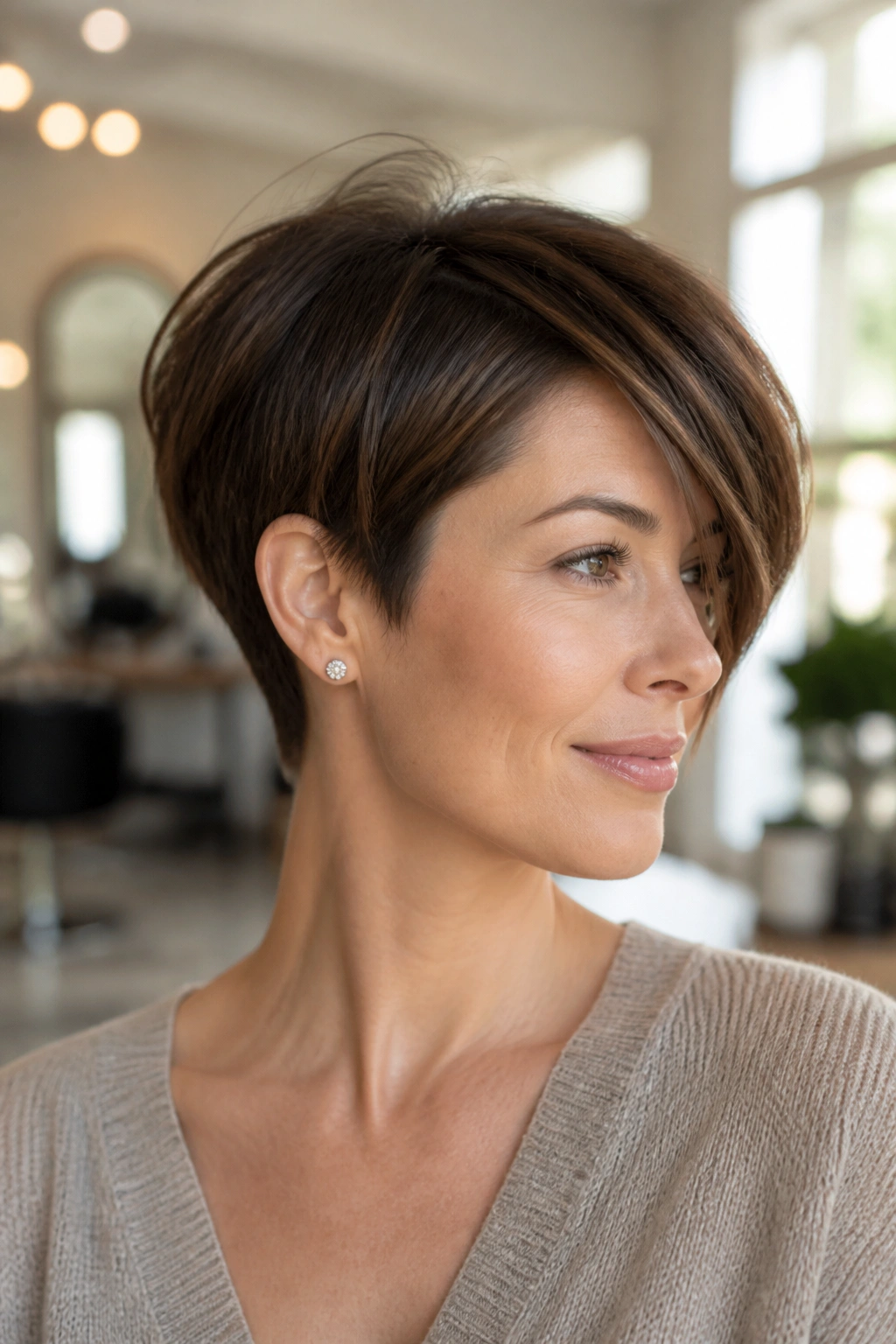
Can a side part calm thick hair down? Yes, and it can do it without making the cut look sleepy.
A side-swept long pixie uses the diagonal line of the part to break up all that density. Instead of letting your hair fall straight across in one heavy wall, the style bends the eye across the face. The tapered nape keeps the back from bulking up, which is where thick hair often gets stubborn.
How to Style the Part
Set the part while the hair is damp, not when it’s almost dry. Thick hair remembers the shape it dries in, so this is one of those small details that pays off later. Blow-dry the front section in the opposite direction first, then flip it back. That gives the top a little lift at the root.
This cut suits people who want softness around the face but still want the neck to feel tidy. It also grows out well because the taper keeps the silhouette from turning fuzzy too fast.
If your hair tends to kick outward at the nape, ask for a gradual taper, not a hard buzzed fade. The softer line is easier to live with and looks better once the cut starts to grow.
3. Choppy Textured Long Pixie
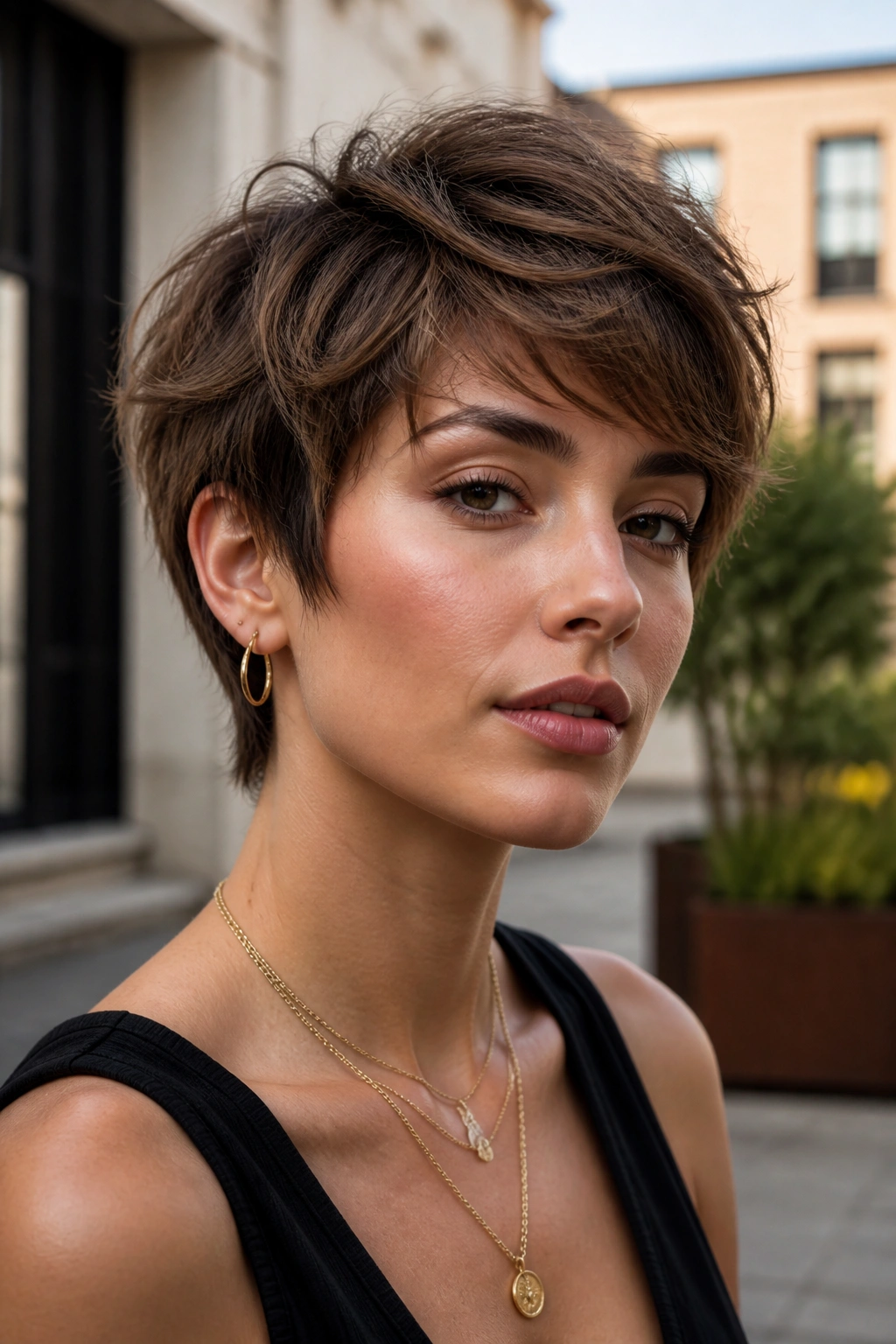
A choppy long pixie is where thick hair stops trying to behave and starts looking cool.
The shape depends on broken-up ends and uneven movement. That sounds messy, but it’s really about control. Dense hair can hold texture better than fine hair, and that makes it ideal for a cut that has little bits of edge and a lot of separation. The trick is keeping the layers deliberate, not random.
Picture hair that moves when you turn your head. That’s the goal. The ends should look soft and piecey, not blunt and solid. If your hair has a lot of body, the choppiness keeps it from reading as one heavy mass.
What to Ask For
- Razor or point-cut ends for softer separation
- A little extra length around the front pieces
- Lightweight internal layers to remove bulk
- A textured fringe if you want more attitude up top
A matte paste or texturizing cream is usually enough for styling. Work a small amount through dry hair, then pinch the ends with your fingers. Don’t overdo it. Thick hair can take more product than fine hair, but it still turns greasy if you pile it on.
4. Swept-Back Long Pixie With a Long Fringe
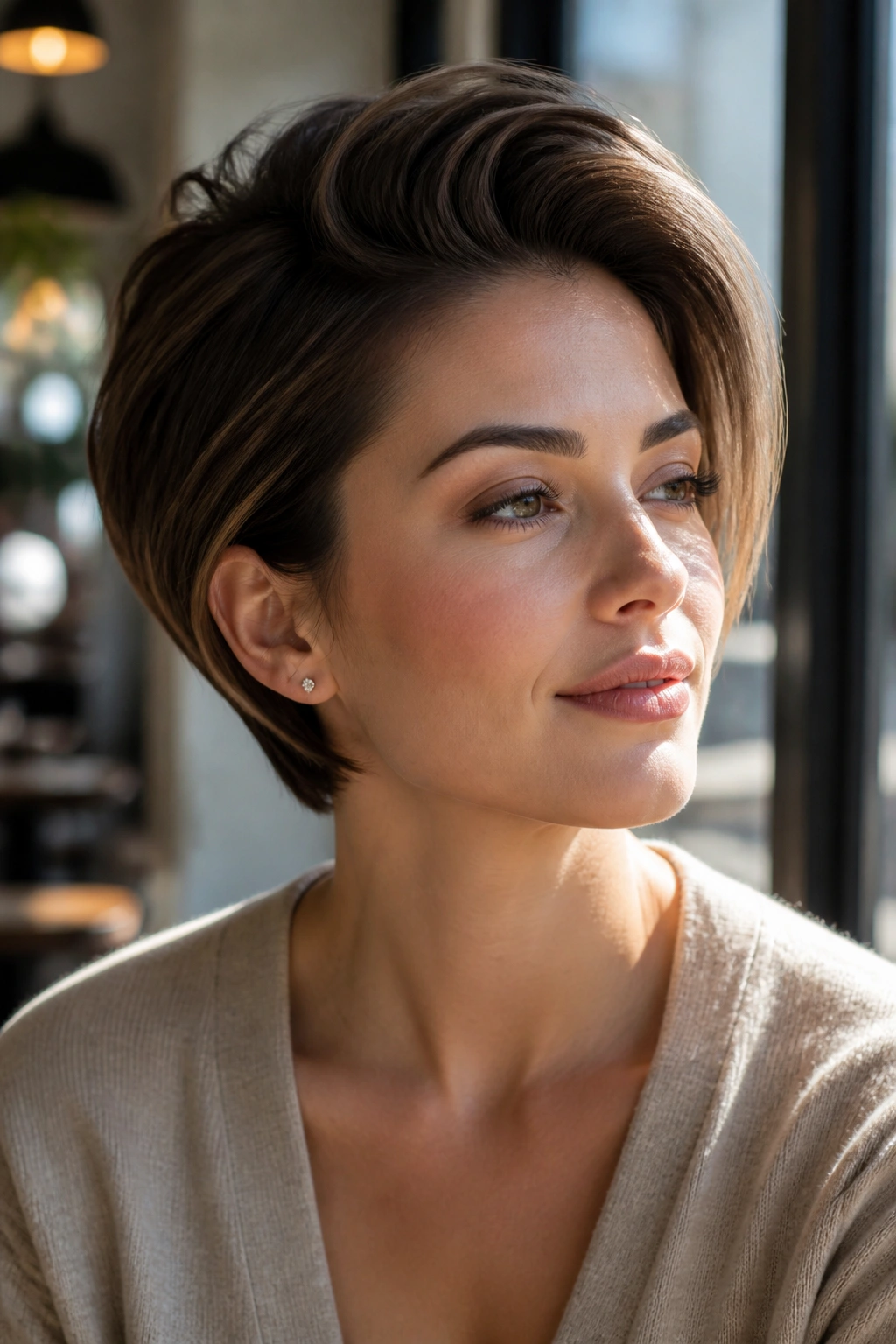
There’s something sharp about a swept-back pixie when thick hair is involved.
The style pushes the front away from the face, which instantly opens up the features. A long fringe keeps it from feeling too severe. You get that brushed-back shape through the top, but enough length in front to soften the forehead and cheekbones.
This cut is especially good if your hair naturally grows forward or drops heavily into your eyes. Instead of fighting that direction, the shape redirects it. A blow-dryer nozzle and a vent brush help here more than a flat iron does. Dry the front backward first, then guide it up and back with your fingers.
The fringe should not look stiff. It should bend. That little bend is what keeps the style from turning into a formal, overstyled shape.
Use a light gel cream or smoothing lotion if your hair frizzes easily. If you use a heavy balm, the front can collapse. And once the front collapses, the whole style loses its energy.
5. Undercut Long Pixie for Maximum Bulk Removal
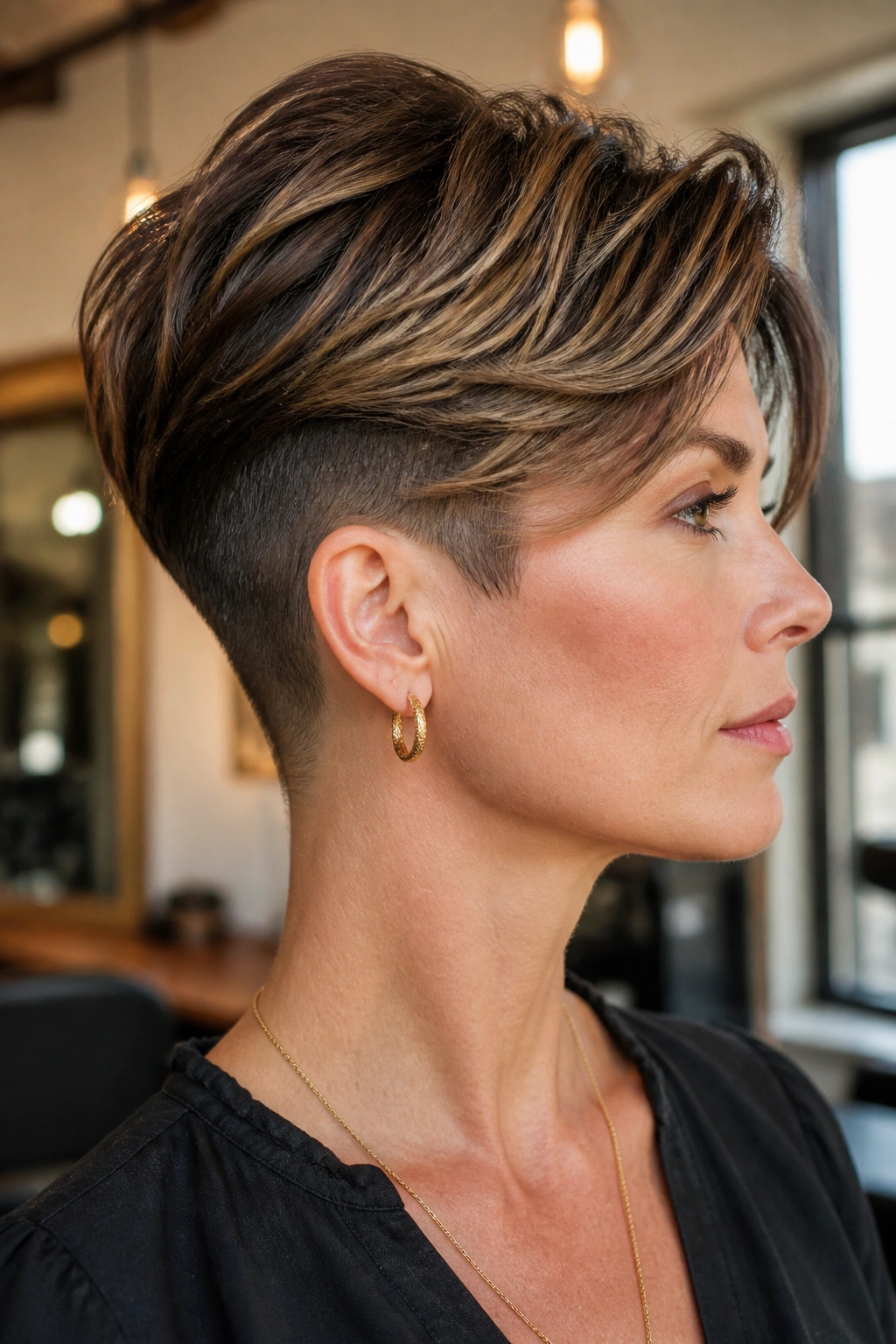
This is the blunt answer for hair that refuses to behave.
An undercut long pixie removes a chunk of weight from underneath, usually around the nape and sometimes behind the ears. Thick hair can carry that hidden bulk for a while, then suddenly blow out into a triangle. The undercut stops that before it starts.
It is not the most forgiving option if you hate upkeep. You’ll need cleanup trims more often than you would with a softer cut, because the contrast between the short underlayer and longer top can get fuzzy fast. But if your hair is dense enough to feel hot and heavy, the payoff is real.
This style works best when the top stays long enough to cover the undercut when you want a quieter look. You can wear it sleek, spiky, or swept to one side. That flexibility is the whole point.
A good undercut should feel hidden, not dramatic unless you want it to be. Ask for the top layers to fall at least to the upper cheekbone so you still have styling options. If the top is too short, the cut loses range.
6. Soft Rounded Long Pixie
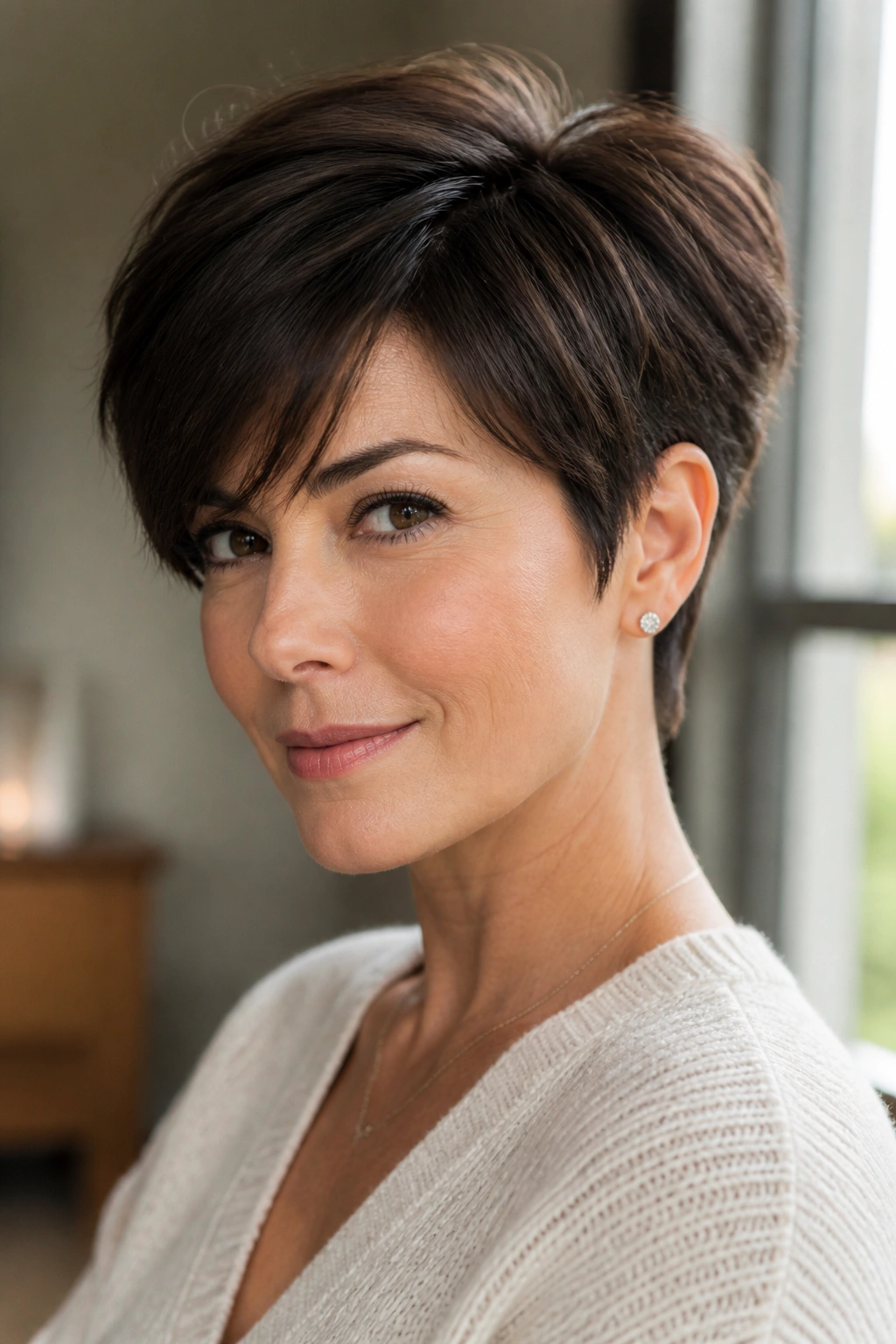
A soft rounded long pixie is the one I recommend to people who want short hair but don’t want the haircut to announce itself.
What Makes It Round
The outline curves gently around the head instead of building sharp corners. Thick hair likes that because it keeps the shape from sticking out at the sides. The crown gets subtle lift, the sides hug the face, and the nape stays neat without looking severe.
This cut depends on balance. The layers should be light enough to release bulk, but not so broken up that the shape turns fuzzy. If you’ve got a strong jawline or a wider cheek area, the rounded finish can soften everything without hiding your features.
How to Ask for It
Tell your stylist you want rounded fullness through the top with controlled sides. That phrase is useful because it signals shape, not just length. You can also ask for soft graduation at the nape and gentle face-framing pieces that stop around the cheekbone.
Styling is calm, which is part of the appeal. A round brush, a low-heat blow-dry, and a tiny bit of smoothing cream are usually enough. The result should feel polished, not stiff.
7. Shaggy Long Pixie With Curtain Bangs
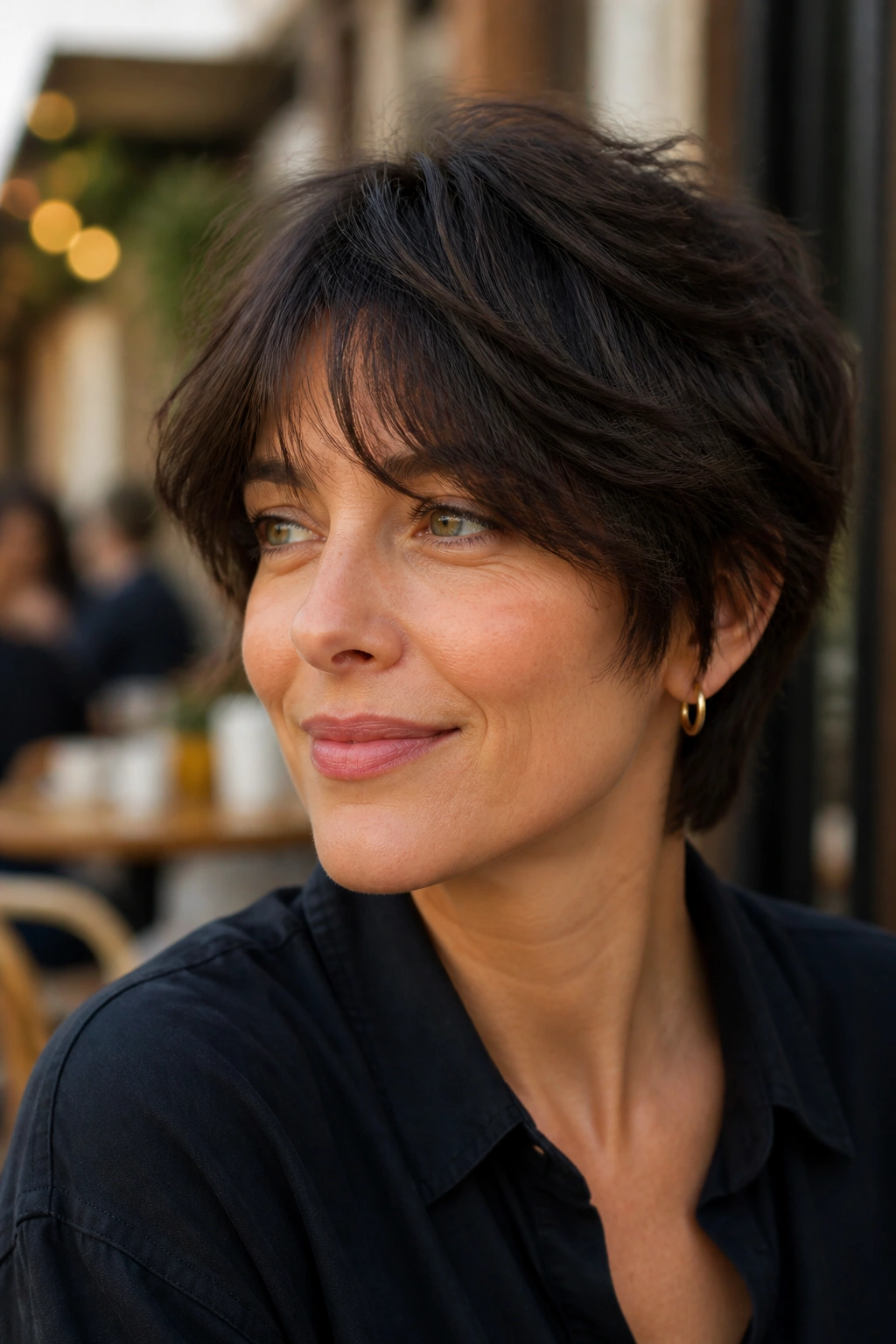
This cut has a little attitude, but it’s not loud.
Thick hair and curtain bangs get along better than people expect, because dense hair can hold the split and the shape without disappearing by midday. The shaggy layers keep the top from looking bulky, and the curtain pieces soften the forehead in a way that feels easy rather than overly styled.
The key is movement. You want layers that bend away from the face, not a heavy block of fringe that lands like a curtain rod. A good shaggy pixie should look a little wind-ruffled even when you’ve only spent five minutes on it.
Dry the bangs away from the center, then separate them with your fingers while they’re still warm. If you wait until they’re cold, they can set in a flatter shape than you want. A dry texture spray at the roots helps keep lift around the crown.
This is one of the better choices if your thick hair feels too “done” when cut blunt. The shaggier finish takes away that stiffness without sacrificing structure.
8. Asymmetrical Long Pixie
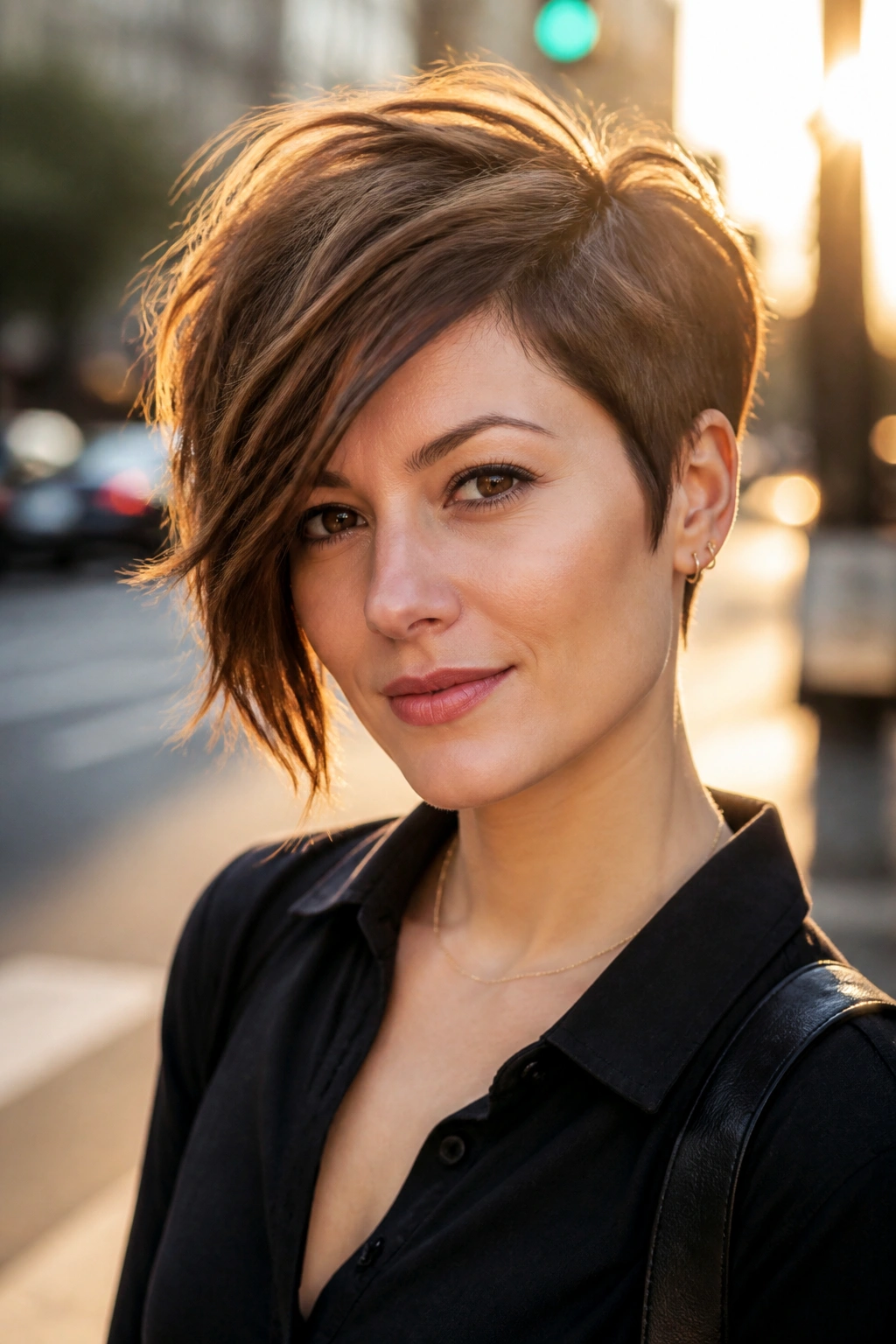
One side a little longer. That’s the whole trick, and it works.
An asymmetrical long pixie gives thick hair a built-in escape hatch. Instead of distributing all the weight evenly, the cut breaks the shape on purpose. That keeps the style from feeling too symmetrical or too heavy, especially around the cheeks and jaw.
Here’s the thing: asymmetry is not about being flashy. It’s about redirecting bulk. A longer side can skim the face while the shorter side opens up the neck and ear area. If your hair tends to flare wide, that diagonal line is useful.
- Longer side can be tucked behind one ear
- Shorter side keeps the overall shape lighter
- Works well with a deep side part
- Flatters square and round face shapes especially well
Ask for the longer side to reach somewhere between the jawline and cheekbone, depending on how much length you want to keep. If the difference between sides is too extreme, the cut can feel costume-y. A subtle shift is usually smarter.
9. Curly Long Pixie for Thick Hair
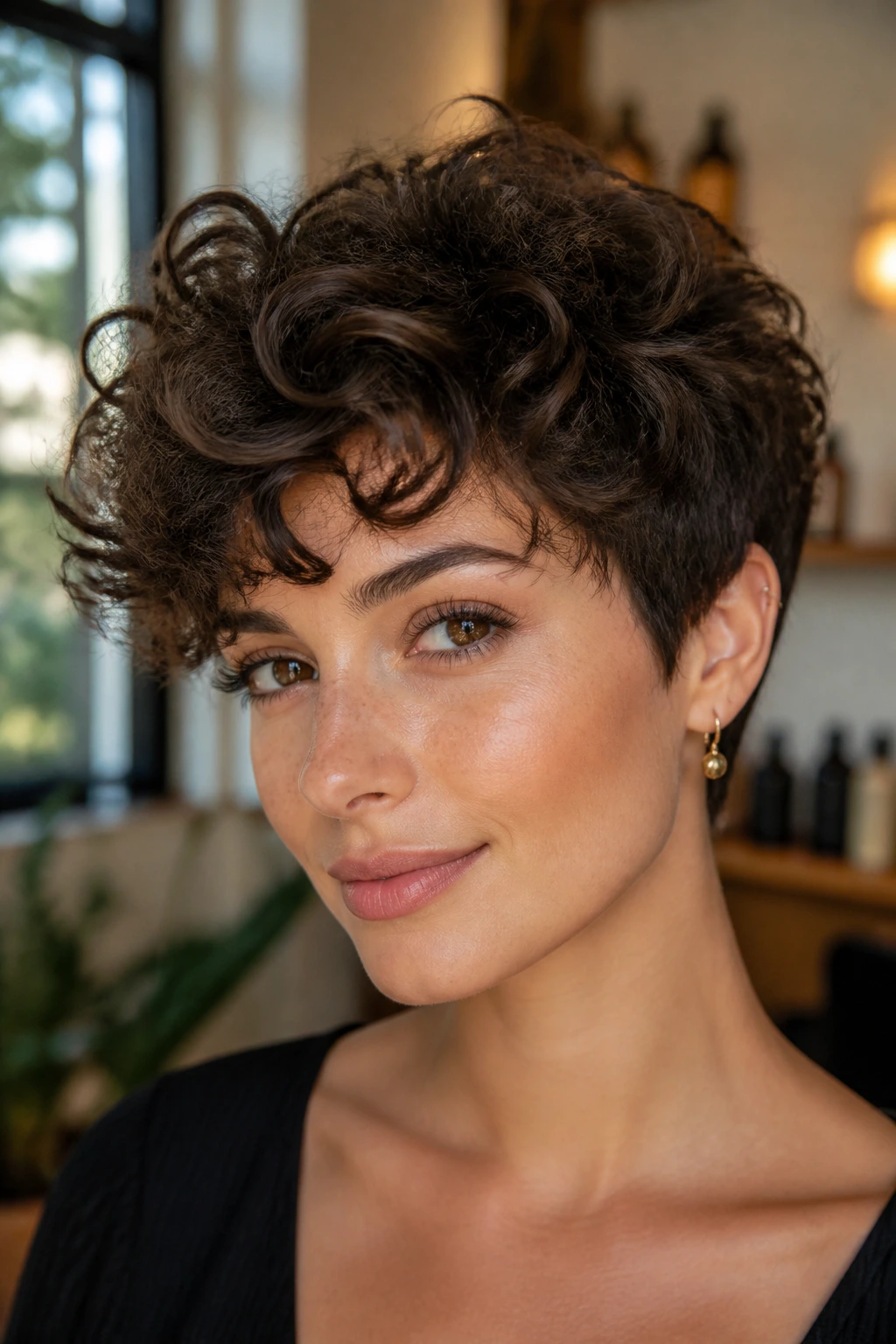
Curly hair and thick hair often show up together, and when they do, a long pixie can be a blessing.
The mistake people make is cutting curls too short without room for the spring. Once curly hair dries, it always contracts more than the person expected in the chair. A long pixie gives the curl pattern room to breathe, so the shape stays soft instead of puffing into a tight halo.
How to Keep the Shape
Ask for the cut to be done on dry hair or nearly dry hair if your stylist knows curly structure well. That helps them see how the curls actually live. Wet curls can be deceptive. They stretch, then bounce up later and surprise everybody.
Use a leave-in conditioner and a curl cream, but keep the amount modest. For thick curly hair, a quarter-size amount of each is often enough. Scrunch with a microfiber towel, then diffuse on low heat. High heat can make the top frizz before the inside dries.
The best curly long pixie keeps a little length around the front and crown so the curl pattern can stack in a flattering way. Too much layering can leave the top looking chaotic. Too little leaves it bulky. The middle ground is where the good cuts live.
10. Classic Long Pixie With Piecey Layers
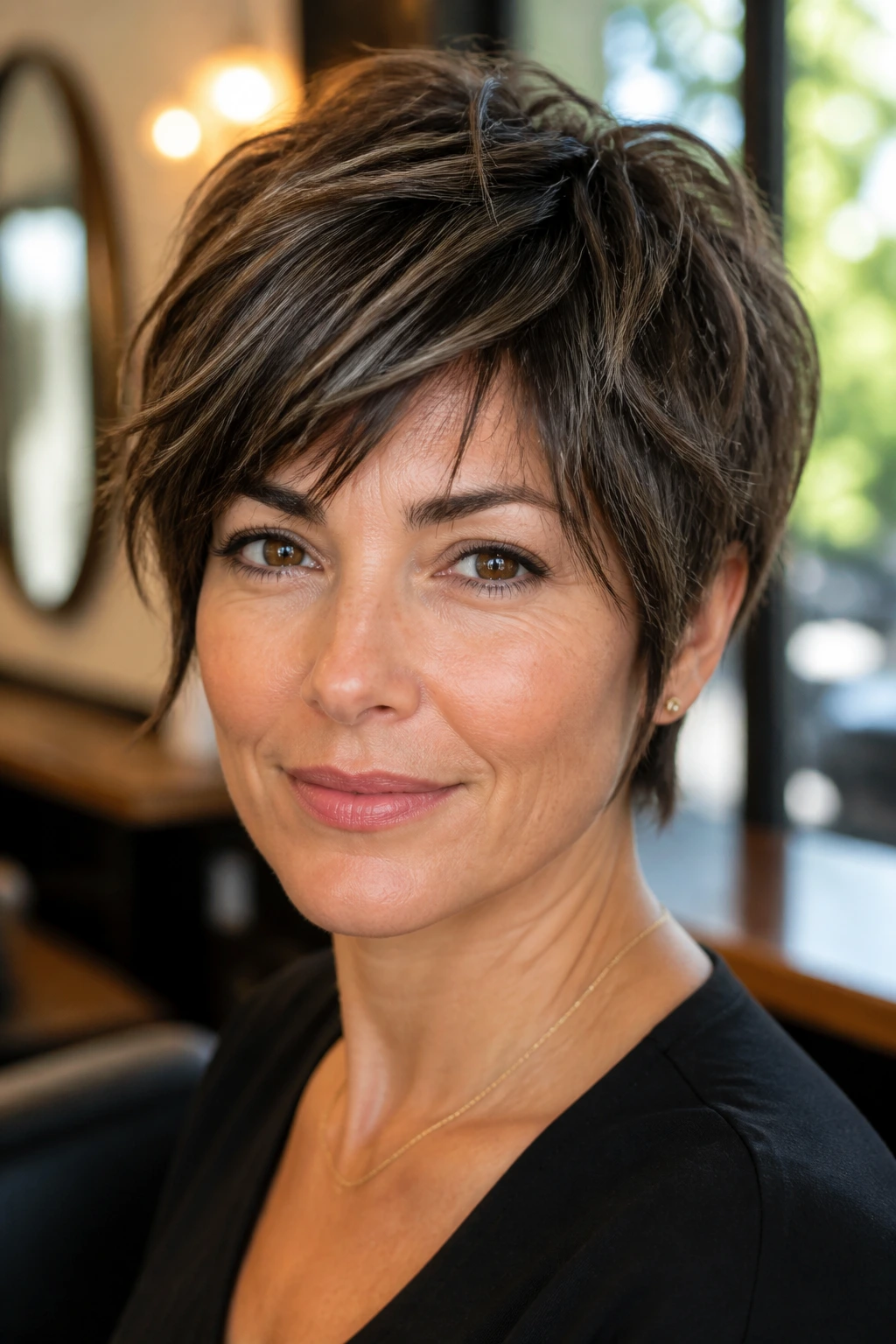
Some people want the long pixie version that feels familiar, not experimental.
A classic piecey cut gives you that. It keeps the outline tidy, the top long enough to style, and the ends separated enough to keep thick hair from turning into one solid block. It’s the sort of cut that still looks good on the second day, which I always count as a win.
The beauty of this version is that it doesn’t depend on a dramatic shape. You can wear it tucked, swept, or a little tousled. The piecey layers do the work for you. Thick hair holds those separated strands better than finer hair, so you get texture without trying too hard.
If you want a polished-but-not-fussy look, ask for longer top layers and lightly textured sides. That combination makes the haircut look purposeful instead of overworked. A small amount of styling cream through the ends is enough.
This is also the easiest long pixie to grow out, which matters more than people admit at the start. Growth stage hair can get awkward fast, and a classic shape softens that process.
11. Long Pixie Bob Hybrid
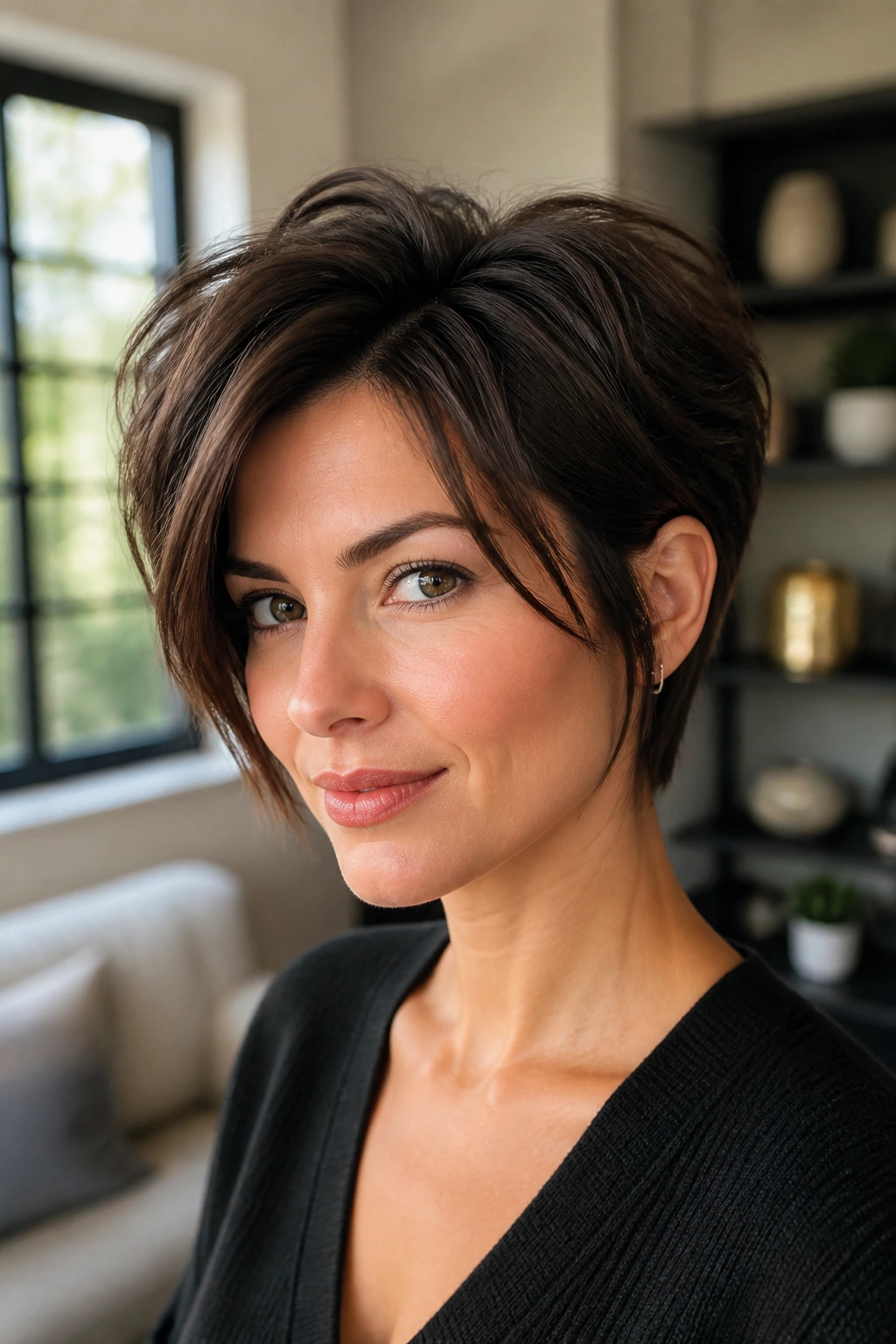
This one sits between a pixie and a bob, and that middle ground is the point.
A long pixie bob hybrid keeps enough length around the ears and jaw to feel less dramatic than a classic pixie, but it still has the short, lifted feel that makes thick hair lighter. If you’re nervous about losing too much length, this is the safe doorway.
The cut usually sits a little longer in front and shorter in back, with enough texture to stop the sides from looking too square. Thick hair benefits from that back-to-front length shift because the nape stays neat while the front stays soft.
Unlike a full bob, this shape does not need much blowout work to look finished. Unlike a very short pixie, it still lets you tuck hair behind the ear and keep some face-framing length. That makes it useful for people who want movement but not a full chop.
It is especially good if your hair is dense through the jawline. The hybrid shape lightens that area without making the head look too short from the side.
12. Bixie With Heavy Texture
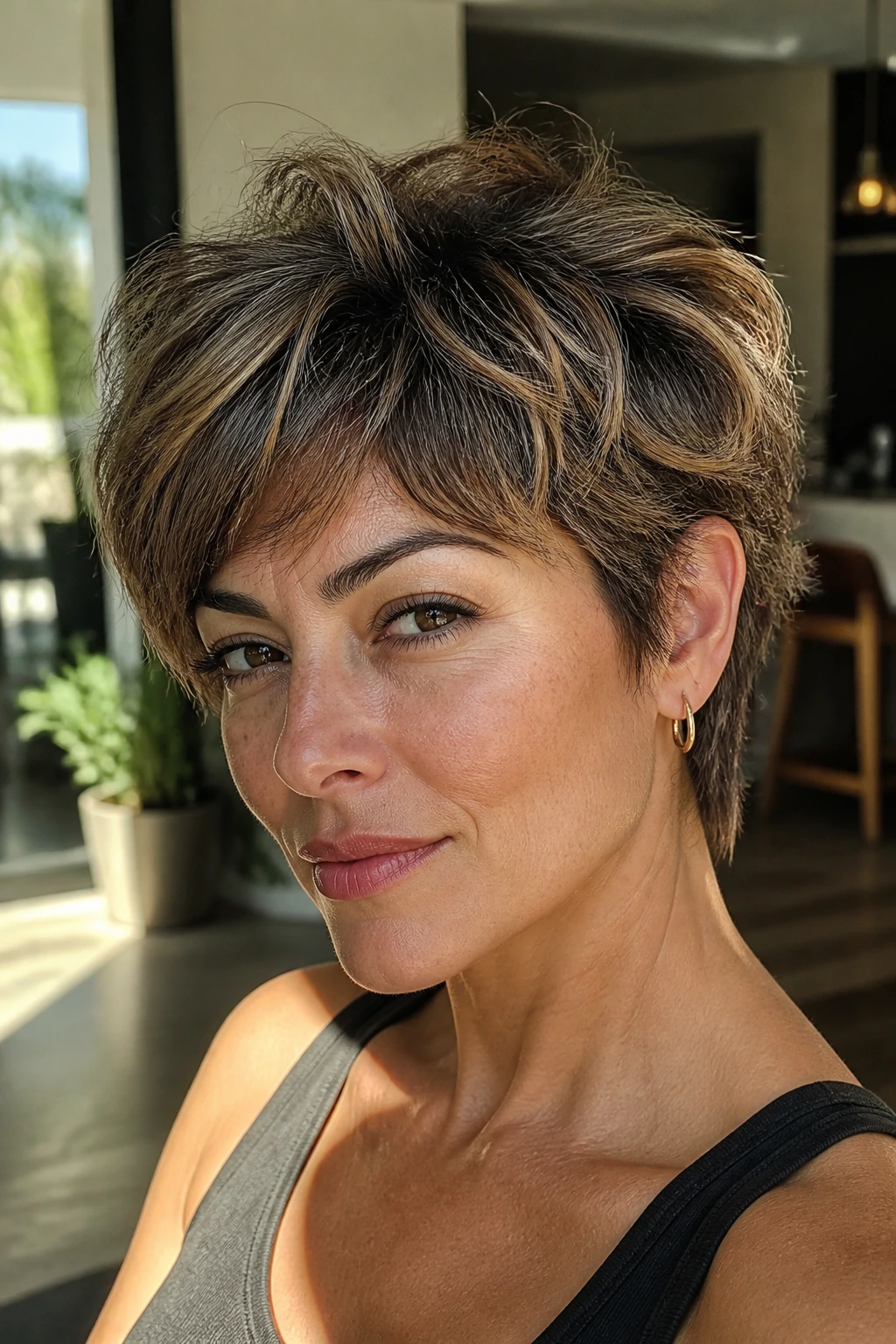
A bixie is basically what happens when a bob and a pixie decide not to argue anymore.
For thick hair, the bixie can be a sweet spot because it keeps more length than a pixie but more air than a bob. The heavy texture matters here. Without it, the cut can look too solid. With it, the layers break up the mass and give the whole shape a lived-in feel.
I like this cut for hair that’s dense but not wildly coarse. It gives the ends room to move and keeps the crown from collapsing. There’s also a nice softness around the ears, which helps the haircut feel grown-up rather than overly severe.
Ask for interior layers and softened perimeter lines. That last part matters. A bixie with a hard edge can look like a helmet. A bixie with a feathered edge looks modern and easy to wear.
This cut is good if you want to run your fingers through your hair and have it still look intentional after. The texture should do the work, not a lot of product.
13. Sleek Long Pixie With a Deep Side Part
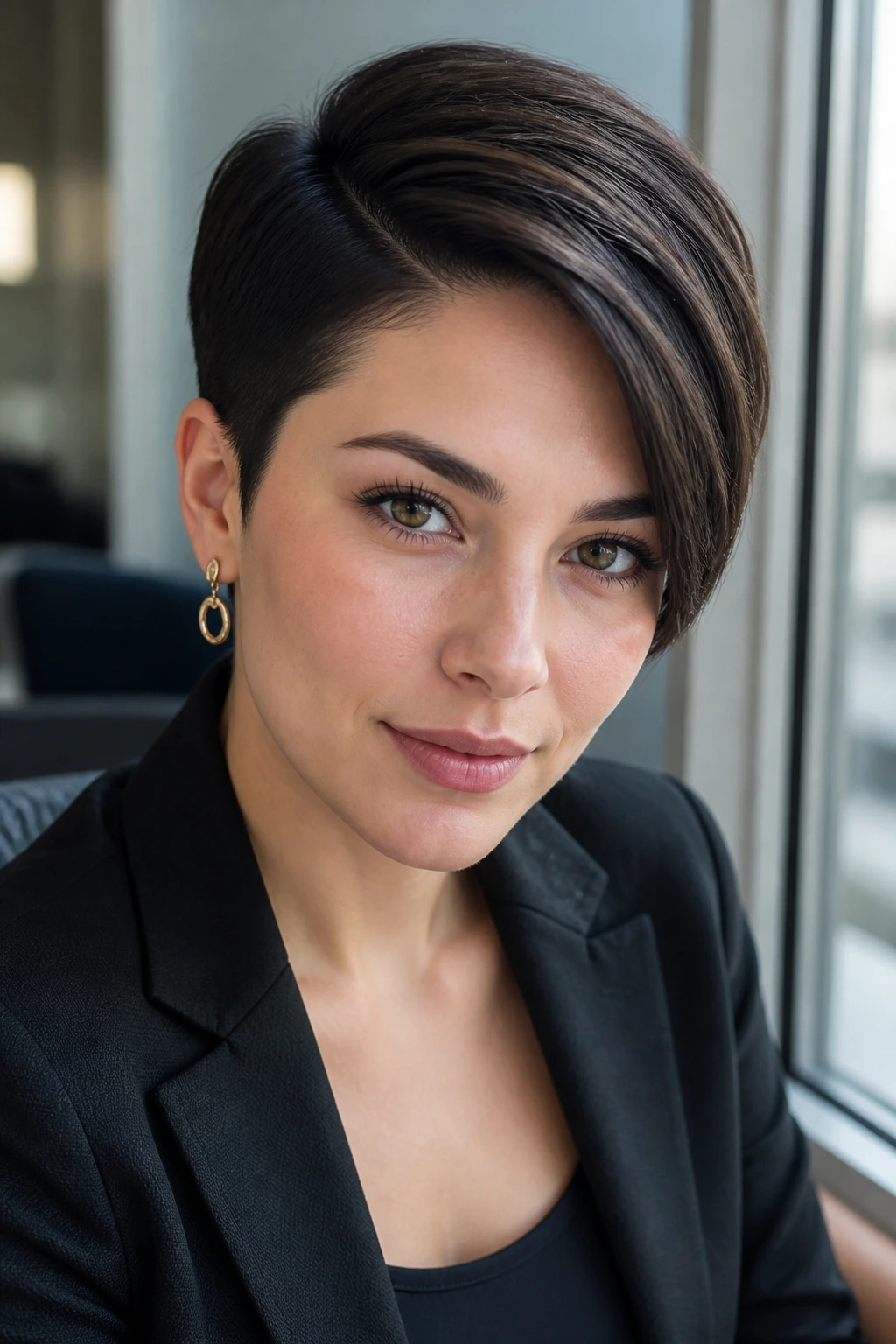
Can a thick-haired pixie be sleek? Absolutely. It just needs discipline.
The deep side part gives this cut a clear direction, which is half the battle with dense hair. Instead of spreading volume evenly across the head, the shape sweeps across and down. That creates a cleaner line through the top and lets the hair sit closer to the scalp on one side.
How to Style It
- Start with damp hair and apply a light smoothing cream from mid-length to ends.
- Blow-dry with a paddle brush or flat brush, guiding the top across the part.
- Use a flat iron only on stubborn sections, and keep the heat low enough that the ends do not look fried.
- Finish with a drop of serum on the surface, not the roots.
The sleek version works best when the haircut underneath is still layered. That sounds contradictory, but it isn’t. The cut needs internal removal so the smooth finish lies flat instead of bloating out.
If your hair frizzes quickly, this may not be your most carefree option. Still, for dinners, events, or office days when you want a clean shape, it earns its keep.
14. Long Pixie With Micro-Textured Fringe
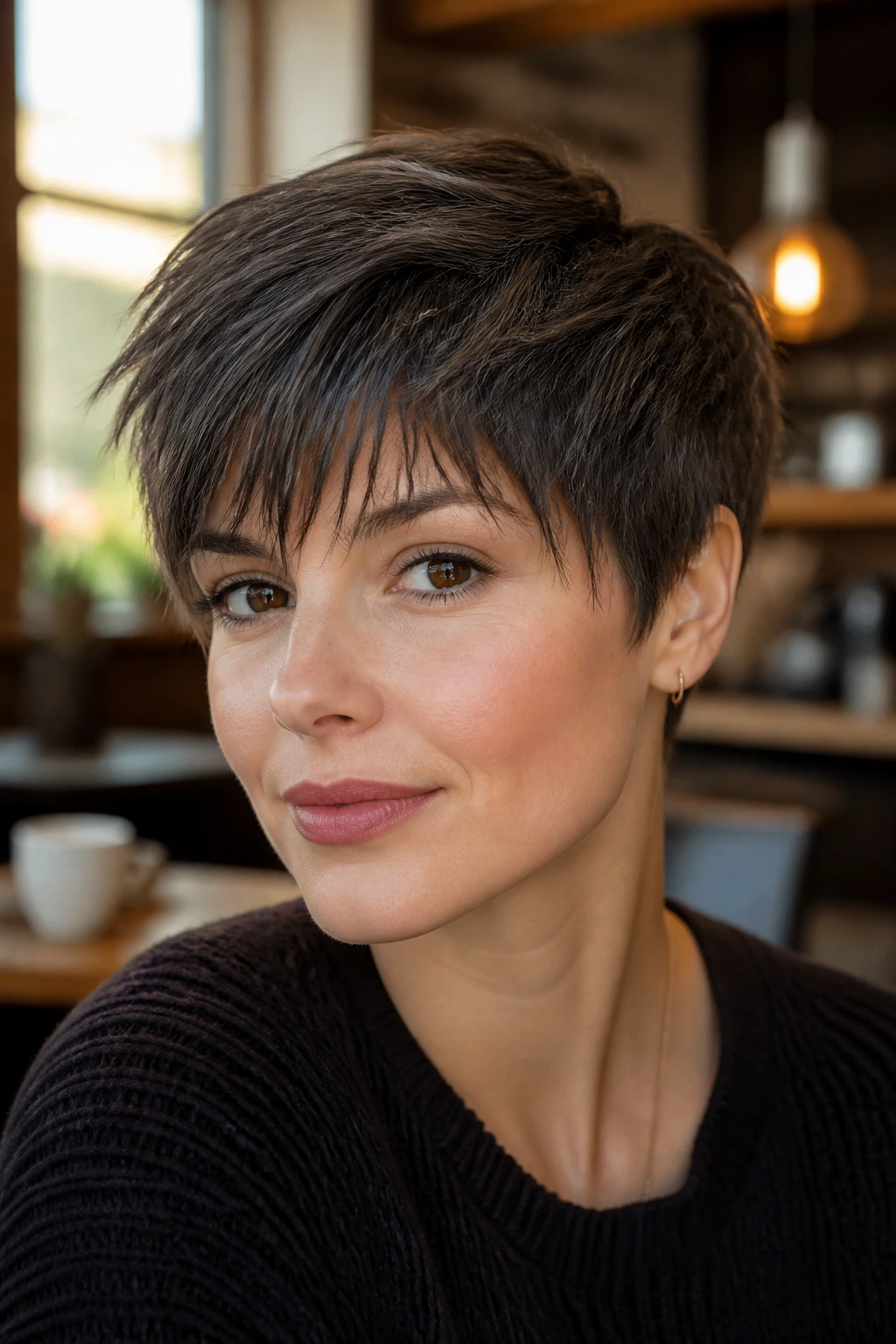
A small fringe can change the whole haircut.
Micro-textured bangs, worn with a long pixie, give thick hair a sharp front edge without building too much weight across the forehead. The key word is textured. A blunt micro fringe on dense hair can look too heavy and too stiff. When it’s softened, it sits better and moves a little.
This style suits people who like a bit of edge but do not want a full statement bang. It’s especially useful if your forehead is wider or you want the eyes to be the first thing people notice. The fringe should skim, not smother.
Ask for the fringe to be cut dry and slightly broken up at the tips. That helps the stylist avoid taking off too much. Thick hair shrinks in personality when it’s cut too bluntly in front.
- Keep the fringe short enough to clear the lashes
- Leave the top long enough to style back or to the side
- Use a tiny amount of paste only on the fringe ends
- Trim it before it gets heavy and starts splitting into chunks
This one has personality. It just needs a steady hand.
15. Airy Layered Long Pixie for Dense Hair
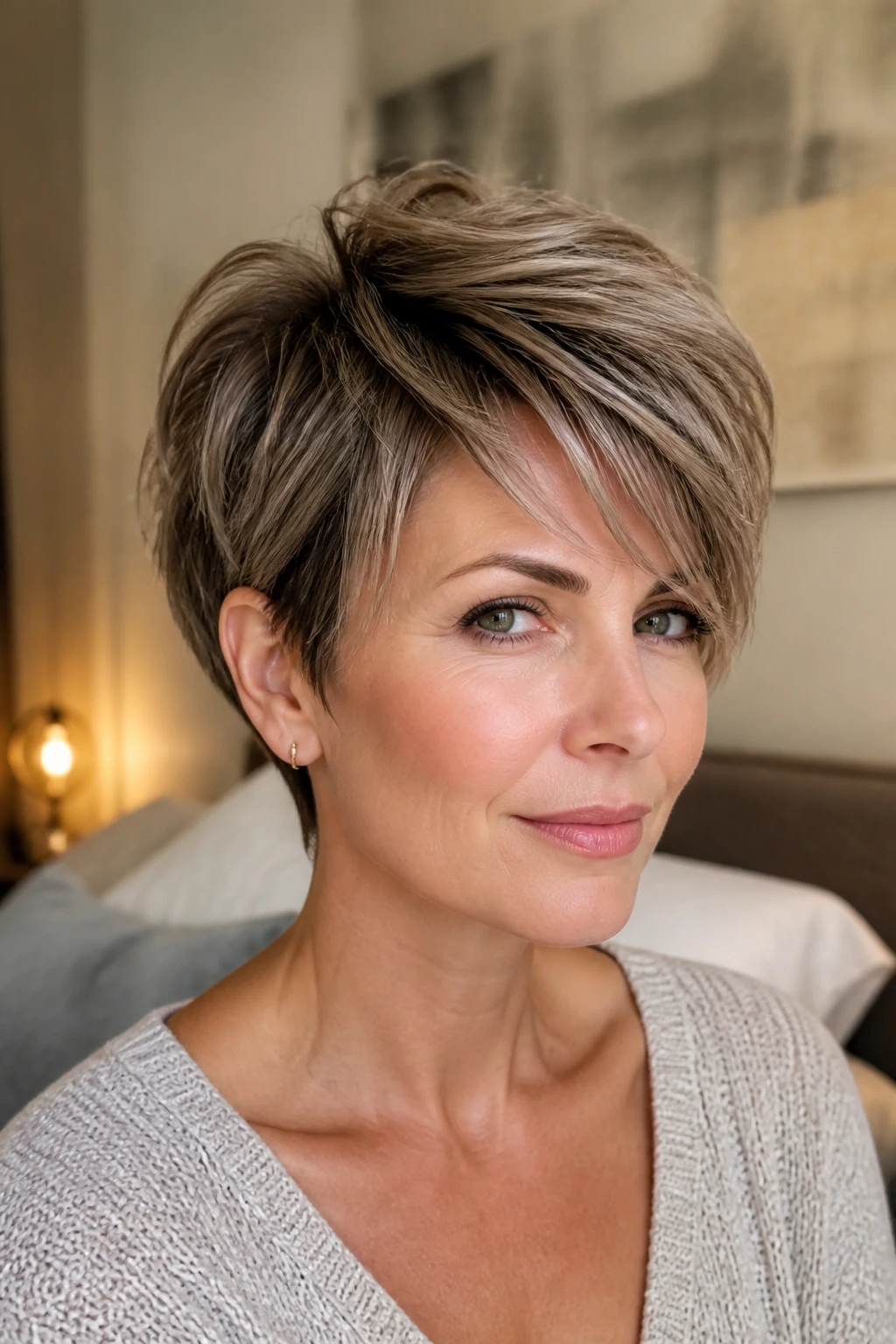
Dense hair loves air. It fights bulk every single day, and airy layering is how you win back some space.
The Layer Pattern That Helps
This cut uses internal layers to remove weight from beneath the top surface. That means the outside still looks full, but the inside is lighter. It’s a smarter move than hacking at the surface, because the shape stays cleaner as it grows.
The best airy layered pixies have a little lift at the crown, softened sides, and a nape that sits close to the neck. The whole thing should feel light in motion. When you shake your head, the layers should separate instead of clumping.
What to Ask Your Stylist
- Shorter interior layers under the crown
- Softer perimeter at the cheek and jaw
- A neat, tapered neckline
- A top layer long enough to sweep to one side
This style is especially kind to thick hair that gets hot or puffy. If you’ve ever left the house with a fresh blowout and felt it thicken up by noon, you already know why this shape matters. The right layers keep the haircut from turning into a triangle.
16. Tousled Long Pixie for Low-Maintenance Styling
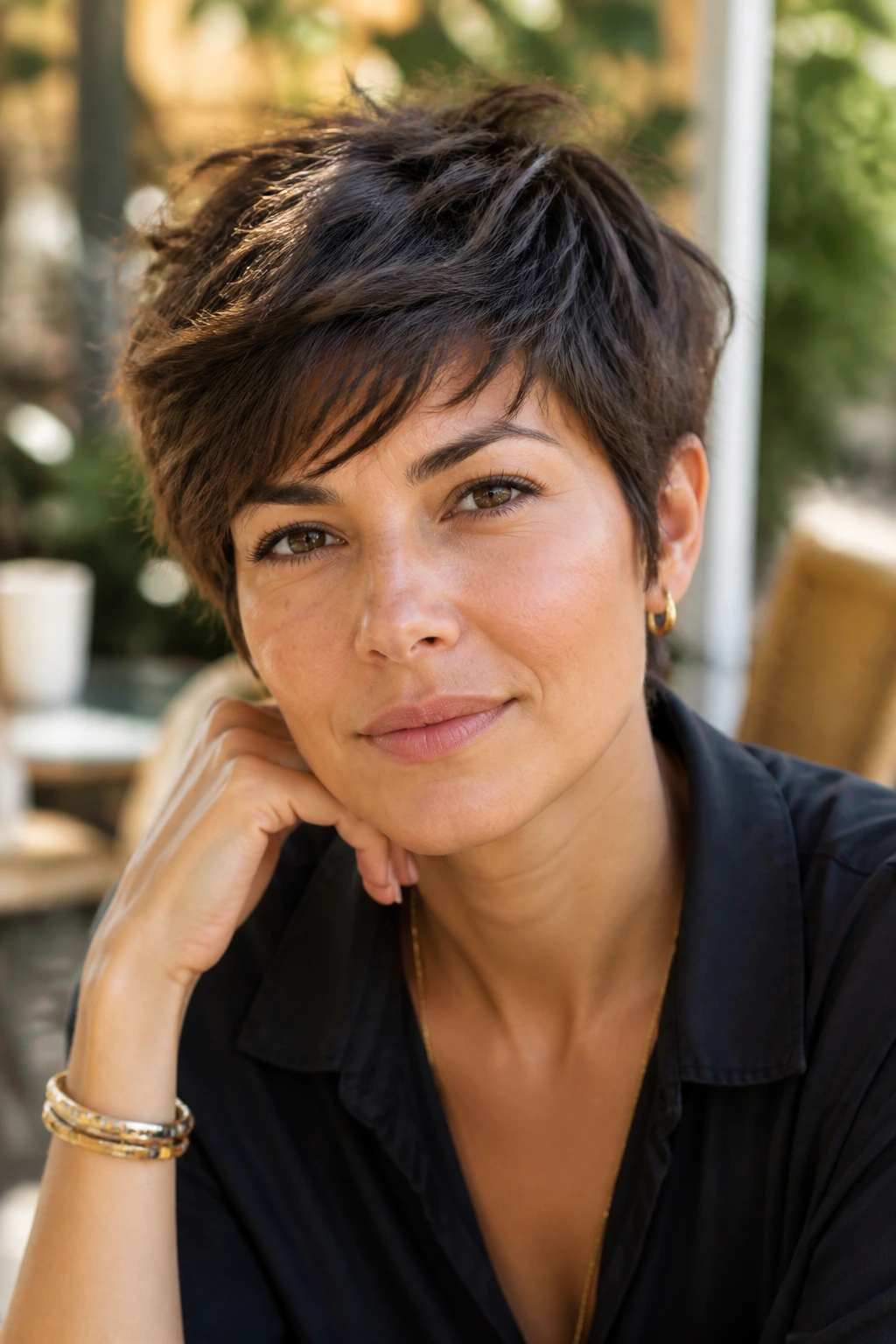
Some mornings, you want a haircut that forgives you.
A tousled long pixie is built for that kind of life. It works with natural bend, a little sleep texture, and a quick scrunch of product rather than a full styling session. Thick hair often holds a tousled shape well because it has enough body to look intentional even when you don’t do much.
The trick is keeping the top slightly longer than the sides so the texture has someplace to land. A little sea-salt spray can help, but use it sparingly if your hair is dry. Too much salt spray can make thick hair feel rough fast.
I like this shape for people who air-dry a lot. You can twist a few damp sections with your fingers, let them dry, then separate them. No drama. No round brush. Just movement.
If your hair falls flat at the root, flip it upside down for the first minute or two of drying. That tiny bit of lift changes the whole mood of the cut.
17. Face-Framing Long Pixie With Sliced Front Pieces
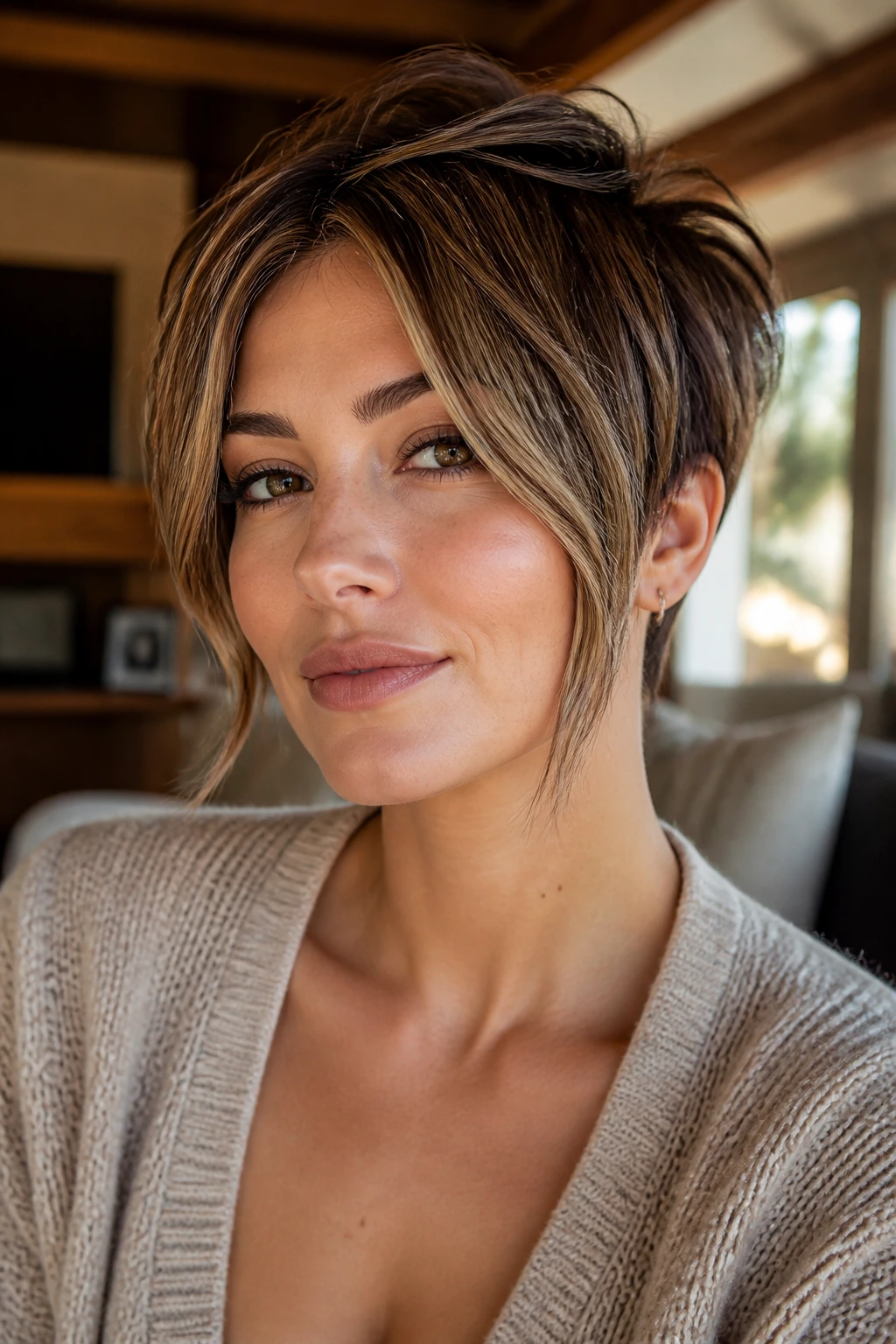
Face-framing slices do one thing very well: they soften the front without dragging the whole haircut down.
That matters for thick hair because the front is often where the bulk feels most obvious. Sliced pieces near the cheekbones and jaw break up the shape and create a cleaner line around the face. You still keep length, but it’s placed where it helps instead of where it weighs everything down.
This version is a smart pick if you want the haircut to flatter the face more than the head shape. The front pieces can land just below the cheekbone or stop right at the jaw, depending on how much contrast you want. Longer slices feel softer. Shorter ones feel sharper.
Unlike full bangs, these front pieces are easier to grow out. That alone makes them appealing. Bangs can trap you in regular trims; face-framing slices give you a little more breathing room.
If your hair is coarse, ask for the front to be cut with a light point-cut finish so the pieces don’t look like little boards. That tiny detail changes the whole effect.
18. Polished Long Pixie With Tapered Ends
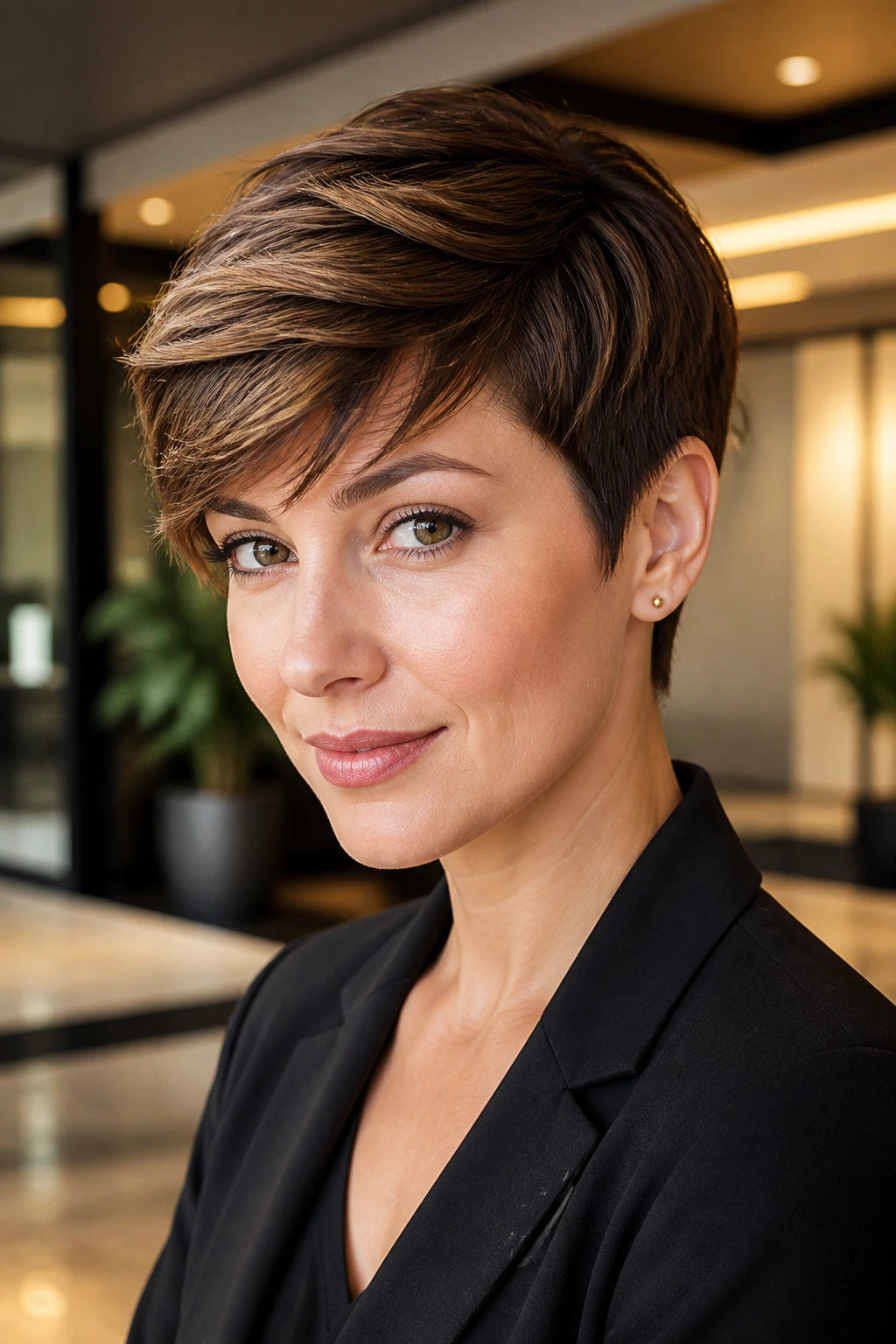
A polished pixie is not boring. It’s disciplined, which is better.
The tapered ends keep thick hair from ballooning at the bottom, and that alone gives the haircut a cleaner line. The top still has enough length to move, but the sides and back stay close enough to the head that the shape feels finished. It’s a strong choice if you want your hair to look neat with minimal fuss.
This cut tends to flatter people who like a tidier outline. It works in professional settings, on dressy nights, and on days when you just want your hair to behave. That sounds plain, but there’s a real luxury in not fighting your own haircut.
A soft brush, a blow-dryer, and a tiny bit of smoothing balm are usually enough to keep the finish in line. If the ends start to flip, ask for slightly more taper on the next trim rather than removing more length from the top. The balance matters.
It’s a good final note for thick hair: polish does not have to mean flat. It can still have lift, movement, and a little edge. It just needs a shape that knows where to stop.
Final Thoughts
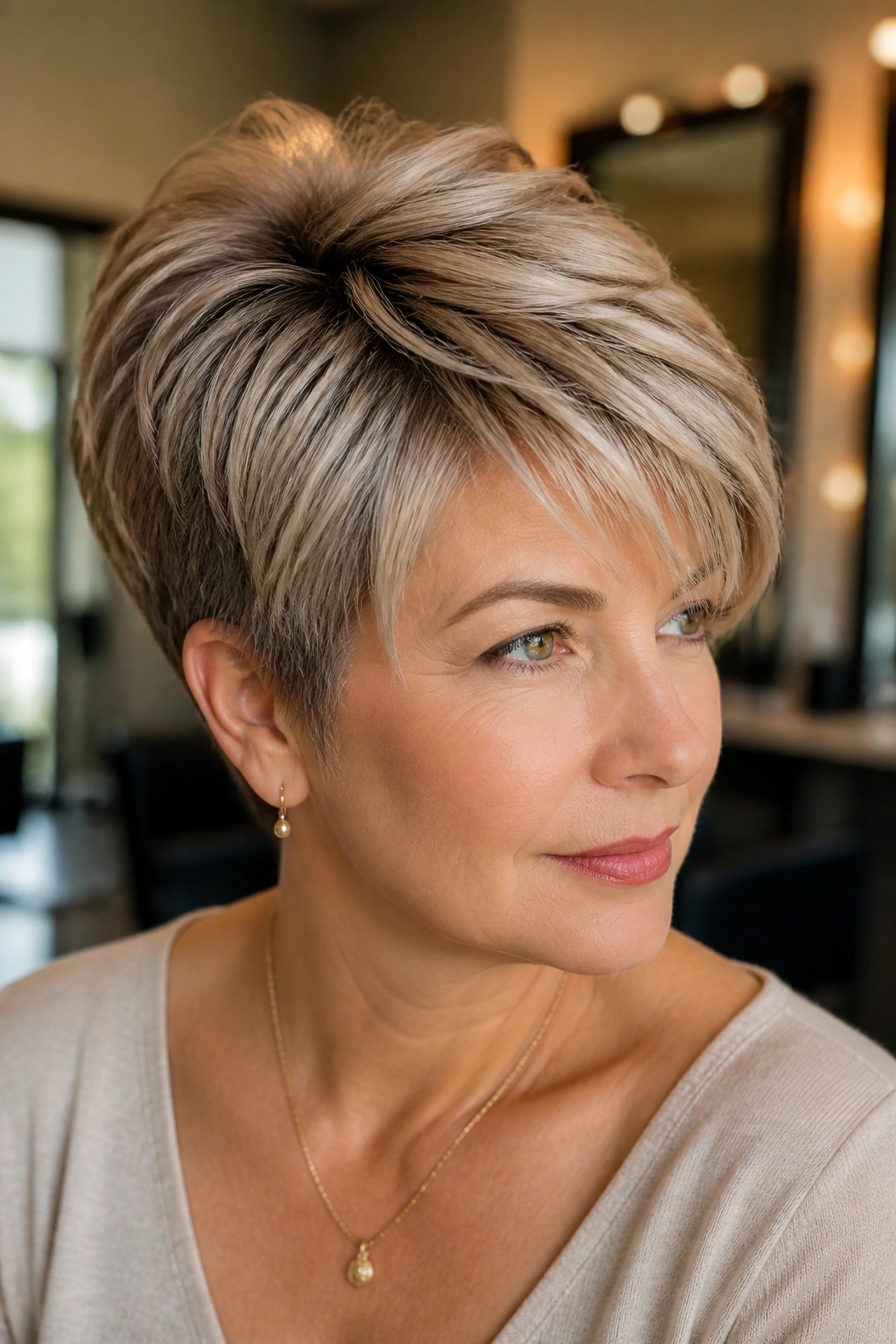
Long pixie cuts for thick hair work best when the cut respects the density instead of pretending it is not there. That means smart layering, a clean neckline, and enough length left on top to give the style some life.
If I had to pick the one detail people miss most, it would be this: bulk removal is not the same as thinning everything out. You want shape control, not shredded ends. A good pixie on thick hair feels lighter the day you leave the salon and still looks like a haircut six weeks later.
Bring photos, yes, but bring a sentence too. Tell your stylist where your hair gets heavy, where it puffs up, and whether you want to spend two minutes or ten on styling. That part matters more than the photo people hold up on their phones.
