



Pixie braid styles for Black women can do more with six inches of hair than a lot of longer looks do with twice that length. That’s the part people miss.
Short hair shows everything. The parting. The braid size. The tension at the temples. Even the direction a braid leans when it dries. Get those details right, and a pixie cut stops reading as “short hair” and starts reading as a deliberate style with shape, movement, and a little attitude.
I’ve always liked braided pixies because they solve a real problem without turning the head into a project. You can wear them to work, to dinner, to church, to a wedding, and they still feel like your own hair rather than a costume. The good ones sit close to the scalp, skim the hairline instead of fighting it, and leave enough breathing room around the face that you do not feel boxed in.
A side part is the easiest place to start. After that, things get more interesting.
1. Side-Part Pixie Braids for Black Women
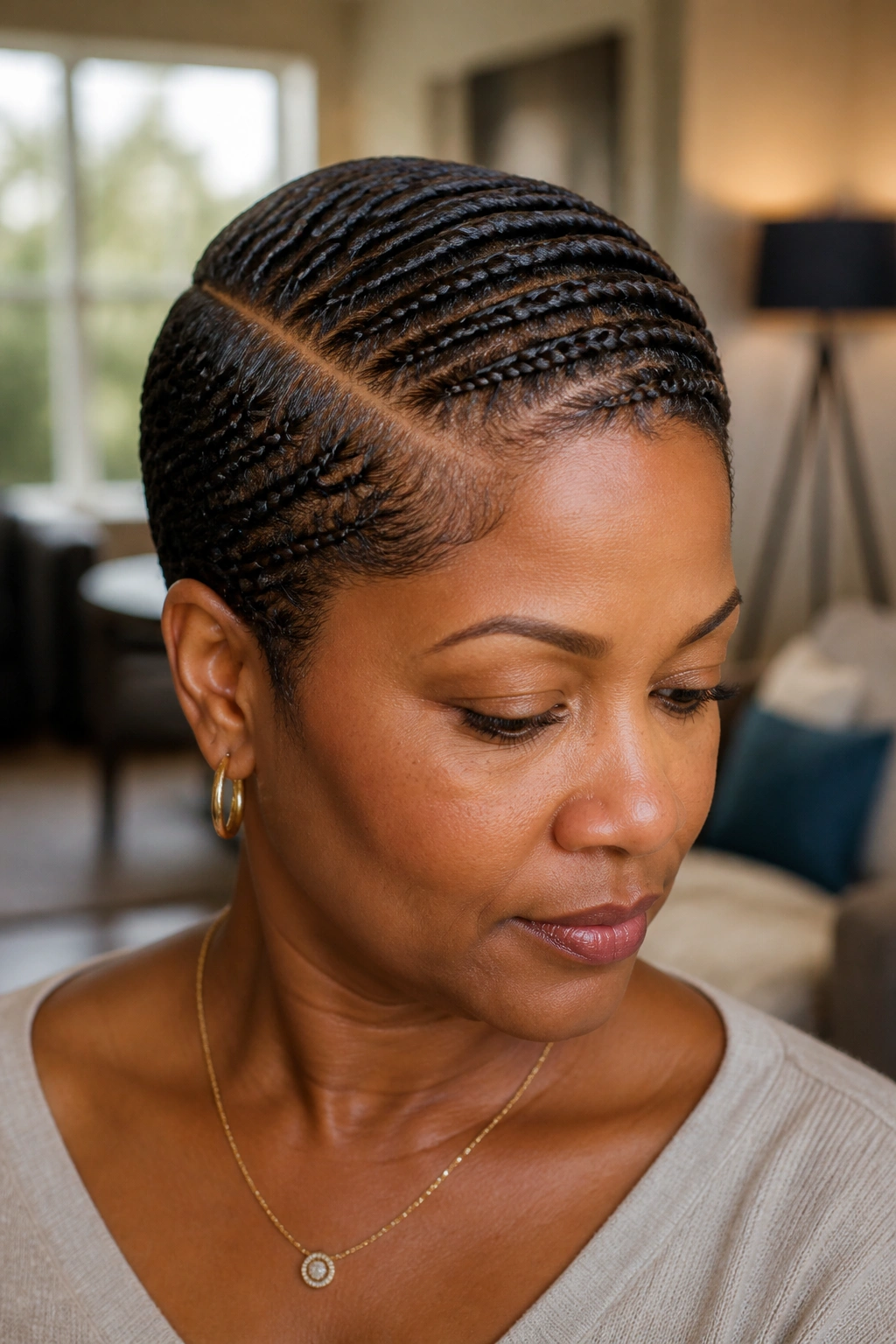
A side part does more than move hair to one side. It gives the whole style direction, which matters a lot on short hair where there is no long length to hide behind. A clean diagonal line can make a pixie look sharper, longer at the front, and more polished at the temple.
Why the side part works
On a cropped cut, the eye follows the part first. That means a deep side part can make a small braid pattern feel intentional instead of crowded. I like this look when the top has enough length for three to six slim braids and the sides are kept smooth or lightly braided back.
The trick is balance. If the braid side gets too heavy, the style starts to sag. If the other side is left too empty, the shape feels unfinished. A good side-part pixie braid set should look like it belongs to the head, not like it was stacked on top of it.
- Keep the part clean and narrow, around 1/4 to 1/2 inch wide.
- Use slim feed-in braids near the hairline so the front does not feel bulky.
- Leave a little height at the crown if your face reads round or square.
- Finish with a light mousse and a satin wrap so the part stays visible.
I’d choose this first if you want a style that looks neat without trying too hard.
2. Center-Part Mini Feed-Ins
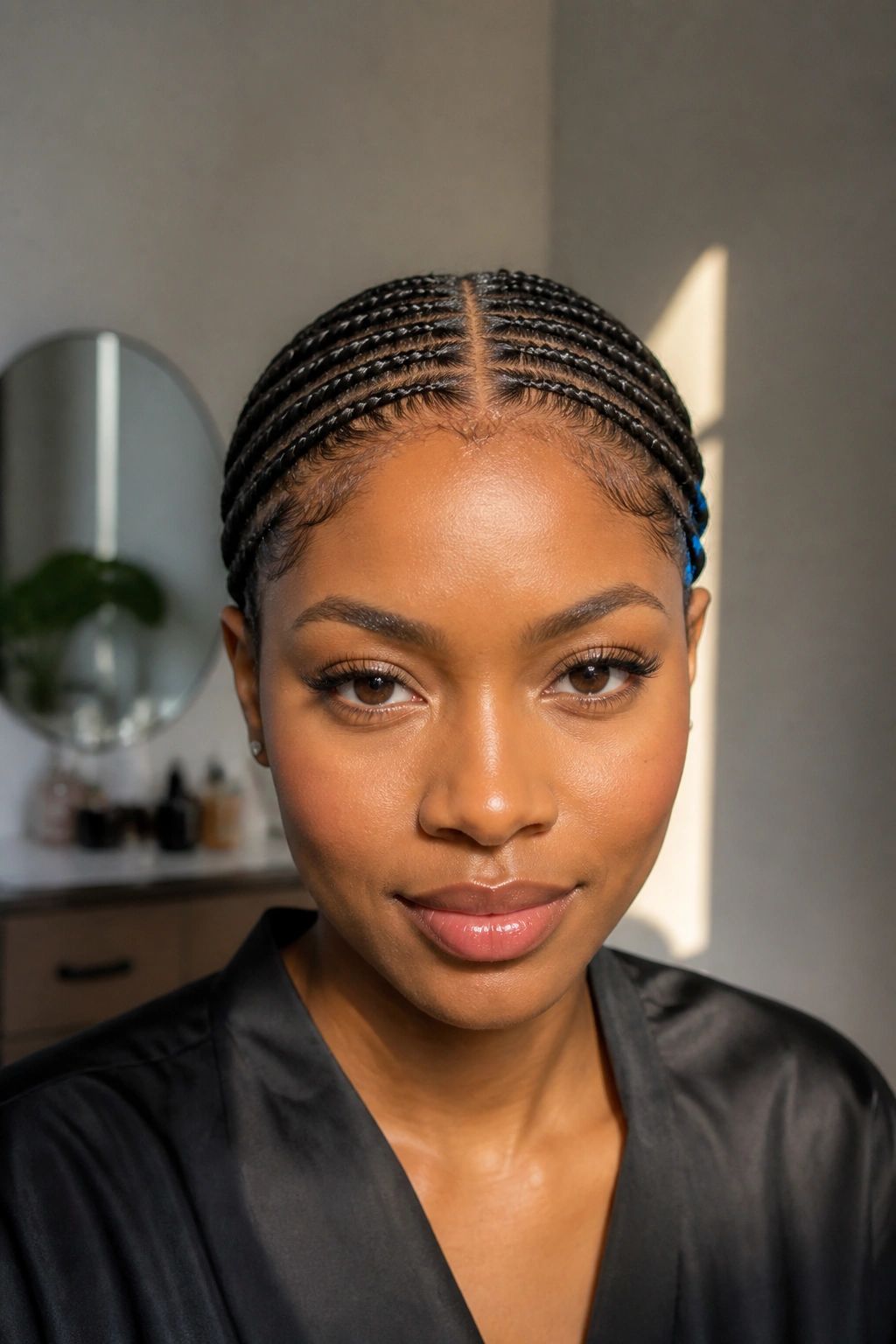
Can a center part work on a very short cut? Absolutely, if the rows are even and the braids are small enough to sit close to the scalp. A middle part gives a pixie a calm, symmetrical look that feels clean from every angle.
The best version has mirror-image braids that start at the front hairline and travel back in neat lines, usually with one or two tiny pieces left at the nape if the cut allows it. The reason it works is simple: a center part gives the face a straight frame, and that frame can make cheekbones and brows stand out without extra fuss.
How to keep the part crisp
A rat-tail comb is worth its weight here. So is damp, detangled hair. Dry, fluffy roots make center parts look fuzzy almost immediately, and a fuzzy part on a short cut is hard to hide.
- Part the hair on a slightly damp base, not soaking wet.
- Clip each side away before you start braiding.
- Match braid thickness from left to right.
- Smooth the roots with a small amount of mousse, not a heavy cream.
This style is tidy, but not stiff. That distinction matters. A center-part pixie can look soft if the braids are thin and the ends are tucked cleanly instead of left to stick out like little antennae.
3. Halo Pixie Braids
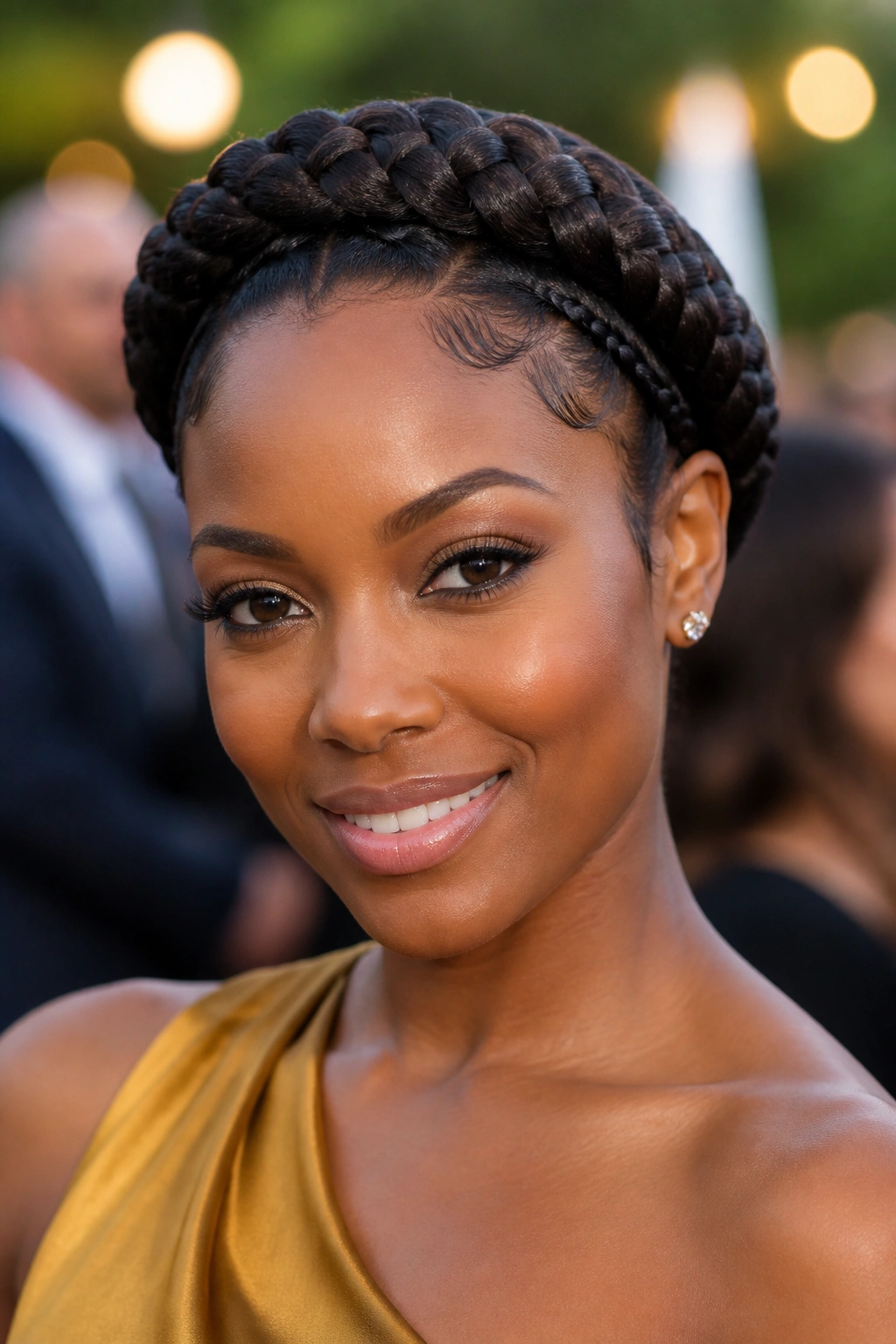
Picture a short braided crown that circles the head and leaves the face open. That’s the halo pixie, and it has a way of making a cropped cut feel finished from forehead to nape. The shape is soft, but the structure is doing a lot of work.
I like this style for events because it reads polished the second you look at it. The braid line usually starts near one temple, curves around the head, and lands near the opposite side or the nape. On a very short cut, you may need a few small feed-ins to keep the curve smooth, and that’s fine. The point is the outline.
What makes it flattering is the lift it gives around the crown. Instead of pressing all the hair flat, the halo creates a small frame above the ears, which keeps the head shape from looking too narrow. It also plays nicely with earrings. Big hoops, small studs, cuffs — all of it works.
A halo braid does need careful tension. Too tight, and the curve sits angry against the scalp. Too loose, and the shape falls apart by lunch. Ask for a braid that hugs the head without digging in, especially near the temples.
4. Braided Bang Pixie
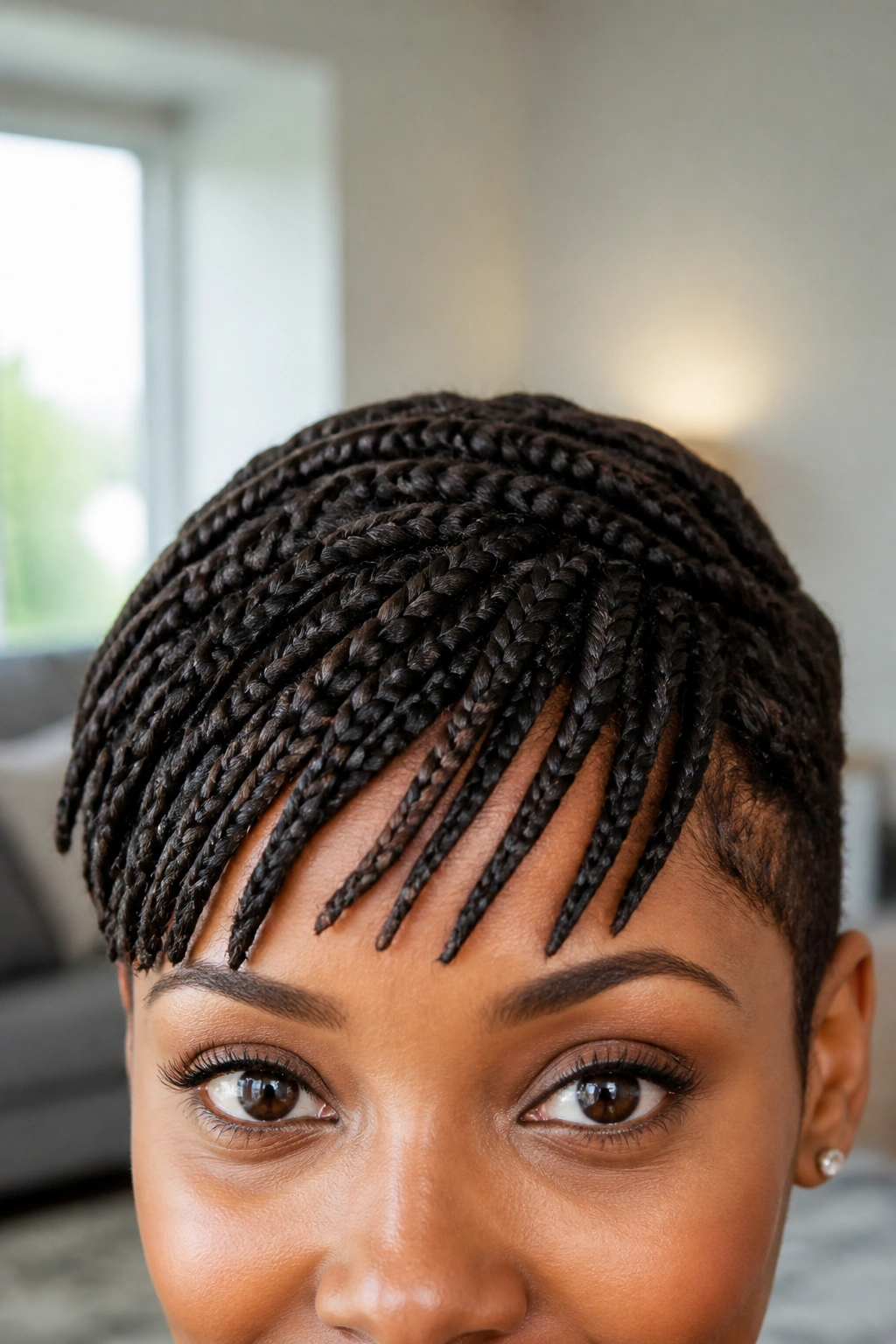
Braided bangs sound fussy until you wear them. Then they make perfect sense.
A soft braid or two across the forehead can solve the biggest short-hair problem, which is what to do with the front section when it is long enough to get in the way but not long enough to behave. Braided bangs give you coverage without hiding the face.
I like this style when the front pieces are between about 2 and 4 inches long. That length is enough for a slim braid, maybe two if the hair is dense, and the result feels playful rather than heavy. The braid can fall straight across, angle slightly to one side, or split into two narrow pieces that skim the brows.
The main thing to watch is width. A fat braid across the forehead can crowd the face fast. A slimmer braid keeps the look airy and makes room for lashes, brows, and makeup if you like that kind of thing.
What to ask for
- A braid that starts close to the hairline, not halfway back.
- A soft finish at the end, so it does not poke out stiffly.
- A light edge touch-up around the temples only if needed.
- Minimal pulling near the front so the bang area stays comfortable.
This one works beautifully for anyone who wants movement at the face without committing to a full bang cut.
5. Zigzag Pixie Braids for Black Women
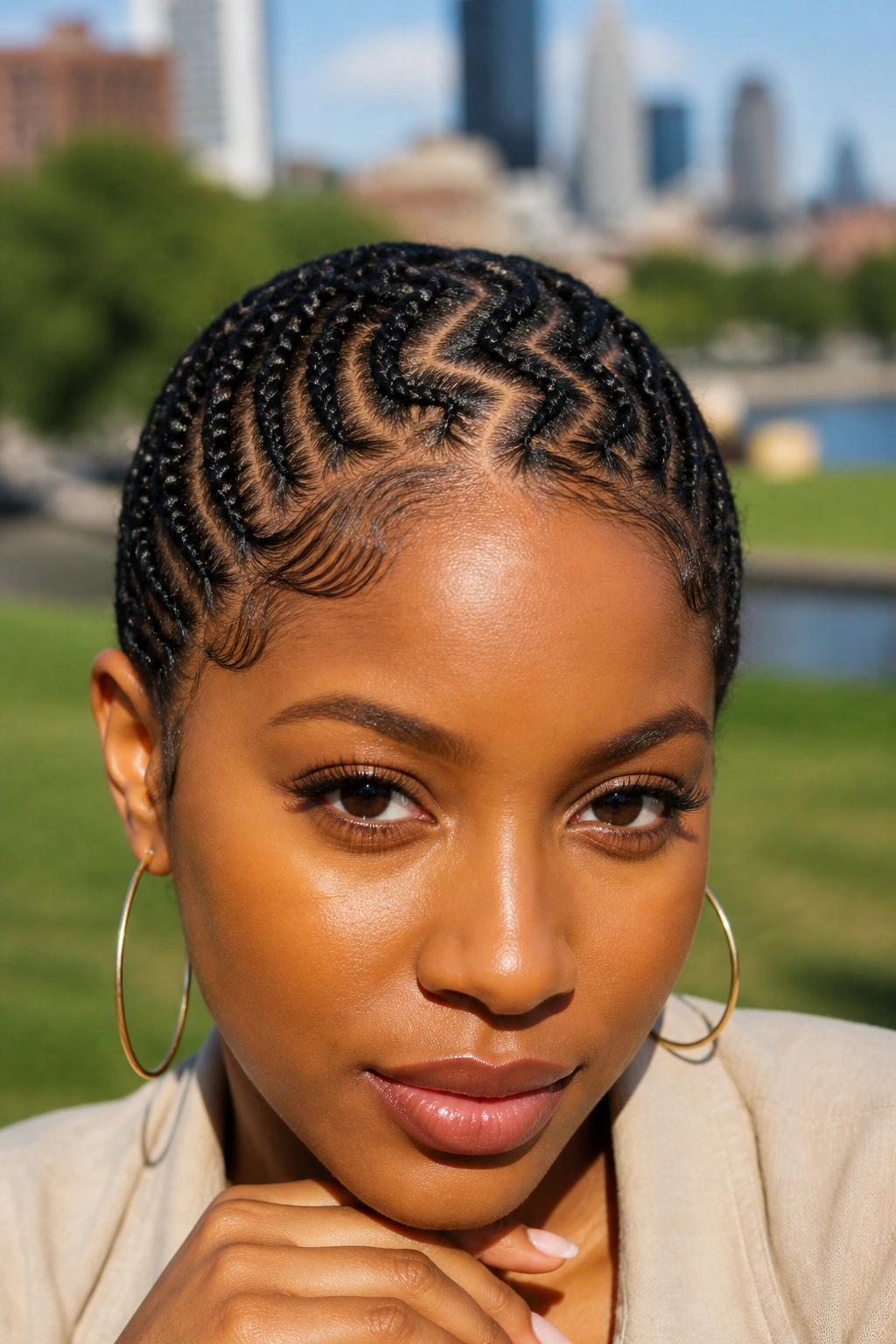
Straight parts are neat. Zigzag parts are sharper.
That’s the whole appeal, really. A zigzag pattern breaks up the scalp line and gives a short cut more energy without adding more hair. It’s one of the easiest ways to make pixie braid styles for Black women feel custom instead of standard.
The best part is that the zigzag does the visual work, so the braids themselves can stay slim and simple. On a very short cut, that matters. Tiny changes in parting show up fast, and a zigzag can hide a slightly uneven density line better than a dead-straight row ever will. It also looks good when the hair starts to grow out, which is handy.
What makes it different
A zigzag part needs a steady hand and a pointed comb. You do not want tiny, busy turns that look jagged. You want smooth, deliberate angles that move across the head like a stitched line.
- Use a fine-tooth rat-tail comb for clean turns.
- Keep each angle broad enough to show from a distance.
- Pair the part with slim braids, not chunky ones.
- Let the pattern sit on a smooth base so the design reads clearly.
If you like braids that look detailed without screaming for attention, this is the one. It has personality, but it does not ask for a spotlight.
6. Mohawk Pixie Braids
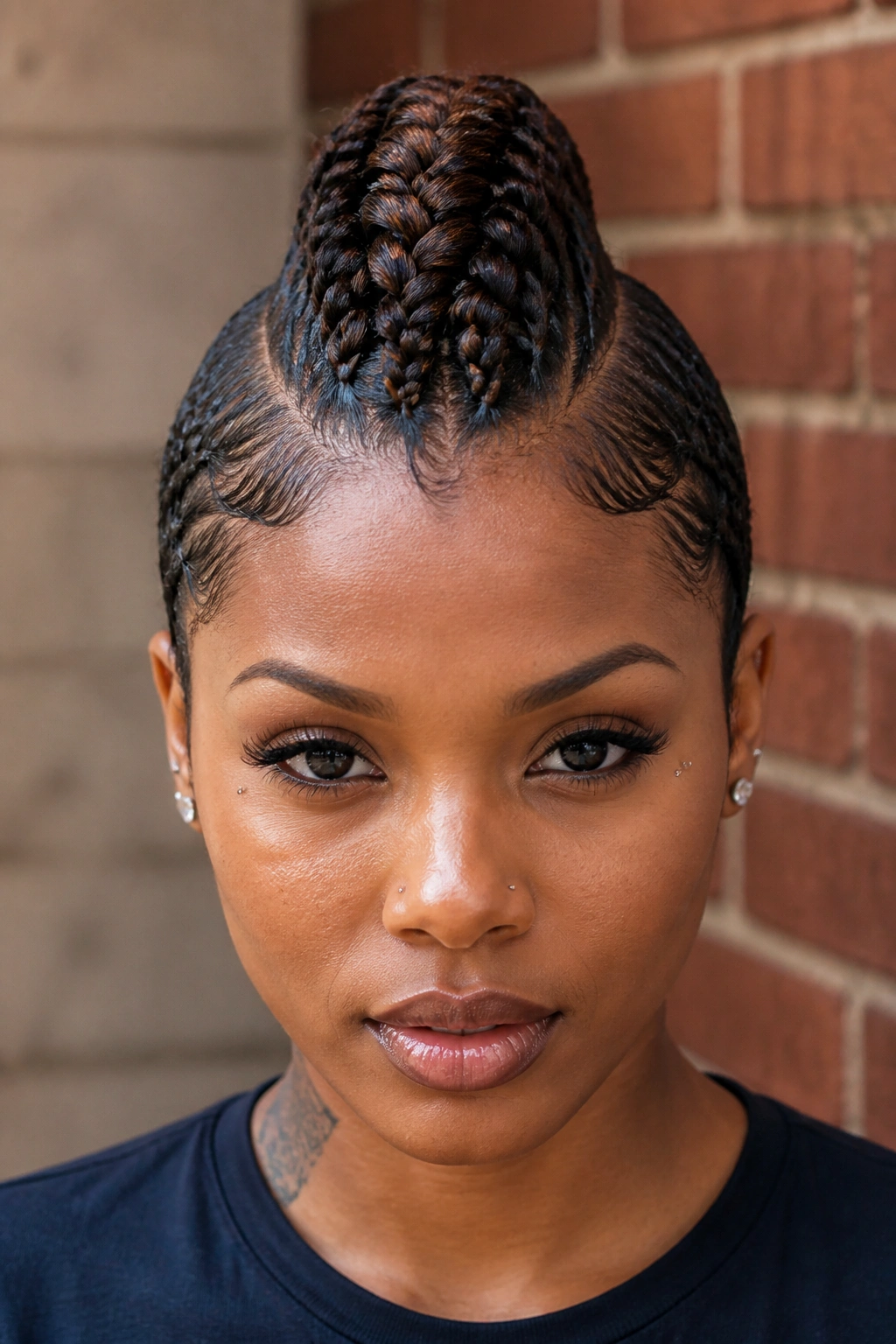
Mohawk pixie braids are the loudest style in the group, and I mean that in the best way. They turn a short cut into a shape you can see from across the room.
The formula is simple: keep the center strip braided, twisted, or feed-in styled from front to back, while the sides stay closely smoothed, tapered, or lightly braided toward the scalp. That contrast is what makes the style pop. The middle says “look here.” The sides keep the shape sharp.
This works especially well if you already have a tapered cut or a pixie with shorter sides. If the sides are too long, the mohawk shape can get muddy, and then you lose the whole point. You want a clear ridge through the center, not a vague puff with braids on it.
- Keep the center strip about 1.5 to 2.5 inches wide.
- Let the sides sit sleek rather than bulky.
- Use gold cuffs or one or two beads only if you want extra drama.
- Avoid heavy pulling at the hairline. The style should sit up, not strain forward.
There’s a nice side benefit here: earrings suddenly matter more. So do brows. The style frames the face in a way that feels bold without needing a lot of extra styling.
7. Micro Braided Pixie
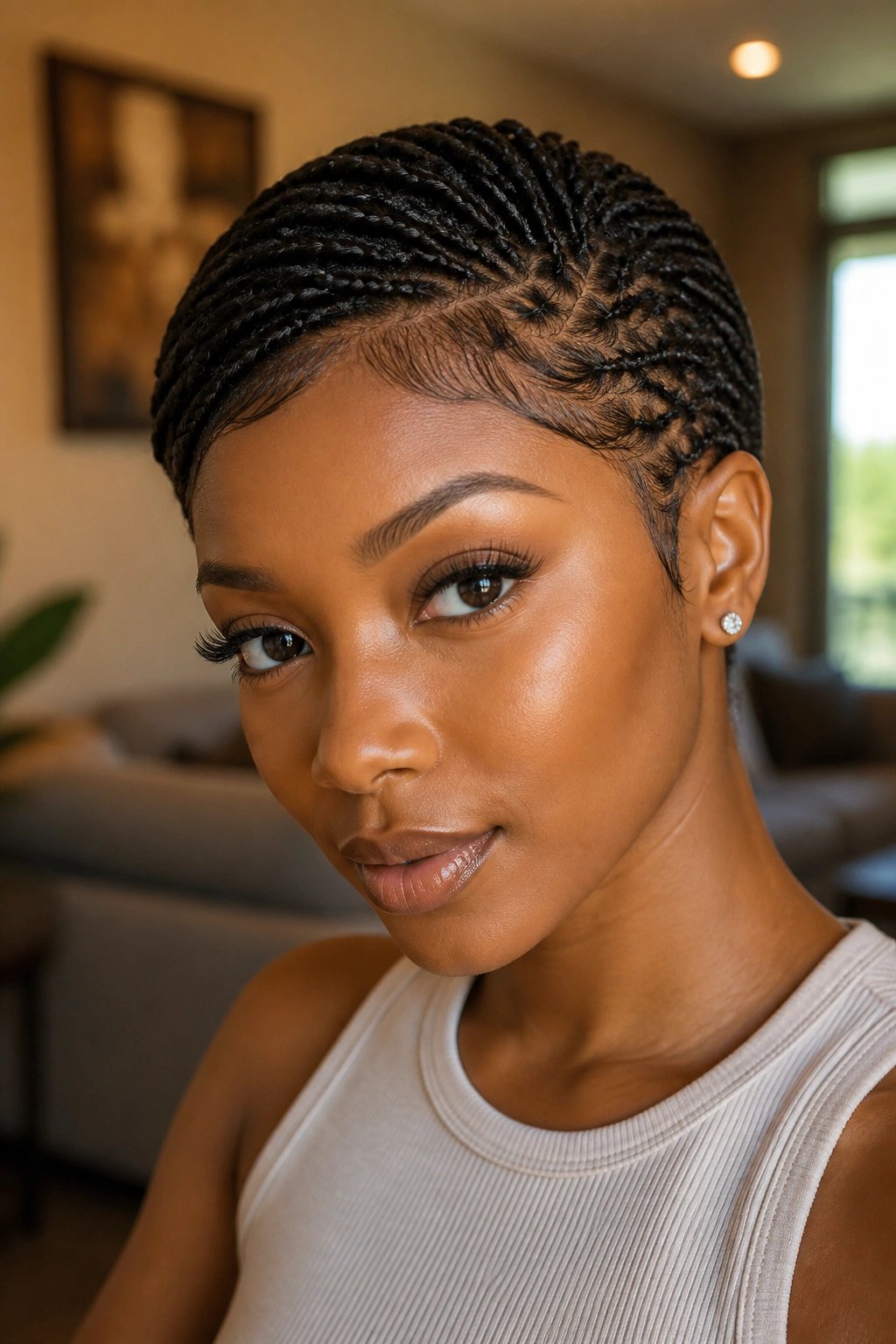
Can tiny braids work on a pixie cut without looking fussy? Yes, if the braids stay light and the rows are kept neat. Micro braids on short hair create texture the way fine stitching changes a piece of fabric.
This style is for the person who likes detail. Not noise. Detail. A few very small braids across the top, maybe continuing into the sides, can give a cropped cut a denser look without making it bulky. It also makes a short style last longer between salon visits because the braids hold their shape better than loose curls do.
The catch is time. Micro braids on a pixie are not a quick, in-and-out look. They need careful sectioning, and the shorter the hair, the more precise the grip has to be. If a section is too big, the braid can slip. If it’s too tight, the scalp complains by the end of the day.
How to wear it well
- Keep the braids feather-light near the front.
- Use a leave-in that does not leave the hair greasy.
- Secure the ends cleanly, especially around the nape.
- Sleep in a satin bonnet so the small rows do not fray.
I’d pick this when I want structure first and decoration second. It is not loud, but it stays interesting for a long time.
8. Crown Braid with Tapered Sides
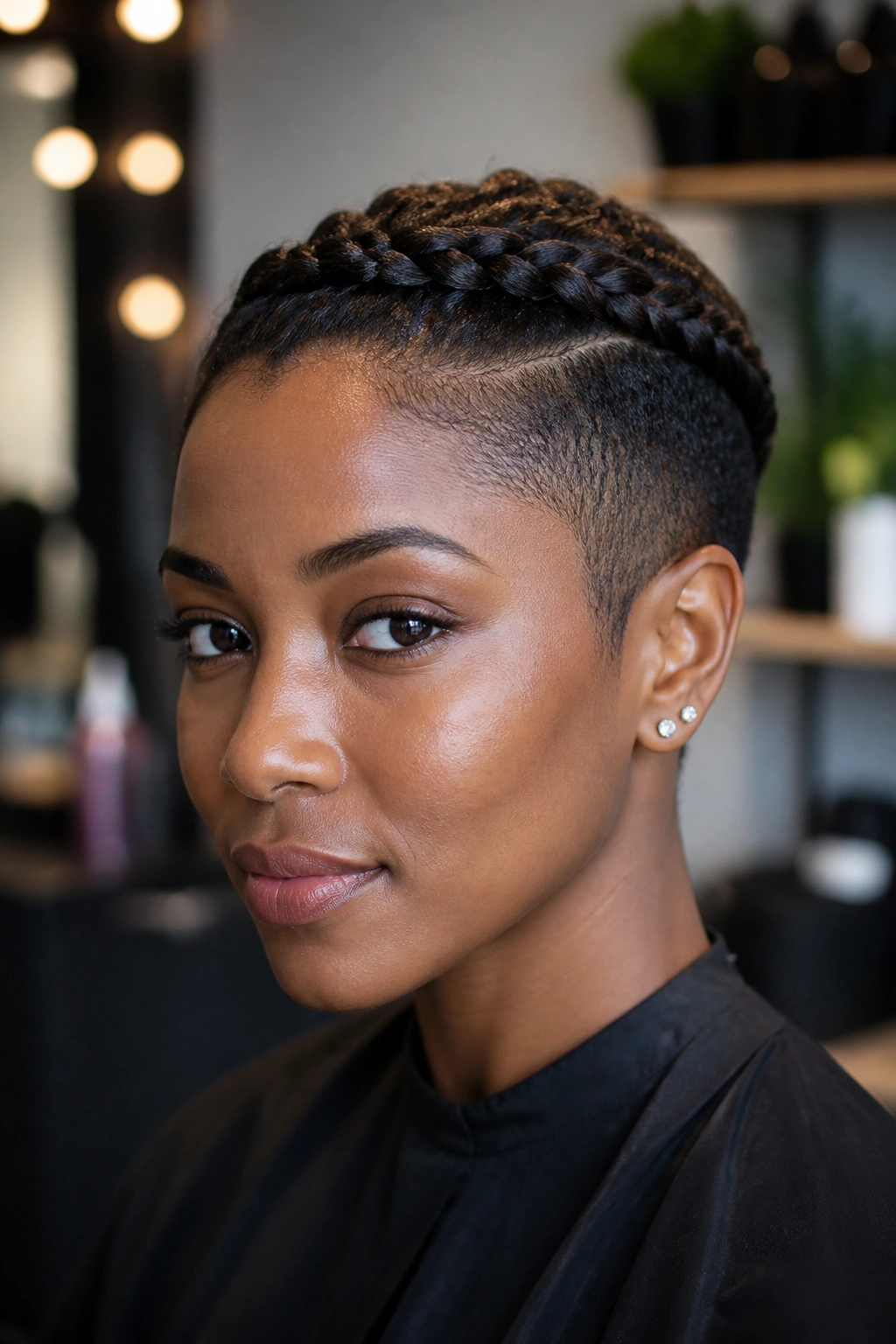
A tapered cut gives you a built-in frame, and a crown braid makes the frame do something useful. That’s why this style works so well on short natural hair. The braid sits where the head already wants to curve, so the whole look feels balanced.
The crown braid usually travels around the top half of the head, leaving the sides and nape tapered or closely cropped. On a pixie, that means the braid does not need to be oversized. It can be slim, almost architectural, and still read clearly. I like this version because it lets the taper stay visible instead of burying it under too much hair.
There’s a quiet elegance to the shape, but the word I keep coming back to is clean. The line around the crown should look smooth, the sides should be brushed in the same direction, and the braid should sit high enough to show the outline of the cut.
- Keep the braid about 1/2 inch above the ear line.
- Smooth the sides with a soft brush before braiding.
- Use a shine mist, not a heavy oil.
- Leave the nape visible if the taper is one of the best parts of the cut.
This style is a strong pick for anyone who likes a neat silhouette and does not want the crown swallowed by hair.
9. Peekaboo Braids with Loose Curls
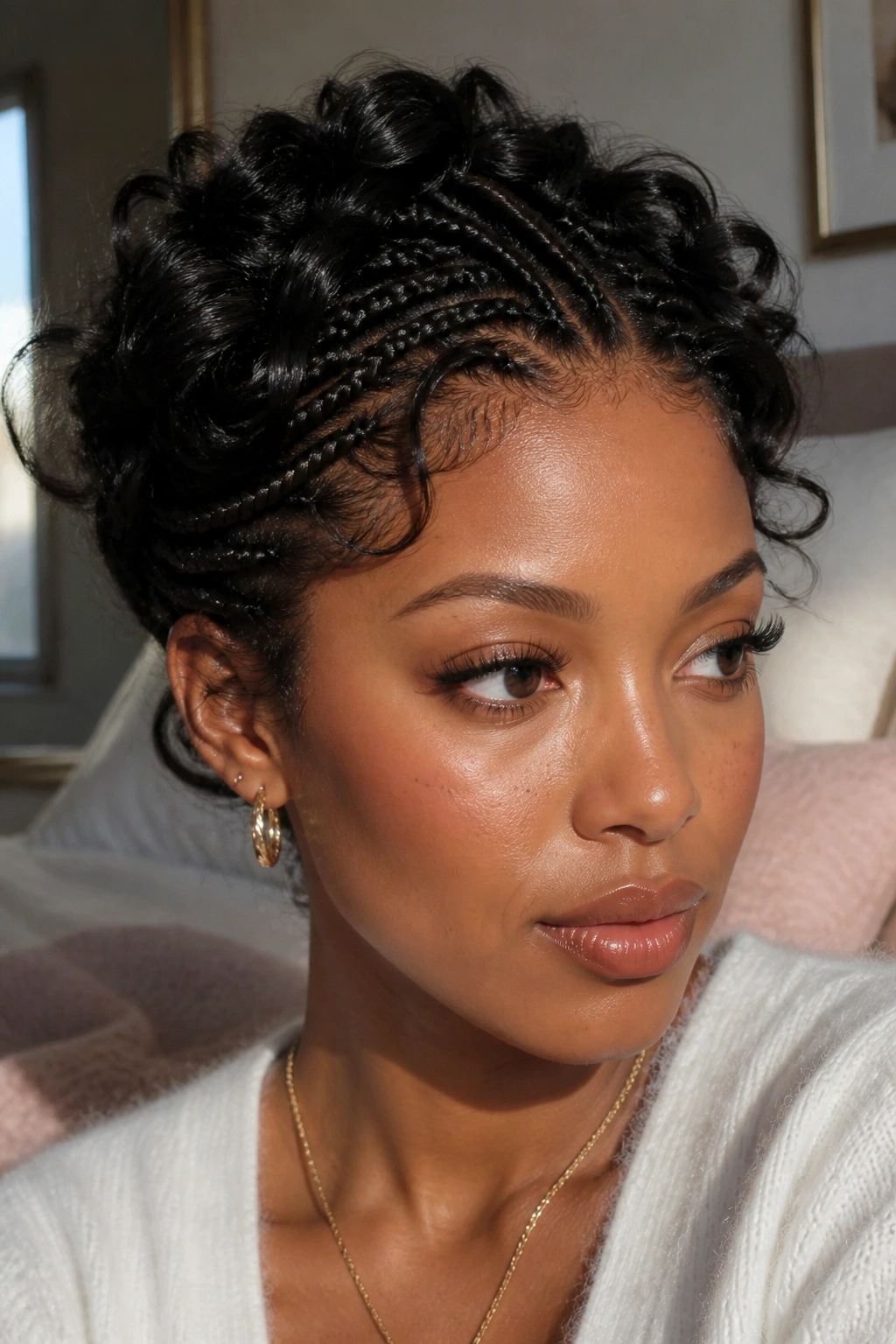
Some styles work because they are orderly. This one works because it lets a little chaos stay in the room.
Peekaboo braids mix tiny braided sections with loose curls or soft coils left in just the right spots, usually around the front, temple, or top. The contrast between the tight braid and the softer curl gives a pixie more movement than a fully braided set ever could.
I like this look when the goal is softness. A short cut can sometimes feel severe if every strand is pulled into a clean line. Adding a few loose curls changes that fast. The style still has shape, but the face gets a little frame that moves when you turn your head.
The key is not overdoing the leave-out. A few curled pieces are enough. Too many, and the style loses the braid detail that makes it interesting in the first place. If your hair frizzes easily, curl the loose sections on rods or small flexi rods and leave them wrapped until they cool all the way down.
This is the one I’d reach for on days when I want the hair to feel softer than the clothes. It has a bit of romance without turning sugary.
10. Half-Up Pixie Braids with Beads
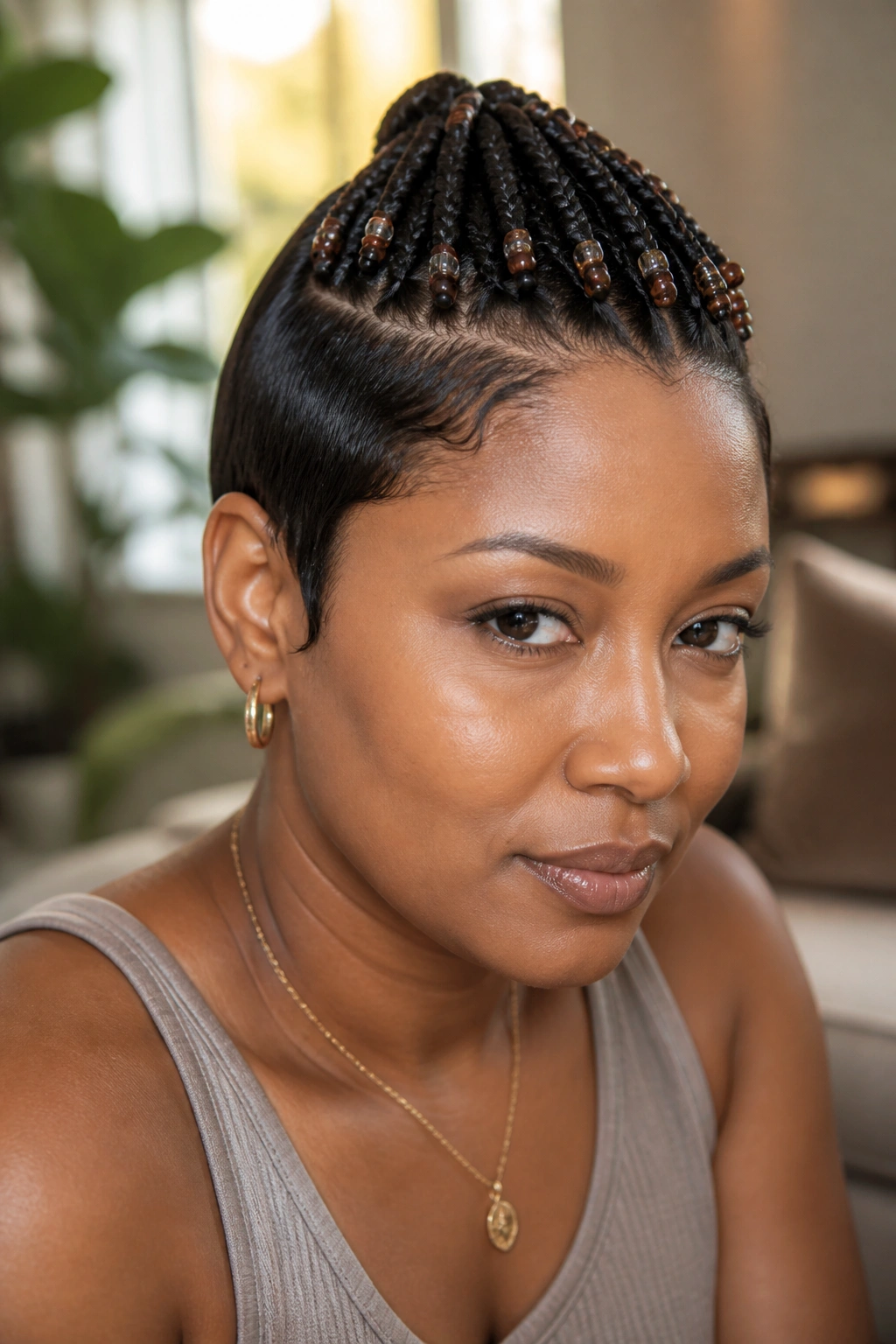
Half-up styles on a pixie cut can be tricky, but the braided version holds its shape much better than a loose ponytail ever could. The top gets the attention, the bottom stays neat, and the beads add just enough movement to keep it from feeling flat.
The best half-up pixie braid uses a small top section pulled into tiny braids or a short braided knot, then lets the lower section stay smooth, tapered, or lightly braided back. Beads belong here, but restraint matters. A few lightweight beads at the end of the top braids are enough. Too many, and the style starts to clink and drag.
How to keep beads from taking over
- Stick to 4 to 8 small beads total.
- Use lightweight wood, clear plastic, or acrylic beads.
- Put the beads at the tips, not halfway up the braid.
- Make sure the braids are anchored tightly enough to support the weight.
This style has a playful edge, but it still looks grown. That balance is hard to get on short hair, and bead placement is what makes it work. I’d save the bigger beads for a longer braid. On a pixie, small is smarter.
11. S-Wave Pixie Cornrows
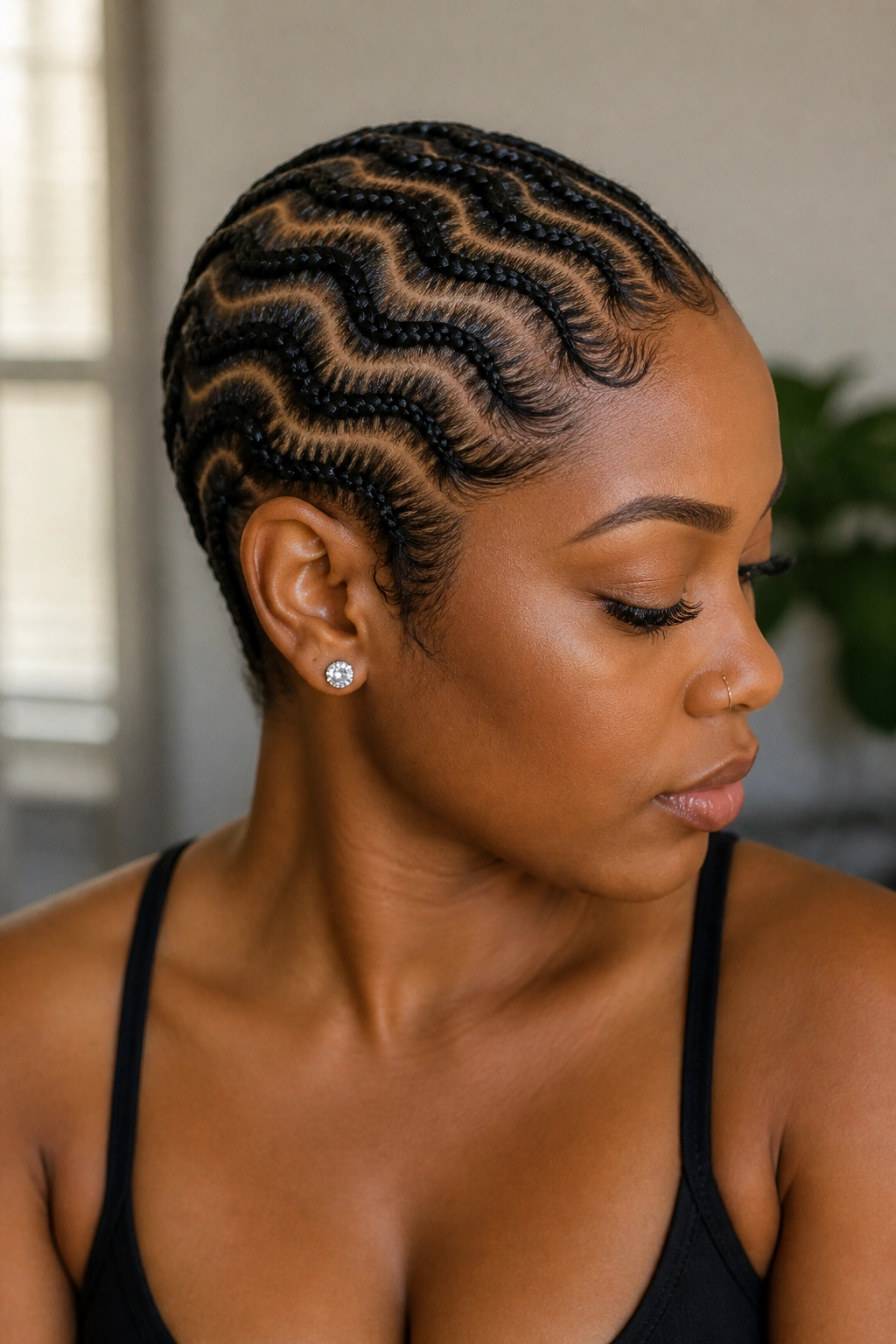
S-wave pixie cornrows are one of those styles that looks easy from a distance and takes real skill up close. The braid pattern curves across the scalp in soft S-shaped lines instead of straight rows, which gives the head more movement before you even add any finishing product. The pattern is the decoration.
The curves are especially flattering when you want to soften a stronger jawline or break up a boxier cut. Straight rows can feel severe on very short hair. S-curves do the opposite. They flow. They bend around the head and make the braids look almost drawn on, which is why a clean parting is so important.
What to watch for
- Keep the curves broad enough to read from a few feet away.
- Ask for gentle tension near the temples and hairline.
- Use small sections so the wave stays smooth, not bumpy.
- Finish with a light hold mousse so the curve stays crisp.
This is not the style I’d choose if you want something fast. It does ask for a steady hand and a patient braider. But when it lands well, it looks expensive in the plain-English sense of the word: careful, shaped, and hard to fake.
12. Flat-Twist Pixie Braids
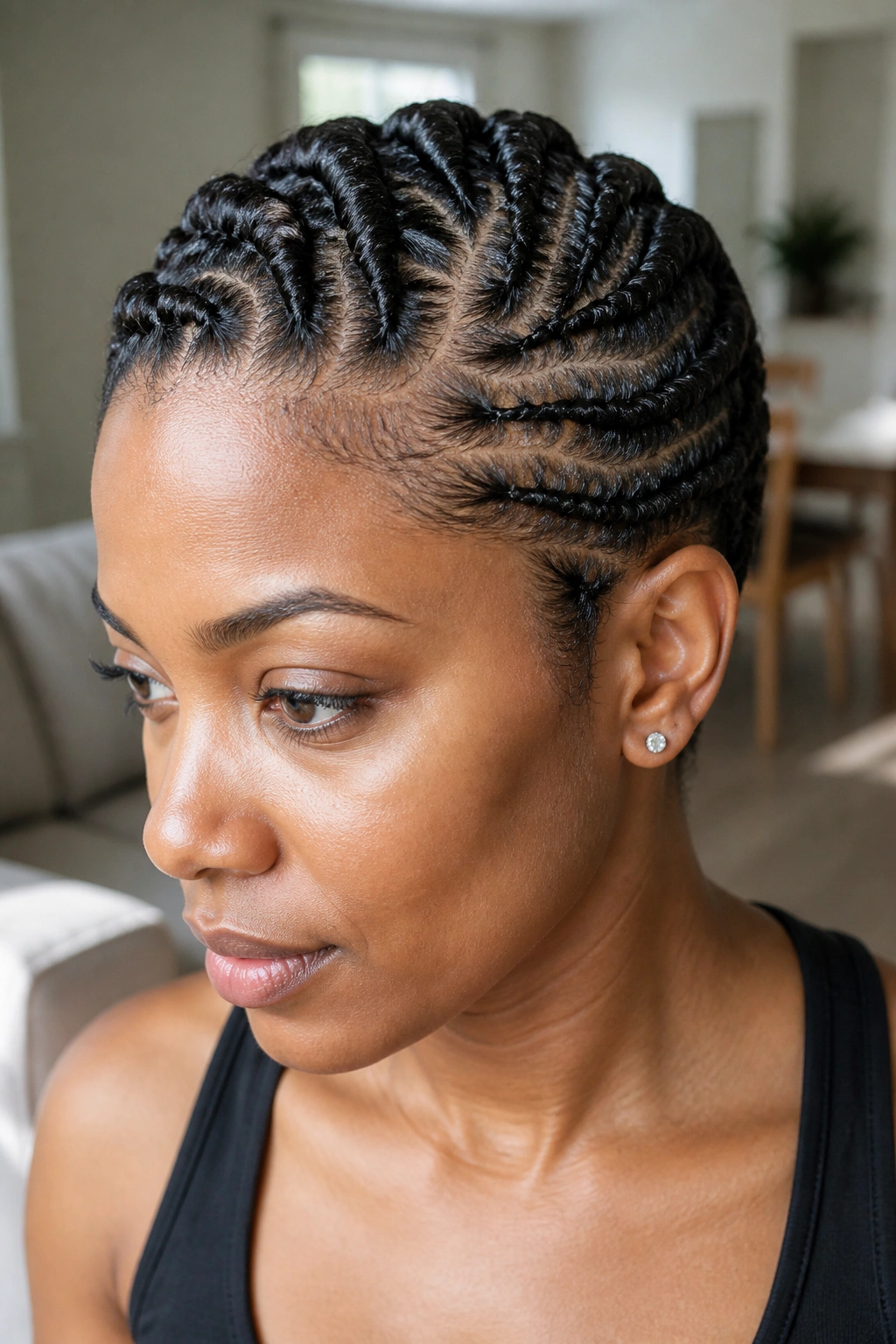
Flat twists are the quieter cousin of cornrows, and on a pixie cut that can be a very good thing. They give you braid texture without the sharper, more raised feel of a standard plait.
The texture is softer because the hair is twisted in two strands instead of three. That gives the style a looser finish, which suits short natural hair beautifully when you want shape but not rigidity. Flat twists also tend to sit close to the scalp in a way that feels gentle, especially near the front and around the ears.
This style works best when the hair is at least a couple of inches long at the root. Too short, and the twist can unravel before it settles. A little leave-in cream helps, but use a light hand. Heavy product makes twists limp, and limp twists on a pixie read as unfinished.
One small thing I like here: flat twists look even better on the second day when they’ve settled into the scalp a bit. The parts soften, the twist pattern deepens, and the whole style gets a little character. Not sloppy. Just lived-in.
13. Braided Pixie with Loose Front Pieces
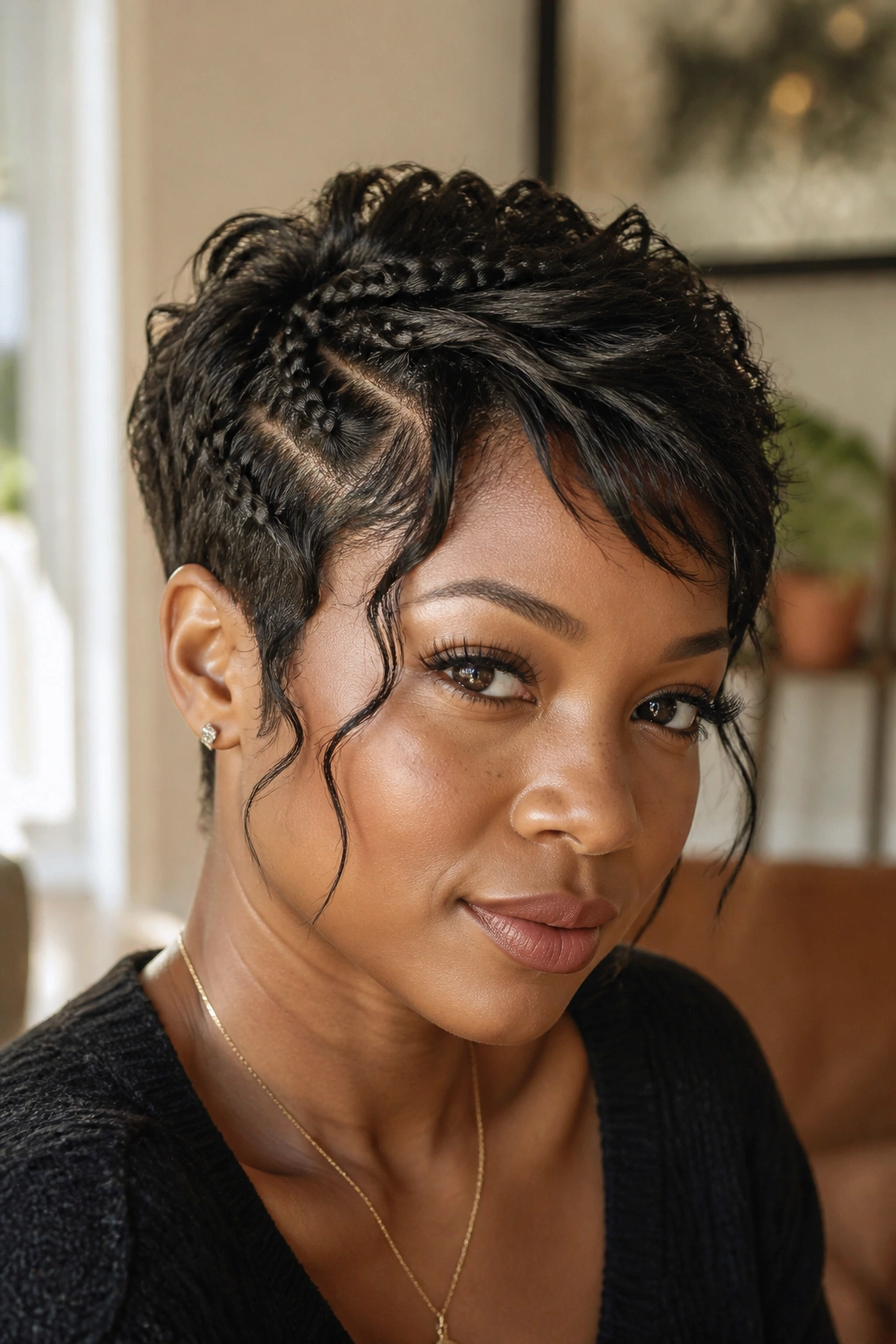
Do you want braids, but you also want some softness around the face? This is the answer.
A braided pixie with loose front pieces keeps most of the style controlled while leaving a few short strands, curls, or flat-ironed pieces at the hairline to frame the cheeks and brows. It’s a good choice when you want structure without looking over-finished.
The front pieces matter more than people think. If they’re too long, they start to compete with the braids. If they’re too short, they stick out and look accidental. The sweet spot is usually just long enough to sweep toward the temples or graze the brow.
A few things that help
- Keep the loose pieces light and touchable.
- Let the braids sit slightly back from the hairline.
- Use a small round brush or finger coils to guide the front strands.
- Avoid loading the front with too much edge control. It can turn crunchy fast.
I like this style for people who wear earrings, glasses, or a strong lip color because the face stays open. The braids are still there, but they are not shouting over everything else.
14. Bantu-Knot-Inspired Braid Pixie
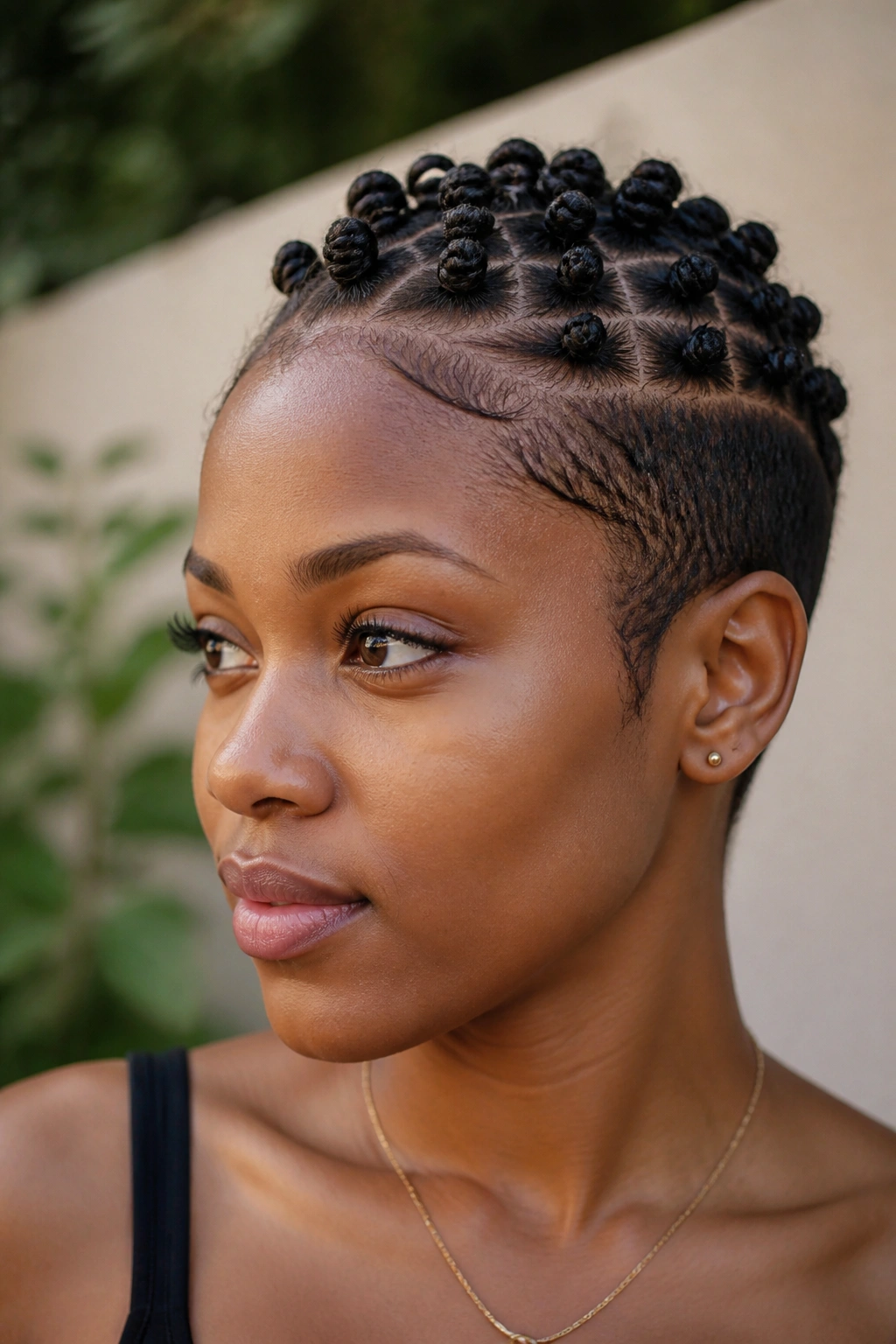
This one has a little sculpture in it. Small braided sections are gathered, looped, or pinned into tiny knot-like shapes along the crown or top of the pixie, while the sides stay neat and close. The result feels artistic without becoming costume-y.
It’s not the quickest style on this list. I would not call it a lazy day look. The sections need to be even, the loops need support, and the braid direction has to be planned before the first piece is picked up. But when it’s done well, it gives a short cut a strong shape and a lot of personality.
The style is especially useful if you want to tuck away shorter sections that do not braid easily on their own. Instead of fighting those pieces, you turn them into part of the design. That alone makes the style worth knowing.
Who it suits
- People who like sculpted hair shapes.
- Anyone who wants a standout look for a party or event.
- Short natural hair that needs a little help staying off the forehead.
- Tapers and fades that can handle a more dramatic top.
There’s a fine line here. Keep the knots small and the spacing deliberate, or the whole thing can tip into bulk. Small wins.
15. Side-Swept Glam Pixie Braids
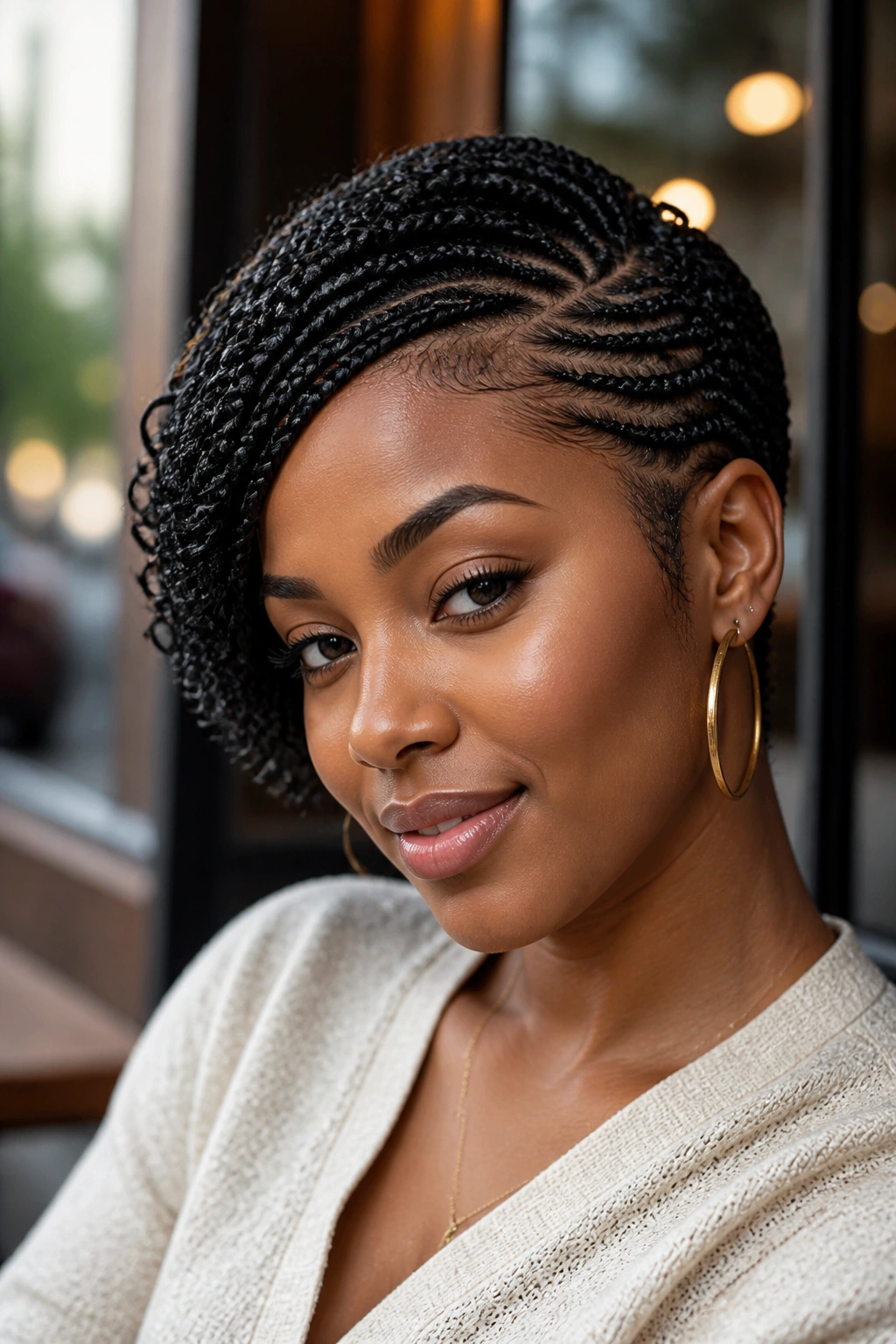
If I had to pick one style that walks the line between easy and dressed up, this would be it. A side-swept glam pixie braid lets one section of the hair take the lead while the rest stays sleek and controlled, which is exactly why it works on short cuts. It gives the face a frame, the head a shape, and the style a bit of shine without asking for a lot of extra length.
The braid usually starts near the front or crown and sweeps hard toward one side, leaving the opposite ear open. Sometimes the ends are tucked. Sometimes they finish with a soft curl. Either way, the look feels polished. I like it when the goal is to look finished without looking overworked. There’s a difference, and this style gets it right.
Who should pick this first
- Anyone who wants a short style that reads dressy fast.
- People who like one-sided shapes and clean necklines.
- Wearers who want to show off one earring or a strong brow line.
- Anyone who needs a style that can move from daytime to evening without much fuss.
The finishing touch matters here more than people expect. A light mist of shine spray, a tidy part, and a satin scarf at night keep the sweep from collapsing into frizz. If your hair is very fine at the front, ask for the braid to start a little farther back so it does not tug on the hairline. That small adjustment makes a big difference.
A good side-swept pixie braid does not need drama to look good. It already has it built in. The style does the work, and the face gets to breathe.
