



A good long pixie bob can do quiet work for older women. It softens the face, keeps the neck open, and avoids the stiff helmet look that short cuts sometimes fall into. That is why long pixie bobs for older women keep earning repeat requests in good salons.
The shape sits in a sweet spot. You get enough length for movement, enough structure to look intentional, and enough softness around the jaw to keep the whole thing from feeling severe. Some versions lean airy and wispy. Others are sharper, with a cleaner edge and a little more swing at the front.
The wrong version can age you. Fast.
Too much weight at the bottom makes the cut drag the face down. Too much stacking in the wrong place can make the crown spike up in a way that feels dated. The good news is that the details are small, and that’s exactly why the right pixie bob feels so wearable: the front length, the nape, the fringe, the way the layers are cut into the hair instead of hacked on top of it.
1. Soft Side-Swept Layers in a Long Pixie Bob
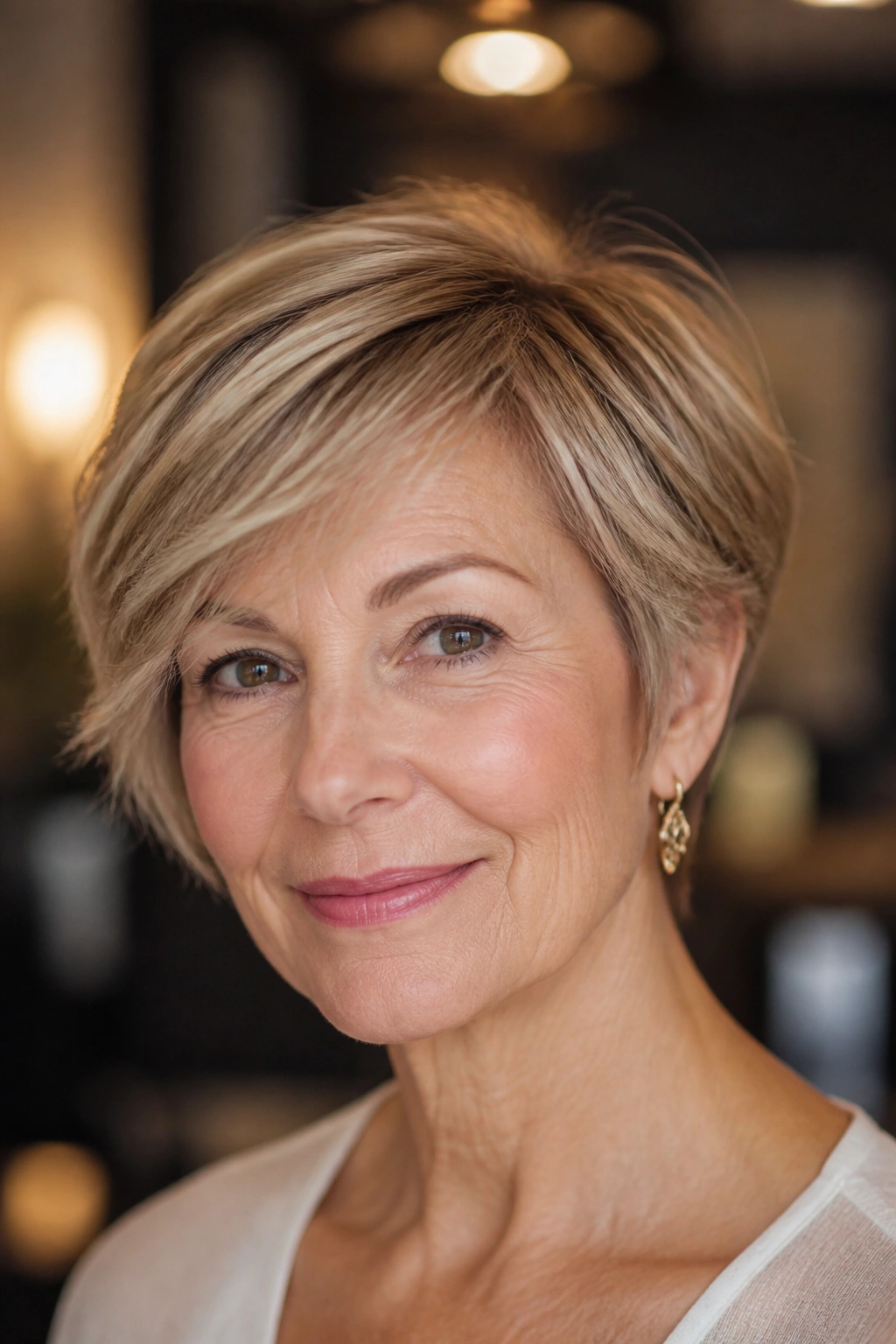
This is the easiest place to start if you want the cut to flatter without trying too hard. The side sweep keeps the face open, while the layered length through the top gives the hair a little bend instead of a flat sheet. On older women, that softness matters. It keeps the cut from feeling harsh around the eyes or too boxy at the cheek.
Why the Side Sweep Works
A side-swept fringe breaks up the forehead line and gives the haircut a gentle diagonal. That diagonal is doing a lot. It pulls the eye upward, then back down through the cheekbone, which makes the whole shape feel more lifted. If your hair has started to thin near the temples, this is one of the kinder ways to hide that without making the haircut look heavy.
Ask for the front pieces to land somewhere between the brow and the top of the cheekbone. Shorter than that, and you can lose the softness. Longer than that, and the fringe starts to swallow the eyes.
- Best on fine to medium hair that needs movement.
- Works well with a side part set about 1 inch off center.
- Ask for point-cut ends, not a blunt clip line.
- A pea-size dab of mousse at the roots is enough.
Tip: Keep the fringe long enough to brush sideways. A too-short side bang grows out awkwardly and ends up fighting the rest of the cut.
2. Choppy Silver Ends With a Feathered Finish
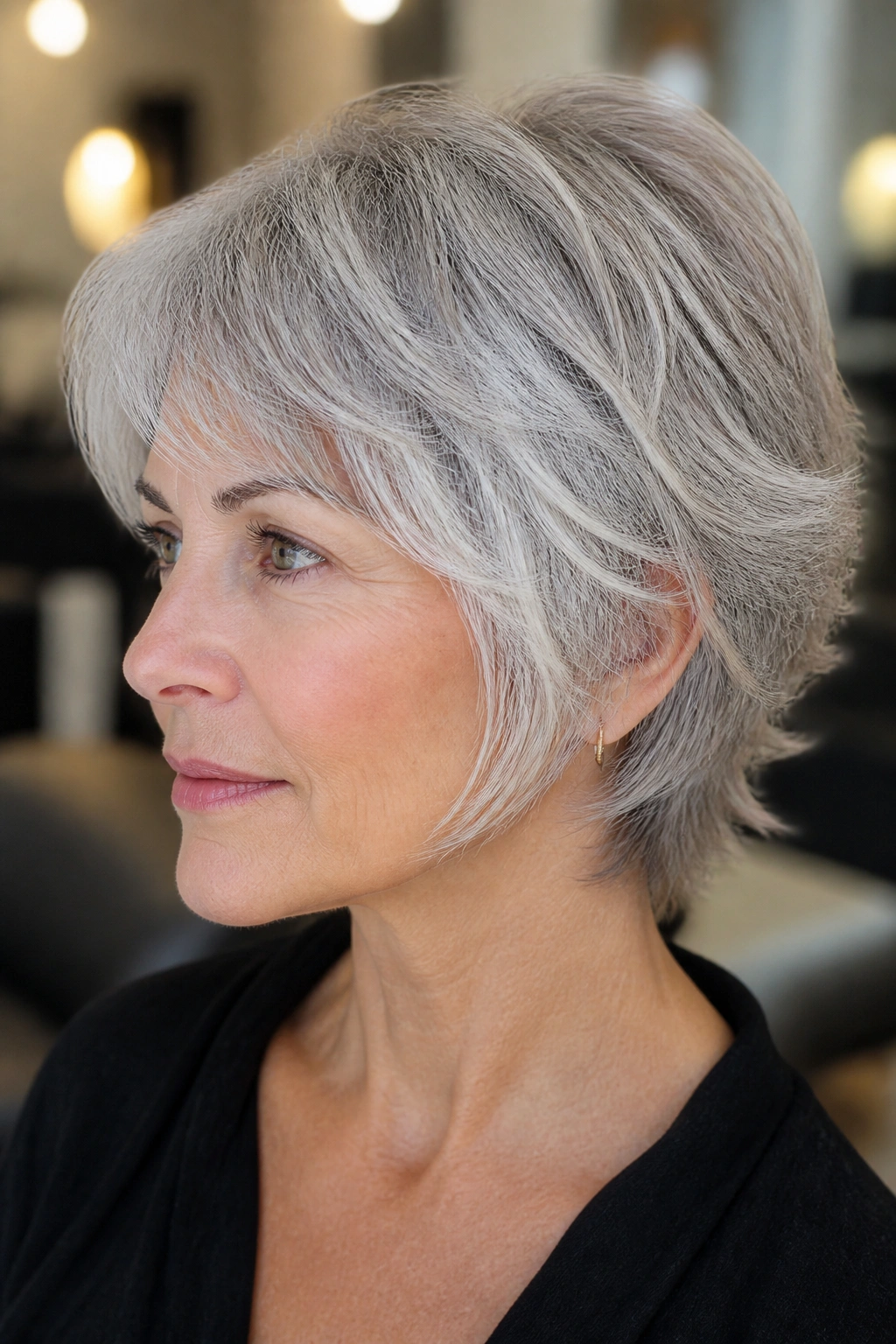
Silver hair looks richer when the ends are broken up. A blunt edge can make gray or white hair look a little too solid, especially if the strands are fine and reflective. Feathered ends add air between the pieces, so the color reads as dimensional instead of flat.
I like this version because it does not ask silver hair to pretend it is something else. The cut lets the tone be visible, which is half the point. The movement at the ends also keeps the shape from settling into one hard line across the jaw. That line is what ages a lot of shorter cuts, not the length itself.
The best way to ask for this is simple: soft chipping at the perimeter, light internal layers, and no severe razoring through the top unless your hair is thick enough to handle it. If your hair is fine, too much razor work can leave the ends looking see-through.
A little piecey texture cream is enough here. Too much product turns the feathering into clumps, and clumps are not the goal. You want separation, not crunch.
3. A Tucked-Behind-the-Ear Pixie Bob That Stays Neat
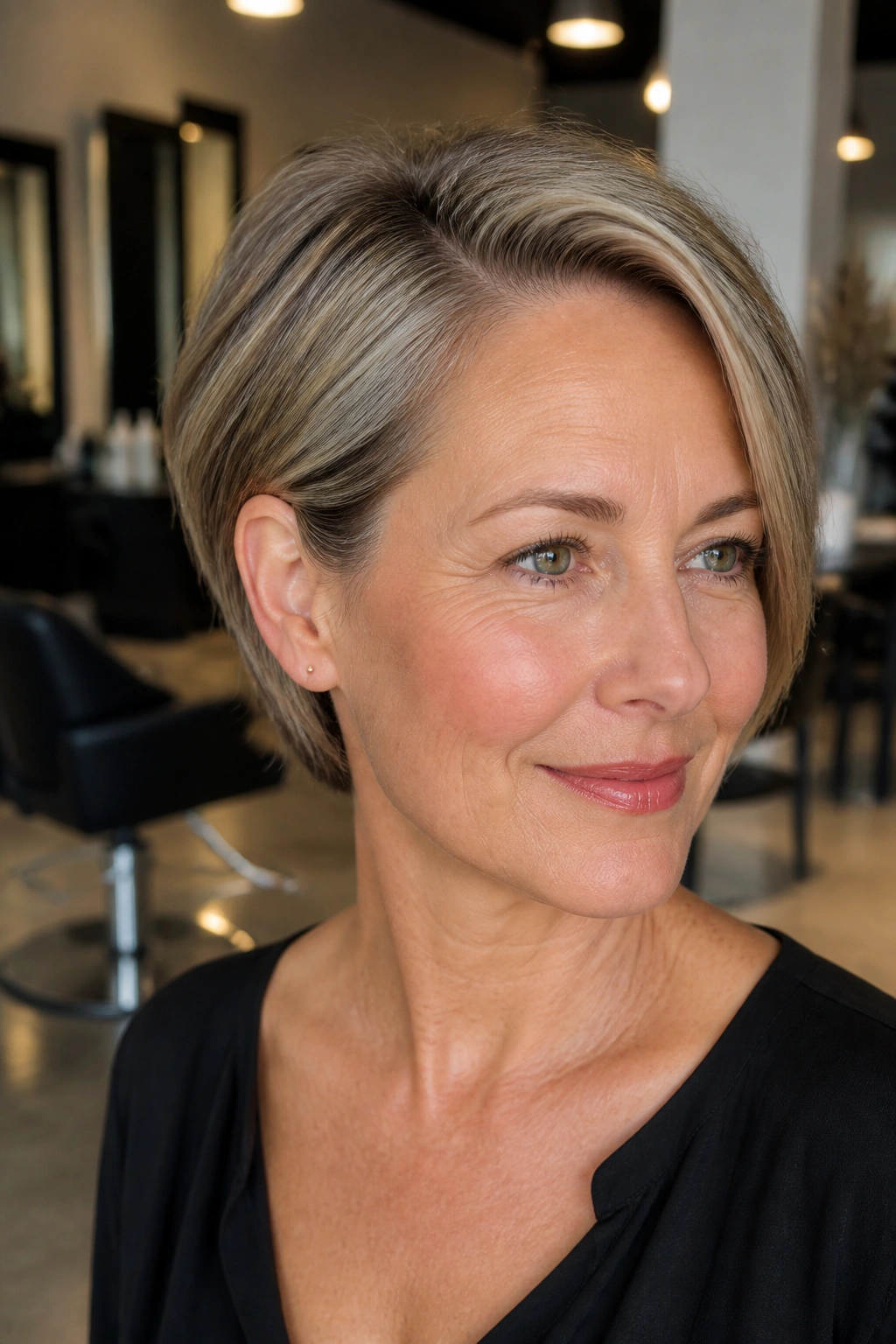
If you spend half the day moving hair out of your face, this one makes sense immediately. The tucked-behind-the-ear shape gives you control without forcing the haircut to sit stiffly on the head. One side can stay a touch longer, which means you can tuck it cleanly and still keep some softness around the cheek.
That matters if you wear glasses. It also matters if you like to see your earrings, your jawline, or just your own face without hair sliding forward every three minutes.
The trick is not cutting the side too short. Leave enough length for the hair to bend behind the ear without popping back out. The back can stay close and neat, but the side should have enough give to move. If the sideburn area is too tight, the whole thing starts looking severe.
- Good for straight or lightly wavy hair.
- Works well with low-maintenance styling.
- Ask for side pieces that skim the jaw, not the cheek.
- A soft taper around the ear keeps the shape clean.
I like this cut on women who want polish on a regular Tuesday, not only on the day they wash their hair.
4. Long Pixie Bob Bangs That Stay Wispy, Not Heavy
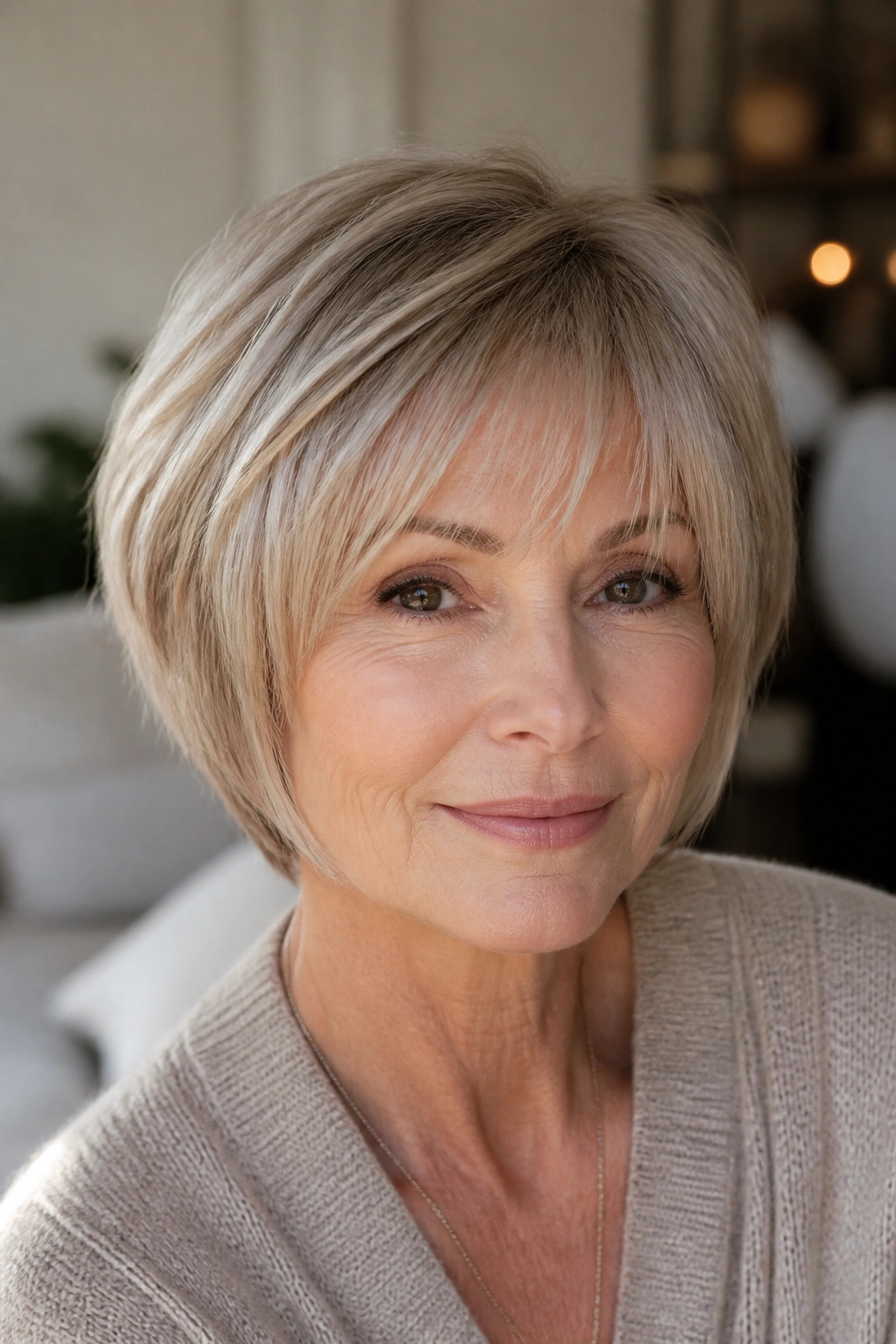
Wispy bangs are one of those details that can make a haircut feel lighter almost immediately. They soften the forehead, blur a strong hairline, and keep the front from turning into a curtain. On older women, that softness often reads as freshness rather than fuss.
The danger is density. Heavy bangs sit on the face and can make a long pixie bob feel trapped. Wispy bangs move. They let a little forehead show through, which keeps the cut airy and stops it from closing in around the eyes. If you have fine hair, this is especially useful because it keeps the fringe from eating up too much volume.
I also like wispy bangs for women whose hairline has shifted a little at the temples. A soft fringe can make that area feel intentional instead of exposed. The cut grows out gracefully, too. When it starts to lengthen, it usually becomes a side sweep rather than an ugly line.
Heavy bangs are the trap.
Style them with a small round brush or even your fingers and a quick blow-dry from side to side. You want them to sit loose, with a little bend, not stiffly across the forehead.
5. A Stacked Nape That Lifts the Whole Cut
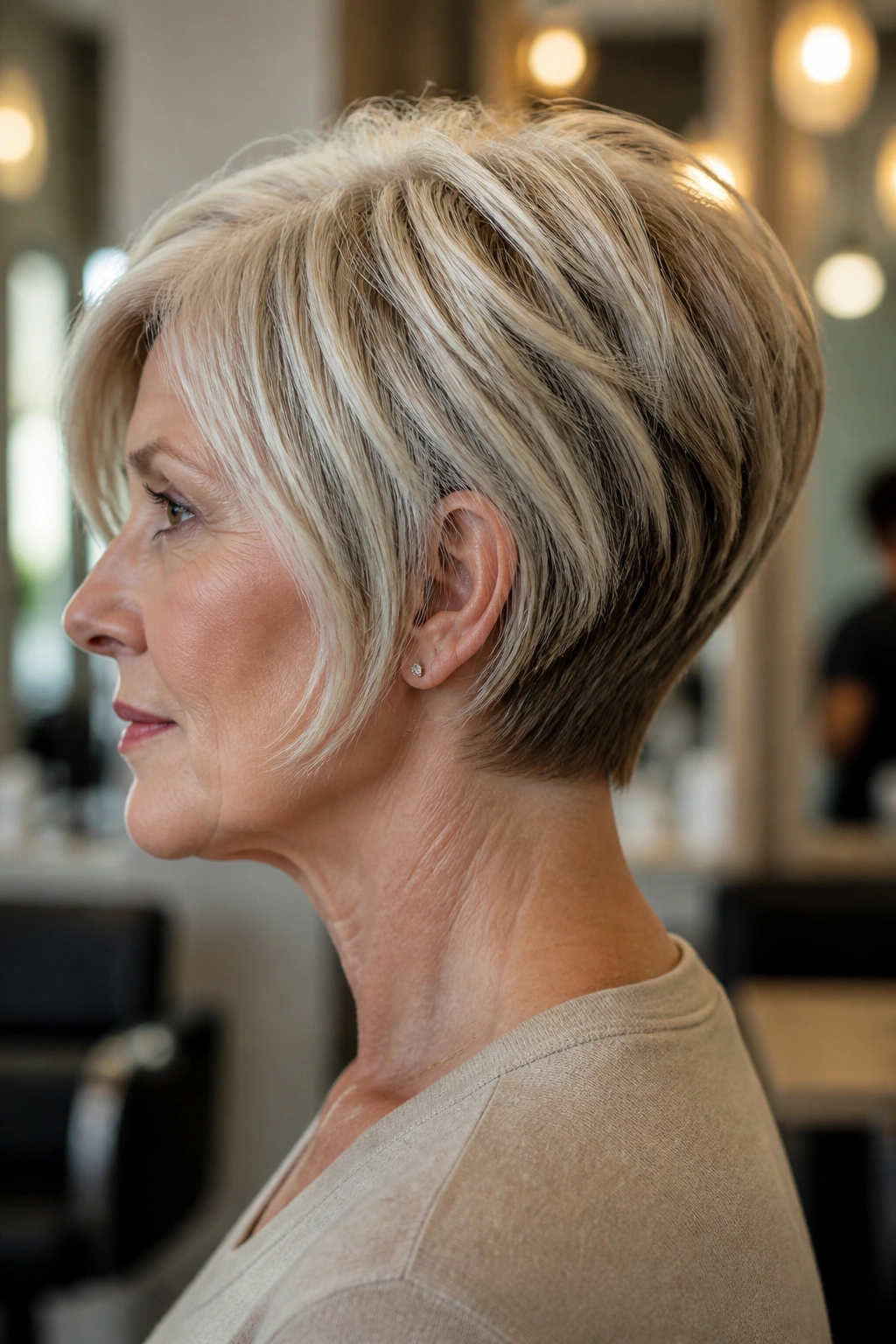
Want lift at the crown without teasing your hair into a shell? A stacked nape solves that problem faster than most people expect. The back is cut a little shorter and layered so it lifts off the neck, while the top stays long enough to keep the shape soft.
Where to Ask Your Stylist to Cut
This part matters. If the stacking starts too high, the shape can look too puffy in the back. If it starts too low, you lose the lift and the haircut collapses at the nape.
Ask for:
- Soft graduation through the lower nape only
- A crown that keeps some weight
- Front pieces long enough to brush the jaw
- A side view that slopes gently, not sharply
The best stacked pixie bobs make the head look balanced from the side. That’s the angle people forget to check. We stare at the front in the mirror and miss the back, then wonder why the cut feels off.
This style usually needs trims every 6 to 8 weeks. The nape grows fast, and once it does, the whole shape loses its clean line. Worth the upkeep if you like structure. Not worth it if you want to forget about the salon for half a year.
6. Curl-Friendly Long Pixie Bob With Room to Bounce
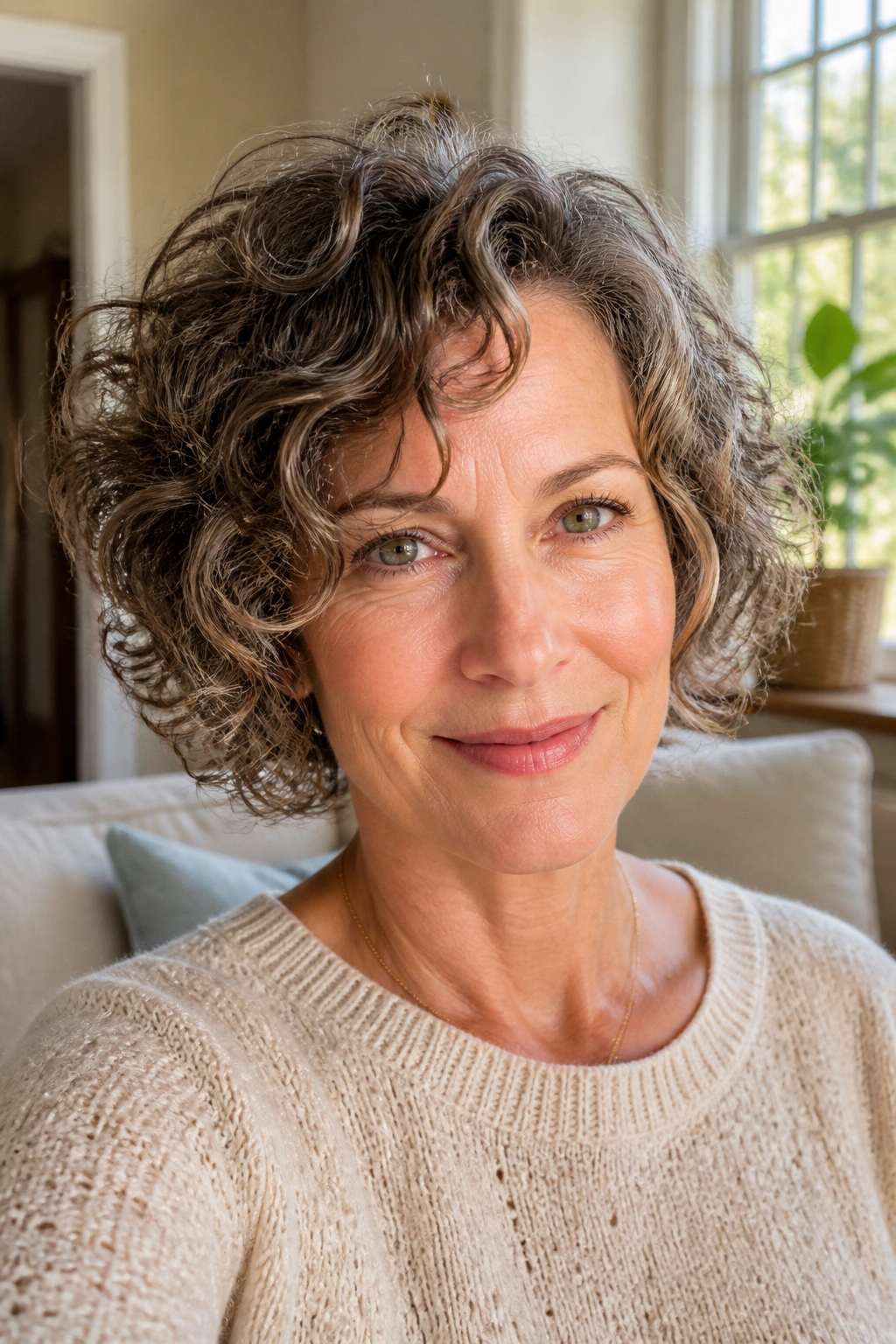
Curly hair hates being chopped too short unless the shape is planned around the curl pattern. A long pixie bob gives curls enough room to spring without turning into a triangle. That extra length at the crown and around the jaw makes a big difference.
What I like here is the way the layers follow the curl, not fight it. The cut should remove bulk where the hair puffs out, but leave enough length so the curl has somewhere to hang. If your curls are loose, the bob can sit a little lower around the chin. If they’re tighter, the hair should be shaped dry so the stylist sees how each curl settles.
How to make it work at home
- Apply curl cream to soaking-wet hair.
- Scrunch with a microfiber towel, not a regular bath towel.
- Diffuse on low heat until about 80% dry.
- Leave the last bit to air dry so the curl keeps its shape.
I would not razor through curly ends too much. It often creates frizz where you wanted definition. Leave room for the curl to breathe. That’s the whole point.
7. Sleek Blunt Edges for Straight, Glossy Hair
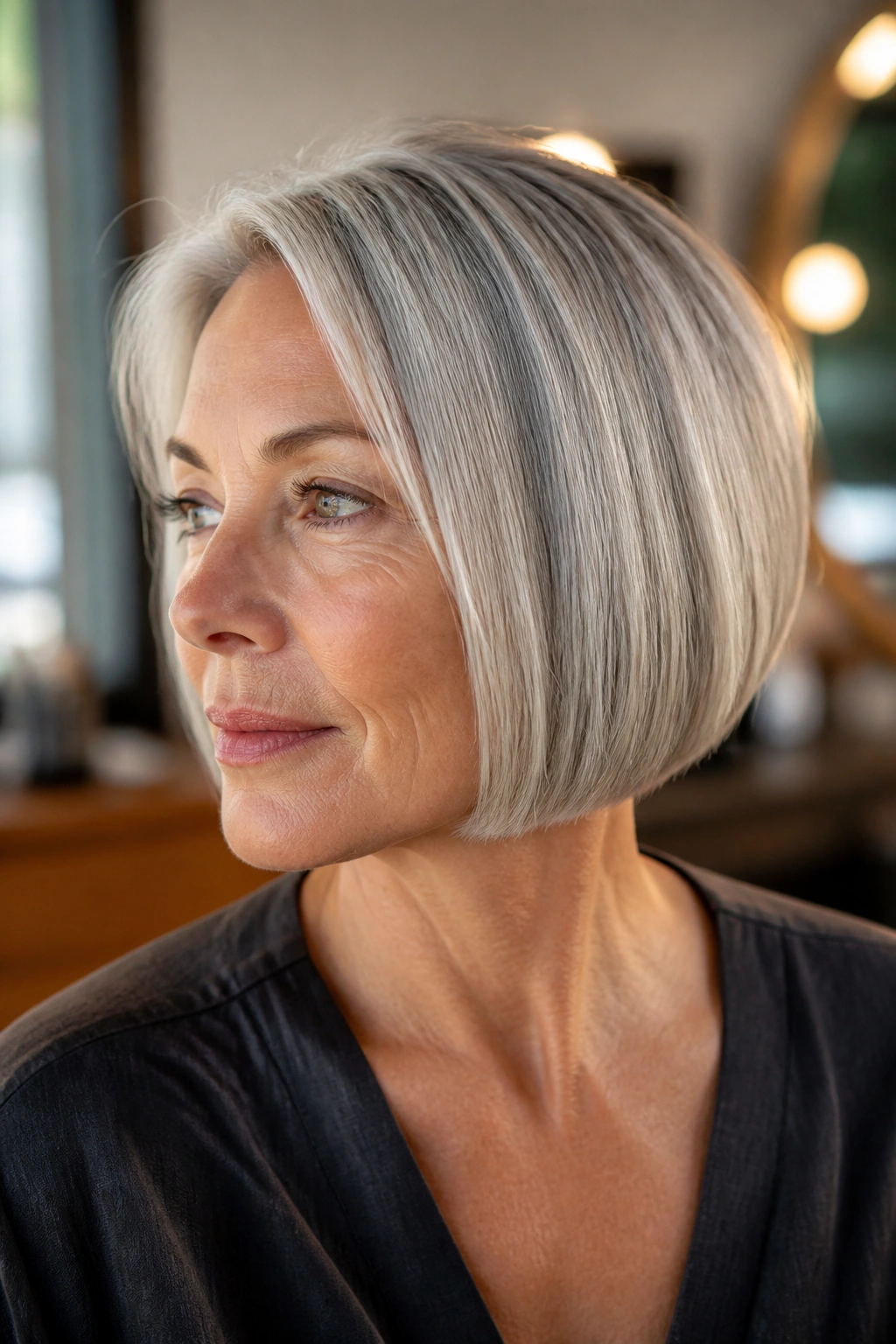
A sharp pixie bob can look better than a soft one on the right hair. Straight, dense hair often holds a blunt edge with almost no fuss, and that crisp line can be gorgeous around the jaw. It gives the haircut a little authority, which I think older women often wear well.
This version works best when the shape is clean but not rigid. You want a strong perimeter, yes, but you still need a bit of movement through the top so the haircut doesn’t look like a block. The front can skim the chin, while the back sits just above the collar. That small difference is what keeps it modern.
Humidity is not its friend.
If your hair bends or flips on its own, you will spend time with a blow-dryer or flat brush. I’m fine with that, but I wouldn’t pretend otherwise. This is a style for someone who likes polished hair and doesn’t mind a 10-minute routine. A touch of serum on the ends and a cool blast from the dryer can keep the line smooth without making it greasy.
8. Tousled Shaggy Layers With a Soft, Piecey Finish
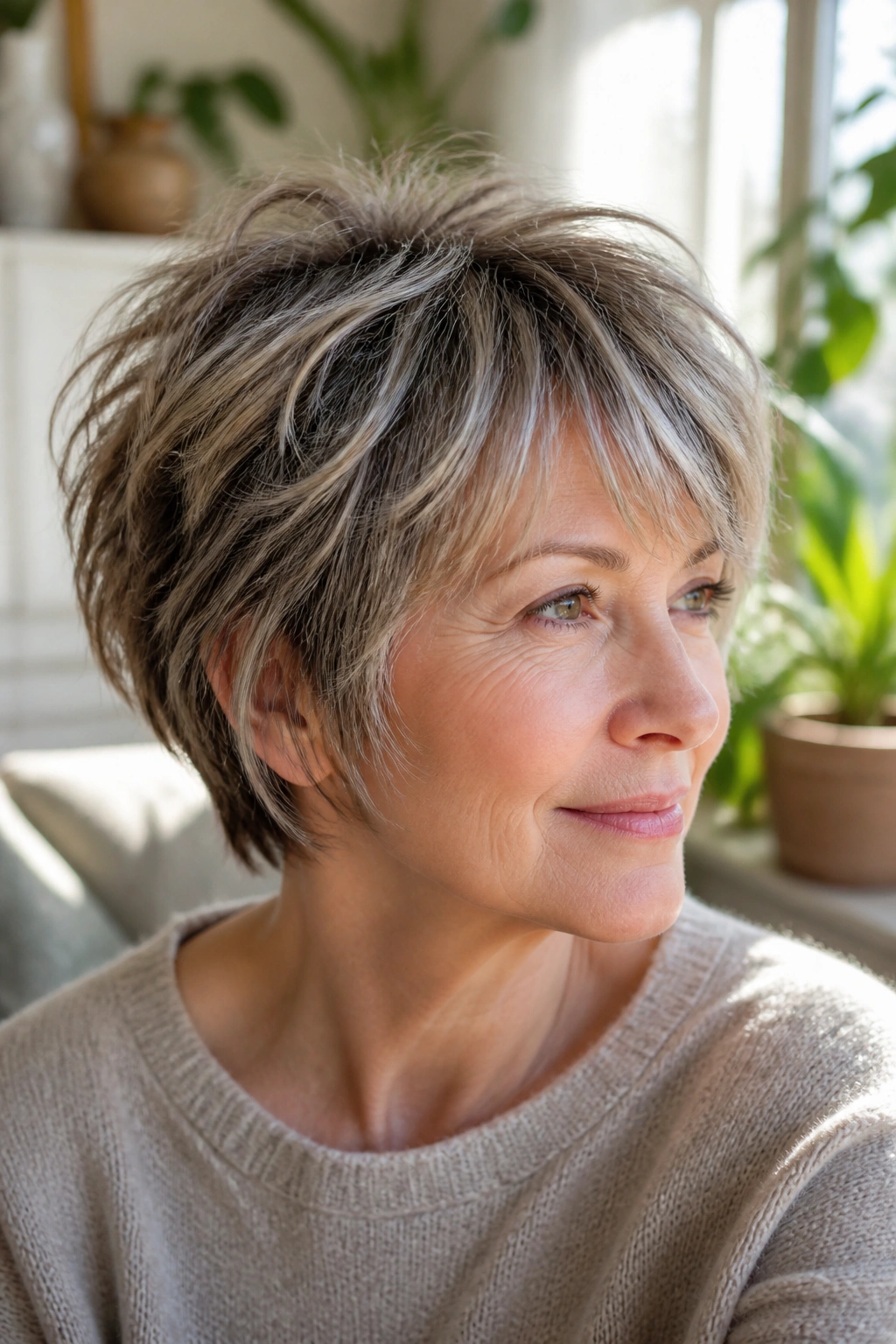
Why do some women look fresher in a messier cut? Because movement breaks up the shape. A tousled pixie bob keeps the hair from sitting too close to the head, which is useful if your strands are fine, if your face feels a little soft around the jaw, or if you simply dislike anything too neat.
The shaggy version is all about controlled looseness. Not chaos. You want choppy layers, a little lift at the roots, and ends that separate instead of clinging together. That separation makes the hair look thicker than it is, which is a nice trick for finer textures.
How to Keep It Piecey, Not Frizzy
A dime-size cream or light paste is plenty. Work it through the ends, then pinch a few front pieces between your fingers to encourage shape. If the hair is naturally wavy, air-drying can be enough. If it’s straight, twist 1-inch sections around your fingers while the hair is still damp.
Too much product ruins this cut fast. It takes the movement away and makes the hair look damp all day, which is never flattering. Keep the finish loose, and don’t try to make every strand behave. That’s the point.
9. Angled Length That Slants Forward at the Jaw
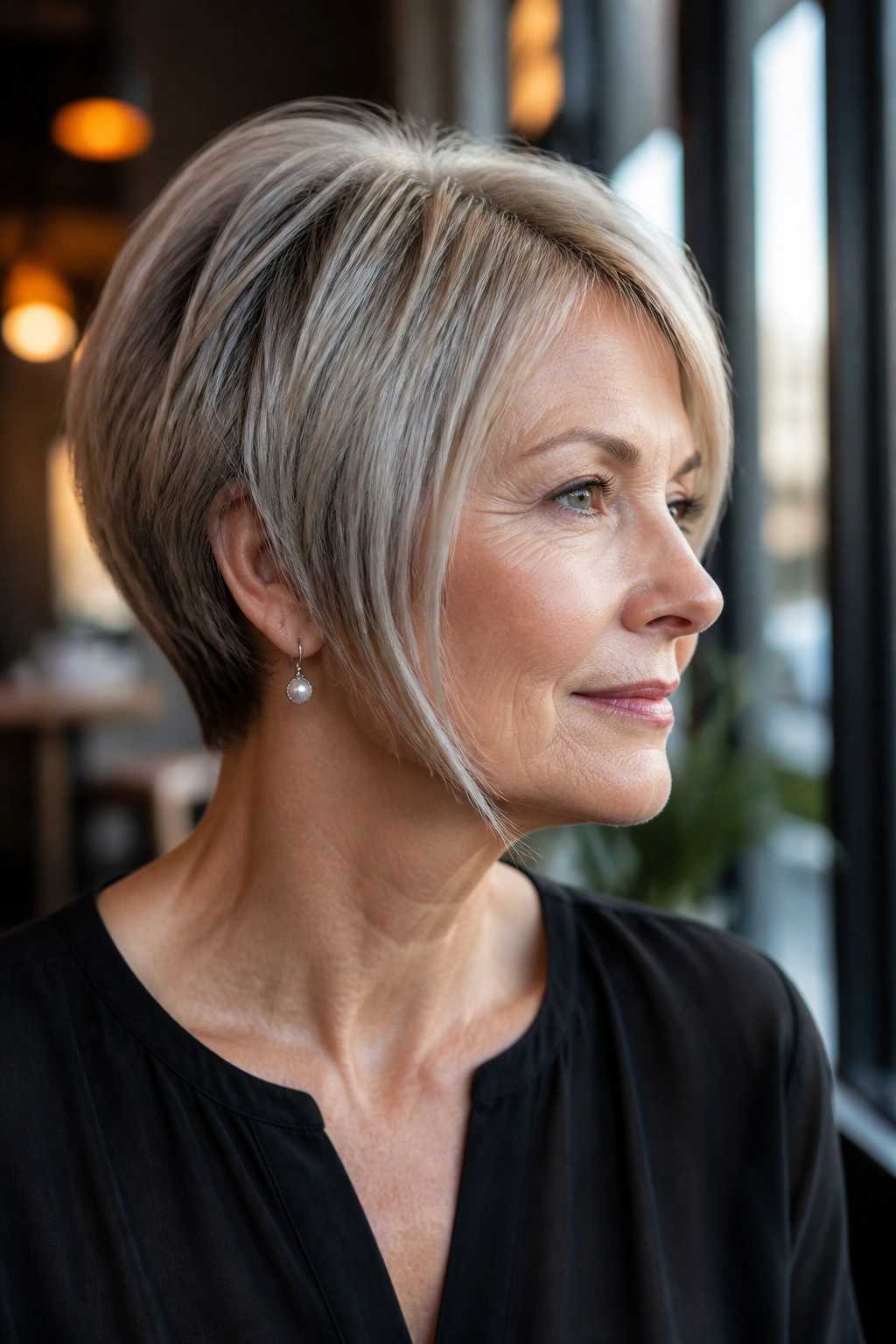
Turn your head to the side and this cut does most of the talking. The front pieces run longer than the back, creating a gentle slope that draws the eye forward. That angle is especially kind to round or square faces, because it lengthens the lower half without needing obvious volume at the crown.
The best angled long pixie bobs are subtle. You’re not aiming for a sharp wedge. You’re aiming for a gradual drop that starts near the ear and ends somewhere around the chin. The back stays shorter and tidy, but the front has enough length to frame the face and brush the jaw.
I’ve seen this work beautifully on women who want a little drama without going into true asymmetry. It gives shape, not fuss. And it works with glasses better than many people expect, because the front can move past the frames instead of competing with them.
Ask for a slope that’s visible from the side but soft from the front. That’s the sweet spot. Too steep, and the haircut starts announcing itself before the face does.
10. Salt-and-Pepper Volume at the Crown
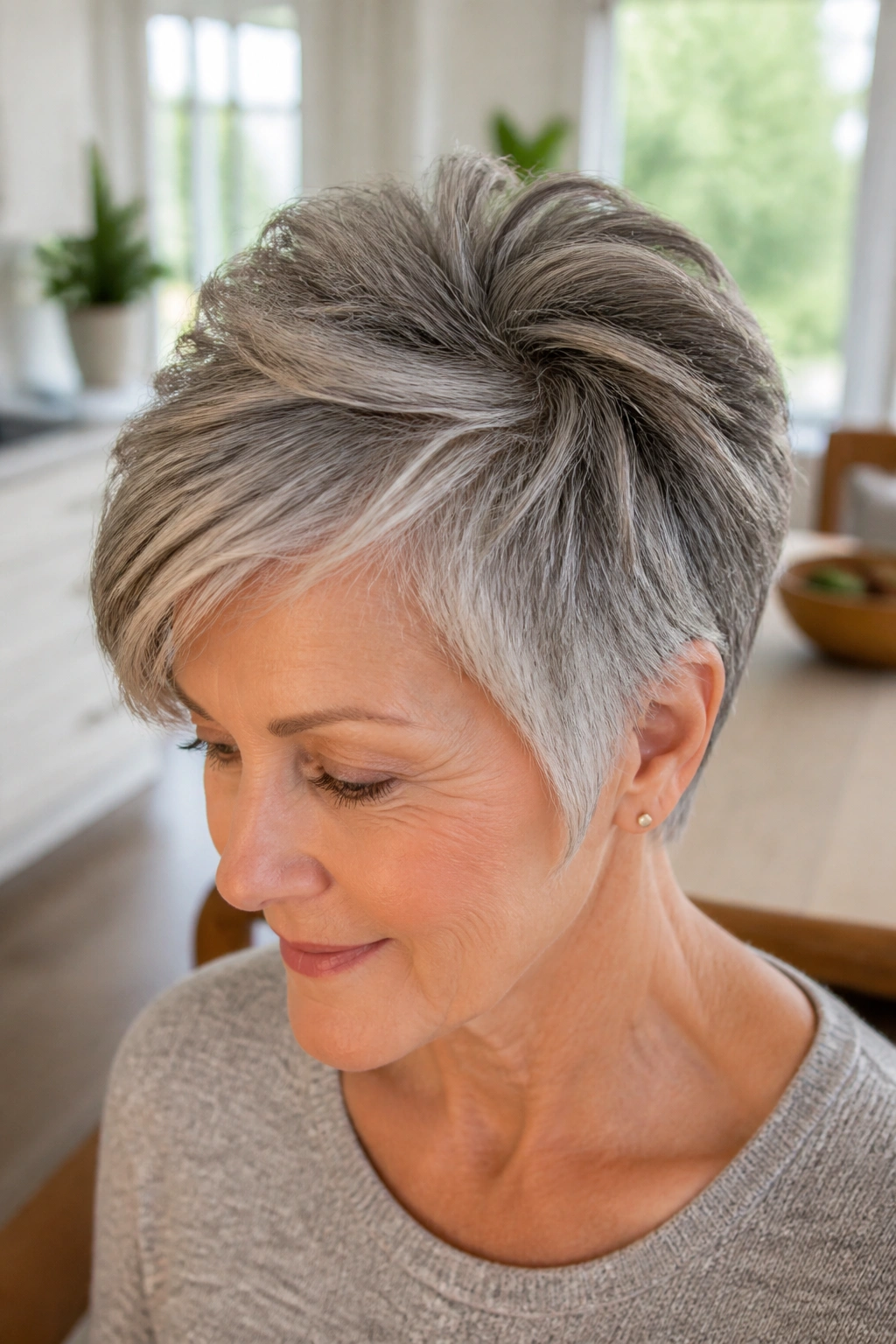
Salt-and-pepper hair has built-in dimension. The cut should show that off, not hide it under a flat shape. A long pixie bob with a little lift at the crown makes the mixed tones read as texture, which is often more flattering than a smooth, close-to-the-head finish.
Flat roots do nobody favors.
This is one of those cuts that looks best when the top is kept light and airy while the back stays tidy. The crown lift does not have to be big. In fact, too much height can look dated fast. What you want is a soft rise at the roots so the hair doesn’t hug the scalp.
A root spray or light mousse can help, but the blow-dry matters more. Direct the hair away from the part, then roll the brush under just at the root for a second or two. Don’t overwork the ends. The beauty of salt-and-pepper color is that the strands already have contrast.
I like this cut on women who are done fighting their natural color. It feels honest, and it doesn’t need a lot of apologizing. The mix of silver, charcoal, and white can do the heavy lifting if the shape is clean.
11. Asymmetry That Feels Fresh, Not Fussy
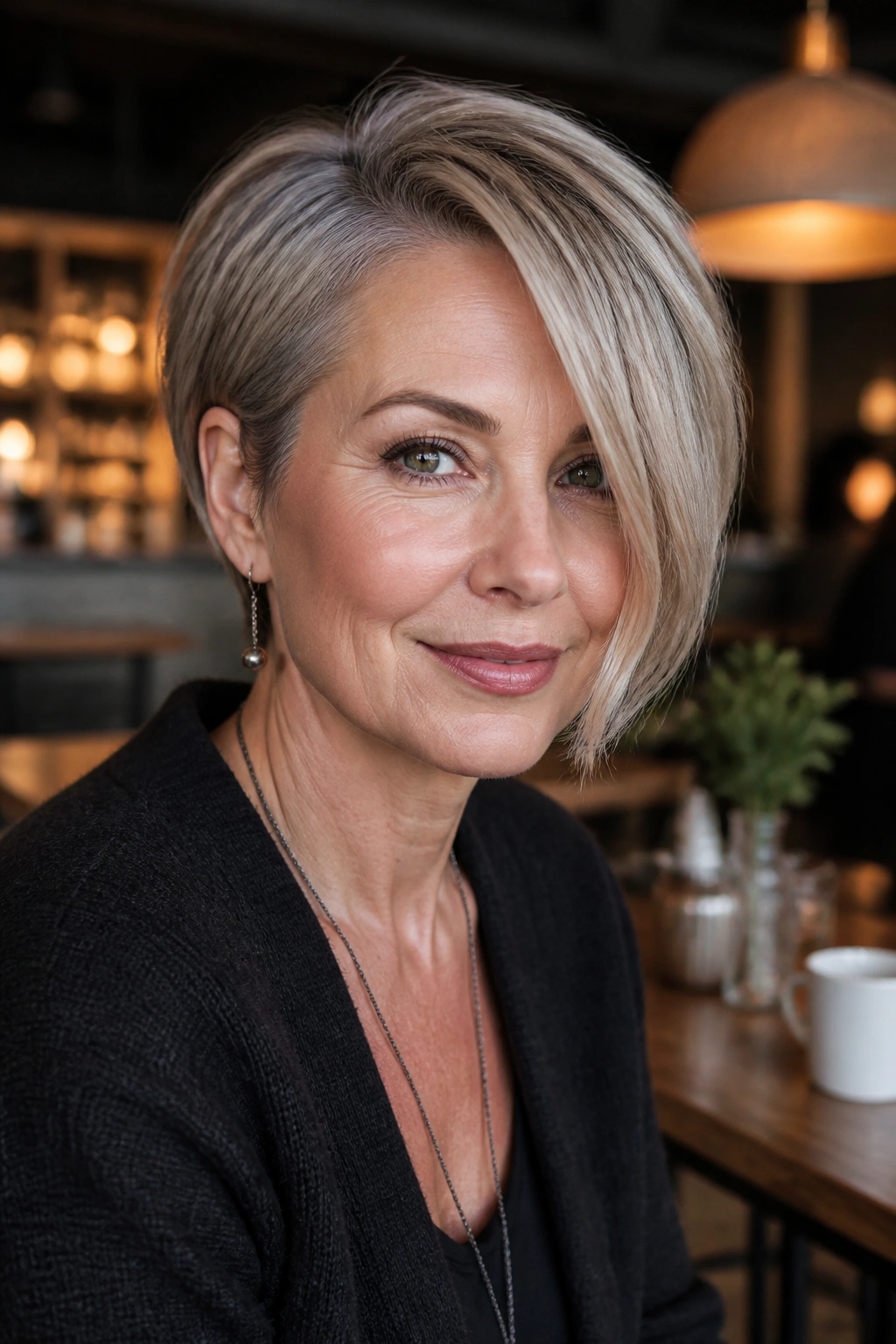
A little asymmetry goes a long way. One side longer than the other can soften the face, draw attention away from a strong jaw, and make the haircut feel more current without turning it into a statement piece. That small imbalance is usually enough.
The key is restraint. I do not love dramatic asymmetry on older women unless the hair texture is very specific and the wearer likes a sharper look. A one- to two-inch difference between sides is usually enough. It gives interest without making the haircut look like it belongs to a fashion shoot instead of real life.
A deep side part helps this shape. So does a soft bend through the longer side, especially if the hair is straight. If the shorter side is tucked neatly behind the ear and the longer side sweeps across the cheek, the whole cut feels intentional.
This one also handles earrings well. The longer side can skim the neckline, while the shorter side opens the face. It’s a neat little visual trick, and when it’s done right, nobody reads it as fussy. They just notice that it works.
12. Feathered Fringe and Light Ends Around the Eyes
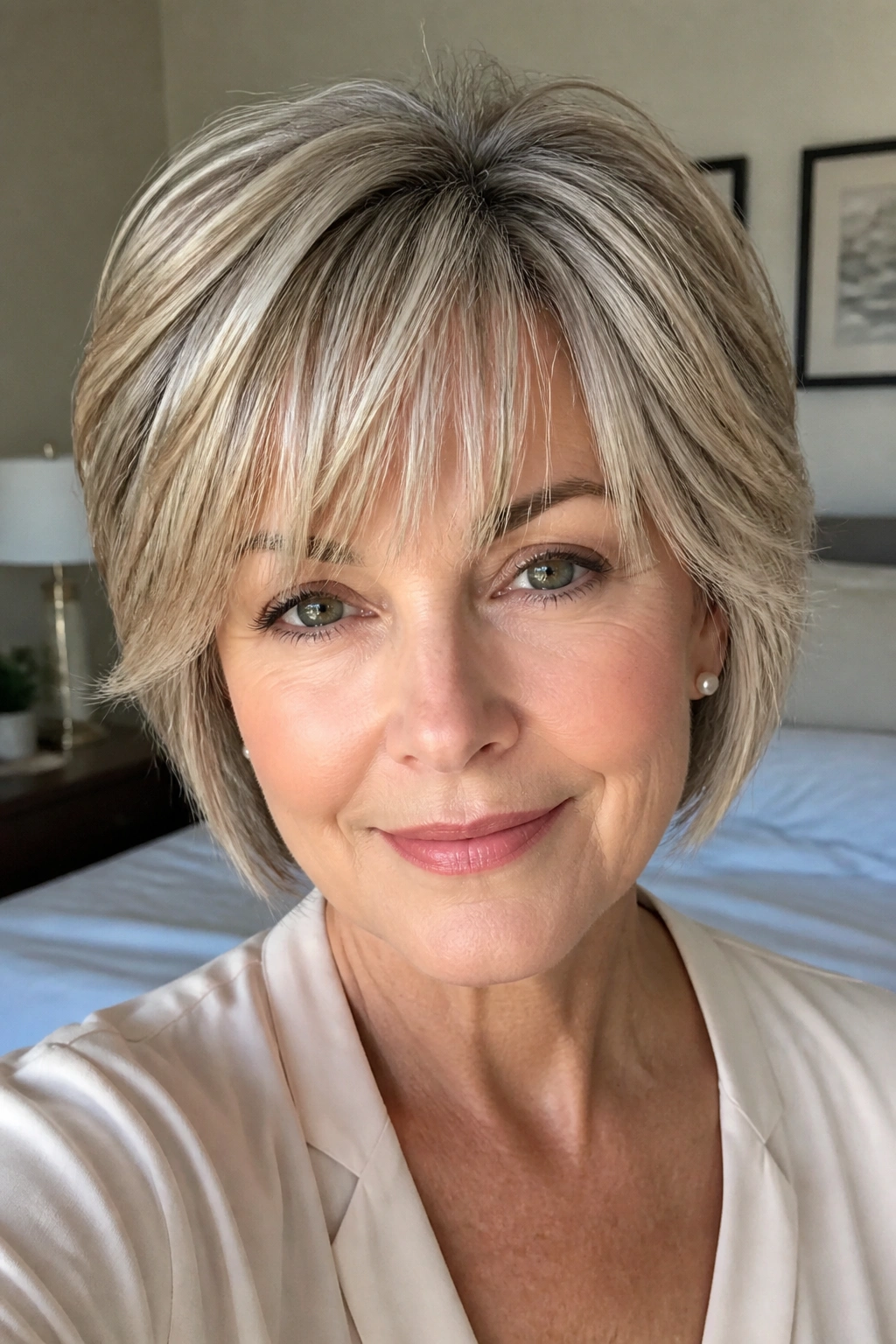
The fringe is the star here. Everything else is there to support it. Feathering around the face keeps the front of the cut from sitting heavy, and that matters when the goal is to soften lines near the eyes without dragging the style down.
The Fringe Should Move First
If the bangs sit stiffly, the whole haircut loses its ease. Ask for the fringe to be sliced rather than blunt, with the ends softened so they can turn slightly to the side. That keeps the eye area open and avoids the hard shelf effect that dense bangs create.
A few specifics help:
- Keep the fringe long enough to touch the brows or slightly below.
- Feather the first 2 inches around the face.
- Use a small round brush or fingers to bend the bangs.
- Keep the ends light so they don’t sit like a curtain.
This cut works especially well with glasses, because the fringe can sit just above or beside the frames without fighting them. It also grows out nicely, which is worth saying because not every fringe does. Some turn into a mess in two weeks. This one tends to behave.
13. A Round-Brushed Classic Pixie Bob With Shape
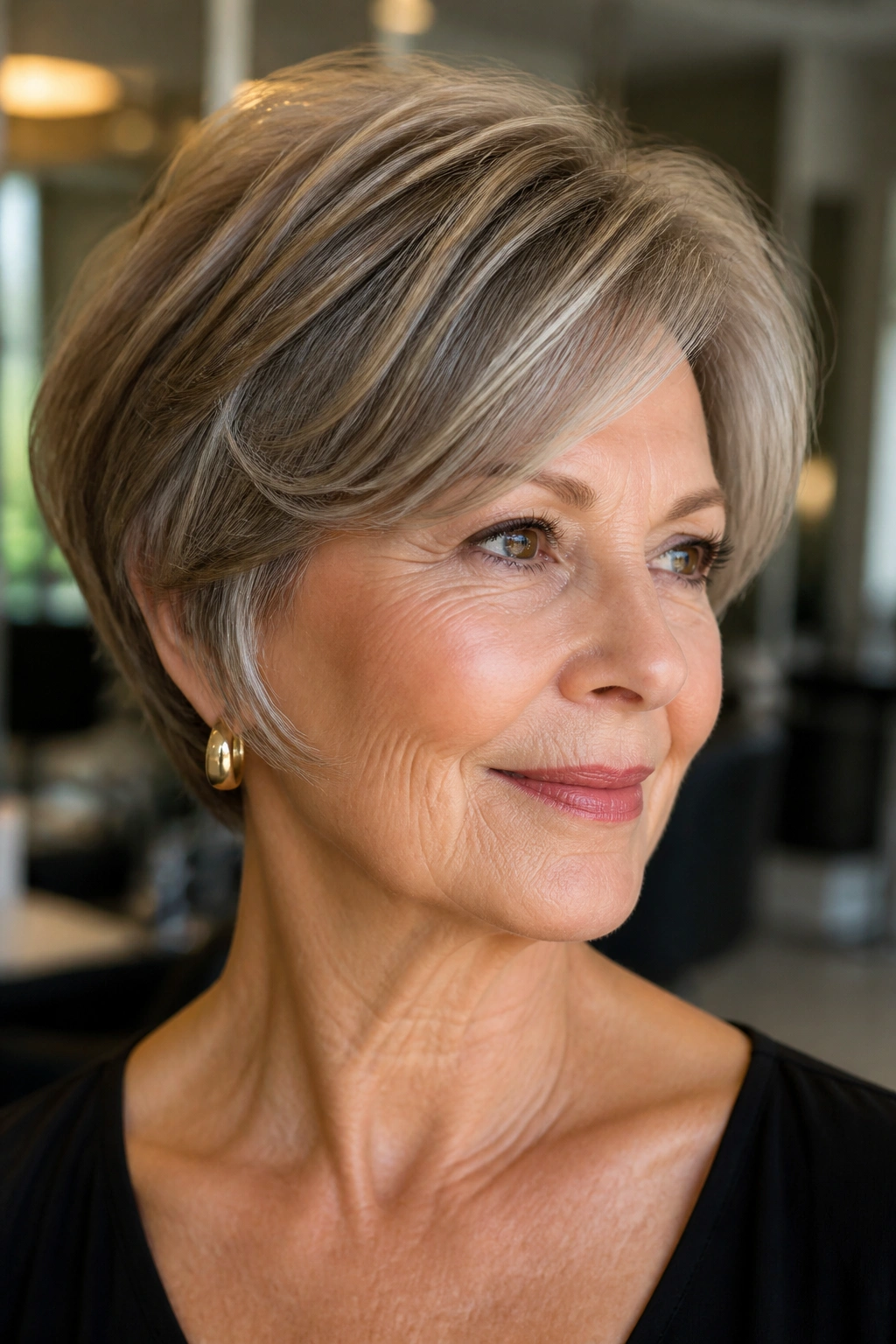
There is something satisfying about a haircut that looks like it was blow-dried on purpose. The round-brushed pixie bob is that cut. It has a little lift at the roots, curved ends, and enough polish to make the hair look finished without looking stiff.
If you like a controlled shape, this is a strong pick. The ends bend under just enough to soften the jaw, while the crown gets a bit of height from the brush. The result feels classic rather than trendy, which is often a better deal for older women who want consistency more than novelty.
What Helps the Shape Hold
A 1.5-inch round brush is usually enough for most hair lengths in this cut. Use a nozzle attachment on the dryer if you have one. It keeps the airflow directed and stops the hair from puffing in random directions. A quick pass with a cool shot at the end helps the bend stay put.
The catch is simple: this shape likes a little effort. It won’t look the same if you air-dry and walk away. If you want a put-together finish with minimum product, though, the round-brush method is hard to beat. It gives the hair that smooth curve people notice without knowing why.
14. An Undercut-Lite Version for Thick Hair
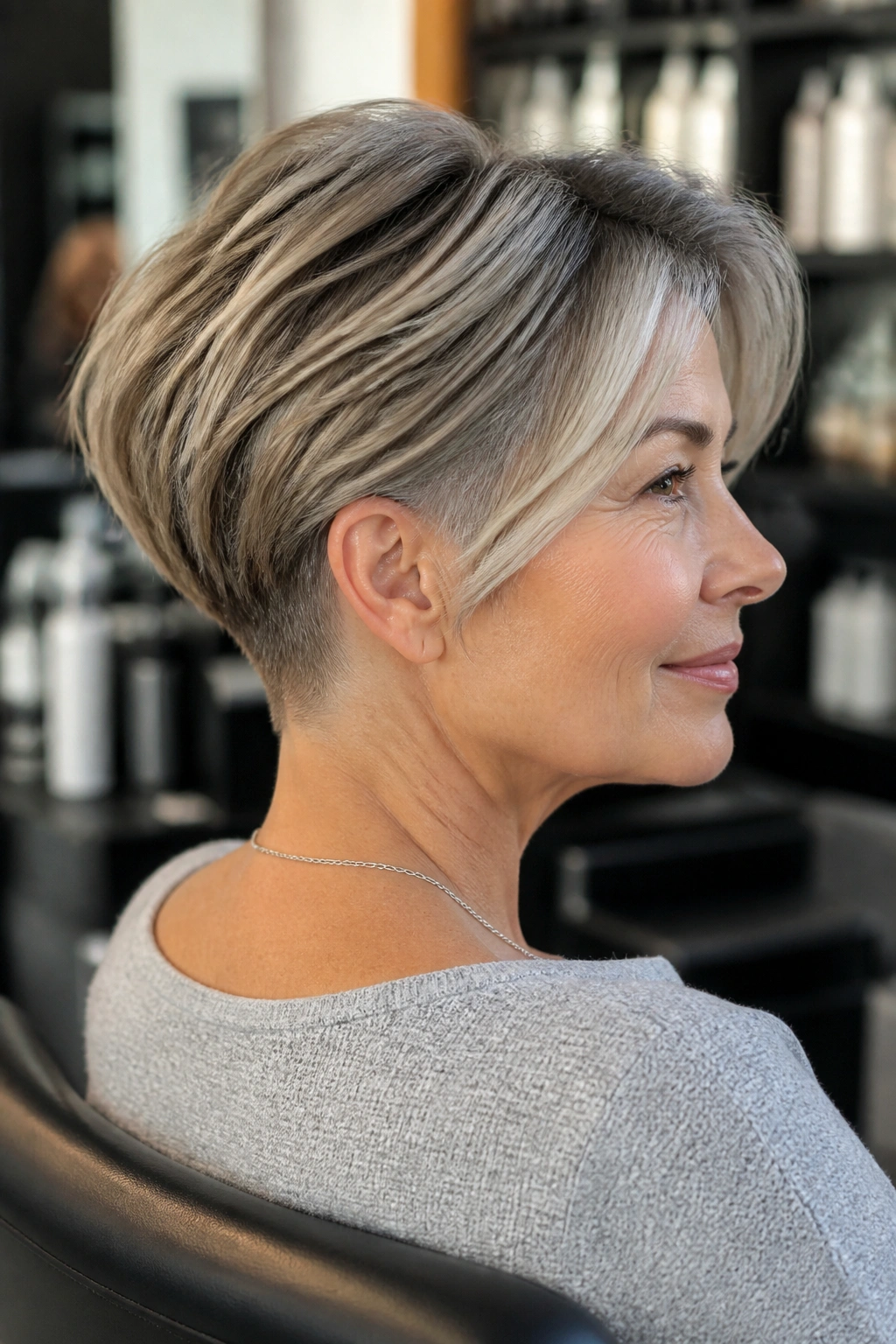
Thick hair needs removal somewhere. If you leave all that density sitting at the bottom, a long pixie bob can balloon out and lose its shape. An undercut-lite version solves that by taking weight out from underneath while leaving the top and front soft.
This is not a shaved-side haircut. I wouldn’t call it edgy in that sense. It’s more practical than dramatic. A stylist can trim the nape shorter, reduce bulk under the crown, and keep the outer layer long enough to fall neatly over the lighter base. That makes the haircut dry faster and sit closer to the head.
The trick is not taking too much. If the hair is fine, an undercut-lite can leave the outer layer looking thin. If the hair is very dense, though, a small amount of hidden removal can make a massive difference in how the cut lays.
Too much of it turns choppy fast.
Ask for weight removal only in the bottom third of the haircut, and tell the stylist you still want the perimeter to look full. That sentence saves a lot of regret.
15. Soft Neck-Grazing Ends for a Long Pixie Bob Grow-Out
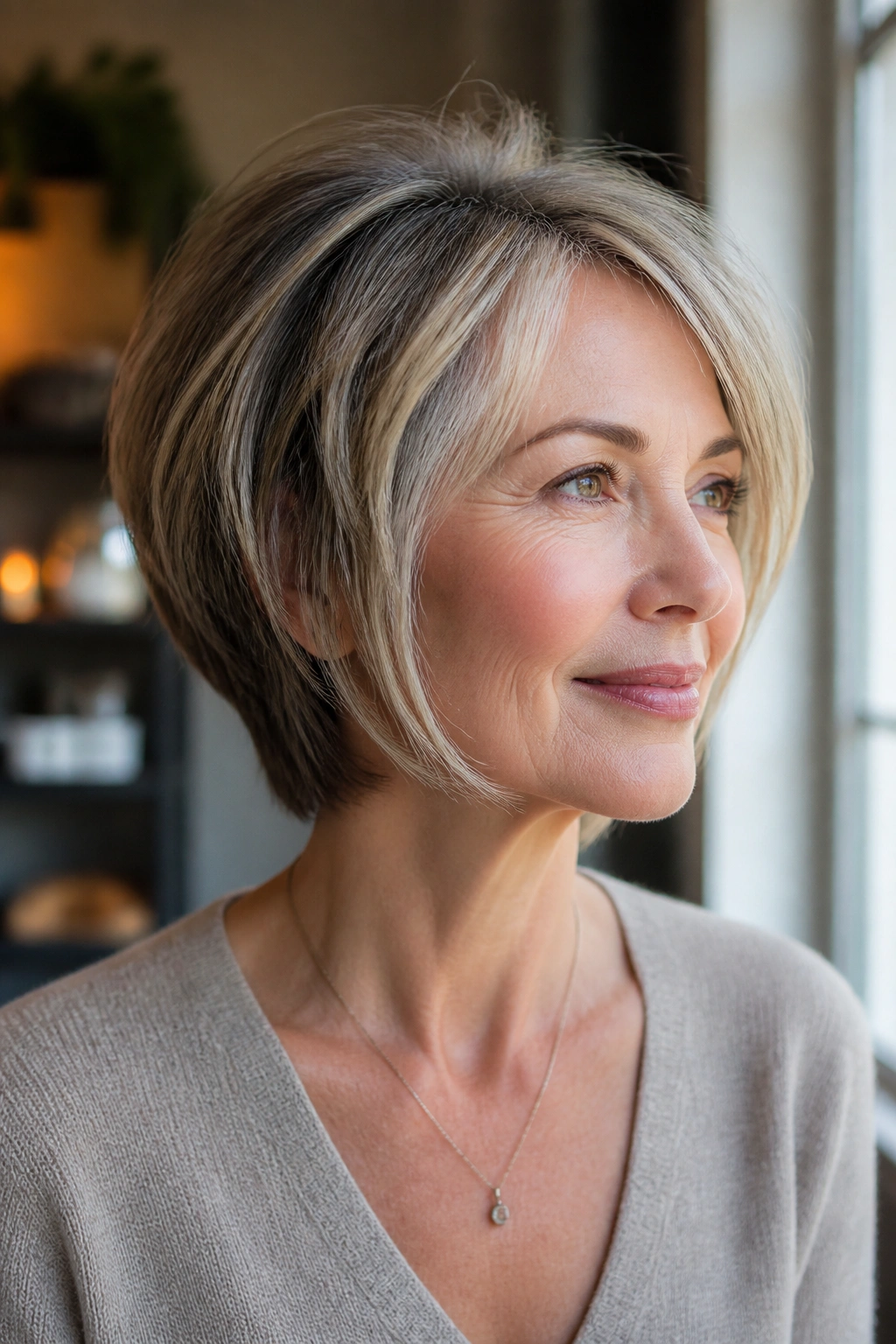
Unlike a classic bob, this cut leaves more lift around the crown. Unlike a shorter pixie, it still brushes the neck and gives you enough length to tuck or sweep. That makes it a smart choice for women who want a shorter shape without committing to frequent hard trims.
The neck-grazing version is the quietest one on this list, and I mean that as a compliment. It doesn’t shout. The ends skim the neckline, the face-framing pieces land around the cheek and jaw, and the top stays long enough to move. If you are easing out of a shorter cut, this is one of the easiest shapes to live with.
I also like it because the grow-out is gentle. You do not hit the awkward puff stage as fast, and the haircut can slide toward a soft bob without looking as if it lost its plan halfway through. That matters. Haircuts should age out gracefully, not go from neat to annoying in two weeks.
Ask your stylist for a length that just touches the collar or neck, with the front a little longer than the back. Keep the layers soft. Keep the outline clean. The cut should feel like it belongs to the face, not just the trend.
Final Thoughts
The strongest long pixie bob is the one that matches your hair’s weight and your patience level. Fine hair usually wants lift and softness. Thick hair wants weight removal. Curlier textures need room to move. Straight hair can handle sharper edges if you like a cleaner line.
Bring photos from the front, side, and back when you sit down in the chair. One picture is never enough. A good stylist will read the shape of your face, the way your hair grows at the crown and nape, and the amount of work you actually want to do in the morning.
If a cut still looks good after a windy walk and a bad coffee run, that’s the one.
