



A round face can be tricky with short hair. The wrong pixie bob lands right at the cheeks, flares at the sides, and makes the whole shape feel wider than it really is.
The right cut does the opposite. It pulls the eye upward, builds a little height at the crown, and uses diagonal lines to break up softness around the face. That is why pixie bob hairstyles for round faces work so well when they’re done with intention. They do not hide the face. They frame it better.
A good pixie bob for this face shape usually avoids a hard stop at cheek level. It gives you either a longer front, a tapered nape, or some kind of side movement so the haircut never sits like a circle around the head. Fine hair needs lift. Thick hair needs bulk removed in the right places. Curly hair needs room, but not too much room at the sides. Little details. Big difference.
1. Side-Parted Tapered Pixie Bob
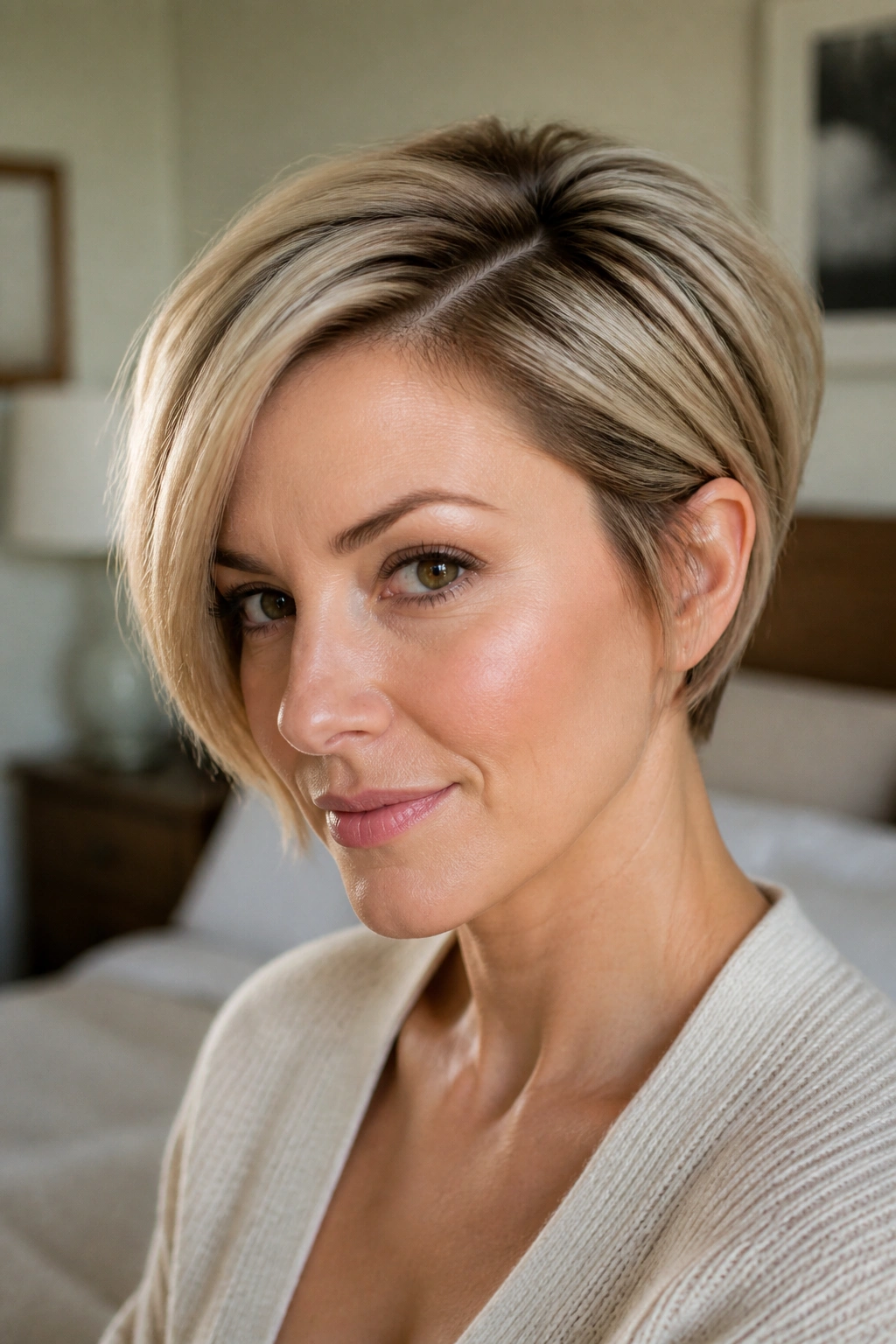
A side part is one of the simplest ways to make a round face look a touch longer, and I still think people underrate it. The part shifts the weight of the haircut off the center line, which keeps the face from reading too symmetrical.
Why the part matters
A deep or even slightly off-center part creates a diagonal line across the forehead and cheek area, which is exactly what round faces tend to need. That diagonal breaks up width fast. A tapered nape helps too, because it keeps the back close to the neck instead of puffing outward.
- Keep the longest pieces grazing the cheekbone, not sitting on it.
- Ask for soft tapering at the nape so the shape narrows as it goes down.
- Leave enough length on top to sweep the hair over with a round brush.
- Use a light wax only on the ends, not through the roots.
Best move: ask for a side part that starts slightly above the arch of your eyebrow. It sounds small. It isn’t.
2. Angled Pixie Bob with Longer Front Pieces
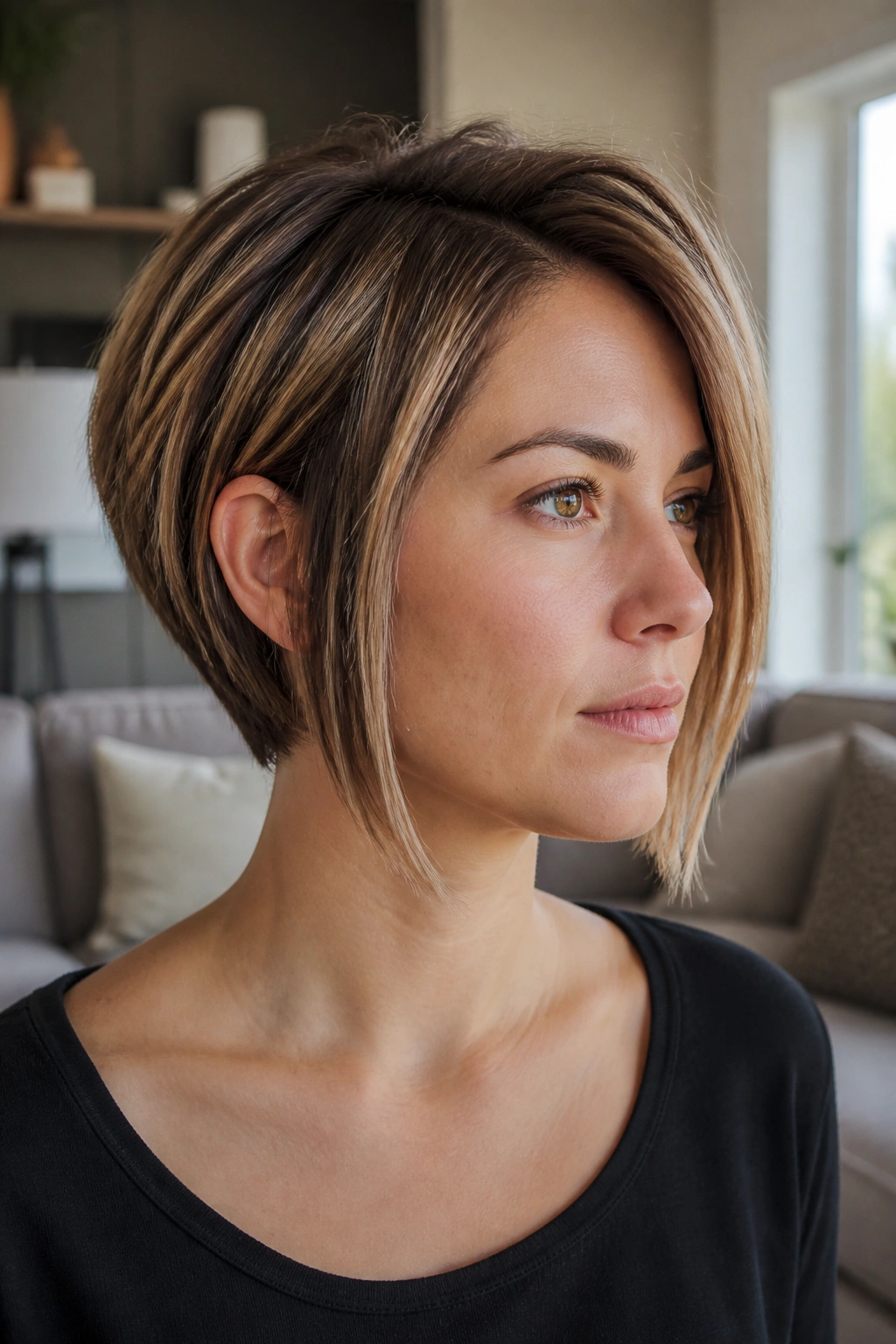
If you want the face to read longer, this is one of the bluntest tools in the box. The whole haircut leans forward, with the front pieces kept longer than the back by about an inch or two, sometimes a little more if the hair is thick.
That front length pulls the eye down instead of out. It can skim the jawline, brush the lips, or sit right under the chin, depending on how dramatic you want it. The back stays snug and clean, which matters more than people think. A loose back can make the whole cut feel boxy.
What I like about this shape is that it gives a round face structure without looking severe. You still get softness. You just get it in a more deliberate line. The angle does the slimming work.
Keep the front pieces smooth, not curled under too hard. A quick bend with a flat iron is enough. Too much curl at the ends brings the width right back.
3. Stacked Pixie Bob with Crown Volume
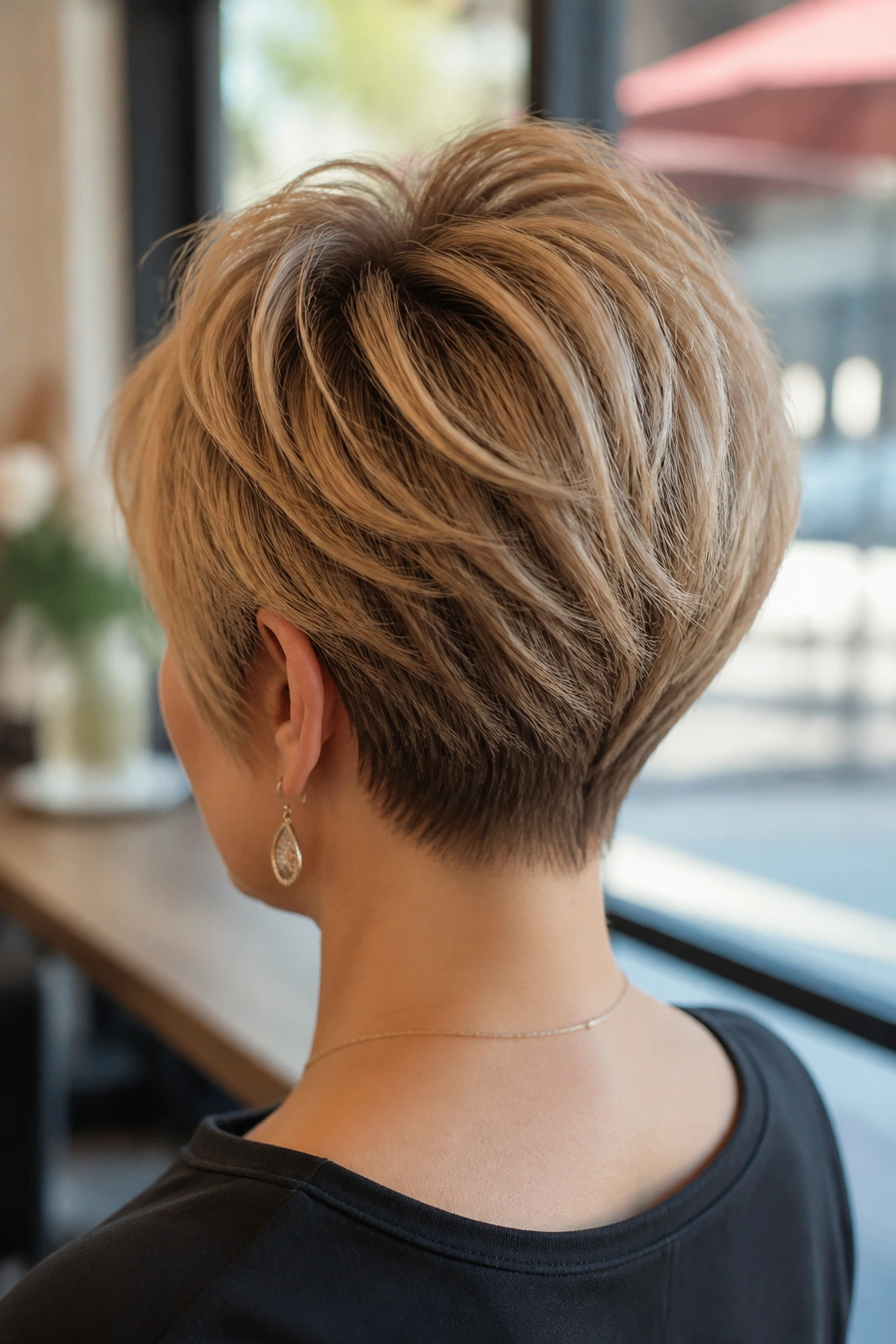
Why does a stacked back help a round face so much? Because it gives the haircut height where the face needs it most. The back rises from the nape toward the crown, and that lift changes the silhouette from round to slightly oval.
A stacked pixie bob is a good move when your crown goes flat or your hair falls straight out from the head. The layers underneath do the heavy lifting, but they should stay hidden. If the stacking shows too much, the cut can start looking dated or bulky. Keep it soft. Keep it close.
How to style the lift
Start with root mousse at the crown, not all over. Blow-dry the top back and up with a small round brush, then direct the sides downward so they do not spread wide. A little shine spray on the surface keeps the shape looking neat.
This cut loves clean roots and a little height. It does not need a lot of product. It needs the right product in the right place.
4. Choppy Textured Pixie Bob

If your hair goes flat by lunch, a choppy pixie bob earns its keep. The uneven ends and broken layers keep the eye moving, which is useful on a round face because it stops the haircut from forming one big soft circle.
This is a good cut for thicker hair, especially hair that tends to feel helmet-like when it gets too short. The trick is to remove weight without erasing shape. A stylist will usually point-cut the ends or slice into the top layers so the movement feels casual, not frayed. There’s a difference. A big one.
What to ask for
- Point-cut ends so the outline stays soft.
- Shorter internal layers at the crown for lift.
- A piecey fringe that can be pushed to one side.
- Matte paste or texture cream to keep separation visible.
A choppy pixie bob works because it makes the face look less circular without depending on length. That matters when you want short hair, not a bob pretending to be longer than it is.
5. Asymmetrical Pixie Bob with One Long Side
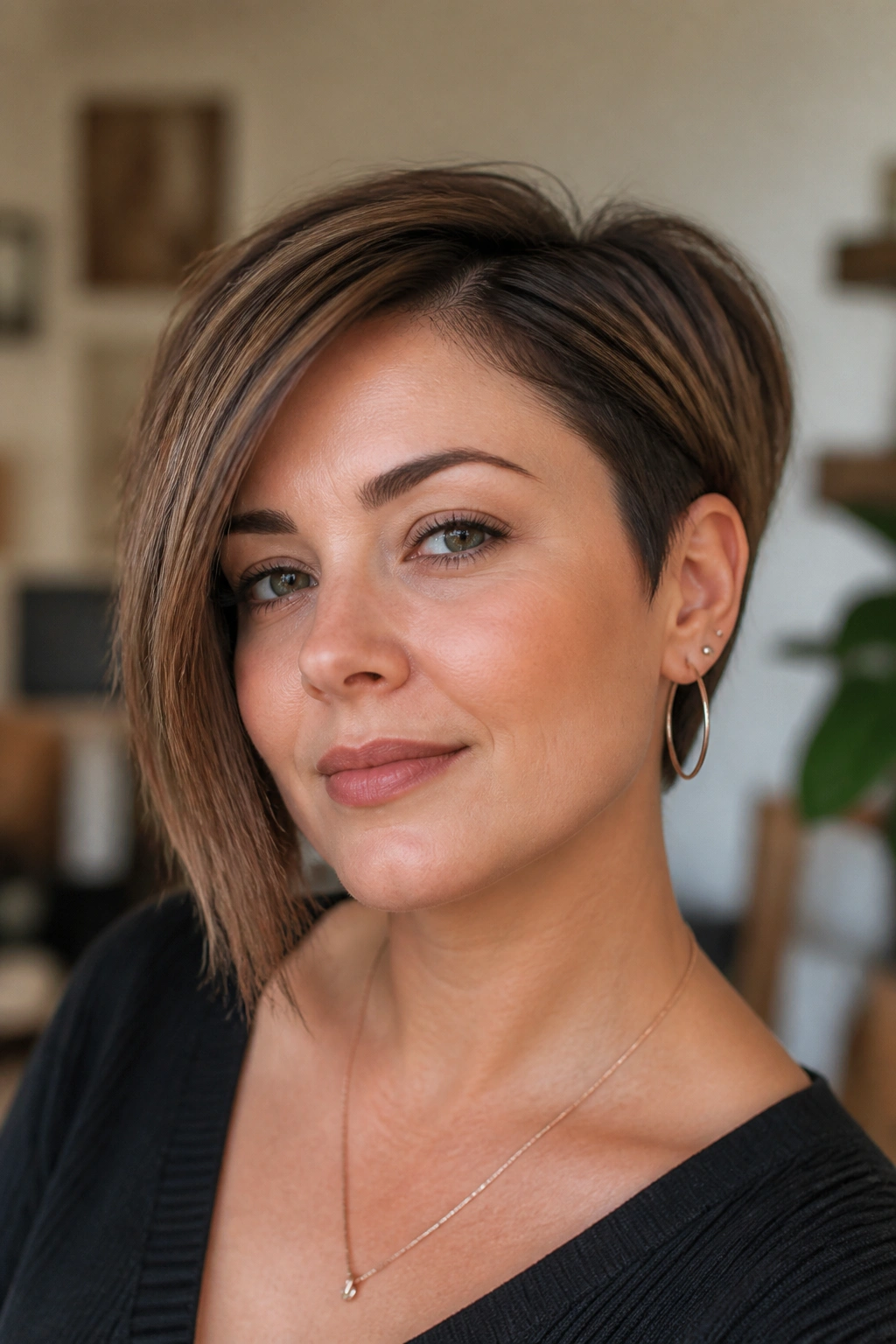
Asymmetry does quiet work. One side stays a little longer, the other side stays tucked tighter, and that imbalance creates a diagonal that flatters a round face almost automatically.
The shape feels modern without shouting about it. One long panel near the cheek can soften the fullness there, while the shorter side keeps the cut from spreading out. That’s the beauty of this one: it does not rely on volume. It relies on direction.
I keep coming back to asymmetrical pixie bobs because they give you drama without needing extra length. A center-balanced cut can sit heavily on a round face. This one never does. The longer side should fall below the widest part of the cheek, or the effect gets lost.
Wear the long side tucked behind the ear when you want a cleaner line. Let it fall forward when you want more softness. It changes the mood fast.
6. Side-Swept Fringe Pixie Bob
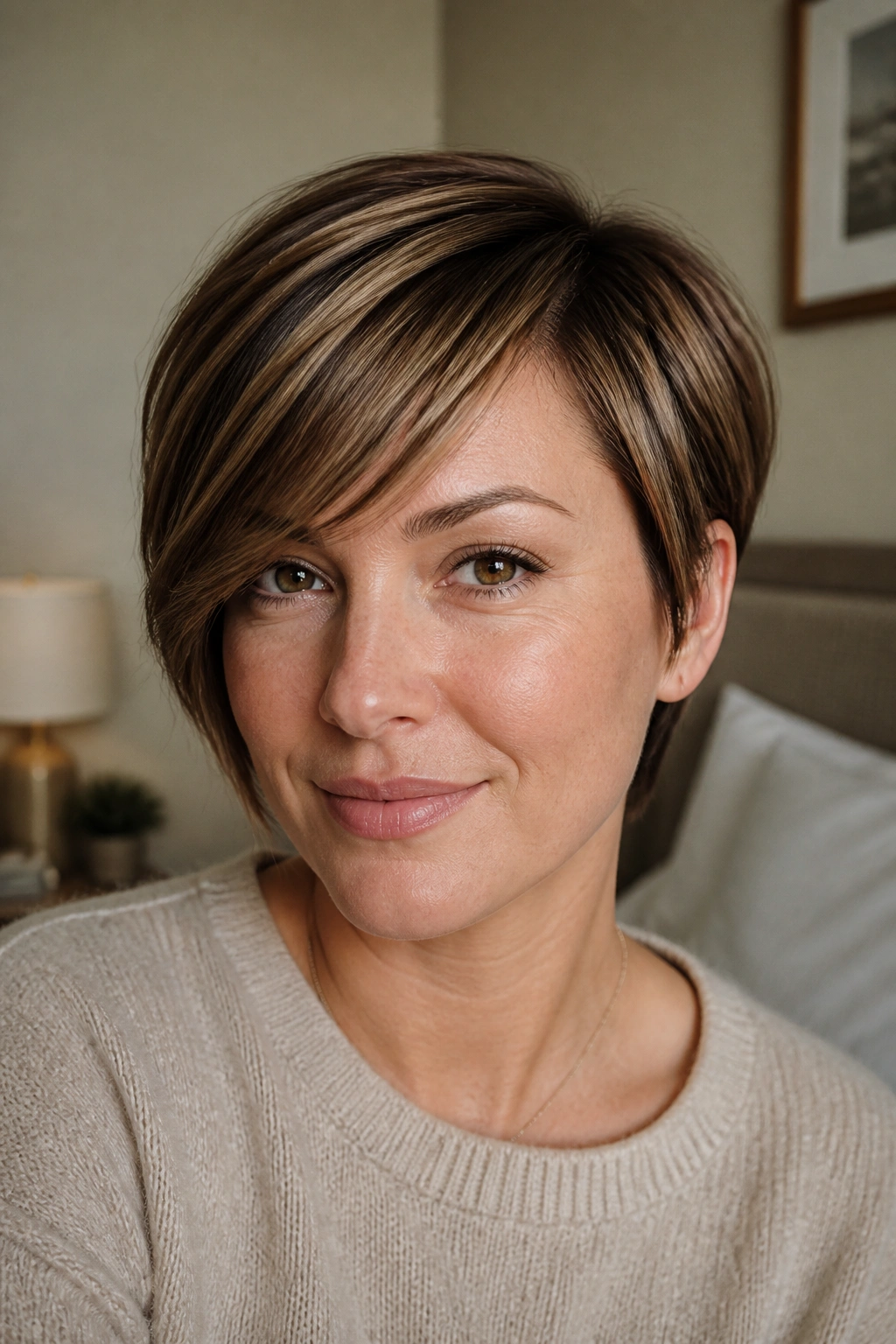
Unlike a blunt baby fringe, a side-swept fringe lets the forehead breathe. That alone makes it easier on round faces, because the eye does not stop dead at one horizontal line.
The fringe should start around the brow area and move diagonally toward the temple or cheekbone. If it is too heavy, it can make the face feel shorter. If it is too wispy, it disappears. The middle ground is where this cut lives. It should look like it was swept there on purpose, not accidentally.
This is the pixie bob I’d choose for someone who wants a softer front without a full bang commitment. It works on straight hair, wavy hair, and even hair with a little bend, as long as the fringe is not cut too thick at the root. Keep the ends light.
A side-swept fringe also buys you time on grow-out. That matters. Bangs are gorgeous for about ten minutes if they are too blunt.
7. Feathered Layered Pixie Bob
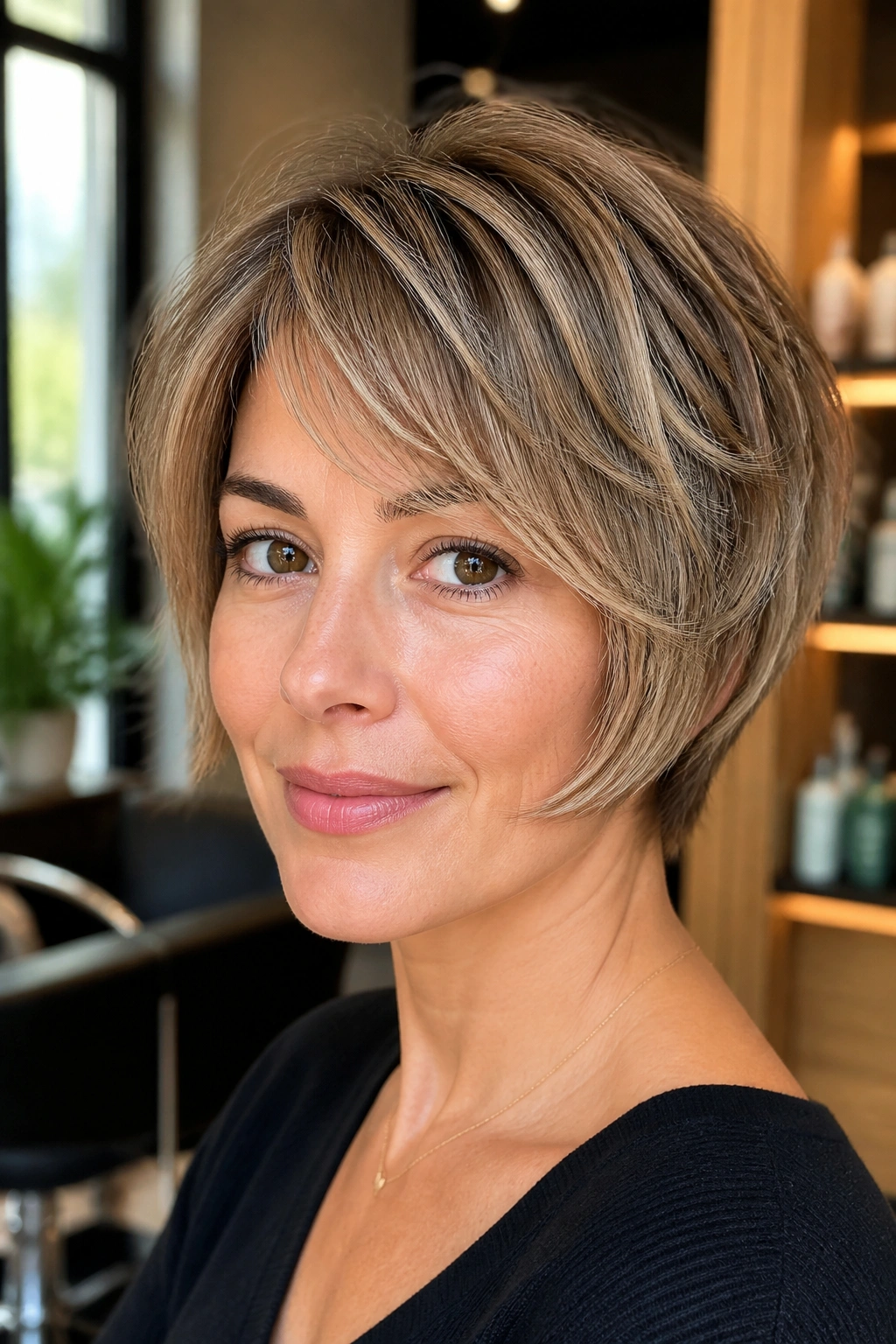
Feathering is one of those old-school techniques that still works because it changes the way the hair sits, not just the way it looks in a photo. The layers are softened at the ends so the sides do not push outward.
That softness matters on round faces. Heavy, blunt edges can make the cheeks look fuller. Feathered layers slip around the face instead of landing on it. They are especially good if your hair is fine to medium and you need movement without losing body.
What feathering actually does
It removes some visual weight from the perimeter, especially around the temples and the top of the ears. The result is airy, not thin. That distinction is important. You want lightness, not stringiness.
Use a light mousse at the roots and dry the hair with your fingers first, then a brush only where you need polish. Too much brushing can flatten the feathered effect. A tiny bit of texture spray at the crown keeps the lift from collapsing.
Feathering is about softness with shape. Not fluff. Not frizz. Shape.
8. Undercut Pixie Bob with a Slim Nape
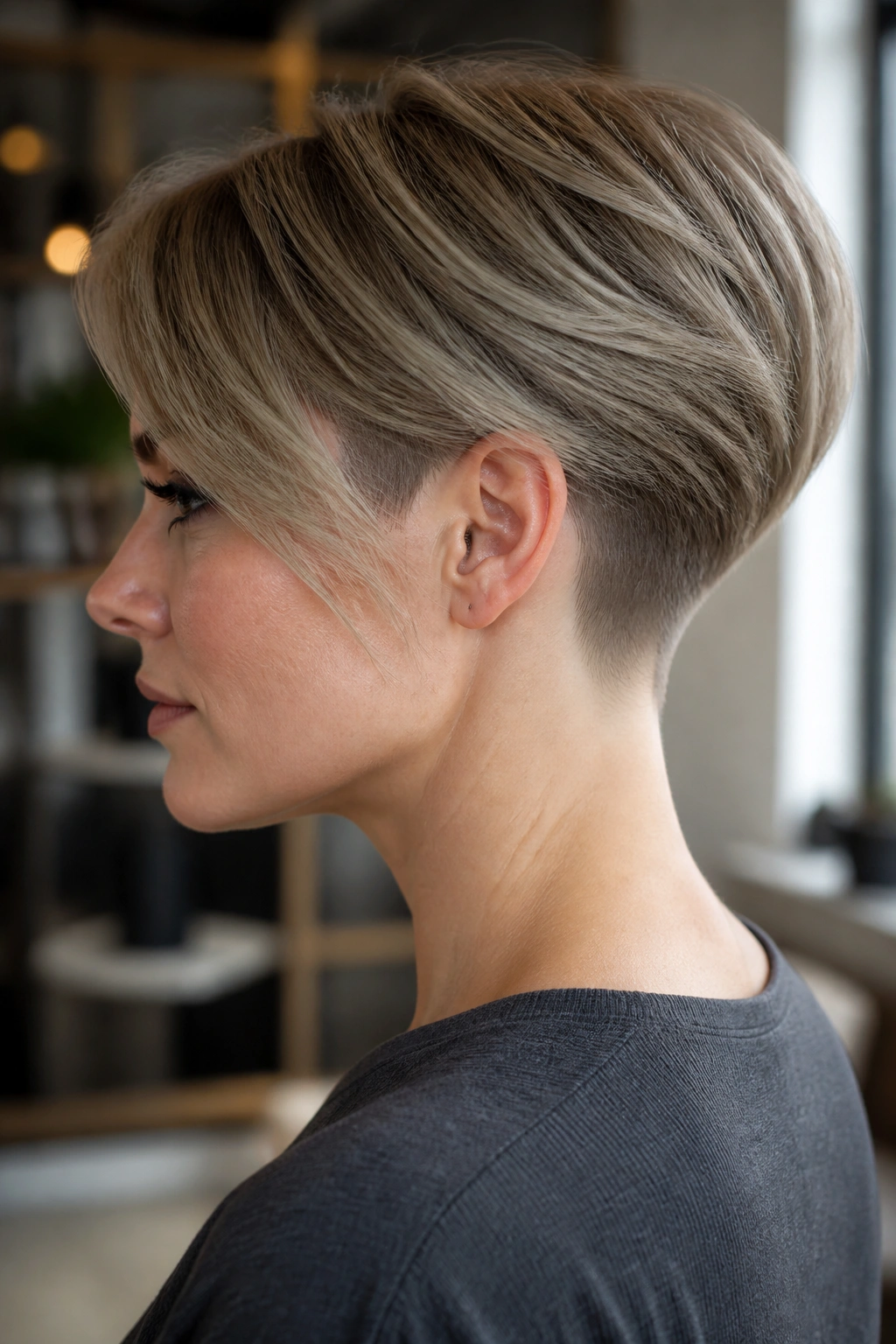
A hidden undercut can save thick hair. It removes the bulk that often sits at the nape and behind the ears, which is exactly where a round face can start looking wider if the haircut gets too heavy.
The best version is not shaved high up the head. Keep it low and controlled so the top hair can fall over it and still give you options. You want the nape to feel neat, maybe even a little sharp, while the top keeps enough length to brush forward or to the side.
Where this cut shines
- Thick straight hair that balloons at the back.
- Heavy wavy hair that turns triangular when it grows out.
- Coarse hair that needs weight removed without losing top length.
A little undercut makes the whole silhouette slimmer. Too much undercut at the sides can expose width, so keep the cleanup low. That is the part people miss.
This is one of the strongest pixie bob hairstyles for round faces when the hair itself is doing too much.
9. Wavy Pixie Bob with Bent Ends
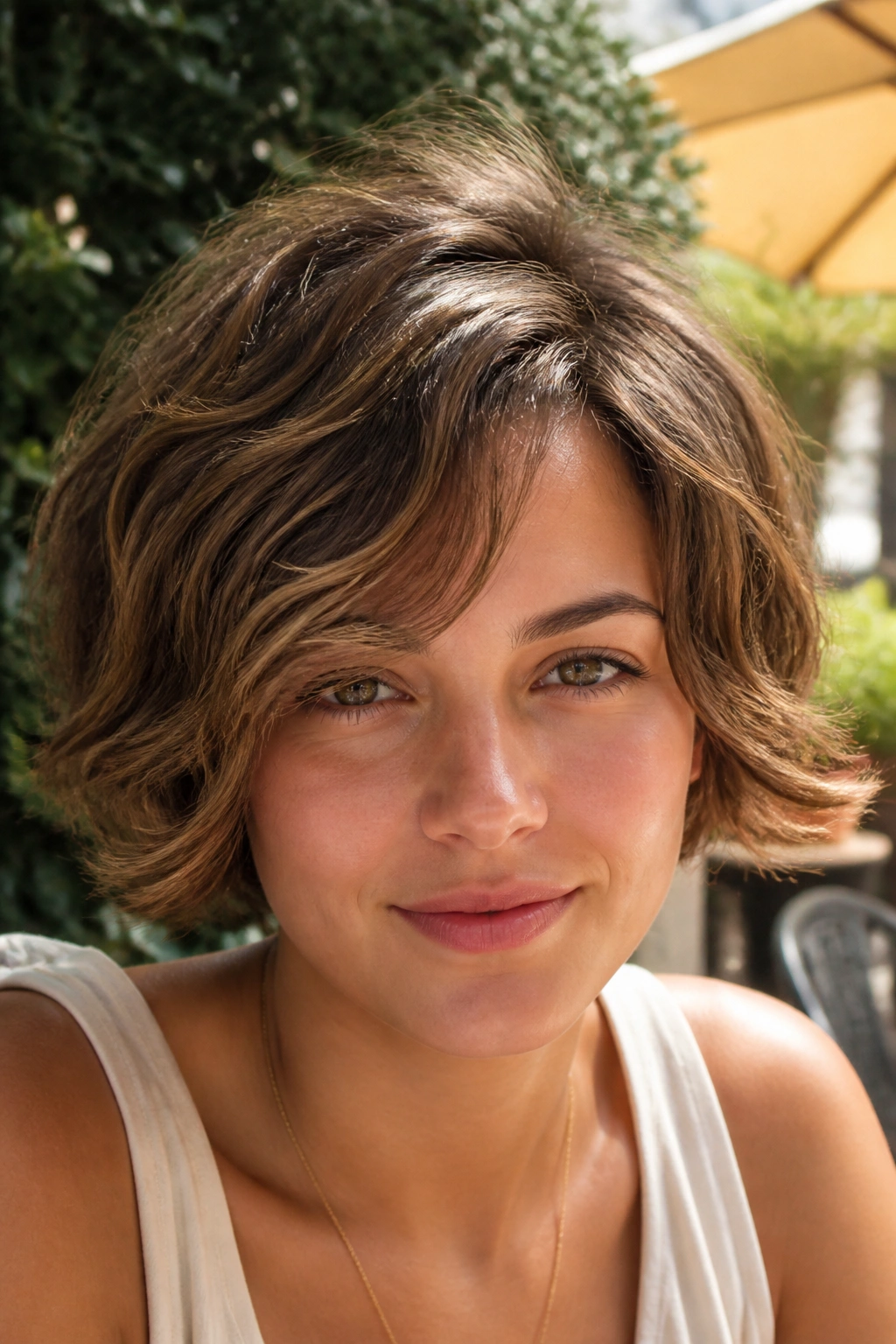
Can waves make a round face look slimmer? Yes, if the bend goes the right way. A soft wave breaks up the face’s natural curve, but a wave that flares out at the cheeks can do the opposite. Placement matters.
The trick is to keep the wave loose through the top and slightly straighter through the ends near the cheeks. A 1-inch iron works well. Wrap each section for just a moment, then release before the curl gets too perfect. You want a bend, not a ringlet. That little irregularity keeps the shape from looking puffy.
How to place the bend
Start the wave above the cheekbone, not right on it. Let the front curve away from the face and tuck the very ends under just enough to stay neat. A light salt spray helps, but don’t drench it. Too much and the hair turns coarse.
This is a forgiving cut for naturally wavy hair. Air-dry halfway, then diffuse only at the roots if you need lift. The shape should move. It should not explode.
10. Curly Pixie Bob with Height at the Crown
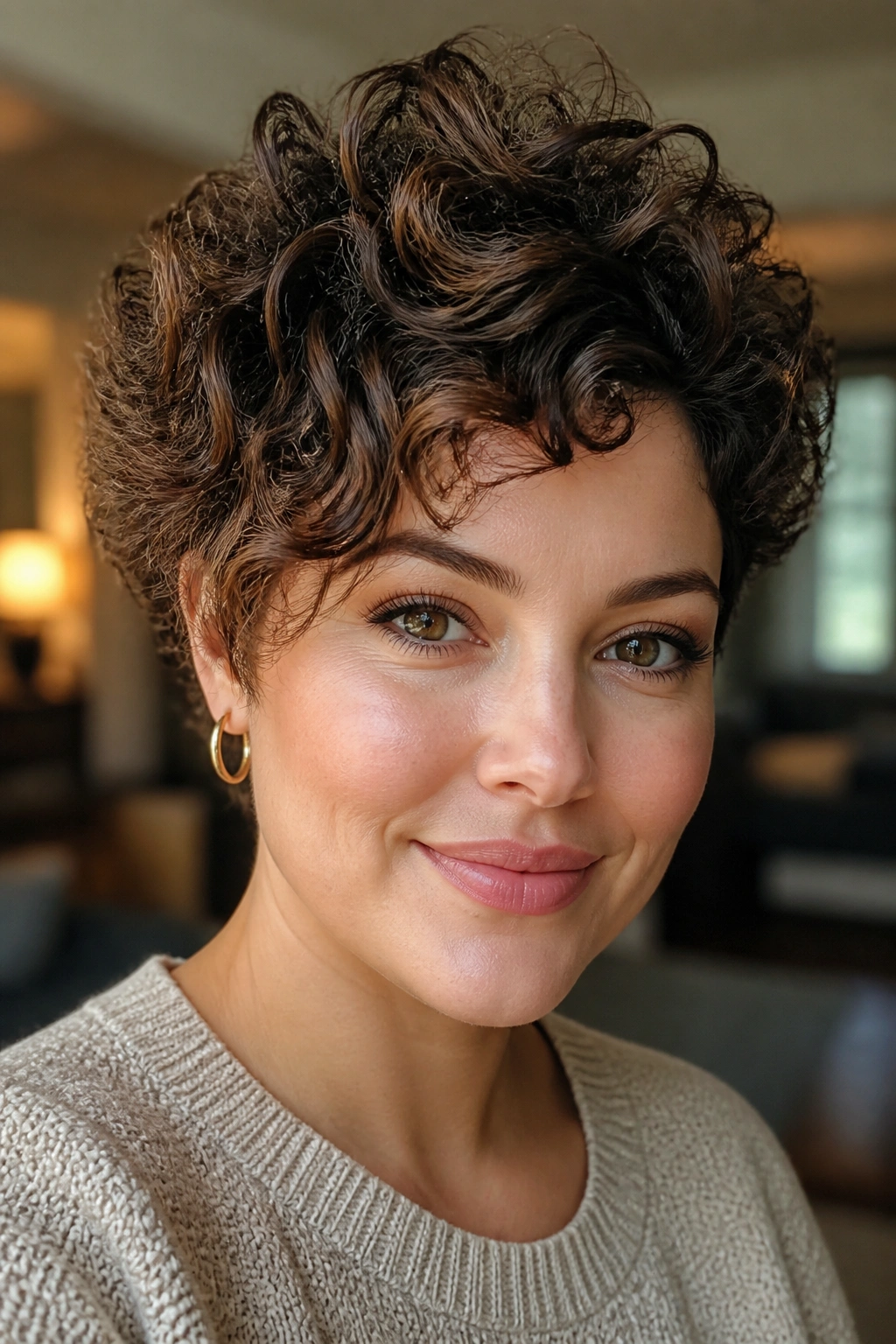
Curls can widen a face fast when they spread at the sides, but the same texture can look brilliant when the crown gets the lift and the sides stay controlled. That is the whole game.
A curly pixie bob works best when the stylist leaves enough length on top to let the curl spring upward, while the sides are trimmed so they hug the head a little more closely. You are not flattening the curls. You are guiding them.
What to watch for
- Keep the tightest volume above the forehead, not at the cheeks.
- Use a cream or gel only from mid-length to ends.
- Clip the roots at the crown while diffusing to build lift.
- Let the side curls fall forward instead of out.
A curl pattern can be your friend here, especially if you like movement and do not want a stiff shape. A round face and curls can work together when the sides are not competing with the cheeks. That is the part people get wrong.
This one looks soft, but it still has structure underneath.
11. Sleek Ear-Tucked Pixie Bob
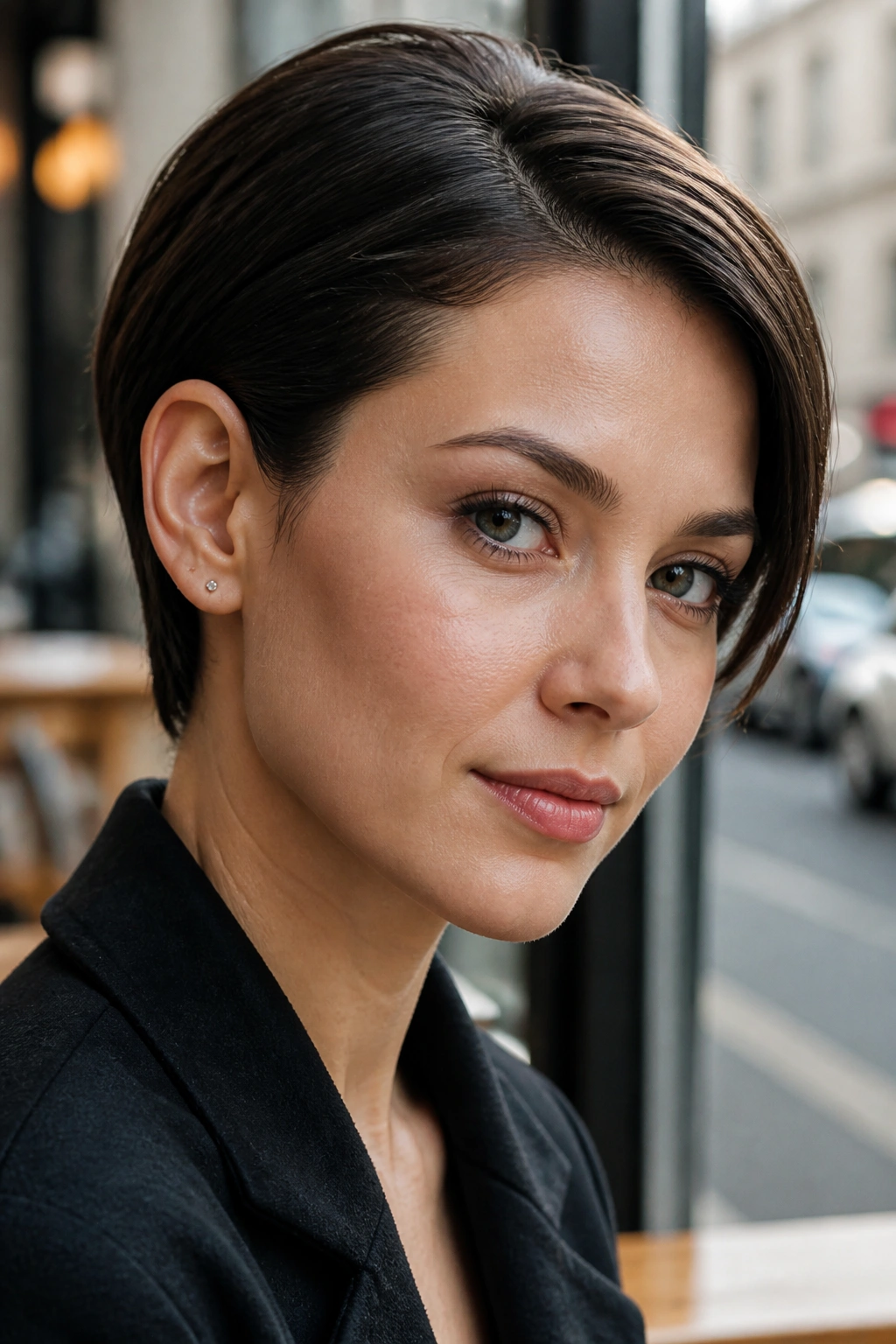
Unlike a fluffy pixie, this one leans on clean lines. The ear-tucked shape opens the face and shows off the jaw, which gives a round face a little more edge.
It works especially well if your hair is naturally straight or if you like a polished blowout. The front pieces should be long enough to tuck behind one ear without bouncing back out. Keep the opposite side a touch fuller if you want balance, but not so full that it spreads across the cheeks.
The beauty of this cut is how little it needs. A smoothing cream, one careful pass with a flat iron, and a deliberate tuck are often enough. The exposed ear creates a vertical break in the silhouette. That is why it feels slimmer.
This style is not the most forgiving if you hate showing your ears. Be honest about that. But if you like a neat outline and clean cheekbones, it is hard to beat.
12. Long-Fringe Pixie Bob with Face-Framing Pieces
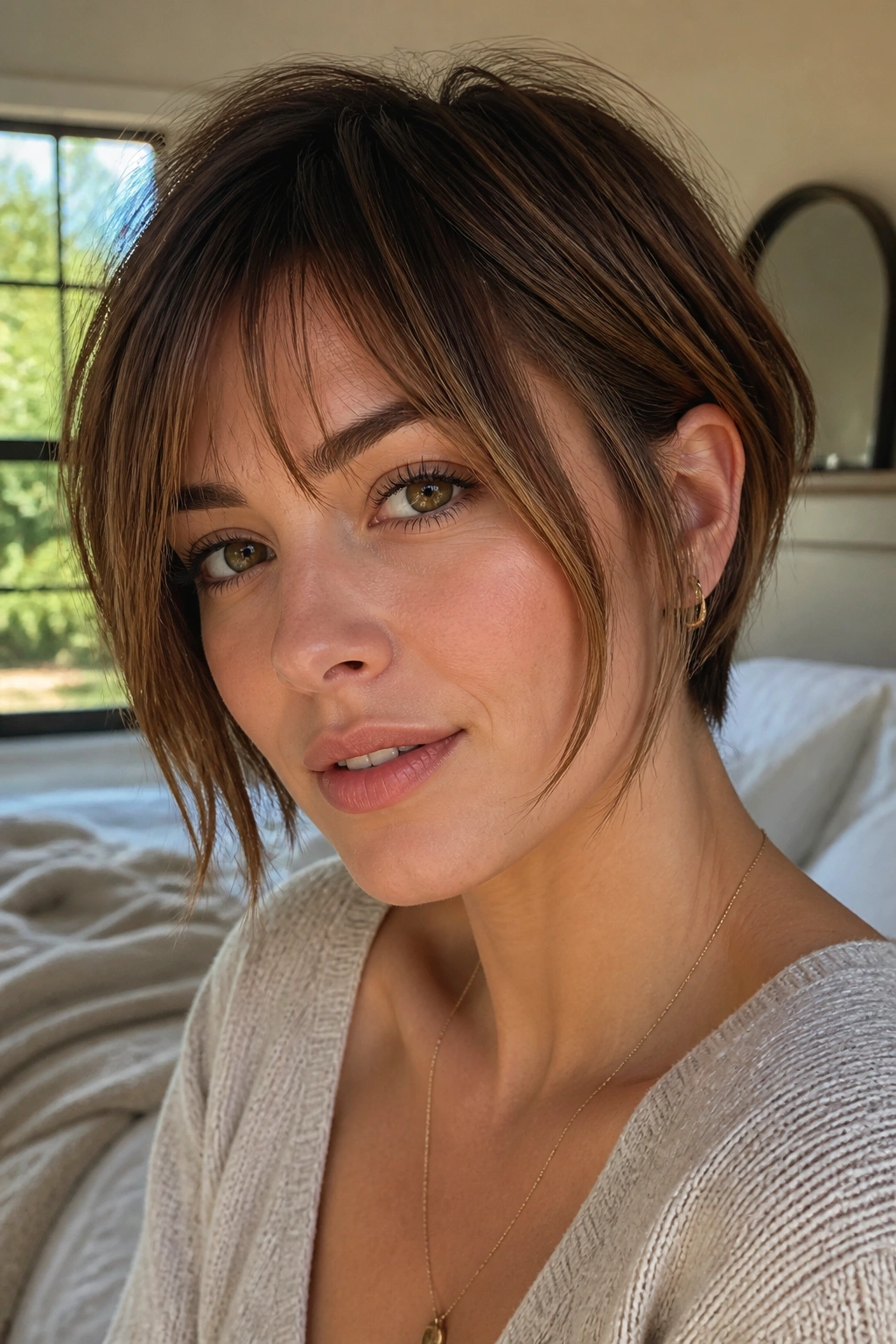
A long fringe gives a round face room to breathe without leaving the forehead bare. The pieces should start near the brow and fall into the cheekbone or jaw area, depending on how much softness you want.
What makes this version work is the way the front pieces frame, not crowd, the face. If the fringe ends right at the widest point of the cheeks, the haircut can feel stuck there. Better to let the ends move a little lower. That tiny shift changes the whole shape.
I like this cut for people who want their pixie bob to grow out cleanly. The fringe stays useful for a long time, and the face-framing pieces keep the shape from looking abrupt. It is one of the more forgiving options in the bunch.
Style it with a round brush or fingers, but keep the front pieces separated. If they merge into one heavy panel, you lose the lift and the softness at the same time.
13. Shaggy Pixie Bob with Broken Texture
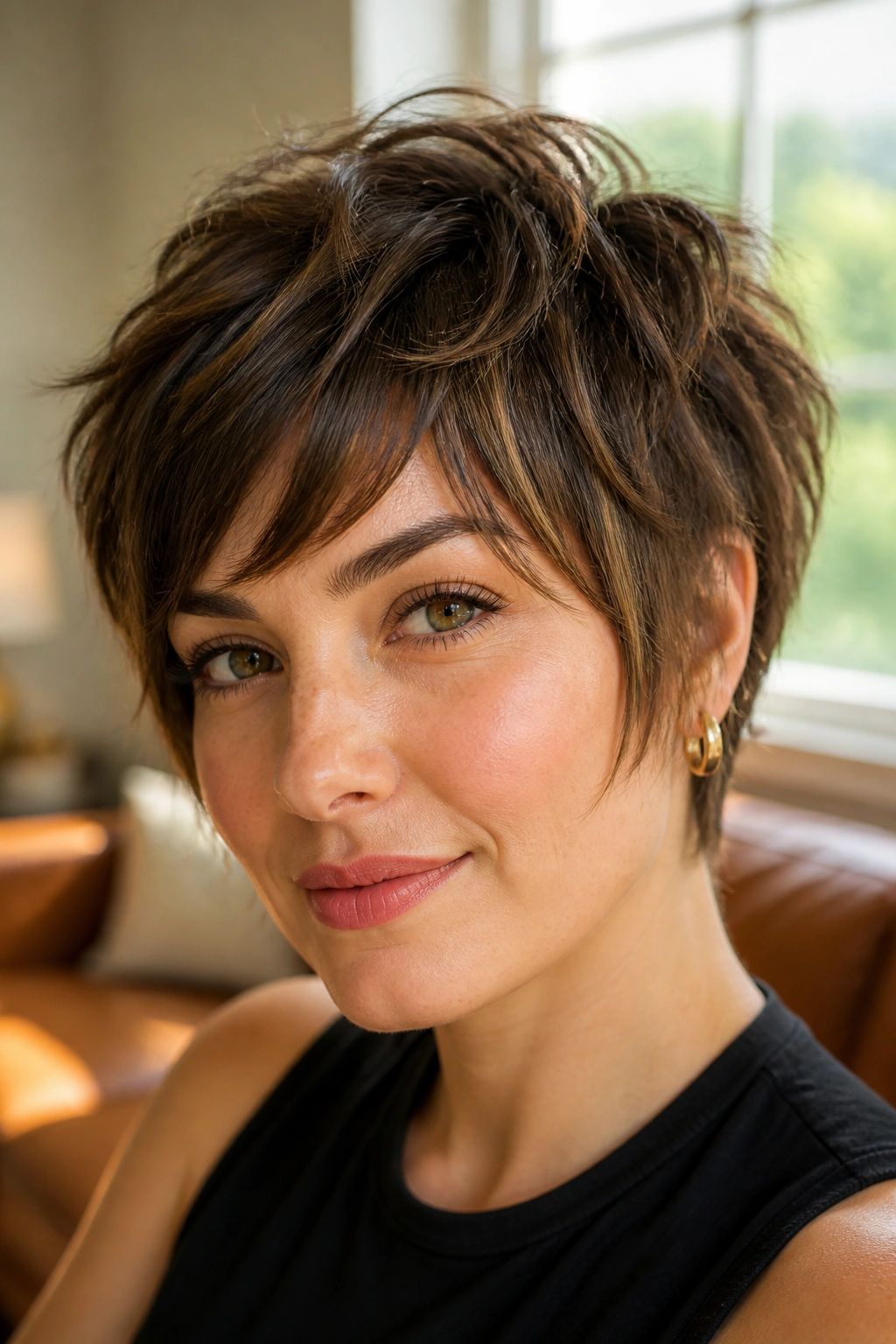
A shaggy pixie bob can slim a round face better than a tidy one, but only if the mess is controlled. That sounds contradictory. It isn’t. The broken texture creates movement, and movement keeps the hair from reading as one soft shape around the head.
This cut is strong on dense hair, especially hair that naturally wants to puff out. The layers should be concentrated through the top and upper sides, not stacked into the cheeks. If the sides get too short and too choppy, you can end up with a wider outline instead of a slimmer one. That mistake is common.
Where shag works best
- Heavy hair that needs internal removal.
- Hair with a little wave or bend.
- People who like a lived-in finish more than a neat blowout.
Use a texture spray or dry paste, then pinch a few pieces around the crown and fringe. Don’t overwork it. Shag only looks good when the breakup is uneven. Too much symmetry kills the point.
14. Razor-Cut Pixie Bob with Sharp Edges
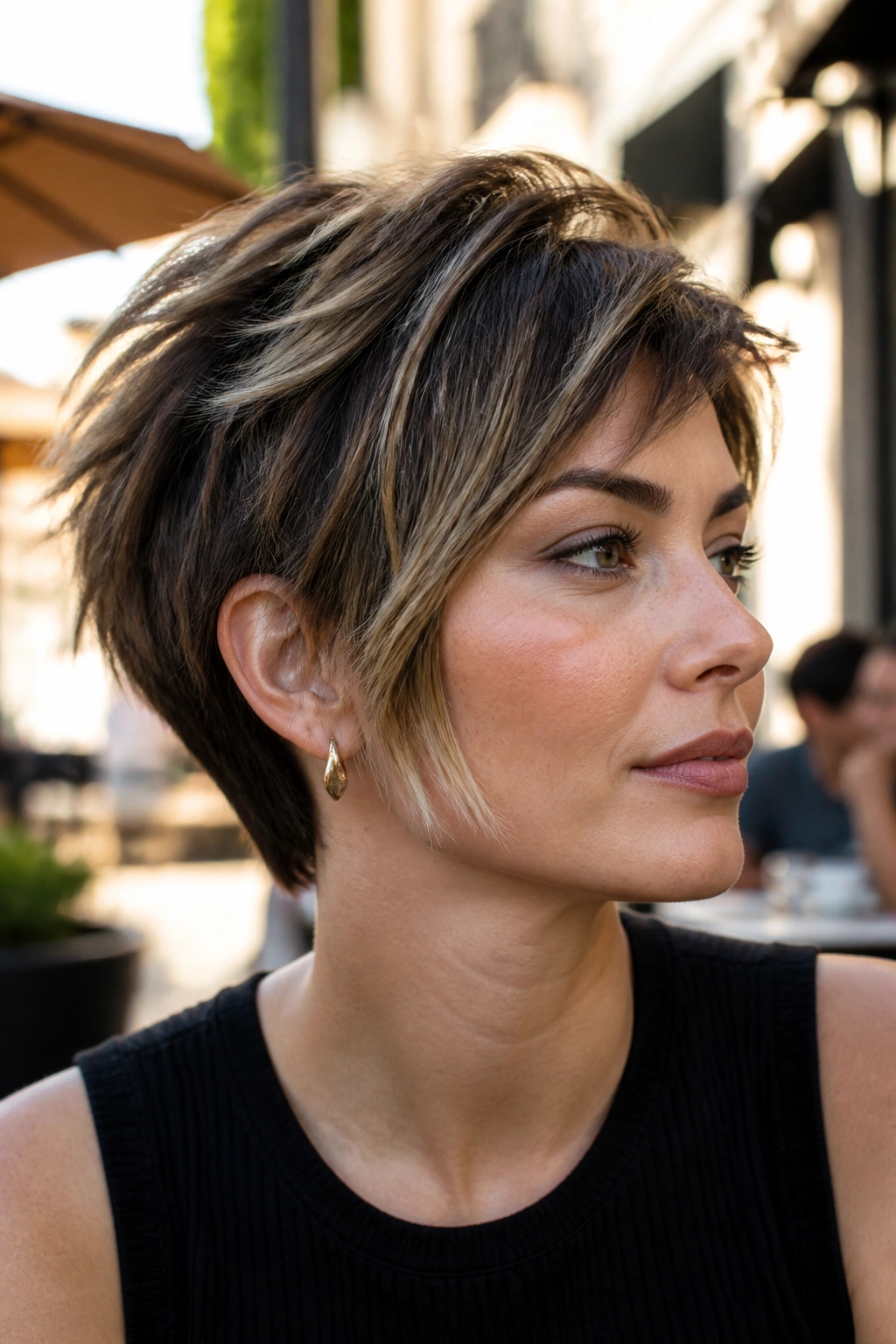
When does a razor cut help? When the hair is thick enough to hold shape after the weight comes out. The razor gives the ends a lighter, more broken finish, which can stop a pixie bob from sitting like a helmet.
That makes this cut useful for round faces, because the sharp edges create contrast. A smooth, blunt perimeter can wrap around the face. A razor-cut edge moves away from it. The effect is subtle, but you can see it when the light hits the ends.
Where the razor works best
Use it through the top and front if you want separation, and keep the lower perimeter a little softer. That gives you the piecey look without leaving the outline frayed. Do not over-razor fragile or frizzy hair. It can puff and split, which ruins the clean line.
This is a sharper, more fashion-forward choice, and it needs a bit of styling paste to stay defined. Not a lot. Just enough to show the texture.
15. Blunt-Edged Pixie Bob with a Soft Crown
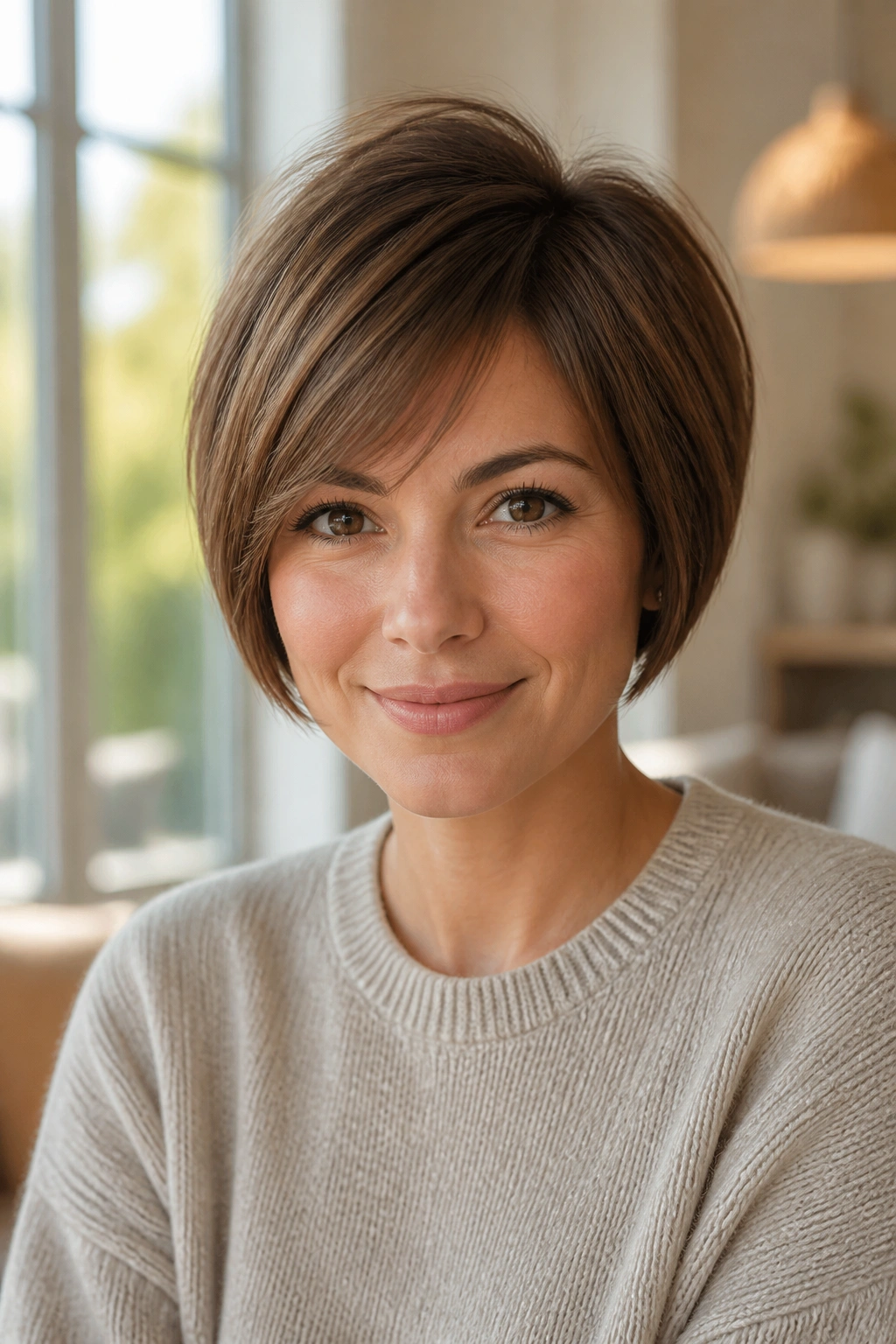
Fine hair sometimes needs a firm line, not more wispy layers. A blunt-edged pixie bob gives the ends a denser look, which can make the hair feel fuller without making the face look wider.
The key is to keep the crown soft. That sounds odd, but it matters. A flat crown with a blunt outline can look boxy. A little lift at the top keeps the shape from sitting too low on the face.
- Keep the outline just under the jaw or slightly above it.
- Leave the top a little longer for root lift.
- Use a small round brush to direct the crown upward.
- Avoid over-thinning the perimeter, or the cut loses its shape.
This is a good choice if your hair is fine, straight, and a little slippery. The hard edge gives the haircut presence. The soft crown keeps it from looking heavy.
16. Bixie Pixie Bob with Graduation
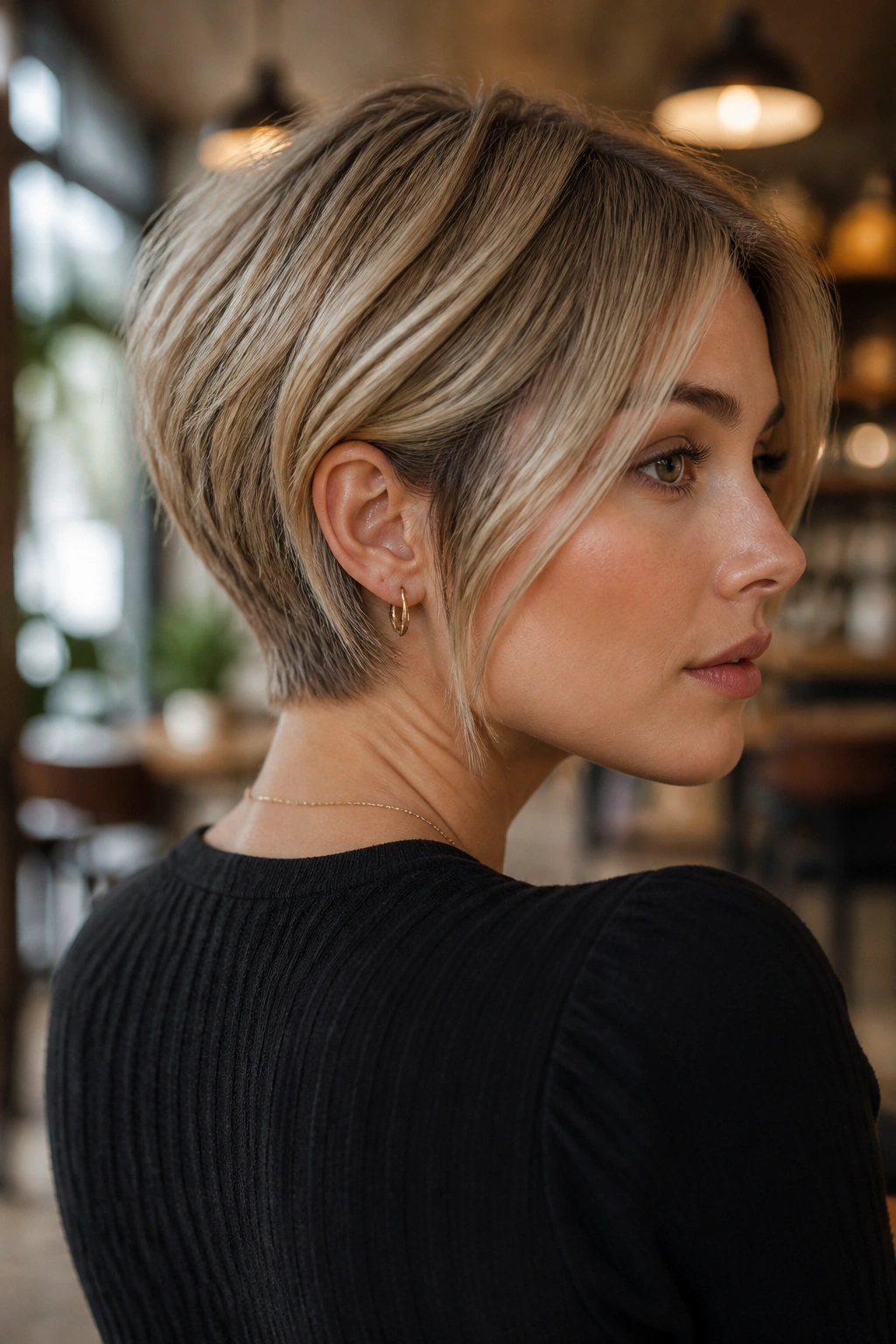
The bixie sits between a pixie and a bob, and that in-between length is part of why it works so well on round faces. You get enough shape to frame the face, but not so much length that the cut falls flat.
Graduation at the back gives the nape a neat finish, while the top stays loose enough to be swept, tucked, or scrunched. It grows out well, too, which is useful if you do not want a cut that turns messy after three weeks. There’s a softness to it that round faces often wear well, as long as the sides stay under control.
This shape is especially good if you are nervous about going too short. It gives you room to test the waters. The front should stay longer than the back, but not so long that it becomes a mini bob. That in-between line is the whole point.
A bixie also plays nicely with glasses, strong brows, and a little ear tuck. Small details. They count here.
17. Swoopy Deep Side-Part Pixie Bob
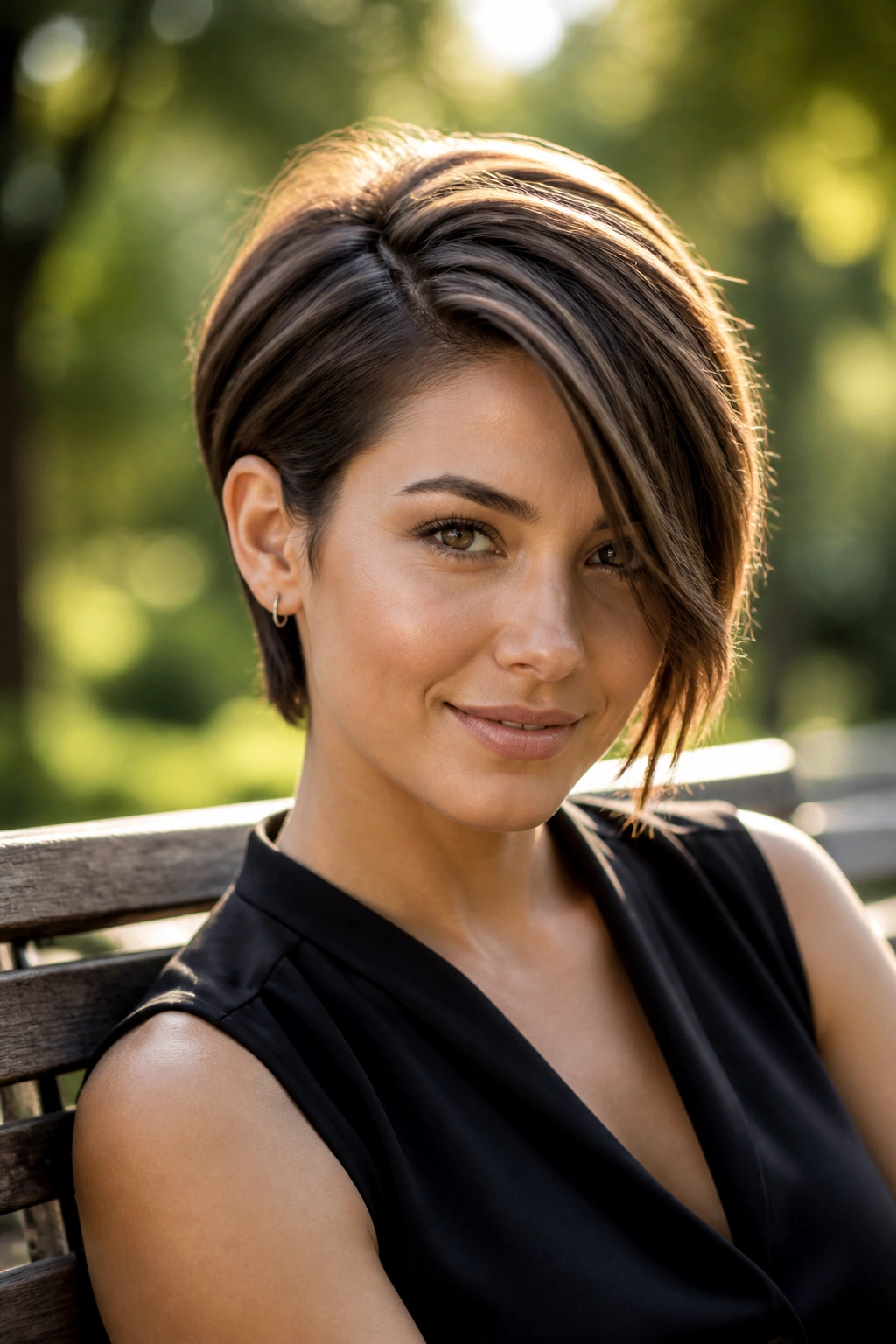
If center parts make your face feel boxy, a deep side part changes the whole mood. The sweep creates a long diagonal from the crown down across the forehead, and that line pulls the eye away from the widest part of a round face.
This cut works best when the front has enough length to move. A short, stiff side part can look accidental. A longer sweep looks deliberate and gives you that slight lift near the roots that flatters the face shape. Think of it as shape first, volume second.
The style looks especially good when one side is tucked and the other falls forward. That contrast sharpens the outline without making it harsh. A deep side part can make the face look a touch narrower and the eyes a touch higher. That’s the real payoff.
Use a root lift spray at the part line and direct the front pieces away from the face with a round brush. The motion matters more than the product count.
18. Soft Tousled Pixie Bob with Piecey Finish

The easiest pixie bob to live with is the one that moves. Soft tousling keeps the haircut from feeling too tidy, and that looseness helps a round face because it breaks up the curve with little bits of texture.
This is the style for days when you want hair that looks done without looking stiff. The ends should separate into small pieces, not frizz into a cloud. A pea-sized bit of matte paste or lightweight cream is usually enough. Warm it in your hands first, then press it into the ends and crown with your fingers. Don’t rake it through like shampoo.
A soft tousled finish works on straight hair, wavy hair, and even finer hair that needs a bit of grit. Keep some length around the temples and top so the texture has room to sit. If the cut is too short everywhere, the tousle just puffs.
It’s a good closing note because it reminds me of the real goal here: a pixie bob should make your face look clearer, not busier. Small shape. Clean outline. A little movement. That’s enough.
