



Wavy hair and pixie cuts get along better than most people expect. The bend in the hair gives a short cut movement straight hair often has to fake with heat and product, and that is half the charm.
The catch is shape. Cut too blunt at the sides, and the wave can puff out in the wrong place. Leave too much weight at the crown, and the whole thing starts to read boxy. A good pixie haircut for wavy hair makes room for the bend, the lift, and the soft little bends that happen when the hair dries on its own.
I have always liked the cuts that look a little lived-in the minute they dry. Not messy. Just not overworked. That usually means shorter napes, soft internal layers, and enough length on top to keep the wave from springing straight up like it has a mind of its own.
The 25 looks below cover everything from soft and low-key to sharp and edgy, because wavy hair can do both without much fuss. Some of these cuts ask for nothing more than a little cream and your fingers. Others want a diffuser, a side part, or a cleaner neckline. The first one is the easiest place to start.
1. Soft Layered Pixie with Airy Ends
Wavy hair loves this cut because it removes weight without chopping the shape into pieces. The top stays a little longer, the sides are softened, and the ends are point-cut so they move instead of sticking out.
Why It Works
When a wave hits a hard line, it usually flips outward. Soft layers avoid that. Ask for 1.5 to 3 inches on top, slightly shorter at the temples, and a tapered neck so the outline stays neat.
- Best for medium-density hair that needs movement
- Works well air-dried or with a diffuser on low heat
- A pea-sized amount of cream is usually enough
- Looks good on oval, heart, and longer face shapes
Best tip: keep the crown slightly longer than the sides. That one detail stops the cut from puffing up like a triangle.
2. Tapered Pixie with a Clean Nape
A tapered nape is one of the cleanest ways to keep wavy hair from ballooning at the neckline. The short back gives the cut structure, and the wave stays where you want it instead of bunching up underneath.
The nicest part is the grow-out. A strong taper can look tidy for weeks because the hair at the base keeps its shape even after the top starts to soften. If you wear glasses, this cut is a quiet winner. It leaves enough room around the ears and temples so the frames do not fight the hair.
It does ask for maintenance, though. If the neckline gets fuzzy, the whole silhouette starts to lose its edge. Every 4 to 6 weeks is a smart trim window for this one.
One more thing. It looks especially sharp on thicker wavy hair, because the taper takes away bulk without making the top look thin.
3. Side-Swept Fringe Pixie
Why does a side-swept fringe make wavy hair look softer? Because it breaks up the forehead line and gives the wave a place to fall instead of springing straight up. That diagonal shape does a lot of work.
How to Ask for It
Tell the stylist you want a long fringe from one temple to the eyebrow area, then a smooth blend into the side. The shortest parts can sit above the ear, but the front should stay long enough to tuck or sweep across.
How to Style It
- Dry the fringe forward first
- Sweep it to the chosen side while it is still damp
- Use a dab of mousse or lightweight cream
- Keep the root lifted with your fingers, not a brush
This cut is especially good if your waves get frizzier near the front. The longer fringe acts like a buffer, so the hair has room to bend without sticking out at the forehead.
4. Choppy Piecey Pixie
I keep coming back to choppy pixies for wavy hair because they look best when they are not trying too hard. The little broken pieces catch the wave pattern and make the cut feel alive, even if you did almost nothing to it.
The trick is not to overdo the texture. A few sharper layers around the top and sides are enough. If every strand gets thinned out, the ends can look wispy in a bad way. Ask for light point-cutting, not aggressive razor work, unless your hair is thick enough to handle it.
- Great if your waves clump easily
- Needs a small amount of paste or cream
- Best on hair that is not too fine
- Easy to refresh with wet hands and a quick scrunch
My take: this is one of the best pixie haircuts for wavy hair if you want movement without a polished finish.
5. Curly-Textured Bixie
A bixie sits between a bob and a pixie, and that middle ground is gold for wavy hair that wants a little more length. The extra inches around the ears and front keep the wave pattern from getting squeezed too short.
The shape matters here. A bixie should not feel like a grown-out bob with no plan. It needs shorter layers in the back and enough lift at the crown so the top does not collapse. That balance lets the wave hit around the cheekbone and jaw, which is where this cut looks nicest.
It is a smart pick if you are nervous about going very short. You still get the cropped feel, but there is enough hair to tuck behind the ear, flip forward, or air-dry without a full styling session.
This one shines on medium to thick wavy hair. Fine hair can wear it too, but the layers need to stay soft so the ends do not look see-through.
6. Undercut Pixie with Longer Top
An undercut pixie is a blunt answer to bulky wavy hair. Short or shaved sides take away the extra width, and the longer top gives you room to show off the wave instead of hiding it under weight.
It is a strong look. No pretending otherwise. But it solves a real problem for dense hair: too much puff at the sides and back. If your hair grows out wide after one day, an undercut can make the whole head feel lighter and more controlled.
The top usually needs to stay 3 to 5 inches long so the wave pattern has something to work with. Too short, and the cut loses its shape. Too long, and it starts to drift toward a disconnected crop.
Best for people who like contrast. Short underneath. Soft and messy on top. That mix looks especially good when the waves bend forward over the forehead.
7. Feathered Pixie with Crown Lift
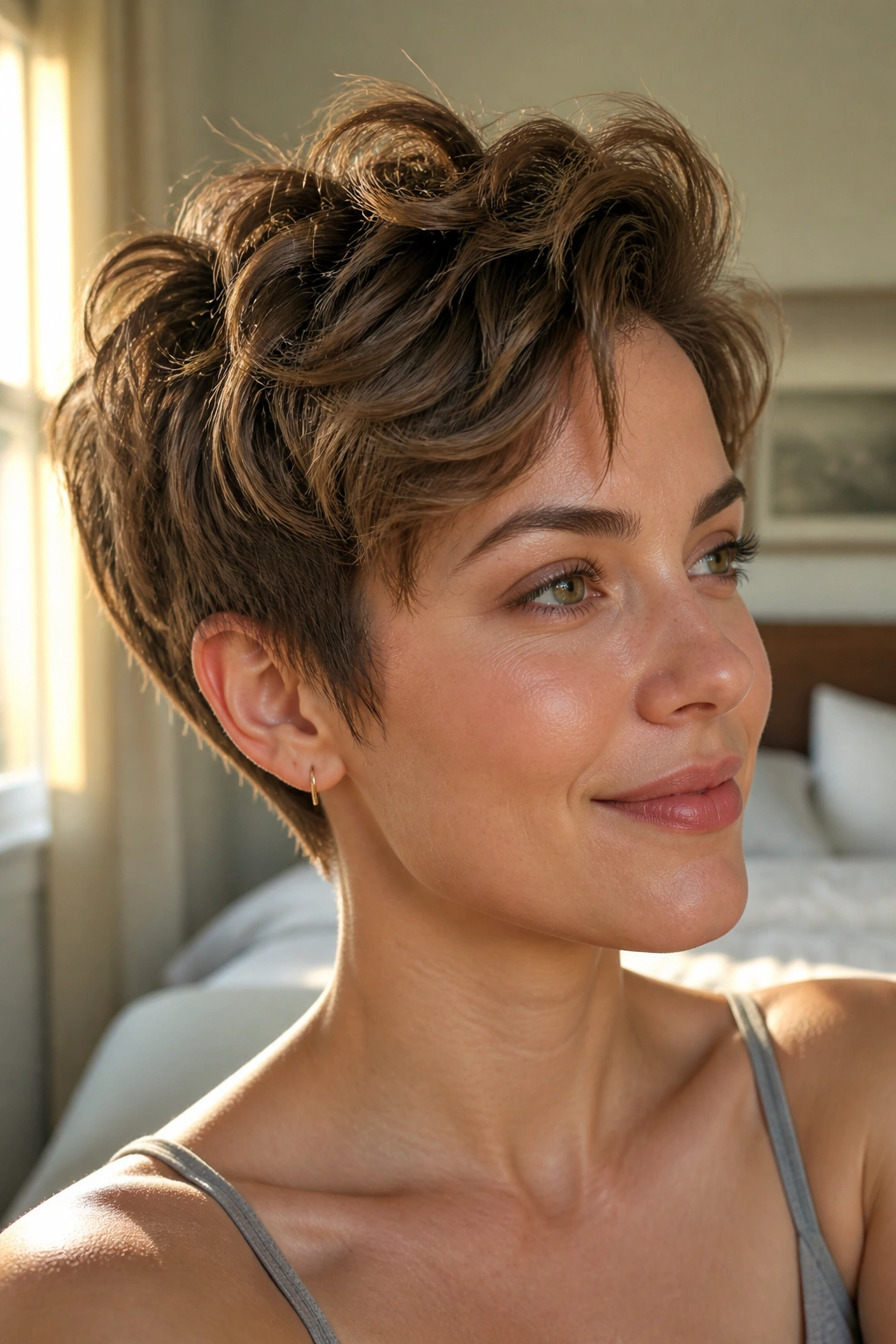
Some cuts look lighter because the crown has been feathered instead of stacked into a block. That is the whole trick here. The hair is cut so it falls away from the head in soft slices, which gives wavy hair more height without a hard edge.
Where the Lift Comes From
A feathered crown removes bulk right where wavy hair tends to sit flat or poof out. Ask for short, soft layers at the top and a gradual blend into the sides. Do not let the crown get too choppy or the shape can look ragged instead of airy.
Styling Notes
- Blow-dry the roots in the direction you want them to sit
- Use a round brush only if you want more polish
- A diffuser on low heat keeps the wave pattern intact
- A tiny clip at the crown can help while the hair cools
This cut is a good answer when you want height but not a spiky finish. It feels lighter around the head and still holds enough shape to look intentional.
8. Tousled French Pixie
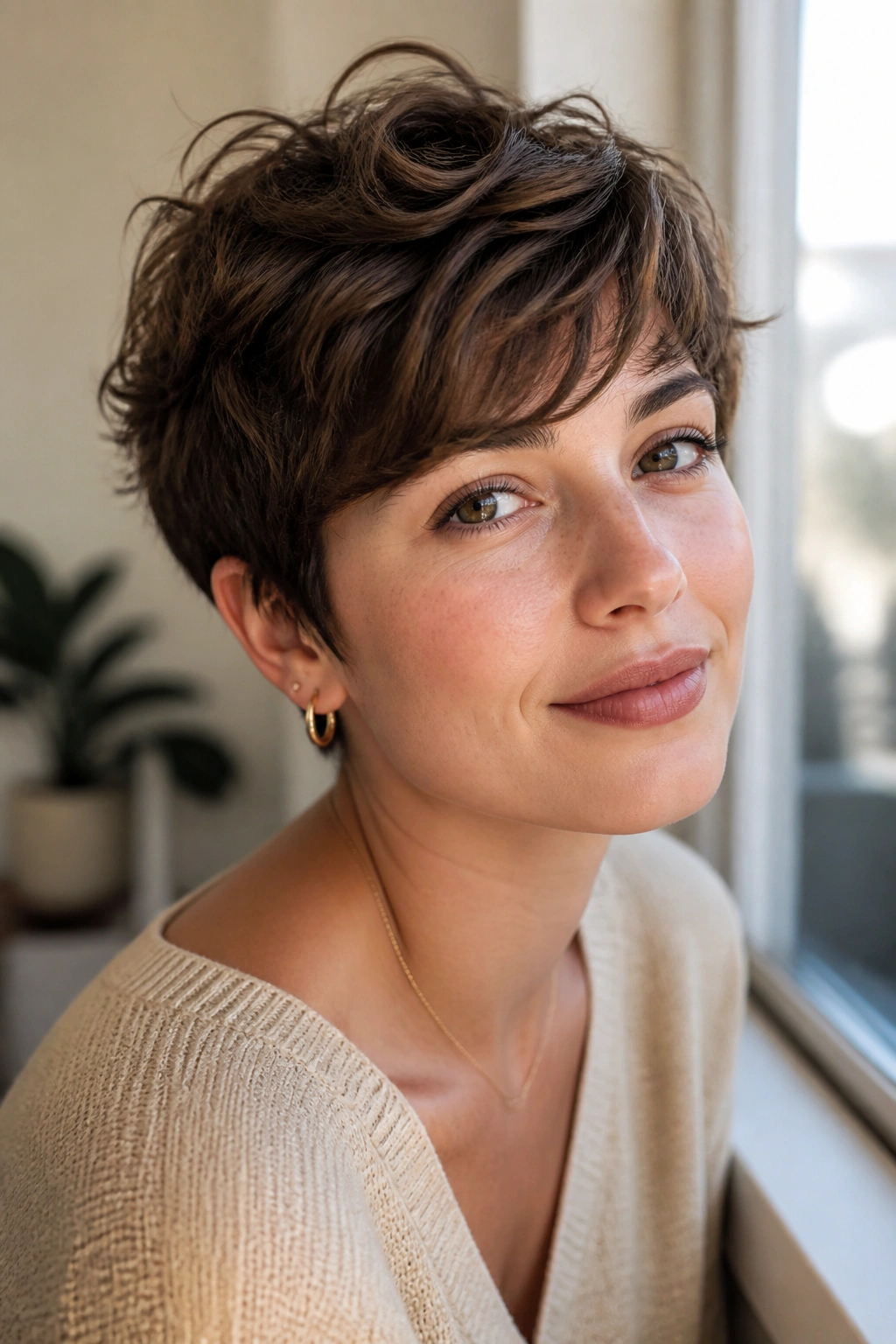
A tousled French pixie has that relaxed, brushed-forward feel that wavy hair does so well. The front usually carries a little extra length, the sides stay soft, and the whole cut seems designed to look better after you touch it once or twice.
The beauty of this shape is that it does not ask for perfection. A bit of bend around the forehead, a loose side sweep, and a touch of product through the ends are usually enough. If you comb it too neatly, you lose the point.
I like this cut for fine to medium hair because it gives the illusion of fullness without requiring a heavy styling routine. A light cream or a drop of styling balm is usually plenty.
It also grows out well, which matters more than people admit. A pixie that turns awkward after two weeks is annoying. This one usually softens rather than collapsing.
9. Ear-Grazing Pixie with Long Sides
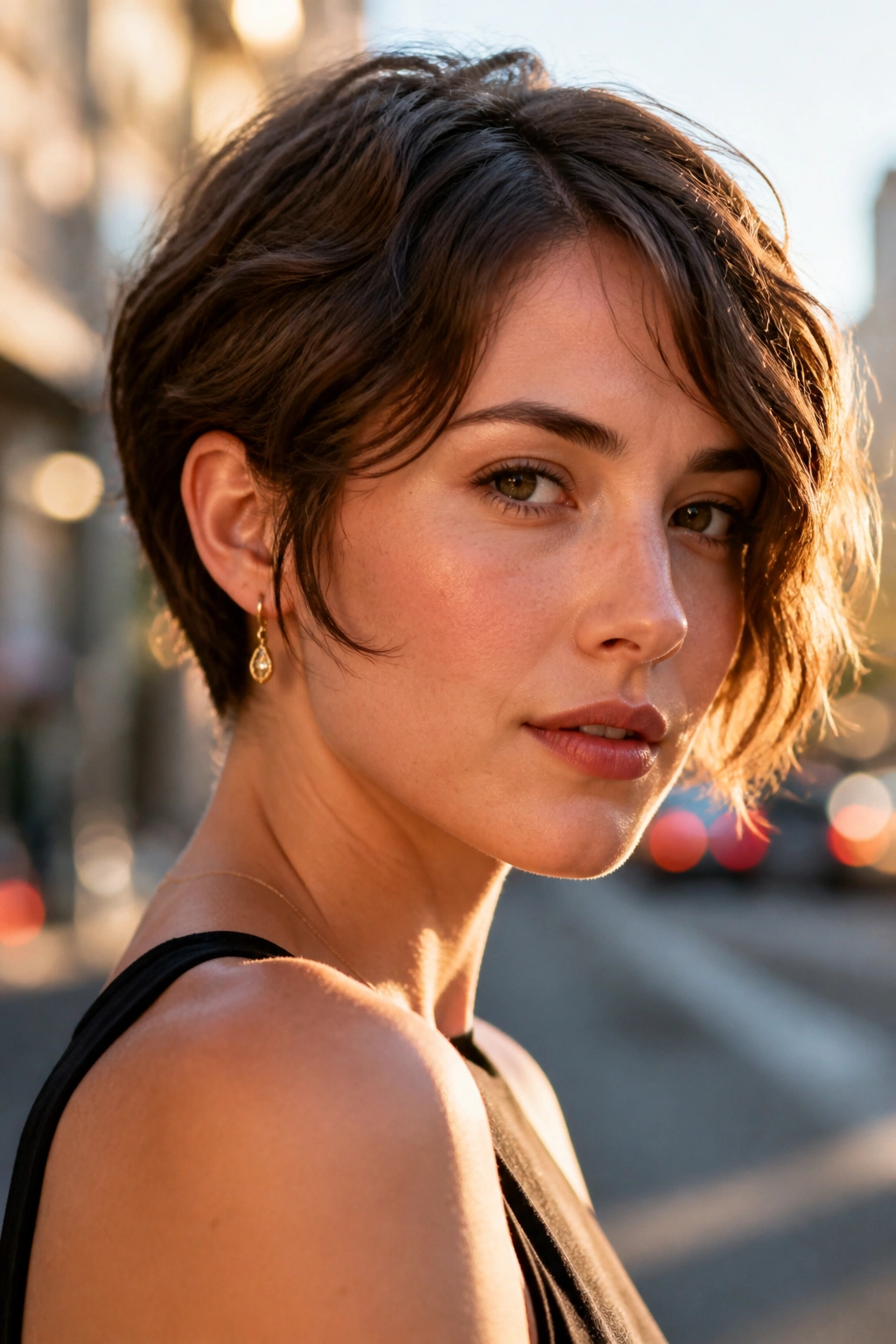
Ear-grazing length can be a sweet spot for wavy hair. The sides stay long enough to frame the face, but short enough to keep the style crisp. That makes the cut feel softer than a classic cropped pixie.
The long sides are doing a quiet bit of work. They help the wave fall around the cheek rather than standing out from the temples, which can be a problem on rounder or square faces. Tuck one side behind the ear and the shape changes instantly. Nice and simple.
You also get a practical bonus. Sunglasses, earrings, and scarves sit better when the sides are not too short. That sounds small until you live with the cut every day.
This is one of those styles that looks casual in the best way. The hair never seems too stiff, and wavy texture makes the whole thing feel easy.
10. Asymmetrical Pixie Cut
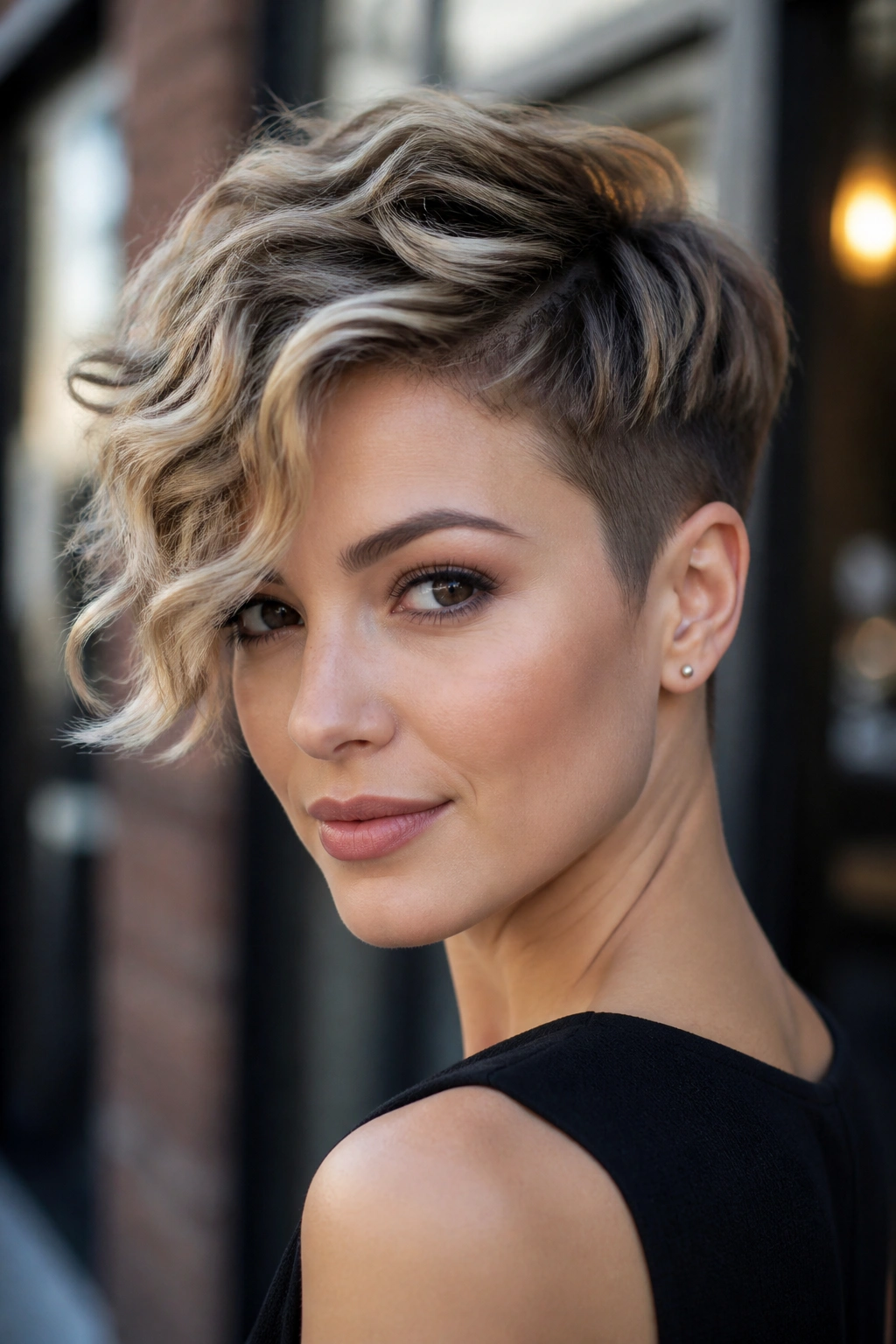
Can a little imbalance help wavy hair? Yes. A short side paired with a longer side gives the wave a direction, which keeps the cut from spreading out evenly in a way that feels flat or boxy.
What the Shape Does
The longer side adds weight, and the shorter side keeps the profile clean. On wavy hair, that difference shows up fast. The bend on the longer side softens the face, while the cropped side shows off the neck and jaw.
Who It Suits
- People who like a stronger shape
- Hair that naturally parts to one side
- Faces that need a little diagonal movement
- Anyone bored by symmetrical cuts
Ask your stylist to keep the longest front piece around the cheekbone or jawline. That gives the wave somewhere to land, and it keeps the haircut from looking like it was shaved on one side just for shock value.
Asymmetry works best when the blend is clean. Harsh disconnects can fight with waves. A softer transition usually looks better.
11. Shaggy Pixie with Broken Layers
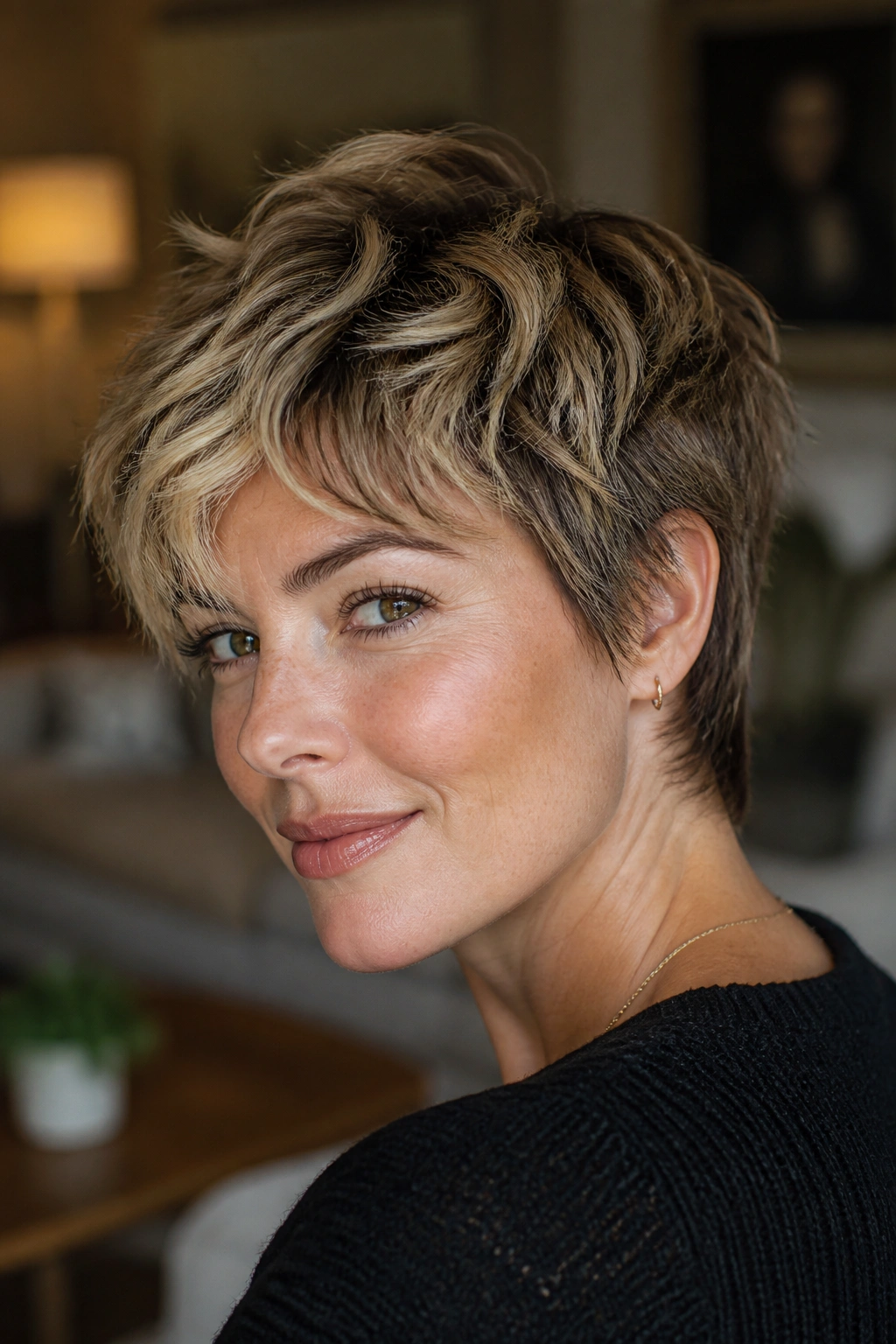
A shaggy pixie is the cut for people who want texture first and polish second. The layers are broken up enough to keep wavy hair from forming one solid block, and that makes the whole shape feel lighter.
The main thing to watch is over-thinning. Shaggy does not mean flimsy. You still want enough density at the crown and sides so the haircut has body. The goal is separation, not wispy ends that disappear.
- Best for thick or medium-thick waves
- Works well with sea-salt spray or a light mousse
- Needs a little finger styling after drying
- Keeps a loose shape as it grows out
A blunt fringe does not belong here. The cut needs movement all the way through. If one area is too solid, the shaggy effect falls apart.
This is a strong pick for someone who likes hair that feels touchable and a little imperfect.
12. Grown-Out Pixie with a Soft Neckline
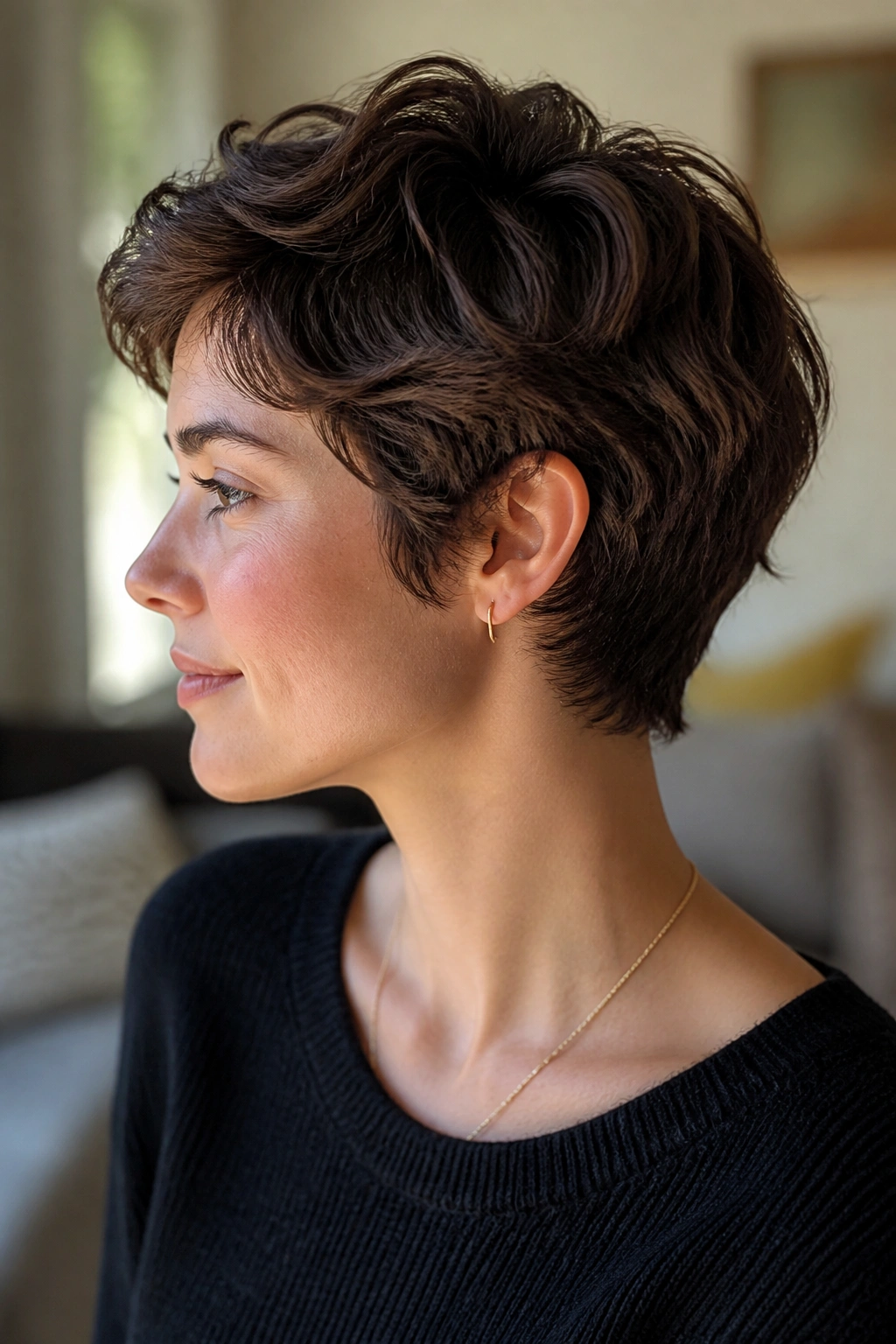
There is a sweet spot in the grow-out phase that people pretend is a problem. It is not. A grown-out pixie with a soft neckline can look better than a freshly cut one if the shape is still under control.
The neckline is the key. Keep it soft, not boxy. Let the back skim the nape instead of carving a hard line, and leave enough length around the ears to avoid that helmet look. Wavy hair often looks good in this in-between stage because the slight unevenness reads as texture.
This cut is for someone who does not want a strict salon schedule. It can stretch longer between trims because the shape is meant to relax. That makes it friendly for people who like a lower-maintenance routine or simply hate sharp grow-out lines.
It is not the neatest option. It is the most forgiving one.
13. Micro Fringe Pixie

A micro fringe changes the whole mood of a pixie haircut. The short bang gives wavy hair a sharp front edge, then the texture of the rest of the cut softens it back down. That contrast is what makes it interesting.
The Trade-Off
Short bangs show more forehead, more brow, more face. That can be great if you want a stronger look, but it is not the cut for someone who wants to hide everything. Wavy hair adds a little softness so the fringe does not feel too hard.
Ask For This
- Bangs that sit well above the eyebrow
- Short sides that do not puff at the temples
- A longer top so the wave still has room
- Light texturizing only at the fringe edge
This works best when the wave pattern is not too coarse at the front. If your front pieces spiral hard, the fringe may fight you every morning. A softer wave usually settles more cleanly.
It is a brave cut. Also a fun one.
14. Deep Side-Part Pixie

A deep side part can save a pixie that feels too flat. The part line forces the hair to travel across the head, and that diagonal movement gives wavy hair instant lift near the front.
The cut itself does not have to be extreme. Sometimes the whole difference is where the top is left a touch longer and where the weight is removed underneath. If the hair naturally wants to part in one direction, this style works with it instead of arguing.
A Few Things to Ask For
- Longer top layers on the heavier side
- Shorter, tighter side coverage on the opposite side
- Soft blending around the temple
- Enough length to tuck one side behind the ear
This is a strong option if you want a pixie that still feels feminine or face-framing without becoming fussy. It can look polished with a comb or a little rough with your fingers. Both work.
15. Slicked-Back Pixie for Wavy Hair
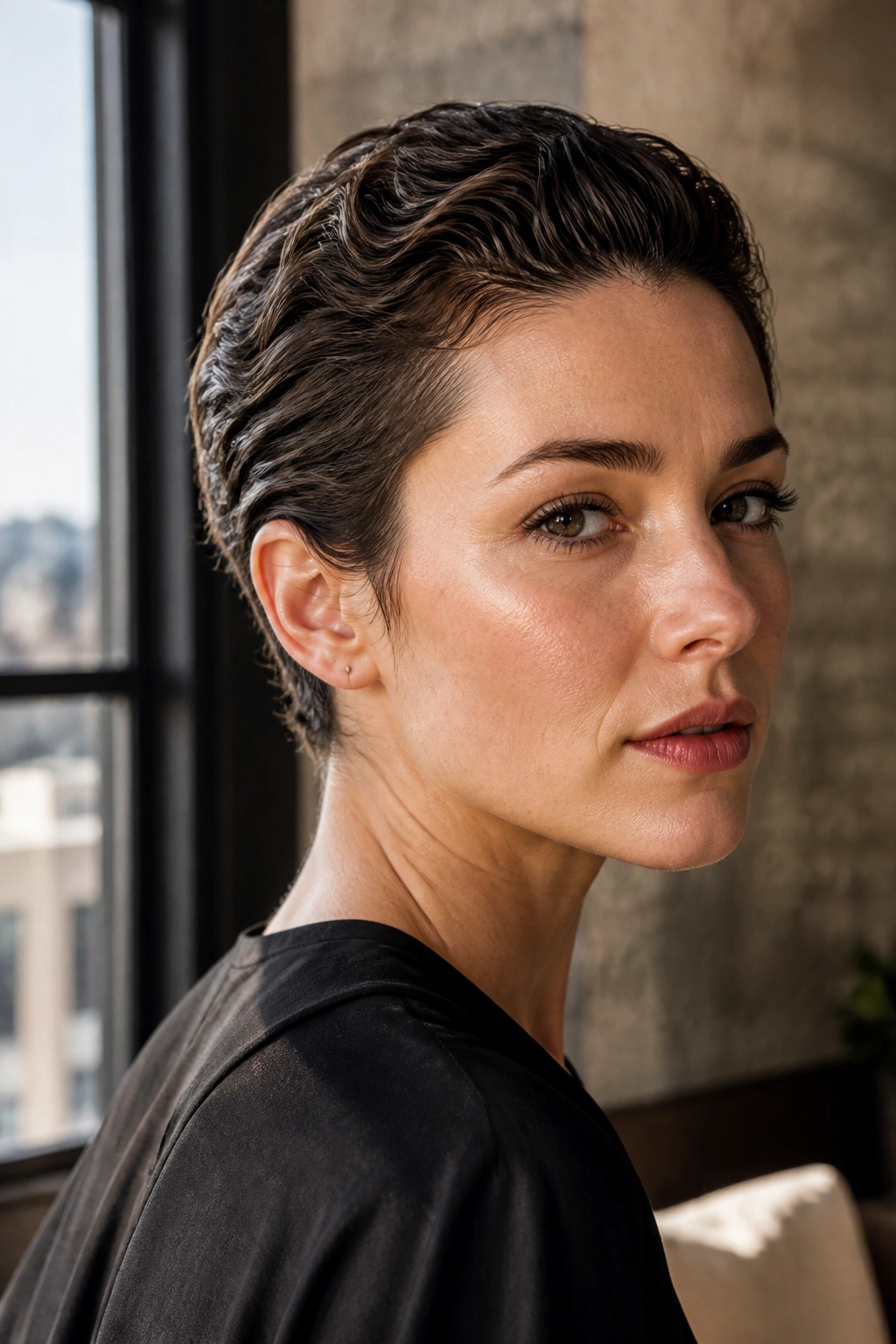
Slicking a pixie back is a different mood entirely. The waves get flattened into one clean direction, and the cut starts to read more modern and sharp than soft.
The reason it works on wavy hair is simple: texture. A tiny bend in the strands keeps the slicked-back style from looking wet in a flat, lifeless way. Use gel or a light pomade on damp hair, then comb it back with your fingers or a wide-tooth comb.
This is not the everyday choice for most people. It is the one you pull out for a clean shirt, a strong lip color, or a night where you want the haircut to feel deliberate. If your hairline is uneven or your front grows in a stubborn way, that can help or hurt depending on the shape.
A little shine is enough. Too much product and the hair starts to clump in a greasy way that is hard to fix.
16. Pixie Mullet with a Soft Tail
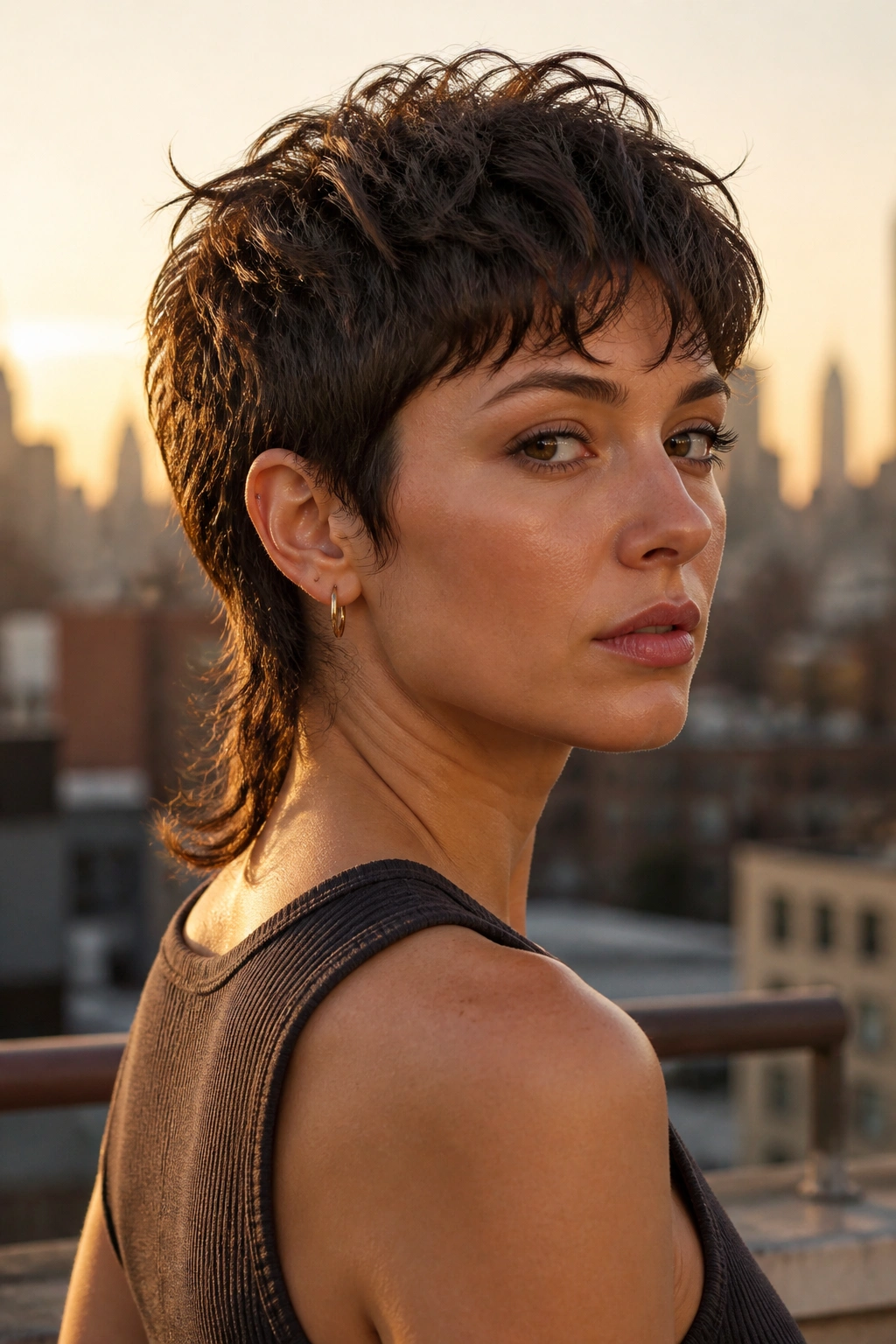
A pixie mullet sounds louder than it usually looks. With waves, the cut can be surprisingly wearable because the back length blends into soft, broken layers instead of forming a hard tail.
Where the Length Goes
The crown and sides stay short, while the nape keeps enough length to hang a bit. That little extra at the back gives the wave something to cascade over. It also keeps the style from feeling too severe around the neckline.
Who Should Try It
- People who want edge without a full mullet
- Wavy hair that needs shape in the back
- Thicker textures that can carry contrast
- Anyone who likes a more fashion-y silhouette
The soft tail should not be too long. If it gets heavy, the cut loses the crispness that makes it interesting. Ask for a controlled transition, not a dramatic drop.
This one is playful. A little rebellious. Still practical if the layering is handled well.
17. Rounded Pixie with Full Crown
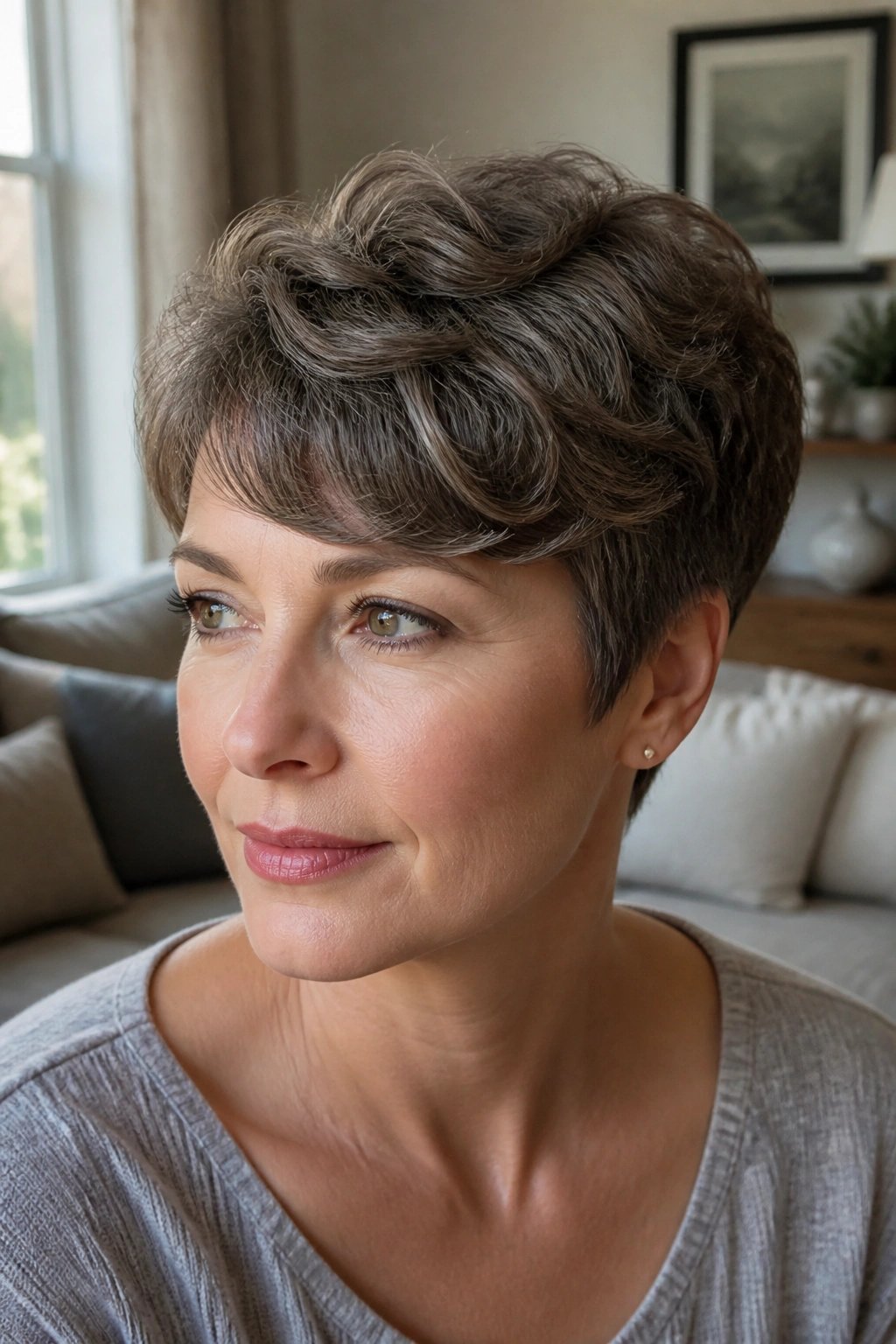
Rounded pixies are underrated for wavy hair because they keep the shape balanced. Instead of building height in a sharp spike, the cut follows the curve of the head and lets the wave sit inside a softer outline.
That matters if your hair tends to spread wide. A rounded shape reins it in. The crown stays full, the sides stay close enough to the face, and the whole cut looks intentionally shaped rather than accidental.
- Good for coarse or dense waves
- Keeps the top from looking flat
- Needs a careful blend around the temples
- Works well with a side part or a soft center split
I would not ask for this if you want a rough, choppy finish. Rounded pixies live and die by the curve. If the shape is cut well, it looks clean and easy. If it is cut badly, it can feel bulky fast.
That is the trade-off. Shape matters here more than product does.
18. Stacked Back Pixie
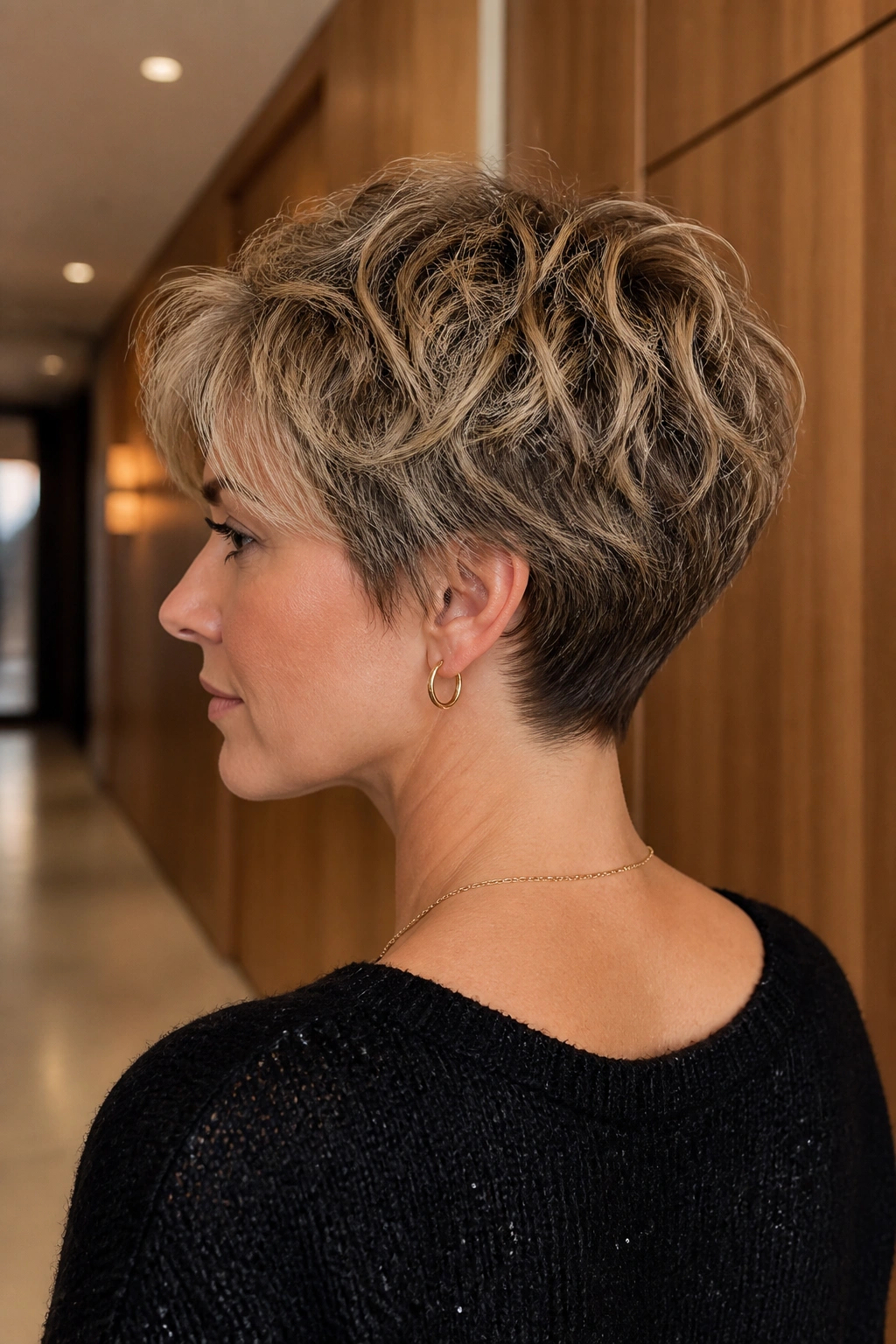
A stacked back gives wavy hair structure without making the top stiff. The hair is graduated at the back of the head so it hugs the curve of the skull, and that neat base keeps the rest of the cut from collapsing.
This is one of my favorite answers for thick waves that get puffy at the back. The stacked shape removes bulk where you do not need it and leaves enough length on top for the wave to show. It can also make the neck look longer, which is a nice side effect if that matters to you.
The risk is overdoing the stacking. Too much graduation and the back can look bubble-like. You want a clean curve, not a shelf.
It works best with a light styling cream and a quick finger-dry. No need to fight the wave pattern. Let it do some of the work.
19. Temple-Tapered Pixie
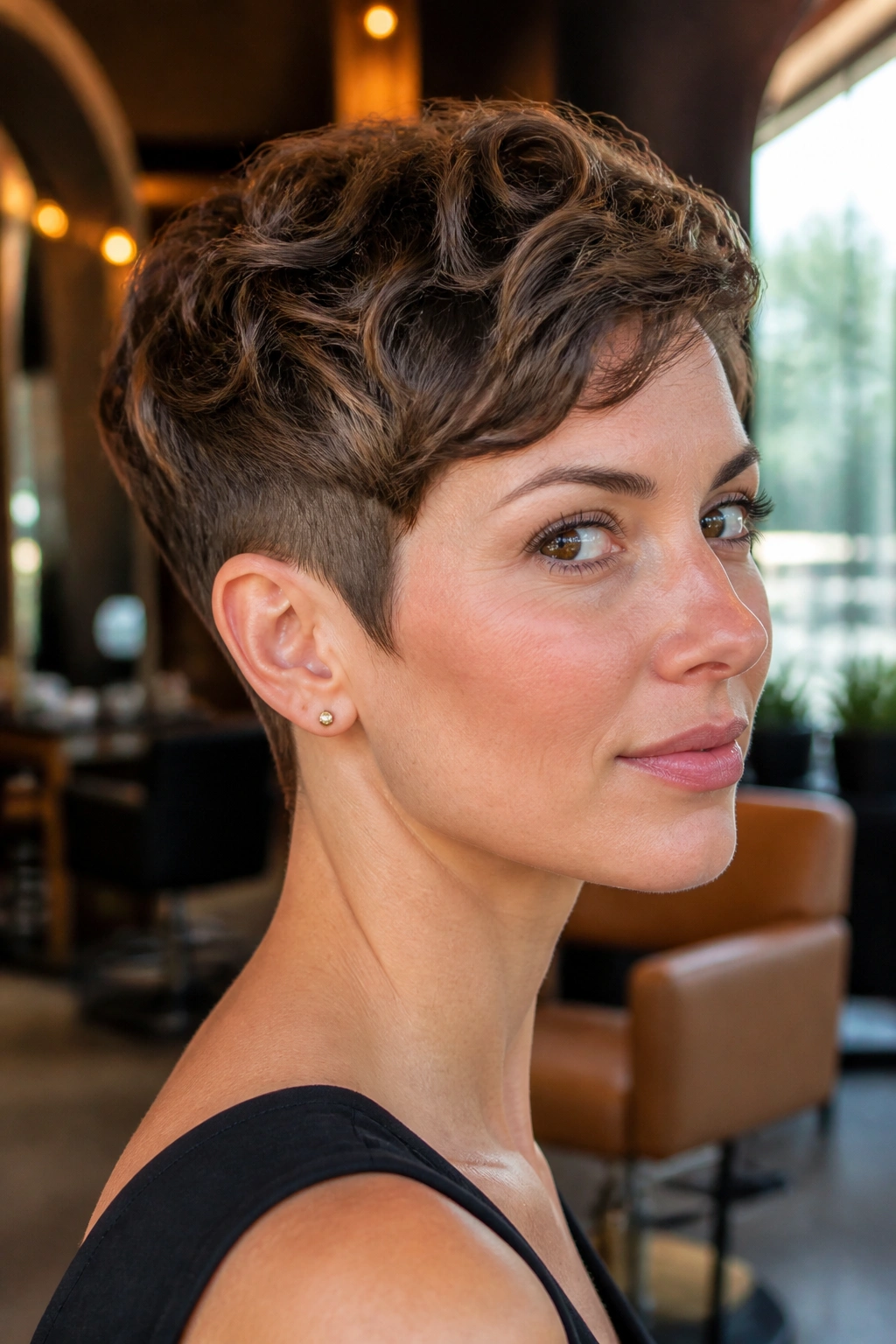
Temples are the forgotten spot in a lot of short cuts. A temple-tapered pixie fixes that by reducing bulk right at the sides of the face, where wavy hair can puff out and make the whole cut feel wider than it should.
Why It Helps
The taper around the temples creates a cleaner frame near the eyes and cheekbones. That matters if you wear glasses, have a wider face, or just dislike the triangle effect that short cuts sometimes create.
Ask Your Stylist For
- Soft tapering at the temple and sideburn area
- A little more length on the top corner
- Clean edges, not shaved skin
- A smooth blend into the ear area
This is a small detail, but it changes the haircut more than people expect. A nape taper and a temple taper are not the same thing. One cleans up the back. The other shapes the front edge of the face.
If your waves flare at the sides, this is worth trying.
20. Wispy Bangs Pixie
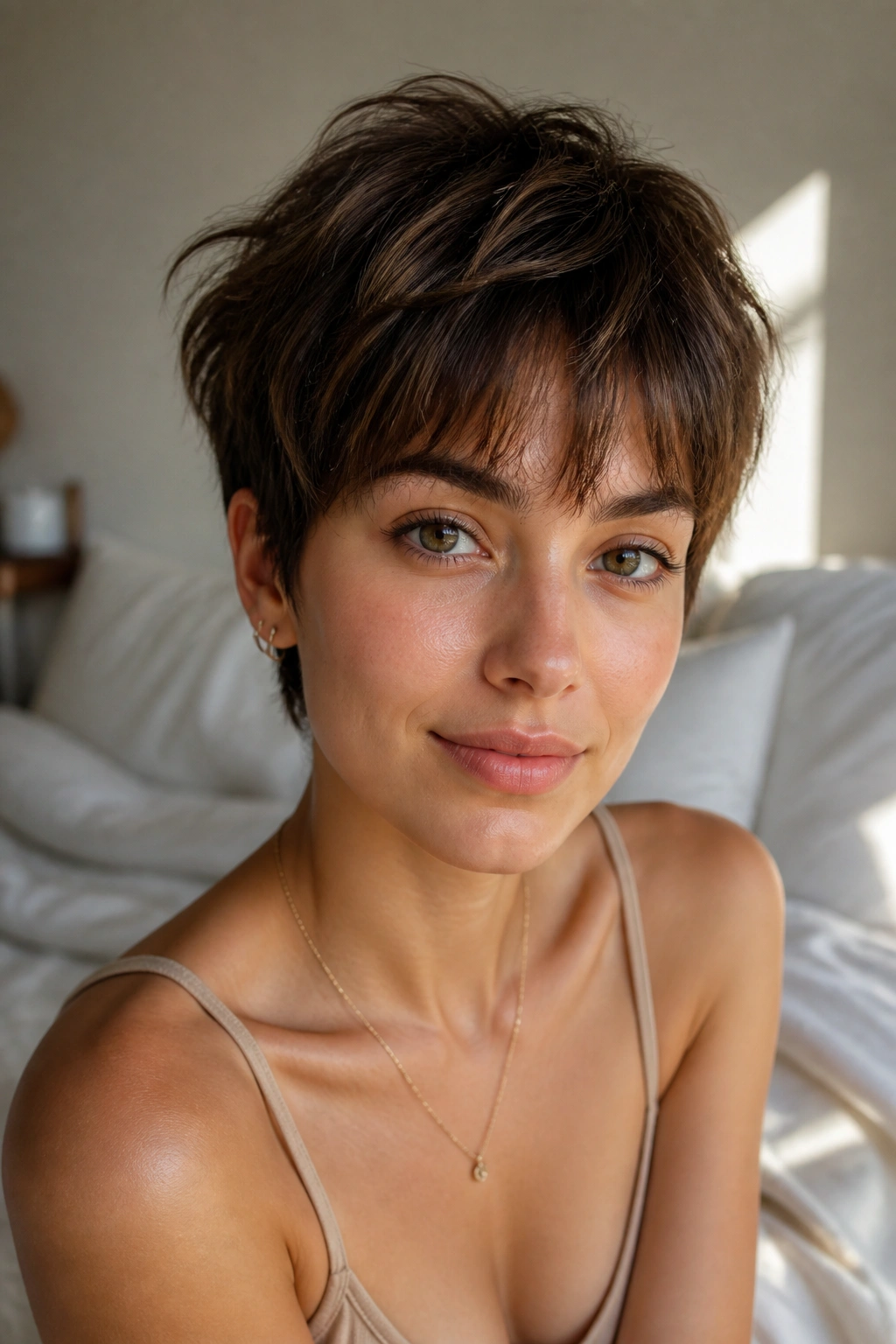
Wispy bangs can soften a pixie in a way blunt bangs never will. On wavy hair, those thinner fringe pieces break up the forehead line and keep the front from looking too heavy.
The cut is especially useful if your wave pattern shows up fast around the hairline. A blunt fringe can split or swell there. Wispy bangs let the front move a little, which keeps them from turning into one solid block by lunchtime.
This style suits people who want softness more than drama. It flatters strong brows, broad foreheads, and faces that need a little texture near the eyes. Keep the fringe light, though. If it gets too sparse, it starts to look unfinished.
A small trim every so often matters here because bangs shrink as they dry. Cut them too short and they can sit awkwardly above the brow.
21. Faux Hawk Pixie
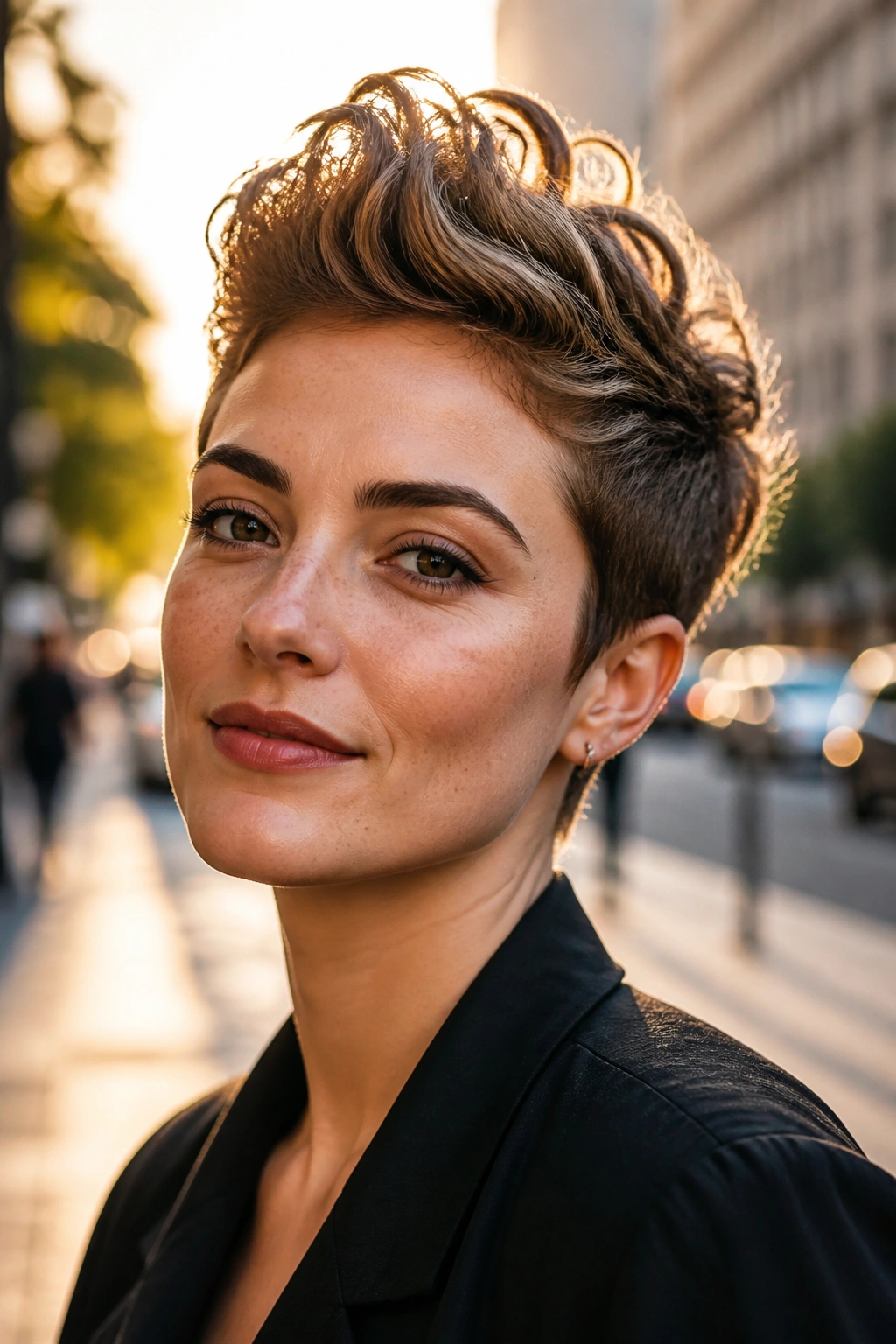
A faux hawk pixie is a good fit for wavy hair because the center ridge gives the texture something to climb on. The sides stay shorter, the middle stays lifted, and the wave pattern makes the whole thing look fuller than it really is.
It is a bold cut, yes, but not a hard one to wear if the blending is soft. The trick is keeping the center strip longer than the sides without making it look like three separate haircuts stacked together. A smooth transition is what keeps it wearable.
A little mousse or root spray helps here. Work it into damp hair, then push the top upward with your fingers while the sides dry flatter. A diffuser helps, too, though not everybody wants that much structure before coffee.
If you like hair with attitude, this one brings it. Fast.
22. Face-Framing Pixie with Long Front Pieces
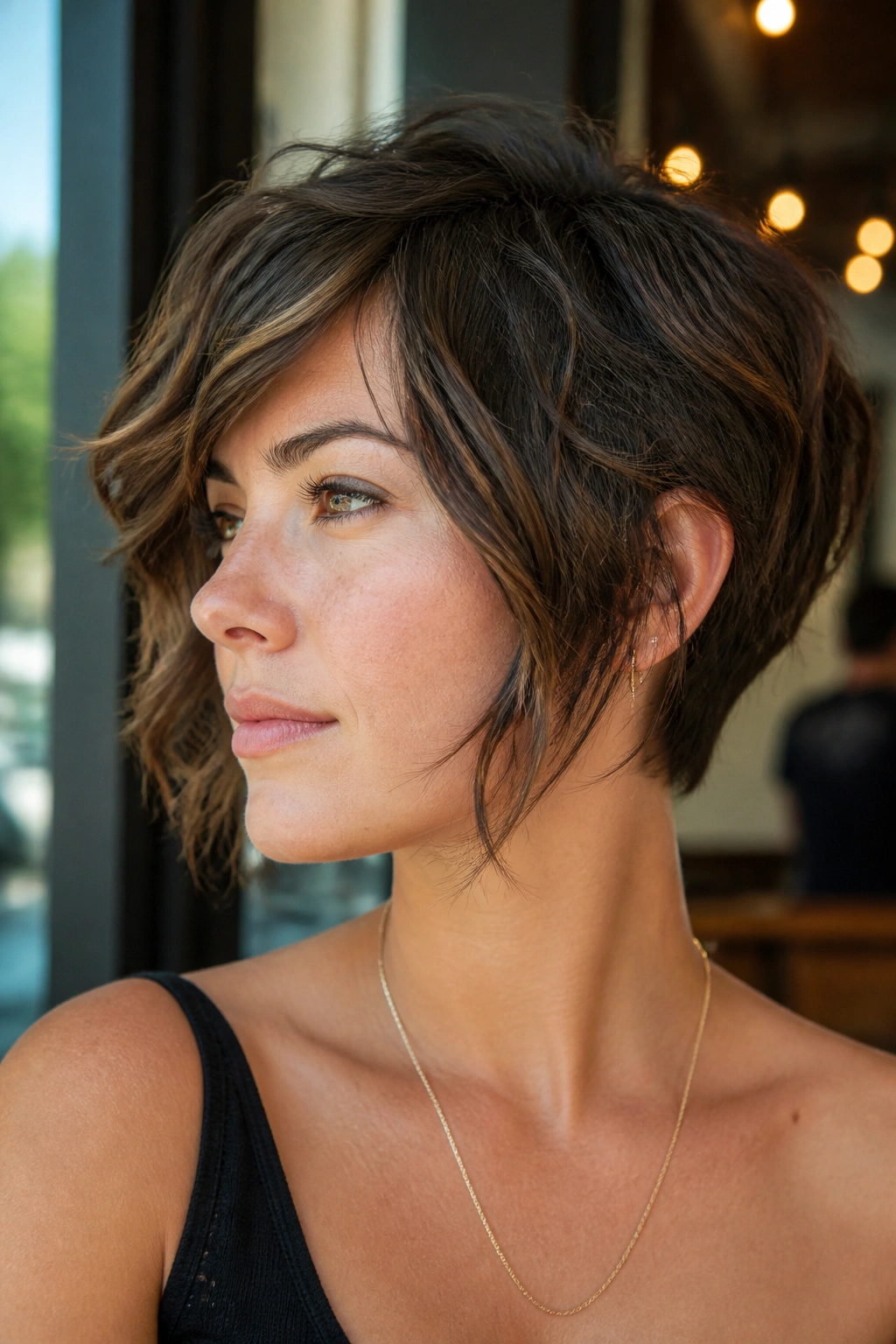
Long front pieces can make a pixie feel safer when you are not ready for a fully cropped look. The back and sides stay short, while the front falls toward the cheekbone or jawline and gives the face some softness.
That extra length does a lot on wavy hair. It keeps the wave visible where people can actually see it, and it stops the haircut from feeling too abrupt around the eyes. You can tuck the front back, sweep it forward, or let it split naturally.
This is a smart choice if you like the idea of a pixie but still want a little hair to play with. Hair behind the ear. A bit of movement on the cheek. Enough length to change the mood without growing the whole cut out.
It is one of the easiest pixie haircuts for wavy hair to live with because it offers options on lazy mornings.
23. Air-Dry Pixie
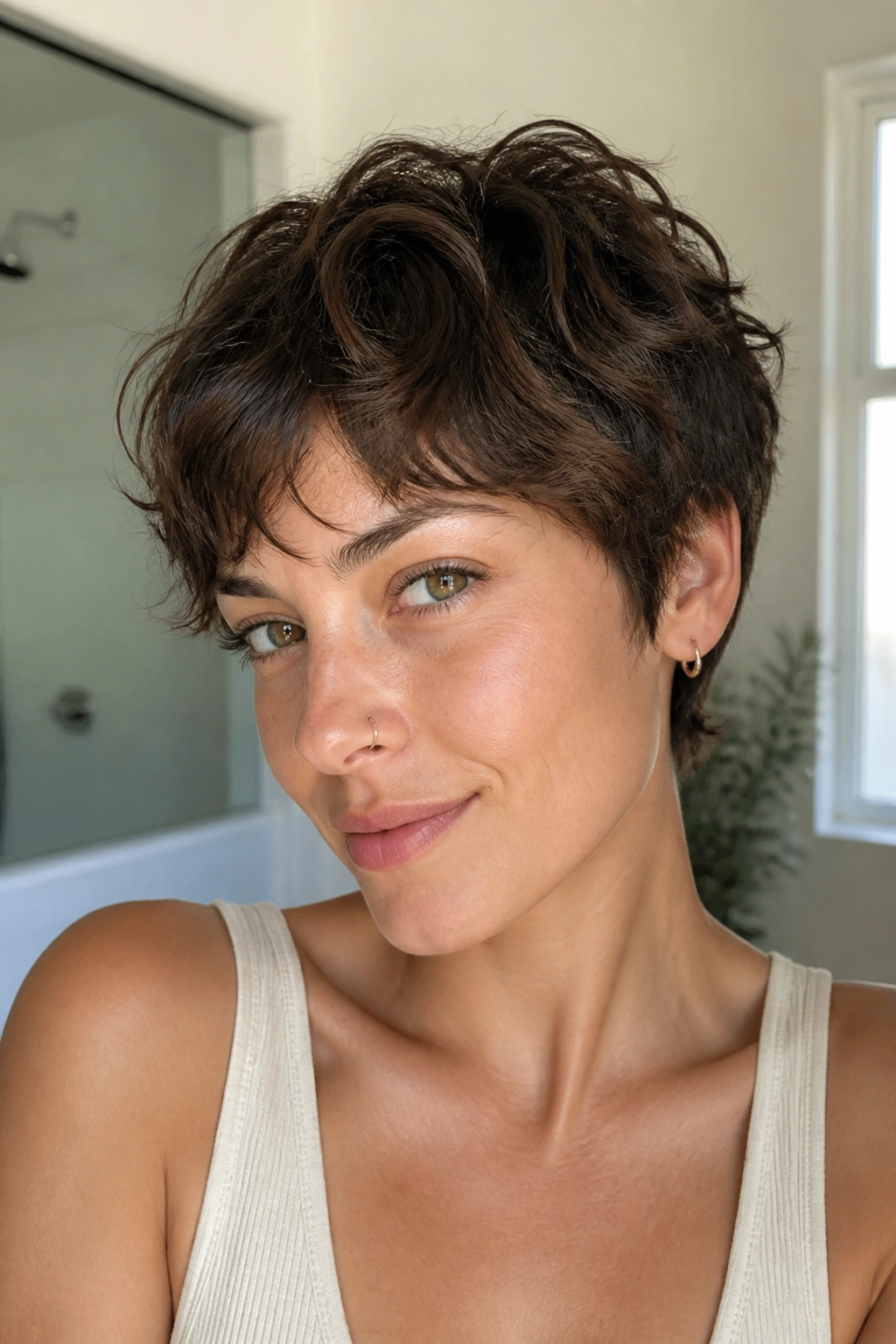
An air-dry pixie is not a lazy cut. It is a smart one. The layers are placed so the hair settles into shape with very little help, which is why wavy hair can wear it so well.
The Drying Routine
- Blot the hair with a towel, don’t rub it hard
- Work in a small amount of cream or foam
- Scrunch the wave once or twice
- Leave the front alone until it sets
The cut needs enough shape at the crown and sides to avoid random flips. That usually means soft internal layers, a little length on top, and a neckline that does not stick out too far.
If you are the type who hates a blow-dryer, this is the one to ask about. The best air-dry pixies look almost effortless, but that look starts with the cut itself. Not the product. Not the tricks.
And yes, a diffuser can still help when you want more lift. You do not have to swear off tools forever.
24. Thick Wavy Hair Pixie with Internal Layers
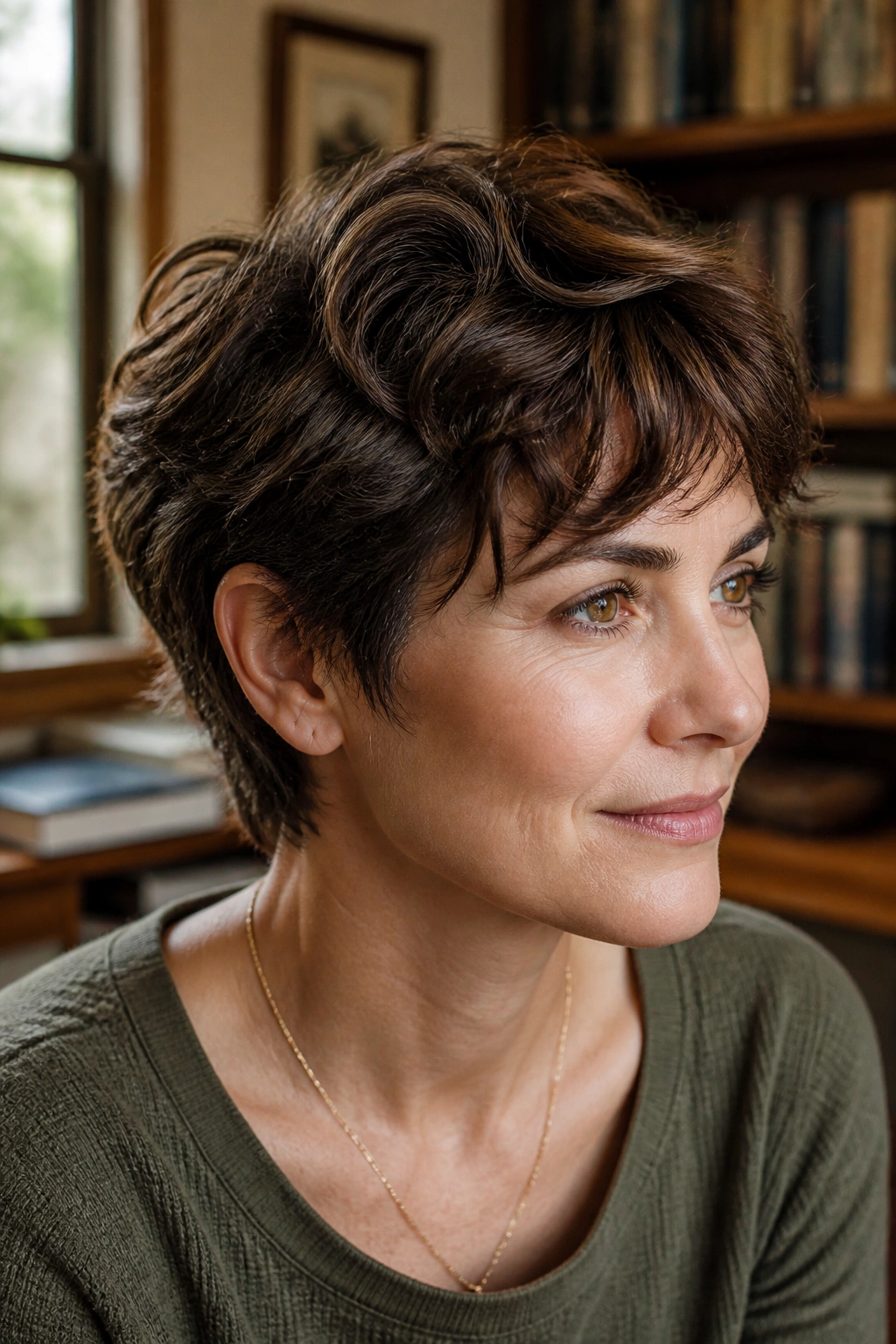
Thick wavy hair needs a different kind of control. The answer is not always shorter. Sometimes it is hidden weight removal inside the cut, where the bulk can be reduced without making the shape look thin on the outside.
Where to Remove Weight
Ask for internal layers through the midsection and crown, while keeping the outer perimeter cleaner. That keeps the pixie from turning into a fuzzy cloud. The hair still has density at the surface, but it moves more easily underneath.
What to Leave Alone
- The very ends, if they are already fine
- The front edge, if you want face frame
- The neckline, if you want a solid outline
- The top, if you need height and movement
This is the cut I would choose for dense waves that get hot and bulky fast. It gives shape without stripping the hair bare. A lot of people get this wrong and ask for too much texturizing. That can leave the ends rough and the top flat. Not ideal.
Done well, it feels lighter the moment you touch it.
25. Fine Wavy Hair Pixie with Featherlight Ends
Fine wavy hair needs a different hand. The cut should keep enough density at the perimeter so the hair does not disappear into wisps, while still letting the wave pattern move.
Thin ends are the enemy here. They make the hair look sparse and can leave the pixie with no shape at all. A better plan is soft layering on top and a perimeter that stays slightly fuller than people expect. The result is a cut that reads airy, not stringy.
This style usually works best with a small amount of lightweight foam or a spray cream. Heavy wax will crush it. Heavy oils will flatten it. You want lift and separation, not slime.
A fine-wavy pixie can look elegant in a very plain, unfussy way when the balance is right. It does not need to be big. It needs to look like there is enough hair left to form a real shape.
Final Thoughts
The best pixie for wavy hair is usually the one that respects where your hair already wants to bend. Short hair can be unforgiving when the outline is wrong, but it can also look better than longer cuts when the layers are placed with a little care.
If I had to reduce the whole thing to one practical rule, it would be this: keep the crown under control and the top long enough to show the wave. That one choice changes more pixie cuts than any styling product ever will.
Bring a few photos to the salon, then talk through where you want width, where you want lift, and where you want the hair to sit close. That conversation matters more than the name of the cut.
