



A curly pixie cut should never look like a compromise. On Black women, it can look clean, sharp, and full of movement all at once — the kind of cut that makes texture the main event instead of something to tame.
The trick is shape. Too much bulk in the wrong place and the cut turns boxy. Too much thinning and the curls lose their body. The best curly pixie cuts for Black women respect shrinkage, follow the head shape, and leave enough length on top for the curls to do their thing without fighting the cut.
There’s also a sweet spot most people miss: the top doesn’t need to be long to read as feminine, polished, or bold. Two inches of well-cut coils can look richer than five inches that were chopped without a plan. A skilled stylist thinks about the crown, the temples, the nape, and the hairline in the same breath. That’s the difference between a pixie that feels random and one that looks deliberate.
Some of these cuts lean soft and rounded. Others are crisp, tapered, and a little bit bossy. All of them work best when the cut and the curl pattern are allowed to meet in the middle.
1. Tapered Curly Pixie Cut for Black Women
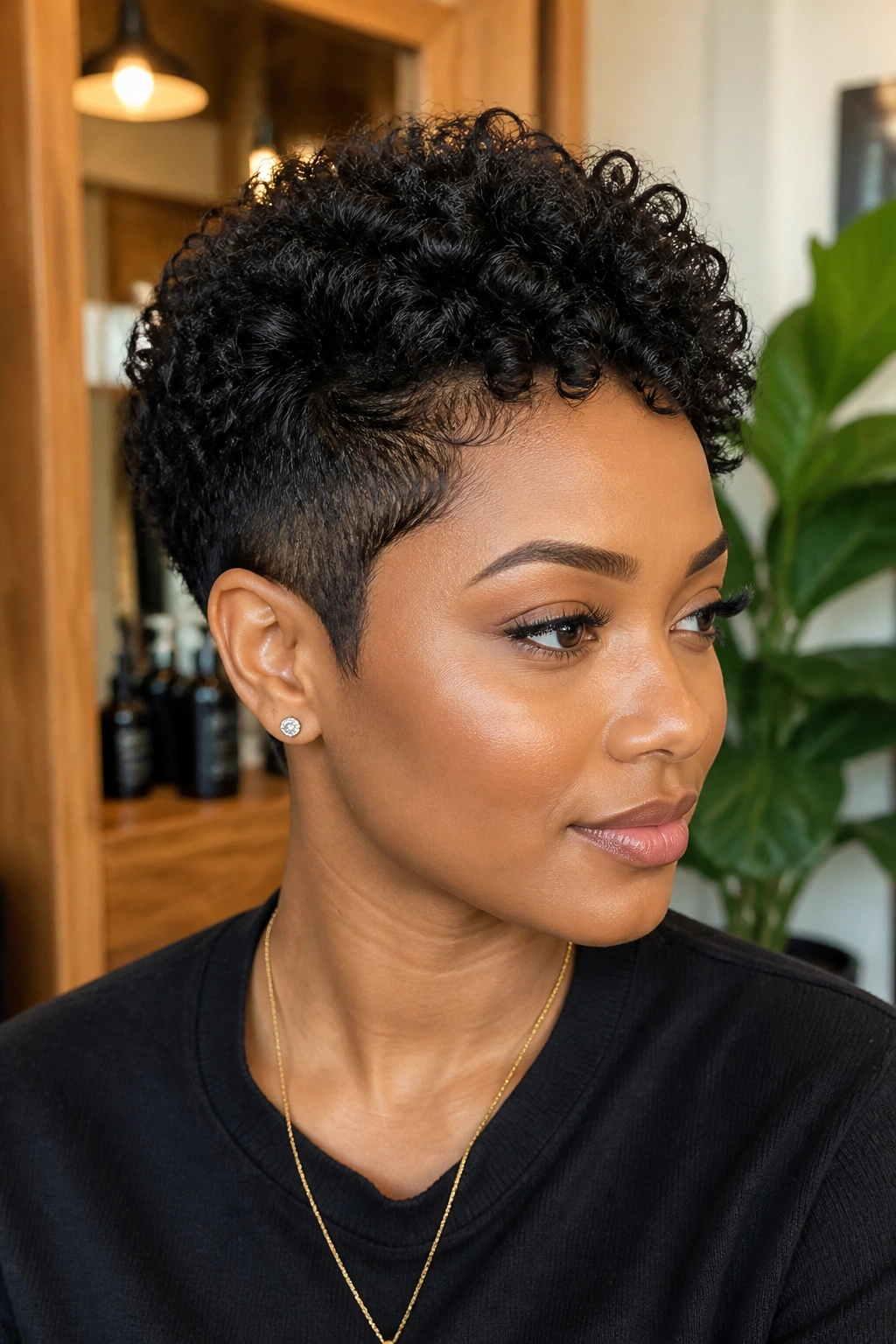
The tapered pixie is the one I’d hand to someone who wants shape first and drama second. The sides are kept short — often with a low clipper taper around the ears and nape — while the top stays long enough for defined coils to sit up and forward. That contrast makes the face look open, which is a big reason this cut keeps showing up in salons.
Why the taper matters
A taper keeps the cut from ballooning out at the sides. For tighter curl patterns, that matters more than people think. Without it, the top can look heavy and the silhouette starts fighting itself.
- Top length: about 1.5 to 3 inches, depending on curl shrinkage
- Sides and nape: softly faded or clipped close, usually with a #0.5 to #2 guard
- Styling product: a light leave-in plus curl cream or mousse
- Best for: coils that need a little lift and a clean outline
Pro tip: ask for the taper to be soft, not chopped. Hard lines can make the cut feel harsh fast.
A good tapered pixie looks almost effortless from the front, but the back is doing a lot of work. That’s the part many people skip when they ask for a pixie and then wonder why it sits oddly. The nape needs to be shaped so the curls on top don’t look like they’re floating.
2. Side-Swept Curly Pixie With a Long Fringe
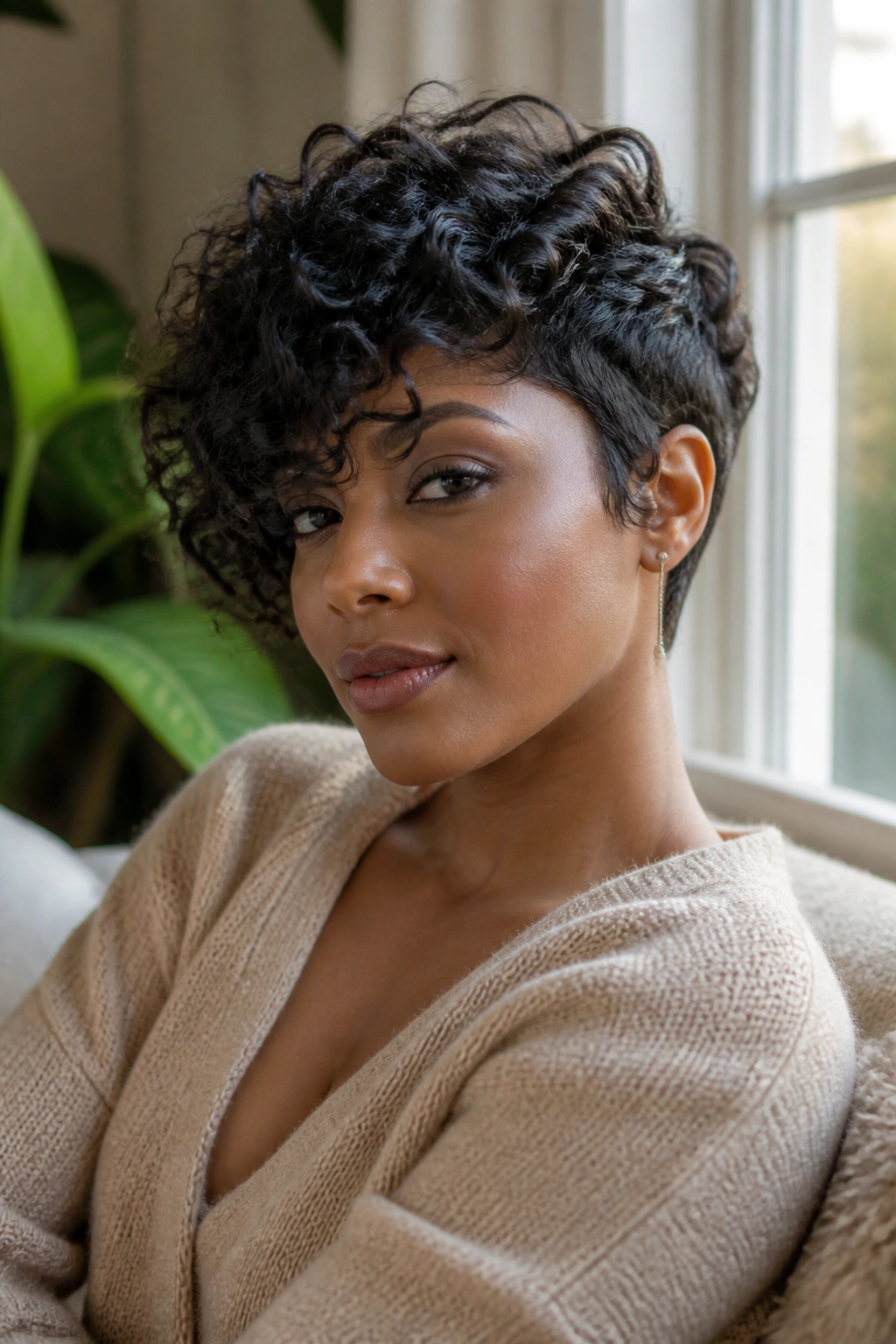
This one has attitude. A side-swept fringe gives the cut a softer face-framing effect, and it’s especially flattering if you like a little movement across the forehead. The longer front piece can be finger-curled, flat-twisted, or set with a small roller before drying.
If you want a pixie that feels less severe, this is the one. It’s also a smart option if one side of your hair grows flatter or looser than the other, because the sweep disguises minor texture differences without making a big production out of it.
The fringe should not be so long that it hangs in the eyes all day. A good range is about 2.5 to 4 inches at the front, then shorter toward the temple so it falls naturally. Keep the sides close enough to give the front some contrast. Otherwise it turns into a short bob with a confused identity.
I like this cut on people who wear earrings. Big hoops. Small gold huggies. Even a plain stud looks more intentional when the hair is sweeping just off the cheekbone.
3. Finger-Coiled Pixie With Crisp Edges
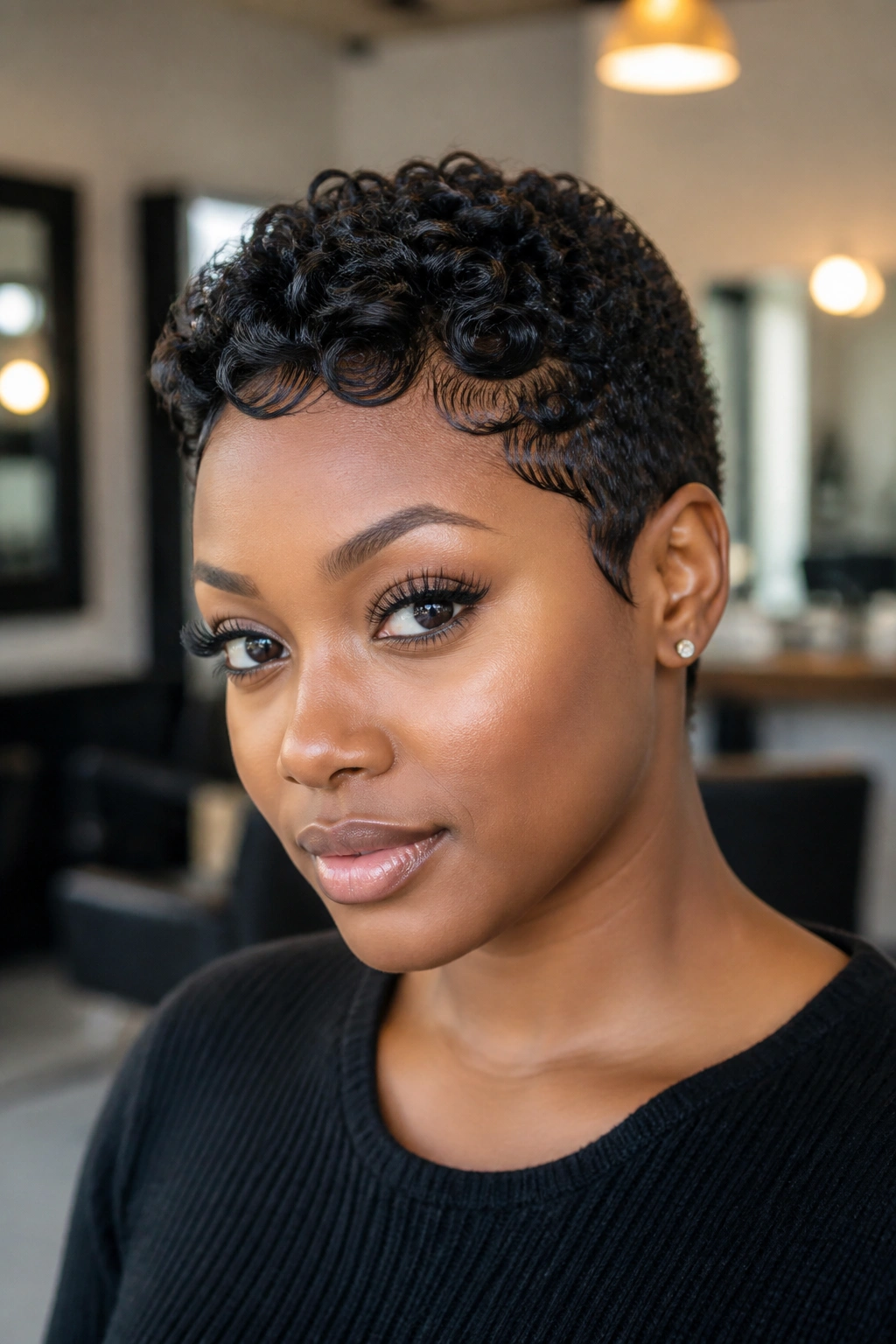
Why does finger-coiling work so well here? Because it gives the curls a cleaner finish than rough scrunching ever will. Each coil is shaped while damp, which means the pixie reads as tidy instead of fluffy, and that matters when the haircut itself is already short.
How to get the shape
Start with clean, damp hair and a nickel-sized amount of leave-in for each section. Then use a pea-sized bit of cream or gel on tiny subsections and twist the hair around your finger until it springs into a coil. Let it dry fully before you touch it.
The edges matter here, too. Crisp sides and a clean line around the nape make the coils on top pop more. If the outline is messy, the whole style loses definition.
A finger-coiled pixie is not a lazy morning cut. It asks for time on wash day, and it gives you back polished curls for several days. That trade makes sense for a lot of women who want a short style without giving up structure.
4. Pixie Cut With a Shaved Nape
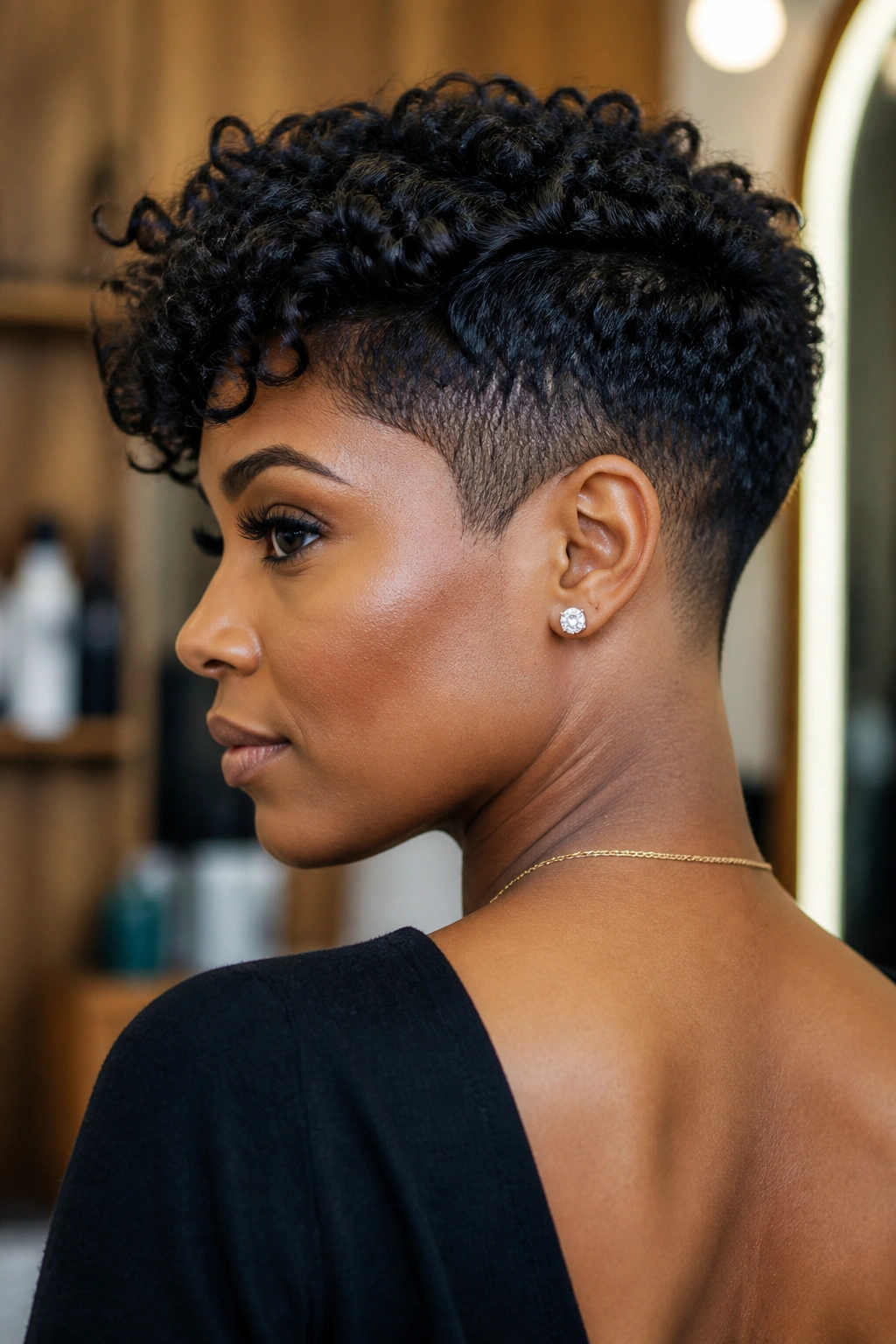
Picture this: the front is soft and curly, then you turn your head and the nape is clipped down clean and close. That contrast gives the cut a little edge without pushing it into full undercut territory. It’s a strong choice if your hair gets bulky at the back or if you like the neckline to stay neat between salon visits.
The shaved nape also helps in warm weather. Short hair at the neck means less sweating, less fuzzing up around the collar, and less time spent trying to tuck curls where they do not want to go. Simple. Useful.
- Maintenance: trim or re-clip every 2 to 3 weeks
- Styling: define the top with mousse or gel, then diffuse on low heat
- Shape note: keep the crown rounded so the top doesn’t puff straight up
- Best for: dense curls and women who like a cleaner finish at the back
I’ve always thought this cut looks best when the front is left a little longer than expected. If the nape is already bold, the top needs enough length to soften the contrast. Otherwise the whole thing can feel a little too strict.
5. Rounded Curly Pixie for Tight Coils
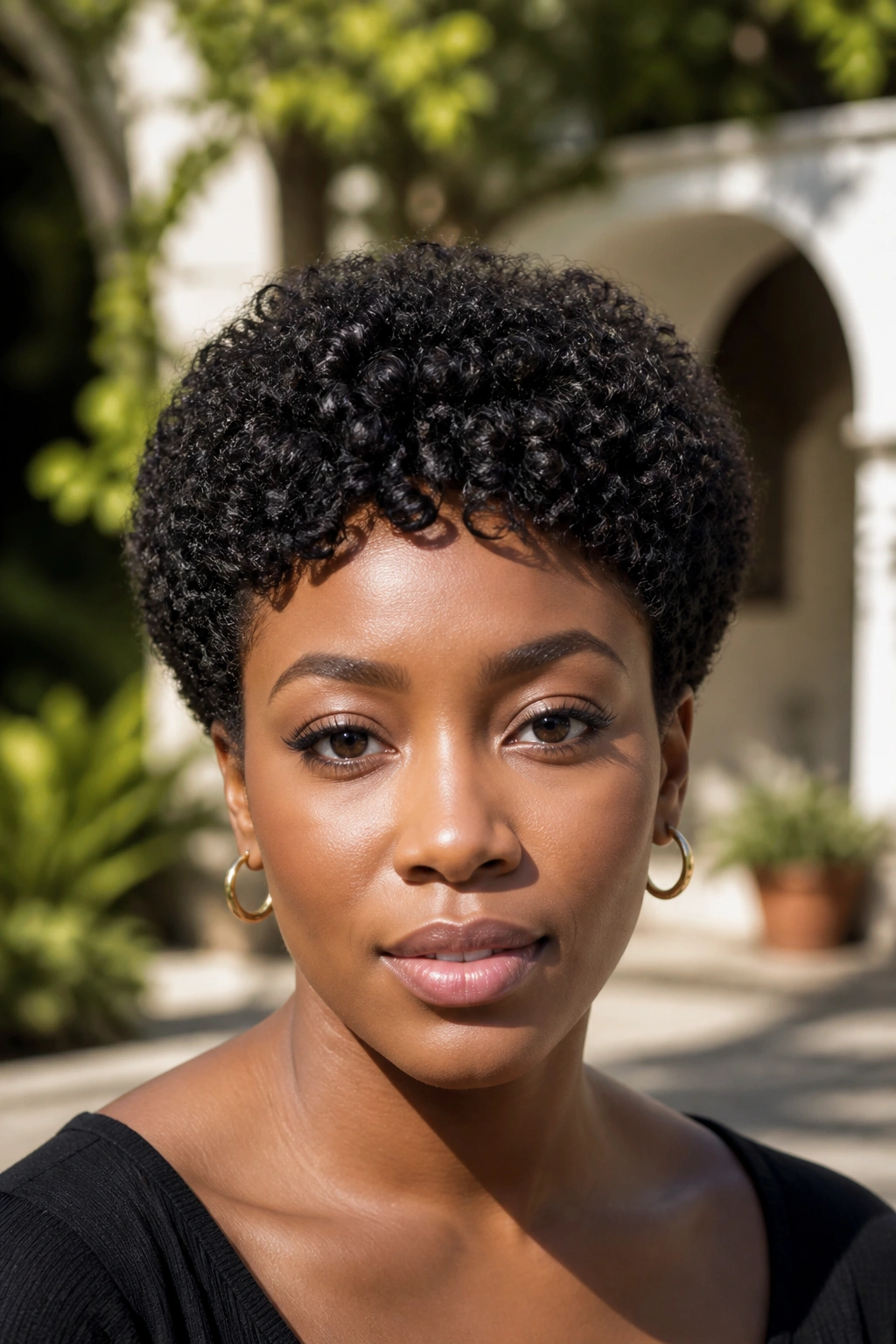
A rounded pixie is a softer read than a sharp taper, and that softness is the point. The silhouette follows the natural curve of the head, which makes tight coils sit in a neat halo instead of jutting out in corners. It’s one of the best curly pixie cuts for Black women who want polish without a severe line.
The cut depends on balance. The crown stays full, the sides are shaped close enough to keep the outline clean, and the curls are left to form a rounded dome instead of being stretched flat. Done right, it has a calm, almost sculpted look.
This style is especially good if your hair shrinks a lot after washing. A lot. People get nervous when they see the wet length and think the cut is too short. Then it dries, and the shape comes back in a tighter, richer way. That’s not a problem; that’s the haircut doing its job.
You don’t need heavy product here. Too much cream can make the rounded shape collapse. A light leave-in and a foam or mousse on damp hair is usually enough.
6. Asymmetrical Curly Pixie With One Longer Side
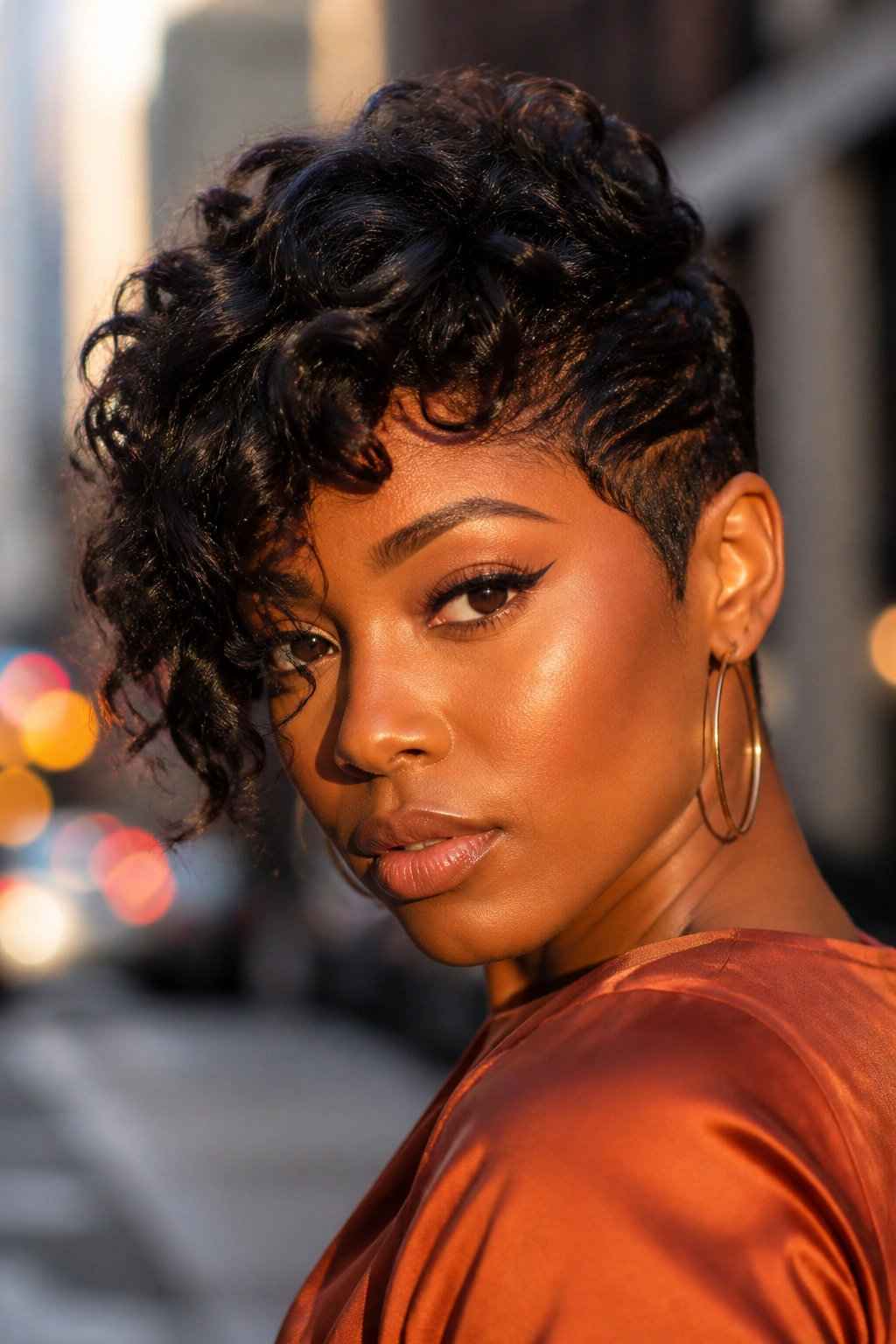
The asymmetrical pixie is for someone who likes a little imbalance on purpose. One side stays a bit longer, often brushing the cheekbone, while the other is kept tighter and closer to the head. That off-center shape gives the haircut motion even when you’re standing still.
Unlike a symmetric pixie, this one creates direction. Your eye goes where the longer side leads, which can sharpen the jawline or soften a wider forehead. It’s a clever little trick, and not a fussy one.
Who it flatters most
- Faces that look best with diagonal lines
- Hair that naturally parts to one side
- Coils that need a little help falling in one direction
- Anyone bored with evenly cropped short hair
The main thing to watch is proportion. If the longer side is too long, the style stops reading as a pixie and starts drifting toward a short shag. If it’s too subtle, the asymmetry disappears. Aim for a difference you can see in the mirror from the front, maybe an inch or so, not a tiny secret only the stylist can spot.
7. Faux Hawk Curly Pixie
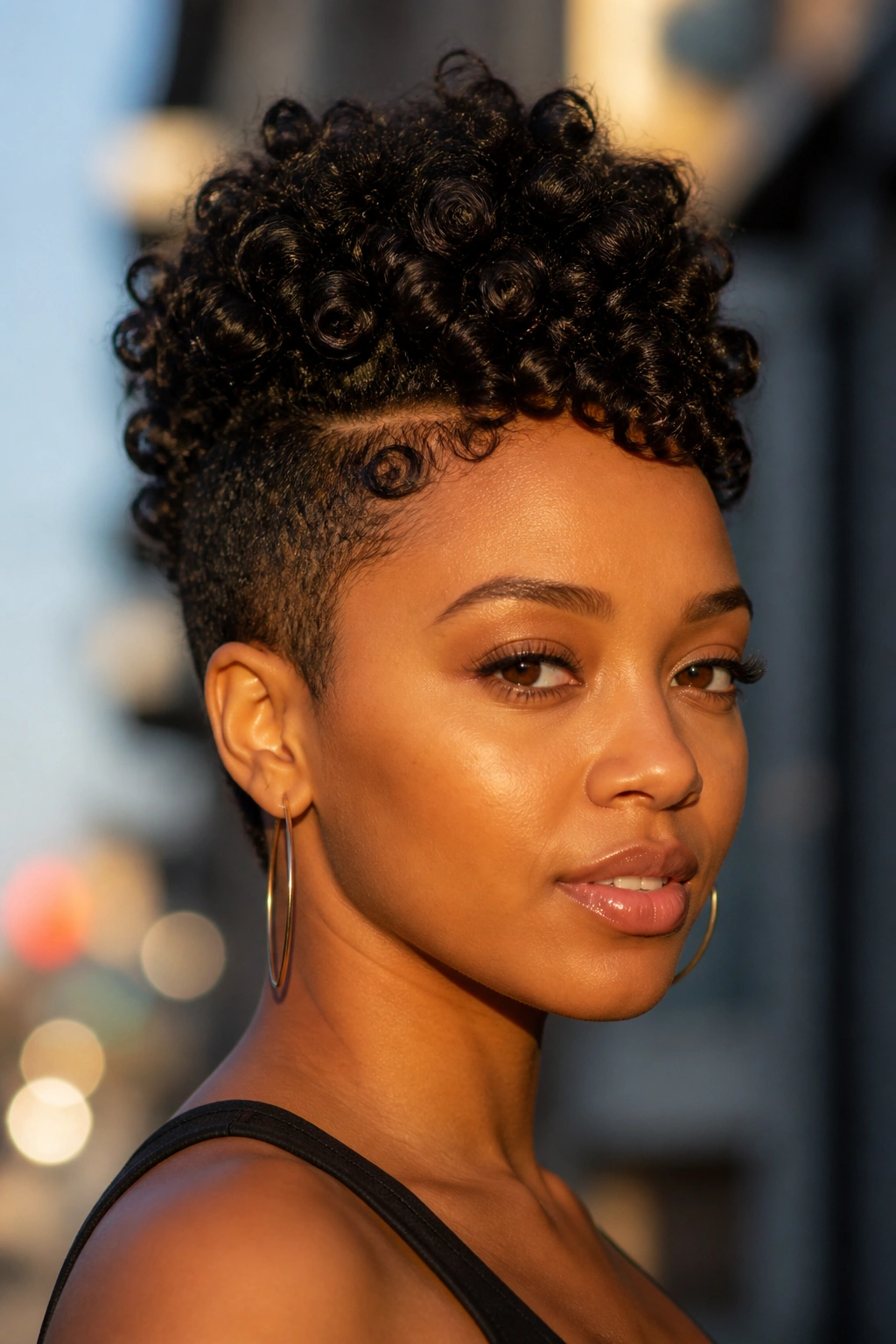
A curly faux hawk is a confident cut. The sides are tapered low, sometimes even faded very close near the temples, while the center strip is left fuller and lifted. The shape runs from forehead to crown like a narrow ridge, and that central line is what gives the style its punch.
What I like here is the way it handles volume. Instead of spreading curls outward, it pushes them upward and inward. That makes the face look longer and the whole silhouette feel a bit more athletic. It’s a strong choice if you want short hair that still looks intentional from every angle.
The best styling trick is to define the middle section first, then smooth the sides down with a little gel or edge control. Don’t drown the hair. A light hand works better because the cut already carries the drama.
This cut is also surprisingly good for coils that don’t love uniform curl definition. The top can be fluffier, the center can be more polished, and the style still makes sense.
8. Twist-Out Pixie With Chunky Definition
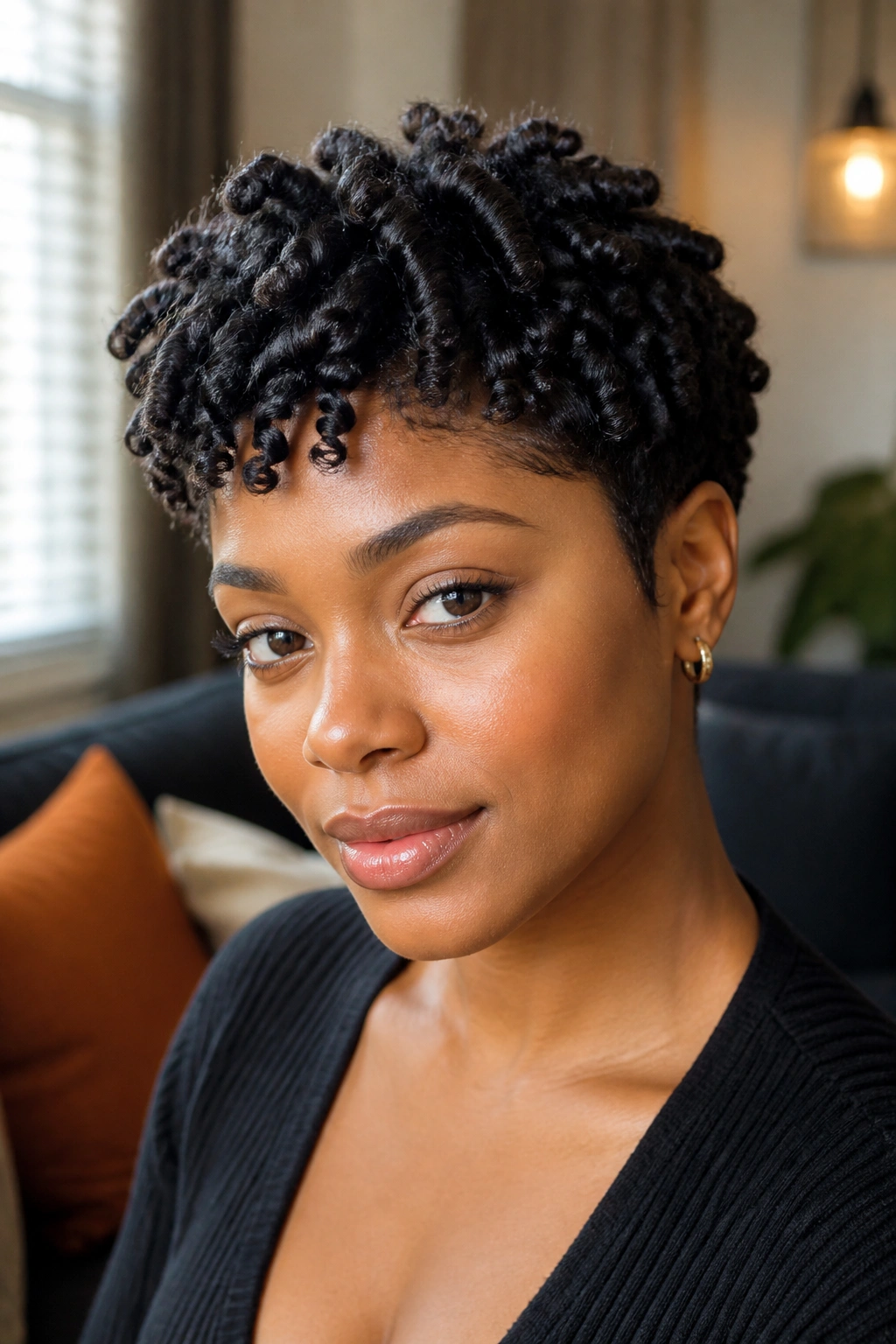
Can a twist-out work on a pixie? Absolutely. It works especially well when the top has enough length for small two-strand twists to leave a visible pattern after unraveling. You get the definition of a set style without the stiffness of a tightly shaped coil-by-coil finish.
How to use it
Twist the hair in sections about the width of a pencil or a chopstick. Let the twists dry fully — overnight if needed — then separate them with a little oil on your fingertips. Stop before the hair turns fuzzy. That line is easier to miss than people think.
The appeal here is texture. A twist-out pixie has body, not just curl. The pieces sit a little chunkier, which gives the cut a relaxed, lived-in feel. It’s a good match for women who don’t want every curl strand to look identical.
One thing: don’t make the twists too large. On short hair, big twists can leave the ends awkward and the whole style can fall apart fast. Small to medium sections give you better control and a more even finish.
9. Wet-Look Curly Pixie
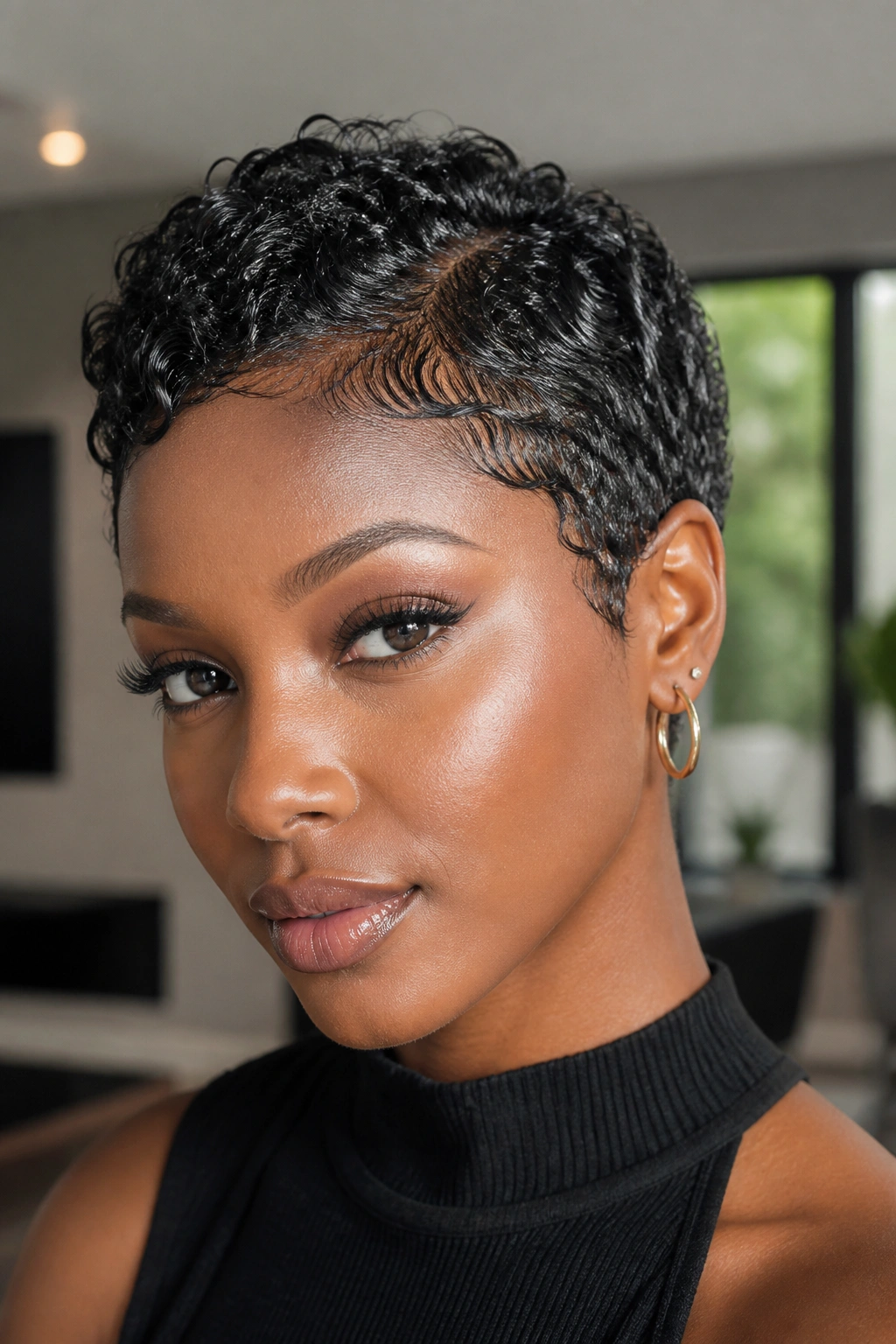
The wet-look pixie is sleeker than most curly cuts, and that’s what makes it interesting. Instead of chasing maximum fluff or volume, you use gel or styling glaze to keep the curls glossy and close together. The result is a shorter style that feels clean and dressed up.
This one lives or dies on product choice. You want something with enough hold to keep the curl pattern together, but not so much that the hair turns crunchy. Apply it to soaking-wet hair, rake through with your fingers, then scrunch lightly at the ends. A diffuser helps if your hair needs encouragement at the roots.
It’s a good fit for nights out, photos, or any day you want the haircut to look a little more polished than airy. The shine changes the whole mood. Same cut, different attitude.
And yes, it does take some restraint. If you keep touching it while it dries, you’ll break the cast and end up with frizz instead of gloss. Leave it alone. That part is hard, but it works.
10. High-Volume Curly Pixie for Coily Hair
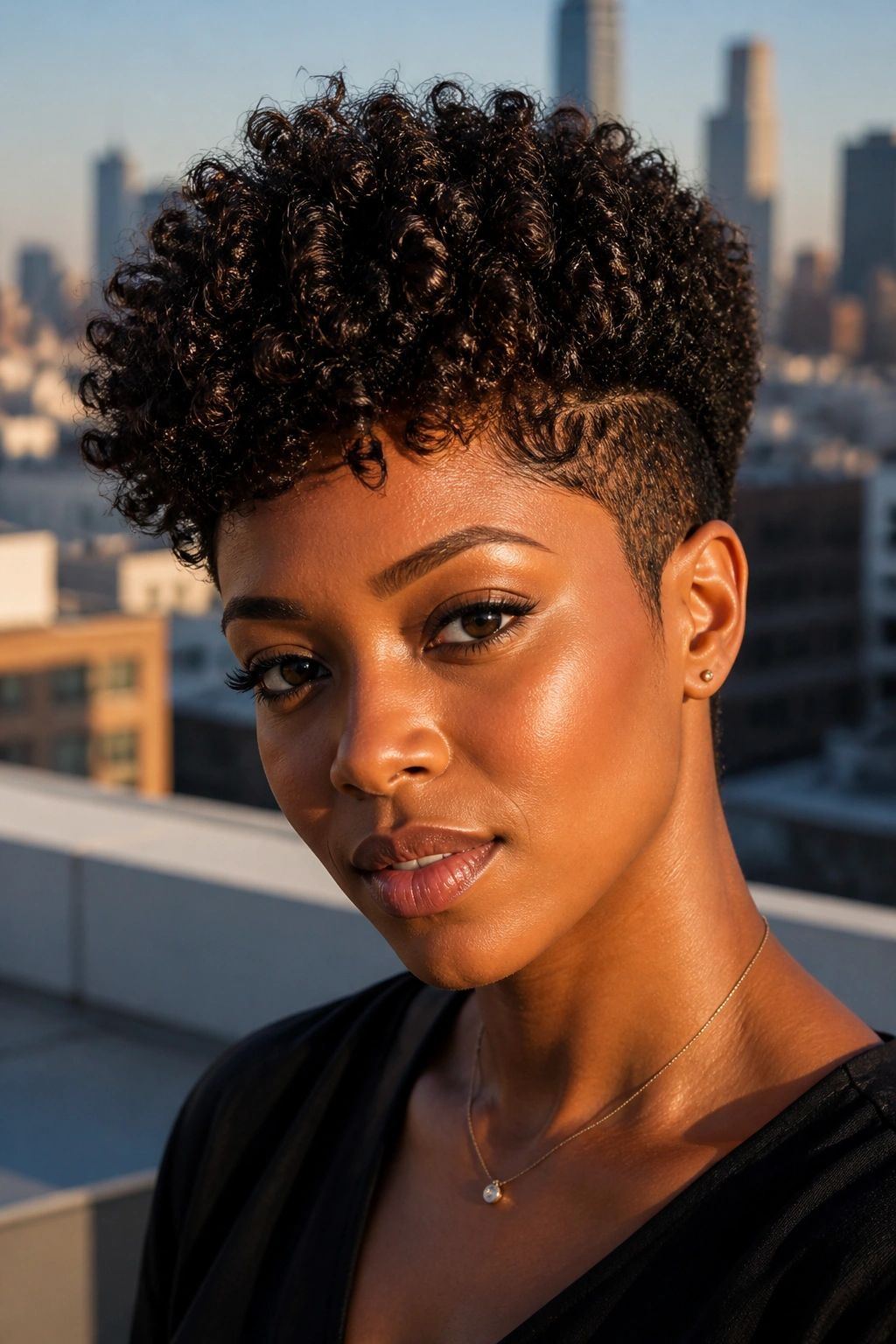
Some pixies are built to be small. This one isn’t. A high-volume curly pixie leans into density at the crown and around the top sides, creating a fuller silhouette that still stays short. On coily hair, that volume can look rich rather than messy if the perimeter is shaped well.
The key is to keep the bottom tidy. Shorter sides and a defined neckline anchor the height on top. Without that anchor, the cut can feel like a puffball sitting on the head. With it, the style looks balanced and strong.
A lot of Black women with dense coils choose this cut because it gives them room to show texture without going through a long styling session every morning. A quick mist of water, a little leave-in, and a pick at the roots is often enough.
There’s one catch. If you have a very narrow face, too much top height can overpower your features. In that case, ask for height only at the crown, not all the way across the front.
11. Bantu-Knot Set Pixie
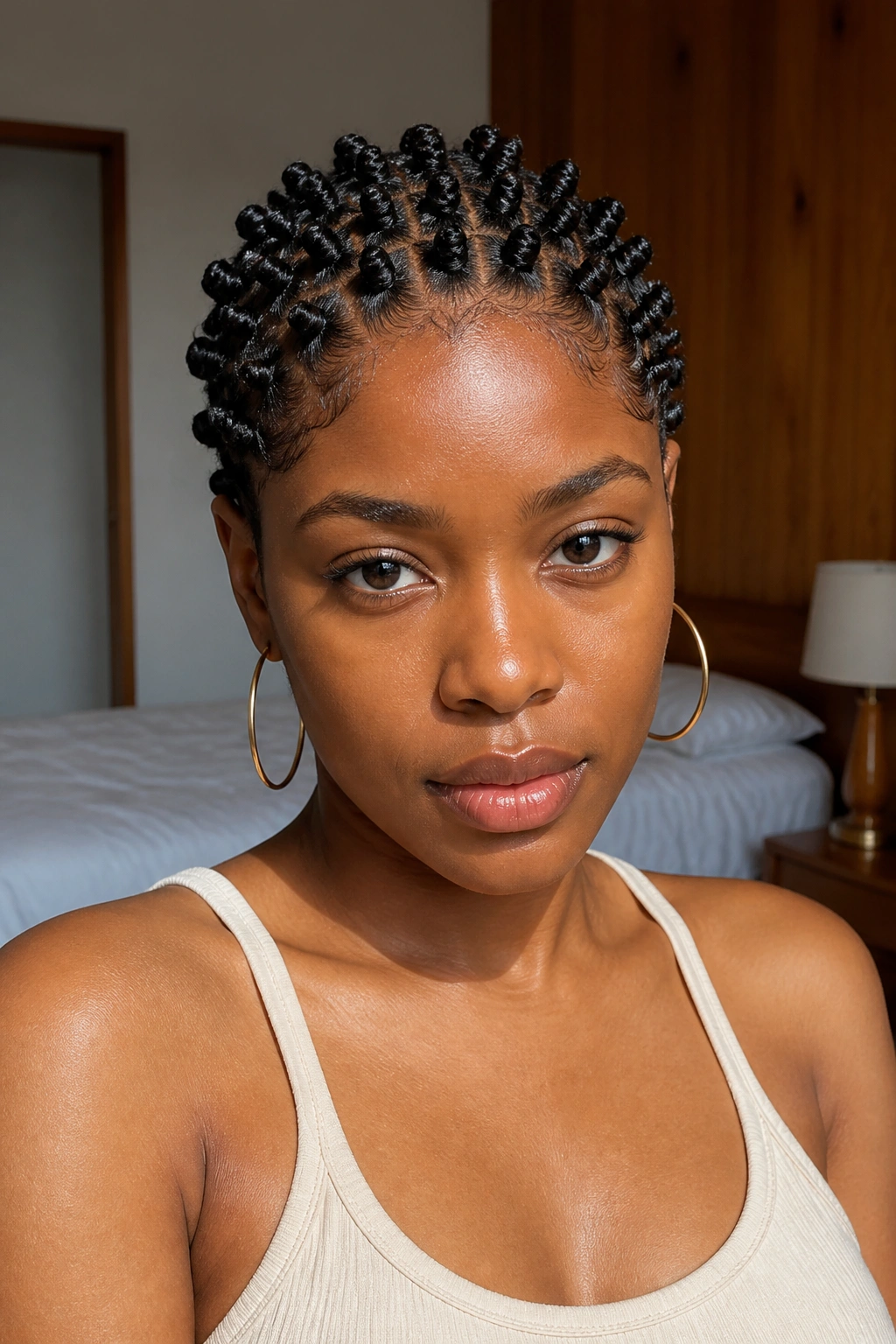
A Bantu-knot set on a pixie gives you tiny, springy curls with a clean pattern and a little bounce. It’s one of those styles that looks far more detailed than the effort on paper suggests, though it does ask for patience on setting day.
The process is straightforward. Part the hair into small squares or triangles, twist each section into a mini knot, let it dry completely, then release it with a little oil on your fingertips. The result is a pixie with precise texture and strong separation between curls.
This is a smart option if your natural curl pattern gets fuzzy before it gets defined. The set creates a shape that holds for a few days, especially if you sleep in a satin bonnet or with a silk scarf tied snug at the hairline.
I like this cut for people who want a short style that still feels playful. It’s neat, but not stiff. And because the curls are small, the overall look stays neat even as it grows out a bit.
12. Layered Shag Pixie
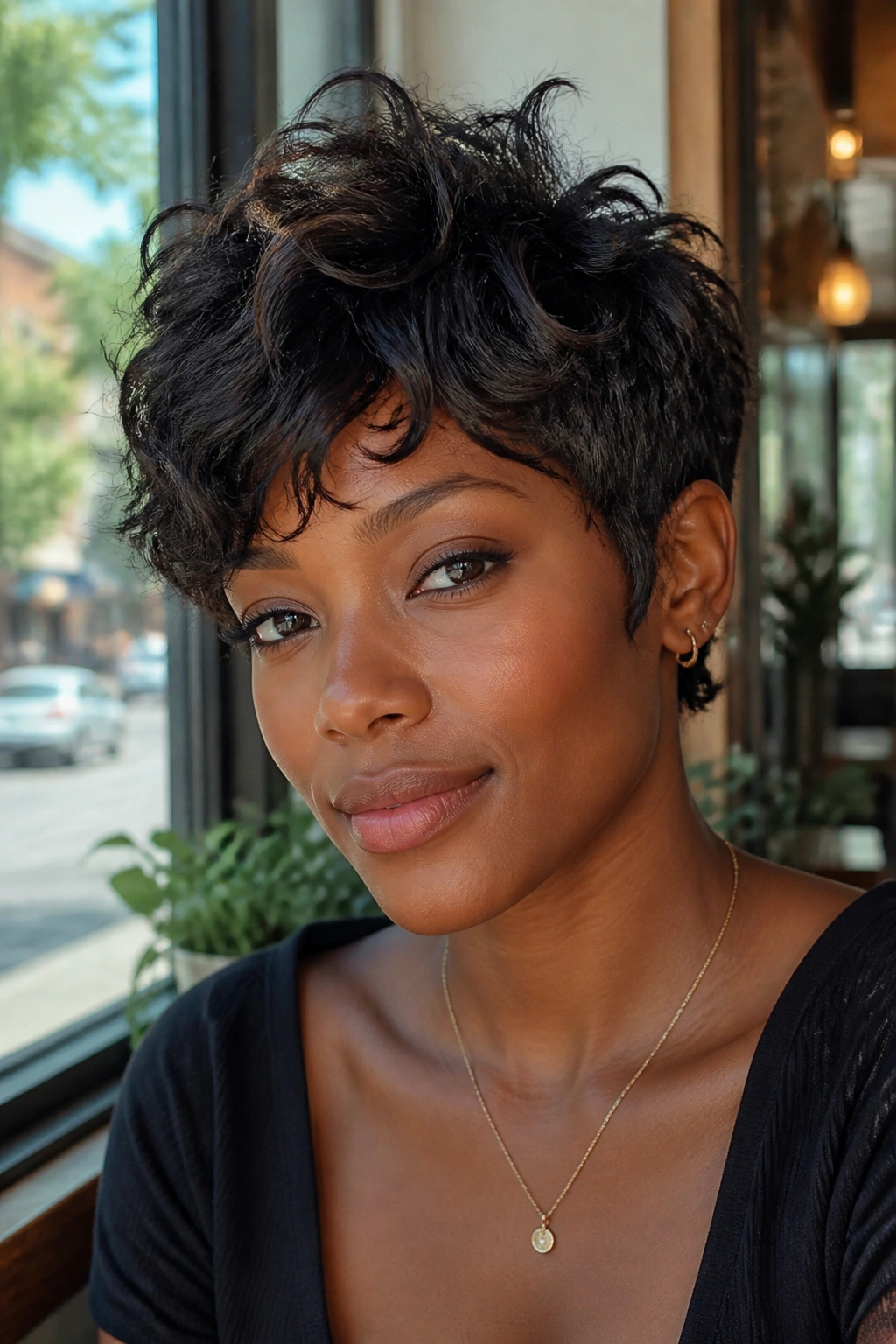
A layered shag pixie is the casual cousin in the group. It has shorter pieces around the crown and longer wisps around the top and sides, which gives it a lived-in texture instead of a crisp outline. Unlike a blunt pixie, this one moves.
That movement matters if your curls are looser or if they tend to stack on top of each other. Layers help stop the cut from forming one big block. You get better separation, a little more swing, and a shape that looks good even when it’s not freshly styled.
This is also one of the better options for women who do not want to fight their hair every morning. Shake it out, add a touch of curl cream, maybe pinch a few front pieces with your fingers, and leave. The haircut does a fair amount of the work itself.
Still, the layers need a careful hand. Too many short chops and the top gets frayed. Too few and the shag part disappears. Ask for soft layers, not a thinned-out mess.
13. Copper or Honey-Highlighted Curly Pixie
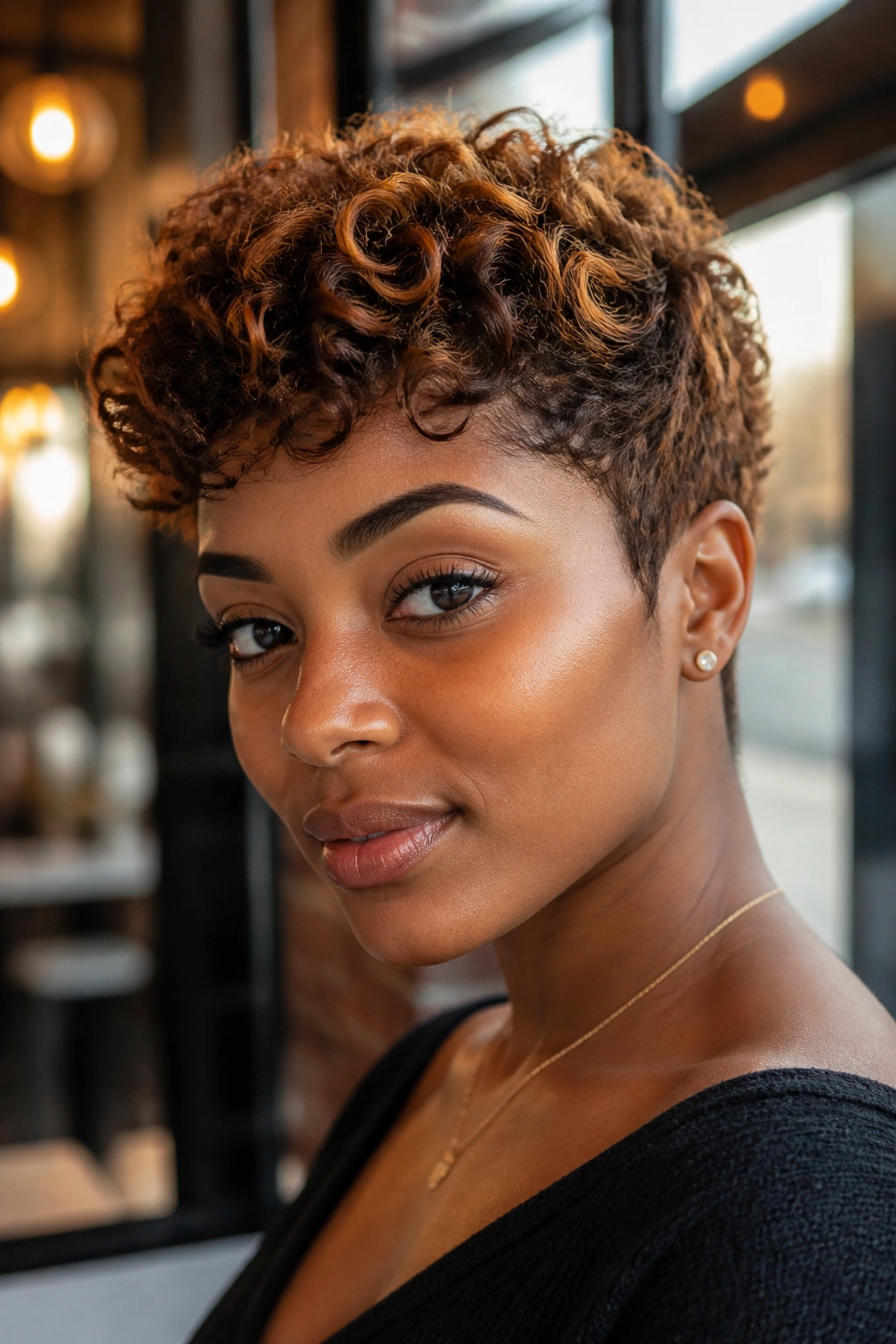
Color changes a pixie fast. Copper, honey, caramel, and warm auburn tones can make curls look brighter because the light catches each coil differently, especially on short hair where every piece sits close to the face. The cut itself may be simple, but the color gives it another layer.
The biggest win here is dimension. On Black women, warm highlights can show off the curl pattern without needing a dramatic cut line. A few painted pieces around the crown and fringe are often enough. You do not need a head full of stripes. Please don’t.
This kind of pixie works best when the color placement follows the haircut. Put the lightest pieces where the hair lifts naturally — usually the top front and the outer curve of the crown. That keeps the style from looking flat in photos or under indoor light.
Maintenance matters, though. Colored short hair can dry out faster, so a richer conditioner and a heat protectant are not optional. The cut may be short, but the hair still needs respect.
14. Pixie Cut With Micro Bangs
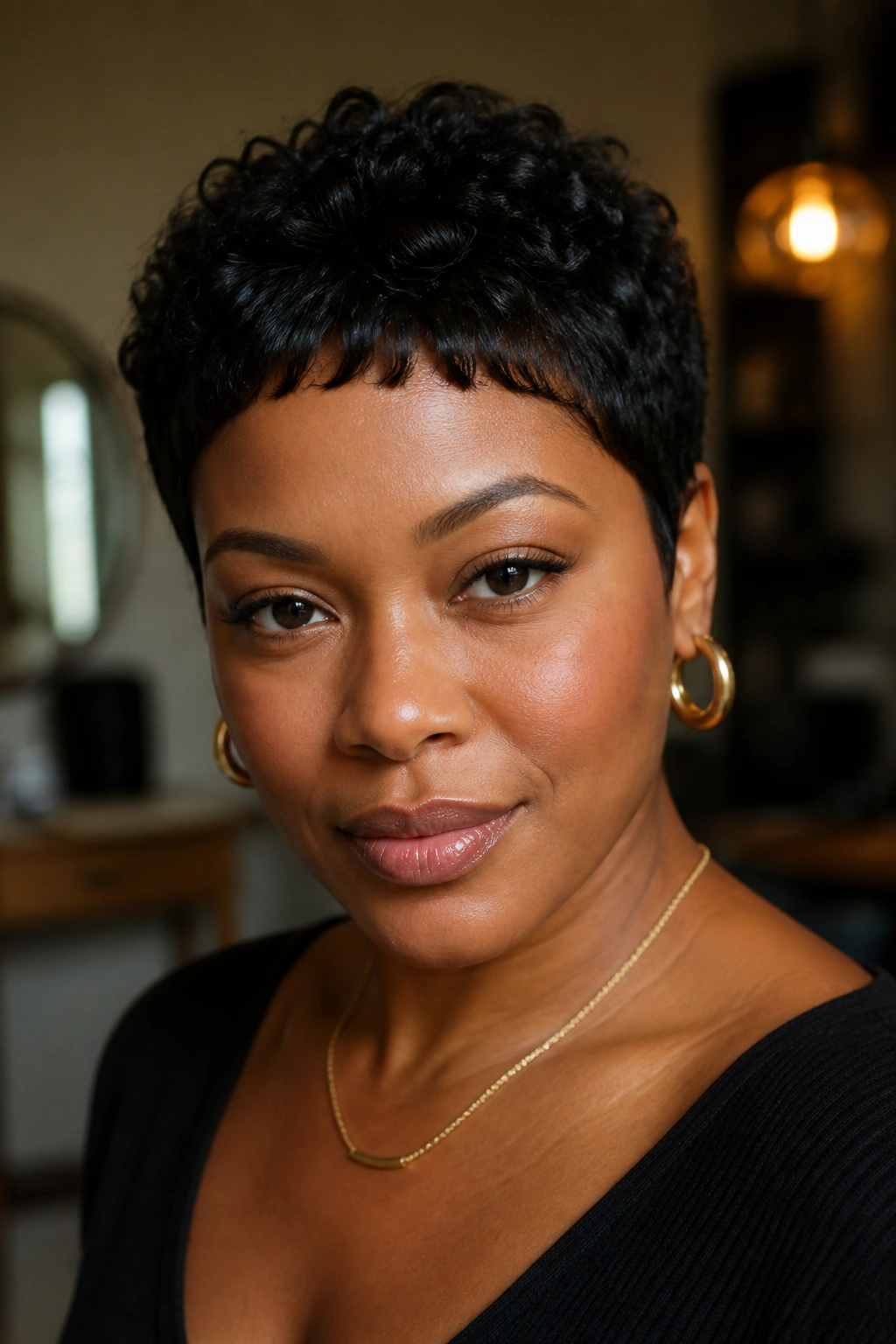
Micro bangs on curly hair are not for the timid. They sit short across the forehead, sometimes just above the brows, and they change the whole mood of a pixie from soft to sharp in one move. On Black women, the contrast between the close crop and the curl texture can look especially strong.
The bangs should be cut with the shrinkage in mind. Wet curly bangs can spring up far more than expected, and that can turn a smart cut into an accidental baby fringe. Leave enough length for them to settle after drying. A good stylist will cut them a little longer than they first seem to need.
This style looks best when the rest of the pixie stays controlled. If the top gets too big, the bangs disappear. If the sides get too long, the whole face can feel crowded. Clean sides, tidy bangs, textured top. That’s the balance.
It’s a bold look, no question, but it also photographs well in a face-framing way that softer bangs sometimes don’t. The line is the point.
15. Deep Side Part Curly Pixie
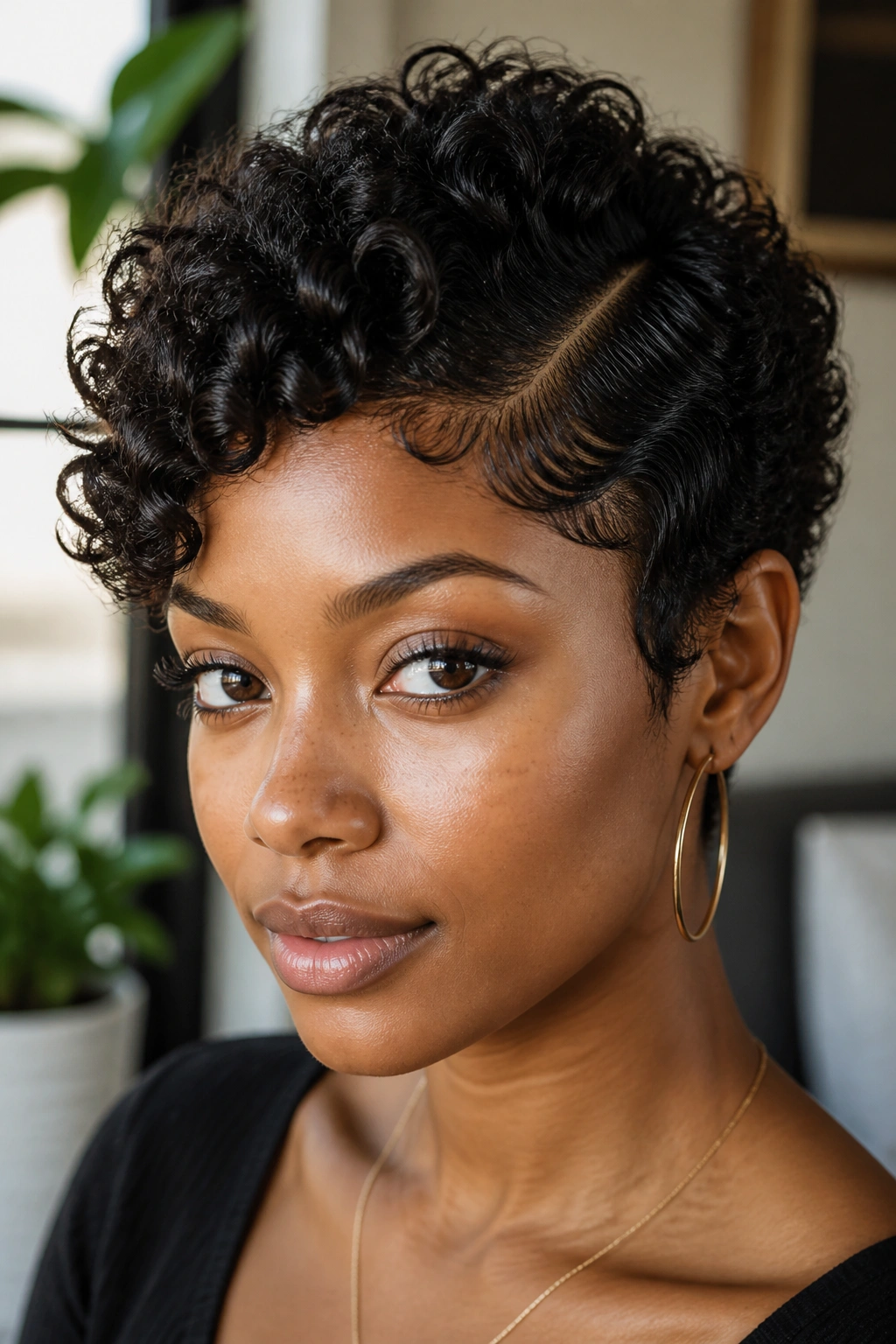
Why does a deep side part change a pixie so much? Because it gives the curls a place to fall. Instead of sitting evenly across the head, the hair shifts to one side, which creates lift at the root and a longer line across the face.
What makes it work
A deep part needs enough length on top to stay put. If the top is too short, the part collapses by noon. If it’s long enough, you get a clean sweep that can soften the forehead or draw attention to the eyes.
I especially like this on people with a strong center growth pattern, because the part interrupts that pattern and makes the style feel less rigid. A little mousse at the root and a fine-tooth comb through the part area can help train the hair without making it stiff.
The look can be dressed up or left casual. That’s the real benefit. You can wear it with a defined curl cream finish for dinner, then let it air dry a bit messier on a normal day and it still reads as the same haircut.
16. Air-Dried Natural Curly Pixie
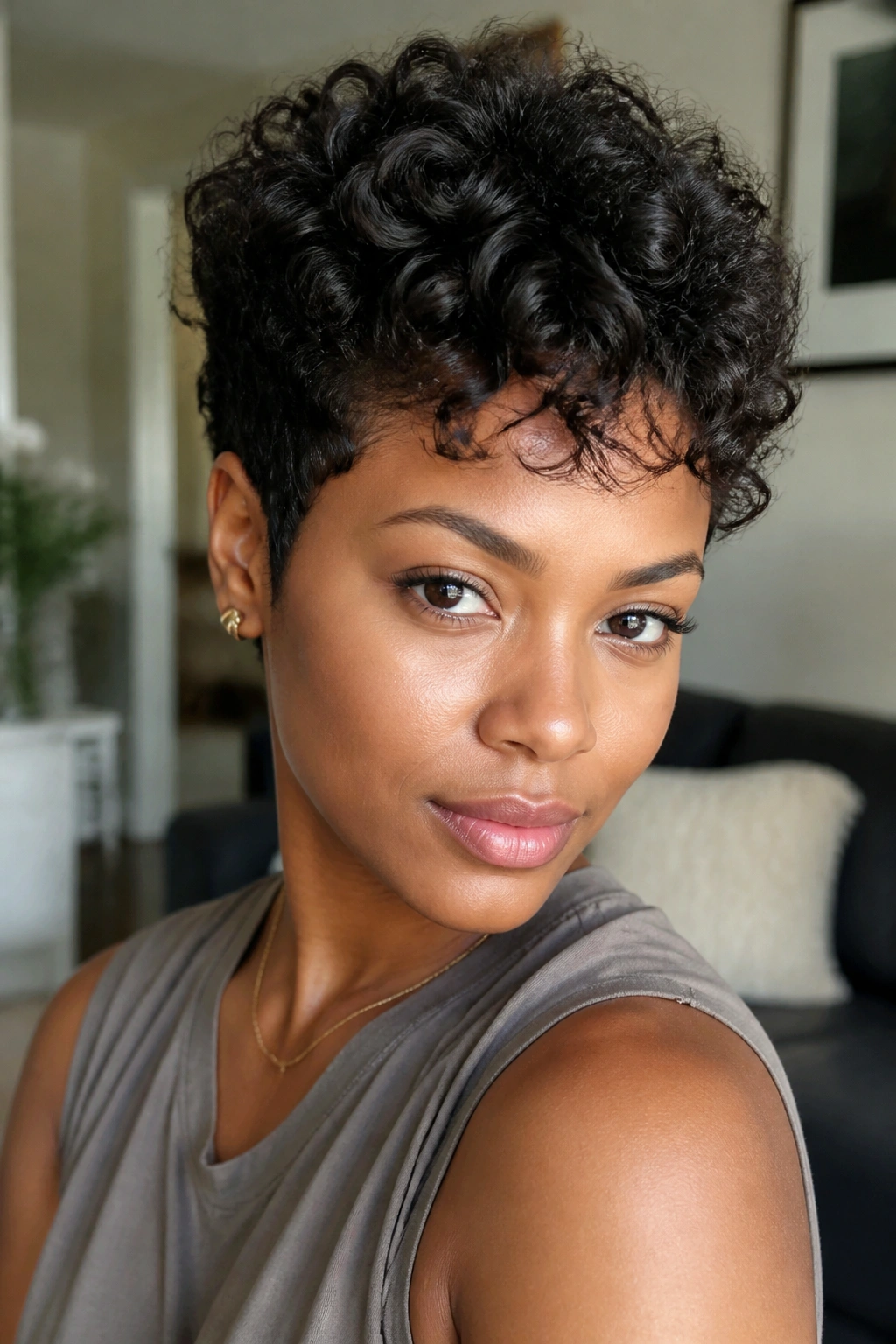
The air-dried pixie is for people who want the haircut to do the heavy lifting. No diffuser. No round brush. No long styling ritual. Just clean curls, a light product layer, and enough patience for the hair to dry in its own shape.
This style works best when the cut is shaped carefully from the start. The top should be cut to follow your natural curl pattern, not fight it. The sides can be tapered or softly clipped, but the crown needs enough room to dry without flattening into a helmet shape.
A light leave-in, a curl milk, and maybe a few drops of oil on the ends are usually enough. Heavy products can stretch the drying time and make the hair sit dull. That’s the opposite of what you want in a short cut, where every strand shows.
There’s a quiet confidence to this look. It doesn’t ask for much, and that can be its own kind of style.
17. Defined Rod-Set Pixie
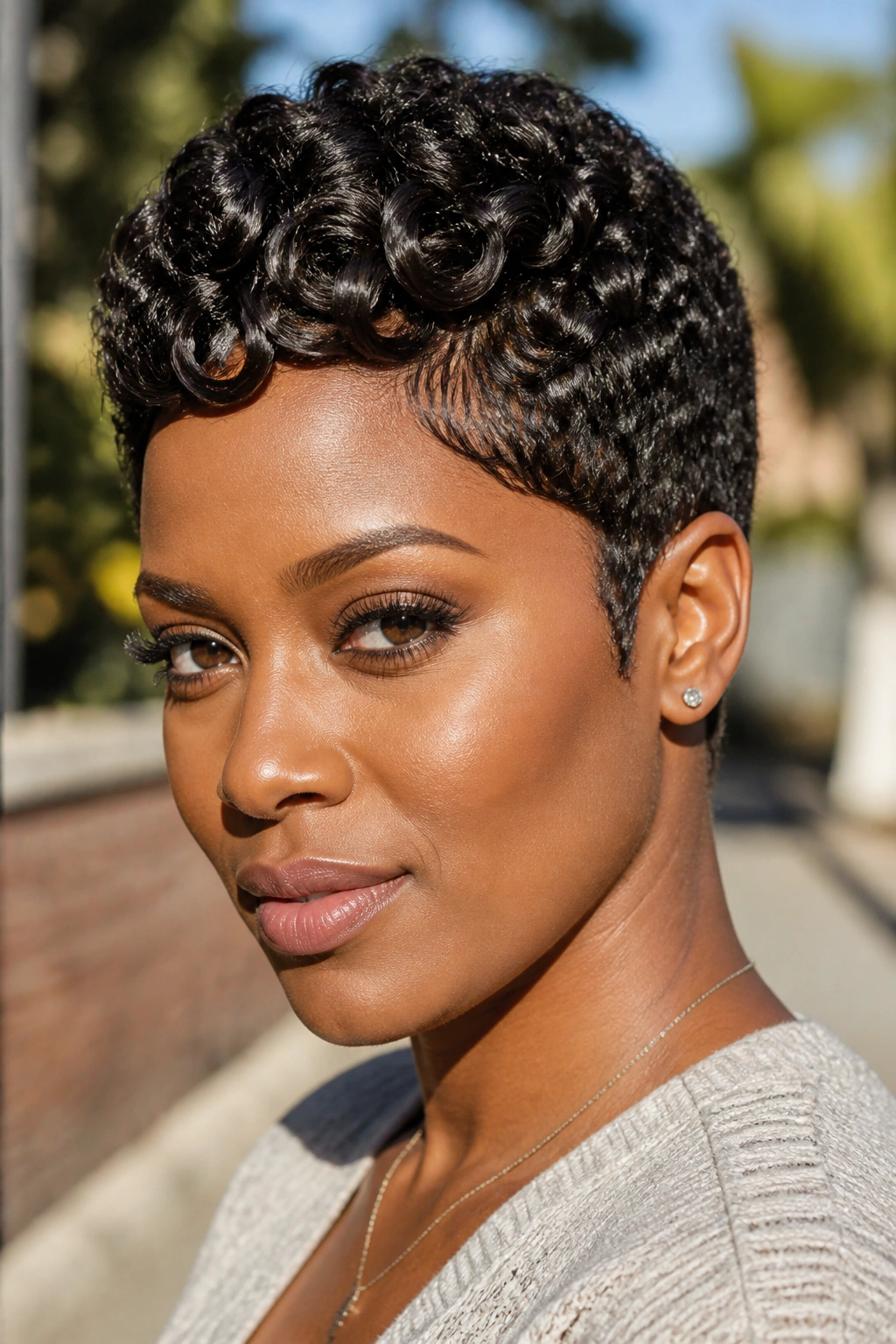
Rod sets are old-school in the best way. On a pixie, small flexi rods or perm rods can create tight, springy curls that hold shape longer than a quick scrunch-and-go. The result is neat, rounded definition with a little lift at the ends.
Rod size matters
Smaller rods create tighter curls and more movement. Larger rods make softer bends, but on very short hair they can slide around and leave awkward ends. For most pixie lengths, a small to medium rod gives the cleanest finish.
The set looks especially good when the hair is cut with a bit of layering. That way the curls stack without clumping into one block. You get shape at the temple, shape at the crown, and a cleaner outline around the ears.
It’s a good style for women who don’t mind setting the hair at night for a look that lasts several days. Satin bonnet, light oil, and gentle separation in the morning — that’s the routine. No drama, just structure.
18. Low-Maintenance Wash-and-Go Pixie
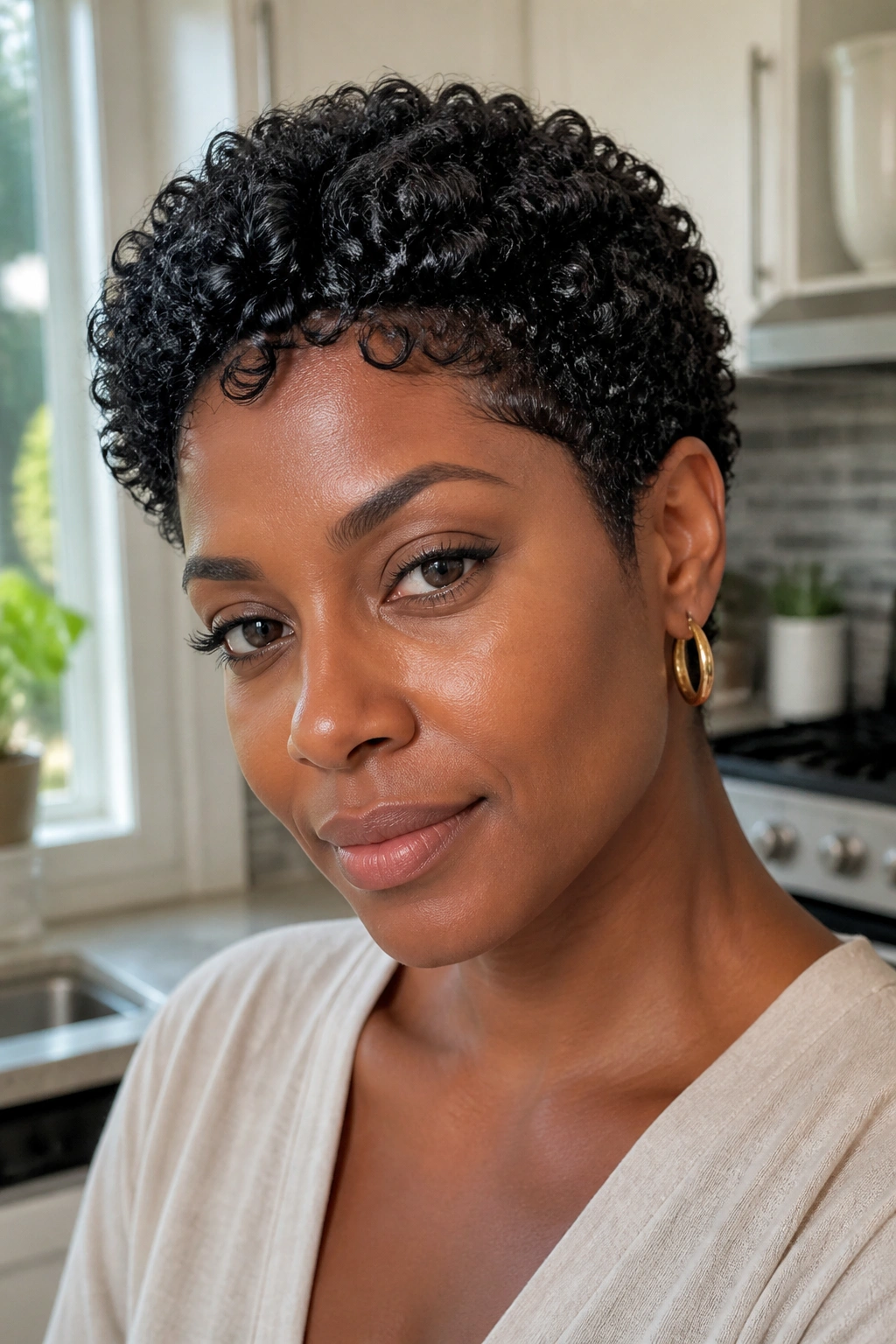
If you want the least fussy option, this is the one I’d point to first. A wash-and-go pixie works when the cut is already shaped to follow your curls, so all you need is water, a little leave-in, and a product that gives hold without weighing the hair down.
The appeal is obvious: less styling, less heat, less handling. But the real reason it works is the haircut itself. The nape stays neat, the sides stay controlled, and the top has enough length to curl up on its own instead of lying flat against the scalp. If the cut is off, this style falls apart fast. If it’s right, you can get dressed and leave the house without turning your bathroom into a full salon.
I’d recommend this for anyone who wants short hair but not constant upkeep. It also grows out well, which matters more than people admit. A pixie that still looks intentional at week four saves a lot of resentment.
For the finish, keep it simple: mist with water, smooth in product with your hands, scrunch once, and leave it alone. The hair should look soft, defined, and a little touched by the day — not overworked. That’s usually the sweet spot.
Final Thoughts
A curly pixie cut on Black women works best when the cut respects the curl pattern instead of flattening it into something else. Shape, taper, fringe, and crown length all matter. A little adjustment in the wrong place changes the whole read.
The smartest move is to choose the version that fits how you actually wear your hair. If you like polish, go for defined coils or a rod set. If you want ease, the air-dried or wash-and-go version makes more sense. If you want edge, the faux hawk or shaved nape gives you that in one clean move.
Short hair doesn’t mean small style. It means the details show faster.
