



The right bob can make hair look expensive in a way that is almost rude. The wrong one can make the same hair sit there like a helmet.
That gap usually has less to do with bravery and more to do with shape: where the weight lands, how blunt the ends are, how much the front drapes, and whether the cut fights your natural texture. A chin-length blunt bob and a collarbone lob can both feel fresh, but they do very different jobs. One gives you clean lines. The other gives you room to live a little.
Length matters, sure. So does density. A bob that flatters fine hair can swamp thick hair, and a cut that looks effortless on straight strands can turn needy on waves or curls if the balance is off. That is why bob and lob haircuts stay interesting. They are simple shapes with a lot of hidden decisions underneath.
The useful part: there are 22 ways to make the silhouette feel new again without getting gimmicky. Some are sharp and polished. Some are softer and more forgiving. A few are the sort of cuts you choose because you want your hair to do more work with less fuss.
1. Chin-Length Blunt Bob
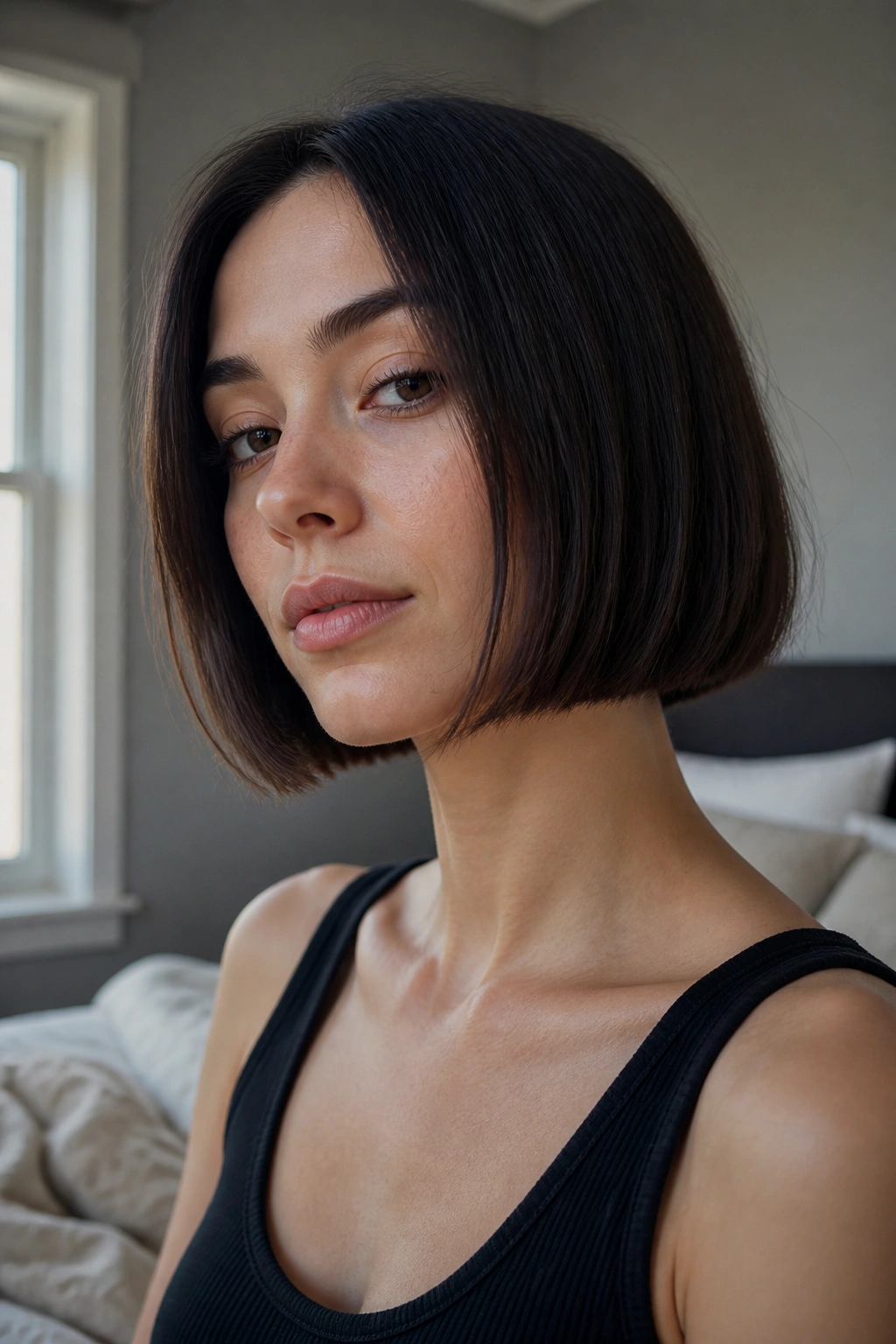
A chin-length blunt bob has a little attitude built into it. The line sits right where the jaw starts to matter, which means the cut frames the face instead of drifting past it.
Why the blunt edge works
The blunt finish keeps the hair looking dense, even when the ends are fine. That matters more than people think. A wispy bottom on a short bob can make the whole shape look tired, while a clean perimeter gives the haircut a kind of snap that reads polished without feeling fussy.
This is one of the easiest modern bob haircuts to style if you like hair that behaves. A quick blow-dry with a nozzle and a paddle brush is usually enough. If you want a sleeker finish, run a flat iron through the last inch only. That keeps the line crisp but avoids the flat, overdone look that can happen when every strand gets ironed to death.
- Best for fine to medium hair
- Sits well at the jaw or just below it
- Looks sharp with center or slight off-center parts
- Needs trims every 6 to 8 weeks to keep the line intact
Ask for a blunt perimeter, not stacked layers. That one request changes the whole haircut.
2. French Bob With a Tiny Fringe

The French bob wins because it looks like you did less, not because you did more. It usually lands between the cheekbone and the jaw, and the fringe is short enough to matter but not so short that it starts running the show.
What makes this cut feel alive is the looseness around the face. The ends are often a touch softer than a classic blunt bob, and the fringe sits slightly irregular, which keeps the look from becoming stiff. It is a good cut for straight to wavy textures, especially if your hair already bends a little when it dries.
I like this one with a light air-dry cream and a rough blow-dry, not a careful blowout. You want a little movement. Not chaos. Just enough bend that the haircut feels like it happened naturally, even though it was absolutely chosen on purpose.
The tiny fringe also does a nice job of shifting attention upward. If you have strong brows, good cheekbones, or a face that gets lost behind longer hair, this is an easy way to let the features do some of the work.
3. Italian Bob With Soft Ends

Why do Italian bobs feel expensive even when the cut itself is not complicated? Because they keep the body through the middle and the softness at the edge.
This version is usually a touch longer than a French bob, often grazing the jaw or floating just below it. The ends are beveled rather than chopped hard, which gives them that plush, swingy finish people love. On medium to thick hair, that soft edge helps the shape move instead of sitting in one heavy block.
How to style it
A medium round brush is the easiest tool here. Aim the dryer downward, then bend the ends under just enough to keep the line from turning boxy. You are not building curl. You are building a curve.
This cut likes a side part or a slightly off-center part because it gives the silhouette some lift. It also works well when you do not want to spend 20 minutes making your hair obey. A little smoothing cream, a few passes with the brush, and you are done. If your hair is naturally straight, that is enough. If it waves, let some of the movement stay. That is the point.
4. A-Line Bob That Tucks in at the Nape

If the back of your bob keeps puffing out, this is the fix. An A-line shape keeps the nape shorter and lets the front fall a little longer, which creates a clean diagonal instead of a blunt wall.
The beauty of this cut is the way it quietly sharpens the neck and jaw. The shorter back clears visual bulk, while the longer front gives the face some length. On thick hair, that balance can feel like a relief. On fine hair, it adds structure without needing a lot of styling product.
A few things to ask for
- Keep the nape snug but not shaved tight
- Let the front sit 1 to 2 inches longer than the back
- Use diagonal-forward sections so the line flows, not steps
- Avoid too much layering at the crown unless you need lift
This is one of those haircuts that looks best when the edge is clean. If the line starts to fuzz out, the whole shape loses its point. A quick flat wrap blow-dry helps a lot, and a small amount of serum on the ends keeps the diagonal looking intentional instead of puffy.
5. Soft Layered Bob for Thick Hair

A thick bob needs subtraction, but not the kind that leaves holes in the shape. The best soft layered version removes weight from the inside, keeps the perimeter solid, and lets the hair move without ballooning out.
That distinction matters. A lot of people ask for layers when what they really want is less bulk. Those are not the same thing. Heavy interior weight can make thick hair sit like a shelf, especially at shoulder length. Soft layers fix that by opening up the middle of the cut while keeping enough line around the outside so it still reads as a bob.
This is a forgiving haircut on busy days because it does not need perfection. A rough dry with a diffuser or a medium brush can be enough, depending on your texture. If your hair is straight, a bend at the ends keeps the layers from looking chopped. If your hair is wavy, a little cream and a loose twist while drying can keep the motion from spreading out too far.
The trick is not to thin it to death. Thinned-out thick hair often looks fuzzy after a week or two. Soft layers, done well, keep the shape breathing.
6. Micro Bob Grazing the Jaw

Unlike a shoulder-length cut, a micro bob puts the face in charge. There is nowhere to hide, which is exactly why it looks so crisp when it is cut well.
The length usually sits at the jaw or just above it, and the perimeter is kept close. That gives the style a compact, polished feel. It is a strong choice if you have a defined jawline, like wearing statement earrings, or want your hair to look sharp with almost no extra styling. It also happens to be excellent for fine hair, because the shorter length creates the illusion of density.
But it is not the haircut to choose if you want much ponytail flexibility. You will also need trims on a tighter schedule, because even half an inch of growth changes the balance fast. That is not a flaw. It is part of the deal.
I think this cut looks best when the finish stays simple: clean roots, a slight bend at the ends, no overworked texture. Let the shape do the talking. It usually says enough.
7. Curly Bob Shaped to the Curl Pattern

A curly bob only works when the curl pattern gets a say. If the cut ignores shrinkage, the result is all wrong at eye level and even worse once it dries.
The best version is often cut dry, or at least partly dry, so the stylist can see where each curl lands. That matters because curls do not behave like straight hair. One side may spring higher, one section may clump tighter, and the perimeter needs to match the actual curl behavior rather than some imaginary smooth line.
How to shape it
Ask for a bob that follows the densest curl line, usually around the chin or slightly below it. Keep the internal layers soft so the shape does not puff out like a triangle. A curl cream or light gel can help hold the pattern without making the ends crunchy, and a diffuser on low heat keeps the root lift from collapsing.
A curly bob looks best when it is not over-managed. Finger-coiling every section can become a full-time job. Better to define the front pieces, let the back move on its own, and refresh only the parts that flatten overnight. That usually gets you a better shape with less work.
8. Wavy Bob With Broken-Up Ends
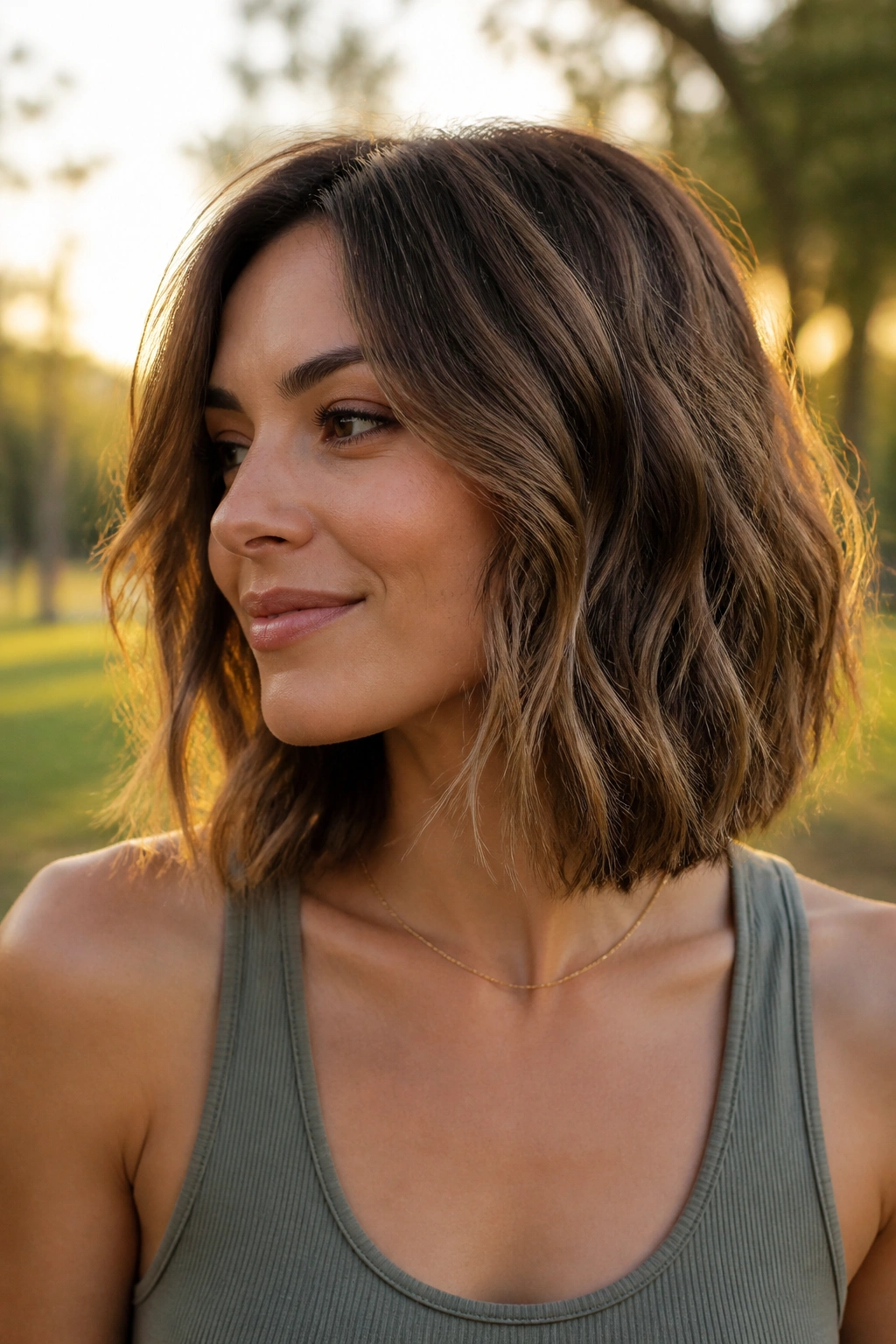
A wavy bob looks best when it stops trying to be perfect. The whole point is that it has movement, pauses, little gaps, and ends that do not all land in the same place.
Broken-up ends keep the cut from feeling too neat. Instead of a single hard line, you get small shifts in length that let the hair fall in loose bends. That works especially well on medium-density hair that already wants to wave. A flat, blunt finish can make that texture look heavy. The broken-up version gives it room.
A mousse at the roots and a light cream through the mids is usually enough. If you use a curling wand, leave the last inch out and switch directions between sections so the waves do not clump into one predictable pattern. Then shake the hair out with your fingers. Do not brush it. Brushing turns a good wave into a puffy compromise.
This cut is the one I point people toward when they want something casual that still looks chosen. It has shape, but it does not act precious.
9. Asymmetrical Bob With One Longer Side

If one side of your hair always falls flatter, an asymmetrical bob can turn that quirk into the point. Instead of pretending both sides need to match in a perfect mirror, the cut leans into the difference.
The imbalance can be subtle or obvious. I prefer subtle for most people — maybe a half-inch to an inch longer on one side. That is enough to create movement without making the cut look like a stunt. The longer side draws the eye forward, while the shorter side keeps the neck visible and the shape clean.
What to watch for
- Ask where the longer side should sit when tucked behind the ear
- Keep the shortest side close enough to show the angle
- Style with a side part to emphasize the diagonal
- Use a flat iron only if the line looks uneven, not on every piece
This haircut works especially well on straight or lightly wavy hair. Very curly hair can wear it too, but the asymmetry needs to be planned around shrinkage. Otherwise the difference disappears after drying, and the whole reason for the cut gets lost.
10. Box Bob With a Square Silhouette
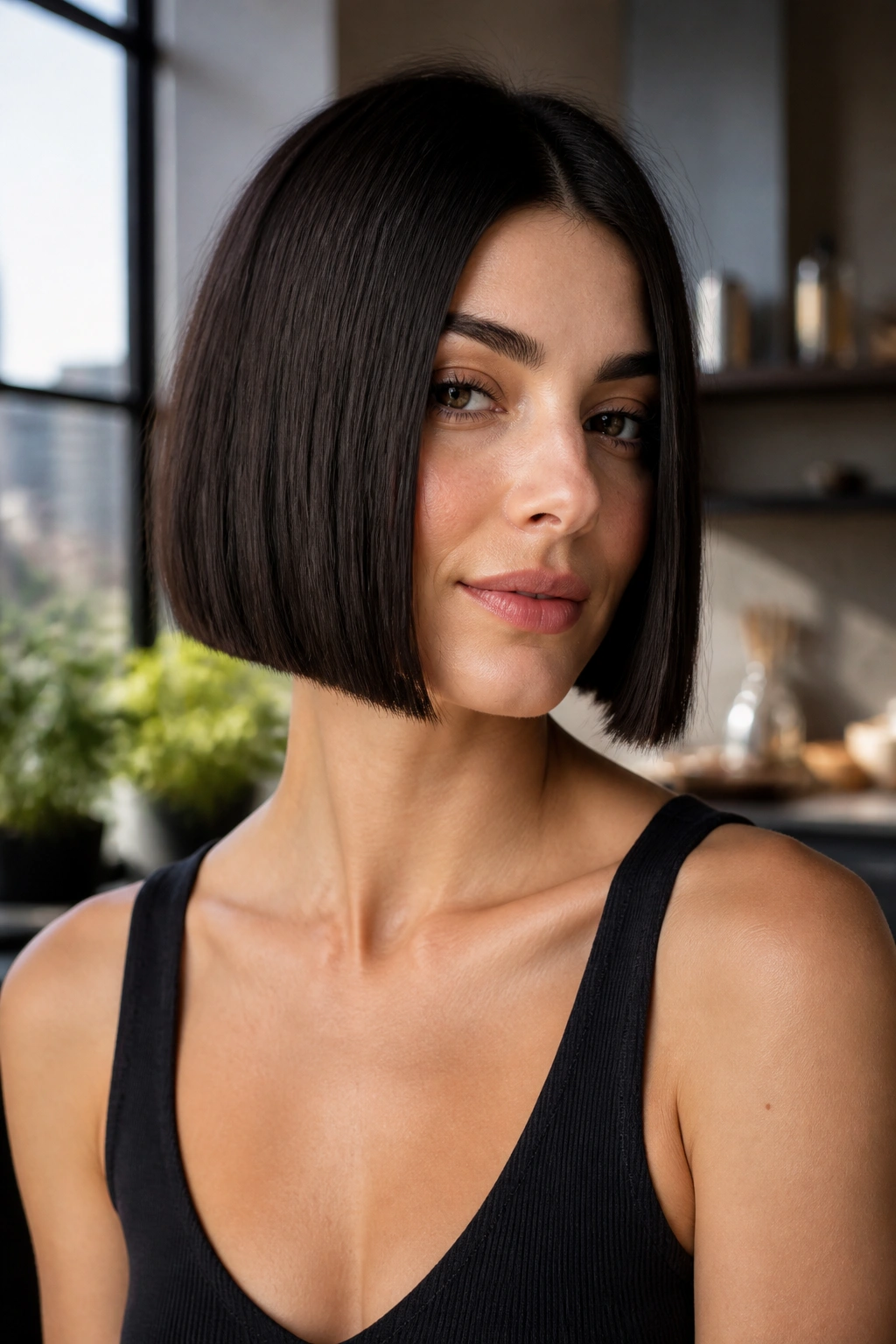
The box bob is blunt, square, and not in a shy way. The sides are kept wide enough to show the shape, and the bottom edge lands with a clean, almost architectural line.
That square silhouette can look very modern on straight hair because it refuses to soften itself into nothing. It holds the width at the cheek and jaw, which is useful if you want the haircut to have presence. On someone with strong features, the shape can look almost tailored. On someone with softer features, it creates a nice contrast.
A box bob needs maintenance. The line is the whole point, and a sloppy grow-out weakens it fast. I would not choose this cut if you want to disappear into your hair. I would choose it if you want the haircut to have a shape you can spot across a room.
Styling is simple: blow-dry smooth, keep the ends flat, and avoid over-layering. A touch of shine spray at the finish is enough. Too much texture and the square edge starts to blur.
11. Collarbone Lob With Clean Ends
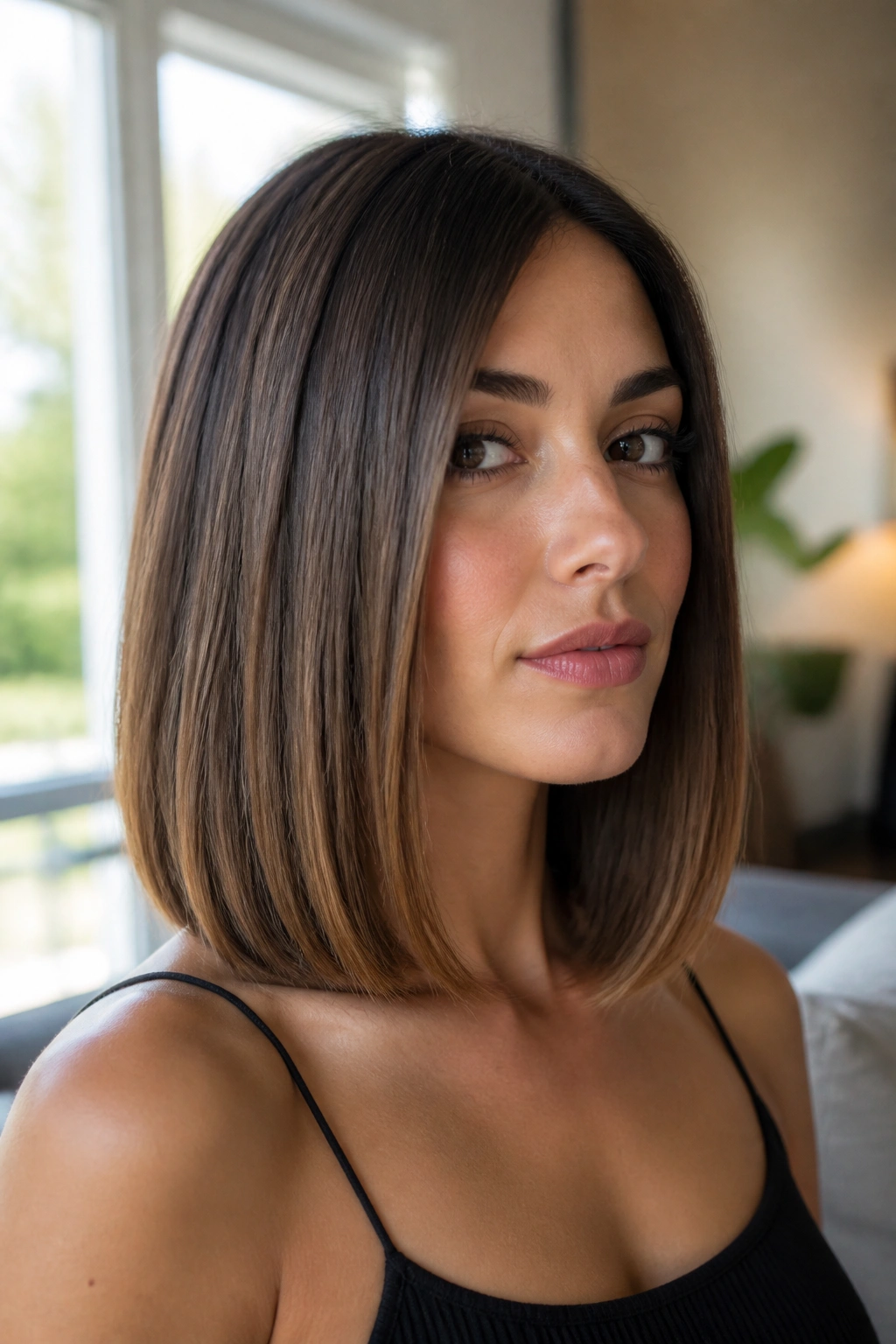
A collarbone lob is the haircut I recommend when someone wants the bob feeling without the constant upkeep. It still has the clean line and the fresh shape, but it gives you enough length to tuck it behind the ear, tie it back, or let it brush the shoulders.
That extra inch or two matters more than people expect. It softens the grow-out, which means you do not get the awkward middle stage as quickly. It also works for more hair types than a shorter bob because the weight sits lower and the shape has room to move. If your hair is thick, this length can feel less fussy. If your hair is fine, blunt ends keep it from looking stringy.
The clean-end version is the one to ask for if you like a polished outline. Keep the layering minimal and let the perimeter do the work. A center part gives it a clean, calm line. A soft side part makes it feel more casual.
This is also one of the easiest bob and lob haircuts to live with in real life. It looks intentional when you style it, and it still makes sense on the days you do almost nothing.
12. Shaggy Bob With Piecey Layers

Why does a shaggy bob read relaxed instead of messy? Because the layers are doing real work. They break up the bulk, let the hair move in smaller sections, and keep the outline from sitting like one heavy block.
The best shaggy version is not a full-on mullet and it is not a blunt cut with random ends hacked out of it. It lives in the middle. You want piecey layers around the face, a little softness at the crown, and enough length in the back that the shape still says bob. A razor can help, but a careful point-cut with scissors can do the job too if the stylist knows where to stop.
How to keep it from looking sloppy
Use a light styling cream, not a stiff paste. Let the ends separate a little. If your hair is naturally straight, a few bends from a curling wand can stop the layers from collapsing. If your hair is wavy, a scrunch and diffuse routine usually does the trick.
This cut works best on hair that has some natural movement already. Flat, slippery hair can wear it, but it needs more product and more time. That is the tradeoff.
13. Rounded Bob With a Soft Curve
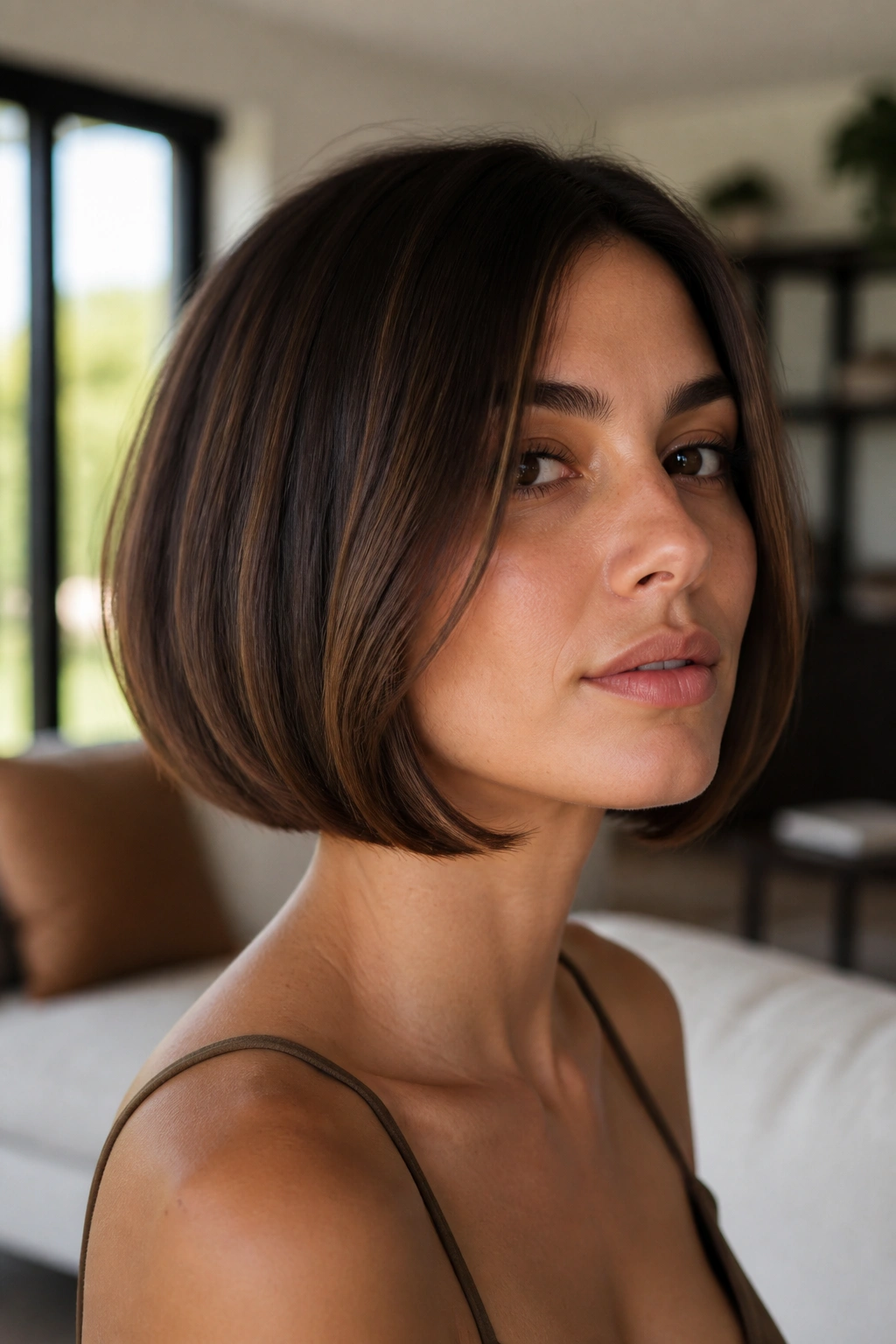
A rounded bob is for people who like shape more than edge. The cut curves inward slightly at the bottom, which makes the silhouette feel contained instead of boxy.
That curve can be flattering in a quiet way. It softens a strong jaw, adds body around the cheek area, and helps thicker hair settle into a neater shape. The key is balance. Too much roundness and it can look dated. Just enough, though, and it feels smooth and finished.
This is a good blow-dry haircut. A medium round brush, a directional dryer, and a little patience around the front pieces make a big difference. Aim the air down the shaft, wrap the ends under, and let the roots cool before you move on. Cooling matters. It helps the shape hold.
If your hair tends to puff outward, this cut can be a relief. If your hair is very curly, you may want a softer version so the curl pattern can break the curve naturally. Otherwise the rounding can fight the texture instead of helping it.
14. Sleek Glass Bob

When hair lies flat and fine, a glass bob can look startlingly crisp. The finish is smooth, reflective, and almost liquid-looking, but the shape underneath still matters just as much as the shine.
This cut depends on precision. The perimeter has to be even, the ends need to be clean, and the styling has to stay controlled. Blow-dry with a nozzle first so the cuticle lays down. Then run a flat iron through small sections, keeping the motion slow enough to smooth but not so slow that the hair turns limp. A pea-size amount of serum through the ends is plenty. Too much and the whole thing gets greasy fast.
A center part usually suits this style, though a slightly off-center part can make it feel less severe. The point is not to make your hair look hard. It is to make it look deliberate.
This is the cut I reach for when I want a bob that feels sharp under a blazer, but it still works with a T-shirt and bare face. The line does the heavy lifting.
15. Stacked Bob With Lift at the Crown

A stacked bob earns its keep in the back of the head. The layers are graduated so the nape sits tighter and the crown gets a little lift, which gives the haircut shape without making it look bulky.
The old-school version of this cut could get too wedge-like. The softer version is better. It keeps the curve in the back but leaves the top pieces long enough to move. That makes a big difference if you want volume without the dated, overbuilt feel that some stacked cuts can have.
Ask for this, not that
- Soft graduation at the back, not a hard shelf
- Crown lift that blends into the top layers
- A perimeter that stays clean around the jaw
- No bulky weight line at the occipital bone
This is a smart choice for fine hair because it builds body where the head needs it most. It also works for straight hair that tends to collapse at the back. The shape holds better than people expect, especially with a round-brush blow-dry and a bit of root spray.
16. Bob With Curtain Bangs

Curtain bangs can change a bob fast, but they do not belong with every face shape or styling habit. The reason they work is simple: they frame the face without demanding full blunt fringe energy.
The bangs split at the center, then slide away from the cheeks. That gives you movement around the eyes and cheekbones while keeping the bob itself fairly clean. If you are growing out bangs, this is also one of the nicest landing spots because the fringe blends into the sides instead of just hanging there awkwardly.
The cut works especially well when the bob lands at the jaw or just below it. Shorter bobs can make curtain bangs feel chopped off; longer lobs let them fall with more ease. I also like this look on medium-density hair because the bangs add shape without taking too much weight away from the rest of the cut.
Blow the fringe forward first, then sweep it back with a round brush. That little forward-to-back motion gives the bangs the bend they need.
17. Bob With a Deep Side Part
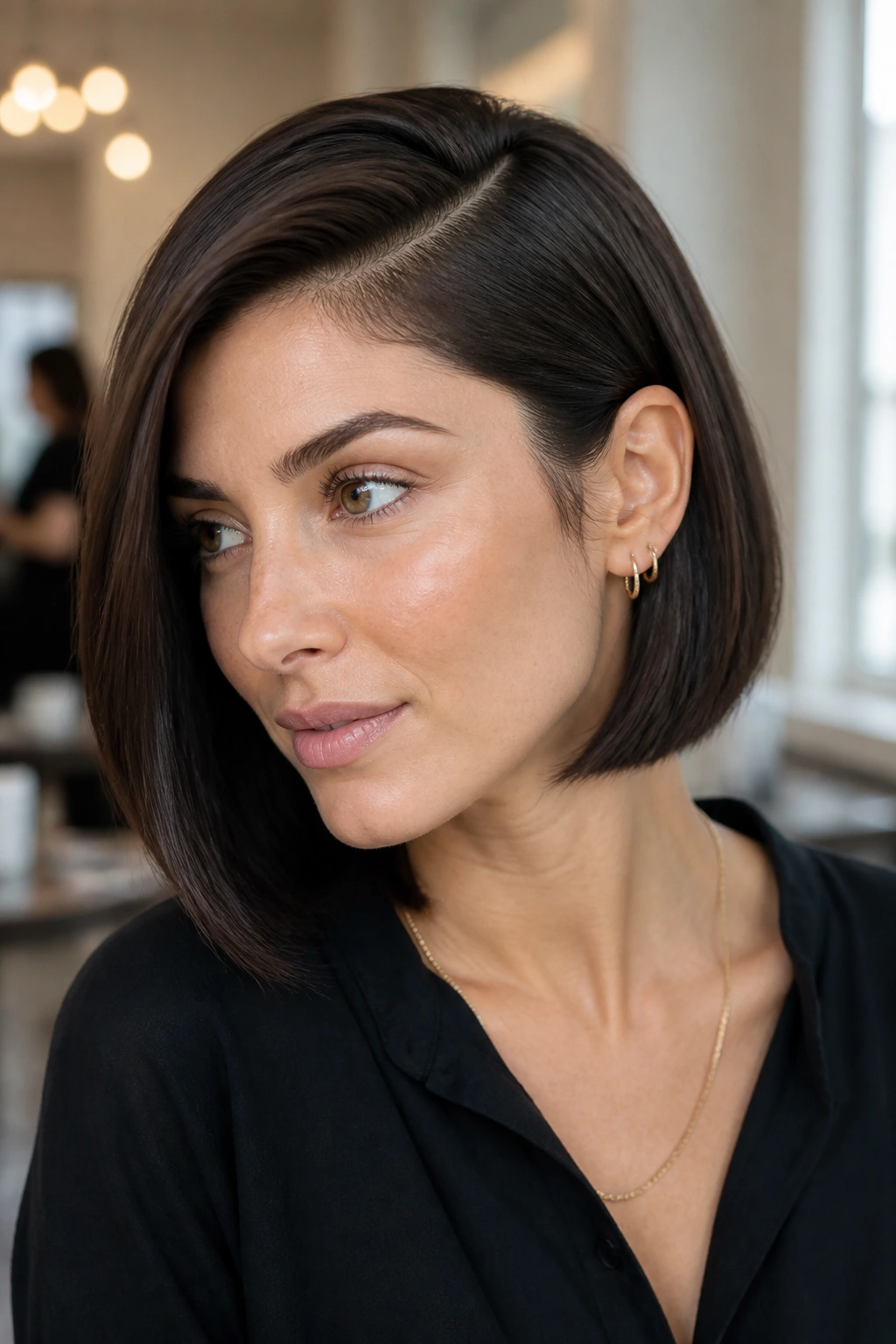
Can a deep side part make a bob feel new without touching the cut itself? Absolutely. Sometimes the fastest way to change a bob is to change where it lives on your head.
A deep side part lifts the roots on one side and lets the opposite side fall with more length through the face. That creates instant movement and a little drama, especially on blunt or one-length bobs that might otherwise feel too neat. It is a good trick if your hair feels flat at the crown or if you want one side to frame the cheek more than the other.
How to place it
- Start the part above the highest point of your brow arch
- Rough-dry the roots in the opposite direction first
- Clip the heavier side up for 5 to 10 minutes while the hair cools
- Finish with a light mist of flexible hairspray at the root
This works on almost every bob, which is part of the appeal. You do not need a new haircut to get a different read. You just need a change in balance.
18. Wispy Bob With Airy Ends

A wispy bob is the one you pick when you want lightness more than drama. The ends are feathered, the outline is a little softer, and the whole cut moves with less effort than a blunt shape.
That airy finish can be a gift for fine to medium hair because it keeps the bottom from looking heavy or blocked. It can also help someone with a lot of hair avoid the triangular shape that happens when everything piles up at the edge. The trick is moderation. Too much thinning and the ends start to look frayed rather than wispy.
I like this cut with a small amount of leave-in cream and air-drying, especially if your texture already has a bit of bend. If you heat-style it, keep the wave loose and leave the very ends a little undone. That makes the softness look natural instead of engineered.
This is not the strongest bob on the list. It is one of the easiest to wear, though, and that matters.
19. Flipped-Out Bob
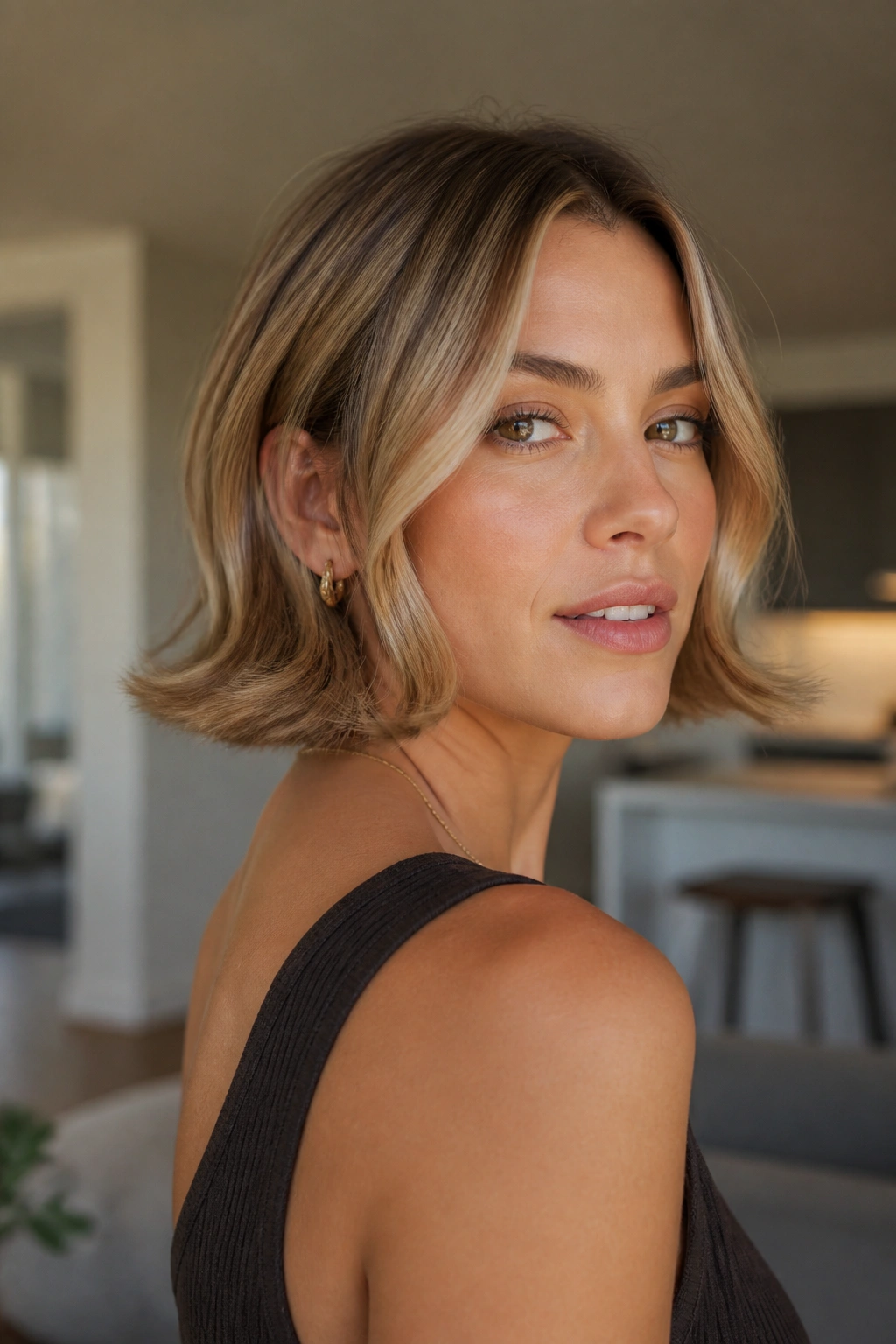
A flipped-out bob only works when the ends are short enough to move. That is why it looks lively at chin length and a little sluggish when it grows too long.
The flip gives the haircut a bit of motion at the edge, which keeps it from sitting in one predictable line. It has a retro note, but the right length stops it from feeling costume-y. Keep the rest of the shape clean, and the flip starts to read as intentional instead of nostalgic in a cheesy way.
You can create it with a round brush, a flat iron flick at the last inch, or even a medium-barrel brush if your hair holds shape well. The important part is not over-curving the whole section. You want the ends to turn outward, not launch into a curl.
This style works best on straight or slightly wavy hair. If your hair is very dense, the flip may need a bit of root smoothing first so the bottom movement can show. Otherwise it gets swallowed.
20. Undercut Bob With Less Bulk

Some bob haircuts need a hidden trick to handle dense hair. The undercut is that trick. It removes weight from the nape or the lower back section so the top can fall cleaner and the head does not feel covered in too much hair.
The undercut does not have to be dramatic. Sometimes a small, hidden section is enough to stop the back from puffing out or taking forever to dry. For people with thick hair, that alone can change the day. Less blow-dry time. Less triangle shape. Less of that heavy feeling at the base of the skull.
There is a tradeoff, of course. You lose a little versatility in updos, and the grow-out needs attention so the hidden section does not start poking through. But if your bob has always felt bulky, this can be worth it.
I would choose this cut for someone who wants a cleaner outline and does not mind a bit of maintenance underneath. It is practical, which is not a glamorous word, but hair that behaves is glamorous in its own way.
21. Lived-In Bob That Grows Out Gracefully

What makes a lived-in bob better than a pristine one? The fact that it still looks like a haircut when it is not freshly done.
This style keeps the line soft enough to survive a few weeks of growth, which is useful if you do not want to live in the salon chair. The ends can have a tiny bend, the layers can be loose, and the part can shift a little from day to day. It is not messy. It is relaxed on purpose.
How to keep it from sliding into sloppiness
- Ask for a shape with a clear perimeter
- Keep the layers soft and invisible from a distance
- Use a light air-dry cream or mousse, not heavy oil
- Trim every 8 to 10 weeks so the outline stays readable
This is a good choice if you wear your hair tucked, clipped, waved, or air-dried most of the time. It can handle real life. That is the whole point.
A lot of people chase the perfect fresh cut and then get annoyed two weeks later when it starts changing. This bob accepts that hair moves on.
22. Shoulder-Skimming Lob With Blunt Ends
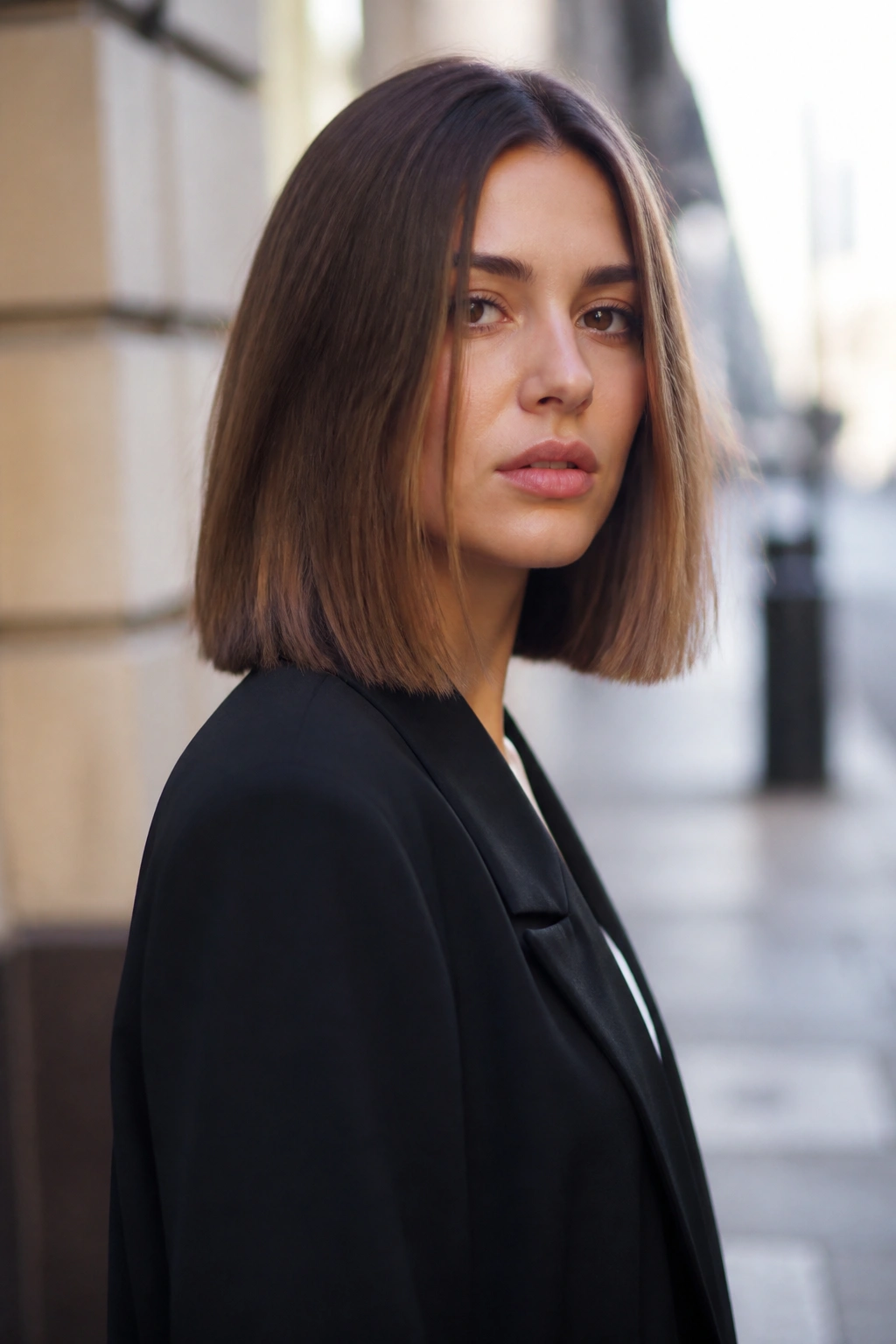
The shoulder-skimming lob is the haircut I point to when someone wants change without burning every bridge. It is long enough to pull back, short enough to feel intentional, and blunt enough to keep the shape from drifting into generic long hair territory.
The blunt ends matter here. They keep the lob looking crisp, especially if your hair is fine or medium in density. If the edge gets too thinned out, the whole thing can start to look like an accidental grow-out instead of a real cut. That is the difference between a lob that feels current and one that just feels like you missed your trim.
This shape is also useful because it works with a lot of styling moods. Straight and sleek? Fine. Soft waves? Also fine. Tucked behind one ear with a strong side part? Even better. The length gives you options, but the blunt perimeter keeps the line honest.
If you want one haircut that can move from office to dinner to lazy Sunday without falling apart, this is the one I would start with. It does not shout. It does not hide. It just sits there looking clean, and that is often enough.
