



Straight hair is honest. It shows the cut, the line, the weight, and every lazy decision a stylist makes with the scissors.
That is exactly why bob haircuts for straight hair can look so sharp when they’re right — and so flat when they’re not. A blunt edge can look crisp and expensive. A weak perimeter can look like it gave up halfway to the mirror. There is no curl to hide behind, which is both the blessing and the curse.
The good bob on straight hair does not fight the texture. It uses it. It gives you a clean silhouette, a clear shape at the ends, and a finish that can go from neat to polished with very little effort. When the length, part, and edge all line up, the haircut does half the styling for you.
A half-inch matters here. Sometimes more.
1. Blunt Chin-Length Bob

This is the cut that makes straight hair look deliberate in the cleanest possible way. The line sits around the chin, the ends are cut blunt, and the whole shape feels crisp from the first glance. If your hair tends to lie flat, this bob gives it a stronger outline without asking you to work overtime with hot tools.
Why It Works on Straight Hair
Straight strands show a blunt edge like a frame around a photo. That’s the whole appeal. The cut looks tidy even on air-dried hair, and the shape holds up well because there’s no curl pattern trying to puff the ends out.
- Best for fine to medium hair that needs visual density
- Needs trims every 6 to 8 weeks to keep the line clean
- Works well with a middle or soft off-center part
- Looks especially sharp with tuck-behind-ear styling
Pro tip: ask for the blunt line to be checked in natural fall, not just when the hair is blown perfectly smooth. Straight hair reveals unevenness fast.
2. Center-Part Jawline Bob

A center part changes everything. Seriously. The same bob can look soft with a side part and suddenly turn sleek, modern, and a little more severe when you split it right down the middle.
What I like about this shape is the balance. The ends skim the jaw, which helps straighten out the face visually, while the middle part keeps the whole thing symmetrical. On straight hair, that symmetry reads as polish, not stiffness. If your hair has a habit of going limp by lunchtime, this style gives you a line to hang on to.
For styling, a quick blow-dry with a paddle brush is enough most days. If the roots collapse, mist a little root spray before drying and lift the front sections up and away from the scalp. Don’t overthink it.
This is a low-drama cut with a high-reward finish.
3. French Bob

Why does the French bob look so right on straight hair? Because straight hair already has the neatness this cut wants. Add a shorter length, usually around the cheekbone to jaw, and a soft fringe, and you get a shape that looks effortless without being sloppy.
The key is not making it too perfect. A French bob should have a little swing at the ends and a fringe that feels light, not heavy. Too much bluntness up front and it starts to feel stiff. Too little shape and it just becomes short hair with no point of view.
How to Style It
A small round brush or even a quick bend with a flat iron is enough. The fringe should fall softly, not stick straight across like a ruler.
A little texture cream through the ends helps, but keep it light. You want movement, not grit. This cut is at its best when the hair looks touchable and a bit undone.
4. Italian Bob

Picture a bob that looks plush, a little fuller, and more expensive in the way a good coat does. That’s the Italian bob. It usually sits somewhere between the chin and collarbone, with enough length to feel soft and enough structure to avoid looking droopy.
Straight hair makes this cut look especially rich because the surface stays smooth and the shape reads clearly. The trick is keeping the perimeter full while letting the front pieces move a bit. If your hair is fine, this is one of the few bobs that can make it look denser without heavy layering.
What Makes It Different
- Longer than a classic French bob
- Often worn with a side part
- Ends curve in slightly rather than flipping out
- Needs a blow-dry that gives the front some body
I’d call this the best choice if you want polish without the hard edge of a blunt chin-length cut. It has softness, but not mush.
5. A-Line Bob

The A-line bob is one of those cuts that looks obvious once you see it, and then you wonder why more people don’t wear it. Shorter in the back, longer in the front. That’s the whole point, and on straight hair the angle shows up beautifully because the line doesn’t get swallowed by texture.
The front pieces can skim the jaw or the collarbone, depending on how dramatic you want the angle to be. The back stays tighter, which gives the head a neat shape from the side. If your hair has no natural bend, this is a smart way to make the cut itself do the work.
It can look boxy if the angle is too slight, so the front really does need to be noticeably longer. Keep the ends clean. That’s where the haircut either looks sharp or falls apart.
6. Asymmetrical Bob

Unlike a classic one-length bob, the asymmetrical version leans into the difference on purpose. One side is longer than the other, usually by half an inch to an inch and a half, and that little tilt gives straight hair some tension and personality.
It’s a strong look, but not a loud one. The shape does the talking. Straight hair is ideal for this because the clean surface lets the length difference stand out without frizz or curls softening the line. If you like a cut that feels edited, this is a good bet.
Who it suits best? People who want a bob that doesn’t look too polite. It’s also useful if your face feels a little too round and you want one side to create a longer visual line. Ask your stylist to keep the heavier side movable so it does not feel helmet-like.
7. Collarbone Lob

The collarbone lob is the safe choice only if you mean “safe” in the best way. It’s long enough to tuck behind the ears, short enough to feel like a real haircut, and easy enough to grow out without panic.
Why It Works
Straight hair tends to fall beautifully at this length because the ends can sit cleanly on the collarbone without flipping into chaos. A blunt or softly layered version both work here, though I’m partial to a blunt line if your hair is fine. It gives more weight at the bottom.
- Sits just above or on the collarbone
- Easy to wear with a middle part or side part
- Can be air-dried or lightly bent under
- Low-maintenance grow-out compared with shorter bobs
Best move: if you want a bob but you’re nervous about losing length, start here. It’s the least dramatic leap on the list.
8. Micro Bob
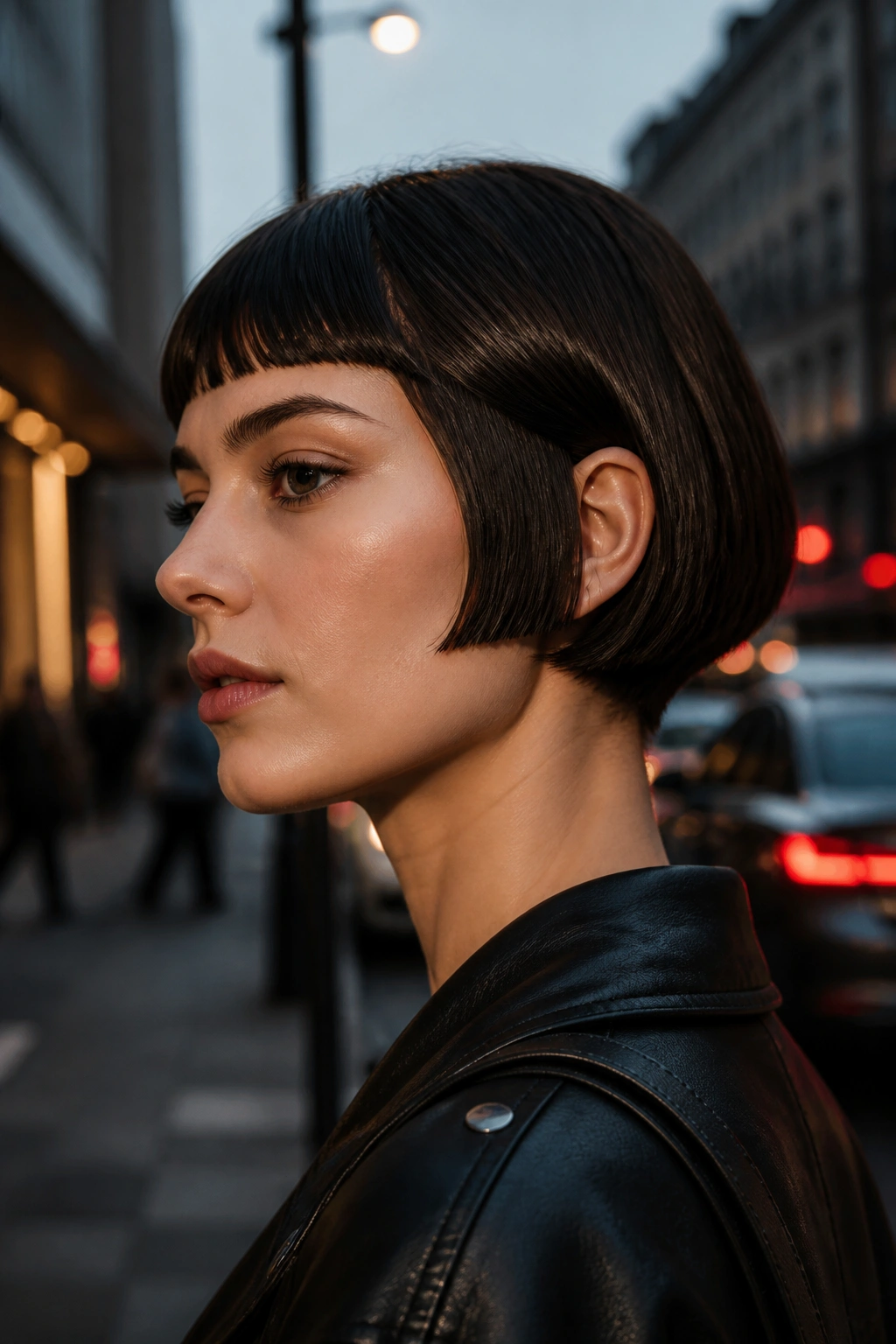
This is the most unforgiving cut here, and I mean that as a compliment. A micro bob usually lands somewhere between the cheekbone and just below the ear, which means your bone structure, neckline, and styling habits all show up fast.
Straight hair makes a micro bob look almost graphic. The edge is clean, the profile is tight, and there’s nowhere for the shape to hide. That can be thrilling if you like crisp haircuts. It can also be brutal if you want softness. There’s no middle ground with this one.
It works best on people with dense hair or strong features that can carry a shorter line. Keep the ends blunt and the styling simple. Too much volume at the crown turns it into a helmet. Too much texture makes it lose the whole point.
I’d only choose this if you’re willing to stay on top of trims. It grows out fast, and the shape changes quickly.
9. Stacked Bob

Why do stacked bobs keep coming back? Because the back of the cut does the heavy lifting. Shorter, graduated layers at the nape build lift where straight hair usually collapses, and that gives the whole shape a rounder look.
The danger is overdoing it. Too much stacking can look dated or puffy, especially if the hair is very fine. The better version keeps the crown controlled and the back nicely curved without shouting about it. Think lift, not drama.
How to Style It
Use a small round brush at the nape and lift the roots as you dry. A little root powder or mousse helps if your hair goes flat fast.
The front can stay sleeker and a touch longer, which keeps the cut from feeling too old-school. This is one of those styles that looks better from the side than people expect. That back view matters.
10. Soft Layered Bob

If you love the idea of a bob but hate the idea of a hard edge around your face, this is the version to keep on your radar. Soft layers take some of the weight out of straight hair so the shape moves a little instead of sitting like a block.
The key is restraint. These are not choppy layers. They’re subtle ones, mostly around the interior and the ends, so the bob still has a perimeter. That perimeter is what keeps the haircut looking like a bob in the first place.
On straight hair, soft layers help the cut avoid that flat, one-plane feeling that can happen when the hair is medium to thick. The shape becomes easier to tuck, flip, or wear loose without much fuss. If you want a bob that feels more relaxed than strict, this is a smart pick.
11. Side-Part Volume Bob

A side part is a cheat code for straight hair. Not a subtle one, either. Shift the hair over, and suddenly one side gets lift, the other side gets a little weight, and the whole cut looks fuller at the root.
This bob works especially well if your hair tends to collapse at the crown or if your face looks best with a little asymmetry. The side part pulls the eye diagonally, which gives the haircut more energy. It also breaks up the severe look that some straight bobs can have when they’re parted down the center.
Use a volumizing spray at the roots and blow-dry the hair in the opposite direction first, then flip it back. That little trick gives you lift without teasing. It’s one of the simplest ways to make straight hair look like it has more body than it actually does.
12. Curved Under Bob

Unlike a blunt bob that falls straight down, the curved under bob bends inward at the ends. That small shape change matters more than people think. It softens the line, makes the haircut look more finished, and stops the ends from feeling sharp against the jaw.
Straight hair is perfect for this because it shows the curve so clearly. You do not need heavy styling to get it. A round brush, a blow dryer, and a bit of patience at the ends are usually enough.
Who’s this for? Anyone who wants neat hair without a hard edge. It also works well if your face is angular and you want the haircut to take some of the sharpness out. Ask for a slight bevel at the bottom, not a big flip. Big flips can look dated fast.
13. Box Bob

A box bob is all about geometry. The sides are fuller, the shape is squarer, and the outline feels strong from every angle. On straight hair, that structure shows up beautifully because the strands lie clean and even across the shape.
Why It Works on Straight Hair
The box bob gives you a clear silhouette without needing texture to carry it. It’s the haircut version of a tailored jacket. Everything has a place.
- Best at chin to jaw length
- Looks sharp with a middle part
- Needs precise sectioning when cut
- Works well on medium-density hair
Watch for this: if your hair is extremely fine, too much squareness can make the ends look thin. Ask for fullness at the line and minimal thinning.
This is the cut for someone who likes order. It’s not soft, and that’s the point.
14. Swing Bob

A swing bob moves. That may sound obvious, but a lot of bobs don’t, especially on straight hair that hangs heavy. The swing bob keeps a little length in front and a slightly shorter back so the ends swing inward and outward as you move.
The beauty of this cut is the shape shift. It can look polished when tucked, then looser when you turn your head. Straight hair shows that motion without needing waves. The line is clean, but the feel is not stiff.
If your hair is medium to thick, this cut can remove just enough weight to stop the ends from dragging. If it’s fine, keep the layers subtle so the swing comes from the shape rather than from overcutting. The whole point is fluidity. Too much texture and it loses that smooth glide.
15. Blunt Lob with Soft Ends

Why does a blunt lob work so well for straight hair? Because straight hair loves a strong line, but not every head of hair wants that line to stop like a brick. Softening the very ends keeps the haircut from feeling harsh while still holding onto the clean outline.
The cut usually sits between the chin and collarbone, which makes it easy to wear loose, tucked, or half pinned back. The blunt base gives it weight. The soft ends keep it from feeling severe. That combination is better than people give it credit for.
How to Style It
A flat brush and a low-heat blow-dry are enough for most days. If you want extra polish, bend the last inch under with a flat iron.
This is the lob I’d suggest for straight hair that gets frayed ends easily, because the softer finish hides a little wear. It grows out gracefully, too. That’s worth something.
16. Curtain Bang Bob

Can curtain bangs and straight hair get along? Absolutely, if the cut is done with enough softness. Curtain bangs split in the middle and fall away from the face, which keeps the front from feeling heavy or boxy.
The bob underneath can be chin-length or slightly longer, but the real trick is balance. The bangs need enough length to sweep back, not sit like a hard fringe. On straight hair, that movement is easy to see, which is a nice change from bangs that cling too flat.
How to Style It
Blow-dry the bangs with a small round brush, directing them away from the center before letting them fall into place. A touch of heat on the ends gives them shape without making them curl.
This is one of the easiest ways to soften a straight bob without losing the clean line everywhere else. It gives the haircut some face-framing movement, and that alone can change the whole mood.
17. Tucked-Behind-Ears Bob

Some haircuts are made for earrings. This is one of them. The tucked-behind-ears bob keeps enough length in front to frame the face, but it looks especially good when you push the sides back and let the jawline show.
Straight hair is perfect here because the hair stays neat once it’s tucked. You do not need a lot of styling help. In fact, too much volume can ruin the effect. You want the hair to lie close enough to the head that the tuck feels deliberate, not accidental.
I like this cut for people who want a bob that can go from polished to casual in one move. Wear it down, then tuck one side back and it changes shape instantly. That’s a small thing, but small things matter when you wear the same haircut every day.
18. Choppy Textured Bob

A choppy bob on straight hair can be excellent, but only if the texture is controlled. Go too far and the ends start to look ragged. Keep it measured, and the haircut gets movement without losing its line.
The trick is point cutting or light slide cutting at the ends rather than ripping the shape apart. Straight hair shows those details better than wavy hair does. You can see the difference between intentional texture and a cut that was thinned out because someone got carried away.
This style is for people who want their bob to feel a little less formal. It works well with a bit of dry texture spray and fingers instead of a brush. Just don’t turn it into a frizz festival. The best version still looks clean at the perimeter, only less rigid inside.
19. Graduated Nape Bob

A graduated nape bob keeps the back tight and lifts the crown without going as full as a heavily stacked cut. That difference matters. It gives straight hair shape at the back of the head while keeping the silhouette smoother through the sides.
If you’ve ever had a bob that looked too flat from behind, this solves that problem. The graduation creates a subtle curve through the nape, which helps the cut sit better against the neck. Straight hair shows this graduation well because the layers don’t get lost in texture.
Why It Works
- Adds lift without a dramatic pile-up in back
- Good for fine or medium hair that needs shape
- Keeps the front clean and wearable
- Needs a tidy neckline to look its best
My take: this is one of the smartest bob options if you want structure but not a stiff, old-fashioned stack.
20. One-Length Glossy Bob

If your straight hair is shiny, do not hide it under a bunch of layers. A one-length glossy bob puts the hair’s natural finish front and center. The line is simple, the effect is strong, and the whole haircut depends on precision.
The length usually sits around the jaw or just below it. Nothing fancy. That’s what makes it work. Straight hair reflects light across the surface, so when the line is even, the result looks smooth and expensive without needing much styling.
Use a smoothing cream or lightweight serum if your ends get fuzzy, but keep the product off the roots. A bob like this falls apart fastest when people overload it. Clean hair, clean line, clean finish. That’s the whole deal, and it’s enough.
21. Feathered Fringe Bob

Can a fringe soften a straight bob without making it look heavy? Yes, if the bangs are feathered instead of blunt. Feathered fringe breaks up the front line and gives the cut a little air around the eyes.
This works especially well on straight hair because the fringe lays neatly and does not puff out. The bob itself can stay chin-length or slightly longer, which keeps the overall shape balanced. If you’ve been avoiding bangs because they feel too rigid, this is a gentler place to start.
How to Style It
Dry the fringe with a small brush and keep the airflow moving from side to side. That helps the ends settle instead of sticking straight down.
The rest of the bob can stay sleek. That contrast — soft fringe, clean body — is what makes the haircut feel current without being loud. It’s a nice middle ground.
22. Rounded Bob with Side Bangs
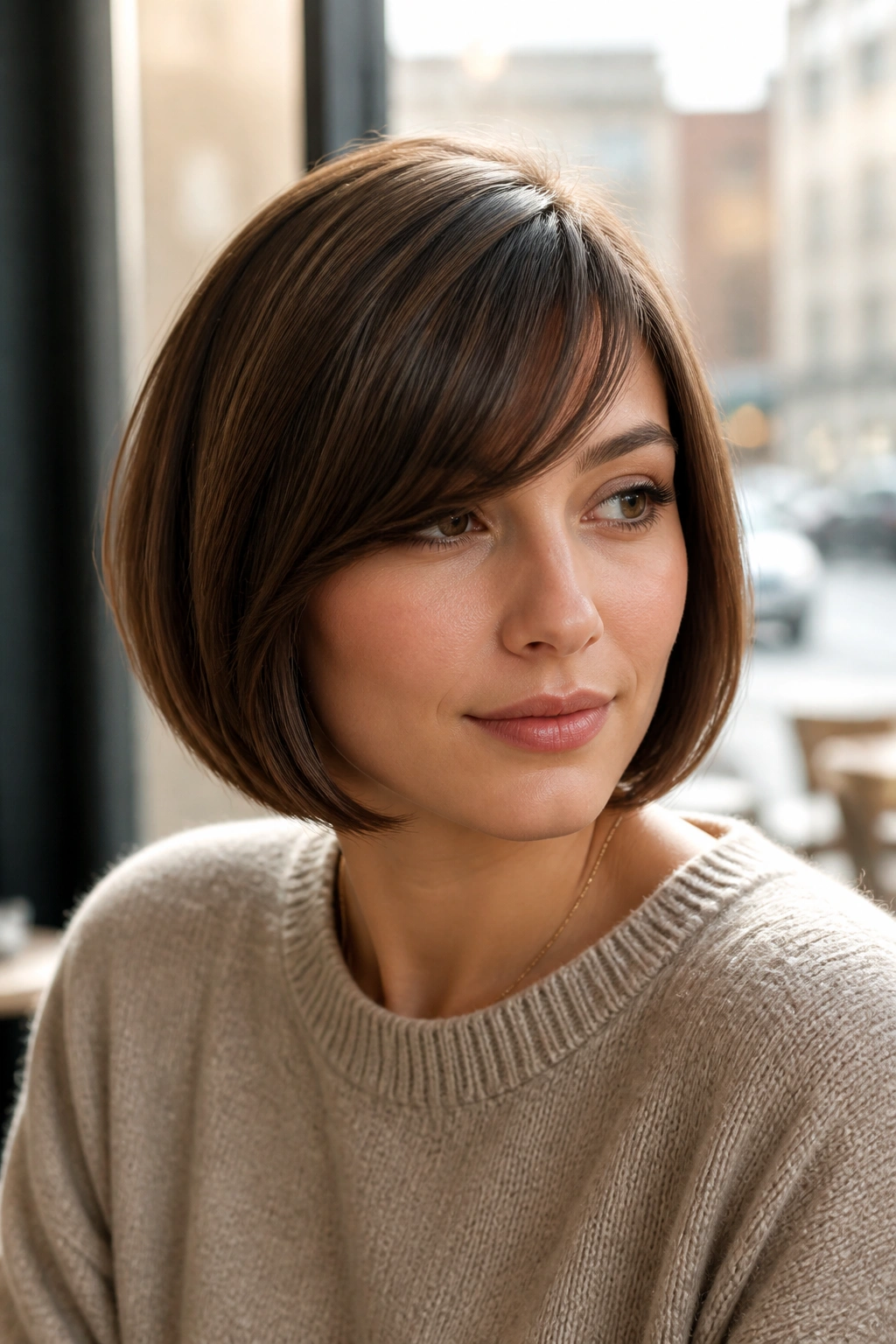
This is the cut that feels softest on the list, and I mean that in a good way. The rounded shape hugs the head a little more closely, while side bangs break up the front and keep the whole thing from looking too closed in.
Straight hair makes the rounded line easy to see. The sides curve in gently, the bangs sweep across the forehead, and the result is controlled but not severe. If you want a bob that flatters the face without screaming for attention, this is a strong option.
What to Ask For
- A rounded perimeter that curves under slightly
- Side bangs that blend into the front sections
- Soft weight around the cheekbones
- No heavy thinning at the ends
This is the one I’d point to for someone who wants polish with a little softness around the edges. It wears well, grows out neatly, and still gives straight hair a clear shape.
A bob does not have to be severe to work on straight hair. It just has to know what job it’s doing.
Pick the line that suits your face, your density, and how much styling you actually want to do in the morning. That’s the part people skip, and it matters more than the trendiest name on the list.
