



A good layered bob haircut can do more for tired hair than a drawer full of styling products. It can lift the crown, soften the jaw, and make fine hair look like it has some backbone again. That is why layered bob haircuts for women over 50 keep showing up in salons: they solve real problems without asking for an hour of blow-drying every morning.
Hair changes. That part is unavoidable. It can get finer, flatter, coarser in odd spots, or more fragile at the ends, and a blunt cut that once looked sharp can start to feel heavy and a little unforgiving. Layers change the balance. They let the hair move, and they stop the whole shape from sitting like a block around the face.
Bob haircuts are not all the same, either. Some sit at the chin and skim the jaw. Some land at the collarbone. Some are stacked in back, some are soft and feathered, and some are sliced so quietly that you barely notice the layers until the hair swings. The right one depends on texture, face shape, growth pattern, and how much fuss you are willing to make with a brush.
And that is the real test. Not whether the cut sounds chic on paper. Whether it still looks good when you have errands to run, weather to deal with, and no patience for a salon-fresh routine.
1. Soft Feathered Chin-Length Bob for Women Over 50

This is the cut I recommend when someone wants movement without drama. A chin-length bob with feathered layers keeps the shape close to the face, which helps fine or medium hair look fuller at the bottom instead of stringy. The feathering around the ends keeps it from feeling hard or boxy.
Why the feathering matters
Feathered ends remove that blunt, helmet-like edge that makes some bobs feel dated the second they dry. A little internal softness at the perimeter lets the hair bend instead of flipping out in one big, stubborn line.
Ask for light layering through the mid-lengths and softer point-cut ends, not chunkiness. You want air in the shape, not holes in it.
- Best on hair that falls flat near the jaw
- Works with side parts or soft center parts
- Usually needs a trim every 6 to 8 weeks
- Styles well with a 1.25-inch round brush and a light volumizing mousse
Pro tip: Keep the layers subtle near the front. Too much feathering there can make the haircut look wispy instead of polished.
2. Stacked Bob with a Rounded Back
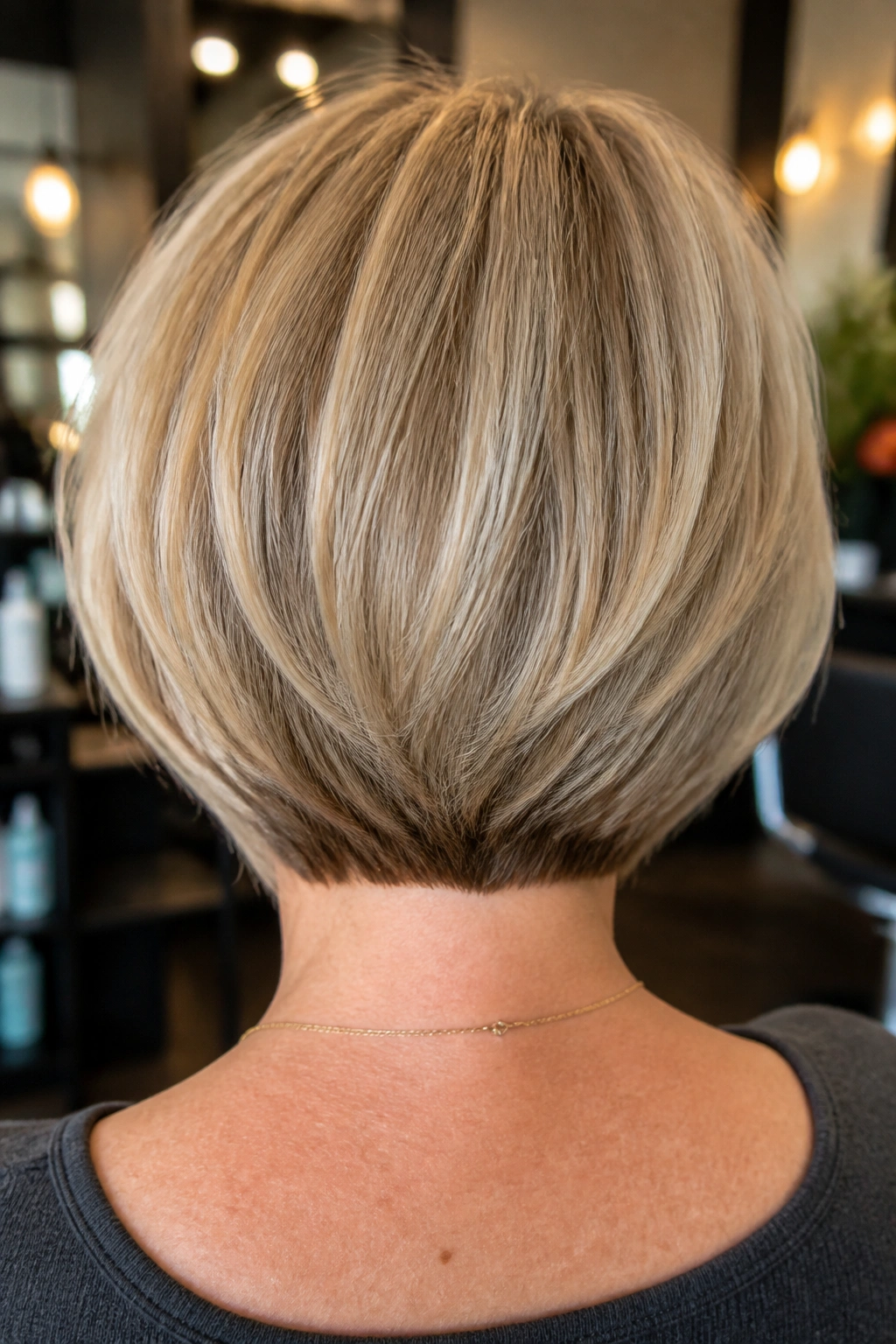
A stacked bob is the answer when you want lift in the back without length all over. It is one of those cuts that does a lot of quiet work. The graduation in the nape creates a rounded shape that gives the crown more height, which is gold for hair that has gone a little limp.
It is also one of the cleanest-looking bob variations on straight hair. The back sits neatly, the side pieces sweep forward, and the whole thing looks planned rather than fussy. If you like structure, this one has it.
The catch is maintenance. A stacked bob loses its shape faster than a softer layered cut, especially if your hair grows quickly or your nape area is cowlick-prone. You will want regular trims, and you will probably want a blow-dry, at least around the crown.
Still, when it is cut well, it looks sharp in the nicest way. No fluff. No excess. Just shape.
3. Side-Parted Layered Bob with Face-Framing Pieces
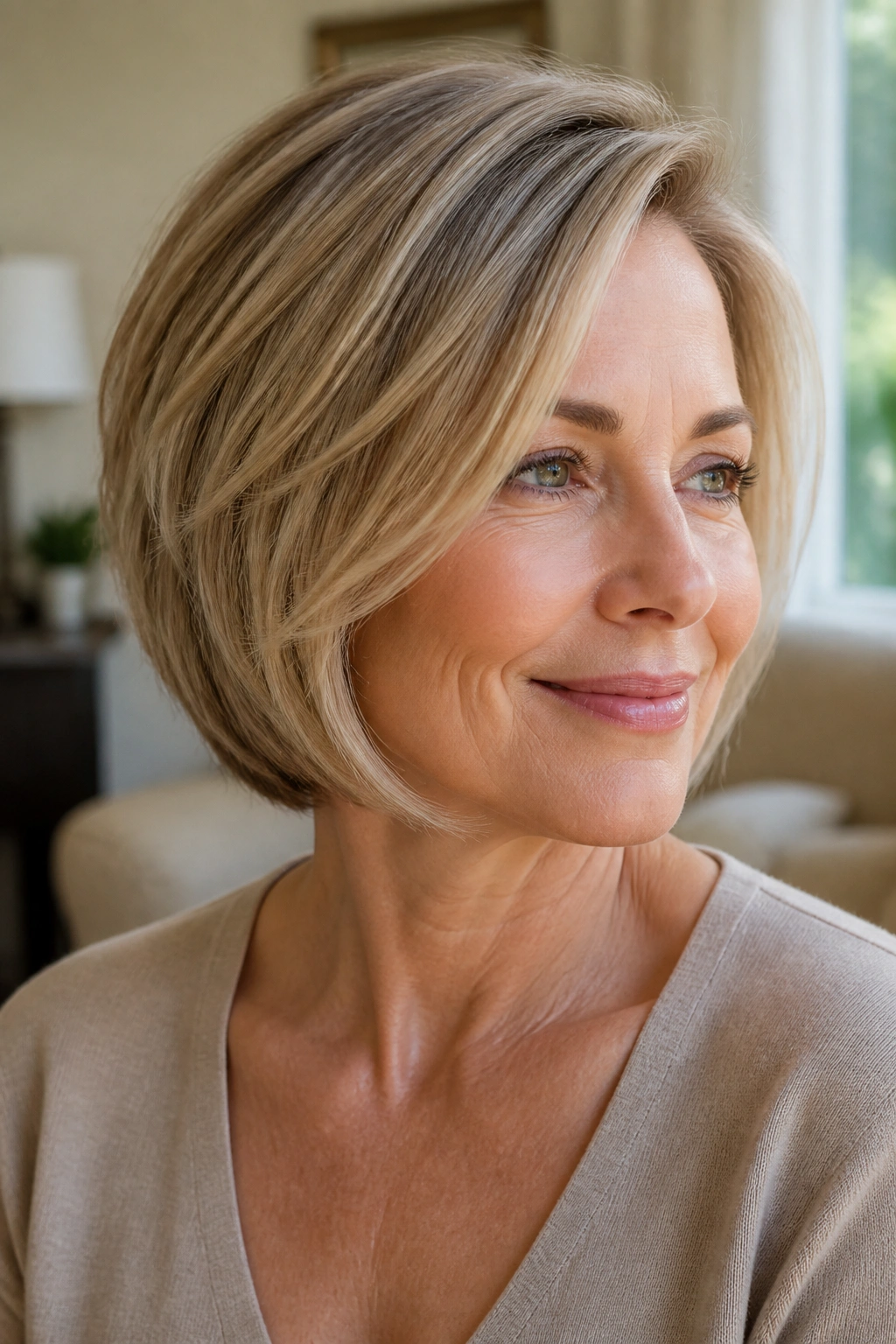
A side part can change a bob more than people expect. It shifts the weight, gives the hair a little lift on one side, and puts the face-framing pieces in a better spot for softer eyes and cheekbones. If a center part makes your hair feel too flat or severe, this version is worth looking at.
The face-framing layers should start around the cheekbone or lip line, depending on your face shape. That detail matters. Layers that begin too high can look busy; layers that begin too low can disappear into the rest of the cut.
A side-parted bob also plays nicely with glasses, because the front sections can clear the frames instead of fighting them. That sounds small. It is not.
- Good for round, square, and heart-shaped faces
- Works with blowouts or loose bends from a curling iron
- Softens broad foreheads without heavy bangs
- Looks best when the part is changed every few weeks
One thing to watch: if your hair naturally falls hard to one side, ask the stylist to cut the front with that growth pattern in mind. Otherwise the style will keep dragging itself back to where it wants to live.
4. Collarbone-Length Layered Bob
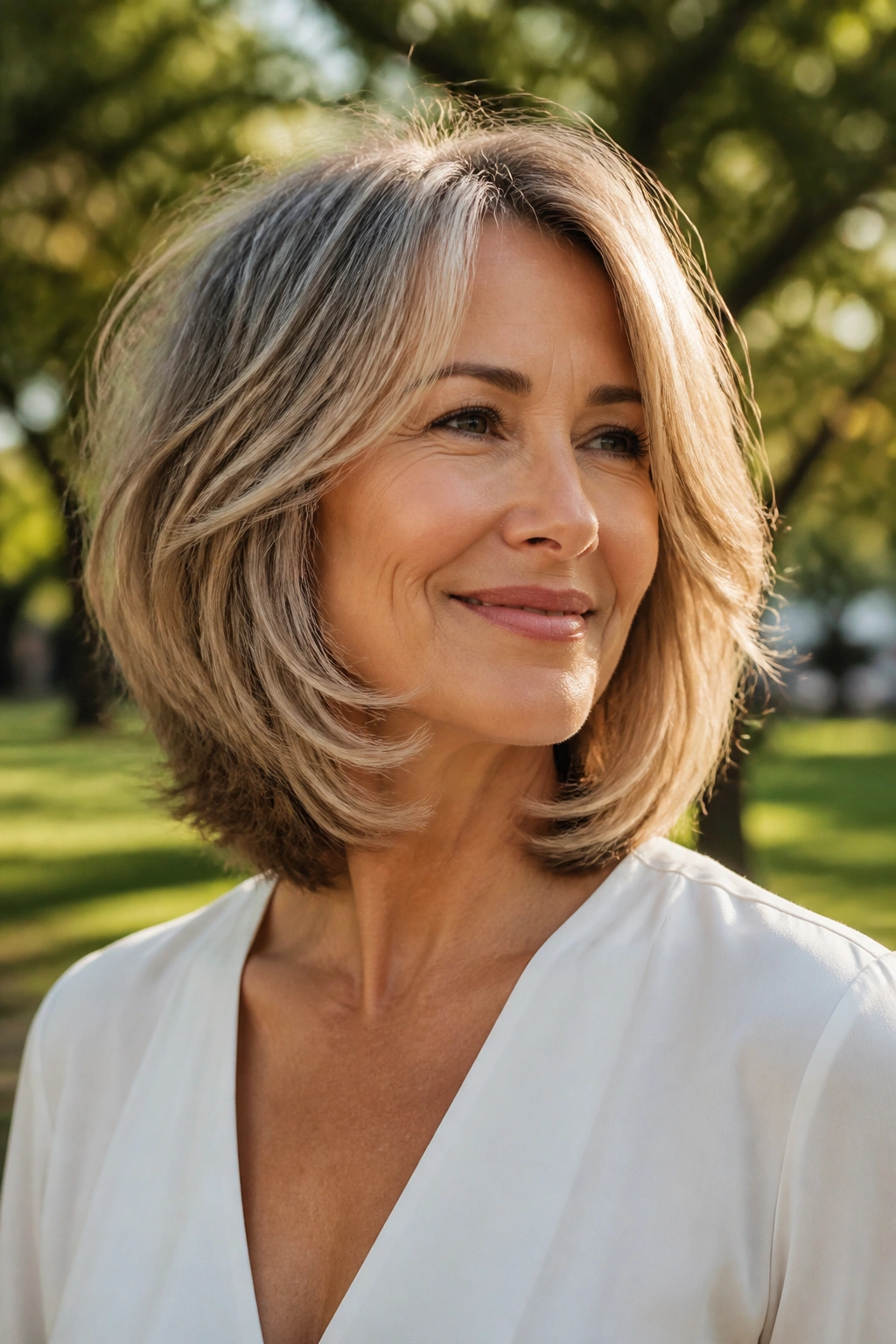
Do you want the bob shape without losing the feeling of length? This is the sweet spot. A collarbone-length layered bob gives you more swing than a chin cut, but it still feels clean and current. It is also one of the easiest versions to grow out if you decide you want a longer style later.
The layers should be soft and internal, not short and choppy. That keeps the ends from looking thin while still letting the mid-lengths move. On wavy hair, this length often bends on its own in a decent shape, which is nice when you do not want to spend twenty minutes with a brush.
How to style it
Start with a light mousse at the roots and a heat protectant through the ends. Blow-dry with a medium round brush or let it air-dry halfway and finish with a few bends from a flat iron. You do not need a polished curl. A soft bend at the front and under the ends is enough.
This one is good for people who like options. Tuck it behind the ears, clip one side back, wear it straight, or rough it up with texture spray. It does not argue.
5. Silver Layered Bob with Bright Ends

Silver hair and layered bobs get along better than a lot of people think. The reason is simple: layers keep gray and silver from looking heavy. A single blunt line can make shiny silver hair feel dense in a way that works against the color. Soft layers break that up and let the natural sheen show in movement instead of in one flat curtain.
There is also a nice honesty to this cut. It does not pretend the hair is what it was at twenty-five. It works with the texture that is actually there now. If your silver has a mix of coarse strands, softer new growth, and maybe a few wiry sections near the crown, a layered bob handles that mix better than a rigid one-length cut.
A little gloss or purple shampoo can keep the tone clean, but the haircut does most of the visual work. That is the part people miss.
The best version keeps the ends bright and crisp, not thinned to wisps. If the layers are too aggressive, silver hair can turn fuzzy at the edges. Ask for softness, yes. But keep some substance.
6. French Bob with Soft Bangs

A French bob is shorter, airier, and a bit less polished than the usual salon bob. That is the charm. It sits around the jawline or just below it, with soft bangs or a light fringe that makes the whole look feel relaxed rather than severe.
Compared with a classic bob, the French version has a little more movement and a little less structure. It is especially good if you like the idea of looking put together without looking like you spent too long on it. The fringe should be soft and broken up, not a thick wall across the forehead.
This cut works best on hair that has some natural bend or can hold a tiny wave. Straight hair can wear it too, but you may need a bit of round-brush work at the front to keep the bangs from sitting heavy. A soft texturizing spray helps, though a light hand matters more than the product.
If you want a bob that feels lived-in, not lacquered, this is a smart pick. Ask for point-cut bangs and edges that move, not a hard line that needs constant correction.
7. Inverted Bob with Sliced Ends
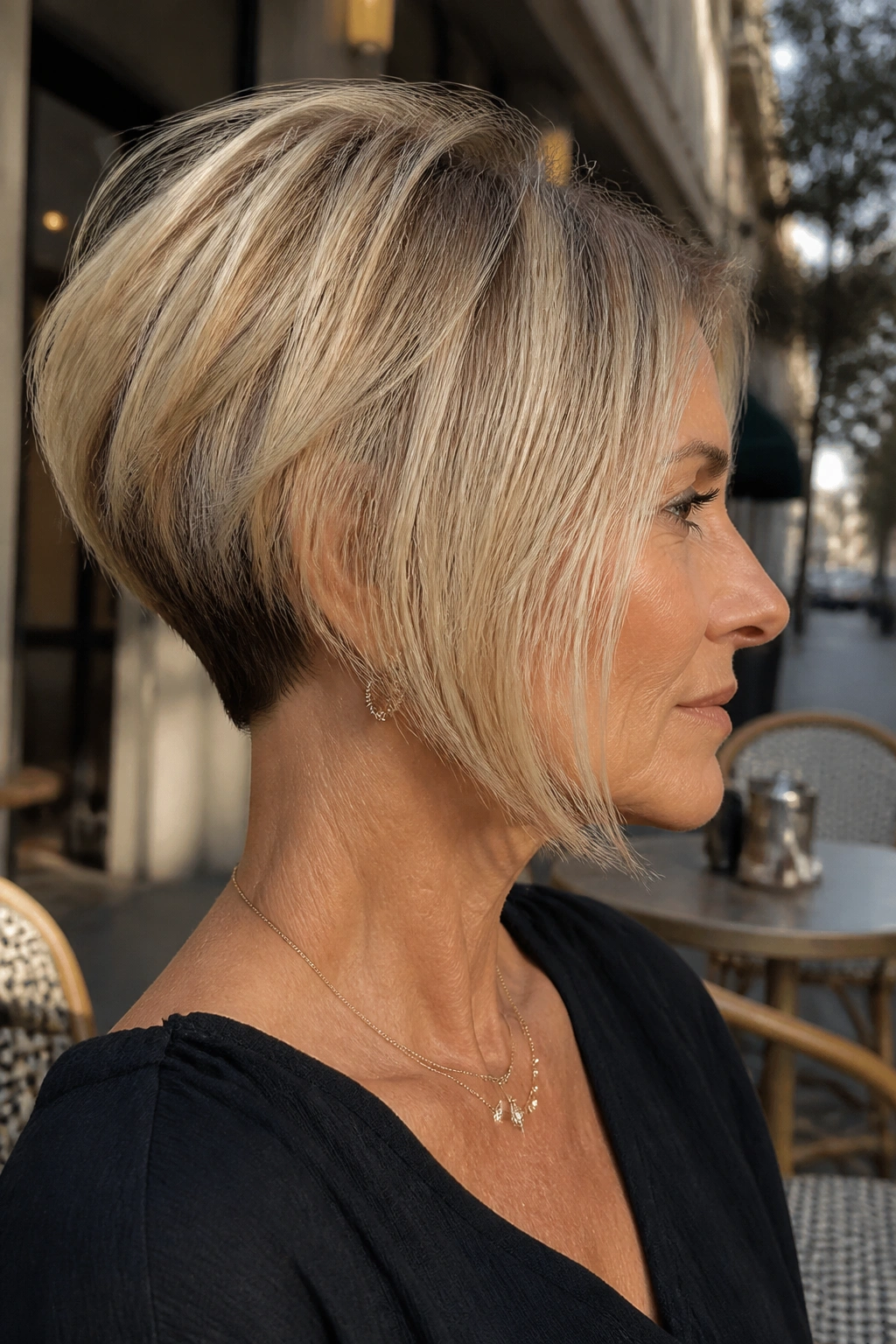
The inverted bob is for someone who wants a stronger angle. It is shorter in the back and longer toward the front, which creates a clean diagonal line that can sharpen the whole face shape. When the ends are sliced instead of blunt, the cut feels lighter and less rigid.
Where the shape comes from
The back builds volume through graduation. The front stays longer, often grazing the chin or neck, which keeps the style from feeling too severe. On thick hair, this cut removes weight where it matters most, especially around the nape.
Who it flatters
It usually works well on square and round faces because the forward angle draws the eye down. It also suits anyone who likes a bit of edge without moving into an obviously trendy look.
Styling note
Use a blow-dryer with a nozzle and brush the sides forward, not out. That direction keeps the angle clean. A touch of smoothing cream on the ends helps too, especially if the hair wants to puff.
This is not a wash-and-forget cut. It has shape, and shape asks for upkeep.
8. Wavy Bob with Invisible Layers
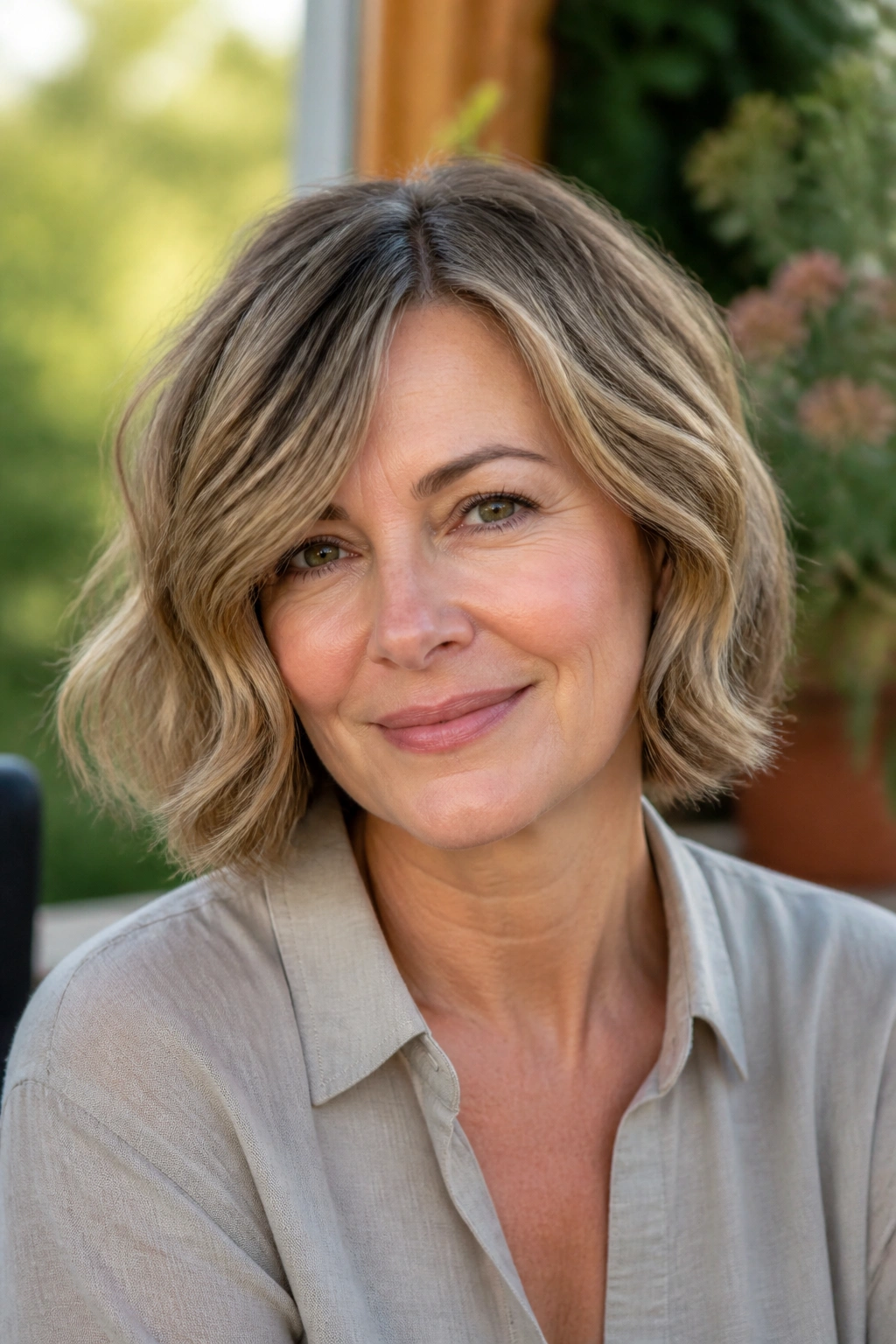
Some cuts shout about the layers. This one does not. Invisible layers are built into the haircut so the weight comes out from inside, but the outside line still looks smooth and easy. On natural waves, that is a very nice trick.
If you have ever had a bob that turned into a triangle by noon, you probably needed this instead. The hidden layering lets the hair collapse into a softer, more balanced shape. It keeps the ends from ballooning, but it does not leave obvious steps in the hair.
Air-drying works well here, especially with a little cream or foam worked through damp hair. Scrunch once or twice. Do not overthink it. The cut should do most of the heavy lifting.
This is one of those styles that looks better when it is not too perfect. A few bends, a little separation at the ends, and you are done. That is the appeal. It behaves like a bob but feels lighter than a standard one.
9. Curly Layered Bob for Natural Texture
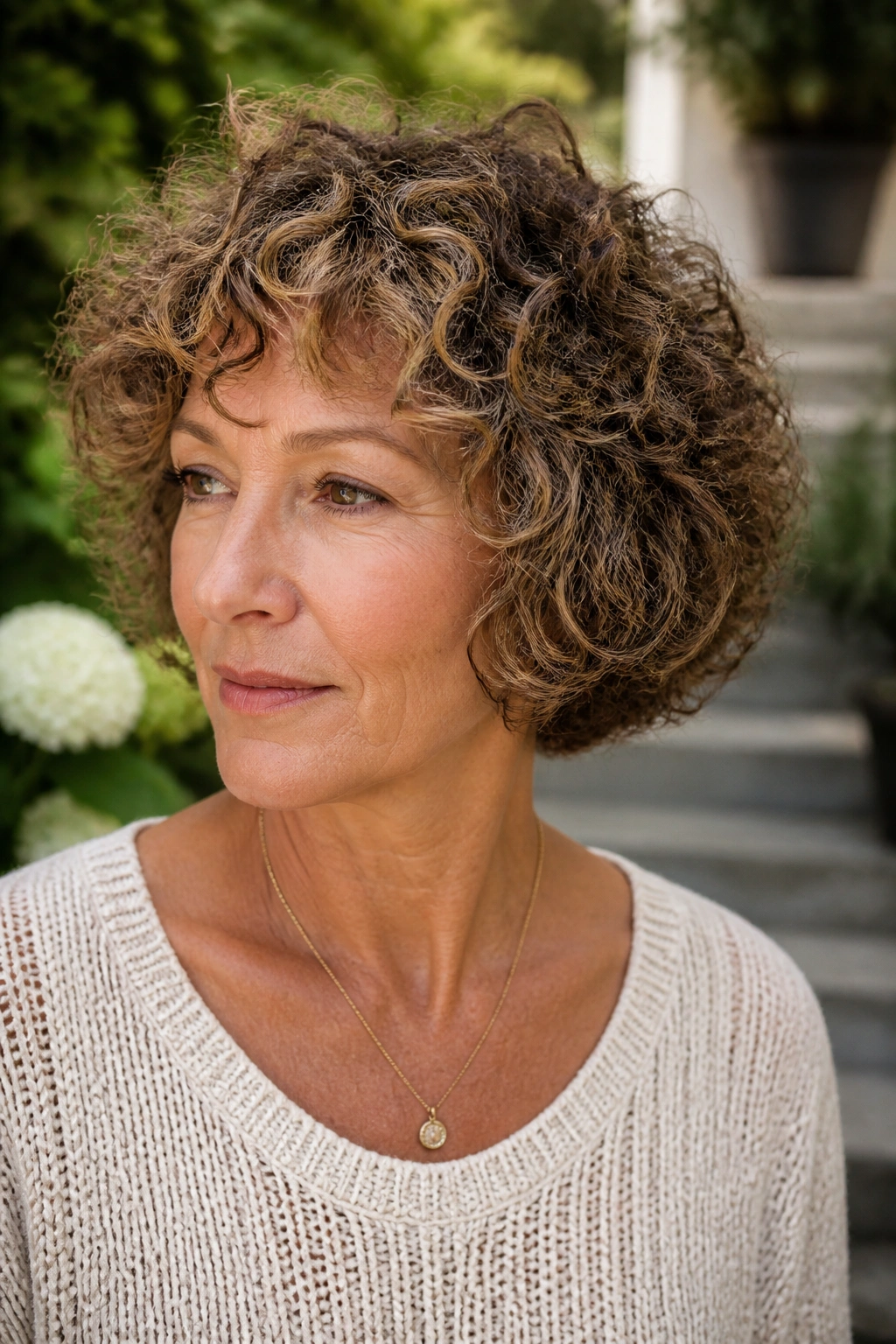
Can curls sit at bob length without turning into a triangle? Yes, if the cut is done with the curl pattern in mind. A curly layered bob should be shaped so the curls can stack, spring, and settle without losing their bottom line.
The trick is not cutting the hair too short in the wrong places. Curls bounce, and they bounce differently from one section to the next. That means a wet cut alone is often not enough. A dry check, or at least a careful final shaping, helps the stylist see where the curls actually land.
How to keep it springy
- Use a leave-in conditioner and a light gel on soaking-wet hair
- Diffuse on low heat until the roots are dry and the curls hold their shape
- Do not brush it once it dries
- Trim every 8 to 10 weeks if the curls grow fast at the crown
A curly bob is not about control. It is about giving the curl room to sit well. Get that part right, and the haircut looks generous instead of fussy.
10. Blunt-Looking Bob with Internal Layers
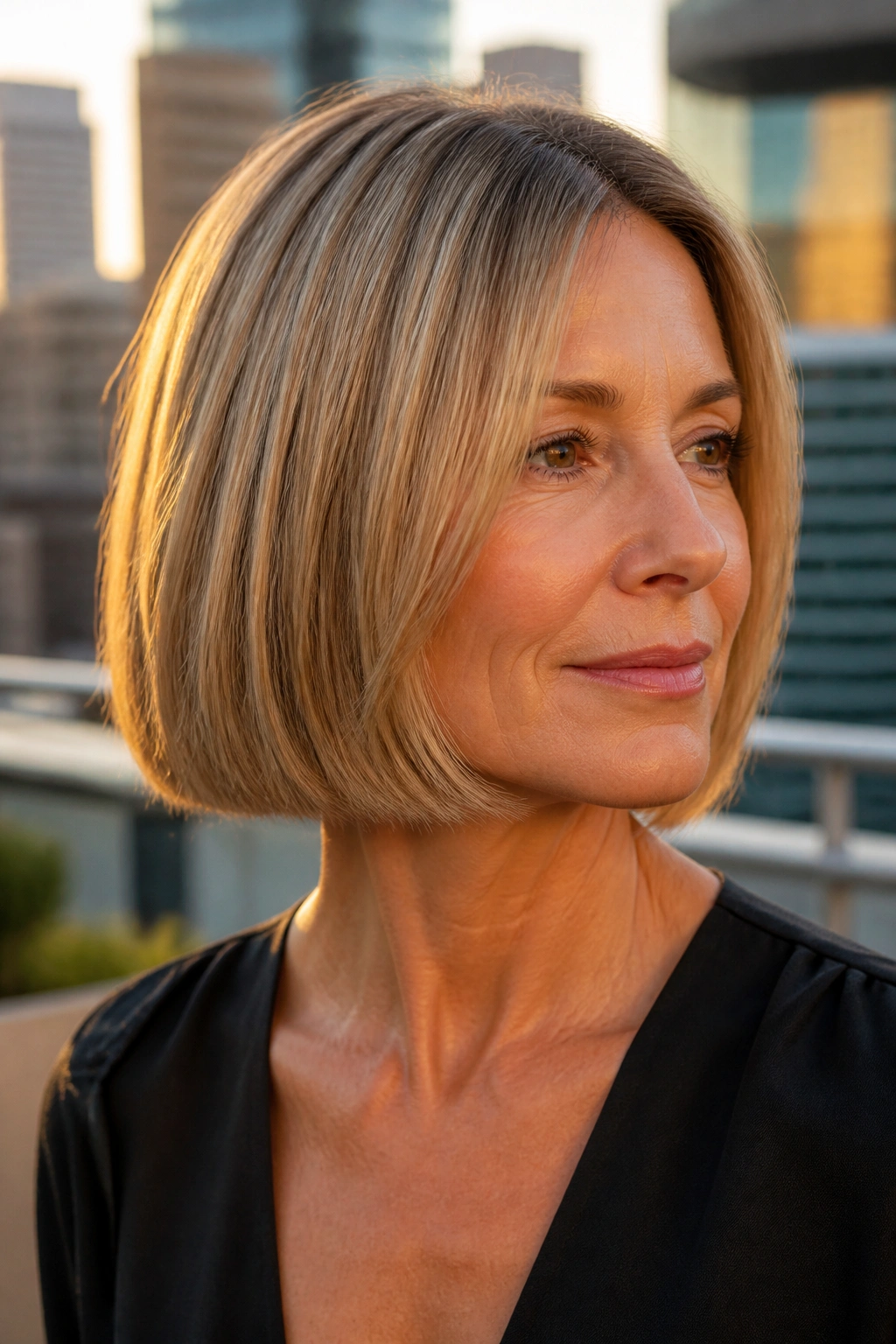
This cut is for people who want the clean edge of a blunt bob but cannot stand the weight of a true blunt bob. The outside line looks crisp, yet the inside has layers that take out bulk and give the hair some bend. It is a neat compromise.
That matters a lot on medium or thick hair. A one-length bob can look strong at first, then start to feel too dense around the jaw. Internal layers fix that without making the perimeter frizzy or shredded. You get shape, but not bulk.
The result is especially good if you like a more refined finish. It holds a straight blowout well, and it also looks decent with a slight bend under the ends. The style has a tidy edge, but it does not read stiff.
If your stylist starts talking about too much texturizing, slow the conversation down. A little internal removal goes a long way. Too much, and the ends can start to look thin.
11. Pixie Bob Hybrid
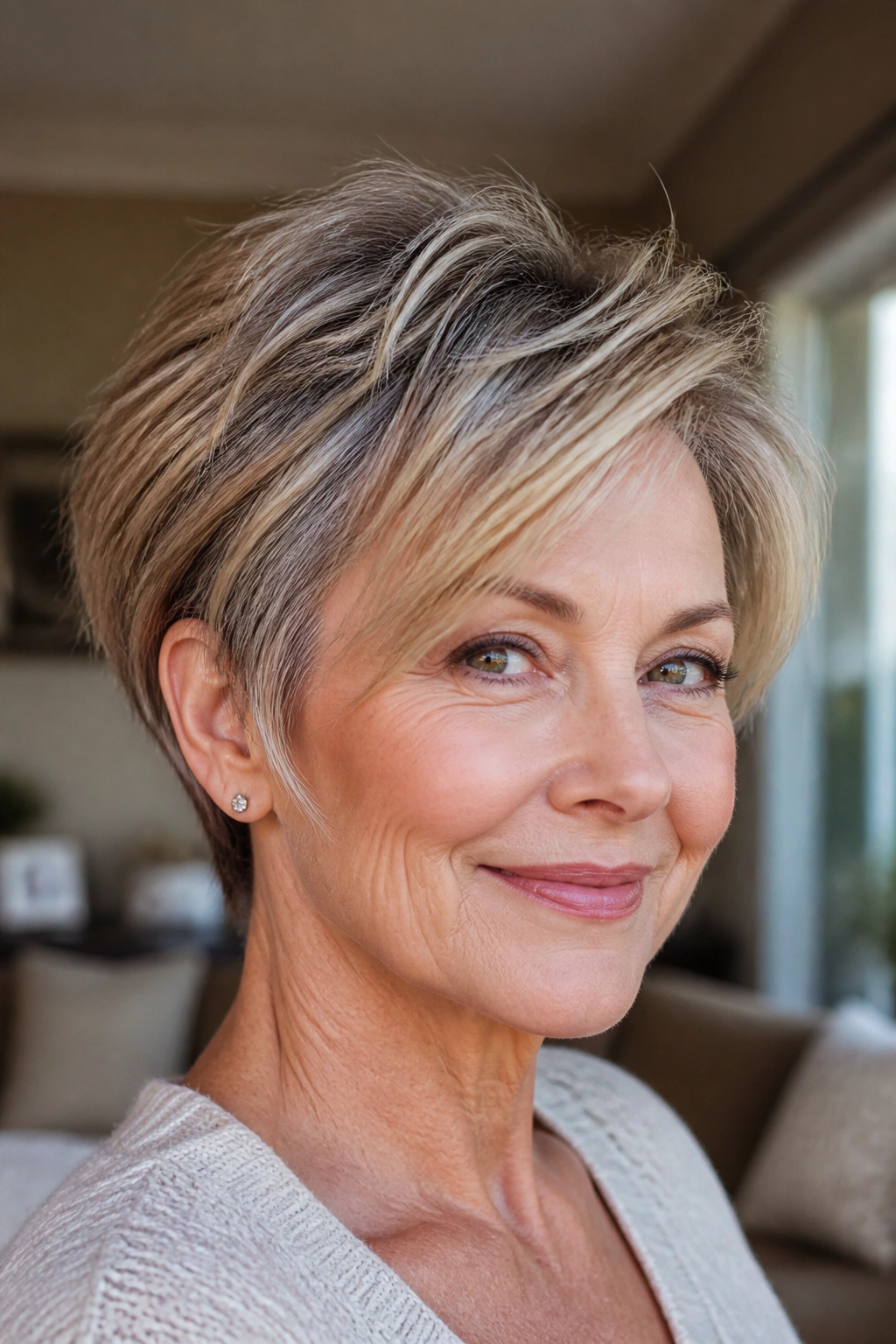
A pixie bob sits in that narrow space between short and short-short. It keeps enough length around the sides and front to feel like a bob, but the nape and crown are trimmed closer so the whole haircut feels lighter. That makes it a good option if you want less hair to manage without going into full pixie territory.
Unlike a true pixie, this style still lets you tuck pieces behind the ears or sweep them forward when you want softness. It is a little more forgiving around the forehead, and it gives you some styling room. That is why it suits glasses wearers so well.
The crown layers are the key. They need enough lift to avoid helmet shape, but not so much that the cut turns spiky. Ask for softness at the top and controlled length at the front. The difference is subtle on paper and obvious in the mirror.
This is a confident cut. It says you are done fighting your hair, and honestly, that can be a relief.
12. Asymmetrical Layered Bob

An asymmetrical bob is a neat way to add interest without piling on tricks. One side sits a little longer than the other, often by an inch or two, and the layers keep the shape from feeling harsh. The result is modern without being loud.
It works because the eye does not land on the face in the same way on both sides. That slight imbalance can soften a stronger jaw or distract from a cowlick that refuses to behave. It is also useful when your hair naturally falls better on one side, because the cut can lean into that instead of fighting it.
A side part usually helps this shape. So does a smooth finish at the ends. You do not want the asymmetry to get messy; you want it to look intentional.
One warning: the longer side should not drag too far down the neck unless you want a more dramatic look. A small difference is enough. Big differences can start to feel like a statement haircut, which is not the goal for most people who are just trying to wear their hair well.
13. Shaggy Bob with Choppy Ends
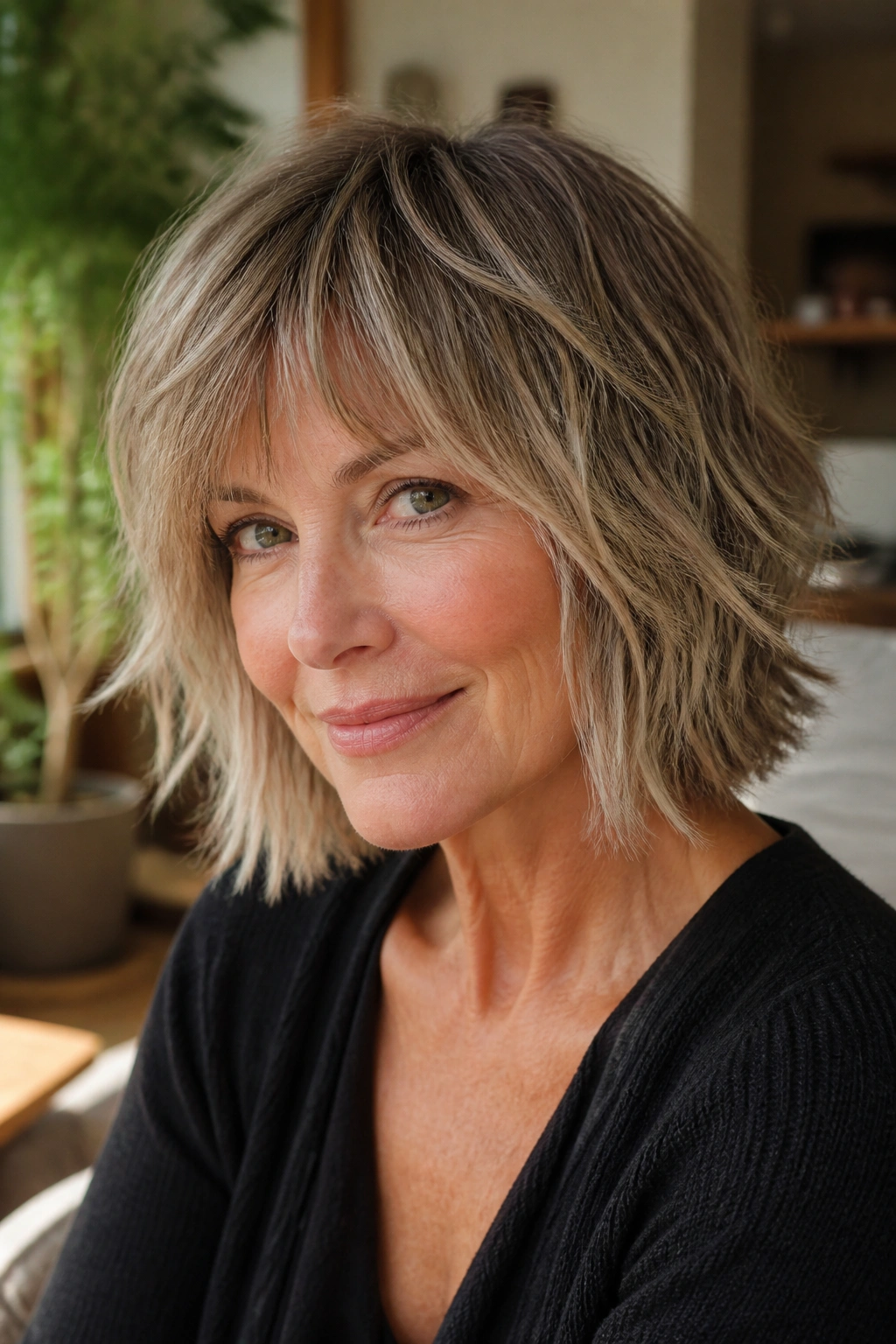
The shaggy bob is for people who like hair that looks touched, not staged. Choppy ends, loose layers, and a bit of grit in the finish make this haircut feel easy from the start. It is not neat in the classic sense. That is the point.
It also works when hair has lost some thickness. The choppiness creates separation and movement, which helps the cut look fuller than it really is. A little texture spray can bring the shape back to life after a day under a hat or a long stretch at your desk.
This cut does ask for a certain attitude. If you want every strand in place, it may annoy you. If you like a bob that can look slightly undone and still good, it is a solid choice.
Dry shampoo helps here, but not in a heavy way. Think of it as a light rough-up, not a rescue mission. The haircut should already have enough shape to stand on its own.
14. Rounded Bob with Crown Volume
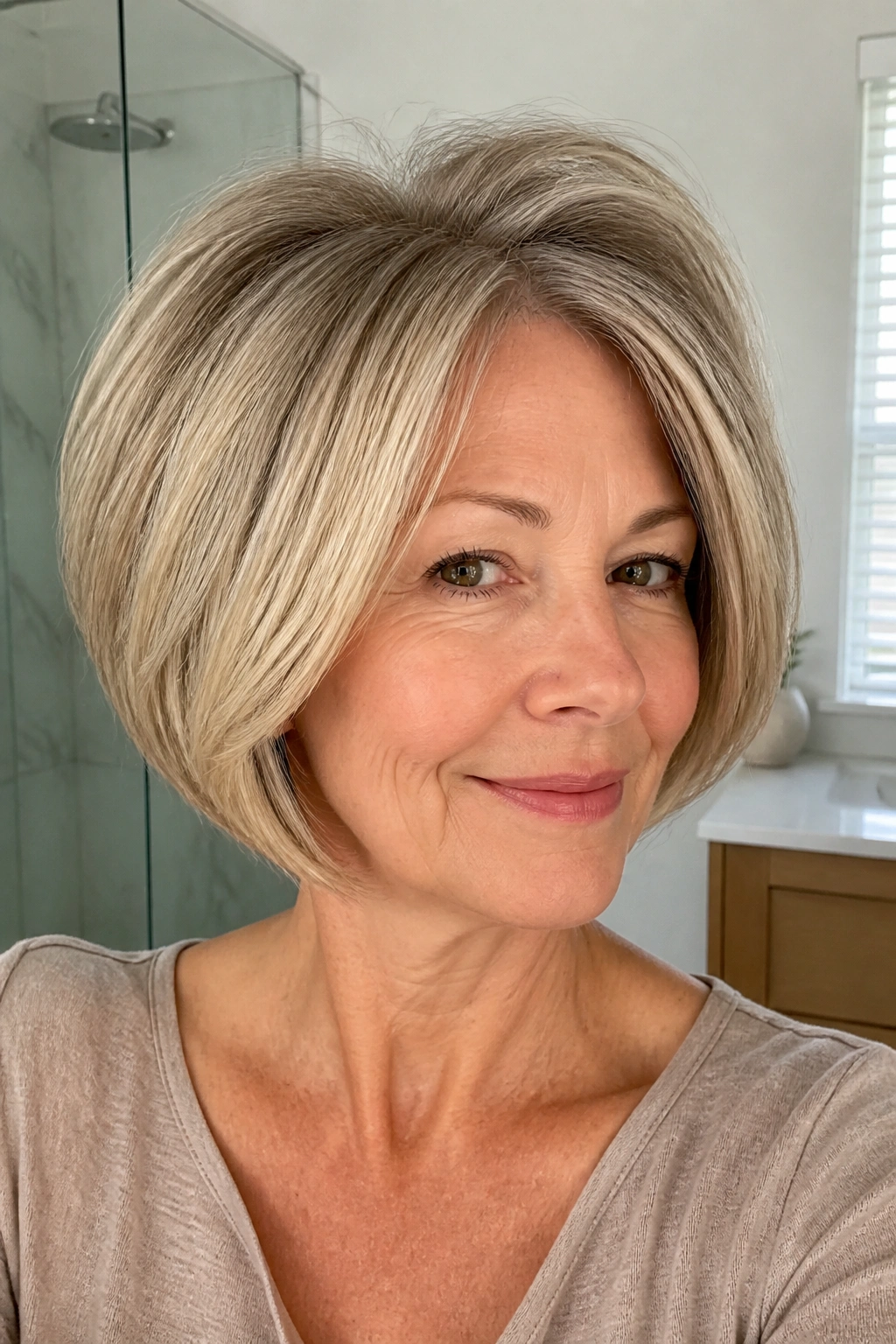
A rounded bob gives the head a softer, fuller outline, which can be a gift if the crown has gone flat. The shape curves gently around the head instead of hanging straight down, so the whole haircut feels more balanced from the side.
Where the shape comes from
The crown needs lift, and the sides need controlled layering so they tuck inward a bit. That rounded profile is what makes the cut look finished. Without it, the style can drift into plain old helmet territory. With it, you get softness and body.
Best styling tools
A small-to-medium round brush and a blow-dryer with a nozzle are usually enough. Roll the brush under at the ends and lift at the crown for a few seconds at a time. That little pause at the roots makes more difference than people think.
When to skip it
If your hair is very thick and puffy already, a rounded bob can become too full unless the interior is cut carefully. It is better on fine to medium textures, or on thick hair that has been properly debulked.
The shape is gentle. That is why it ages so well.
15. Layered Bob with Curtain Bangs

Curtain bangs give a layered bob a softer front edge, and they are one of the easiest ways to keep the face from looking boxed in. They part down the center, sweep back from the forehead, and blend into the sides instead of stopping in one sharp line.
That blending matters. It lets the haircut grow out more gracefully than full bangs, and it gives the front sections a bit of movement around the cheekbones. If you want softness near the eyes without a heavy fringe, this is a smart move.
It also gives you options on styling days. You can blow them away from the face for lift, let them fall a little looser for a casual look, or tuck them behind the ears when you need them out of the way.
They do need a little attention in humid weather. Not a lot. Just enough to keep them from splitting in strange directions. A quick pass with a round brush usually fixes it.
16. Chin-Grazing Bob with Side-Swept Fringe
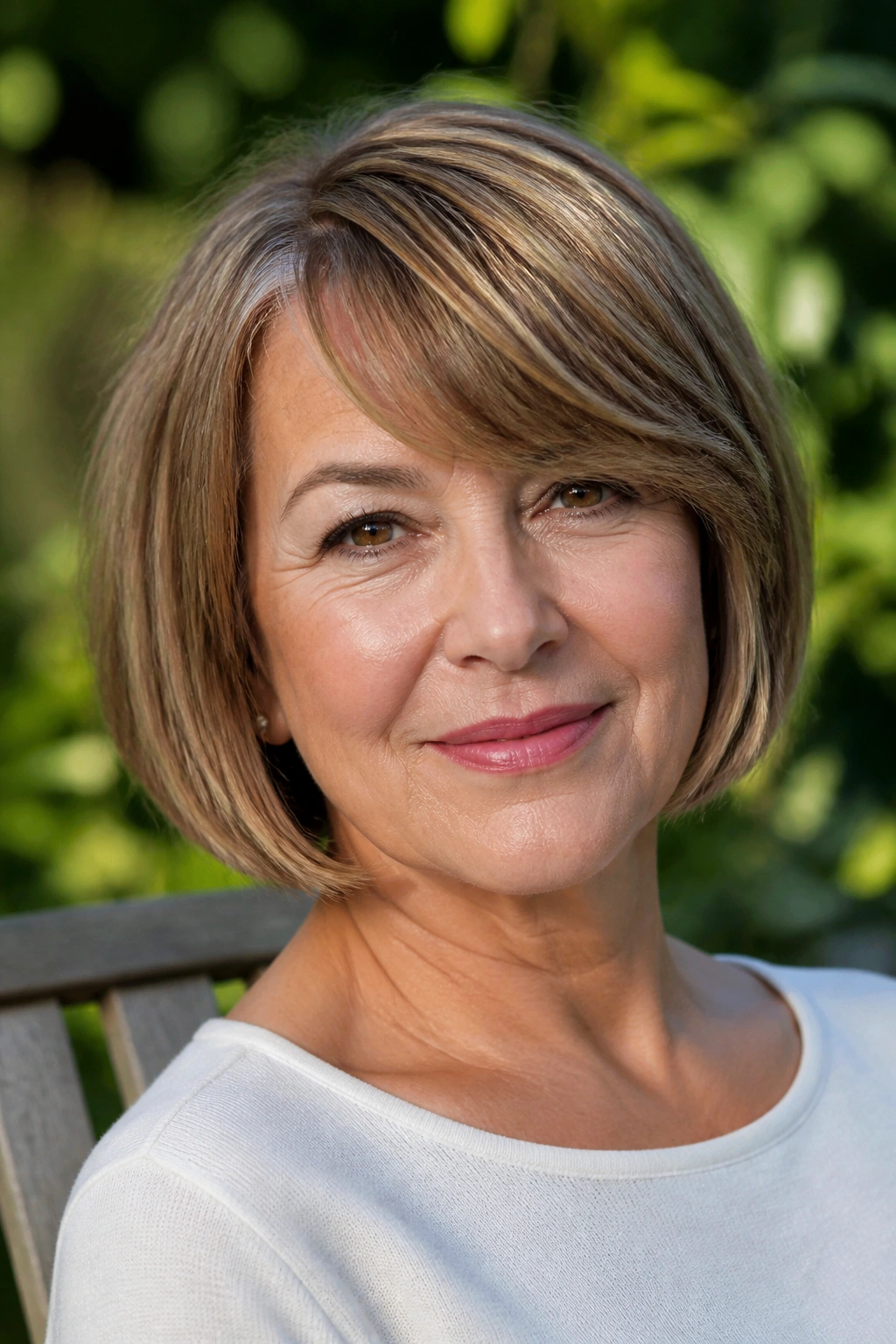
A chin-grazing bob can be one of the most flattering lengths because it lands right where the face needs shape. Add a side-swept fringe, and the haircut gets even softer. The fringe brings movement across the forehead, while the bob itself keeps a neat edge around the jaw.
This version is especially helpful if a straight-across fringe feels too heavy. Side-swept bangs are easier to live with, easier to grow out, and easier to tuck aside on low-effort days. They also work well if you wear your hair with a deep part.
Ask for the fringe to start around the arch of the eyebrow and taper toward the cheekbone. That keeps it from looking like a chunk of hair was dropped on the front of the face. Small detail, big difference.
It is a practical cut, too. The bob stays short enough to feel fresh, but the fringe gives you the softness that a blunt chin cut sometimes misses.
17. Neck-Length Bob with Tapered Nape
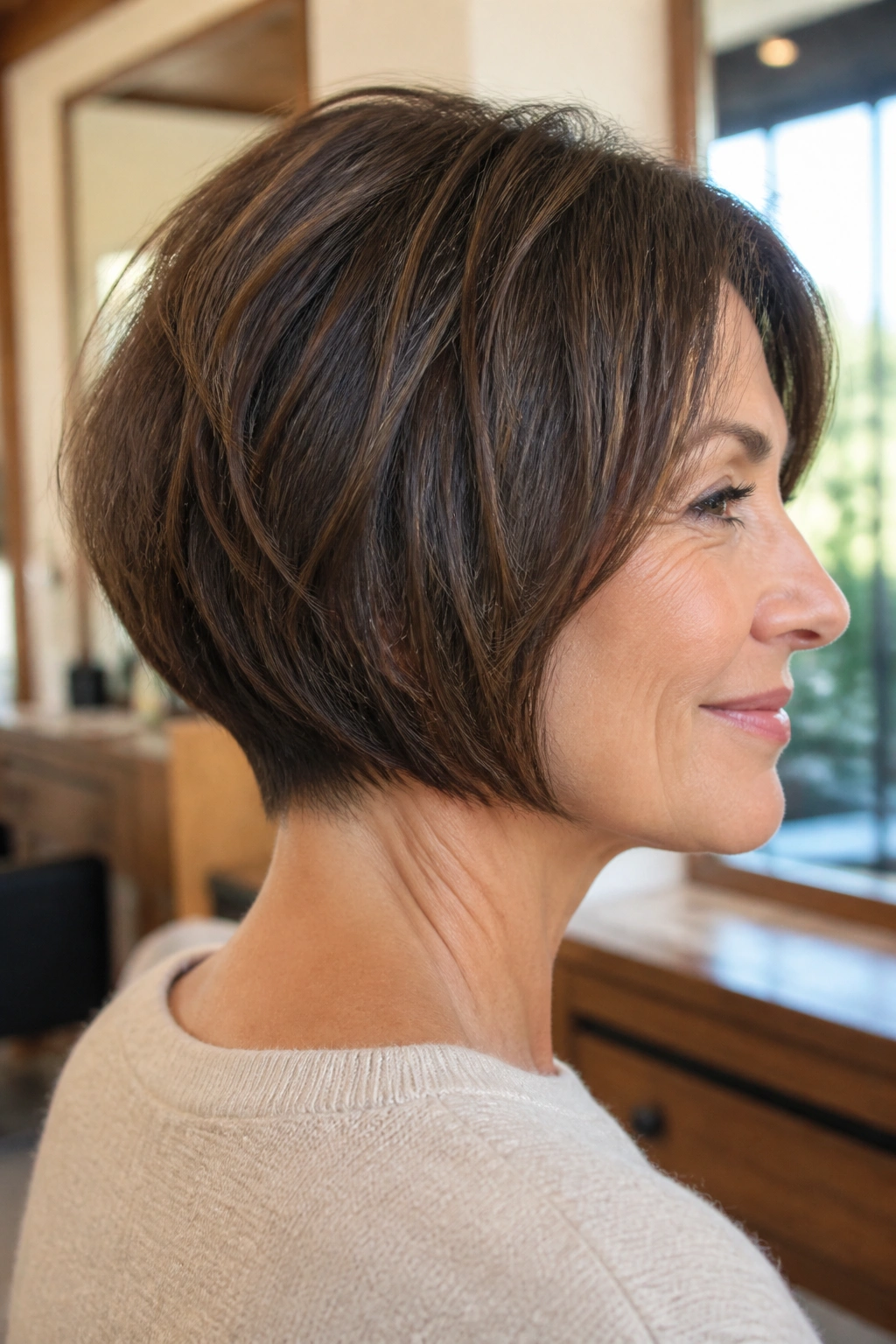
A neck-length bob sits in a nice middle zone. It is longer than a chin cut, shorter than a lob, and usually easier to tie back in tiny clips when needed. The tapered nape keeps the neckline tidy and stops the back from puffing out.
That taper is doing the real work. It gives the haircut a clean finish where the head curves into the neck, which is why it often looks neat even when the rest of the style is a little tousled. On people with fast-growing hair, it can stay presentable longer between trims.
It also works well for thick hair that needs a controlled outline. A blunt neck-length bob can feel heavy; a tapered nape removes some of that density without making the top layer thin.
If you like a haircut that looks intentional from every angle, this is a dependable choice. Side view, back view, front view — it all holds together.
18. Textured Bob for Fine Hair

Fine hair needs texture, but not too much of it. That is the balancing act. A textured bob for fine hair should create the look of fullness without stripping the ends so much that the cut starts to look see-through.
What to ask for
- Soft point-cut layers rather than aggressive thinning
- A perimeter that stays thick enough to hold a line
- Light crown lifting, not short choppy bits everywhere
- A length that lands around the jaw or just below it
What to use at home
A root-lift spray at the base, a pea-sized amount of mousse through damp hair, and a 1-inch curling iron for a few bend pieces can do a lot. You do not need all three every day, but having them in the routine helps.
The main mistake with fine hair is over-layering. People chase volume and end up removing the very weight that keeps the shape from collapsing. Keep the layers gentle. Keep the ends honest.
That is the whole trick. Not more hair. Better placement.
19. Layered Bob for Thick Hair
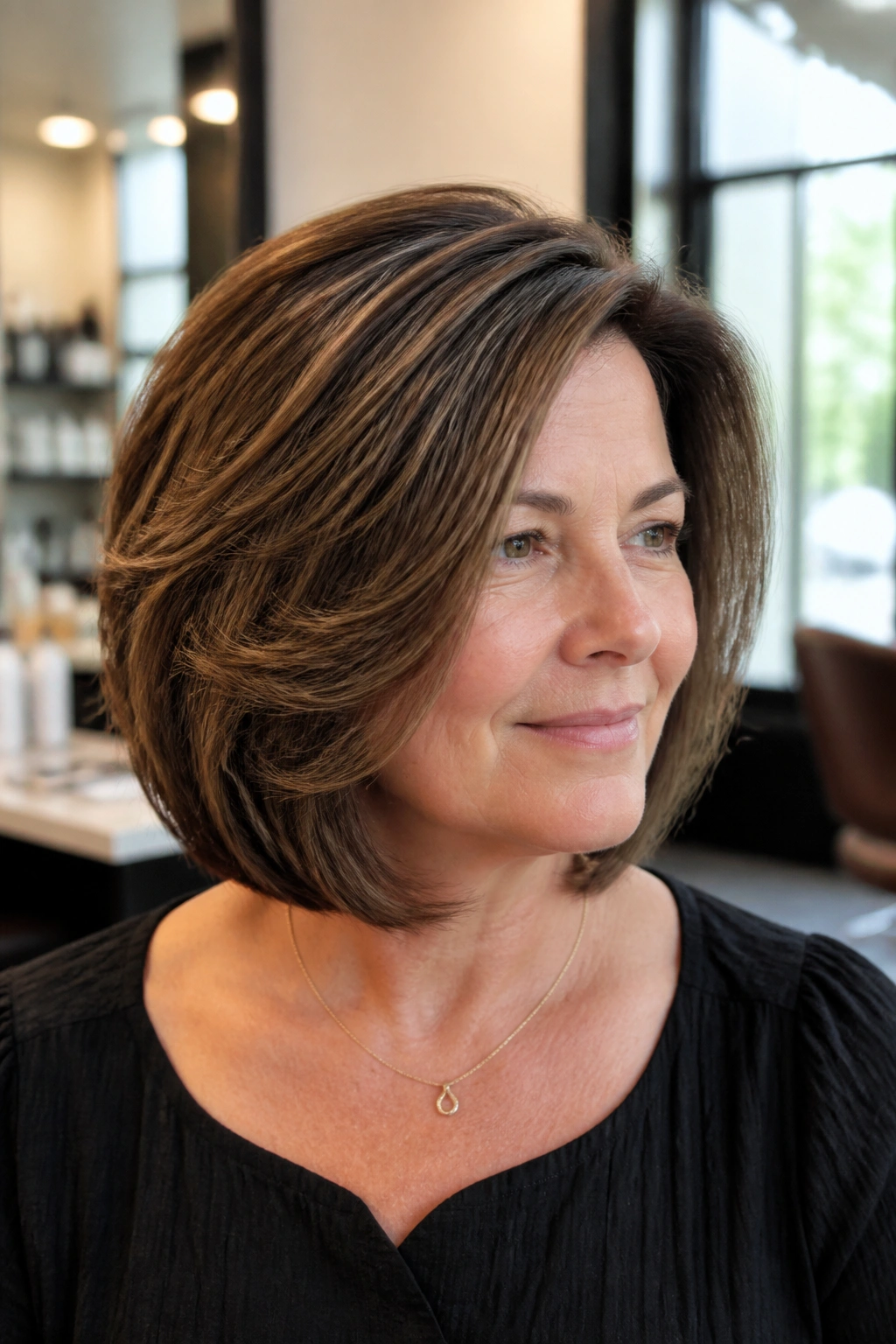
Thick hair can wear a bob beautifully, but only if the shape is controlled from the inside out. A layered bob for thick hair is less about creating volume and more about managing it. Without the right removal of weight, thick hair can grow into a broad triangle that feels wide at the sides and heavy at the ends.
The best cuts for thick hair usually use internal layering, slide-cutting, or careful graduation around the back. That lets the hair move without shredding the perimeter. I would be cautious about aggressive thinning shears here. They can make the ends look frizzy, especially if the hair is coarse or wavy.
A good thick-hair bob should still have a strong outline. It should not look like it has been chewed up. The ends matter. They need enough density to sit well, especially if you wear the hair straight.
Blow-drying thick hair takes more time, no way around that. But a properly layered bob cuts the struggle down. Less bulk around the neck. Less puff at the sides. Less fighting with the brush.
20. Low-Maintenance Air-Dry Bob
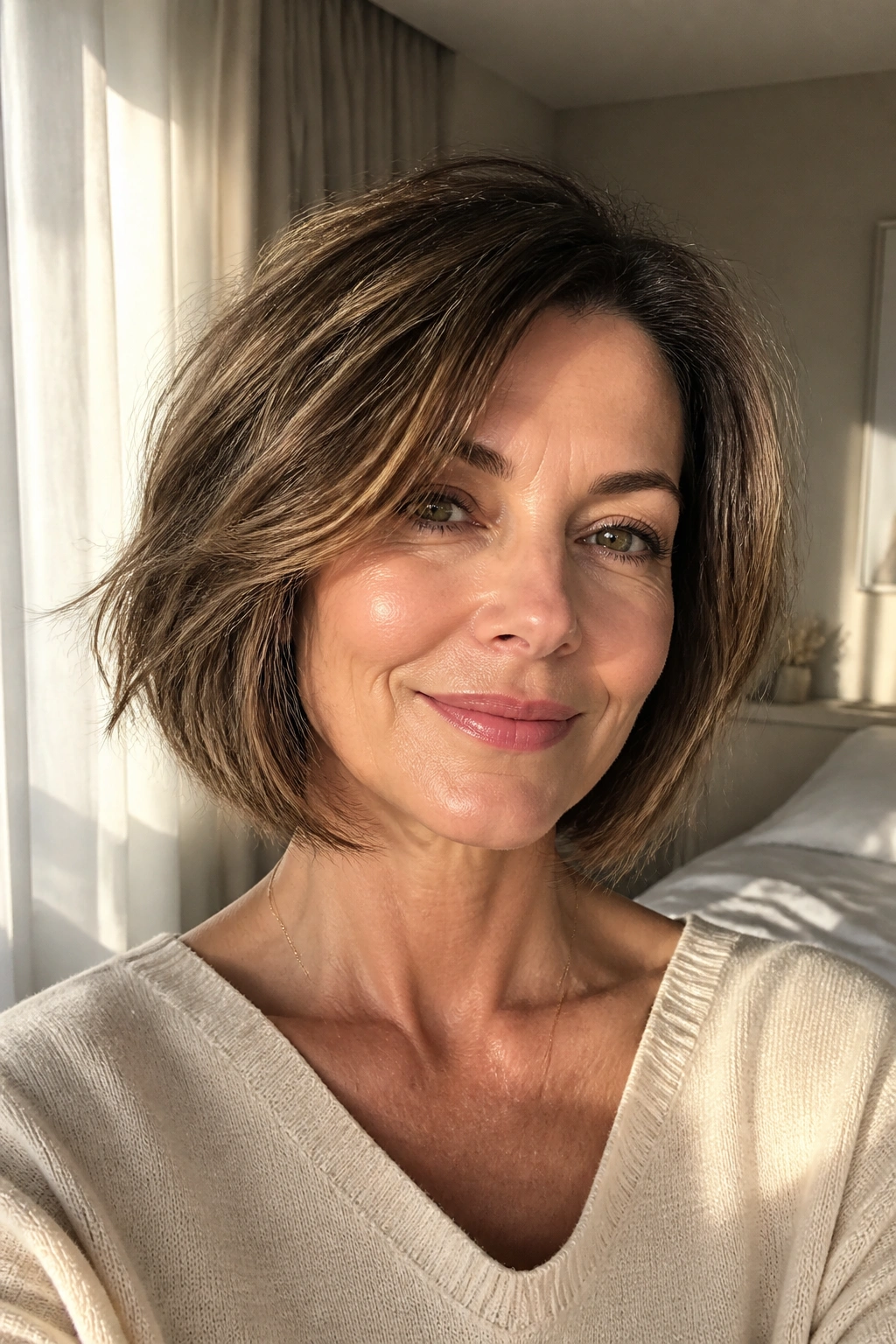
If you are tired of wrestling with heat tools, this is the haircut to ask about. A low-maintenance air-dry bob relies on the cut itself to build shape, so it looks decent even when you let it dry on its own. That means the layers have to be placed carefully. A random chop will not do the job.
The styling routine should stay simple. Work in a leave-in conditioner, a small amount of cream or foam, then scrunch lightly and leave the hair alone. If a few pieces fall awkwardly, clip them up at the roots while the hair is drying. That tiny bit of lift can save the whole shape.
It helps a lot if the bob has a soft internal structure. Then the hair can settle into its own pattern without collapsing at the sides. Wavy and slightly textured hair usually does best with this approach, though straighter hair can work too if the cut has enough movement.
This is one of the few cuts that gets better when you stop fussing with it. Which is rare, and honestly refreshing.
21. Warm Dimension Bob with Highlights

Subtle highlights can make a layered bob look more alive, especially on medium-brown, dark-blonde, or silver-adjacent hair. The point is not streaks. The point is dimension. A few well-placed lighter pieces show where the layers sit and make the haircut easier to read.
Face-framing highlights around the front can brighten the whole style, while softer pieces through the crown keep the top from looking flat. Warm tones such as honey, caramel, or soft beige tend to blend well without shouting. A heavy stripe near the front, on the other hand, can fight the haircut and age it in a strange way.
What works best
- Lighter pieces around the cheekbone and temple area
- Softer lowlights underneath if the hair needs depth
- A gloss between coloring services to keep the tone clean
- A haircut that already has movement, not one that depends on color alone
The nice thing here is that the layers and the color support each other. The cut gives the highlights a place to land, and the color keeps the layers from disappearing into one flat block.
22. Sleek Layered Bob with Polished Ends
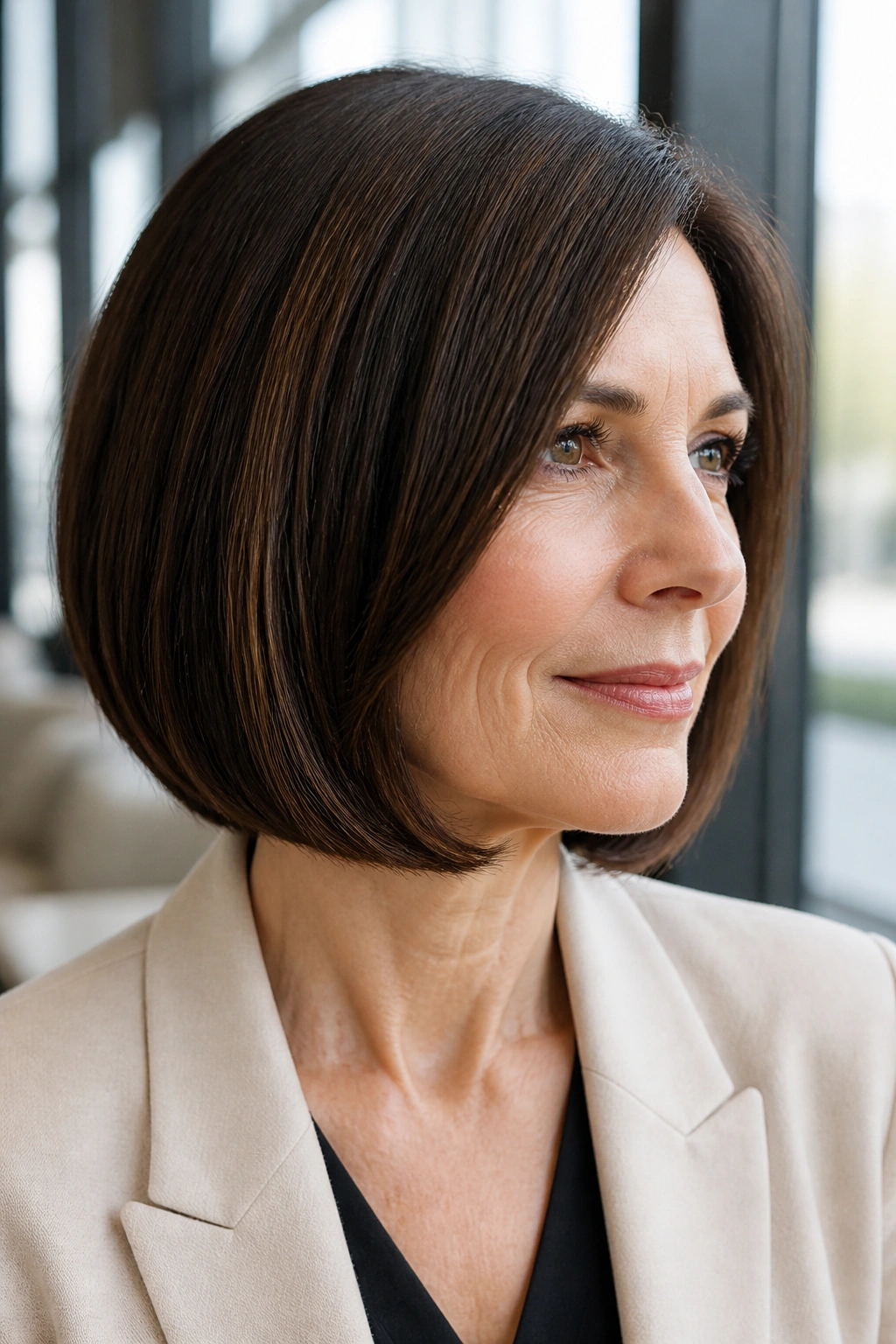
A sleek bob is not the same thing as a stiff bob. The difference is in the ends. Polished ends look deliberate, while stiff ends look like they were ironed into submission. A sleek layered bob keeps the shape smooth, but the layers underneath stop it from feeling heavy or helmet-like.
This cut works well if you like cleaner lines and do not mind using a flat brush or smoothing balm. It suits straight hair especially well, though a mild wave can be tamed into shape with a round brush and a little patience. The length can sit anywhere from the jaw to the top of the shoulder, but the finish should stay crisp.
I like this style for anyone who prefers a more refined look without much fluff. It feels neat with a blazer, but it does not look overdressed with jeans and a sweater. And that is probably the most honest thing I can say about a bob like this: it behaves.
Keep the layering subtle and the outline strong. That combination gives the haircut a calm, expensive-looking finish without asking for perfection every morning.
