



The right bob haircut can do a lot more than take a few inches off, especially when you’re looking at bob haircuts for women over 50. A good bob can lift the face, lighten heavy hair around the neck, and make morning styling feel less like a chore and more like a quick routine you can live with.
That matters more than people admit. Hair often changes in density, texture, and how it falls around the jaw, and the wrong cut can make all of that feel more obvious than it needs to. A shape that looked fine five years ago can start feeling boxy, flat, or oddly hard to style.
The nice thing about a bob is how adjustable it is. It can be soft, sharp, layered, polished, wavy, or piecey, and each version solves a different problem. Some women want lift. Some want movement. Some want less bulk. Some want a cleaner line that doesn’t fight the face.
The trick is choosing the version that works with your hair instead of arguing with it. That’s where the good stuff starts.
1. Soft Layered Bob Haircuts for Women Over 50

A soft layered bob is the one I reach for first when someone wants movement without losing shape. The layers are light, usually starting around the cheekbone or just below it, and they keep the ends from sitting like a heavy shelf.
Where the Layers Should Land
The sweetest version of this cut keeps the perimeter near the jaw or just above it, with a little internal layering to stop the shape from puffing out. Too many short layers can make fine hair look wispy in a bad way. Too few, and the bob turns into a solid block.
This cut plays nicely with hair that has changed texture over time. Gray strands can feel coarser, and fine hair can lose some swing. A soft layered bob handles both without asking for a complicated blowout.
- Ask for light face-framing layers, not choppy chunks.
- Keep the back only slightly shorter than the front for a natural shape.
- Use a round brush or velcro rollers if you want lift at the crown.
- A pea-sized amount of mousse on damp roots helps the cut hold its shape.
Best tip: ask your stylist to show you where the shortest layers sit before they cut. That tiny conversation saves a lot of regret.
2. Sleek Jaw-Length Bob With Side Part
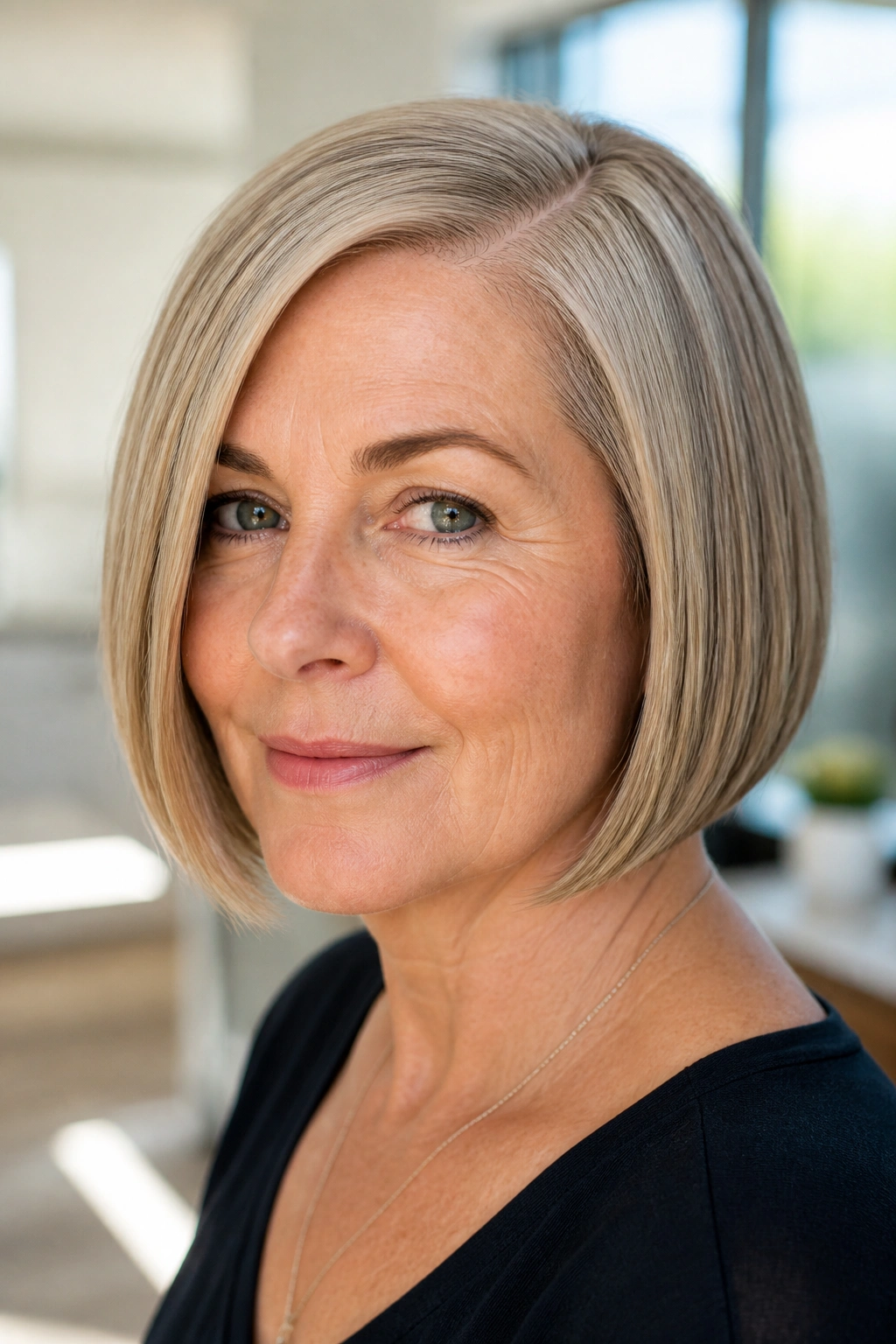
Need a bob that looks polished with almost no fuss? This is the one. A jaw-length bob with a side part gives clean lines, a bit of face lift, and enough length to tuck behind the ears when you want it out of the way.
It works because the side part breaks up the symmetry a little. A center part can be lovely, but on some faces it makes the haircut feel flatter than it should. A side part gives the top section a little rise, which helps if your hair lies close to the head.
The best version sits right at the jaw or a hair below it. Shorter than that, and the look can feel severe. Longer than that, and the line loses its crispness. You want enough weight to keep the ends neat, but not so much that the haircut drags the face down.
It’s a good fit for straight hair, and it can work on slightly wavy hair if you are willing to run a flat iron over the front pieces. Nothing fancy. Just one careful pass, a heat protectant, and a comb. Clean hair, clean line.
3. French Bob With Soft Fringe

The French bob gets a lot of attention for a reason: it has attitude without trying too hard. It usually sits at the chin or just above it, and the fringe makes the whole cut feel a little less formal.
Why It Feels Fresh
A soft fringe can hide a forehead that has started to show a few lines, but it also does something more useful than that. It frames the eyes and pulls attention upward, which keeps the whole cut from looking too bottom-heavy. That’s a small thing. It changes the whole read of the haircut.
The version I like best is not too blunt. A tiny bit of texture at the ends keeps it from looking boxy, especially if your hair is dense or has a natural bend. If your hair is fine, keep the fringe a bit airy so it doesn’t steal all the fullness from the rest of the cut.
- Ask for bangs that skim the brows rather than bury them.
- Keep the bob around the chin, not mid-neck.
- Air-dry with a touch of styling cream for a relaxed finish.
- If you wear glasses, leave a little space so the fringe does not crowd the frames.
Small warning: a French bob needs regular trims. If it grows out too much, the charm goes with it.
4. Stacked Bob With Lift at the Crown

Picture leaving the salon with hair that suddenly has a little architecture at the back. That’s the stacked bob. It uses short, graduated layers in the nape and more length through the front, which creates lift where flat hair usually gives up.
This cut is a gift for hair that collapses at the crown or hangs heavy behind the ears. The stacking builds shape from the back up, so the head looks a touch more lifted and the neckline looks longer. It can be especially good if your hair used to have more body and now needs a push to keep it from lying flat.
What to Watch For
The angle matters. Too steep, and the cut can look dated fast. Too mild, and you lose the lift that makes it worth wearing. A good stacked bob should feel clean and current, not helmet-like.
You’ll want a stylist who knows how to keep the layers smooth. Ask for a soft stack, not a giant wedge. Then style with root spray and a round brush, lifting the hair just enough to keep the back from collapsing.
That’s the whole trick. Small lift. Clean shape. No drama.
5. Long Bob That Skims the Collarbone
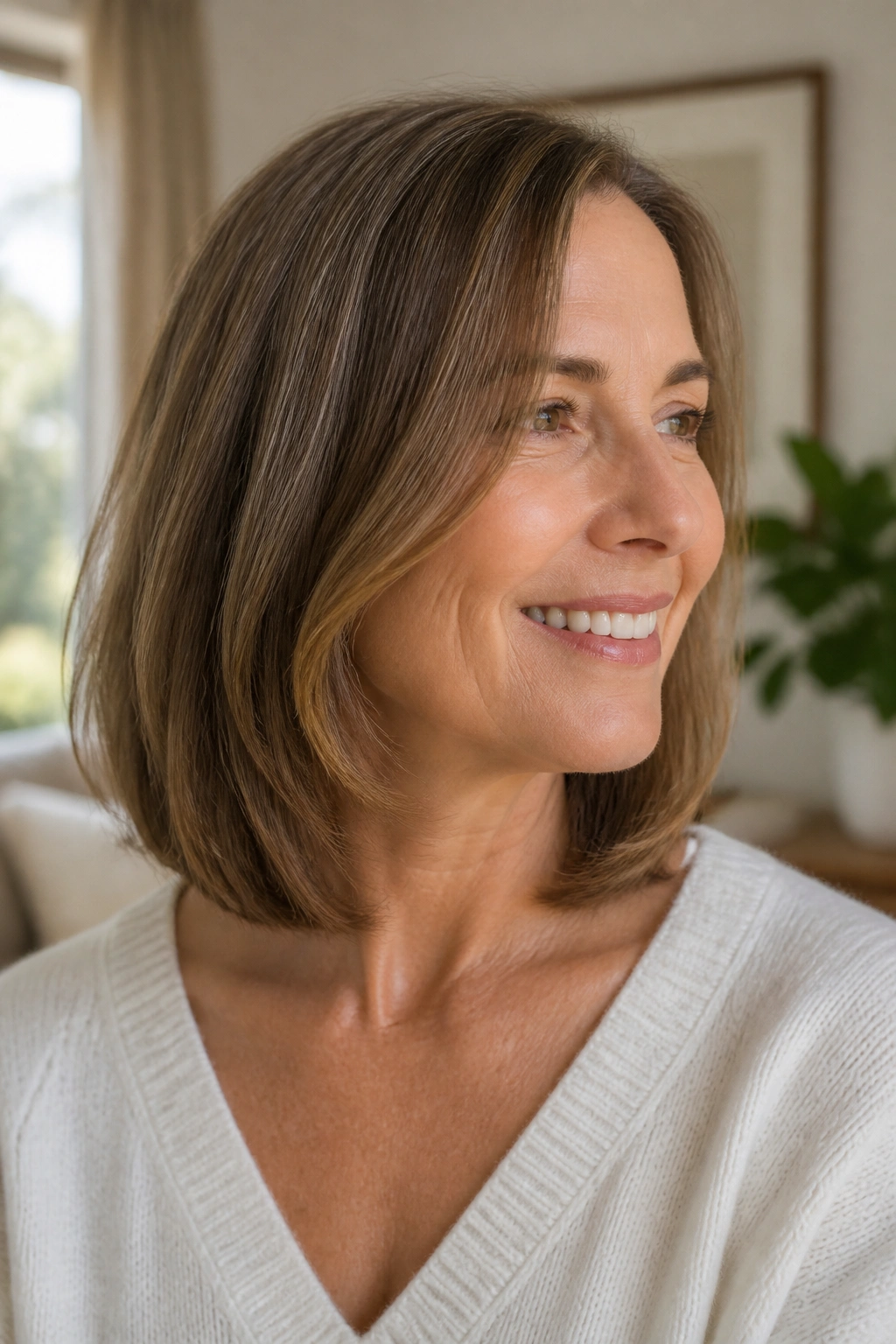
Long doesn’t have to mean boring. A lob, or long bob, gives you the shape of a bob without giving up the extra length that some people like for ponytails, clips, and easy grow-out.
This is the haircut I suggest to women who want a change but do not want to feel like they’ve lost all their hair in one afternoon. It usually lands somewhere between the chin and the collarbone, and that little bit of length makes it softer around the face.
It also behaves well on thick hair. You can remove weight through the ends without chopping the whole thing short, which means the hair still feels full but not bulky. On finer hair, a blunt-ish lob can make the ends look thicker than they are. That matters.
One good move is to add a few face-framing pieces that start around the cheek or jaw. Not too many. Just enough to keep the front from hanging like a curtain. If you like curling your hair, this length is forgiving. If you like air-drying, it still works. That’s why so many women end up returning to it.
6. Curly Bob That Lets Natural Texture Lead

Curls need room. A curly bob that respects the curl pattern can look lively, soft, and a little bit cheeky in the best way, while a cut that fights the curl tends to balloon at the sides or go triangle-shaped at the bottom.
Cut It for the Curl, Not for the Comb
The biggest mistake with curly bob haircuts for women over 50 is cutting the hair wet and assuming the curl will behave the same way when it dries. It won’t. Curls spring up, shift sideways, and sometimes shrink more than expected. That is why a dry cut, or at least a curl-by-curl shaping approach, often gives a better result.
Keep the length somewhere between the chin and just above the shoulders, depending on curl size. Tight curls often look great a little shorter because the spring factor adds width. Looser waves may need a touch more length so the hair does not puff out.
Styling That Actually Helps
- Use a leave-in conditioner on damp hair to keep the curl soft.
- Add gel or curl cream in sections, then scrunch upward.
- Diffuse on low heat until the hair is about 80% dry.
- Do not touch the curls while they set.
A curly bob looks best when it is allowed to move. If the ends feel too heavy, ask for a little shaping underneath rather than chopping the whole silhouette shorter.
7. Blunt Bob With Glassy Ends
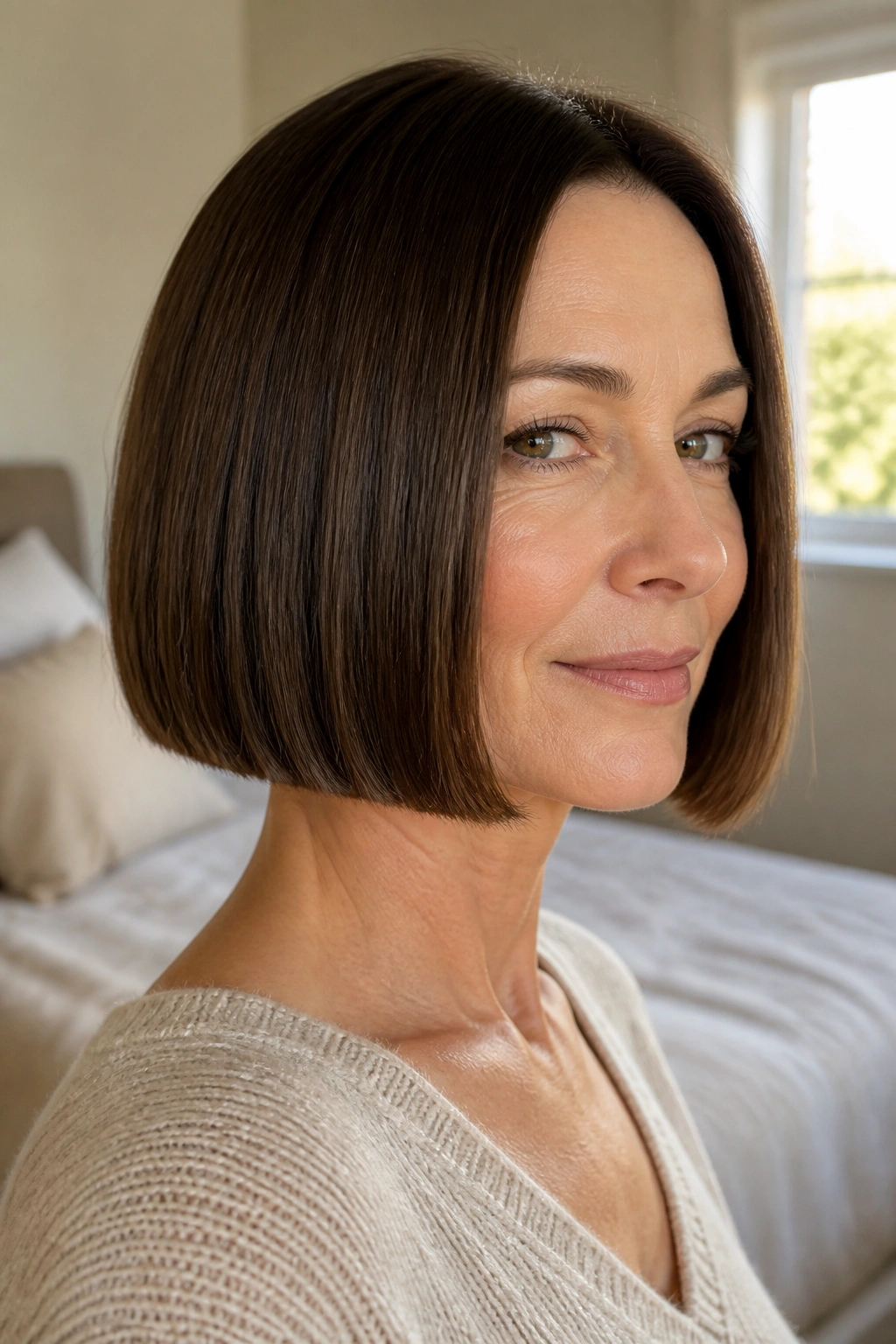
A blunt bob is a line, not a compromise. The ends sit in one even shape, which makes the hair look denser and cleaner, especially if your strands have thinned a bit over the years.
Sharp is the point.
What I like about this cut is how honest it is. There’s no hiding in the layers. The shape has to be good, and when it is, the whole haircut looks expensive without trying to act expensive. It’s especially useful for fine hair that needs the illusion of thickness. A blunt edge gives the eye a solid finish to read.
The length usually works best just at the jaw or slightly below it. That keeps the line strong but not severe. If you wear your hair straight most of the time, this cut can be a smart choice because it takes very little effort to look neat. A smoothing cream and a quick blow-dry are often enough.
The catch is that blunt cuts show every uneven end. Split ends, rough layers, missed trim? You’ll notice them. Fast. So this is one of those bobs that asks for regular maintenance, usually every 6 to 8 weeks if you want the edge to stay crisp.
8. Inverted Bob With a Soft Angle
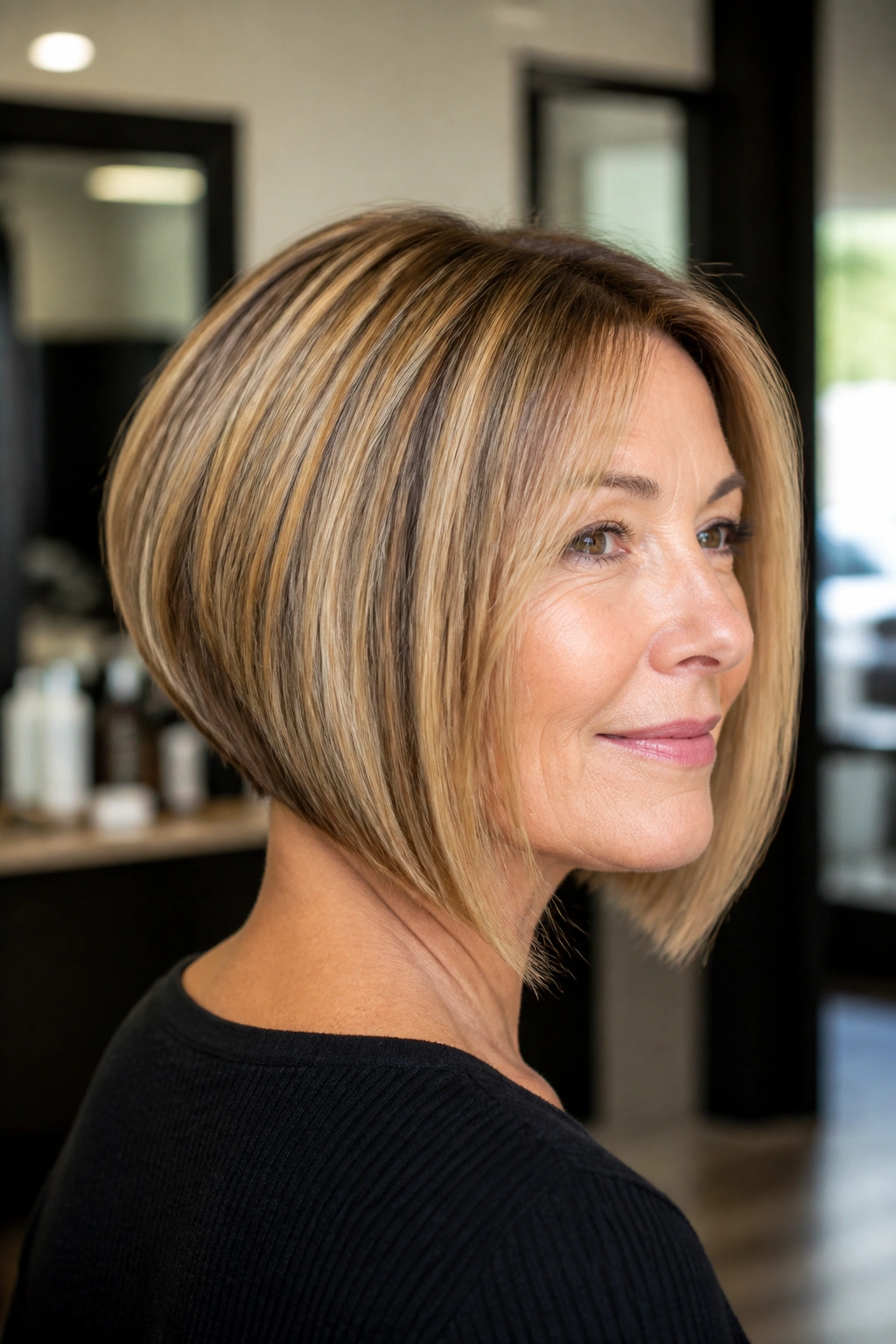
An inverted bob changes the shape of the head in a sneaky good way. The back is shorter and the front stays longer, so the haircut angles down toward the face instead of sitting in one flat line.
That subtle angle can make the neck look longer and the jawline look cleaner. If hair tends to puff at the nape, the shorter back removes some of that weight. If the front needs more softness, the longer pieces do the job without turning the whole cut into a lob.
What to Ask Your Stylist For
- A soft inversion, not a dramatic wedge.
- Front pieces that graze the jaw or chin.
- Light graduation in the back to keep the neck area neat.
- Enough length in front to tuck one side behind the ear.
This cut works best when the angle is visible but not extreme. You want movement, not a triangle. If your face is round or heart-shaped, the longer front can be especially helpful because it keeps the eye moving downward in a flattering way.
It’s a sharp look, but not a fussy one. That’s a useful combo.
9. Shaggy Bob With Wispy Bangs
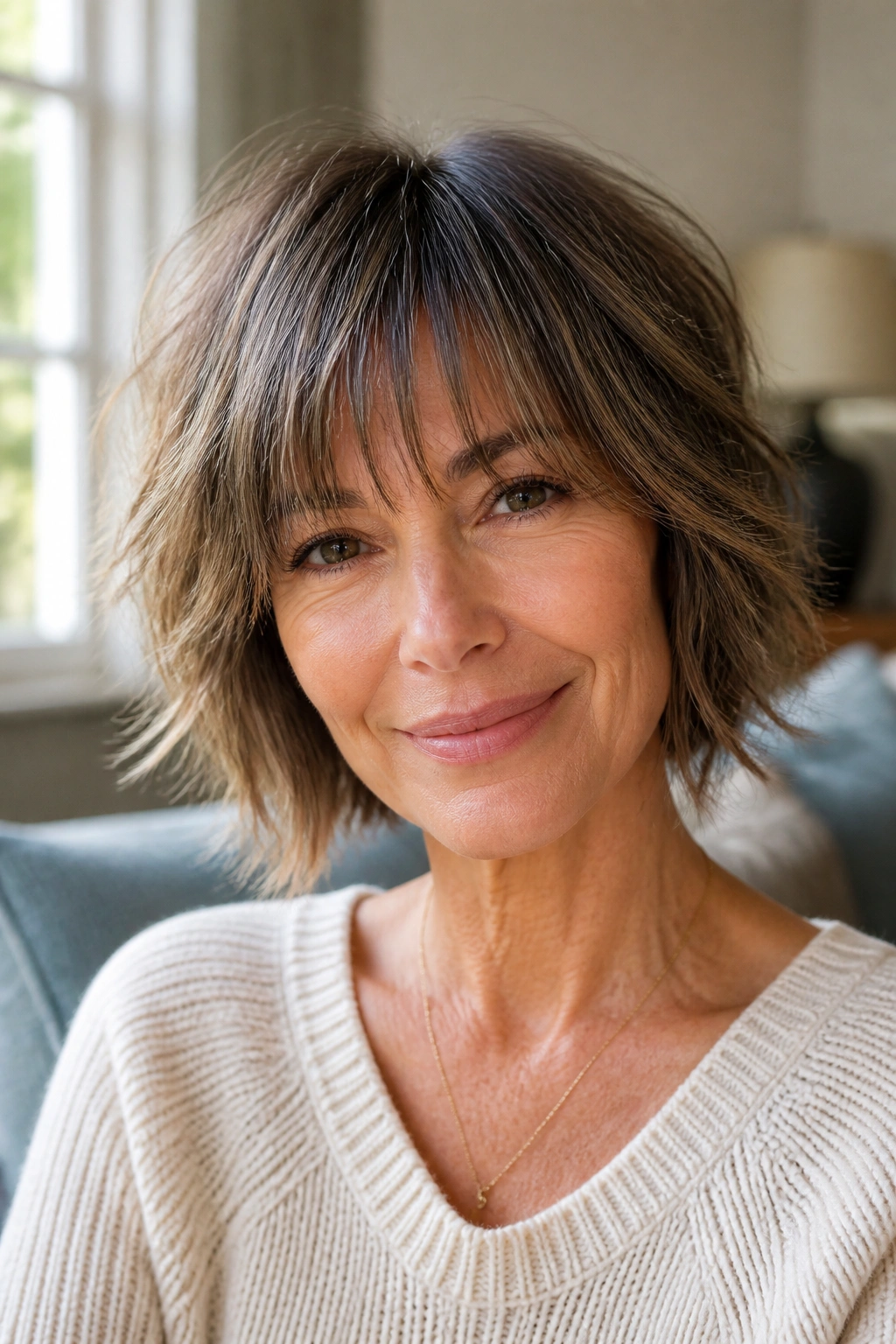
What happens when hair has its own mind? A shaggy bob stops fighting it and uses the movement instead.
This cut is built on soft, uneven layers that create texture through the ends and around the crown. Add wispy bangs, and the whole shape feels relaxed rather than stiff. It’s a smart option if your hair has some wave, if you like a little messy texture, or if you’ve been styling the same neat bob for years and want something less buttoned-up.
The bangs matter more than people think. Wispy fringe softens the forehead, draws attention to the eyes, and keeps the haircut from feeling too heavy around the face. They also grow out more gently than blunt bangs, which is a real advantage if you don’t want a strict trim schedule.
A shaggy bob does ask for a little product. A light texturizing spray, a dab of paste, or a mousse on damp hair helps the layers separate instead of puffing out. Skip the heavy oils unless your hair is dry enough to need them. Too much weight kills the shape.
It’s a good cut for women who like their hair to look touched by air, not lacquered into place.
10. Silver Bob for Women Over 50 With Natural Dimension

Gray hair doesn’t have to look flat. In a bob, silver strands can look bright, reflective, and sharp, especially when the cut has enough shape to show off the movement.
A lot of women make the mistake of treating gray hair like a problem that needs to be hidden first and shaped second. I think that order is backwards. Once the cut is right, the color often looks better on its own. A bob can give silver hair a clean frame, and that frame matters because natural gray sometimes loses the visual depth that darker hair had.
Dimension Without Overcomplicating It
You do not need a complicated color plan. Sometimes a few soft lowlights, or even just a gloss that keeps the silver from looking dull, is enough. If the hair is more salt than pepper, ask for a shape that moves a little around the jaw so the color can catch light from different angles.
A one-length silver bob can work, but it can also look heavy if the hair is fine. A little layering at the ends or a slight bevel under the line helps.
- Use a purple shampoo only when brass starts showing.
- Keep trims regular so the silver ends stay neat.
- Ask for a style that keeps the crown from flattening.
- If the hair feels coarse, a lightweight cream beats a heavy serum.
The haircut should show off the color, not fight it. That’s the whole point.
11. Asymmetrical Bob for a Little Edge

One side longer than the other is not a gimmick. A subtle asymmetrical bob can balance a face that feels a little uneven, add interest to straight hair, and keep a classic shape from looking too expected.
The best version is not extreme. You do not need a dramatic difference unless you want one. Even a half-inch to an inch of asymmetry can make the haircut feel fresher, especially when the front pieces are angled gently toward the jaw. It reads modern without turning into a costume.
This cut can also be useful if one side of your hair grows out flatter than the other, or if you like wearing a side part and want the shape to follow that line. The asymmetry draws the eye diagonally, which tends to look lively on mature faces. It keeps the bob from sitting like a box.
If you’re asking for this in a salon, bring a photo. A lot of asymmetrical cuts go wrong because the difference is too aggressive or the line is cut too blunt. A skilled stylist will soften the transition so the haircut looks deliberate, not uneven by accident.
12. Wavy Collarbone Bob With Easy Movement

A wavy collarbone bob sits in that sweet spot between short and long. It keeps the ease of a bob but leaves enough length to bend, wave, clip back, or tuck behind the ears without feeling clipped to the scalp.
The shape matters more than the tools. If your hair naturally bends, a collarbone length gives those bends room to show. If your hair is straighter, a large curling iron or flat iron can add loose waves that fall in a relaxed way, especially when the ends are left a little straighter than the mids.
How to Keep It From Going Flat
This cut can collapse if it’s cut too blunt and worn with no root lift. A little internal layering, kept away from the very ends, helps the hair move without losing the thicker-looking perimeter. I like this cut for women who still want a bit of softness around the shoulders but don’t want hair everywhere.
It’s also one of the easiest shapes to dress up or down. A smooth blow-dry gives it polish. Air-dried waves make it feel easy. Both are fine.
If you want a low-drama haircut that still feels a little romantic around the face, this one earns its place.
13. Feathered Bob With Lightweight Layers
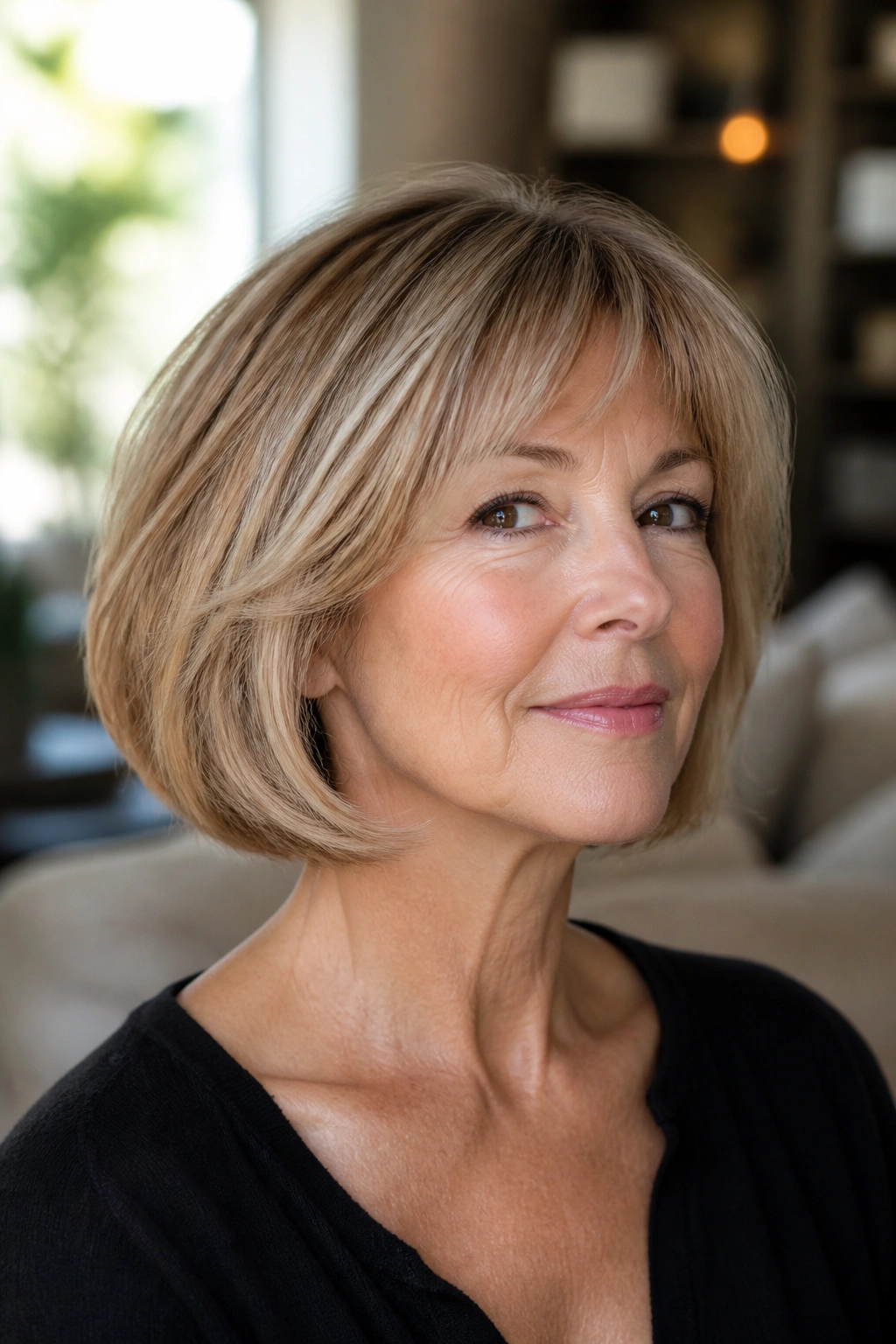
Feathered layers are the haircut equivalent of taking a heavy coat off. They remove bulk, soften the ends, and give the whole bob a lighter, easier swing.
Heavy hair can feel especially stubborn around the nape and chin. A feathered bob helps because the layers are cut to break up that weight without leaving obvious steps. On thick hair, the result is more movement and less shelf-like bulk. On medium hair, it keeps the shape airy. On fine hair, though, you have to be careful. Too much feathering and the cut starts looking thin at the ends.
What Makes It Work
- The layers should be soft and blended, not razor-thin.
- The top should keep enough fullness so the head doesn’t look shrunken.
- The ends should taper gently, especially around the jaw.
- A blow-dry with a round brush keeps the feathers visible.
The best feathered bob has movement you can see but not so much texture that it looks frayed. It’s one of those cuts that looks casual on purpose, which is harder to do than people think. The style should move when you turn your head. If it doesn’t, the layers are probably too heavy or too weak.
14. Rounded Bob That Softens Strong Features
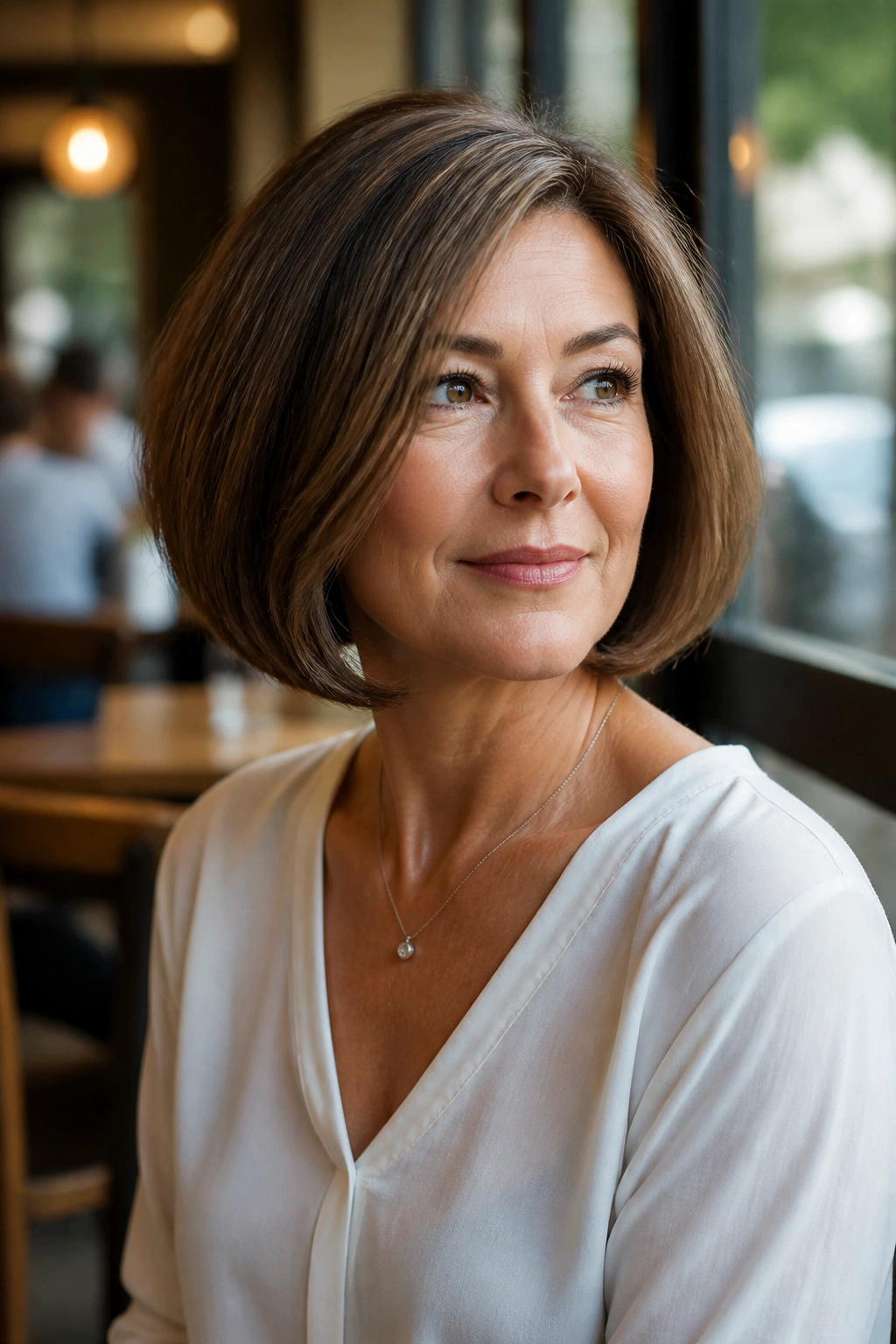
Can a rounded bob make strong features look softer? Yes, if the curve is placed well.
This cut shapes the hair so it follows the contour of the head and face, usually with a little more fullness around the cheek area and a gentle curve under the jaw. It can be a lovely choice for square faces, stronger jawlines, or anyone who wants the haircut to feel a bit more cushioned around the edges.
The trick is not to overbuild the volume. A rounded bob should feel intentional, not puffy. If the sides get too wide, the whole thing turns old-fashioned fast. The better version stays close to the head at the crown, then opens slightly around the mid-lengths and tucks back in at the ends.
Where the Curve Should Sit
The curve usually looks best when it starts just below the ear and rounds under the chin. That keeps the face framed without boxing it in. A side part can make the shape feel softer still, especially if your hair naturally falls one way.
This is one of the best bobs for women who want a gentler outline and a haircut that takes the edge off sharper features. It’s quiet. It works.
15. Piecy Bob Haircuts for Women Over 50
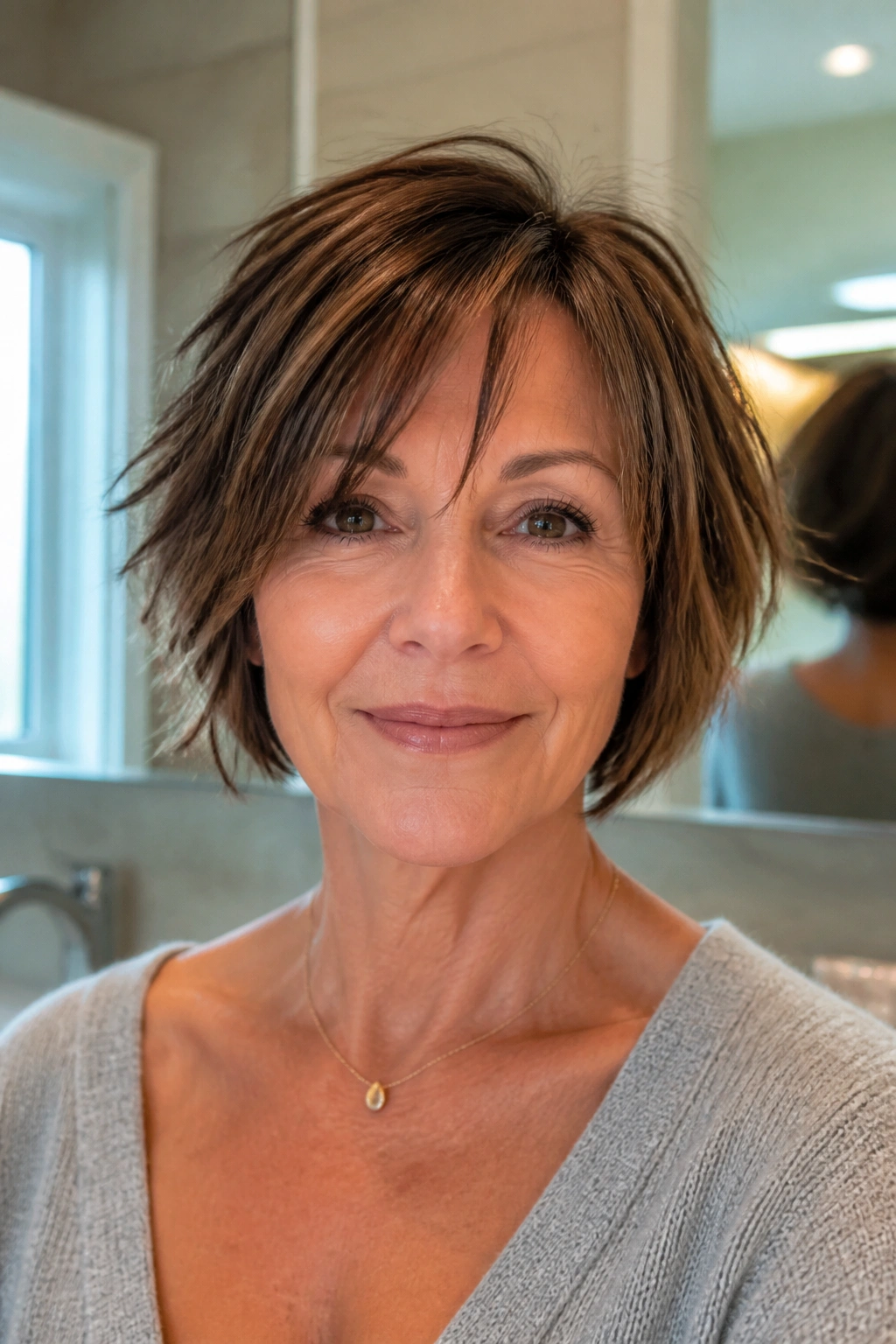
Pieces that move around the face keep a bob from looking stiff. A piecy bob uses separated strands, light texture, and a bit of unevenness to create shape without making the hair look messy.
I like this cut for hair that feels stuck in one position. It gives the ends some life, and it keeps the face-framing bits from behaving like a hard wall. If the hair is fine, piecing can add the illusion of density and motion. If the hair is thick, it can stop the shape from feeling too solid.
Styling It Without Crunch
- Work a small amount of texturizing cream through the mids and ends.
- Twist a few front sections with your fingers while the hair is still damp.
- Blow-dry with the nozzle pointed down to keep frizz under control.
- Finish by breaking up the ends with a touch of paste.
The cut should never feel sticky or overdone. That’s where a lot of textured bobs go wrong. They get loaded with product and start looking tired by lunchtime. A piecy bob should still move when you shake your head or tuck it behind your ear.
For women over 50, this shape has a nice side effect: it softens the whole look without hiding the face. That balance is hard to beat.
Final Thoughts
The best bob is the one that matches your hair’s actual behavior, not the version you wish it had on a humid morning. Fine hair, thick hair, silver hair, curls, waves — each one asks for a slightly different shape, and the right cut makes that easier instead of harder.
A good salon conversation helps more than a dramatic photo ever will. Bring one picture for the silhouette and another for the length you want, then talk about how much time you’re willing to spend with a brush, a dryer, or both. That one detail changes everything.
And honestly, that’s what makes bob haircuts for women over 50 so useful. They can look polished, casual, sharp, soft, or a little undone, without needing a whole new relationship with your bathroom mirror.
