



Straight hair can look glossy and expensive with almost no effort, but it can also fall flat in a hurry. That is where layered bob haircuts for straight hair earn their keep: they keep the clean outline people want while sneaking movement into the interior, so the ends do not hang there like a ruler.
The tricky part is restraint. Too many short pieces and the bob turns wispy. Too few and it starts to feel helmet-like by the end of the day. The sweet spot is a cut that keeps a strong perimeter and uses internal shaping where the hair needs to bend, especially around the jaw, cheekbones, and nape.
Straight hair shows everything, which is exactly why placement matters so much. A bob with the right graduation can make fine hair look fuller, while a stacked or inverted shape can pull bulk out of thick hair without making the style feel thin. The difference is not subtle in the mirror.
Some of these cuts are sharp and neat. Others are soft enough to tuck behind the ear and still keep their shape. They all come back to the same idea: keep the outline clean, then let the layers do the work underneath. The shortest versions show the logic most clearly.
1. Chin-Length Layered Bob with Airy Ends

Chin length is the cut that tells the truth. If the line sits right at the jaw, the eye goes straight to the shape, so the layering cannot be sloppy. On straight hair, that makes this bob one of the easiest ways to look deliberate without looking overworked.
Ask for a blunt outer line with soft internal point-cutting, not a stack of short chops near the surface. The goal is a bob that moves when you turn your head, not one that frays into pieces. A medium round brush and a quick bend at the ends are usually enough.
Why It Works on Straight Hair
- The chin-length perimeter keeps the shape crisp.
- Internal layers remove bulk without hollowing out the sides.
- Airy ends stop the cut from feeling boxy.
Keep the shortest layers below the crown. If the crown gets too short, the style can start to sit up in odd places instead of lying cleanly.
2. Jaw-Grazing Layered Bob with Soft Internal Cutting

Tiny internal layers do more than long face-framing pieces ever will. That is the whole appeal of this jaw-grazing bob. It sits a hair below the jawline, so it gives the face a neat frame, but the interior shaping keeps the hair from hanging in one heavy sheet.
This cut is especially good if you like the idea of shorter hair but do not want the bluntness to look severe. The ends can be beveled just enough to curl inward with a flat brush, and the layers stay hidden unless the hair moves. That makes the style feel calm rather than obvious.
It also grows out politely. A lot of short bobs go weird fast. This one usually softens before it misbehaves.
3. A-Line Layered Bob with a Longer Front

Want the face to look a little more defined without going severe? An A-line bob does that job with almost no drama. The back stays shorter, the front drops longer by about 1 to 2 inches, and the whole shape creates a clean slope that works beautifully on straight hair.
What to Ask For
- A short, tidy back with a gradual front angle.
- Light layering through the interior, not around the edges.
- Front pieces that skim the jaw or land just below it.
The angle gives the hair motion even when it is worn pin-straight. It also keeps the cut from ballooning at the sides, which can happen when straight hair is cut too bluntly through the middle. If you like a profile that feels sharp but not harsh, this is a smart place to start.
4. Stacked Layered Bob with Clean Graduation
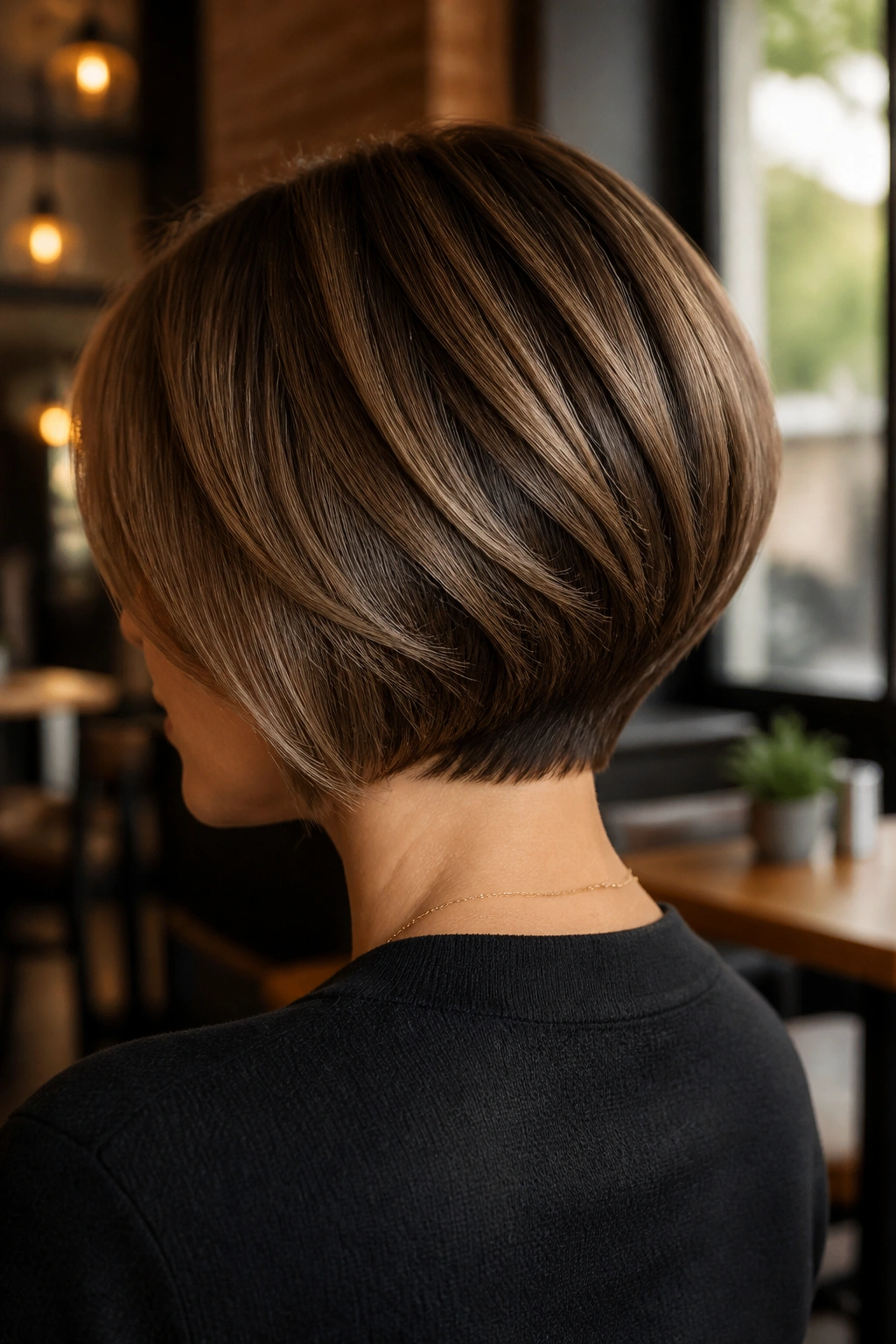
The back of this cut is where the magic lives. A stacked bob uses shorter layers at the nape to build lift, so the hair looks fuller from the side and back without needing a ton of styling. On straight hair, that lift can be the difference between “cute bob” and “why does this sit so flat?”
The key is clean graduation. You want the nape to feel snug and controlled, not chopped to bits. Ask your stylist to keep the top smooth and let the stacking happen underneath. If the texture gets thinned too much, the cut loses the solid shape that makes it work.
- Best for hair that collapses at the crown.
- Good when you want visible shape from behind.
- Needs regular trims because the nape shows growth fast.
Grow-out is the catch. This is one of the sharper-looking bobs, but it does not hide laziness.
5. French Bob with Invisible Layers
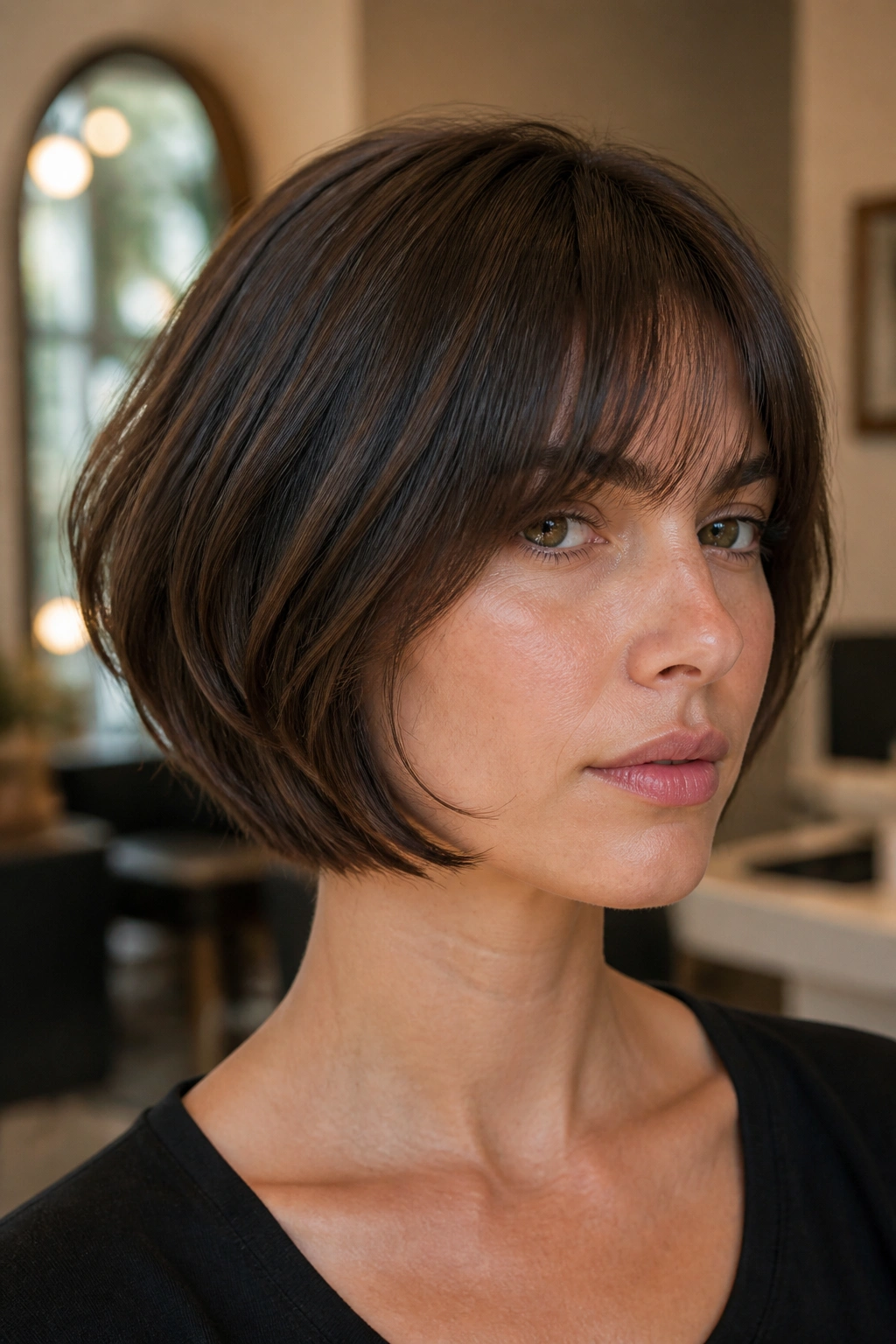
A French bob sounds romantic, but the best ones are practical at heart. They usually sit shorter, somewhere between lip and chin length, and they rely on a strong outline with almost invisible layering inside. On straight hair, that means the surface stays smooth while the interior gets just enough movement to avoid looking stiff.
The best version does not scream “layered.” That is the point. You want the ends to flick slightly, not feather into little shards. A soft fringe can work, but it is not mandatory. What matters more is keeping the weight line tidy so the cut feels intentional when it air-dries or gets a quick blow-dry.
This is the bob for someone who likes a neat shape with a little attitude. Not loud. Just confident.
6. Collarbone Lob with Long, Sliding Layers
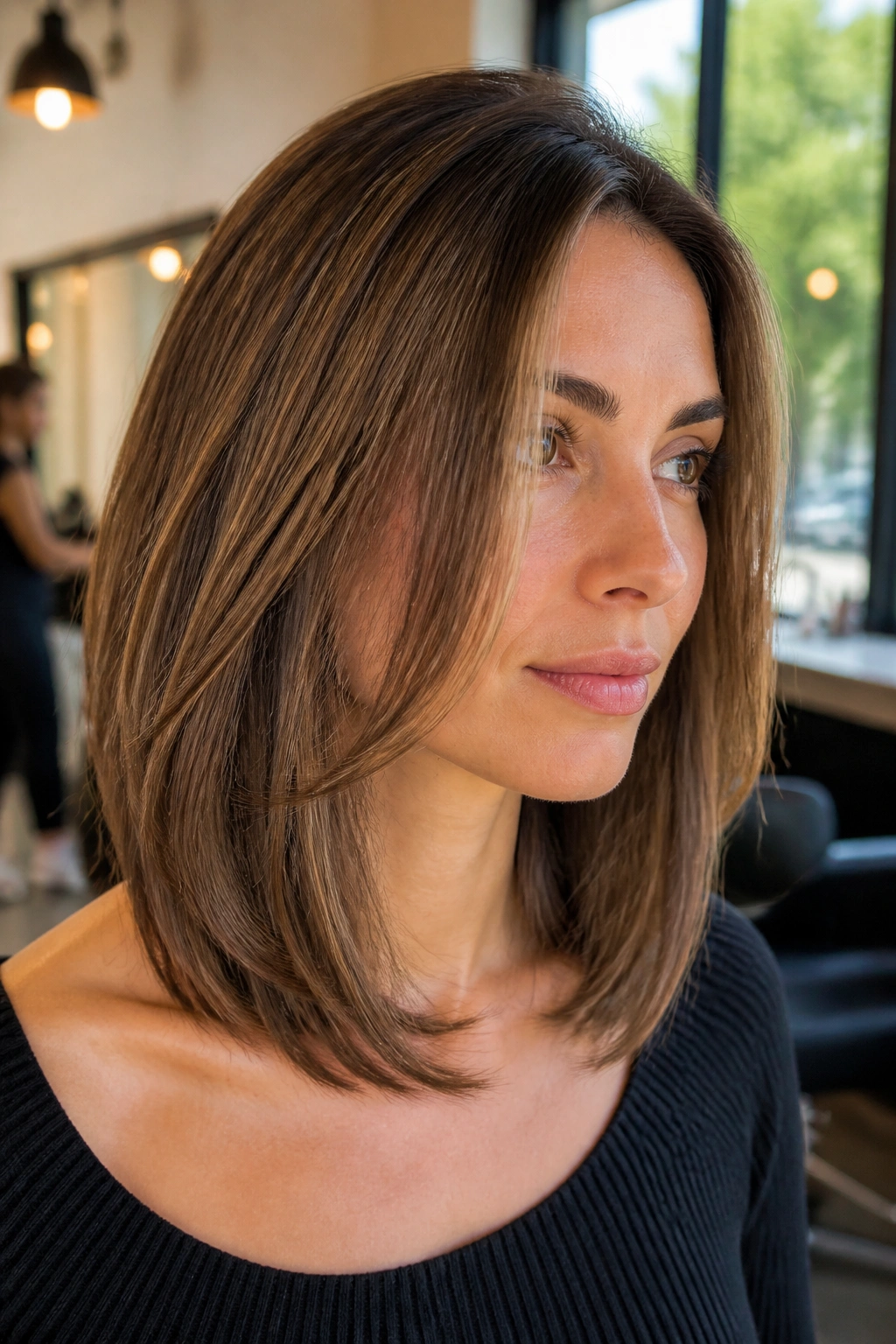
If you are not ready to lose length, this is the safe bet that still feels like a haircut. A collarbone lob gives straight hair room to swing, and long sliding layers keep the line from feeling heavy at the ends. The shape sits low enough to tuck behind the shoulder, which makes it easy to wear up, down, or half back.
Unlike a blunt lob, this version has a little give. The layers travel through the middle and lower sections of the hair, so the ends do not sit in one solid block. That matters more than people think. Straight hair can look luxurious when it is sleek, but it can also look lifeless if the weight is too even.
This cut is good when you want polish first and movement second. The movement still shows up.
7. Blunt Bob with Hidden Movement

A blunt bob does not have to mean flat hair. That is the part most people miss. When the perimeter is sharp and the interior is lightly softened, you get a cut that looks crisp from a distance and softens when it moves. On straight hair, that can be a very good thing.
The Trick
Ask for point-cutting or slide-cutting inside the bob, not a heavily thinned surface. The outer line should stay solid. The interior should get just enough relief to keep the ends from sitting like a block. That small difference changes how the hair falls over the shoulders and how it looks in daylight.
This cut suits people who want their bob to read as clean first. The movement is there, but it stays quiet.
8. Feathered Bob with Tapered Ends
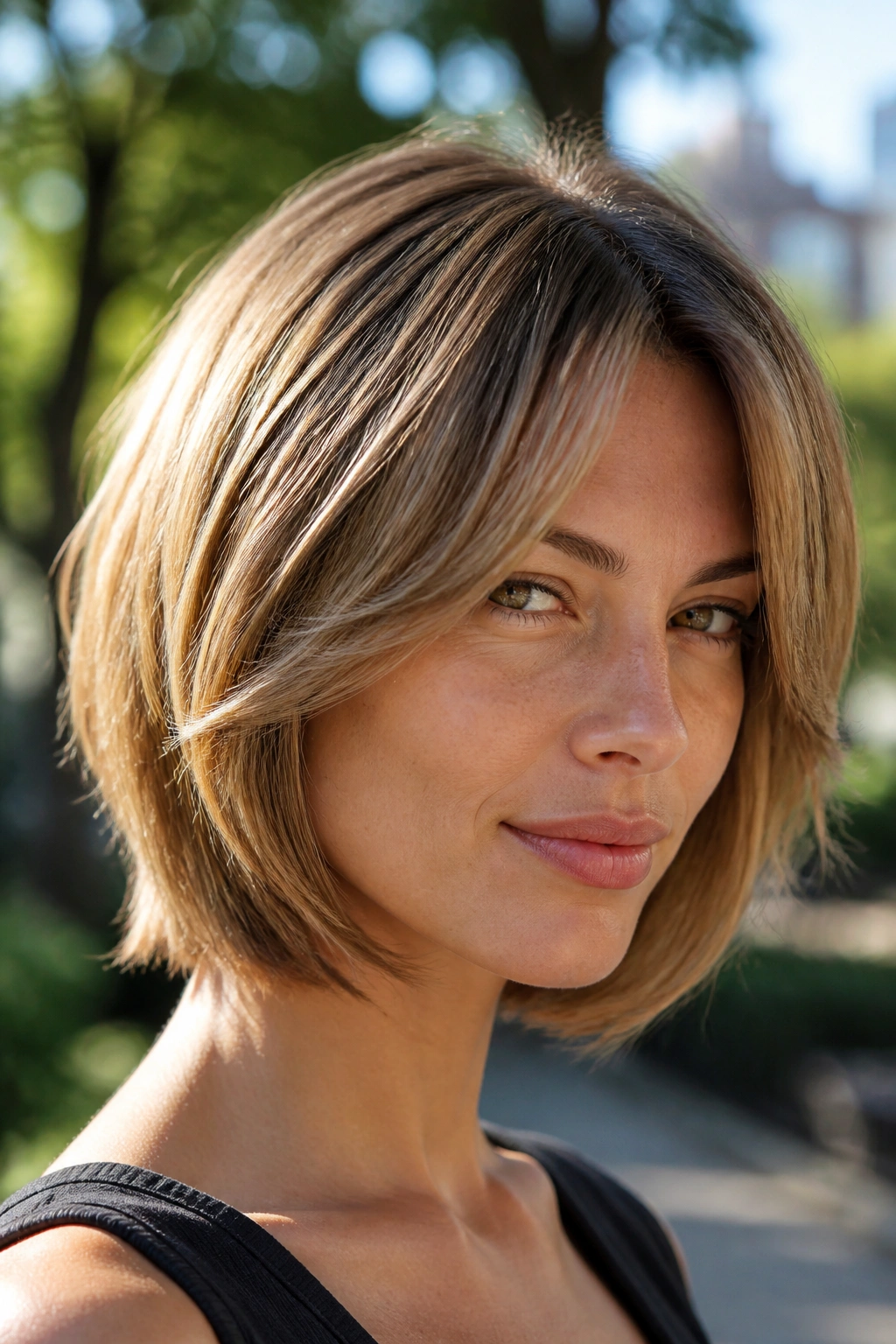
A feathered bob has a lighter feel through the ends, almost like the hair was brushed away from itself. On straight hair, that softness can be lovely if the hair is medium-density and not too coarse. The shape keeps the edges from looking heavy, and the tapering makes the bob move instead of just dropping.
The trick is keeping the feathering controlled. Too much texturizing and the ends can start to look dry, especially if the hair is naturally silky and shows every snip. Too little and the whole point of the cut disappears. A good feathered bob should look airy, not shredded.
- Works well with a quick bend at the ends.
- Needs a light hand with products.
- Looks better when the layers are blended, not choppy.
A small amount of mousse at the roots helps. So does a round brush. Heavy oils can weigh the shape down fast.
9. Side-Part Layered Bob with a Sweeping Front
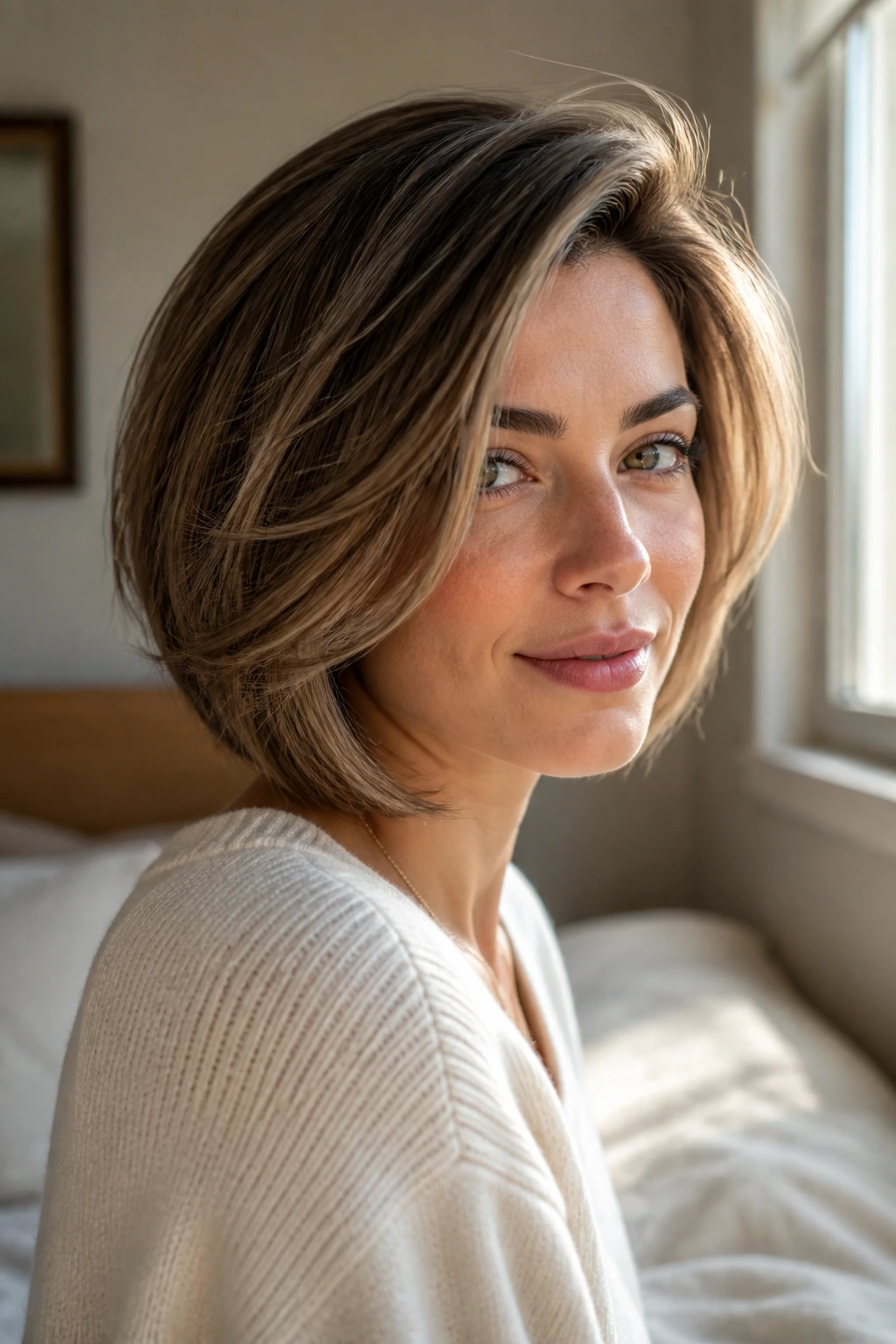
A side part changes the whole mood. Straight hair can go from plain to elegant in one move, and a layered bob with a side part uses that asymmetry to create lift where the hair usually falls flat. The sweep across the forehead also draws attention to the eyes and cheekbones without needing a dramatic fringe.
This shape works because the layers are visible from the front. The longer side gets a little more movement, while the shorter side keeps the cut from feeling too round. If you have hair that wants to cling to one side anyway, this is the cut that makes the habit look intentional.
It also photographs well in real life, not just on a screen. The volume sits where it matters.
10. Center-Part Layered Bob with Symmetry
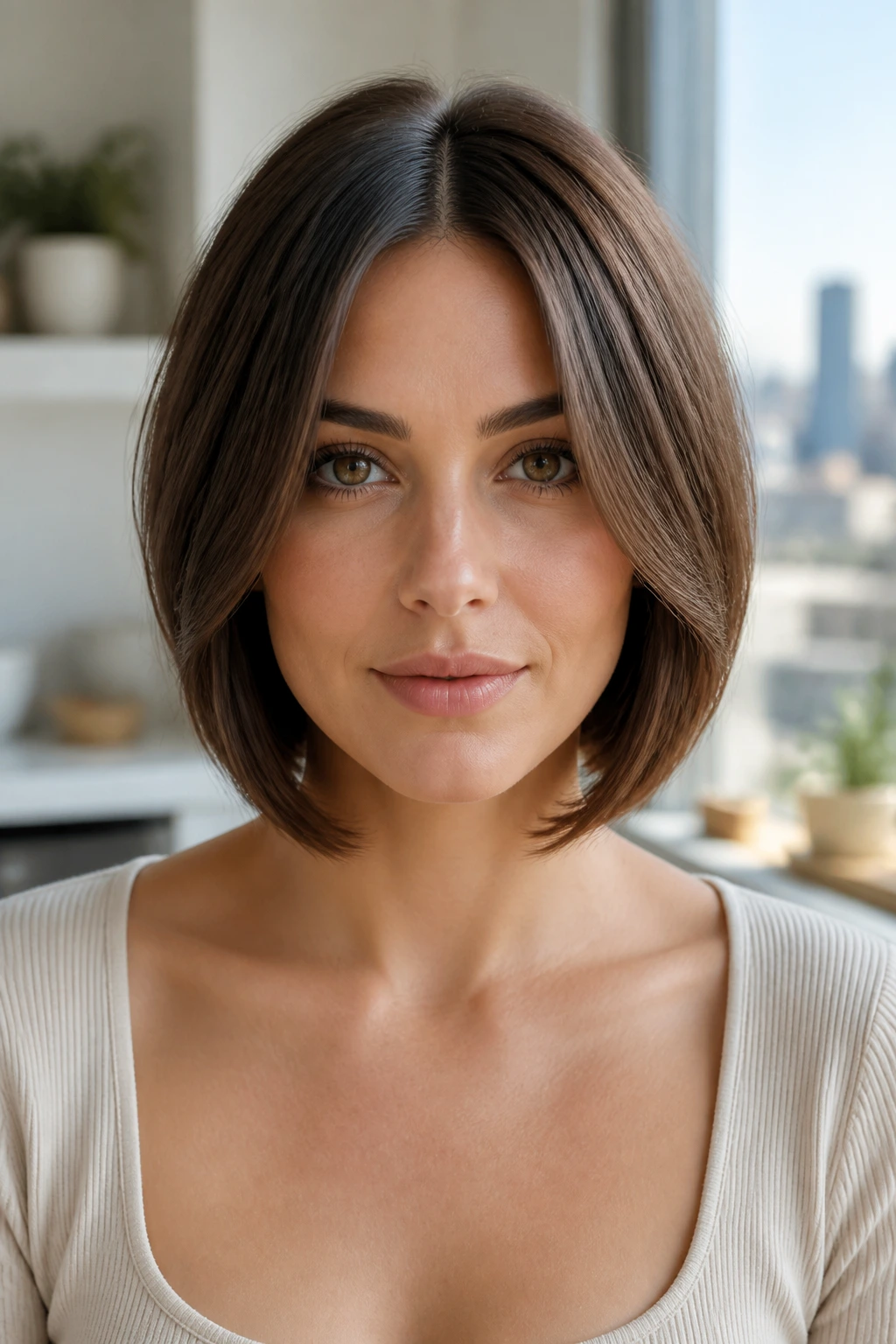
A center part is unforgiving, which is why it can look so good when the cut underneath is right. Straight hair with a center-parted layered bob shows the symmetry immediately. If the layers are balanced, the face opens cleanly and the ends sit in a neat line on both sides.
This style tends to work best when the layers are subtle. Too much choppiness and the center part starts to show every uneven piece. Keep the front sections a little longer so they graze the jaw or cheekbones, and let the interior do the work. That keeps the middle neat while adding movement when the hair slips forward.
A flat iron can sharpen the shape, but don’t press the life out of it. A tiny bend at the ends is enough.
It looks calm. Not boring.
11. Inverted Bob with Longer Front Pieces

Need a shape that feels sharper in front and lighter in back? The inverted bob is the answer. The back is shorter and rounded, while the front stretches longer, often by 1 to 3 inches, which creates a clean angle that flatters straight hair without making it stiff.
What separates this from an A-line cut is the stronger curve through the back. The inversion gives the nape some lift, so the bob does not collapse against the neck. That matters if your hair is fine or if you want the silhouette to hold its shape between washes.
It is a decisive cut. No pretending otherwise. If you like a little edge and want the front pieces to frame the face without feeling heavy, this one earns a close look.
12. Choppy Bob with Piecey Texture

This one has personality. A choppy bob keeps the outline short and uses uneven internal cutting to create separated pieces through the ends. On straight hair, the texture is visible right away, which makes the style feel lighter and less formal than a smooth bob.
How to Keep It Clean
- Ask for soft point-cutting, not aggressive razoring.
- Use a pea-sized amount of matte cream or light paste.
- Blow-dry with your fingers first, then finish with a brush if needed.
- Skip heavy oils near the ends; they can collapse the separation.
The risk is overdoing it. Straight hair does not hide mistakes, and too much choppiness can make the cut look broken instead of piecey. The good version has definition. The bad one just looks tired.
13. Rounded Layered Bob with a Curved Silhouette

If you like the hair to bend inward at the edges, a rounded bob is the move. It follows the curve of the head and face, which gives straight hair a softer outline and a fuller look through the sides. The layers are there, but they serve the shape rather than interrupting it.
This cut is especially good when you want the bob to feel gentle around the jaw. The rounded finish makes the ends settle in a smooth arc, which is useful if your hair naturally wants to kick out instead of curl under. A round brush and a quick blow-dry at the nape make a big difference here.
It is one of those cuts that looks tidy even when you do not fuss with it much. That is a nice trait.
14. Bob with Curtain Bangs and Light Layers

Curtain bangs can save a straight-haired bob from feeling too severe. They open in the middle, sweep to either side, and create a soft frame that connects the bob to the face instead of just stopping at the chin. When the layers are light, the whole cut stays airy and easy to wear.
Unlike a blunt fringe, curtain bangs do not box the face in. They give the forehead room and let the cheekbones show through. If your hair lies flat at the front, this is a clever way to create shape without asking the rest of the bob to do all the work.
The best version keeps the bangs long enough to blend into the front layers. Short bangs can be fun, but they demand more upkeep. This one is a little easier to live with.
15. Bob with Bottleneck Bangs and Face Framing
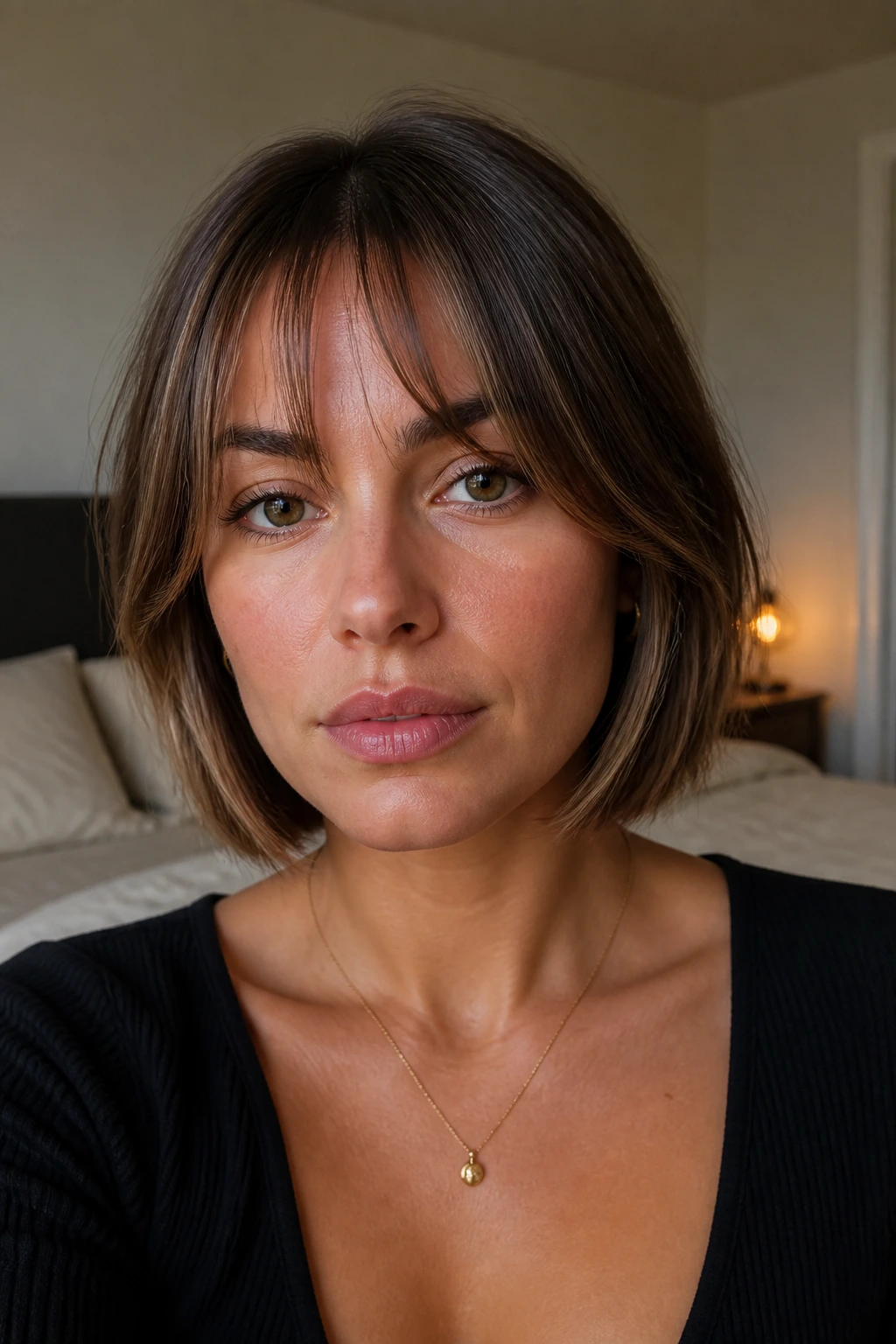
Bottleneck bangs sit somewhere between a full fringe and curtain bangs, and that middle ground is why they work so well with a layered bob. The center stays a little shorter, then the shape opens out toward the temples and cheekbones, which gives straight hair a softer front without covering too much of the face.
What to Ask For
- A shorter center section that tapers outward.
- Face-framing pieces that hit around the cheekbone or jaw.
- Light layering through the rest of the bob so the bangs can blend.
This cut suits people who want a little forehead coverage but do not want to commit to a heavy fringe. The shapes meet nicely, especially when the hair is straight and smooth. A quick pass with a round brush is usually enough to make the bangs sit correctly.
16. Shaggy Bob with Micro-Layers

This is not the haircut for someone who loves a pristine, geometric line. A shaggy bob uses lots of tiny internal layers to create movement all through the cut, and on straight hair that can look cool in a slightly undone way. Think texture first, polish second.
The micro-layers keep the hair from sitting like a single sheet, but they also change how the ends behave. There is more air, more separation, and a little less control. That trade-off is the point. If you want a bob that feels relaxed and slightly broken-in without looking messy, this is the lane.
It helps if you are willing to style it with a small flat iron bend or some finger-drying. If you air-dry it with no product at all, the shape can go a bit limp. A little grit helps.
17. Razor-Cut Layered Bob with a Soft Edge

A razor on straight hair is a sharp tool, not a shortcut. Used well, it can soften the ends and give the bob a lighter edge that moves easily. Used badly, it can leave the hair looking frayed, especially if the strands are coarse, dry, or already damaged.
That is why this cut needs a careful hand. The goal is a soft outline with touchable movement, not stringy ends. A razor-cut bob can look especially good when the hair is healthy and naturally smooth, because the shape stays sleek while the edge loses its hard, blunt feel.
If you want texture without a chopped look, this is worth asking about. If your ends are fragile, skip the razor and ask for scissors instead. Easy decision.
18. Layered Bob for Fine Straight Hair
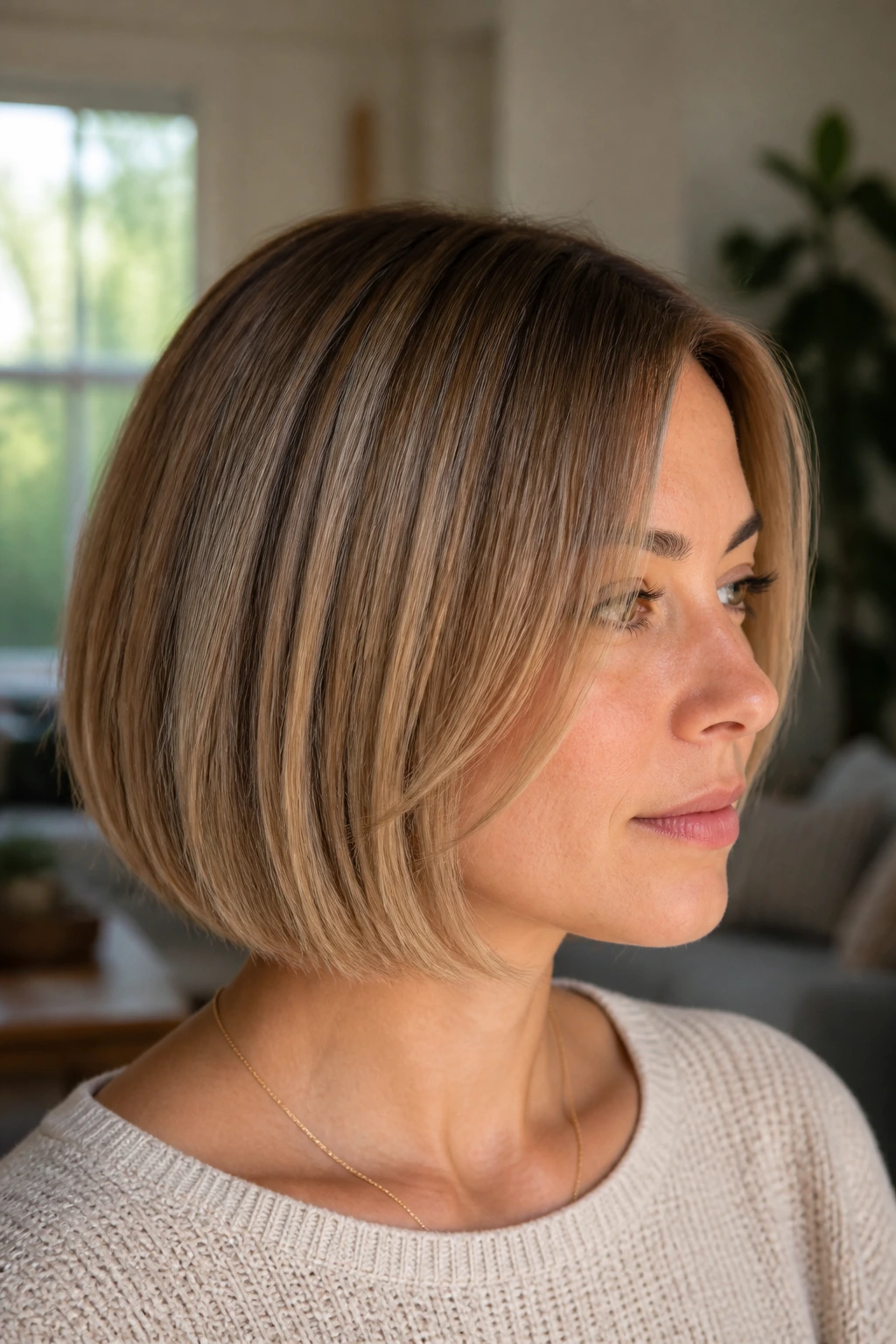
Fine straight hair needs a different kind of layering. Too many short pieces and the bob goes see-through fast. Too much thinning and the ends look weak. The smarter version keeps a solid perimeter and uses light internal layers to create the illusion of density, which is exactly what you want when the hair lies close to the head.
How to Keep It from Collapsing
- Ask for a blunt outer line with soft interior shaping.
- Keep the shortest layers around the cheekbone or jaw, not at the crown.
- Use a root-lifting mousse before blow-drying.
- Finish with a round brush or Velcro rollers for 10 to 15 minutes.
A fine-haired bob should look like it has structure, not holes. The wrong layers can make the hair feel thinner than it is. The right ones give it a little lift and a better silhouette at the sides.
19. Layered Bob for Thick Straight Hair

Bulk is the enemy here. Thick straight hair can look amazing in a bob, but only when the weight is controlled properly. If the cut is too blunt through the middle, it can build a shelf at the sides and stick out in all the wrong places. A layered bob for thick hair removes enough mass to let the shape sit close to the head.
The best version usually combines internal graduation with a tidy perimeter. You want the stylist to reduce density under the surface, not shred the outside line. That keeps the bob strong while stopping it from feeling boxy. A little extra length at the front also helps balance the heaviness at the back.
It is the kind of haircut that looks better the moment the weight is right. Before that, it just feels like too much hair.
20. Tucked Bob with Long Front Pieces

Some bobs are made to be tucked. This one is all about that small, easy gesture. Long front pieces give straight hair enough length to slide behind the ear without destroying the shape, while the shorter back keeps the style from feeling dragged down.
That makes it useful in real life. Glasses, earrings, a collar that sits high on the neck — all of them work better when the front is left a little longer. The layers should be soft enough to move when the hair is tucked, but not so soft that the style loses its outline.
It is a simple cut, which is probably why it stays useful. Nothing complicated. Just clean lines and enough length in the right places.
21. Graduated Bob with a Lifted Nape
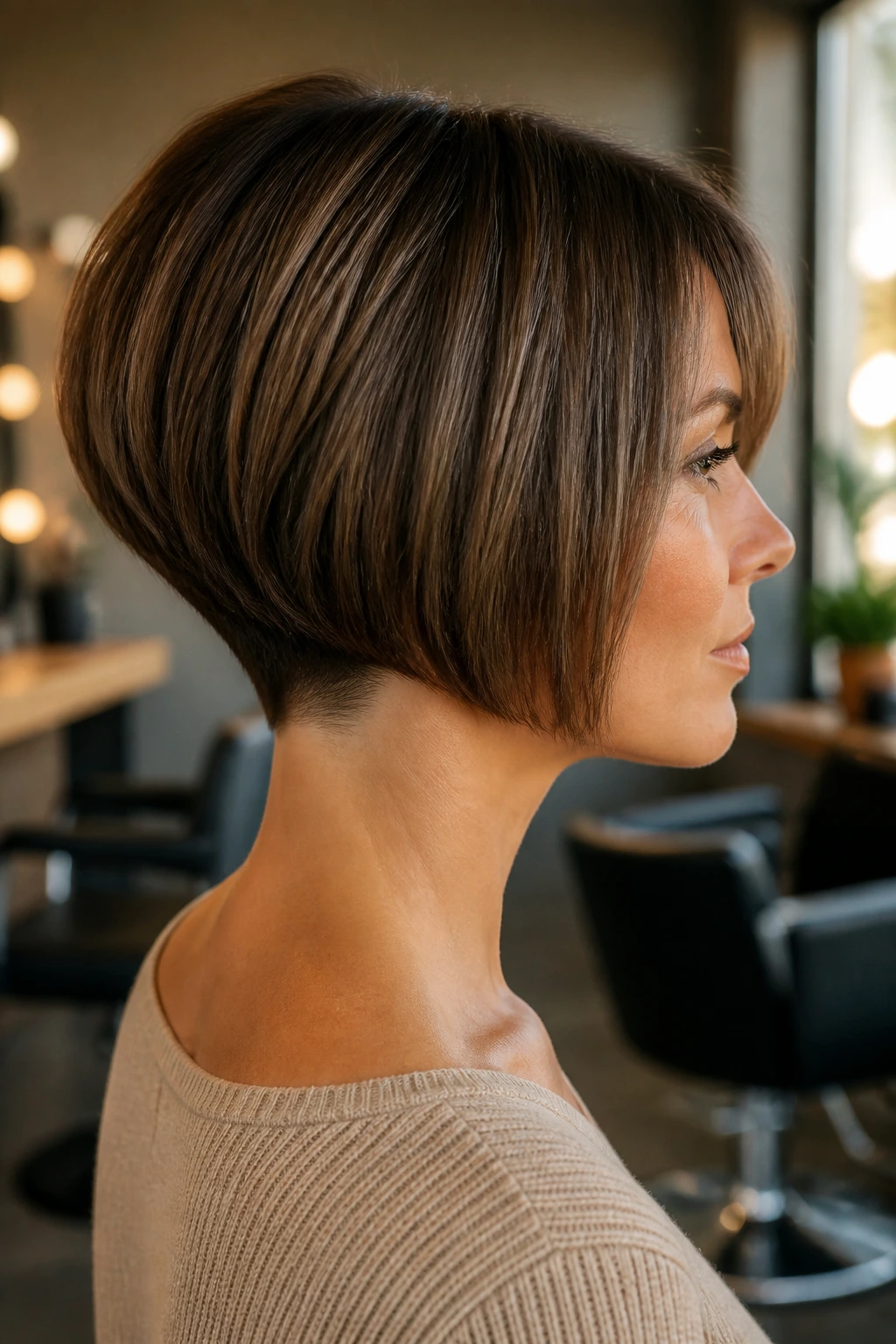
The graduated bob is the neatest cousin in this whole group. It builds visible lift at the nape, then steps upward into the top layers, which gives straight hair a compact, shaped look from every angle. It is sharper than a soft bob and less playful than a shaggy one.
What to Ask for at the Salon
- A strong nape line with clear graduation.
- Smooth layers through the back, not choppy slices.
- A top section long enough to lay flat without puffing up.
- Light beveling at the ends if you want the shape to curve inward.
This cut does not hide much, so the trim schedule matters. When it grows out, the clean line starts to blur. But when it is fresh, it has that crisp, sculpted look that straight hair can wear so well.
22. Soft Box Bob with Barely-There Layers

A soft box bob keeps the sides straighter and squarer than a rounded bob, but the edges are softened just enough to keep it from looking severe. On straight hair, that balance can be lovely. You get the clean outline of a boxy cut without the hard, blocky feeling that sometimes comes with it.
The layering here should stay almost invisible. Think of it as weight control, not obvious texture. The ends should fall in a tidy line, and the interior should move a little when you walk or turn your head. That small shift keeps the haircut from feeling stiff, which is the whole danger with straight hair and shorter lengths.
If you like hair that looks neat after a long day, this is the one I’d keep in the running. It is sharp, calm, and easy to live with — which, honestly, is a better deal than a haircut that only behaves for the first ten minutes after styling.
