



Wavy hair and a bob can be a beautiful pairing, but only when the cut leaves enough room for the hair to move. A blunt line in the wrong spot can puff out at the sides. Too much layering can tip the whole shape into frizz. The sweet spot is a bob that looks a little undone on purpose — and that is exactly why tousled bob styles for wavy hair keep showing up on heads that look polished without looking overworked.
The funny part is that wavy hair does half the styling for you. It bends. It breaks up a hard line. It gives you texture that straight-haired cuts often have to fake with irons and sprays. But waves also bring their own rules. A bob that lands at the jaw can flare out if the ends are too heavy. A bob with short crown layers can turn puffy in humidity. The trick is not “more texture” for its own sake. It is shape, weight, and where the cut stops.
There’s also a big difference between a bob that looks good in a salon mirror and one that survives a normal day. Wind, a scarf collar, a car seat headrest, and one bad hand-tuck can change the whole thing. So the styles worth paying attention to are the ones that still look intentional when they get a little bent and messy. That’s where wavy hair shines, honestly. It forgives more than straight hair does.
Some of the best versions are short and cheeky. Some are longer and softer. A few lean polished, a few lean shaggy, and a couple sit right in the middle where I think a bob is at its strongest. The details matter more than the label, and the differences are bigger than people think.
1. Chin-Length Tousled Bob for Wavy Hair

A chin-length bob is the haircut that makes wavy hair look like it has a built-in style. The ends sit right around the jaw, so the wave pattern gets a chance to bend instead of hanging limp. That little bit of lift changes everything. It draws attention to the cheekbones and keeps the shape from feeling heavy.
Why it works
Shorter bobs can look boxy if they’re cut too bluntly, but a chin-length version with soft, point-cut ends moves. The hair doesn’t need a ton of product to show off its bend, either. A pea-size amount of curl cream through damp lengths is often enough, followed by a quick scrunch and a rough dry.
This cut is especially nice if your waves start near the roots. You get shape without the bulk. And if your hair is fine, the chin length can make it look fuller because the ends don’t drag the whole silhouette down.
- Best for fine to medium wavy hair
- Works well on oval, heart, and small round faces
- Needs only light layers at the perimeter, not a chopped-up interior
- Looks best when the ends are slightly irregular, not razor-straight
One practical tip: keep the front just a touch longer than the back so the bob curves instead of flaring out at the jaw.
2. French Bob With a Broken-Up Fringe

A French bob gets its charm from a little looseness. Not chaos. Loose. The line usually sits above the chin, and the fringe lands somewhere between eyebrow and lash level, but the key is that the bangs are never a solid curtain. They’re broken up enough to let the wave pattern breathe.
That matters because dense bangs can steal all the softness from a wavy bob. You end up with a heavy top and a busy bottom. I prefer a fringe that falls in little separated pieces, especially if the hair at the front wants to form bends on its own. It feels more natural, and it grows out better too.
For styling, I’d keep the product light. A touch of mousse at the roots, a little curl cream through the mid-lengths, then air-dry until the fringe is almost dry before fussing with it. That half-dry stage is when you can decide whether it needs a finger twist or a quick pass with a round brush.
The French bob looks smartest when it doesn’t seem too polished. That’s the whole point. If you spray it into helmet shape, you miss the charm.
3. Layered Bob That Lets Thick Waves Move

Why do thick waves so often turn into a triangle? Because the weight piles up at the bottom while the top stays broad and round. The fix is not slashing layers everywhere. It’s removing enough interior weight so the wave can fall in a softer line.
What to ask for
Ask for long, blended layers that begin below the cheekbone. That keeps the crown from getting too airy, which is where a lot of bad layering goes wrong. You want the hair to move, not collapse into feathers. A good stylist will cut for swing, not for volume alone.
How to style it
- Use a lightweight leave-in conditioner on damp hair
- Work in a pea-size curl cream from mid-length to ends
- Scrunch, then diffuse on low heat for 5 to 8 minutes
- Stop when the hair is about 80 percent dry and let the rest air-dry
This style is one of my favorites for dense waves because it keeps the cut from feeling bulky around the neck. It also behaves better on second-day hair than a one-length bob does. A mist of water and a little leave-in usually brings it back fast.
4. Blunt Bob With Piecey Texture

A blunt bob sounds strict, but on wavy hair it can look fresh in a way that layered cuts sometimes don’t. The secret is that the line stays solid while the surface texture does the talking. You get structure and movement at the same time. That balance is hard to beat.
I think this cut works best when the ends are cut cleanly, then softened just enough to avoid a shelf. Too much slicing into the bottom and you lose the whole point. The wave pattern should sit on top of a firm shape, almost like ribbon over a box.
This is the style I’d point to if your hair is fine and tends to go flat by lunch. A blunt edge makes the hair look thicker at the perimeter, and piecey styling keeps it from feeling stiff. A texturizing spray or a tiny bit of matte pomade on the fingertips can separate a few strands around the face and ends.
- Best on fine, medium-density hair
- Needs regular trims every 6 to 8 weeks
- Looks best with soft side bends, not tight curls
- Can feel heavy if the hair is very thick and unthinned
My take: don’t over-style it. The charm is in the contrast between the clean line and the loose wave.
5. Deep Side-Part Tousled Bob
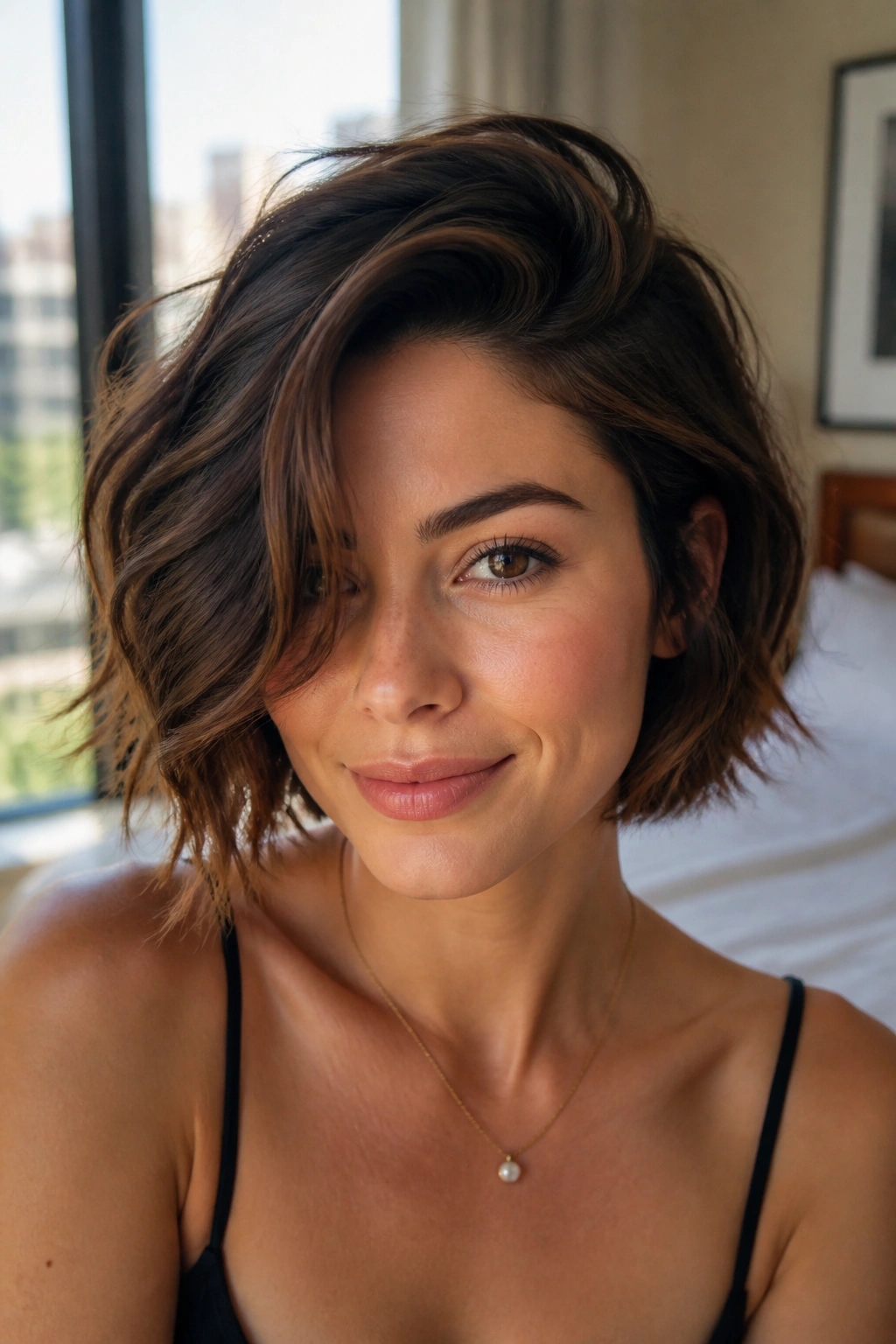
A deep side part does more than change where the hair falls. It changes the whole mood of the bob. The wave gets one side to collapse softly across the forehead while the other side lifts away from the cheek. That asymmetry gives the cut a little drama without needing extra length.
The part itself matters. I like it placed just outside the arch of the eyebrow, not shoved all the way to the temple unless the hair is very dense. A part that’s too far over can make the top look sparse. A part that’s too centered can flatten the wave and kill the lift. There’s a narrow sweet spot, and once you find it, the whole cut seems easier.
This style is especially useful if your roots go flat. A side part gives the hair somewhere to stack, and that root lift makes the bob look fuller even before you touch a tool. Work a small amount of mousse into the roots, then dry the hair in the opposite direction first. Flip it back at the end. Old trick. Still works.
The result is less “I woke up like this” and more “I meant to look this slightly undone.” Which, in a bob, is usually the better move.
6. Collarbone Bob That Skims the Shoulders
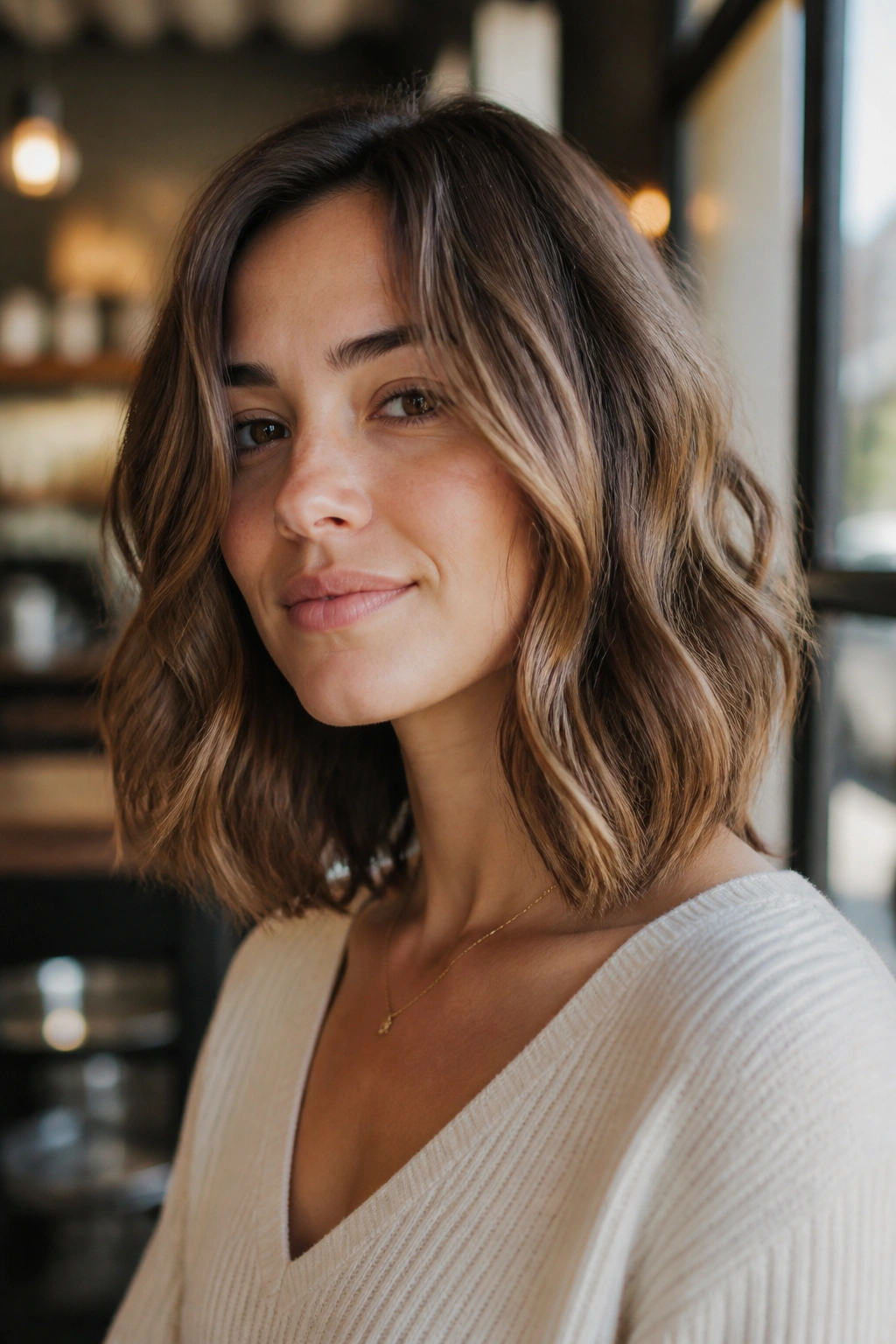
A collarbone bob is the one I recommend when someone wants a bob but keeps worrying about commitment. It gives you the clean feeling of shorter hair without the sharp stop at the jaw. The ends hover near the collarbone, so the wave has more space to drape and less chance of kicking outward in a weird triangle.
Compared with a chin-length cut, this version is calmer. It is also friendlier to people who use clips, tuck their hair behind one ear a lot, or need enough length for a tiny knot at the nape. You can still get that tousled look — the bend just reads softer and a little more relaxed.
I like this shape for medium to thick waves because it can handle body without becoming too puffy. Ask for minimal layering through the top and more shaping around the front. That keeps the hair from ballooning. If the ends hit your shoulders in an awkward way, ask for a slight graduation so the front skims past the collarbone instead of sitting right on it.
It’s not the most dramatic bob. That’s the point. It’s the one you can wear to work, to dinner, and on the third day after washing without feeling like you need to start over.
7. Asymmetrical Bob With a Longer Front

If your waves flip out at random, an asymmetrical bob can make the whole thing look intentional. One side sits a little shorter. The other side keeps more length near the jaw or collarbone. That uneven line gives the hair a built-in sense of motion, which works beautifully with a texture that already likes to bend and shift.
This cut is at its best when the difference is subtle, not theatrical. A tiny angle feels modern. A huge drop from one side to the other can start to look like a styling stunt, and that gets old fast. I’d keep the longer side only an inch or two below the shorter one unless the face shape really calls for more.
It suits angular faces especially well because the softer, longer front breaks up sharpness. It can also be a smart choice if one side of your wave pattern is looser than the other. The asymmetry hides that difference instead of fighting it.
A small round brush at the longer front pieces is usually enough. Don’t force both sides into the same bend. Let the cut carry the shape for you.
8. Shaggy Bob With Curtain Bangs

Why does this combination work so well? Because both parts of the haircut — the bob and the bangs — are built for movement. Curtain bangs open away from the face, and a shaggy bob keeps the rest of the shape light enough to match them. Together, they create a cut that feels soft without becoming shapeless.
The cut details
Ask for bangs that start around the nose bridge and feather out toward the cheekbone. Short, blunt curtain bangs can look chunky on wavy hair. The longer version gives you more room to style them with a finger twist or a small round brush.
- Keep the top layers long enough to lay flat when needed
- Add shape around the cheekbone and jaw
- Use a diffuser on low heat or let the hair air-dry
- Refresh bangs with a light mist of water and a dab of styling cream
The shaggy bob is the one I’d choose for someone who wants movement near the face without spending 20 minutes on every section. It has a lived-in feel that works with a little mess. A lot, actually. And if your hair has one of those wave patterns that changes direction halfway down, this cut handles that without much complaint.
9. Inverted Bob With a Tucked Nape
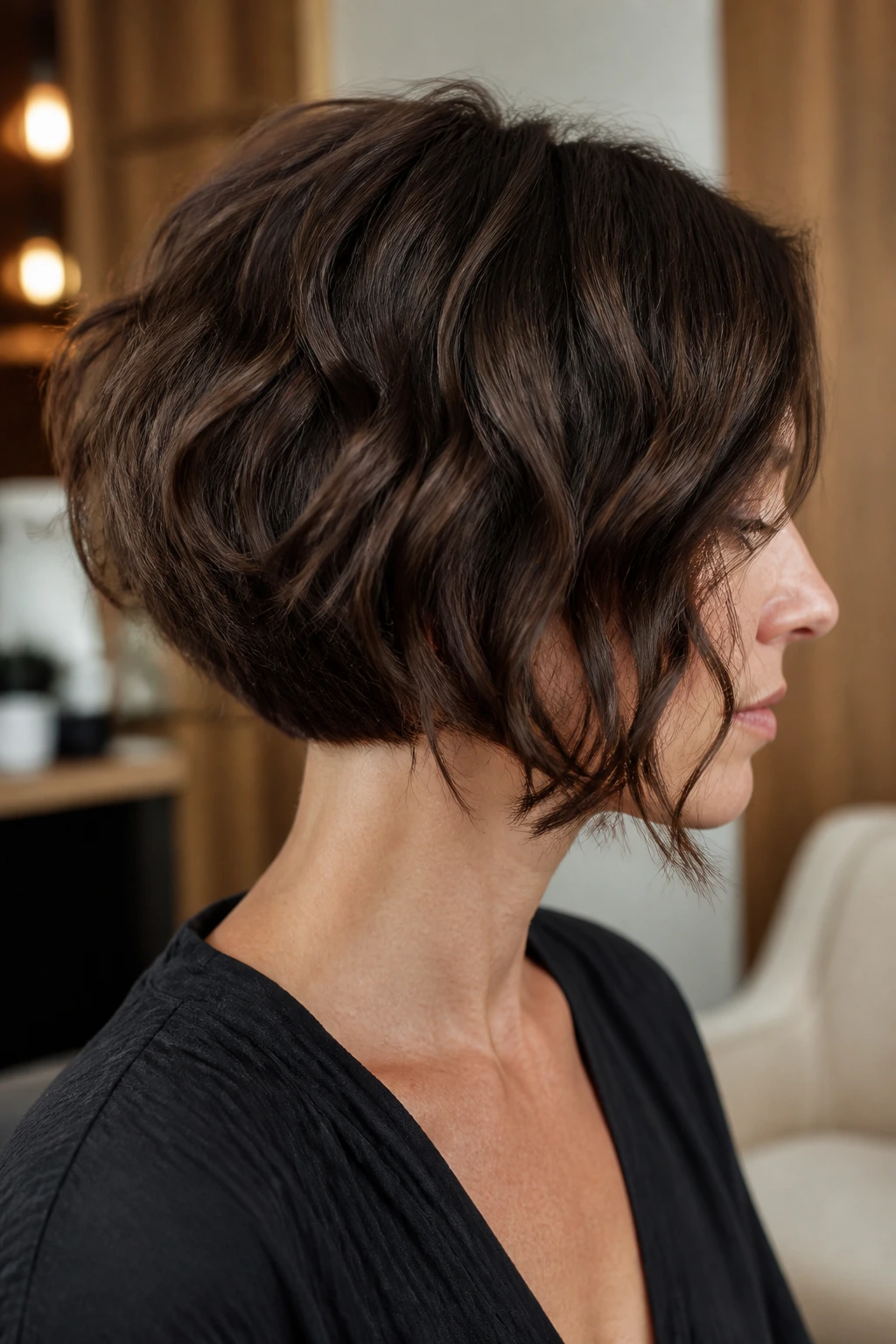
Picture hair that keeps hitting the collar of your coat and turning weird at the ends. An inverted bob solves that in a clean, practical way. The back is cut shorter and slightly stacked, while the front stays longer and softer. That shape keeps the nape neat and lets the front pieces swing.
It’s a very useful cut for dense wavy hair because the back no longer has to carry the full weight of the shape. The stacking lifts the hair away from the neck, which helps if your waves puff out right there. I also like it for people who get hot easily. A little air circulation goes a long way.
The styling is straightforward. Blow-dry the back first with a paddle brush, lifting at the crown so the stack doesn’t collapse. Then twist the front pieces around your fingers while they’re damp. You want movement, not a hard curl. A touch of texturizing spray at the end gives the edges a bit of grit so the line doesn’t go flat.
- Best for medium to thick waves
- Useful if hair at the nape feels heavy or sticky
- Needs a stylist who can balance the angle carefully
- Looks best with soft finish products, not glossy serums
This is one of those cuts that looks smarter in motion than it does on a hanger.
10. Razor Bob With Feathered Ends

A razor bob has a very specific feel. The ends look lighter, the perimeter is softer, and the wave pattern gets a little more space to break apart. That softness can be lovely on wavy hair, especially if your texture needs help avoiding a hard, blocky edge.
The catch is that a razor has to be used with some restraint. On healthy hair with a decent amount of density, feathered ends can make the bob feel airy and modern. On fragile or very fine hair, too much razor work can leave the ends fuzzy or thin. I’ve seen that mistake more than once. It’s not cute.
A good razor bob should still have shape. The ends should look broken up, not shredded. That difference matters. If you run your fingers through the cut and it feels wispy but not weak, you’re in the right place. A little smoothing cream on damp hair can keep the surface from fraying while still letting the texture show through.
This cut is a nice fit for anyone who likes a relaxed outline. It has less polish than a blunt bob, more movement than a standard layered one, and enough softness to make natural waves look intentional even when they’re doing their own thing.
11. Side-Swept Bob With Old-Hollywood Bend
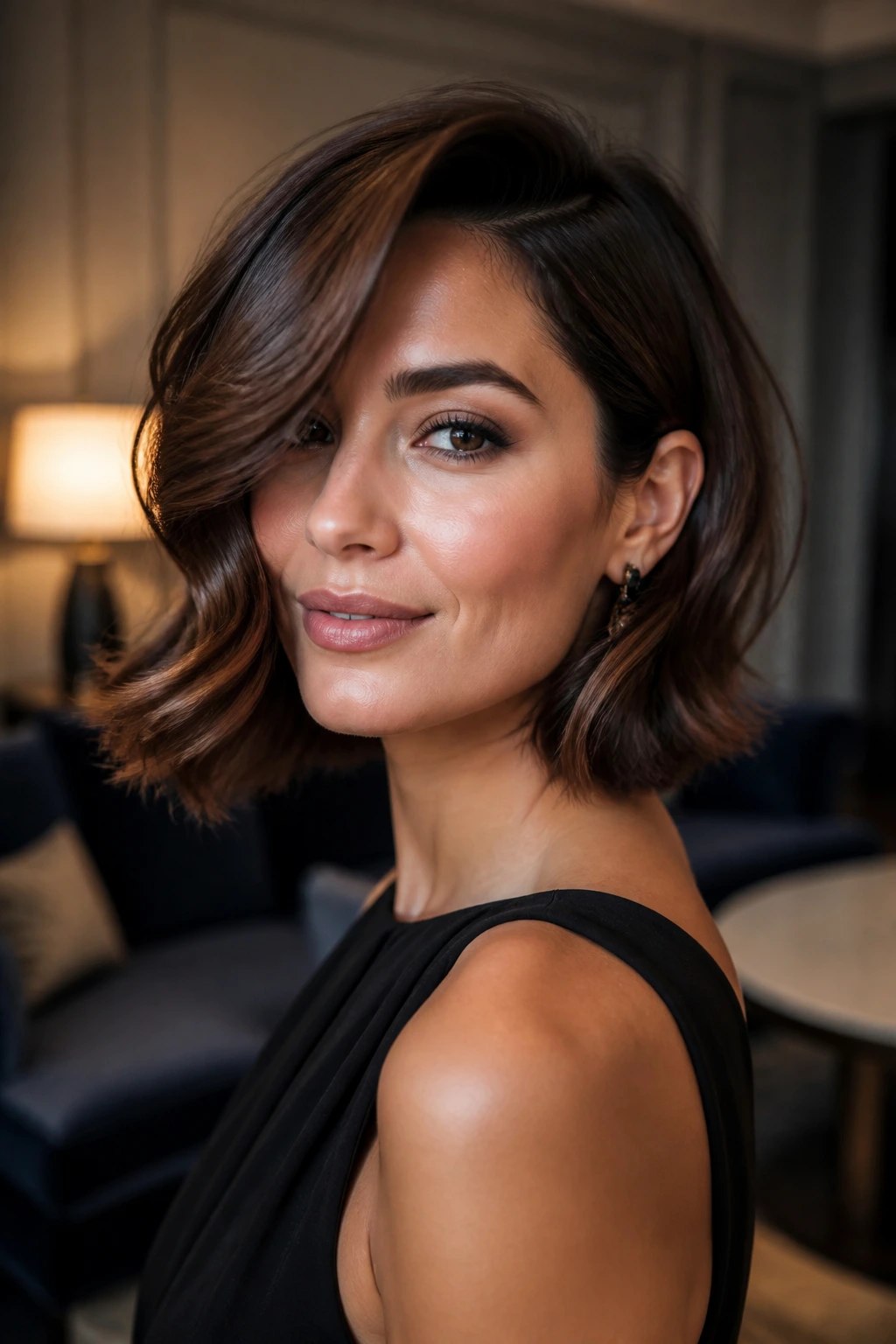
A side-swept bob is a different animal from the beachy, airy versions people usually mean when they say “tousled.” This one leans smoother, with a big bend that curves away from the face and lands with a little polish. It’s the bob I’d wear if I wanted the texture to feel dressed up instead of casual.
The wave pattern matters less here than the finish. You want a soft bend, not a pile of separated curls. A 1.25-inch curling iron, wrapped away from the face, gives the right size of wave for most medium-length bobs. After the hair cools, brush it out with a soft bristle brush. That’s the part people skip. They shouldn’t.
Compared with a beachy bob, this version is neater at the surface. That makes it a strong choice for dinners, events, interviews, or any day when you want your waves to look deliberate. It still feels relaxed, though. Not stiff. The side sweep gives the face a long line, which is flattering on rounder face shapes and useful if one side of the hair naturally falls flatter than the other.
A light mist of flexible spray is enough. Too much and the bend loses its soft swing.
12. Beachy Bob for Air-Dried Days

Air-dried waves can look chic, but only if you stop messing with them halfway through drying. That’s the whole game. Once you scrunch in product and let the bob set, the shape usually needs hands off. Hands off means hands off.
A beachy bob works best when the hair is dampened with a leave-in conditioner or light curl cream, then coated with a small amount of gel through the mid-lengths and ends. The gel keeps the waves clumped together while they dry, which helps prevent frizz at the surface. Use a microfiber towel or an old T-shirt first — rough terry cloth can puff up the cuticle and make the ends look fuzzy before the hair is even dry.
I like this style on shorter bobs because it doesn’t fight the natural bend. A chin-length or lip-length cut will dry with enough shape to look finished, especially if you tuck the roots behind the ears once they’re halfway dry and then let them fall back. That tiny trick gives a softer contour around the face.
If your hair likes to swell up when left alone, add a drop of oil only to the ends after it’s dry. Not before. Before can make the wave collapse.
13. Wavy Bob With Defined Ringlets Mixed In

Why keep every strand the same? You don’t have to. Some wavy hair throws in a few ringlets, especially around the face or underneath the top layer, and the best bob cuts lean into that mix instead of trying to flatten it out.
How to balance wave and curl
The trick is to use products that let some sections clump more than others. A curl cream alone may be too soft. A mousse alone may be too airy. I like a layered approach: curl cream through the mid-lengths, then a light foam at the roots and top layer. That gives the ringlets a little structure without turning the whole head into a uniform curl set.
- Diffuse the hair only until the roots are dry
- Let the ends finish drying naturally
- Twirl the tighter front pieces around your finger
- Break up any crunchy spots once the hair is fully dry
This bob is especially good if your hair has a mixed pattern. One side waves. The other side curls. The back does its own odd little thing. Instead of fighting that, the cut frames it. A shoulder-skimming length helps because the ringlets have room to spring while the wavy sections stay loose.
That mix looks more interesting than a perfectly matched texture anyway. Hair that behaves like hair is often the nicest version.
14. Bob With Money Pieces Around the Face
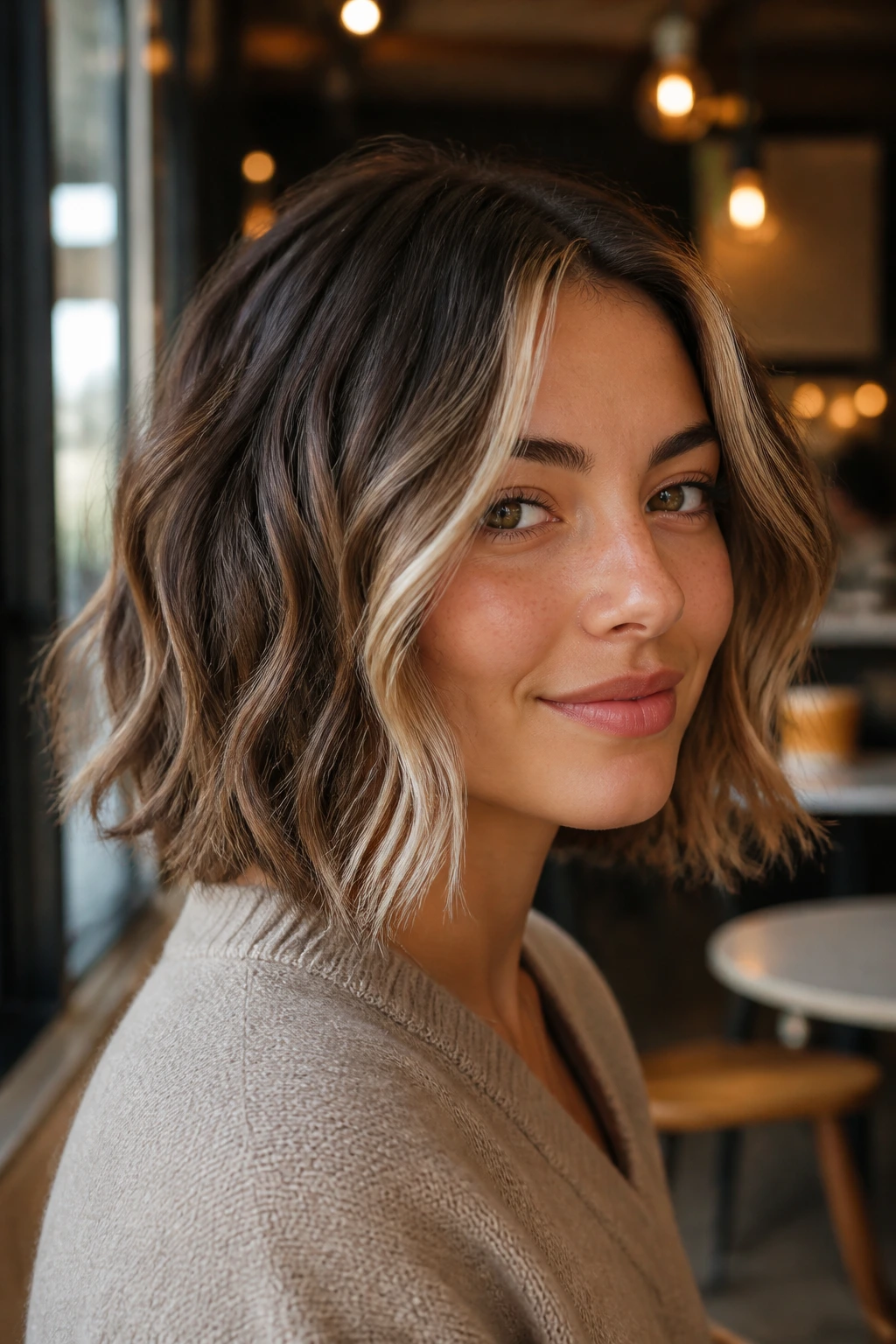
A small color shift around the face can make a tousled bob look more open and lighter, even if the cut itself barely changes. That’s the whole point of money pieces. They draw the eye forward and give the wave pattern a bit of contrast at the front, where people notice it most.
I like this trick on bobs that already have soft movement. If the face-framing pieces are a shade or two lighter than the rest, the bends show up more clearly. The hair looks like it has shape even on days when the wave is lazy. And because the lighter pieces sit near the front, they catch movement without needing a lot of styling.
This style is also forgiving if you’re growing out a bob and the front pieces feel a little blah. A lighter frame makes the cut look fresher without forcing a dramatic change. It works best when the highlights are soft and blended, not stripey. Heavy contrast can fight the texture and make the hair look chunkier than it is.
- Best with soft face-framing layers
- Works on short, medium, and collarbone lengths
- Looks nicest when the color is two to three shades lighter than the base
- Needs a small amount of shine spray on the front pieces only
I’d pick this when a cut needs a little lift but not a full restart.
15. Low-Maintenance Tousled Bob That Grows Out Well

Some bobs are stylish on day one and annoying by week six. This is the opposite. A low-maintenance tousled bob is built with soft edges, minimal hard lines, and enough length that it still behaves when it grows an inch or two. That matters more than people admit. Hair that grows out well saves time, money, and a fair amount of frustration.
The cut usually sits somewhere between the jaw and collarbone, with gentle shaping around the front and only the lightest layering through the body. No sharp shelf. No fussy interior cuts. The goal is for the hair to keep falling in a believable shape even after the salon freshness fades. If you ever forget to book a trim on time, this is the bob that forgives you.
I also like it because it does not demand much in the morning. A mist of water, a little leave-in, a quick scrunch, and you’re done most days. If you want to rough it up a bit more, use a dry texture spray at the roots and pinch the ends between your fingers. That’s enough. No need to overthink it.
The best version of this cut feels like it belongs on your head, not like a small sculpture. That sounds obvious, but a lot of bobs miss it.
Final Thoughts
The best bob for wavy hair is the one that respects the wave instead of flattening it or forcing it into a shape it doesn’t want. A chin-length cut can wake up fine hair. A collarbone length can calm thick waves. A fringe can be soft and broken up, or it can be skipped entirely if the front of the hair already does enough work.
Bring a few photos, sure. Better yet, bring ones that show the hair in motion and ones that show the side view. That’s where a bob lives or dies. The front can look lovely and the back can still be a mess.
My one honest rule: choose the shape that still looks good after a windy walk and a half-hearted finger comb. That’s the version you’ll keep wearing.
