



Italian bobs for oval faces have a sneaky advantage: they can look polished without fighting the shape of your face. Oval faces already have that balanced proportion thing going on, which means the haircut gets to do something more interesting than “fixing” anything. It can sharpen, soften, swing, tuck, or flick out at the ends and still look natural.
The best Italian bob is never flat. Never helmet-like. It has weight where it should, movement where it matters, and enough air around the face to keep the whole cut from feeling heavy. That balance is why this shape works so well on oval faces. A crisp line at the jaw can make features look more defined. A longer front can keep the cut from feeling boxy. A bit of internal texture can stop thick hair from turning into a triangle. Tiny details. Big payoff.
And yes, the wrong version can go sideways fast. Too much width at the cheeks, too much bulk at the bottom, or a dead-straight line cut at the wrong point can make an oval face look longer than you want. A good bob knows where to stop. A better one knows how to bend.
That’s the fun part here. Some of these cuts are sleek and glossy. Some are soft and undone. Some love a middle part, some need a side sweep, and some only work if the ends are cut with a little movement. The shape stays Italian either way — the finish just changes the mood.
1. Chin-Length Italian Bob with Soft Tapered Ends

This is the version that makes sense first, and then keeps making sense the longer you look at it. A chin-length Italian bob with softly tapered ends sits right at that sweet spot where the face stays open but the jaw still gets a clean frame. On an oval face, that matters more than people think. The cut gives shape without crowding the cheeks.
Why It Works on Oval Faces
The chin is a strong stopping point. It keeps the bob from drifting too low and stretching the face visually, but it does not cut the line so short that the style turns boxy. The tapered ends soften the bottom edge, so the cut feels airy instead of blunt and stiff.
- Best for fine to medium hair that needs shape without bulk.
- Works well with a slight off-center part if you want the face to feel a bit shorter.
- Ask for point-cut ends or a small amount of tapering so the perimeter does not look heavy.
- Looks sharp with a tucked side or a small bend at the ends.
My favorite part: it grows out gracefully. That sounds boring, but it matters. A lot.
If you want a bob that feels tidy on Monday and still behaves on Friday, this is a strong place to start.
2. Sleek Center-Part Italian Bob

A sleek center-part Italian bob is the blunt instrument of this group, and I mean that in a good way. It’s the cleanest-looking option for oval faces when you want the hair to read modern without looking try-hard. The center part puts the face on display, while the straight line at the bottom gives the cut some authority.
The trick is not to make it flat. Flat hair kills this look fast. You want root lift at the crown, then smooth lengths that bend inward by a few millimeters at the ends. That tiny curve keeps the bob from looking severe. If the hair is fine, a root spray at the crown and a quick blow-dry with a round brush can keep the shape from collapsing by lunchtime.
I like this cut on people who wear simple earrings, crisp collars, or a strong brow. It has a quiet confidence that does not need extra decoration. Strong jaw? Nice. Smooth cheekbones? Even better.
If you ask your stylist for this, say “one-length perimeter, minimal layering, and a soft undercurve at the ends.” That language keeps the cut precise without making it feel rigid. And if your hair tends to puff out at the sides, keep the width under control. A little polish goes a long way here.
3. Side-Swept Italian Bob with Cheekbone Lift
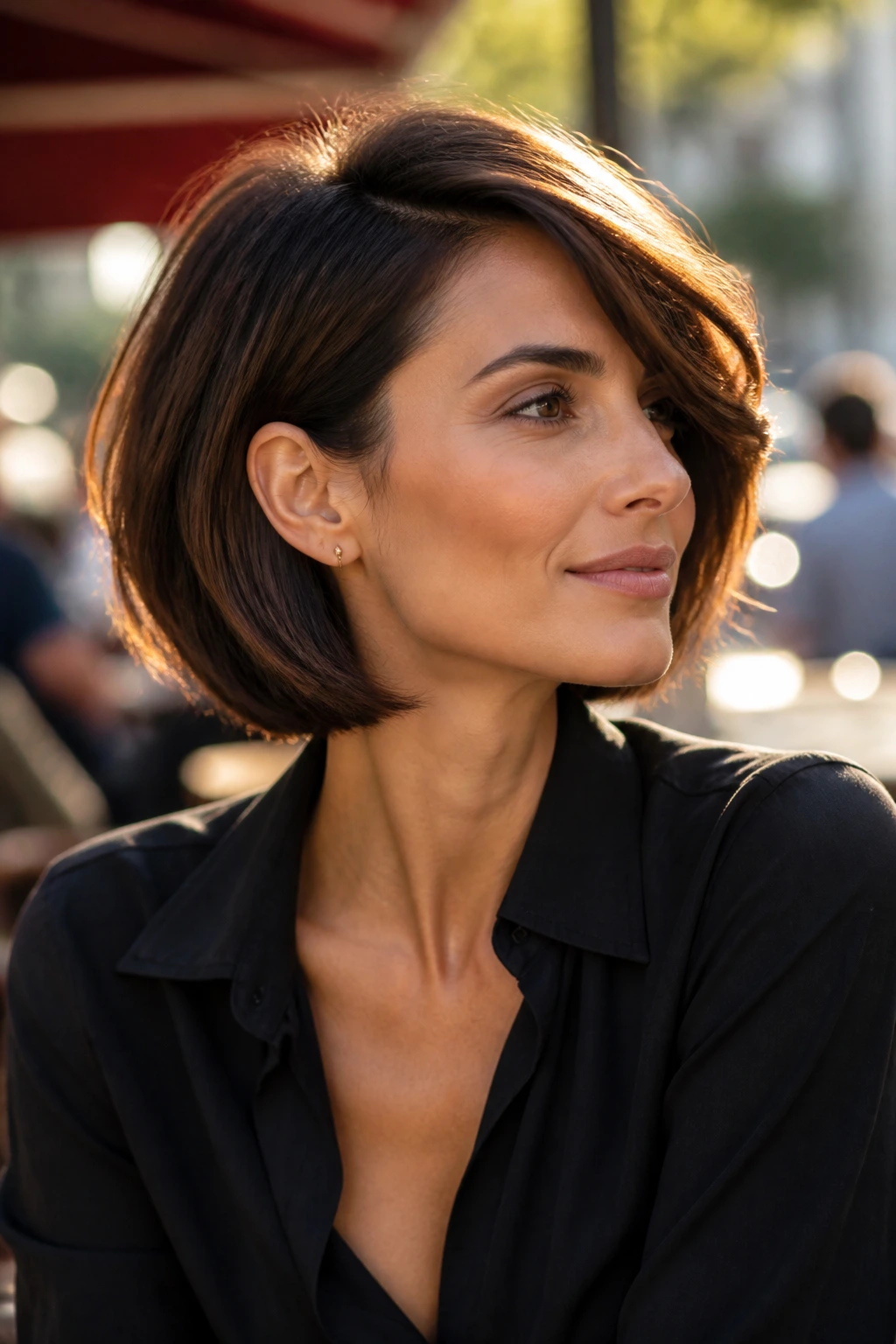
Why does a side part do so much work? Because it changes where the eye lands first. A side-swept Italian bob pulls attention upward and across the face, which can make oval features look a touch more sculpted without adding drama. It is one of those cuts that feels casual in the best possible way.
What makes it different is the lift. You are not just shifting the part and calling it a day. You want a bit of root volume near the heavier side, then a soft sweep across the forehead or temple. That movement gives the cheekbones room to show off. It also keeps the bob from feeling too symmetrical, which can be a little too neat on some faces.
How to Style It
- Blow-dry the front section over a round brush, directing it away from the face.
- Use a medium-hold mousse at the roots if your hair falls flat quickly.
- Finish with a light mist of flexible hairspray, not a crunchy one.
- Tuck one side behind the ear for a sharper line.
This is one of those styles that looks better when it moves. Wind helps. So does a little imperfection. Do not overthink it.
4. Layered Italian Bob with Curtain Bangs

If you want softness around the face without committing to a full fringe, this is the one. A layered Italian bob with curtain bangs gives oval faces a bit of framing at the forehead while keeping the rest of the cut light and swingy. It has that old-salon charm, but it does not feel dated.
Picture this: the bangs part in the middle, bend away from the face, and blend into the cheek area. The bob itself stays full enough to hold shape, but the interior layers keep the bottom from getting chunky. That mix is what makes the cut feel easy instead of overworked.
A good curtain bang should graze the brow or sit just below it, then open gradually toward the temples. Shorter bangs can get cute fast, and not in a good way. Leave enough length to move them. That is the part people regret cutting too short.
Ask for this at the salon:
- Curtain bangs that start around the bridge of the nose
- Soft internal layers through the bob, not choppy exterior layers
- A length that falls between the jaw and upper neck
- Face-framing pieces that blend, not stop abruptly
The whole look is flattering because it adds interest near the top half of the face. On an oval face, that balance feels easy to wear and hard to mess up.
5. Wavy Italian Bob with a Loose Bend

Some people think a wavy bob has to look beachy and messy to count. I do not buy that. A wavy Italian bob with a loose bend can be smoother, more controlled, and honestly more expensive-looking than the textured versions that try too hard. The shape still gets movement, but the wave sits in a more refined lane.
The easiest way to get this finish is with a 1-inch curling iron or a flat iron bend. You do not need full curls. Wrap mid-length sections, leave the ends out, and alternate directions as you work around the head. Then brush it out lightly so the wave reads as a soft curve rather than a spiral. The ends should still feel like ends.
This is a good option if your hair naturally falls straight but not dead-straight. A little texture helps the cut catch light in a more flattering way — not shiny for the sake of shiny, but soft around the edges. Oval faces get a nice advantage here because the wave adds width at the right spots without making the face look shorter.
One thing I like about this bob: it survives a little mess. Day two usually looks just as good, maybe better. A dry texture spray at the roots and a touch of serum on the ends is often enough to bring it back.
6. Curly Italian Bob with Rounded Shape

Curly hair and Italian bobs belong together more often than people admit. The rounded version works especially well because it keeps the curl pattern close to the face instead of letting it balloon out at the sides. On an oval face, that shape can look gorgeous and controlled without feeling stiff.
Unlike a long layered cut that lets curls hang and stretch, this bob keeps the silhouette compact. That matters. Curly hair has its own ideas about volume, and if you do not plan for that, you end up with a wide shape that eats the neck and hides the jaw. A good rounded bob keeps the curl spring where you want it.
What to Ask Your Stylist
- Dry-cutting or curl-by-curl shaping, if your stylist works that way
- A rounded perimeter that sits around the jawline
- Interior layers that remove weight, not bulk at the bottom
- Enough length for the curls to bounce, not puff
Best of all, this cut lets the curl pattern be the star. You are not fighting it with a straight silhouette. You are steering it.
If your curls are tighter, ask for a little extra length in front. Oval faces can handle it, and the added front length keeps the overall shape from shrinking too much.
7. Collarbone Italian Bob with Flipped Under Ends
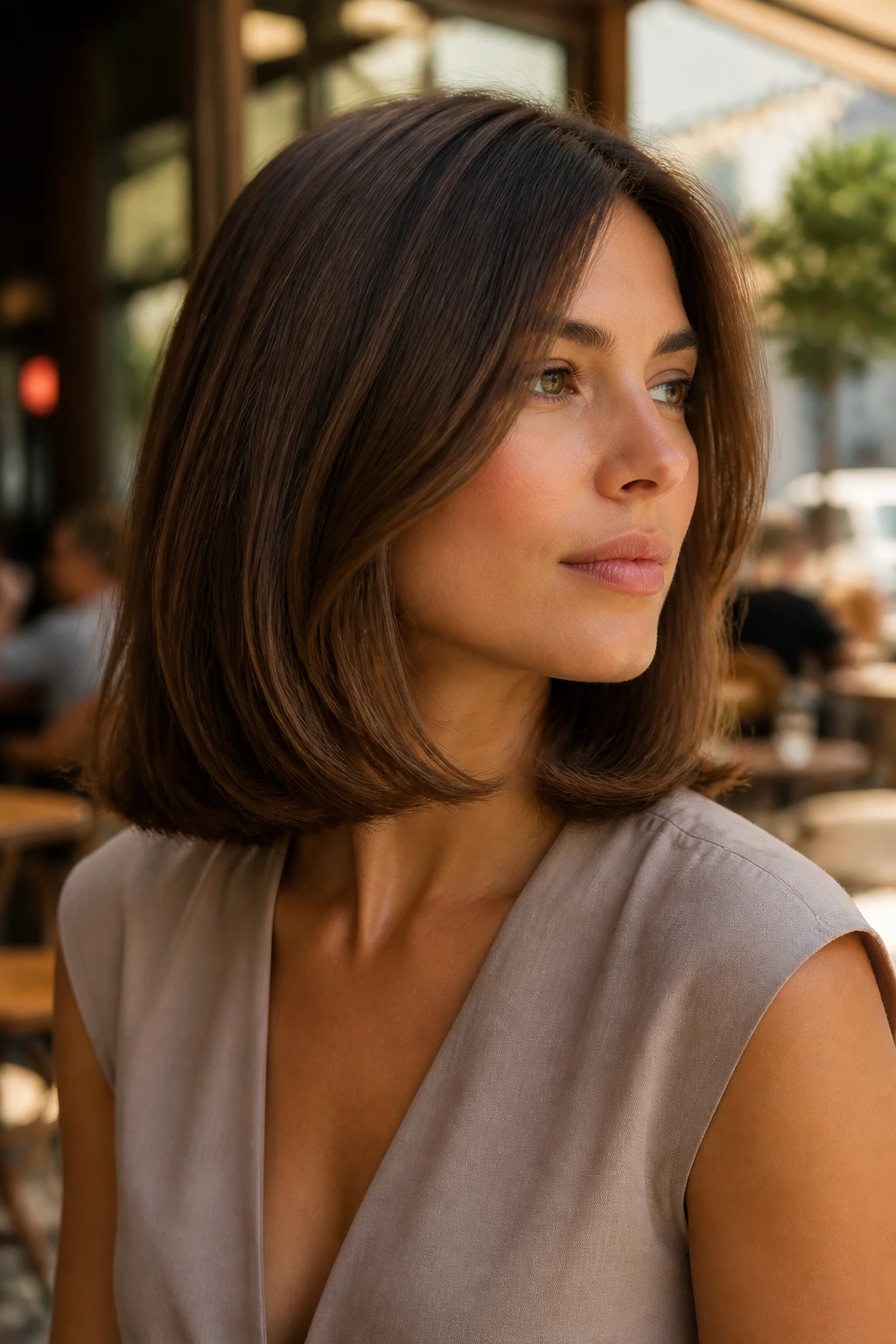
A collarbone-length version may technically wander into lob territory, but I am counting it here because it behaves like a bob in all the right ways. It is the cut for someone who likes the idea of a bob but wants a little more hair to play with. The flipped-under ends give the shape that classic Italian polish.
Imagine hair brushing the collarbone, then curving under just enough to create a clean frame. Not a hard curl. Not a blunt shelf. Just a soft inward turn that keeps the ends from feeling heavy. On oval faces, this length can be especially nice if you want to keep the neck exposed without going all the way to the jaw.
The best way to style it is with a round brush and a blow-dryer nozzle. Pull the ends under in the final pass, and let them cool in place before touching them. That cooling step matters more than most people think. It helps the bend hold.
This cut also plays well with sweaters, open collars, and earrings. That sounds cosmetic, but it changes how the style feels in motion. It has a little swing when you walk. A little.
8. Asymmetrical Italian Bob with a Longer Front

Can an asymmetrical bob still feel soft? Absolutely. The key is keeping the difference subtle. A longer-front Italian bob gives oval faces a sleek angle without making the whole haircut look edgy for the sake of it. One side grazes the jaw a touch longer, and that small shift changes the entire mood.
What makes this shape useful is the line it creates. The longer side can skim the cheek or neck, which draws the eye downward in a controlled way. The shorter side keeps the cut from feeling heavy or drooping. It is a clean contrast, not a dramatic one.
How to Wear It
- Keep the length difference modest, usually about 1 to 1.5 inches.
- Style with a side part that supports the longer side naturally.
- Use a flat iron only on the front pieces if they need a softer bend.
- Avoid too many layers, or the asymmetry gets lost.
This is a smart choice if you like modern hair that still feels wearable at work, at dinner, or on a regular Tuesday. It has enough shape to look intentional and enough softness to stay flattering on an oval face.
9. Razor-Cut Italian Bob with Feathered Edges
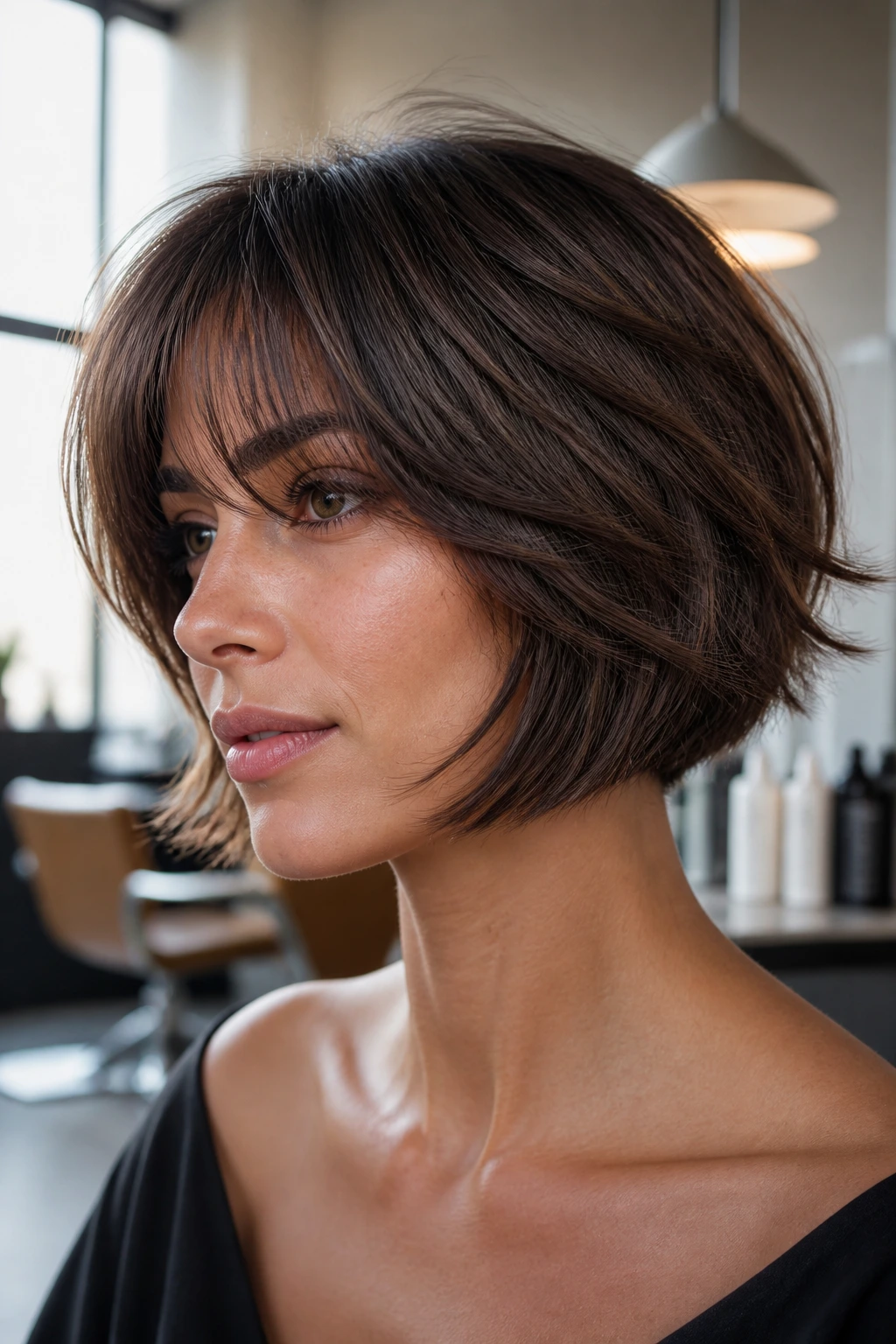
A razor-cut bob can look fantastic on the right hair, and a little risky on the wrong one. That is the honest version. The feathered edge is what makes this Italian bob feel light and airy, almost like the bottom line has been gently pulled apart instead of chopped straight across.
The best candidates are medium-density hair and straight-to-wavy textures that can hold the feathery finish. If the hair is already very fine, too much razor work can make the ends look wispy in a not-great way. If the hair is very coarse, the razor can sometimes create frizz at the edge. So this one needs a stylist who understands how the hair behaves when it dries.
A feathered bob gives oval faces movement right around the jaw and neck. That is the pay-off. The cut does not sit like a block. It shifts. It has air between the strands, which makes the face look less boxed in.
Watch for this: a razor cut should look soft, not shredded. If the ends look torn, ask for a cleaner finish. That difference matters more in person than it does in photos.
10. Graduated Italian Bob with a Clean Back Curve

A graduated bob is the one I recommend when someone wants structure but still wants the style to move. The back sits slightly shorter, the front gets a little more length, and the line curves neatly around the head. On oval faces, that graduation adds lift without making the cut feel stiff or square.
Picture the nape area first. It is tidy, close, and shaped. Then the line starts to extend toward the front, where the hair brushes the jaw or just below it. That transition is what gives the cut its polished shape. It also helps thicker hair behave, which is a nice bonus because thick hair can turn into a stubborn shelf if the weight is not handled well.
This cut works especially well if you like seeing the neck and want a haircut that sits neatly under coats, scarves, and collars. It is practical. A little severe if overdone, yes, but in the right hands it looks sharp rather than rigid.
If you have ever wanted a bob that seems to hold itself together even on a rough hair day, this is the one to look at. It has discipline.
11. Tucked-Behind-the-Ear Italian Bob

Some haircuts come alive when they are not fully “done.” The tucked-behind-the-ear Italian bob is one of them. It gives oval faces a clean line through one side while letting the other side fall forward a bit more naturally. That small asymmetry feels fresh without needing a haircut that shouts.
The ear tuck is useful because it shows off the jaw and cheek area without changing the actual cut. You can wear it sleek, slightly wavy, or brushed out. The shape still works. If you wear earrings, this is especially nice because the bob creates a neat frame instead of hiding everything under the hair.
I like this style for people who want a bob they can change in ten seconds. Tuck it for a sharper look. Un-tuck it for something softer. That kind of flexibility is underrated.
A few pieces of advice help here:
- Keep the side that gets tucked a touch longer so it stays secure.
- Ask for weight removal near the front if your hair slips out easily.
- Use a light smoothing cream on the tucked side to keep flyaways down.
- Do not over-flatten the crown, or the whole cut can look a bit too polished.
It is a small move, but it changes the whole read of the haircut.
12. Bottleneck-Bang Italian Bob
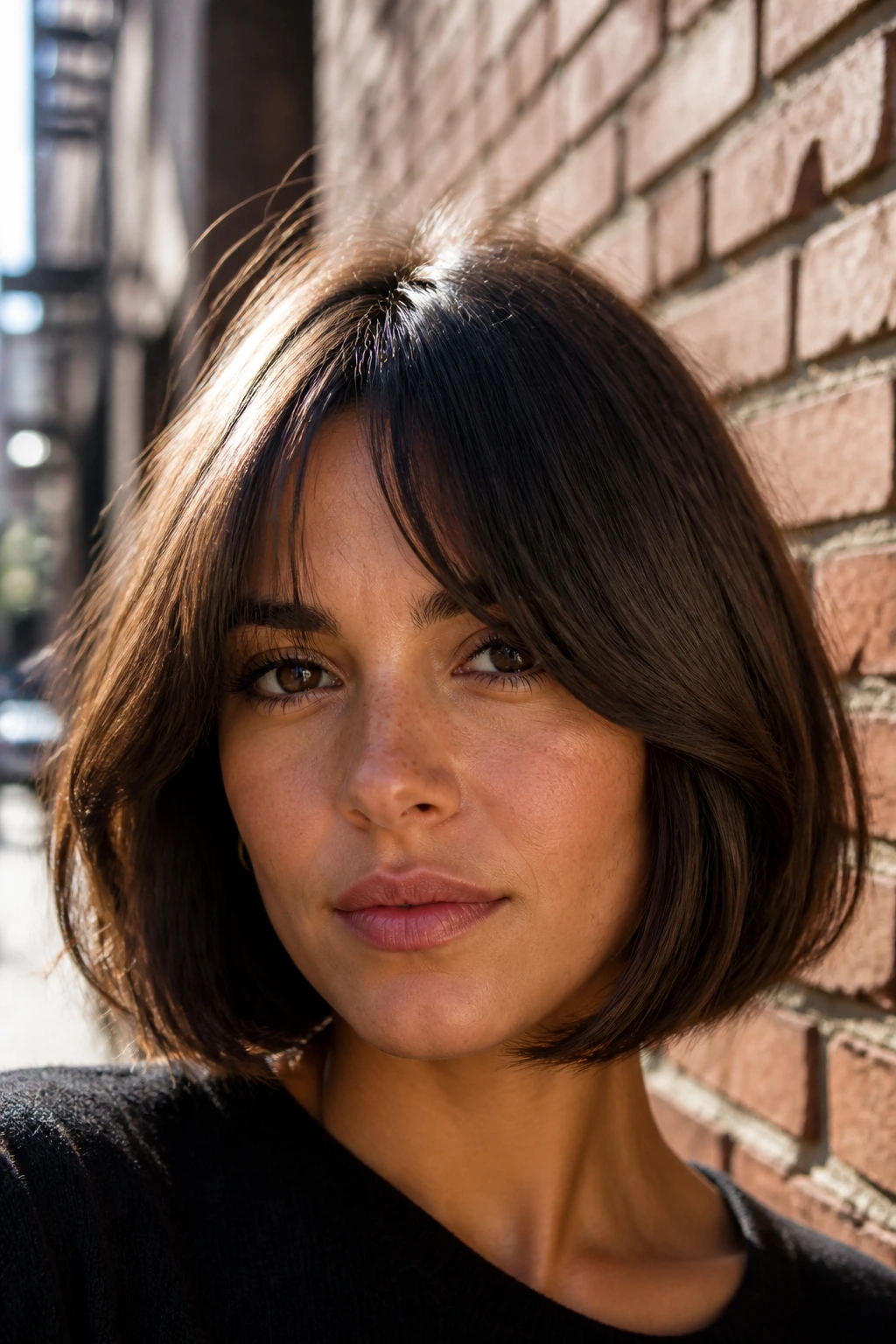
Do bottleneck bangs sound fussy? They can be, if they are cut badly. Done right, though, they are one of the prettiest ways to frame an oval face. A bottleneck-bang Italian bob opens narrow at the bridge of the nose, then softens and widens as it moves toward the cheekbones. That shape keeps the forehead from looking heavy while still giving the front of the haircut some personality.
The reason this combo works is the transition. The bangs do not stop in a hard line. They melt into the bob. That is important on oval faces, because the goal is usually to add shape, not chop the face into pieces. Bottleneck bangs give you that middle ground between full fringe and no fringe at all.
How to Wear It
The bangs should be blow-dried forward first, then curved slightly away from the face using a round brush or a small velcro roller. The rest of the bob can stay smooth, wavy, or softly bent. If the bangs separate too much, a tiny bit of styling cream on the ends will keep them from looking stringy.
This cut is excellent if you like face-framing but do not want to commit to a blunt fringe every day. It asks for a little styling, yes. Worth it? I think so.
13. Tousled Italian Bob with Internal Texture

A tousled bob can be gorgeous, but the secret is usually not what people think. It is not about piling on curls or roughing up the surface until it looks messy. The real trick is internal texture, which means the movement lives inside the haircut instead of sitting on top of it.
That matters on oval faces because a textured bob can get wide very quickly if the shape is not controlled. Internal texture removes bulk where the hair sits heavy, but keeps the outline clean enough to read as a bob. The result looks lived-in, not accidental.
Think of this as the haircut for people who want hair that can be pushed around with a hand and still fall back into place. A little sea salt spray helps, sure, but the cut itself should do most of the work. If the stylist only roughs up the ends and leaves the inside dense, the shape will swell. That is the trap.
This one suits medium to thick hair especially well. Fine hair can wear it too, but the layering has to stay gentle. Too much removal and the bob starts looking sparse. Too little and it loses the movement that makes it special.
I like this version because it looks expensive when it is slightly imperfect. That is the whole point.
14. Soft-Blunt Italian Bob for Thick Hair

Thick hair and blunt bobs have a complicated relationship. Left alone, thick hair can turn into a wide triangle or a heavy shelf at the bottom. A soft-blunt Italian bob solves that by keeping the perimeter clean while sneaking in enough internal debulking to let the shape sit close to the head.
This is not a choppy cut. That would ruin the point. You want a smooth line with tiny internal adjustments that remove puff without taking away the strong outline. Oval faces can wear that structure beautifully because the face already has balance; the haircut just sharpens it a bit.
Ask For This
- A blunt-looking perimeter
- Very light internal layering only where the hair is bulky
- Weight removal near the mid-lengths if the hair expands outward
- A length that lands between the jaw and neck for control
The styling here is mercifully simple. Blow-dry with tension, keep the ends smooth, and use a small amount of serum on the lower third of the hair. If the ends are too flipped or too airy, the whole look starts to lose its edge.
This is the bob for thick hair that wants discipline, not drama. Clean. Controlled. A little sharp.
15. Air-Dry Italian Bob for Low-Fuss Styling

Air-dry hair can look expensive when the cut is doing its job. That is the whole appeal of an air-dry Italian bob: the shape still reads finished even when you do almost nothing to it. Oval faces tend to wear this kind of natural movement well because the haircut can sit close to the face without needing much correction.
The key is to ask for a cut that respects your texture. If your hair bends slightly on its own, the stylist can build in soft layers that encourage that movement. If it dries straight with a bit of puff at the ends, a cleaner line may work better. If it dries wavy, the front pieces need enough length to fall in a flattering place instead of springing up around the temples.
A little product helps, but not much. Use a light leave-in cream, rake it through damp hair, and scrunch only where the wave needs help. Then let it be. Touching it too much while it dries creates frizz, and that frizz usually lands right where you do not want it — around the cheeks.
This is probably the easiest Italian bob to live with. Not the flashiest. Not the most sculpted. But for real life, it has a lot going for it. It still frames the face, still feels chic, and still looks like you meant it, which is half the battle with bob haircuts anyway.
