

Curly hair and bobs can be tricky if the shape is wrong. Asymmetric bob haircuts for curly hair work because they give the curls somewhere to fall instead of forcing both sides into the same boxy outline. One side can skim the jaw, the other can swing a little lower, and that small difference changes the whole mood of the cut.
The part matters more than people expect. So does shrinkage. A bob that looks balanced when wet can dry into a shape that feels lopsided in the bad way, not the intentional way, and curly hair is honest about that. It will show you every mistake in the weight line, every rough chop at the ends, every place where one side was cut without thinking about how the curl springs back.
The best versions are usually cut dry or at least checked dry before the scissors go back in. That’s not a fashionable detail. It’s the difference between a cut that frames your face and one that keeps flipping into a triangle by noon. A good asymmetrical bob should look deliberate from the front, the side, and even the back when you catch it in a mirror.
Some of these shapes lean polished. Some feel a little wild. A few are subtle enough that your coworkers may not notice the haircut immediately, only that your curls look more awake. That’s the sweet spot. Start with the cut that respects your curl pattern, then decide how much drama you want the angle to carry.
1. Deep Side-Part Bob with Chin-Grazing Ends

A deep side part gives this bob its backbone. One side sits close to the jaw, while the other drifts a touch lower and lands right around the chin, which is a very useful place for curly hair to stop.
The shape works especially well on 2C to 3B curls because the longer side makes the face look lifted without stealing too much volume from the crown. Curls pile up near the cheekbone instead of puffing out evenly on both sides, and that gives the cut a cleaner line. If your hair tends to spread wide at the sides, this is one of the easiest ways to pull it inward.
Dry cutting helps here. Ask your stylist to build the angle while your hair is in its natural state, then refine the perimeter with a point-cut so the ends don’t look chopped. The result should feel soft, not stiff.
Curls need room. This cut gives them that room without losing the bob shape.
2. A-Line Bob with Soft Ringlets

An A-line bob keeps the back a little shorter and lets the front hang longer, which is such a smart move for ringlets that want to bounce instead of sit flat. The front pieces should graze the lips or chin, while the back stays neat at the nape.
What I like here is the clean silhouette. It has structure, but not the hard shell you sometimes get from blunt curling cuts. The angle makes the curl pattern look intentional, especially if your ringlets tighten at the ends and need a little extra length to settle properly.
If your curls are in the 3A to 3B range, this one tends to behave well because the front length keeps the bob from shrinking up too high. It also looks good when you tuck one side behind the ear, which makes the asymmetry feel even sharper.
A-line shapes can go stale if they’re over-layered. Keep the inside simple. Let the angle do the work.
3. Stacked Nape Bob for Thick Curls
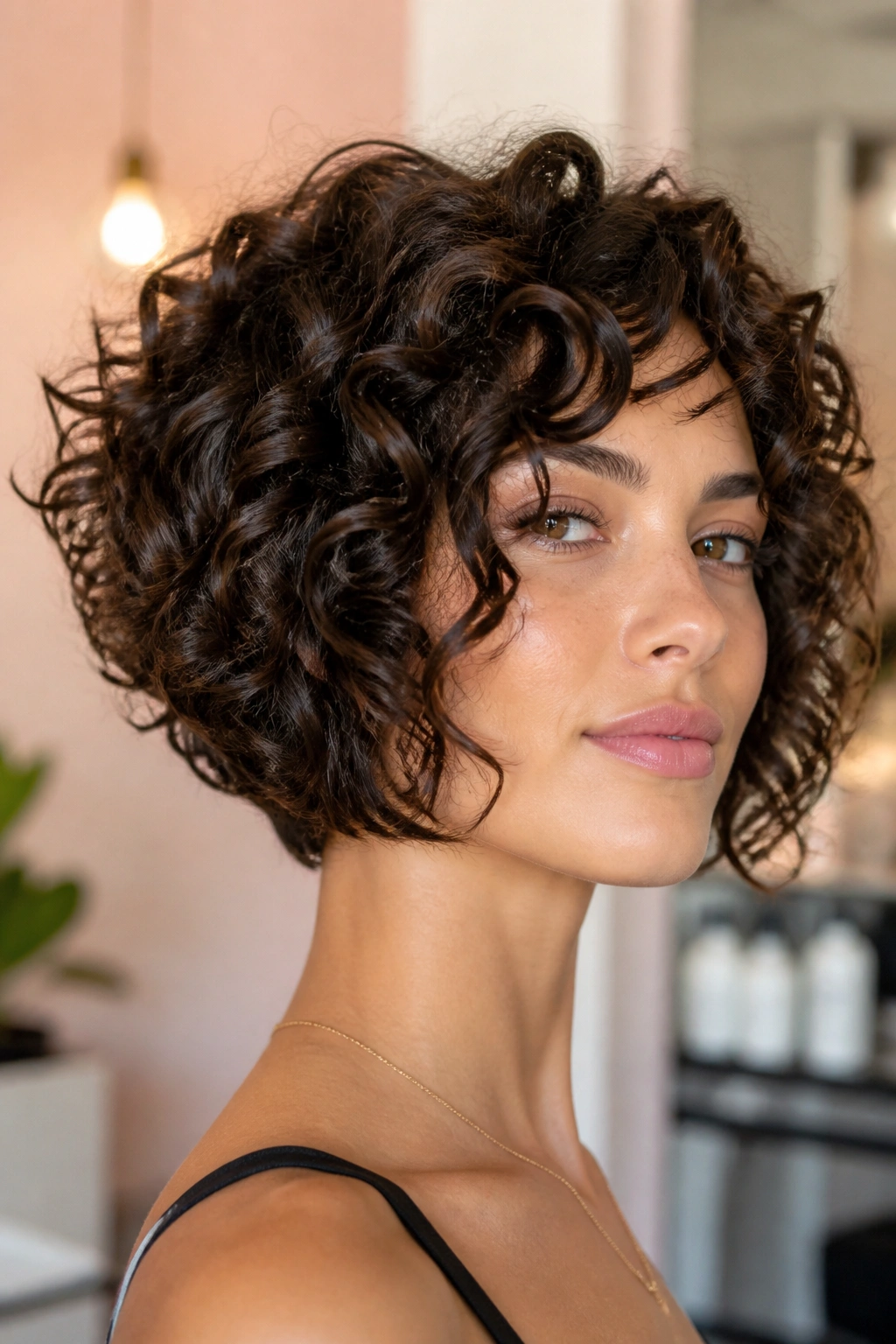
Thick curls can eat a bob alive if the back is too heavy. A stacked nape bob fixes that by removing bulk low in the back so the shape lifts instead of ballooning outward.
What makes the stack matter
The stack creates a gentle curve at the back of the head. That curve keeps the silhouette from turning square, which is a common problem when dense curls are cut to one flat length. The shorter layers underneath give the top curls somewhere to rest, and the longer front pieces keep the shape from feeling too short or severe.
What to ask for
- A graduated nape with visible lift
- Longer front sections that skim the jaw
- Light point-cutting through the perimeter
- A dry check so the curl shrinkage doesn’t hide the shape
This cut is a gift if your hair grows outward instead of down. It’s also one of the cleaner ways to wear an asymmetrical bob when you have a lot of density. The back looks tidy. The front still swings.
4. Collarbone Lob with One Long Front Piece

A collarbone-length asym bob is the safe first step for anyone who wants change without losing the comfort of length. One side may brush the collarbone while the other stops higher, around the chin or lower jaw. That one long front piece does a lot of visual work.
The benefit is obvious the second you move your head. The longer side slides, the shorter side opens the face, and the curls have enough room to stack without feeling chopped. If your hair has some weight to it — say 3B curls or loose 3C spirals — this length usually keeps things from springing too far above the shoulders.
This is also a good cut if you wear glasses. The longer front piece can sit near the frame without getting buried in it. That sounds small, but it changes the way the cut behaves on an ordinary day, which is where most haircuts either earn their keep or annoy you.
Not dramatic. Just smart.
5. Curly French Bob with Airy Fringe

Can a French bob work on curly hair? Absolutely, if the fringe is handled with restraint.
The trick is to keep the bob short enough to feel breezy but not so short that it turns into a mushroom on a humid day. Think cheekbone length on one side, a little shorter on the other, and a fringe that breaks into soft pieces instead of lying like one solid sheet across the forehead. That little bit of separation is what keeps it from feeling heavy.
This cut is best when the curls are loose to medium. If your hair is tight and springy, the fringe needs to be longer than you think. Short curly bangs can jump straight up and disappear, which is cute for about five minutes and annoying after that.
The French bob has attitude. The asymmetry keeps it from reading sweet or precious. It looks much better when the fringe falls in imperfect bits.
6. Razored Asym Bob with Curtain Bangs
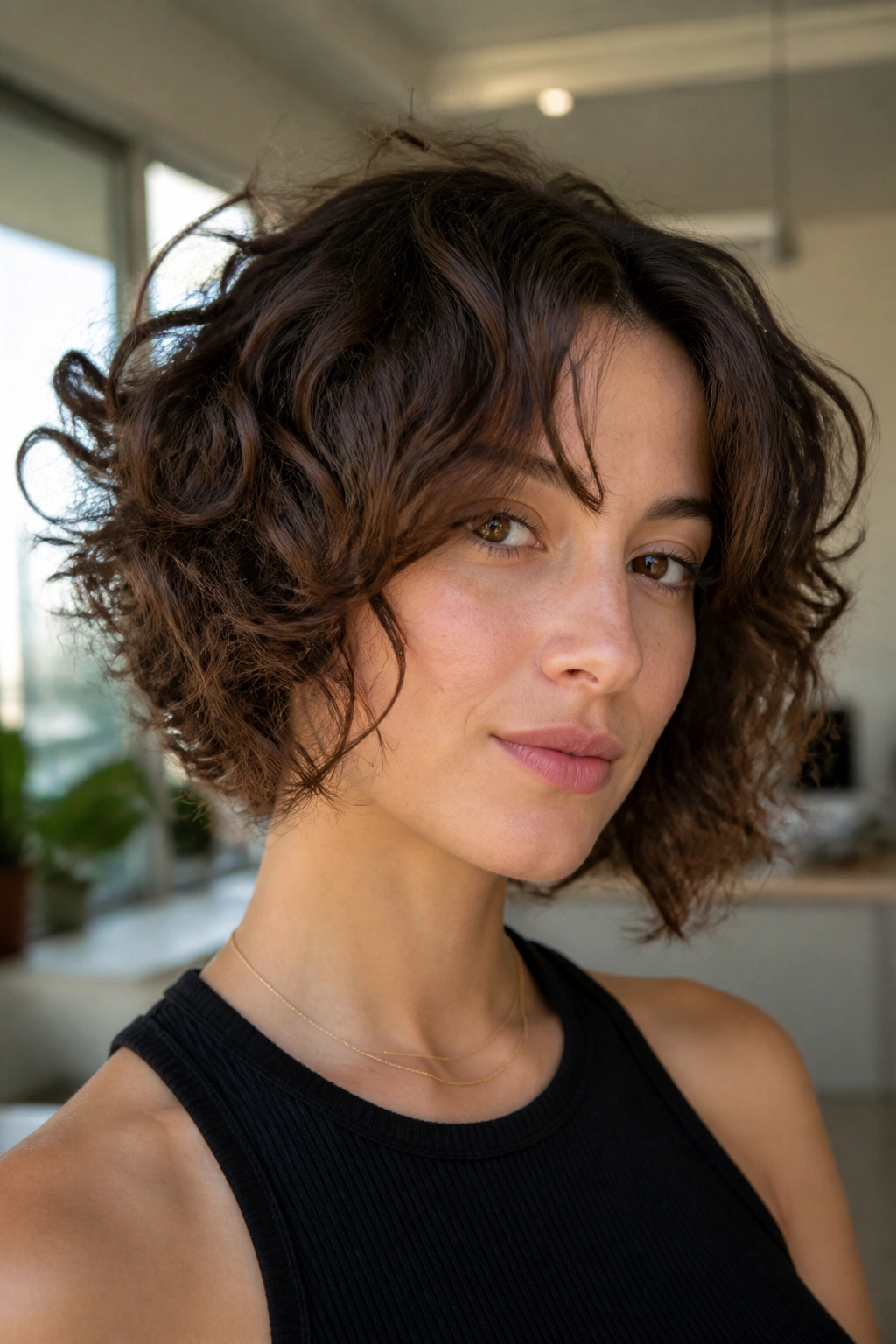
Razoring curly hair is not something I hand out lightly. Done well, it gives the bob a softer edge and stops the outline from looking like it was cut with garden shears. Done badly, it can rough up the ends and leave frizz where you wanted movement.
That said, a razored asymmetric bob with curtain bangs can be beautiful on 2C, 3A, and some 3B patterns. The bangs split in the middle, then sweep away from the face, while one side of the bob sits slightly longer. The result feels airy and casual, not stiff.
Why it works
The curtain fringe breaks up the forehead area, which matters if your face needs a little width or softness up top. The asymmetry in the bob keeps the shape from looking too symmetrical and round. Put those together and you get a cut that moves when you do.
If your ends are fragile, ask for point-cutting instead of heavy razor work. Same softness, less damage. That difference matters more than people admit.
7. Hidden Undercut Bob for Dense Hair
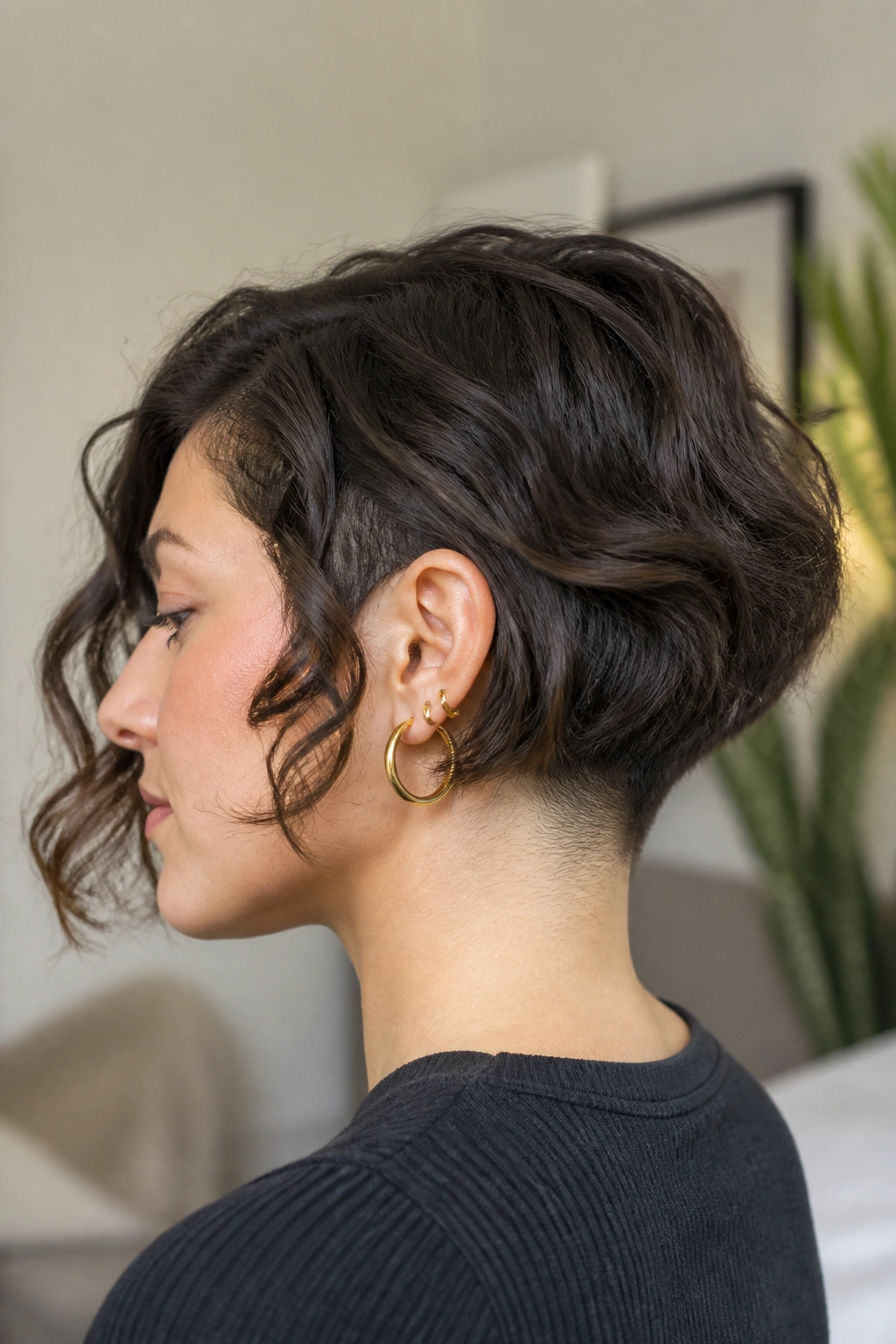
Dense curls can look glorious, then tip over into a helmet if too much weight sits at the bottom. A hidden undercut fixes that in a very practical way. The outside still reads as a bob. The underside, usually at the nape or one side, has some bulk removed so the shape can move.
Picture hair that feels thick at the neck, almost like it’s standing away from the head. That’s the problem this cut solves. Once the internal weight is taken out, the upper curls fall more cleanly and the asymmetry becomes easier to see.
This is a good option if you like a sharp exterior but hate spending half your life diffusing the same section just to get it to lay flat. It also helps if one side of your hair is noticeably denser than the other — which happens more often than salon mirrors like to admit.
A hidden undercut is not loud. That’s the point. It lets the bob behave.
8. Rounded Bob for Coily Hair

A rounded bob for coils is a shape cut with the curve in mind from the start. Instead of trying to flatten the sides, the stylist builds a soft dome that follows the head and lets the asymmetry come from length, not volume.
That distinction matters. With 3C to 4A coils, too much bluntness can make the hair widen at the jaw. A rounded bob keeps the silhouette closer to the head, then one side is left a bit longer so the shape still feels modern and not overly tidy.
The best part is how the curls pile up. They sit on top of each other in a neat, springy way, almost like stacked little spirals. The shorter side creates lift near the cheek, while the longer side pulls the eye downward just enough to keep the look balanced.
If you want crisp lines, this is not your cut. If you want shape and bounce without the puff, it’s a strong choice.
9. Side-Swept Bob with Long Bangs

A side-swept bob lives and dies by the bang. The bob itself can be fairly simple, but the long bangs sweeping across the forehead make the whole cut feel directional.
You get the most out of this style when the fringe starts deep on one side and falls across the brow in a soft arc. That line should be long enough to tuck behind the ear if needed, because curly bangs shrink more than most people expect. Cut them too short and they jump up fast.
The rest of the bob can sit around the jaw or just below it. Keep the opposite side slightly shorter so the bangs have somewhere to land visually. That’s the part people miss. Bangs need a base to connect to.
Best for: curls with some bend but not too much spring at the forehead. If your curl pattern is tight right at the root, the fringe will need extra length and a little patience while it settles.
10. Invisible-Layer Bob for Fine Curls

Fine curls need a strange balance. Too much layering and the ends go thin. Too little and the bob drops flat by lunchtime.
An invisible-layer bob handles that by removing weight from the inside while leaving the outer line mostly intact. The result is a cut that looks fuller on the surface, with enough internal movement to keep the curls from clumping into one blunt mass. It’s especially useful for loose 2C waves and fine 3A curls.
What to ask your stylist for
- Internal layers only, not a choppy exterior
- Slightly longer pieces in front for asymmetry
- A perimeter that keeps its edge
- Dry refinement so the shape doesn’t collapse
The “invisible” part matters because nobody wants to see the thinning. You want lift, not holes. This is the haircut that makes fine curls feel like they have more body without making them look shredded.
11. Jaw-Length Bob with One Tuckable Side

This is the bob I recommend to people who want asymmetry but do not want a haircut that shouts about it. One side lands at the jaw. The other side is left long enough to tuck behind the ear, which changes the shape every time you move your head.
It’s practical in a way that sounds boring until you wear it. The tucked side shows earrings. The shorter side opens the cheek. The curls still do their thing, but the cut has enough difference between sides to keep it interesting.
A jaw-length bob is also forgiving if your curls shrink unevenly. Because the shape is short to begin with, a small difference in length reads as intentional rather than uneven. That’s a useful trait when you don’t want to babysit the style every morning.
Short sentence. Big payoff.
12. Curly Bixie Bob Hybrid

A bixie sits between a bob and a pixie, and curly hair gives it some real personality. One side can be cut tighter around the ear, while the other keeps enough length to skim the jaw or cheekbone.
This is not the cut for someone who wants to air-dry and forget about it. It likes a little product, a little scrunching, and the occasional finger-twist near the front. But the reward is movement. Lots of it.
The hybrid shape is especially nice on curls that hold a round pattern near the crown and a looser wave near the nape. The asymmetry keeps the shortness from looking too uniform, which can happen fast with a traditional pixie-inspired cut. Here, the difference in length gives the curls somewhere to bend and separate.
If you want something playful that still reads as a bob from the front, this is a good lane. It’s light. It’s easy to style when you have the rhythm down.
13. Polished Bob with a Strong Weight Line
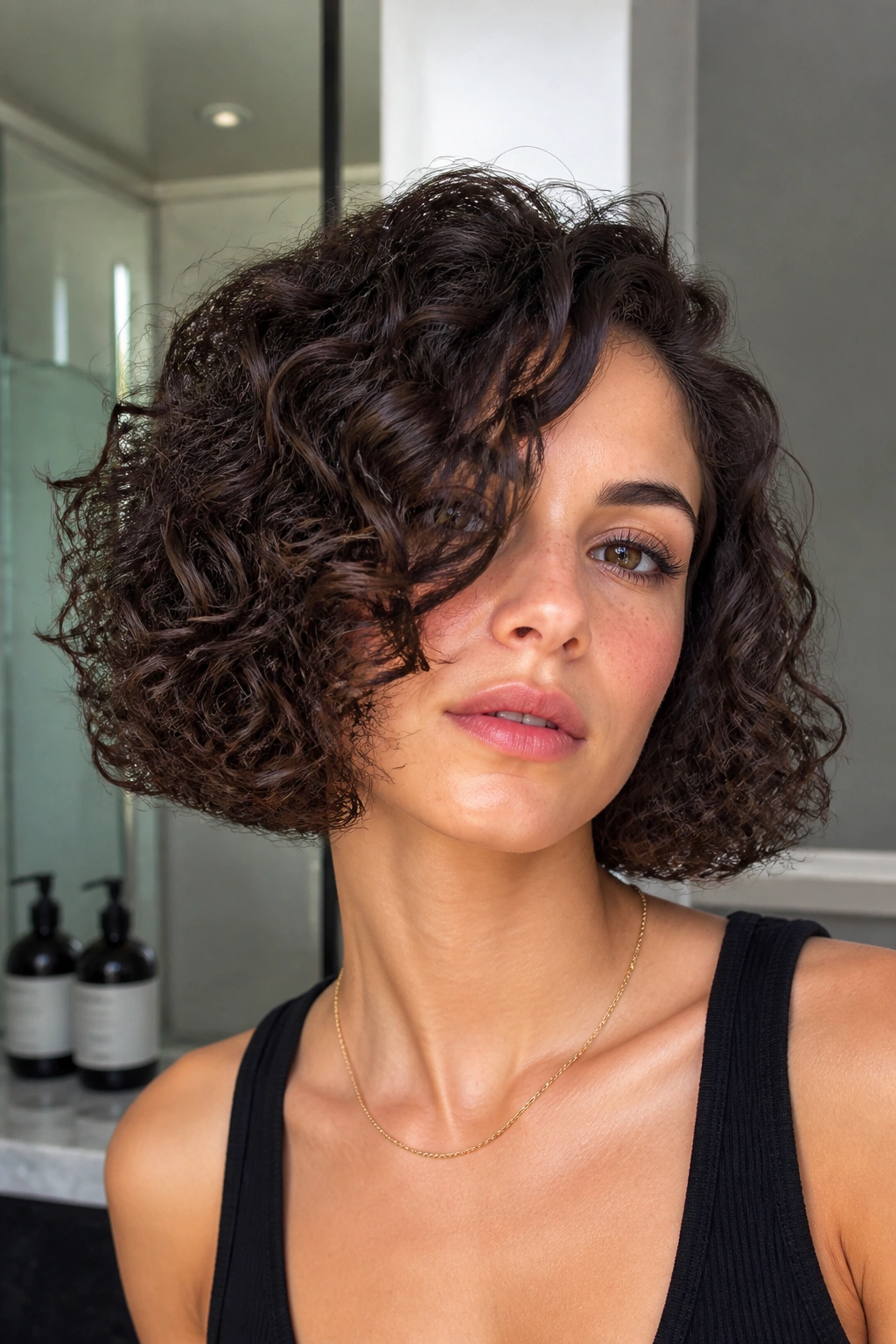
Some curly bobs look best when they’re held together by a clear, clean edge. A polished asym bob does exactly that. The perimeter stays heavier, the angle stays visible, and the curls sit like they were placed there on purpose.
This style works well when you like defined curls with a gel cast or a soft wet-set finish. The cut supports that look because the stronger weight line keeps the ends from fraying into a cloud. One side may be a little longer, but the real story is the neat bottom line.
It’s especially flattering on curls that tend to separate a little too much at the ends. A heavier perimeter gives them something to gather against. The hair looks denser, the angle looks sharper, and the whole cut has more polish without becoming stiff.
Some people want softness. Some want order. This one leans toward order, and I say that with affection.
14. Shoulder-Skimming Bob with Face-Framing Pieces
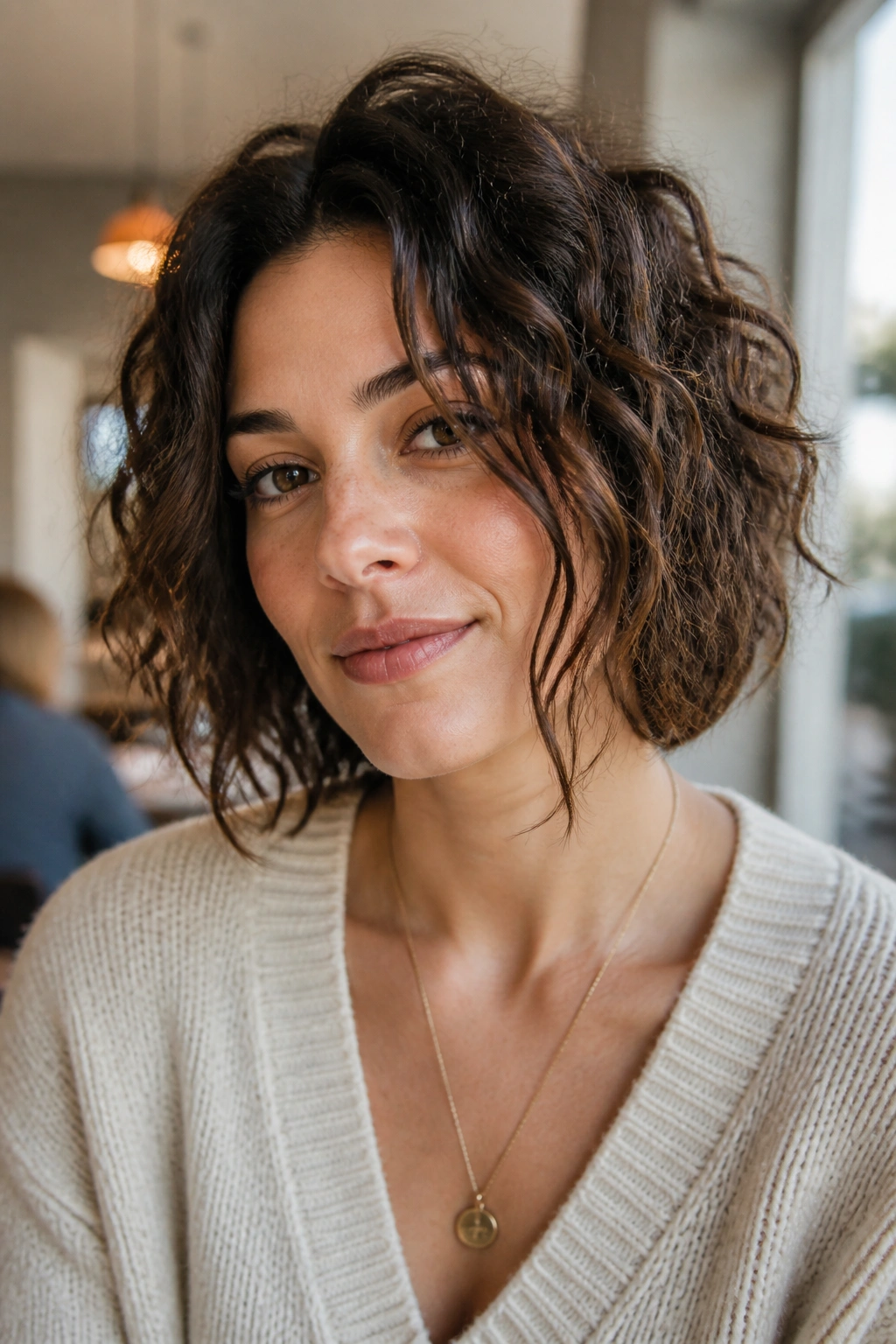
A shoulder-skimming asym bob is for the person who likes the idea of a bob but still wants enough length to tie back on a rushed morning. One side may brush the shoulder while the other sits several inches shorter, and the front pieces can be shaped to graze the cheekbones.
The face-framing pieces do a lot of the heavy lifting here. They soften the transition between the shorter and longer sides, so the asymmetry feels elegant rather than harsh. On curls that get puffy around the jaw, those longer front bits can pull the eye downward and slim the line a bit.
What makes it easier to live with
- Long enough to pin back if needed
- Enough weight to keep the curl pattern from exploding
- A visible angle without losing too much length
- Less salon panic if you’re new to short hair
This is the cut for the cautious convert. And there’s nothing wrong with that.
15. Blunt-Edge Asym Bob for Wavy Curls
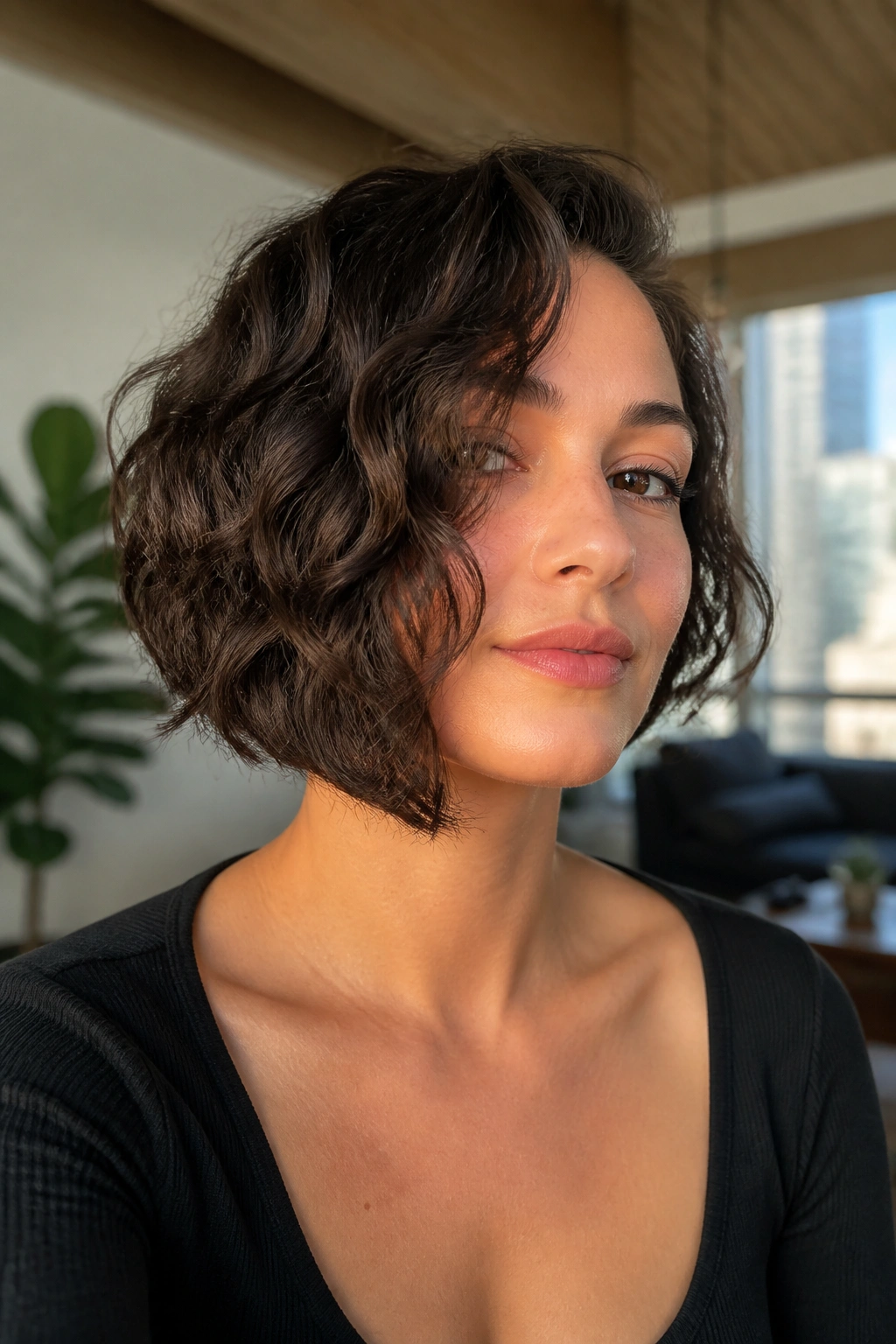
Blunt and curly is not a contradiction. It just has to be done with care.
A blunt-edge asym bob works best when the curls are looser — think 2B to 3A — and the ends are healthy enough to hold a firm line. One side can stay a bit longer, but the perimeter should still feel steady and deliberate. The strength of this cut comes from the contrast between the clean edge and the softness of the curl.
If you layer it too much, the whole shape loses its point. That’s the trap. The blunt line is what makes the asymmetry visible, especially when the hair is air-dried and the wave pattern starts breaking apart at the ends.
I like this version because it has restraint. Not every curly bob needs a ton of movement. Sometimes a clear line makes the curls look richer, not flatter.
16. Soft Shag Bob with Uneven Layers
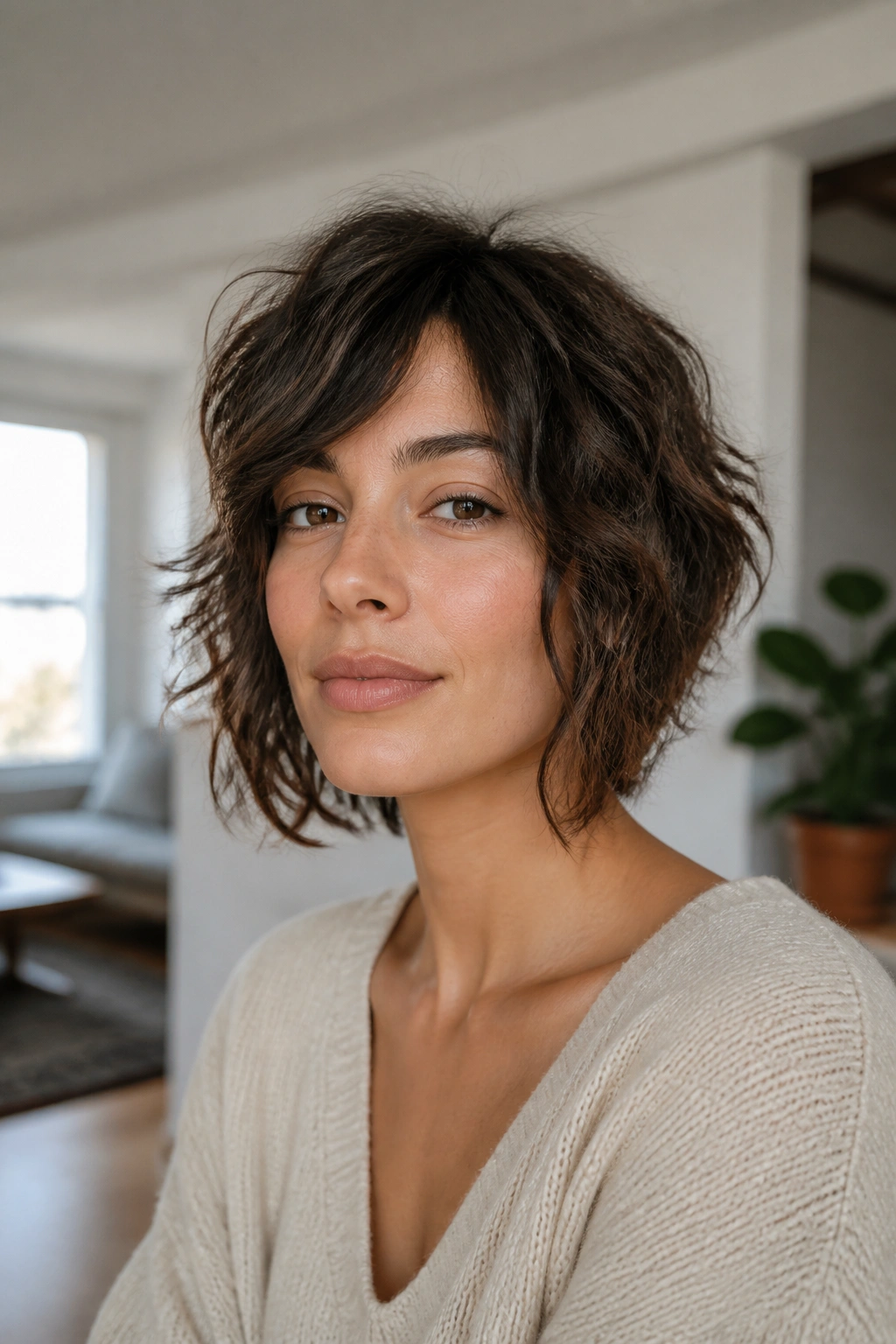
A soft shag bob is for the people who look best with a little disorder in the mix. The asymmetry comes from uneven layers and slightly different lengths on each side, not from a hard diagonal line.
That makes it a good fit for big, airy curls that naturally want to expand. The layers create lift near the crown and around the cheeks, while the longer side keeps the shape from floating away. You still get a bob outline, but it has more swing and less formality.
The key is not to let the layers get too short around the top. Once that happens, the cut can start standing out from the head in a way that looks more like a growing-out shag than an actual bob. Keep the shortest layers soft and check the shape dry.
This cut has a loose, lived-in feel. A little messy. In a good way.
17. Tapered Bob for Tight Coils
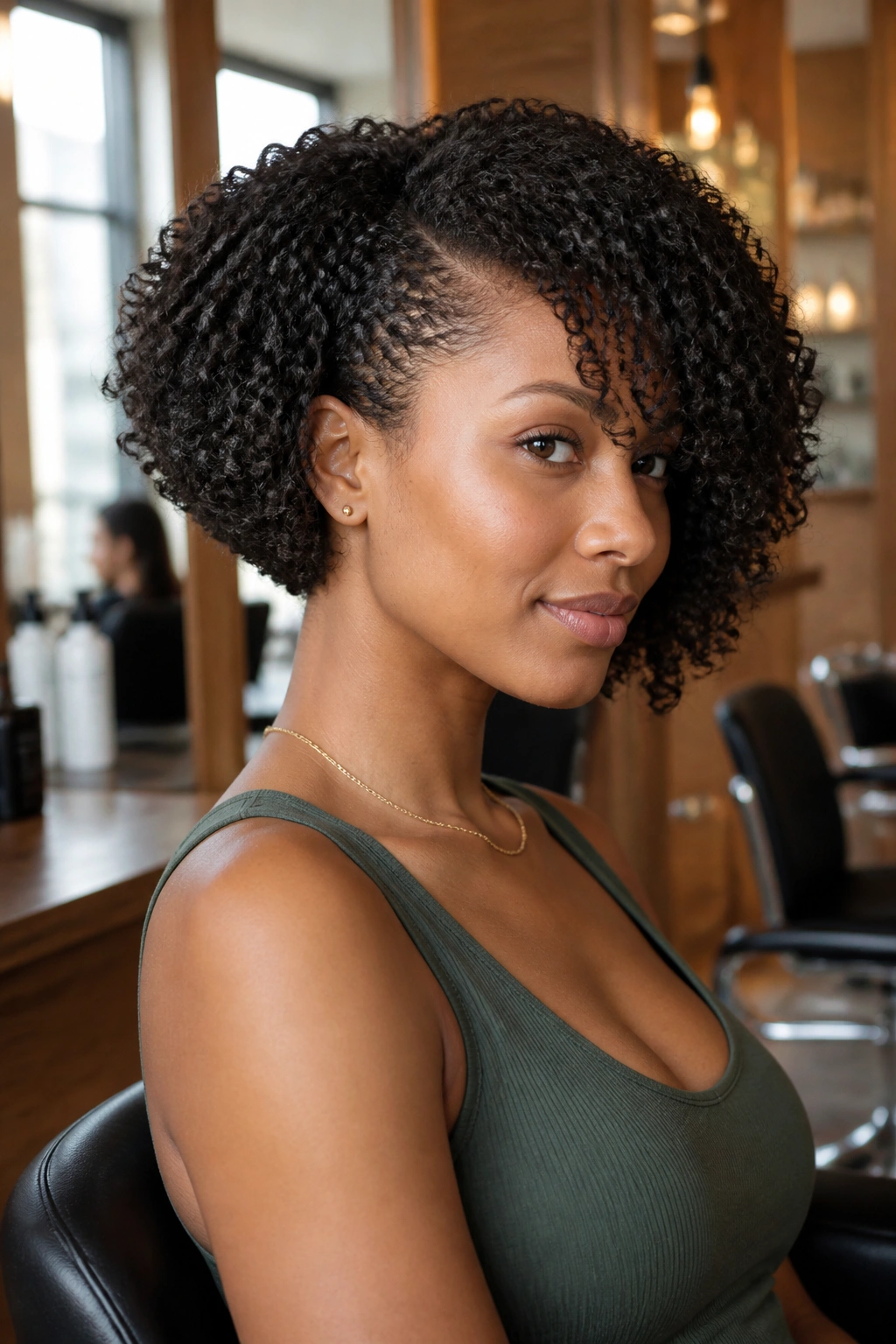
Tight coils can make almost any bob look dense at the sides unless the shape is tapered. That taper narrows the silhouette near the neck and lets one side sit a little longer without creating a box.
The real advantage here is control. A tapered bob keeps the curls close to the head where they need support, then leaves enough length in front to show off the asymmetry. The style feels clean from the back and more sculpted from the front.
Good if your coils shrink a lot
When hair shrinks dramatically, the longest side needs extra length at the salon chair. Not an inch. More like two or three, depending on your pattern. If you cut it too close, the asymmetry disappears when the curls dry and tighten.
Ask for a tapered nape, soft shaping at the sides, and a dry review before anything gets finalized. That’s the part that saves the haircut from becoming too round or too puffy.
18. Split-Length Bob with One Exposed Ear
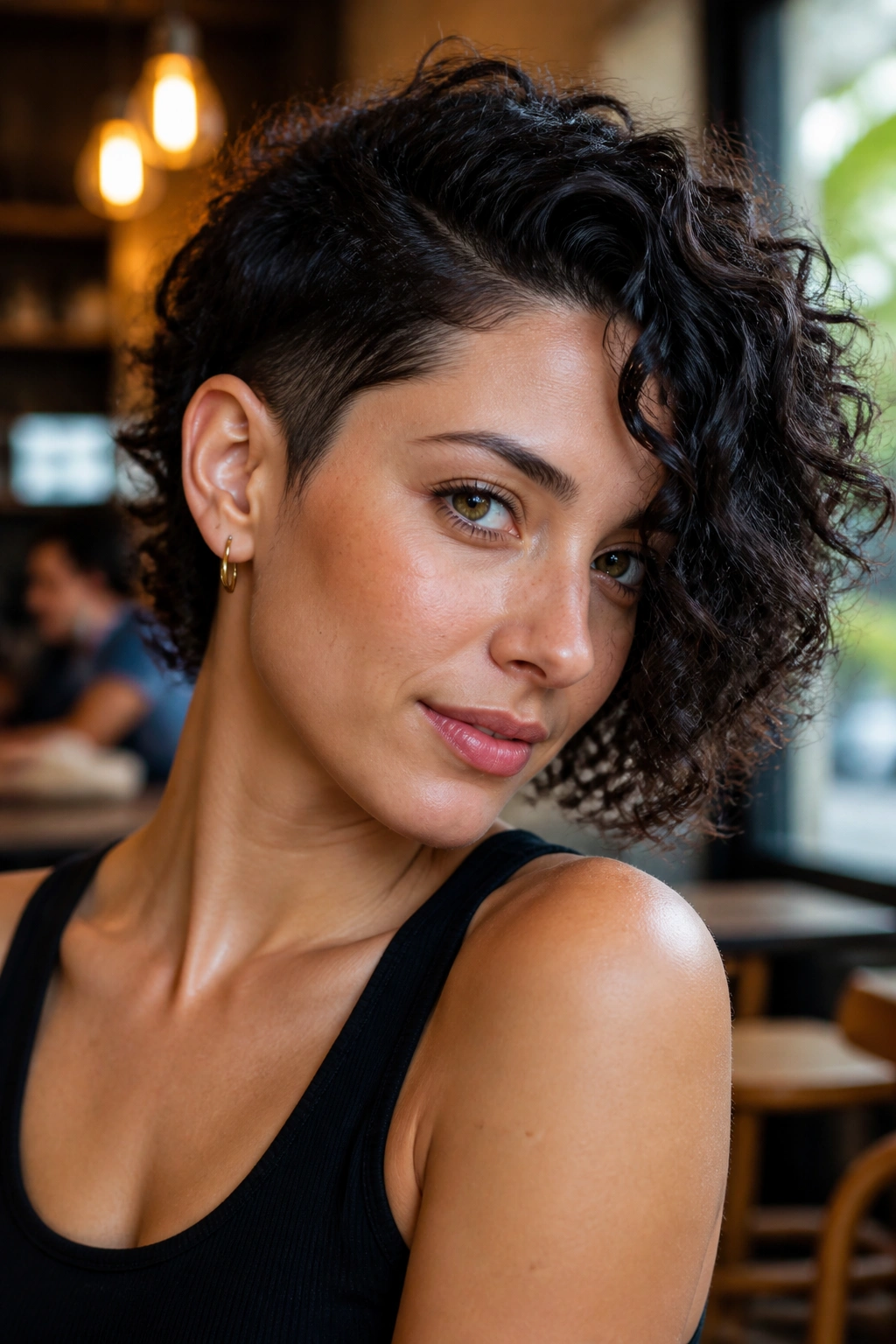
This is the haircut for somebody who likes a little edge and doesn’t mind that the side profile becomes part of the look. One side is cut shorter so the ear stays visible. The other side hangs lower, often brushing the jaw or upper neck.
It sounds simple. It isn’t. The exposed ear changes everything. Suddenly the earrings matter. The neckline matters. Even a turtleneck can make the shape feel different. That’s the fun of it.
The asymmetry reads strongest on curly hair because the texture adds movement where straight hair might look too severe. The curls on the longer side soften the contrast, while the short side keeps the cut sharp. If you wear your hair behind one ear already, this is the grown-up version of that habit.
Some cuts are about balance. This one is about attitude.
19. Long Bob with Bouncy Front Pieces

A long asym bob — or lob, if you want to call it that — is the easiest place to start if you like the idea of shorter hair but are nervous about losing too much length. Keep the front pieces bouncy and a little longer than the back, and the whole haircut feels relaxed instead of drastic.
The front should hit around the collarbone on the longer side. The shorter side can land nearer the jaw or just below it. That difference gives the curls a chance to swing forward without making the back look neglected.
This shape also grows out well. That matters. A lot of curly cuts look good for three weeks and then get weird. A longer asym lob tends to hold its plan longer because the curls have room to shift without breaking the outline apart.
Not flashy. Practical. Still interesting.
20. Low-Contrast Asym Bob for the Office

Not every asymmetrical bob needs to announce itself from across the room. A low-contrast version uses a small length difference — maybe half an inch to an inch and a half — so the shape feels polished instead of dramatic.
That makes it ideal if you wear conservative clothes, talk to clients all day, or simply don’t want people to ask what happened to your hair every time you walk into a room. The change is there. It just sits quietly. One side may rest a little below the other, and the eye notices the line before it notices the difference.
The best part is that this version is easy to maintain. Because the shape is subtle, you can stretch salon visits a bit longer before the asymmetry starts looking accidental. The curls do not need to be styled into submission either. A side part and a diffuser are usually enough.
Soft change. Low drama. Good haircut.
21. Dry-Cut Razor Bob with Textured Ends

Dry-cutting is where a lot of curly bobs finally start making sense. Cutting the hair in its natural state shows you where each curl wants to sit, which matters a lot more than the number of passes your stylist makes with scissors.
A razor or a very light point-cut can soften the ends of this bob so the perimeter doesn’t look chunky. The asymmetry can be subtle or bold, but the texture is the key. You want movement in the last inch of hair, not roughness halfway up the shaft.
What to watch for
- A stylist who checks the curl pattern dry
- Clean ends, not frayed ones
- Enough length left on the longer side to show the angle
- A finish that looks soft when the hair moves, not only in the mirror
This is the cut for people who hate a heavy bottom line. It feels lighter because it is lighter.
22. Rounded Nape Bob with Lift at the Crown

A rounded nape bob puts the focus where it belongs: on the back curve and the crown lift. The shape hugs the head near the neck, then rises slightly at the top so the curls do not sink into a flat cap.
The asymmetry is usually subtle here. One side may be a touch longer or the front can be shifted off-center, but the real drama comes from the curve. That curve helps the curls pile up neatly instead of expanding in a wide circle.
It’s a very good option if your roots collapse quickly. A little height at the crown changes the whole feel of the cut, especially when the back is kept tidy. You can wear it with a side part, let it air-dry, and still keep a shape that looks finished.
If you’ve ever had a bob that felt too heavy in the back, this is the correction.
23. Fringe-Forward Bob with a Deep Side Part

A fringe-forward bob is a little more playful than a standard side-part cut. Instead of pushing the bangs fully to the side, the front section lands across the forehead in a loose, curly fringe that keeps one eye partially framed.
That makes the asymmetry feel more obvious without shortening the entire bob. The longer side can brush the cheek or jaw, while the fringe gives the front a bit of movement and softness. It’s a nice option if your face needs some width near the brow or if you like hair that does something interesting without much styling.
The main thing to manage is length. Curly fringe shrinks fast, and it shrinks unevenly if the curl pattern changes from the center to the temples. Keep the pieces longer than you think, then let them settle after the first wash.
A little unevenness here is a feature, not a mistake.
24. Hollowed Bob for Very Thick Hair
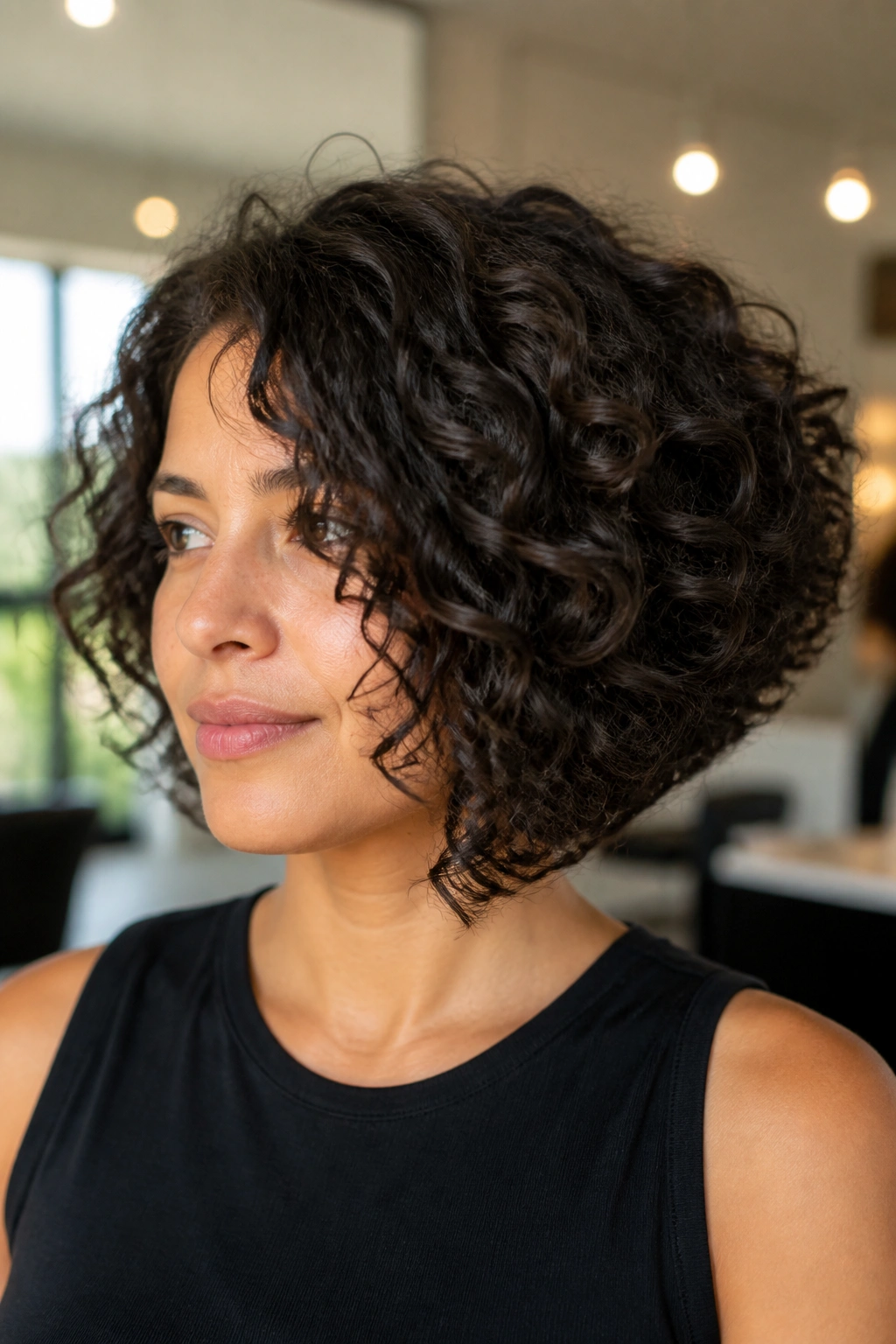
Very thick curly hair needs space inside the cut, not just shape around the outside. A hollowed bob removes interior bulk so the perimeter can swing instead of bulge. The outside still looks full, but the center has less weight fighting it.
This is where a lot of thick-haired people get relief. The hair dries faster. The neck feels lighter. The asymmetry shows up more clearly because the shape is not buried under its own density.
How to keep it from puffing up
- Ask for interior debulking, not aggressive thinning shears
- Keep the outer line a little heavier
- Leave the longer side long enough to anchor the shape
- Check the silhouette dry before leaving the salon
A hollowed bob is not about taking away hair everywhere. It’s about taking it away in the right places. Big difference.
25. High-Drama Bob with One Long Side
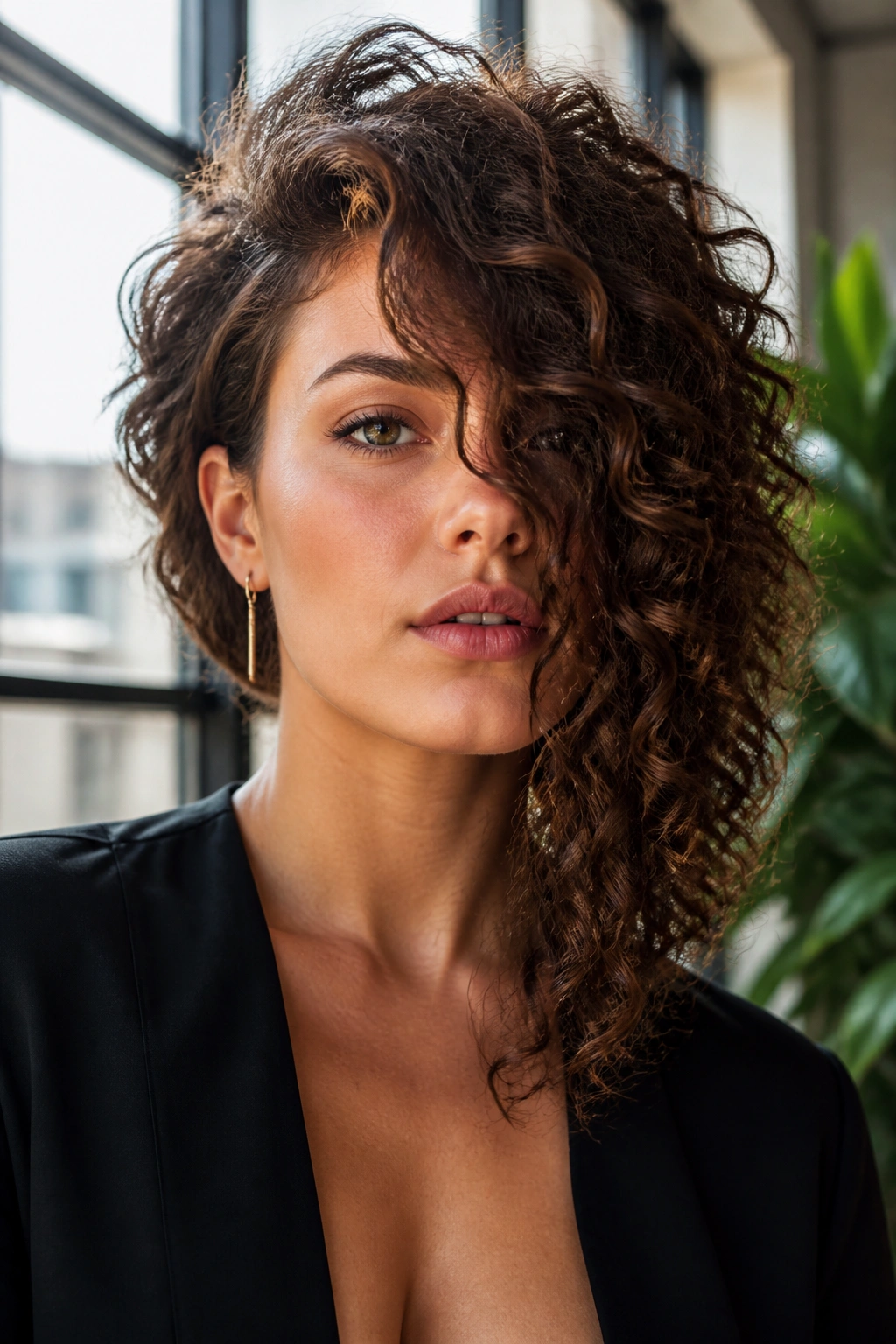
This is the bold one. One side stops near the jaw, sometimes even a touch above it, while the other side drops well below the chin and can brush the collarbone. The difference is obvious on purpose.
Curly hair makes this cut feel softer than it sounds on paper. The longer side carries the drama, but the texture keeps the whole thing from reading too severe. It can look edgy, elegant, or a little bit punk, depending on how you part it and what you wear with it.
The haircut does need upkeep. That’s the tradeoff. Once the shorter side grows out too much, the shape loses its punch fast. Still, if you want a bob that people notice immediately, this is the one. It turns the side profile into part of the style, which is exactly why it works.
Not subtle. Not trying to be.
Final Thoughts
The best asymmetrical bob for curls is the one that respects your texture before it tries to impress anybody. Shape comes first. Drama can come later, or not at all.
If you’re sitting between two options, pick the one with the cleaner weight line and the easier grow-out. Curly hair tends to forgive a lot when the cut is sound, but it does not forgive a sloppy angle. That part will show itself after the first wash.
And if your stylist keeps talking about the haircut only in terms of “shorter on one side,” push for more detail. Ask where the weight sits. Ask how the curls were checked dry. Those two answers tell you more than the mirror does.