



Medium hairstyles for naturally curly hair can be the easiest place to get shape without losing bounce. Long curls get heavy. Short curls can puff up fast and leave you fighting your own hairline by lunchtime.
Medium length sits in the middle, which sounds safe until shrinkage starts doing its thing and a cut that looked neat in the chair lands somewhere else entirely. That’s why curl-friendly medium styles live or die on shape, not just length. A good one lets the curls stack, swing, and settle without turning into a triangle or a helmet.
I’ve always liked medium curly cuts because they give you room to play. You can wear them loose and full, clip them back, twist them up, or let them fall around your face when you want a softer look. The trick is knowing which shape works with your curl pattern instead of fighting it — and yes, that usually means dry cutting, or at least cutting with the curl’s bounce in mind.
1. Shoulder-Length Curly Shag
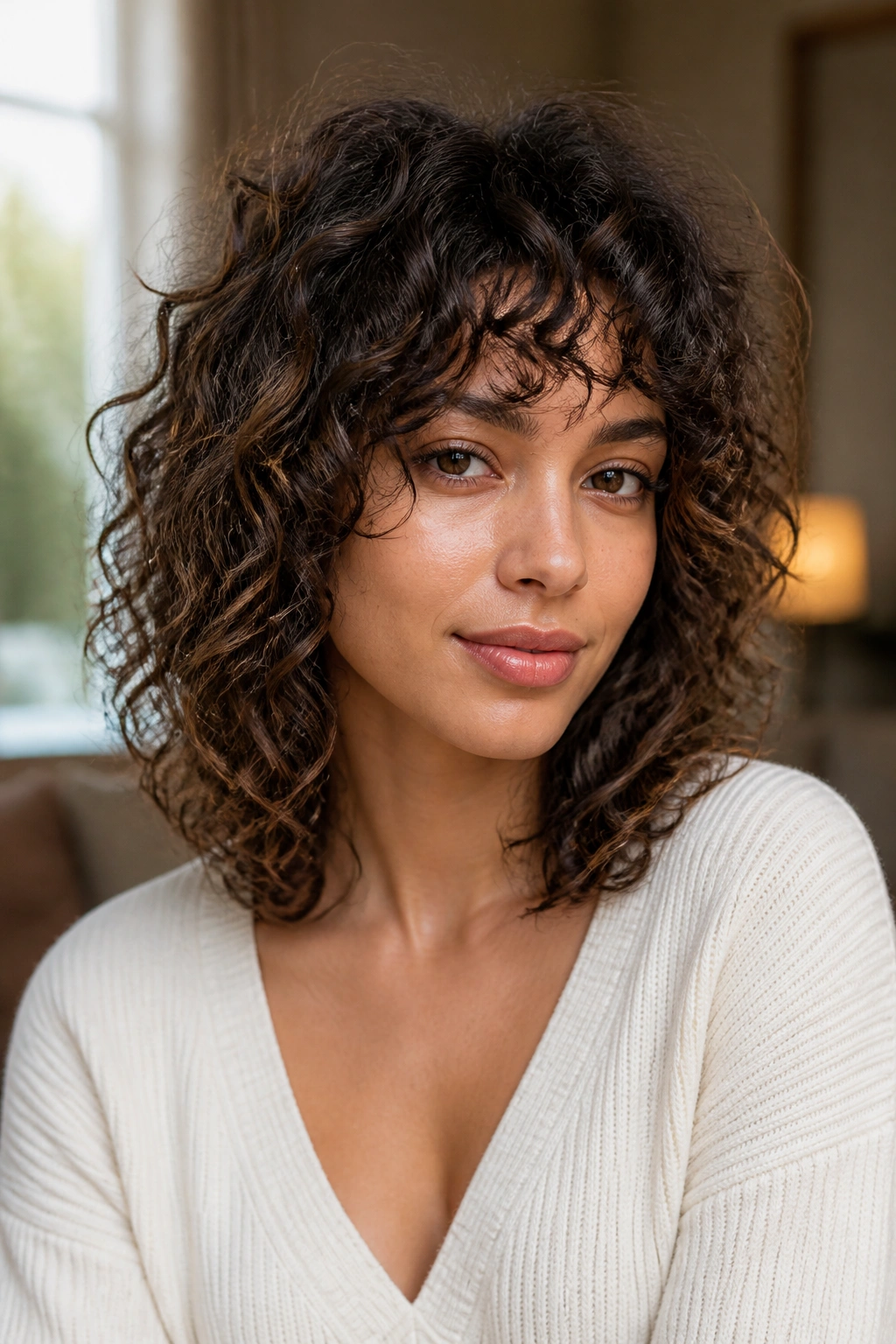
A good shag fixes the “too wide at the bottom” problem fast. Shorter layers around the crown wake the curls up, and the longer perimeter keeps the whole thing from puffing into a box.
Why It Works
Ask for layers that start high enough to lift the top, but not so high that the cut loses its length. A shoulder-length curly shag is one of those styles that looks relaxed on purpose, which is harder to fake than people think. If the stylist cuts it wet, you want them checking the shape again once it’s dry, because curls love to shrink in a way that surprises even the person holding the scissors.
- Best for curls that need movement at the top
- Strong choice for 2c through 3b patterns
- Looks good with a diffuser and a little root lift spray
- Keeps the ends from feeling heavy or dragged down
Pro tip: tell your stylist you want the crown to sit a little shorter than the front, not chopped randomly. That tiny bit of order makes the shag feel intentional instead of messy.
2. Collarbone Lob With Soft Internal Layers
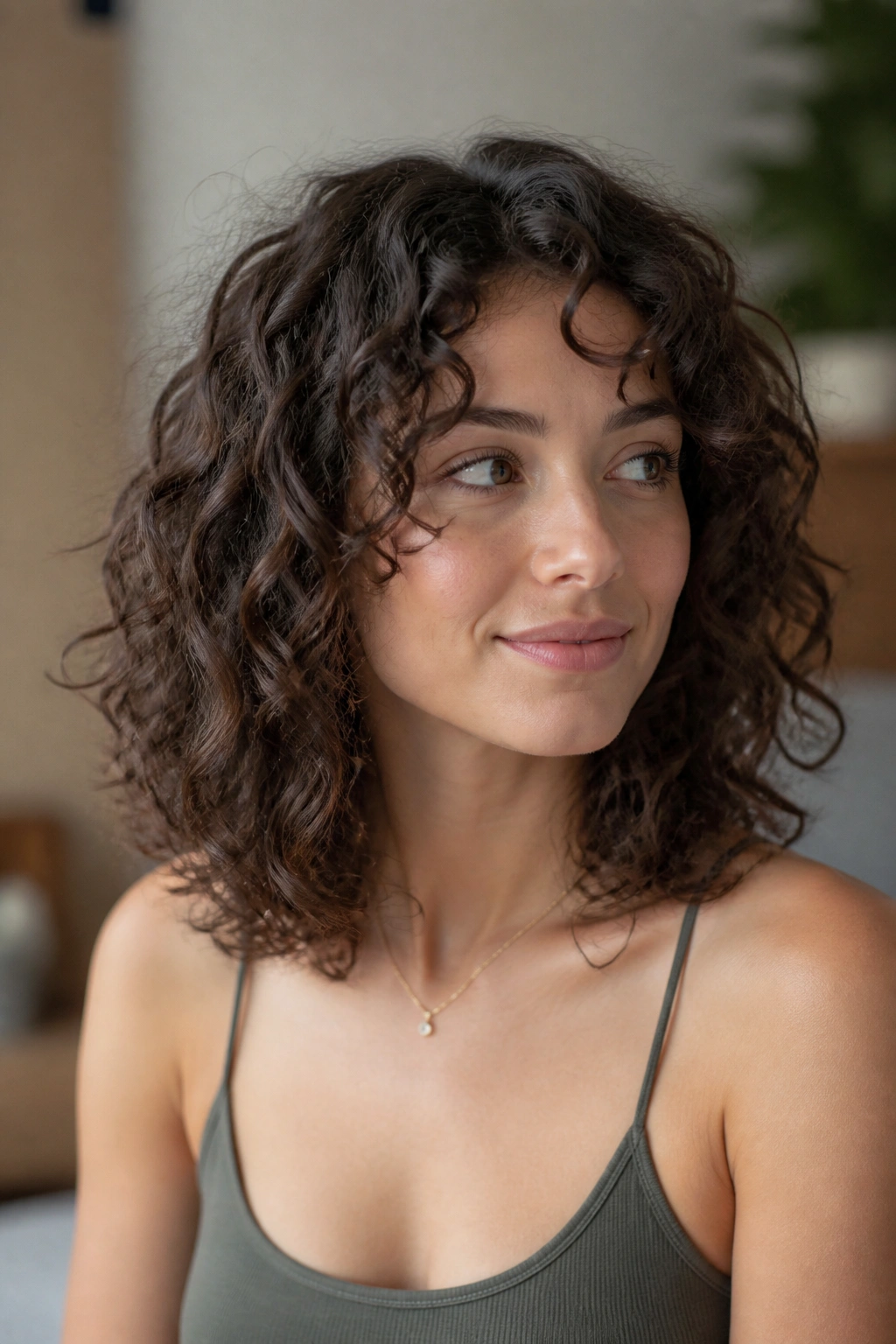
This is the haircut I suggest when someone wants medium curly hair that still behaves in a ponytail. The collarbone length gives you enough swing for the curls to move, while the soft internal layers remove weight from the middle instead of chopping the outline to pieces.
That matters more than people realize. A lot of curly hair looks bulky because the inside is too dense, not because the hair is “too thick.” Internal layers solve that problem without making the outer shape look thin. You get a smoother fall, less triangle bulk, and a lob that still feels like hair, not a cloud with a part.
I like this cut for people who are tired of overstyling. Air-dry it with leave-in and a light gel, then leave it alone. Don’t keep touching the curl clumps while they dry. That’s how you get frizz in all the places you were trying to avoid.
3. Curly Curtain Bangs That Blend Into the Sides
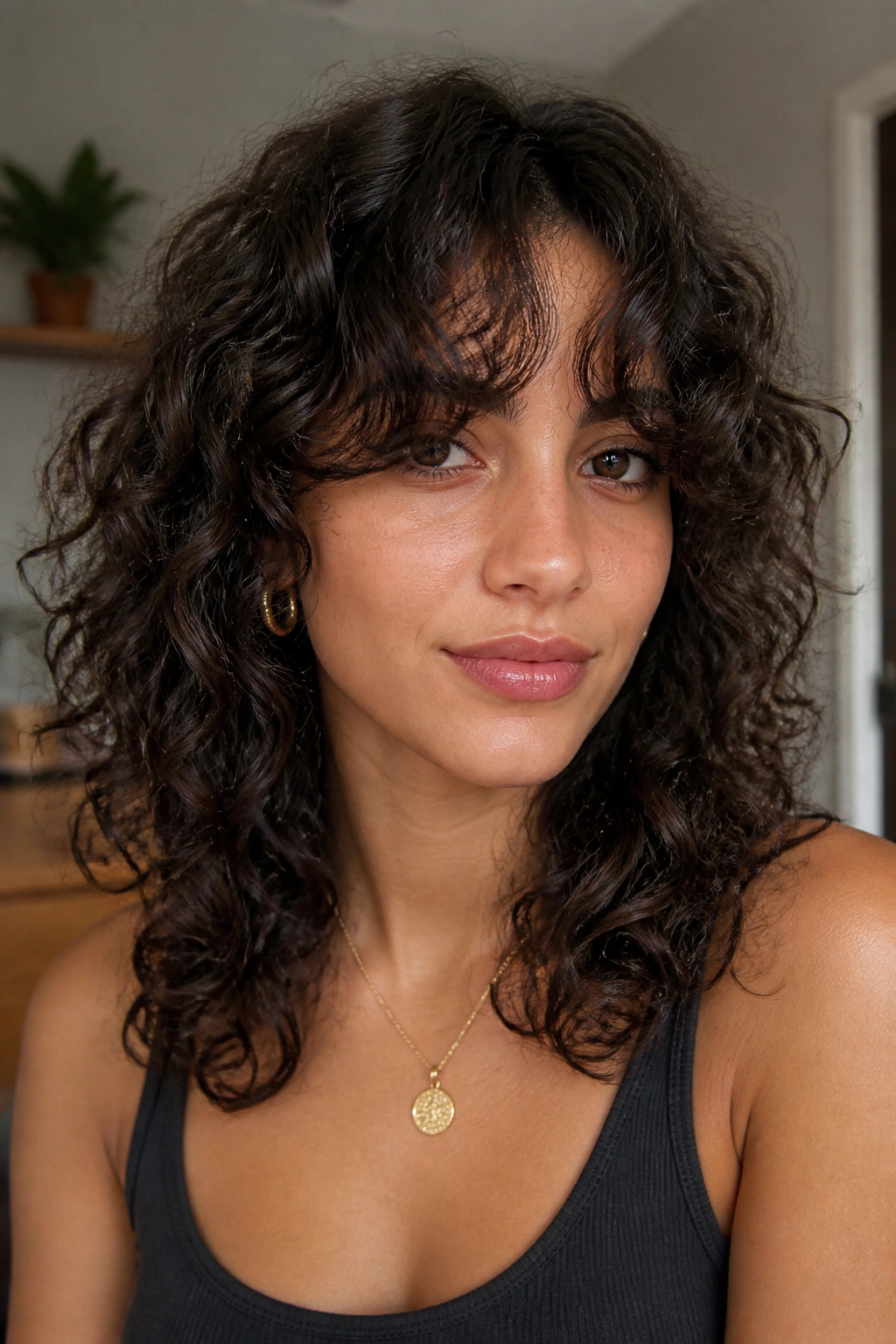
Who says curly bangs have to be a gamble? Curtain bangs can be a very forgiving way to open the face, because they split softly in the middle and melt into the rest of the haircut instead of landing as one blunt line across the forehead.
How to Style It
The best version starts longer than you think. Curls bounce up, and a fringe that looks perfect when wet can sit much higher once it dries. I like a dry or curl-by-curl cut here, with the shortest pieces grazing the brow area and the sides tapering down toward the cheekbones.
- Use a tiny dab of curl cream on the fringe only
- Twist the bang sections while damp if they separate too much
- Clip them forward while drying to control the direction
- Trim sooner rather than later if they start getting boxy
A soft curtain bang is one of the easiest ways to make medium curls feel new without changing the whole head. It also grows out well, which is a mercy. Bang regret is real.
4. Deep Side Part With Lift at the Roots
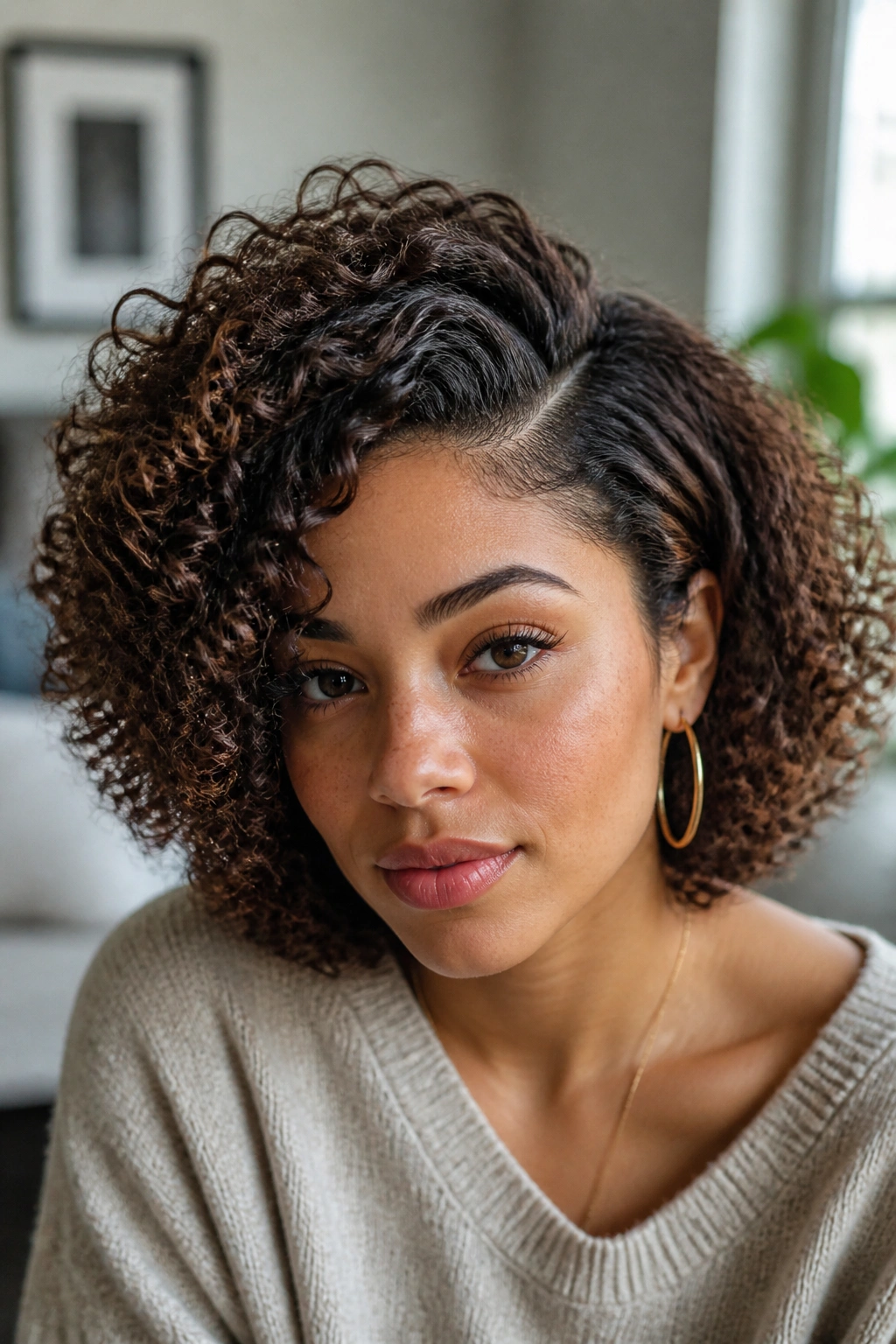
A side part can change a curly haircut more than a whole inch of length. Shift the part a few centimeters off center, and the volume moves with it. Suddenly the hair looks taller at the crown, softer around one side of the face, and less flat where it usually collapses.
Why It Works
The style is simple, but the shape is not. A deep side part works especially well when the top layer of curls tends to lie flat or when one side of the face needs more softness. It also plays nicely with medium lengths because there’s enough weight in the bottom to keep the style from floating away.
- Set the part on damp hair before product
- Clip the roots on the heavier side for 10 to 15 minutes
- Diffuse with your head tilted slightly toward the low side
- Keep the part just behind the highest point of the eyebrow for a balanced look
Skip the dramatic side sweep if your roots are sparse at the hairline. Too much parting can expose more scalp than you want. A small shift usually does the job just fine.
5. Rounded Curly Bob That Sits at the Collarbone
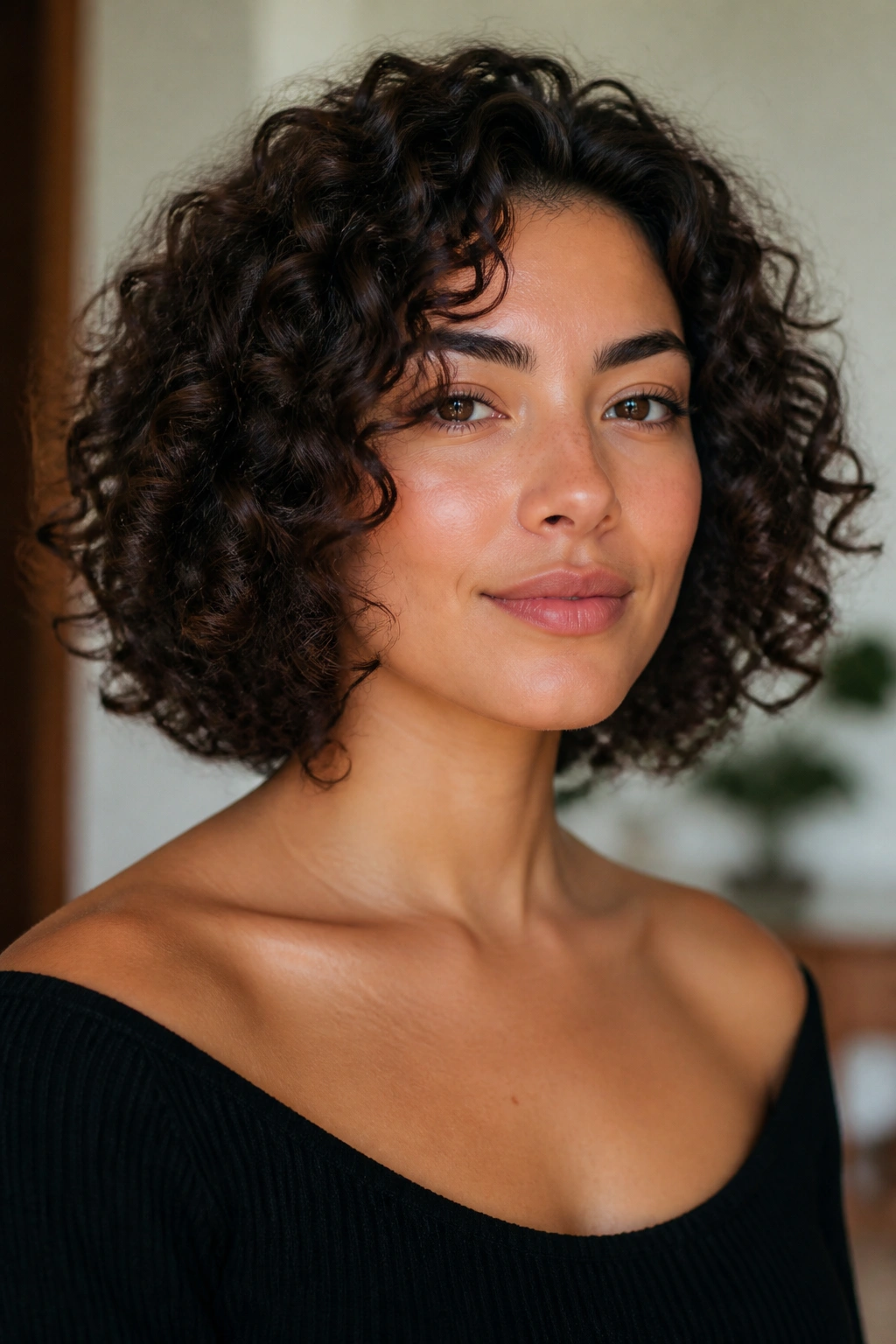
The rounded bob is for anyone who wants medium curls that look finished without trying too hard. The outline curves in gently, which keeps the style from turning square or wide at the sides. It should feel soft, almost like the curls are wrapping around the head instead of hanging off it.
The nice thing about this shape is that it gives dense curls somewhere to go. If your hair tends to balloon out at the sides, the rounded bob reins that in without flattening the top. I like it when the curls are cut to follow the head shape a little more closely near the nape and then open up around the jaw and shoulders.
It’s also one of the few medium curly styles that looks good both defined and a little airy. Use mousse for more bounce, or a cream-gel mix if you want the clumps to stay separated and shiny. Either way, the curve of the cut does a lot of the heavy lifting.
6. Half-Up Twist Crown for Busy Mornings
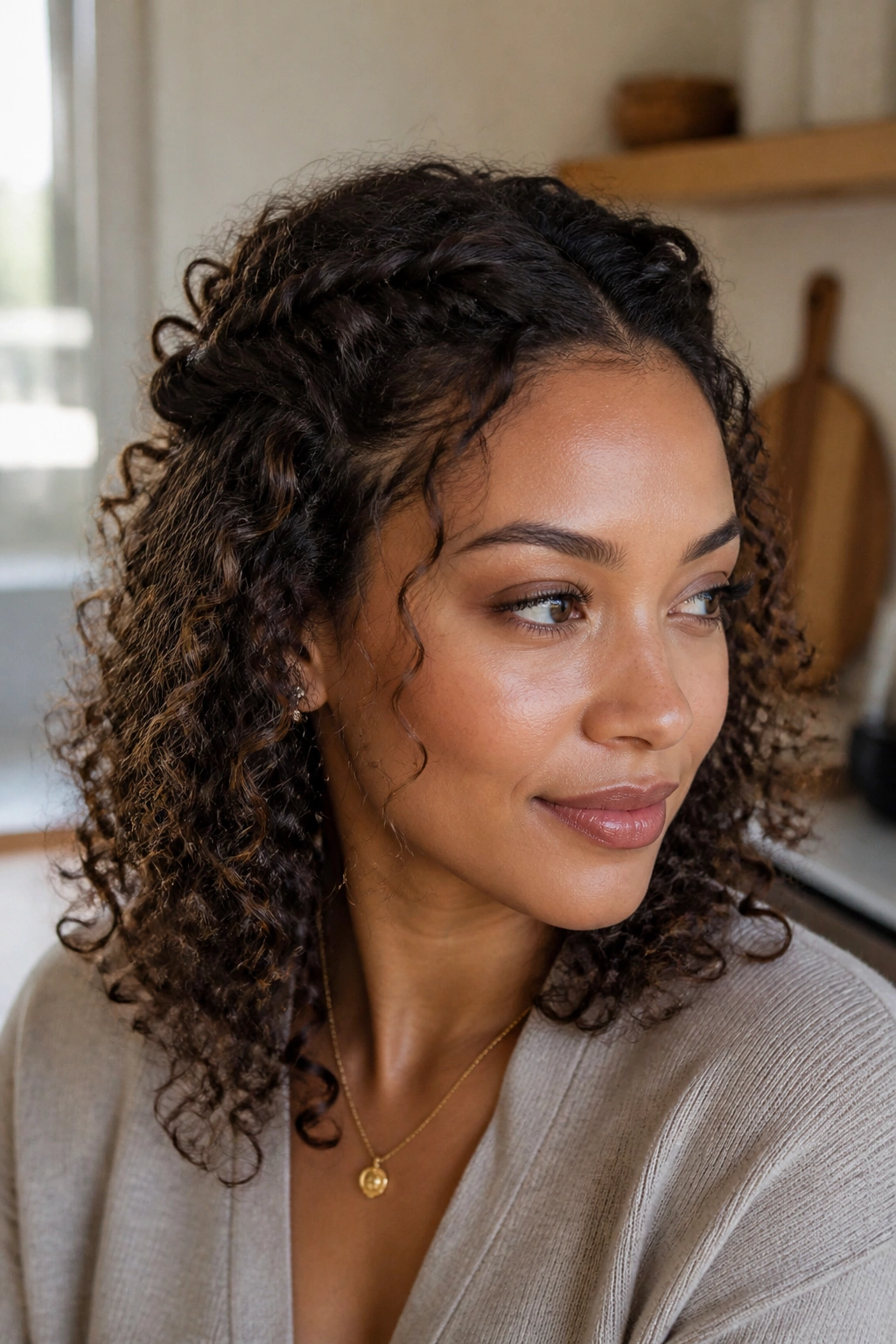
A half-up twist crown is quieter than a full ponytail and less fussy than a braid. That’s why it works so well on medium curly hair that’s already doing its own thing. You gather two small front sections, twist them back along the sides, and pin them where the head starts to narrow.
The style keeps the face open while leaving most of the curl pattern untouched. That matters. A full updo can crush the shape, but this one keeps the lower half loose enough to bounce and move. It’s especially handy on second-day curls that have lost some definition at the front but still look good through the ends.
I like using two medium bobby pins per side and crossing them in an X. One pin slides alone; two usually stay put. Tiny detail, big difference.
7. Curly Wolf Cut With Soft Choppy Layers
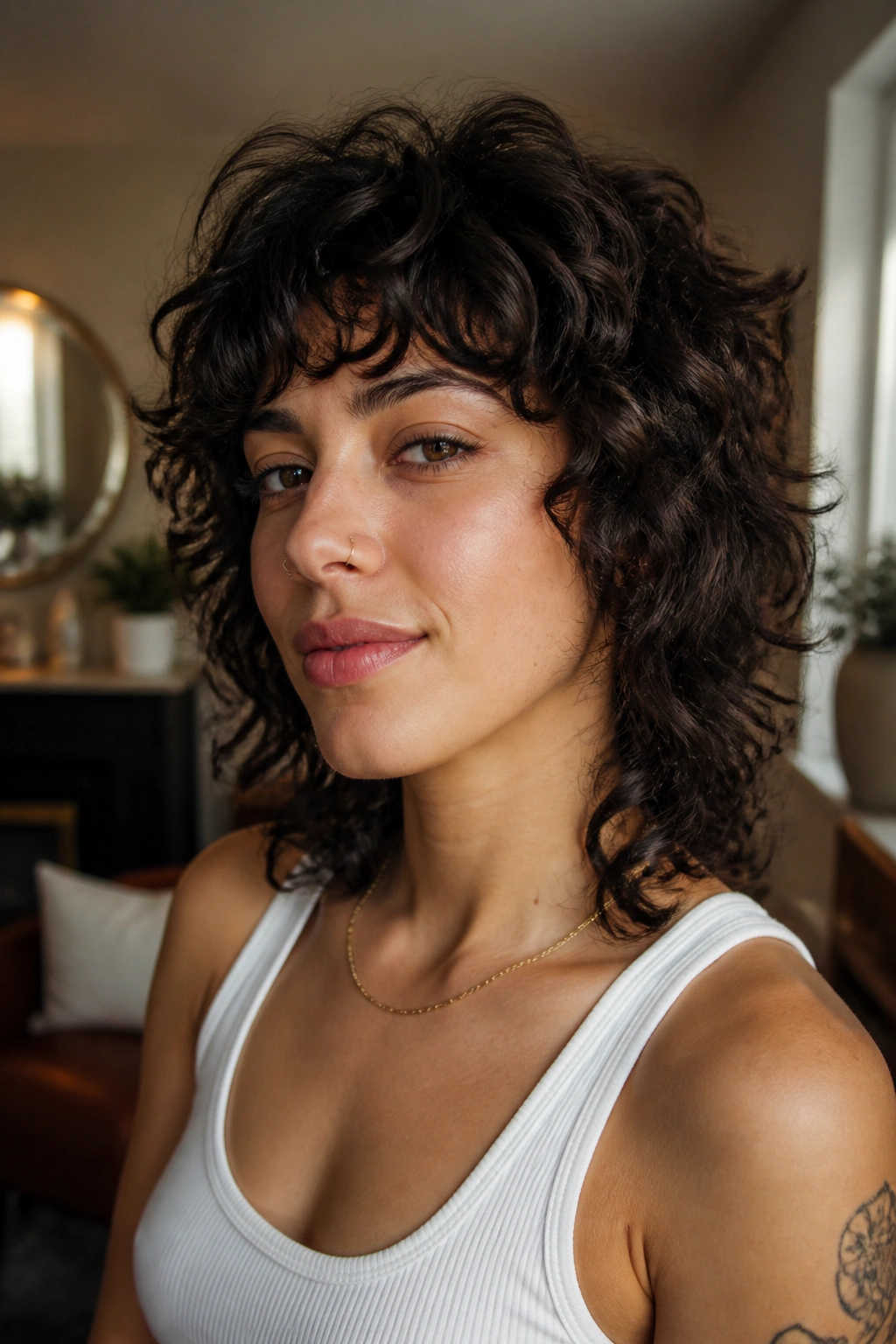
Some haircuts behave. The wolf cut doesn’t even pretend to. That’s the appeal. On naturally curly hair, the softer version gives you shorter layers around the crown, longer pieces toward the back, and just enough roughness to keep the shape from feeling precious.
What Makes It Different
A curly wolf cut is not a shag with a cooler name. It carries more edge through the silhouette, and the layers are often a little more staggered. That stagger helps the curls stack without sitting in one heavy block. It’s a strong choice if your hair has density and you want movement that shows even when the curls are not perfectly styled.
- Shorter top layers give the crown air
- Longer back pieces keep the length usable
- Works well with gel if you want the layers to separate cleanly
- Looks best when the curls are allowed to dry in their own pattern
Be honest with yourself here: if you love neat lines, this one will probably annoy you. If you like a haircut with some attitude, it can be a favorite.
8. Face-Framing Layers That Start at the Cheekbones
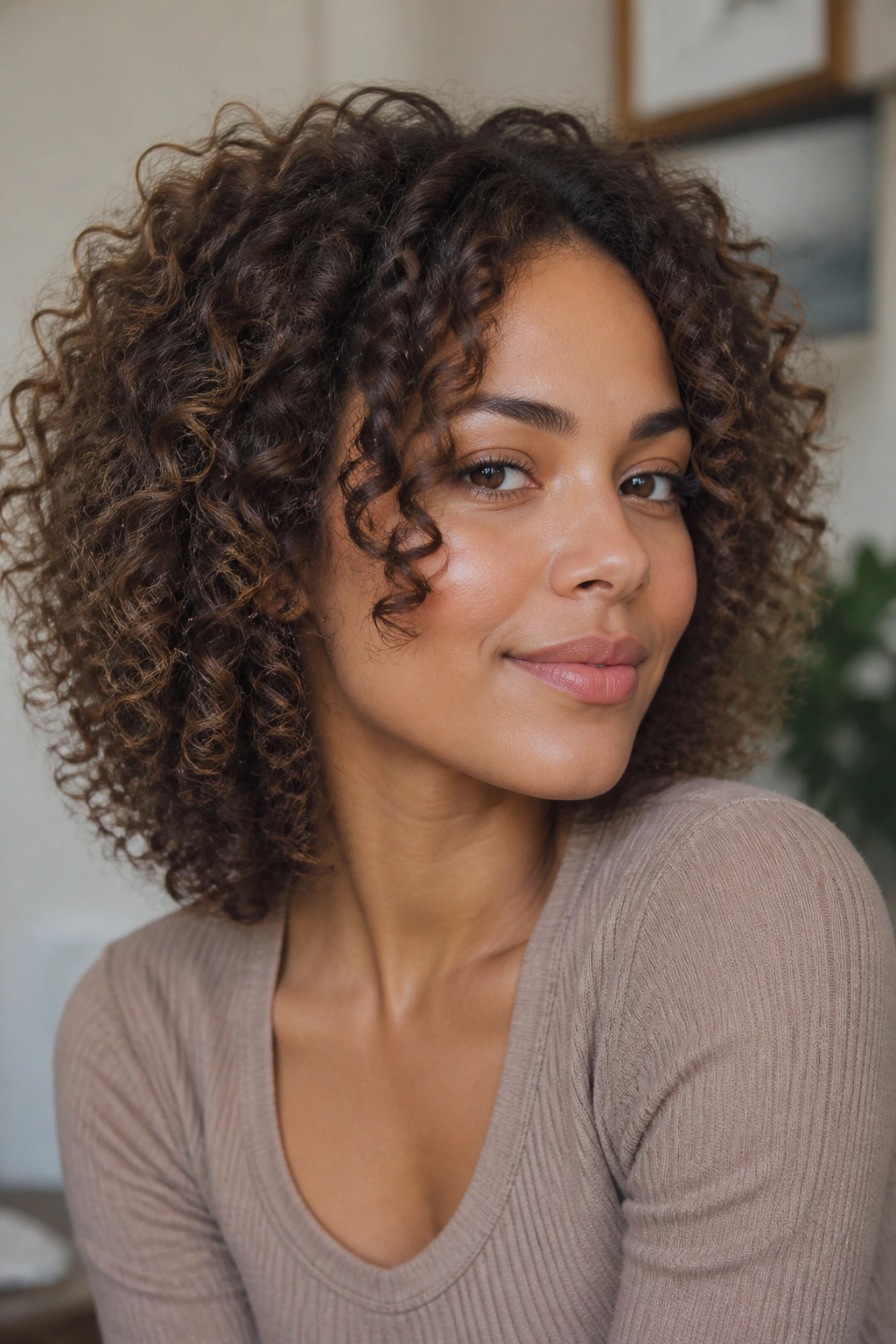
Where should face-framing layers actually start on curly hair? Cheekbone level is a smart place to begin. It gives the front pieces enough length to swing, while the shorter bits soften the face instead of hanging like curtains with no shape.
The exact spot matters because curls shrink differently from one section to the next. If the shortest layer starts too high, you can end up with pieces that bounce into the eyes every time the hair dries. If it starts too low, the front can feel heavy and drag the whole look down. Cheekbone length usually lands in the sweet middle.
Where to Ask for the Shortest Piece
Tell your stylist you want the shortest front layer to graze the cheekbone when stretched, not when the curl is dry. That’s the part people forget. Stretching gives you a more honest read on the length. A little curl cream and a side part can make these layers pop even more, especially around rounder or softer face shapes.
9. Pineapple Half-Up Style for Stretching Day-Old Curls
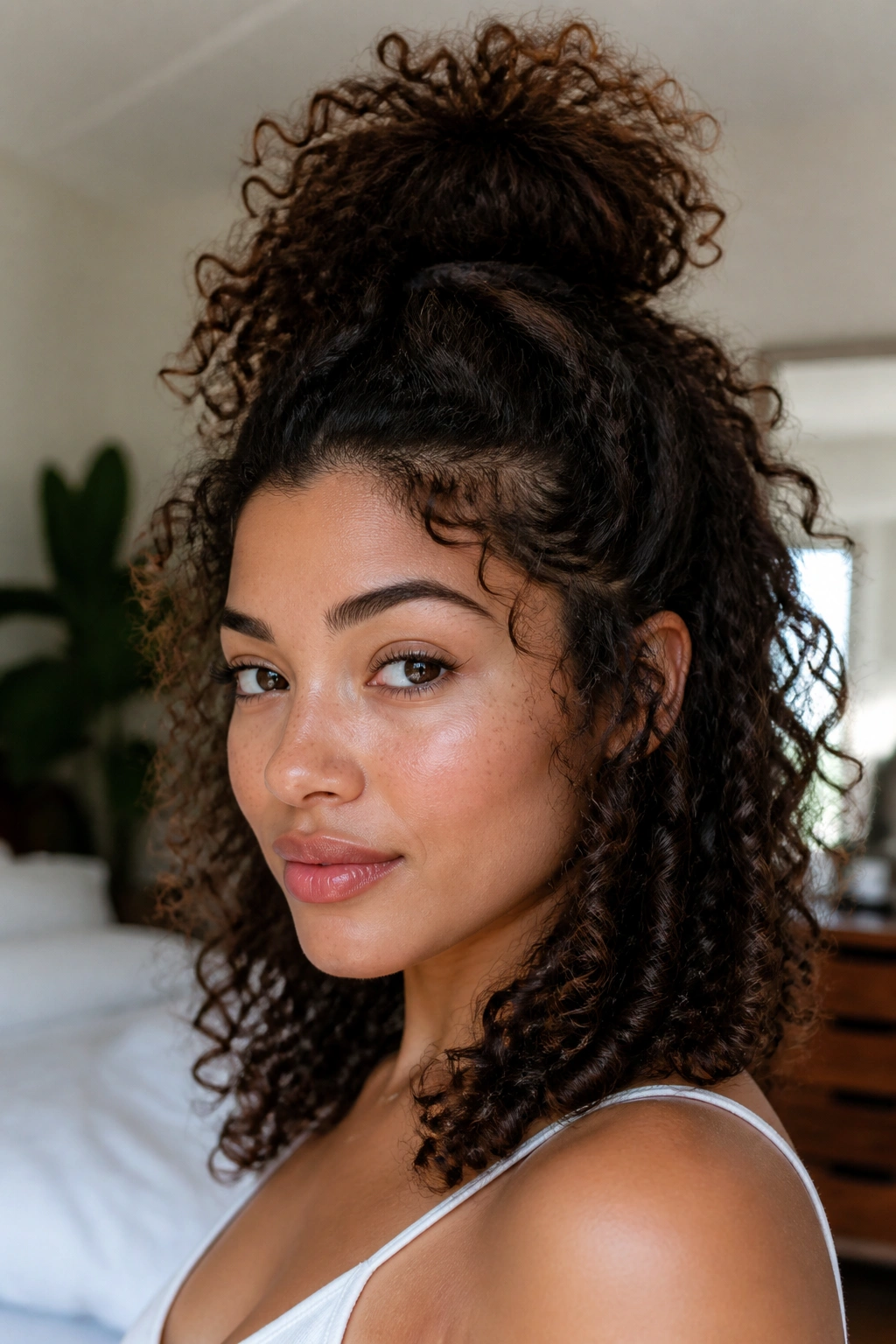
The pineapple is not just a sleep style. Worn out in public, it becomes a fast half-up that keeps the top of the curls lifted and the lower length mostly untouched. On medium hair, it sits high enough to show shape without dragging the roots flat.
The trick is to keep the tie loose and high. You want the curls to rest on the crown, not get squeezed into a tight ball. I usually use a soft scrunchie and loop it once, maybe twice at most. If you pull too hard, the curl clumps at the front lose their shape and the whole thing looks stressed.
This style is especially good when your ends still look nice but your roots have gone a little sleepy. That happens. A pineapple half-up gives you a break between wash days and still feels deliberate, not lazy.
10. Low Curly Ponytail With Volume at the Crown
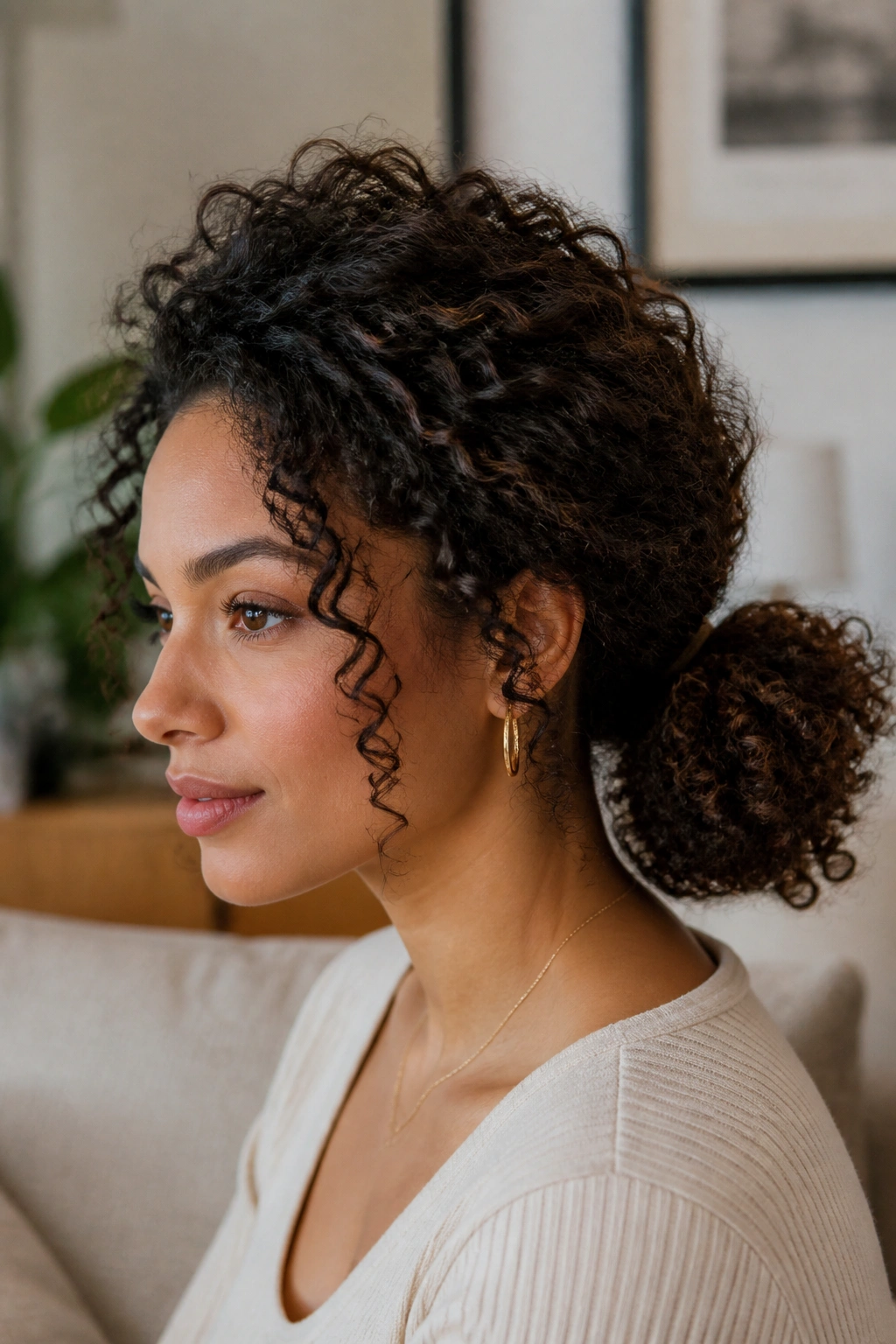
A low ponytail can look plain or deliberate. The difference is usually volume at the crown and a little thought around the face. For medium curly hair, that means loosening the top section slightly before you gather the ponytail at the nape, so the top doesn’t collapse.
Use your fingers, not a brush, if you want to keep the curl pattern alive. Smooth only the surface where you need it. Then pull out one or two curl tendrils near the cheekbones and leave the rest of the length free to fall naturally. A small wrapped piece of hair around the elastic makes the whole thing look cleaner.
- Gather the ponytail at the nape or just above it
- Leave the crown slightly lifted before securing
- Wrap one thin curl around the elastic
- Pull out face pieces only after the ponytail is secure
It’s a workhorse style, honestly. Quick, dependable, and still soft around the edges.
11. Claw-Clip Twist-Up That Leaves the Ends Out
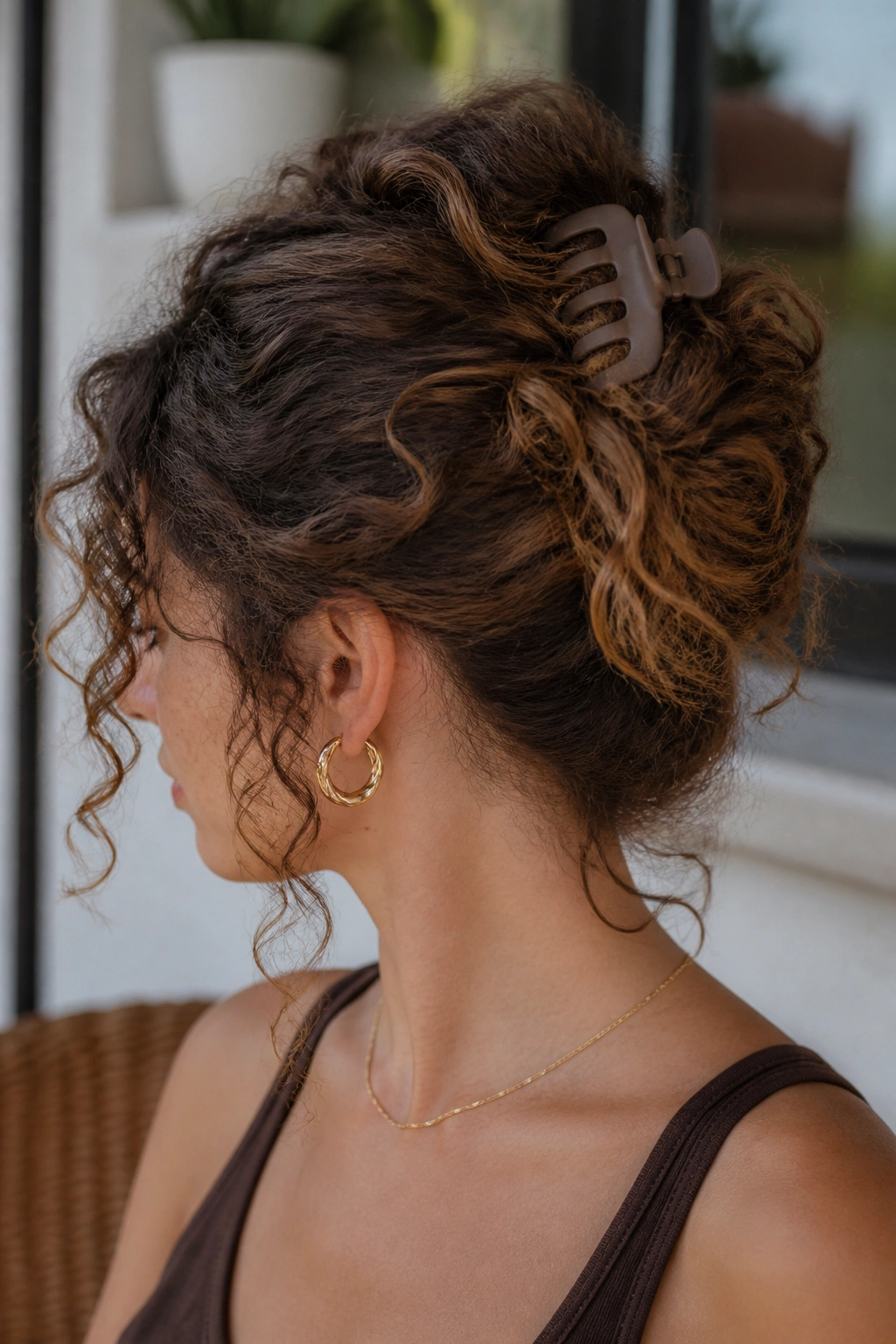
A claw-clip twist-up gives you the ease of a bun without hiding every curl. That’s the big difference. Instead of tucking all the length inside a knot, you twist the hair upward once or twice and let the ends spill out of the clip on purpose.
Medium curls are a nice length for this because they’re long enough to hold but not so long that the clip has to fight the weight. A medium-to-large matte clip usually grips better than a slick plastic one. And yes, the clip matters. Cheap clips slide.
This style is strongest on second- or third-day hair when the curls have softened a little but still hold shape. It’s one of those styles that looks casual from a distance and smarter up close. I prefer it when the front gets a bit messy and the back still has enough life to fan out.
12. Side-Swept Medium Curls for a Softer Hairline
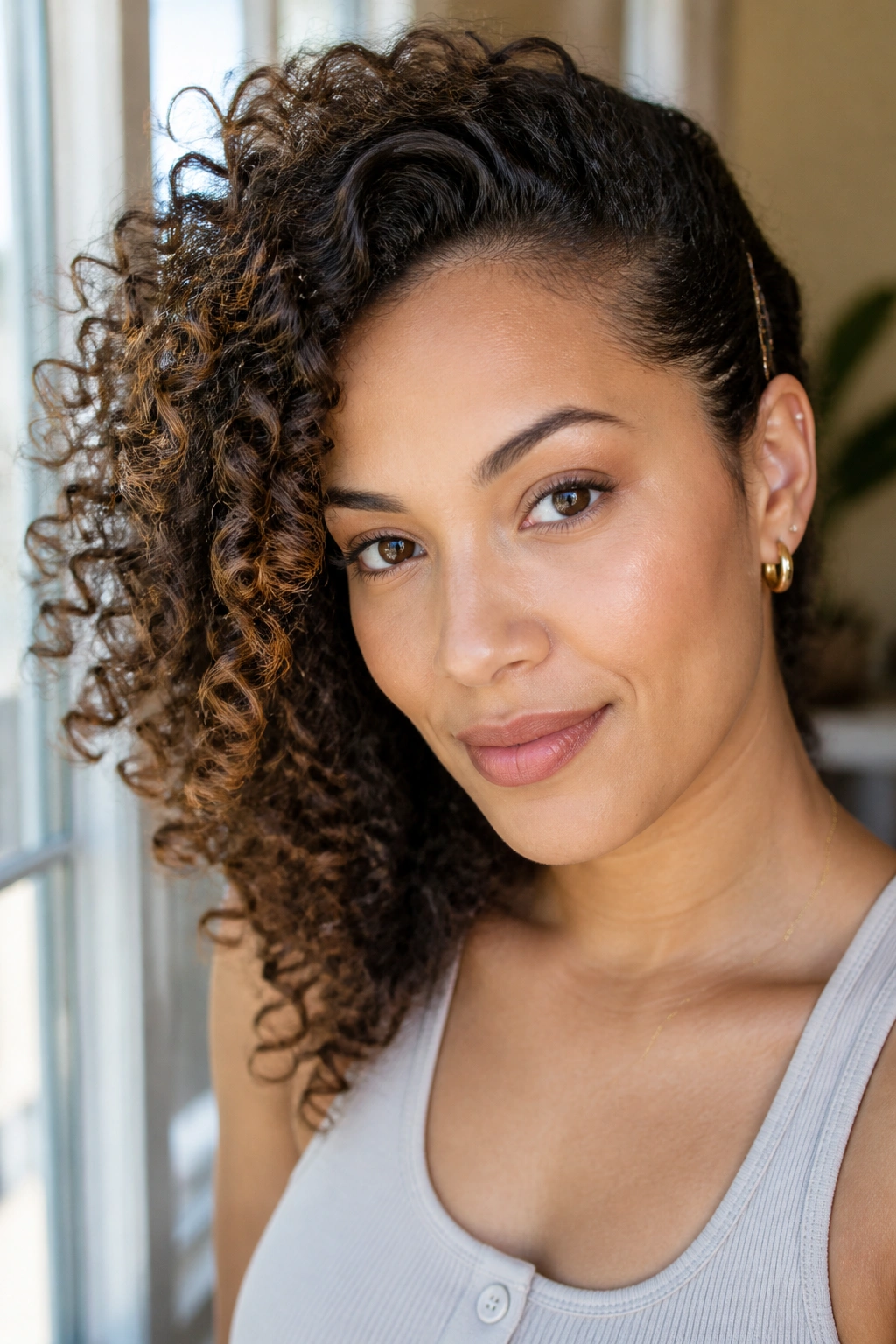
A side-swept shape can make medium curls look softer without adding bangs or changing the cut itself. All you’re really doing is teaching the hair to fall away from one side of the face more than the other. Still, the effect is real. It opens the forehead, softens the jaw, and takes pressure off a flat or uneven hairline.
The easiest version starts with a deep part and a few root clips on the heavier side while the hair dries. Once the curls set in that direction, they tend to stay there better than you’d expect. I also like tucking the smaller side behind the ear and letting the longer side fall forward. Simple move. Better shape.
This works especially well when your curls are loose enough to swing but dense enough to keep some body. If your hair feels too round all the time, a side sweep breaks that symmetry in a useful way.
13. Micro Fringe With Medium Curls
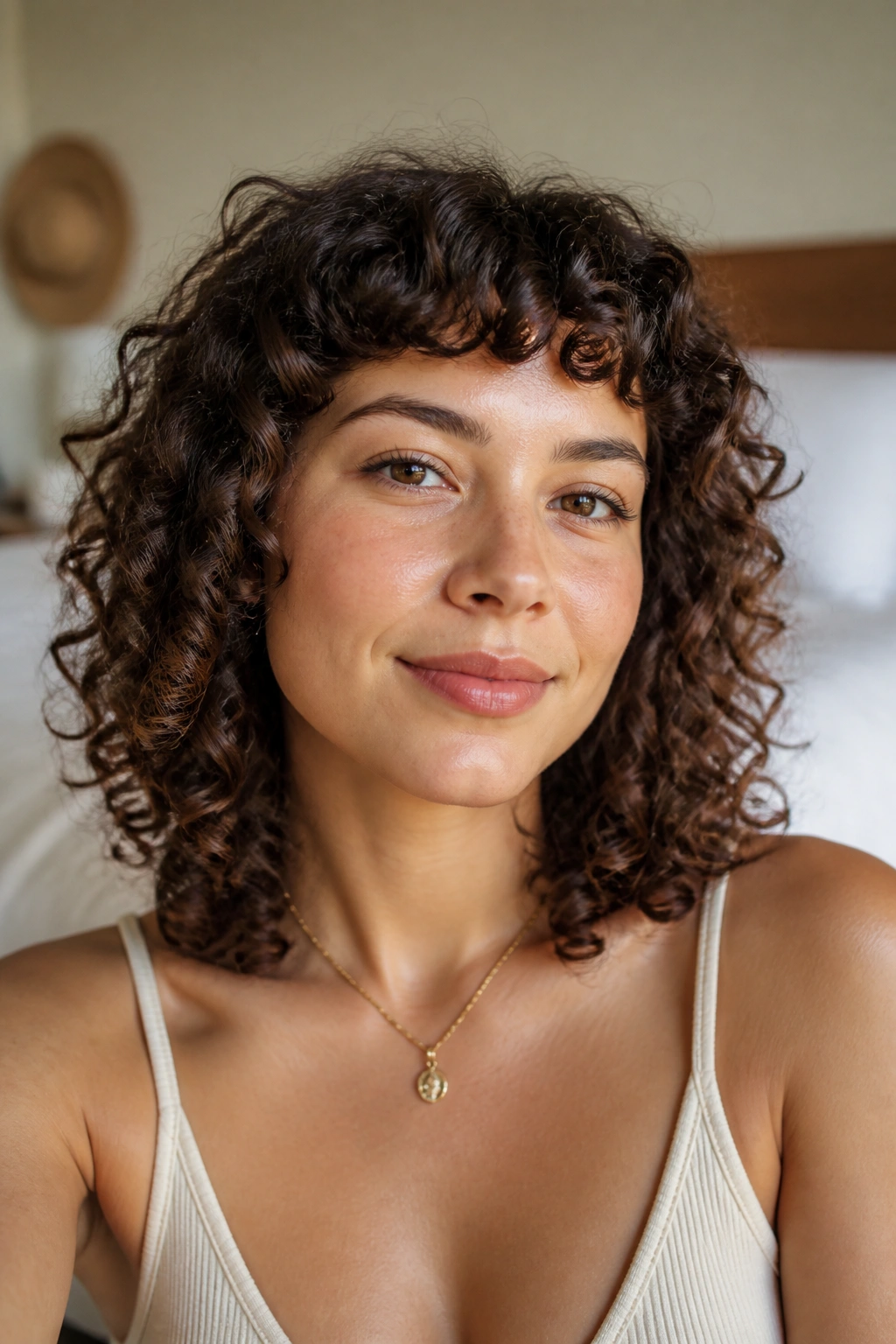
A micro fringe is the haircut that asks the most from your curls and from your patience. It can look sharp, a little artsy, and very intentional on medium lengths, but it needs a stylist who understands how much curly hair shrinks and how much it likes to spring back after a trim.
How to Live With It
The fringe should be cut dry, or at least checked dry before anyone reaches for the scissors a second time. That little strip of hair changes everything when it’s curly. A fringe that sits just above the brows when stretched may end up much shorter once it dries.
- Use a tiny amount of styling cream, not a heavy mask
- Refresh the fringe with damp fingers, not a full soak
- Trim before it grows into an awkward in-between length
- Accept that some days it will sit flatter than others
If you want structure and you do not mind regular upkeep, this can be a sharp, interesting look. If you want low effort, skip it. There’s no shame in that.
14. Wet-Look Defined Curl Set
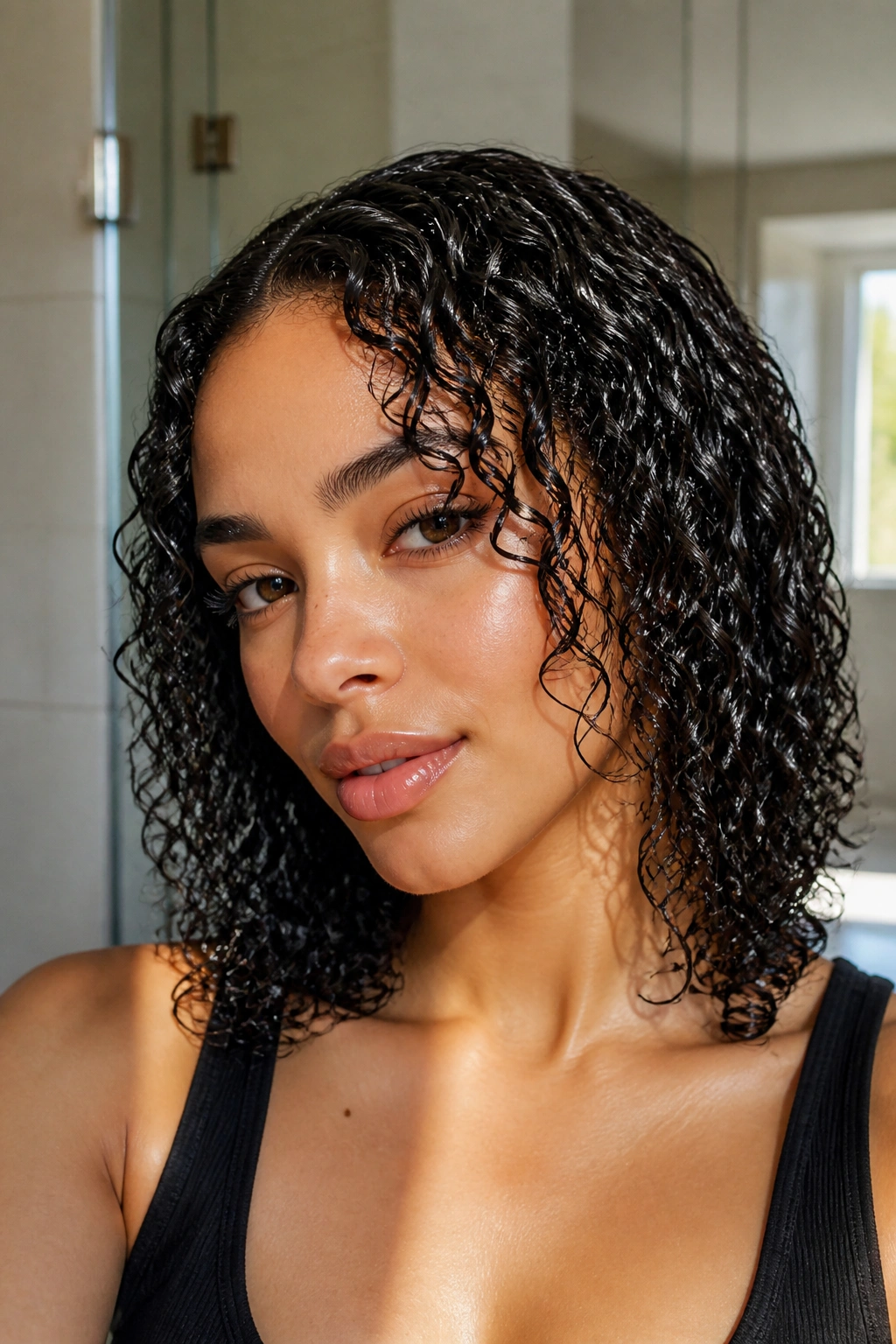
The wet look is a strong choice when you want medium curly hair to look sleek at the roots and glossy through the ends. It leans into definition instead of volume, which can be a relief if your curls swell up quickly in humidity or frizz out before they get where they’re going.
Why It Works
You build it with water-rich product and a firm hold gel, then leave the curls alone until they form a cast. That cast is the hard shell some people hate and some people swear by. I’m in the second group when I want the curls to stay separated and shiny for hours.
- Apply curl cream first, then a medium-hold gel
- Smooth the product with praying hands, then scrunch
- Diffuse on low heat or air-dry without touching
- Scrunch out the cast only when the hair is fully dry
Do not break the cast too early. If the curls still feel damp and you start fluffing, you’ll lose the definition you worked for. Wait until the hair is dry all the way through.
15. Loose Top Knot With Long Tendrils
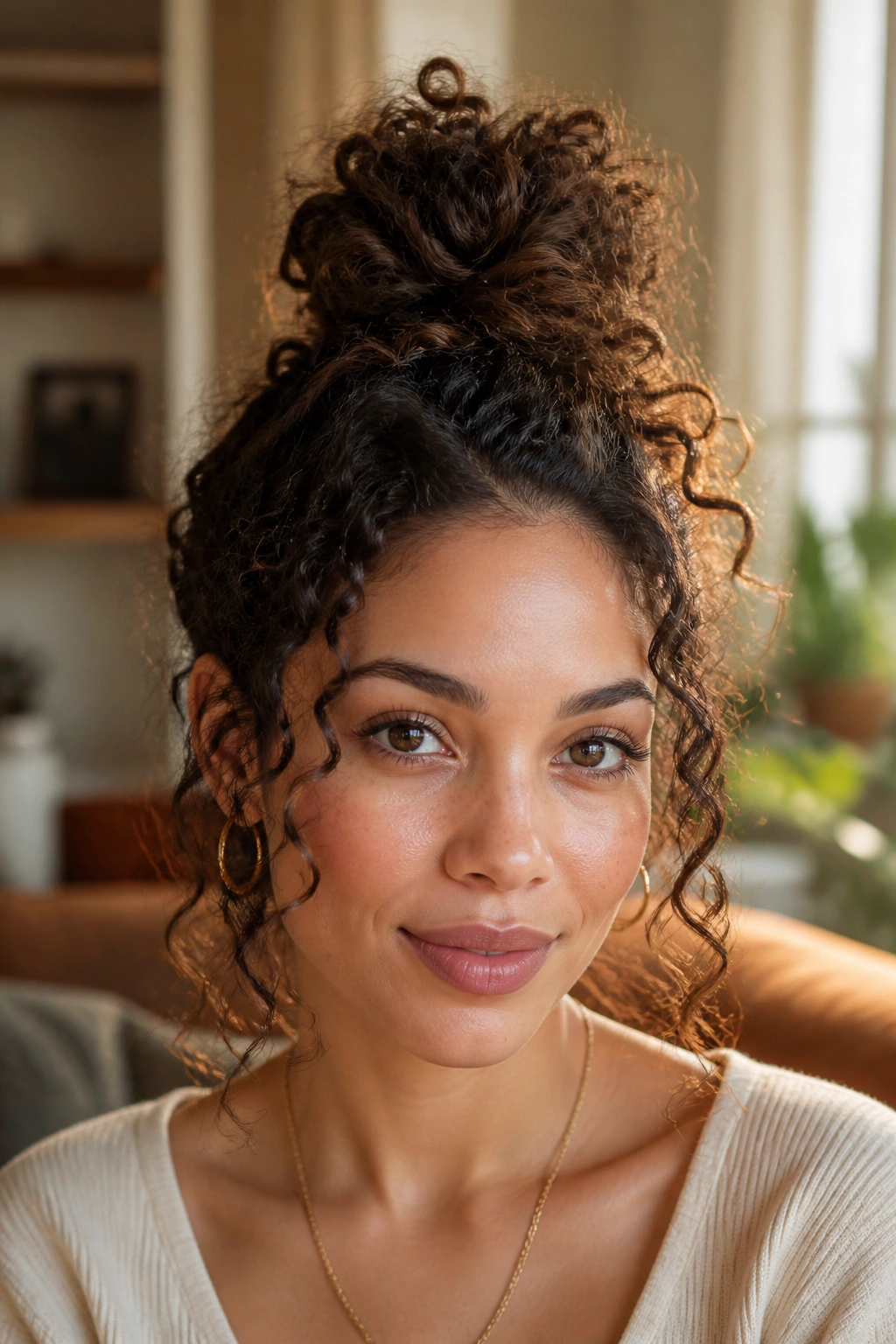
Need your hair off your neck without turning it into a tight knot? A loose top knot gives you that lift while leaving enough front length to keep the style soft. On medium curly hair, it usually looks better when the knot sits a little off center or slightly forward on the crown instead of being pulled dead tight.
The best version is messy in a controlled way. Gather the top half or two-thirds of the hair, twist once, pin or tie it loosely, and let a few curled pieces fall around the temples and ears. Those tendrils matter. They stop the style from reading as purely functional.
I like this one for warm rooms, busy mornings, and any day when the curls have started to lose shape at the back but still look good around the front. It’s easy, but not lazy. There’s a difference.
16. Asymmetrical Curly Cut With One Longer Side
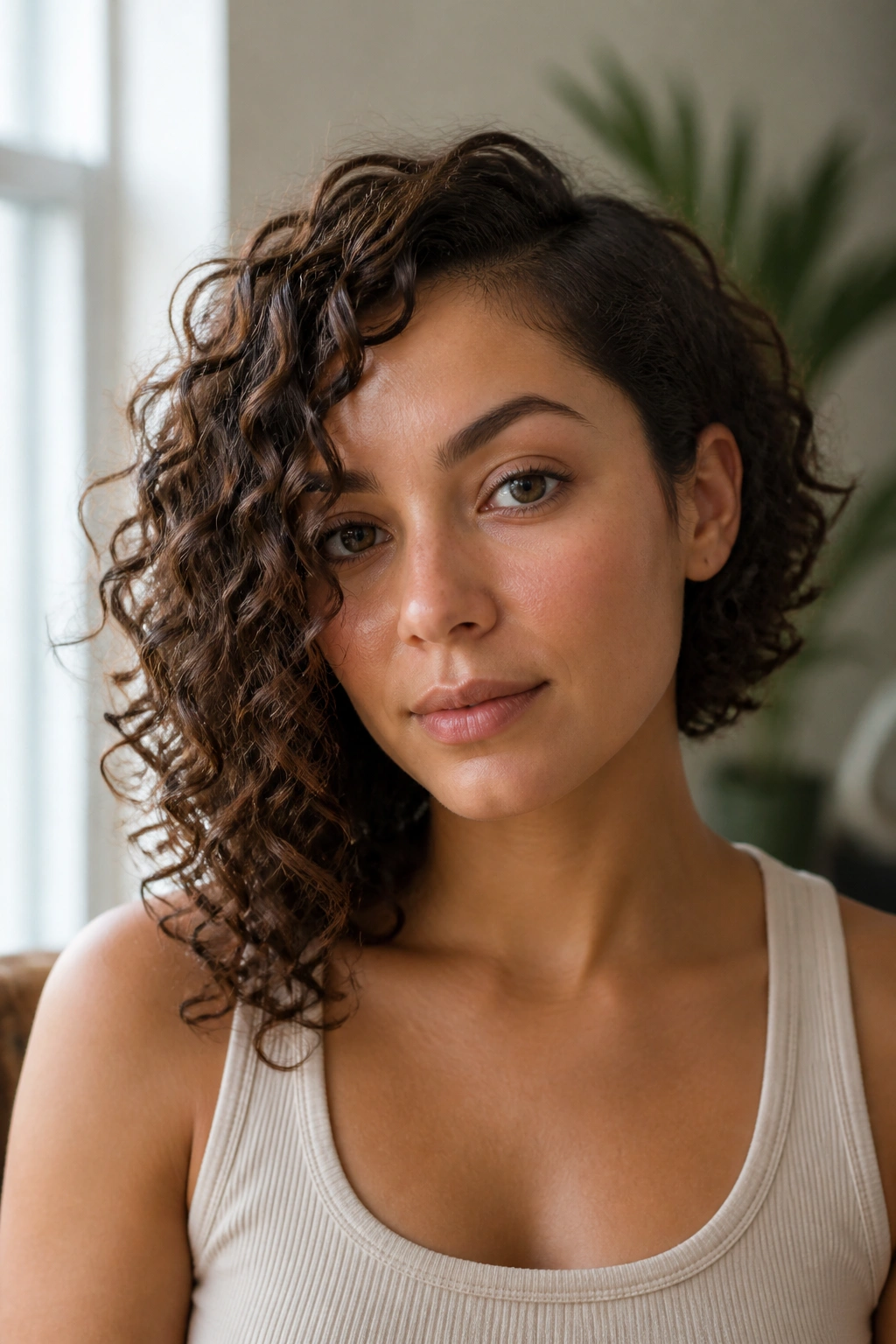
A slightly uneven curly cut can look more balanced than a perfectly even one. That sounds backwards until you see how curls behave. One side often falls a little fuller, or one part of the face needs more length to soften it. An asymmetrical cut uses that instead of fighting it.
What to Ask For
You do not need a dramatic one-sided haircut unless you want that look. A softer version keeps one side about an inch or two longer, or allows the front pieces to fall at slightly different lengths. The point is movement, not shock value.
- Keep the longer side around the collarbone
- Let the shorter side skim the jaw or cheek
- Ask for the shape to be checked dry
- Style with a side part so the difference shows cleanly
This cut looks sharp when the curls are defined, but it also forgives a bad day pretty well. That’s rare.
17. Braided Temple Accent With Loose Length
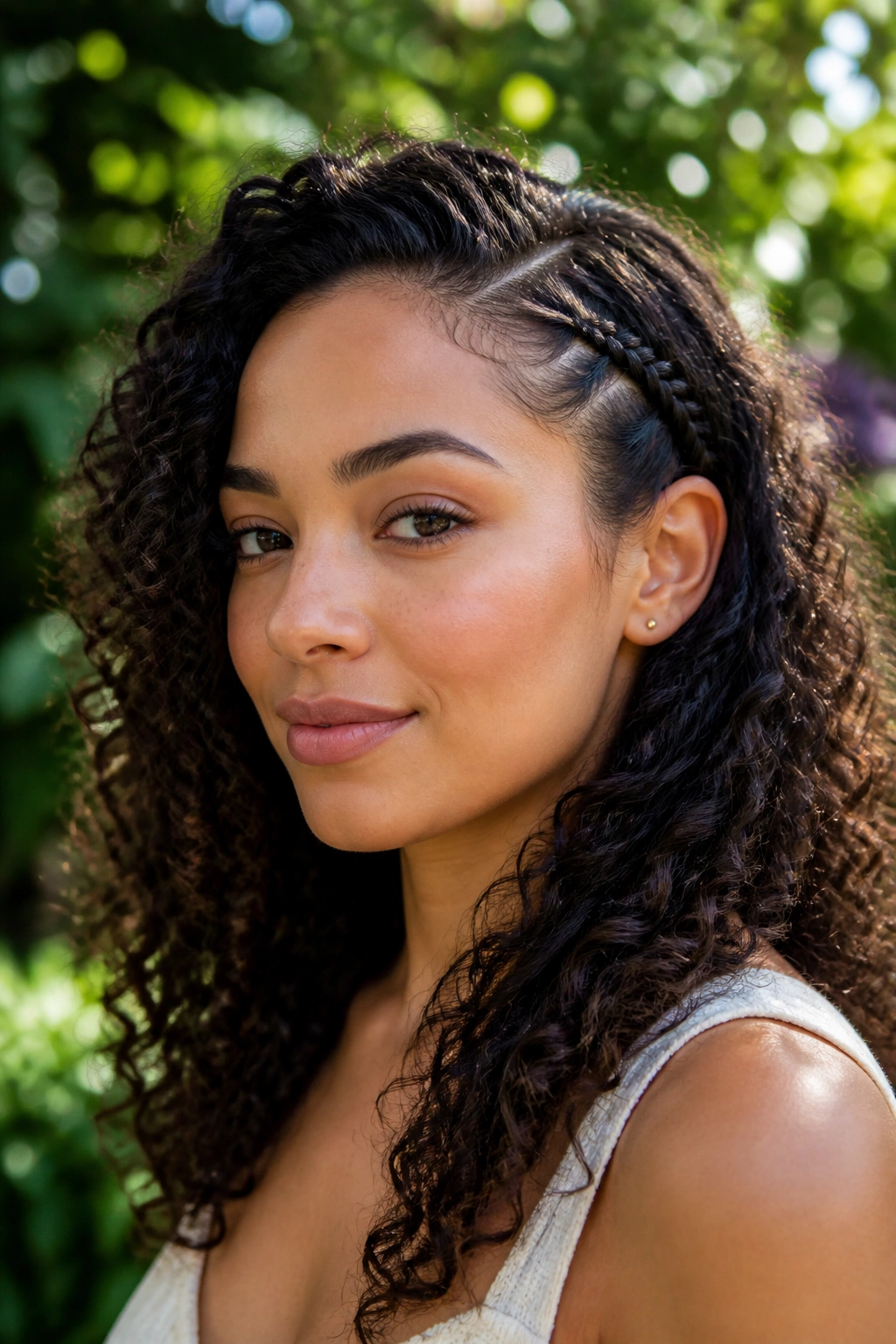
A braided temple accent is a nice middle ground between wearing everything down and pulling the hair back completely. You braid just the front edge near the temple, pin it back, and leave the rest of the medium curls loose. It keeps the hairline tidy without flattening the whole style.
Compared with a full braid, this version is lighter and easier to reset. If the curl pattern at the front gets frizzy first, the braid hides that without stealing the show. It also gives you a small detail that feels intentional, which is useful when your hair is doing that “I tried, but not too hard” thing.
I’d use a braid that starts with a 1-inch section and travels back toward the ear. Nothing huge. Just enough to control the front and let the length keep bouncing.
18. Textured Blunt Cut for Dense Curls
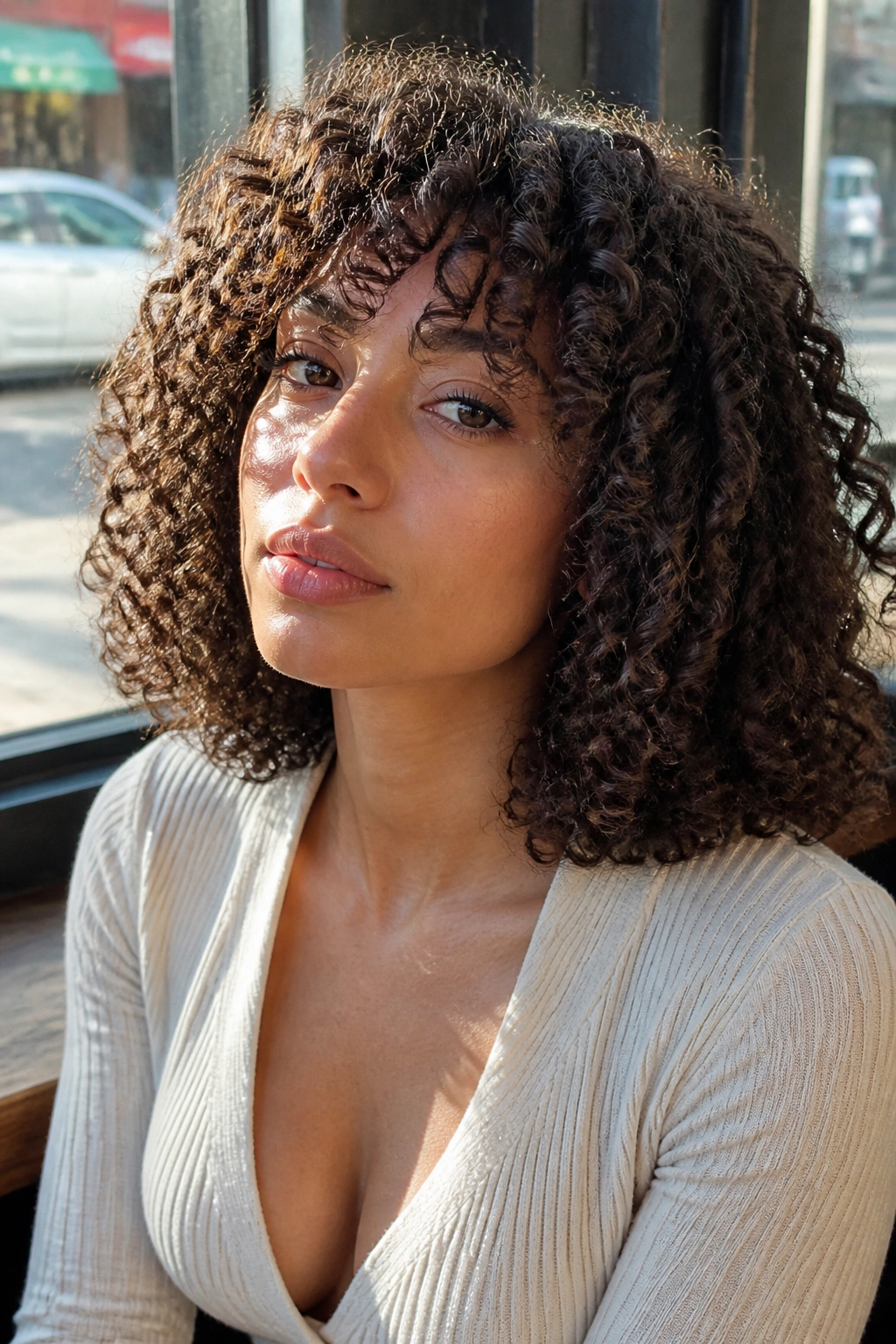
A blunt cut sounds simple, but on dense curly hair it can look expensive in the best sense of the word: clean, solid, and heavy enough to hold its shape. The trick is not making it flat. You still need enough internal shaping so the bottom line doesn’t become a shelf.
This is the cut I like when curls are thick and strong and don’t need a lot of help looking full. Too many layers can make dense curls explode outward in ways that are hard to tame. A textured blunt line keeps the outline crisp while allowing the curls to stack in a neat mass.
It’s not the most playful option, and I’d be honest about that. But if you want medium curly hair that looks polished with minimal styling, this one delivers. A bit of gel, a careful diffuse, and you’re done. Not every cut needs drama.
19. Layered Halo Shape for Big Volume
A halo shape gives medium curls room to lift away from the head and still keep a rounded outline. It’s a very good look for people who like volume on purpose, not as a side effect. The layers sit around the crown and upper sides so the curls build height without turning the ends into the only thing anyone sees.
Why It Works
The cut creates a circle of fullness around the head, which is why it feels so balanced on dense or springy curls. Instead of dragging everything down, the layers let the top participate. That can make medium hair look fuller from every angle, not just the front.
- Shorter upper layers create crown lift
- Mid-length sides keep the shape soft
- Diffuse with the head upright if you want more roundness
- Use a lightweight foam to avoid weighing down the top
This is not a shy haircut. If you like hair with presence, it’s a good one.
20. Half-Up Braided Bun With Curly Ends
A half-up braided bun gives you more detail than a plain half-up twist and less bulk than a full bun. That makes it a smart fit for medium curly hair, where you want to keep some of the length visible. The braid adds structure; the bun keeps the top secure; the loose ends keep the whole thing from looking stiff.
I like starting with two small braids from each temple, pulling them back, and wrapping them into a small bun at the crown. Leave the rest of the curls down. If the bun sits too tight, the style loses its charm fast. It should feel airy, not squeezed.
This one works for casual events, errands, or any day when you want the front controlled and the rest still moving. It’s a little more finished than a quick clip, which is probably why people end up reaching for it again.
21. Tucked-Behind-Ears Midi Style With Clean Side Lines
Can a simple tuck count as a hairstyle? On curly hair, yes. A tucked-behind-the-ears midi style can look deliberate if the side lines are clean and the curls still have body through the back. It’s one of those styles that looks almost bare until you notice how calm the face looks.
The trick is to smooth only the temples and let the rest stay soft. A little gel at the sides, a center or slight side part, and both ears visible can change the whole mood of the haircut. It works well on medium lengths because there’s enough weight in the curls to keep the tuck from springing loose every minute.
I like this with hoop earrings or small studs, but even without jewelry the shape feels neat. It’s a clean way to show off the natural curl line without doing much to it.
22. Soft Curly Mullet With a Longer Back
A soft curly mullet is not the punk version people picture from old photos. The gentler version keeps the top and sides shorter, then lets the back fall a little longer so the curls have somewhere to stretch. On medium hair, that longer back piece stops the cut from feeling too chopped up.
It works because curly hair already has texture. You do not need to force drama. A softened mullet gives the crown movement, frames the face with shorter pieces, and leaves enough length at the back to keep the haircut from looking like a dare. That balance is the whole point.
I like this cut for people who want something a bit louder than a lob but less layered than a shag. It has personality, but it still wears easily with a curl cream and a diffuser. If you want the most forgiving place to start, a collarbone lob or a shag is probably easier. If you want shape with edge, this one earns its keep.
