



Long wavy hair can look effortless from across a room and stubborn up close. The difference usually comes down to the cut. The right wavy haircuts for women with long hair keep movement where you want it, take bulk off the places that puff out, and stop the ends from hanging there like a wet towel.
That sounds simple, but it’s where a lot of long-hair cuts go wrong. Waves have their own logic. They shrink a little when they dry, bend more in some spots than others, and usually need shape that respects the way the hair actually falls rather than the way it looks flat on a salon cape.
I have a soft spot for cuts that work with wave pattern instead of fighting it. A blunt line can be lovely on the right head of hair, but long waves often need a smarter perimeter, a little weight removal, or a face frame that wakes the whole cut up. The trick is knowing which kind of shaping gives you lift without making the ends look thin.
Some of these styles are barely a change. Others make a bigger statement. Either way, the details matter, and the first cut sets the tone.
1. Long Layers That Start at the Collarbone
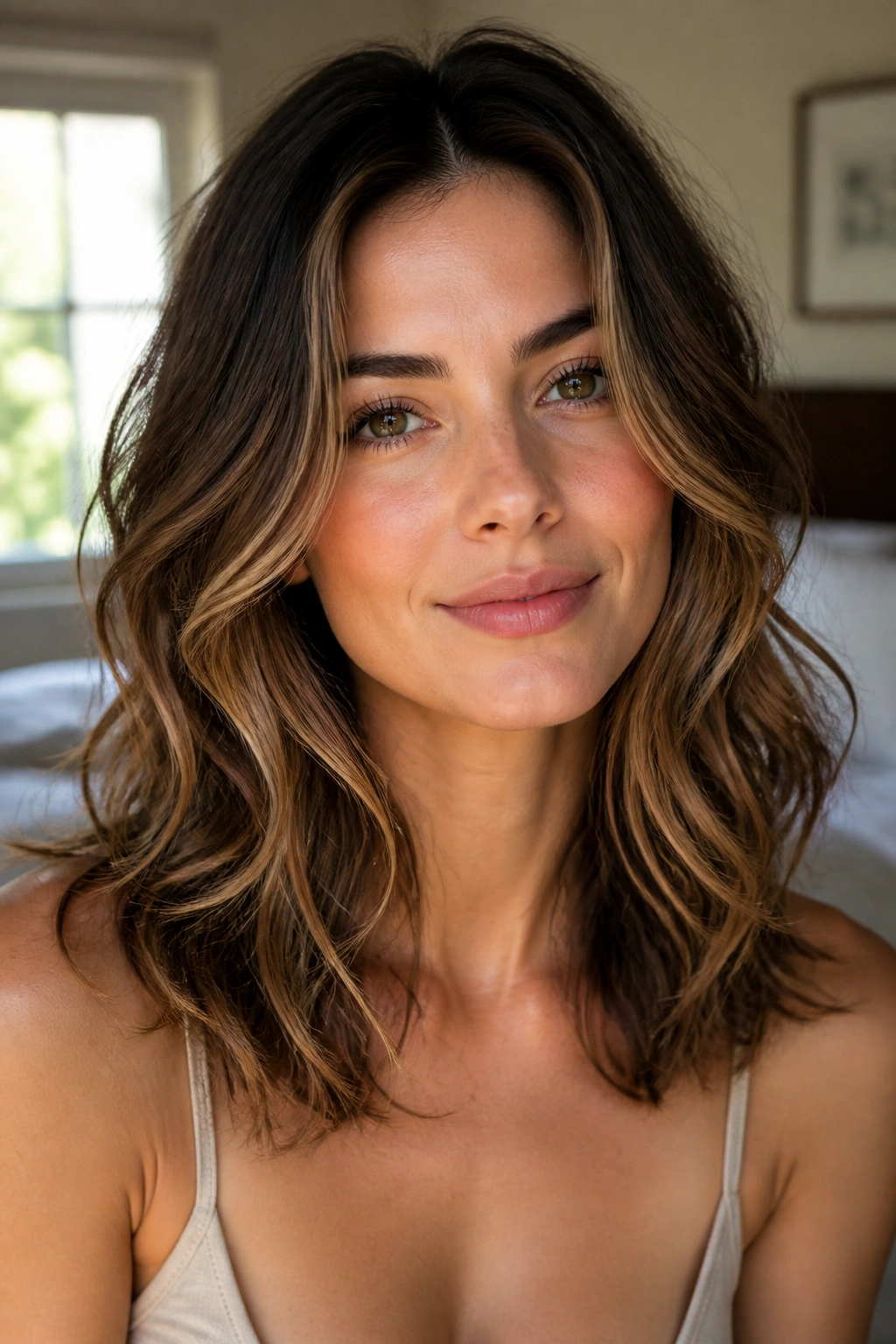
Long layers that begin around the collarbone are the easiest way to give wavy hair some air without sacrificing the length you worked to keep. They lift the whole shape just enough so the waves can bend instead of bunching up at the bottom.
Why collarbone layers work
The collarbone is a useful place to start because it sits right where long hair starts to feel heavy. Once the weight comes off that point, the waves tend to spring up a little more through the mids and stop collapsing into a flat sheet.
- Best for: medium-to-thick waves that lose movement near the ends
- Ask for: the first layer at the collarbone, then soft blending through the sides
- Avoid if: you want a sleek, one-length look with no visible layering
- Styling note: a lightweight cream or mousse is enough; heavy oils can drag the shape down
My favorite part: it looks like your hair woke up, not like you got a dramatic chop.
2. Curtain Bangs with Airy Ends

Curtain bangs can change the feel of long wavy hair fast. They pull attention upward, soften the face, and make the length underneath look even fuller because the eye has something to land on before it reaches the ends.
The key is keeping the fringe soft, not helmet-like. Curtain bangs should part easily, skim the cheekbones, and blend into the longest layers. If they’re cut too thick, they can sit there like a heavy curtain, which is not the look anyone is after.
For styling, a quick round-brush bend at the front or even a velcro roller while the hair cools can make the whole cut sit better. The rest can air-dry with a little wave cream. Easy. Clean. No wrestling match.
3. The U-Shaped Cut for Soft Movement
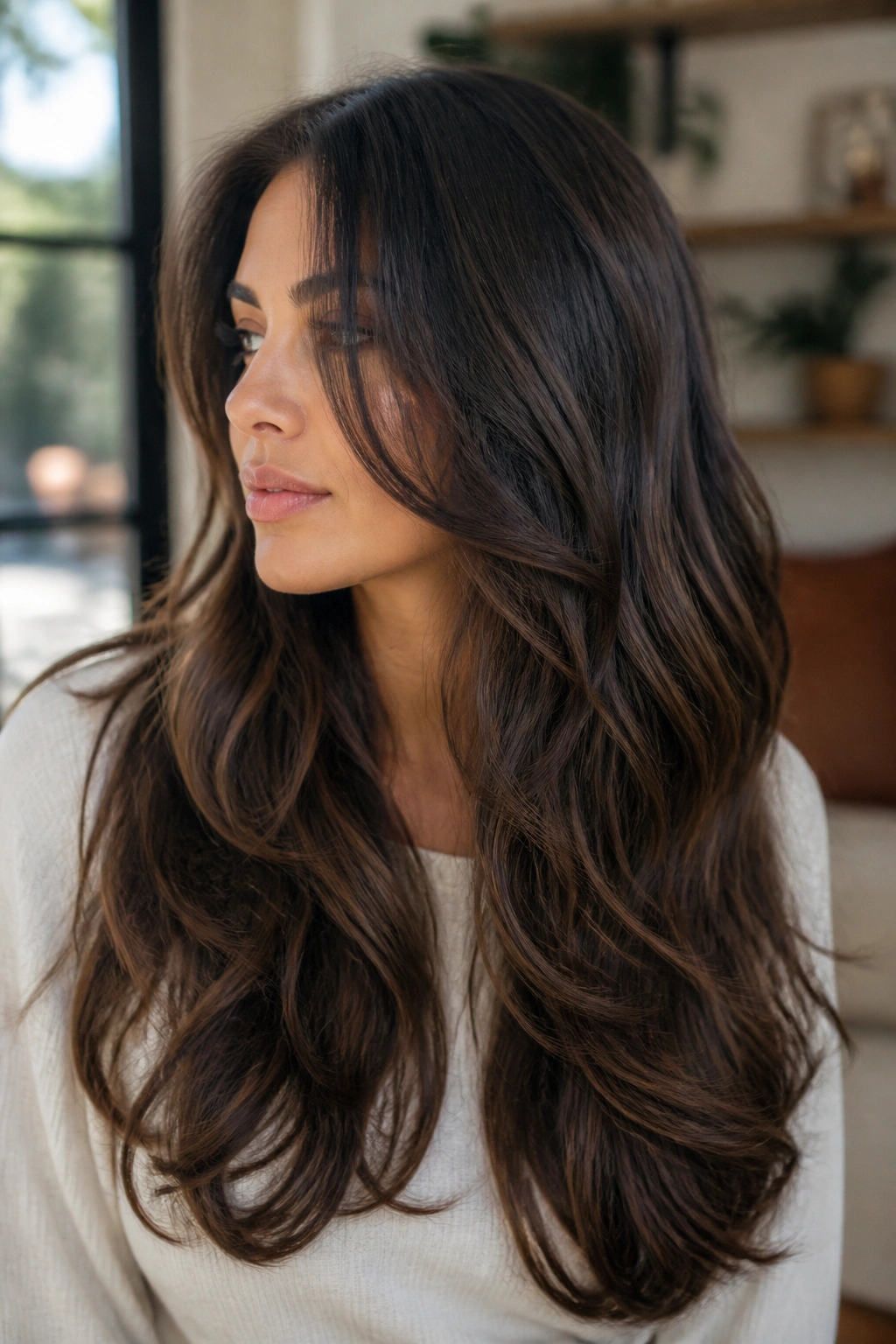
Why do some long cuts feel heavy even when the hair is healthy? Usually because the outline is too flat. A U-shaped cut fixes that by keeping the center a touch longer and tapering the sides just enough to create a soft curve.
That curve matters on waves. It gives the back a graceful fall and stops the ends from looking like one blunt shelf. The result feels calmer than a V-cut, but it still has more shape than a straight line.
How to ask for it
Tell your stylist you want the longest point in the center back and a gentle rise toward the sides. Keep the curve soft; you do not want a sharp arc that looks chopped in.
This shape works especially well if you wear your hair loose a lot. Braids, half-up styles, and low ponytails all look better when the ends already have a natural swing.
4. The V-Shaped Cut for Extra Drama

Picture long waves that taper to a point in the back and fan out on the sides. That is the V-cut, and it gives long hair a stronger silhouette than almost any other layered shape.
The V-shape is useful when the hair feels too broad at the bottom or when you want the length to read as long even from a distance. It keeps the ends from feeling like one heavy block. On dense waves, that can be a lifesaver.
- Best for: thick, long hair that swallows movement
- Ask for: a soft V, not a severe point
- Watch out for: very fine hair, which can look see-through if the point is cut too tight
- Works well with: side parts and loose, brushed-out waves
Small warning: if you hate visible shape, skip it. A V-cut has opinions.
5. Butterfly Layers on Long Waves
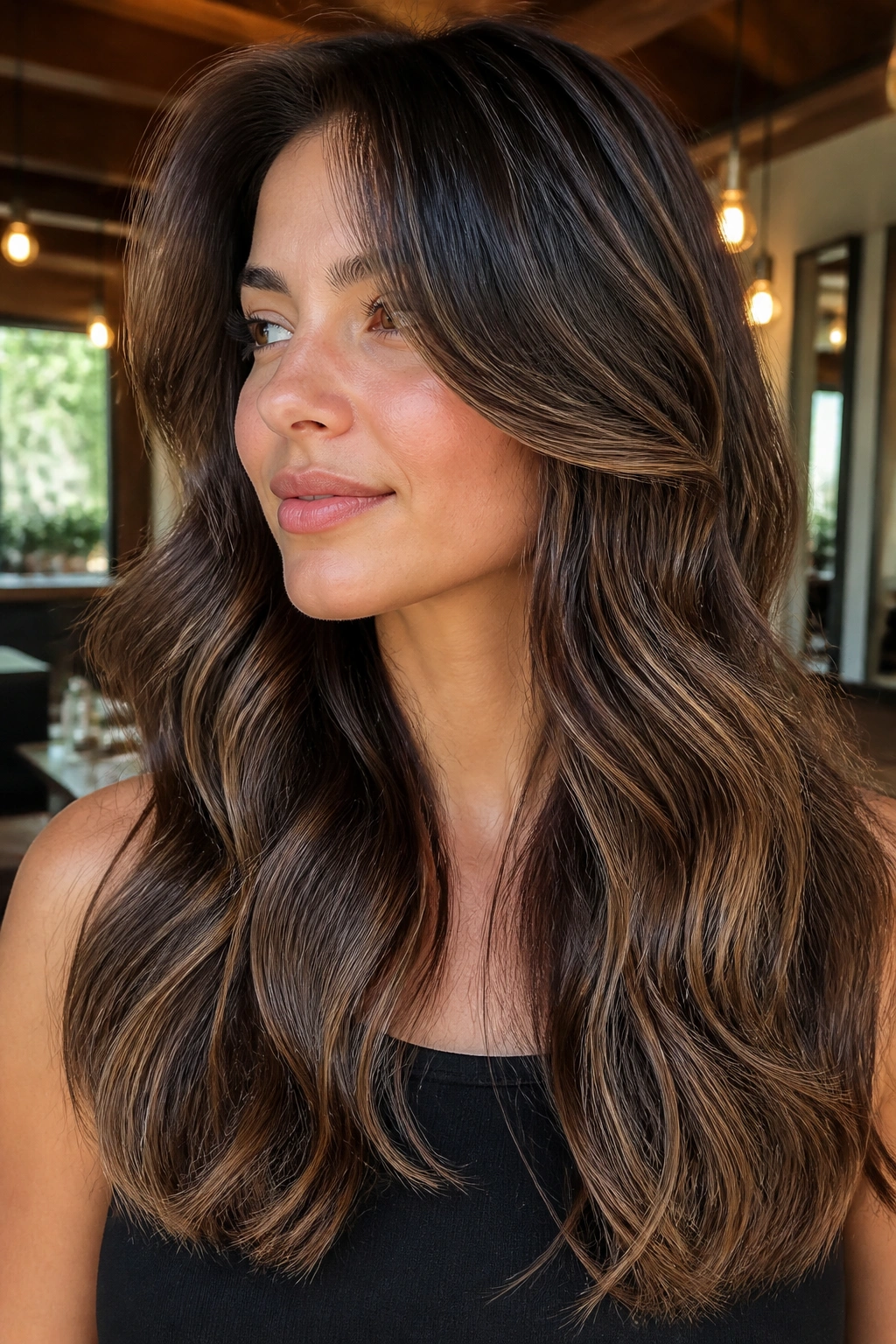
Butterfly layers are the cut people point to when they want volume up top and length at the same time. The shorter layers sit around the cheekbone or collarbone zone, while the longer bottom layer stays intact, so the hair still reads as long from the front and back.
What makes this cut so useful for wavy hair is the contrast. The top pieces can move on their own, almost like a shorter haircut living inside a long one. That gives you a bit of bounce without losing the sweep of long hair.
It also plays nicely with a lazy styling routine. Let the shorter layers dry with a little lift at the root, and the rest can fall where it wants. If the layers are too chunky, though, the effect can get puffy fast. Soft blending keeps the whole thing from looking staged.
6. Face-Framing Layers Around the Cheeks

Face-framing layers are one of those cuts that sound small and end up doing a lot. They change where the eye goes, and on long wavy hair that can be enough to make the whole style feel newer without touching much of the length.
Unlike bangs, these pieces don’t sit on the forehead, so the maintenance stays lower. You can tuck them behind the ears, wear glasses, pin them back, or let them fall forward when you want a softer look. The important part is placement.
Ask for the first pieces to start near the cheekbones or just below the jaw, then let them slide into the longer hair. Too short and they turn into mini bangs. Too long and they disappear. There’s a narrow sweet spot, and it’s worth asking your stylist to check the shape while the hair is dry.
7. A Long Shag with Soft Fringed Ends
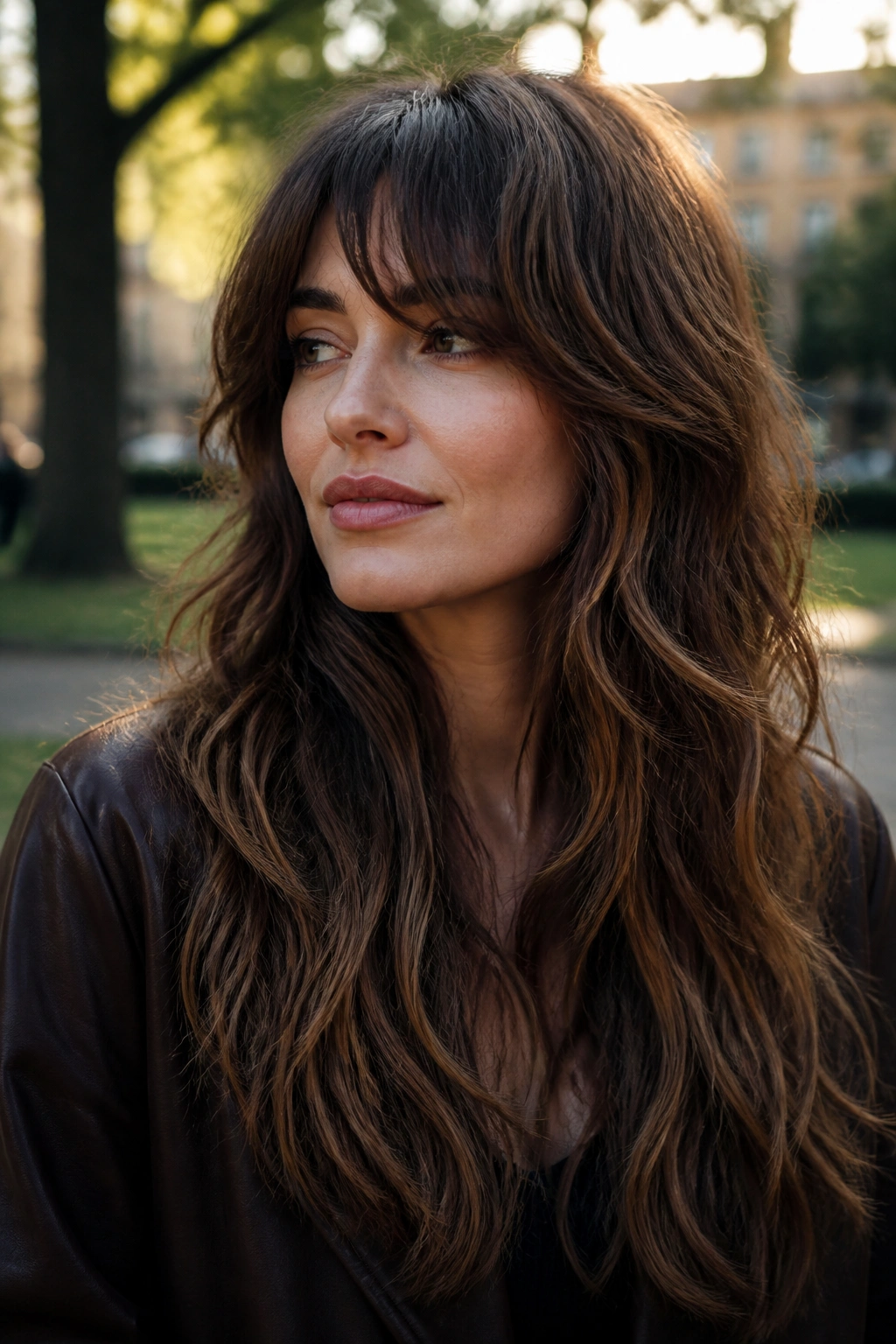
A long shag gives wavy hair an easy, lived-in shape that feels casual without looking lazy. The top layers are shorter, the bottom stays long, and the fringe around the face keeps the whole cut from dragging downward.
What makes it different
The modern version is softer than the older shag many people picture. You want texture and separation, yes, but not a frayed mess. The best long shag still has a visible outline, just with more movement through the crown and sides.
- Use: mousse at the roots and a light diffuser
- Skip: heavy smoothing creams that flatten the texture
- Best for: hair that naturally bends but needs shape
- Stylist note: ask for soft, blended layers rather than aggressive choppiness
One-sentence truth: a good shag looks cool because it’s controlled.
8. The Modern Wolf Cut for Wavy Length
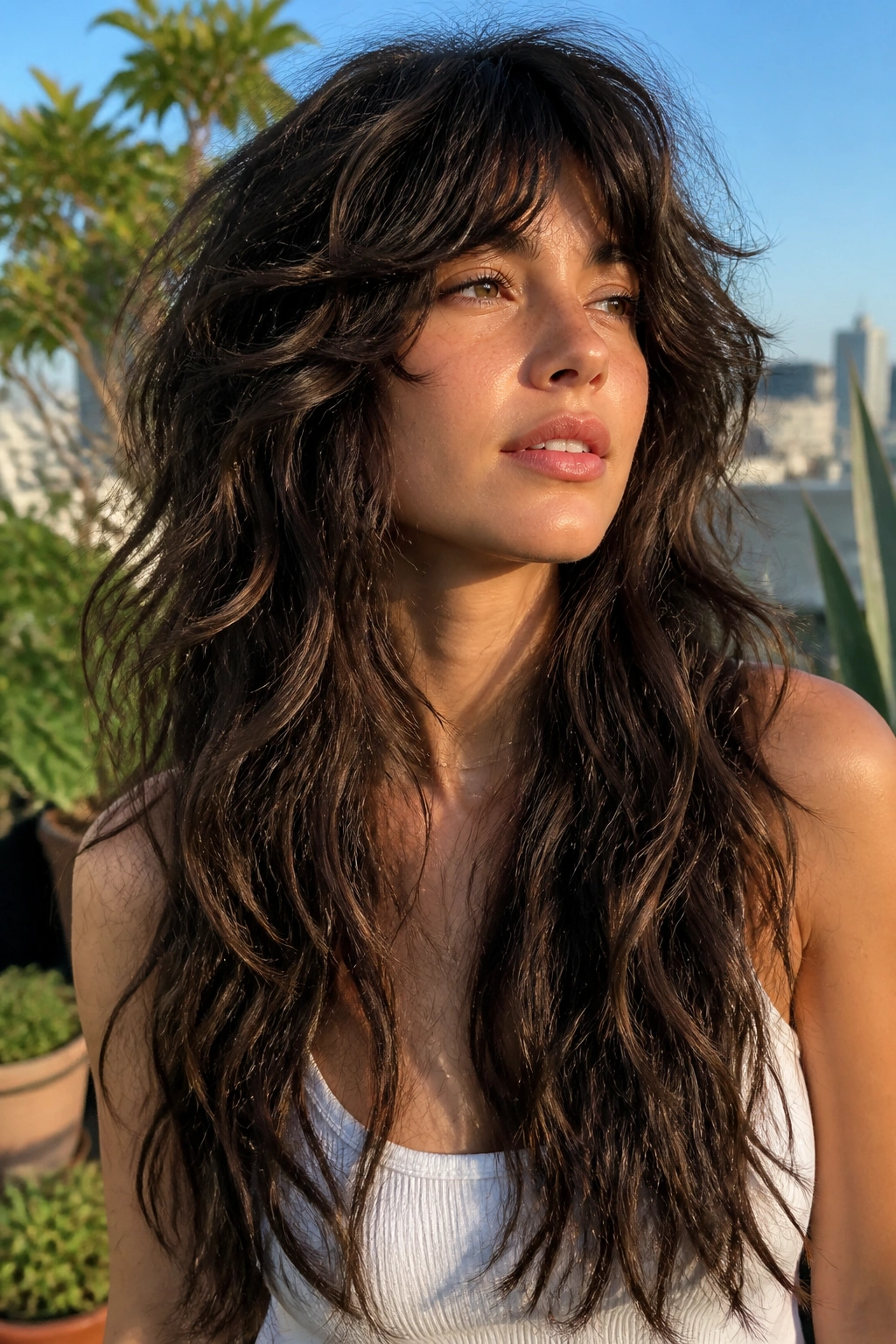
The wolf cut is not shy. It leans harder into texture, with shorter crown layers and a more separated finish that gives waves a lot of lift up top and a looser fall through the rest.
That contrast is what makes it work. The crown gets energy, the lengths stay long, and the whole cut has a slightly wild edge that looks especially good when the waves are already a little uneven in a natural way. If your hair likes to do its own thing, this cut understands the assignment.
But it is not a polished haircut. If you want glossy, smooth, softly blended hair that lies flat and neat, this will probably annoy you. The wolf cut has movement built in, and it looks best when you let it breathe rather than smoothing every piece into submission.
9. Waterfall Layers That Fall in Sections
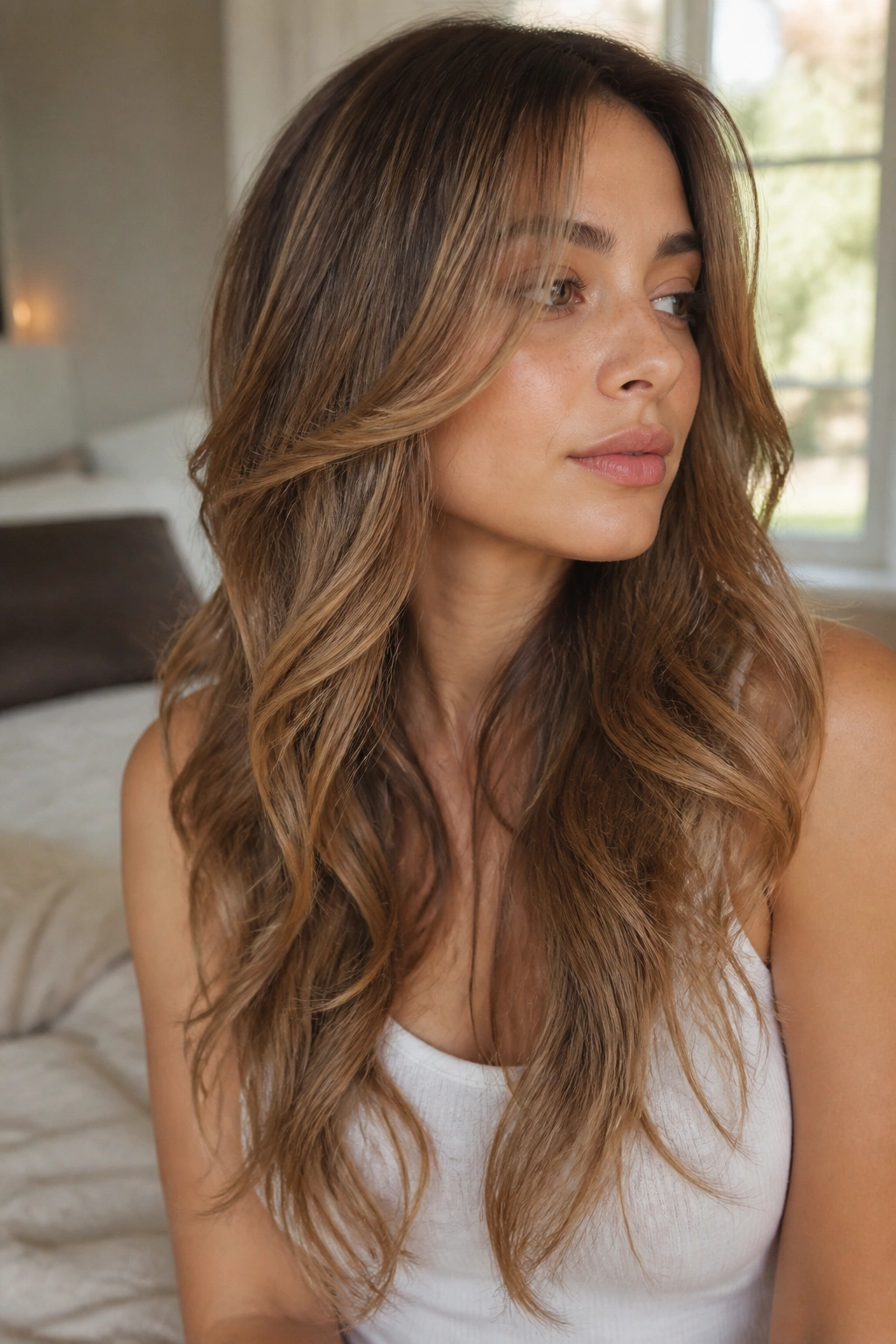
Why do waterfall layers look so light? Because they break the hair into soft, descending sections instead of one uninterrupted sheet. On long waves, that keeps the body of the hair from feeling dense in the mid-lengths.
The effect is subtle at first glance and more obvious when the hair moves. You see different lengths catching the bend of the wave, which gives the cut a layered flow without a lot of visible chopping. It’s a nice middle ground for people who want shape but do not want the haircut to announce itself.
Styling notes
A wide-tooth comb and a bit of leave-in conditioner are usually enough. The layers already do the visual work, so you do not need to pile on product.
The cut is especially useful if your waves get stuck together after washing. Waterfall layers give them room to separate. That little bit of space changes everything.
10. A Blunt Long Cut That Lets Waves Do the Work

Not every long wavy haircut needs a pile of layers. Sometimes a blunt perimeter is the smarter choice, especially if the wave pattern is loose, even, and dense enough to hold its shape.
A blunt cut gives the ends a heavier line, which can make waves look shinier and fuller. It also keeps the silhouette clean. That matters if you like your hair to look neat even when it’s air-dried and not perfectly styled. The drawback is obvious: if your hair is fine or breaks up easily, a blunt line can look too heavy or too boxy.
Use a deep side part, a soft bend from a large curling iron if needed, and a light serum on the ends. If the hair already has a good wave pattern, the blunt line becomes a frame rather than a problem.
11. Invisible Layers for Fine Wavy Hair
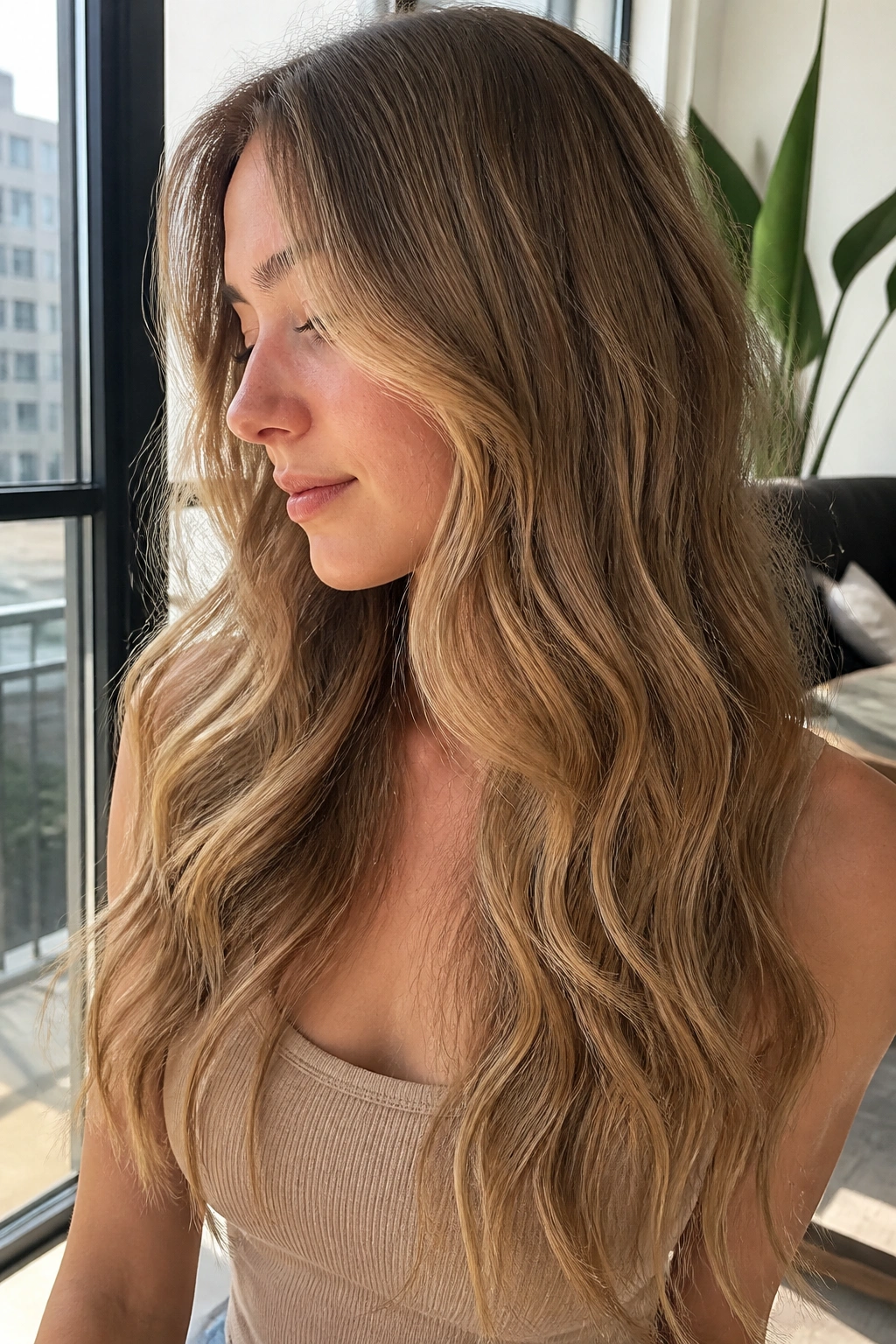
Invisible layers are the quiet answer to long, fine waves that fall flat the second they get too many visible steps. The cut removes weight from the inside of the shape while leaving the outside line looking full and smooth.
That hidden structure matters more than people think. Fine hair can go stringy fast if the layers are too obvious, especially on long lengths where every piece has room to separate. Invisible layers keep the perimeter intact, so the hair still looks thick at the bottom.
Precision matters. A sloppy version of this cut can end up choppy and thin, which is the opposite of what you want. Ask for soft interior layering, not a big staircase effect, and keep the ends blunt enough to hold the outline.
12. Bottleneck Bangs with Long Hair
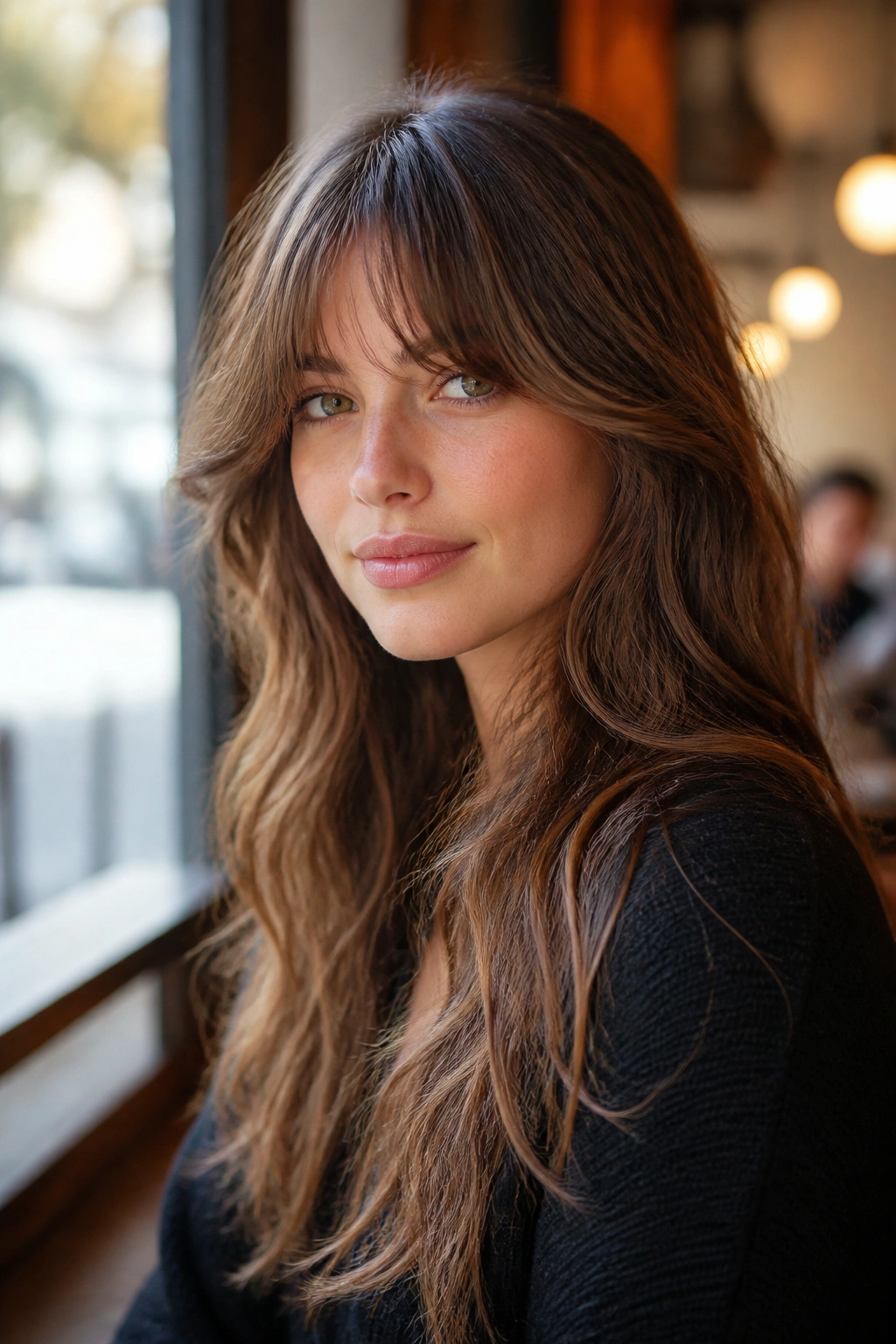
Bottleneck bangs are a clever middle ground between full fringe and curtain bangs. They start narrower in the center, open up as they move outward, and blend into the long hair in a way that feels soft instead of fussy.
Compared with curtain bangs, bottleneck bangs sit a little closer to the face and can give more shape around the eyes and nose. They’re a smart pick if you want a fringe but don’t want it to take over the whole haircut. The long hair underneath keeps the style balanced.
Ask for the shortest piece to land around the brows, then let the sides lengthen toward the cheekbones. That shape works well with waves because the fringe bends instead of sitting flat.
13. Side-Swept Bangs and Loose Waves
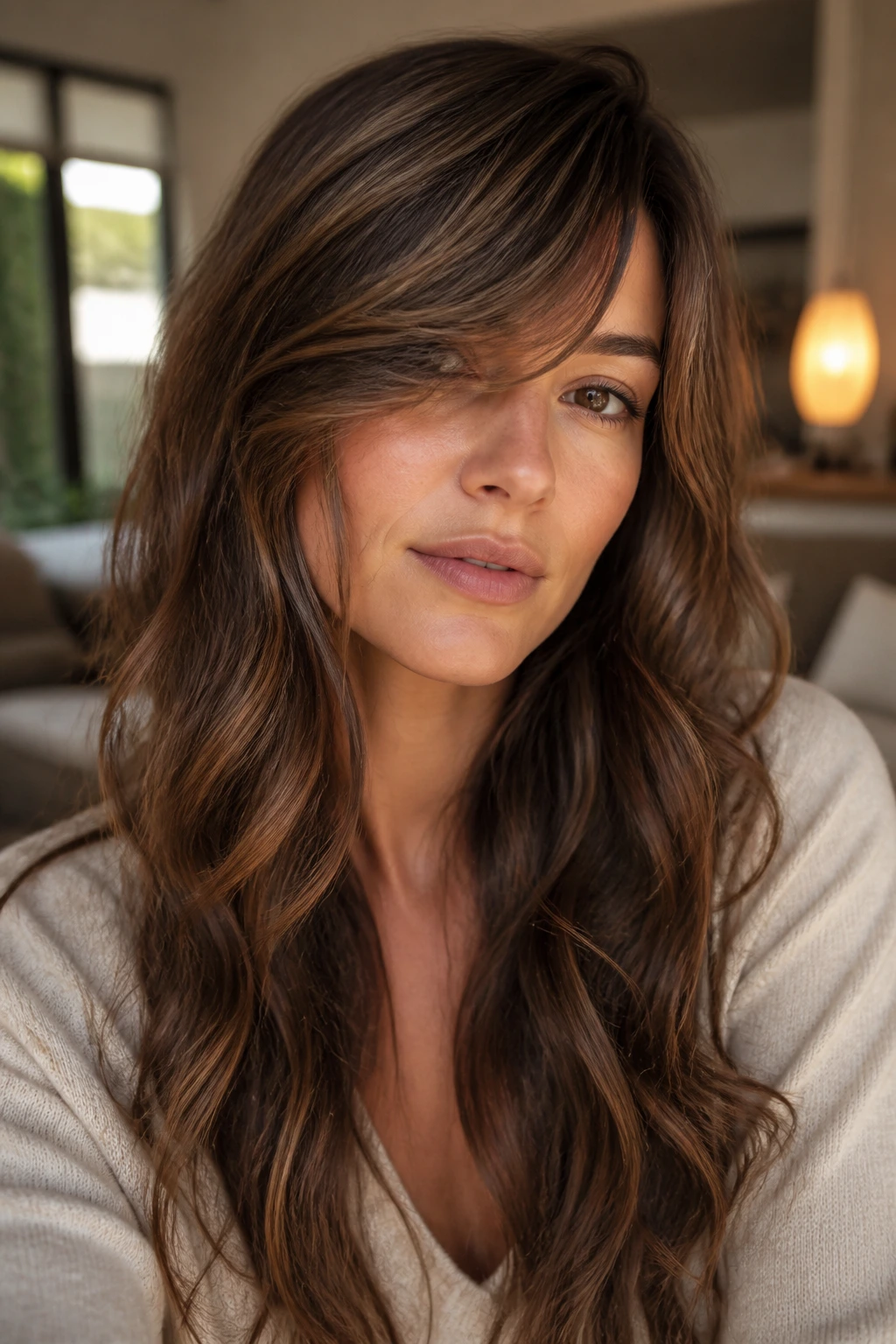
Side-swept bangs are old-school in the best way. They soften strong foreheads, bring movement to one side of the face, and blend neatly into long wavy hair without the sharp break that straight-across bangs can create.
Why they still work
The side sweep creates a diagonal line, and diagonals are flattering because they keep the eye moving. On waves, that diagonal also echoes the bend in the hair, so the whole look feels connected.
- Best for: anyone who wants fringe without a full forehead commitment
- Ask for: a long, mobile bang that can tuck behind the ear
- Style with: a side part while damp so the hair learns the direction
- Good to know: they grow out faster than blunt bangs, which is handy
Tip: a quick pass with a round brush is usually enough. Do not overthink it.
14. The Rounded Long Cut
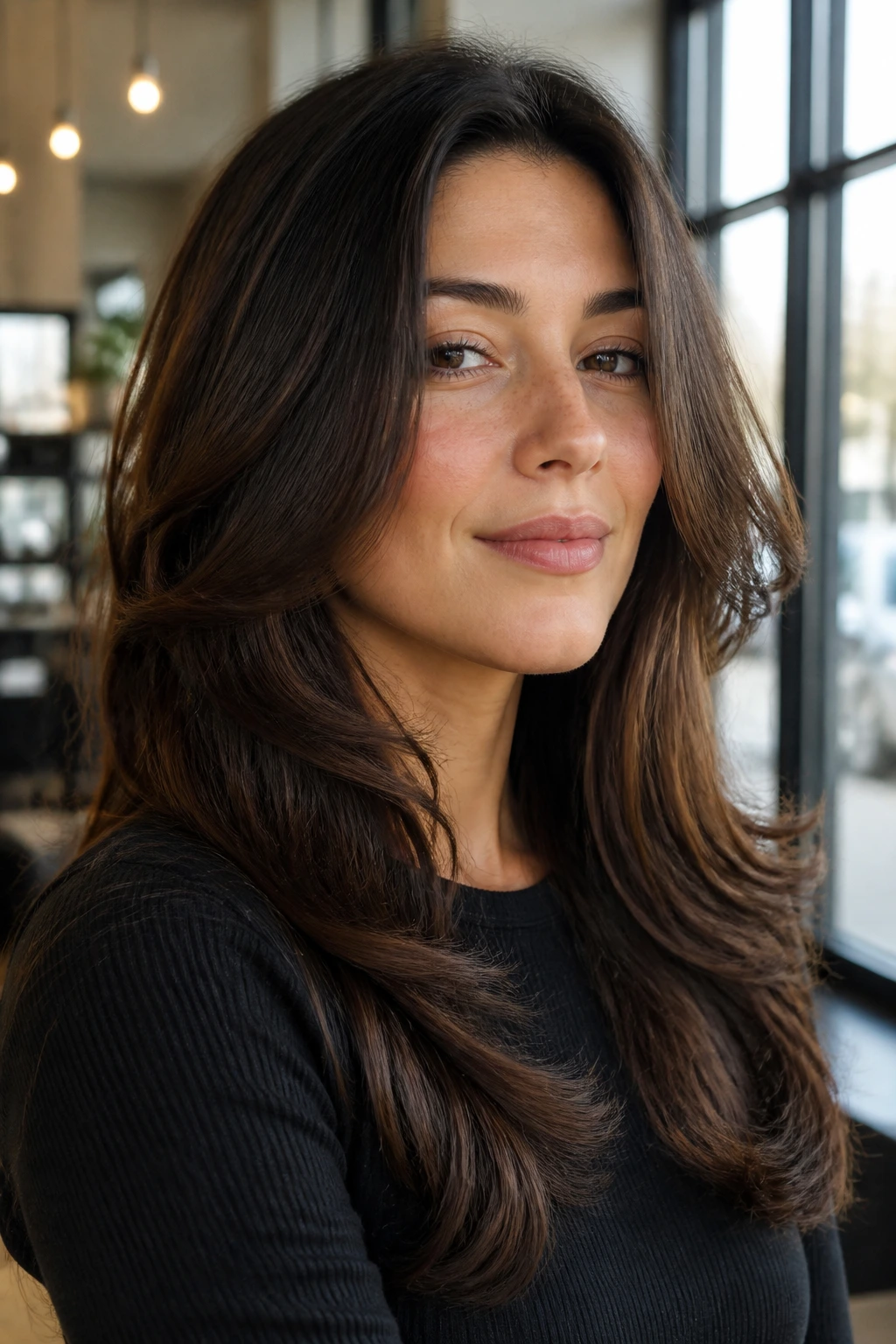
A rounded long cut changes the whole mood of wavy hair. Instead of hanging in a straight frame, the sides curve softly and the back keeps a gentle lift, which makes the length feel plush rather than heavy.
This shape is especially useful on thicker hair. Thick waves can build a wide shape at the bottom, and a rounded cut reins that in without making the hair look thin. It also gives a prettier fall when the hair is tucked behind the ears or swept into a low clip.
The key is a soft perimeter. You want the outline to curve, not to balloon. Ask your stylist to keep the length long while shaping the sides and back into a subtle arc. It should feel balanced, not round for the sake of being round.
15. Choppy Long Layers for Extra Texture
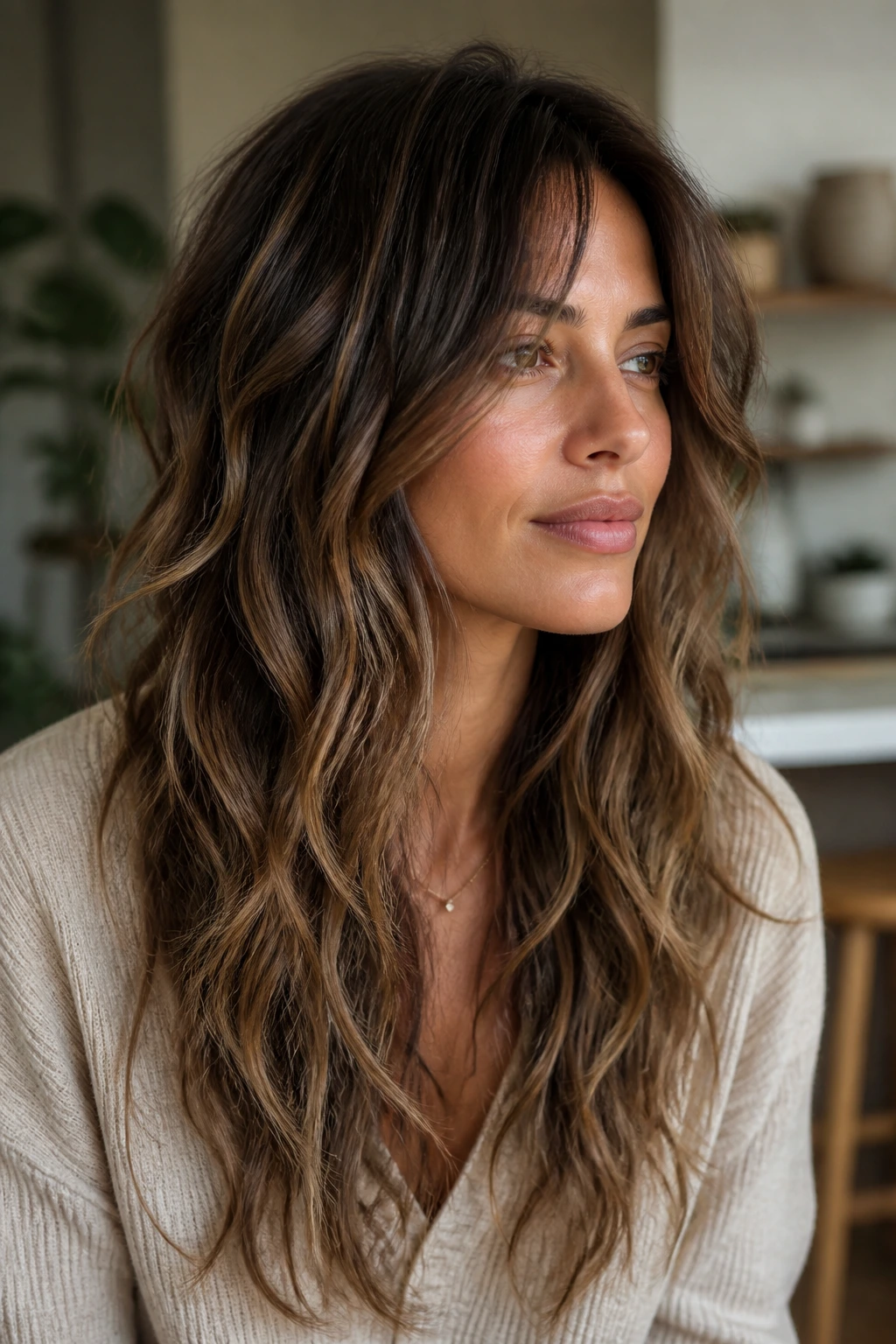
Do choppy layers always mean messy hair? Not if they’re cut with some restraint. On long wavy hair, choppy layers can create separation and grit, which is useful when the texture needs help showing itself.
The cut works best when the layers are visible but not random. You want a deliberate piecey look, not ends that seem hacked off. That means the stylist should keep the lengths controlled and use the choppiness to break up weight, not to thin the whole head out.
Styling it without frizz
Use a small amount of mousse on damp hair, scrunch from the ends upward, and stop touching it once it starts drying. The less you rake through it, the cleaner the texture looks.
This cut suits hair that tends to lie too flat or too smooth. It gives the wave something to grab onto.
16. A Deep Side-Part Cut with Long Waves
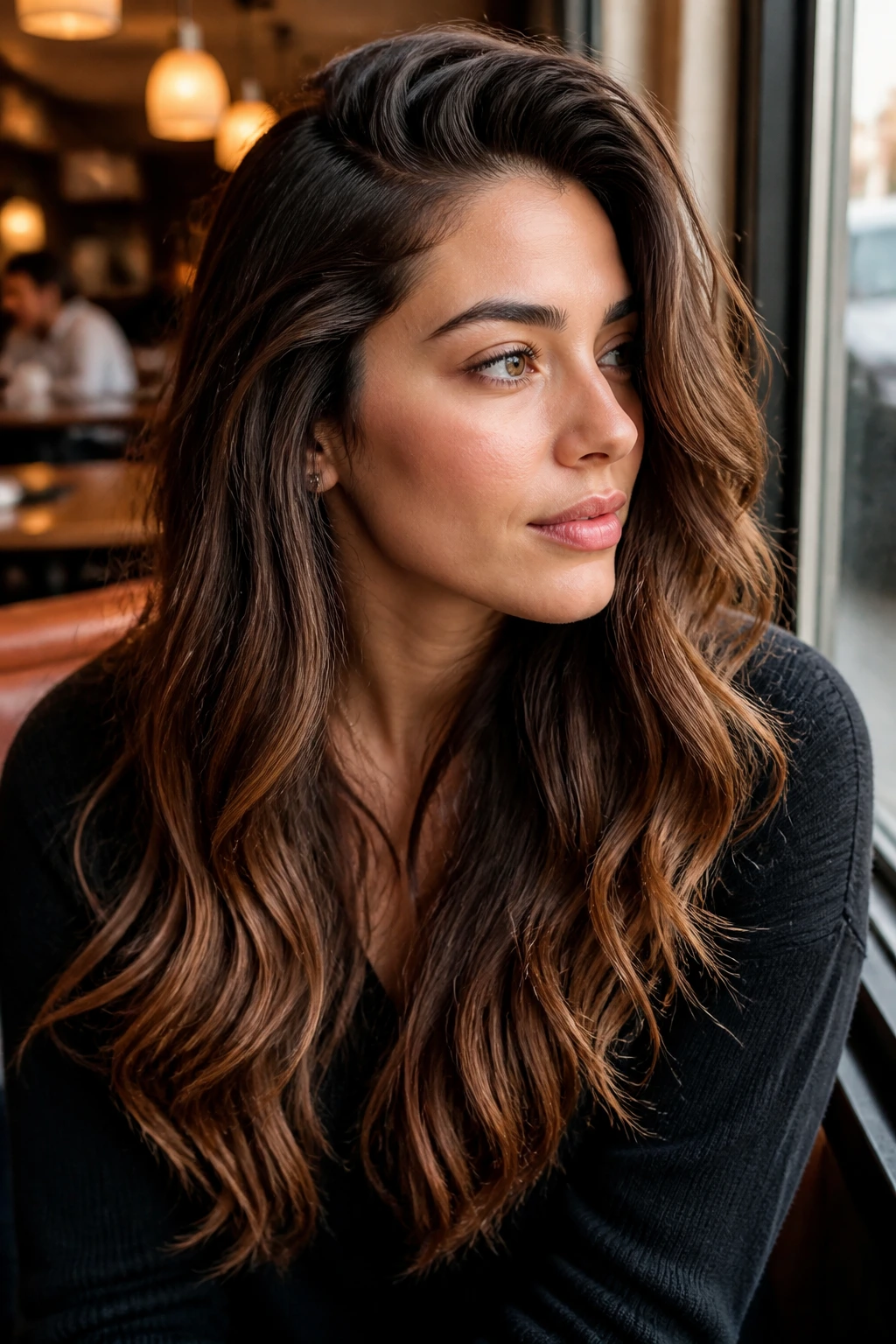
A deep side part can make long wavy hair look fuller at the roots and more dramatic through the lengths, without changing much of the cut itself. Sometimes the part does half the work.
The reason is simple. Hair pushed to one side creates height where it falls away from the scalp, and that lift makes waves look more alive. The long side drapes, the short side skims the face, and the contrast gives the style a little tension.
- Works well for: flat crowns and waves that need root volume
- Try with: a blow-dry at the root, then let the rest air-dry
- Useful with: face-framing layers or side bangs
- Watch for: stubborn cowlicks, which can fight the part for a day or two
Bottom line: if your hair looks limp from the middle part, this is the quickest fix.
17. Razored Ends for a Lighter Finish

Razored ends can make long wavy hair feel softer and lighter, especially when the hair is thick or coarse and tends to sit in one solid mass. The razor takes some of the hard edge off the ends, so the cut moves more freely.
That softness is the whole point. A razor cut should not look shredded. It should look like the perimeter has been loosened a little so the waves can separate without sticking out. On the right hair type, that gives a pretty, floating effect.
The catch is skill. If the stylist goes too far, the ends can get wispy and frayed, which is not cute and not fixable with styling cream. This cut asks for a steady hand and a little restraint. It’s one of those styles where technique matters more than trend.
18. Boho Layers with Airy Volume
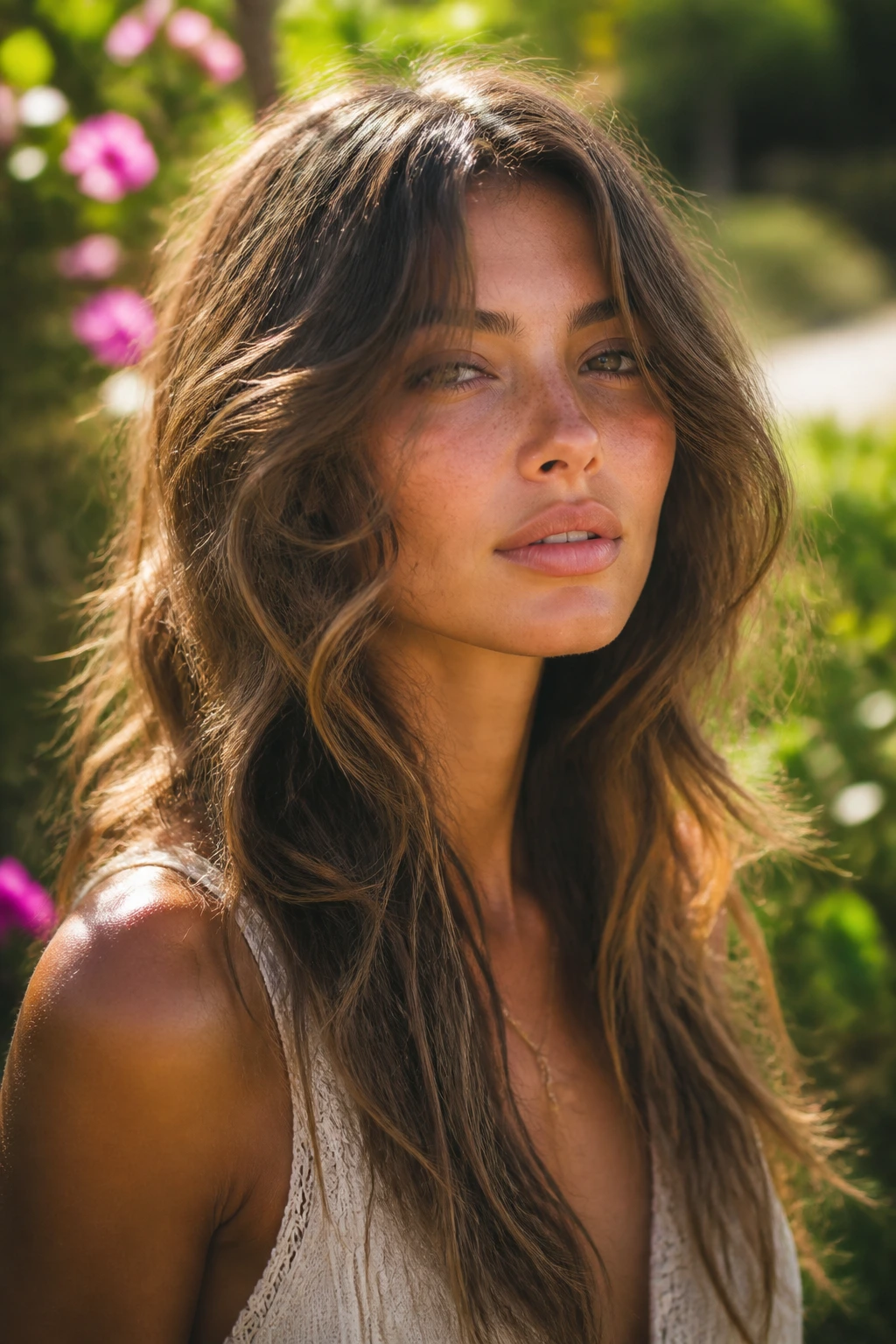
Boho layers are a softer cousin to the shag. They keep the silhouette relaxed, give the waves room to move, and avoid the sharper, more broken-up feel of heavier texture cuts.
Unlike a shag, boho layers usually stay a bit calmer around the crown. That makes them easier to live with if you want a loose, romantic finish instead of a purposely undone one. They pair nicely with long hair that air-dries into soft bends and a little frizz you do not mind keeping.
Who it suits
This cut is a good fit for hair that already has a natural wave and a bit of fullness. It can also help hair that goes flat at the sides but puffs at the ends, since the layers can redistribute the shape.
If you want hair that looks easy, not styled, boho layers sit in that sweet spot. They never look rigid.
19. Arched Bangs on Long Wavy Hair

Arched bangs are a little more structured than curtain bangs and a little softer than blunt fringe. They follow a gentle curve that’s shorter in the middle and longer near the temples, which makes them blend neatly into long waves.
What to ask for
Tell your stylist you want the center to stay light and the edges to connect into the sides. The arch should be subtle. Too much curve and the bangs start looking dated; too little and they lose the point.
- Good for: softening a broad forehead
- Pairs well with: long layers that begin below the chin
- Style note: dry them first before deciding if they need a trim; bangs shrink more than people expect
- Maintenance: trim every few weeks if you want the arch to stay clean
This fringe works best when the waves around it are loose and touchable, not stiff.
20. The Soft C-Cut Around the Face
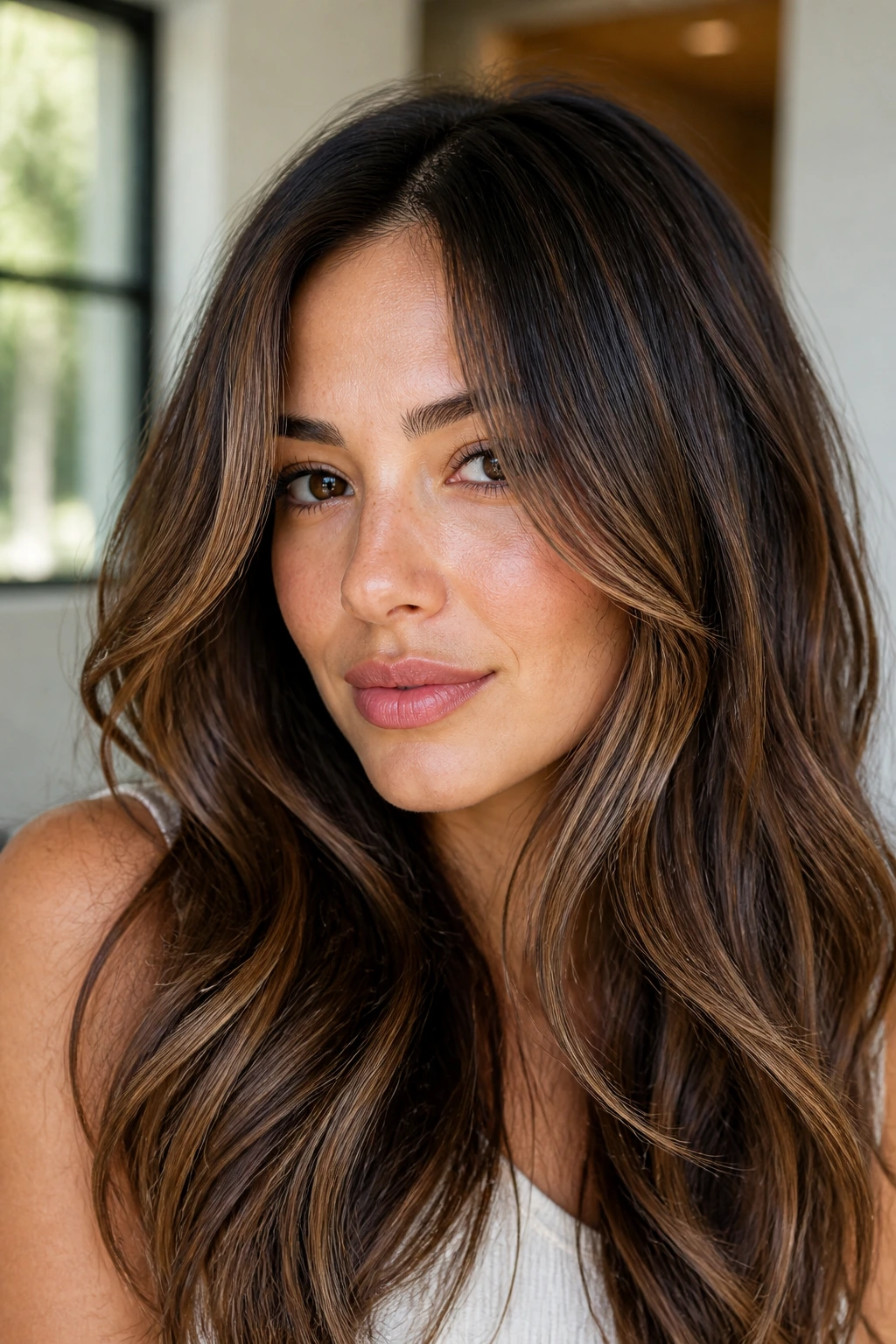
A C-cut gives the face a curved frame that starts near the cheekbone and sweeps inward toward the chin or collarbone. On long wavy hair, that curve can make the whole cut feel more finished without changing the back much at all.
The shape is flattering because it follows the lines of the face instead of cutting across them. It also makes the lengths around the front look intentional, which matters when waves naturally fall in uneven ways. A strong C-cut can pull the focus upward and keep the longest pieces from overwhelming your features.
Ask for a soft inward curve rather than a severe arc. The best version blends so smoothly that the face frame looks like it was always meant to be there.
21. Internal Layers for Thick Wavy Hair
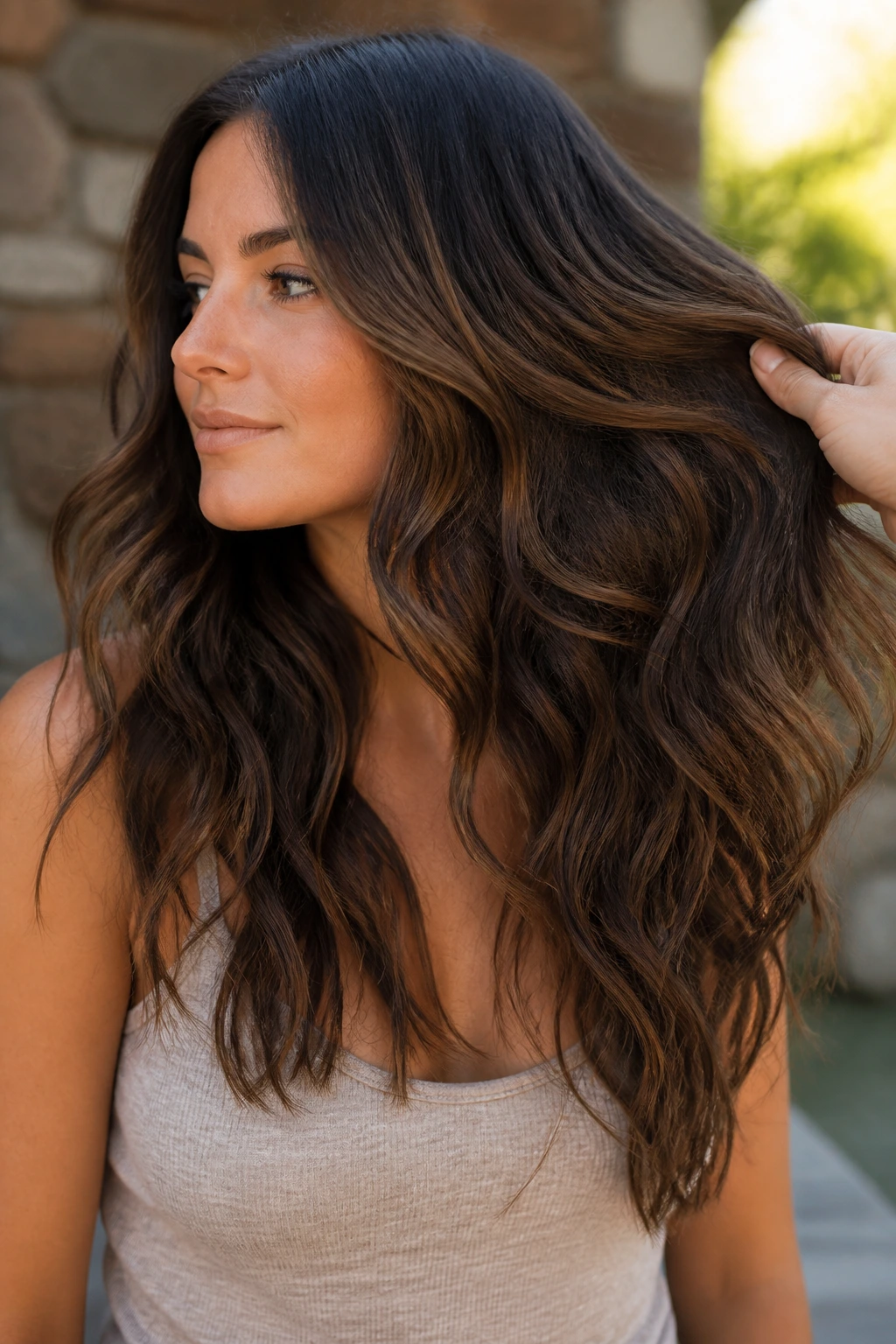
What do you do when the hair is long, wavy, and so dense it feels like a blanket on the shoulders? Remove weight from the inside. Internal layers solve that problem without making the outside shape look chopped up.
This is one of the smartest moves for thick wavy hair because it keeps the perimeter full while taking out the bulk that causes puffiness. The cut can make washing and drying easier too. Less mass means the hair dries faster and the wave pattern has a better chance to form instead of steaming itself flat.
How to ask for it
Say you want weight removed from the interior, especially through the mid-lengths and underlayers. You do not want the outer line thinned to the point where the hair looks see-through.
The result should feel lighter in motion, but still substantial when you pull it into a ponytail. That balance is the whole win.
22. Mermaid-Length Waves with Barely-There Layers

Mermaid-length hair is for people who want the drama of really long waves and are willing to protect the ends with regular trims. The layers stay minimal, often just enough to stop the hair from hanging completely flat.
This cut is all about the overall effect. Long lengths catch light, long waves read as soft and feminine, and the barely-there layering keeps the shape from turning into a flat curtain. You want enough movement that the hair shifts when you walk, but not so much that the length loses its presence.
Use this cut only if the ends are in good shape. Long hair with rough ends looks tired fast, and no amount of styling cream can disguise split pieces. A clean finish matters here more than anywhere else.
23. Cheekbone Layers That Open Up the Face

Cheekbone layers are one of the easiest ways to make long wavy hair feel lighter around the face without touching the rest of the length too much. They begin at a flattering point, then slide down into the waves so the cut frames rather than covers.
The nice thing about this shape is that it works with tucking. Pull a few pieces behind the ears and the layers still stay visible. Wear the hair down and they guide the eye upward. That kind of flexibility is rare, and I always notice when a cut has it.
It also helps if you wear glasses or want the face to feel less hidden by long hair. The layers create space. That matters more than people think.
24. A Wispy Fringe with Long Waves
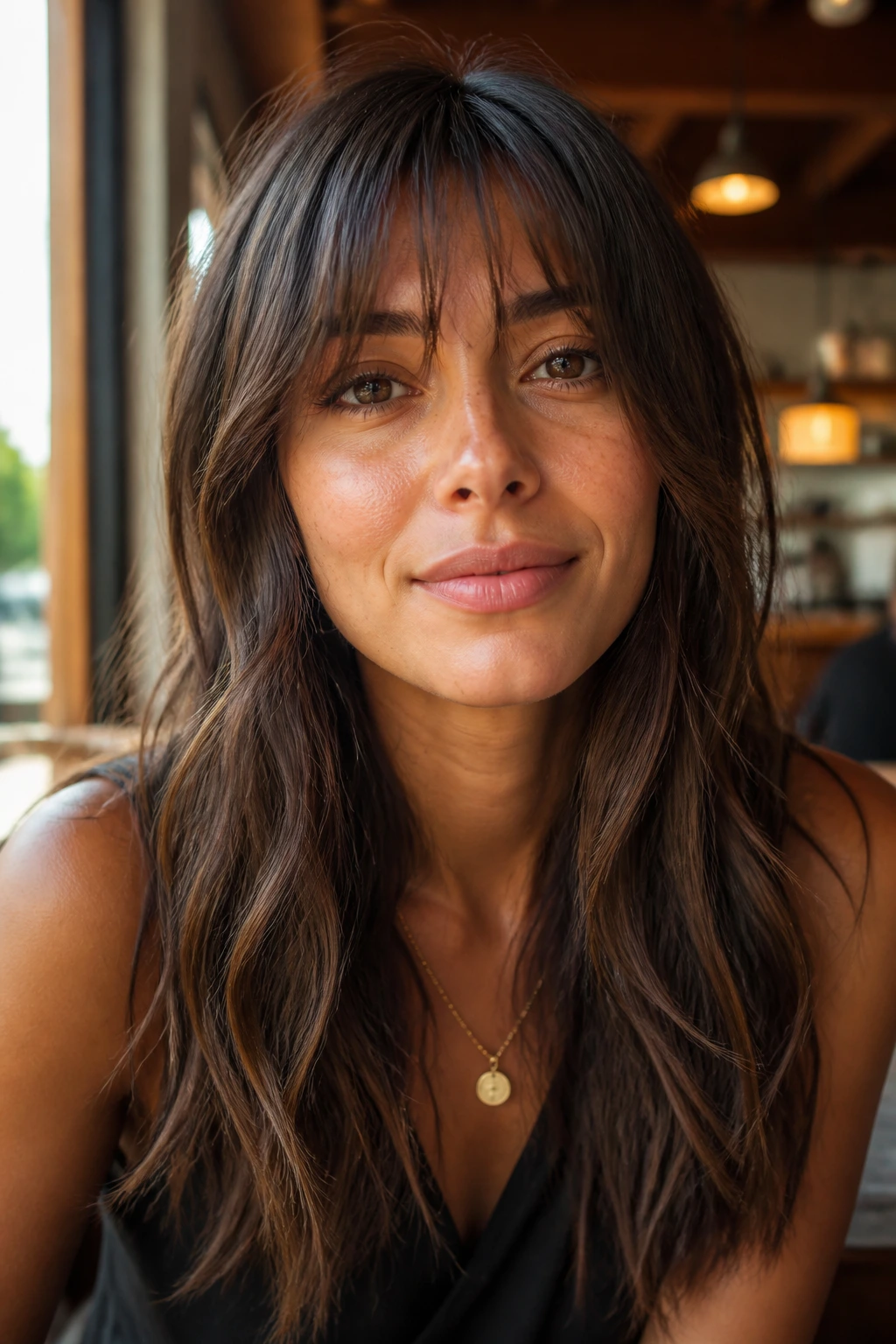
Wispy fringe is the low-pressure version of bangs. The pieces are lighter, softer, and easier to grow out than a dense fringe, which makes them a smart match for long wavy hair that already carries a lot of shape.
Why it stays easy
Because the fringe is broken up, it blends faster into the rest of the haircut. It doesn’t sit as a solid line, so when the wave pattern kicks in, the bangs move with the hair instead of fighting it.
- Best for: people curious about bangs but nervous about commitment
- Ask for: piecey ends and a soft, irregular edge
- Style with: fingers and a tiny bit of cream, not a stiff brush
- Keep in mind: wispy fringe can separate too much if your hairline is very fine, so the density needs checking
It’s a gentle way to change the look without making every morning a project.
25. The Softly Layered U-Cut
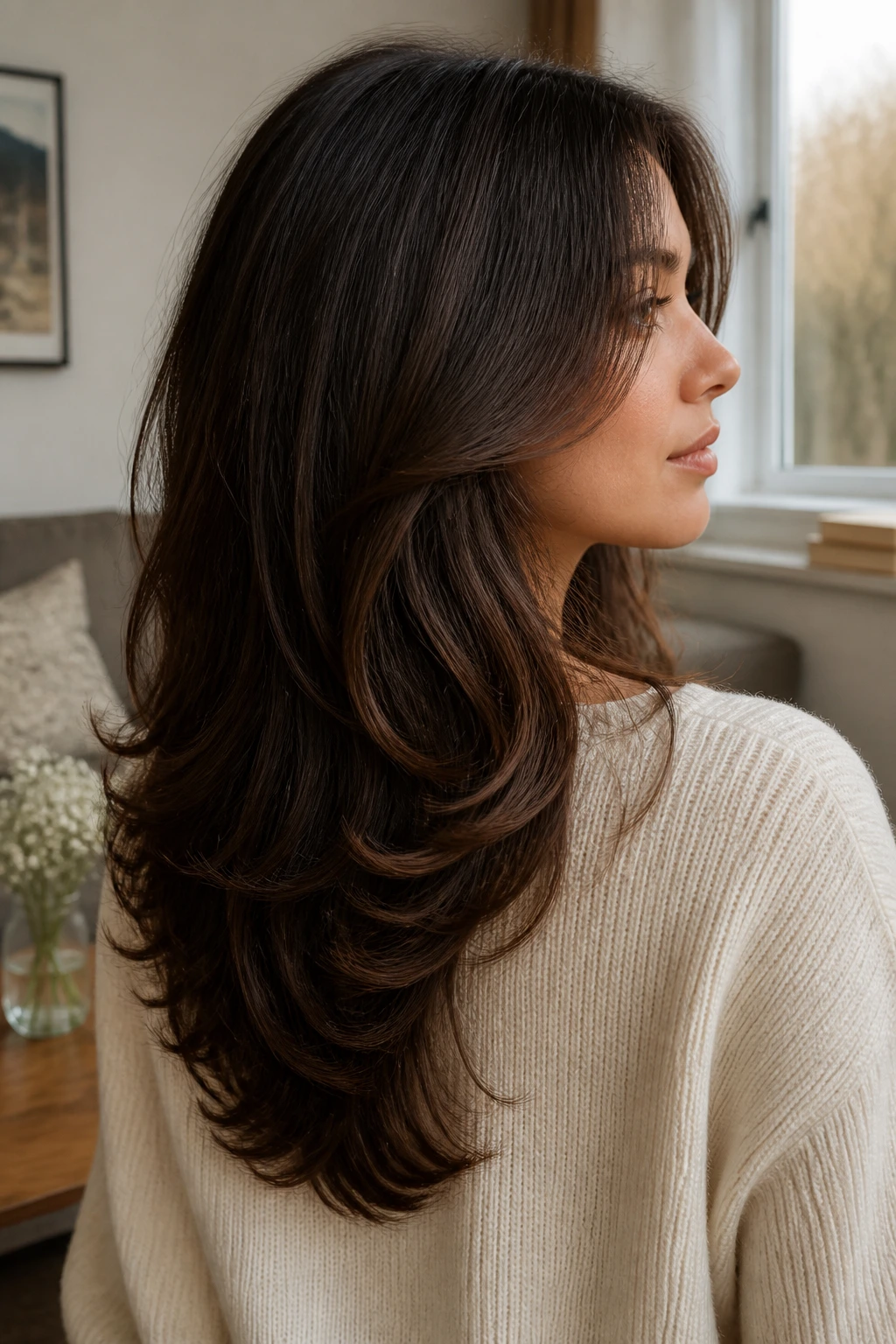
If you want long wavy hair that feels polished but not stiff, the softly layered U-cut is a safe place to land. It keeps the back curved, the sides flowing, and the layers quiet enough that the length still reads as the main event.
Compared with a V-cut, this shape is less dramatic and easier to wear every day. Compared with a blunt cut, it gives the waves more room to move. That middle ground is exactly why so many people keep coming back to it. It does not shout.
I like this cut for anyone who wants shape without a lot of maintenance. It grows out well, it works with air-drying, and it does not punish you if you skip a styling day. That is a useful thing to have in long hair.
