



Curly haircuts for women with thick hair live or die by shape. Thick curls are generous, but they punish lazy cutting. Too blunt, and you get a shelf. Too thinned-out, and the ends fray into a fuzzy halo.
The sweet spot is usually somewhere between removing weight and keeping enough mass for the curls to clump. That sounds technical, but in real life it means your hair should move when you turn your head, not sit there like a helmet or puff out at the sides like it’s trying to take up more space than your head allows.
A blunt one-length cut sounds safe. On dense curls, it often turns into a triangle with ambition. A really layered cut can be just as bad if the shortest pieces spring up too high once the hair dries. Shrinkage matters. So does where the bulk sits — crown, sides, nape, or all three at once.
The smartest shapes are not all the same. Some need round layers. Some want a blunt edge. Some are better with almost no layering at all. Start with shape, then decide how much length you want to keep.
1. Long Rounded Layers

Long rounded layers are the safest place to start when thick curls need shape more than drama. The curve keeps the outline soft around the shoulders, and the length keeps the cut from springing up too high when it dries.
I like this shape on dense 2C to 3B curls because it removes weight without carving the hair into visible steps. The result feels easier, not fussy. You still get movement, but you do not end up with a chopped-up outline that looks angry in humidity.
What to ask for
- Keep the shortest face-framing layer around the jawline.
- Leave the perimeter below the collarbone if you want length.
- Ask for point-cutting instead of a razor on the ends.
- Keep the crown layers longer than you think you need.
Best for: women who want volume control without losing that curtain of length.
Watch out for: over-layering at the top. That’s how you get a puffy crown and skinny ends. Ugly combo.
2. Curly Shag with Airy Fringe
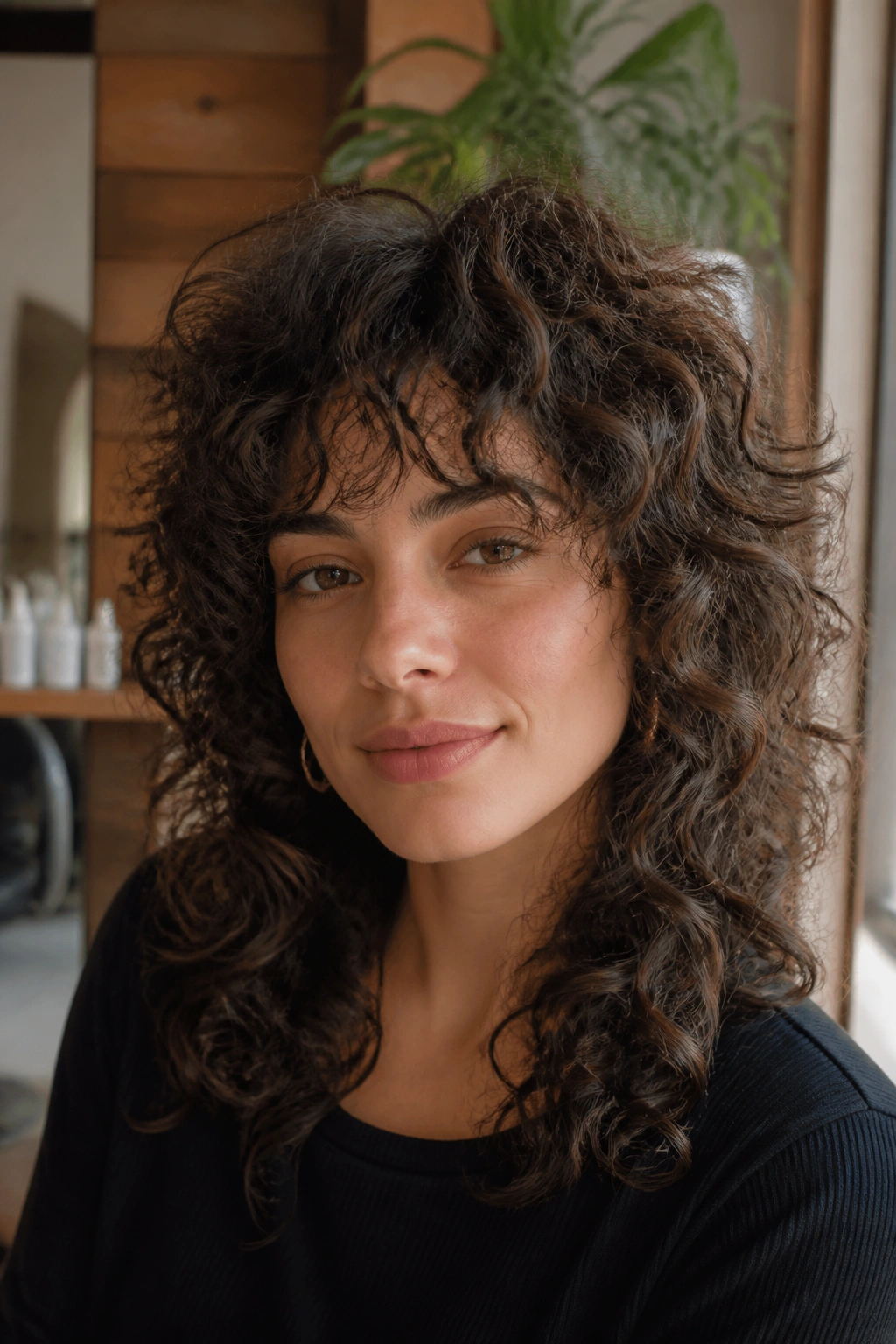
Want fringe, volume, and a little mess? The curly shag is the haircut that can handle all three without collapsing under the weight of thick hair.
The magic is in the breakup. Thick curls naturally stack on each other, and the shag stops that stacking from turning into one giant block. When the fringe is cut softly — usually near brow length when dry, a bit longer when wet — it sits better and grows out without that blunt, boxy look.
Why it works
A shag gives the top layers room to breathe. It also pulls some density away from the sides, which matters if your hair tends to balloon around the ears. If your curls bounce between loose ringlets and tighter spirals, this shape usually plays nicely with both.
How to wear it: use a light cream or gel, scrunch upward, and let the fringe dry on its own before deciding whether it needs a tiny trim. Tiny. Not heroic.
3. Collarbone Lob

A collarbone lob is one of those cuts that sounds plain until you see it on thick curls. Then it suddenly makes sense. The length lands in a forgiving spot, and the curl pattern gets room to fall instead of piling up near the chin.
The reason this shape works so well is simple: collarbone length gives you enough weight to control frizz, but not so much that the ends drag the whole style down. On thick hair, that balance matters more than people admit. A wet curl can land two inches higher once it dries, so a lob gives you a little breathing room.
I prefer this cut with subtle interior layers, not dramatic stairs. You want the outline to stay clean, especially if your hair is coarse or very dense. A sharp center part can look sleek. A soft side part can make the whole thing feel a bit more relaxed.
The grow-out is easy, too. That matters. A haircut you can live with for months always beats a haircut that looks good for one wash day and fights you after that.
4. Blunt Curly Bob with Interior Debulking
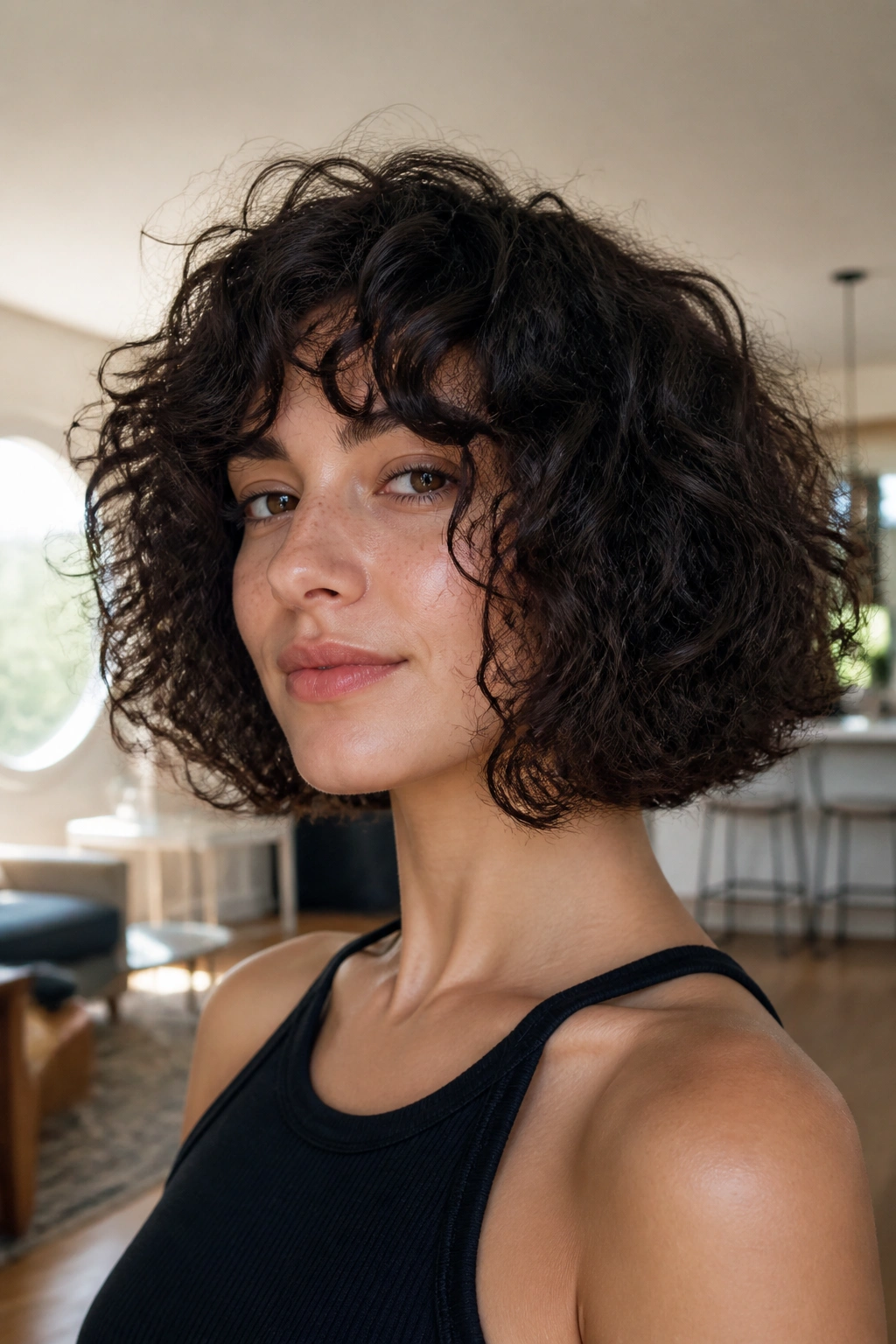
If you’ve ever wanted a bob but feared the triangle, this is the answer.
The outer line stays blunt and strong, which gives thick curls a clear shape. Inside that shell, though, the stylist removes weight where the density actually lives. Not on the surface. Inside. That’s the part many people skip, and it’s the reason some bobs look like a helmet while others look expensive and easy.
What makes it work
- The perimeter sits around the chin or just below it.
- Internal sections are lightly reduced under the top layer.
- The outer edge stays blunt so the shape reads clean.
- A dry finish check keeps shrinkage from turning the bob too short.
Do not let anyone attack the outside with heavy thinning shears. That’s a fast route to a frizzy line and weird gaps.
A bob like this looks best when the curls are defined and the ends are tidy. It has a bit of attitude, yes, but it also looks controlled. Which is the whole point.
5. Tapered Pixie with Curly Crown
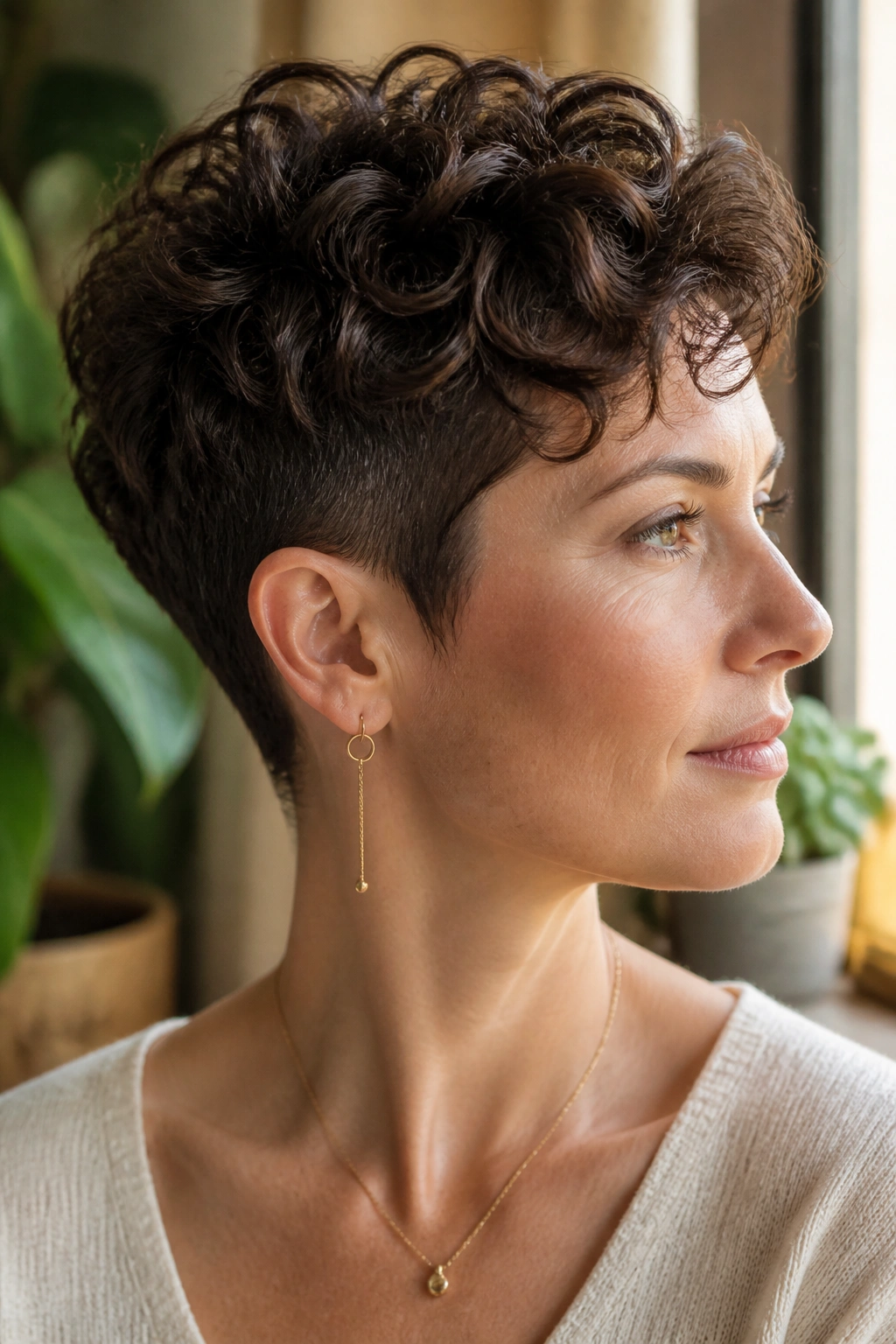
This is the cut for thick curls that need air, not more length.
A tapered pixie keeps the sides and nape neat while leaving enough curl on top to show off texture. On dense hair, that top section can be a joy. It springs up, sits light, and gives you shape without the daily battle of managing heavy ends.
What to ask your stylist
- Keep the top around 2 to 4 inches, depending on curl tightness.
- Taper the sides and neckline gradually, not abruptly.
- Leave enough length around the temples so the cut doesn’t look pinched.
- Check the shape dry before taking the sides too short.
It’s a bold cut, sure. But it’s also one of the easiest ways to make thick curls feel lighter in the morning. You wash, scrunch, and go. No wrestling with half your head.
This one does need trims. Every 5 to 7 weeks is the sweet spot if you want the silhouette to stay clean.
6. Face-Framing Layers at the Cheekbones
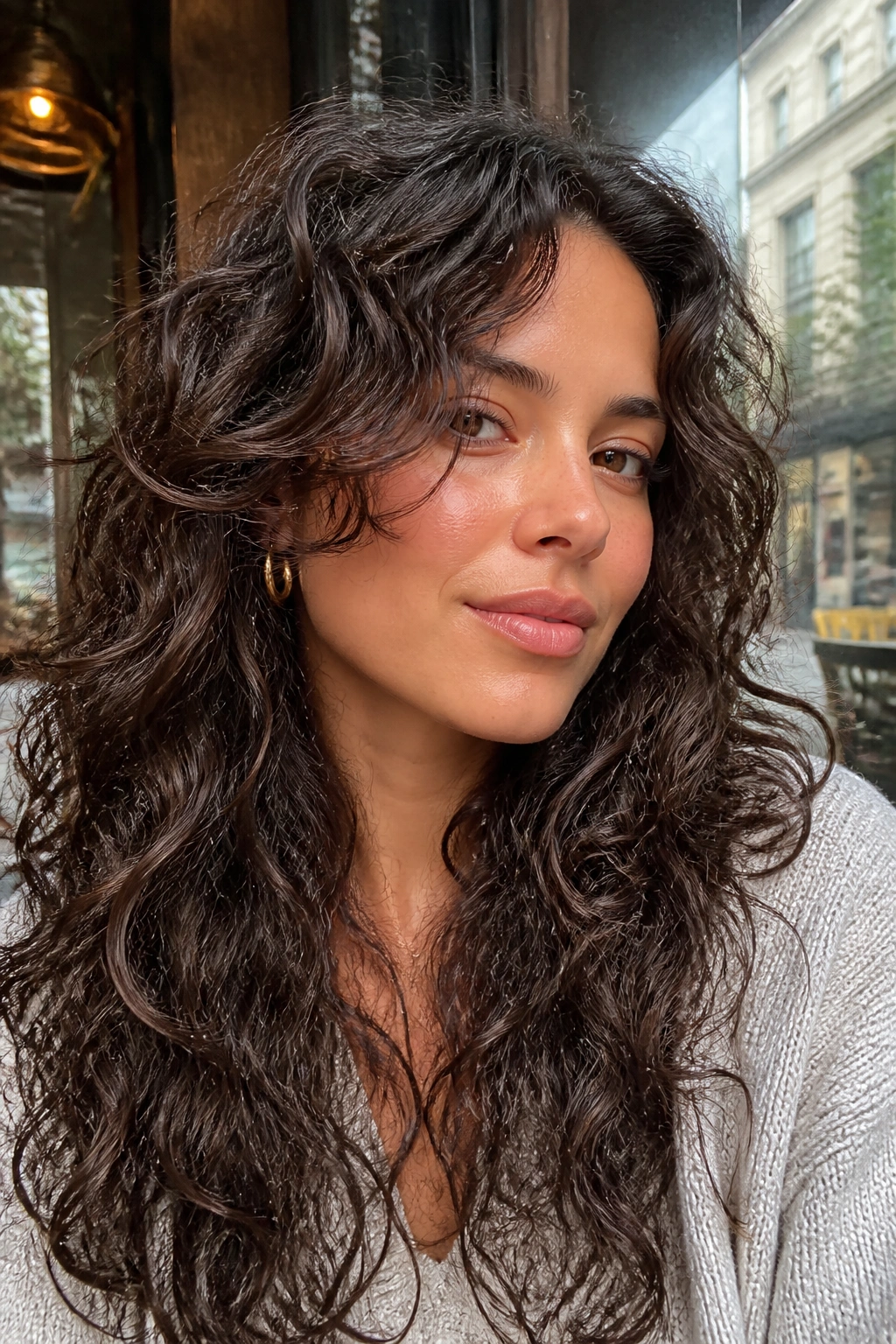
What if you want to keep your length but stop your curls from swallowing your face? Put the layers higher. Cheekbone level is the sweet spot for a lot of women with thick hair.
The benefit is visual and practical at the same time. The front pieces open the face, while the rest of the cut stays long enough to keep the hair from puffing out like a bell. On thick curls, that’s a useful trick. The heavier lower sections keep the shape grounded, and the shorter front pieces stop everything from feeling too heavy near the jaw.
Be careful with chin-length face layers if your curls shrink a lot. They can widen the lower face fast. Cheekbone or lip length is usually safer. The cut should skim, not sit squarely on the widest part of your face.
This is a good salon option if you love wearing your hair down and tucked behind one ear. That little asymmetry looks clean, and it’s easy to live with.
7. Soft U-Shaped Long Cut
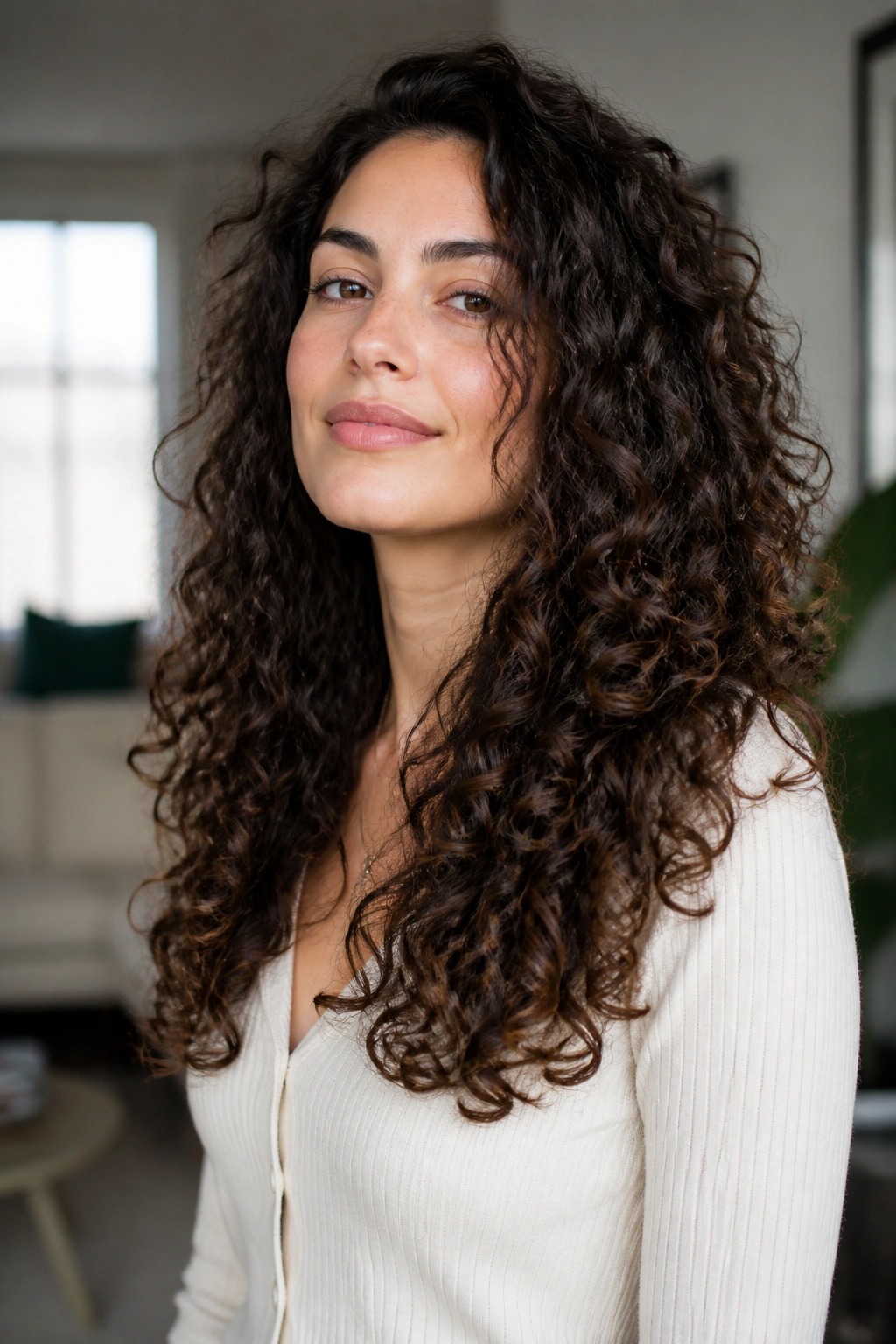
A soft U-shape is one of the most underrated curly haircuts for women with thick hair. It looks subtle on paper. On dense curls, it can make the whole head feel better balanced.
The shape is simple: the back sits a little lower than the sides, but not so much that the cut becomes dramatic. That small curve helps the hair fall in a more natural way. A straight-across bottom edge can look heavy on thick curls, especially when the hair is coarse or the ends are dry.
Why the U shape wins
- The outline feels softer than a blunt line.
- The ends do not stack into a square shape.
- It keeps length in the back without making the sides look bulky.
- It grows out neatly, which saves you from awkward in-between months.
I like this cut when someone wants the security of long hair but not the blocky weight that comes with it. It’s polished without being stiff. And it doesn’t demand a huge styling routine, which is half the battle.
8. Wolf Cut for Thick Curls
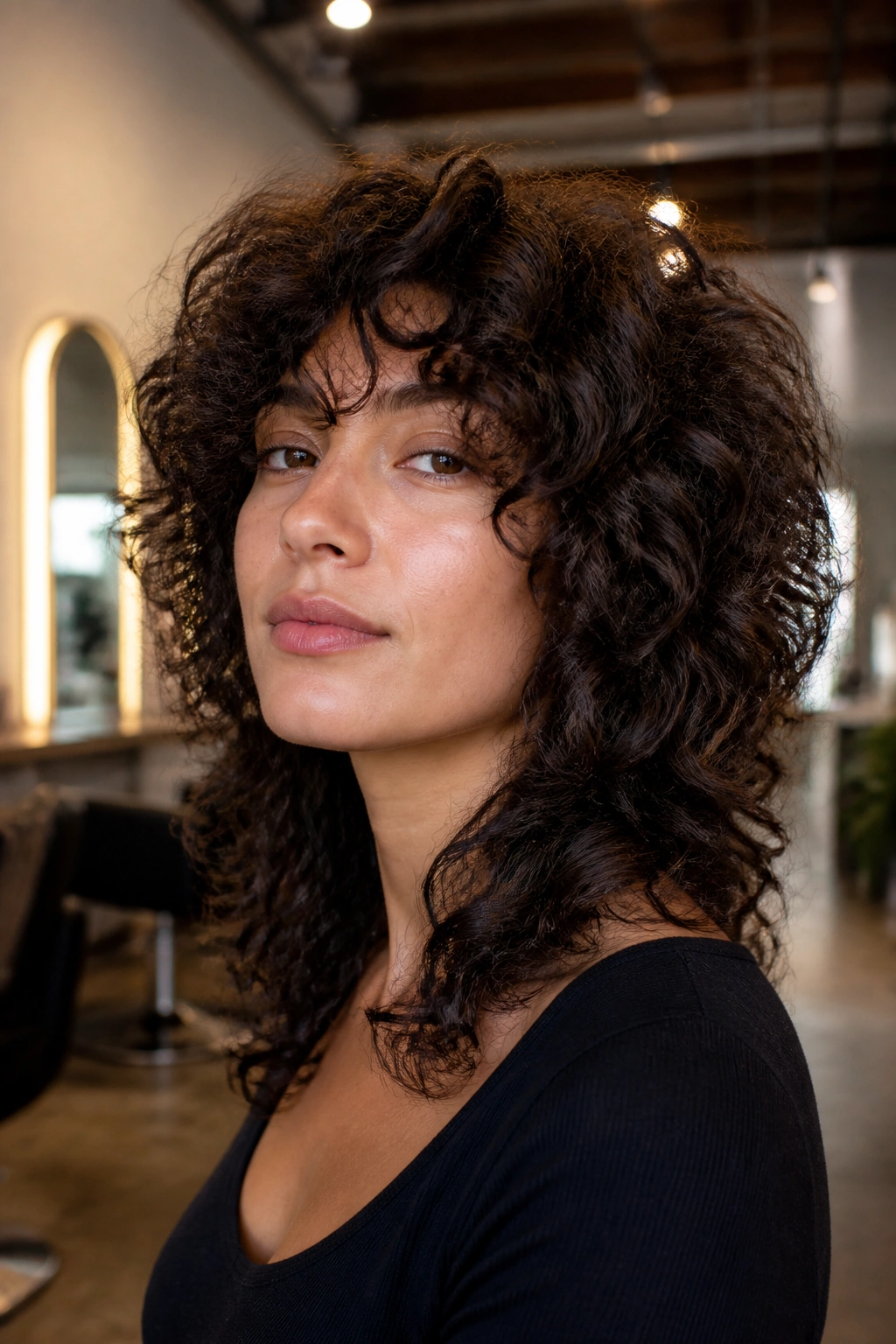
The wolf cut is not just a trend haircut. On thick curls, it can be one of the smartest ways to make the crown feel lighter without sacrificing the shape in the back.
The whole idea is contrast. Shorter layers around the top and crown create lift, while the longer lengths keep the style from floating away. That contrast looks especially good on curls because curls already have texture. You’re not forcing movement; you’re letting it happen.
How to keep it wearable
A wolf cut gets messy fast when the top is too short. For thick curly hair, I’d keep the shortest layers longer than most people expect — usually around the cheekbone or just below it, depending on shrinkage. The back can stay longer, and the sides should be softened so the cut doesn’t turn into a triangle.
Best of all, this cut forgives a slightly rough finish. If you like a little chaos, it’s fun. If you like polished hair every day, maybe not. Be honest with yourself there.
9. Soft Curly Mullet
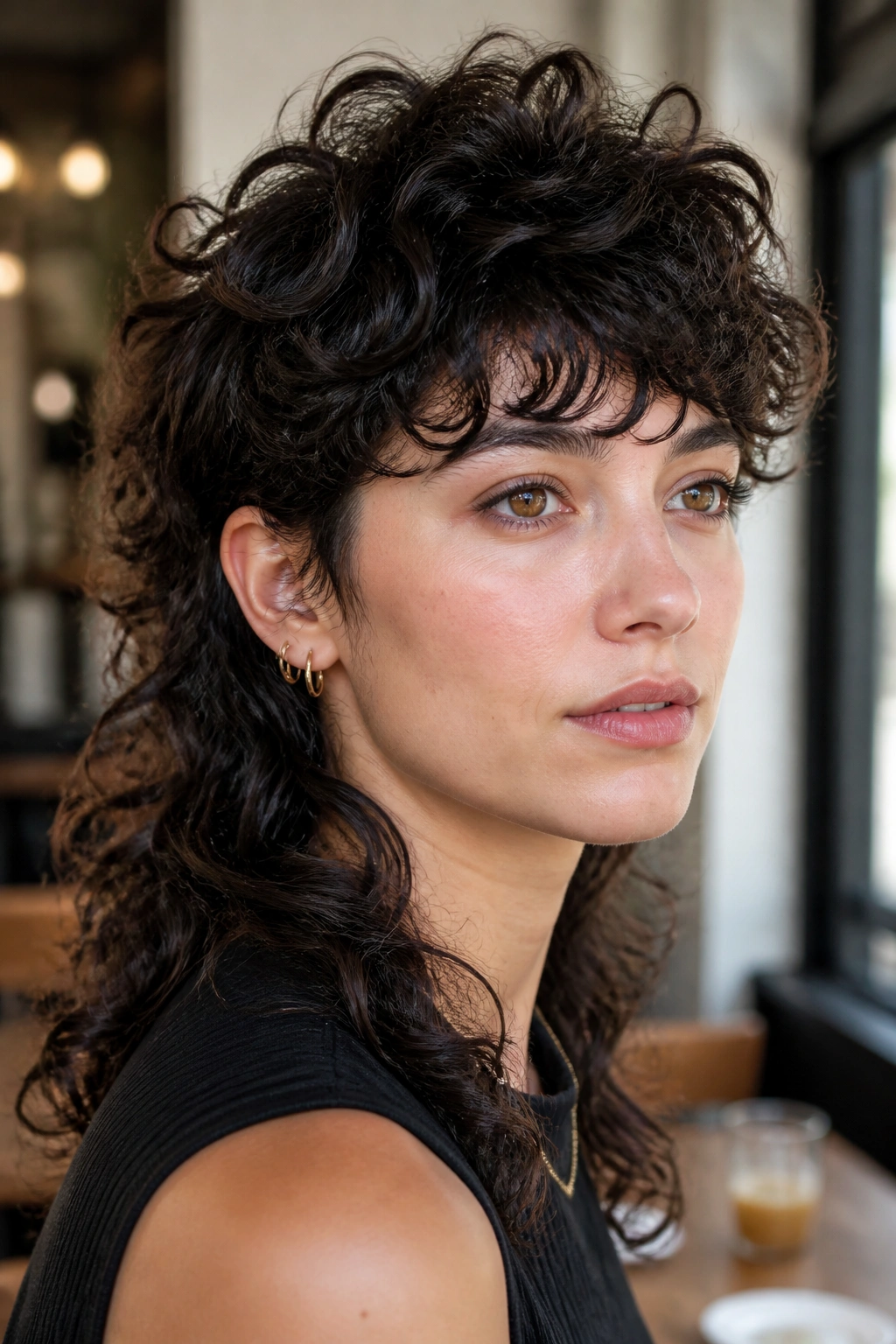
Some people hear “mullet” and think joke haircut. On thick curls, a softened version can be one of the easiest ways to take weight off the sides without flattening the top.
The modern curly mullet is not stiff or cartoonish. The front stays shaped, the crown has lift, and the back keeps enough length to feel intentional. The trick is softness around the ears and nape. That keeps the cut from looking harsh.
- Keep the fringe and front pieces long enough to curl naturally.
- Let the back drop a little lower than the top.
- Avoid razor-heavy edges if your curls are coarse.
- Ask for a soft transition at the sides so the profile feels smooth.
This cut loves confidence, but it also loves thick hair because thick curls give it structure. Thin curls can look wispy here. Dense curls make it make sense.
And yes, it can be chic. Not in a try-hard way. Just in a “this person knows exactly what their hair can do” way.
10. Stacked Curly Bob

A stacked curly bob is the answer when the back of your hair feels heavy and your crown needs help lifting off the head.
The stack creates a built-in rise at the back by cutting layers a little shorter underneath. On thick curls, that means the shape gets more air where it usually collapses. The front can stay a bit longer and softer, which keeps the cut from looking too round or too stiff.
The key is restraint. Too much stacking and the bob starts to balloon. Too little and the nape still feels bulky. I like a mild stack on dense curls, especially if the hair tends to sit flat at the roots but puff out at the ends.
This cut shines on active people. It’s tidy enough for work, but it still has bounce when you shake it out. And it makes thick hair feel lighter around the neck, which matters more than people realize on warm days or long workdays.
11. Curtain Bangs with Mid-Length Layers

Do you want bangs without the panic? Curtain bangs are the gentler way in.
On thick curls, curtain bangs work best when they are long enough to bend, not fight. They should part naturally down the middle and blend into the front layers instead of sitting like a blunt curtain across the forehead. If they’re too short, shrinkage can make them jump up and look choppy. If they’re too long, they disappear.
How long to cut them
For looser curls, a stylist might start the bang around eyebrow to bridge-of-nose length when wet. For tighter curls, start longer. Much longer. Thick curls usually eat length fast.
The rest of the cut should stay mid-length with soft layers through the sides. That keeps the bangs from looking isolated. I like this shape when someone wants a change without losing the security blanket of hair around the shoulders.
It’s a nice compromise. There’s movement around the face, but not the full commitment of a short fringe.
12. Rounded Afro Shape
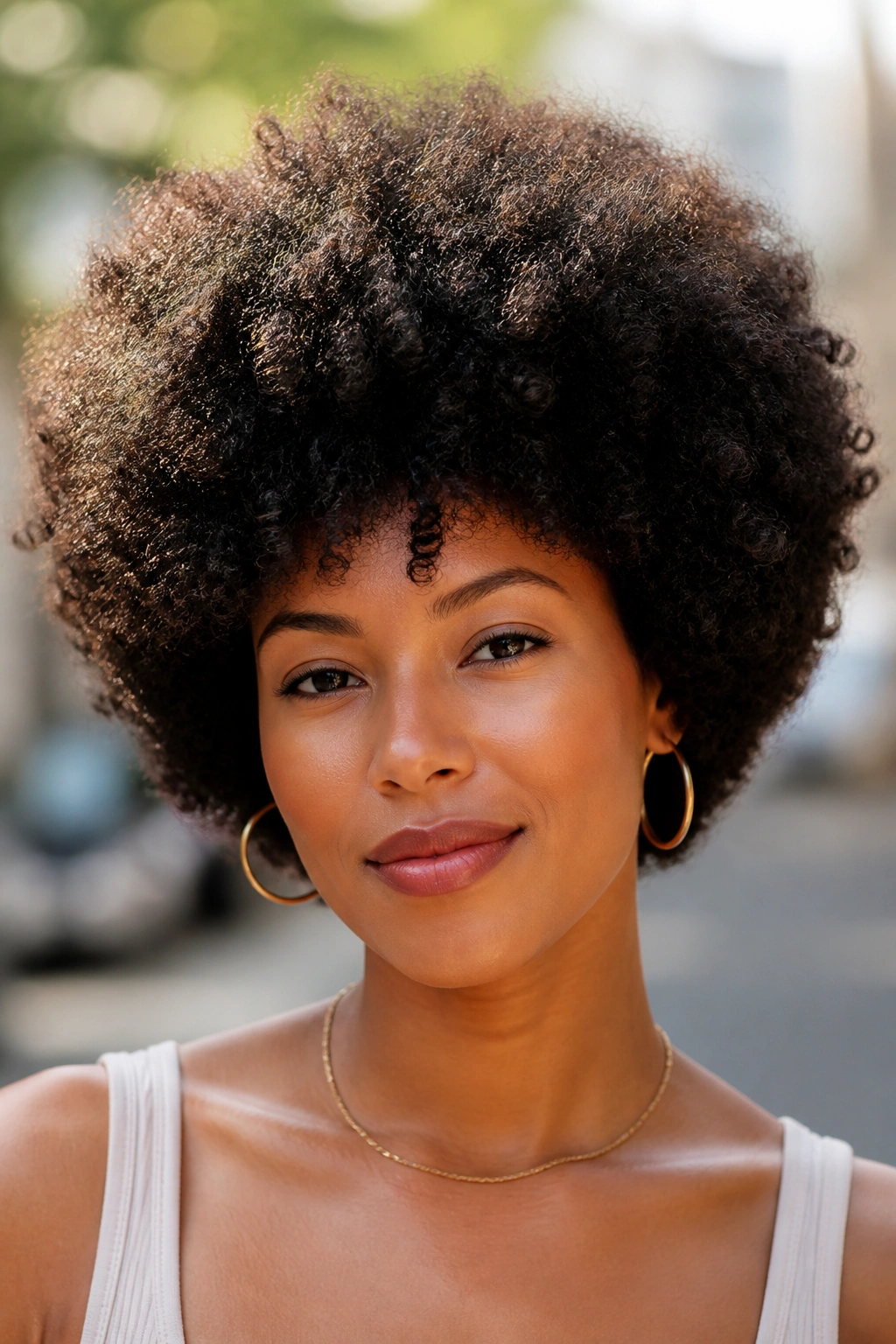
A rounded afro shape is not about layering in the usual sense. It’s about silhouette, balance, and letting the hair sit in a shape that matches the head instead of fighting it.
With thick coils and tight curls, a rounded shape can look strong and clean when it’s cut dry. Wet hair lies. Dry hair tells the truth. That matters here because shrinkage changes everything. A stylist who knows how to shape by eye — and by touch — can remove bulk around the sides and nape while keeping the top full and even.
I love this cut when the goal is presence without excess width. The head line stays soft, not boxy. The hair should feel cushioned, not puffy at the edges.
This is also one of the few shapes where a little pick-out at the roots can make the haircut look better, not worse. The point is not to inflate it. The point is to let the round shape breathe.
13. Tapered Sides and Full Top

This haircut is basically a relief valve for dense curls.
When the sides and back are tapered, the hair stops fighting your ears, your jawline, and your neck. That leaves the top free to do the interesting work. On thick curls, the contrast can be lovely. The top looks alive. The sides look neat. Nothing feels boxed in.
What to tell your stylist
- Keep the top around 3 to 5 inches if you want strong curl definition.
- Taper the sides gradually so the cut doesn’t look shaved in harsh bands.
- Clean up the neckline, but don’t take the taper too high unless you want a very short profile.
- Leave enough length at the front for the curls to fall softly, not spike.
This is a good one if your hair grows wide before it grows long. You know the type. The shape that eats your face from both sides. Tapering fixes that fast.
14. Invisible Layers at Shoulder Length

Invisible layers are for women who want movement without obvious steps. On thick curly hair, that matters more than it sounds.
The surface of the cut stays pretty full, so the outline still reads as lush and smooth. Inside, though, the stylist removes enough weight to keep the curls from clumping into one heavy block. That hidden work is what keeps shoulder-length curls from feeling bulky right at the shoulders, where a lot of haircuts get stuck.
A clean perimeter is part of the appeal. The line can look almost one-length when the hair is dry, but it moves better when you turn your head. That’s the whole trick. The cut looks calm until you move, then it wakes up.
This shape is a good option if you hate obvious layers but need your hair to sit lighter. It’s one of those cuts that doesn’t shout. It just makes the hair behave.
15. Micro Fringe Crop
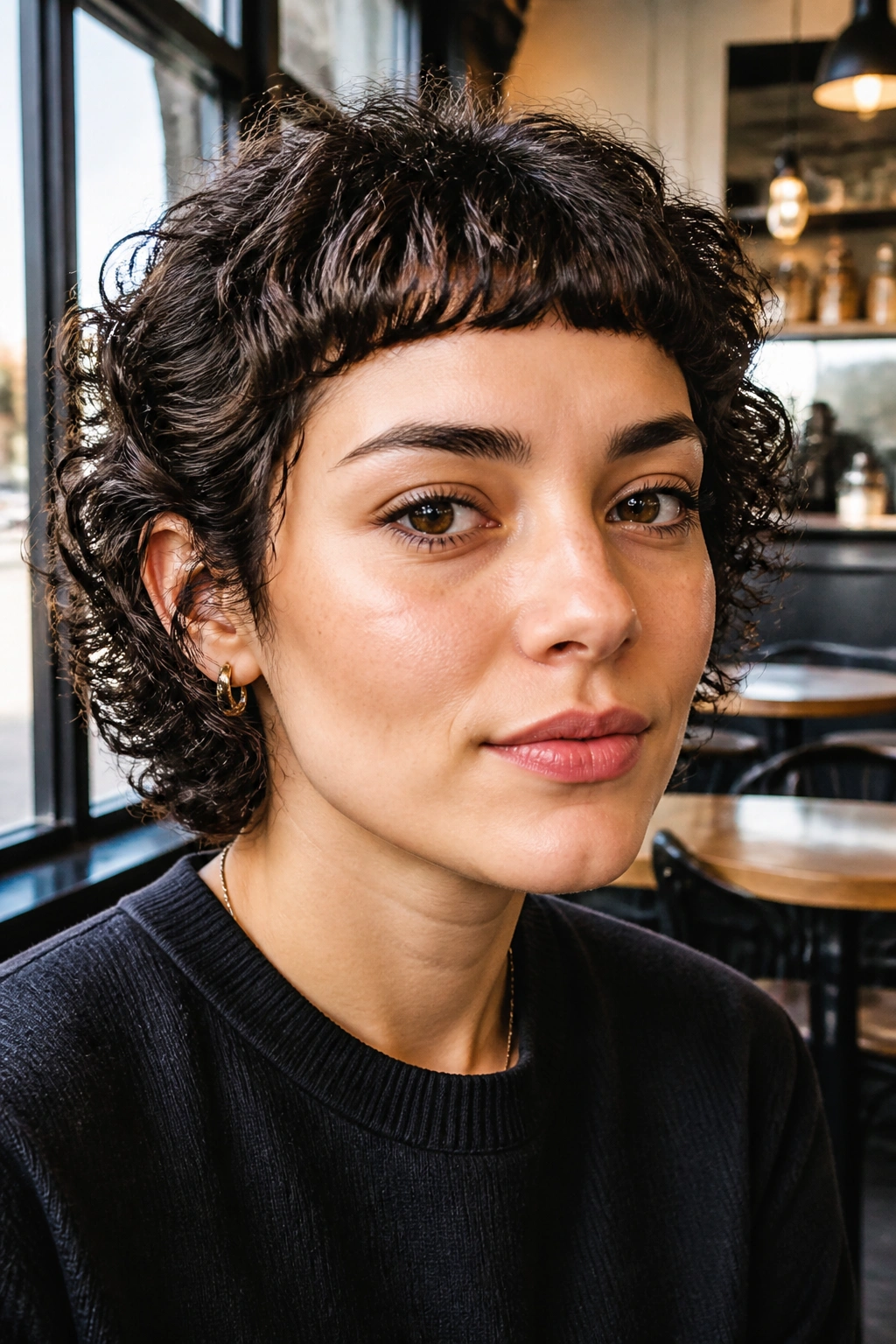
Micro fringe on thick curls is a bold choice. It can also be a very smart one, if you like the idea of using density as texture instead of fighting it.
The key is control. A micro fringe should be cut tiny increments at a time — not hacked in one go. Curly hair jumps when it dries, and a fringe that looks almost conservative when wet can end up very short once it springs up. That’s not a fun surprise.
Things that matter here
- The fringe needs regular trims to stay intentional.
- The crown should stay soft, not helmet-like.
- The sides need to blend or the crop can look abrupt.
- Dense curls work better than sparse ones on this cut.
It’s not for everyone. If you want low-maintenance hair that disappears into a bun, skip it. If you like a little edge and you don’t mind styling the front, it’s got real personality.
16. Deep Side-Part Layered Cut
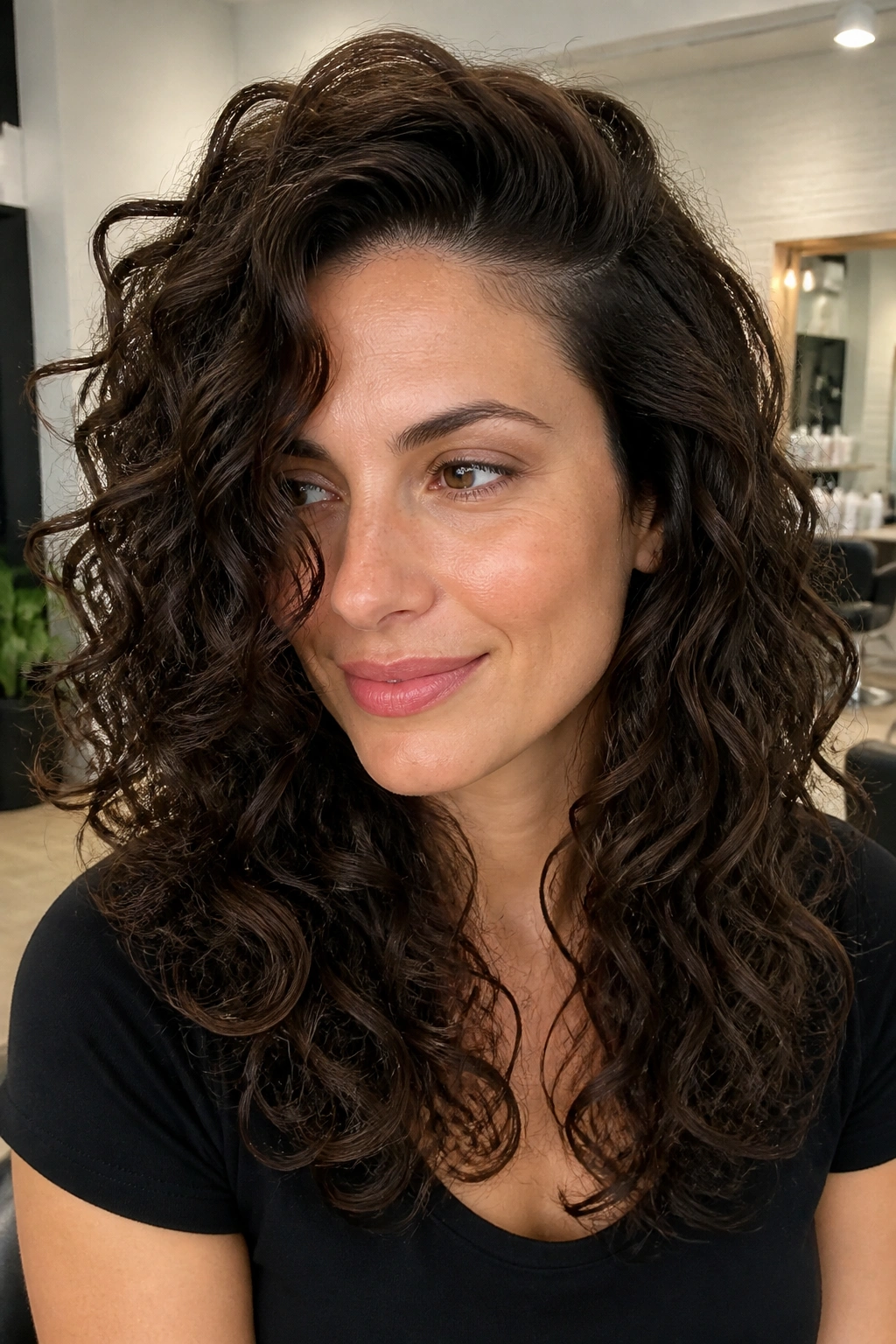
A deep side part can change thick curls faster than a full haircut sometimes.
It shifts weight to one side, softens a wide silhouette, and gives the curls a place to fall. On dense hair, that matters because a center part can sometimes exaggerate fullness on both sides at once. A side part breaks that up and makes the whole style feel less rigid.
The cut works best with long layers that start around the chin or lower. That keeps the weight from piling up at the temples. If your hair tends to sit flat at the crown, the part can help lift the roots a little, too. Not magic. Just geometry.
I like this choice when someone wants the easiest possible change. You are not chopping off half your hair. You are changing how the bulk sits. Sometimes that’s enough to make the whole head feel different.
17. Asymmetrical Curly Bob

Why choose symmetry when thick curls already bring enough drama?
An asymmetrical bob keeps one side a little longer than the other — usually by an inch or two — which gives the cut motion and keeps the outline from feeling square. On dense curls, that small difference does a lot. The shape looks deliberate, and the curls have room to fall in a less predictable way.
Best curl patterns for this cut
- 2C to 3B curls that hold shape well.
- Denser hair that benefits from a clearer outline.
- People who like structure but do not want a classic bob.
- Curls that shrink in a fairly even pattern on both sides.
The trick is balance. You want the asymmetry to feel stylish, not lopsided. The ends should be clean, and the longer side should not drag so far that the whole cut loses its line.
If you wear your hair tucked behind one ear a lot, this one looks especially good. It gives you a side that feels open and a side that still has movement.
18. Butterfly Layers for Curly Hair

Butterfly layers can be gorgeous on thick curls, but only when the shortest pieces are long enough to behave.
The whole point is to keep the length while creating lift around the face and crown. On curly hair, that means the front layers should usually start lower than they would on straight hair. If they’re too short, shrinkage can make the top flare out and steal the balance from the rest of the cut.
I like butterfly layers for women who love length but hate the weight that builds up near the front. You get movement around the face, yet the back still feels substantial. That makes the style useful for people who want a softer shape without going short.
It’s a nice choice if your curls are thick through the middle and heavier at the ends. The cut redistributes the bulk instead of removing too much of it. There’s a difference, and it shows.
19. Grown-Out Pixie
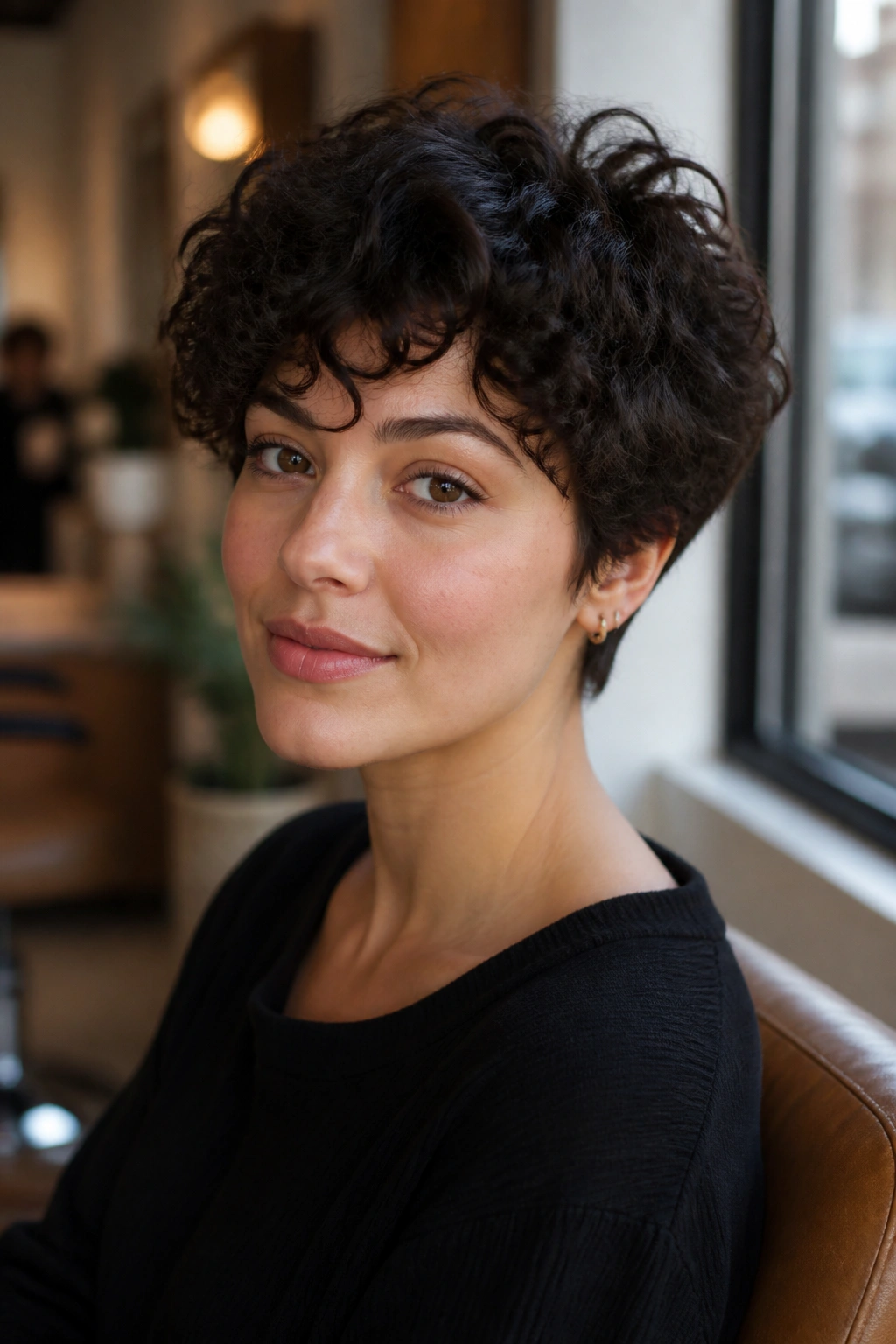
A grown-out pixie is the haircut for the in-between phase that too many stylists ignore.
It keeps the top longer, softens the sides, and lets thick curls develop into a short shape that doesn’t look awkward while it grows. The point is not to preserve every inch. The point is to make the grow-out look intentional. That’s harder than it sounds.
How to keep it neat
- Leave 3 to 6 inches on top, depending on curl tightness.
- Keep the nape clean so the back does not balloon.
- Use fingers, not a brush, when styling the curl pattern.
- Trim the edges around the ears before they start to stick out.
This cut is especially good if you’re tired of fighting a short style that’s grown too far into your ears but not far enough into a bob. It buys you time. And time, in hair, is underrated.
20. Curl-by-Curl Dry Cut

A curl-by-curl dry cut is less about a shape and more about respect for the hair itself.
The stylist cuts the curls while they’re dry, often section by section, so each curl can sit in its real position. That matters for thick hair because shrinkage is never uniform. One side may bounce up more. One section may hang longer. If the cut ignores that, you end up with a shape that looks fine in the chair and weird two hours later.
What makes it different
The dry method lets the stylist see the actual curl map. They can spot dense patches, weak spots, and strands that behave differently from the rest. That kind of detail work is what keeps a thick curly haircut from looking heavy in one area and bare in another.
It’s a strong choice if you’ve had stylists over-thin your hair in the past. You want control, not guesswork. This approach gives both.
21. Flipped-Out Layered Lob
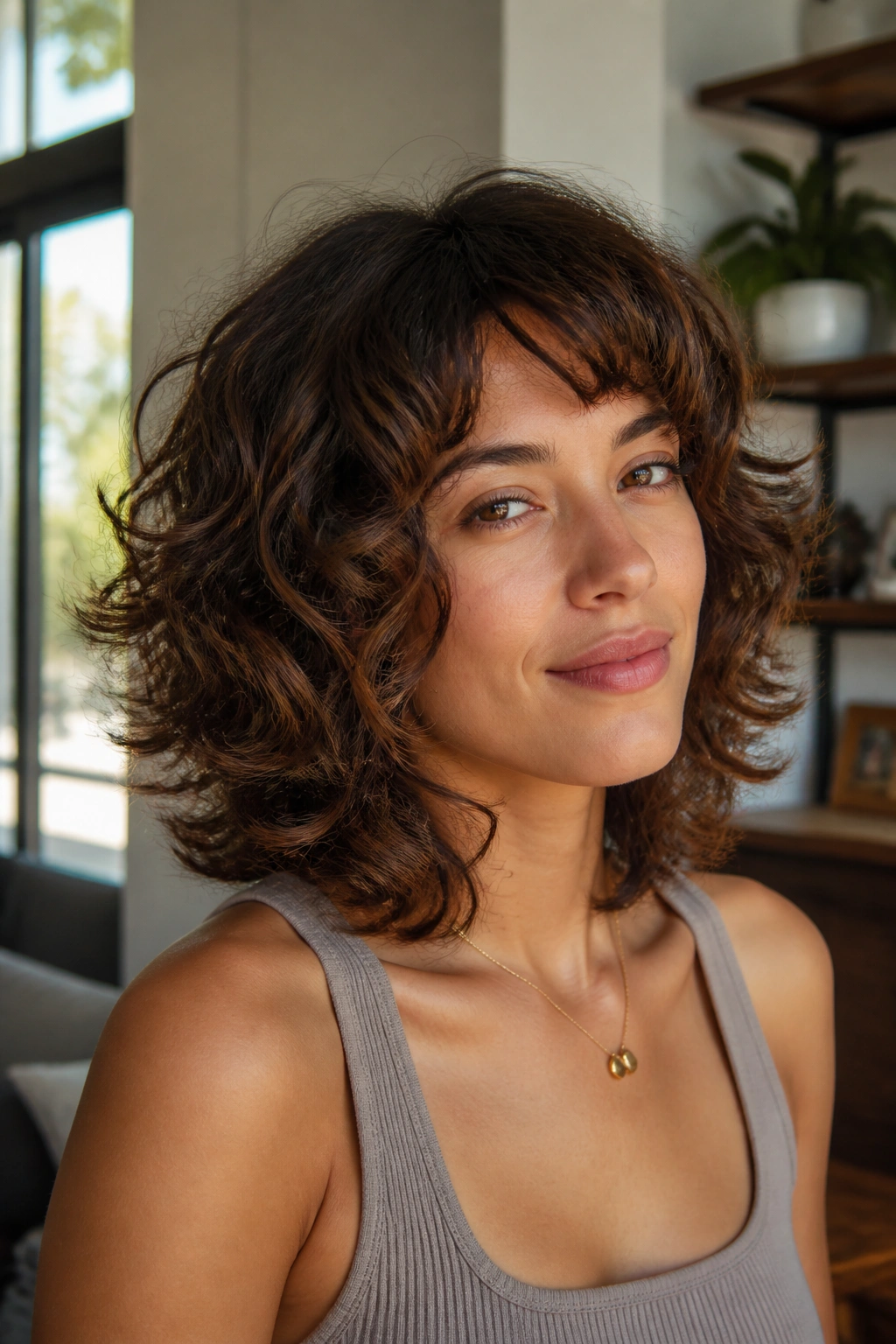
A flipped-out lob gives thick curls a little kick at the ends, which can keep the whole shape from feeling heavy.
The length usually lands around the shoulders or just below, and the layers encourage the ends to turn out instead of hanging straight down. On dense curls, that outward movement makes the haircut feel lighter. Not shorter. Just lighter. There’s a difference.
The best version of this cut keeps the perimeter clean and uses mild texturizing inside the shape. Too much chopping at the ends can make curls frizz. Too little, and the hair just sits there like a heavy curtain.
This is a good pick if you want something that looks polished without feeling stiff. It has bounce. It has a little attitude. And it works nicely with thick hair that naturally wants to spread.
22. A-Line Curly Bob
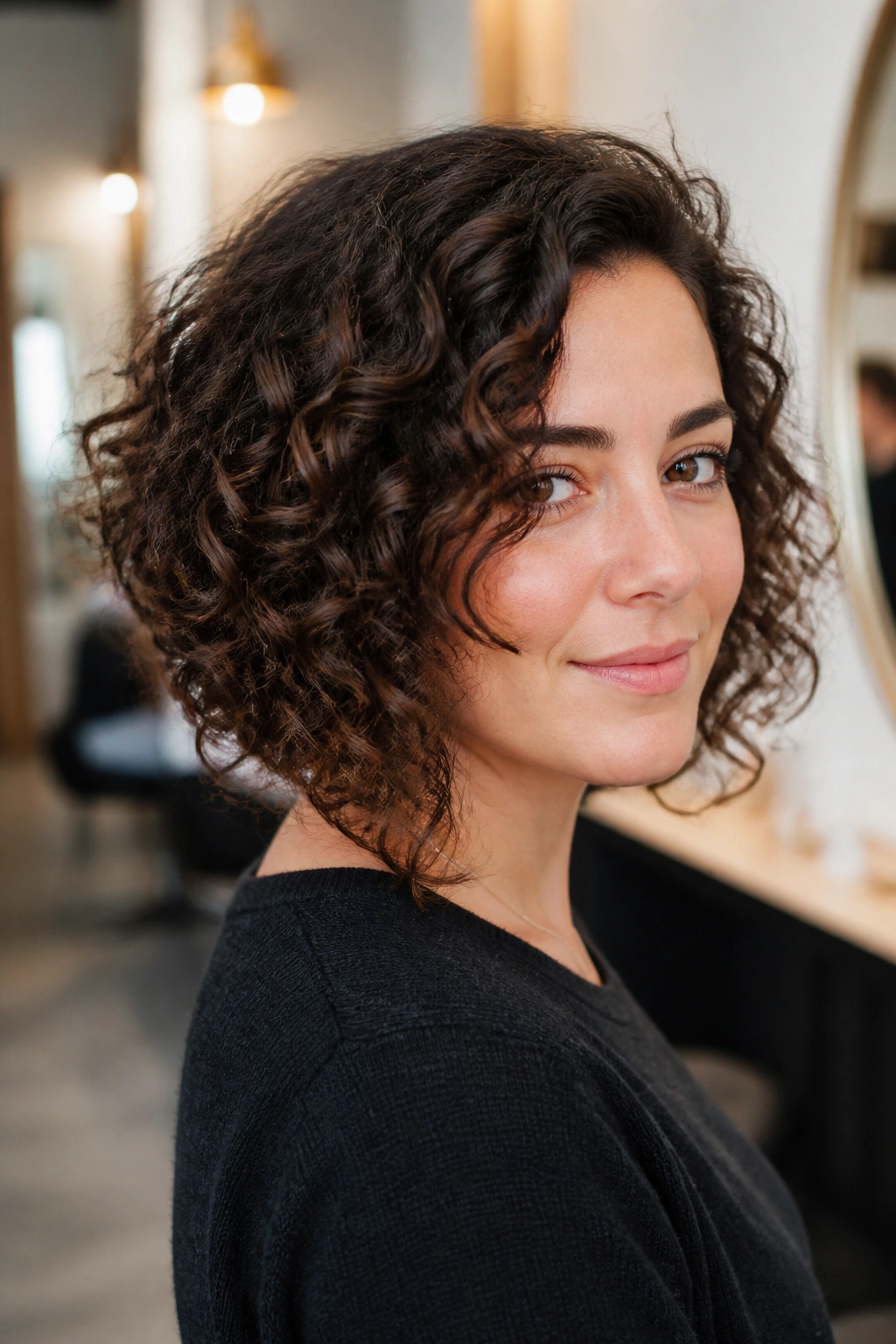
An A-line curly bob is built for people who want a strong side profile and a tidy back.
The back sits shorter, while the front angles longer toward the chin. On thick curls, that angle helps the cut avoid the mushroom effect that a straight bob can create. It also gives the face a bit of structure, which is useful if your curls are dense around the cheeks.
A few useful details
- Keep the front long enough to survive shrinkage.
- Make the angle gentle, not extreme.
- Let the back stay snug around the nape.
- Check the shape dry before the final trim.
I like this cut when someone wants a bob with clear lines, not softness everywhere. It looks especially good on coarse curls that need a deliberate shape to keep from spreading wide.
The silhouette is the whole point here. If the angle is wrong, you’ll know fast.
23. Minimal-Layer Long Cut
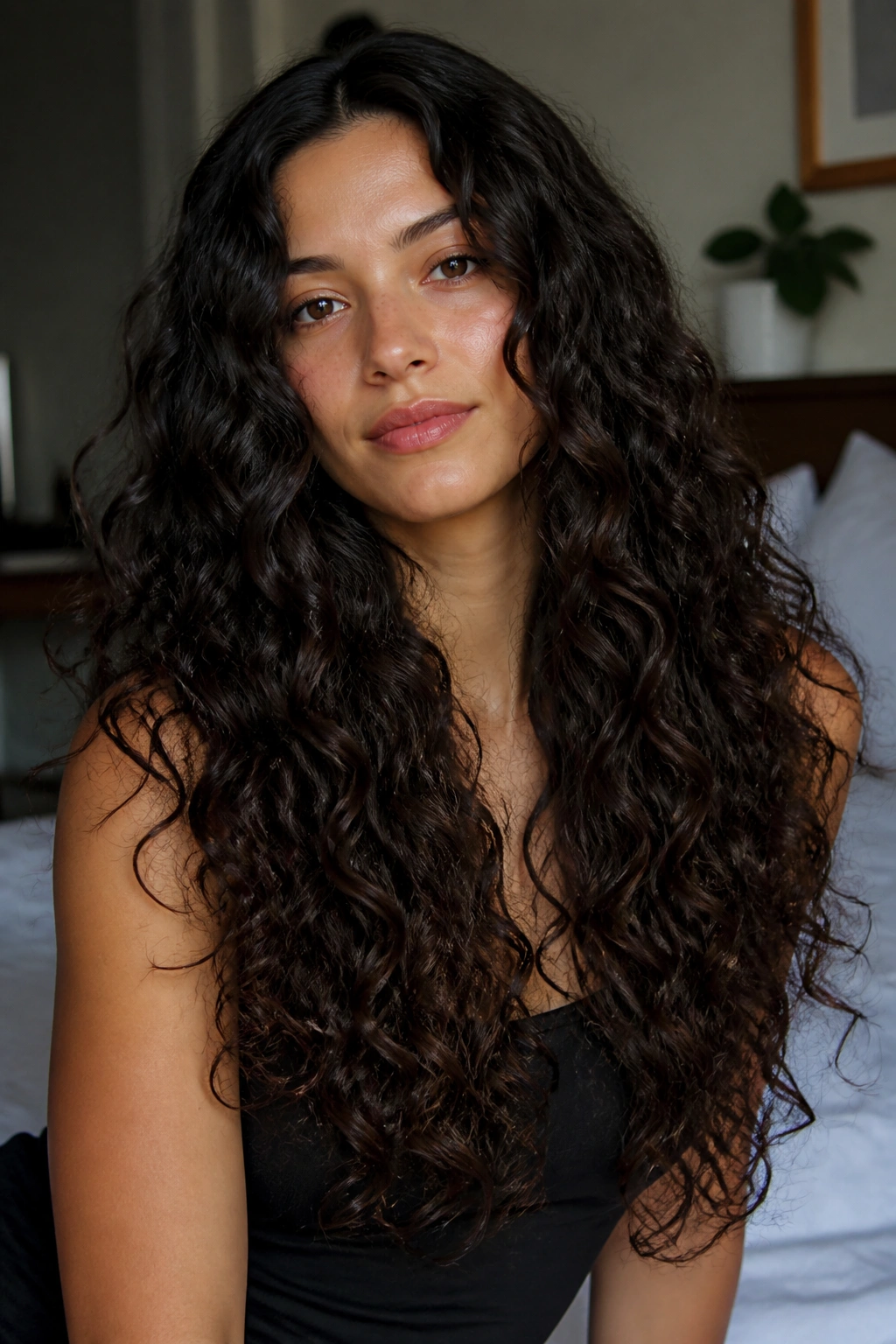
Not every thick curly head needs more layers. Some need fewer.
That’s the part people miss. Dense curls can get frizzy and uneven when every section is chopped up. A minimal-layer long cut keeps most of the length intact and only dusts the ends or adds a few small internal pieces where the weight is truly bothering the shape. The result is heavy in the good way — full, glossy, and not shredded into pieces.
This is a smart choice if your curls are already well-formed and your main issue is bulk, not flatness. You can keep the ends looking thick, which is nice on coarse hair. And the grow-out is easier because the silhouette stays mostly the same for longer.
If you like long curls that feel like long curls, not a stack of disconnected layers, this is the one to watch.
24. Carved-Out Interior Layers
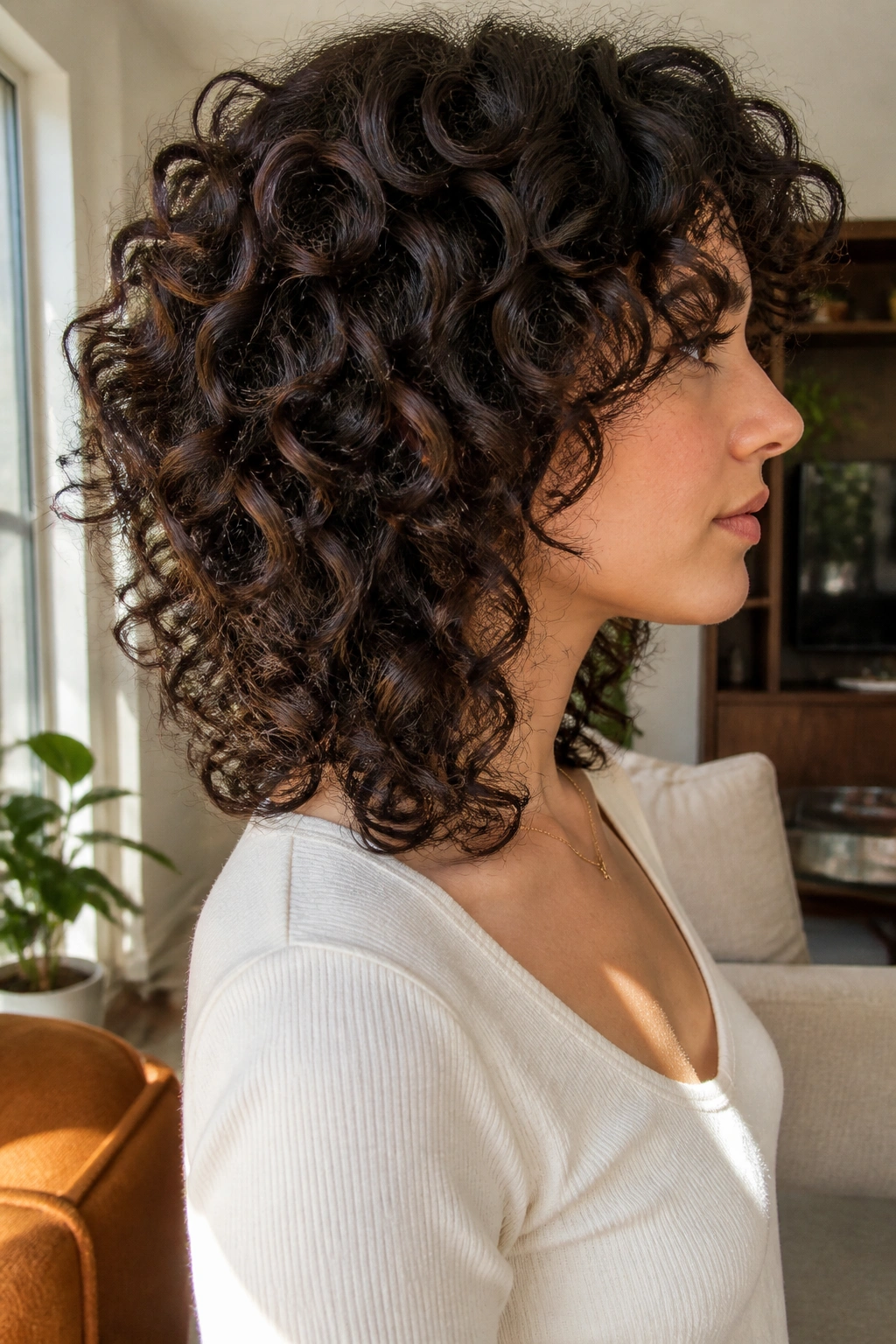
Carved-out interior layers are a more aggressive version of hidden weight removal. They’re for thick curls that feel too wide, too heavy, or too hot around the middle of the head.
The difference from invisible layers is simple. Invisible layers are subtle and meant to keep the surface full. Carved-out interior layers go deeper under the top layer and remove more bulk from the places that trap it. That can make a huge difference if your hair grows in a dense triangle or if the underside always feels twice as heavy as the top.
What to ask for
- Remove weight from the interior, not the outer shell.
- Keep the perimeter intact if you want the cut to look full.
- Avoid heavy thinning shears near the ends.
- Ask for a dry check so the curl pattern still holds its shape.
This cut is not gentle, but it is effective. If your hair has been smothering your shoulders, this is the kind of shaping that can make a real change.
25. Soft V-Shaped Curly Cut
A soft V-shaped cut is a strong finish for women who want their thick curls to keep their length and still feel shaped.
The V gives the back a little point instead of a flat block. That point does not need to be sharp. In fact, a soft V is usually better on curly hair because it keeps the ends full while narrowing the outline just enough to stop the haircut from looking square. On thick curls, that can make the whole style feel sleeker.
I like this shape when the hair is long enough to show off the taper. If the point sits too high, the cut can look overworked. If it sits too low, the shape gets lost. Mid-back or just below the shoulders is often the sweet spot, depending on shrinkage and density.
This one is good for people who want length, movement, and a little drama at the back. Not a lot. Just enough.
Thick curls need structure, but they also need room to breathe. A shape that respects both usually wins.
