



Shoulder-length waves are the haircut people underestimate.
They look easy, but the cut does most of the work. If the ends are too heavy, the wave collapses. If the layers are too aggressive, the whole shape can puff out and feel messy instead of soft. A good wavy shoulder length haircut sits in that narrow space between flat and frizzy, which is why it can feel so flattering when it’s done right.
I’ve always thought this length is the sweet spot for people who want movement without living in ponytail land. It’s long enough to tuck behind the ear, clip up for errands, or twist into a fast half-up style. It’s short enough to feel fresh, and it tends to show off texture in a way longer hair sometimes hides.
The catch is that waves do not behave like straight hair. They shrink a little, swell a little, and bend in different places depending on density, porosity, and where the weight is removed. That’s why a collarbone cut can look sleek on one person and oddly bottom-heavy on another. The shape matters. A lot.
1. The Blunt Collarbone Lob
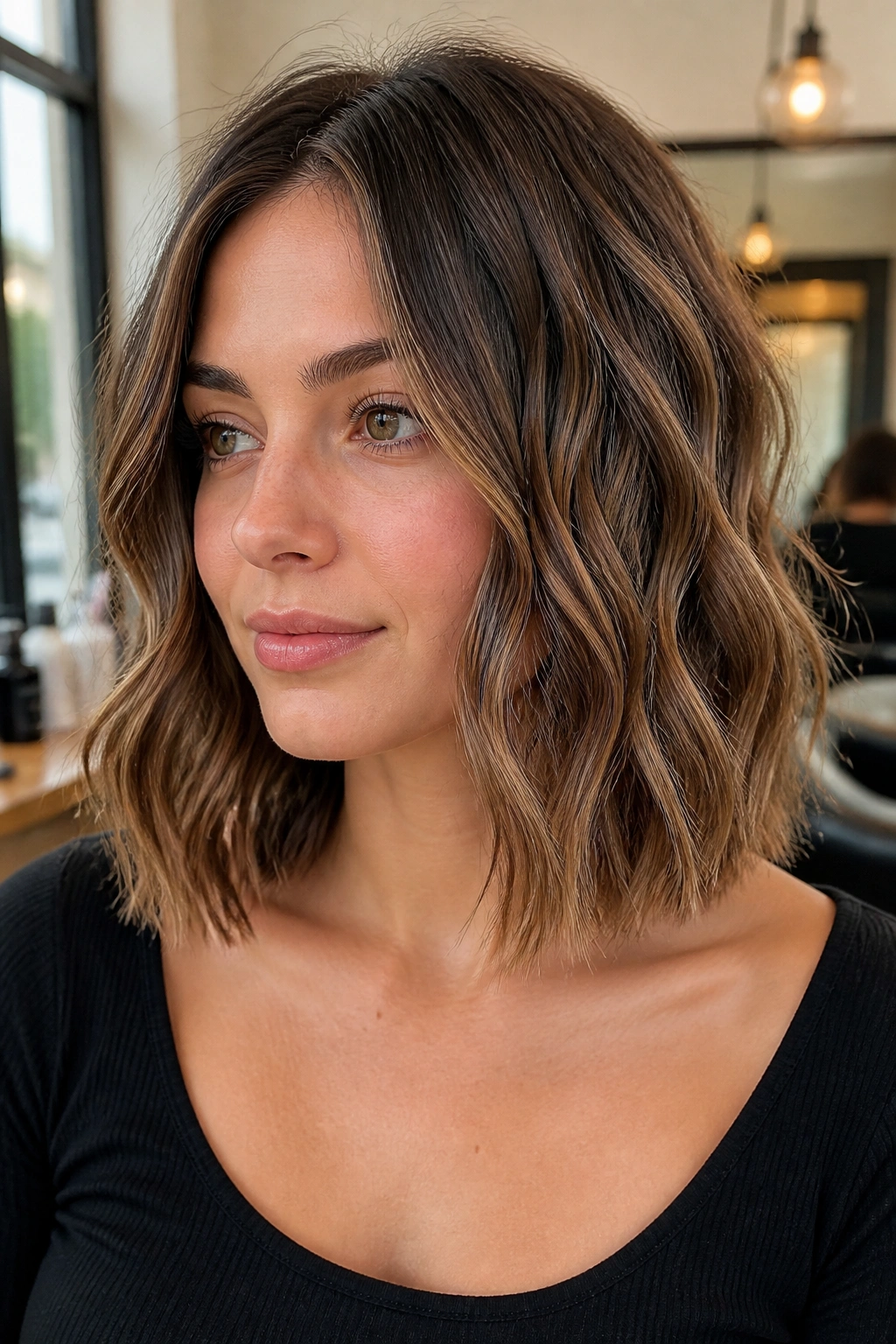
A blunt collarbone lob is the haircut I reach for when someone wants their waves to look clean, expensive, and a little bit sharp without losing softness. The line sits right at the collarbone or just above it, which gives wavy hair a solid base to bounce off instead of fraying at the ends.
Why it works on waves
The blunt edge keeps the silhouette full. Waves then create the movement inside that shape, which is a much nicer effect than having layers do all the talking. On medium to thick hair, this cut can make the wave pattern look deliberate instead of puffy.
A lot of people assume blunt cuts are only for straight hair. Nope. With waves, the key is letting the ends stay heavy enough to hold their line while still moving when you shake your head.
What to ask your stylist
- Ask for one solid perimeter line at the collarbone.
- Request minimal internal layering if your hair is already full.
- If your waves shrink up a lot, have the cut checked on dry hair or after a light blow-dry.
- Use a round brush only at the ends if you want a little bend, not a full curl.
Best for: medium-density waves that need shape more than extra movement.
The blunt lob is also one of the easier shoulder-length cuts to grow out. That matters more than people admit. A haircut that looks good on day one and day forty-five is worth keeping.
2. Soft Layers That Bend at the Ends
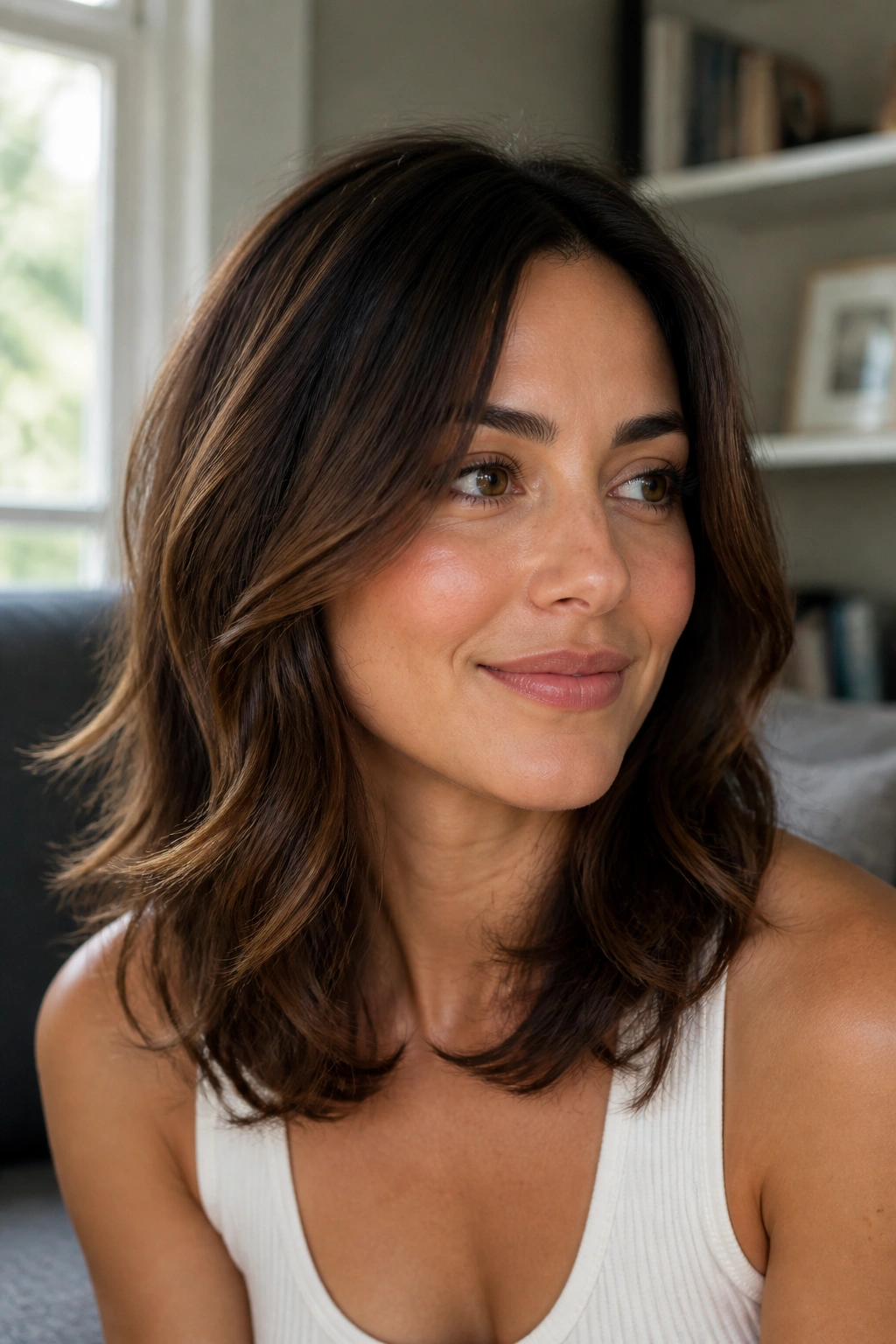
Soft layers are the safest bet if you want your waves to move instead of sit like a helmet. The trick is restraint. You want layers that remove weight without leaving short bits sticking out around the face like little hiccups.
This cut is especially good when your hair falls flat at the crown but clumps nicely through the mids and ends. The layers give the top some air, while the bottom still feels full. That balance is the whole game.
I like this shape more than the over-layered cuts people sometimes ask for after seeing a dramatic photo online. Too many layers on wavy shoulder-length hair can make the lower half look thin. Soft layers, cut with the wave pattern in mind, keep the shape easy and wearable.
For styling, a light mousse at the roots and a small amount of cream through the ends usually does the job. Scrunch, air-dry halfway, then diffuse only where the hair looks too flat. That’s enough. You do not need to manhandle it.
3. Curtain Bang Waves
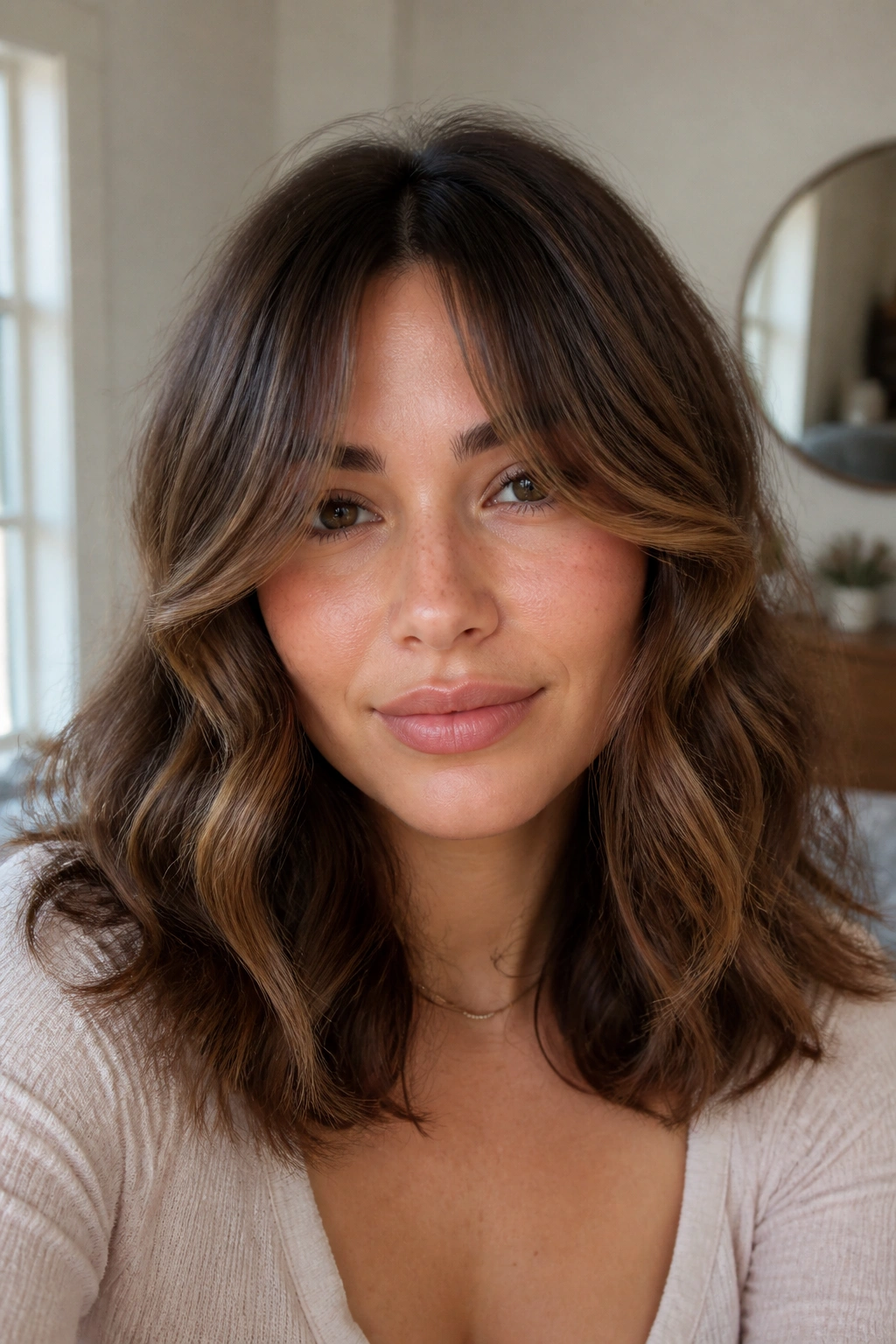
Do curtain bangs work with wavy shoulder-length hair? Yes, and when they’re cut well, they can make the whole haircut look more expensive than it really is.
The point of curtain bangs is not to hide the forehead. It’s to frame the face with a soft center opening that blends into the rest of the cut. On wavy hair, that shape can break up a wide forehead, soften strong cheekbones, or give a longer face a little more balance.
How to style the fringe
Curtain bangs need a touch of attention, but not much. Blow-dry them away from the face with a small round brush, then let the ends settle on their own. If you try to force them too straight, they can look stiff. If you ignore them completely, they may split in weird places.
A few things make this cut easier to live with:
- Keep the shortest bang pieces around cheekbone level, not too high.
- Ask for longer side pieces that blend into the front layers.
- Use a dab of styling cream only on the bang ends, not the roots.
- Trim them before they start poking into your eyes every time you blink.
This is a good one if you want a haircut that looks styled even on an ordinary day. It has personality, but not the kind that bosses you around.
4. The Textured Shag Lob
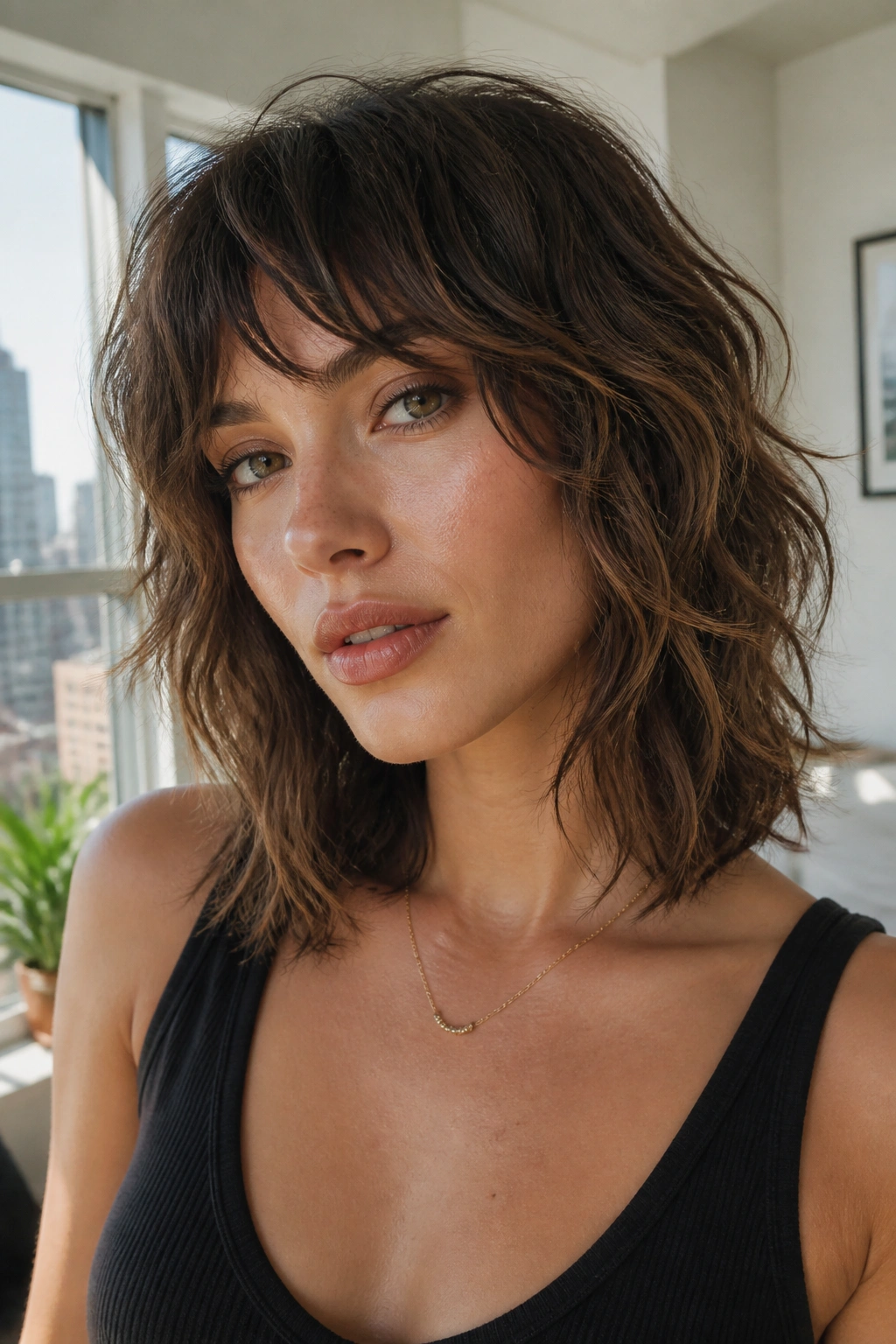
I still think the shag lob is one of the most honest haircuts for wavy hair. It does not pretend your texture is smooth and controlled. It works with the mess, which is exactly why it looks good.
Picture this: hair that’s a little flat at the roots, bends somewhere between the cheek and the chin, then gets wider toward the shoulders. A textured shag lob fixes that by building lift on top and removing weight in the right places. The result is airy, piecey, and a little undone in the best way.
What makes it different
- Shorter layers around the crown create movement at the top.
- Longer layers through the sides keep the haircut from getting too poufy.
- A light razored finish can make waves separate into visible pieces.
- It’s easier to air-dry than a blunt cut if your wave pattern is uneven.
Watch out: if your hair is very fine, too much shagging can leave the ends looking wispy. That’s where a careful stylist matters more than the photo you bring in.
There’s a reason this cut hangs around. It makes wavy hair look lively without demanding perfect styling, and that is a pretty useful bargain.
5. The Butterfly Cut at Shoulder Length
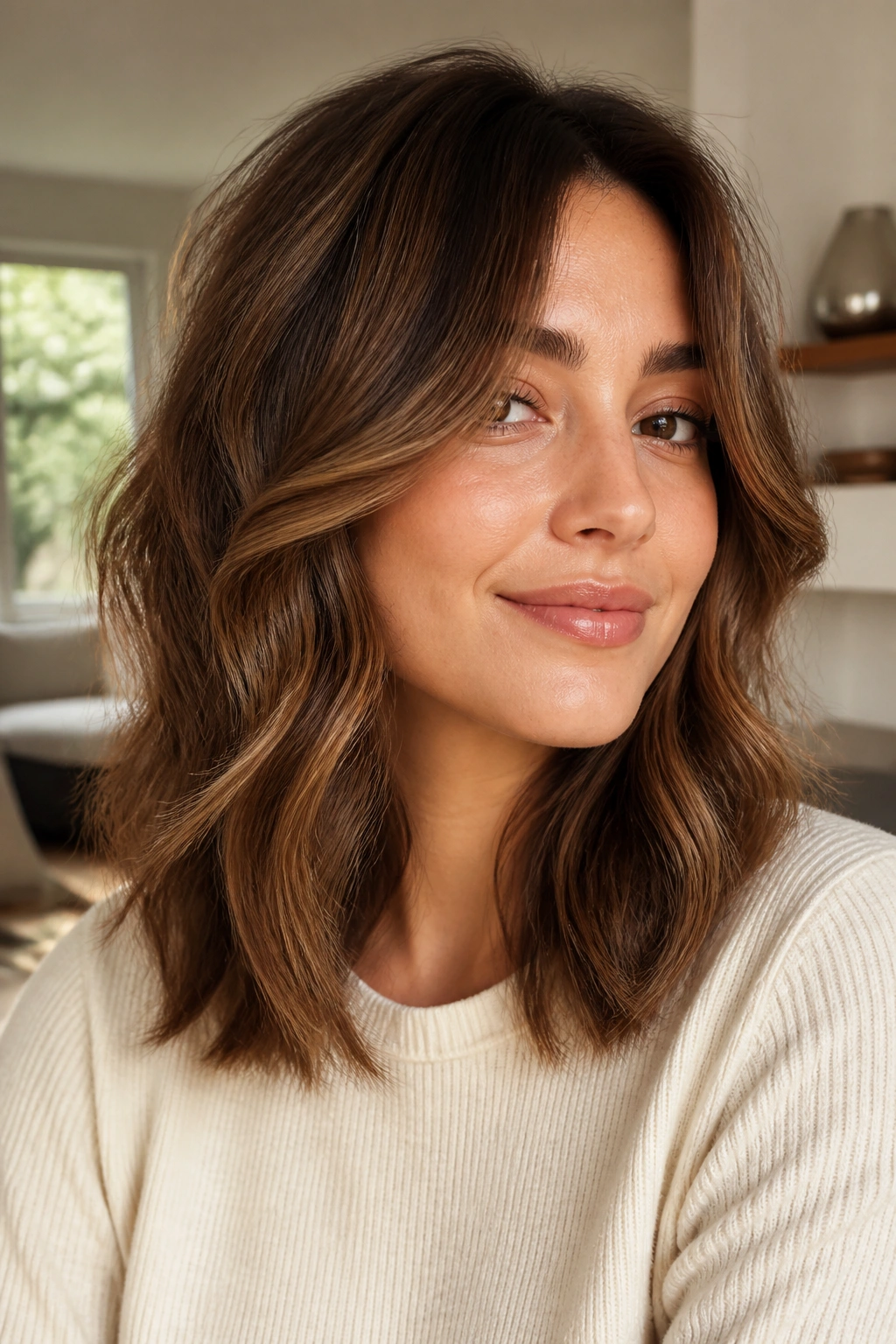
The butterfly cut sounds dramatic, but on shoulder-length waves it’s often softer than people expect. The whole point is to create two layers of movement: shorter pieces that give lift around the face and longer pieces that keep the length looking full.
What I like here is the illusion. You keep the visual drama of layers without sacrificing the fullness at the bottom. On wavy hair, that matters because waves can already create a lot of shape. If the cut is too busy, the texture starts to fight itself.
The butterfly version works especially well if your hair feels heavy around the shoulders and you want more swing when you turn your head. It also behaves nicely with loose bends made by a diffuser or a 1.25-inch curling iron. Wrap big sections, leave the ends a little straight, and let the waves fall apart with your fingers.
There’s a small styling note worth keeping in mind. Keep the shorter front pieces just long enough to tuck behind the cheekbones. If they’re cut too short, the style can feel dated fast. If they’re too long, the whole point gets lost.
6. The One-Length Cut with a Deep Side Part
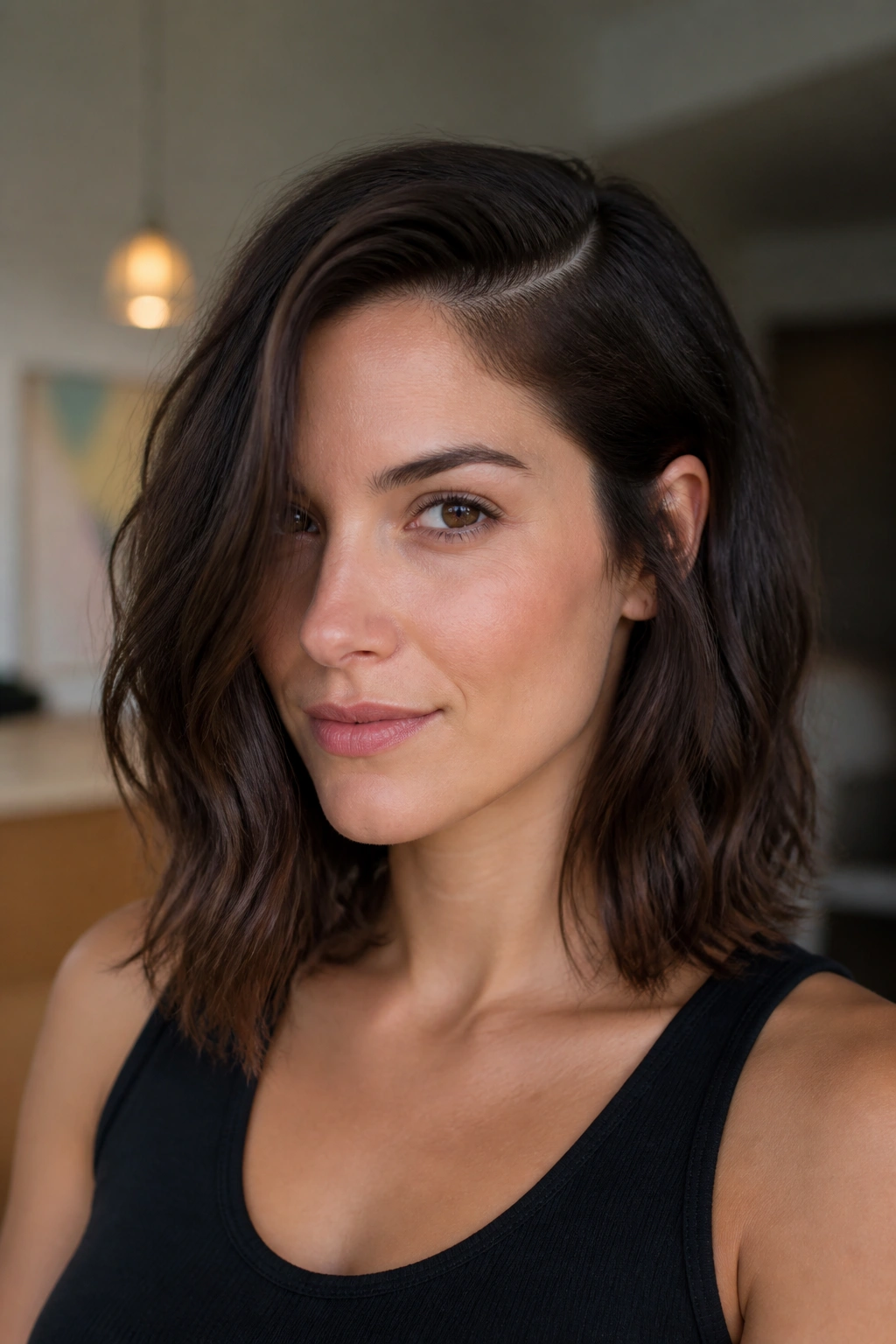
The one-length side-parted cut is the quiet one in the room, and I mean that as a compliment. Compared with heavy layers, it gives wavy hair a clean edge and a little drama just from the part alone.
This haircut is a smart choice when your waves already have enough movement and you don’t want extra shape carved into the sides. A deep side part shifts volume to one side, which can make the hair look fuller at the roots and more polished through the lengths. It’s a nice fix for waves that fall flat in the center.
Who it suits best
It tends to work best on:
- fine-to-medium hair that needs root lift
- oval and heart-shaped faces
- people who like a neater finish
- waves that frizz when over-layered
The look is less beachy and more tailored. That is the whole appeal. If your wardrobe leans crisp, or you like hair that can go from casual to dressed-up with one pass of a brush, this is a good one to keep on your shortlist.
I’d choose this over a shag if you want your waves to feel controlled, not wild.
7. Jaw-Framing Layers That Move
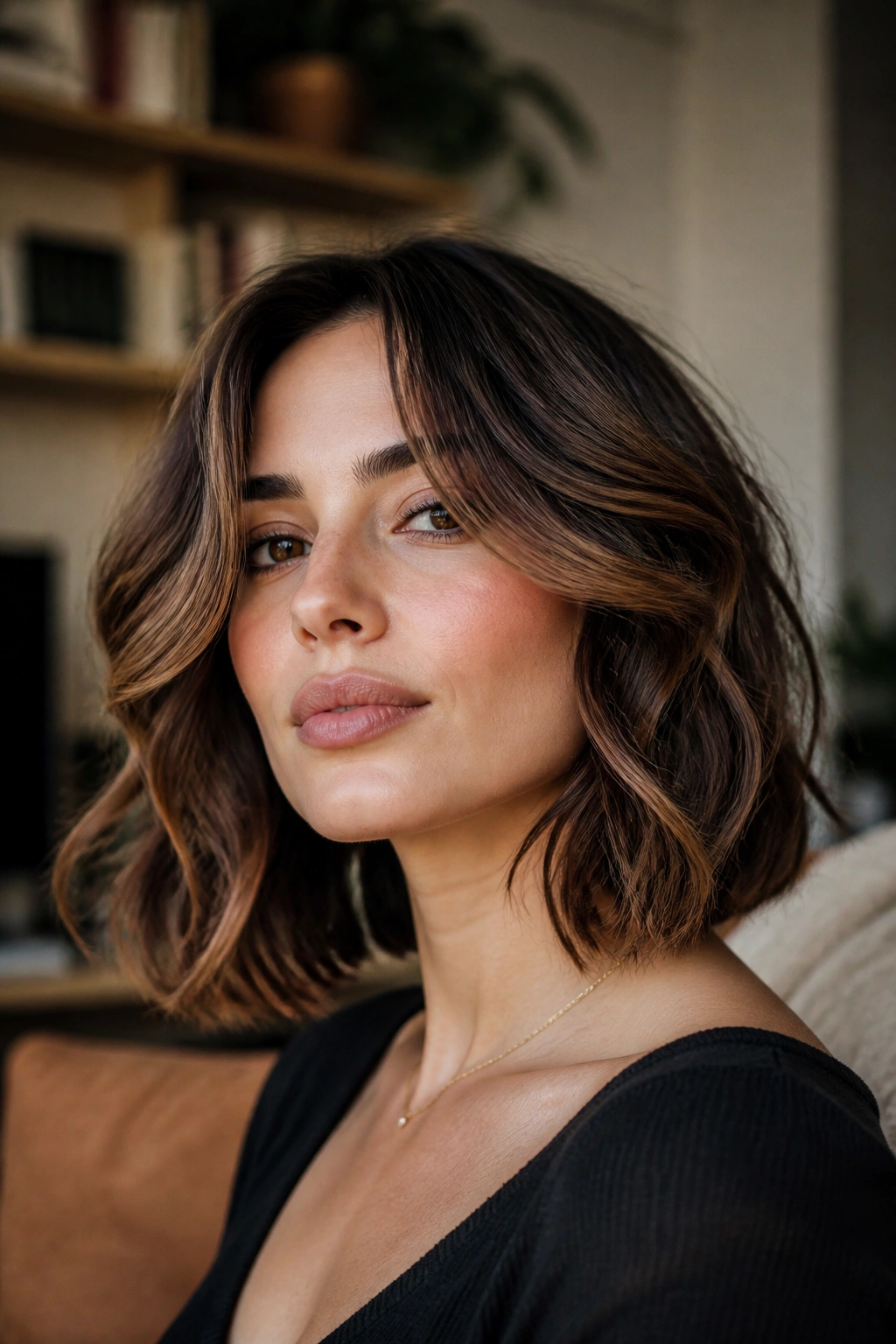
Jaw-framing layers are one of those small haircut choices that make a big visual difference. They draw the eye to the lower half of the face, then let the waves curve outward just enough to soften the line.
The sweet spot is the jaw or just below it. Too high, and the layers can balloon around the cheeks. Too low, and you lose the shaping effect. That is why this cut needs a hand that understands face shape, not just a pair of scissors and a mood.
Why the placement matters
The front layers should follow the shape of your face, not chop across it. When they’re cut to skim the jaw, they can slim a square face, soften a rounder one, and keep a longer face from looking stretched. The wave gives the layer its curve, so the cut itself should be clean and simple.
A good note to say at the salon: keep the front layers long enough to tuck behind the ear. That tiny detail makes the haircut easier to style on busy days and keeps the shape from feeling too short around the face.
This is one of my favorite options for someone who wants movement without losing everyday practicality. It behaves nicely in a bun, too.
8. The Rounded Lob with Soft Volume
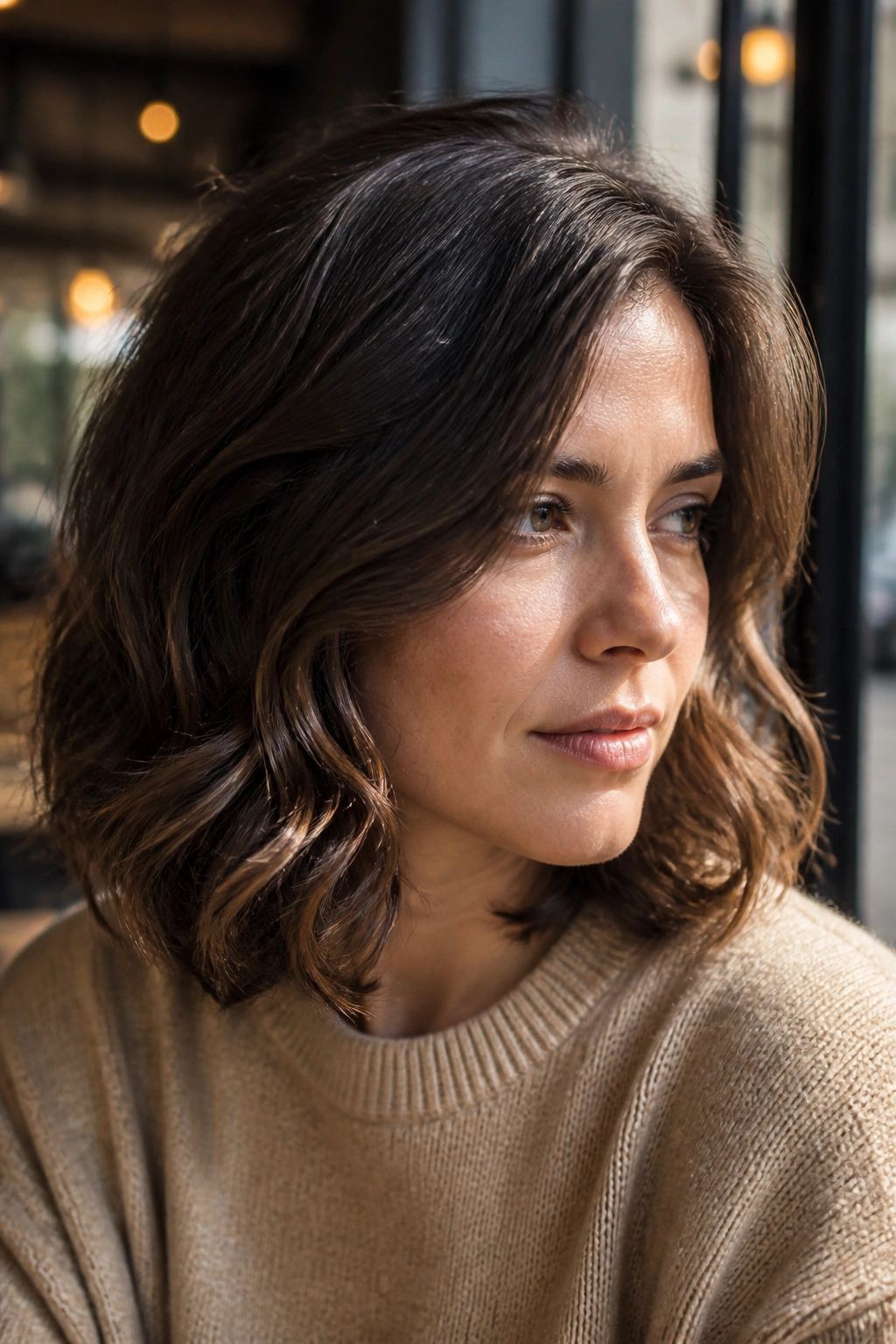
A rounded lob is the haircut I recommend when someone says, “I want volume, but I do not want poof.” That distinction matters. The rounded shape adds lift through the crown and sides, then tapers just enough at the ends to keep the whole cut from looking boxy.
On wavy hair, this shape can be especially flattering because it follows the natural arc of the head. Instead of hanging straight down, it curves gently around the face and neck. That makes the haircut feel softer and more finished, even when you barely style it.
If your hair tends to sit flat on top, ask for subtle graduation through the upper layers. Not too much. Just enough to make the roots feel less heavy. A root-lifting mousse, a quick blast with a blow-dryer, and a round brush at the crown can give it shape without turning it into pageant hair.
The downside? Rounded lobs need a little upkeep to keep the shape tidy. If you let them grow out too far, they lose the curve and start behaving like an ordinary long bob.
9. Razor-Cut Waves with Piecey Ends
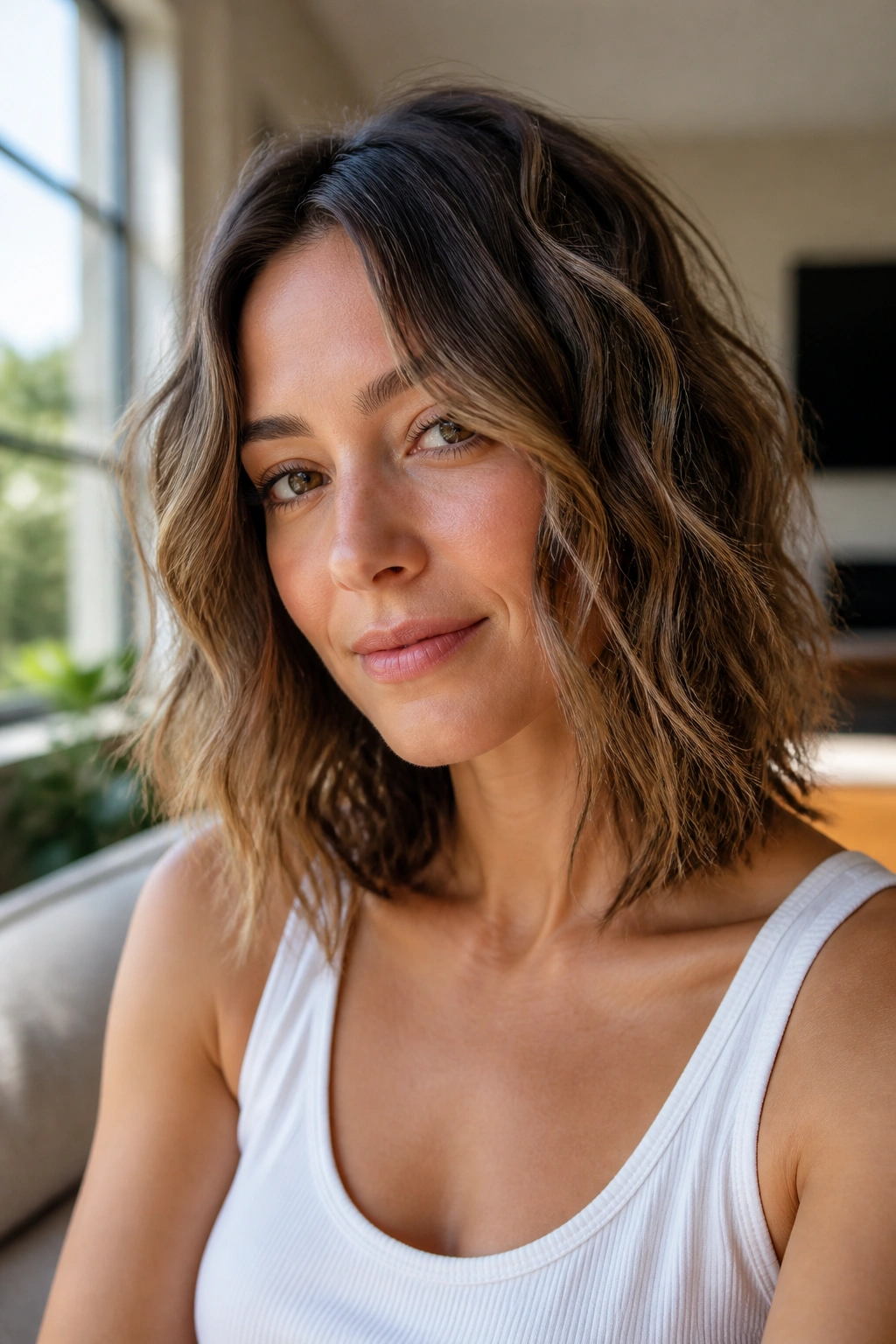
Why do razor cuts look so good on some wavy hair and so bad on others? Because the blade changes the edge of the strand. It makes the ends lighter, softer, and more broken up, which can give shoulder-length waves that lived-in, piecey finish people keep trying to fake with products.
This cut shines on medium-density hair that already has some natural bend. The razor helps the wave separate into visible ribbons instead of a single heavy block. That can be lovely. It can also go sideways if your hair is fine and fragile, because over-thinning makes the ends look see-through.
How to wear it
- Use a light leave-in conditioner first.
- Add a small amount of mousse for grip.
- Scrunch, then diffuse on low heat until the hair is about 80 percent dry.
- Finish with a drop of oil on the ends only.
The style is a little less polished than a blunt cut. That is the point. It’s for people who like movement, a bit of grit, and hair that looks better after a few hours of living in it.
10. The Inverted Lob
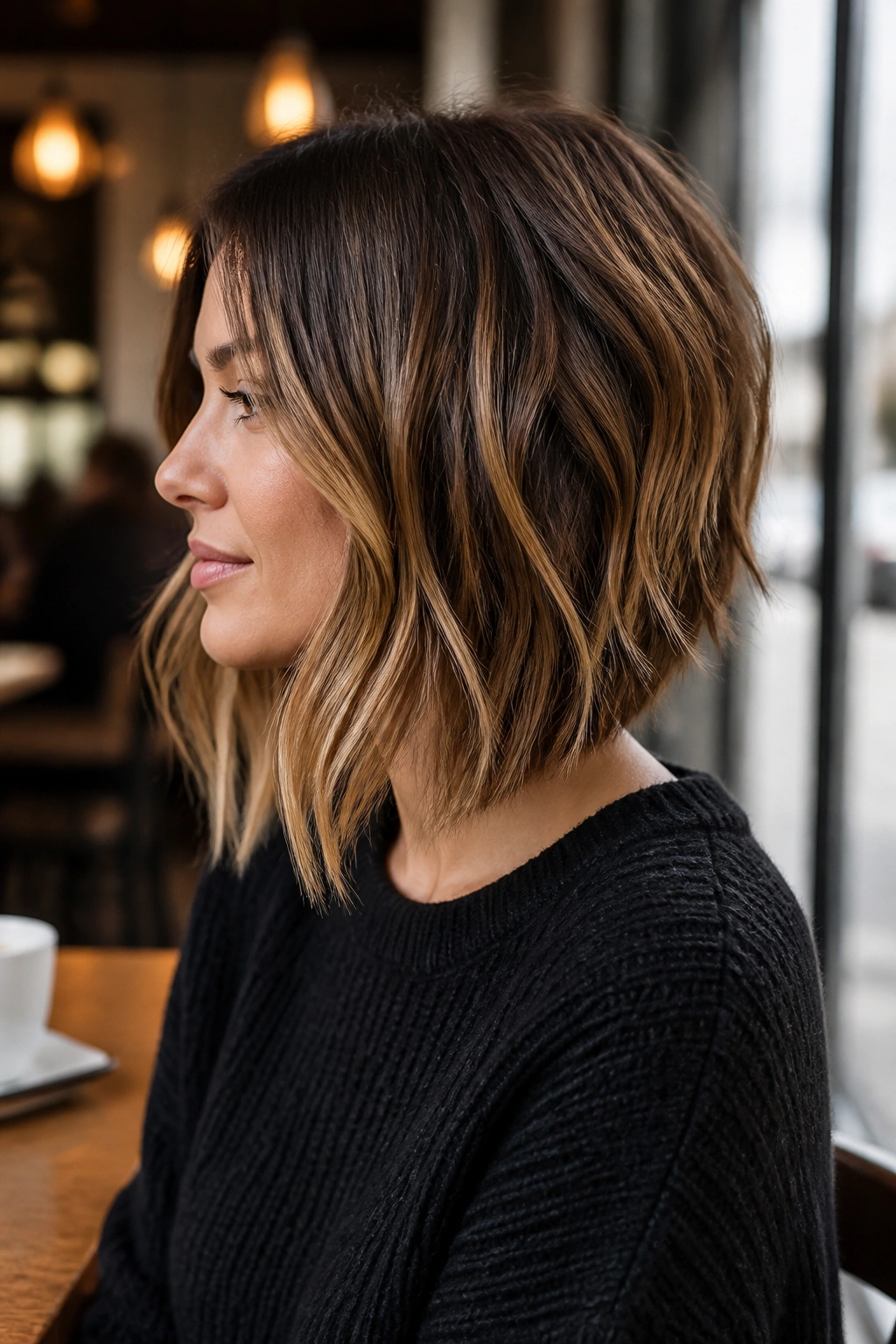
A subtly inverted lob is one of the smartest shapes for waves that need lift around the back without losing length in front. The front pieces stay slightly longer, which gives the face a nice frame, while the back sits higher and lighter.
That difference in length is what creates the angle. It is not a dramatic stacked cut from the old salon handbook. It’s more restrained than that, and honestly, that’s why it still works. The shape gives the illusion of volume without screaming for attention.
If your hair feels heavy at the nape, this cut can make a surprising difference. It keeps the ends from bunching up at the shoulders and lets waves swing instead of sitting in one lump. It also photographs well from the side, which sounds shallow until you remember how many people check their hair in a side mirror before they leave the house.
Best paired with: a side part, soft blowout bends, or natural waves left to dry with a little cream.
11. The C-Cut for Natural Movement
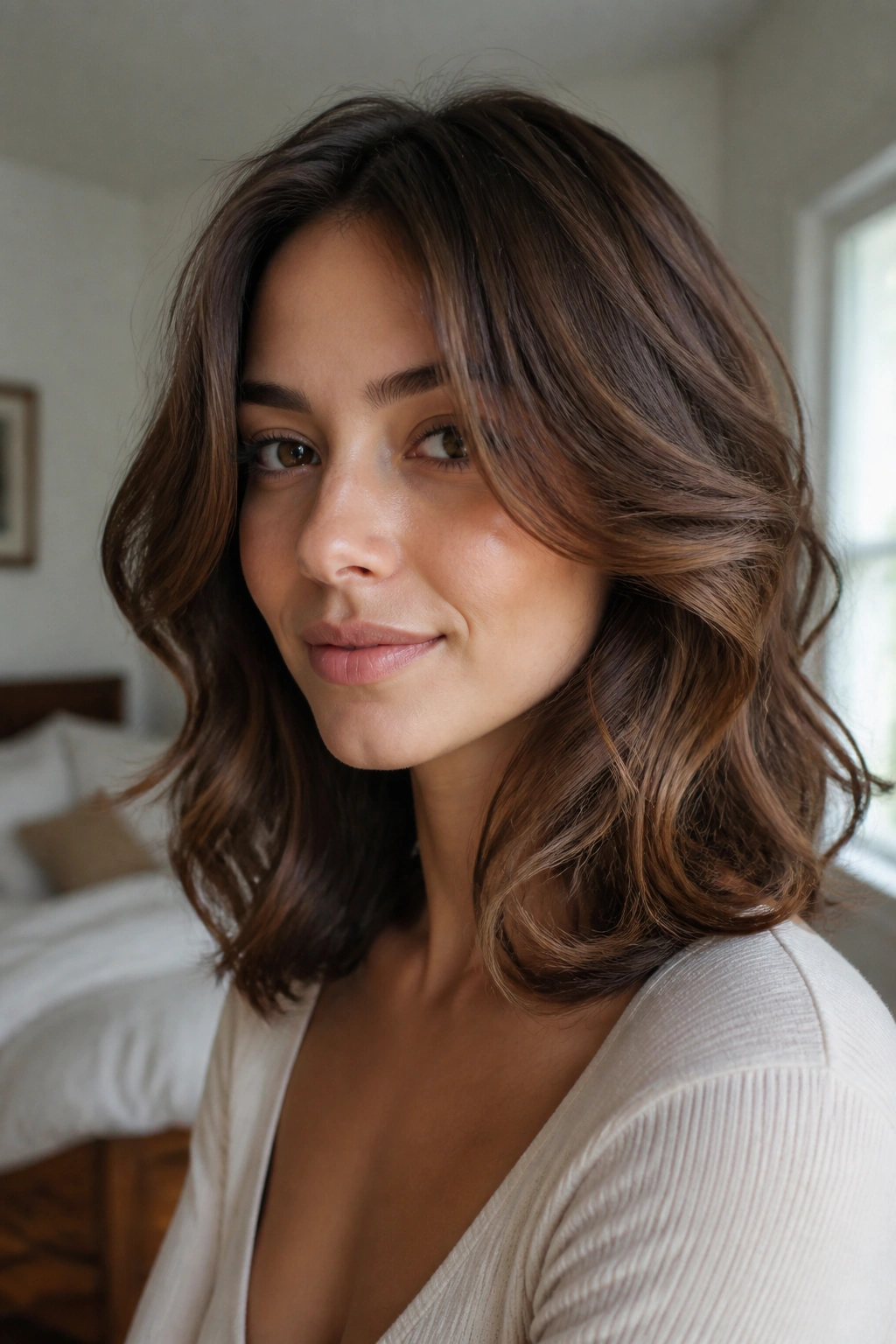
The C-cut is one of the quieter haircut choices, but it’s clever. The layers curve inward around the face and then sweep back out toward the shoulders, creating a soft “C” shape that flatters wavy texture without overcomplicating it.
I like this cut because it respects the wave pattern. It doesn’t try to force your hair into a geometric shape that works only under perfect lighting. Instead, it nudges the movement into a smoother frame around the cheeks and collarbone.
The result is especially nice if your waves are inconsistent from root to end. The front pieces can be shaped to bring the eye inward, while the lower layers keep enough length to avoid that chopped-up look. It’s a practical cut, which sounds boring until you realize boring haircuts are often the ones people keep longest.
A little styling cream, a medium brush, and a quick dry with the nozzle pointed downward are usually enough. You’re aiming for bend, not a shellacked finish. That part matters.
12. Wavy Hair with Wispy Bangs
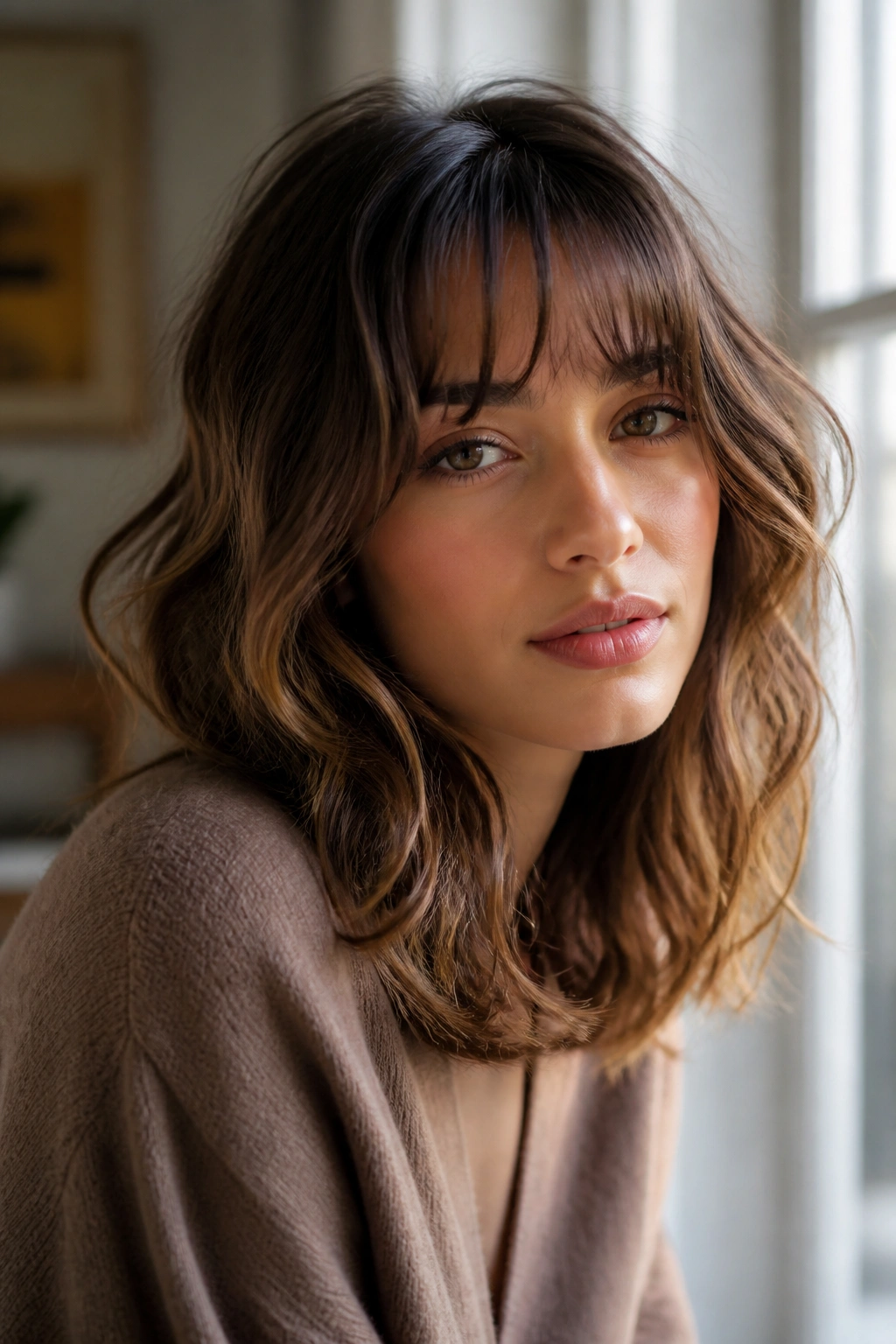
Wispy bangs are not for everyone, and that’s fine. When they work, though, they can make shoulder-length waves look softer, lighter, and a bit more romantic without tipping into costume territory.
The difference between wispy bangs and heavy bangs is sheer weight. Wispy fringe leaves space between the pieces, so the forehead still shows through a little. That airiness makes them easier to blend into wavy hair, which already has plenty of movement.
This style is a nice fit if you want to soften a strong brow or make your haircut feel less serious. It also helps when your hair is thick and you want the front to feel less dense. The bang area can get greasy faster than the rest, so I’d keep a dry shampoo nearby and avoid loading the roots with too much product.
Who should skip it: anyone who hates trims. Wispy bangs look best when they’re maintained before they get into your eyes. There’s no polite way around that.
13. The Air-Dry Midi Cut
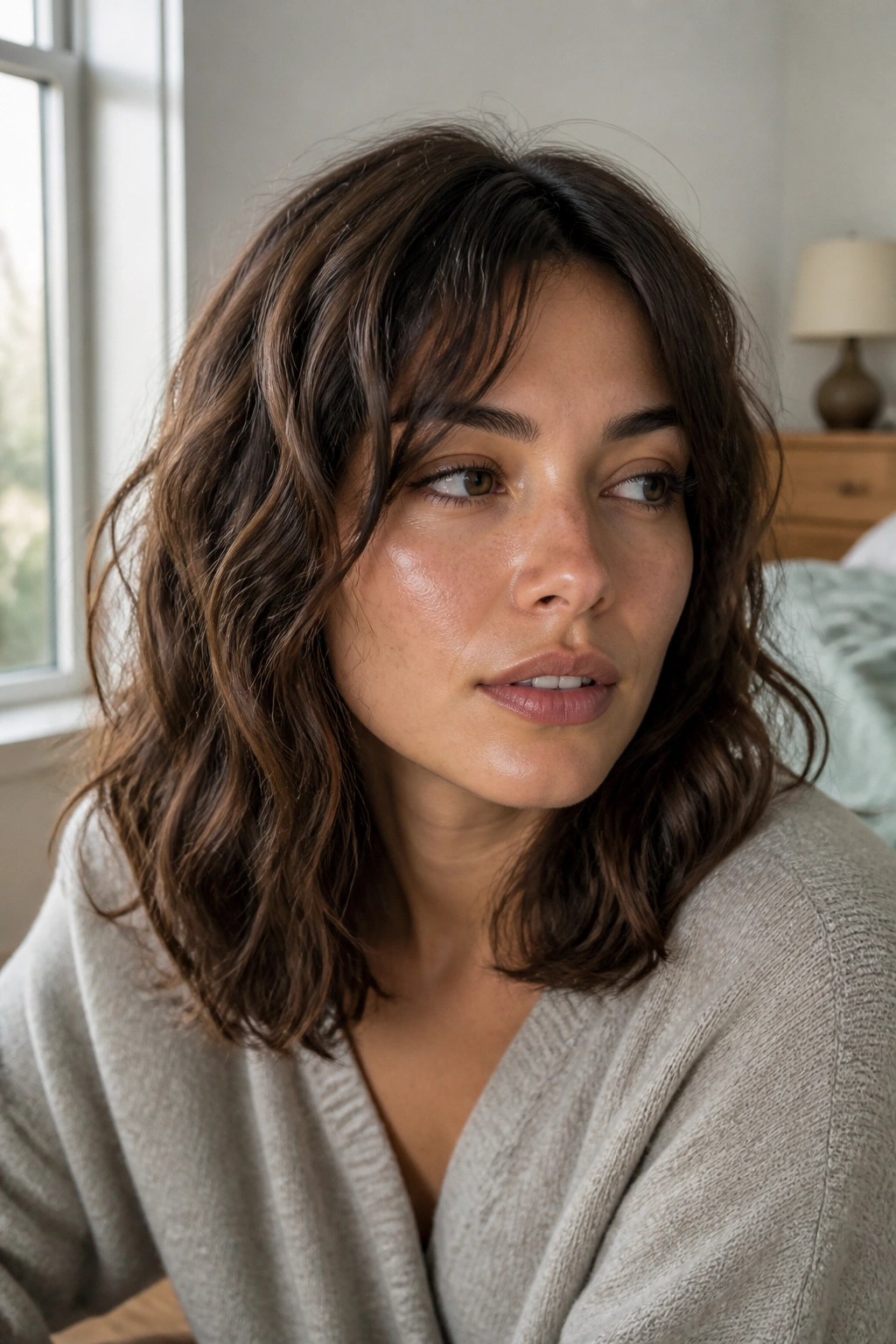
An air-dry midi cut is the haircut for people who want their waves to look like themselves, not like they borrowed a curling iron from a friend. It usually sits around the shoulders with enough internal shaping to let the wave dry into form without a lot of help.
The best version of this cut is not overly layered and not too blunt. It’s balanced. The stylist removes just enough weight so the waves can separate naturally, then keeps the outline strong enough that it doesn’t spread out into a triangle shape when dry.
What to ask for at the salon
- A soft perimeter around the shoulders.
- Light layering through the mids only.
- Face-framing pieces that blend, not chop.
- A cut that looks good both air-dried and diffused.
This one is ideal if you do not want to spend twenty minutes styling your hair every morning. A little leave-in, a bit of mousse, maybe a scrunch with a microfiber towel. Done. The haircut does the rest.
14. The Modern Wolf-Inspired Lob
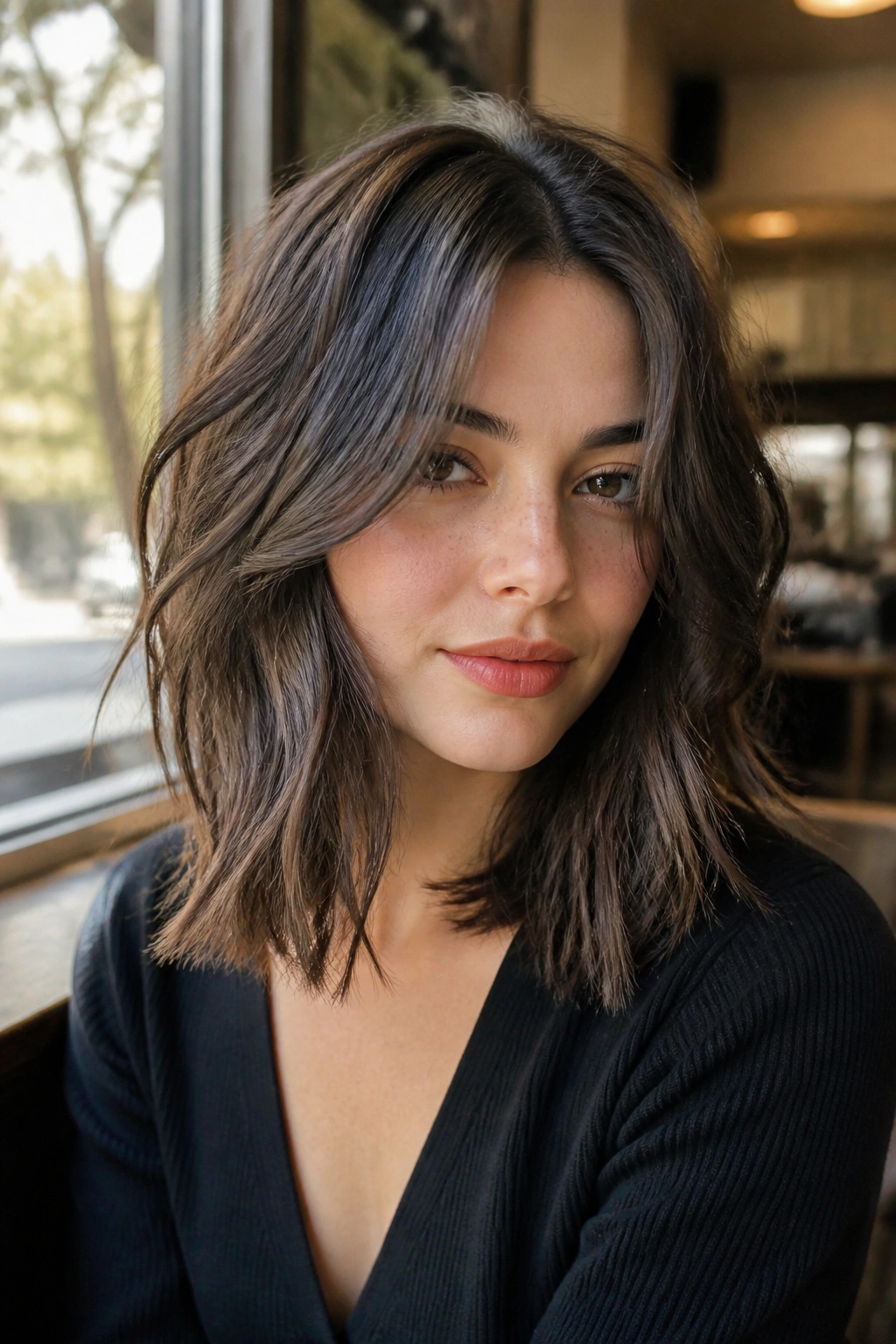
The wolf-inspired lob is the boldest cut in this group, and I mean bold in the real-life sense, not the internet sense. It has shag energy, a little mullet attitude, and enough length to stay wearable if you’re not trying to make a scene.
What makes it different is the contrast. Shorter pieces through the crown and top create lift, while the shoulder-length base keeps it from turning into a full wolf cut. That softer balance is what makes it work for wavy hair that needs shape but not a full-on edgy overhaul.
It’s a good choice if your hair has a lot of natural texture and you don’t mind a bit of movement around the face. It can look especially good with a center part and a bend that starts lower on the strand. That gives the cut a lived-in look without making it feel sloppy.
The downside is maintenance. If the layers grow out unevenly, the whole outline can lose its personality fast. You’ll want trims often enough to keep the shape from wandering.
15. The Polished Wavy Lob for Fine Hair
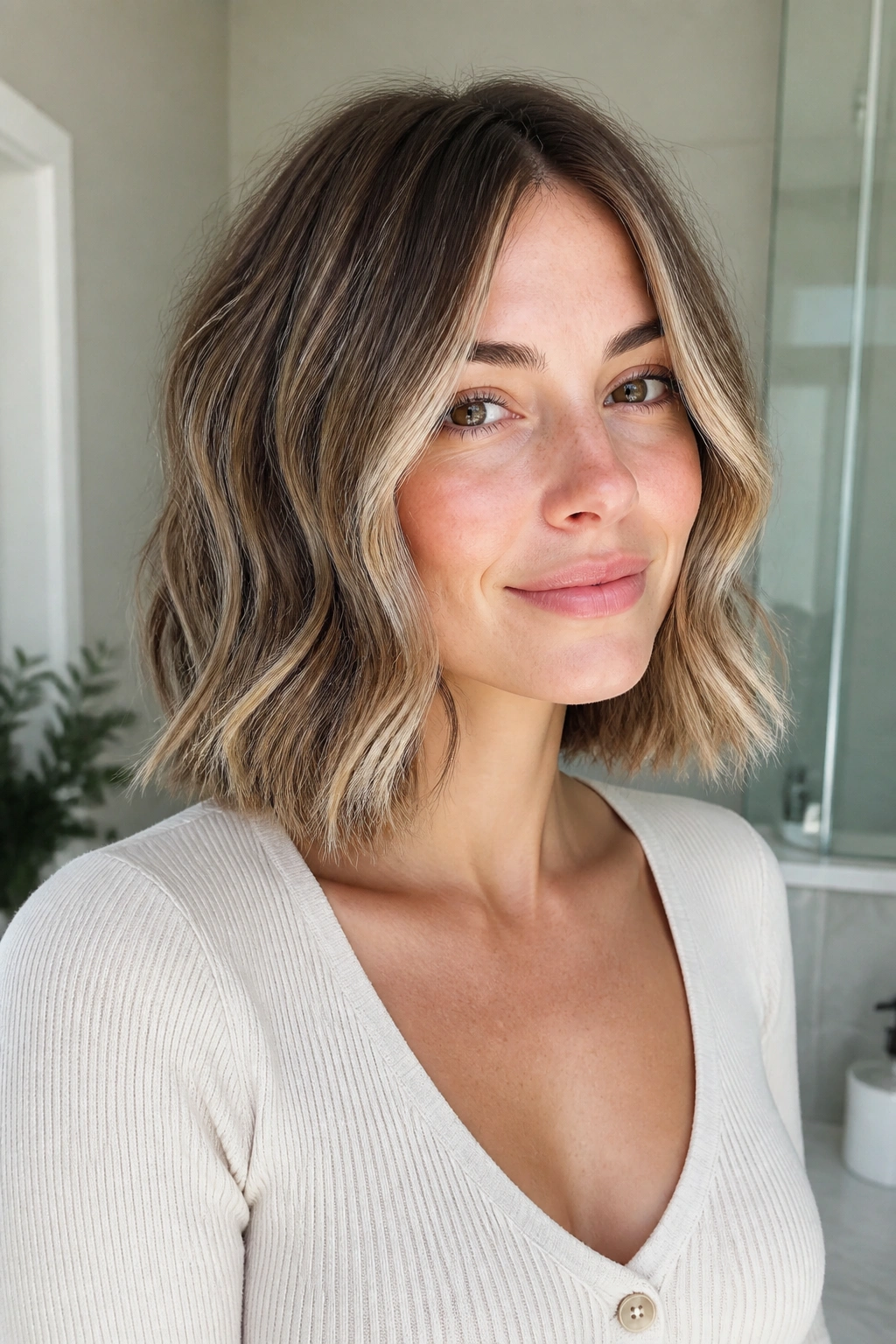
Can fine wavy hair handle shoulder-length cuts without going limp? Absolutely, but the shape has to be disciplined. A polished wavy lob gives you movement without stripping away the density that fine hair needs to look full.
The best version usually keeps the perimeter blunt or nearly blunt, with only light internal shaping. That keeps the ends looking thick. Then a small amount of wave-enhancing product gives the mids some life. If the hair is layered too much, the ends can look thin in a hurry, and that’s a headache nobody wants.
How to keep it looking full
- Blow-dry the roots with a small round brush for lift.
- Use a pea-sized amount of lightweight cream, not a heavy serum.
- Set the front with a deep side part if you want more volume.
- Finish with a flexible hairspray so the wave holds without getting stiff.
This cut works because it respects what fine hair actually needs: less weight, not more cleverness. A tidy lob, some soft movement, and a bit of root support go a long way.
Final Thoughts
The best shoulder-length wave haircut is the one that makes your texture look intentional without making your morning routine annoying. That usually means paying attention to weight, edge, and where the layers start—not just copying a photo because the model has good cheekbones and a flattering light source.
If you’re torn between two cuts, pick the one that fits your hair density first and your face shape second. Hair that behaves well is easier to love. Hair that fights you every day gets old fast.
Bring photos to the salon, sure. Bring notes too. Tell your stylist whether you want movement, fullness, softness, or a cleaner line, because those are not the same thing, and the difference shows up immediately once the scissors come out.
