



Long hair is generous. It gives you a lot to work with, and it also gives gravity a chance to win if you pick the wrong setting method. A loose braid can look lovely at night and fall flat by breakfast; a tighter wrap can give you bend at the ends without turning your whole head into a spring. That balance is the whole game with heatless curl styles for long hair.
The best part is that you do not need a drawer full of hot tools to get shape, wave, or a softer curl pattern. You need the right structure, the right amount of tension, and a little patience. Long hair holds pattern differently than shoulder-length hair, too — the length adds weight, so the curl shape often lands lower and looser than people expect.
Some of these styles give you beachy waves. Some give you proper ringlets. A few work best if your hair is damp, a few behave better on dry hair, and one or two are the sort of thing you set once, sleep on, and forget about until morning. The trick is matching the method to the finish you actually want, not the one that looks prettiest on a mood board.
1. Three-Strand Braids

A classic three-strand braid is the most forgiving place to start, and on long hair it gives you that soft, lived-in wave that never looks too staged. If you want movement through the mids and ends without much fuss, this is the style I’d hand you first.
Why It Works on Long Hair
Long hair gives a braid enough length to hold shape from top to bottom, which is why the result usually looks better on longer lengths than on short hair. The braid creates repeated bends in the hair shaft, and those bends turn into loose waves once the braid comes out.
You can make one big braid down the back for broad waves, or split the hair into two braids for a more even finish. Tighter braids make firmer waves; looser braids make softer ones. Simple, but true.
A tiny bit of styling cream or leave-in on the mids helps the wave stay smoother. Don’t drench the roots. That’s where the awkward, puffy stuff starts.
Best For
- Soft, relaxed waves
- Second-day hair refreshes
- Layered long hair that needs a bit of shape
- Anyone who wants a low-effort overnight set
If you want a clean finish, braid when the hair is about 80 percent dry. That sweet spot matters. Too wet and the braid can stay damp too long; too dry and the wave gets weak.
Tip: Pull the braid apart only after your hair is fully cool and dry. Warm hair drops shape fast.
2. Dutch Braids

Dutch braids sit on top of the hair instead of sinking into it, and that gives the finished wave a little more definition. They’re a good choice when you want the front and crown to have a clearer pattern, not just the ends.
The braid placement changes everything. Because the sections cross under instead of over, the ridge sits higher and leaves a more textured print once you take it down. On long hair, that can mean a wave that starts closer to the scalp rather than only showing up below the shoulders.
I like Dutch braids for thicker hair because they hold securely without needing clips all over the place. They also behave nicely if your hair slips out of regular braids halfway through the night. That happens. Long layers have opinions.
Wear them as two braids for symmetry or one central Dutch braid for a softer, sportier look. If you sleep in them, use silk scrunchies at the ends so the braid does not leave a hard line.
The result is usually a bit more structured than a basic braid wave, but not stiff. Think of it as the neat cousin of the three-strand braid.
3. French Braids

French braids give long hair a gentler wave near the crown and a more blended finish through the rest of the length. They’re the choice when you want the roots to have some lift and the ends to fall in loose bends instead of one obvious braid mark.
What Makes Them Different
A French braid gradually picks up hair as it travels down the head, so the pattern starts higher and spreads more evenly. That matters on long hair because all that extra length can make curls look heavy if the pattern only begins at the ears.
The front sections usually come out the best. They tend to frame the face with a bend instead of a crimp, which is one reason people keep coming back to this method.
How to Get the Most From It
- Braid on slightly damp hair for a smoother wave.
- Keep the center section snug, but not tight enough to give you scalp tension.
- Finish with a soft elastic at the end, not a tight rubber band.
- Sleep on a smooth pillowcase or wrap the braids in a scarf.
French braids are also one of the few heatless curl styles for long hair that can look polished even before you take them out. Handy, if you need the braid to double as a day style.
4. Fishtail Braids

Fishtail braids make a finer, more detailed wave pattern than a standard braid, and they look especially pretty on long hair because the pattern has room to show off. They take a little more patience, but not much more skill.
This is the braid I reach for when I want a wave that looks intentional. Not stiff. Just cleaner and a bit more detailed than a loose three-strand braid. The smaller sections make the texture denser, so when you release it, the hair tends to fall into a narrower, more rippled pattern.
Long hair is helpful here because the braid can get long enough to stay secure all night. If your hair is very silky, mist the mids lightly before braiding. If it’s coarse or dry, use a little leave-in on the lower half so the finished wave does not puff out.
A single fishtail down the back gives a gentle mermaid look. Two fishtails can give you a more even pattern, but they may leave the top flatter. I like that trade-off. You may not.
The ends usually need a finger comb and maybe one drop of oil. That’s enough. Too much product turns the wave stringy.
5. Rope Twists

Rope twists are underrated. They give long hair a smooth, spiraled bend that sits somewhere between a wave and a curl, and they are fast once your hands get used to the motion.
Why They Feel Different
Instead of braiding three sections, you twist two sections around each other. That smaller twist pattern creates a cleaner spiral, especially on hair that already holds shape well. If your hair is fine but long, rope twists can give you more definition than braids without making the wave bulky.
They also dry more evenly than some tighter set styles because the sections are not packed together as tightly. That is useful if you are air-drying before bed and do not want the inside of a big braid to stay damp until noon.
A Good Way to Set Them
- Divide damp hair into 2 or 4 sections.
- Twist each section away from the face.
- Secure the end with a soft tie.
- Let the twists set fully before opening them.
The finished look is polished but not severe. If you want a bit of edge control around the hairline, smooth only the top inch with a small amount of cream. Leave the rest alone.
6. Twist Buns
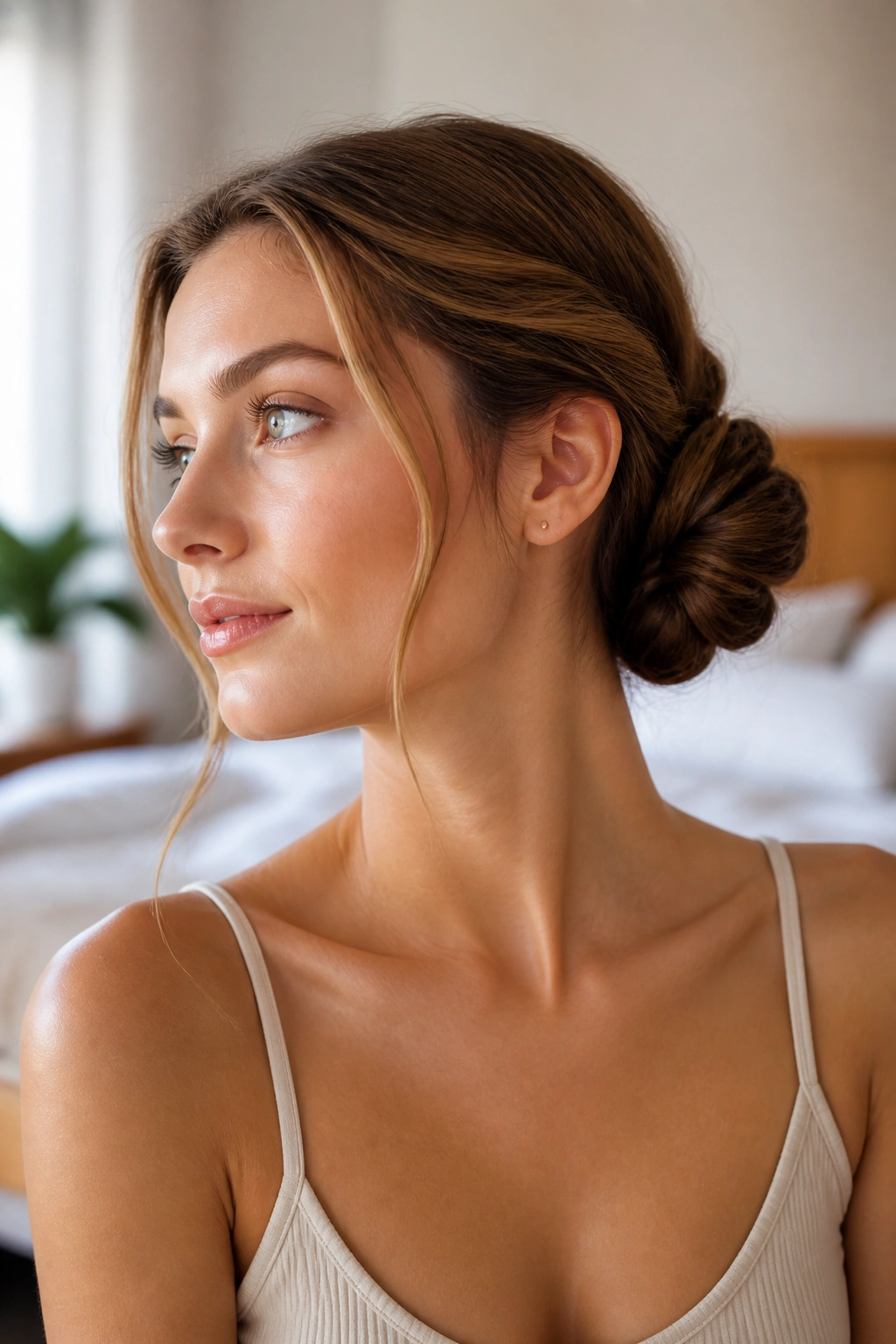
Twist buns give you that soft, round bend that feels a little more styled than a braid wave. They’re one of my favorite heatless curl styles for long hair when the goal is loose volume rather than a tight curl pattern.
A twist bun starts with one or more rope twists, then coils those twists into buns and pins or ties them flat. The twist and the coil work together, so the final result usually has more curve near the mids and ends. On long hair, that extra bend helps keep the style from looking limp.
They work well when your hair is halfway dry, not dripping. If it’s too wet, the center of the bun can stay damp and the curl will collapse the second you brush it out. If it’s too dry, you’ll get less shape and more of a soft kink.
I like two low twist buns for everyday waves. Four smaller buns give a tighter pattern and more lift around the face. Neither one is fussy. That’s half the appeal.
Leave them in until the hair is fully cool. Then loosen with your fingers before using a wide-tooth comb, if you need one at all.
7. Bantu Knots

Bantu knots are the boldest style in this group, and they leave long hair with springier, more defined curls than most braid-based methods. If you want a curl pattern that looks deliberate and has real bounce, this is a strong pick.
The shape matters. Each knot acts like a tiny wrapped coil, so the hair sets around itself instead of around a straight braid line. On long hair, that can create a curl with a little more spring at the ends and a cleaner bend through the mid-lengths.
What to Expect
- Smaller knots = tighter curls.
- Larger knots = softer, chunkier waves.
- Damp hair sets more cleanly than bone-dry hair.
- A satin bonnet helps keep the knots from flattening overnight.
They do take longer to wrap than braids, and sleeping in a bunch of knots can feel awkward if you make them too bulky. Keep each section small and smooth the surface before twisting it down. That cuts down on frizz later.
I’d use Bantu knots when I want the style to last beyond one day. The curls often hold up well after a little finger-fluffing the next morning.
8. Headband Curls
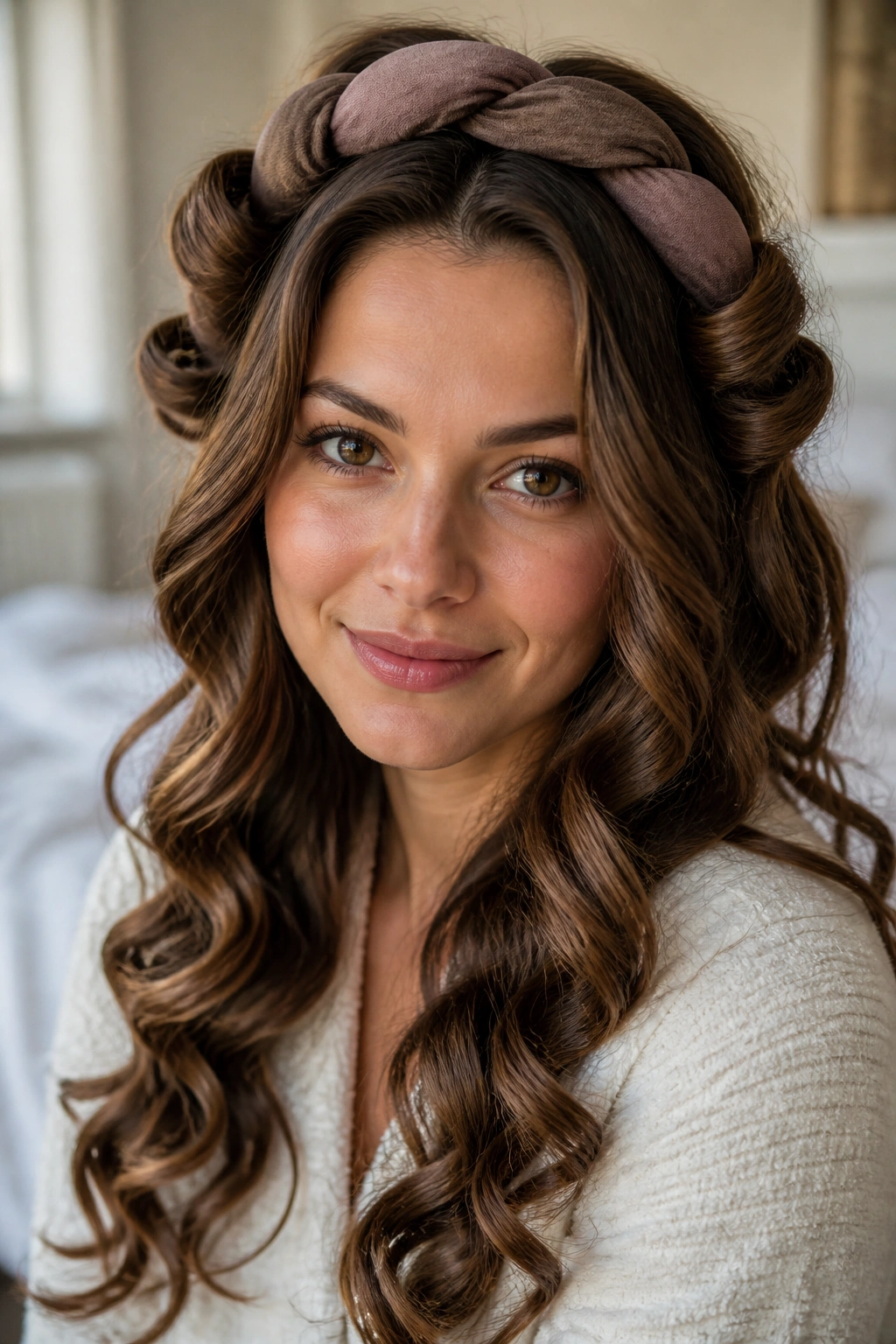
Headband curls are old-school in the best way. You place a soft headband around the crown, then wrap sections of long hair around it until everything is tucked in place. The result is a smooth, uniform curl with a soft bend at the roots.
This style works because the hair wraps around a fixed curve. That curve is gentle, so the finished curls usually look polished rather than springy. On long hair, the length gives you enough room to wrap multiple turns, which means more defined ends.
I like this set when I want the front pieces to look controlled. The face-framing sections tend to land nicely, especially if you wrap them away from the face first. A little mousse on damp hair helps the set hold. Too much, and you’ll get stiffness at the crown.
Sleep with a satin scarf over the whole thing if your headband is slippery. Otherwise, one side may loosen and you’ll wake up with one perfect curl and one rebellious wave. Annoying. Easy to prevent.
9. Satin Robe Belt Curls

Satin robe belt curls look ridiculous while you’re setting them. I’m not going to lie about that. They also make some of the nicest long, loose curls you can get without heat.
What Makes Them Different
The belt is wide and soft, which means it creates a smooth wrap instead of a tight crease. That’s why the curl pattern tends to look flowing rather than crunchy. On long hair, the extra length helps the hair wrap around the belt several times, giving the curl more memory.
You can split the hair in half and wrap each side around one end of the belt, or work with smaller sections if you want more definition. I prefer starting with hair that is almost dry. If it’s soaking, the curl can feel flat at the roots. If it’s too dry, the wrap gets loose and the waves fall out faster.
Practical Notes
- Use a robe belt made of satin or silk, not a scratchy cotton tie.
- Start the wrap at the crown or slightly above the ears.
- Keep tension even from root to end.
- Leave the ends tucked so they do not frizz out overnight.
It’s a little awkward the first time. After that, it becomes weirdly easy.
10. Sock Curls
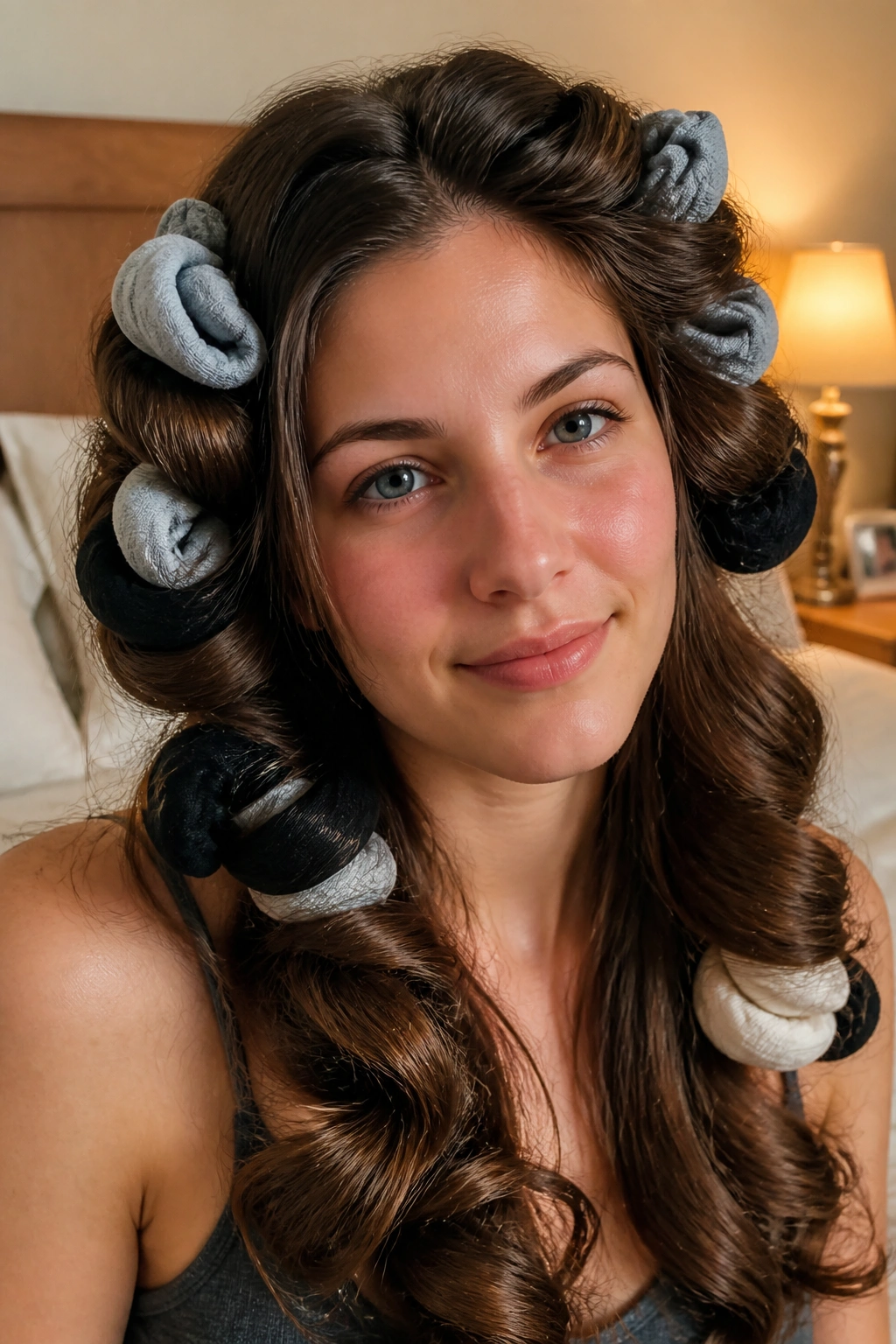
Sock curls are the budget version of a soft roller set, and they absolutely deserve a place here. A rolled-up sock gives long hair a cushioned core to wrap around, which is why the curl comes out soft, rounded, and more defined than a braid wave.
The bigger the sock roll, the looser the curl. That is the main thing to know. A thin sock makes a firmer ringlet. A thicker one gives a bendy wave with more room at the root. For long hair, medium-thick socks usually hit the sweet spot.
This set works best on hair that has a little dampness left but is not wet enough to drip. Wrap each section away from the face if you want the final curl to open outward. Wrap toward the face if you prefer a more vintage, tucked shape. Either works. Different mood, different direction.
The best part is comfort. Socks are soft enough to sleep on without the lumpy feeling you get from some rollers. If your hair is extra long, use two socks per side and anchor them with a clip at the crown. That keeps the set from sliding down while you sleep.
11. Ribbon Curls
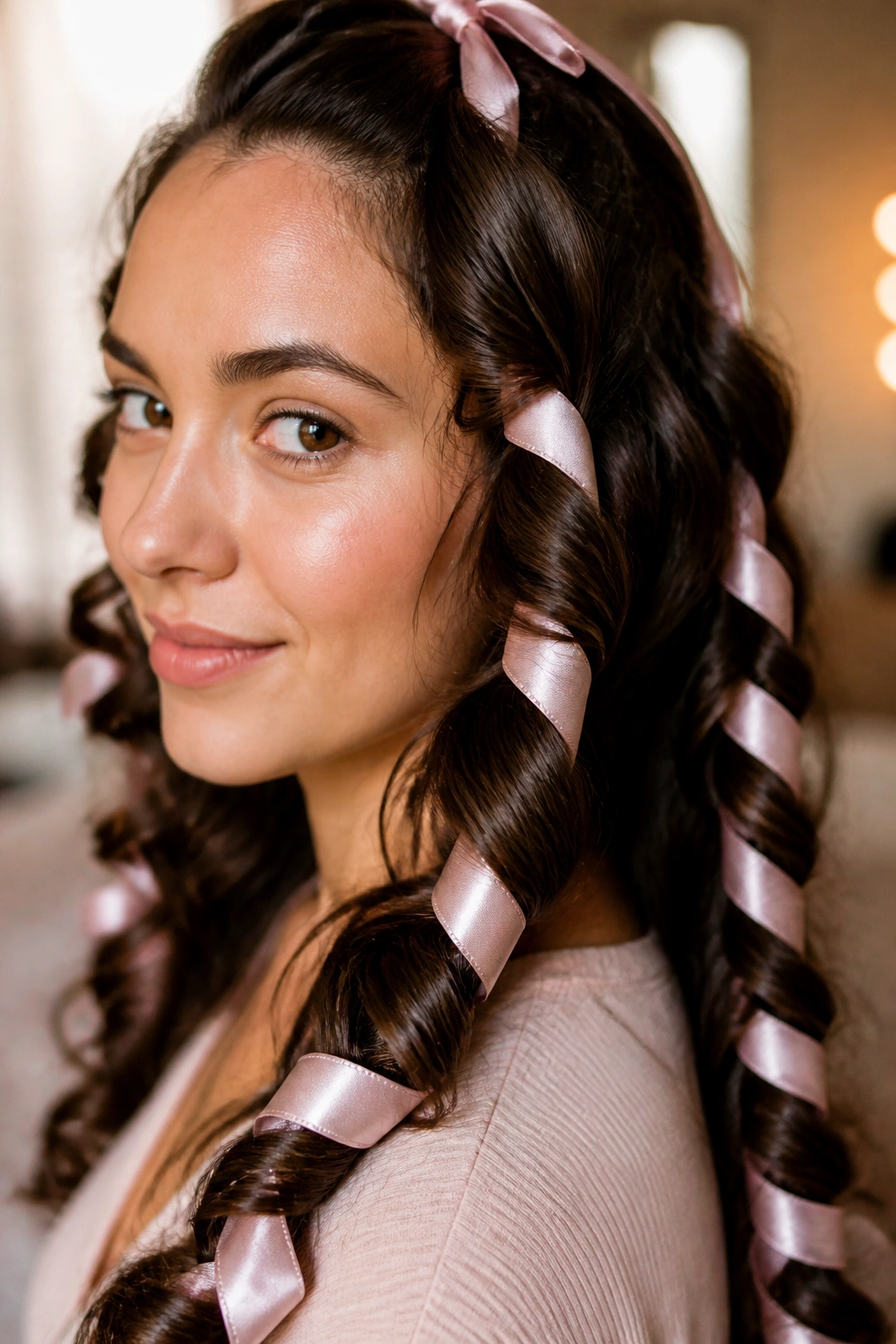
Ribbon curls are one of those methods that sounds overly delicate until you try it. Then you realize the technique gives long hair a very clean spiral with almost no harsh bend marks.
A ribbon or length of soft fabric acts like a guide, and the hair wraps around it in a controlled way. Because the material is narrow and flexible, the curl lands with a smooth, elongated shape. That’s especially nice on long hair that tends to droop when styled with heavier tools.
I like ribbon curls for people who want ringlets without a tight, prom-night look. The ends usually take the curl beautifully, which is where many heatless methods fail. The top can stay a little flatter, and that’s fine. It keeps the whole style from looking overdone.
Use a satin ribbon or a soft strip of cloth that won’t snag. Start with detangled hair, or you’ll feel every little snag as you wrap. Not fun. The finished result is worth the patience, though.
12. Flexi Rod Sets
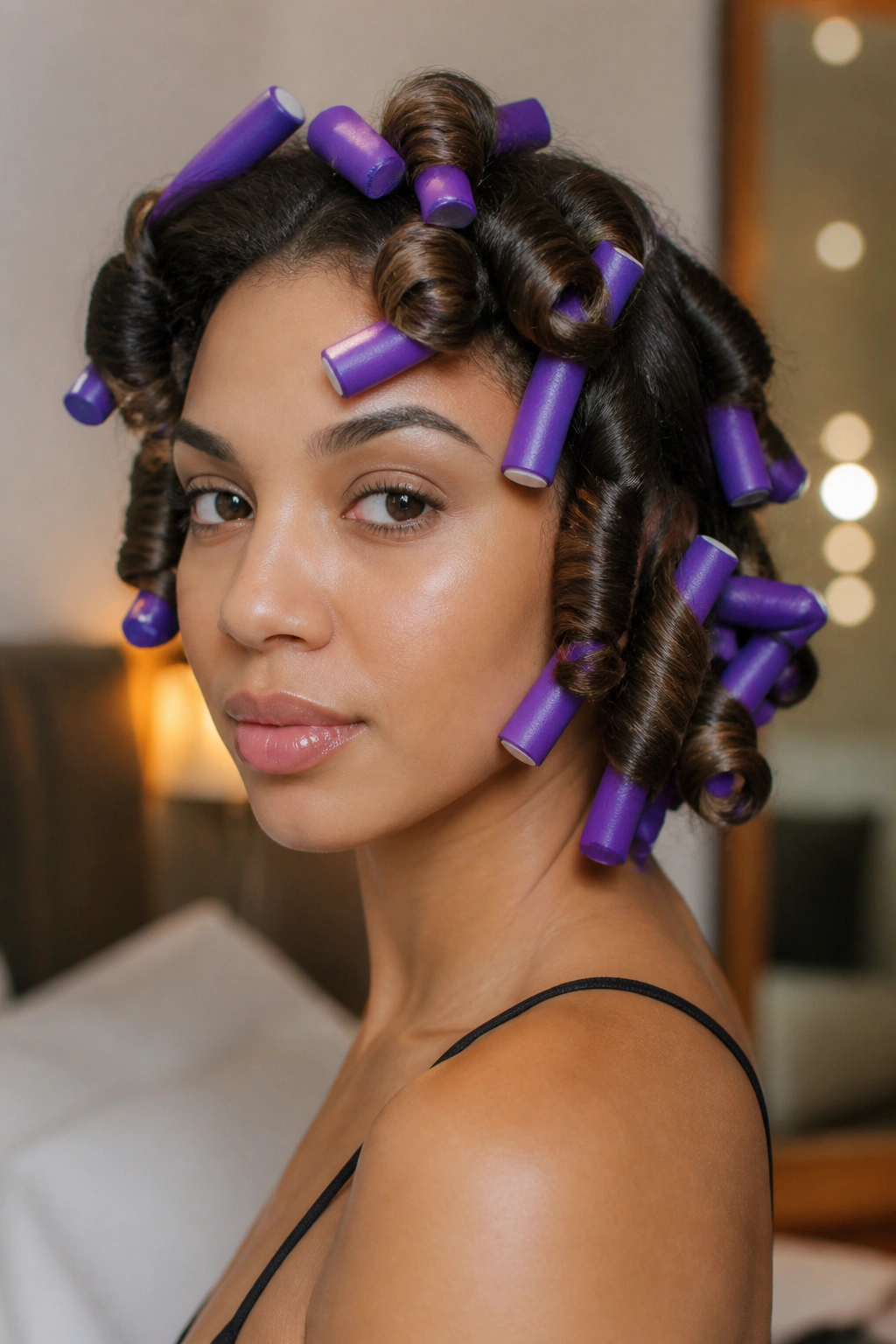
Flexi rods are one of the most reliable ways to get a true curl pattern without heat. They bend instead of pinning or clipping, so long hair can wrap securely while still staying comfortable enough to wear for several hours.
Why They Earn Their Reputation
The foam-covered rod creates a firm curve around the hair, which gives you a more defined spiral than braids or loose buns. On long hair, the pattern shows up best from the mid-lengths down, and that’s exactly where many people want the curl anyway.
They come in different diameters, and that choice matters a lot. A larger rod gives soft waves; a smaller rod gives tighter curls. If your hair is very long, medium or large rods usually behave better because the hair can wrap around them without piling up into a knot.
How I’d Use Them
- Work with small, even sections.
- Smooth each section before wrapping.
- Bend the rod ends inward to lock the hair in place.
- Let the set dry fully before removing.
Flexi rods are not the fastest option, but they are dependable. They also make a good choice if you want your curls to look neat for more than one day.
13. Foam Rollers

Foam rollers give long hair a soft, old-school curl that feels a little gentler than hard rollers or pins. If you want volume at the roots and a rounded curl through the lower half, they do the job cleanly.
The foam matters because it cushions the hair while it sets. That means fewer dents and less flattening if you sleep in them. On long hair, the rollers can be placed vertically for length or horizontally for more body. I prefer vertical placement along the side sections and a few horizontal rollers at the crown. Mixed placement gives a better shape.
You will get the best results with hair that is damp, not wet. Wet hair wrapped in foam rollers can stay soggy in the center and feel limp when you take it down. A light blow of room air or a long dry time solves that.
They’re not the most glamorous look while you’re setting them. Fine. No one looks glamorous in foam rollers. But the finished curl is smooth and soft, and that’s the point.
14. Rag Curls

Rag curls are pure function wrapped in nostalgia. You take strips of fabric, wrap sections of long hair around them, and tie the ends. The result is a curl that looks handmade in the best way — soft, a little irregular, and full of movement.
This method is especially good if your hair resists a uniform pattern. The fabric grip helps the hair hold shape without needing clips, pins, or a lot of product. Long hair benefits because the length can be wrapped multiple times, which creates a longer-lasting bend than a single pass would.
The strips should be soft and smooth. Old T-shirt fabric is better than anything stiff. If the sections are too thick, the curls come out uneven; too thin, and you spend all night wrapping. I aim for about 1-inch sections on medium-density hair and a touch smaller if the hair is very heavy.
Rag curls also give you flexibility. Sleep in them, wear them for a few hours, or set them while doing the rest of your routine. They are not precious. That is part of the charm.
15. Pin Curls
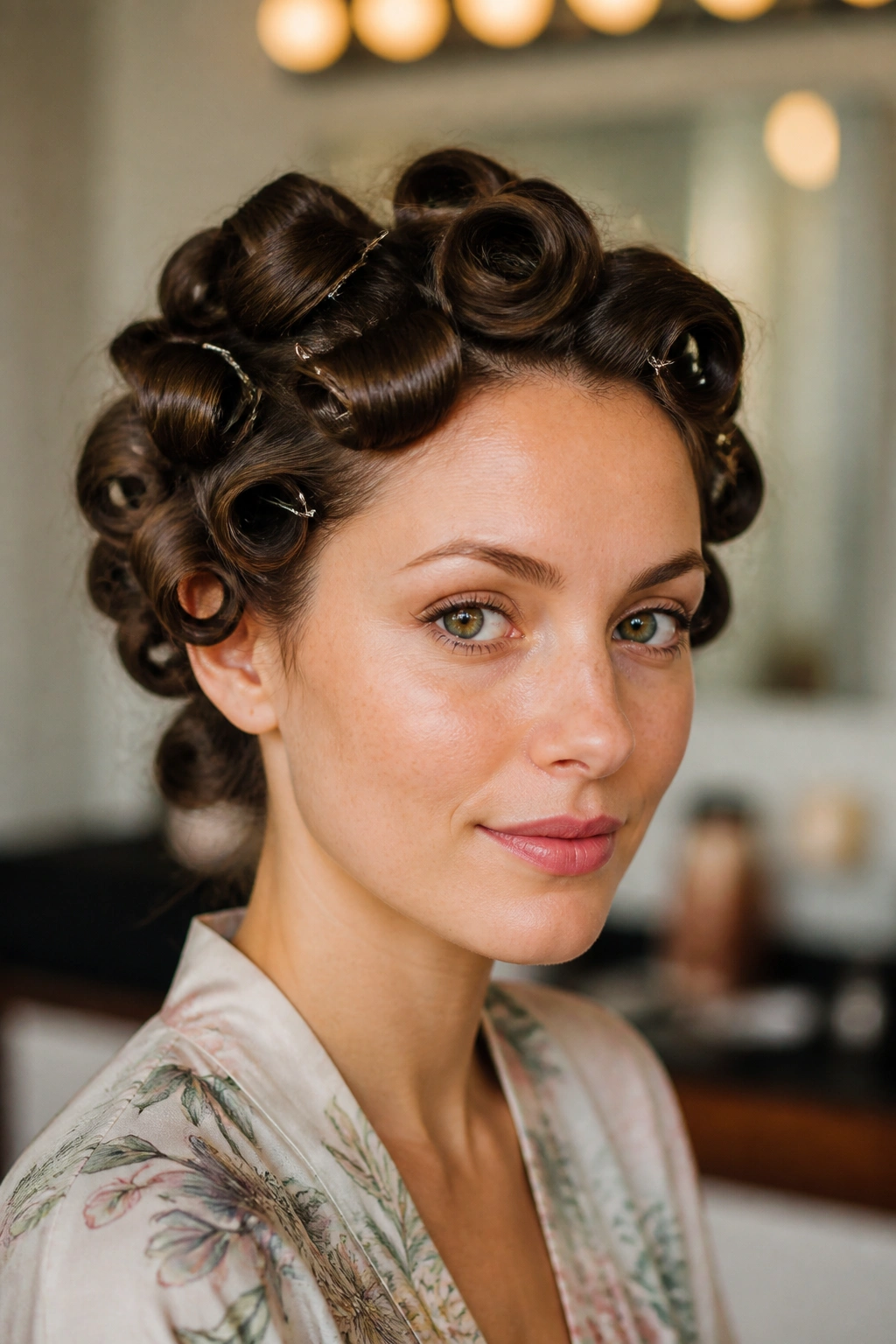
Pin curls are the most deliberate option on this list, and they give long hair a classic curl with a nice, compact shape. If you want a style that feels dressed up without heat, this is the one.
The trick is to roll each section flat against itself, pin it close to the scalp, and let the coil set fully before opening it. Long hair makes that roll easier because you have enough length to build a neat curl without the ends poking out. A little styling lotion or lightweight mousse helps the curl stay smooth.
Where They Shine
Pin curls work especially well for:
- Formal styles
- Vintage-inspired waves
- Hair that needs stronger hold
- The front sections, which usually frame the face better than braids do
They do take more time than braid waves, and you need enough pins to hold the rolls flat. Use bobby pins or duckbill clips, not giant claw clips that pop off when you move your head. That mistake is common. Also avoid piling the sections too thick; the curl will not set evenly if the roll is chunky.
Once you release them, separate with your fingers only. A brush destroys the clean curl pattern.
16. Halo Braid Waves

Halo braids wrap around the head like a crown and leave long hair with a graceful wave that starts near the hairline. The style is practical and a little romantic, but I mostly like it because it solves a real problem: it keeps the front from going flat.
A halo braid spreads tension around the head instead of pulling hard in one spot. That means the finished waves are usually more even across the top and sides. On long hair, the braid has enough length to circle the head without running out of sections halfway through, which is a common annoyance on shorter lengths.
The wave pattern is usually looser than a tight Dutch braid set, but more shaped than a single braid down the back. It’s a nice middle ground. If your hair has layers, tuck the shorter pieces into the braid with a touch of hairspray or a light cream so they do not pop out while you sleep.
I like this one when I want the finished hair to look styled even before I take the braid out. It does that.
17. Low Bun Waves

Low bun waves are the easiest style to underestimate. You twist the hair into one or two low buns, secure them gently, and let the length set around itself. The end result is a soft wave with a little bend around the face and more movement through the lower half.
This works especially well on long hair because the extra length lets the bun coil more than once. That gives the set better memory. If your hair is very heavy, split it into two low buns instead of one. One bun can go flat under the weight. Two usually hold shape better.
Small Details That Matter
- Place the buns at the nape, not high on the head.
- Use soft ties or pins that do not leave deep dents.
- Keep the twist relaxed, not yanked tight.
- Let the hair cool completely before opening the buns.
Low bun waves are not dramatic. That’s their strength. They give you a clean, wearable bend that works on a regular day without making your hair scream for attention.
18. Bubble Ponytail Waves
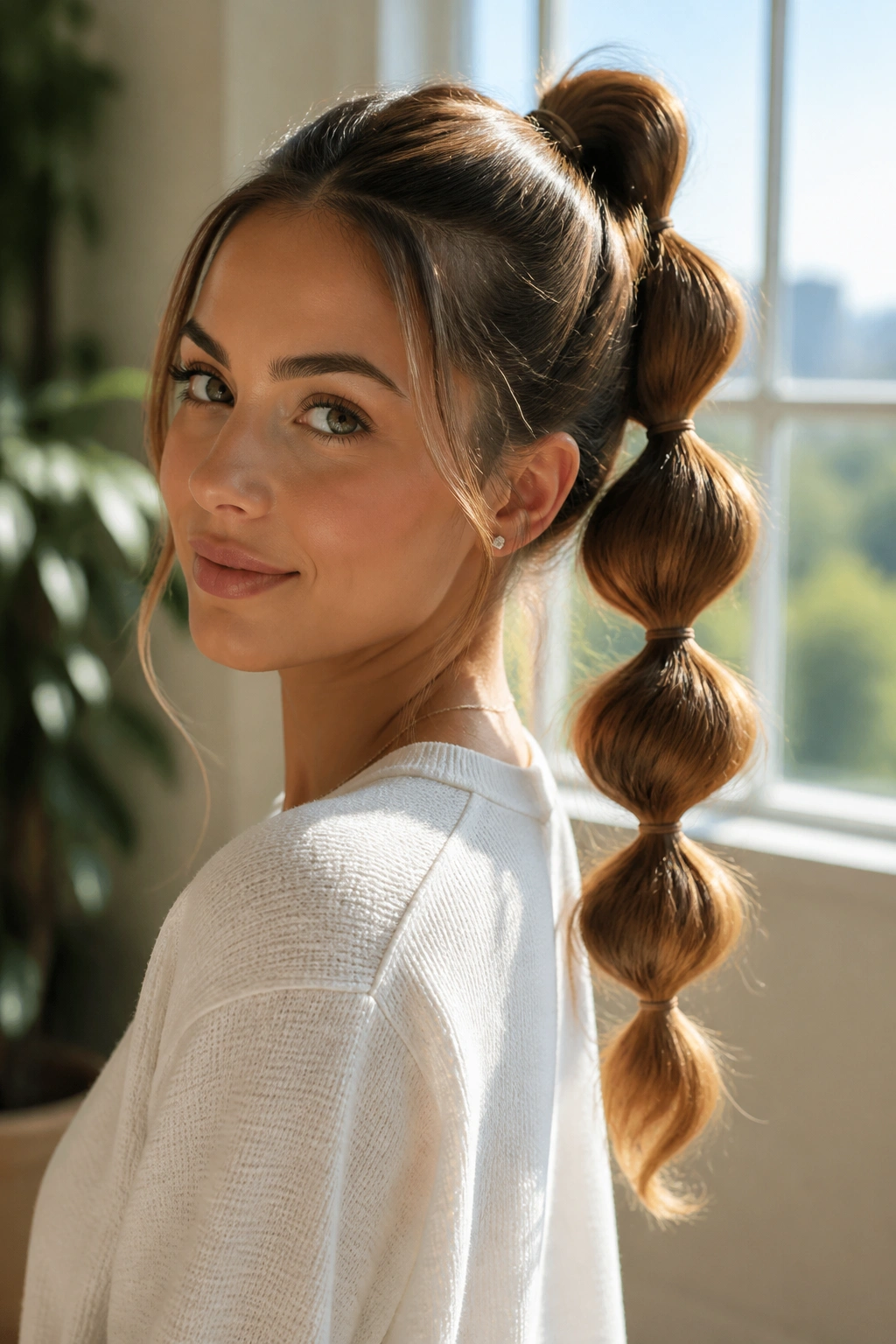
Bubble ponytail waves are one of the more playful heatless curl styles for long hair, and they’re also one of the easiest to mess up if you pull the sections too tight. The idea is simple: create a ponytail, add elastics down the length, puff each section into a “bubble,” and let the hair set in those curved segments.
The bubble pattern leaves gentle bends rather than one continuous curl, which is why the final result looks modern and a little undone. On long hair, you have enough length to make 4 or 5 bubbles, sometimes more, and that gives the wave a clear shape.
I prefer this method for day wear before bedtime, then I sleep in the loose set and take it down the next morning. If you want more curve, twist each section lightly before adding the next elastic. That little step changes the outcome a lot.
Use snag-free ties. Tight elastics leave marks that are hard to smooth out later. And don’t overthink the puffing. It should look a bit uneven while it sets.
19. Claw-Clip Twist Waves

Claw-clip twist waves are the lazy-girl answer to a good hair day, and I mean that kindly. You twist long hair up, fold it once or twice, clip it, and let the sections set in place until the bend takes hold.
Why People Keep Coming Back to It
The clip creates a soft fold instead of a hard curl, which gives the style a loose, airy finish. Long hair is useful here because it has enough weight to settle into the twist without springing apart the second you move. That makes this method handy for day-to-night styling or a quick overnight set.
The style works best if the hair is mostly dry before you clip it. Too much moisture near the clip area can flatten the top. Too little, and you’ll get less bend in the ends. A quick mist on the mids is enough if your hair is already clean and dry.
Use It When
- You want quick volume at the ends
- You need a low-tension style
- You do not want pins, rods, or a full wrap set
- Your hair is thick enough to hold a twist
It’s not the tightest curl here. That’s fine. It is fast, comfortable, and useful when you want to fake effort without actually spending forever on your hair.
20. Scarf-Wrapped Sleep Set
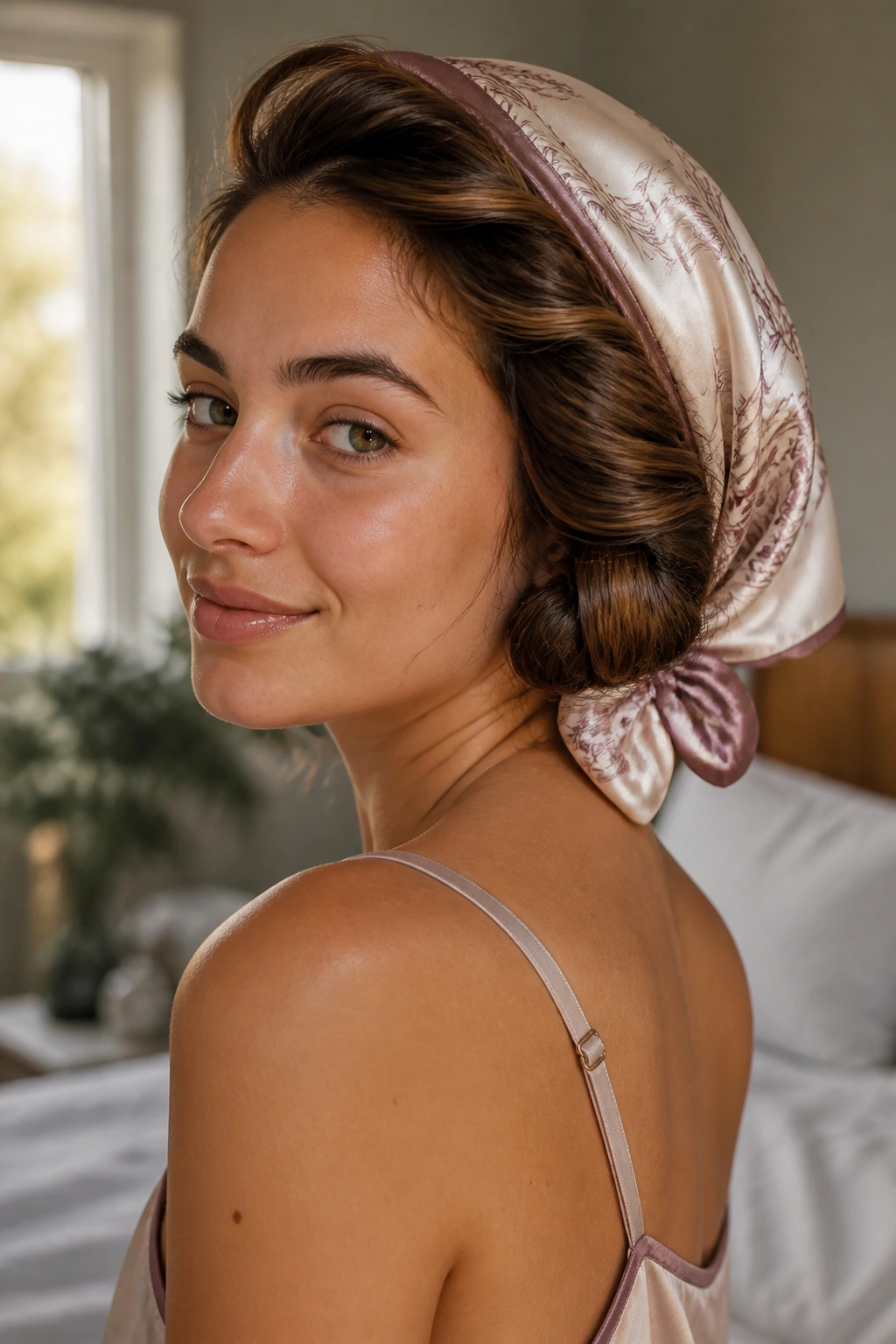
A scarf-wrapped sleep set is the quiet workhorse of the bunch. You wrap sections of long hair around a soft scarf, tie it in place, and sleep on the shape so the hair wakes up with a gentle, flowing curve.
This method gives you control over how the curl falls because you decide how tight or loose the wrap is from the start. A loose wrap creates broad waves; a tighter wrap gives more curl through the ends. On long hair, the extra length helps the scarf hold a stable shape, which means the set is less likely to slide apart in the night.
I like this one because it’s adaptable. You can keep the roots flatter and concentrate the curl lower down, which is often the most flattering choice for long hair anyway. Too much root curl can look puffy. A bit of lift and soft bend through the mids usually looks better.
Use a silk or satin scarf if you have one. Cotton grabs too much and can rough up the surface. When you release the wrap, separate the curl with your fingers and stop there. A brush will turn the finish into a cloud, and not in a good way.
