



Medium-length hair is the sweet spot for soft waves. There’s enough length for movement, but not so much that the shape drags down and turns heavy by noon. That’s why soft wave hairstyles for medium length hair tend to look polished with less effort than people expect.
The trick is not making the wave loud. It’s making it bend in the right places. A few inches of bend at the ends, a loose curve around the face, a little lift at the crown — those small details do more than a barrel-full of tight curls ever will. Medium hair can hold shape, but it still needs a little help if you want it to look soft instead of stiff.
I’ve always liked waves on this length because they can go in so many directions. Some days they read casual and airy. Other days they look clean enough for dinner, a meeting, or a night out where you do not want to fuss with your hair every twenty minutes. The same cut can feel completely different depending on where the part sits, how much bend you build into it, and whether the ends are left straight or tucked under.
The styles below lean into that flexibility. Some are heatless, some use a curling iron or flat iron, and some are really more about placement than technique. All of them work especially well on medium length hair because the shape stays visible without getting heavy. Once you know how to handle the wave pattern, the rest gets easier.
1. Soft Side-Part Waves
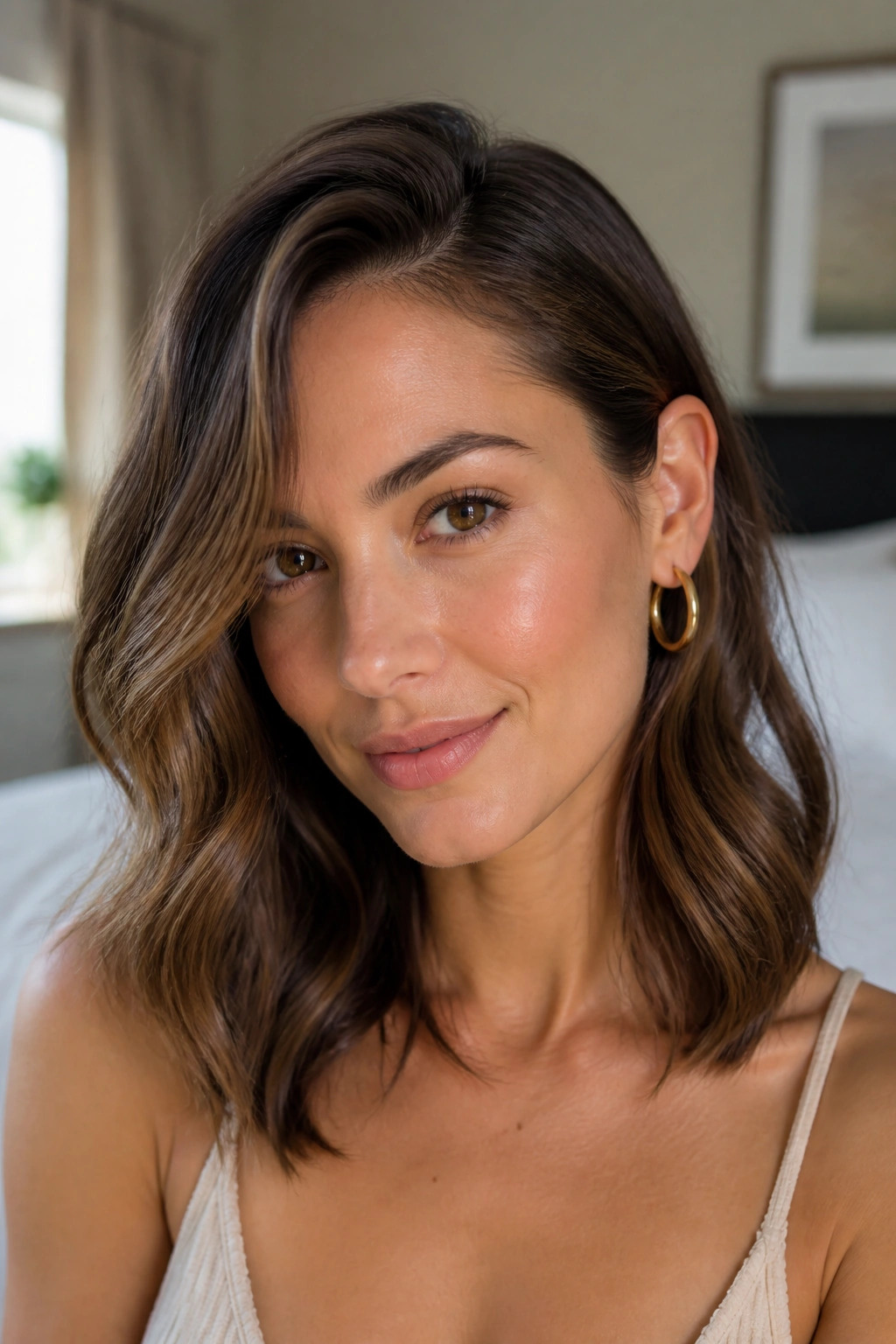
A side part changes the whole mood of medium length waves. It adds a little sweep across the forehead, gives the roots a lift, and makes even simple bends look more intentional. This is one of those styles that feels low-effort but never looks lazy.
Why It Works So Well
The deep side part gives the hair a natural direction, which helps the waves fall in a more flattering way around the face. On medium length hair, that matters a lot. The length is enough to show the shape, but short enough that the wave does not collapse under its own weight.
Keep the bend loose. A 1-inch curling iron, wrapped away from the face, gives the cleanest result. Leave the bottom 1 to 2 inches straighter if you want the style to look modern instead of overly curled. A soft brush-out at the end is what turns it from “done” into “easy.”
- Best on hair that sits around the shoulders or just below them
- Works well with fine hair that needs a little lift at the roots
- Use a light mist of flexible hairspray, not a stiff helmet-spray finish
- Tuck one side behind the ear for a quieter, cleaner line
My favorite part: the side part makes the whole style look more expensive than it is.
2. Curtain-Bang Waves

Do curtain bangs make waves easier or harder? Both, honestly. They make the face-framing part more important, but they also make medium length hair look softer fast. A good curtain bang wave has movement near the cheekbones and a loose bend through the rest of the length, not a heavy curl pattern from top to bottom.
The bangs should be pushed away from the face with a round brush or a medium barrel iron, then blended into the front sections so there’s no hard line. I like to think of this style as two jobs happening at once: the bangs open the face, and the waves soften the shoulders. That combination is hard to beat.
How to Wear It
Let the front pieces cool before touching them. If you keep playing with them while they’re warm, they flatten out and lose that swing. A tiny bit of lightweight cream on the ends helps the hair stay smooth without making the bangs greasy by lunch.
This style suits medium length cuts with layers, but it also helps straighter, blunt ends look less heavy. The movement near the front does most of the work. The rest can stay simple.
3. Tousled Lob Waves

A lob with soft waves is a little messy in the right way. Not bedhead. Not glam. Just loose, touchable texture that looks like the hair settled there on its own, even though it probably took ten minutes and one good product.
What I like about this look is that it doesn’t need perfect symmetry. In fact, too much symmetry ruins it. Medium length hair has enough shape to hold the bend, so you can alternate directions with a curling wand and then rake the waves apart with your fingers. That gives the hair a fuller, airier finish without making it puffy.
Start with a texture spray at the mid-lengths, then curl random 1-inch sections. Leave the ends out on a few pieces so the wave pattern feels broken up. Once the curls cool, scrunch them lightly and flip your head upside down for a few seconds. Sounds ridiculous. Works every time.
What to Watch For
- Too much product makes the lob feel sticky and flat
- Uniform curls can make the style look formal in a bad way
- A little root lift changes everything, especially on finer hair
- Dry shampoo at the roots can help if the style starts looking too polished
This is one of the easiest soft wave hairstyles for medium length hair if you want movement without a lot of rules.
4. Old-Hollywood Soft Waves

Old-Hollywood waves on medium length hair are more about shape than curl. The wave should roll in one smooth direction, with a soft S-curve and a glossy finish. Tight ringlets ruin the whole thing. So does too much layering near the ends.
This style has a more tailored feel than beach waves. It’s smoother, neater, and honestly a little fussy if you overdo it. The best version has a clean side part, brushed-out waves, and enough shine that the hair almost reflects light in bands. A medium barrel iron or Marcel iron gives the closest shape, but a curling iron can get there if you are patient.
The part matters here. A side part gives the wave room to sit properly, and a small clip at the front can help the shape cool in place. After styling, use a soft brush — not a detangling comb with teeth that fight the curl apart too fast.
If you like a dressed-up finish without going full red-carpet, this is the one I’d pick.
5. Half-Up Soft Waves with Face-Framing Pieces
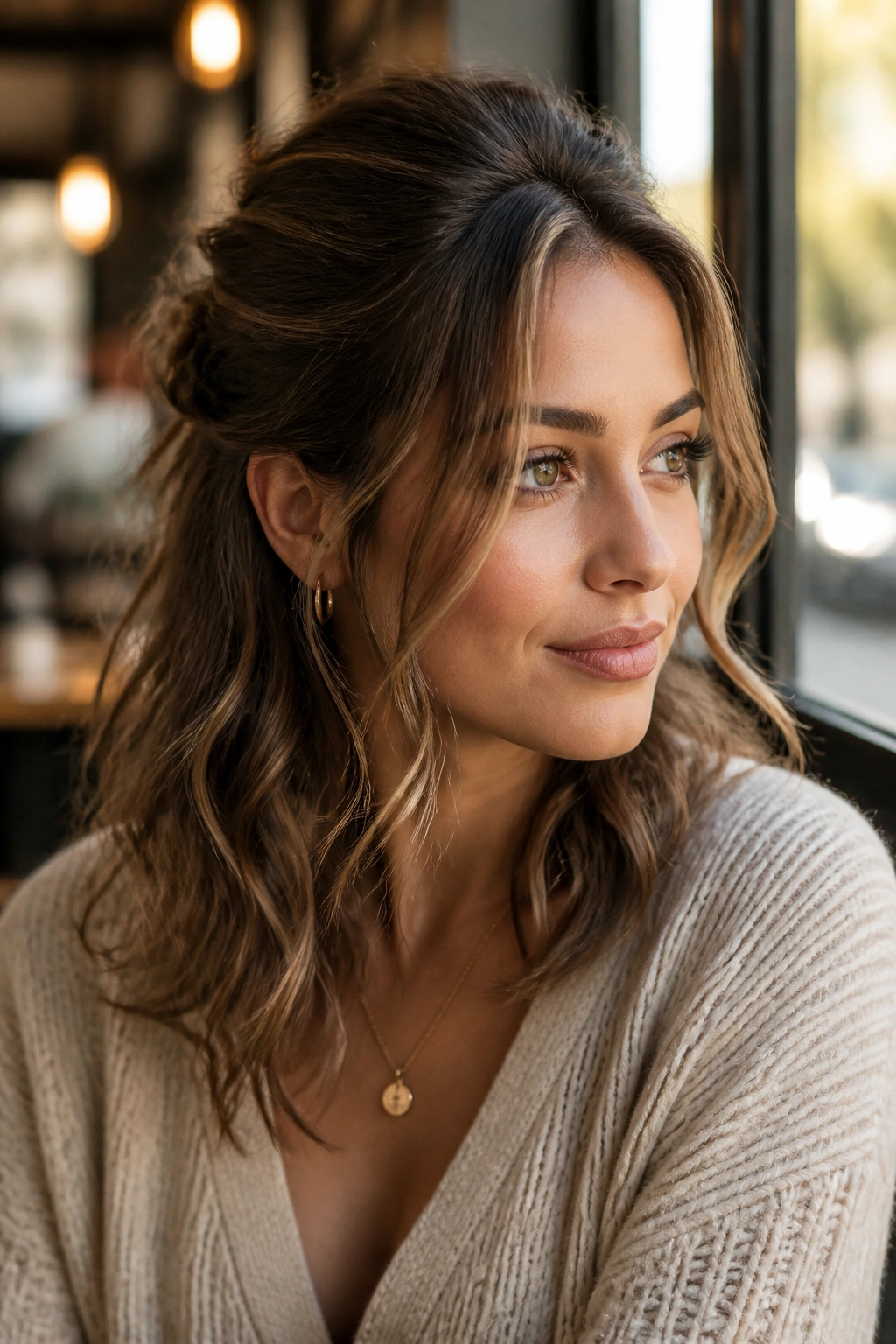
The smell of dry shampoo, a little hairspray, and freshly heated hair tools always takes me straight to this style. Half-up soft waves on medium hair feel relaxed but still put together, especially when the face-framing pieces are left loose and bent just enough to skim the cheekbones.
The half-up section keeps the crown lifted, which matters on medium length hair because the shape can flatten faster than people expect. Pulling the top half back also shows off the wave pattern underneath. It’s a nice trick when you want movement without having hair sitting in your mouth all evening.
How to Keep It Soft
Use a small clip or a loose elastic, then pinch the gathered section a little so it does not sit too tight. If you pull it back hard, the style turns severe. Leave two front pieces out, curl them away from the face, and let the ends stay a little straighter. That little bit of contrast keeps the whole look from feeling too perfect.
- Works well for brunch, weddings, and anything between
- Helps second-day hair look deliberate
- A satin ribbon can make it feel less casual
- Texturizing spray at the crown keeps the top from going flat
I like this one because it gives you shape up top and movement through the rest of the hair. That’s a useful combination.
6. Layered Waves That Start Below the Cheekbones

Layers change soft waves more than people think. If your medium length hair has layers that start below the cheekbones, the wave gets room to breathe. The hair moves in pieces instead of one heavy sheet, and that usually makes the style look lighter and more natural.
This cut-specific wave works especially well if your hair tends to fall flat at the sides. The layers lift the movement away from the face, which keeps the style from looking wide or boxy. A curling wand with a 1-inch to 1.25-inch barrel is usually enough. Wrap the sections loosely and stop before the ends if you want a softer finish.
Why the Layer Placement Matters
If layers start too high, the style can look choppy. If they start too low, the wave has less shape. Below the cheekbones is a nice middle ground because it gives texture where you actually see it. The result is softer around the jaw and fuller through the mid-lengths.
Use a light hand with smoothing cream. Too much, and the layers stick together in clumps. A small dab warmed between your palms is enough. Then run your fingers through the wave once it cools. Once. Not five times.
7. Glossy S-Bend Waves
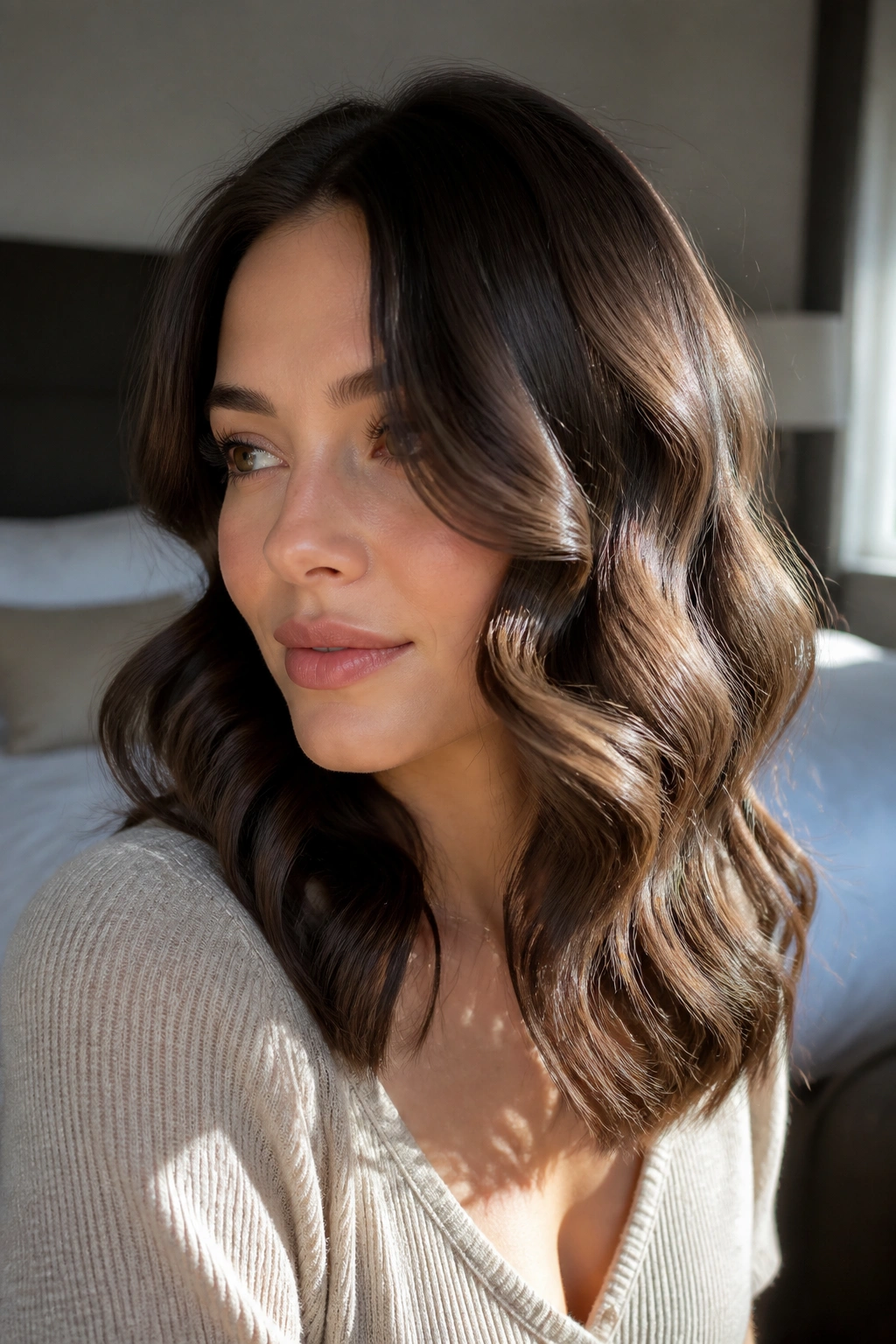
Glossy S-bend waves are the most underrated soft wave style on medium length hair. They sit between a curl and a straight finish, which makes them useful when you want texture but do not want a full barrel curl pattern. The result is sleek, bendy, and a little modern.
A flat iron is the fastest way to get there. Clamp a small section, twist the iron slightly as you move down, then reverse the angle on the next pass so the hair forms that loose S. The bends should be soft and visible, not sharp or kinked. A lot of people press too hard and end up with angles instead of waves.
The shine matters almost as much as the shape. Use a smoothing serum at the very ends — only the ends — and keep the roots clean. If the hair is too coated, the wave loses definition.
This style works well when you want your hair to look controlled without looking rigid. That’s a narrow lane, but it’s a good one.
8. Heatless Braided Waves

Can you get soft waves on medium length hair without touching a hot tool? Yes. Braided waves are one of the easiest ways to do it, and they often look better when the hair is not freshly washed. Slightly lived-in hair holds the bend more cleanly.
Make two loose braids, or four if your hair is thick and stubborn. The key is not braiding too tightly. Tight braids create a crimped look, which is a different thing entirely. A little dampness helps the wave set, but the hair should not be wet enough to feel heavy. If it is, the center of the braid can stay damp for hours, and that is not fun.
How to Use Them
Undo the braids only when the hair is fully dry. If you pull them out early, the shape collapses in about ten minutes. Finger-comb the waves, then add a tiny bit of oil to the ends if they feel rough. You do not need much.
- Best for overnight styling
- Good for damaged hair that needs a heat break
- Works well under scarves, clips, or a loose half-up style
- The smaller the braid, the tighter the wave
I keep coming back to this one because it’s reliable. Not flashy. Reliable.
9. Clipped-Back Waves for a Clean Front

Picture this: soft waves through the lengths, one side tucked back with a simple clip, and the front kept smooth enough to show your cheekbones. That’s the whole style. It sounds simple because it is simple, but simple hair is often the hardest thing to make look intentional.
The clipped-back detail keeps the face open and lets the wave pattern do the rest. Medium length hair is a good match because there’s enough length for the waves to show, but not so much that the tucked side feels bulky. A flat clip, pearl pin, or plain metal barrette all work. I prefer the plain ones. They do not fight the rest of the hair.
This is a nice fix for hair that looks too full around the face after curling. Pin one side back, loosen the wave around the crown, and let the rest fall naturally. The shape feels cleaner right away.
A Small Detail That Helps
Spray a little mist on the clip section before pinning it back. That keeps the front from puffing up later in the day. If you have a cowlick near the temple, this trick matters even more. The clip holds better when the hair has a little grip.
10. Low Ponytail with Soft Wave Ends

Soft waves do not have to stay down to work. A low ponytail with waved ends is one of my favorite medium length styles because it keeps the neckline clean while still showing texture. It reads relaxed, not fussy. And it survives a long day better than loose waves sometimes do.
The base of the ponytail should sit low and loose, not tight and slicked. Leave a little fullness at the crown, then curl or bend the ponytail itself so the ends swing instead of hanging straight. If the hair is medium length, that tail usually has enough length to show off a nice wave pattern without getting stringy.
A few face-framing strands make a big difference. Pull them out after the ponytail is secured and bend them slightly away from the face. That softens the whole look and keeps it from feeling too sporty.
If your hair gets frizzy around elastics, wrap a small section of hair around the band. That hides the elastic and keeps the finish cleaner. Tiny move. Big payoff.
11. Shaggy Soft Waves

Shaggy soft waves have more attitude. They are not neat, and they should not be. The cut does half the work, which is why this style looks so good on medium length hair with layers around the crown and cheekbones.
Unlike smoother wave styles, this one likes a little roughness. A diffuser can help if your hair is naturally wavy, but a curling wand works too if you only wrap random sections. Leave some pieces straighter near the ends. Leave a few bends uneven. The point is texture, not sameness.
The best thing about shaggy waves is that they hide the things most people worry about. A bit of frizz? Fine. Different curl patterns on each side? Fine. A wave that drops a little by lunch? Also fine. The style looks better when it is not too polished.
What Makes It Different
- Layered cuts give the style movement near the crown
- A matte texture spray can keep the finish from looking slick
- The wave pattern should be broken up with fingers, not brushed flat
- Slight asymmetry is part of the charm
This is the wave style I’d pick if you want something casual that still has shape. It has a little grit to it. I like that.
12. Flat-Iron Bend Waves

The hair feels smooth, almost cool, when a flat-iron bend is done right. That’s part of why this style works so well on medium length hair. It gives you wave without bulk, and the finish stays cleaner than a lot of curling-iron looks.
A flat iron creates soft bends by changing direction as you move down the section. The movement should be fluid, not jerky. If you pause too long in one place, you get a crease. If you move too fast, the hair just stays straight. The sweet spot is somewhere in the middle — enough heat to shape, enough motion to keep it soft.
How to Get the Shape Right
Use smaller sections than you think. Half-inch to 1-inch sections usually give a better bend than chunky pieces, especially if your hair is dense. Keep the wrists relaxed. Tension makes the bend sharp.
- Best for hair that resists curling
- Good when you want waves that sit close to the head
- Works well with a center part or deep side part
- Finishes with a modern, clean edge
This style takes a little practice. Once you get the hand motion, though, it becomes fast. Faster than a curling iron, in my experience.
13. Deep Side-Part Glam Waves

A deep side part changes the balance of the whole face. It pushes the hair into a stronger line on one side and gives the opposite side more lift. On medium length hair, that creates a glamorous wave without needing a ton of curl.
This style sits somewhere between old-Hollywood polish and soft modern movement. The waves should be broad and smooth, then brushed into one direction so they fall like a ribbon across the shoulders. The front section matters most. That’s where the lift and the drama live.
If your hair is fine, clip the fuller side up while it cools. It sounds minor, but it helps the root stay raised. Once the wave is set, drop the section and let it settle naturally. If you skip the cooling time, the root usually collapses a bit, and then the whole side part looks tired.
I prefer this style for evenings, but it is not too formal for daytime if you keep the finish soft. The trick is brushing enough to smooth, not so much that the wave disappears.
14. Air-Dried Waves with Curl Cream

Do you need hot tools for soft waves? Not if your hair already has a wave pattern hiding under the surface. Air-dried waves on medium length hair can look honest and easy in the best way — the kind of style that says you know what your hair wants and you stopped fighting it.
Curl cream helps define the bend without turning it crunchy. Use a small amount on damp hair, scrunch from the ends upward, and leave the roots alone unless they tend to frizz. Then let the hair dry in peace. Not half-dry, then tied up. Not touched every six minutes. Peace.
The main mistake here is overloading the hair. Too much cream leaves the ends heavy and dull. Too little leaves the waves fuzzy and under-shaped. Start with a nickel-sized amount, then add a touch more only if your hair is thick or coarse.
How to Make It Look Intentional
- Part the hair where it naturally falls
- Twirl a few front pieces around your fingers while damp
- Clip the crown for a little lift if the roots lay flat
- Finish with a light mist of spray once dry, if needed
This style is quietly useful. It is not loud, and that’s the point. Some days you want the hair to behave without looking overly styled.
15. Soft Waves with Tucked Ends

Soft waves with tucked ends have a neatness that I really like on medium length hair. The shape stays airy through the middle, then curves inward or gets tucked under just a little at the bottom. That tiny shift makes the whole style feel finished.
It works especially well when the hair is slightly layered. The top half keeps the movement, and the ends hold a softer line against the neck and shoulders. A round brush blow-dry can create the tucked finish, or you can bend the ends with a flat iron after waving the rest of the hair. Either way, the bottom should look controlled, not stiff.
This is the style I’d choose when I want waves but do not want them spilling everywhere. It feels good with a collared shirt, a simple dress, or any outfit where the hair should stay present but not steal the whole scene. That balance is harder to pull off than people think.
If you want a final rule to keep in mind, use this one: the softer the wave, the more the ends need to be clean. Messy ends can be charming on one or two styles. On this one, they just look unfinished.
