



Chin-length wolf cuts have a sneaky advantage: they look sharp before they look polished. That’s exactly why the chin length wolf cut works so well for an edgy look. The cut sits right where the jawline starts to matter, so the shape feels deliberate even when the styling is messy, piecey, or half-dried in the car on the way to brunch.
A longer wolf cut can drift into soft, shaggy territory. At chin length, the same layered idea gets a little more attitude. The crown stays airy, the ends kick out, and the whole shape reads as confident rather than fussy. You get the mullet’s tension, the shag’s movement, and a cleaner frame around the face. That combination is hard to beat.
The trick is that chin-length versions are not all the same. Some look punky and sharp. Some feel lived-in and French-girl messy, though I would argue the stronger versions have more bite than that label suggests. Some are built for fine hair that needs lift; others are made for thick hair that needs weight taken out without turning into a puffball.
That’s where the details matter. Fringe length changes the mood. The amount of texture changes the edge. Even the way the back is stacked can make the cut feel soft, sharp, or a little dangerous in the best possible way. The shape lives or dies on where the layers land, and the first version earns its place by keeping the cut tight at the jaw.
1. The Classic Chin-Length Wolf Cut with Curtain Bangs
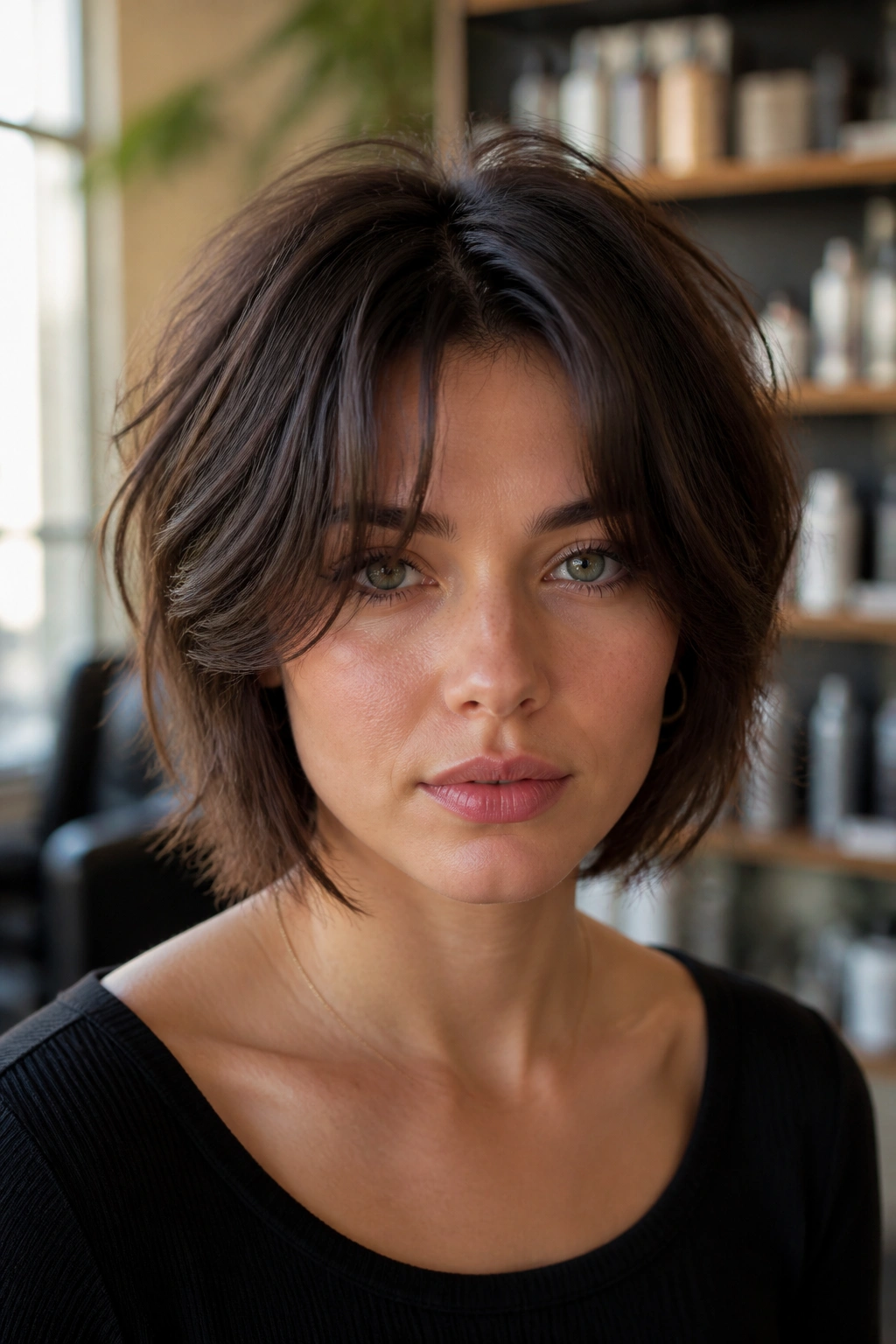
This is the version most people picture when they hear chin length wolf cuts for an edgy look. The shape hugs the jaw, the curtain bangs split softly in the middle, and the layers build just enough lift at the crown to keep the cut from feeling too neat. It’s the easiest entry point if you want attitude without looking like you raided a punk archive.
Why It Works
Curtain bangs do a lot of quiet work here. They soften the front, which keeps the shorter length from feeling harsh, while the choppy ends add that wolf-cut kick at the bottom. The result is a shape that moves when you turn your head. It does not sit there politely.
A stylist usually keeps the longest front pieces around the chin or just below it, then layers upward toward the crown. That gives you the airy top and the slightly shaggier lower half that make the cut read as a wolf, not a blunt bob.
Best for: oval faces, heart-shaped faces, and anyone who wants a cut that can be tucked behind the ears without losing its shape.
- Ask for soft graduation at the crown so the top doesn’t collapse.
- Keep the curtain fringe long enough to hit the cheekbone on each side.
- Style with a round brush only at the front if you want a smoother finish.
- Let the ends stay a little undone. That’s the point.
Pro tip: blow-dry the fringe first. If the bangs go flat, the whole cut feels less alive.
2. The Micro-Fringe Chin-Length Wolf Cut

Short fringe changes everything. A micro-fringe gives this wolf cut a harder edge, almost like the haircut is making eye contact with you. It’s not a safe choice, and that’s why it works.
The rest of the cut stays chin-length and choppy, but the tiny fringe creates a blunt little headline across the face. That contrast is what makes the style feel sharp. Without it, the cut can drift into soft shag territory. With it, the whole thing has a sharper pulse.
This version suits people who like their hair to look intentional even when it’s messy. The fringe needs regular trims, though. No way around that. A micro-bang grows out faster than people expect, and once it drops into the eyes, the shape loses its bite.
Wear it with air-dried texture or a rough blowout. Both work. Straight and sleek can look almost architectural, while a little bend in the layers makes the haircut feel more lived-in.
3. Feathered Layers for Fine Hair

Fine hair can look flat at chin length if the layers are too heavy or too blunt. Feathering solves that. The ends become lighter, the crown lifts, and the whole cut gets a bit of air under it.
What Makes It Different
Instead of carving out chunky sections, the stylist uses softer, more tapered layers. Think movement, not bulk. The effect is subtle at first glance, but it changes how the hair falls around the face. You still get the wolf-cut shape, only it feels lighter and more wearable for finer strands.
This is the version I’d recommend for someone who likes texture but hates the feeling of hair sticking to the sides of the face. The feathered edges create separation without making the ends look thin in a bad way. That balance matters.
How to Style It
- Use a light mousse at the roots before blow-drying.
- Finish with a small amount of texturizing spray through the mid-lengths.
- Flip the front pieces away from the face with a brush or your fingers.
- Avoid heavy oils near the root. They flatten the crown fast.
A cut like this can look delicate from far away and a little rebellious up close. That tension is the charm.
4. Heavy Layers for Thick Hair
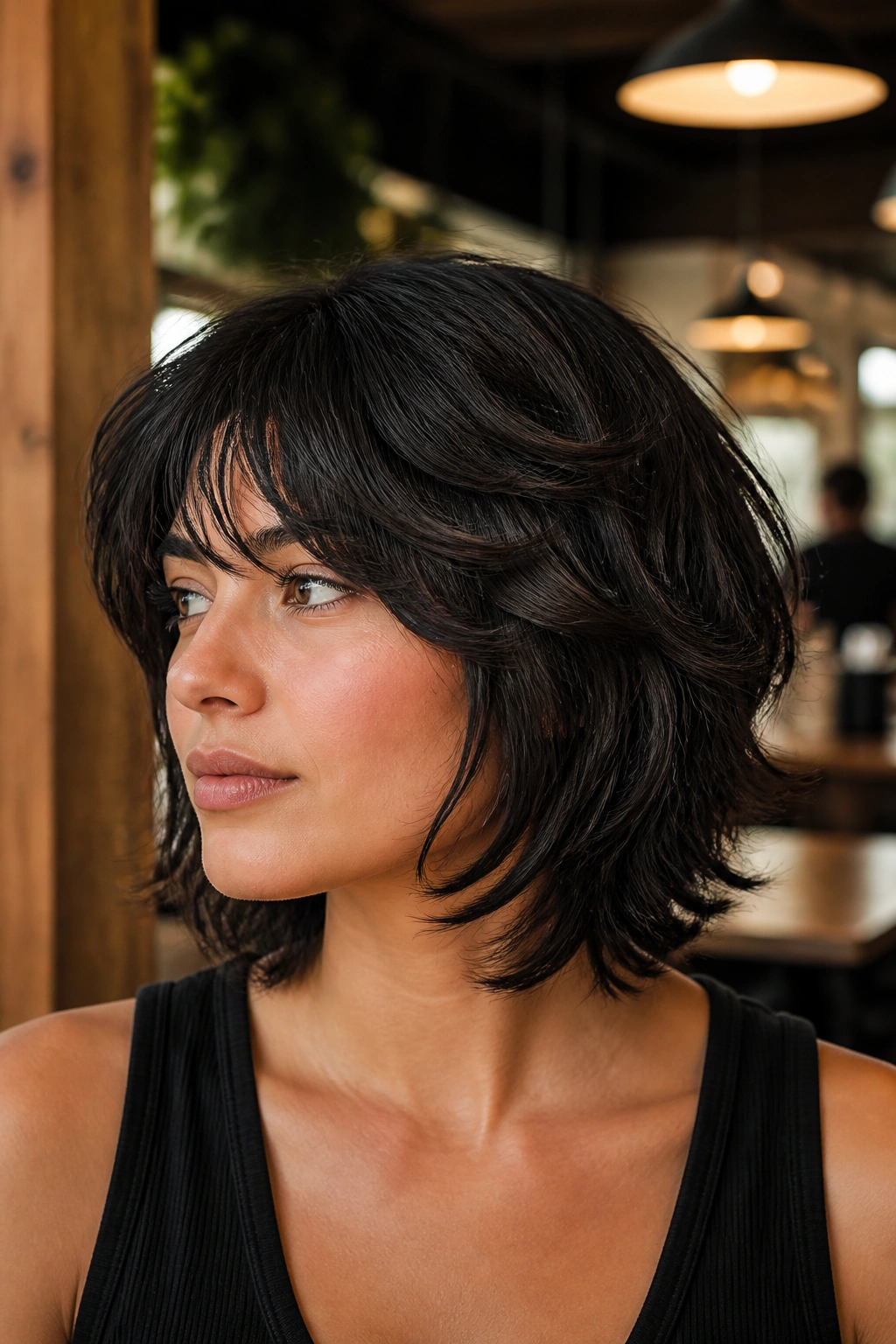
Thick hair and wolf cuts get along surprisingly well, but only if the layers are placed with some restraint. Too much thinning, and the shape turns fuzzy. Too little, and the cut can sit like a helmet. The sweet spot is a controlled, chin-grazing shape with enough internal layering to remove weight.
This version has more visible structure than the feathered styles. The front pieces still hit the jaw, but the interior layers take out some of the bulk so the hair can move. On thick hair, that movement is everything. Without it, the style loses the whole point of the wolf cut.
Ask for point-cutting or razor work if your stylist uses it well. Not every thick head of hair likes a razor, so a good cutter should judge the texture first. Coarse hair can take a stronger hand; dense wavy hair usually needs balance more than aggression.
Wear this one with a bit of grit in it. It looks best when the ends separate slightly instead of blending into one round mass.
5. Curly Chin-Length Wolf Cut
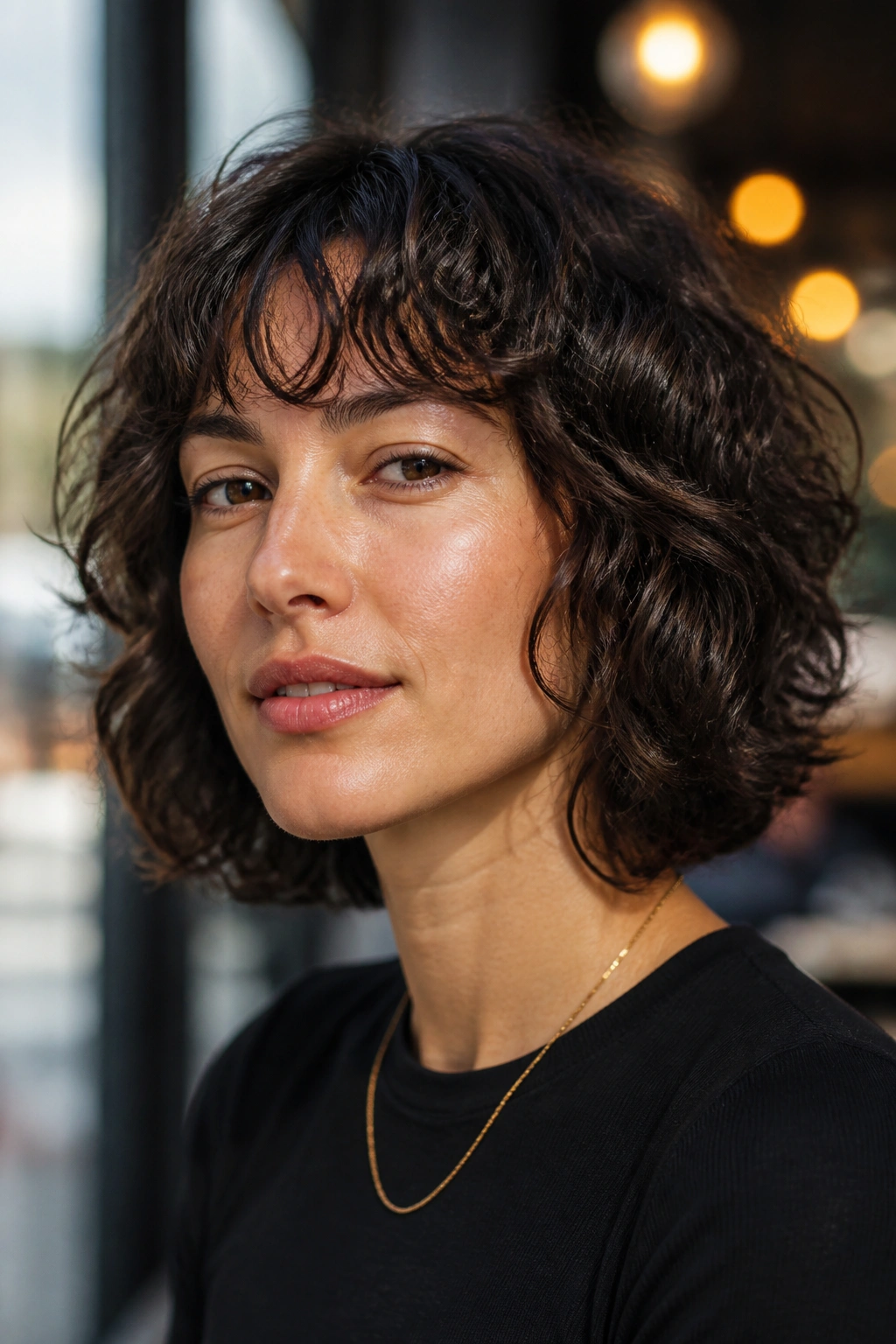
Curly hair and wolf cuts can be a dream or a disaster, and the difference usually comes down to where the layers start. A chin-length version should let the curls spring up without shrinking into a halo.
The best curly wolf cut keeps the perimeter around the chin while building shape through the crown and upper sides. That keeps the silhouette interesting. You get lift at the top, shape at the cheeks, and a little flare at the ends instead of one giant triangle.
How It Changes on Curly Hair
Curly hair does not behave like straight hair, which sounds obvious until you sit in the chair and watch the shrinkage take over. A good curly wolf cut respects that. The stylist should cut with the curl pattern in mind, not just the wet length.
That means the finished cut often looks shorter than it did at the salon. That’s normal. Curly hair bounces up, and chin-length often becomes cheek-to-chin length once it dries. Plan for that.
A diffuser helps here, but don’t overdo it. Dry the roots enough to build shape, then leave some curl cast in place if you want the texture to stay defined.
6. Sleek Razored Ends
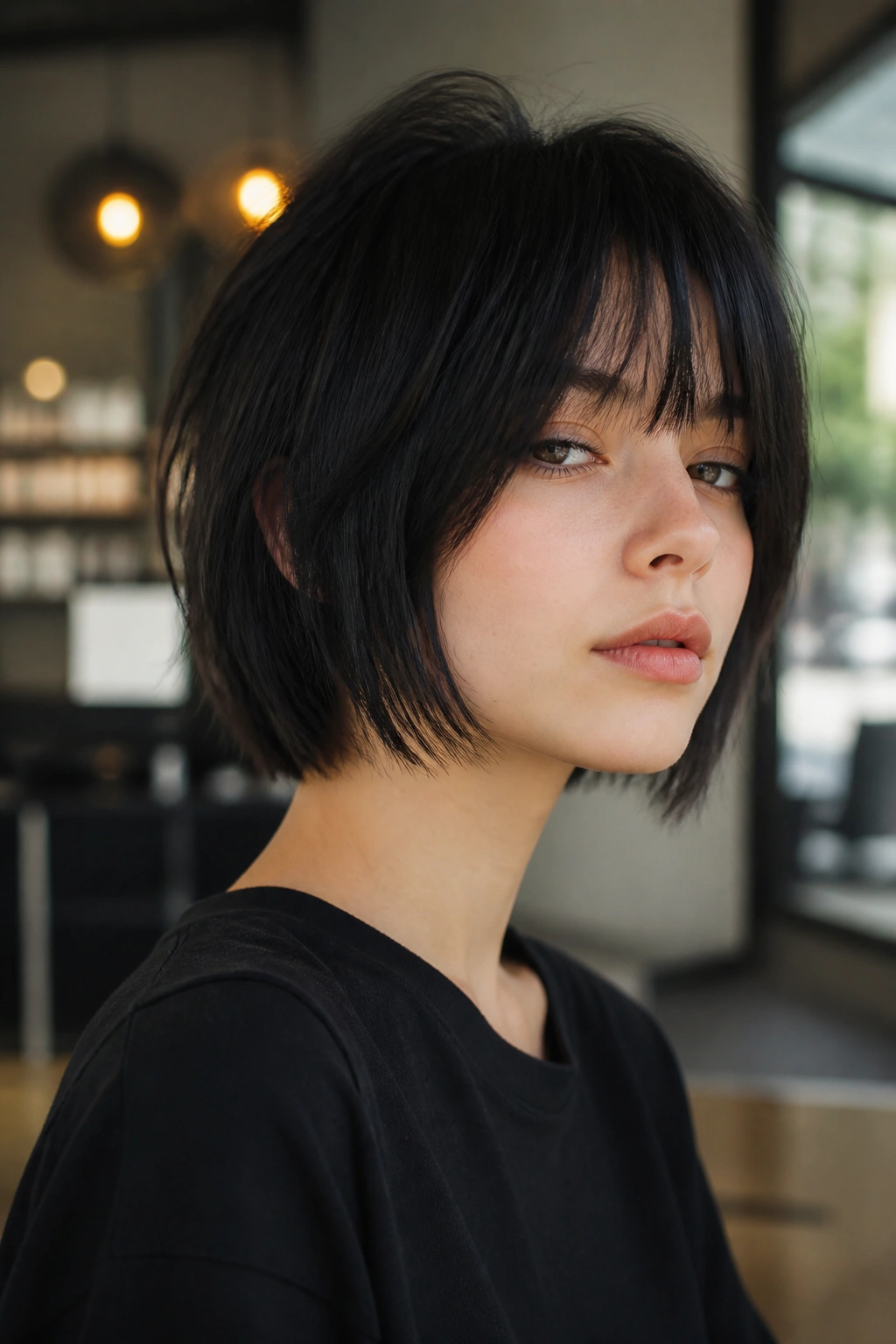
People assume wolf cuts must be messy. Not true. A sleeker version can be far more striking because the shape shows up cleanly. Razored ends create a narrow, razor-sharp line that makes the chin-length silhouette feel almost graphic.
This one is good if you like an edge that looks deliberate rather than wild. The layers stay visible, but they’re not fluffy. The ends taper and separate, giving the haircut a sharper outline around the jaw and neck. It’s a better choice for straight or slightly wavy hair than for very coarse texture.
You’ll probably need a smoothing cream or a light serum to keep the ends from puffing up. Not much. A pea-sized amount is enough for most hair lengths at this cut. Too much product and the razor detail disappears.
A sleek wolf cut can look expensive in the plainest sense of the word: the shape is clean, the line is crisp, and the haircut does the talking. That’s the appeal.
7. Piecey Fringe with Shaggy Texture
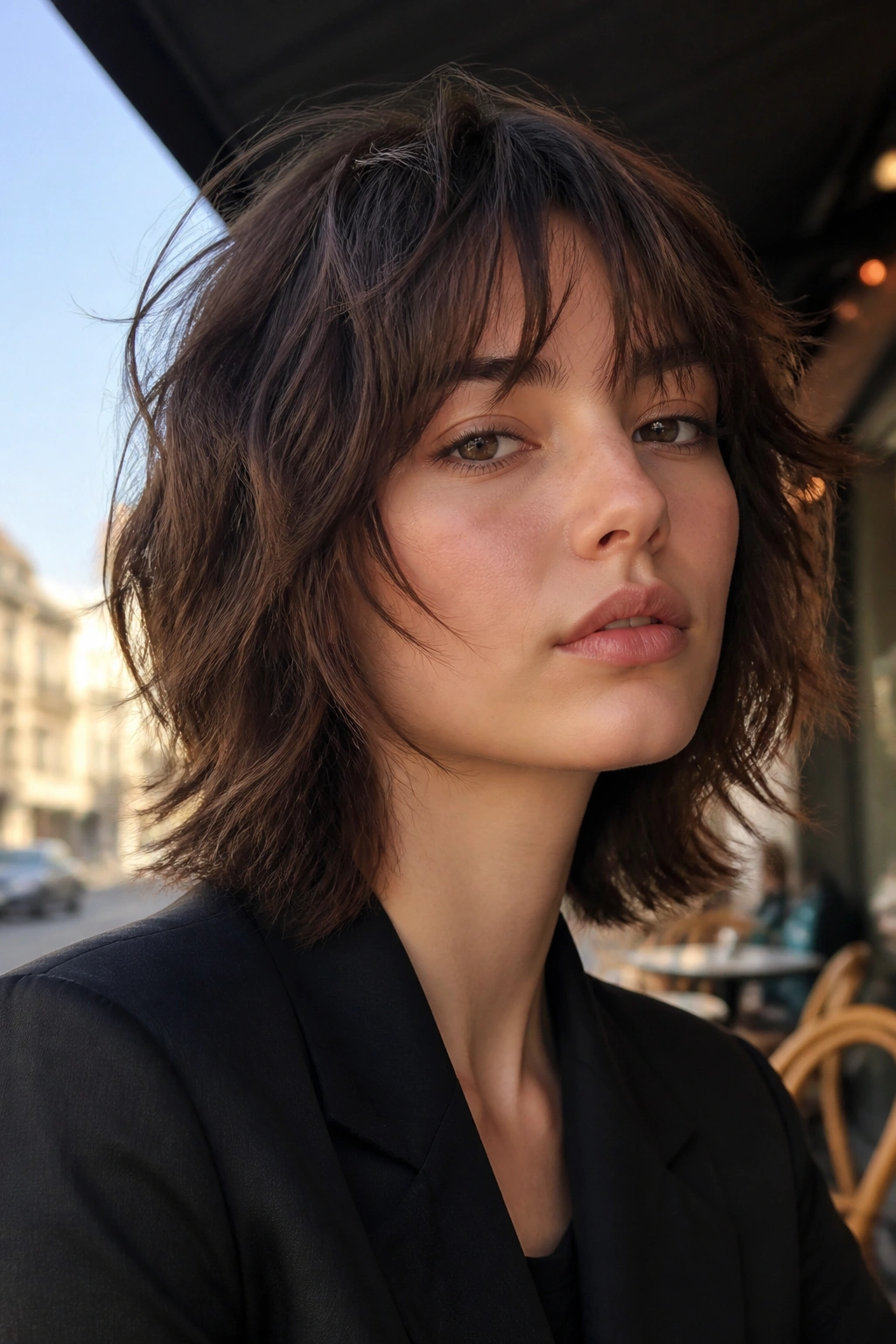
If you want the haircut to look a little windblown even when you’ve barely touched it, this is the version to ask for. The fringe is broken into pieces, the layers are a touch choppy, and the overall effect feels undone in a good way.
Why It Stands Out
A piecey fringe does not sit as one heavy block across the forehead. It opens the face up. That matters with chin-length hair because the cut already pulls attention upward and inward. Breaking the fringe keeps the front from feeling crowded.
The shaggy texture through the sides helps too. It keeps the haircut from reading as a mini bob with attitude. You want movement around the cheekbones and jaw, not a solid frame.
Style Notes
- Mist a sea-salt spray through damp hair.
- Scrunch lightly, then dry with a diffuser or air-dry.
- Pinch out a few front pieces with a dab of matte paste.
- Keep the fringe slightly uneven. Clean edges kill the mood.
This version suits people who like hair that never looks too “done.” That sounds casual, but it takes a decent cut to pull off well.
8. Rounded Chin-Length Wolf Cut
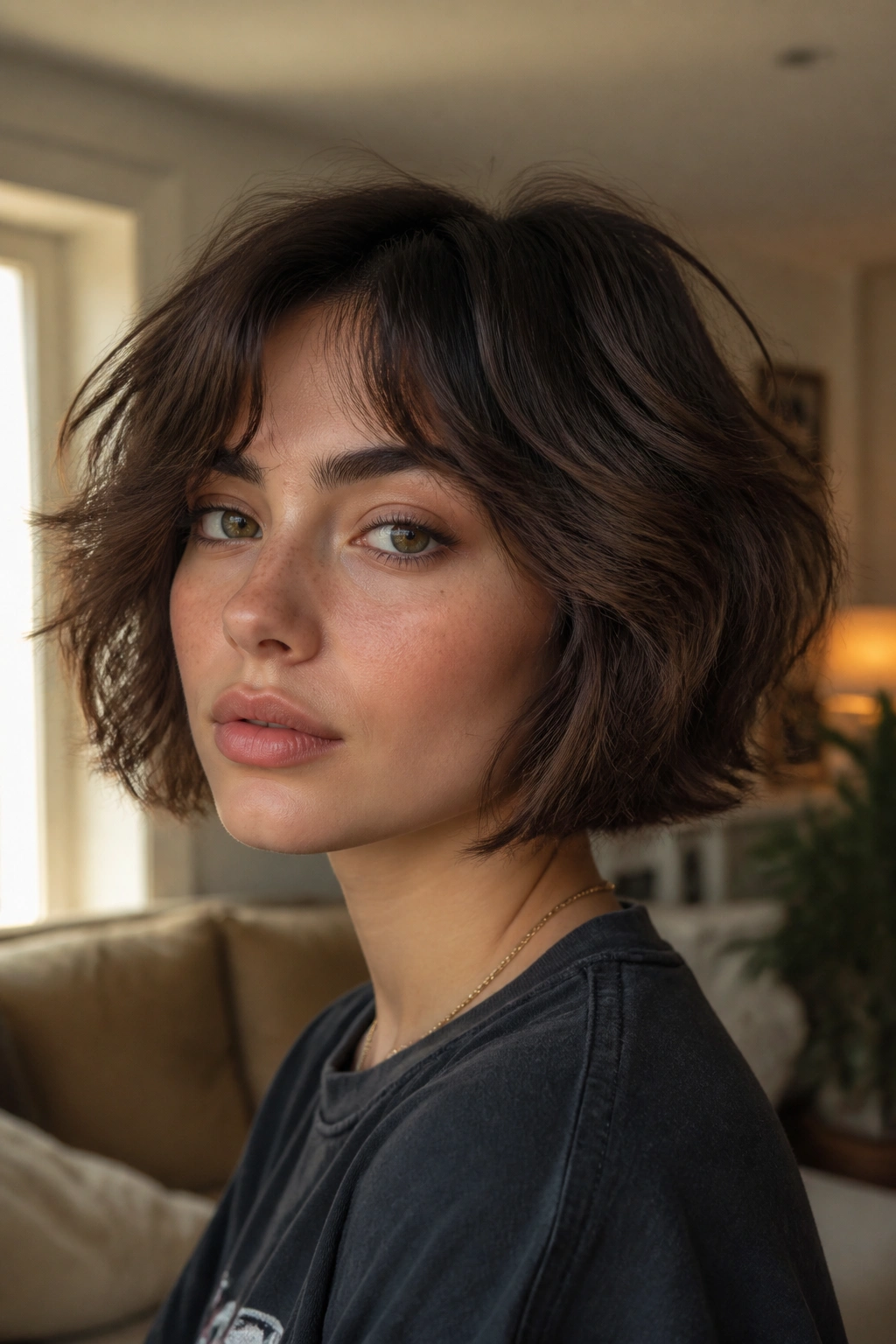
Here’s the softer side of the wolf cut family. The rounded version still has layers and texture, but the overall shape curves around the head instead of going blunt at the bottom. It feels less jagged, more sculpted.
That curve is what keeps it from becoming too harsh at chin length. The hair brushes the jaw, then folds inward or outward depending on how it’s dried. A good stylist can build that bend into the cut itself, especially if your hair has a natural wave.
This one is especially nice if you want the wolf-cut spirit without leaning too far into punk. It still has bite. It just shows up in a quieter way. The best styling move is a round brush at the ends and a light lift at the crown, nothing more.
A rounded shape can also be kinder to stronger jawlines. Not because it hides them — I dislike that advice — but because it creates a little contrast rather than lining up exactly with the bone.
9. Chin-Length Wolf Cut with Flipped Ends
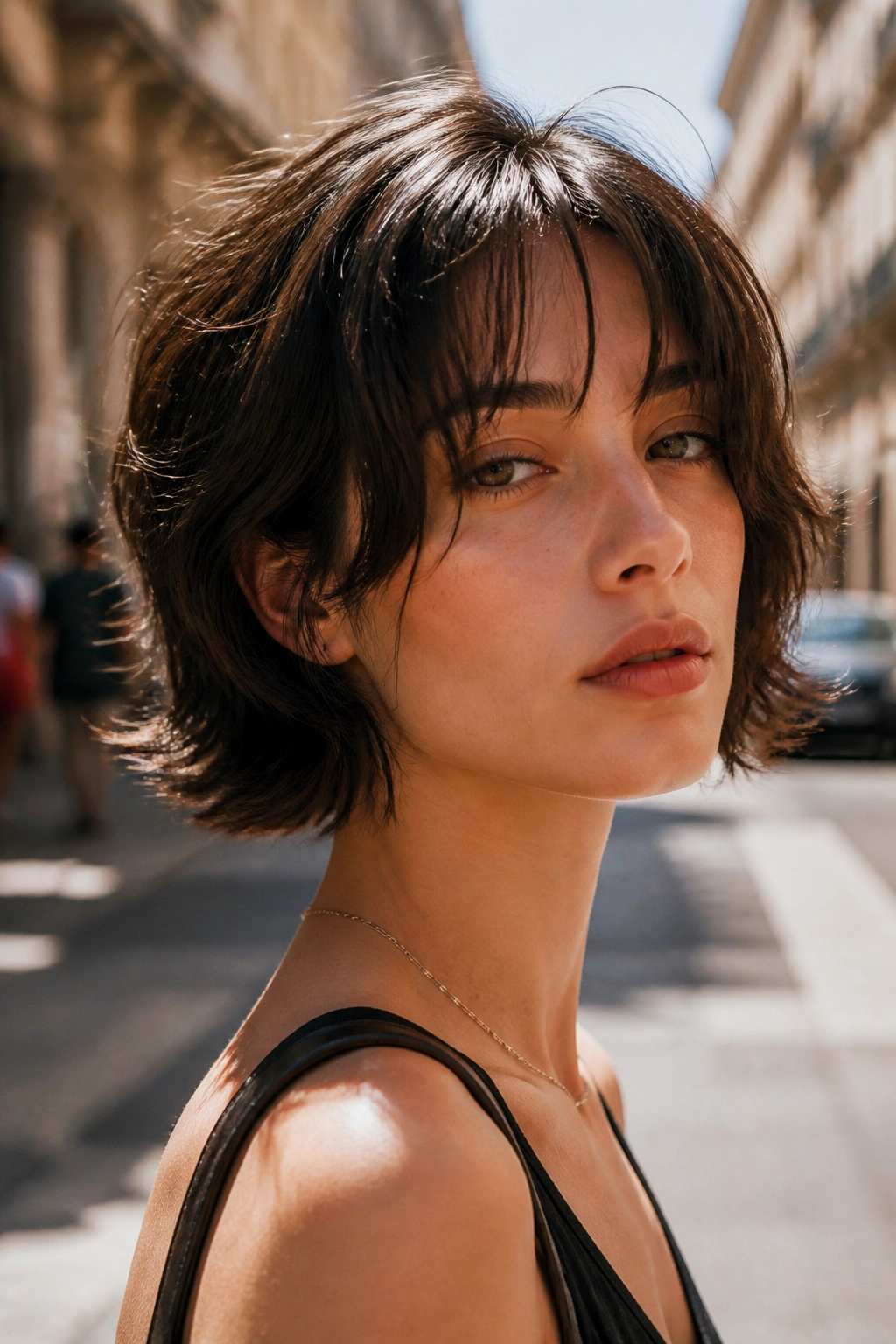
A flip at the ends changes the whole attitude of the cut. Instead of falling straight, the lower layer kicks out slightly, which gives the haircut a touch of swing and a little bit of cheeky energy.
This works especially well when the front pieces are chin-skimming and the back is just a hair shorter. That tiny difference in length creates movement. You can dry it under with a brush for a cleaner finish, or flip the ends out with a flat iron if you want the shape to look sharper.
What to Watch For
If the flip is too big, the haircut starts looking dated. If it’s too small, you lose the point. Aim for a bend, not a curl. A bend.
The style tends to look best on hair that holds shape well: medium thickness, a bit of natural wave, or straight hair with some grit in it. Super-soft hair may need a volumizing spray to keep the ends from dropping.
This cut has a playful edge. Not loud. Just playful enough to keep the shape from feeling too serious.
10. Two-Tone Chin-Length Wolf Cut

Color can make a wolf cut feel far more daring, and two-tone placement is one of the cleanest ways to do it. A darker underlayer with lighter face-framing pieces, or the reverse, throws the layers into relief.
That contrast helps a chin-length cut read from across the room. You see the movement faster because the color is doing part of the shape work. If the haircut has strong texture, the two tones make each piece easier to read. If the cut is softer, the color gives it more drama.
This is where placement matters more than saturation. A bright money piece at the front can sharpen the face-framing layers. Shadowed roots and lighter ends can make the cut look deeper and a little moodier. Either route works.
Maintenance is the catch. Color like this wants upkeep, and the grow-out is part of the look only if you like that kind of lived-in contrast. If you don’t, keep the shades closer together and let the haircut carry the edge.
11. Soft Mullet Wolf Cut
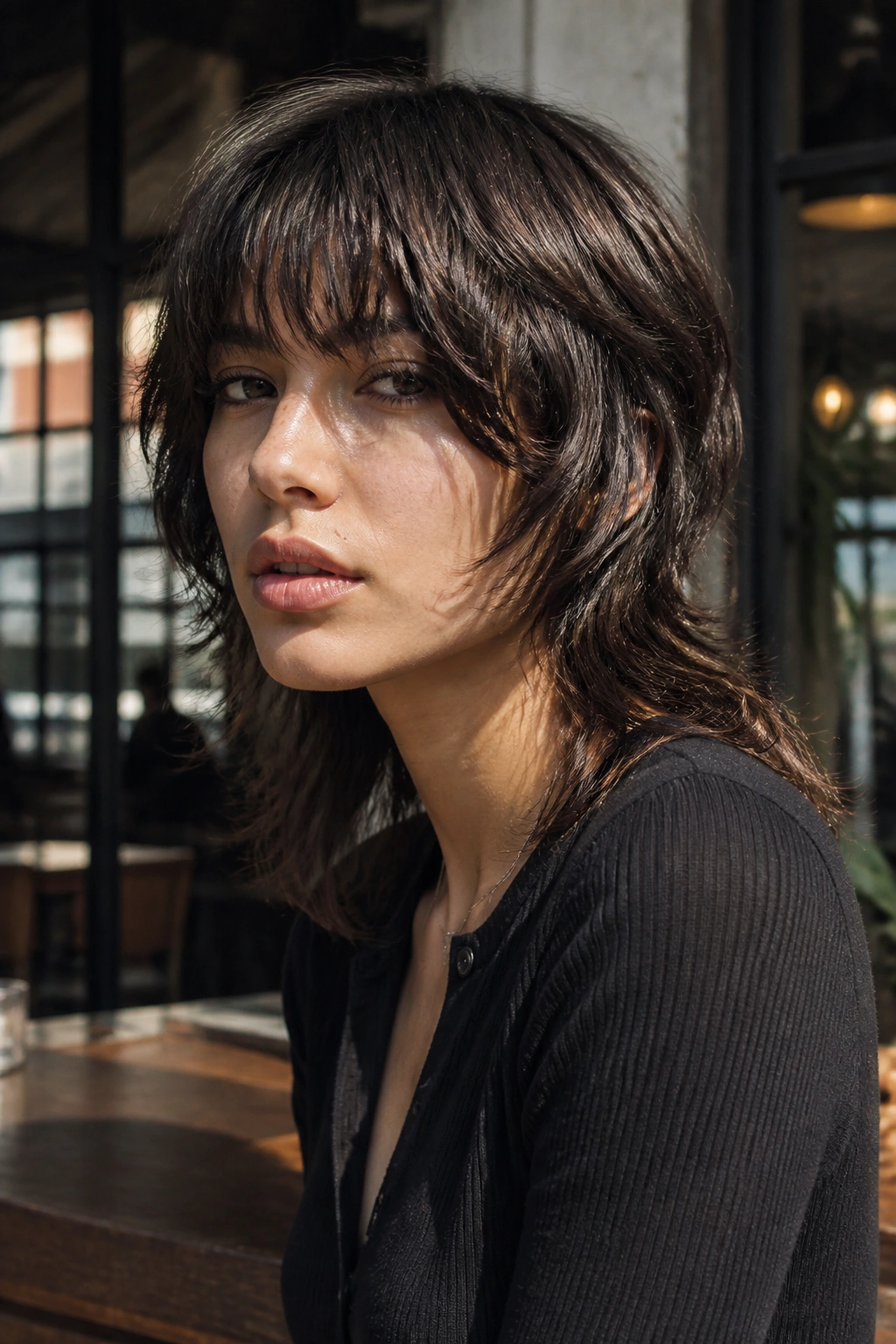
This is the closest the list gets to a proper mullet, though “soft” is doing a lot of work here. The front stays around the chin, the sides stay light, and the back hangs a touch longer so the silhouette has that unmistakable wolf-cut tension.
I like this version when someone wants edge but doesn’t want the haircut to feel frozen in one mood. It can look cool and sharp with a straight blow-dry, or more relaxed if the back is left a little shaggy. The longer rear section gives the style some swing when you turn your head.
Why It’s Different
A classic bob closes in around the face. This doesn’t. The back length keeps the shape from feeling boxed in, while the front stays tight enough to frame the jaw. That push and pull is the whole point.
It’s a strong choice for people who like fashion-forward hair but still need it to work with a coat collar, a scarf, or just daily life. The shape is bold, but not so bold that it fights every outfit.
12. Wet-Look Chin-Length Wolf Cut

A wet-look finish can make a chin-length wolf cut feel sharper than any amount of teasing or backcombing. The hair clumps into defined sections, the texture shows clearly, and the whole cut reads sleek, intentional, and a little dangerous.
The style depends on the cut doing enough work on its own. You need visible layers and a strong perimeter, because the product will flatten some of the softness. That’s fine if the shape is already good. It’s a mess if the haircut is vague.
How to Wear It
Start with damp hair, then apply a gel or cream-gel mix from roots to ends. Use your fingers to separate the front pieces and keep the crown slightly lifted. Don’t rake it into one uniform sheet. That kills the texture.
A wet look works well for nights out, but it can also be a smart everyday choice if you like your hair off your face. It feels neat in a slightly rebellious way, which is a nice trick when you want edge without making a big scene.
13. Air-Dried Natural Texture Cut

Some cuts need styling to look good. This one should look good with almost no help. The haircut is built to follow your natural bend, whether that’s a loose wave, a soft curl, or a bend that shows up only after the hair dries on its own.
That makes it a practical option for people who are tired of fighting their texture. The chin-length shape keeps the cut visible, while the wolf layers stop the ends from turning heavy. If your hair tends to poof at the bottom, this can be a huge relief.
A good air-dry cut depends on the perimeter. If the base line is too blunt, the shape can feel blocky as it dries. If it’s too shredded, the ends may look weak. The middle ground is where the real magic lives.
Use a leave-in conditioner on the mids and ends, then leave the roots light. Too much product at the crown and the airy top disappears fast. Not ideal.
14. Deep Side-Part Wolf Cut
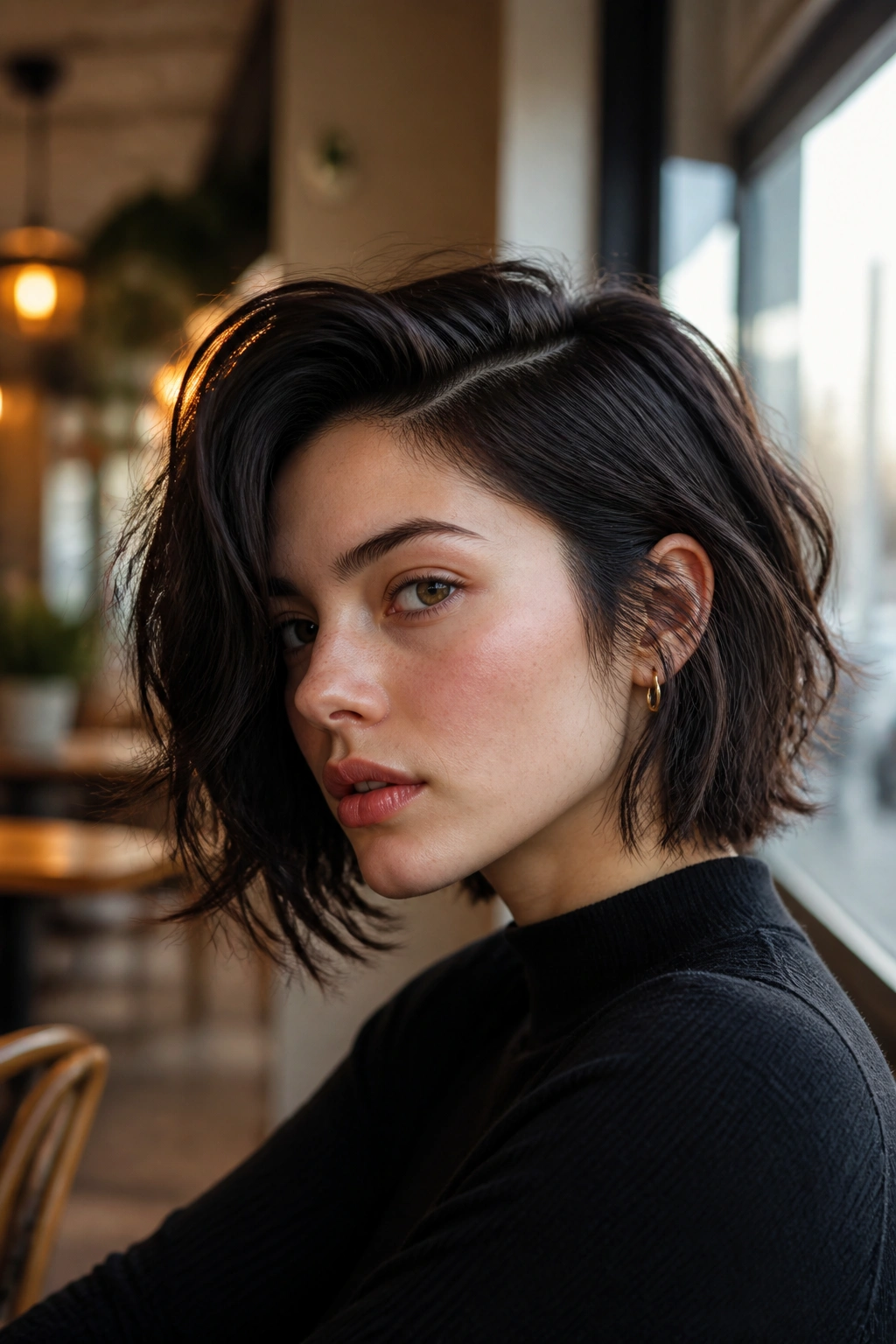
A deep side part gives the wolf cut instant attitude. It shifts the balance of the haircut, pushes one side forward, and creates a diagonal line that makes the jaw and cheekbones stand out more sharply.
This is one of the easiest ways to make a chin-length cut feel less expected. The asymmetry changes the mood without needing a dramatic color change or an extreme fringe. One side gets more volume. The other side tucks in. Simple, but effective.
The Shape Advantage
The deep part works especially well if your hair has some natural lift at the root. If it doesn’t, a little root spray on the heavier side can help the shape stay up long enough to matter. A side-part wolf cut should never collapse into a flat curtain.
It also photographs with a harder line through the face. I know, I know — that sounds like a social-media phrase, and I’m trying to stay away from that sort of fluff. What I mean is the haircut reads faster. Your eye catches the line immediately.
Wear it when you want the haircut to do the styling for you.
15. Low-Maintenance Chin-Length Wolf Cut for Everyday Wear

Not every edgy cut needs to demand a hair dryer and twenty minutes of your life. The low-maintenance chin-length wolf cut keeps the layers soft enough to grow out gracefully, but still choppy enough to look deliberate on a tired Tuesday morning.
This is the version for real life. School run, office, train, grocery store, dinner out. It works across all of it. The key is a shape that stays visible even when it isn’t freshly styled. That usually means chin-length front pieces, a slightly longer back, and enough internal layering to stop the silhouette from puffing out.
The best part is that this cut ages well between trims. As it grows, it leans more shaggy than severe, which is not a bad trade at all. If you want a haircut that keeps some attitude without becoming high-maintenance, this is the one to ask for.
A quick spritz of texture spray, a finger-tousle, and you’re done. No drama. No elaborate routine. Just hair with a little edge and enough structure to look like you meant it.
