



Bangs are optional. A good shag does not need them.
Long shag haircuts without bangs have a particular charm: they keep the face open, keep the layers messy in a good way, and skip the constant bang-trim routine that can turn a flattering cut into a small maintenance project. The shape does the heavy lifting here. Internal layers, feathered ends, and smart face-framing pieces can give you movement without a fringe sitting on your forehead all day.
That matters more than people admit. A no-bang shag tends to grow out better, it’s easier to pull back without weird little pieces sticking out, and it usually gives you more room to play with your part. The best versions don’t look like someone forgot to cut the bangs; they look intentional, airy, and a little undone.
And there’s a nice bonus. A skilled shag can make hair look fuller at the crown, lighter at the ends, and more alive overall, especially when the cut is tailored to your texture instead of copied from a photo with a different head shape and a different density of hair. That part gets ignored a lot. Texture matters. So does where the layers start. So does whether the ends are sliced, feathered, or left a little blunt.
1. Soft Feathered Long Shag Haircut Without Bangs
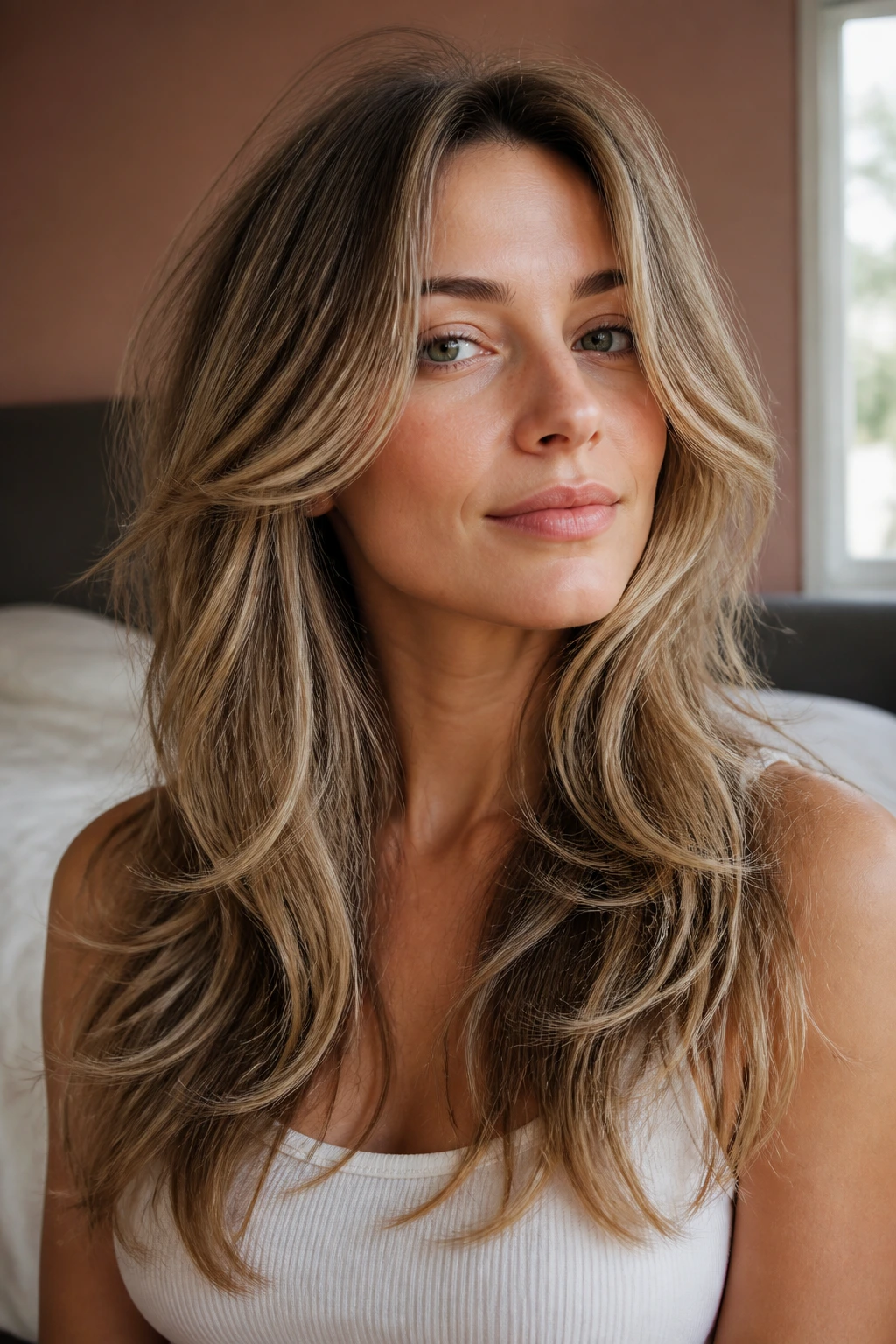
This is the version I’d hand to someone who wants movement without drama. The layers start softly around the cheekbone or jaw, then taper down in loose feathers that don’t shout for attention. It’s relaxed, but not lazy.
Why the Feathering Works
Feathered layers give long hair lift without making the ends feel thin and wispy. The trick is keeping the shortest face-framing pieces long enough to blend into the rest of the cut. If they stop too high, the style starts to feel like old-school choppy layers. If they sit around the cheekbone and curve toward the collarbone, the whole shape feels smoother.
This cut is especially good if your hair gets flat at the roots but you hate a lot of visible layering around the forehead. It opens the face, but the opening happens at the sides, not across the brow.
- Ask for soft point-cutting instead of blunt, chunky steps.
- Keep the shortest layers around cheekbone to jaw level.
- Style with a light mousse at the roots and a round brush at the top.
- Finish with a pea-sized amount of cream through the mids and ends.
Best tip: blow-dry the crown first, then bend the ends slightly outward with a brush. That little bend keeps the cut from falling flat and stringy.
2. Razor-Cut Ends for Straight Hair
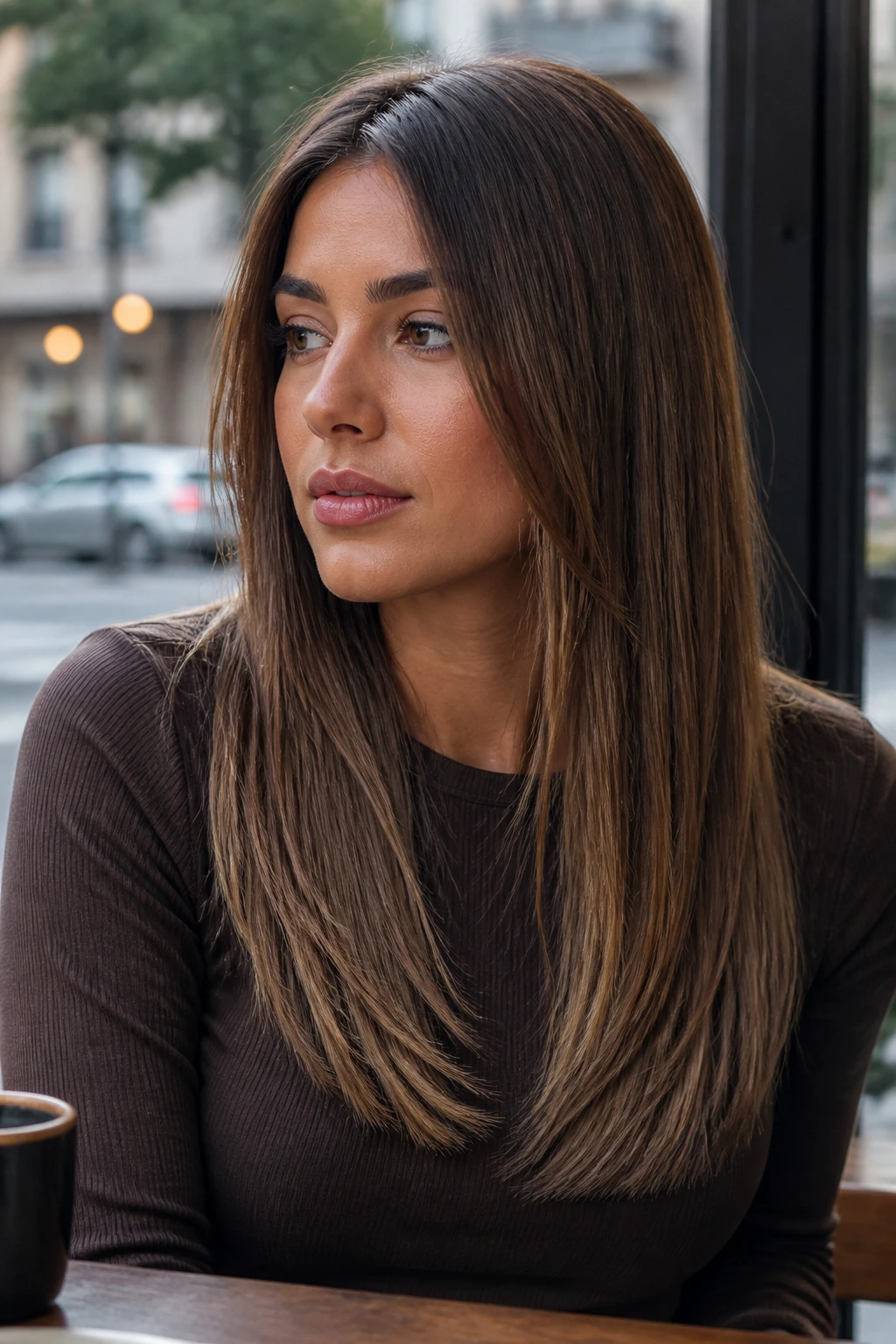
Why does straight hair look so good with a razor cut? Because straight strands can go limp fast, and a razor gives them a softer edge that moves instead of hanging there like a curtain. The result is cleaner than a heavy layered cut and less fussy than a blunt one.
Razor-cut long shags without bangs tend to work best when the stylist uses the tool sparingly. Too much razor work and the ends can fray in a bad way, especially on hair that’s fine or already dry. Used with control, though, it gives you that broken-up texture that looks good even when you skip heat styling for a day.
What to Ask For
Ask for the outer perimeter to stay long while the inner layers are carved out. That keeps weight in the line, which matters more than people think. A shag with no solid shape at the bottom can look thin fast.
A sleek finish helps here.
- Use a heat protectant cream before blow-drying.
- Dry with a medium round brush to keep the ends smooth.
- Add a tiny drop of serum only to the last 2 to 3 inches.
- Skip heavy oils near the roots unless your hair is very coarse.
This one is sharp, but not severe. There’s a difference.
3. Curtain-Like Face Framing Without Bangs
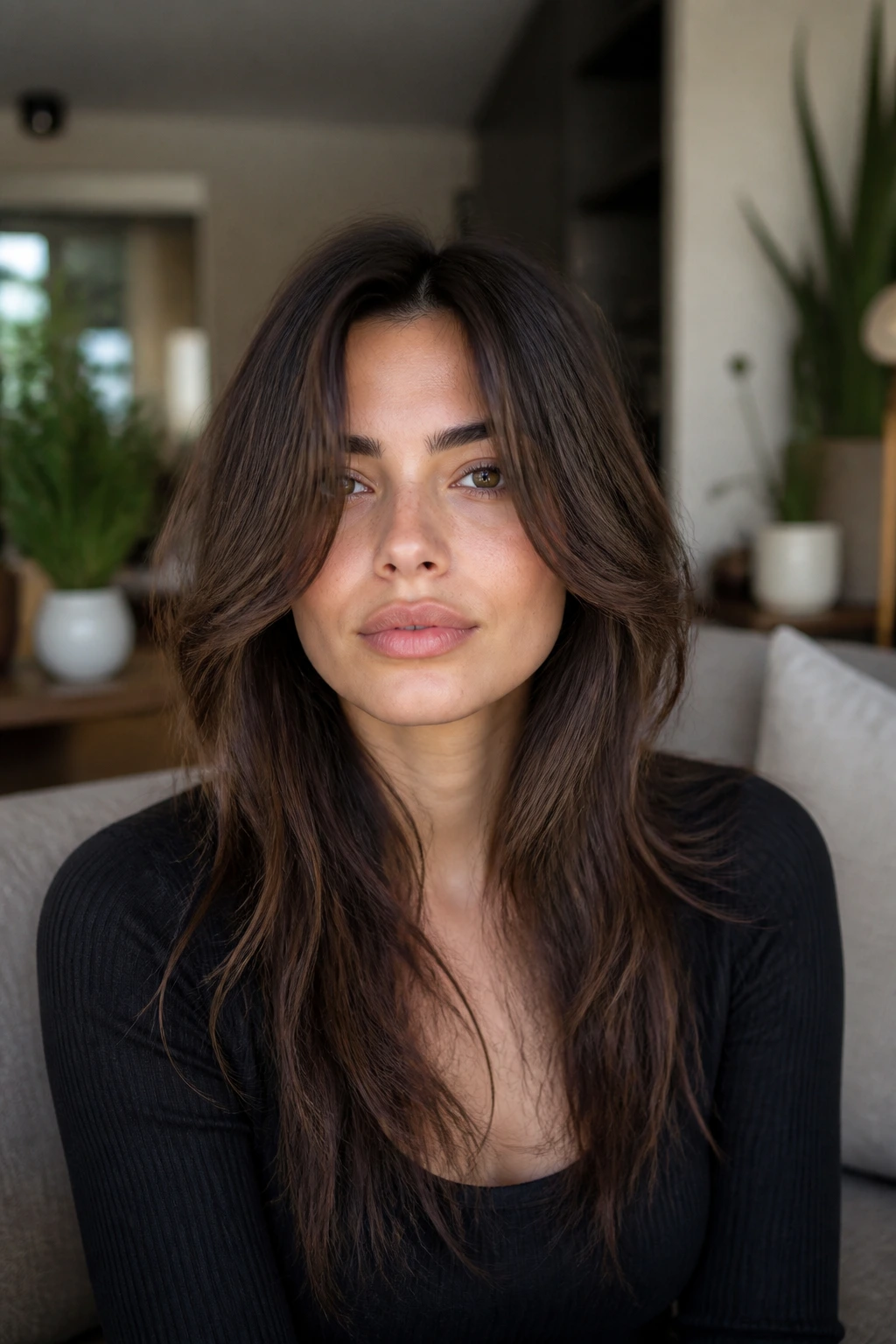
Picture this: the front of the hair opens in the middle, sweeps away from the face, and lands in long, curved pieces that hit around the mouth and collarbone. That’s the whole magic of this cut. It borrows the flattering shape people like in curtain bangs, then removes the actual bangs part.
The appeal is obvious once you see it on someone with a long face, a narrow forehead, or hair that feels too samey when it’s all one length. Those front pieces give the illusion of structure without dropping a fringe across the eyes. They also grow out far better than true bangs, which is one reason I keep coming back to this shape.
How to Get the Most From It
The front sections need to be cut to move back, not straight down. That means the stylist should connect the shortest pieces into the side layers so the shape doesn’t look chopped off.
- Start the shortest face-framing piece around lip level or lower.
- Ask for a center part with soft opening around the cheekbones.
- Use a blowout brush to turn the front away from the face.
- Add a mist of light-hold spray so the front doesn’t collapse by noon.
It’s a quiet cut. That’s the point.
4. Wavy Long Shag That Air-Dries Well
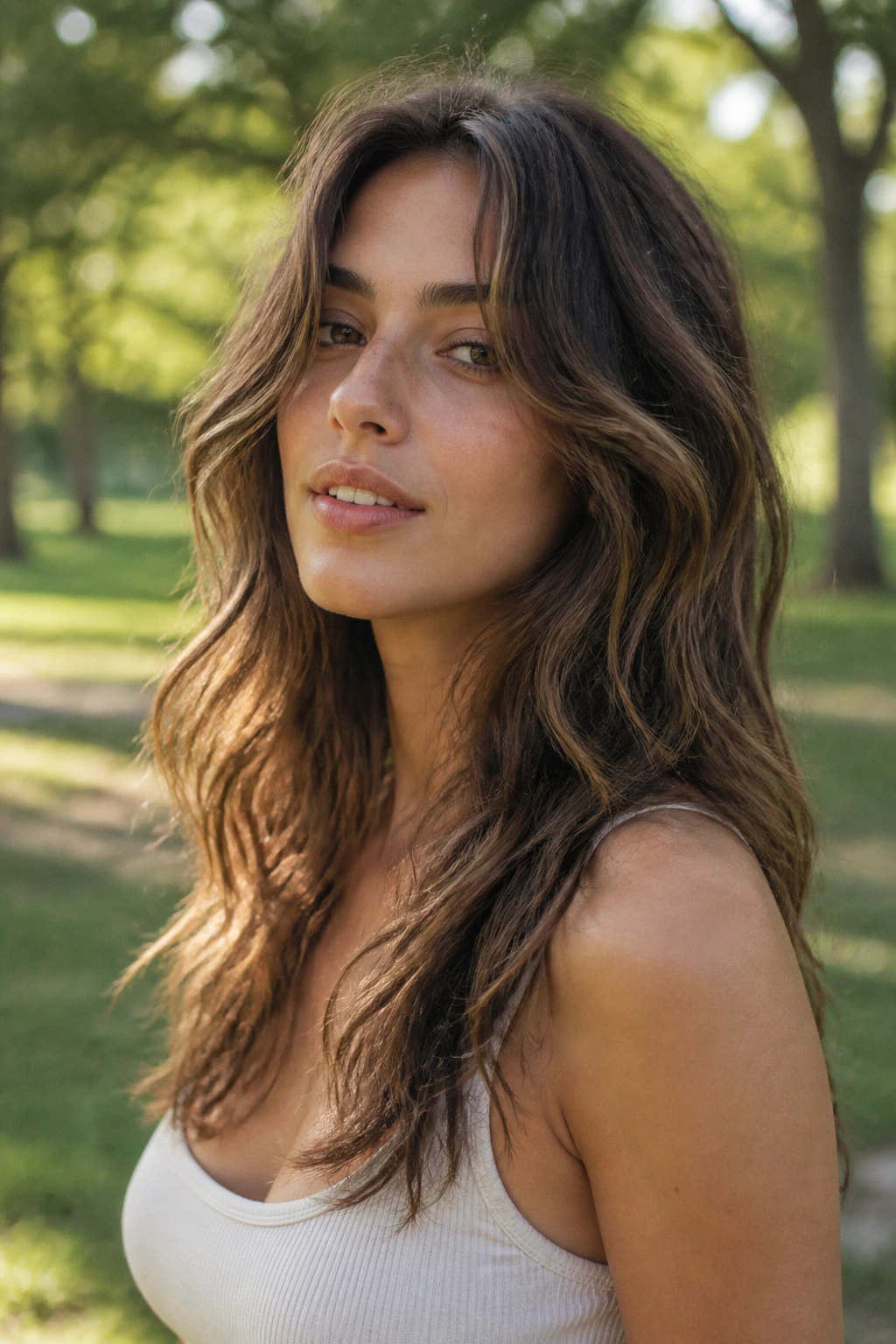
A good wavy shag is a little messy, a little soft, and much easier to wear than people expect. The layers let waves stack on top of each other instead of forming one heavy triangle. That makes the shape feel light even when the hair is long.
Air-drying is where this one shines. If your hair already has a bend to it, a long shag haircut without bangs can dry into shape with almost no effort, provided the layers are cut in the right places. You want lift through the crown and enough length left at the bottom so the wave pattern doesn’t puff out.
Use a leave-in conditioner on damp hair, then work in a small amount of mousse from ear level down. Scrunch once or twice, not ten times. Too much handling makes the wave clump in odd places.
A diffuser helps when the top goes flat.
Not a giant amount of product. Just enough to keep the strands from drying fuzzy.
5. Curly Long Shag With Invisible Layers
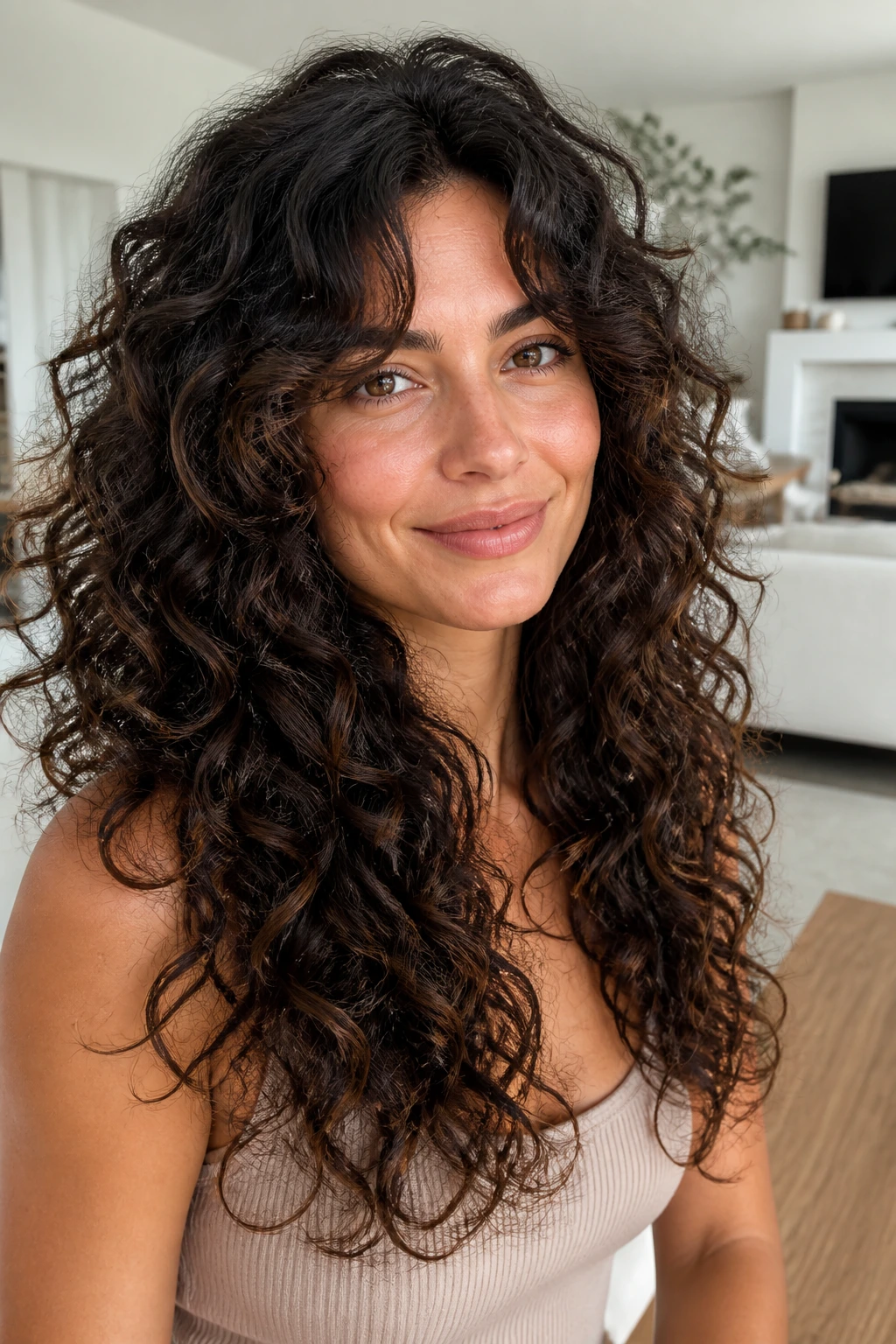
Curly hair and shags are a smart match, but the cut has to respect the curl pattern or it turns into a triangle. The best long shag on curls uses invisible layers that remove bulk from the inside while keeping the outline long and full. You get shape, not frizz-led chaos.
I like this version because it keeps the curls looking plush. The hair still hangs with length, but the layers stop the ends from stacking too heavily around the shoulders. That matters on denser curl types, where the bottom can get wide while the top stays comparatively flat.
The Part Most People Miss
A curly shag often needs to be cut dry or close to dry. Curly hair lies to you when it’s wet. A curl that looks modest in the chair can spring up an inch or two once it dries, and that changes the whole shape.
Ask for:
- Long internal layers rather than short chopped ones
- Face-framing pieces that begin below the cheekbone
- Curl-by-curl shaping if your pattern is uneven
- A finish that keeps the perimeter soft, not puffed
Style it with curl cream, a little gel, and a diffuser on low heat. Then stop touching it. Seriously. That last part matters.
6. Heavy Crown Volume and Tapered Ends
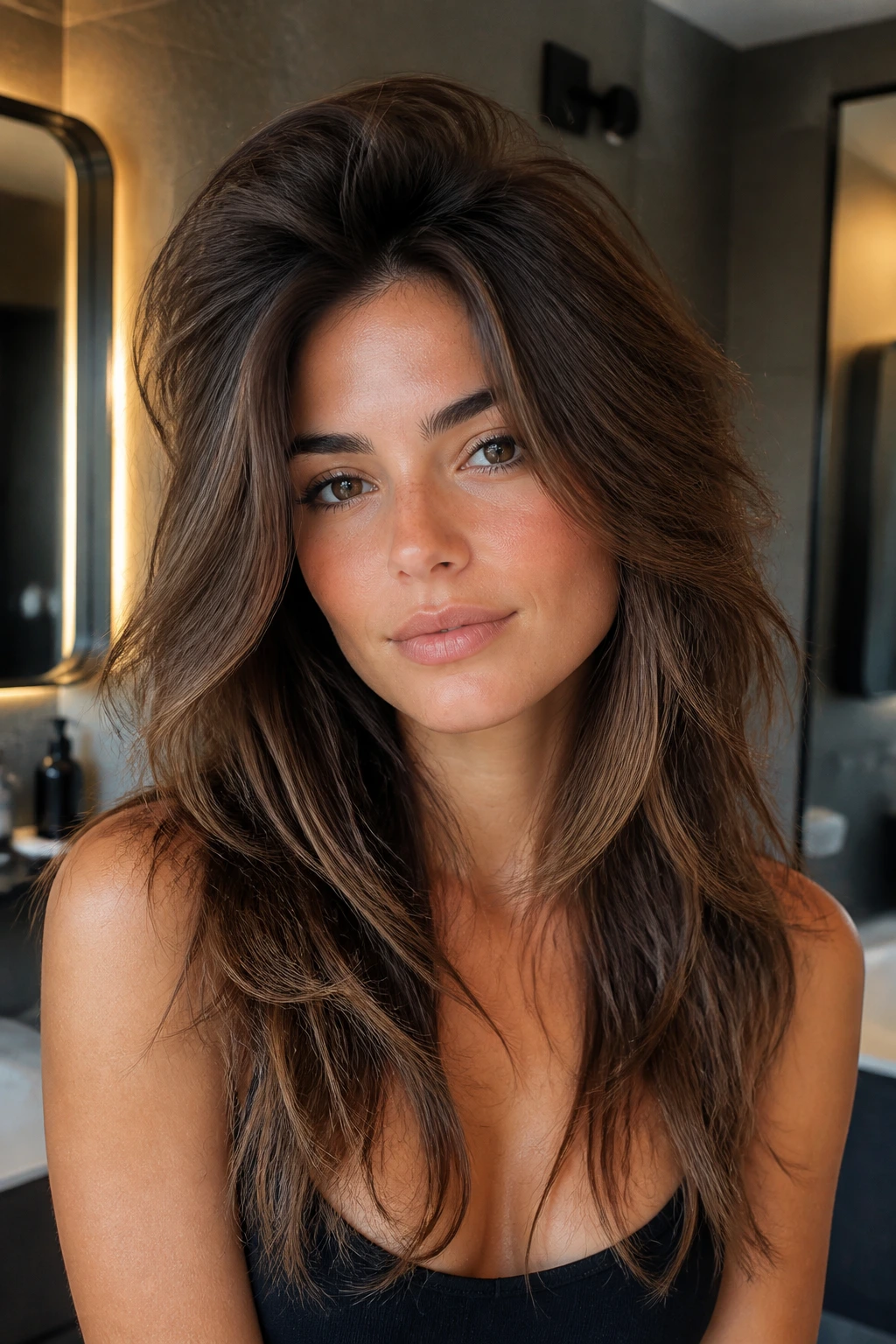
Want height at the top and less weight at the bottom? This is the shag for that. The crown gets lifted with shorter internal layers, while the lower lengths stay narrow enough to keep the silhouette from looking bulky. It’s one of the better long shag haircuts without bangs if your roots flatten the second you leave the house.
The shape can be dramatic in the best way. Hair lifts at the crown, falls through the sides, and finishes with tapered ends that feel airy rather than blunt. On thick hair, that balance keeps the cut from becoming a heavy blanket. On finer hair, it can create the illusion of density up top without stealing too much length.
How to Wear It
- Blow-dry the crown with a small round brush.
- Direct the roots upward first, then back.
- Use a dry texture spray at the crown, not the ends.
- Avoid over-layering the lower half or the shape can look hollow.
This cut looks best when the top has a little life in it. Flat roots kill the whole effect.
7. Slightly Mullet-Leaning Shag for an Edge
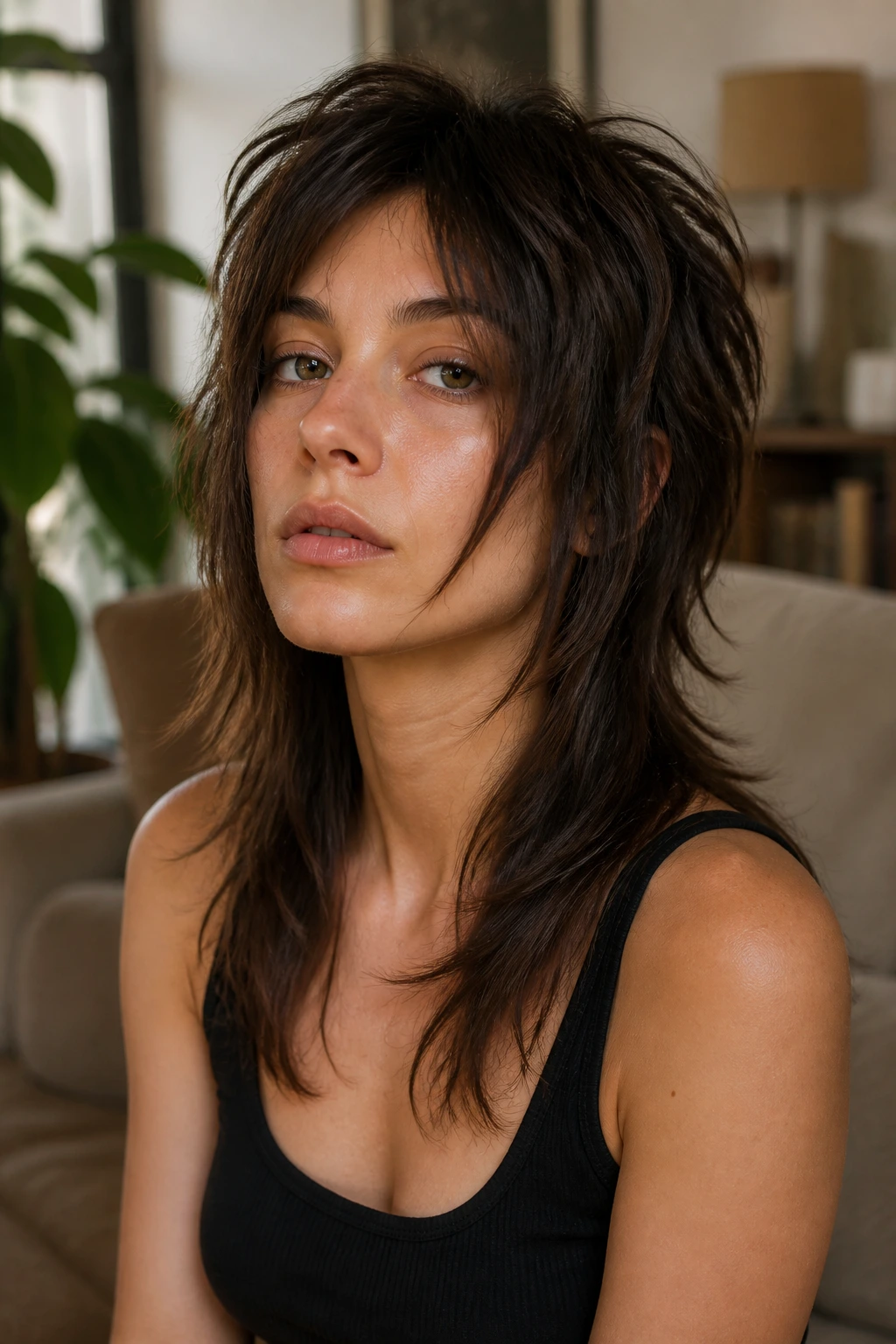
Not every shag needs to be soft. Some people want a cut with a little bite, and this is the one. The front stays long and open, the crown gets choppier layers, and the back holds a bit more length than a standard shag. It nods toward a mullet, but it doesn’t jump all the way there.
The useful part is the contrast. Shorter texture on top gives the haircut energy, while longer pieces in the back keep it wearable. Without bangs, the face stays clear, which helps the cut feel less costume-y and more like a cool, lived-in shape.
This version works best if you like styling your hair with your hands instead of a brush. A dab of styling paste through dry ends can make the layers pop. A rough blow-dry makes it even better.
If you like neat and polished, skip this one.
If you like a haircut that looks better a little imperfect, keep going.
8. Bohemian Air-Dried Long Shag
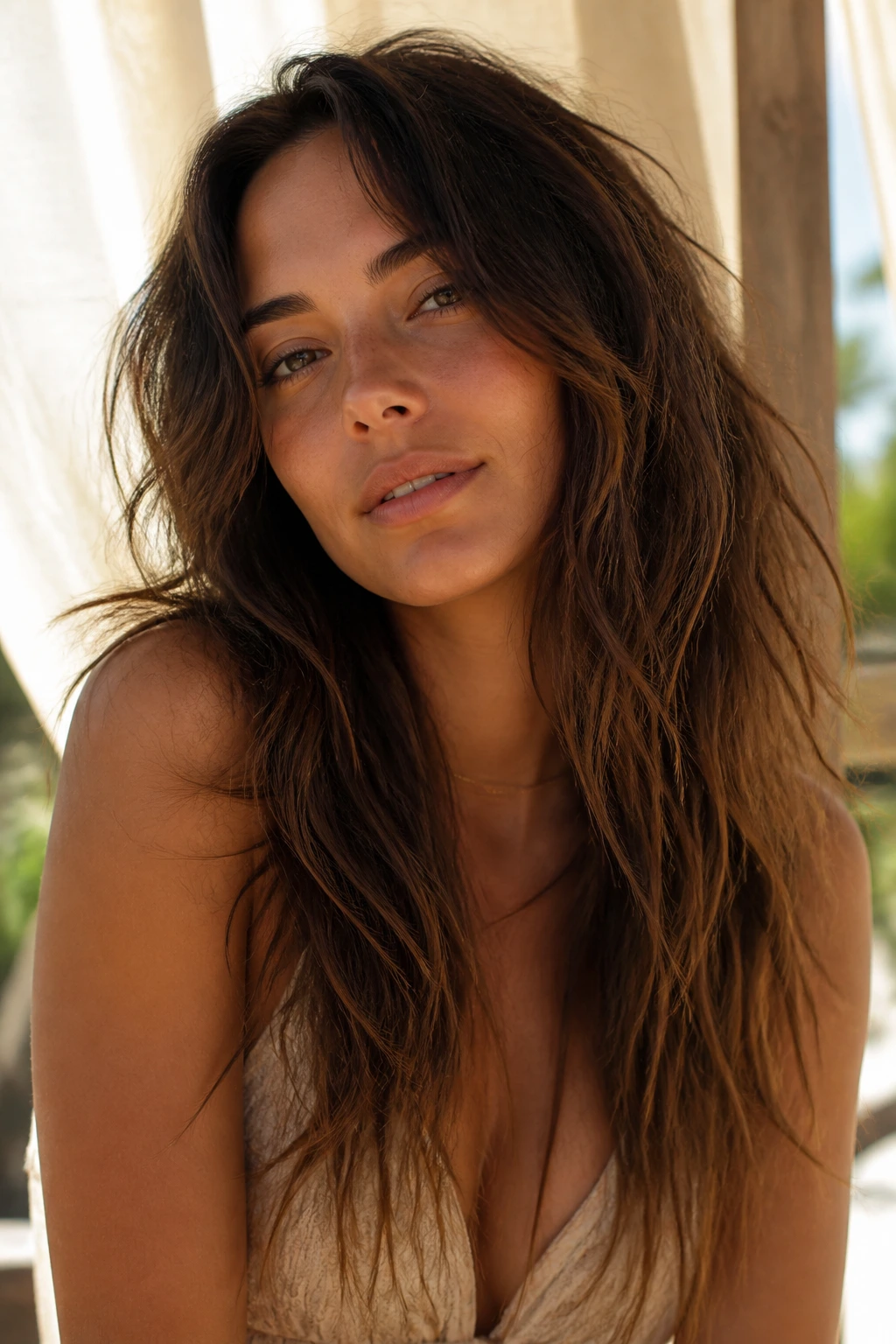
The nice thing about a bohemian shag is that it doesn’t ask for much. A bit of texture, a little frizz, a few pieces that don’t sit perfectly where they’re supposed to — that’s part of the look, not a mistake. Long hair can carry this style well because the length keeps it from getting too scruffy.
This cut tends to suit people who wear natural waves, bendy straight hair, or loose curls that form on their own after washing. The layers are there to encourage movement, not to force a shape that the hair hates. You can wash, scrunch, and go.
A leave-in mist and a soft-hold cream are enough for most days. If your ends feel dry, put the product only on the mid-lengths and lower half. Roots do not need much here. They need freedom.
It’s the kind of cut that works with linen shirts, old tees, and zero patience for a flat iron.
9. Blunt-Edge Shag With a Cleaner Finish
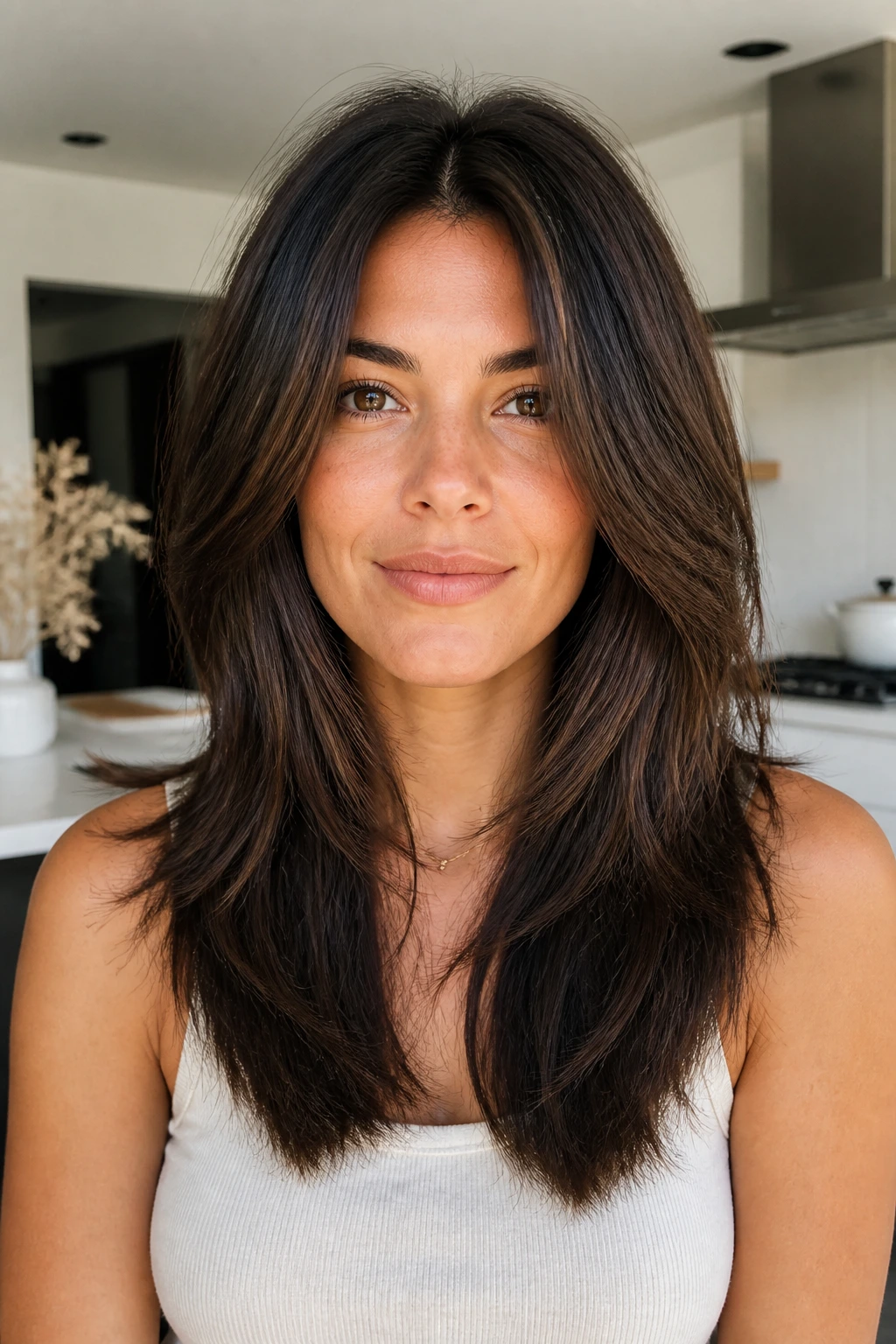
A shag does not have to look ragged. That’s one of the lazy myths about layered hair. A blunt-edge shag keeps more weight at the bottom while still building movement higher up, so the cut feels cleaner and a little more expensive-looking in a plain, practical sense.
This is a smart pick if you like structure but still want texture. The ends stay dense enough to look full, and the internal layers keep the hair from turning into one single sheet. On straight or slightly wavy hair, the result can be sleek during the day and rougher by night without requiring a full restyle.
The key is restraint. Too many slices at the bottom and you lose the blunt edge. Too little layering and it turns into plain long hair with a few random snips. The sweet spot sits somewhere in the middle, and that middle is worth asking for.
A good flat iron pass at the front can make this cut look crisp without taking away its movement.
10. Long Shag Haircuts Without Bangs for Fine Hair
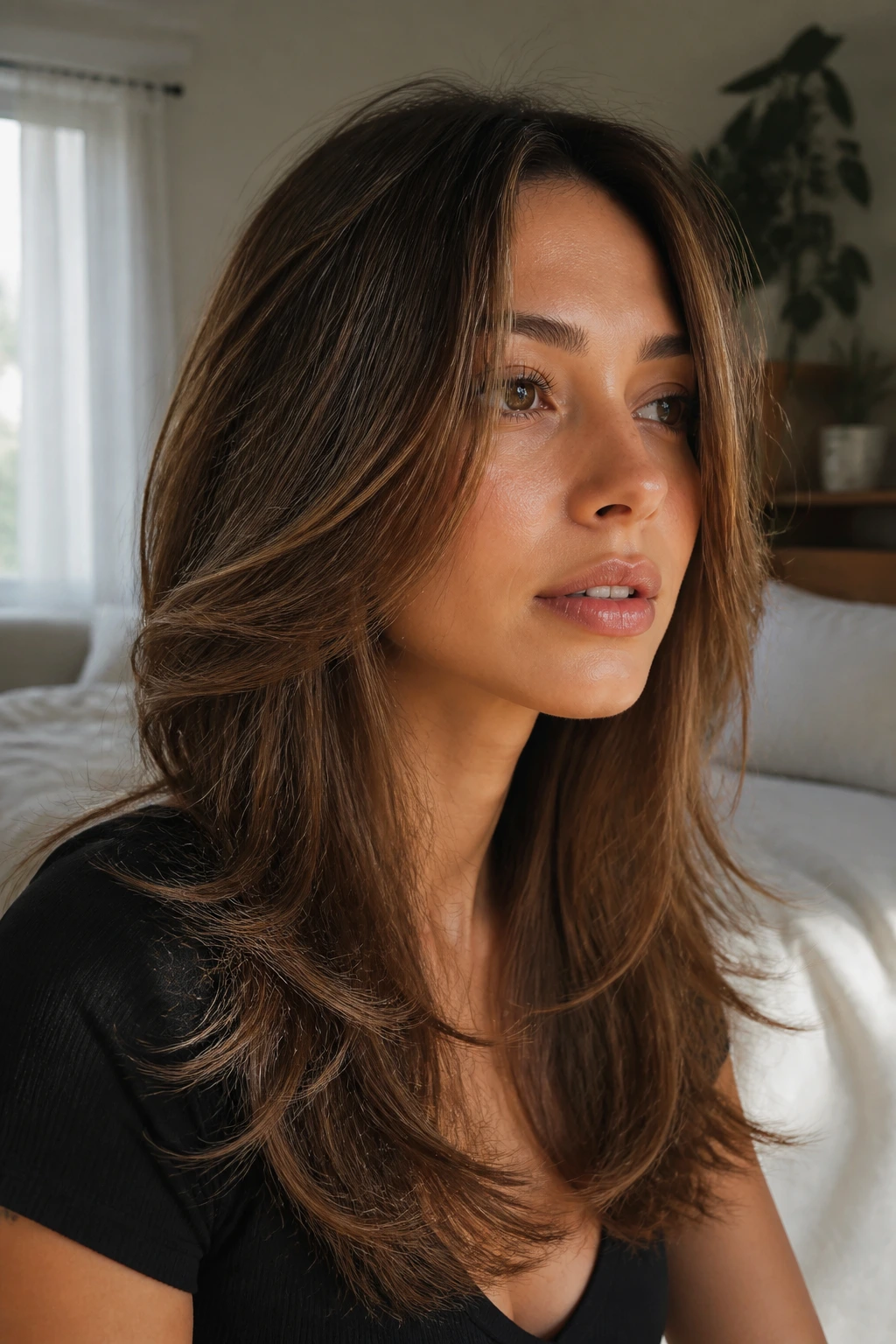
Fine hair needs a careful hand. Too many layers and the cut starts to look see-through, which is usually the opposite of what someone with fine hair wants. The better approach is to keep the layers long, soft, and strategic so the hair still looks full at the bottom.
What Actually Helps Fine Hair
A long shag can give fine hair body, but only if the stylist preserves enough weight in the perimeter. That means the shortest layers should not jump too high, and the ends should not be over-thinned. A little softness is good. A lot of thinning is not.
- Ask for long layers starting below the chin.
- Keep the lower length dense enough to hold shape.
- Blow-dry with a root-lifting mousse at the crown.
- Use a large round brush or a Velcro roller at the top.
This cut can be a little needy on wash day, then easy for the next two days. That’s a trade I’d take any time. A tiny dry shampoo at the roots and a quick finger-tousle can bring it back fast.
Skip heavy creams. They flatten fine strands in a hurry.
11. Thick-Hair Shag With Controlled Movement
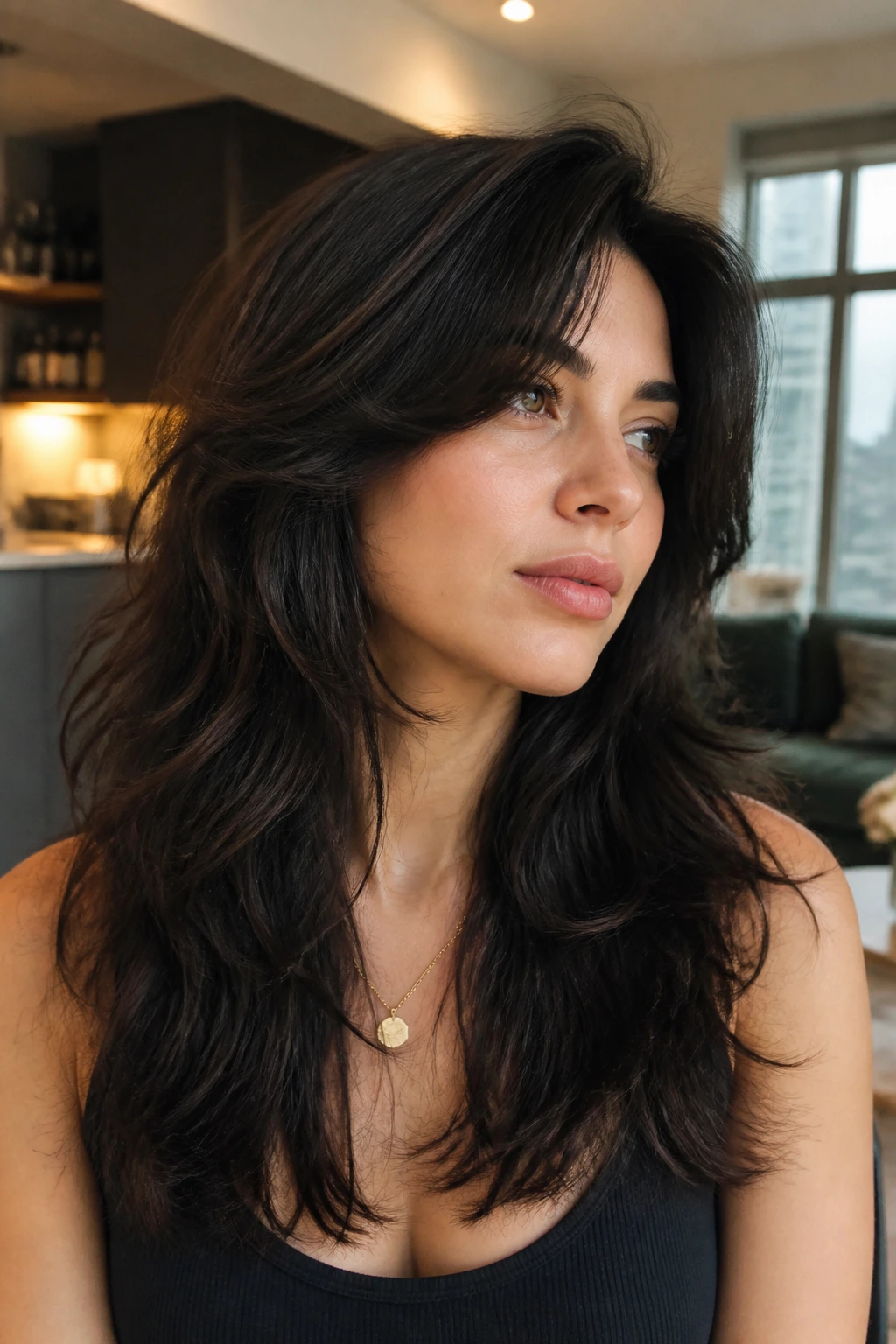
Thick hair can wear a shag beautifully, but only if the layers are handled with some discipline. The point is to remove bulk without making the hair look choppy in a bad way. A long shag haircut without bangs can make thick hair feel lighter, cooler on the neck, and far easier to move around.
The best versions use internal layering, point-cutting, and a softly tapered outline. That combo lets the hair breathe. If the cut is too blunt, thick hair can look heavy and boxy. If the cut is too sliced up, it can explode at the sides.
I usually like this shape with a middle or slightly off-center part. It helps distribute volume instead of building one giant mass at the crown. And yes, thick hair can handle texture cream a little better than fine hair can.
The sweet spot is a cut that still feels substantial in the hand.
Not puffy. Not wispy. Just controlled.
12. Deep Side-Part Shag That Flips at the Brow

Why does a side part change so much? Because it shifts the weight of the whole haircut. A deep side-part shag gives one side lift, lets the other side fall longer, and adds instant shape without a fringe. It’s a small move with a big payoff.
The cut itself can be pretty simple. The styling is what makes it look intentional. If your hair is prone to flattening, this parting trick can rescue it fast. The raised side builds volume near the root, and the longer side skims the cheek and jaw in a way that feels flattering without trying too hard.
How to Style It
Start on damp hair with a light volumizing spray at the roots. Blow-dry the part first, lifting with your fingers or a vent brush. Once the roots are dry, flip the front pieces away from the face and pin them for five minutes while they cool. That cooling step matters more than people think.
This cut suits anyone who wants softness around the face but does not want actual bangs hanging in the eyes. It’s also a nice fix for hair that refuses to hold a middle part.
13. Shoulder-to-Waist Gradient Shag
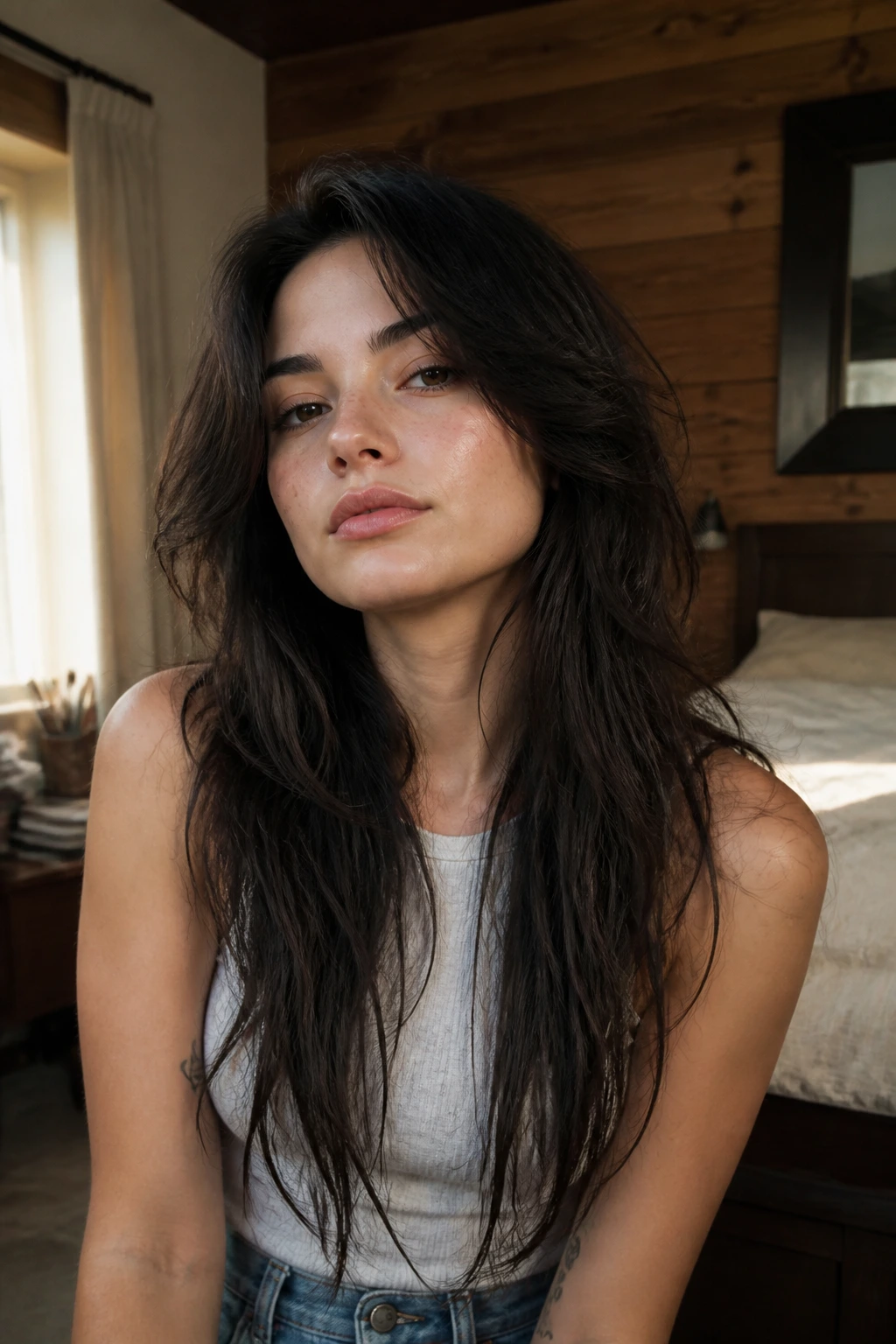
A lot of long layers get lost because they’re cut with no sense of scale. This one solves that by moving from shoulder-skimming pieces near the front to much longer lengths through the back and lower sides. The gradient feels gradual, not stair-stepped.
That matters when you’re growing your hair out and still want it to look shaped instead of accidental. The haircut keeps the top lively, but the length remains a feature. You can wear it down and still tuck it behind the ears, tie it half up, or twist it into a loose clip without the layers fighting you.
It’s especially nice on hair that has some natural bend. The shoulder-length pieces catch the movement first, then the longer bottom half gives the whole cut a soft finish. If the hair is pin-straight, a little bend from a flat iron or blow-dry brush will help the shape show up.
This is one of those cuts that looks expensive because it looks considered.
14. Textured Shag for Pin-Straight Hair
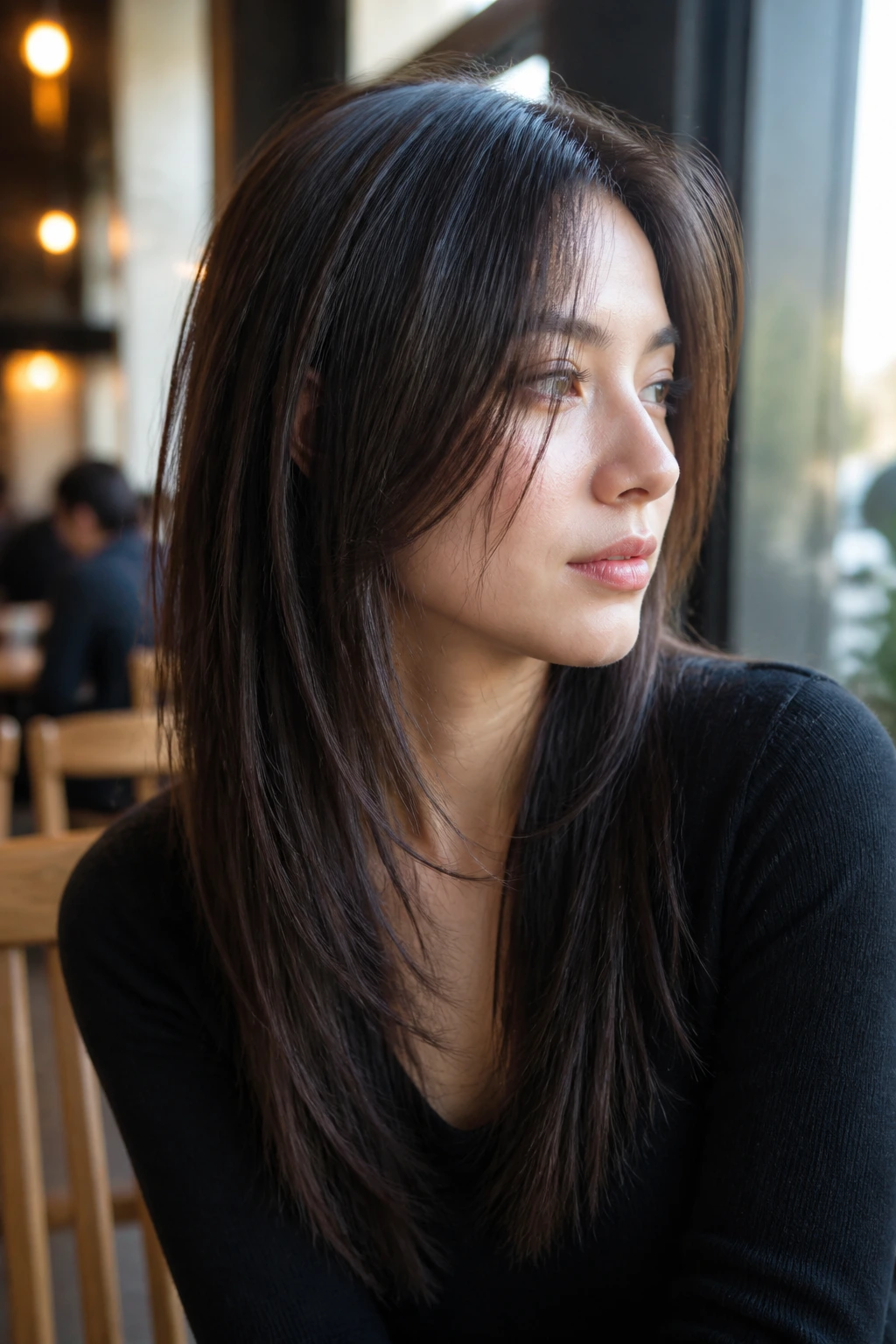
Pin-straight hair can be annoyingly obedient. It lies flat, shows every line, and sometimes needs a haircut that creates movement where none exists naturally. That’s where a textured shag earns its keep. The goal is not volume for the sake of volume. The goal is shape.
A stylist who knows what they’re doing will use micro layers, subtle internal cutting, and a little piece-y detail around the sides. The trick is to avoid making the haircut look spiky. You want broken-up movement, not a choppy helmet.
The Styling Difference
After washing, rough-dry the hair about 80 percent of the way. Then go in with a flat brush or round brush only where you need lift. Finish with a texture spray on the mids and ends, then squeeze a few sections between your fingers to separate them.
- Avoid heavy serums that erase movement.
- Use small sections when styling the front.
- Keep the crown soft but not limp.
- Add a light bend around the jaw for shape.
This one is for people who like hair that looks touched, not overworked.
15. Low-Maintenance Long Shag Haircut Without Bangs
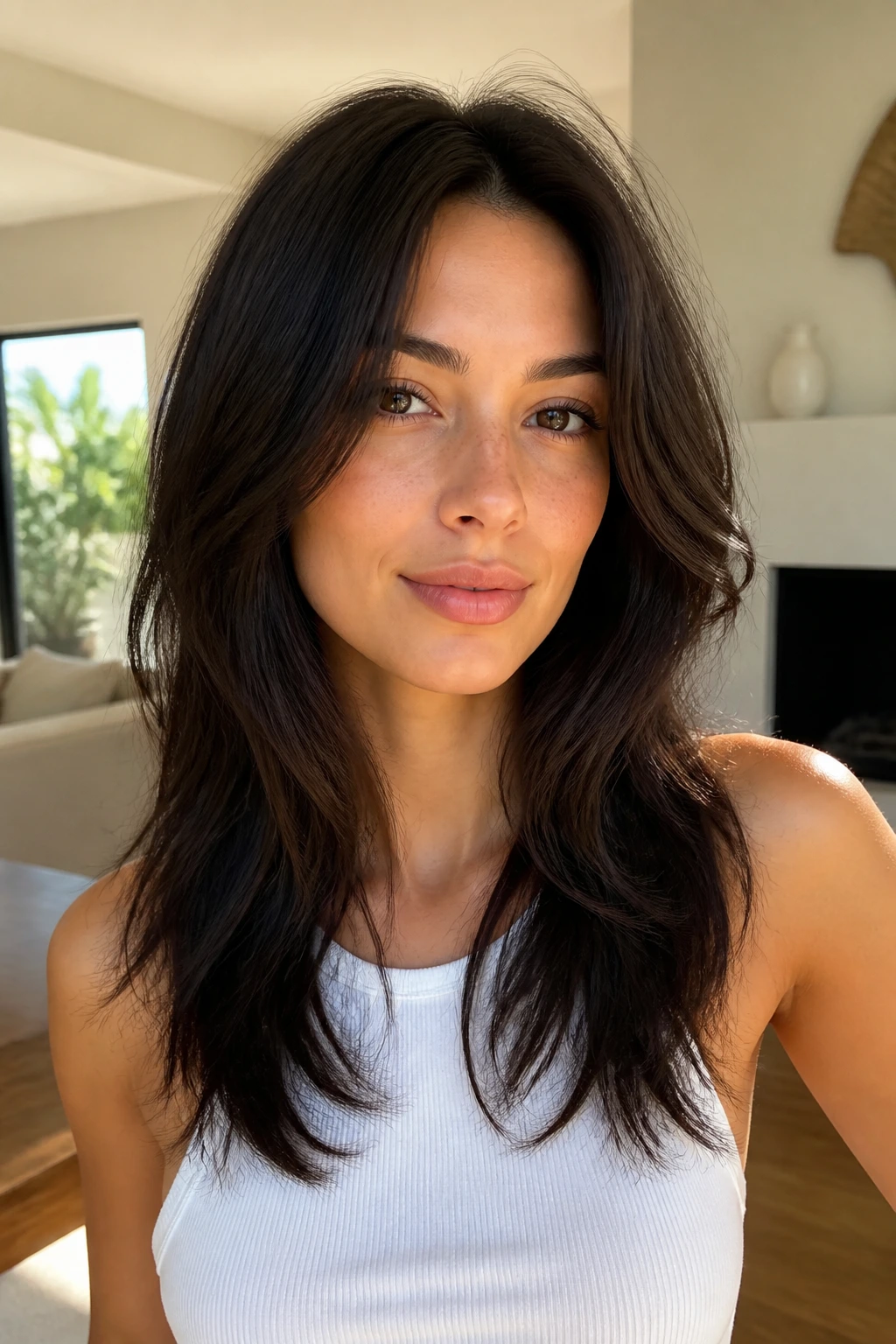
Some haircuts demand attention. This is not one of them. A low-maintenance shag keeps the layers long enough to grow out cleanly, which means you can stretch trims a bit without the shape collapsing into a sad, flat length. That’s useful if you do not want to babysit your hair every few weeks.
The best low-maintenance version avoids short choppy pieces near the front. Instead, it uses longer face framing, soft tapering at the ends, and a crown that has enough lift to keep the silhouette interesting. The hair still has motion, but it won’t punish you when you air-dry it on a busy morning.
A messy bun still looks decent with this cut. So does a claw clip. That sounds small, but it’s one of the real tests of a practical haircut. If the layers behave when you throw them up, they’re probably cut well.
You can usually live in this shape with a quick trim every 10 to 14 weeks, depending on how fast your hair grows and how fussy you are about the outline.
16. Piecey Rock-and-Roll Shag
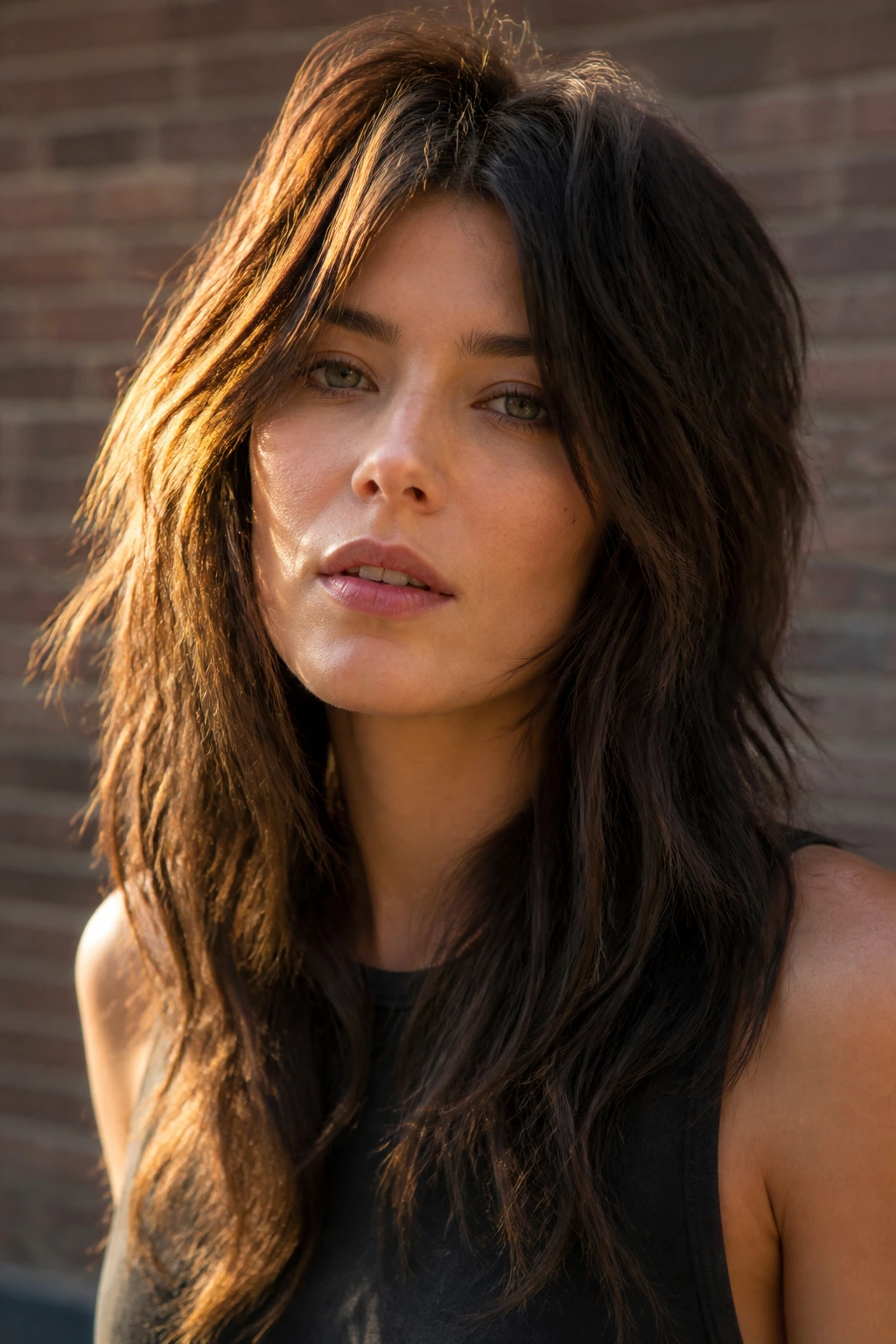
This is the shag for people who like a little grit in their hair. The pieces are separated, the layers are obvious, and the finish looks better when it’s not too polished. Think dry texture, bend in the ends, and a deliberate lack of fuss.
The strongest version starts with a solid cut and ends with a rough styling hand. A small amount of matte paste, rubbed between the palms, can define the front sections without making them stiff. If your hair is naturally wavy, even better. If it’s straight, a few bends from a flat iron can give the pieces enough attitude.
What makes this different from a generic layered cut is the direction. The shape should feel lifted and broken up, not just shorter in random spots. That distinction matters. Otherwise you end up with a haircut that looks unfinished instead of styled.
This one suits boots, leather, old band tees, and anyone who wants their hair to look like it has a little story.
17. Polished Long Shag With Soft Movement
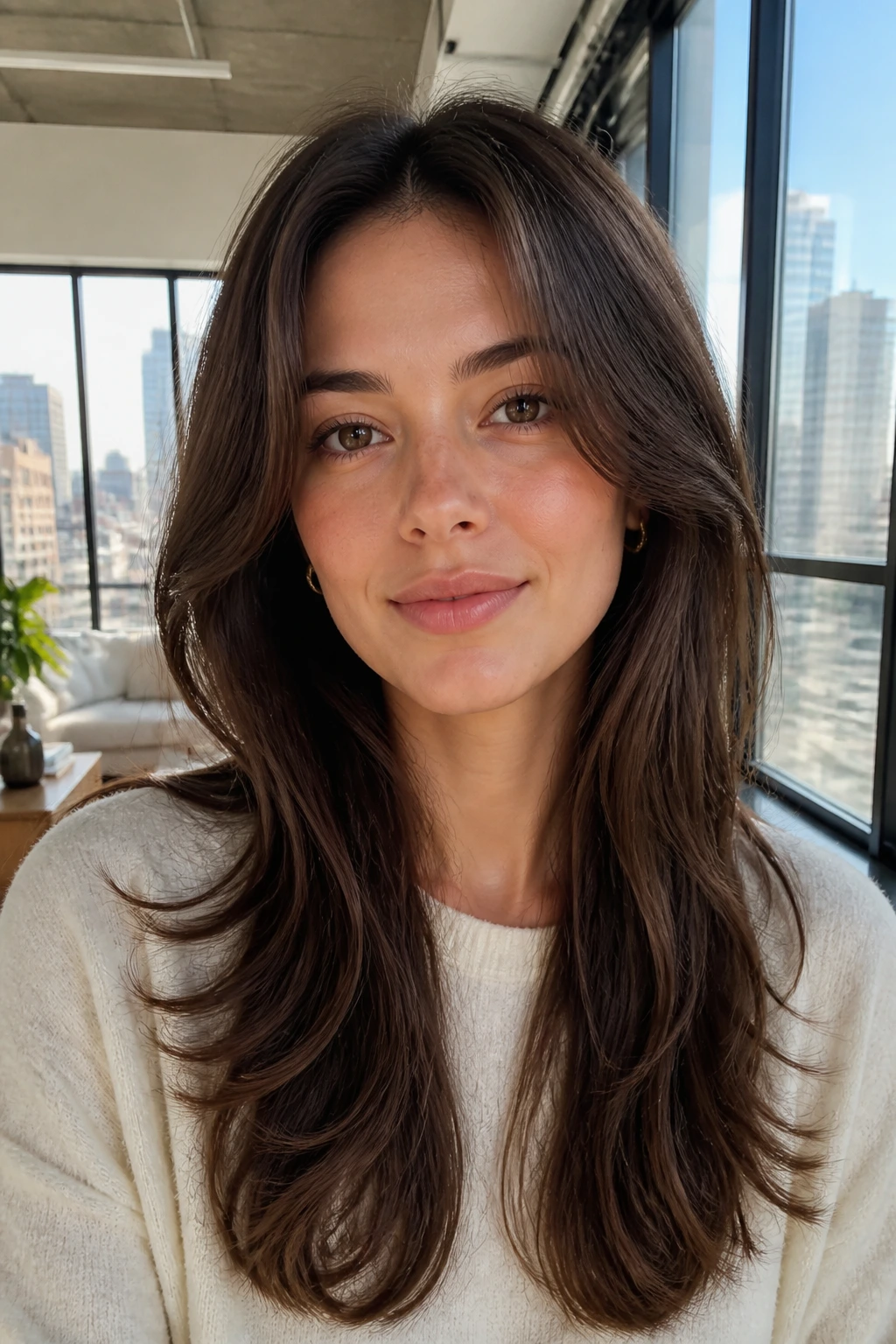
A shag does not have to look wild. It can be smooth, glossy, and still have enough layering to keep the shape alive. This polished version keeps the ends neat, the layers blended, and the front pieces long enough to tuck behind the ears or sweep away from the face.
The styling is what gives it that cleaner finish. Use a smoothing cream before blow-drying, then go over the mids and ends with a round brush so the layers fall in a controlled curve. You still want movement, but you do not want frizz or a broken outline. The hair should move when you turn your head, not explode into a halo.
This is probably the most office-friendly version in the bunch, though it never looks stiff if the cut is done well. It’s also the one I’d recommend for someone who likes a shag but feels nervous about going too choppy. The shape stays friendly. The finish stays neat. And if you decide to rough it up later with texture spray, the haircut can handle that too.
A good shag should not fight you. It should give you options.
