



A good mullet shag looks like it has opinions. Shorter in the crown, softer around the face, longer through the back — the whole thing moves when you turn your head, and that motion is half the appeal.
Mullet shag hairstyles for women sit in that sweet spot between relaxed and deliberate. They have the choppy texture of a shag, the shape contrast of a mullet, and enough softness to keep the cut from feeling costume-y. Done well, they can make fine hair look fuller, heavy hair feel lighter, and curls keep their shape without turning into a triangle.
The reason this cut keeps hanging around is simple: it can be tuned. A little fringe changes the mood. A little more length in the back changes the silhouette. A razor can make it airy, while scissors can keep it cleaner. One haircut, lots of attitudes.
The 15 versions below give you the range without the fluff. Some are soft. Some are sharp. A few are the kind of haircuts that make people stare for a second and then ask who did it.
1. Soft Mullet Shag With Wispy Fringe
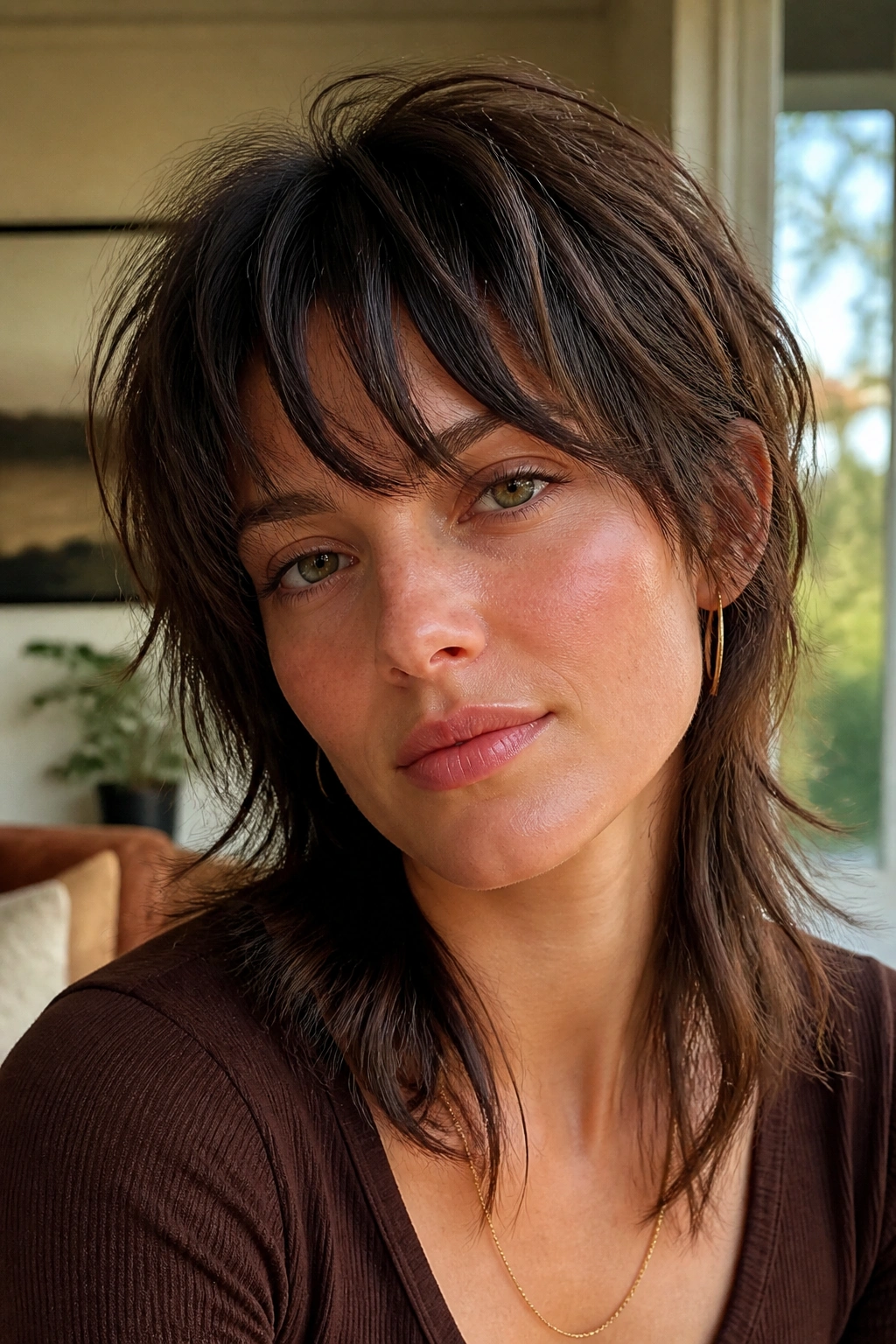
This is the easiest place to start if you want the shape without jumping straight into a dramatic chop. The softness matters. Instead of heavy separation, the layers are feathered and blended so the haircut feels lived-in rather than spiky.
Why It Works
The wispy fringe takes the edge off the mullet shape. It keeps the front light, which helps if you do not want a blunt bang sitting across your face all day. The back still has that longer tail, but the transition is gentle enough that the cut reads as modern rather than retro for the sake of being retro.
Ask for light internal layers through the crown, soft face-framing pieces that start around the cheekbone, and a nape that stays longer than the sides. A little point cutting at the ends helps the whole thing move. It should not look carved.
- Keep the fringe around brow length or slightly below if you want easy styling.
- Ask for blended layers, not a hard disconnect between the top and the back.
- Use a pea-sized amount of mousse at the roots if your hair tends to collapse after blow-drying.
Best for: women who want a mullet shag that feels wearable on a regular workday, not just in a salon photo.
2. Curly Mullet Shag Hairstyle for Women
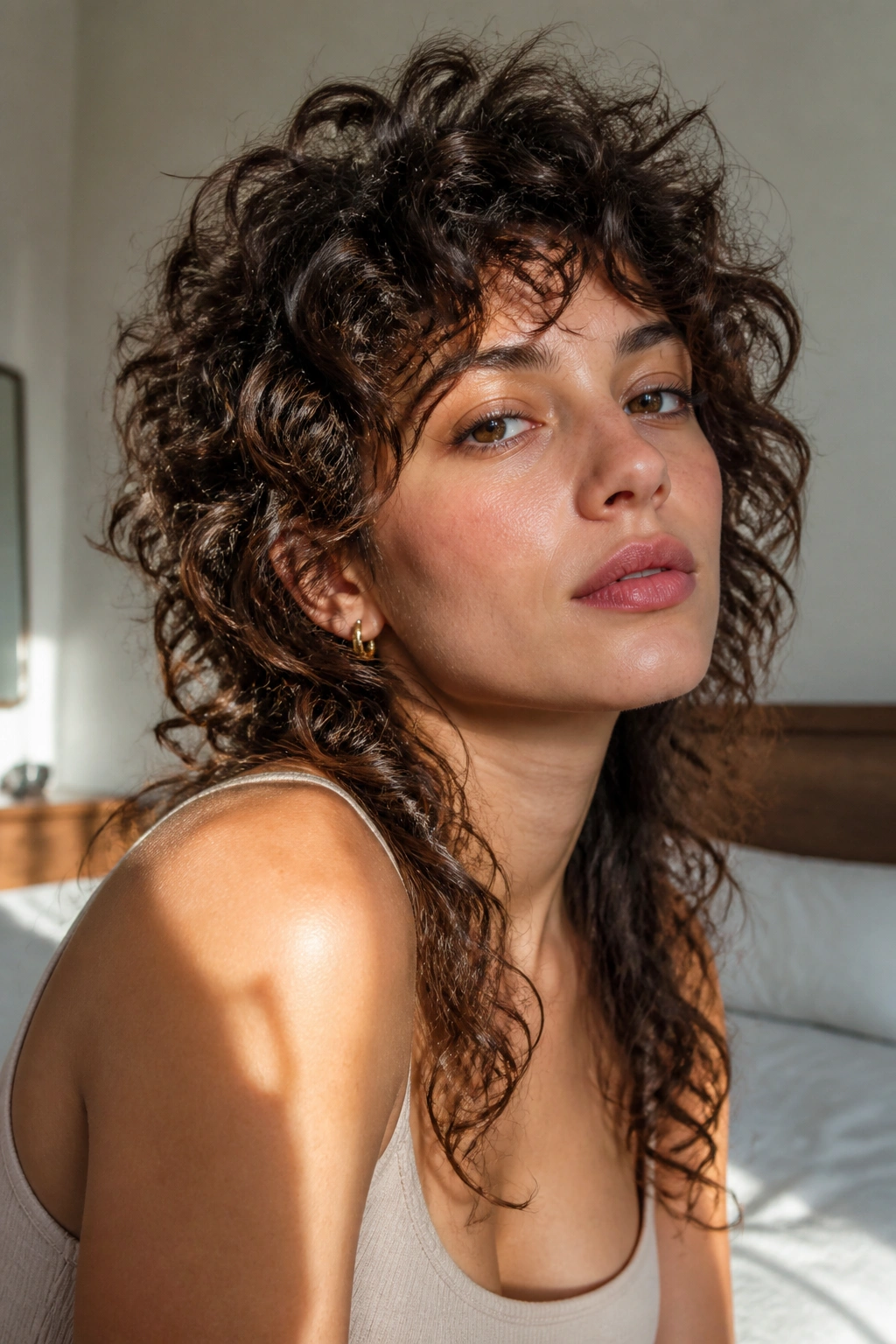
Curly hair may be the best canvas for a mullet shag. The shape gives curls room to spring up instead of piling into one heavy block, and the layers can stop the bottom from feeling like a bell.
That said, curly hair needs a lighter hand than straight hair. Cutting too much wet is where things get weird. The curl pattern shrinks, the fringe pops higher than expected, and suddenly the whole front sits two inches shorter than planned. A dry cut, or at least a curl-by-curl approach, is usually smarter.
The nicest version keeps the curls fuller at the crown and around the face, then lets the back hang a bit longer. You get shape without losing the bounce that makes curly hair fun in the first place. If the curls are loose waves, the result looks shaggy and effortless. If the curls are tighter, the silhouette gets more sculptural.
Skip the urge to thin everything out. Really. Curls hate being over-thinned.
3. Wolf Cut Mullet Shag With Curtain Bangs
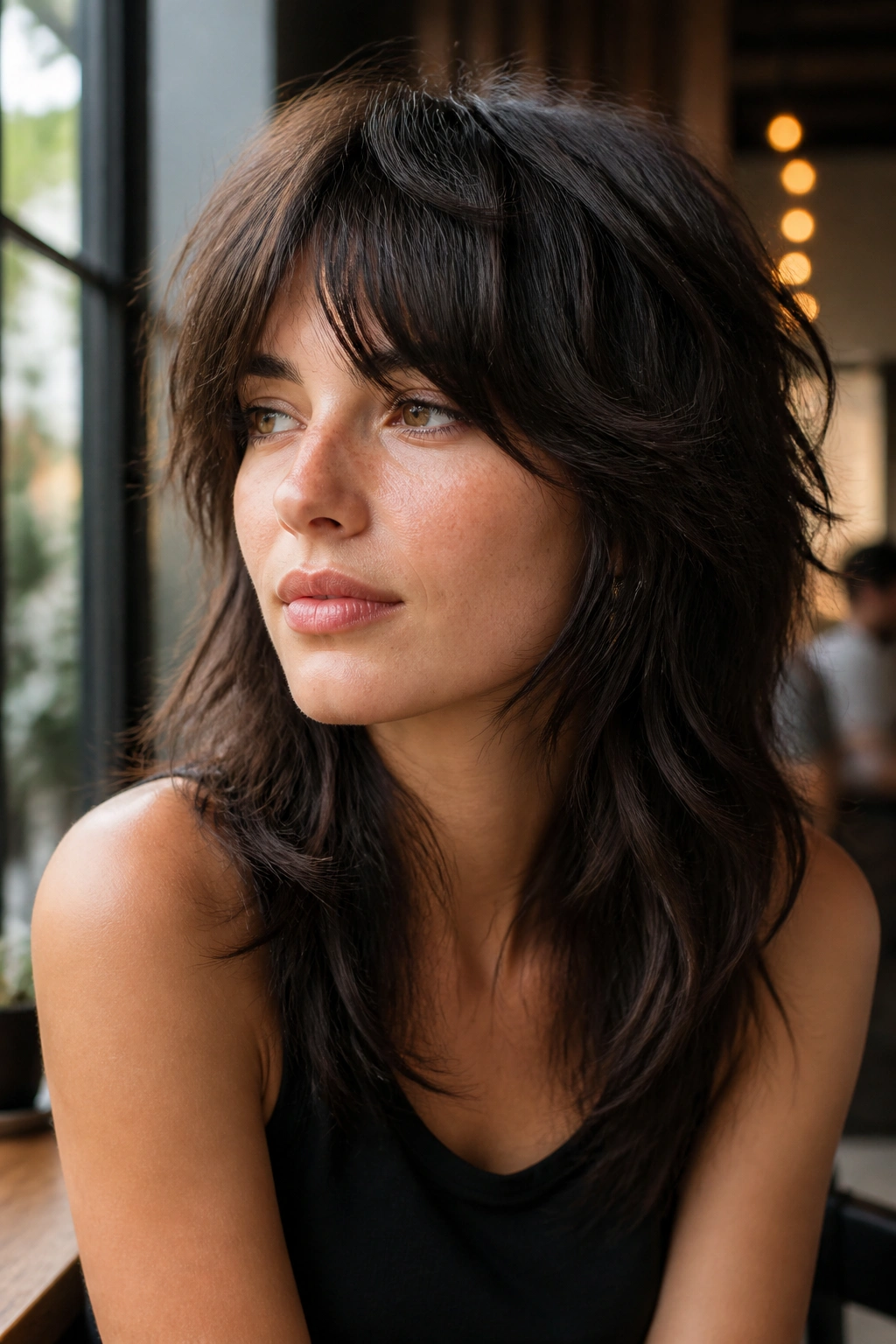
Why do these two haircuts get mixed up so often? Because they borrow from each other. The wolf cut leans heavier in the crown and around the face, while the mullet shag softens the contrast and gives you a little more swing through the ends.
Curtain bangs are what make this version so easy to wear. They open the face without locking you into a short fringe, and they blend nicely into the front layers. If you want something that feels trendy without screaming for attention, this is the one most stylists would reach for first.
How to Ask for It
Tell your stylist you want long, center-parted bangs that start around the bridge of the nose and taper into cheek-length layers. The shortest crown pieces should sit high enough to create lift, but not so short that the top looks chopped off. The back should be longer, yes, but not stringy.
- Ask for heavy texture through the top half.
- Keep the curtain bangs soft at the ends so they don’t split into two stiff points.
- Style with a round brush or a medium-barrel dryer brush for the front pieces only.
It works best when the whole cut feels slightly undone. Polished to the point of stiffness ruins the whole thing.
4. Cropped Mini Mullet Shag
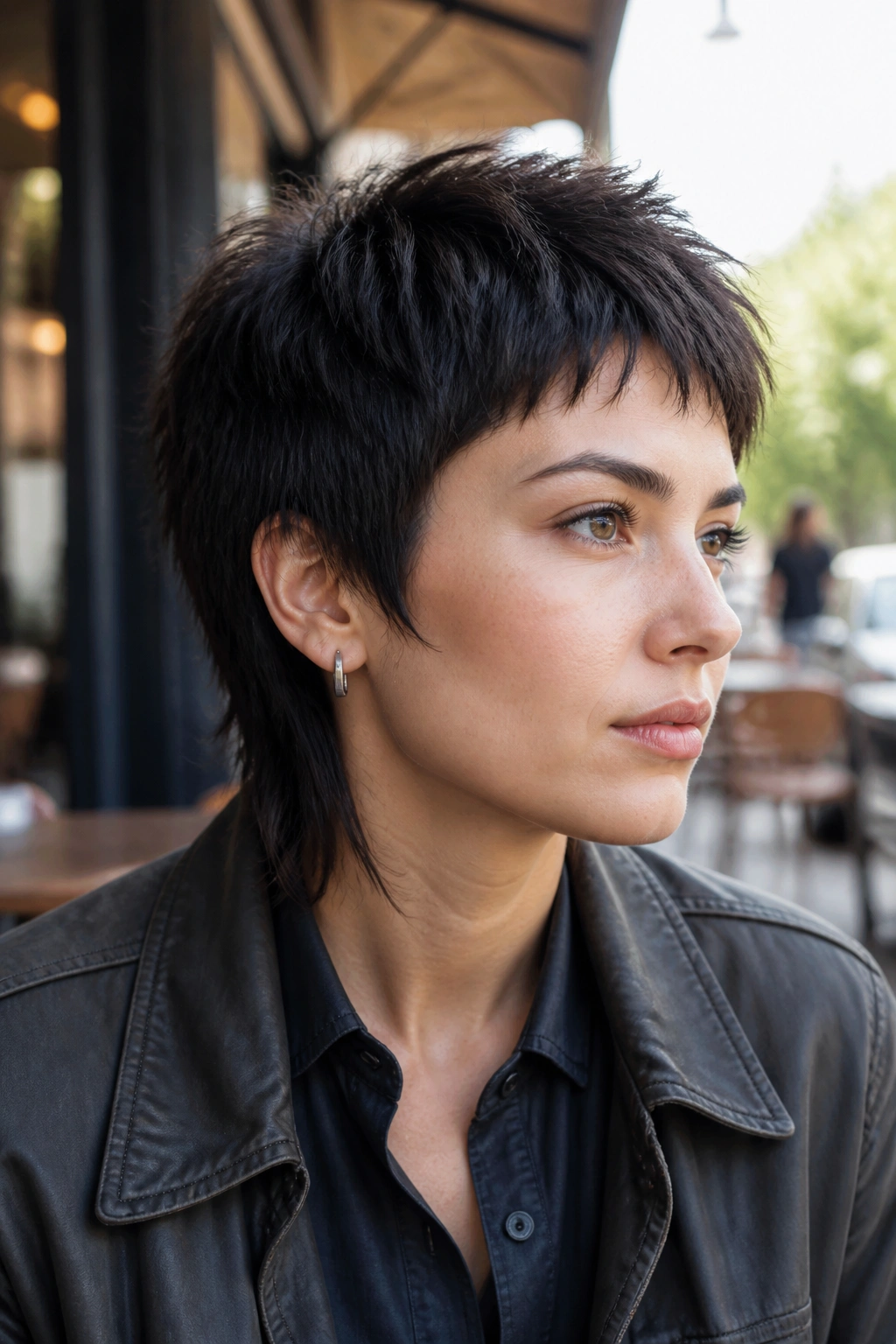
A cropped mini mullet shag is for someone who wants short hair with a little bite. Not a bob. Not a pixie. Something in between that can be tucked behind the ears, mussed up with paste, and worn without much thought.
The shape is compact at the sides and top, then a touch longer at the nape. That nape length is the detail that keeps it from drifting into standard short hair territory. Even half an inch makes a difference here. Tiny changes matter more than people think.
What Makes It Distinct
The crown should have enough texture to prevent the cut from lying flat. The sides can be snug around the ears, but not shaved clean unless that is the look you want. The back needs to feel deliberate, almost like a tiny tail, not a grown-out accident.
This cut likes a bit of grit. A matte paste or dry texture spray usually beats shiny serum. It also loves a quick finger style in the morning — no round brush, no ceremony.
- Ask for a short perimeter with a longer nape.
- Keep the top piecey, not fluffy.
- Trim every 4 to 6 weeks if you want the shape to stay crisp.
It is a sharp little cut. Fun, too.
5. Long Mullet Shag With Collarbone Layers
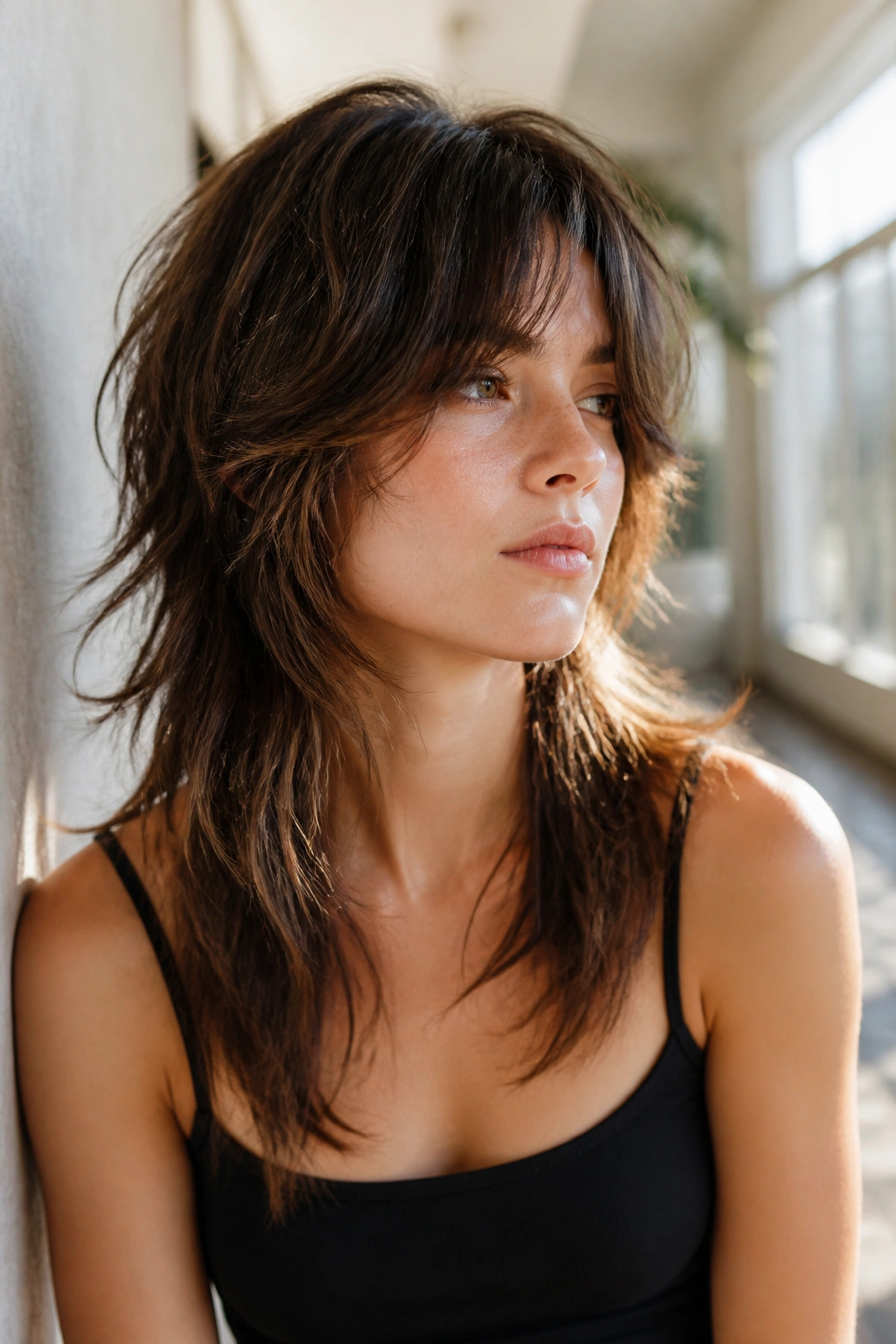
If you hate losing length, start here. A long mullet shag keeps the hair around the collarbone or lower, then uses shorter crown layers to create lift and movement without sacrificing the overall shape.
This version is probably the most forgiving when you are nervous about change. The hair still reads long from the front, especially if the face frame starts around the jaw or cheekbone. From the back, the layers give a soft drop that separates it from a standard long shag.
The trick is balance. If the longest pieces hang past the collarbone, the crown has to be cut high enough to keep the head from looking bottom-heavy. Too little layering and it turns into long hair with a few random snips. Too much and the ends get wispy fast.
I like this cut on straight to wavy hair because it shows the movement plainly. On curly hair, it can look almost glamorous, especially when the face frame catches a little frizz and turns it into texture instead of chaos.
6. Razor-Cut Mullet Shag for Thick Hair
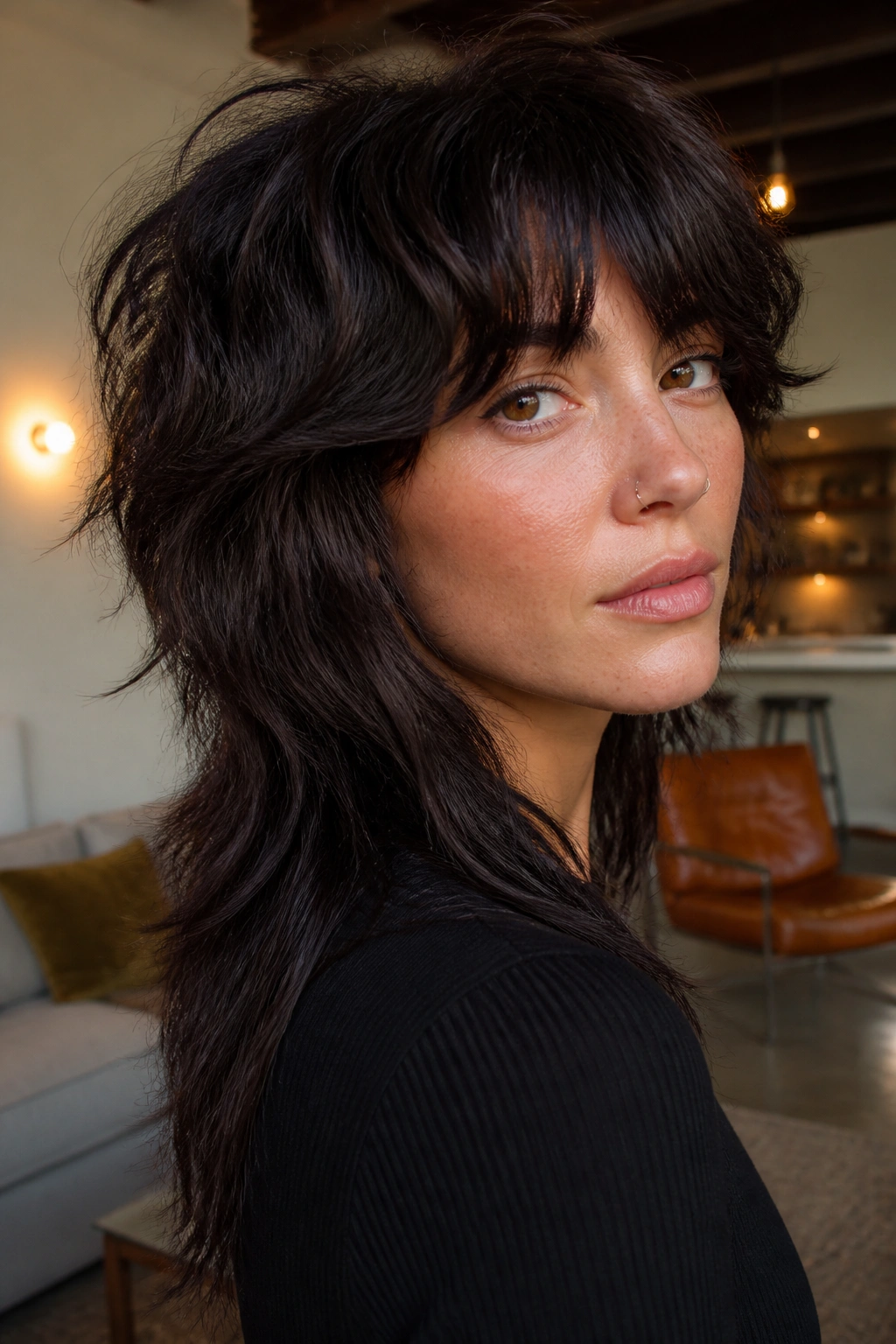
Thick hair can take a blunt scissor cut and turn it into a helmet. A razor-cut mullet shag solves that problem fast, because the razor removes bulk and leaves softer ends that don’t stack up so heavily.
By contrast with a scissor-heavy cut, a razor version feels lighter at the edges. The movement is a little more broken up, a little less tidy. That is exactly why it works for dense hair. The shape shows through instead of getting buried.
What to Ask For
Tell the stylist you want weight removed from the interior, not just the bottom. That matters. A lot of stylists thin only the ends, and thick hair keeps eating that move for lunch. You want the crown and upper sides opened up so the head shape can breathe.
- Keep the razor work controlled around the perimeter so the ends don’t fray.
- Ask for longer layers near the back if your hair tends to puff outward.
- Avoid over-texturizing if your strands are coarse and dry.
This cut is not the best choice for weak, damaged hair. Razor work can make already-fragile ends look sparse. On healthy thick hair, though, it can be excellent.
7. Mullet Shag With Micro Bangs
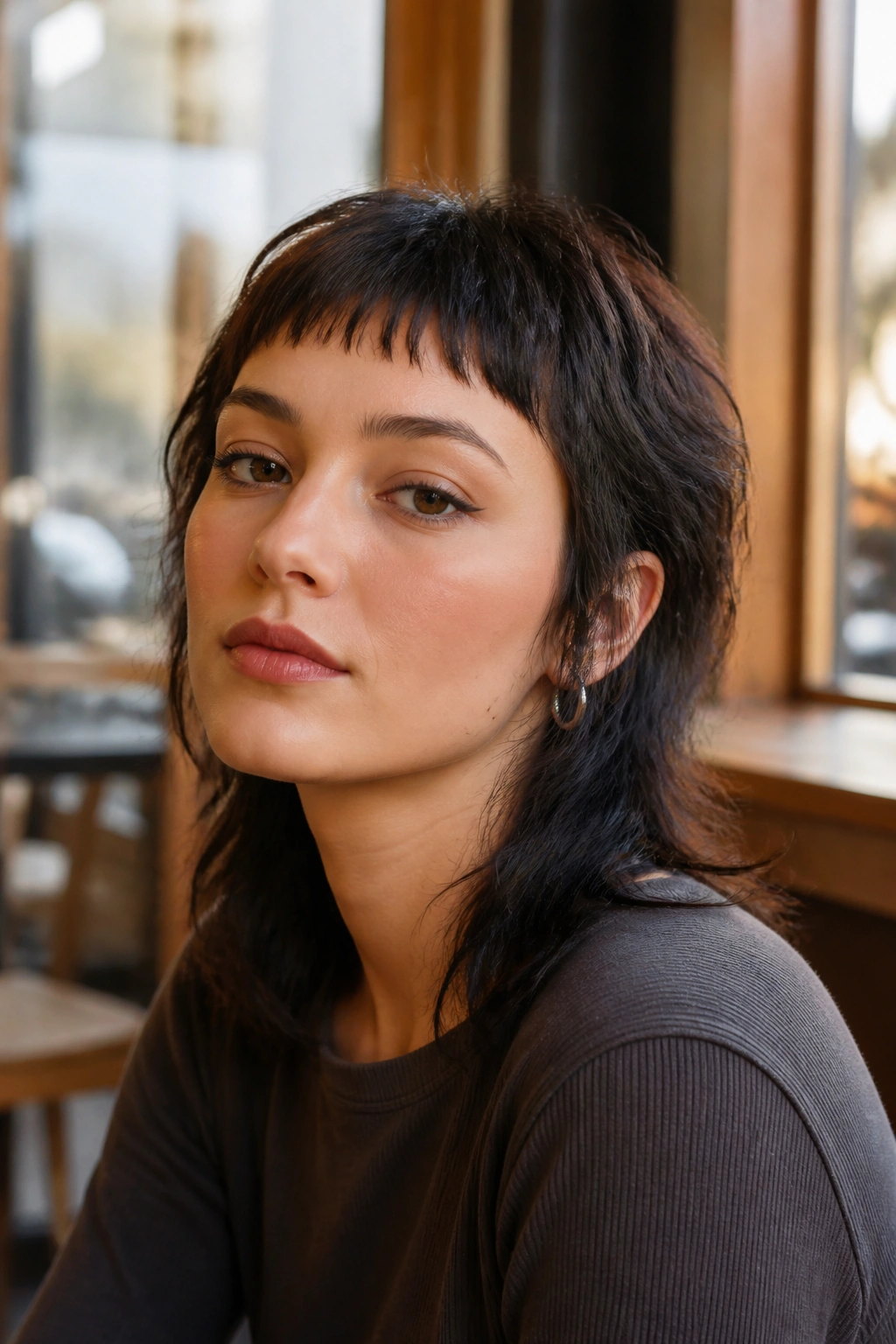
Micro bangs change everything. Seriously. Once the fringe sits above the brows, the haircut moves from soft indie territory into something sharper and more fashion-forward.
The rest of the cut can stay fairly wearable. That is the funny part. A soft mullet shag with micro bangs is still a shag-mullet hybrid underneath, but the tiny fringe makes the eye go straight to the face. It can be brilliant on women with strong brows, a long forehead, or a style that leans a bit androgynous.
The catch is maintenance. Micro bangs need more frequent trimming than curtain bangs, and they can get fussy in humidity. They also make cowlicks more obvious. If your fringe grows in different directions, be prepared for a little morning battle.
Still, when they work, they really work. Keep the bangs blunt enough to read on purpose, then let the layers below stay soft and feathered. That contrast is the whole point.
8. Fine-Hair Mullet Shag With Feathered Ends
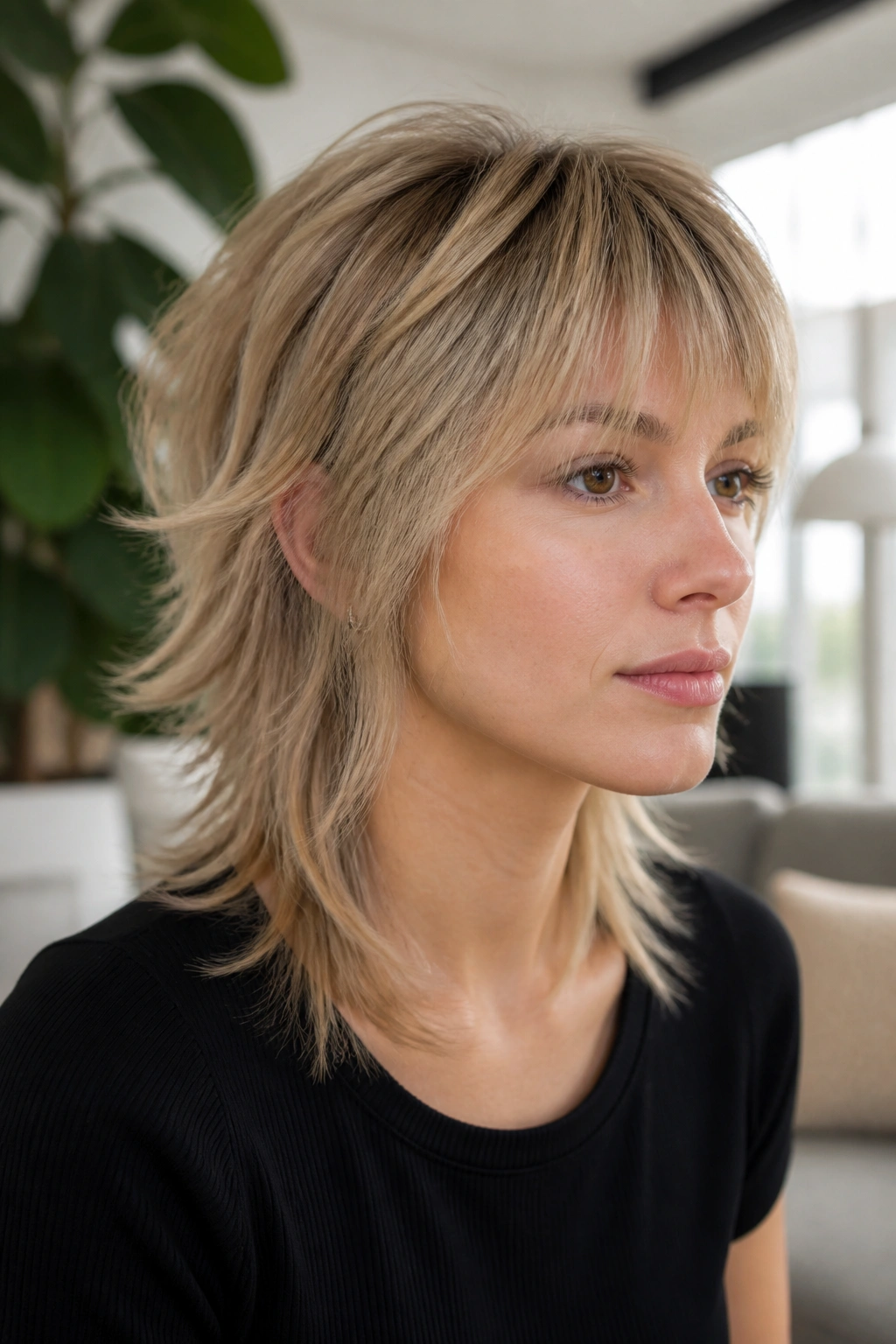
Fine hair needs fewer layers than people think. A mullet shag can help, but only if the cutting strategy respects how light the strands are. Too much removal and the ends start looking see-through. Too little and the cut lies flat against the head.
The sweet spot is feathering, not shredding. Ask for soft internal layers through the crown, then leave enough length through the lower sections so the hair still looks full at the bottom. The ends should move when you shake the head, not split into strings.
A root-lifting product helps here. So does a small round brush or a blow-dryer brush used only at the crown. You do not need a full salon blowout every day. You do need a bit of lift where the hair naturally wants to collapse.
If your hair is very fine, keep the fringe light and avoid over-texturizing the front. That front edge is what gives the illusion of density. Lose it, and the haircut gets flimsy fast.
9. Sleek Mullet Shag With a Clean Perimeter
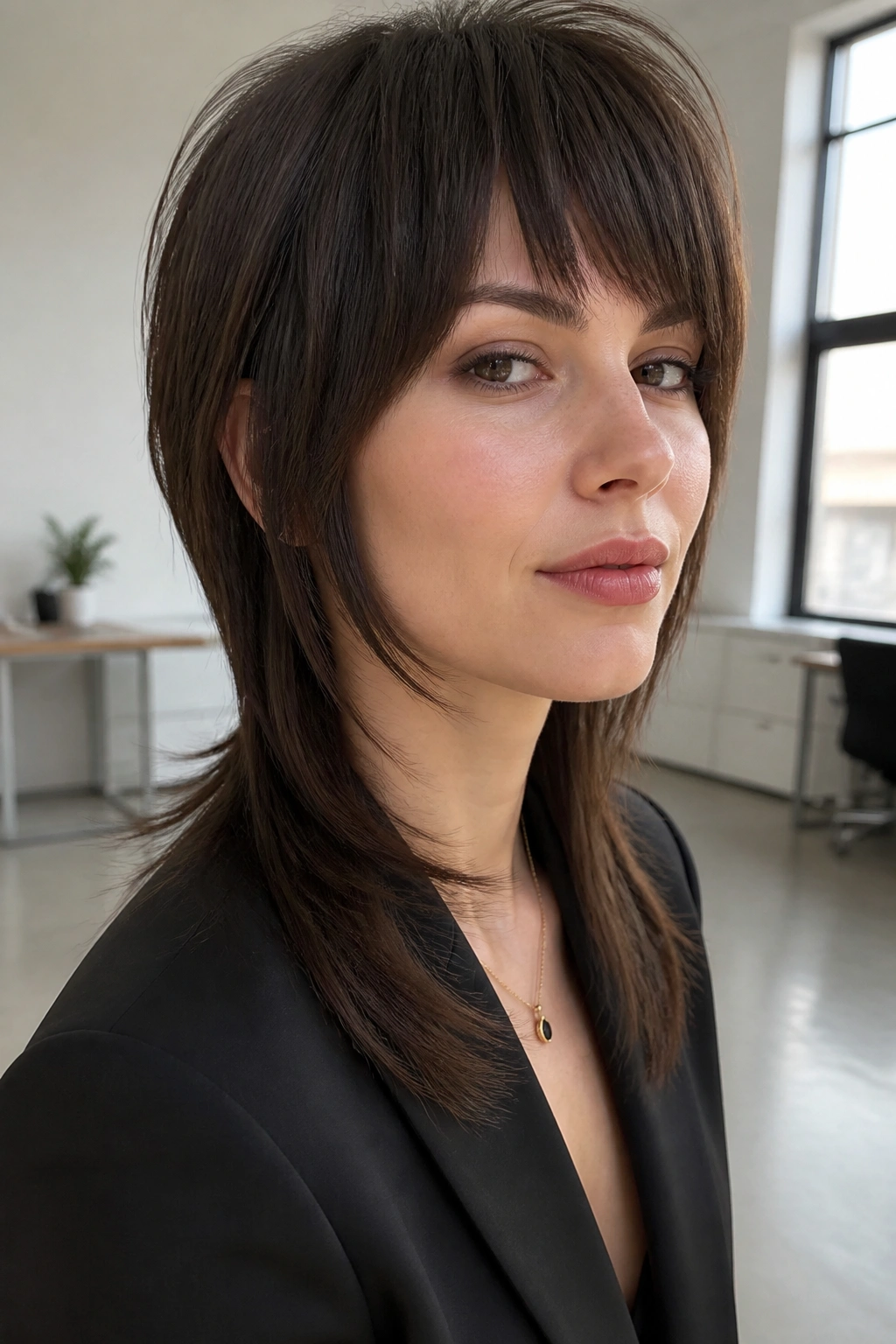
What if you like the shape but not the mess? Then go sleeker. A clean-perimeter mullet shag keeps the outline neat while the internal layers do the work underneath.
This version is a good fit for straight hair or anyone who likes a more controlled finish. The front can sit smooth around the jawline, the crown can still have movement, and the back can taper without looking wild. It is a calmer haircut, which is not a bad thing.
The trick is the perimeter. Keep the lower edge tidy and let the texture live inside the haircut, where it changes volume without shouting about it. A tiny bend with a flat iron on the longest pieces can add shape, but you do not need much. Two or three soft bends are enough.
It is also one of the better versions if you wear a blazer, a crisp shirt, or anything structured. The haircut gives you edge, but the finish keeps it from drifting into costume.
10. Wavy Mullet Shag With Heavy Crown Texture
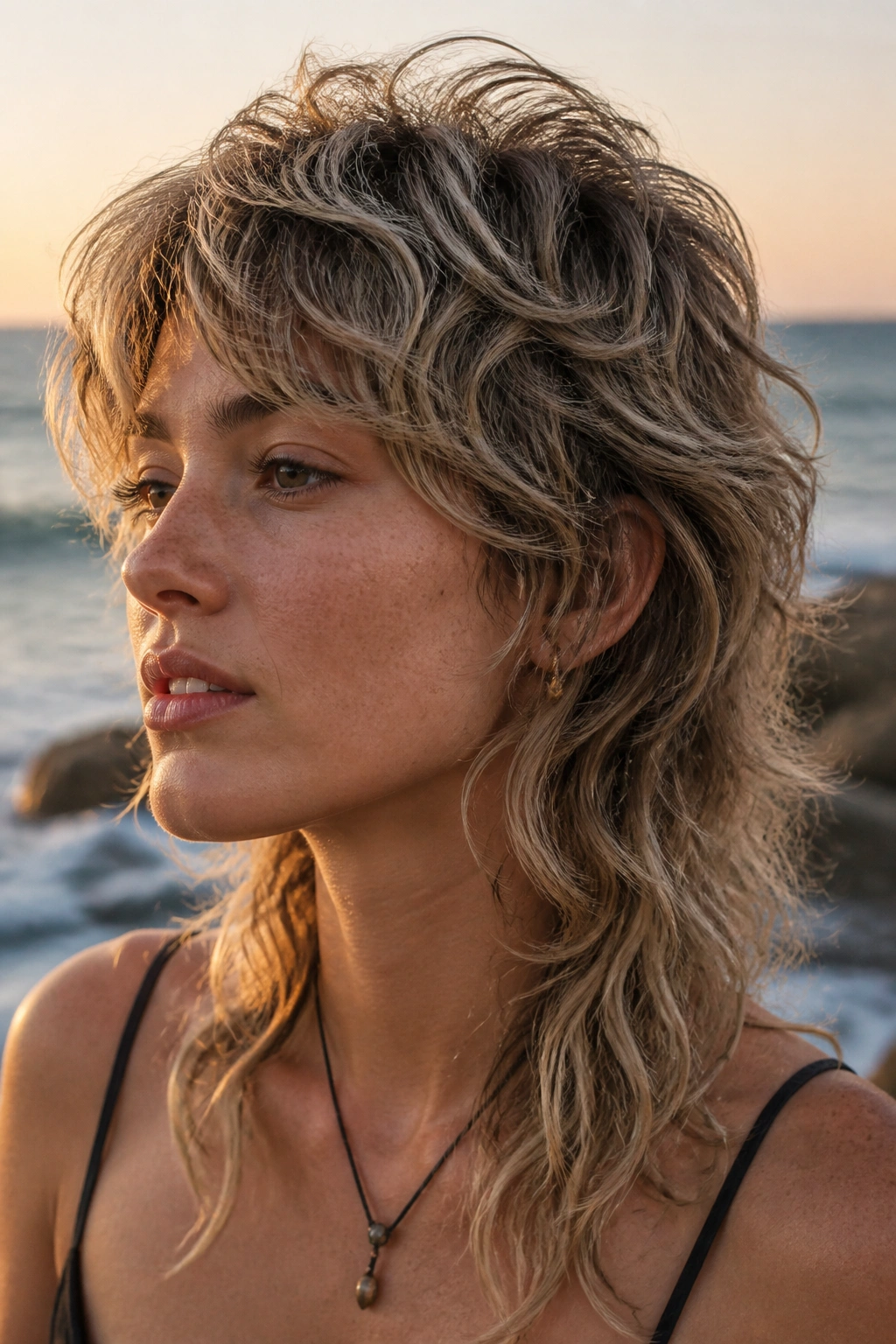
Wavy hair loves a crown with attitude. Add too much weight on top, and the whole shape sinks. Add the right amount of texture, and the cut gets lift near the roots while the ends fall in loose, messy bends.
This is the version that looks best when you scrunch and walk away. The layers should encourage wave separation, not fight it. Think piecey crown, soft sides, and a nape that still has enough length to show movement when hair shifts over the collar.
A light curl cream or sea-salt spray can work, but use a small amount. Wavy hair turns sticky fast if you overdo product. Air-drying with a little root clipping at the crown helps, too, especially if the hair wants to flatten against the scalp.
Styling Notes
- Scrunch while the hair is damp, then leave it alone.
- Lift the crown with clips for 10 to 15 minutes while it dries.
- Touch only the ends with product if the top gets weighed down easily.
The charm of this cut is that it never looks too finished. That is the appeal.
11. Grown-Out Mullet Shag for Low Maintenance
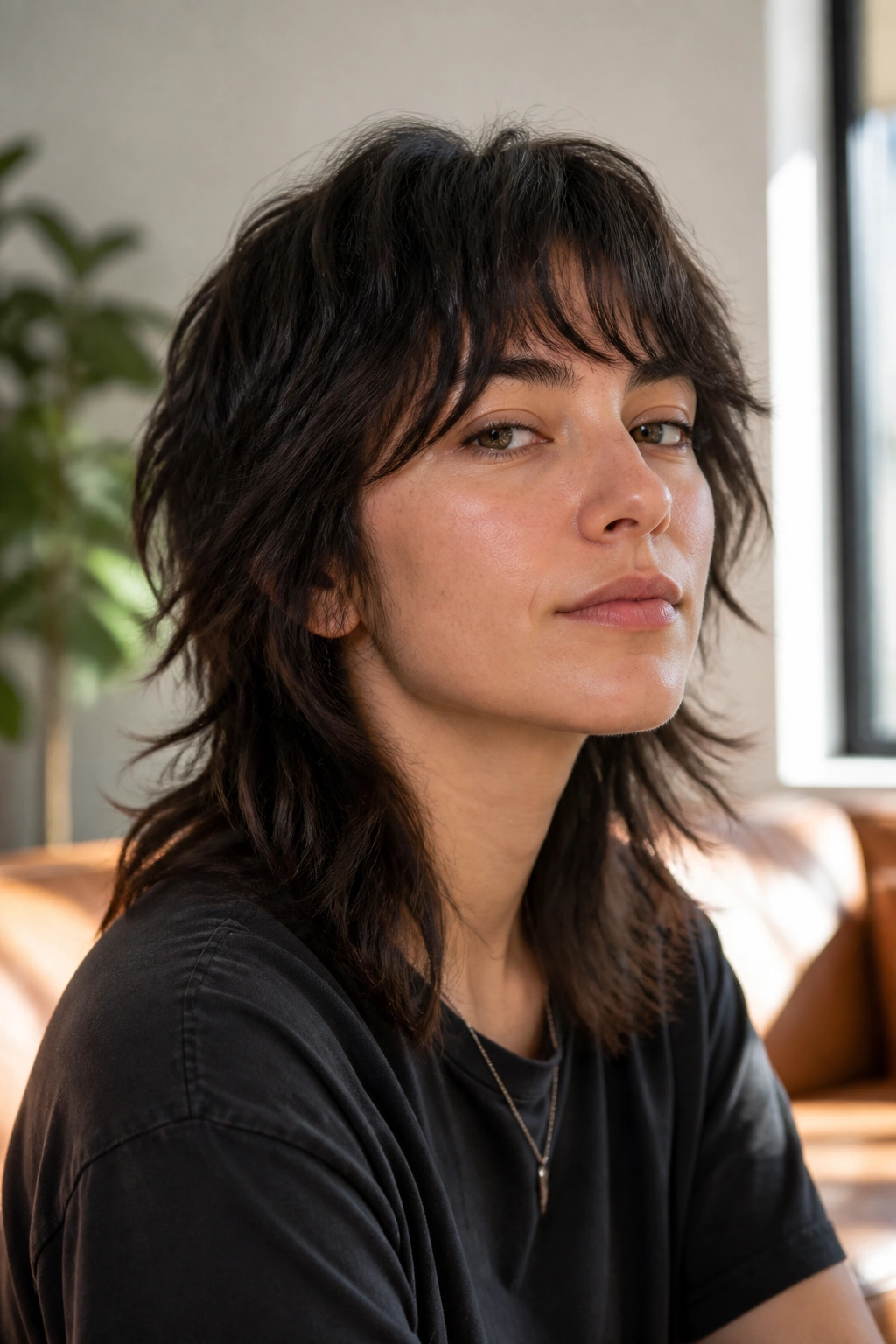
The grown-out version is for people who do not want to babysit their hair every three weeks. It keeps the mullet shag shape, but softens the contrast so it can stretch between trims without looking sloppy.
A good grown-out mullet shag should still have shape at the crown and enough length in the back to feel intentional. What changes is the edge. The transitions become looser, the bangs get longer, and the whole haircut starts to sit like a lived-in version of itself.
This is where communication matters. If you ask for “something that can grow out,” that is too vague. Ask for soft blending at the temples, a nape that won’t puff out when it grows, and a face frame that can fall into cheekbone or lip length after a few weeks.
It suits busy people, sure, but it also suits anyone who likes their hair to look a little less done. There’s a nice honesty to that. The cut still has edge. It just stops demanding attention every morning.
12. Punk Mullet Shag With Tapered Sides
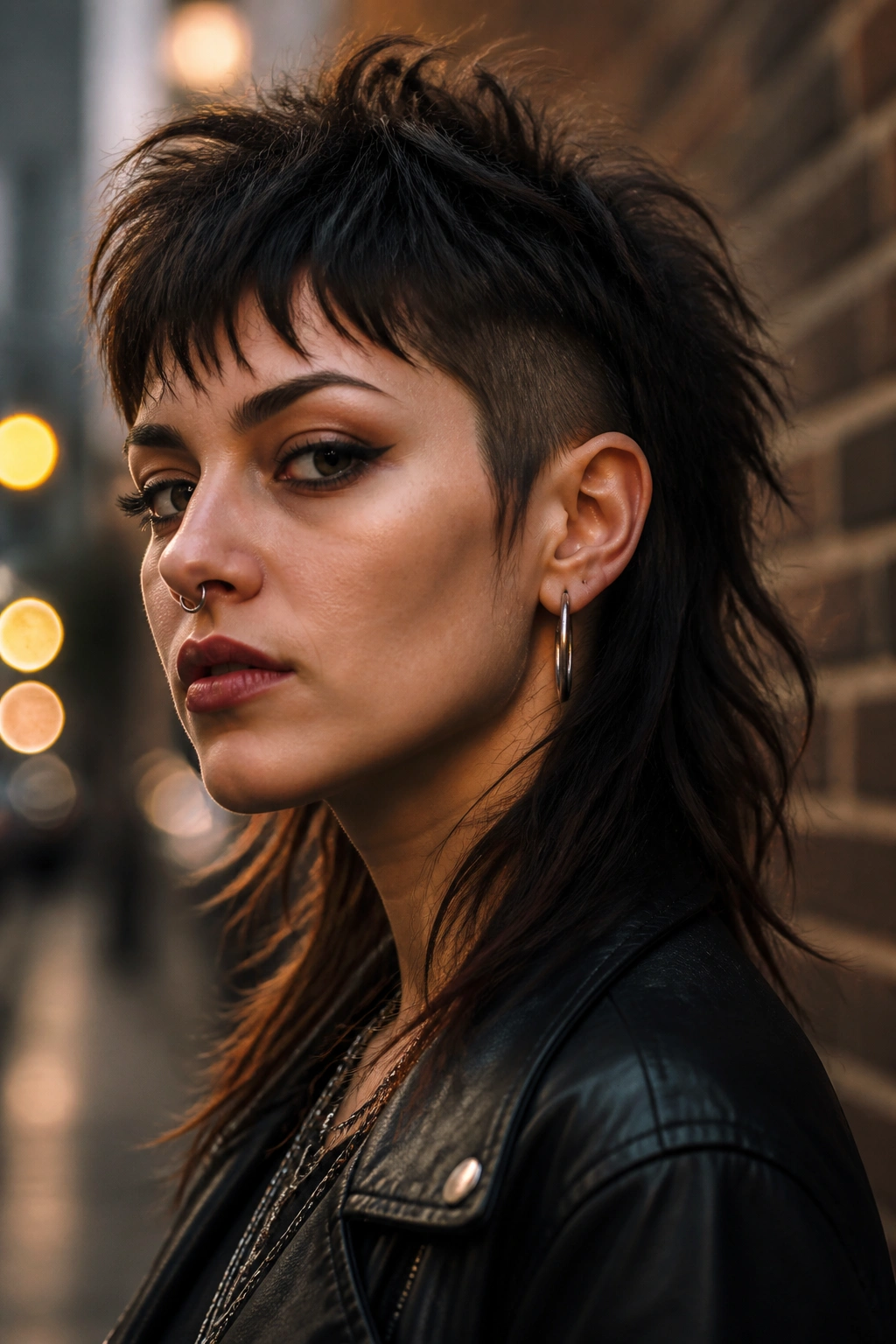
Unlike the softer versions, this one commits to the attitude. The sides are tapered tighter, the top is messier, and the back keeps enough length to make the contrast obvious the second you see it.
This is the mullet shag for women who want a sharper outline. It works with bold makeup, piercings, leather jackets, big earrings, or none of that at all. The haircut does the talking. The tapered sides create space around the face, which helps the top layers and fringe pop.
What to Tell Your Stylist
Be plain about the level of edge you want. Say whether you want the sides to graze the ears, tuck behind them, or sit tighter near the temple. That choice changes the whole mood. A tiny undercut hidden under the top layer can also keep the shape light without making it look shaved from every angle.
- Keep the top choppy and separated.
- Let the nape fall a little longer than the sides.
- Use a matte wax or paste to push the texture forward.
This cut can look brilliant on straight hair, where every line reads clearly. It can also look edgy on curls, though the shape softens a bit and the contrast turns less severe.
13. Face-Framing Mullet Shag for Round and Heart Faces
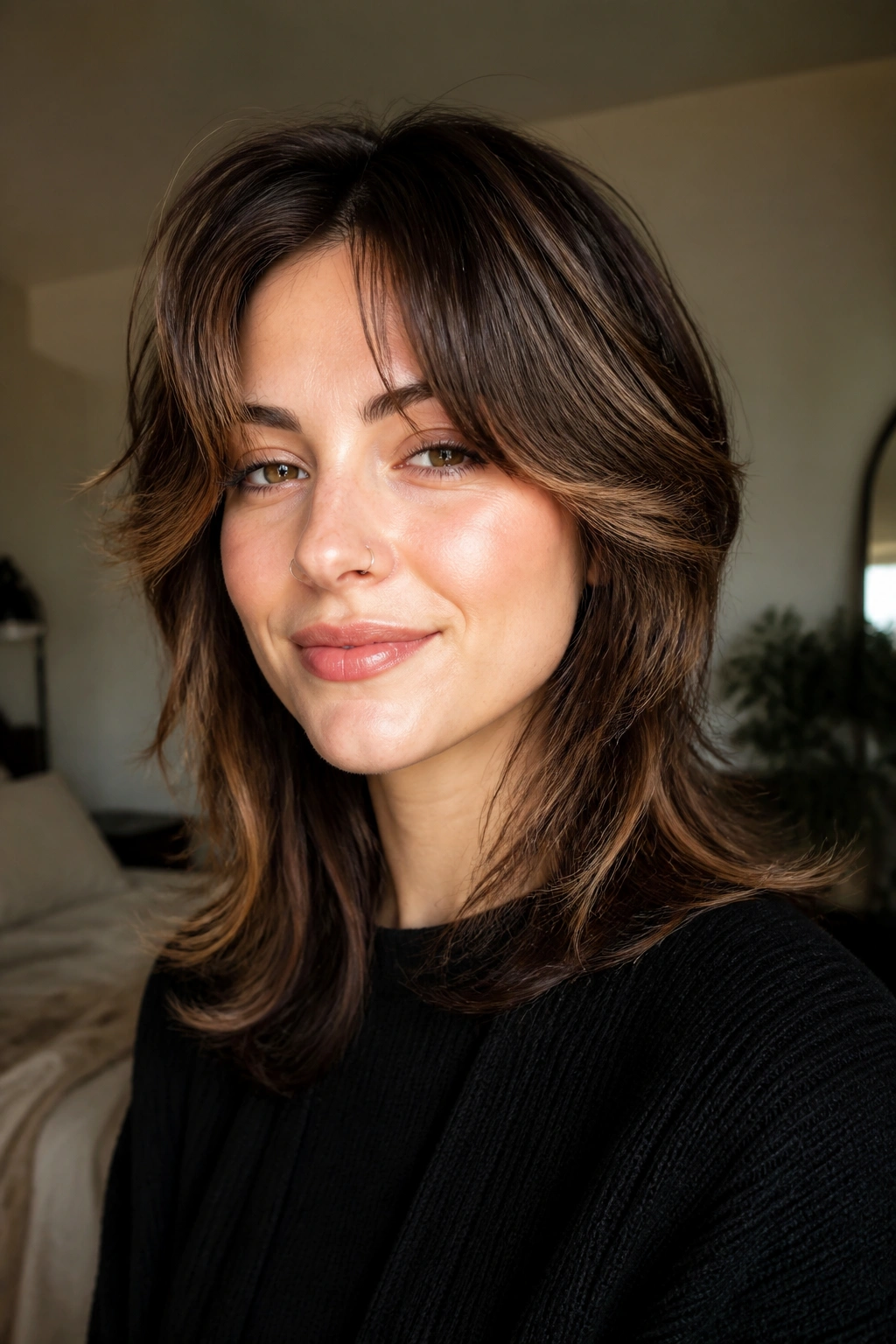
A face-framing mullet shag can be one of the most flattering ways to wear this haircut if the front sections are placed with care. The whole trick is where the shortest pieces land.
For round faces, the front should fall below the widest part of the cheeks so the cut does not widen the face more than needed. For heart-shaped faces, a softer cheekbone frame helps balance a wider forehead and a narrower chin. That means the first layer should not start too high unless you want a very punchy look.
A middle part can work well here, but a side part can be smarter if you want a little asymmetry. The back stays longer, which gives you that mullet note, while the front pieces act like curtain lines around the face. It is an easy haircut to personalize.
One sentence, because it matters: the wrong face frame makes a great cut look awkward. The right one makes the whole thing click.
14. Bixie Mullet Shag
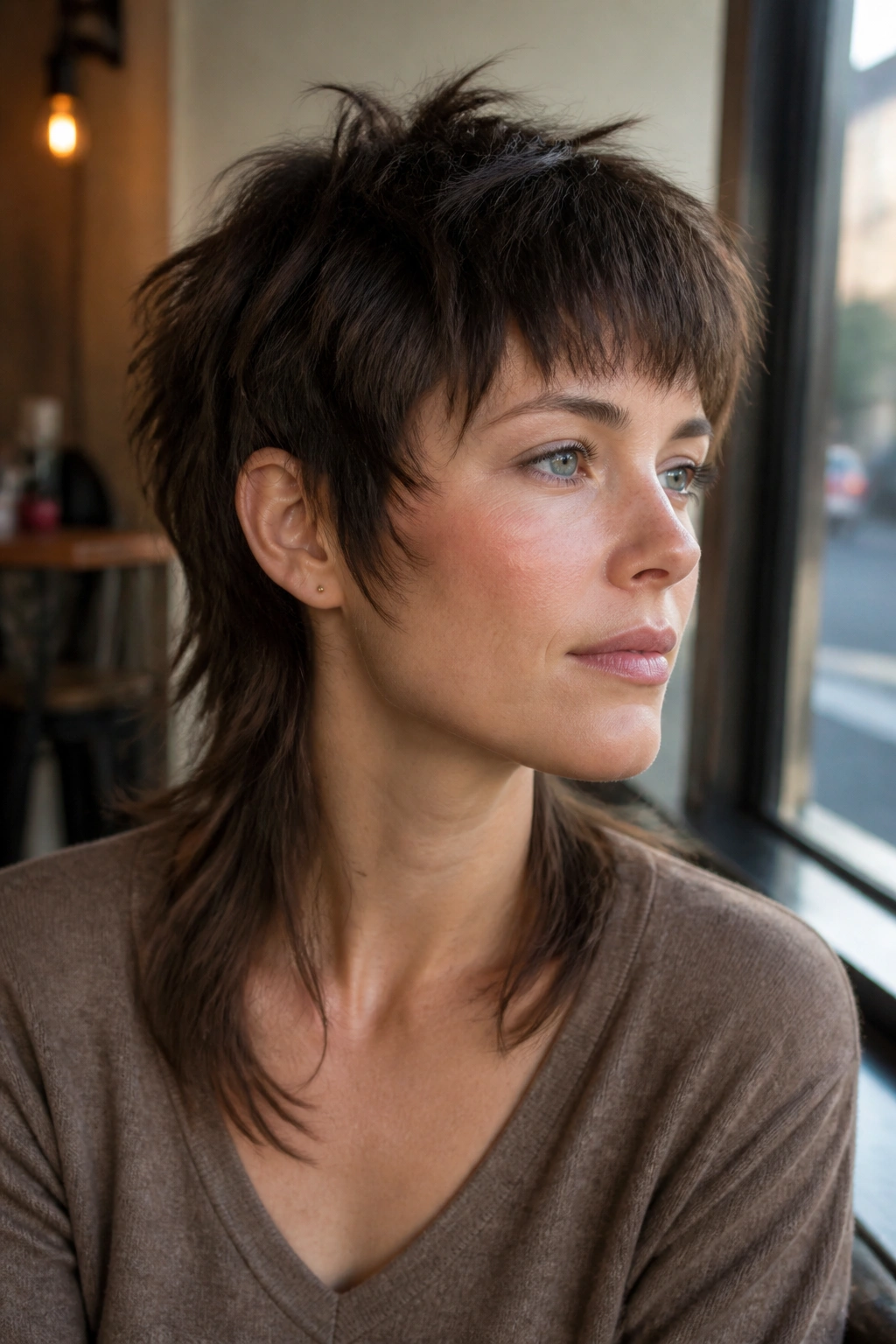
The bixie-mullet hybrid sits between a pixie, a bob, and a shag, which sounds messy on paper and somehow looks sharp in real life. It is shorter than the classic mullet shag, but it keeps enough length at the nape to keep that strange little kick in the silhouette.
This cut is especially good if you want short hair without going full pixie. The crown can be textured and lifted, the sides can stay neat, and the back can taper into a slim tail that moves when you turn your head. It has that cool, slightly accidental energy that so many short cuts chase and miss.
You do need a stylist who understands balance. Too much length in the front and it starts looking like a bad bob. Too much in the crown and the whole thing turns fluffy. The sweet spot sits right at the edge of controlled and unruly.
Best styling move? Work a small amount of paste through dry hair, then pinch the top pieces with your fingers. No heavy brushing. No perfect symmetry. That would kill the point.
15. Asymmetrical Mullet Shag With an Uneven Nape
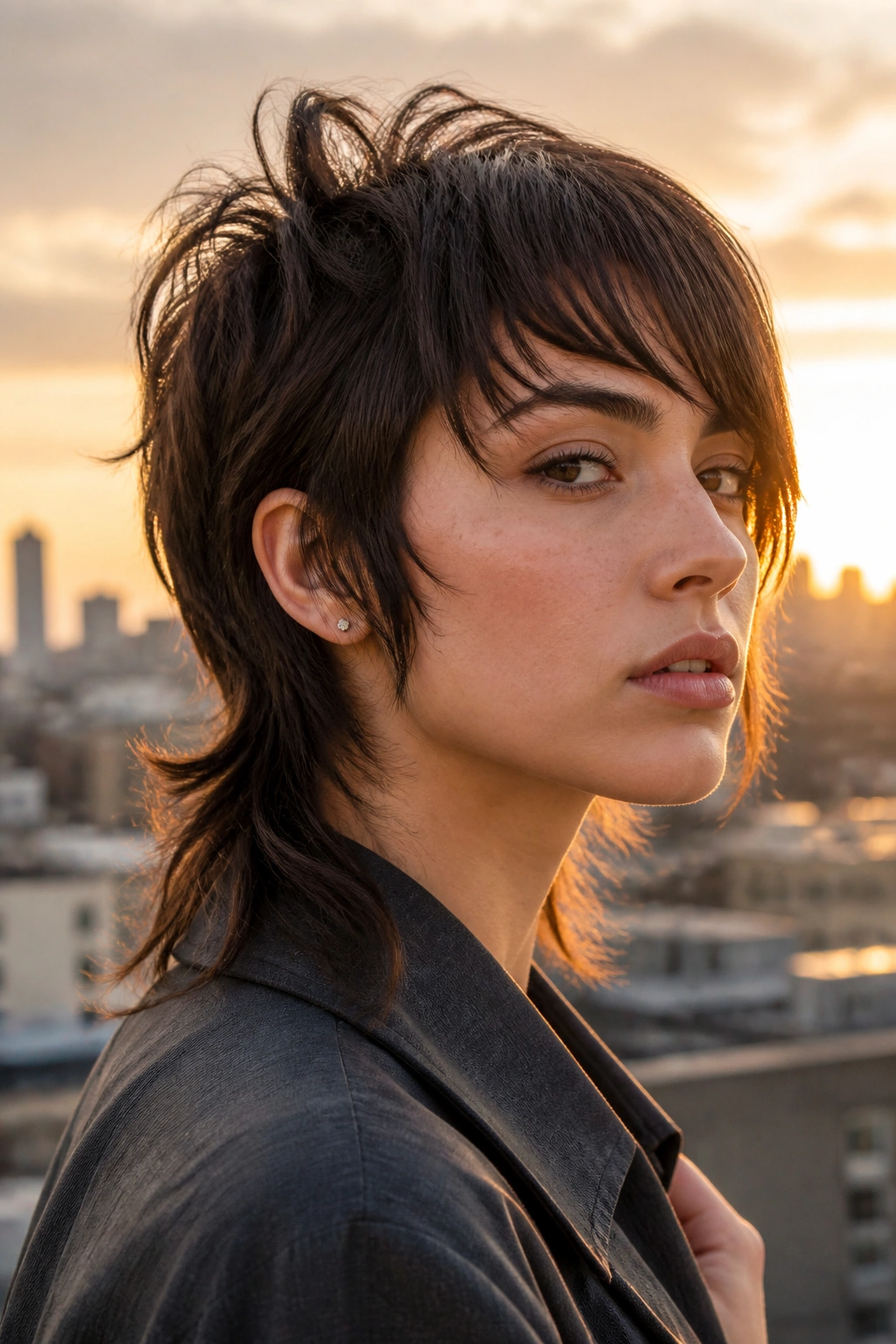
This is the version for someone who gets bored easily. One side is a little longer, the nape falls at a slight angle, and the fringe can be off-center without looking accidental. It has shape, but not sameness.
An asymmetrical mullet shag is more wearable than it sounds because the imbalance can be very subtle. You do not need a radical side cut. Even a small length difference from one side to the other changes how the haircut sits around the jaw and neck. That tiny shift can make the whole thing feel sharper and more expensive-looking, even though “expensive” is the wrong word for a haircut like this. Better word: deliberate.
If you want to ask for it, bring photos from the front, side, and back. One front view is not enough. The back and sides are where this cut lives, and stylists need to see the angle you actually want. That part gets skipped all the time, and then people wonder why the result feels ordinary.
The nicest thing about this haircut is that it gives you room. Room for texture. Room for air-drying. Room for a little mess without losing the shape. And if you want the safest approach of all, start with a softer version, then push the asymmetry further on the next trim. Haircuts like this work best when they’re built one honest decision at a time.
