



Thick hair can look expensive with almost no effort. It can also sit on your shoulders like a weighted blanket if the cut is wrong.
Medium-length layered haircuts for thick hair live in that sweet spot between heavy and wispy. You keep enough length to show off the density, but you trim away the parts that make hair puff out, flip out, or take forever to dry. That’s the real trick. Not thinning for the sake of thinning. Shape.
I’ve always thought thick hair behaves best when the cut respects its weight instead of fighting it. A blunt line can look polished, sure, but if the hair is bulky, blunt ends can turn into a triangle or a shelf. Add the wrong short layers and you get the opposite problem: frizz, floaty ends, and a top section that seems to have its own ideas.
The cuts below all sit in that collarbone-to-shoulder zone where thick hair can still move. Some are soft and easy. Some are sharper and more styled. All of them are built to keep the hair from swallowing your face or your morning routine.
1. The Collarbone Lob With Long Layers
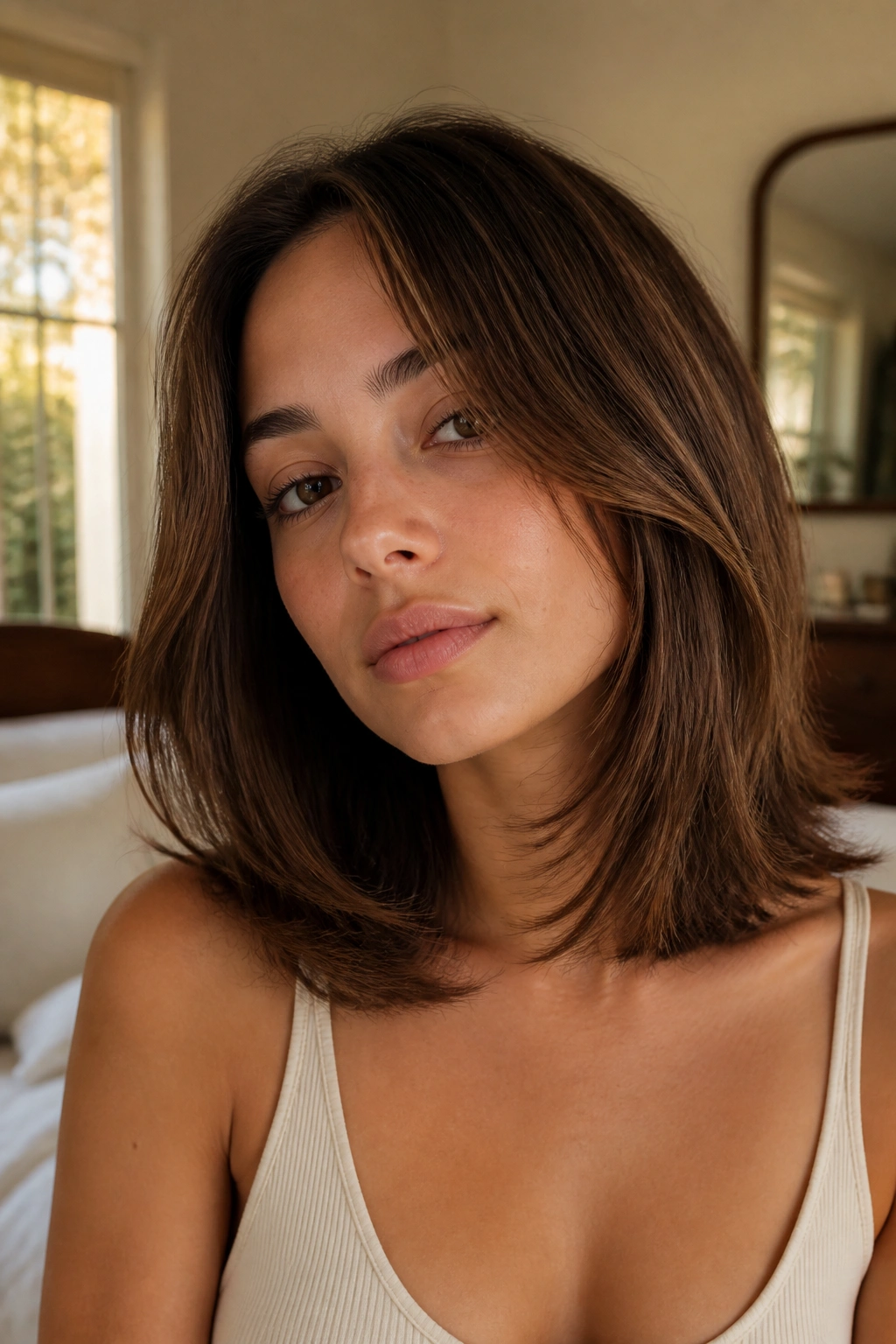
A collarbone lob with long layers is the haircut I recommend when someone wants thick hair to feel lighter without losing the sense of hair. It keeps the outline clean, which matters more than people think. Thick hair needs a boundary.
The longest pieces hit around the collarbone, so the cut still feels full when you wear it straight. The layers start low enough to remove weight without making the top look choppy. That balance is what keeps it from turning into a fluff ball the second you add a brush or a round brush blow-dry.
Why it works on thick hair
The lower layers let the ends swing a little instead of stacking up in one heavy block. That means less bulk at the bottom and less of that helmet shape you sometimes get with one-length mid-length cuts.
Ask your stylist for:
- A collarbone base length
- Long, blended layers that begin below the chin
- Soft point cutting at the ends instead of a blunt chop
- No aggressive thinning shears through the mid-lengths
My take: if you want a haircut that still looks good on a day when you do almost nothing to it, start here.
2. The Butterfly Cut That Starts at the Chin

The butterfly cut is the one people bring in when they want movement around the face and a little drama in the crown. On thick hair, it can be a smart choice because the shorter top layers give lift while the lower length stays heavy enough to lie flat and smooth.
It works best when the shortest pieces start around the chin or just below it. Go too short and thick hair can spring up in a way that feels annoying rather than flattering. Keep the back pieces longer, and the whole cut gets that airy, blown-out shape without losing weight at the bottom.
A good butterfly cut almost cheats. It looks layered and full of bounce, but it does not make the hair feel stripped down. The top half does the lifting. The bottom half does the grounding.
If you like styling with a round brush, this one gives you a lot of payoff for a pretty ordinary effort. If you air-dry, the face frame still helps the shape read clearly even when the layers relax.
3. The Soft Shag With Curtain Bangs

A shag on thick hair can go wrong fast if it gets too shredded. A soft shag is a different animal. It keeps the cool, lived-in feel, but it leaves enough body in the ends that the cut still feels controlled.
Curtain bangs do a lot of work here. They break up the front so thick hair does not all sit in one solid wall around the face. The layers blend back into the sides, which gives the hair movement when it swings and a little lift when you tuck it behind your ears.
What makes it calmer than a classic shag
The difference is restraint. The best version of this cut has texture, not chaos. You want the outline to feel intentional, not like someone took a razor to the whole head and hoped for the best.
A few things to ask for:
- Curtain bangs that open around the cheekbones
- Soft, blended layers through the sides
- Weight kept at the perimeter so the ends still have presence
- Light texturizing only where the hair is dense, not everywhere
If you have thick hair that gets hot, heavy, and a little stubborn, this cut has a nice release valve built in. It also grows out in a forgiving way, which I appreciate more every time I see a haircut that looks expensive for six weeks and then falls apart.
4. The Face-Framing Lob With Cheekbone Layers
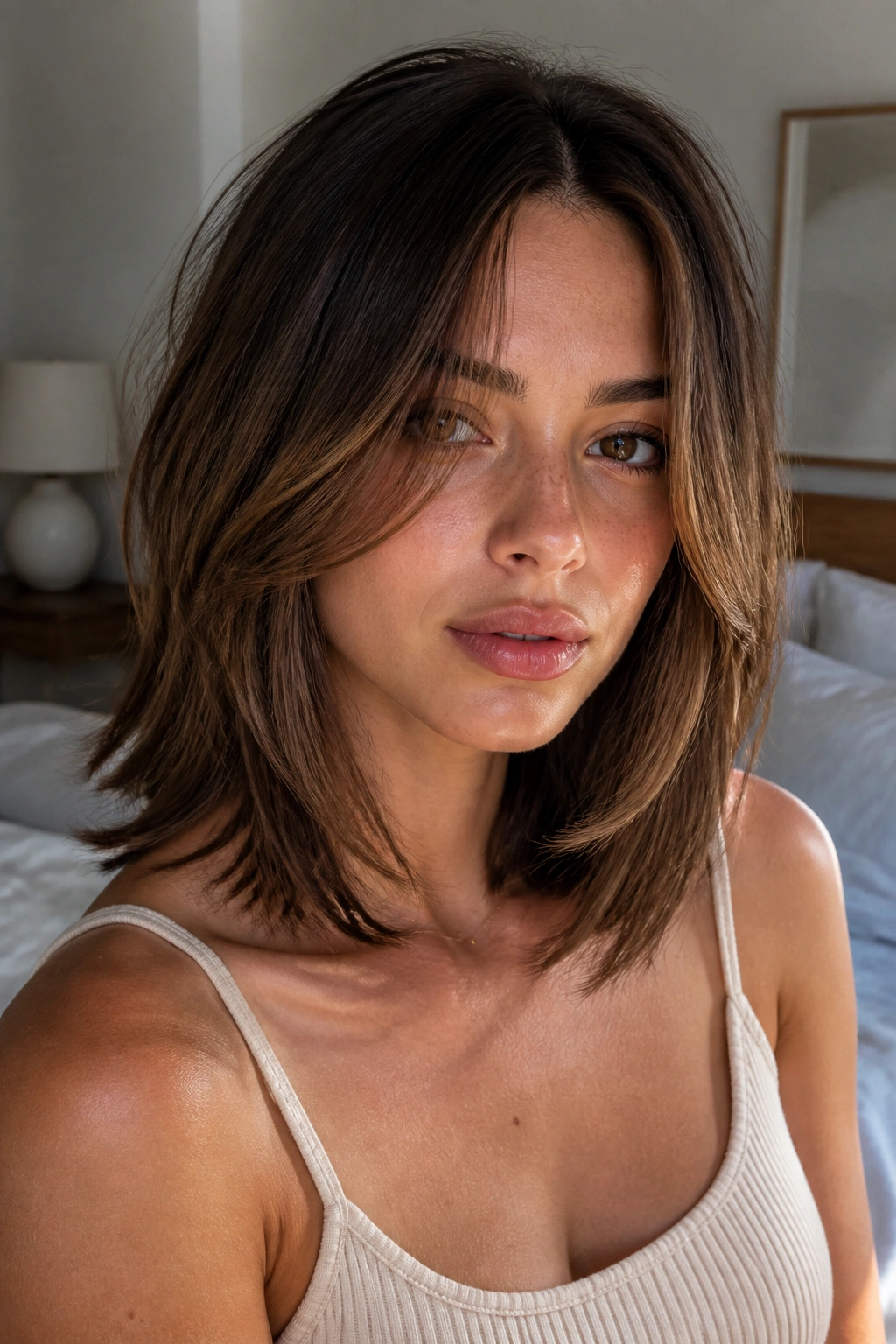
If you want shape without a lot of haircut drama, this is one of the smartest medium-length layered haircuts for thick hair. The cut keeps the bulk where you need it, then opens the front with cheekbone-skimming layers that soften the face and stop the hair from feeling boxy.
The front pieces matter here more than the rest of the cut. They should start high enough to create movement, but not so high that they steal all the density from the sides. Thick hair needs a little give around the face and a little structure near the shoulders. This cut gives both.
The other reason I like it: it plays nicely with everything. Straight hair looks polished. Wavy hair looks fuller in a good way. Even a messy clip-up day still leaves enough shape around the face that the haircut doesn’t disappear.
Best for:
- Round faces that want a little vertical length
- Square jaws that need a softer edge
- Thick hair that feels too heavy around the cheeks
- Anyone who likes to tuck one side behind the ear
One warning: if your stylist cuts the face frame too short, the whole look can jump into early-2000s territory fast. Keep the layers long and soft.
5. The Rounded U-Shape Cut

A rounded U-shape is one of those cuts that sounds almost too simple, but on thick hair it can be a lifesaver. Instead of cutting the bottom straight across, the perimeter curves gently so the center stays a touch longer than the sides. That subtle curve keeps the hair from looking like one giant shelf.
It’s especially good if your hair grows wide at the sides. That happens more often than people expect. The U-shape pulls the eye downward in a softer line, which gives thick hair movement without taking away the density that makes it look lush.
This cut also behaves well when you tie your hair back. The front pieces fall around the face in a way that feels deliberate, not accidental. When thick hair is blunt and heavy, ponytails can look bulky in a bad way. A U-shape gives you better collapse and less puff around the nape.
I like this shape on hair that has a little wave, because the curve shows up even when you do not spend time styling. It’s subtle. That’s the point.
6. The A-Line Lob With Tapered Front Pieces
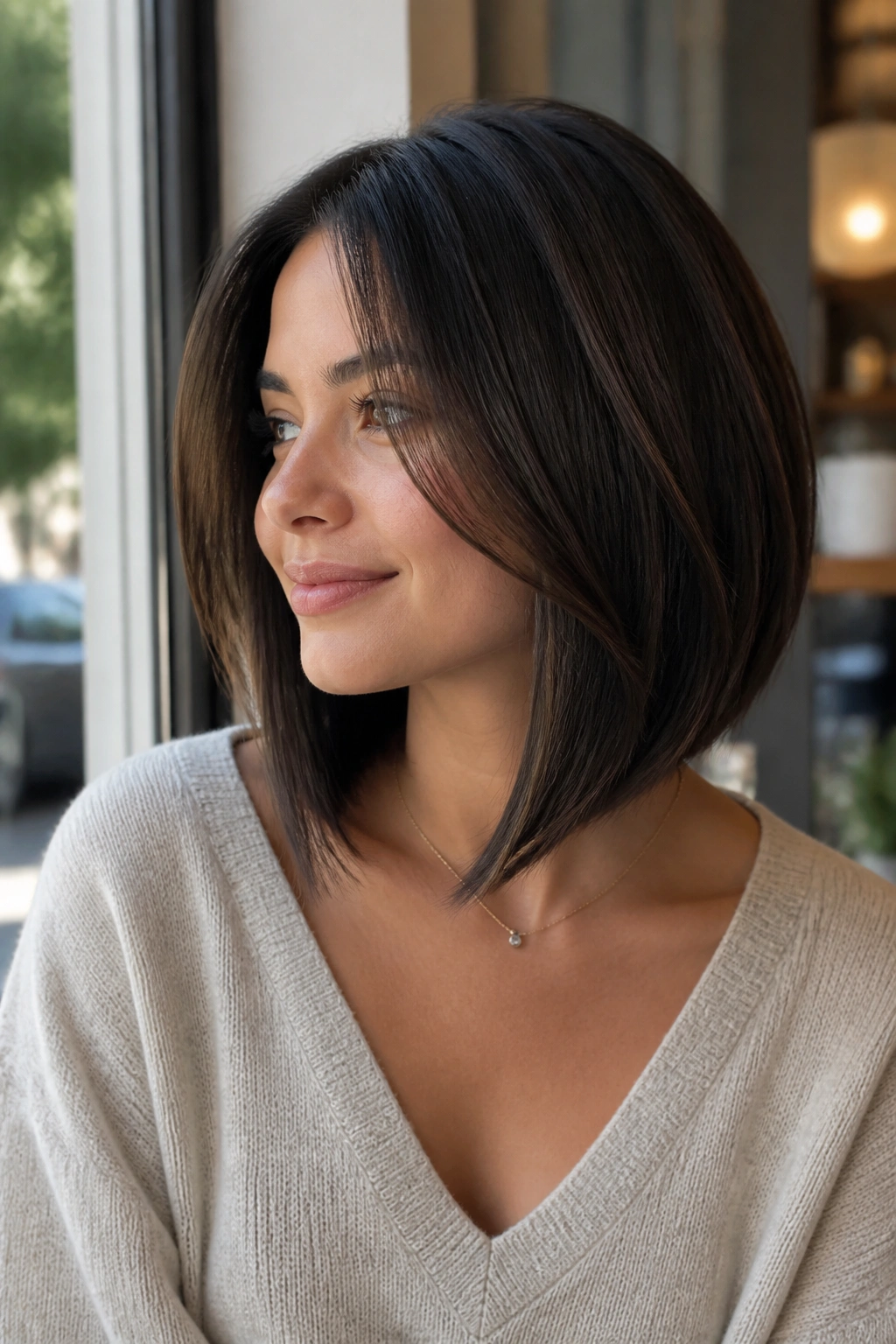
Why does a small angle change everything? Because thick hair loves a little geometry.
An A-line lob is shorter in the back and slightly longer in the front, which sounds like a tiny difference until you see how much easier the hair falls. Thick hair can carry the angle without looking thin, and the forward length gives the face a bit of framing without making the whole cut feel layered to death.
The angle does the heavy lifting
The shorter back removes bulk where it tends to pile up. The longer front keeps the cut from feeling blunt or boxy. The result is a shape that swings when you turn your head, which is one of those small things that makes a haircut feel alive.
Ask your stylist for:
- A gentle A-line, not a sharp stacked bob
- Tapered front pieces that skim the jaw or collarbone
- Minimal layering in the back
- Clean lines at the nape so the shape stays tidy
This cut is a strong choice if you wear your hair mostly down and like to tuck the front behind one ear. It also gives thick hair a nice profile in photos, if that matters to you. And it usually does.
7. Invisible Internal Layers for Heavy Hair
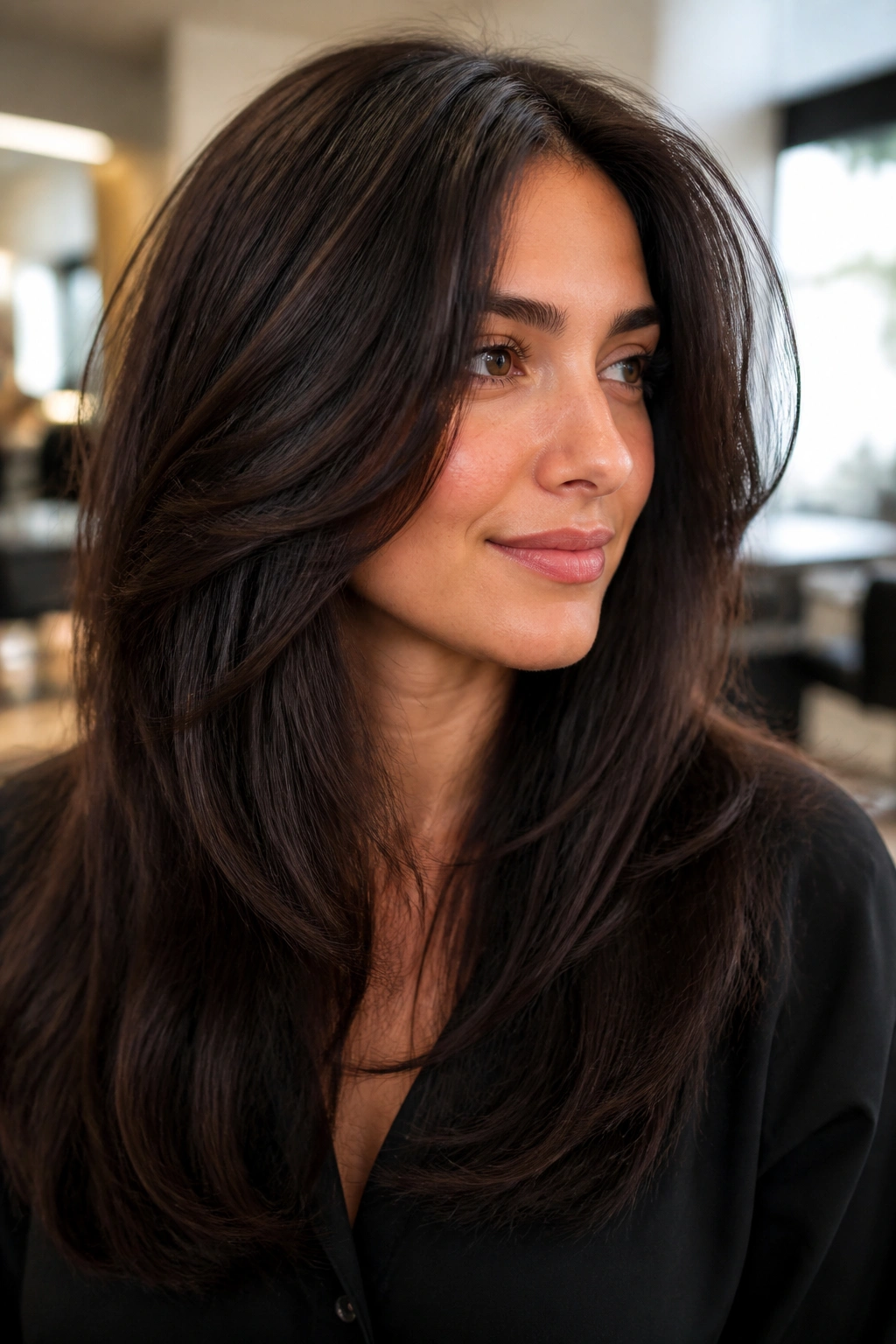
This is the haircut for people who say, “I want layers, but I don’t want to look layered.” Fair. Thick hair can get mushy-looking when the exterior is overcut, so hidden internal layers are a good way to remove weight without changing the outside silhouette too much.
The hair still looks like a clean medium-length cut from the outside. Underneath, though, the stylist has taken out some of the density so the hair falls easier and dries faster. That’s the part most people notice first in real life: less time with a blow dryer, less widening through the sides, less of that heavy swing that makes thick hair feel slow.
It’s a very good option if you like straight styles and want to keep the outline polished. It’s also a quiet fix for hair that feels bulky at the back of the head. You see the difference most when you move. The hair shifts instead of dragging.
Ask for:
- Interior weight removal only
- A smooth perimeter with minimal visible steps
- No short crown layers
- A dry cut or a detailed check on dry hair if your texture is unpredictable
Honestly, this is one of my favorite ways to cut thick hair when the goal is subtle control.
8. The Razored Midi With Feathered Ends

A razor cut can be gorgeous on thick hair, but I would never hand it to someone as a casual default. The tool matters. The hand matters more. Used well, it gives you feathered ends that move instead of sitting in a hard block.
This style is especially good if your hair is coarse or has a slight bend. A sharp pair of scissors can leave thick hair too blunt at the ends. A razor softens that edge and helps the layers blend in a more airy way. The cut starts to feel lighter without losing the body that thick hair needs.
The catch is simple: if your ends are already dry or fragile, too much razor work can make them fray. So this cut works best on healthy hair with some strength left in the length. Not every head of thick hair should be thinned out aggressively.
If you like that slightly piecey, broken-up finish, this one gives it to you without looking overstyled. It pairs well with loose waves, but it also holds up if you wear it straight and tucked behind the ears.
9. The Side-Swept Layered Cut With a Deep Part
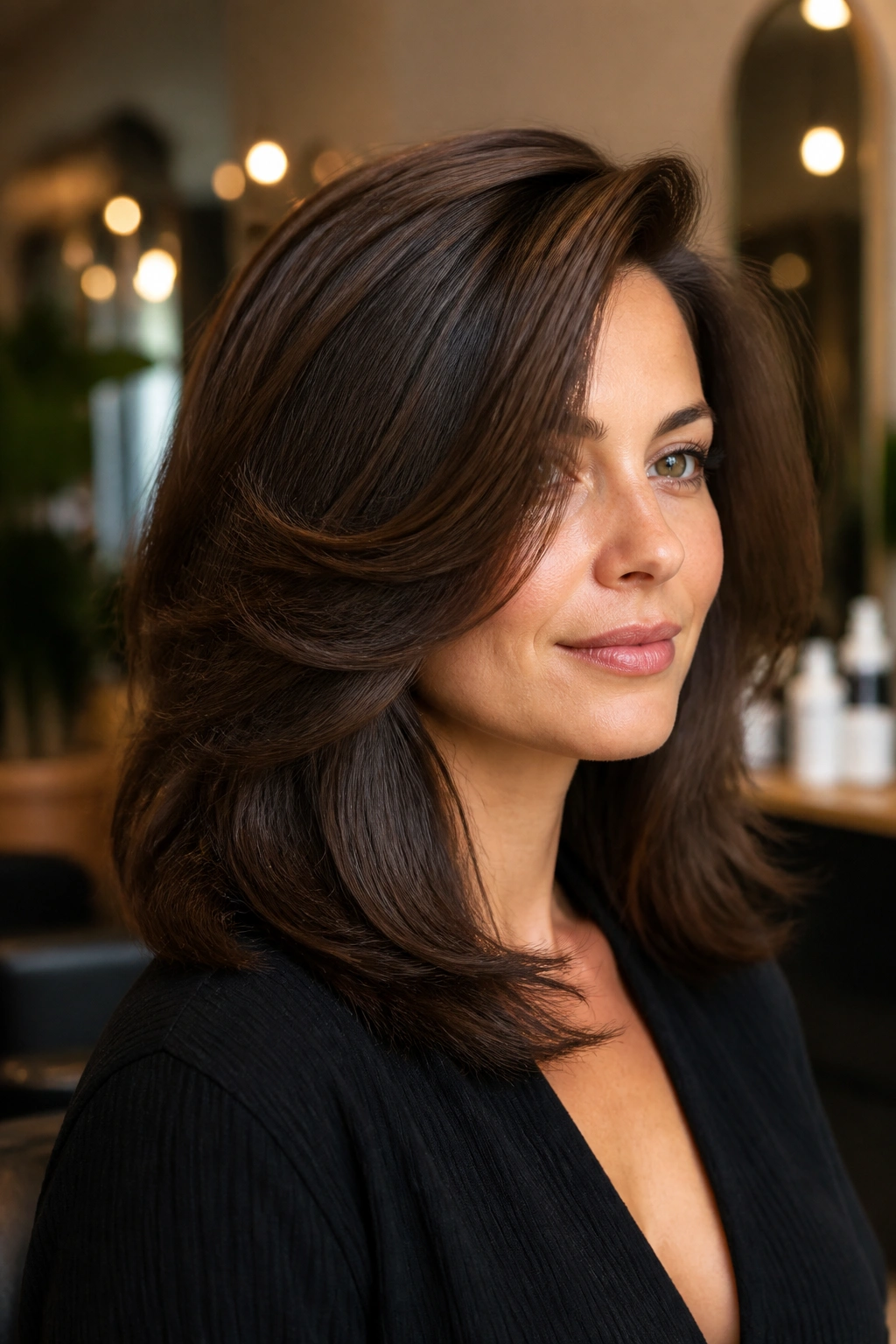
A deep side part can do more for thick hair than a lot of people realize. It shifts the weight, creates lift at the roots, and breaks up the sameness that can happen when thick hair falls straight down from a center part.
What the part changes
When the hair is split far off-center, one side gets a little more height and the other side gets more drape. That asymmetry keeps the cut from feeling flat. It also helps medium-length layers show up instead of disappearing into the bulk.
This cut works especially well if you like a bit of glam without committing to bangs. The front can sweep across the forehead, then blend into longer layers around the cheek and jaw. The shape feels soft, but not boring. And thick hair loves a little bit of drama as long as it has structure.
A few styling notes:
- Blow-dry the root at the part with a slight lift
- Use the front layer to frame one cheekbone
- Keep the ends soft, not chopped into little bits
- Switch the part occasionally so the root does not get stuck flat
It’s a good fix when your hair always falls in the same place and you want a faster refresh than a full haircut change.
10. The Wavy Shoulder Cut With Choppy Ends

If your thick hair already has wave, this cut can feel like a relief. It lets the wave do the work instead of forcing the hair into a rigid shape. The medium length keeps the weight from ballooning out, and the choppy ends stop the whole thing from turning into a triangle.
I like this cut because it looks better when it’s not perfect. A little bend in the mid-lengths, a little separation at the ends, and the haircut comes alive. That matters with thick hair. When the hair is dense, too much polish can make it look heavy again. The slight mess is part of the charm.
A shoulder-skimming length also keeps the cut practical. Thick hair can take forever to fully dry when it is much longer. At this length, the styling time starts to feel sane again, which is not a small thing if you have a full morning and no patience.
One detail makes a big difference: ask for the ends to be softened, not shredded. Choppy does not have to mean thin. It just means the outline is less stiff.
11. The Blunt Base With Light Slice Layers
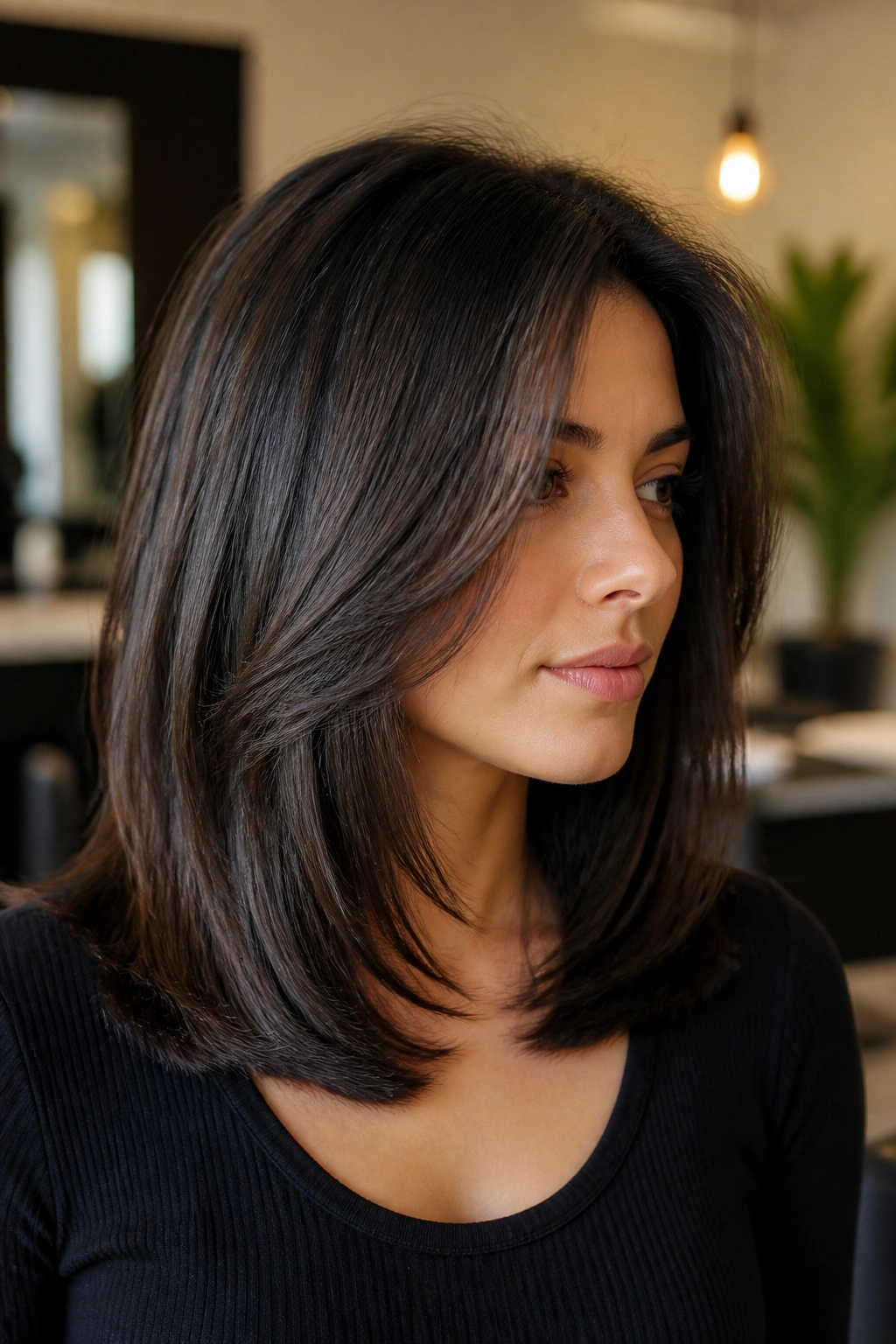
Why do some thick-haired people keep coming back to blunt cuts? Because fullness looks good. A lot of fullness looks good. The problem is not the density itself. The problem is bulk in the wrong places.
Ask your stylist for this
A blunt base with light slice layers keeps the strong line at the bottom, which thick hair can wear beautifully, but it lets the stylist remove a little weight through the middle and upper sides. Slice layers are softer than heavy step layers. They take out some mass without making the haircut look chopped.
That makes this cut a strong pick for thick straight hair, or hair that gets straighter when it dries. You still get the dense, expensive-looking edge at the bottom. You just do not get the blocky feeling that can make a medium cut sit heavy on the shoulders.
Ask for:
- A strong perimeter
- Very light internal layering
- Soft slide-cut or slice-cut removal through the sides
- Minimal texture at the ends
I think this cut is underrated. It respects thick hair instead of trying to turn it into something airy and wispy, which is usually the wrong goal anyway.
12. The Feathered 70s-Inspired Medium Cut

Feathered layers have a very specific mood. They bend away from the face, they flick outward at the ends, and they make thick hair feel lighter without stripping out the body. If you like a blowout that looks a little soft around the cheeks and jaw, this one lands in a good place.
The cut depends on movement. That’s why it suits medium-length thick hair so well. You get enough length for the feathering to show, but not so much that the shape falls flat under its own weight. A round brush helps, but the cut still has a nice shape if you do a quicker dry and leave a little bend in the ends.
I’d choose this over a more modern choppy cut when the hair is dense but fine in texture. The feathering keeps the style airy without making the ends look torn up. It also gives your layers a smooth, almost brushed-out finish that can feel a little more polished than a shag.
If you like a face frame that opens up around the cheekbones and then softens toward the shoulder, this is a good lane to be in.
13. The Curly Layered Shoulder Cut
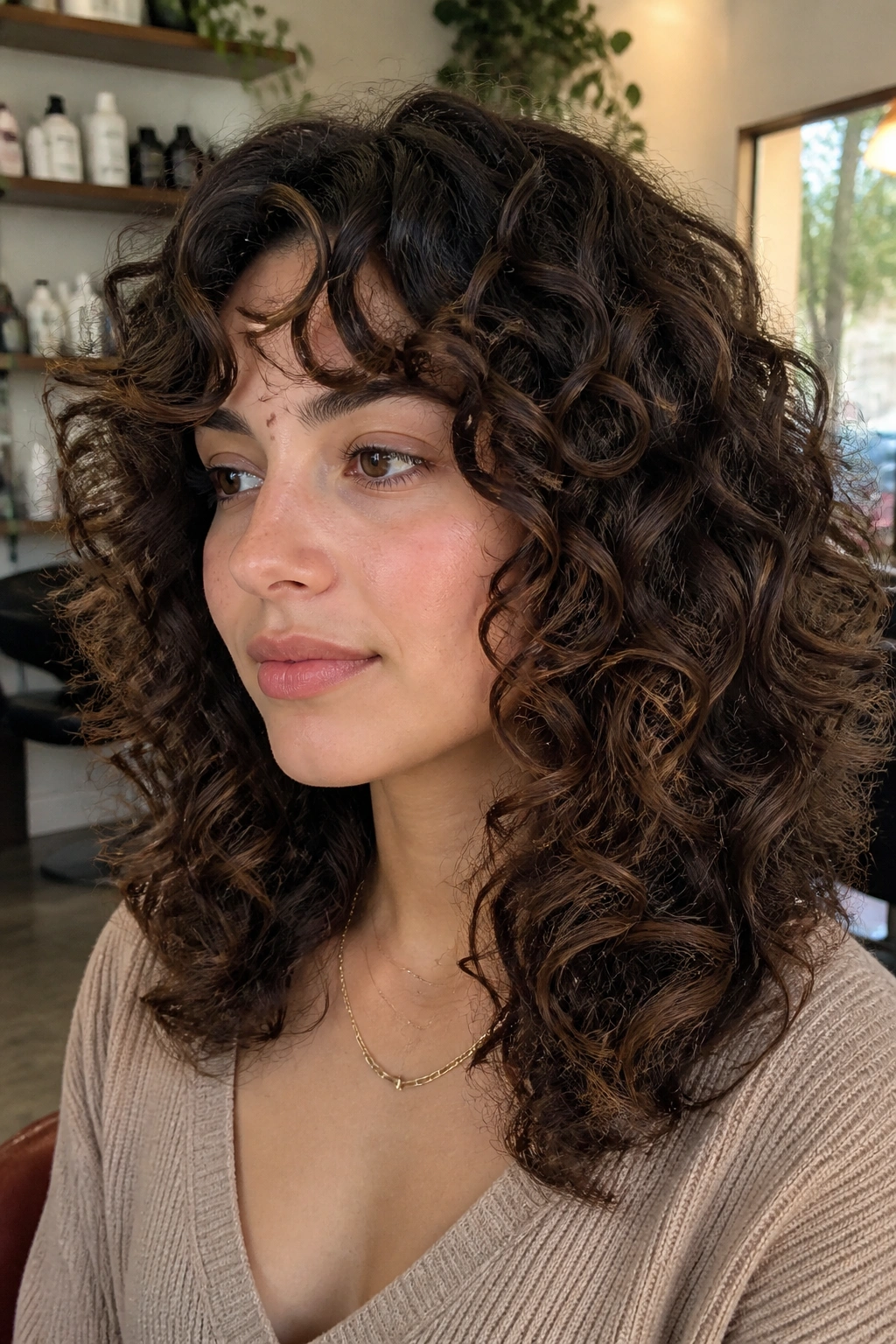
Curly thick hair needs a different kind of thinking. The goal is not to force it into the same shape as straight hair. The goal is to let the curl pattern stack in a controlled way so it does not balloon out at the sides.
Why dry cutting matters
A curl-by-curl or dry-inspired cut usually gives better results because the stylist can see how each curl sits when it’s in its natural state. Thick curly hair can shrink more than people expect, and a wet cut can fool you into taking off too much length. That mistake is hard to fix.
A shoulder-length shape works well because the curls still have room to spring, but the weight at the bottom helps them hang instead of puffing outward. Longer layers keep the silhouette soft. Shorter layers can be used, but they need to be placed carefully so the top does not collapse into a shelf.
A few things to ask for:
- Length that accounts for shrinkage
- Layers cut to the curl pattern, not in a straight line
- A soft shape around the face
- No aggressive thinning that breaks up the curl clumps
This kind of cut can be gorgeous on thick curls. It can also be a mess if someone treats it like straight hair, so the stylist matters.
14. The Sleek Straight Cut With Long Underlayers
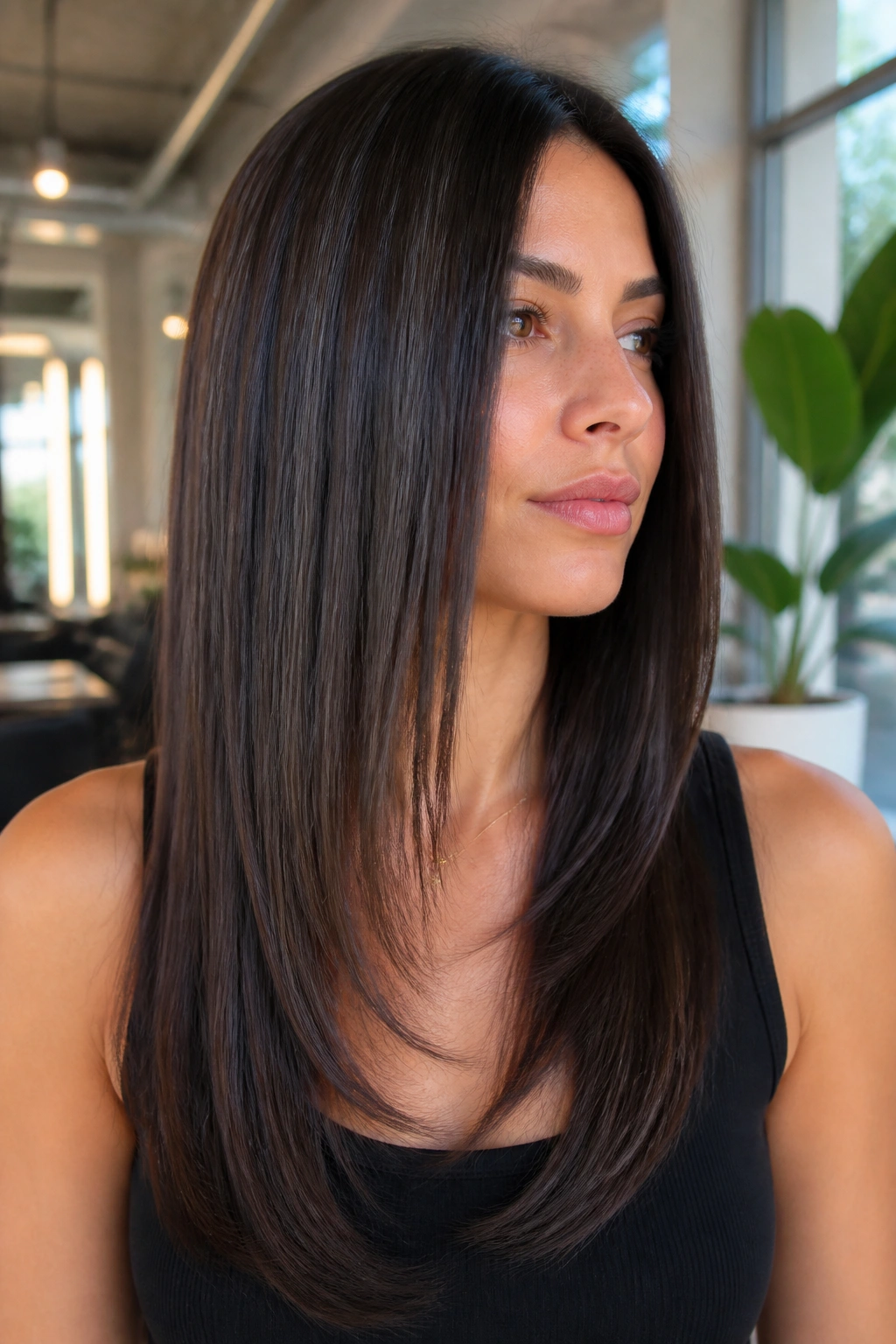
Straight thick hair is its own animal. It often looks polished faster than wavy hair, but it can also feel the heaviest if the layers are too short or too busy. A sleek cut with long underlayers keeps the outside line neat while taking weight out of the center.
The key is restraint. You want the perimeter to stay clean and the layers to stay hidden enough that the haircut does not start flicking in random directions. On thick straight hair, visible layers can sometimes look like shelves. Long underlayers avoid that.
How it keeps the outline clean
The surface hair falls over the lighter sections, so the shape still reads as smooth from the outside. Underneath, the bulk is reduced, which helps with drying time and movement. It’s one of those cuts that looks simple until you notice how much easier the hair behaves.
This cut is a good match if you like straightening your hair or wearing it naturally smooth. It also handles humidity better than a heavily layered style, because there’s less chance of little broken-up pieces sticking out everywhere.
The style does not need much drama. A center part, a slight bend at the ends, and a clean line through the mid-lengths are enough.
15. The Soft Wolf Cut at Medium Length

The wolf cut gets talked about like it’s only for edgy people with a lot of styling time. That’s not fair. A softer version works beautifully on thick hair, especially at medium length, because it creates movement through the crown while keeping enough length at the bottom to avoid a giant puff.
The trick is to keep the layers blended. You want some lift up top, some texture around the face, and a longer perimeter that gives the cut structure. Too much separation and thick hair can start looking wild in the wrong way. Too little, and the wolf cut loses the point.
I like this option for hair that feels heavy but not flat. It gives the haircut personality. It also works when you air-dry and let the texture show, which is handy if your hair has a natural bend or wave.
It’s not the most conservative choice on this list. Fine. Not every haircut should be polite.
If you want something that feels current without looking overdone, this is one of the better places to land.
16. The Polished Blowout Cut With Lifted Crown Layers
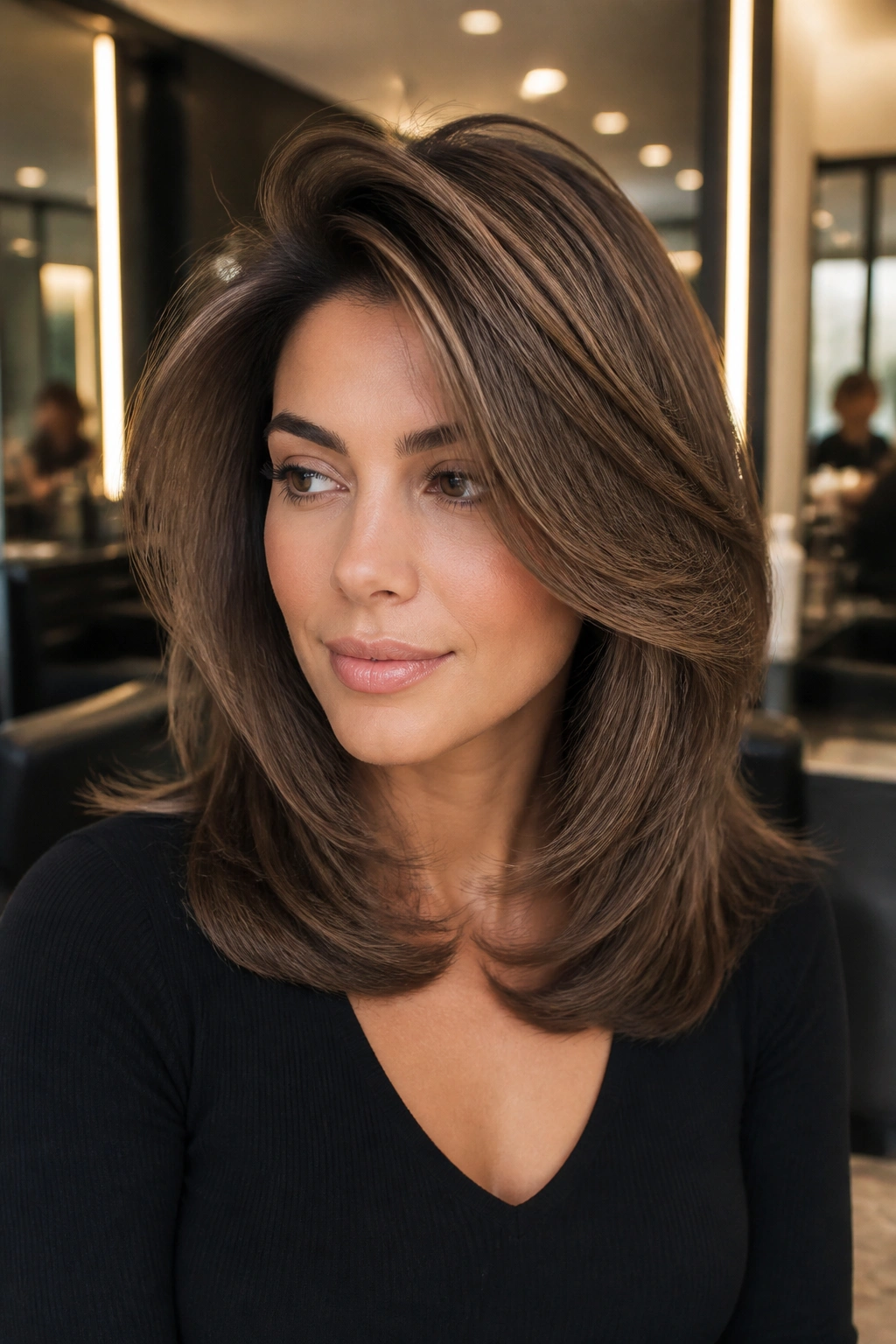
This cut is for the person who wants thick hair to look full at the roots and smooth through the ends. That combination sounds basic, but it’s harder to get than people think. Most haircuts favor one side of the equation and ignore the other.
What to ask for at the salon
A polished blowout cut uses lifted crown layers to create volume where the hair tends to sit flat, then leaves the lower half long enough to swing under a brush or a large round roller. The shape should feel airy at the top and controlled at the bottom.
Ask for:
- Crown layers that start high enough to create lift
- Mid-length layers that blend into the body
- Ends that tuck under cleanly
- Enough length to set with a round brush or hot rollers
This one shines when thick hair has too much weight at the top and too little movement around the shoulders. It’s a strong choice for work settings, dinners, and any day you want the hair to look deliberate without looking fussy.
The haircut does most of the work. That’s why I like it.
17. The Mid-Length Cut With Bottleneck Bangs

Bottleneck bangs can be a smart move for thick hair because they give you fringe without a hard line across the forehead. The bang starts a little narrower at the top, then widens as it blends into the cheekbones and sides of the haircut. That shape matters.
Why? Because thick hair tends to make bangs feel heavy fast. A blunt fringe can sit like a shelf. Bottleneck bangs break that up and connect the front of the haircut to the layers instead of cutting the face off from the rest of the hair.
What the fringe does
It softens the forehead area, adds shape around the eyes, and helps the medium-length layers feel connected. The cut works especially well if you wear your hair loose most of the time and want the front pieces to do something useful even on low-effort days.
A few details worth asking about:
- Keep the center shorter and the sides longer
- Blend the bangs into face-framing layers
- Avoid a heavy, thick fringe if your hair already sits dense at the front
- Style with a small round brush or a quick bend from a blow-dryer
This is one of those cuts that can make thick hair feel lighter around the face without sacrificing the fullness people actually like.
18. The Grown-Out Shag That Behaves at Work

A lot of people want shag texture, then panic when it looks too messy for the office or too casual for everyday wear. A grown-out shag solves that. It keeps the movement and the broken-up ends, but the layers stay longer and more controlled.
The result is hair that still has personality. It just doesn’t look like it spent the night in a wind tunnel.
This version works well on thick hair because the layers can be placed to remove bulk where it builds up, especially through the sides and back, while leaving enough length for the haircut to settle. That grow-out is the whole point. The cut should still look decent when it’s a little overgrown.
I like it for people who alternate between putting their hair up and wearing it down. The loose face frame does enough work on its own that the style doesn’t vanish the second you throw on a clip. And on thick hair, that kind of flexibility is worth a lot.
If your hair has some wave, even better. The layers catch it without making the style too loud.
19. The Piecey Midi With Softly Scattered Layers
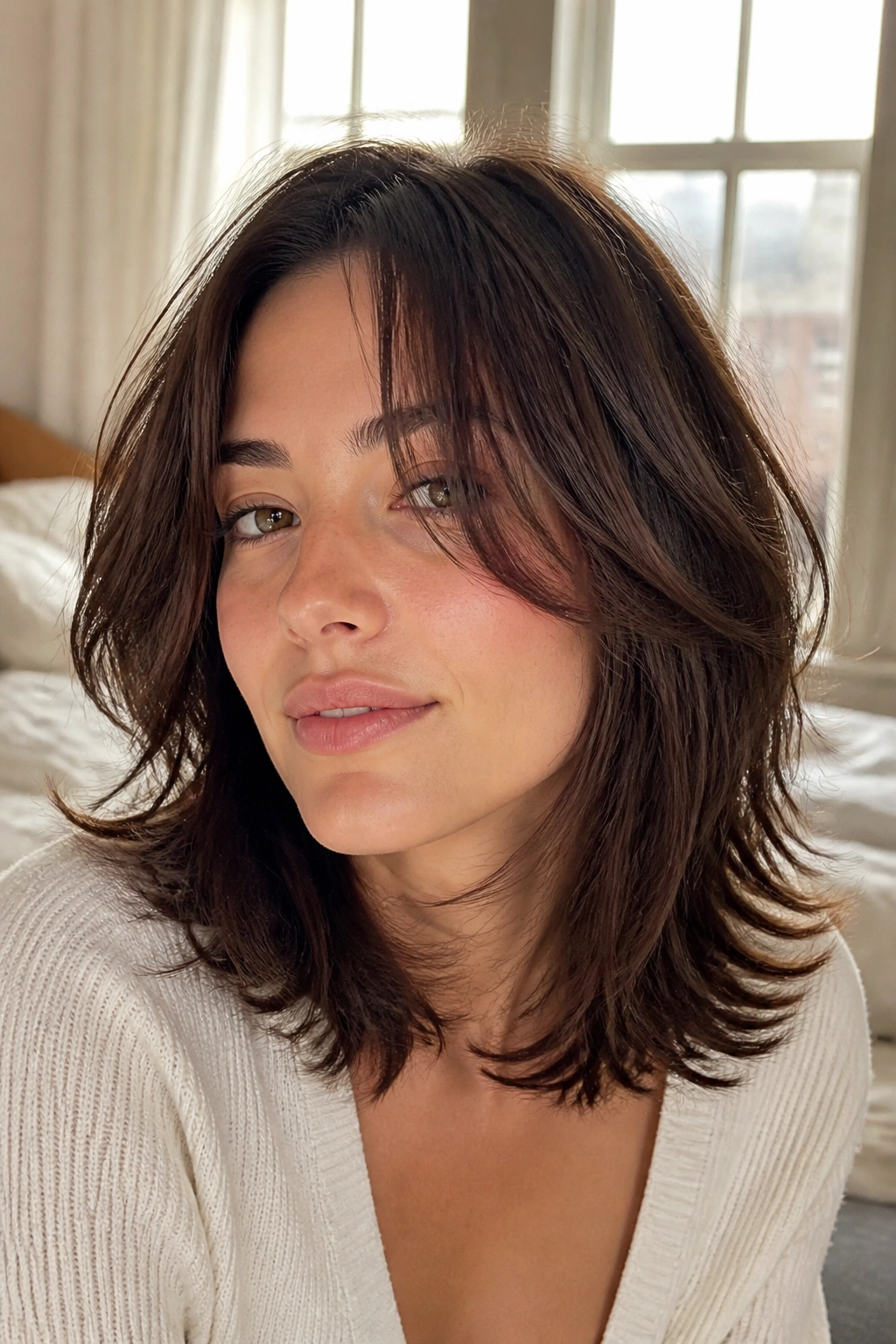
This is the haircut for thick hair that tends to look too heavy when it dries in one solid mass. Softly scattered layers break that up and create separate little sections of movement, so the hair feels lighter without turning frizzy or overtextured.
The difference between piecey and messy is control. You want the layers placed in a way that leaves visible movement, not random gaps. Thick hair can carry those pieces well because there’s still enough density underneath to keep the overall shape full.
It’s a strong choice if you like using a little styling cream, a blow-dryer, or a bend from a flat iron. The cut gives the styling some direction. Without that direction, piecey hair can slide into limp territory fast.
How to keep it from going fuzzy
A few clean habits help:
- Use a light hand with texturizing
- Keep the ends soft but not razor-thin
- Leave enough weight in the back to anchor the shape
- Refresh with a quick bend, not a full restyle
I’d call this a smart middle ground. It has movement, but it does not scream for attention.
20. The Low-Maintenance Lob That Grows Out Cleanly

Some cuts look good on day one and annoying by week three. This is the opposite. A low-maintenance lob with clean grow-out is one of the most useful options for thick hair because it keeps its shape even after it starts to relax.
The perimeter sits near the collarbone, which is a forgiving spot for thick hair. The layers are long enough that they do not turn into obvious steps as they grow. And the face frame stays soft instead of dramatic, which means you do not end up with two short pieces hanging on for dear life while the rest of the hair grows out behind them.
Why the grow-out matters
If you have dense hair, you already know a haircut is not just about the first salon day. It’s about how the shape behaves six, eight, or ten weeks later. This cut stays neat longer because the structure is simple.
It’s also practical if you like to trim less often. The shape doesn’t collapse quickly, and the hair still looks intentional when it gets a little longer. That matters. A lot.
The styling is easy too:
- Wear it straight for a clean line
- Add a loose bend for movement
- Tuck one side behind the ear for shape
- Leave the ends blunt enough to keep the density looking rich
When thick hair grows out in a graceful way, you stop resenting the in-between stage. That’s a small victory, but I’ll take it.
