



Fine hair and short layered haircuts for fine hair get along better than most people think — but only when the cut keeps a real shape. The wrong layers can make hair look wispy in the bad way, like the ends have been chewed off by a lawn mower. The right ones do the opposite. They lift the crown, soften the outline, and make the whole head of hair look fuller without turning it into a puffball.
A lot of people hear “layers” and imagine the same haircut in every salon chair: long, choppy pieces that disappear into nothing. That’s not the move for fine strands. Fine hair usually needs a stronger perimeter, careful graduation, and just enough texture to stop it from lying flat against the scalp. Too much thinning is a shortcut to regret. Too little shaping, though, and the style collapses by lunchtime.
The best short cuts for fine hair tend to work with the hair’s natural habits instead of fighting them. Straight fine hair needs different layering than soft waves. A round face asks for something else than a long face. And a stylist who understands the difference between strand thickness and density is already ahead of the game. Those are not the same thing, and it matters more than most people realize.
Some of these cuts feel polished. Some are a little cheeky. A few are softly undone. All of them are built to do one job well: make fine hair look like it has more body, more movement, and a better silhouette the second it’s dry.
1. Chin-Length Layered Bob With Airy Ends
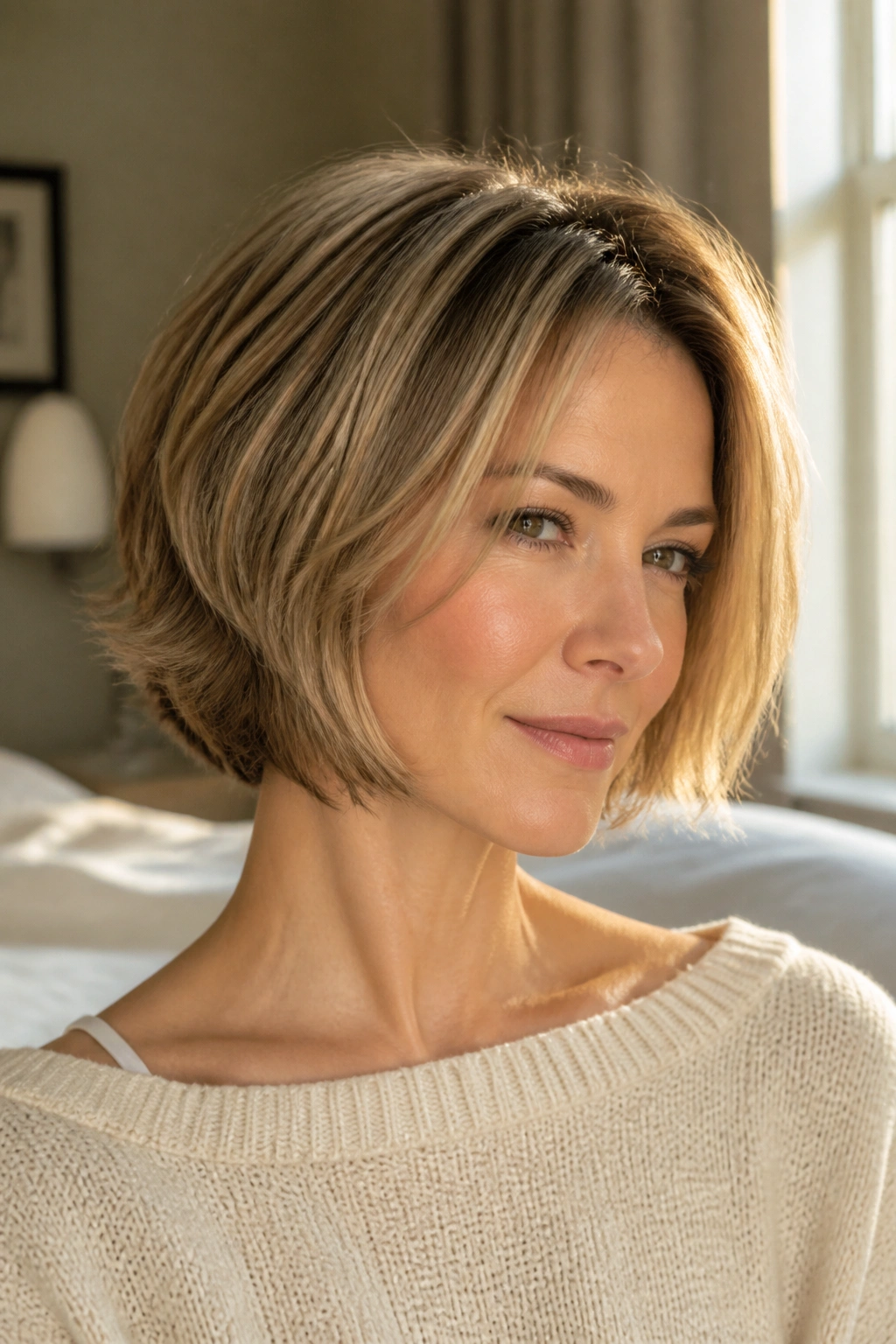
A chin-length layered bob is one of those cuts that can look expensive without trying too hard. The length sits right where the jaw starts to narrow, which gives fine hair a stronger frame instead of letting it hang into a shapeless line. The trick is to keep the base clean and add soft layers only through the interior and the very ends.
I like this cut on hair that goes flat fast. It still reads as a bob, so you get the feeling of fullness, but the airy ends stop it from looking heavy or helmet-like. Ask for subtle point cutting at the bottom rather than aggressive thinning at the sides. That keeps the outline crisp.
A quick blow-dry with a medium round brush helps a lot here. Roll the last inch of hair under, then mist a light texture spray through the middle lengths. Done. The shape stays neat, but the finish doesn’t look stiff.
One small warning: if your hair is very fine and very sparse, don’t let the layers start too high. That’s where this cut can go from flattering to scraggly in a hurry.
2. Cropped Pixie With Crown Lift
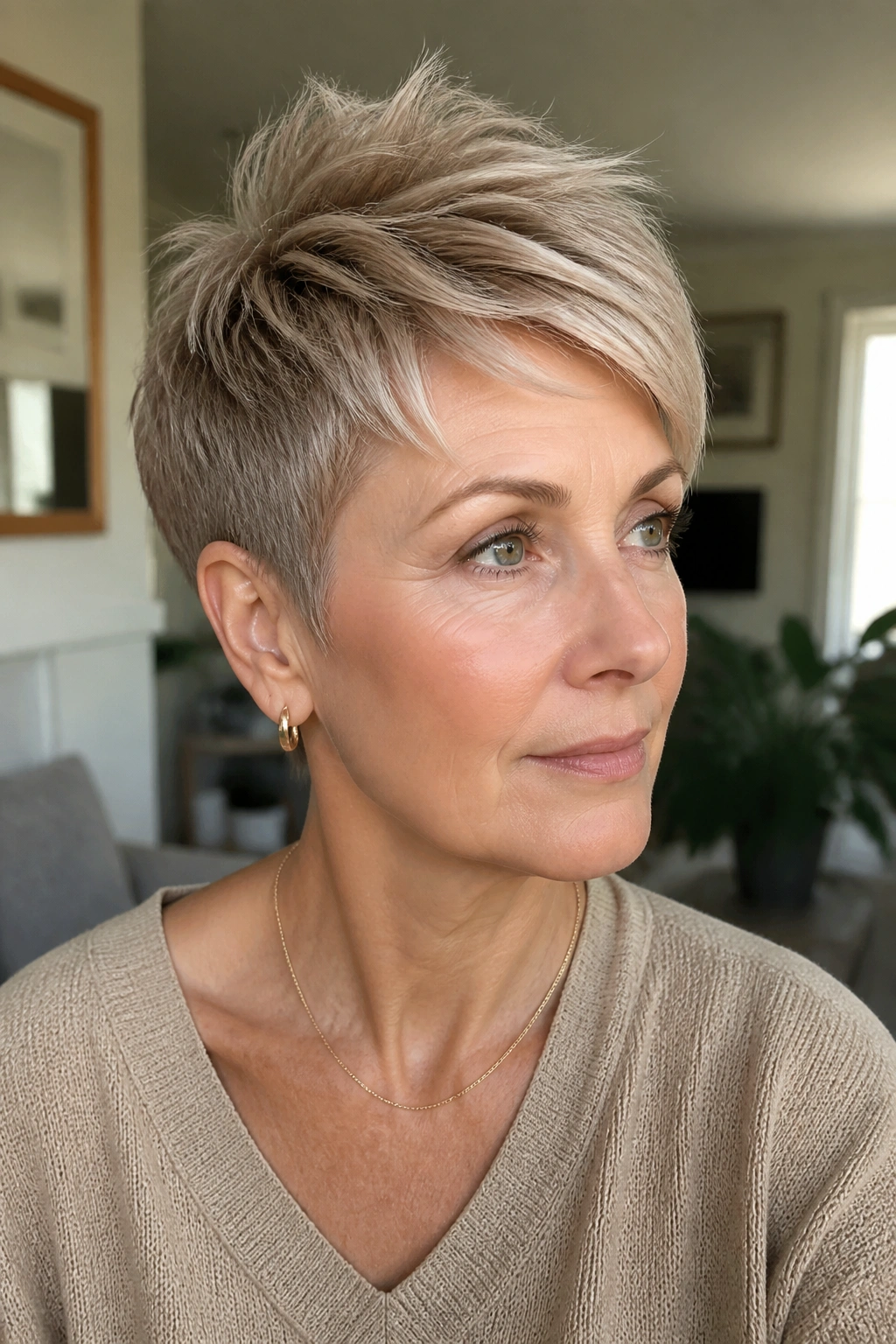
A cropped pixie is not shy, and that’s exactly why it works. Fine hair often loses the battle at the roots, so a short pixie with lift at the crown gives you the feeling of body where you need it most. Keep the sides and nape tight, then leave enough length on top to sweep forward or upward with your fingers.
Why it flatters fine hair
The short length removes weight, which means the hair doesn’t have to fight gravity all day. That alone helps. But the real win is the crown shape. A little elevation there makes the head look fuller, especially in profile, and the sides stay neat instead of puffing out.
How to style it
- Work a pea-sized amount of volumizing mousse into damp roots.
- Blow-dry the top first, lifting the hair at the crown with your fingers.
- Finish with a matte paste on the ends only.
- Skip heavy oils. They flatten the cut fast.
This is a good option if you like hair that looks intentional even when you barely touch it. It is not the best cut if you want to tuck hair behind your ears every day. That’s the tradeoff.
3. French Bob With See-Through Fringe
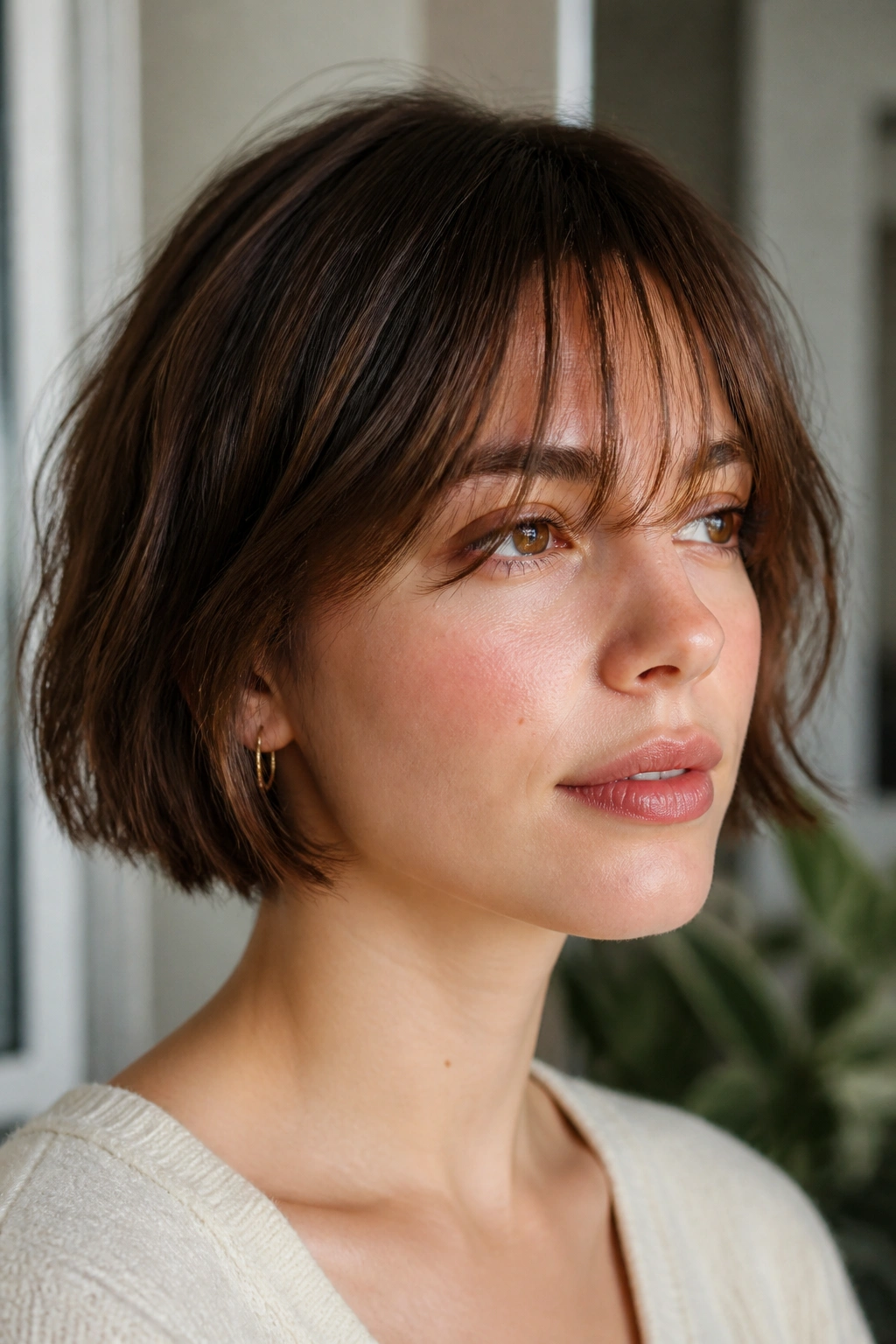
The French bob has a little attitude built in, which is probably why it keeps showing up in salons. On fine hair, it works best when it stays short, soft, and slightly imperfect. Think jaw-skimming length, a faint bend at the ends, and a fringe that is light enough to move instead of sitting like a curtain.
The see-through fringe matters more than people think. A dense bang can swallow fine hair whole, especially if the strands are soft and slippery. A lighter fringe opens the face and keeps the cut from looking bottom-heavy. I prefer this version when the hair has some natural wave but not enough to build a shag.
The shape is best styled with a quick bend rather than a polished curl. Use a round brush only on the front sections, then let the rest air-dry with a little cream scrunched through. Messy is the point here. Not sloppy. Just a little loose around the edges.
If you wear glasses, this cut can look especially good because it leaves space around the frames without needing a lot of length.
4. Bixie With Tapered Nape
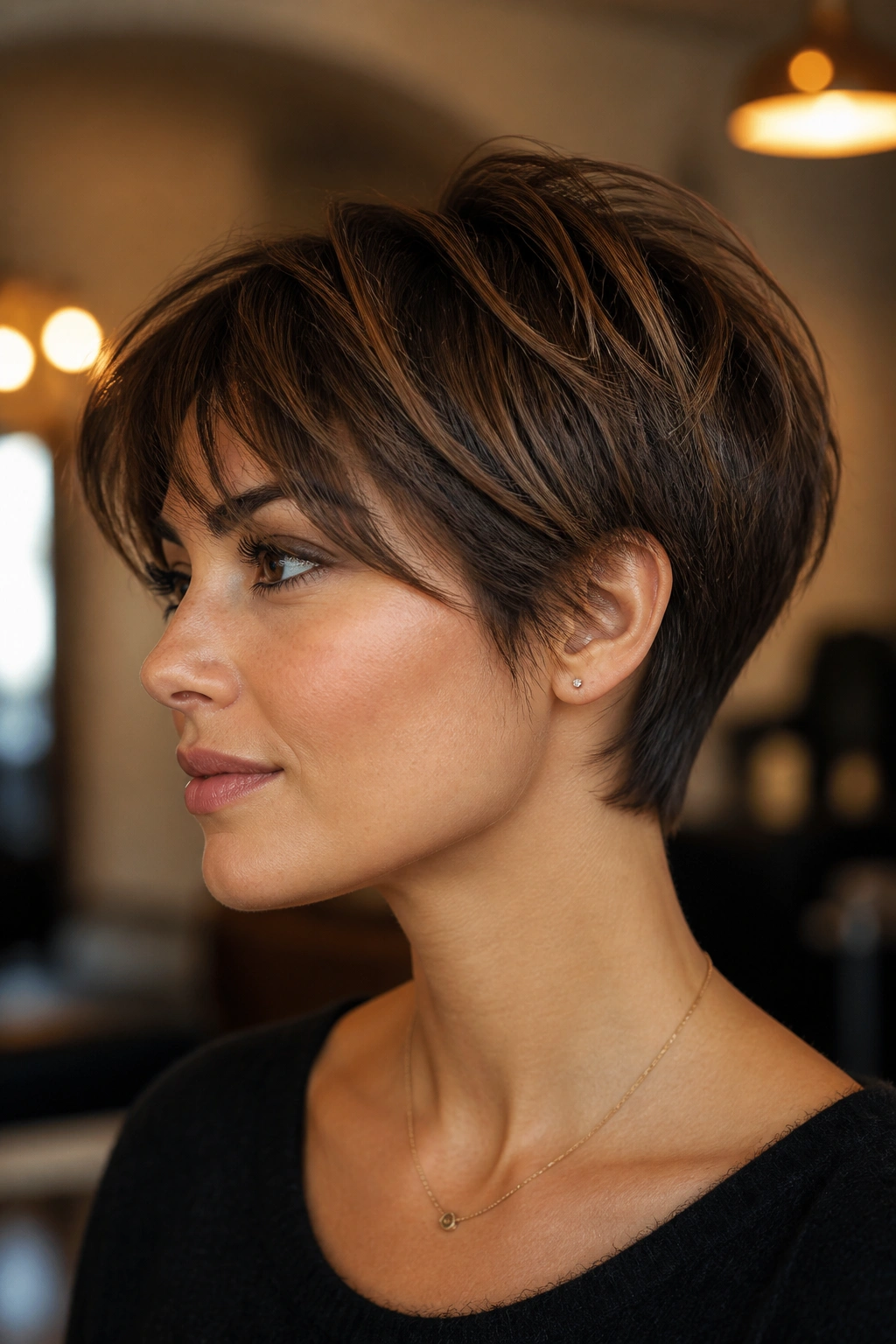
A bixie sits right between a bob and a pixie, and that middle ground is where fine hair often looks its best. You get the softness of a bob up front and the ease of a pixie in back, which means less dragging weight overall. The tapered nape keeps the neckline clean, while the longer top gives you something to move around with your hands.
This cut is a smart choice if you want short hair but not a full crop. It gives shape to the head without making the hair look too sparse at the sides. Ask your stylist to build the top with gentle layers, not choppy chunks. Chunks can look thin fast on fine strands. Soft overlap looks better.
A bixie also plays nicely with a side part. That little shift adds lift immediately, and it keeps the front from collapsing into the face. On days when you do not want to fuss with it, a bit of dry shampoo at the roots is enough.
The one thing I would avoid? Razor-heavy ends if your hair is fragile. A clean scissor cut tends to hold up better.
5. Side-Swept Layered Bob With a Deep Part
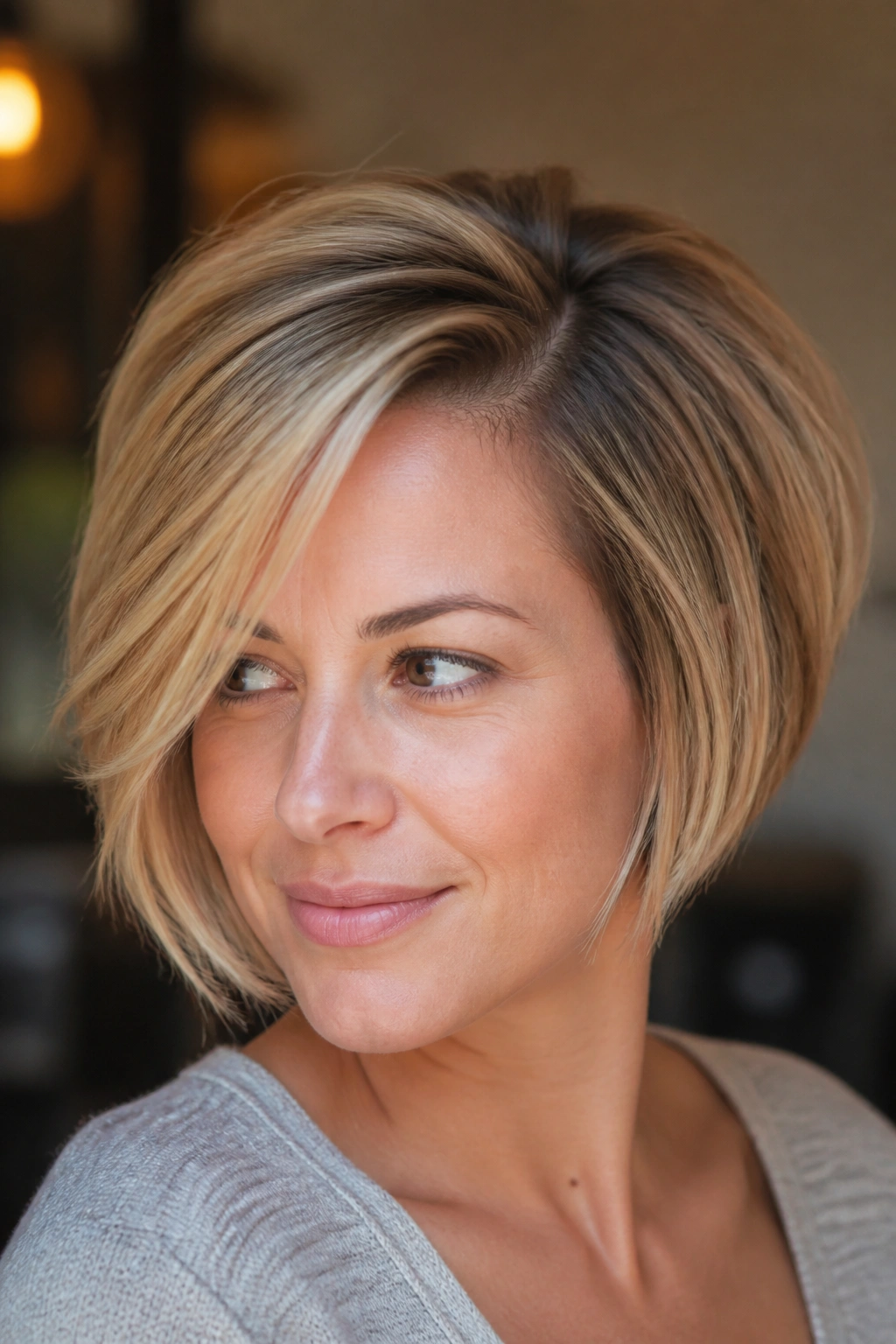
A deep side part can rescue a limp bob faster than almost anything. It creates instant lift on one side, breaks up the flatness at the crown, and gives fine hair more visual density where the eye lands first. With a layered bob, that part does a lot of the heavy lifting.
What makes it different
The haircut itself stays fairly simple: a bob that lands around the chin or just above the jaw, plus soft internal layers that keep the middle from ballooning. The side sweep turns it from safe into flattering. It also helps if one side of your hair has a stronger bend than the other, which is common with fine hair that air-dries unevenly.
Ask for this
- A clean perimeter at the bottom.
- Light layers through the crown only.
- A long fringe that blends into the side.
- Minimal thinning near the ears.
This style works best when the front sections are blow-dried away from the face for a few seconds, then allowed to cool. That cooling step matters. It sets the bend so the part does not collapse an hour later.
I’m fond of this one because it looks polished on a normal day, not just in a salon photo.
6. Stacked Bob With Gentle Graduation
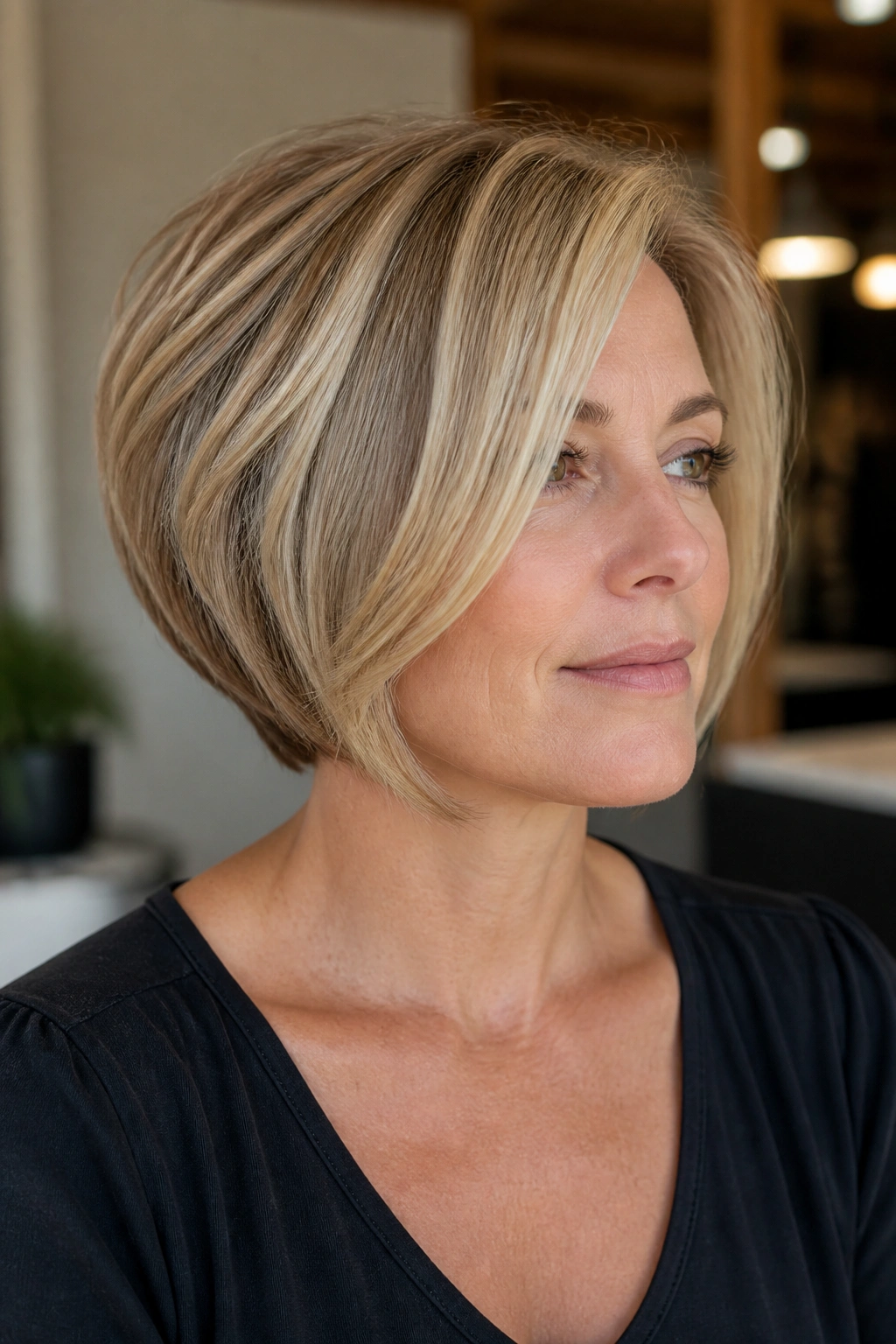
A stacked bob can be a miracle for fine hair, but only when the graduation is soft. Too much stacking turns into a wedge, and that shape can feel dated fast. Soft stacking, though, gives the back a little shelf of volume and makes the crown look fuller without needing a lot of length.
The key is balance. You want the back to sit slightly shorter so the hair lifts, while the front stays long enough to frame the face. That creates a shape that looks round and full from the side, which is where fine hair usually needs help most. It is especially useful if your hair falls flat against the head after a few hours.
A round brush helps here, but don’t go wild with product. A lightweight root spray is enough. If you pile on cream or oil, the stack loses its purpose. And yes, that happens fast.
This is a good haircut for someone who likes structure. It is less forgiving if you want a shaggy, airy finish. Clean and shaped is the whole point.
7. Shaggy Bob With Curtain Bangs
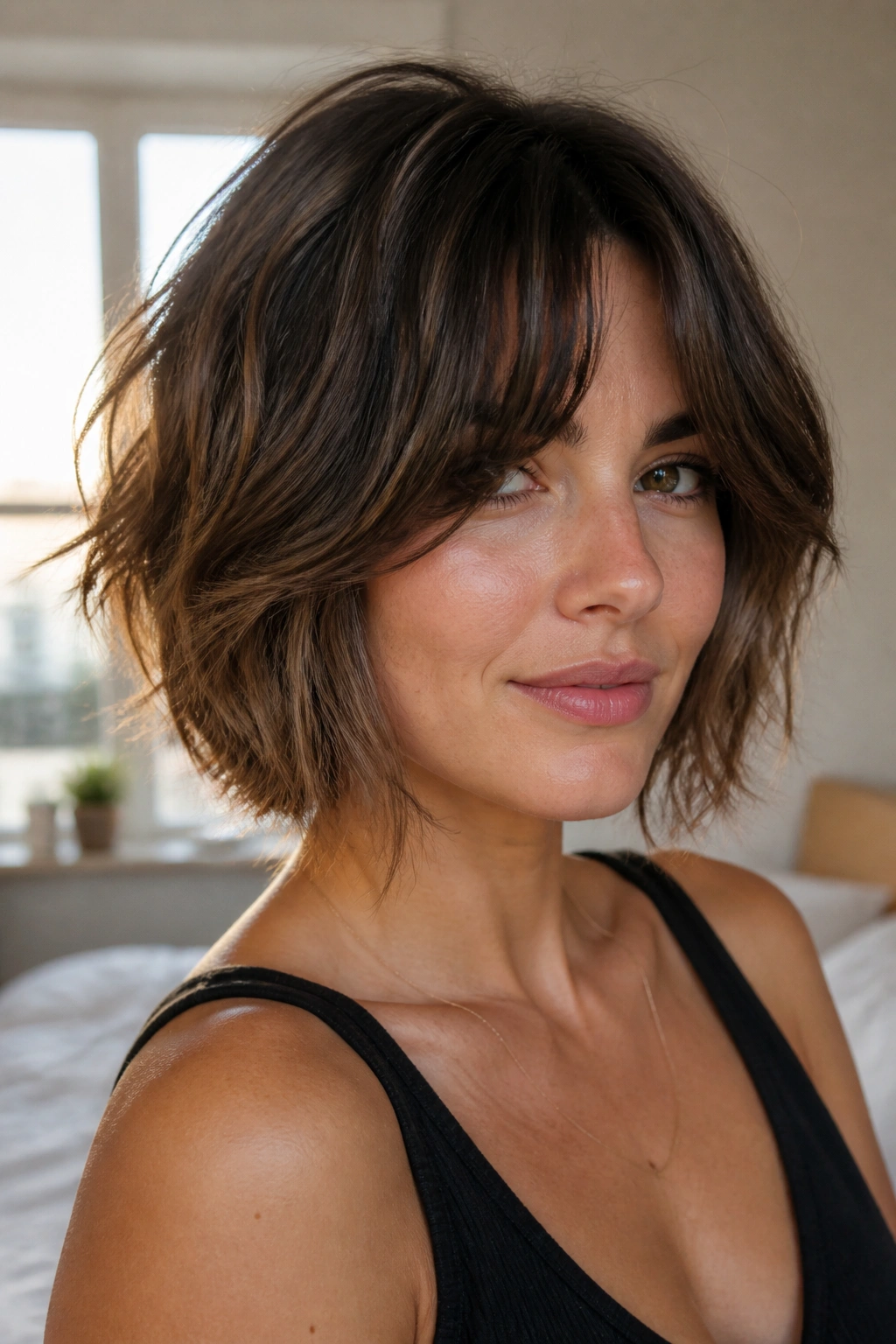
A shaggy bob can be a gift for fine hair that has a little wave. The layers create movement, and curtain bangs soften the front without chopping it up too much. The cut should feel airy, not shredded. That distinction matters. Shredded ends on fine hair often look thin. Airy ends look deliberate.
The curtain bang opens the face and gives the top section some life. It also keeps the haircut from feeling too dense around the cheeks, which can happen with short bobs. If your hair bends easily, this cut can be a home run. If it is pin-straight and slippery, it still works, but you’ll need a small round brush or a large curling iron to coax the front pieces into shape.
Best styling move
Use a diffuser if your hair has natural wave. If it’s straighter, wrap only the bang section around a 1-inch brush for a few seconds, then let the rest dry with texture spray in the mid-lengths. That keeps the shape loose and touchable.
I would not ask for too many short layers under the bang. You want softness at the front, not a halo of flyaways.
8. Feathered Crop With Swept-Back Top
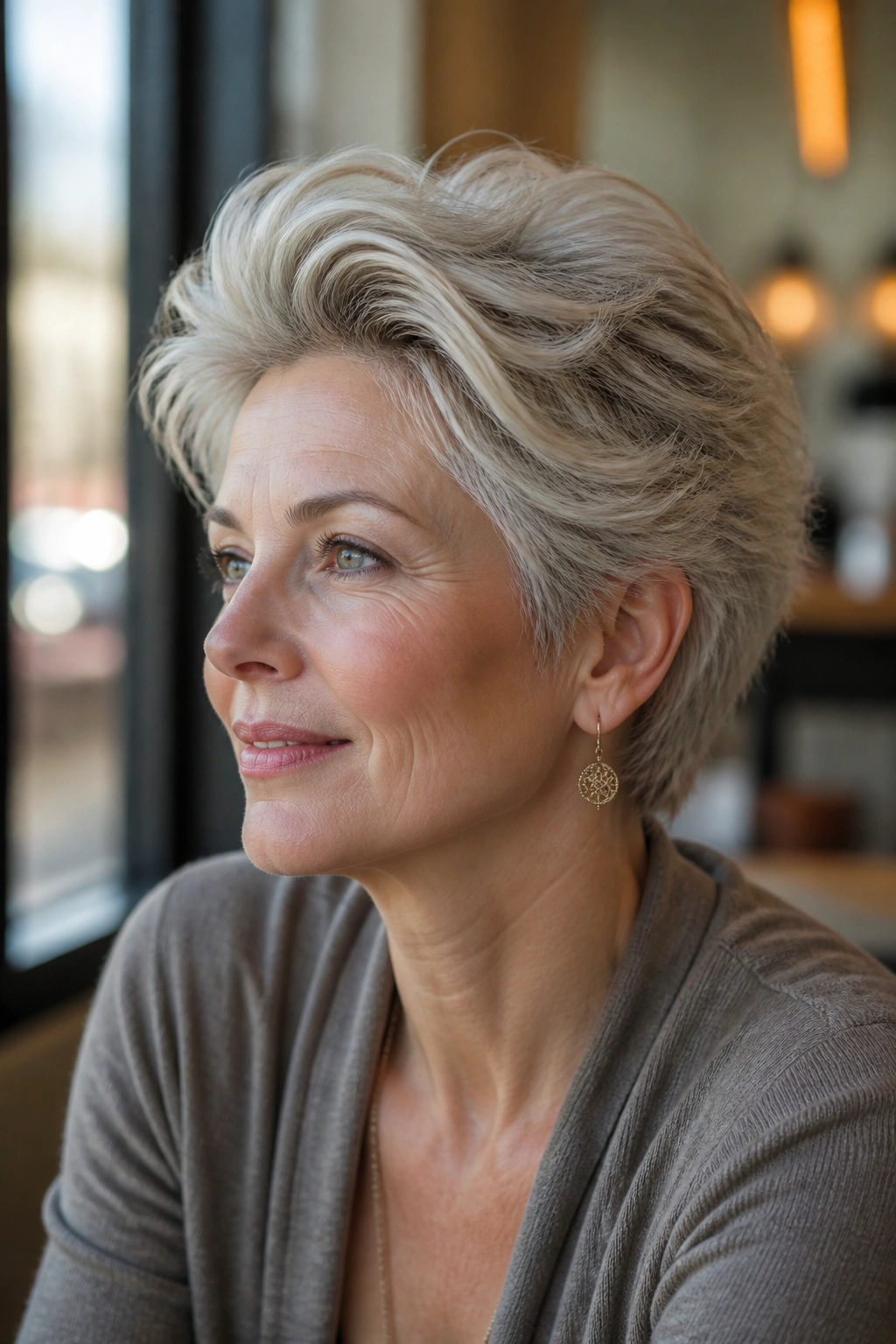
This is one of my favorites for people who want a short haircut that still feels feminine and easy. A feathered crop keeps the sides light, leaves the top a little longer, and sweeps the upper section back or slightly to the side. Fine hair benefits from that upward motion. It keeps the head from looking flat and round at the same time — which is a weird combo, but you know it when you see it.
The feathering should be delicate. Not wispy in a tired way, delicate in the sense that the ends move without separating too much. The nape can be neat and close, while the top gets enough length to create shape. That contrast is what makes the cut interesting.
A small amount of styling clay on dry hair works better than a glossy cream. Clay gives grip. Grip matters. Fine hair slips out of styles fast, and a feathered crop needs a little hold to keep the top from dropping straight down.
This one is ideal if you want a face-opening cut that looks good with earrings, glasses, or a strong brow. It has presence without a lot of length.
9. Jaw-Length Bob With Hidden Layers

Not every layered cut needs to announce itself. A jaw-length bob with hidden layers is the quiet one in the group, and that’s precisely why it works for a lot of fine hair. The outside line stays clean and thick-looking, while the inside carries the shaping. From a distance, it reads as fuller than a heavily textured cut.
The hidden layers sit beneath the surface, so they support movement without removing too much visible weight. That means the hair still looks like it has substance. If you’ve ever left a salon with ends that looked feathered to death, this is the opposite of that problem.
This cut is especially good if your hair is fine but dense enough to hold a shape. It also behaves well with a center part or a subtle off-center part. Styling can be minimal: a blow-dry with a paddle brush, a small bend through the ends, and a mist of lightweight shine spray.
No drama. Just a strong outline.
10. Inverted Bob With a Short Back
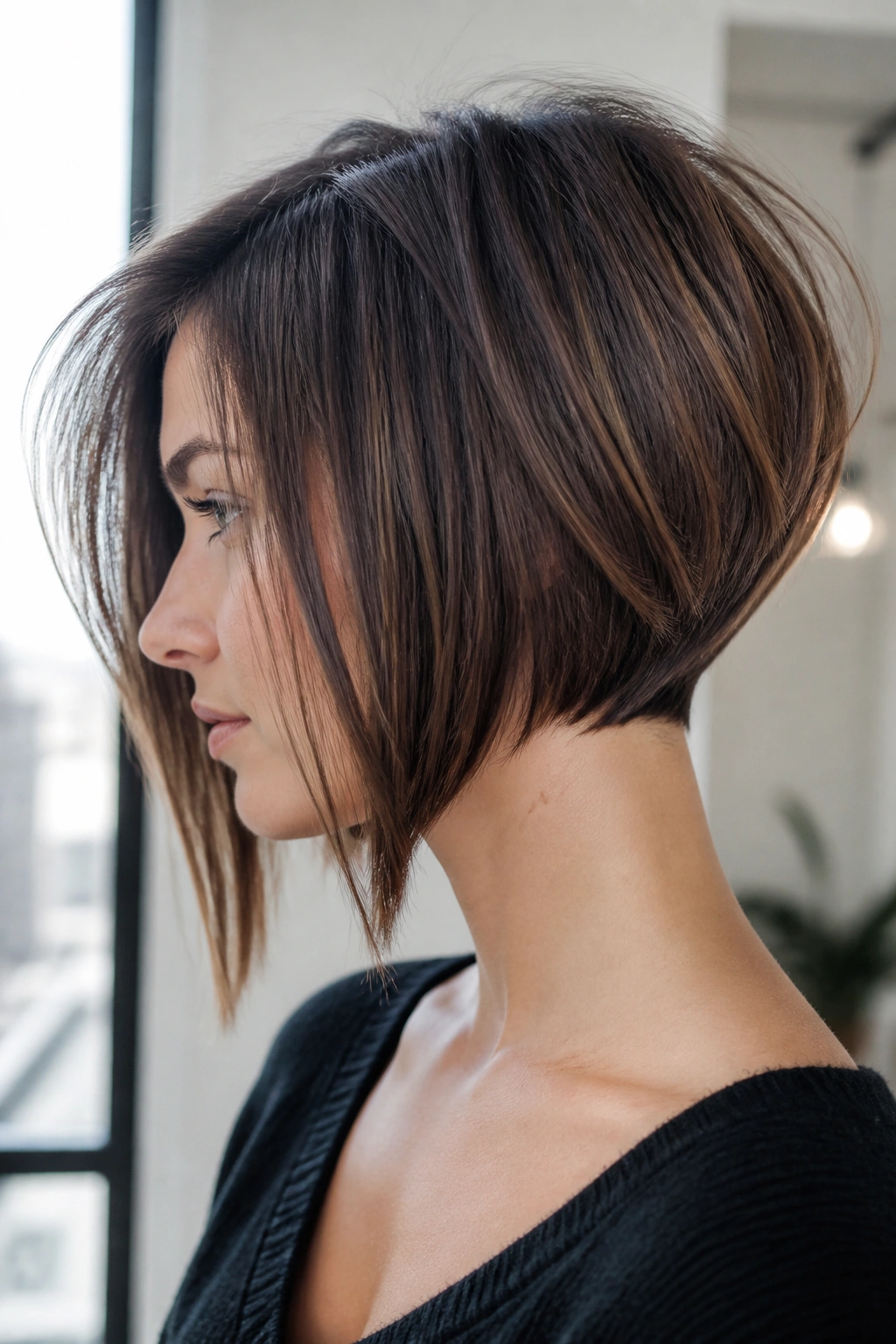
The inverted bob is one of the sharper ways to make fine hair look fuller. The back sits shorter and a little higher, while the front angles down toward the jaw. That angle creates an illusion of thickness, because the eye sees more structure than straight, flat hair can normally give.
Ask your stylist for
- A shorter nape that lifts the back.
- Longer front pieces that hit around the chin.
- Internal layering only where needed.
- A blunt enough outline to keep the ends looking solid.
The best version of this cut is clean, not stiff. You want the angle, but you do not want it screaming at people from across the room. A soft transition from back to front keeps it modern and wearable.
I like this on straight fine hair because the line looks crisp and the movement is easy to see. If your hair bends in odd places, though, the angle can be fussy. You may need a quick pass with a flat brush and blow-dryer to keep it neat. That’s the price of geometry.
11. Tousled Ear-Length Bob
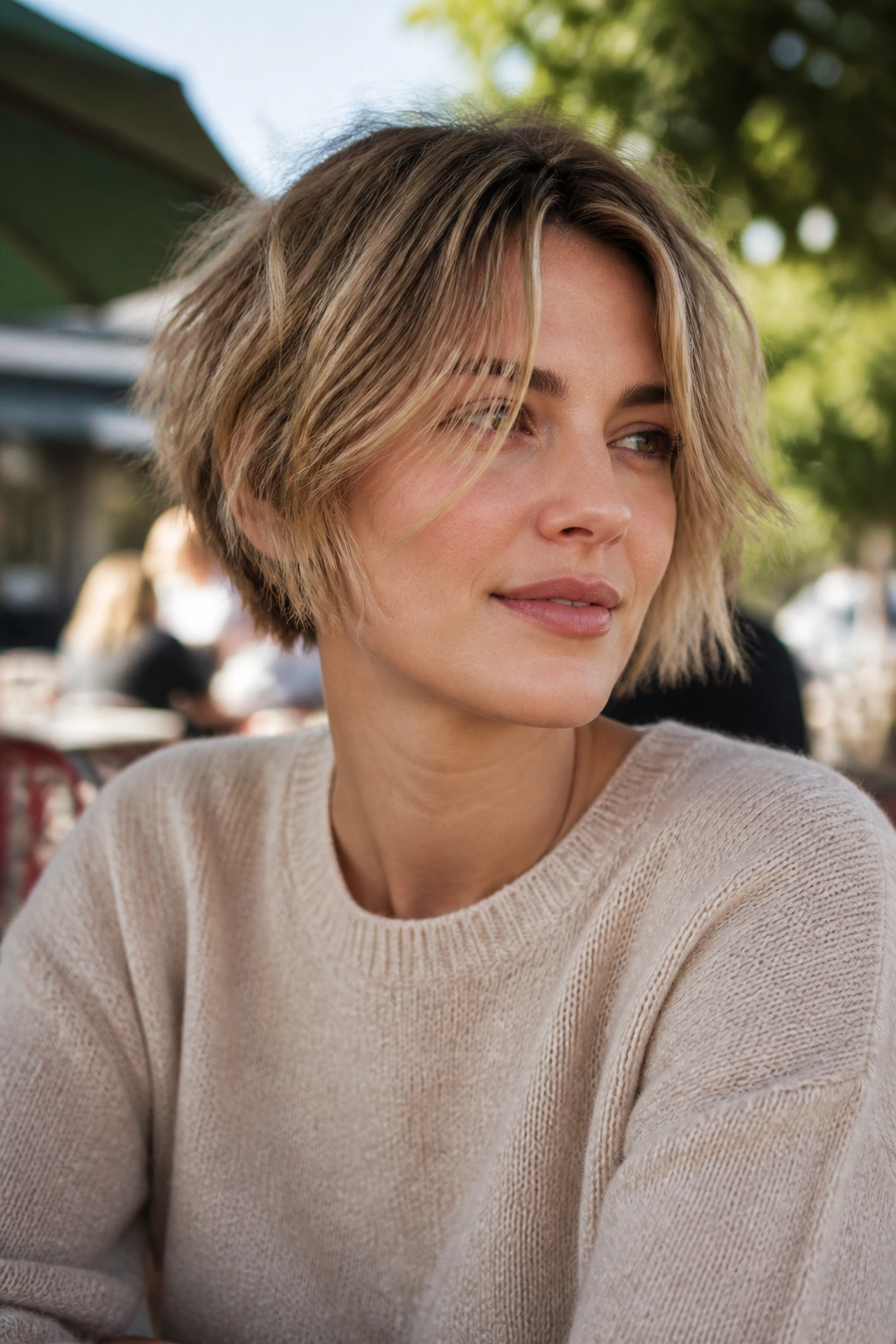
Ear-length sounds daring, but on fine hair it can be a smart length if the shape is right. A tousled bob that sits around the ears removes weight and builds in a little lift through the middle. It’s shorter than most people expect, which means the hair doesn’t collapse under its own length by midday.
What makes this cut work is the texture. The ends need to be broken up enough to move, but not so much that they vanish. A few soft layers through the top and sides help the style sit close to the head without looking flat. The overall effect is light, a little cheeky, and easy to style with fingers.
It pairs well with dry shampoo because the roots never have to stay pin-neat. In fact, a bit of grit often helps. Fine hair usually needs something to hold on to, and this cut benefits from that slightly lived-in finish.
If you hate hair touching your neck, this is a useful option. If you want a shape that can be tucked behind the ears and still look intentional, even better.
12. Razored Pixie-Bob With Soft Separation
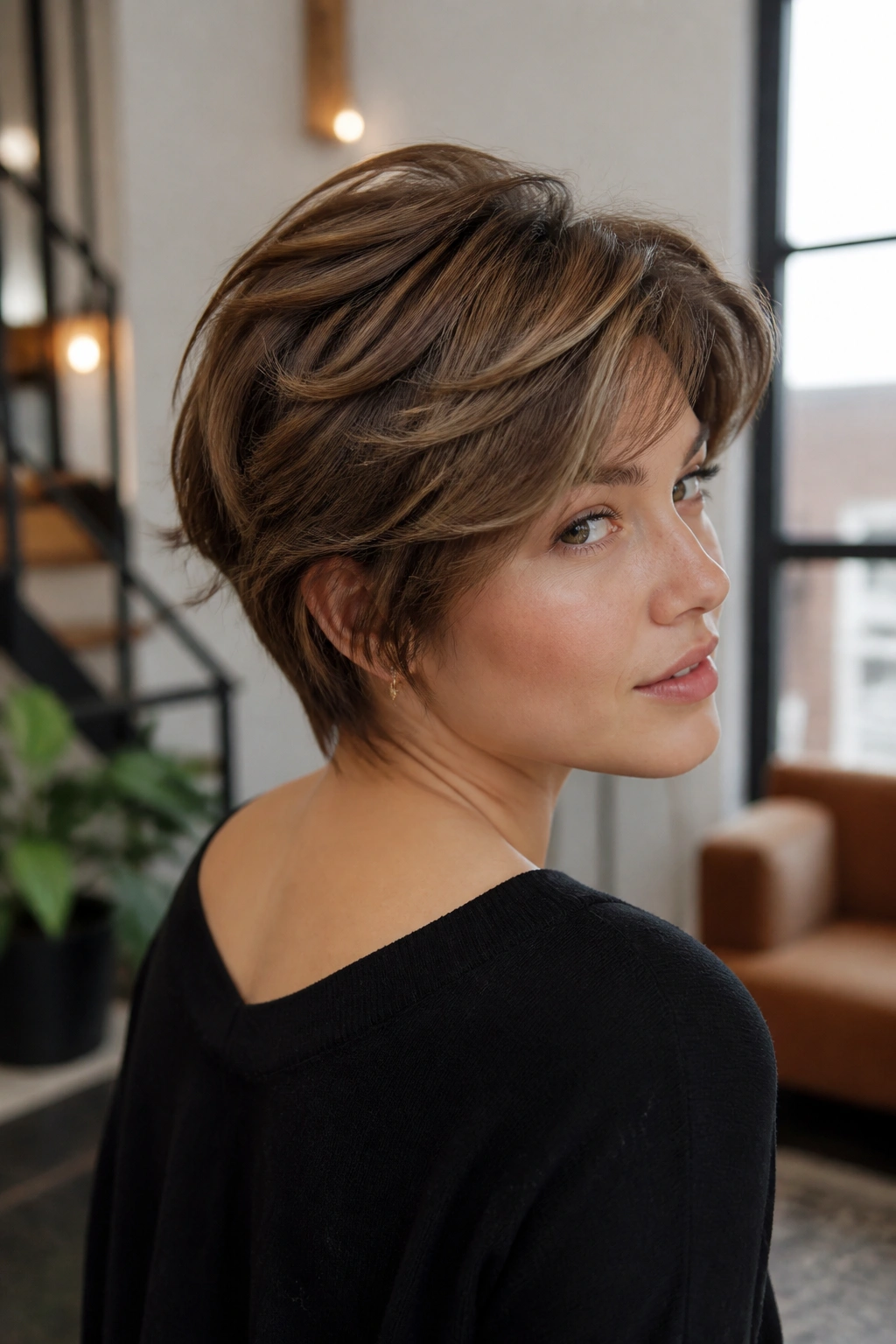
A razored pixie-bob can look airy and modern on fine hair, but it needs a careful hand. Razor work removes bulk fast, and fine strands can go from textured to flimsy if the cut is overdone. Used lightly, though, it gives the ends a soft, separated finish that looks lived-in rather than heavy.
The shape sits between a pixie and a bob, with enough top length to move and enough nape taper to keep the back tidy. I especially like this for hair that refuses to hold a round-brush blowout for long. The cut does some of that work for you.
What to watch for
- Too much razor work near the ends.
- Layers that start too high at the crown.
- Heavy product that clumps the separation.
A tiny bit of styling cream is enough. Smooth it between your palms, then press it through the ends rather than rubbing it all over. That keeps the finish piecey instead of greasy.
This is not the easiest haircut to maintain if you’re rough on your hair. It rewards people who like a bit of texture and don’t mind a quick style touch-up in the morning.
13. Asymmetrical Layered Bob
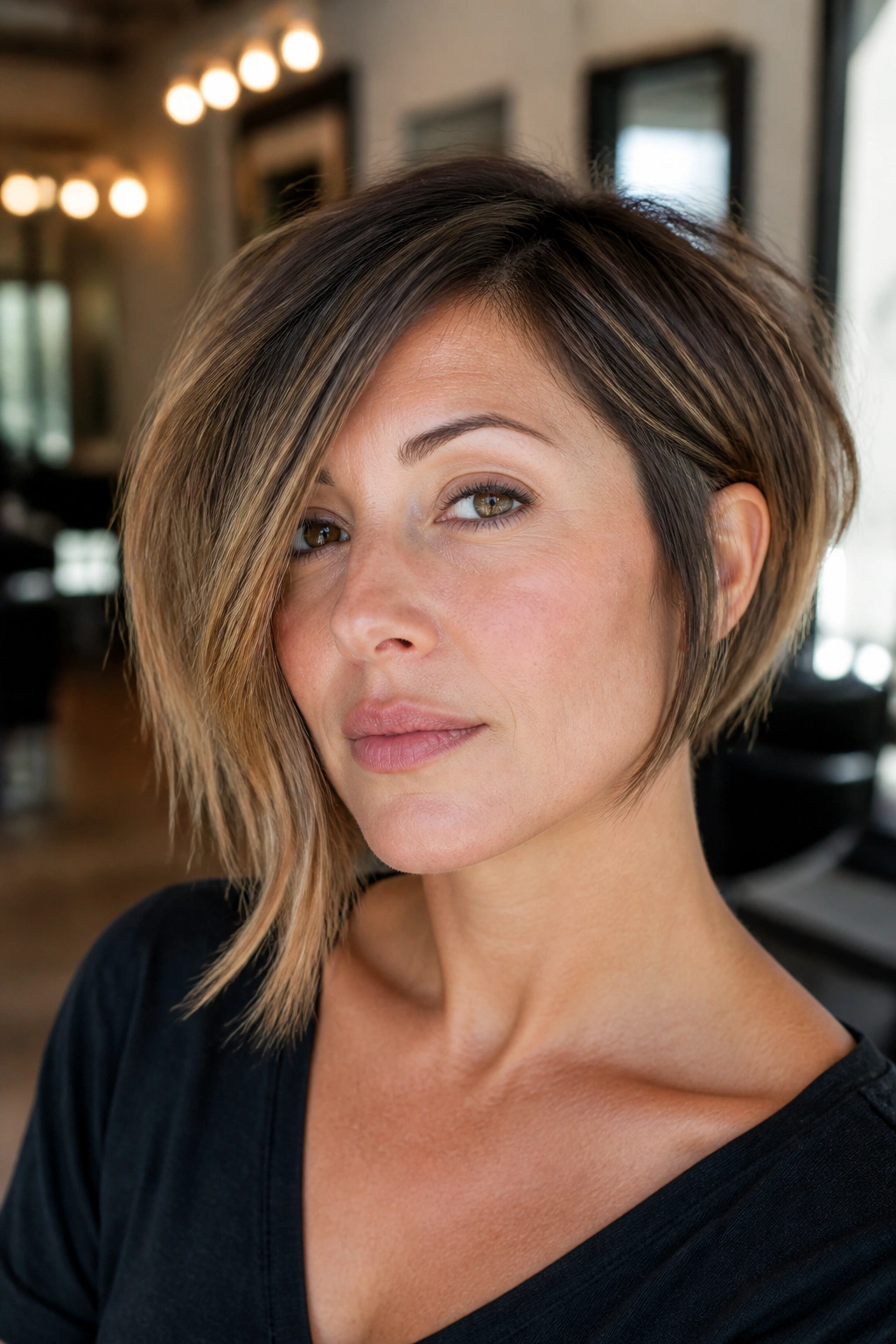
An asymmetrical bob gives fine hair a built-in point of interest, which is useful because simple straight lines can sometimes look a bit too severe when the hair is thin. One side stays slightly longer than the other, and the length difference creates the illusion of more body. It also helps the cut move better when you turn your head.
When asymmetry helps
It’s strongest on hair that lays flat on one side or has a stubborn cowlick. The uneven line gives the eye something to follow, and that can distract from any lack of density. If your hair tends to split in the middle and sit there, this cut can feel refreshing.
The layers should stay subtle. You want the asymmetry to be the point, not a pile of chopped-up pieces fighting each other. A sleek finish looks especially good here, but so does a soft bend at the bottom. Both work.
I’d recommend this if you like the idea of a short layered haircut that isn’t too sweet or too classic. It has edge, but not the kind that needs a leather jacket to make sense.
14. Short Wolf Cut With Soft Crown Layers
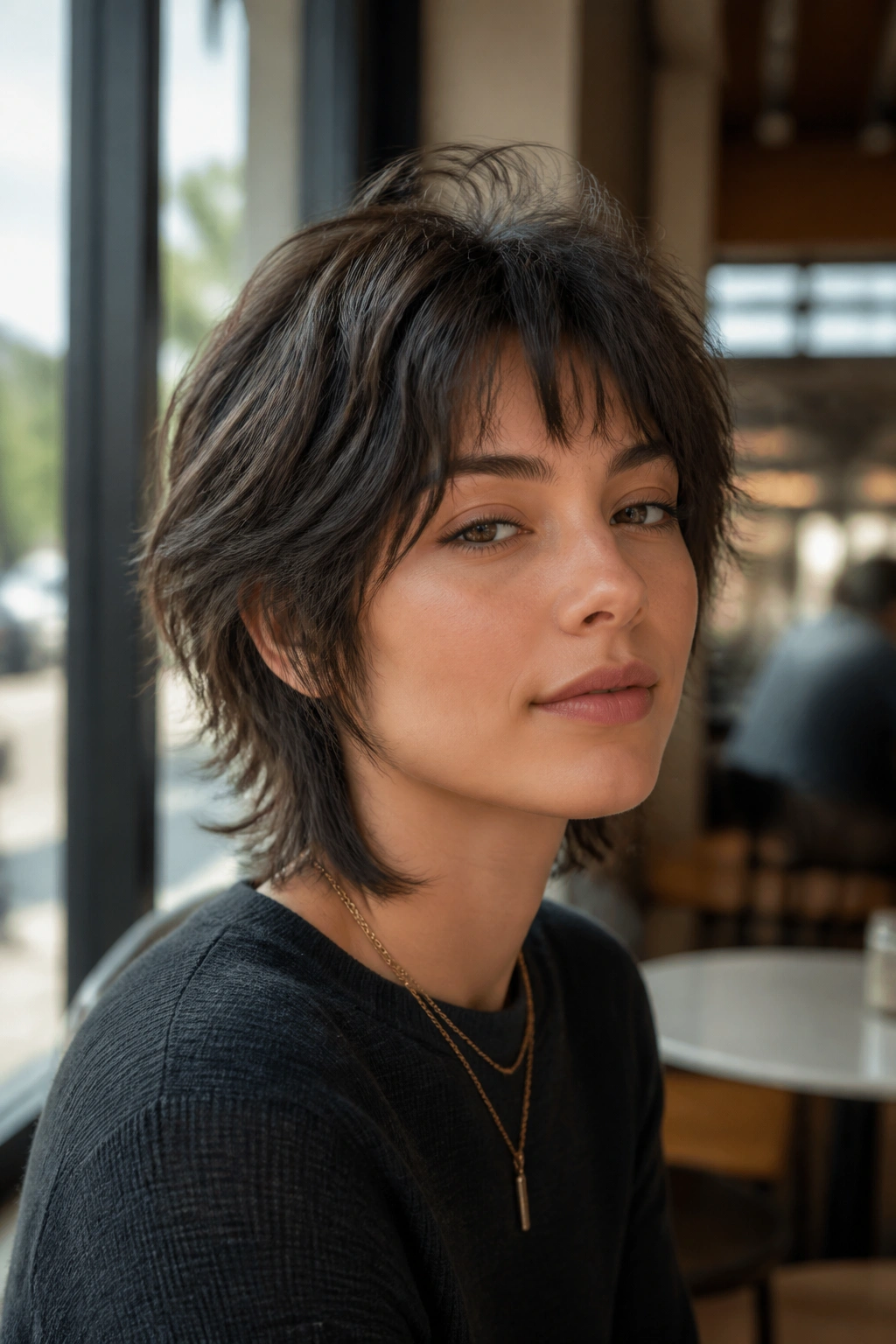
A wolf cut on fine hair is tricky, and I’m not going to pretend otherwise. Too much shagging can leave the ends looking threadbare. But a short version with soft crown layers can be excellent when you want volume, movement, and a little messiness in one shape.
The trick is restraint. Keep the perimeter strong enough to hold the haircut together, then add just enough crown layering to create lift. The top should feel airy. The bottom should still look like hair exists down there. That balance keeps the cut from falling apart visually.
This is a good choice if your hair has a natural wave or if you like air-drying with a texturizing cream. It’s also the kind of haircut that looks better when it’s a little lived in. Fresh from the salon, it may seem tame. After a day or two, it usually looks better.
Not everybody wants this much texture. Fair enough. But if your hair gets limp and you want more attitude, the short wolf cut has something to say.
15. Sleek Micro Bob With Underlayers
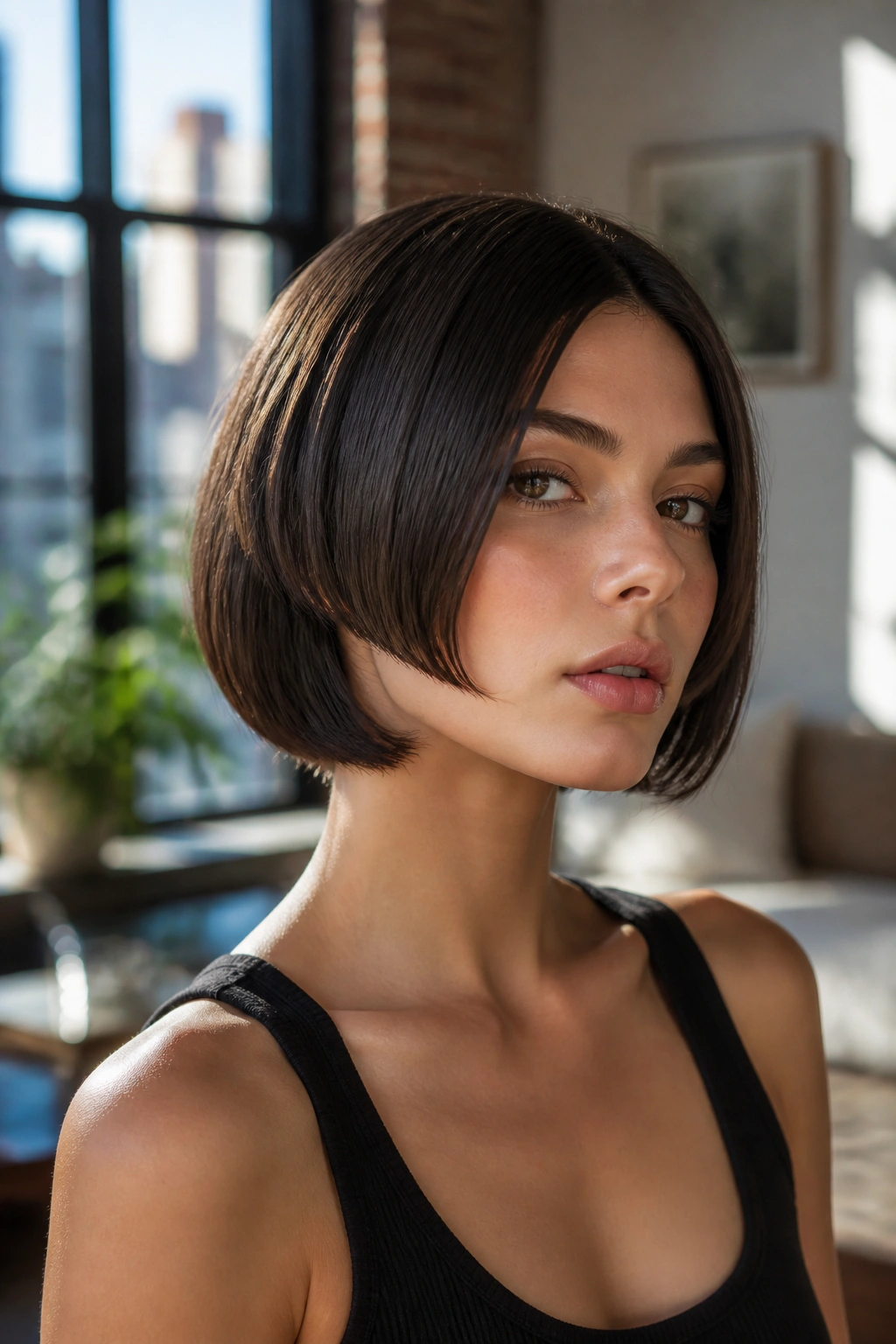
A sleek micro bob is almost severe, and that’s why it works so well on some fine hair types. The length stays short enough to keep the ends full-looking, while hidden underlayers stop the inside from feeling bulky. The surface remains smooth, which can make fine hair look denser than a loose, airy cut would.
This style is best when the hair is naturally straight or only slightly wavy. It loves a tidy finish. A flat brush, a blow-dryer, and a light serum on the very ends are enough. Keep the serum off the roots. That’s a fast way to kill the shape.
It’s also one of the more flattering cuts for people who like neat lines and low fuss. The micro bob doesn’t need a lot of styling tricks to look polished. It just needs clean edges and a healthy-looking finish.
I’d skip this one if your hair is very frizzy or highly textured and you don’t want to blow-dry much. The sleekness is part of the charm.
16. Layered Curly Crop for Fine Waves
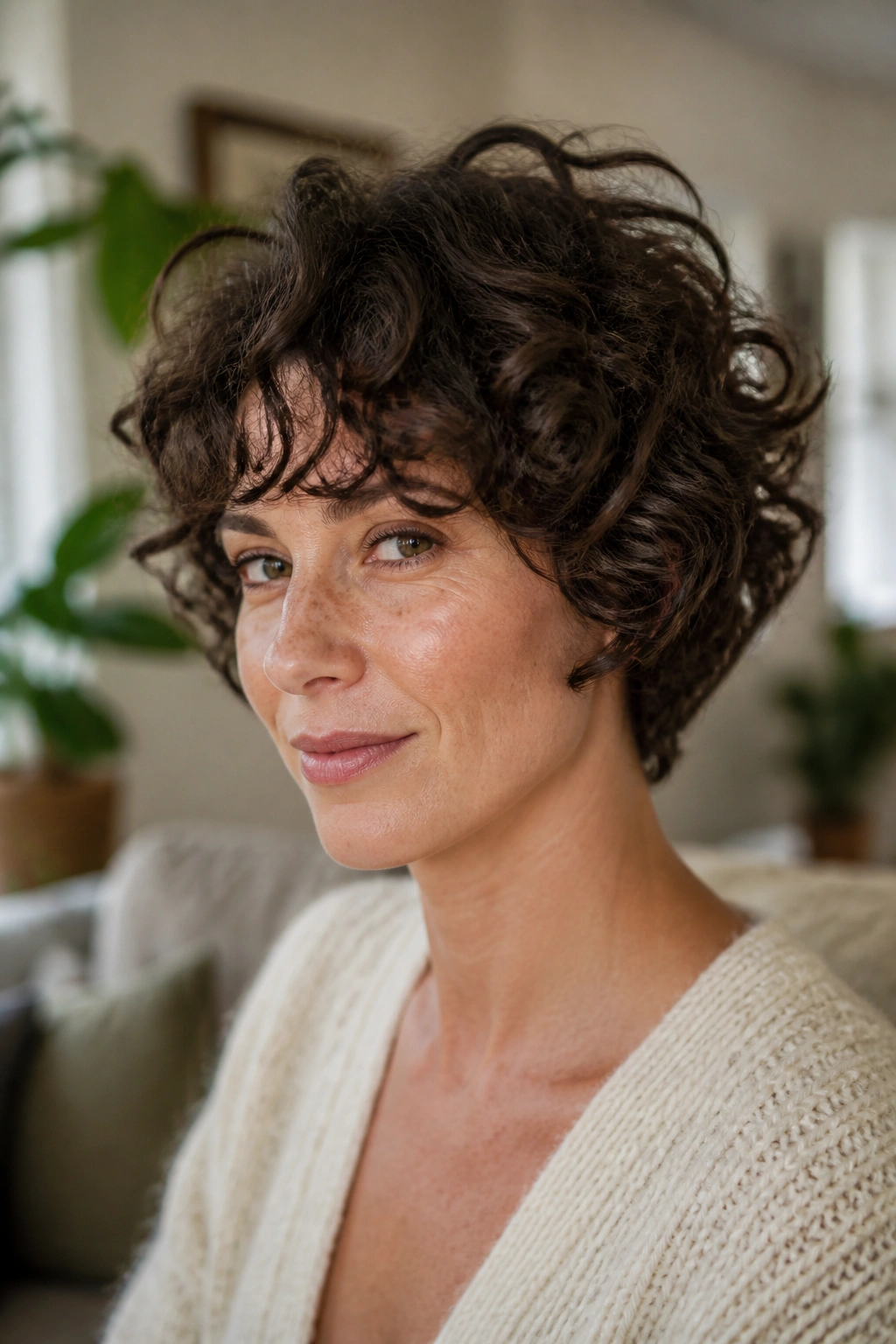
Fine hair with a wave pattern needs a different kind of layering than pin-straight hair. A layered curly crop should encourage the wave to clump and bounce, not explode into frizz. The cut usually works best around cheekbone to jaw length, with layers placed to lift the wave pattern instead of slicing it apart.
Curl-friendly details
- Keep the longest pieces strong enough to define the outline.
- Avoid too many short layers at the top if the wave is loose.
- Use a curl cream or lightweight gel on soaking-wet hair.
- Diffuse on low heat until the roots are dry and the wave has set.
The hair should look soft, not puffy. That’s the whole game. If you have fine waves, layers can give you more shape than length ever could, but only if the cut respects your curl pattern. A good stylist will cut this hair in a way that lets it spring, not shred.
I like this haircut because it doesn’t force fine waves to behave like something they’re not. It lets them be airy and textured without overworking them.
17. Choppy Bob With a Textured Fringe
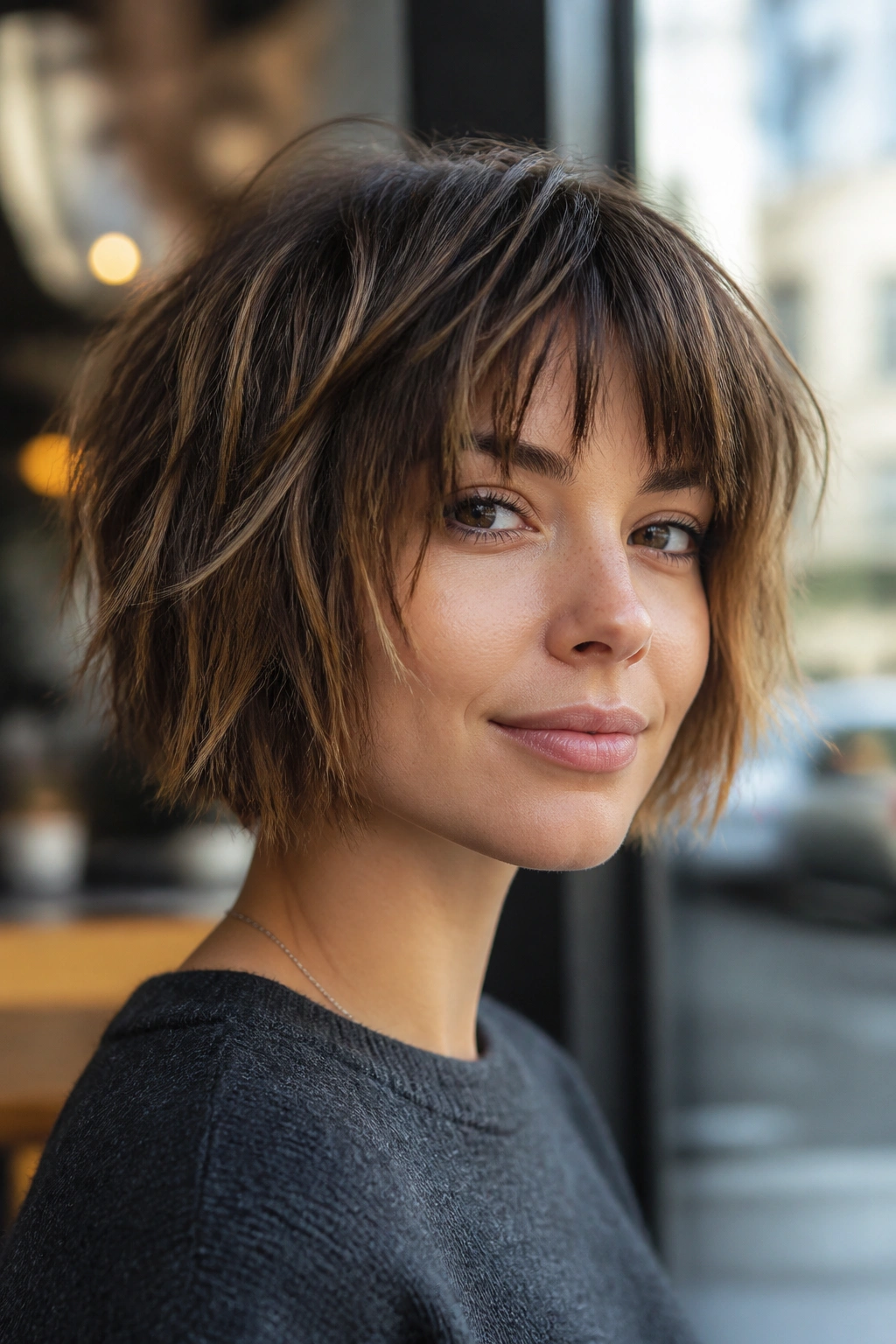
A choppy bob can be a little risky on fine hair, which is exactly why it works when it’s done well. The base stays blunt enough to look solid, while the surface gets broken up with small, uneven pieces. A textured fringe adds movement near the face and keeps the haircut from feeling too boxy.
The fringe can be short and piecey or longer and soft. Either way, it should not be so heavy that it closes off the face. Fine hair tends to look better when the front stays light. The same goes for the layers through the crown. You want motion, not a pile of disconnected bits.
This cut looks best with a bit of styling cream worked through dry ends. Just a touch. If you use too much, the texture disappears and the bob goes limp. If you use too little, the pieces stick out in an awkward way. Hair can be annoyingly particular like that.
It’s a strong choice if you want a bob that feels more modern than prim. It has a little energy to it.
18. Tapered Pixie With a Longer Top
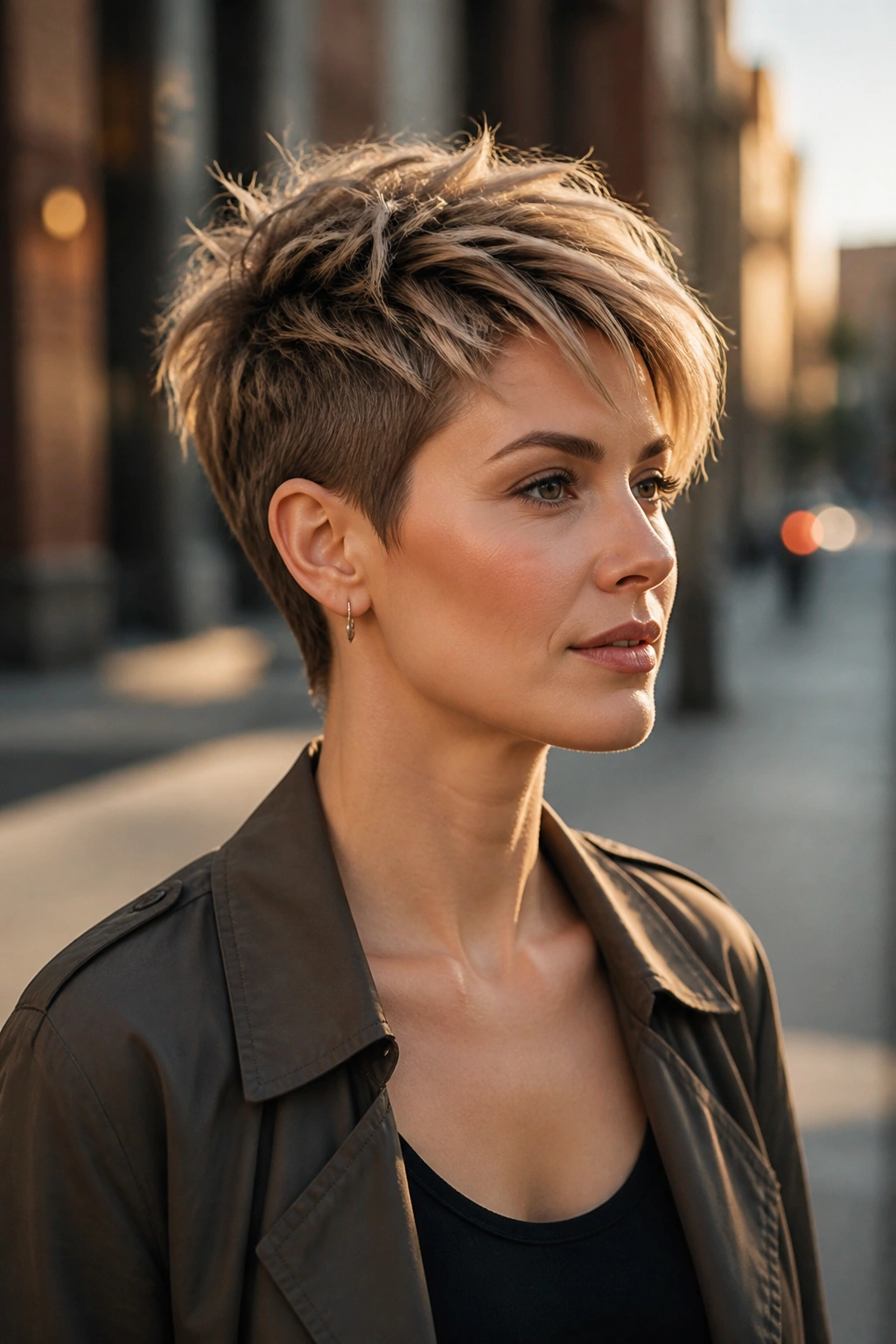
A tapered pixie gives fine hair the clean sides it often needs and the length on top it can use for lift. The taper at the nape and around the ears keeps the cut neat, while the longer top can be pushed forward, swept sideways, or tousled up with fingers. That flexibility is the appeal.
The top layers should stay soft enough to move, not stiff enough to stand up like spikes. You can keep the finish smooth for workdays and mess it up a little on weekends. The cut handles both. It also works nicely for anyone who wears glasses, since the sides stay out of the way and the top does the talking.
A small amount of volumizing powder at the roots can help if your hair falls flat by noon. Tap it in, don’t dump it in. Fine hair can get sticky fast, and once that happens, you’re fighting the product more than the cut.
This one is practical, but not boring. That’s a good combination.
19. Rounded Layered Bob With a Side Part
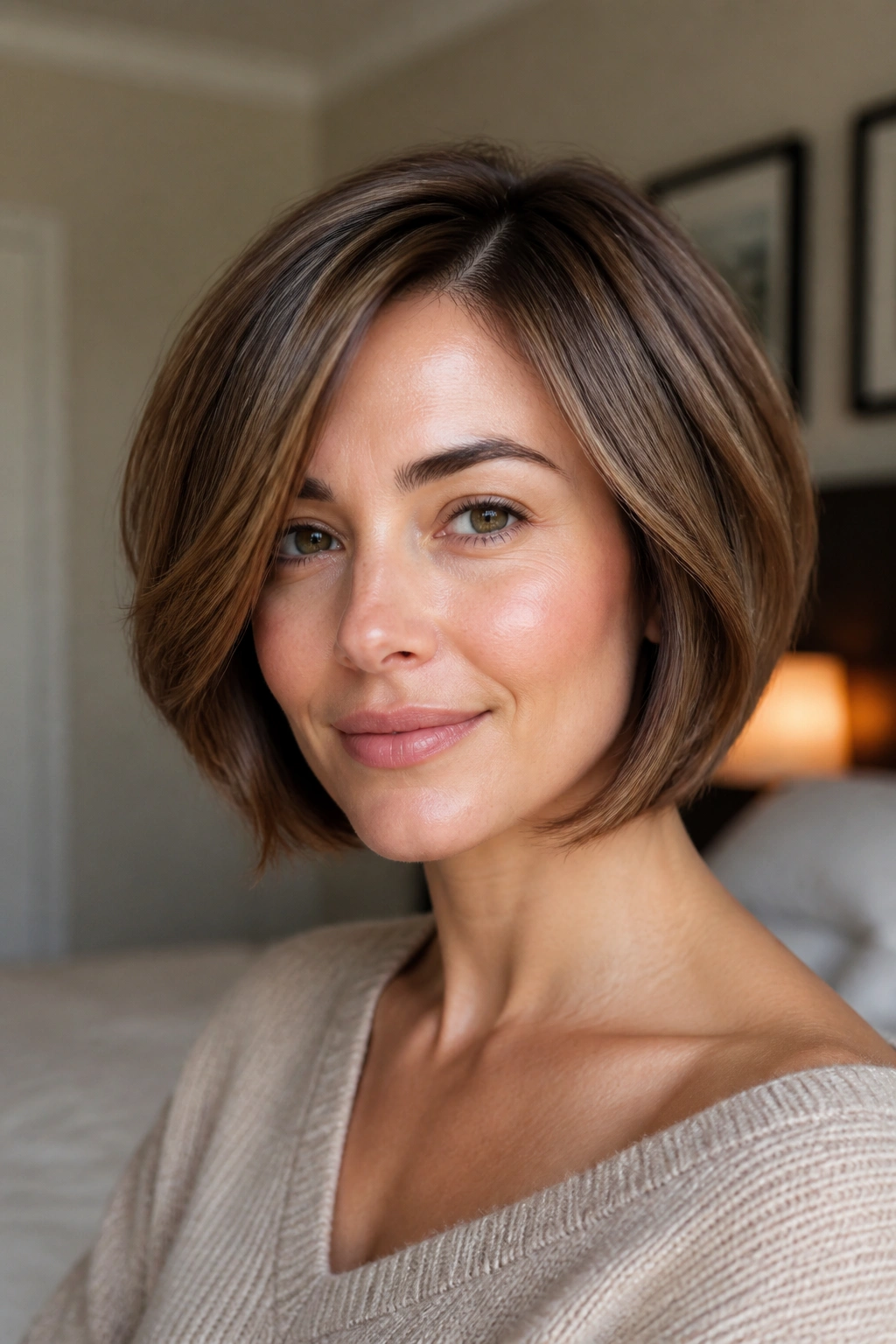
A rounded bob softens the silhouette, which can be a relief if your hair is fine and your face shape already has sharp angles. The sides curve gently toward the chin, and the layers help keep that rounded outline from turning bulky. A side part gives the cut a little lift and keeps the crown from lying flat.
The shape works especially well when you want softness around the cheekbones. It’s not a severe cut. It feels friendly, almost cushioned. That can be a nice change if you’ve spent years with straight, blunt ends that hang like curtain rods.
What to ask for
- A rounded outline that follows the jaw.
- Light layering only through the interior.
- A side part with enough room to lift the roots.
- Soft edges around the front, not razor-sharp corners.
This is one of those haircuts that looks better when it’s polished but not over-styled. A quick bend under the ends and a bit of root spray are enough. Too much heat can make it feel overworked.
20. Soft Crop With Piecey Ends
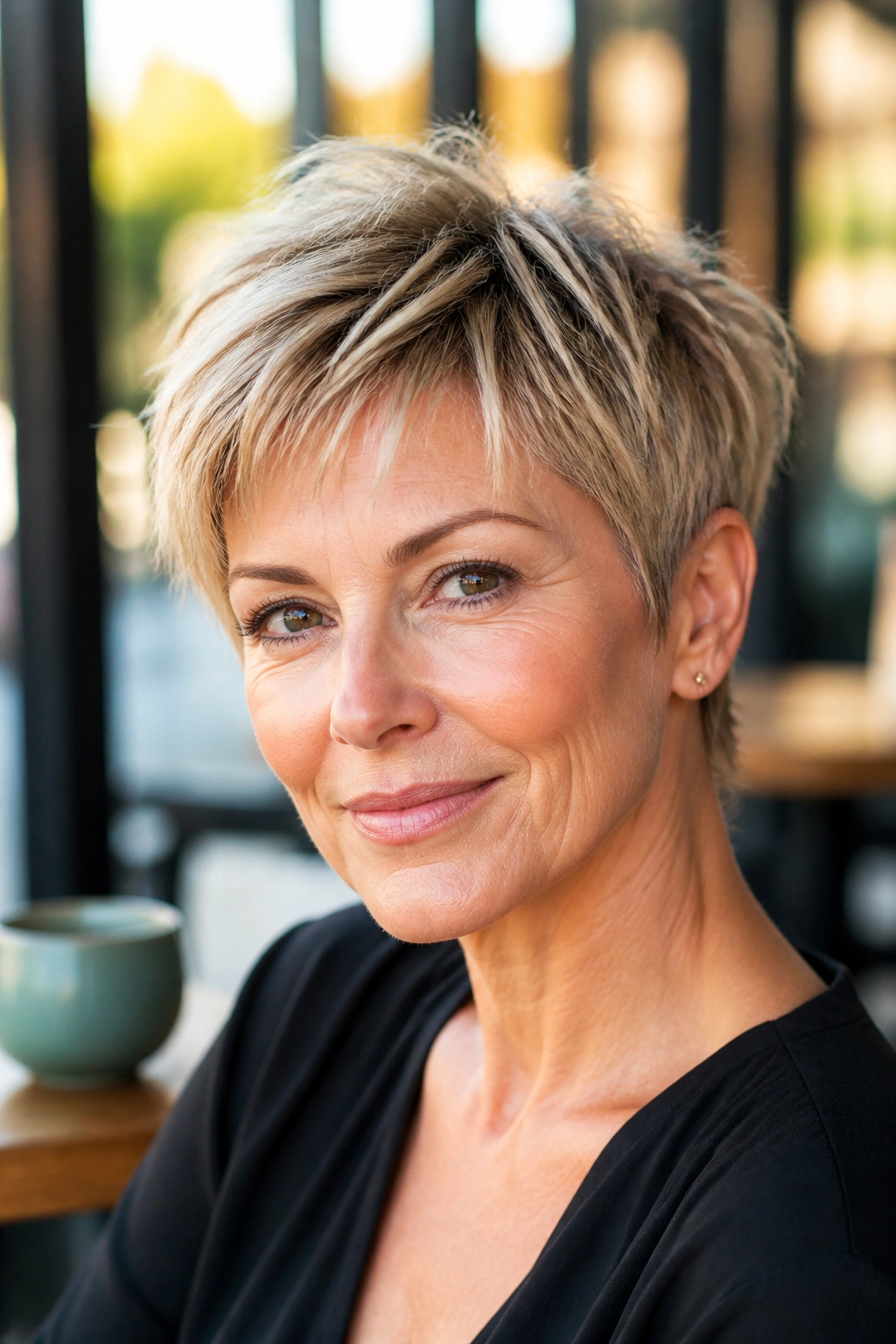
A soft crop is the minimalist answer for fine hair. It keeps the length short, the layers light, and the styling simple. The ends are piecey enough to move, but the overall shape stays tidy. If you want a haircut that doesn’t fight you in the morning, this is a strong contender.
The best version of this cut keeps the perimeter intact. That gives the hair a fuller edge, which matters a lot when the strands are fine. Then the stylist can carve a little movement into the top and front sections so the crop doesn’t sit too flat on the head. It’s a neat little balancing act.
The low-maintenance version
If you want the easiest routine, ask for:
- A short, clean outline.
- Soft texture only at the ends.
- A little height at the crown.
- No heavy thinning shears near the temples.
I like this cut because it behaves. It dries quickly, it styles fast, and it does not punish you if you skip a complicated blow-dry. Sometimes that’s the whole appeal of short hair.
Final Thoughts
The best short layered haircuts for fine hair do not chase volume in a fake way. They build it where the head actually needs help: at the crown, around the jaw, and through a strong perimeter that keeps the ends from disappearing.
If your hair is fine, the word to remember is not “more.” It’s smarter. A little lift, a little texture, and a clean outline usually beat a lot of aggressive layers every time. Choose the shape that fits your face, your styling habits, and how much time you want to spend with a brush in your hand. That’s the haircut that will hold up after the salon blowout has gone flat.
