



A good layered haircut should make the face look softer, not busier. That sounds easy until you sit in the chair and somebody starts carving in short pieces that bounce in the wrong places, especially around the cheeks and jaw. Soft layers solve that problem by keeping movement light and the outline clean.
The trick is not removing a ton of hair. It’s choosing exactly where the shortest layer lands, how hard the ends are texturized, and whether the shape follows the cheekbone, chin, or collarbone. A blunt line can be chic, sure, but a gentle frame usually looks better in motion because it moves with your head instead of sitting there like a rigid shape.
That balance matters on fine hair, thick hair, straight hair, waves, curls — all of it. The shortest piece is the one that changes everything, and where it lands decides whether the cut opens the face or chips away at the length you wanted to keep.
1. Curtain Face Frame That Falls From the Cheekbone
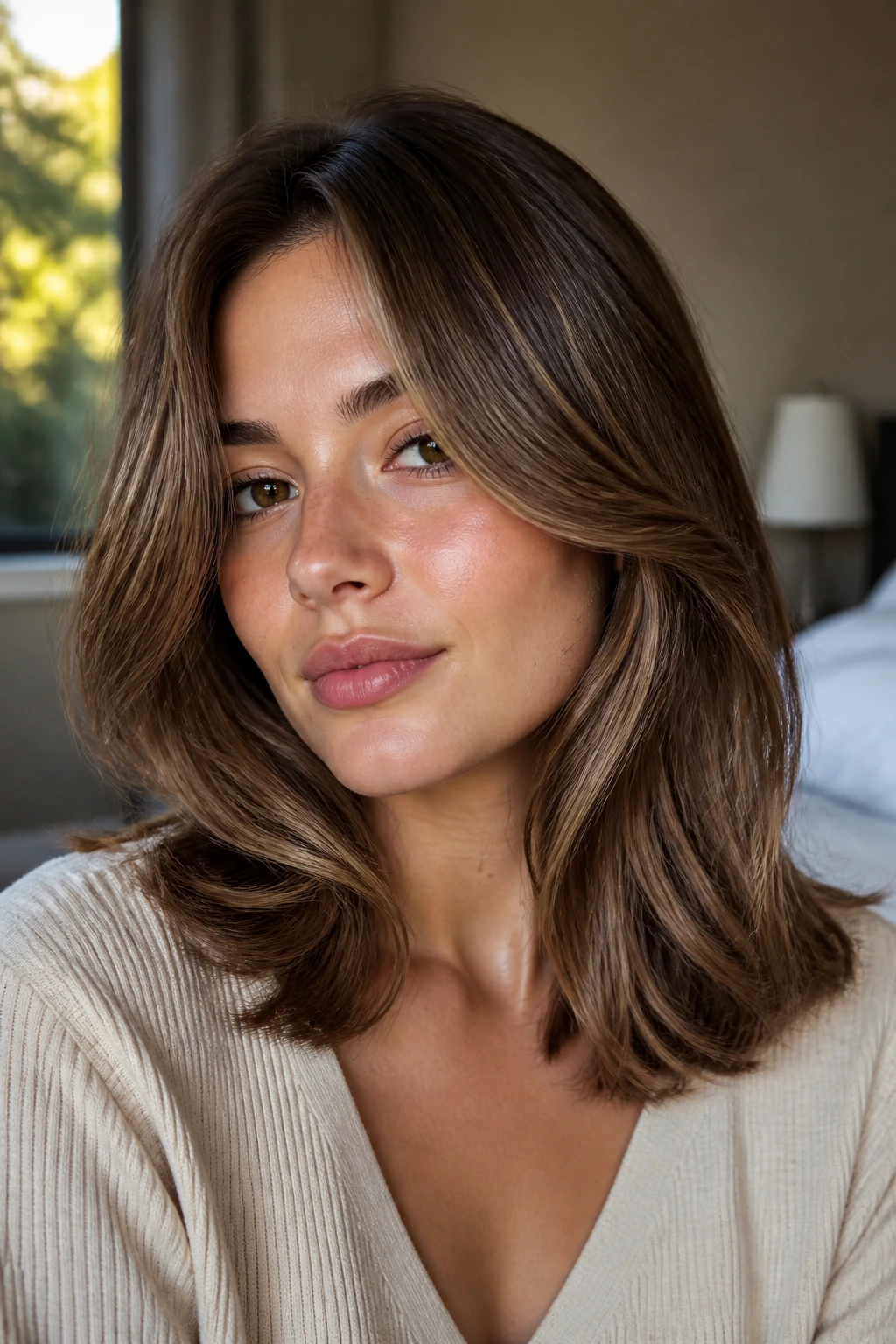
Start the front at the cheekbone, and the whole haircut relaxes. The pieces fall away from the face, then drift back in around the lips and jaw without looking like a hard fringe. It’s one of the easiest ways to get a gentle hair frame that still feels intentional.
I like this shape on medium and long hair because it works with a center part or a slight off-center part without fighting the cut. The front does the opening work, while the rest of the hair stays calm and long. That makes the style look airy instead of overworked.
Ask for the shortest point to land around the top of the cheekbone, then let the longest face-framing strand fall toward the jaw. Do not let the front get pulled too high if your hair shrinks when dry; an inch can disappear fast once it leaves the blow-dryer.
2. Cheekbone Dusting Layers for a Lifted Front
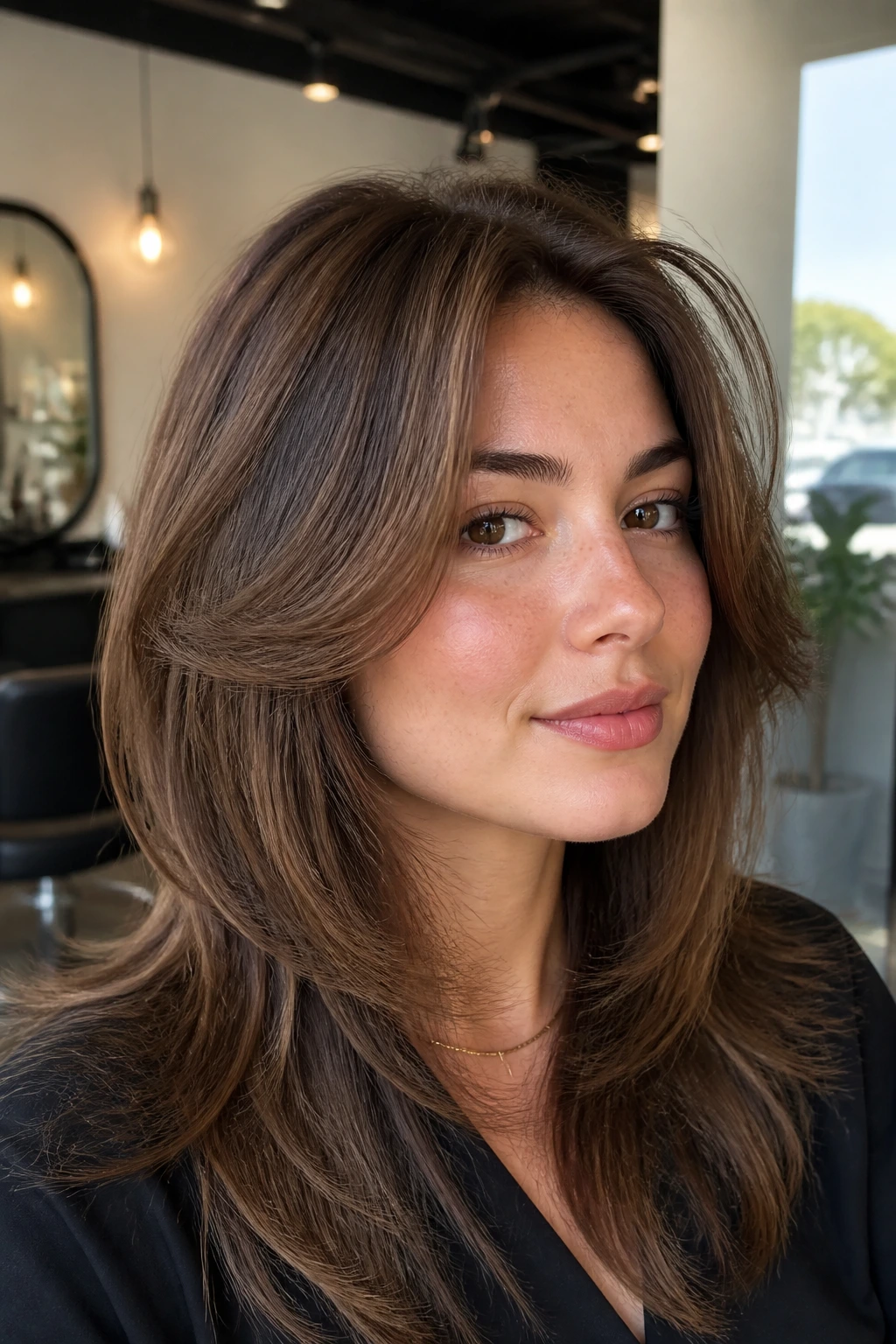
A little lift around the cheekbone can make the whole haircut feel lighter. Not louder. Lighter. That difference matters, because a cut that opens the face without stealing density always grows out better.
Why It Softens the Face
The magic here is the placement. When the shortest layer begins close to the cheekbone, it pulls attention upward and keeps the front from falling flat over the eyes. The rest of the hair keeps its length, so you get shape without losing the feeling of fullness.
What to Ask For
- The shortest face-framing piece should sit between the outer eye corner and the cheekbone.
- Ask for soft point cutting at the ends, not a sharp, blunt slice.
- Keep the back length untouched if you want the frame to stay gentle.
- A round brush bend at the finish is enough; you do not need a tight curl.
Best for: medium hair, long hair, and anyone who wants a little lift without an obvious layered haircut.
3. Jawline Feathering on a Blunt Bob

Why does a blunt bob sometimes feel hard even when the hair is shiny and healthy? Because the edge can sit there like a ruler. A few feathered pieces at the jawline break that line and keep the bob from feeling severe.
Best Face Shapes
This works well when the jaw is strong and you want the haircut to soften around it. It also helps if your bob tends to puff out at the bottom, since the lighter front pieces pull the eye upward. The overall shape stays neat, but the face frame gets a little movement.
Styling Note
A flat brush or a quick pass with a small round brush is enough. Don’t chase perfect curves. The charm of jawline feathering is that it bends a little and settles back on its own.
If your stylist reaches for thinning shears near the front, pause. A bob needs shape, not shredded ends. The goal is a clean outline with a gentle frame around the face, not a wispy mess.
4. Collarbone Layers That Barely Touch the Shoulders

You know that feeling when your hair lands right at the collarbone and moves every time you turn your head? That’s the sweet spot for a lot of people. The cut feels polished, but the front still has a soft swing.
These layers are especially good if you tuck your hair behind one ear a lot. The shorter front pieces fall back into place without looking choppy, and the collarbone length keeps the whole thing from getting puffy. It’s a very forgiving shape.
- Keep the first face-framing layer at or slightly below the chin if your hair is thick.
- Use a soft diagonal line from front to back so the sides do not look boxy.
- Ask for the ends to be lightly dusted, not heavily thinned.
- A shoulder-length blowout or a loose bend works better here than tight curls.
The cut reads clean, but not stiff. That’s the point.
5. Butterfly Layers That Keep the Length Long
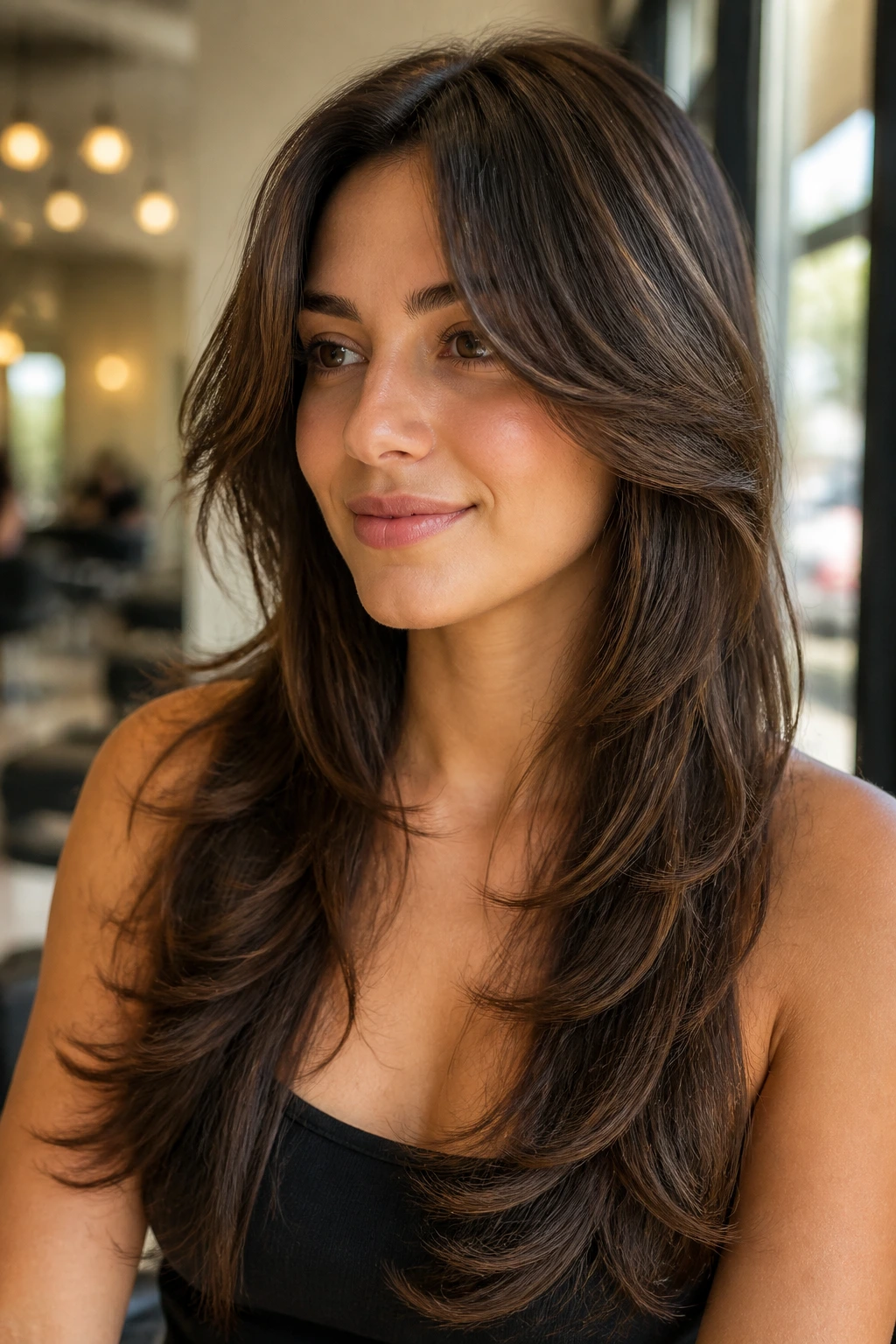
Butterfly layers are a smart move when you want movement at the top and length at the bottom. The shorter pieces sit high enough to give lift, while the longer length hangs underneath and keeps the style from feeling skimpy. It can look like two cuts in one, but when it’s done well, the transition is smooth.
I’ve always liked this shape on hair that feels heavy near the ends. The upper layers create motion around the face and crown, and the longer underlayer keeps the cut grounded. You get bounce without losing the sense of hair. That matters more than people admit.
Where the Cut Sits
The shortest layers usually begin around the chin or a little above it, then taper into longer lengths. If the layers jump too high, the style starts to look dated fast. If they stay too long, you lose the butterfly effect and end up with hair that looks trimmed instead of shaped.
How It Grows Out
Butterfly layers grow out well because the long length carries the line. Even when the shorter pieces start to soften, the shape stays visible. That makes this one of the better options if you don’t want constant salon upkeep.
6. Invisible Internal Layers for Fine Hair

Unlike choppy layers, invisible internal layers leave the outside line calm. That’s the whole appeal. The hair still moves, but the perimeter keeps its fullness, which is exactly what fine hair needs when it tends to look see-through at the ends.
These layers are cut inside the shape, so the haircut loses weight without losing the look of density. On fine hair, that can be the difference between “light and soft” and “thin and stringy.” There’s no prize for over-layering fine hair. None.
What Hidden Layers Do
They let the top and mid-lengths lift without carving holes into the outline. The cut feels easier to blow-dry, and the hair sits with less bulk at the crown. That makes it a good choice if your hair is flat at the roots but you still want the ends to look thick.
When Not to Ask for Them
If your hair is already sparse at the bottom, skip aggressive internal layering. A tiny bit is fine. Too much and the ends go fuzzy fast.
Best choice for: fine, straight, or slightly wavy hair that needs movement but still wants a strong outer shape.
7. U-Shaped Layers with a Soft Center Back

Why do some long cuts look full without a lot of obvious layering? Because the outline is doing the work. A soft U-shape keeps the back rounded instead of sharp, and that gentler curve makes the front frame feel more balanced.
This cut is quiet in a good way. The sides stay long enough to skim the shoulders, while the center back dips a little lower so the whole haircut looks intentional from behind. It’s the kind of shape that makes hair fall neatly over a sweater or coat collar.
The face-framing pieces can begin around the chin or collarbone, depending on how much opening you want. Keep them soft and slightly graduated. A hard step ruins the flow.
If you like long hair but hate when it looks flat from the back, this is a strong option. It gives structure without announcing itself.
8. Rounded C-Cut Layers That Curve In
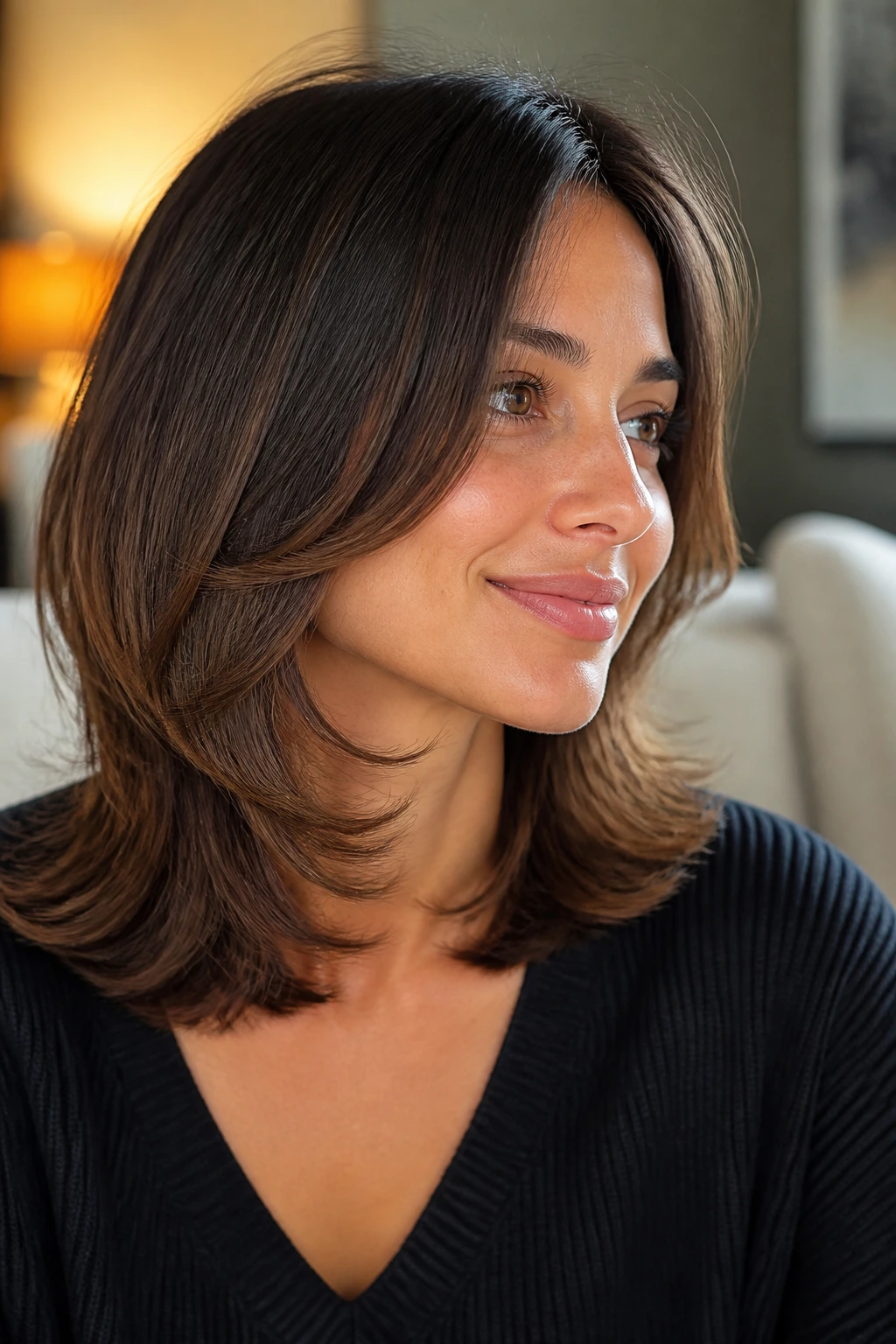
A rounded C-cut has a softer attitude than a V-shape. The ends curve inward a bit, so the hair hugs the face and neck instead of pointing down in a sharp line. That small change makes the whole haircut feel gentler.
Best Cutting Cue
Ask for the sides to curve around the jaw and collarbone, then stay rounded through the back. The shortest front pieces should blend into the longer lengths, not stop like stair steps. Soft graduation matters more than sheer length removal.
Who It Flatters
This shape is nice if your hair tends to stick out at the ends or if your face frame needs a little inward movement. It can also soften a long face because the curve keeps the eye moving sideways instead of only downward.
The shape looks especially good when the ends are dried with a round brush or a large velcro roller at the front. One bend. That’s enough.
9. Wispy Layers That Keep Fine Ends Light

Fine hair does not need more layering; it needs cleaner layering. That is the part people get wrong. Too much slicing leaves the ends see-through, and then the cut starts looking tired before you’ve even had a chance to style it.
Wispy layers work when the stylist keeps the ends feather-light but not ragged. The pieces around the face should feel airy, not broken. You want movement that drifts, not strands that separate into little strings.
Watch for These Ends
- Ends should look soft and blended, not hacked into pieces.
- The front should frame the cheek and jaw without creating gaps.
- A little bevel at the ends helps the hair feel full.
- Heavy texturizing near the bottom usually works against fine hair.
This kind of cut is best when you want softness without collapsing the shape. It’s small work with a big payoff.
10. Soft Shag Layers with Low Contrast

I have a soft spot for a shag that still lets the hair fall in one piece. Not every shag needs to look rough or punky. A low-contrast version keeps the crown light, softens the sides, and leaves the face frame easy to wear.
Where the Texture Lives
The texture should live around the crown, temples, and a little above the cheekbones. The bottom should stay calm enough to keep some shape. If every layer is the same length, the cut gets busy fast. If the contrast stays subtle, the whole thing reads as lived-in rather than messy.
A soft shag is a good choice if your hair has some wave and you want it to move without a lot of heat styling. It also grows out with less drama than a heavier, more dramatic shag.
One small warning: if your hair is very fine, keep the shag soft. Too much slicing and the ends start looking ragged instead of airy.
11. Layered Curls That Hold a Full Perimeter
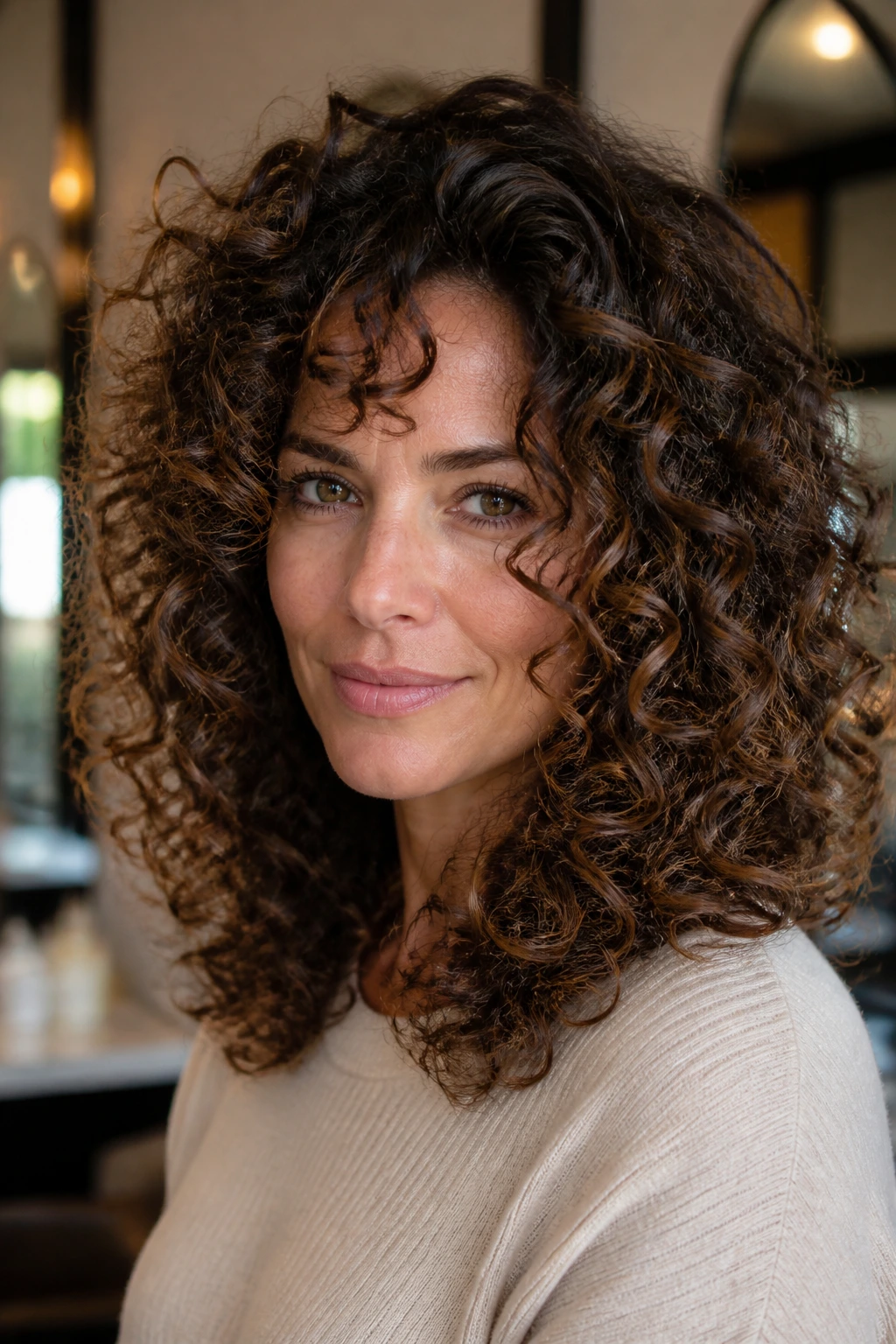
Curls need shape more than they need thinning. That’s the part people forget when they ask for layers and end up with a halo they cannot control. A good curly layer cut keeps the perimeter full while freeing the curls around the face so they spring instead of bunch.
Cutting curl by curl matters here. Dry cutting is often the better call, because curls tell the truth when they are in their natural shape. Wet hair can lie. Dry hair does not.
- Keep the face frame longer than you think so the curls do not bounce up too far.
- Ask for curl-by-curl shaping if the pattern is tight or uneven.
- Avoid over-thinning the bulk at the ends.
- A little shorter piece at the cheek can open the face without breaking the silhouette.
This is one of those cuts that looks plain in the chair and good in motion. That’s a compliment.
12. Long Internal Layers for Thick Hair
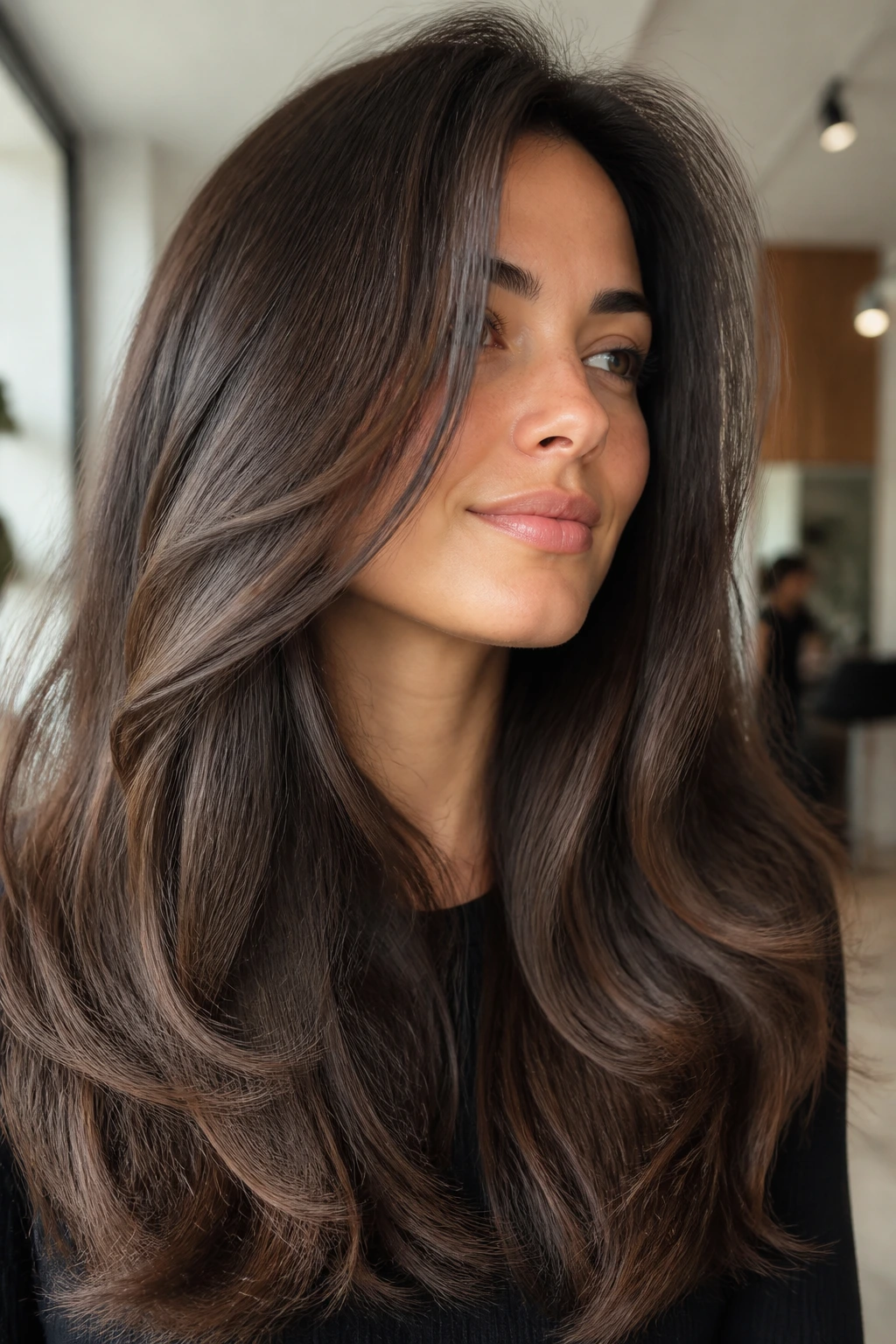
Thick hair needs weight removed, but it does not need to be shredded. The cleanest fix is long internal layering, where the bulk comes out from inside the shape and the outside line stays smooth. That keeps the cut from puffing out like a triangle.
Unlike heavy razoring, which can make thick hair frizzy at the ends, long internal layers preserve control. The hair still moves. It just stops fighting the air every time you brush it. That is a lovely thing on a humid day.
What Thick Hair Needs
A stylist should look for spots where the hair stacks too much — usually through the mids and under the crown. Lightening those zones reduces the bulk without making the perimeter wispy. The face frame should stay long enough to blend into the rest of the cut.
What to Avoid
Skip aggressive texturizing if your hair already expands after washing. Skip short layers near the top if you hate volume. And skip the urge to make every inch lighter. Thick hair often looks better with a little weight left in it.
13. Side-Swept Face Framing on Medium-Length Hair

Picture shoulder-length hair with a side part that drops across one cheek and folds back near the chin. That shape has an easy softness to it. It feels a little romantic, but not precious.
Side-swept framing is useful when a center part makes your face look too open or too long. The diagonal line changes the balance right away. It also gives medium-length hair a bit of movement without needing a full set of long layers.
The longest face-framing piece can land near the collarbone, while the shortest one should still graze the cheek. That diagonal is the whole story. If the front is cut too bluntly, the sweep loses its charm.
This one works beautifully on straight hair that wants motion and on wavy hair that needs direction. It’s a soft answer, not a dramatic one.
14. Retro Blowout Layers with a Soft Flip

Why do blowout layers keep coming back? Because they solve a simple problem: hair should move away from the face without looking overstyled. The soft flip at the ends gives lift, and the layers keep the volume from landing all in one place.
What to Tell the Stylist
Ask for long layers that start around the cheek or mouth, then blend into the lengths. The front pieces should be able to bend backward with a round brush, not fall in a stiff curtain. The shortest layer should not sit so high that it turns into a helmet once you dry it.
A retro blowout shape is great if you like polished hair but still want the frame to feel loose. The style holds its own with a little mousse at the roots and a medium round brush. Too much product can make it stiff, and nobody wants that.
I prefer this look when the ends still have some movement on day two. It feels easier, less fussy, and a lot more natural.
15. Long V-Shaped Layers with a Gentle Point
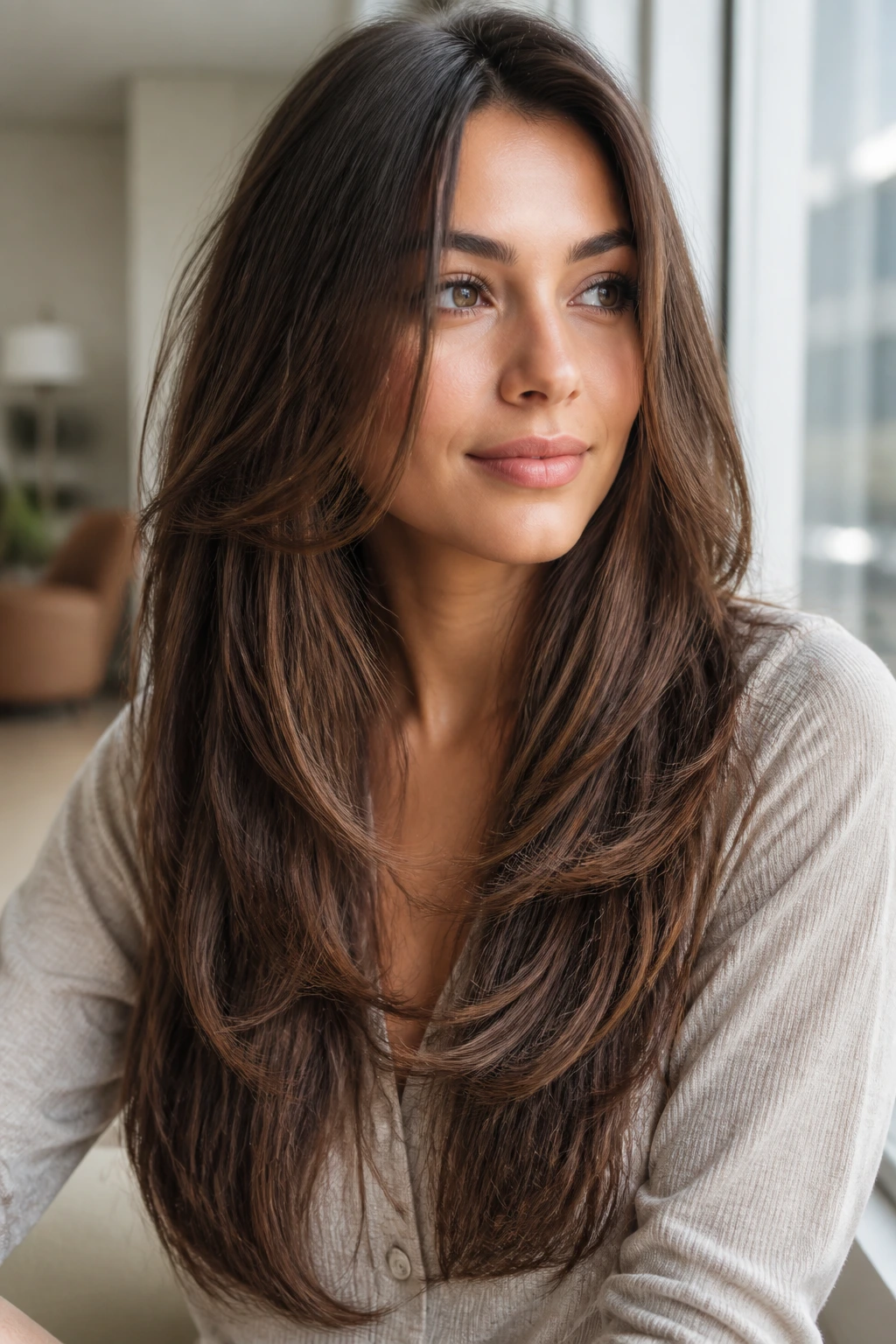
A V-shape can be soft if the point isn’t too sharp. That’s the difference between a long, graceful cut and something that looks like it was chased with scissors. The shape narrows a little at the back while the front pieces stay long enough to frame the face.
This cut makes sense when you want drama from the length, not from the layers themselves. The back creates the point, but the sides carry the softness. The result is movement that feels deliberate and easy to wear.
Keep the face frame blended into the longer lengths, not cut off in a steep line. A narrow V can look elegant. A deep V can feel fussy and dated fast. There’s a line there, and it’s thinner than people think.
If you like your hair long and loose, this is one of the simplest ways to give it shape without losing the length that makes it feel like yours.
16. Lob-Length Layers with Tapered Ends
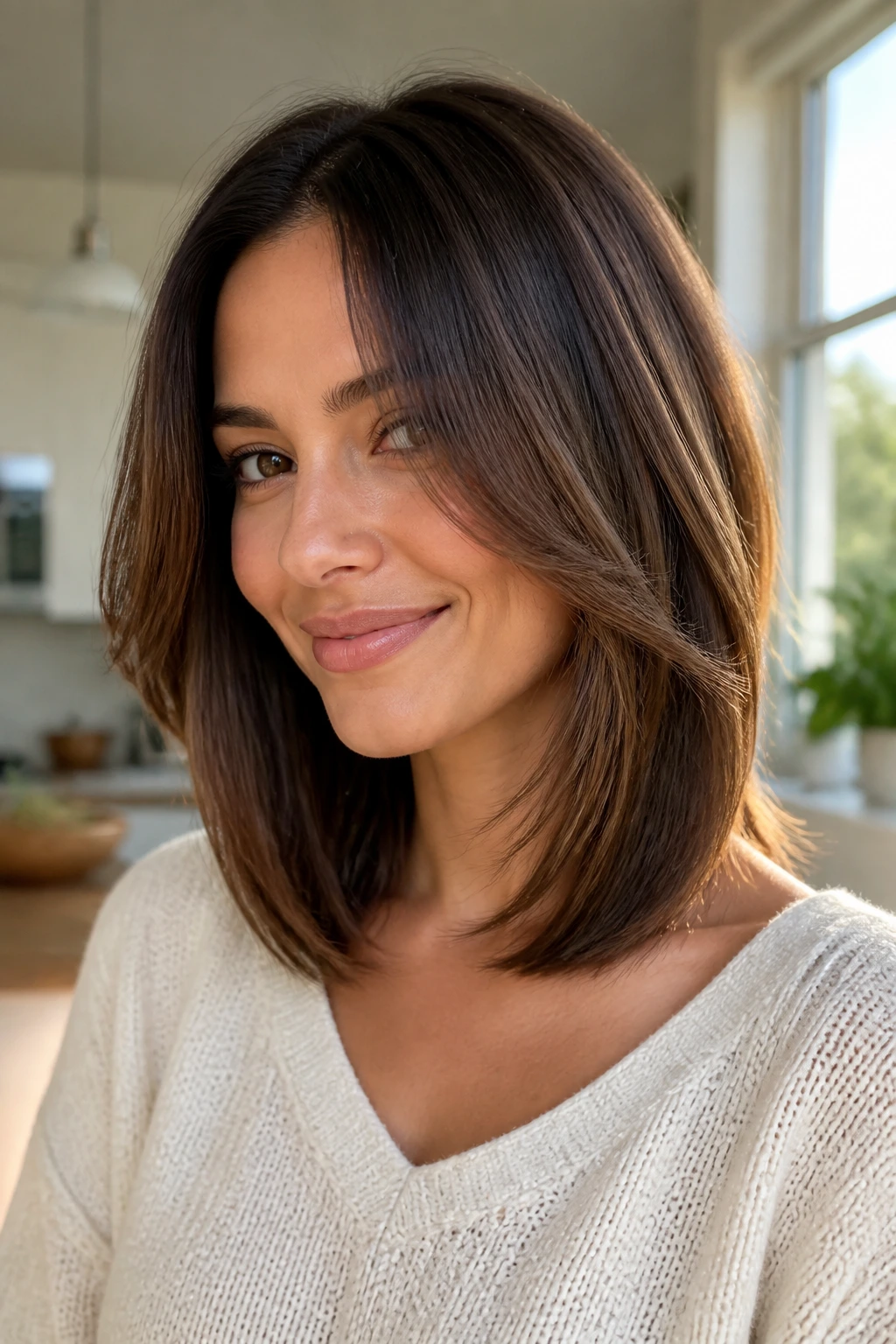
A lob does not have to be blunt to look tidy. That’s the assumption I push back on the most. Soft layers can make a lob feel fresher, less boxy, and much kinder around the face.
Tapered ends help the haircut bend instead of hanging in a hard block. The front can skim the jaw or collarbone, and the rest can stay compact enough to tuck behind the ears. It’s neat, but not severe.
Why a Lob Needs Softness
A straight lob can look a little stiff if your hair has a lot of density or if the ends start flipping in odd ways. Adding soft internal layers gives the hair room to settle. It also keeps the shape from ballooning at the sides.
This works especially well if you wear your hair down most of the time and only use a quick blow-dry. You get shape without needing to fight every section with a brush.
Short answer? A lob with tapered ends is easier to live with.
17. Feathered Layers for Straight Hair

Straight hair can go flat fast, and that’s where feathering earns its keep. The goal is not obvious texture. It’s a little bend, a little swing, and a face frame that doesn’t hang like a sheet.
The Feathering Zone
The best feathering usually happens around the cheek, jaw, and ends. That lets the front move away from the face while the lower lengths stay smooth. If the feathering starts too high, the cut can look thin. If it stays too low, you barely see the shape.
- Ask for soft razoring only at the ends if your hair is coarse.
- Keep the face frame long enough to tuck behind the ear.
- Use a light spray or cream, not a heavy oil.
- A quick pass with a blow-dryer nozzle can smooth the feathered pieces into place.
Straight hair loves movement when it can get it. This is a clean way to give it that without turning the cut into something fussy.
18. Airy Bangs That Melt Into the Sides

Blunt bangs and soft layers do not always get along. Airy bangs do. They blend into the side pieces instead of sitting on the forehead like a separate shape, which makes the whole haircut feel calmer.
This is a nice answer if you want a fringe but do not want a hard line. The bangs should be light enough to split a little, then sweep into the cheekbone layers. That keeps the front open and the rest of the haircut connected.
The biggest mistake is making the bangs too dense. Dense bangs can drag the face down and fight the softness you were after. A lighter bang with side blending keeps the attention where you want it.
What to Watch For
If your hair is very fine, keep the fringe piece-y and soft. If it’s thick, the bangs can be a touch longer so they do not puff at the root. Either way, the goal is the same: a front that frames, not traps.
19. Wavy Hair Layers That Follow the Bend

Waves tell you where the layer should sit. Ignore the bend, and the cut feels off. Follow it, and the hair suddenly looks like it knows what it’s doing.
This is why wavy hair often looks best with layers that start where the wave naturally pushes forward. The face frame can bend around the cheek and then fade into a longer side section. That keeps the wave pattern visible without letting it poof out at the sides.
I like this approach because it works with air-drying. The hair settles into its own shape instead of fighting a rigid blowout pattern. That saves time and usually looks more honest.
- Let the shortest front piece land where the wave first curves.
- Keep the ends soft so the wave can sit on top of them.
- Avoid over-layering the top if your waves already lift at the crown.
- Scrunching with a light cream is usually enough.
It’s a cut that respects the bend instead of flattening it. That’s why it lasts.
20. Long Ribbon Layers for the Final Sweep

Long ribbon layers are what I recommend when someone wants movement without looking layered. The pieces are long, narrow, and blended enough to move like strips of fabric rather than obvious steps. It gives the hair a clean swing and a softer frame around the face.
The best version starts by keeping the front long enough to skim the cheek or jaw, then letting the lower lengths taper into a gentle sweep. The back still carries weight, so the cut does not go wispy. That balance is the whole thing. Too short, and the style gets busy. Too long, and you lose the motion.
This is a good last stop if you keep coming back to the same problem: you want your face softened, but you also want your hair to stay full. Ribbon layers answer that better than most cuts because they leave the perimeter calm and let the movement happen inside the shape.
If you bring one idea to the salon, bring this one: soft layers should remove confusion, not create it. The best versions make hair easier to wear, easier to style, and easier to grow out. That’s the real test. Not how dramatic they look on day one, but how well they sit when you run out the door with half-dry hair and no patience.
