



A medium-length cut can look sharp in the chair and stubborn at home. That is where point cut styles for medium length hair earn their keep. A little snip at the ends can change how the whole shape falls, especially when the hair sits somewhere between shoulder length and collarbone length.
Point cutting is one of those salon techniques that sounds fancier than it is. The stylist holds the shears at an angle and cuts into the ends instead of straight across them, which softens the line and lets the hair move. Done well, it removes weight without turning the haircut into a ragged mess. Done badly, it chews up the outline and leaves the ends looking tired.
Medium-length hair is a sweet spot for this technique. It is long enough to show movement, but short enough that every blunt edge and every heavy corner stands out. Fine hair can look flat if the cut is too solid. Thick hair can puff out like a triangle if the perimeter is left too heavy. Curly hair needs shape without losing its bounce. Point cutting gives you options.
The trick is choosing the right version of it. A soft perimeter cut is not the same thing as a deep choppy finish. A face-framing point cut does a different job from invisible layers tucked inside the haircut. Some versions make hair look lighter. Some make it swing. Some make growing out less annoying. All of them rely on the same basic idea, but the result changes a lot once texture and density enter the picture.
1. Soft Point Cutting Along the Perimeter
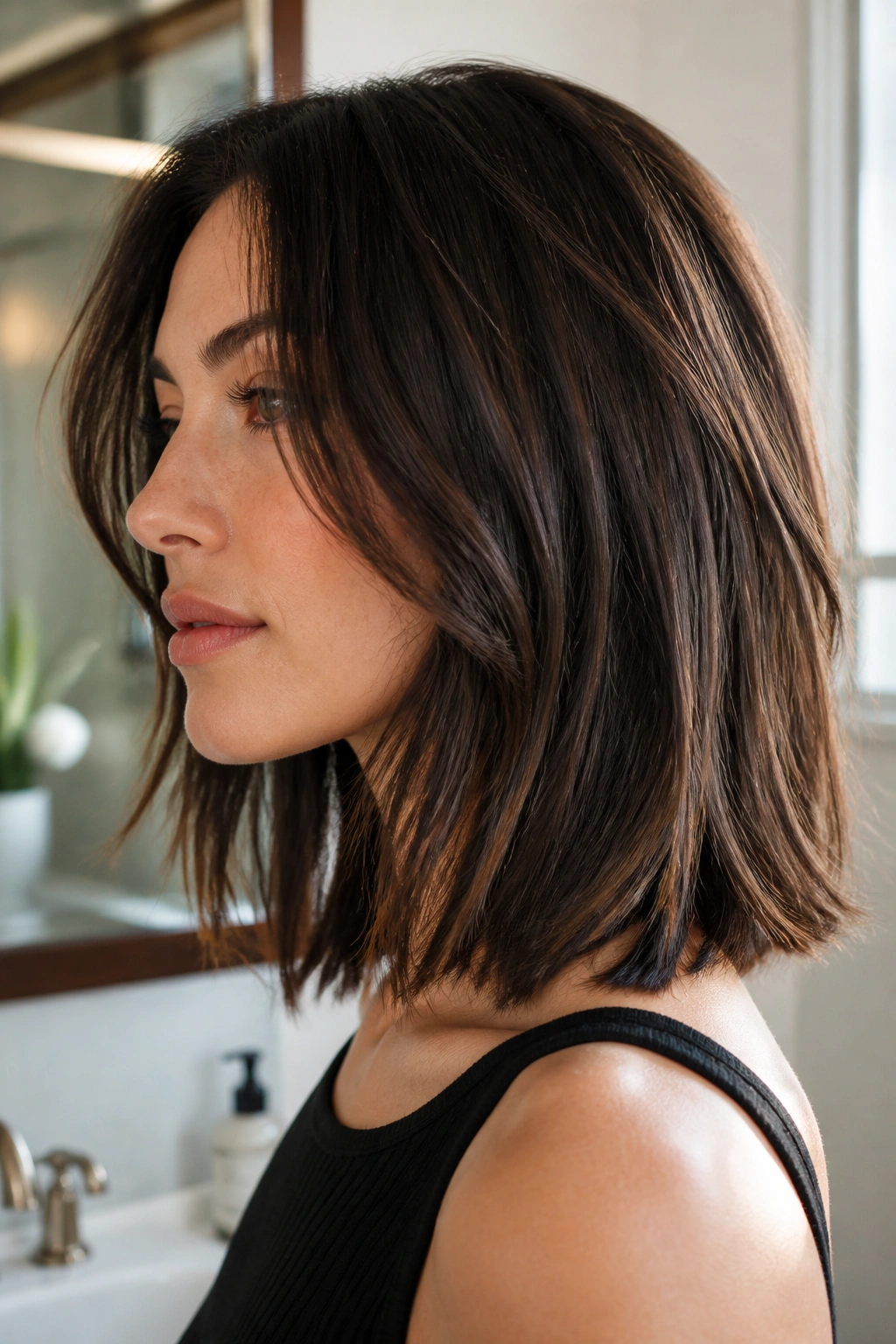
A soft perimeter point cut is the calm, sensible choice when you want movement without losing the shape of the haircut. The stylist keeps the outline in place, then uses the tips of the shears to nibble into the bottom edge. On medium-length hair, that usually means the last half-inch to 1 inch of the ends gets softened, not shredded.
Why it works on medium-length hair
The reason this version works so well is simple: medium-length hair shows every hard line. A blunt edge can look clean for a day, then start to feel stiff once the hair settles. Soft point cutting breaks that stiffness without making the ends see-through.
- It keeps the haircut looking neat from the front.
- It lets shoulder-length hair move instead of sitting like a shelf.
- It grows out with less of that obvious “line of demarcation” feeling.
- It plays nicely with both air-drying and a blowout.
Best move: ask for tiny, shallow point cuts at the very edge, not heavy texturizing through the body of the hair. That small difference matters more than people think.
This is the style I reach for when someone wants polish first and texture second. Quiet. Clean. Easy to live with.
2. Deep Point Cut for Serious Texture

This is the haircut for hair that feels too solid from six feet away. A deep point cut takes more off the ends and pushes the texture in a choppier direction, which can be a blessing if your medium-length hair sits heavy, puffs outward, or refuses to bend where you want it to.
The effect is stronger than a soft perimeter cut. You see the pieces. You feel the air between them. On dense straight or wavy hair, that can be exactly what saves the cut from looking like one thick block. On fine hair, though, this gets risky fast. Too much depth and the ends go wispy.
What I like about this version is that it gives attitude without needing a huge change in length. You still keep the medium length shape, but the line stops behaving like a curtain. The hair separates more cleanly, and styling products actually show up in the finish instead of disappearing into a solid mass.
Skip this if your hair is already fragile, over-lightened, or frizzy at the ends. That is where aggressive point cutting starts to look hungry instead of stylish. A good stylist can take plenty out without exposing too much scalp, but the cut has to respect the hair’s density.
3. Face-Framing Point Cut for Shoulder-Length Hair

Want the front to feel lighter without touching the whole haircut? This is the move. A face-framing point cut keeps the length at the back or the perimeter intact while softening the pieces that sit around the cheeks, jawline, and collarbone. On shoulder-length hair, that small change can make the whole cut feel less boxy.
How to ask for it at the chair
The cleanest version starts with a simple request: keep the shape, soften the front. A stylist can point cut the first few pieces around the face at a slight angle so they skim rather than hang. You do not need a dramatic layer unless that suits your face shape and texture.
- Start the shortest face-framing pieces around the cheekbone or just below it.
- Let the next pieces fall toward the jaw and collarbone.
- Ask for soft point cutting on the ends, not a blunt diagonal slice.
- Keep the back fuller if you want the haircut to feel balanced from behind.
This is one of those cuts that looks better in motion than in a still photo. Tuck it behind one ear, flip it to a side part, and the shape changes fast. That is the appeal. It is also why it works so well for people who wear their medium-length hair both up and down.
4. Point Cut Lob With a Blunt Interior

A lob can look expensive and still feel too solid if the ends are one hard block. Point cutting the outer edge solves that problem without giving up the sleekness of the cut. The interior stays blunt, which keeps the body of the hair full, while the perimeter gets softened just enough to move.
That mix is smart on straight or slightly wavy medium-length hair. You get the clean line people want from a lob, but the haircut does not feel like a helmet once it dries. The ends sit with a softer edge, which is especially useful if your hair flips under at the shoulders or kicks out at the corners.
Picture a glassy blowout with a little less perfection. That is the vibe. You can still tuck the hair behind the ear or wear a middle part, but the line doesn’t shout from across the room. It reads as finished, not stiff.
A blunt interior also helps here because it keeps the hair from collapsing after a few weeks. The point cutting takes care of the visible edge. The blunt part keeps the structure underneath. That balance is the whole point.
5. Feathered Point Cut for Fine Hair
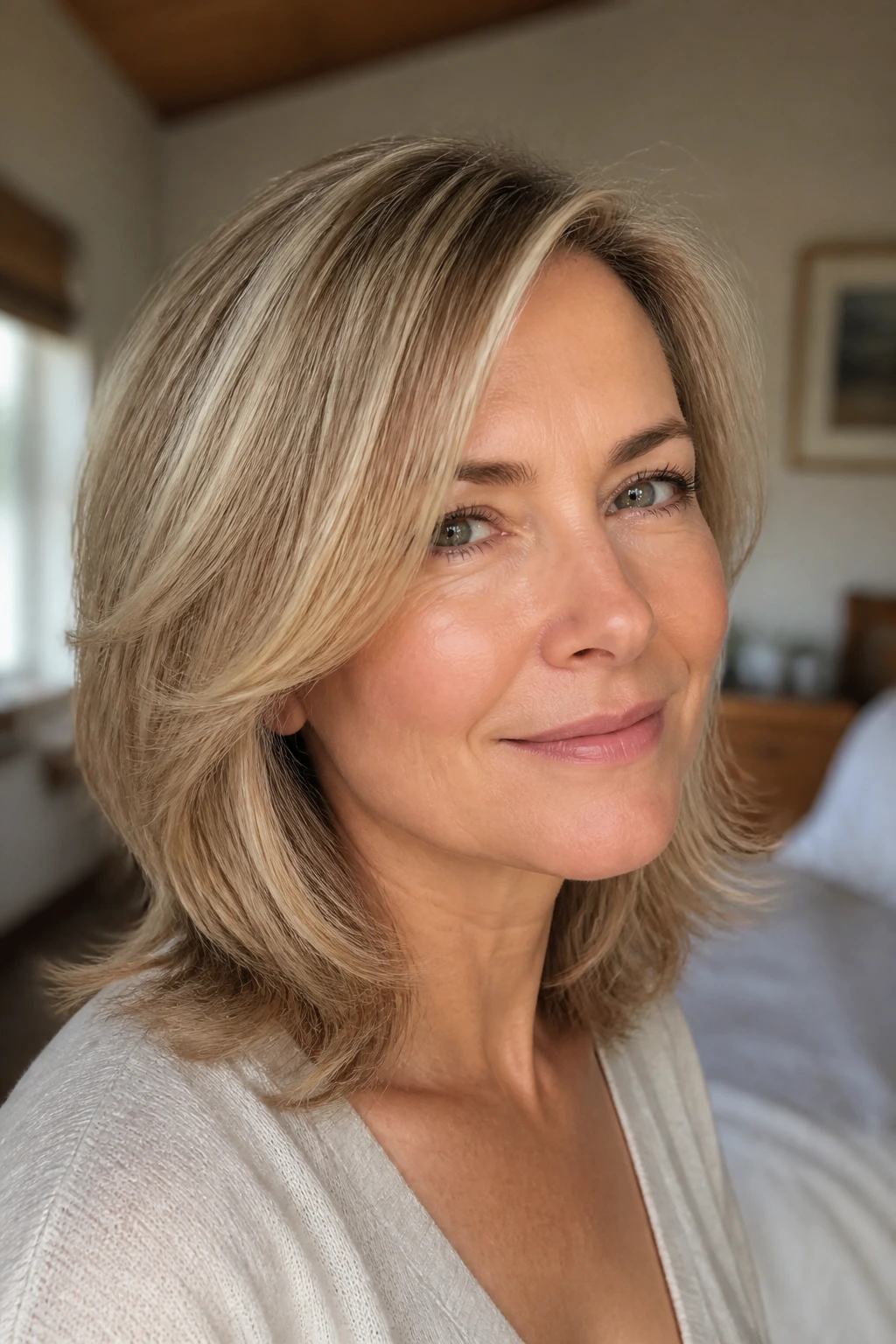
Fine hair needs a careful hand. Too much texturizing and the ends start to look tired, especially at medium length where there is enough hair to show both volume and weakness. A feathered point cut gives fine hair a softer finish without stripping away all the body.
The idea is to lighten only the outer edge and let the ends taper instead of stopping in a blunt line. A stylist usually works with small, controlled snips and keeps the interior of the haircut mostly intact. That way the hair still has mass near the head, which is what gives fine hair the look of density.
This version is also kind to air-dried hair. Fine strands tend to separate on their own once they lose moisture, and a feathered edge makes that separation look deliberate instead of patchy. Add a light mousse at the roots, then a pea-sized amount of cream on the ends, and the cut tends to sit better through the day.
One warning: do not let anyone go wild with thinning shears here. Fine hair rarely needs that much help. Point cutting is softer, cleaner, and easier to live with when the goal is movement, not exposed gaps.
6. Choppy Point Cut for Thick Hair

Unlike thinning shears, a choppy point cut keeps thick hair under control without stripping it bare. That is the main reason I prefer it on medium-length cuts that feel bulky at the ends. Thick hair can take more aggressive texture, and this style uses that to its advantage.
The haircut usually works best when the stylist works in sections and cuts deeper into the perimeter and the lower layers. That breaks up the heavy line that thick hair likes to build around the shoulders. The result is a cut that bends more easily and does not puff out in one giant triangle.
What makes it worth asking for
- It reduces the dense edge that thick hair builds fast.
- It gives waves and bends a little room to show.
- It helps the haircut dry faster because there is less packed weight.
- It works well with round-brush blowouts and rough-drying alike.
This is not a shy cut. It has texture with opinions. If your hair is coarse and resistant, that can be a gift. If your hair is thick but also frizzy, the stylist needs to be careful not to carve too deep near the top, or the ends can start to look frayed.
7. Curly Point Cut to Keep the Shape Light

Curly medium-length hair lives or dies by shape. A blunt cut can trap weight in the wrong places, while too much layering can leave the curls floating apart like they have lost their map. Point cutting gives curl patterns a softer finish without wrecking the spring.
The best curly point cut usually happens with the hair dry, or close to dry, so the stylist can see where each curl actually lands. Cutting curls wet and assuming they will behave the same later is how you end up with uneven corners and one side that sits a little off. Curly hair has memory. It also has a sense of humor.
Why curly hair likes this technique
- It softens the outline without flattening the curl.
- It keeps the perimeter from feeling heavy and triangular.
- It helps the curls stack naturally at the shoulder or collarbone.
- It lets the shape breathe, which matters when curls expand as they dry.
A curl cream or light gel helps the finish, but the cut has to do the real work. If the point cutting follows the curl pattern instead of fighting it, the haircut lands with more bounce and less bulk. That is the difference between “shaped curls” and “hair that was cut by someone guessing.”
8. Shaggy Point Cut With Shorter Crown Layers
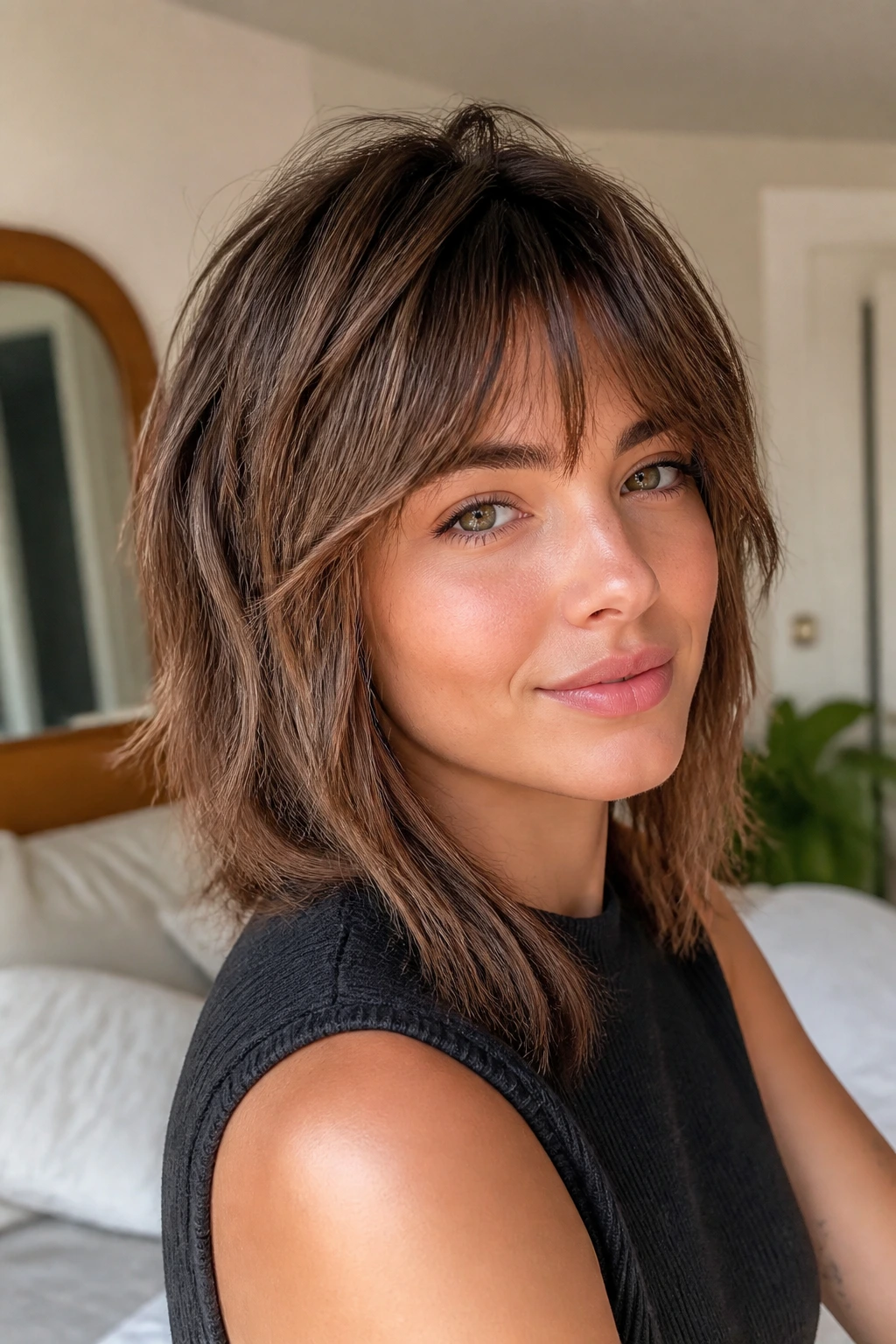
This is the one that saves medium-length hair from looking flat on top and boxy at the bottom. A shaggy point cut uses shorter crown layers and soft, piecey ends so the shape feels loose without losing direction. It is a little undone, but not random. There is a clear structure under the mess.
The shorter crown layers lift the top half of the haircut, while the point cut at the perimeter stops the ends from feeling heavy. That pairing matters. If you only cut the crown, the bottom can still drag the whole style down. If you only soften the ends, the top can stay limp. Together, the cut gets movement from both directions.
This is a strong option for wavy hair and for people who air-dry a lot. A bit of sea salt spray, a quick scrunch, and the shape usually shows itself without much coaxing. It also works nicely with curtain bangs or a soft fringe, though the fringe should be tailored to the face rather than slapped on as an afterthought.
Straight hair can wear this too, but it needs more styling to show the texture. Otherwise, the layers can vanish into the length. That is the catch with a shag: it loves a little bend.
9. Internal Point Cut to Remove Bulk
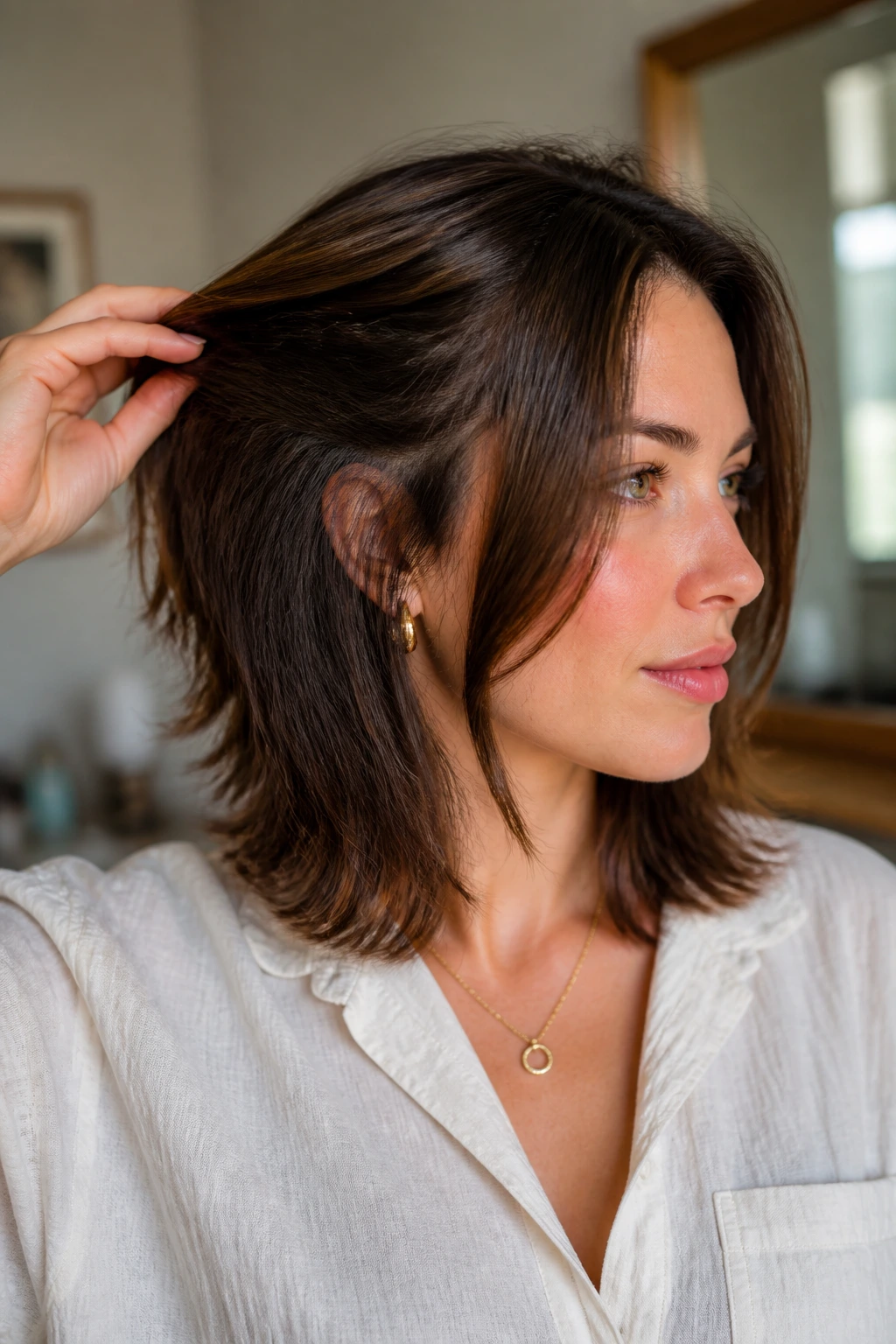
How do you lighten medium-length hair without changing the outline much? Internal point cutting. The stylist lifts sections inside the haircut and removes weight from underneath, leaving the outer shape looking full and smooth.
This is the haircut version of taking clutter out of a drawer while leaving the drawer front alone. From the outside, the shape still looks polished. Under the surface, though, the hair moves easier and sits closer to the head. That makes it useful for people who want less puff but do not want obvious layers.
What to watch for
- It works best on dense hair that looks solid even after a blowout.
- It should be done in controlled sections, not all over the head.
- It is a bad match for damaged ends that need blunt strength.
- It needs a stylist who can read weight, not just chase texture.
I like this one for shoulder-length styles that need to look neat at work but softer on weekends. A blow-dryer and a paddle brush can really show the difference, because the cut stops the underneath from fighting the surface. It is subtle. Maybe too subtle for some people. But if you want movement without a visible stair-step of layers, this is where to look.
10. U-Shaped Point Cut for Swing

A U shape gives medium-length hair a softer back view than a straight line ever will. The sides stay a touch shorter, the back rounds down gently, and point cutting along the ends keeps the whole shape from feeling blunt or static.
That curve matters when you wear your hair half up or twisted back. A straight hemline can look abrupt in those styles. A U shape falls more naturally, and the point cut edges stop it from forming a hard shelf at the bottom. You get swing when the hair moves, which is half the charm.
This is a nice fit for wavy hair, especially if the wave pattern gets heavier near the ends. The curve in the cut helps the hair fold inward instead of kicking out awkwardly at the shoulders. On thick hair, the U shape can also make the haircut feel less blocky.
If you like ponytails, this shape is easier on the eye too. Loose pieces fall in a softer way, and the back of the cut still looks intentional when you let it down. That matters more than people admit. A haircut that only looks good the moment it is styled is a weak haircut.
11. V-Shaped Point Cut for a Little Drama

A V-shaped point cut is not only for long hair. On medium-length hair, it creates a sharper drop at the center back while the sides stay shorter, which gives the haircut a more dramatic outline without pushing it into true long-hair territory.
The point cutting softens the tail of the V so it does not look thin or ragged. That is the part people often miss. The shape itself brings the drama, but the ends still need to feel soft enough to move. Without that finish, the V can turn into a pointy little spike that feels dated fast.
This style works well on thicker straight hair and on some wavy textures that like a little structure. The V gives the illusion of length in the back, while the sides keep the cut wearable. If you wear your hair over one shoulder a lot, the shape shows up nicely.
Fine hair can wear a V too, but the angle has to stay gentle. Too steep and the ends look sparse. Too shallow and you lose the effect. There is a narrow lane here, and that is why a V cut works best with a stylist who is paying attention to density instead of copying a photo blindly.
12. Razor-Enhanced Point Cut With Fringed Ends

A razor is not a shortcut. It is a different tool, and on medium-length hair it can create a softer, fringed finish than scissors alone. Used well, it gives the ends a slightly broken edge that feels airy and modern without turning the haircut into a mess.
This version is best for healthy hair that can handle a bit of blade work. Wavy hair, fine-to-medium hair, and softer textured hair usually take it well. The razor can help the ends collapse in a gentler way, which is useful if the haircut tends to flip or stack too hard at the bottom.
But there is a catch. Damaged hair does not love razor work. Neither does hair that already frizzes at the ends. Once the cuticle is rough, the razor can make the problem louder. That is why the skill of the stylist matters so much here. A steady hand and a sharp blade make a huge difference.
If you want this finish, say so clearly. Ask for fringed ends with controlled softness, not a heavy shred. That keeps the haircut from sliding into the “I cut my own bangs in bad lighting” zone, which nobody wants.
13. Point Cut With Curtain Bangs

Curtain bangs and a medium-length point cut are a smart pair because they both rely on softness. The bangs frame the face, and the point cut keeps the ends from looking too square underneath. Together, the haircut feels open instead of heavy.
How to keep the fringe from fighting the rest of the cut
The bangs should blend into the front layers, not sit on top of them like a separate idea. Ask for the shortest pieces to hit around the cheekbone or just below, then let them taper into the rest of the hair. The ends can be point cut lightly so they do not look blunt when the bangs split in the middle.
- Keep the center of the fringe a touch shorter than the sides.
- Let the side pieces travel into the jawline.
- Soften the mid-length ends so the face frame and the perimeter feel connected.
- Style with a round brush or a quick bend from a flat iron, not a hard curl.
This style works especially well if you wear your hair loose most days. It gives shape without needing a lot of product. And if the bangs grow out, they usually slide into the haircut in a way that feels deliberate instead of awkward.
14. Low-Maintenance Point Cut for Grown-Out Layers
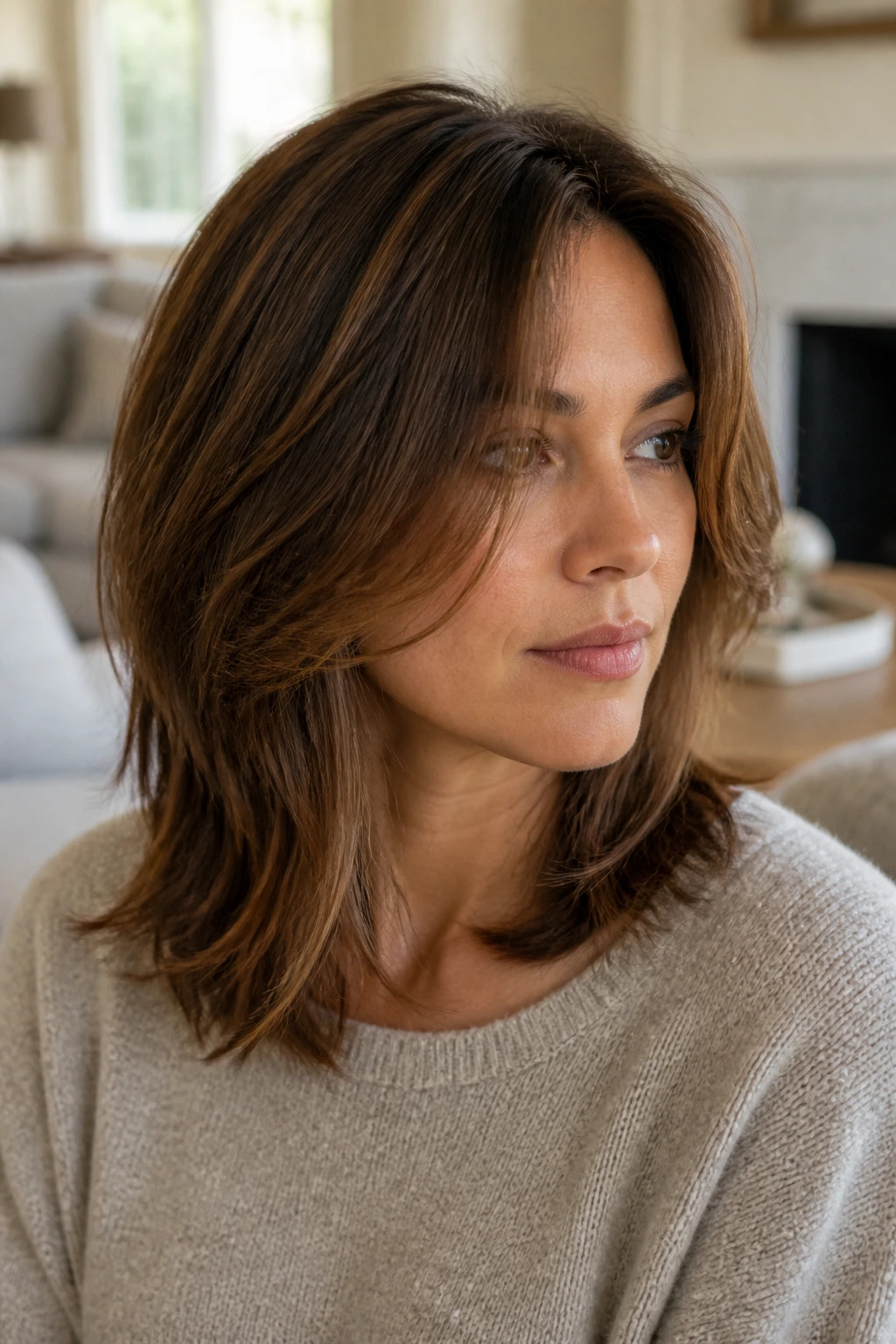
A haircut can still look good after it starts growing out. That is the whole point of a low-maintenance point cut. The layers are kept soft, the ends are softened even more, and the shape is designed to blur rather than shout as it gets longer between trims.
This version suits people who do not visit the salon every few weeks and do not want their medium-length hair to betray them by week five. The cleanest versions keep the layers long and the perimeter gently point cut. That way, the haircut keeps its form even when the shortest pieces start dropping.
The best part is the grow-out. A harsh layered cut can show its mistakes fast. A soft point cut usually fades more gracefully because the ends already have movement built in. That does not mean it never needs maintenance. It does. But the window is wider, which matters if you want life to be easier.
If your hair is thick, this can save you from the pyramidal grow-out that happens when the bottom gets too heavy. If your hair is fine, the same approach keeps the ends from disappearing too fast. Soft edges age better. Haircuts are not supposed to peak on day one and collapse by day twenty.
15. Point Cut With Invisible Layers

How do you get movement when you do not want obvious steps? Invisible layers. The stylist builds layers inside the haircut, then point cuts the ends so the silhouette stays smooth while the hair moves a little more freely.
This is one of the cleanest choices for medium-length hair that needs to look polished at work, in photos, or under a blazer collar. From the outside, the haircut can still read as one soft shape. Inside, the weight has been taken out where it matters. That means less puff, less drag, and fewer weird corners near the neck.
What to ask for at the salon
- Keep the perimeter soft but not jagged.
- Put the layers inside the haircut, not on the surface.
- Remove bulk where the hair feels thickest, usually around the mid-lengths.
- Leave enough density at the ends so the style still looks full.
This cut is a favorite of mine for straight and slightly wavy hair that needs movement without looking “layered” in the obvious sense. It is calm, tidy, and easy to style. And if you like a middle part, it tends to behave nicely on both sides, which is more useful than any flashy shape.
Final Thoughts
Point cutting is not about making hair messy. It is about controlling where the softness lands. On medium-length hair, that control matters more than people think, because the length is short enough to show every line and long enough to show every mistake.
The best version for you depends on what your hair already does when nobody is looking. Thick hair usually wants bulk removed. Fine hair wants lightness without gaps. Curly hair wants shape that respects the pattern. Straight hair often needs a softer edge so it does not sit there like a ruler.
Bring a few clear photos to the salon, but also say what the hair does at home. That part is usually more useful than the picture. A good point cut should make your medium-length haircut easier to wear, not harder to manage, and that is the standard I would stick to every time.
