



Medium-length hair gets blamed for being awkward, but the real problem is usually the cut. Long layered cuts for medium length hair can look polished and easy at the same time — when the layers are placed with some restraint, not sliced in just because someone wants “movement.”
The sweet spot is tricky. Too many short pieces near the crown and the sides puff out like a helmet. Too few layers and the hair hangs there, heavy and flat, with no swing when you turn your head. The best versions keep enough length at the perimeter to feel full, then introduce shape where it actually helps: around the cheekbones, the jaw, the collarbone, or just inside the ends.
Texture changes everything. Fine hair needs layers that don’t eat the ends alive. Thick hair needs weight removed without turning the whole shape fluffy. Wavy hair behaves best when the cut follows the bend instead of fighting it. That’s why the strongest long layered haircuts are not one-size-fits-all.
These 20 cuts cover the range I’d actually point people toward — soft, edgy, low-maintenance, face-framing, and a few that only look simple until you see how much work the right layer placement is doing. Start with the one that matches how your hair behaves when you leave the house, not how it looks after a perfect salon blowout.
1. Soft Face-Framing Layers That Start Below the Cheekbone
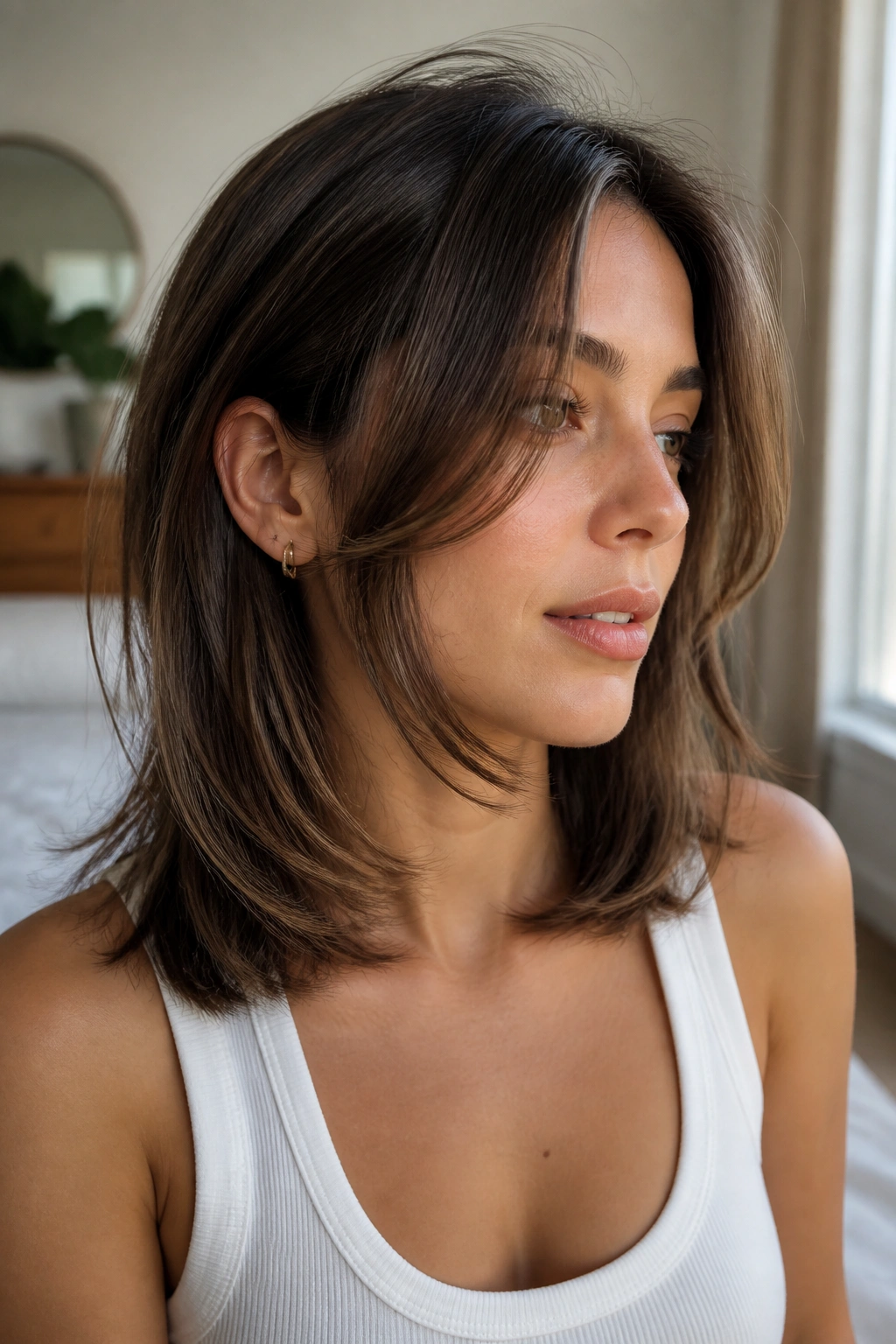
The cleanest way to add movement without losing density is to keep the first layer low. That’s the whole trick here. The shortest piece should skim somewhere between the mouth and the collarbone, so the front opens up without making the rest of the hair feel thin.
Why This Shape Works
A soft face frame pulls the eye forward and makes medium-length hair feel lighter around the face. It’s especially nice if your hair is straight or only slightly wavy, because the shape shows up even when you air-dry it. If the layer starts too high, though, the cut can go from soft to stringy fast.
Ask for the front pieces to be long enough to tuck behind the ear without leaving a hard edge. That detail matters more than people think. It keeps the cut flexible, which is what makes it wearable on a random Tuesday instead of only after styling.
- Best for round, square, and heart-shaped faces
- Good if you want movement without short bangs
- Works well with a middle part or a slight off-center part
- Style with a 1.25-inch round brush or a loose bend from a flat iron
My favorite version keeps the shortest layers just low enough to brush the cheekbone, not sit on top of it.
2. The Butterfly Cut With Lifted Crown Pieces

Want the top of your hair to look fuller without chopping off the length around your shoulders? The butterfly cut does that job better than almost anything else. It uses shorter crown layers to create lift, while the lower sections stay long enough to keep the overall shape soft.
What Makes It Different
The visual effect is a bit dramatic in the best way. When the hair is blown out, the top layers move away from the face and the bottom lengths stay smooth, so you get that airy, split-layer look without giving up your medium length. It can be subtle or obvious depending on how high the shortest layer starts.
I like this cut most on hair that falls flat at the roots but still has decent body through the ends. Fine hair can wear it, but the upper layers need to stay long enough that the top doesn’t collapse. Thick hair, on the other hand, usually loves it because the crown can get shape without the whole head turning bulky.
How To Style It
- Blow-dry with a round brush, lifting the crown first
- Flip the front layers away from the face
- Use a large barrel iron for soft bends, not tight curls
- Finish with a light mist of flexible hairspray so the layers keep their shape
A butterfly cut looks fussy when it’s overstyled. Leave a little softness in it. That’s where the good part is.
3. U-Shaped Long Layers That Keep The Ends Full
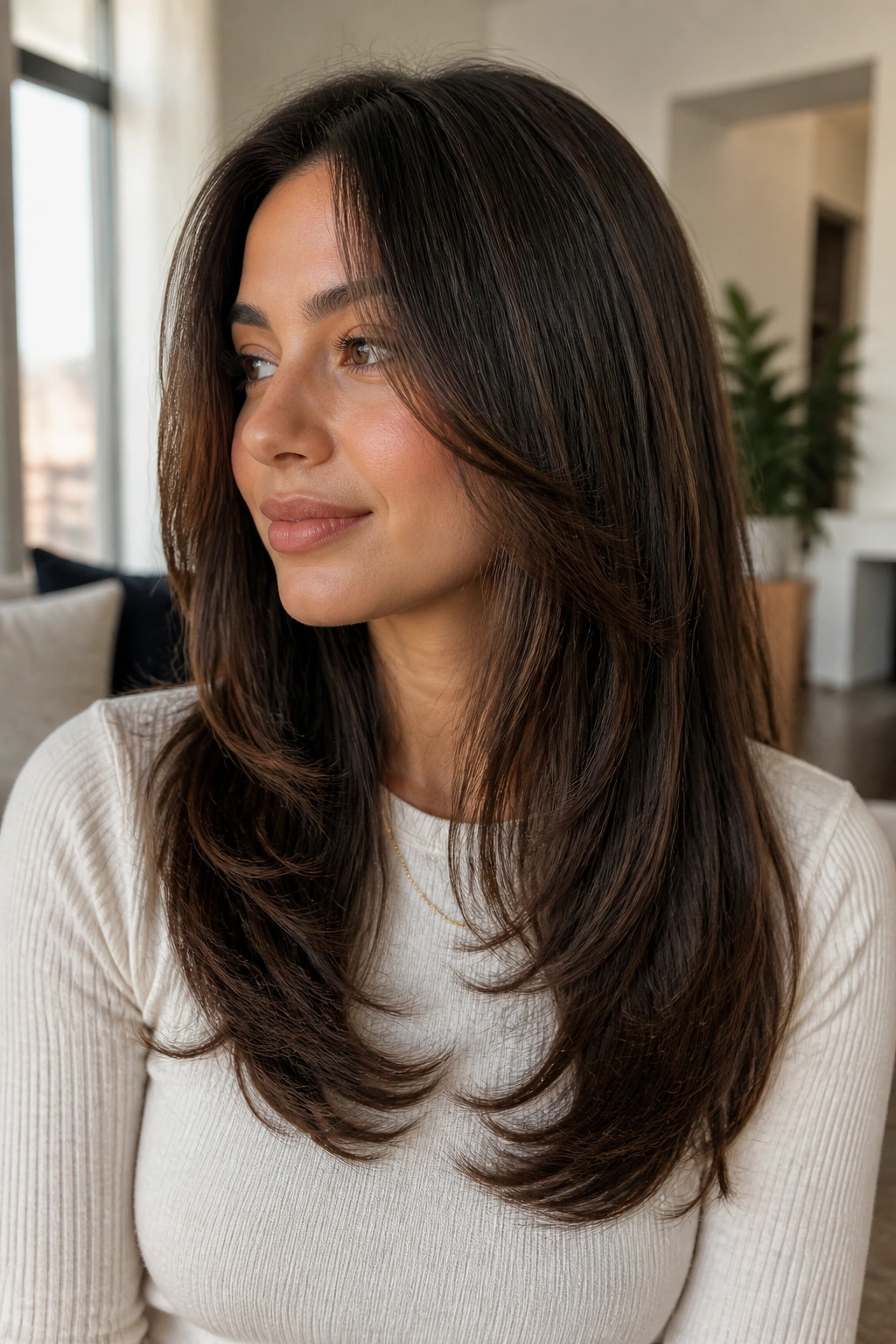
A U-shape is not boring. It’s smart. The back falls a little longer than the sides, which gives the haircut a gentle curve and keeps medium-length hair from looking boxy at the bottom.
This shape is especially useful if you like your hair to feel thick at the ends. A straight-across cut can make medium-length hair look blunt in a way that feels heavy. A U-shaped outline softens that edge without sacrificing the density people usually want to protect.
The best thing about this cut is how little work it needs. You can wear it smooth, bend the ends under with a brush, or add loose waves, and the shape still reads clearly. I’d choose it for someone who wants polish first and movement second. It does both, but it leans polished.
If your hair is very fine, keep the U shallow. Deep curves look pretty on paper and empty in real life.
4. V-Cut Layers With A Pointed Back
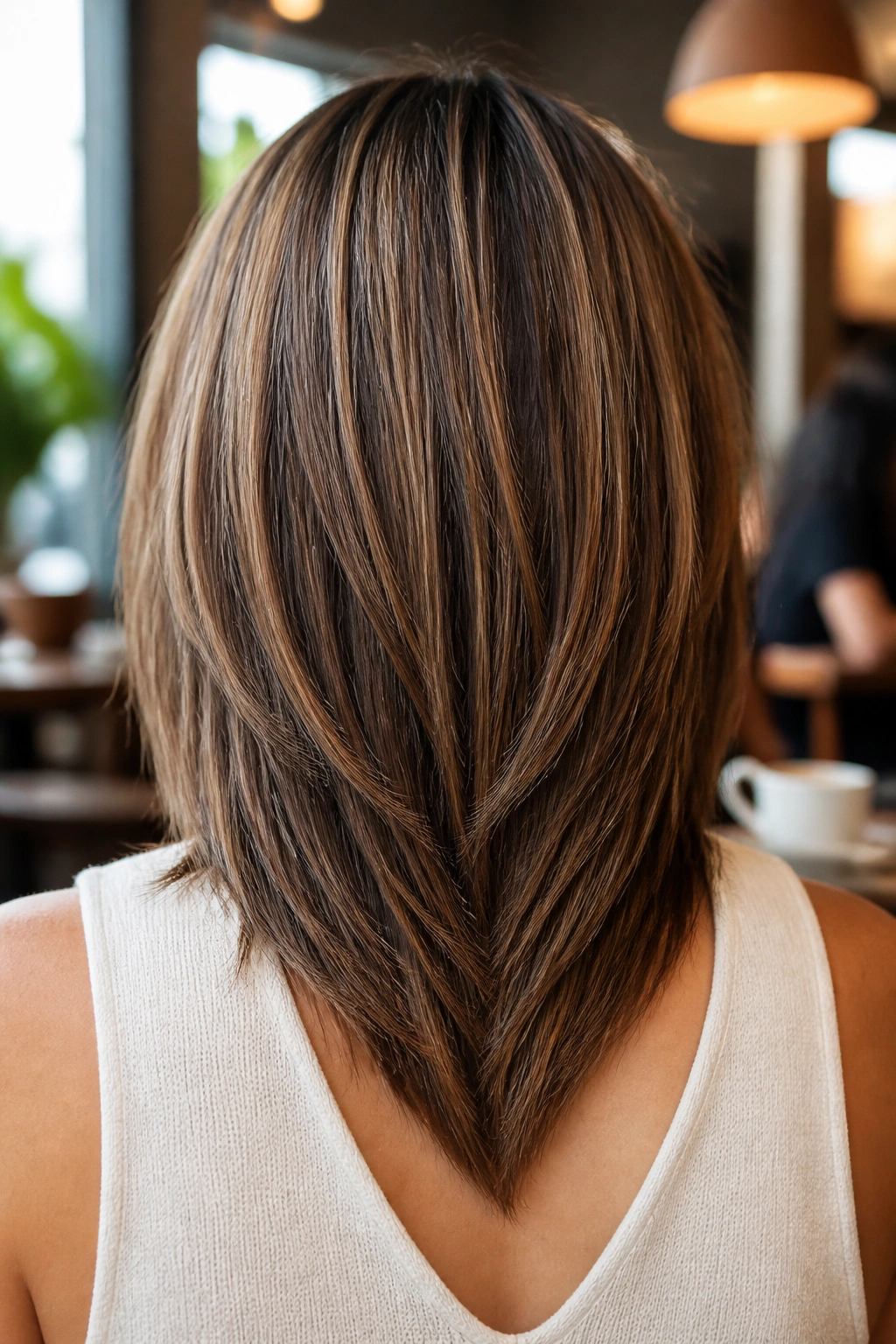
Picture shoulder-length hair that narrows gently toward the ends instead of hanging in one flat curtain. That’s the V-cut. The back sits a little longer, while the sides are pulled in enough to create a pointed silhouette.
What To Ask Your Stylist For
- Keep the longest point centered at the back
- Let the side layers fall just below the collarbone
- Blend the internal layers so the shape doesn’t look sketched on
- Avoid a sharp, extreme point unless your hair is thick enough to hold it
A V-shape gives medium-length hair a sense of direction. Without it, heavily layered cuts can spread outward and feel wide. With it, the hair falls inward a little more cleanly, which is useful if you want movement but not puff.
This shape looks best when the hair has some natural swing. Straight hair shows the angle clearly, and wavy hair softens it up. I’d skip a dramatic V if your hair is already prone to splitting at the ends or if you wear it in a tight ponytail most days. The point gets lost, and then you’re left with extra maintenance for no payoff.
5. Curtain Bangs With Long Blended Layers
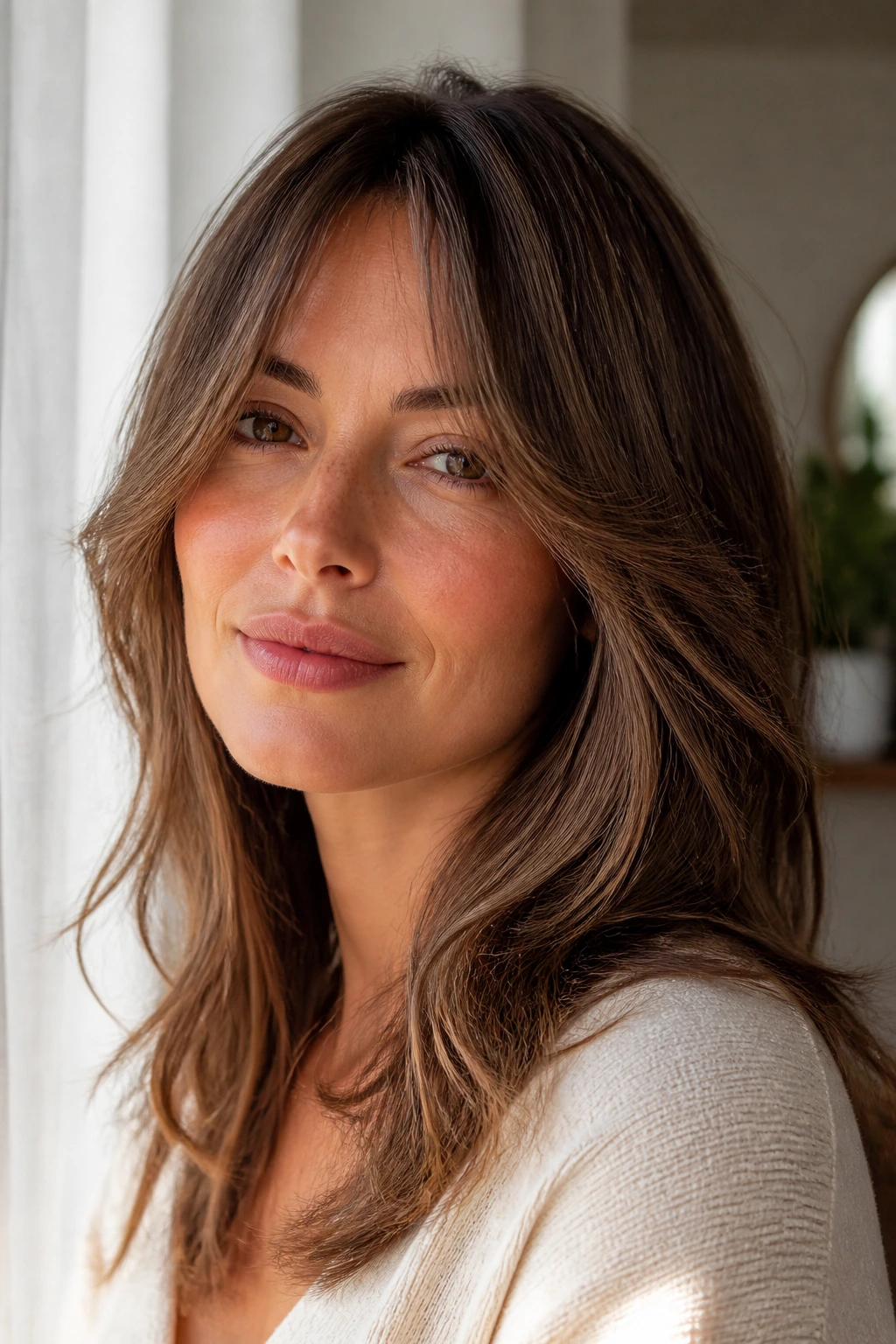
Curtain bangs can rescue medium-length hair when the front needs some life. But they only work when the rest of the cut is long enough to blend. Short layers and curtain bangs together can get busy fast.
The Part That Matters Most
The bangs should flow into the cheekbone pieces without looking like a separate haircut. That blend is what makes the style feel expensive instead of chopped up. I usually like this on hair that can hold a soft bend, because the fringe and layers both need a little movement to make sense.
The face frame can start a touch higher here than in the softer cuts above, but not much. A good curtain bang should split away from the center and graze the cheekbones before blending into longer layers around the jaw and shoulders. If the shortest piece sits too high, you lose that easy sweep and end up with bangs that demand too much styling.
This is one of the few layered cuts that can change the whole mood of medium-length hair without changing the length much at all. That’s the appeal. It feels like a haircut with attitude, but not a haircut that controls your calendar.
6. Invisible Layers For Soft Movement
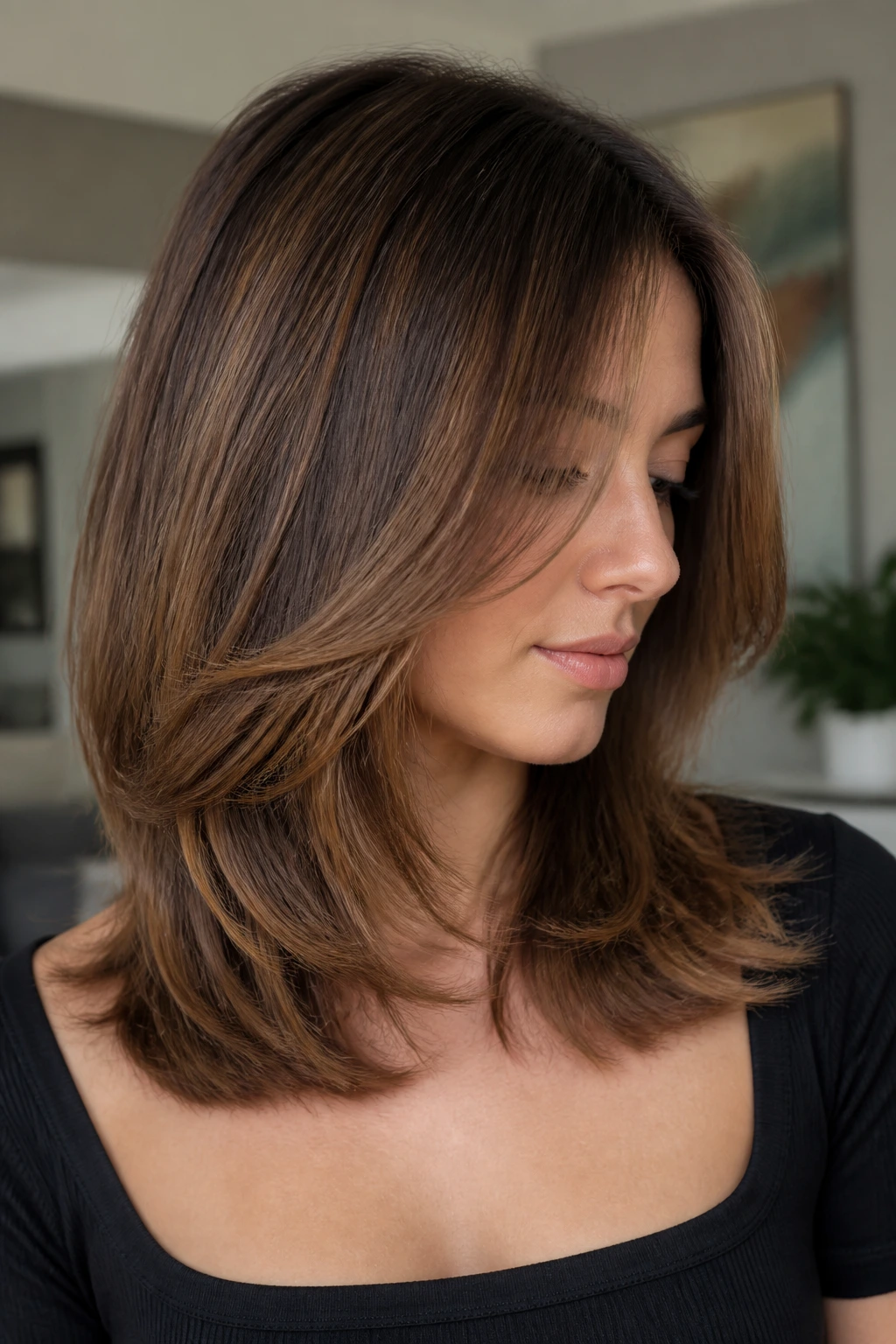
Invisible layers are the sleeper hit of medium-length haircuts. You do not see them from the outside the way you see obvious steps or choppy ends, but you feel them the moment the hair moves.
The idea is simple: remove weight inside the shape, not on the outside edge. That keeps the perimeter looking full while the inside has more swing. It’s a very good choice if you like clean lines but hate hair that sits there like a block.
This cut works especially well on straight or barely wavy hair, where texture doesn’t already create a lot of movement. On thicker hair, invisible layers stop the cut from swelling out at the bottom. On finer hair, they have to stay controlled — too much internal removal and the ends start to look thin.
- Great if you want a haircut that grows out quietly
- Good for people who wear their hair mostly down
- Useful when you need volume without an obvious layer line
- Best styled with a smoothing cream or a soft blowout
It’s a quiet haircut. That’s the point.
7. Feathered Layers With A Soft Blowout Finish
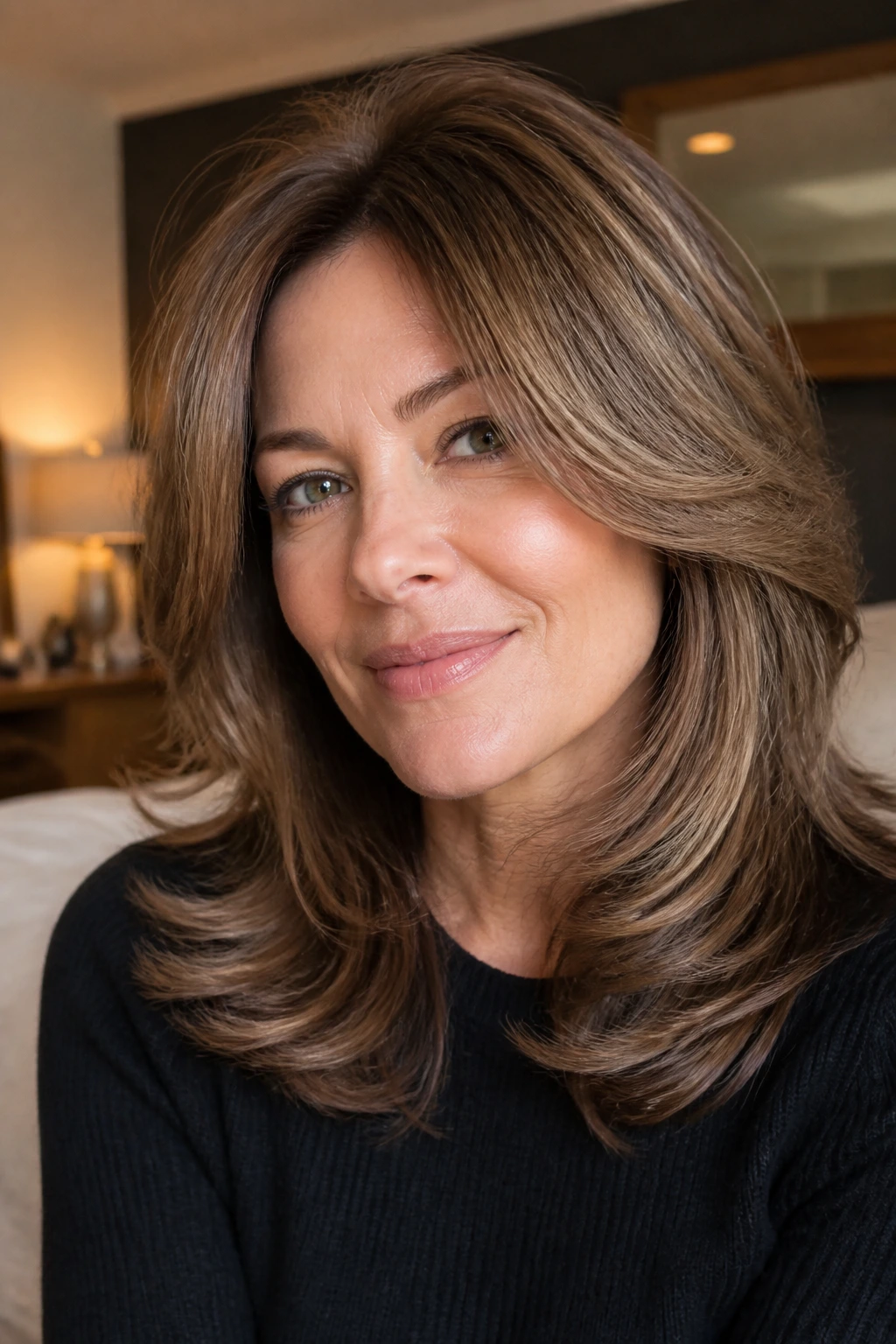
Feathered layers live or die by the finish. If the hair is blown dry with some direction, the cut looks light and lifted. If it’s left rough, it can lose the whole point and just look frayed. So yes, styling matters here.
This is the cut I think of when someone wants a soft, brushed-out shape that still has movement around the face and at the ends. The layers are tapered so they sweep backward instead of sticking out in hard little shelves. It’s a flattering look on medium hair because the length still feels present, even when the ends are shaped.
A medium round brush — about 1.5 inches for most people — helps a lot. Dry the roots first, then smooth the mid-lengths and flip the ends slightly under or away from the face. The result should look airy, not overworked.
This one has a little old-school glamour in it, and I mean that as a compliment. It looks best on hair that can take a bend.
8. Shag-Inspired Long Layers With Softer Edges
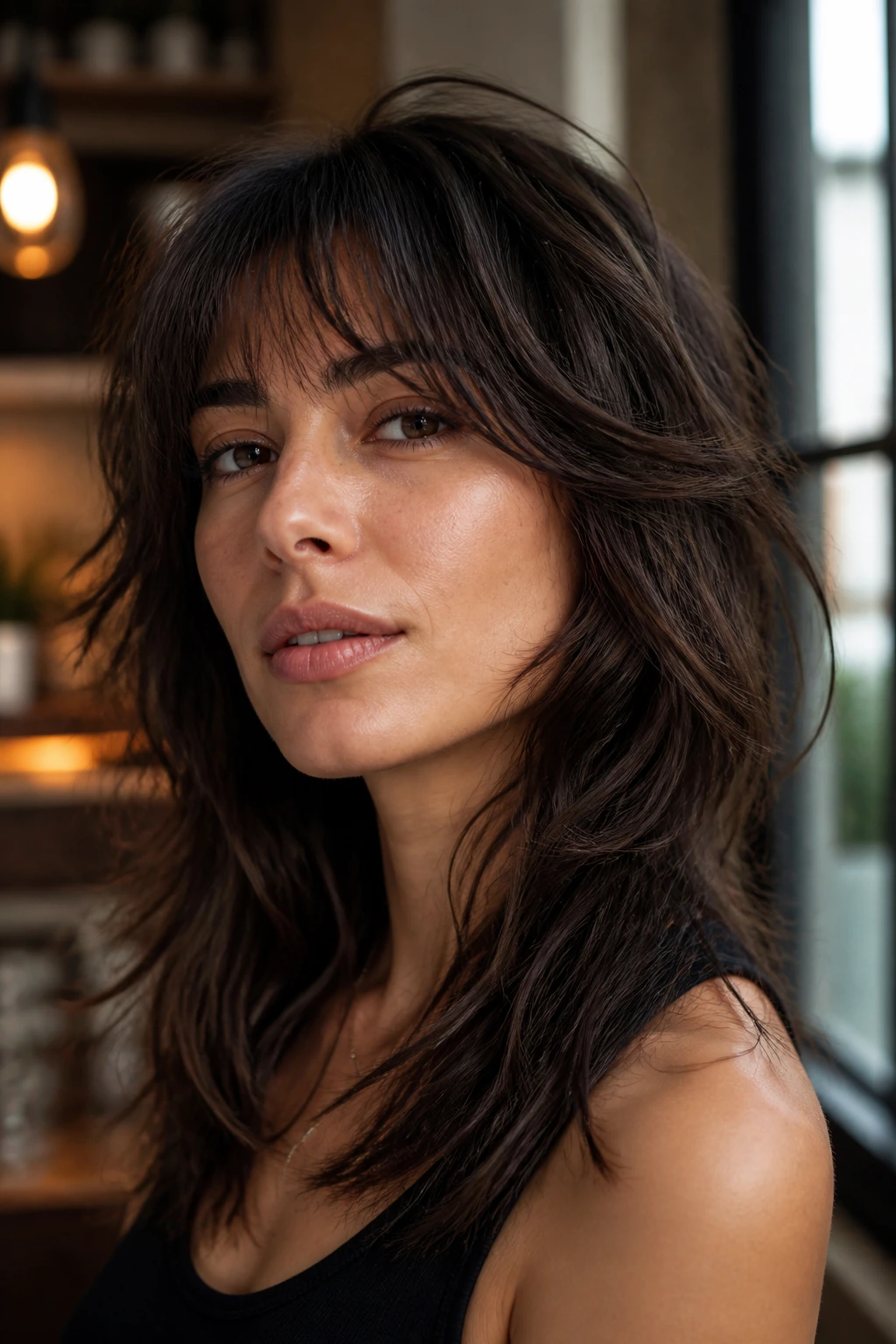
A shag is not the same thing as a messy haircut. A good shag-inspired cut has a plan. The layers are shorter around the crown, longer through the ends, and the whole thing should feel deliberately broken up rather than randomly thinned out.
The Science Behind The Shape
The reason shags work on medium-length hair is weight distribution. You’re taking some of the bulk off the top and inside, which gives the lower pieces room to move. That’s what creates that lived-in, piecey texture people keep trying to copy with too much spray.
This version needs softer edges than a true shag if you want it to suit everyday life. I’d keep the shortest layers long enough to avoid that over-razored, over-style look. The best shag-inspired medium cut still leaves the ends with some substance.
It suits straight to wavy hair best. Very curly hair can wear it, too, but the shape has to be adjusted so the layers don’t spring up too high. If you like air-drying, this is one of the more forgiving cuts on the list. It gets better when it’s a little imperfect.
9. Razored Ends For An Airy Finish

Razored layers can make medium-length hair feel lighter in a way scissors sometimes can’t. The ends move almost like ribbon when the cut is done well. That said, a razor is not a magic wand. Used badly, it chews up the ends and makes them look dry.
This style works best on hair that’s naturally straight or has a loose bend. The razor softens the edge and breaks up the line, which is why the cut feels airy. I would not ask for this if your hair is already fragile, super porous, or frizzes the second the humidity shifts. Then the ends can look too wispy.
The shape should still have structure underneath. You want movement, not damage disguised as texture. That’s a big difference, and salons sometimes blur it. If you like the effect, ask for razor-softened ends with long internal layers, not a hacked-up finish.
This cut pairs well with a little shine cream on the ends. Keep it light. Heavy product kills the movement.
10. The Layered Lob With Longer Front Pieces

A layered lob is one of the easiest medium-length styles to wear because it keeps the outline modern and the layers subtle. The front pieces are a touch longer, which makes the hair fall forward in a flattering way without feeling overdesigned.
Why It Stays So Popular
The lob is useful because it’s hard to mess up. That sounds boring, but I mean it as praise. If your hair grows fast, the shape still looks intentional after several weeks. If you style it loosely, the front pieces still frame the face. If you want to tuck it behind one ear, it still works.
A good layered lob should brush the collarbone or land just above it. The longest bits in front can be a little longer than the back, which creates the feeling of movement without turning the cut into a full-on angled bob. That’s where a lot of people go too far.
- Ask for soft layering, not heavy stair-stepping
- Keep the front long enough to pull into a low clip
- Works with straight, wavy, or brushed-out texture
- Looks especially good with a side part when you want more shape
It’s the kind of haircut that behaves.
11. Cheekbone Layers That Lift The Face
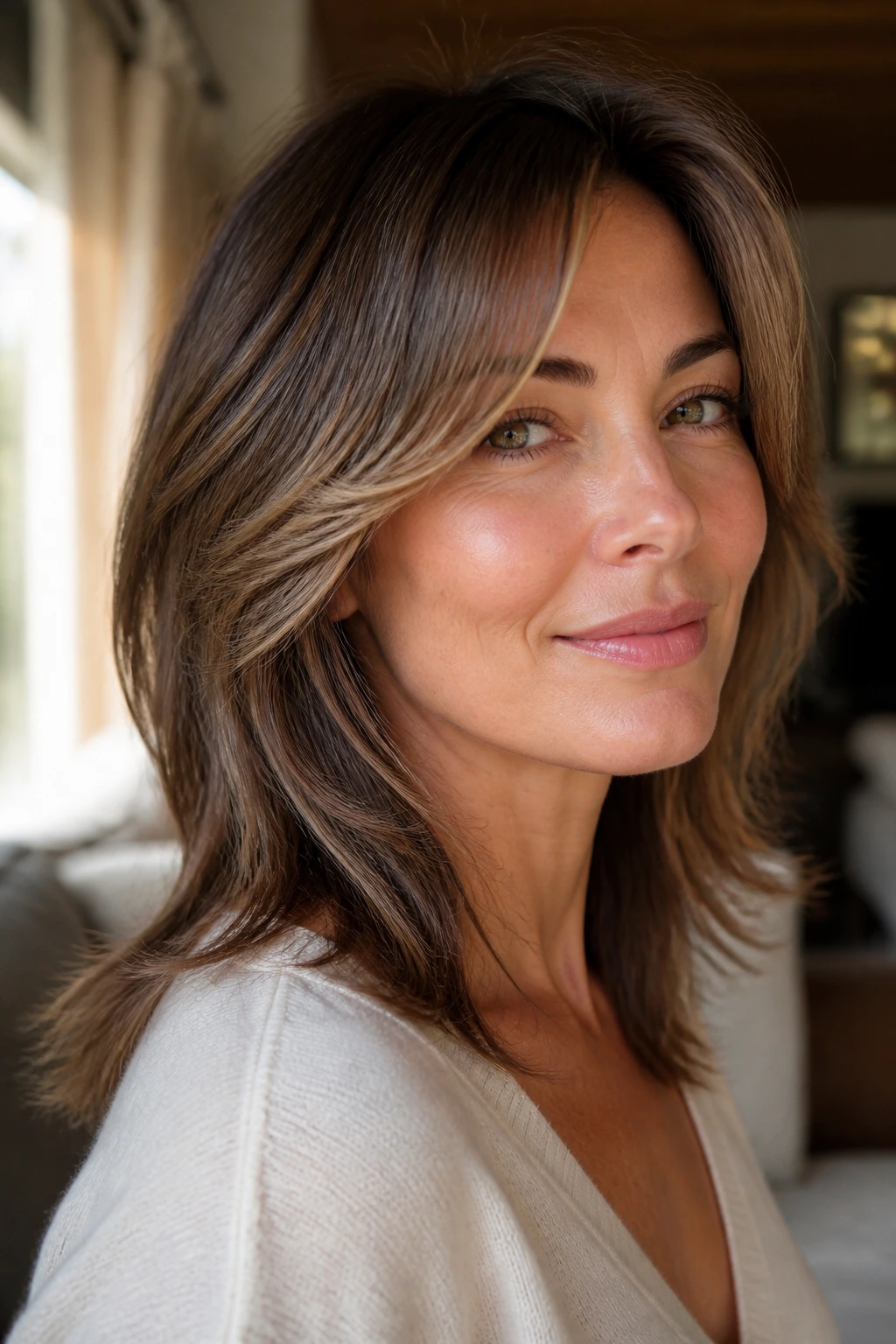
Why do some layered cuts make the whole face look brighter? Usually because the shortest piece lands in the right place. Cheekbone layers are built to do that. They curve around the face right where the structure is strongest.
Where The Shortest Piece Should Land
The sweet spot is around the outer cheekbone, not the temple and not the jawline. That placement gives a gentle lift without creating a hard frame. If you’ve ever had layers that made your face look wider, they probably started too high or too close to the jaw.
I like this cut on medium hair that needs a little contouring. It’s subtle. The layers don’t shout. They just make the face frame bend in a place that feels flattering and easy to live with.
This shape can be worn with straight hair, but it shines when there’s a slight wave or a bend through the front. The curve shows up, and the haircut starts to feel intentional rather than accidental. The only thing to watch is over-layering the back. Keep the emphasis at the front, or the balance gets weird fast.
12. Long Layers That Follow Natural Waves
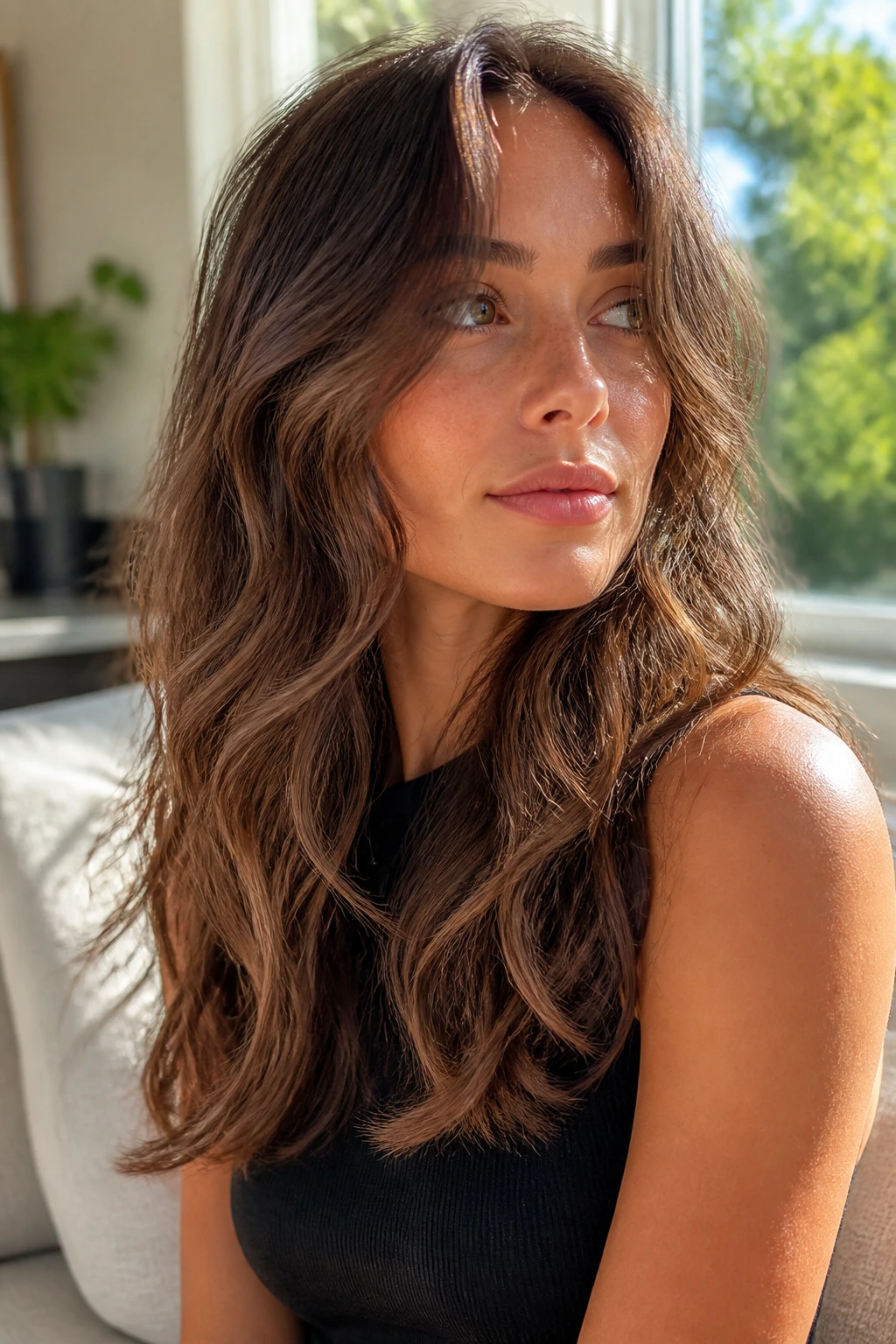
Wavy hair hates being overcut. There, I said it. If the layers are too short or too high, the wave pattern can spring out in odd places and leave the outline looking puffy instead of defined.
This is where long layers work best. The goal is not to fight the bend. It’s to leave enough length that the waves stack nicely and the ends still feel full. A skilled cut on wavy medium-length hair often looks better after it dries naturally than after a big blowout, which is a nice little reversal of expectations.
I prefer layers that are mapped to how the hair falls when it’s dry, not yanked up wet and cut to a guess. That alone can change everything. If your hair bends in an S-shape, the layers should support that motion instead of interrupting it.
A light curl cream and a squeeze-dry with a microfiber towel are often enough. Too much fuss ruins the texture. Too much touching ruins it too.
13. Blunt Perimeter With Hidden Layers
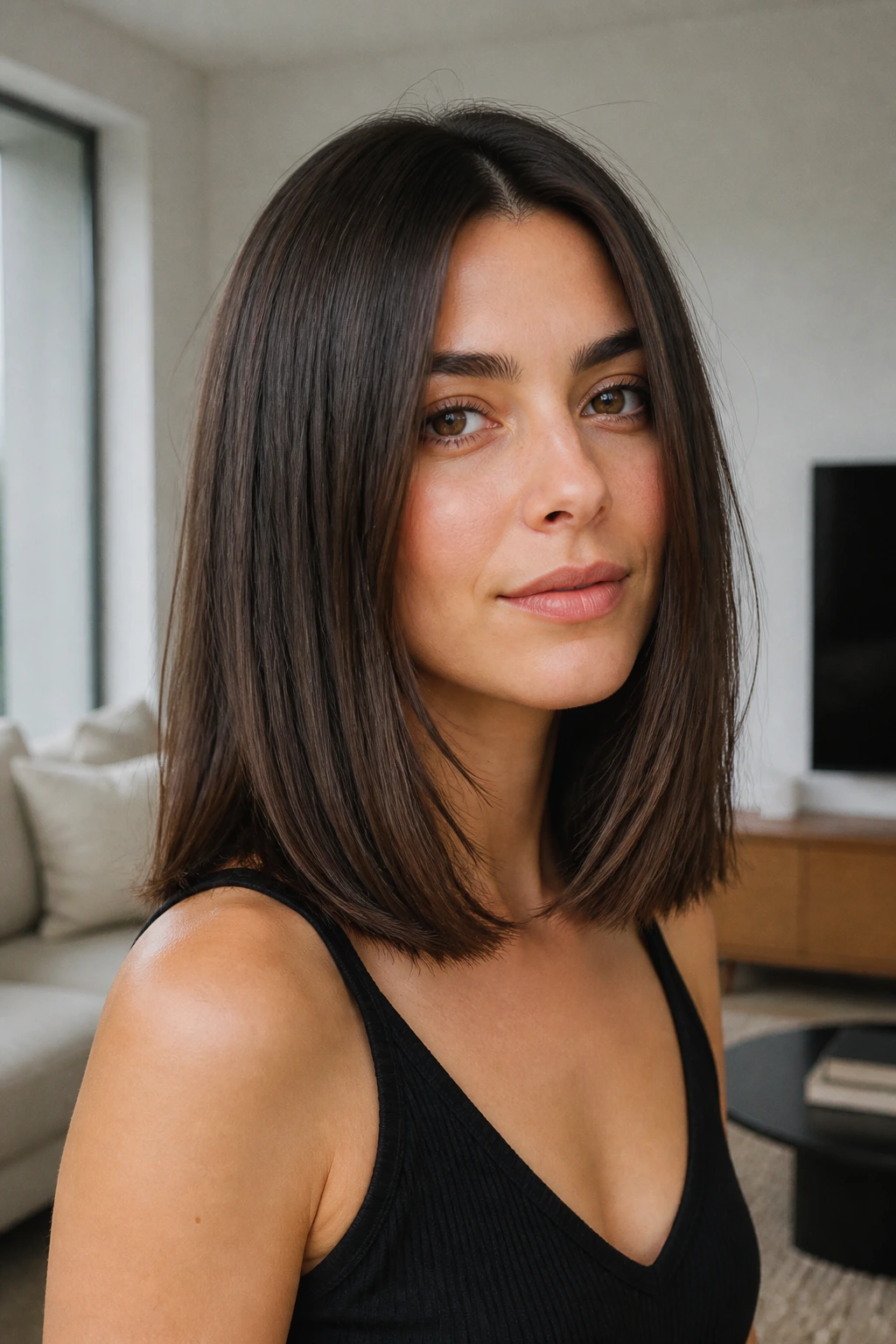
Not every layered cut needs to look airy from the outside. Some of the best medium-length cuts keep a blunt edge and hide the layers inside the shape. That gives you movement without losing the visual weight at the bottom.
This is a smart choice if you like hair that still looks full when it’s straight. The perimeter stays clean, so the cut doesn’t drift into fluff. Inside the shape, the layers remove some heaviness and help the hair swing more easily around the shoulders.
Who This Cut Suits
- People with medium to thick hair who want the ends to look solid
- Straight-haired readers who hate obvious stepping
- Anyone growing out a shorter layered cut
- People who want easy styling but not a flat silhouette
It’s not a dramatic haircut. That’s why it works. You get the practical side of layers, but the outside still reads polished and dense. If you’ve ever wished your hair would move more without looking sliced up, this is a strong answer.
14. Wolf Cut Lite With Softer Edges

You do not need a full wolf cut to get edge. A softer version can bring the same rough-luxe feel to medium-length hair without crossing into mullet territory. That’s the version I usually trust more for everyday wear.
What Makes It Wearable
The top gets texture, the middle gets movement, and the ends stay long enough to anchor the whole thing. A true wolf cut can be a lot on shoulder-length hair if the shortest layers sit too high. This gentler version keeps the shape looser and more balanced.
I’d call this the best pick for someone who likes a bit of mess in their styling — not chaos, just a little unrest. Air-dried waves, a diffuser, or a rough blow-dry all work. The cut does not need perfect symmetry to look good, which is part of the appeal.
The one thing to avoid is thinning the bottom too much. Keep the ends from disappearing. Once they go wispy, the whole style starts to look like a grown-out mistake instead of a planned cut.
15. C-Shape Layers That Curve Around The Face
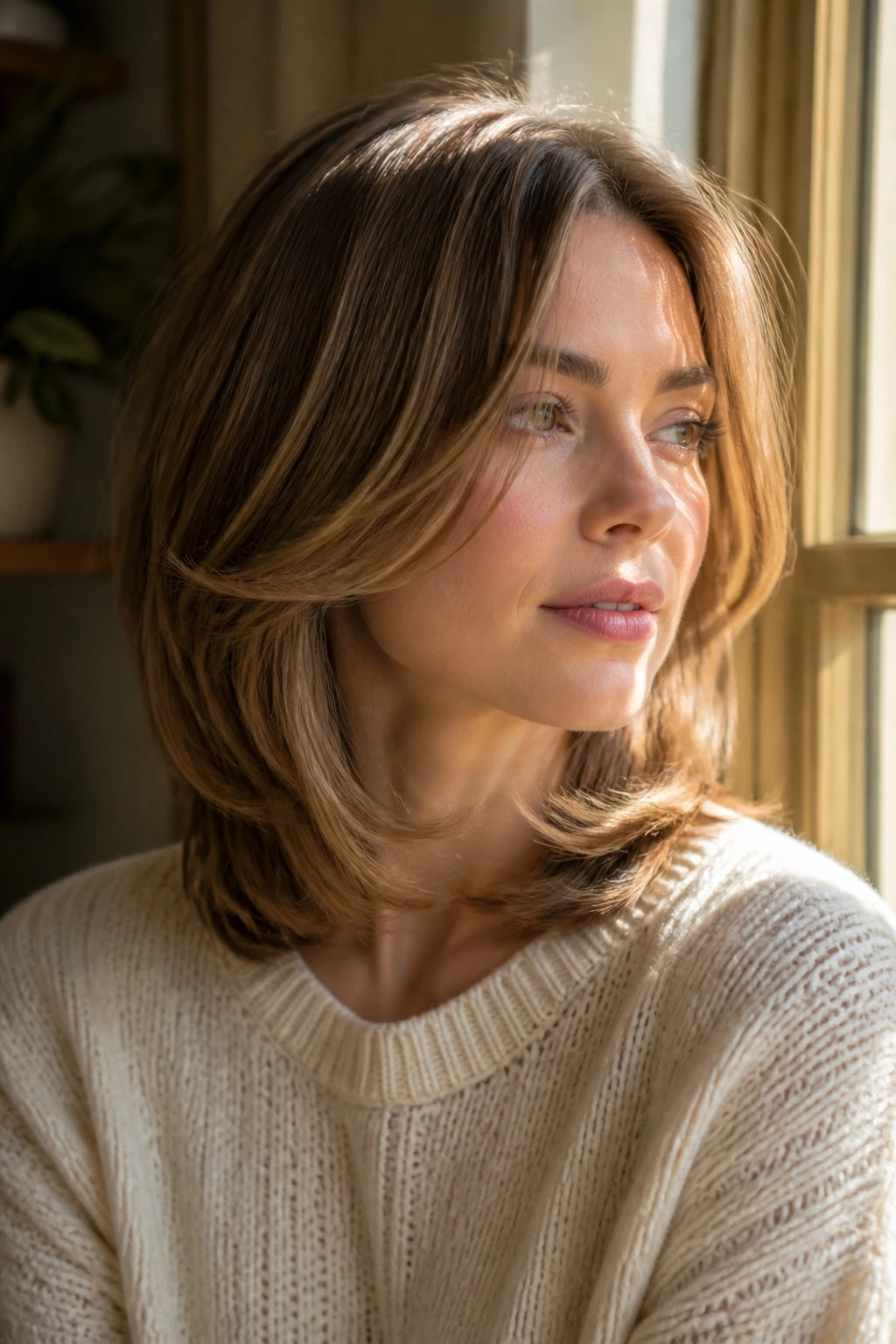
A C-shape cut is one of those shapes that looks simple until you realize how much is being done by the curve. The hair sweeps inward at the cheeks, then opens again near the collarbone, creating a soft frame that flatters medium-length hair fast.
This is a lovely cut for anyone who wants softness without a full fringe. The curve around the face can ease stronger features, soften a wide forehead, or keep straight hair from hanging dead around the jaw. It’s one of the more forgiving silhouettes on the list.
The key is the arc. If the front pieces are too blunt, the shape loses its charm. If they’re too short, the curve turns sharp. I like this best when the side sections are long enough to tuck or sweep back on a bad hair day and still fall into place later.
It’s understated in a good way. Not invisible, not loud. Just balanced.
16. Long Layers For Thick Hair That Remove Bulk
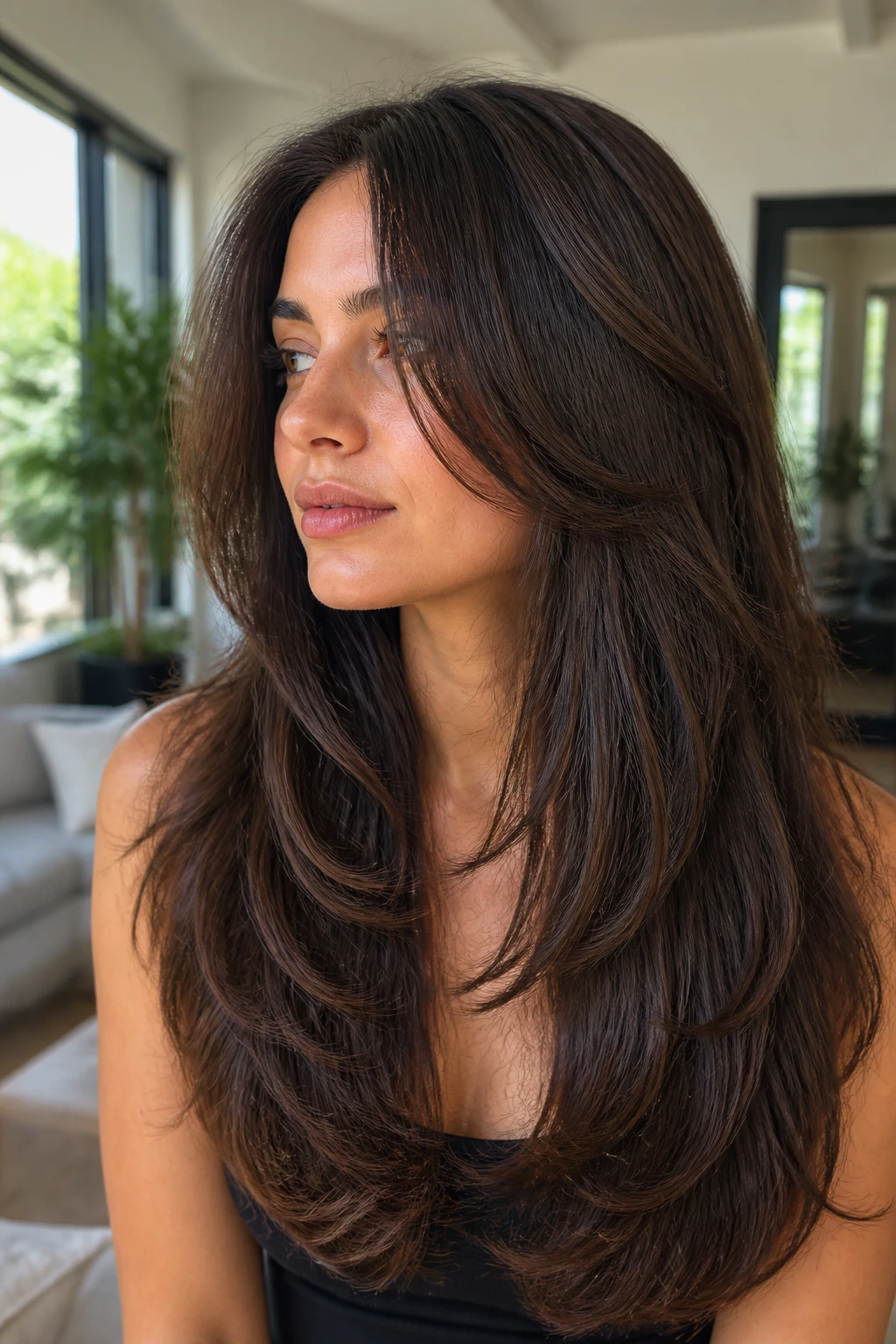
Thick hair needs structure, not just thinning. That’s where a lot of bad layered cuts go off the rails. Someone removes too much weight near the ends, and suddenly the hair balloons at the sides while the bottom looks see-through.
A smarter thick-hair cut uses long layers to take out bulk in controlled spots. The weight shifts, but the outline stays strong. That means the hair can move without turning fuzzy or wide. If you have a lot of hair, this is often the difference between “managed” and “exploded.”
Ask For These Details
- Long internal layers, not short choppy ones
- Weight removal around the middle, not just the ends
- A perimeter that still feels solid
- Enough length left at the bottom to keep the silhouette calm
This cut is one of the easiest to style if it’s done well. Thick hair holds shape, so a blow-dry or a loose wave tends to last. The downside is obvious: if the layers are placed badly, the haircut looks puffy for weeks. Choose the stylist carefully. Seriously.
17. Long Layers For Fine Hair That Keep The Ends Dense
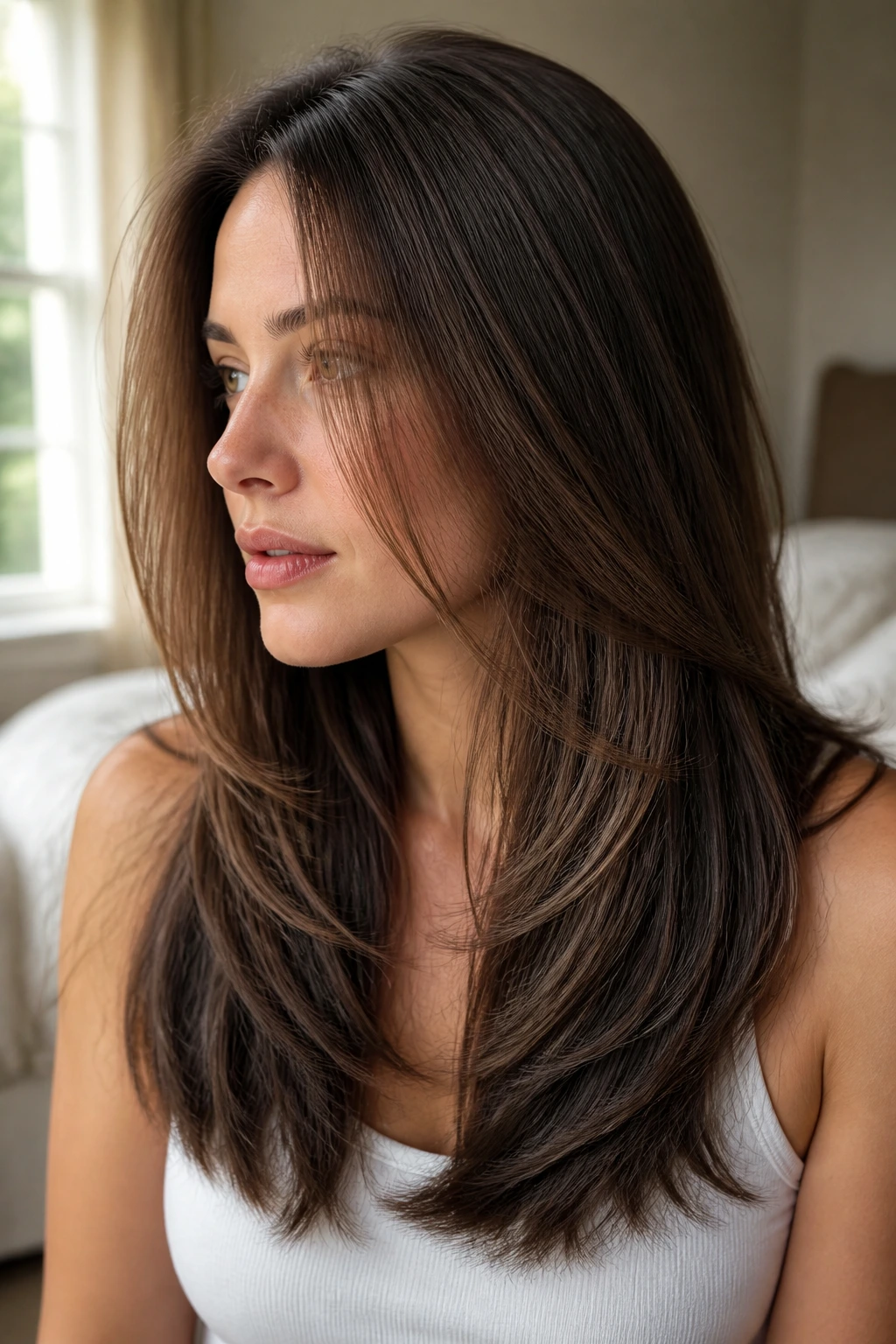
Can fine hair wear layers without going limp? Yes — if the layers stay long and the ends keep enough weight. That’s the whole game.
Short layers on fine medium-length hair can create the illusion of movement for about five minutes, then the ends start to look thin and unfinished. Long layers are safer because they give shape without eating the density people with fine hair usually need to protect. The perimeter matters here. A bluntish base with gentle layers often looks better than a heavily stepped cut.
I’d avoid aggressive thinning shears. They can make fine hair lie flatter than before, and the ends can end up looking fuzzy. A light layer around the face and a few longer internal layers through the back usually do more than enough.
A root-lift spray at the crown and a round-brush finish can help, but the cut has to carry the load first. If it doesn’t, styling only hides the problem for a while.
18. Side-Swept Fringe With Long Layers

A side-swept fringe still has a job to do. It softens the forehead, shifts the focus, and makes medium-length layers feel a little more romantic without turning the cut into a full bang situation.
What To Watch For
The fringe should blend into the front layer, not sit on top of it like an afterthought. That blend is what keeps the haircut smooth when you wear it behind one ear or pin it back. If the fringe is too short, it gets dated fast. If it’s too long, it vanishes.
This is one of my favorite options for people who want a change but do not want to commit to maintenance every four weeks. A side-swept fringe grows out more gracefully than a blunt one, and the long layers around it can be styled straight, curved, or waved.
It’s also useful on medium hair that feels a little severe around the face. The diagonal line softens that edge. A small thing, maybe. But small things count when the cut sits around your face every day.
19. Collarbone Layers With Textured Ends
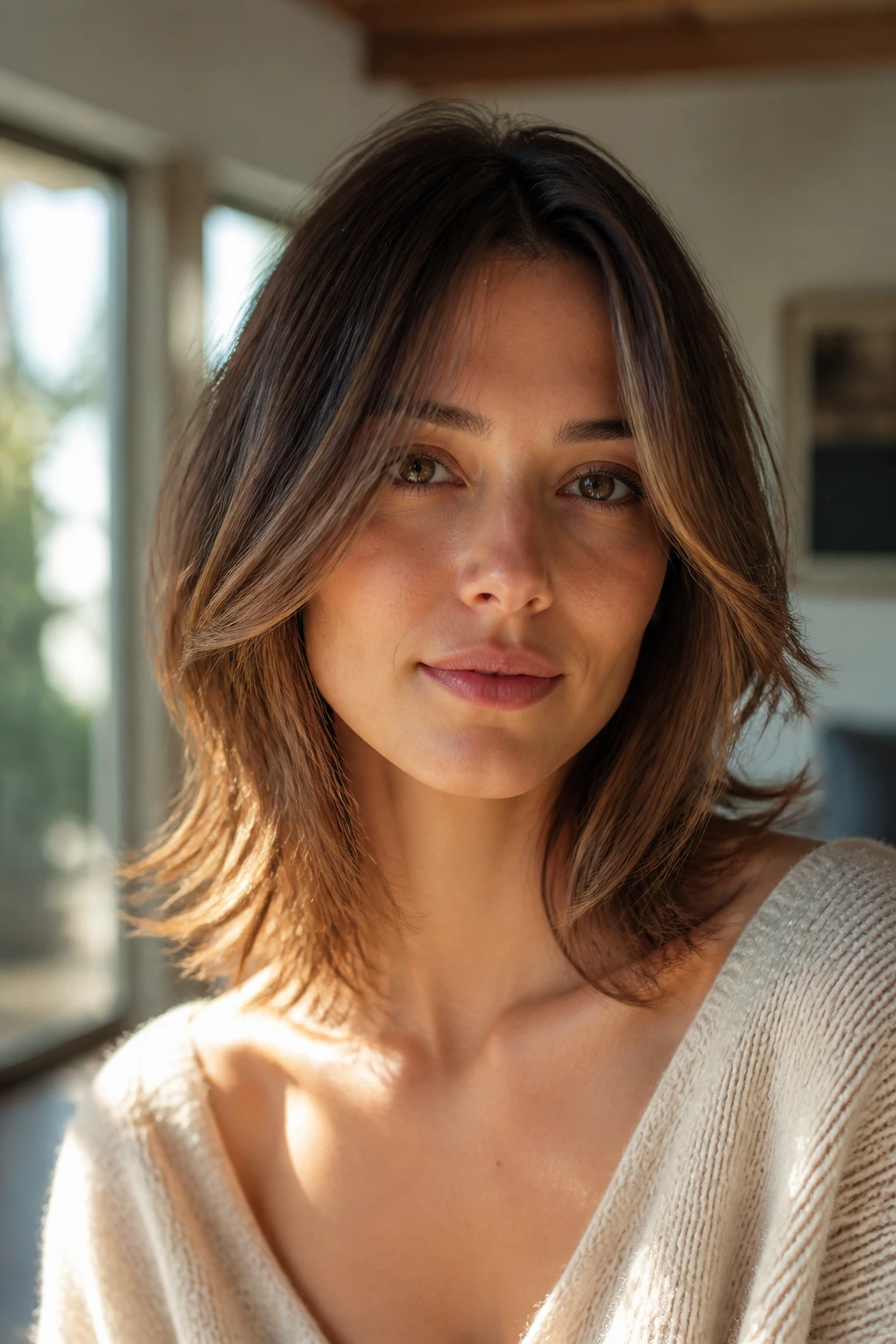
This cut is made for the in-between zone where hair brushes the collarbone and moves just enough when you walk. The layers are there, but they don’t steal the show. The texture stays at the ends, where it adds a little swing instead of a lot of drama.
It’s a good answer for anyone who wants medium-length hair to feel lighter without looking heavily cut. The texture at the bottom keeps the shape from feeling blocky, especially if your hair is one-length right now and you want a change that doesn’t scream for attention.
A rough dry works well here. So does a quick bend with a flat iron, just through the last 2 inches. You’re not chasing perfect curls. You’re giving the ends some life so they don’t sit flat against the shoulders.
- Best for low-fuss styling
- Good with air-drying or quick blow-drying
- Easy to wear tucked, clipped, or loose
- Looks clean even when it grows out a bit
This is a quietly useful haircut. I trust those.
20. Grown-Out Long Layers That Stay Easy

A good layered cut does not need to look freshly cut to look good. That’s why the grown-out version matters so much. The best low-maintenance medium-length layers keep their shape as they get longer, so you are not stuck chasing the haircut every few weeks.
The shortest pieces should stay long enough that they blend after a month or two, not fall apart. That usually means starting the layers lower than people expect — around the jaw or collarbone, depending on thickness and face shape. If the layers are placed well, they keep moving even as the cut softens.
This is the one I’d choose for someone who styles their hair differently from day to day. Air-dry one morning, blow it out the next, pull it back the day after. The haircut should still behave. That’s the point.
If you only remember one thing, make it this: ask where the shortest layer will sit when your hair is dry, not wet. That single detail saves people from more bad layered cuts than any trend name ever will.
