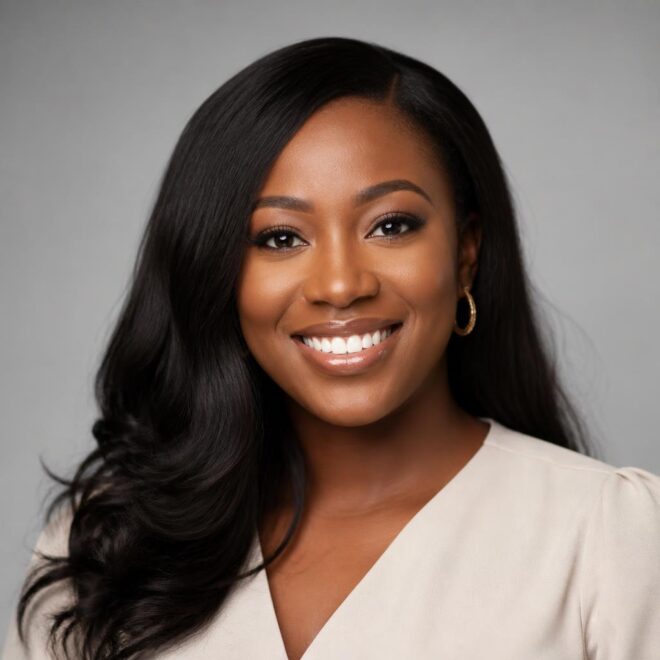


Long hair gets heavy fast. One minute it’s glossy and full of promise; the next, it hangs like it has somewhere better to be. A butterfly cut on long hair fixes that lazy shape by lifting the front and crown while leaving the overall length intact.
That balance is the whole appeal. The best butterfly cut long hairstyles make hair swing, not slump. You get shorter face-framing layers, longer layers underneath, and enough movement that the style looks finished even when you have only brushed it and gone.
The cut works because it plays a little trick on the eye. Shorter top layers create volume and shape around the face, while the longer bottom layers keep the length dramatic and soft. Blow it out and the pieces separate like wings. Wear it more casually and the shape still reads.
And yes, there’s a catch. If the shortest layers are cut too high, the whole thing can feel puffy at the sides and stringy at the ends. If the ends are thinned too much, long hair starts looking tired instead of airy. The good versions are controlled. The bad ones look like someone got enthusiastic with the scissors.
The 15 styles below stick to real-life wearability: polished, messy, pinned back, curly, straight, and a few in-between looks that keep long hair interesting without making it high-maintenance. Some are salon-fresh. Some are the kind of thing you can fake with a brush, a clip, and ten quiet minutes in the bathroom mirror.
1. Classic Butterfly Cut with Curtain Bangs

This is the version most people picture first, and for good reason. Curtain bangs and butterfly layers are natural partners because both pieces are built to open the face without taking away length. The result feels soft, not fussy.
Why It Works
The shortest front pieces usually sit somewhere between the cheekbone and the jaw, then melt into longer layers down the sides. That gives the hair a built-in frame, especially when you blow-dry the bangs away from the face. The long lengths stay in place, so you do not lose that sweeping, waist-grazing look.
The sweet spot is control without stiffness. If the bangs are too short, the whole cut starts shouting. If they’re too long, the butterfly shape gets lost.
- Ask for curtain bangs that can split down the middle and curve to each side.
- Keep the face-framing pieces soft enough to tuck behind the ear on lazy days.
- Blow-dry the bangs with a medium round brush, rolling away from the face for 10 to 15 seconds per side.
- Let the ends stay slightly rounded instead of pin-straight.
My favorite detail: ask your stylist to keep the shortest layer no higher than the cheekbone if you want movement without losing your length.
2. Soft Blowout Butterfly Layers
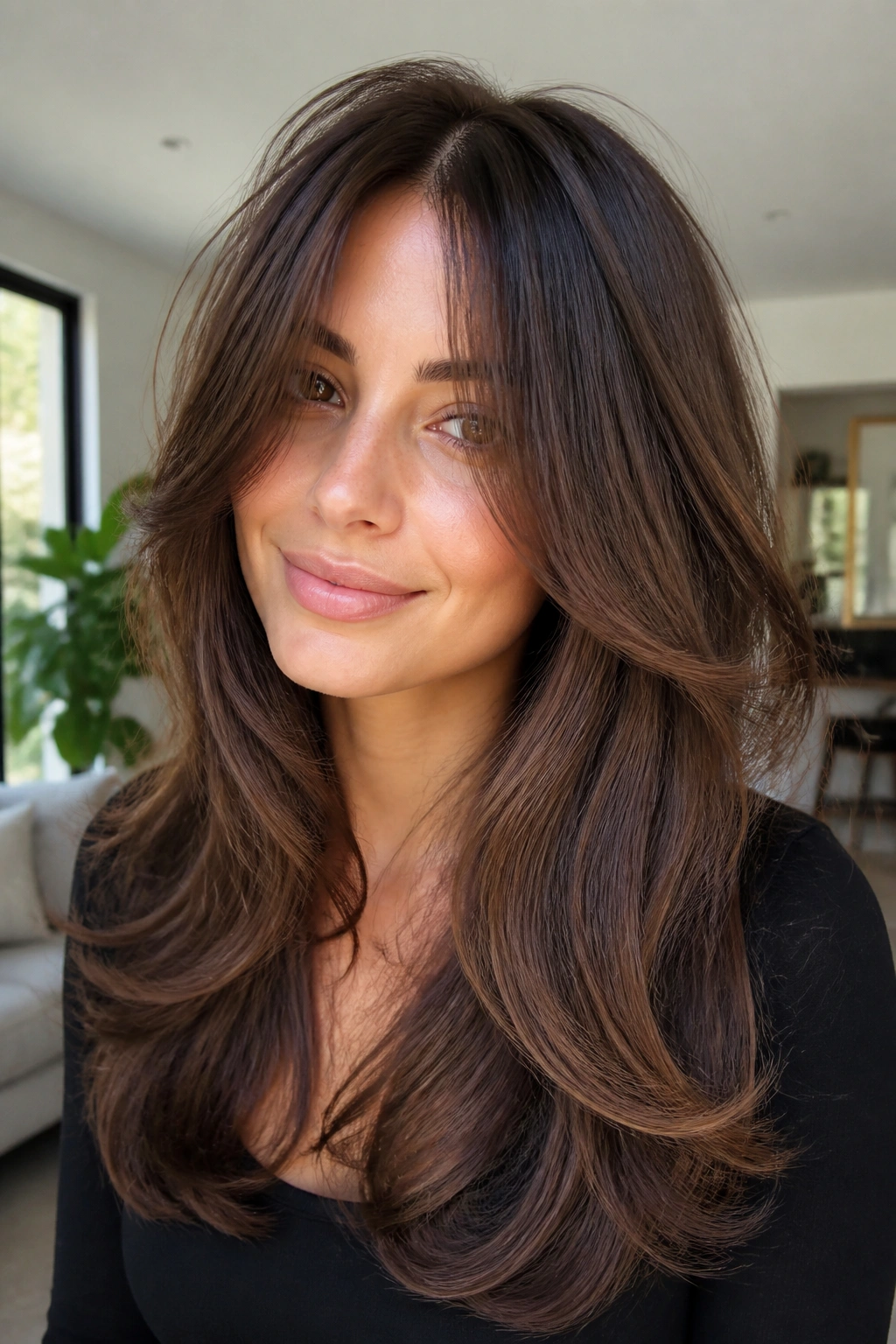
If you like hair that moves when you turn your head, this is the one. The soft blowout version is all about that lifted, brushed-out finish that makes long hair feel bouncy instead of flat. It is the most salon-like version of the butterfly cut, and it wears well even on day two.
The trick is in the direction of the blow-dry. You want lift at the roots and a gentle bend through the mid-lengths, not a stiff curl or a helmet shape. A round brush or blow-dry brush does the heavy lifting, but the layers have to be cut well first. If they’re bluntly stacked, the ends fight the shape.
I like this look on people who wear their hair down most of the time and want the cut to do the styling work. It also helps if your hair tends to fall flat at the crown, because the shorter top layers build a little air into the shape. Use a lightweight mousse at the roots, then work a heat protectant through the lengths before drying.
One sentence matters here: don’t over-roll the brush at the ends. A soft bend beats a hard flip every time.
3. Butterfly Cut with Loose Waves

You air-dry to about 70 percent, twist a few sections, and suddenly the haircut makes sense. Loose waves are one of the easiest ways to show off butterfly layers because the bend catches on each layer and gives the shape some rhythm. Straight hair can look tidy; waves make it feel alive.
What Makes It Look Good
The wave should start around the mid-lengths, not at the root. If the bend begins too high, the crown can turn fluffy and lose that clean butterfly outline. A 1-inch curling iron, wrapped away from the face for alternating sections, usually gives the right amount of bend without turning the style into a full glam curl set.
A salt spray can help, but keep it light. Heavy texturizing sprays can make long layers look dusty instead of soft. I’d rather see clean separation and touchable ends than a crunchy wave that feels like it came from a beach festival three days ago.
- Curl sections no wider than 1.5 inches.
- Leave the last 1 to 2 inches of each section out for a softer end.
- Scrunch with your hands after the hair cools.
- Break up the waves with a wide-tooth comb, not a brush.
The best part is how forgiving this version is. When the waves loosen, the haircut still holds its shape.
4. Sleek Straight Butterfly Cut
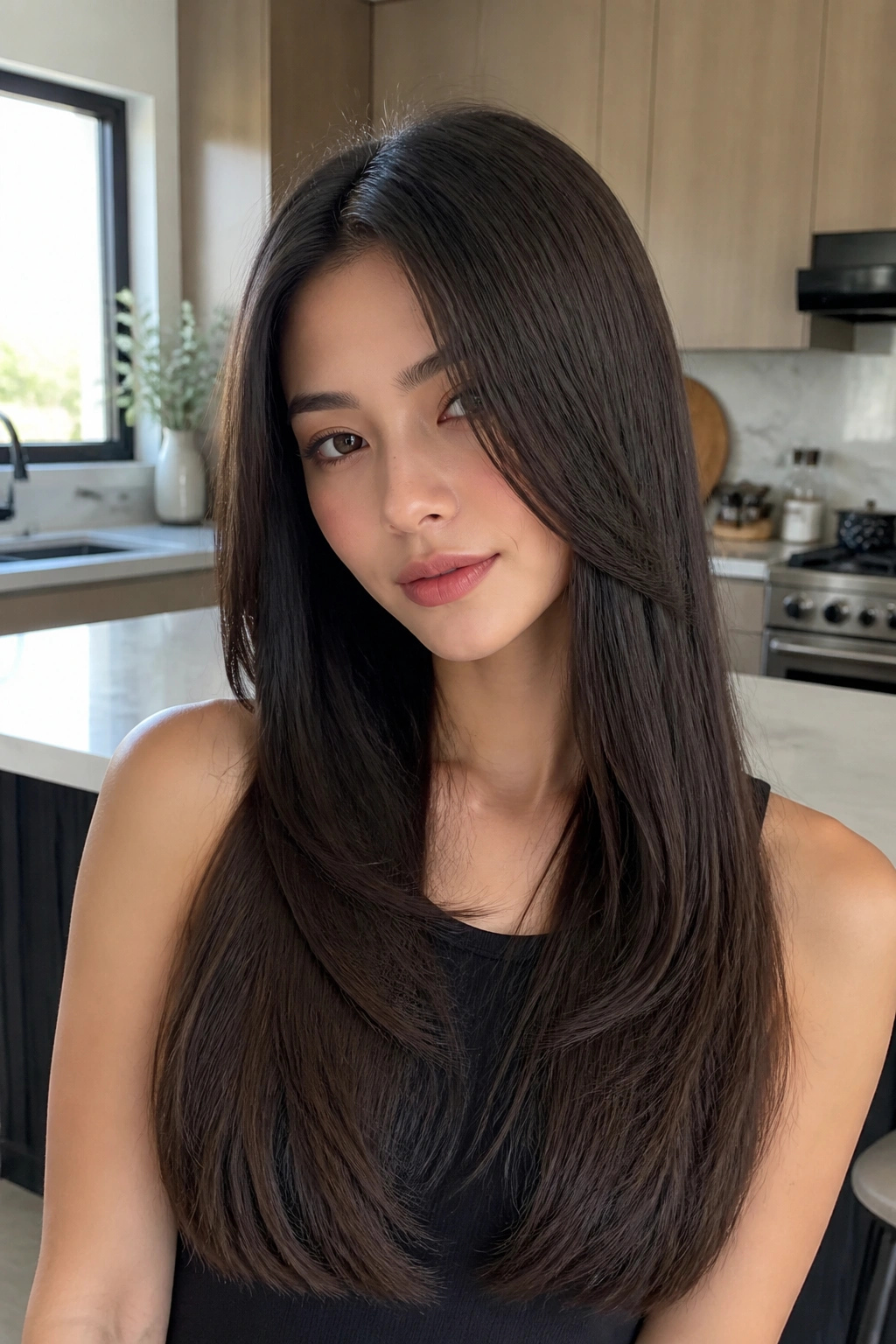
Can a butterfly cut still look sharp when you wear your hair straight? Absolutely. In fact, straight hair shows the architecture better than almost any other finish. Every layer line becomes visible, and that can be a good thing if the cut was done with care.
A sleek version depends on smooth, clean transitions. The front pieces should skim the face, not sit like separate slabs. The ends need enough density to look healthy, because straight long hair exposes every thin spot. That’s the part many people underestimate. A butterfly cut is not just a blowout haircut; it has to survive being worn flat too.
Use a heat protectant, then work in small sections with a flat iron set to medium heat. One pass is usually enough if the hair is already smoothed with a paddle brush. Finish with a tiny bend at the ends—just enough to keep the shape from looking severe. Pin-straight can feel unforgiving here.
How to Keep It Clean
- Keep the part precise, center or slightly off-center.
- Smooth the crown first so the top layers do not puff.
- Use a light shine serum only on the mid-lengths and ends.
- Skip heavy oils near the roots; they flatten the shape fast.
This is the version I reach for when long hair needs to look neat but not rigid.
5. Deep Side Part with Sweeping Front Layers
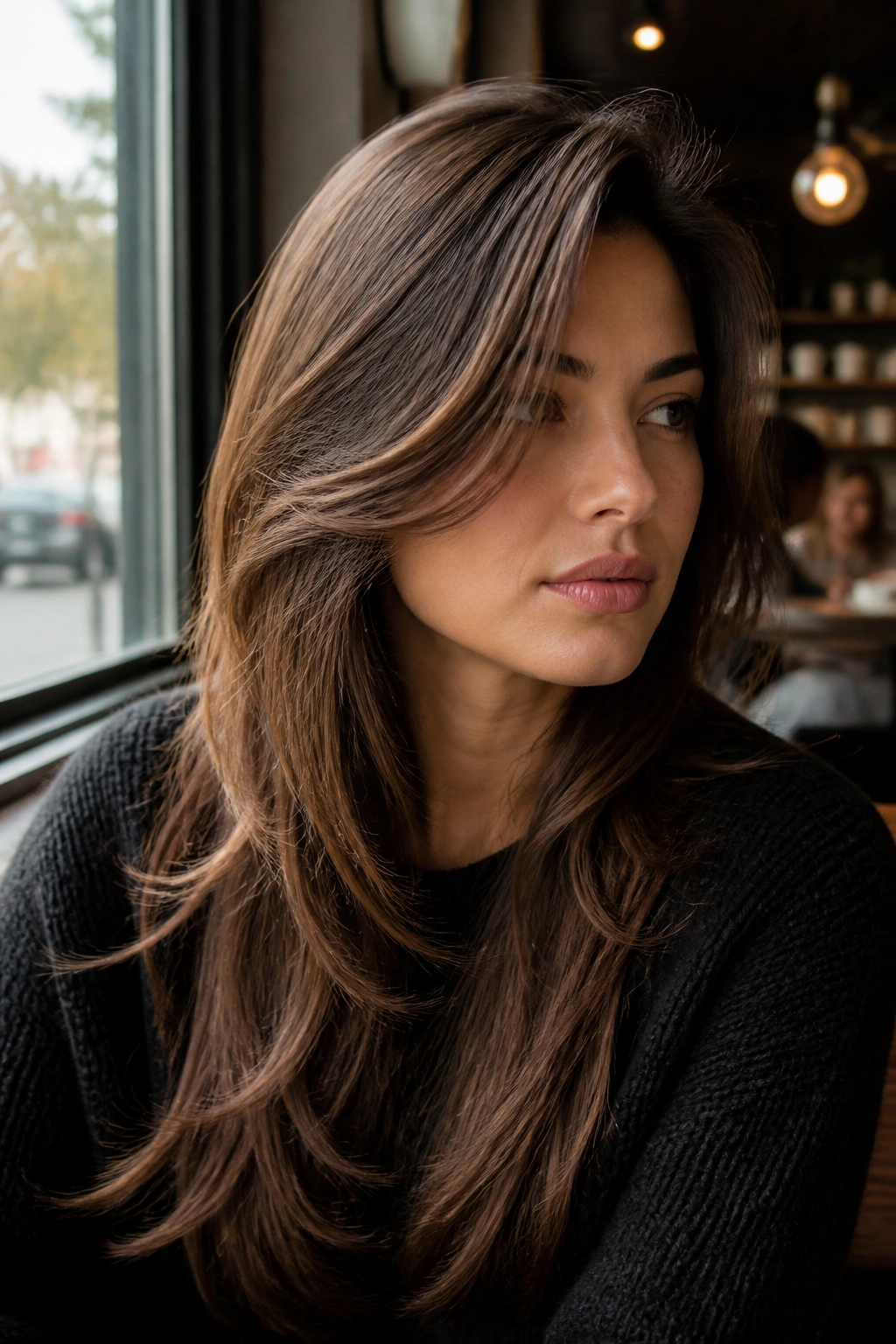
A center part is the default, but a deep side part gives the butterfly cut more drama. It changes where the eye lands first, and that matters when the haircut is built around face-framing movement. The whole style gets a little more sculptural.
This works especially well if you want to soften one side of the face or create more lift at the roots. The heavier side pulls the layers across the forehead, while the lighter side reveals cheekbone and jaw in a way that feels deliberate. It is not about hiding anything. It’s about shifting the balance.
I like this version on hair that grows a little flat around the temples. The side part gives that section some natural lift without teasing or a stack of products. Use a root spray at the crown, blow-dry the part in place, then direct the front layers away from the face so they curve instead of sticking out.
One good side part can rescue a cut that feels too safe. It also saves you from the “same hair every day” rut, which is boring fast.
6. Butterfly Cut with Bottleneck Bangs
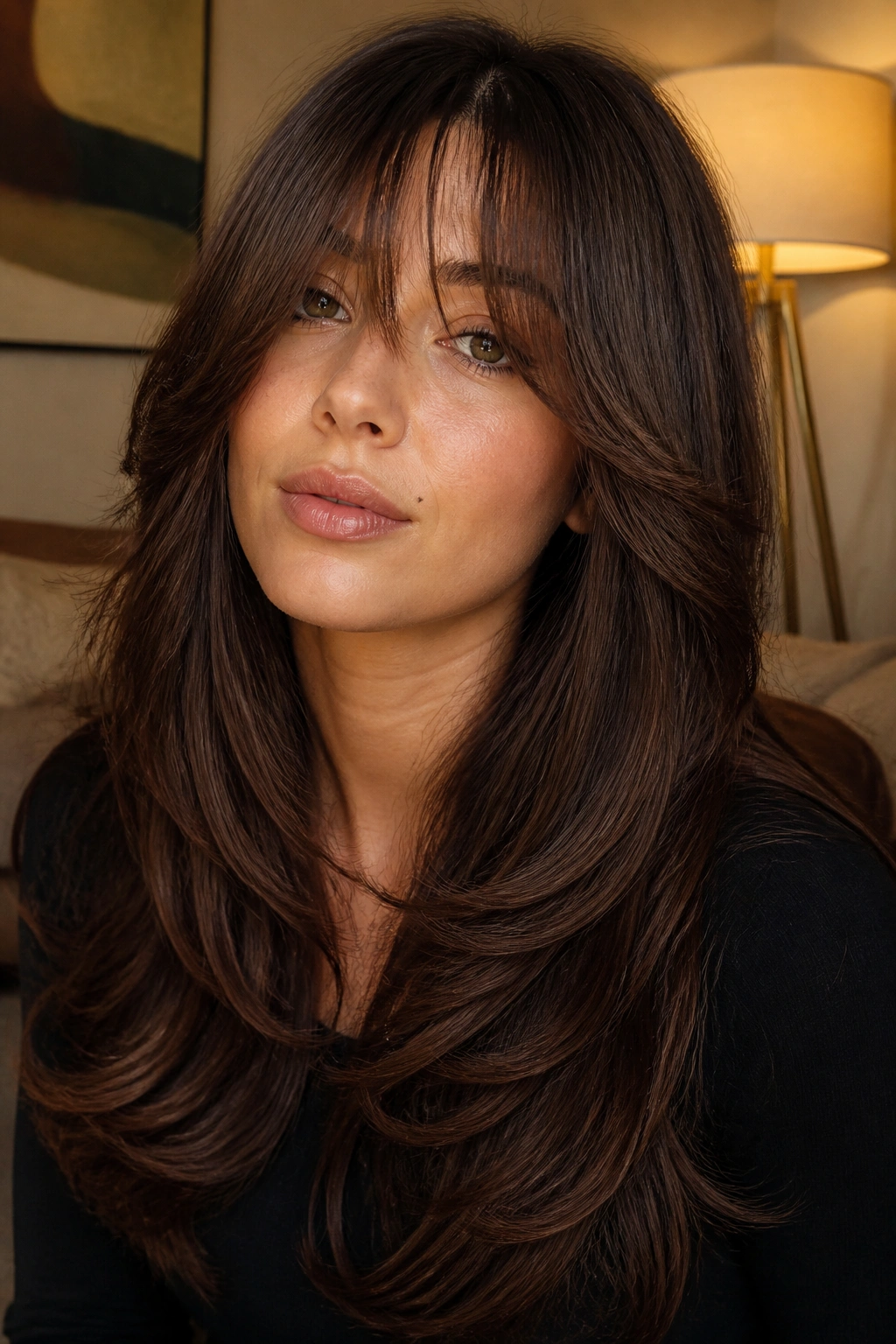
Bottleneck bangs are the slightly cooler cousin of curtain bangs. They’re narrower through the center, fuller near the temples, and they slide into the butterfly cut in a way that feels smooth rather than abrupt. If you hate the harsh line of straight-across bangs, this is the better lane.
The reason they work here is simple: they bridge the short front layers and the long lengths. The bangs are short enough to matter, but soft enough to grow out without a crisis. That grown-out phase matters more than people admit. Few things are as annoying as a fringe that looks awkward for six straight weeks.
This style does ask for some styling. Blow-dry the bangs with a small round brush or a vent brush, aiming the center forward and the outer edges outward. That gives them the narrow-to-wide shape that defines bottleneck bangs. If you let them air-dry on their own, they can separate in odd places and lose the clean taper.
A small side note: this version looks especially good when the rest of the hair has a gentle bend, not tight curls. The contrast keeps the bangs from disappearing into the layers.
7. Thick Hair Butterfly Cut with Internal Layers

If your hair feels like a blanket by noon, the wrong layers make it worse. Thick hair needs internal removal, not just visible face-framing pieces. That’s the part that changes the way the cut moves.
The goal is to reduce bulk inside the shape so the outside still looks full and polished. A stylist can take weight out through the mid-lengths while leaving the perimeter dense. That keeps the ends from looking frayed. It also stops the haircut from ballooning around the sides, which thick hair can do if the layers are all surface and no structure.
What to Ask For
- Internal layers through the crown and upper back, not aggressive thinning at the ends.
- Longer face-framing pieces that start around the cheekbone or jaw.
- A dense bottom line so the length still feels heavy in a good way.
- Sectioned blow-drying so the layers don’t collapse into each other.
I’m not a fan of razor-heavy thinning on thick hair unless the texture truly needs it. Too much removal can make the cut puffier in humidity and fuzzier at the edges. The better version feels lighter in your hands, but still looks expensive when it moves.
That “lighter but not sparse” balance is the whole game.
8. Fine Hair Butterfly Cut with Crown Lift
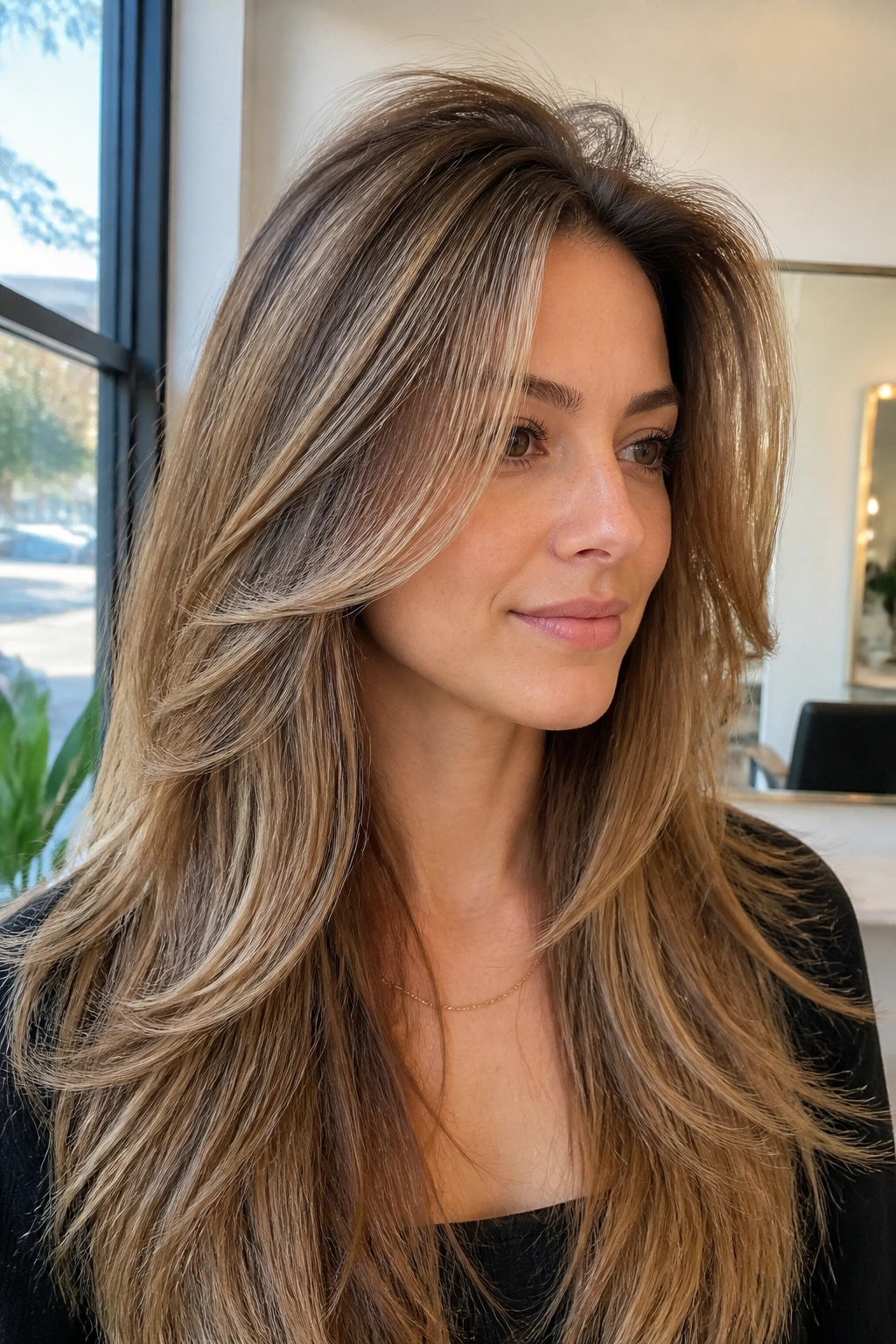
Fine hair needs lift at the top, not a bunch of wispy ends. That is where people get it wrong. They ask for too many layers and end up with long hair that looks thinner than it started.
The smarter version keeps the outer line fairly strong and uses short-to-long layering around the crown and face to create the illusion of fullness. A little volume in the right place goes much farther than endless slicing. I’d rather see two or three well-placed layers than a nest of pieces that fight each other.
Use a root-lifting mousse or spray before blow-drying, then lift the crown with a round brush while the hair cools. Cooling matters. Hair sets as it cools, so if you drop it too soon, the lift falls flat by lunchtime. You can even clip the crown up for a few minutes after drying if your hair refuses to hold shape.
The other thing fine hair needs is restraint. Do not over-texturize the ends. That makes the tail of the hair look see-through, and once that happens, the whole cut loses its polish. The best butterfly version for fine hair is airy at the top and honest at the bottom.
9. Butterfly Cut with V-Shape Ends

Why add a V at the bottom when the top already has movement? Because the outline matters. The V-shape gives the long lengths a little point and keeps the cut from looking boxy, especially if your hair is dense and falls in one heavy curtain.
This shape works well when you want the back to feel long and dramatic while the front layers do the opening-up work. The V creates a subtle taper through the center back, which can make waist-length hair feel less like a sheet. It also helps curls and waves stack in a more interesting way down the back.
There is a catch. If your ends are already fine or fragile, a strong V can make them look narrow. In that case, a softer U-shape is kinder. I tend to prefer the V on thick straight hair, long waves, and anyone who likes to braid their hair because the outline looks good even when the braid is loose.
The style pairs well with a center part, but not because it has to. It just gives the whole cut a neat line through the middle, which makes the layers on either side feel intentional instead of random.
10. Half-Up Butterfly Style
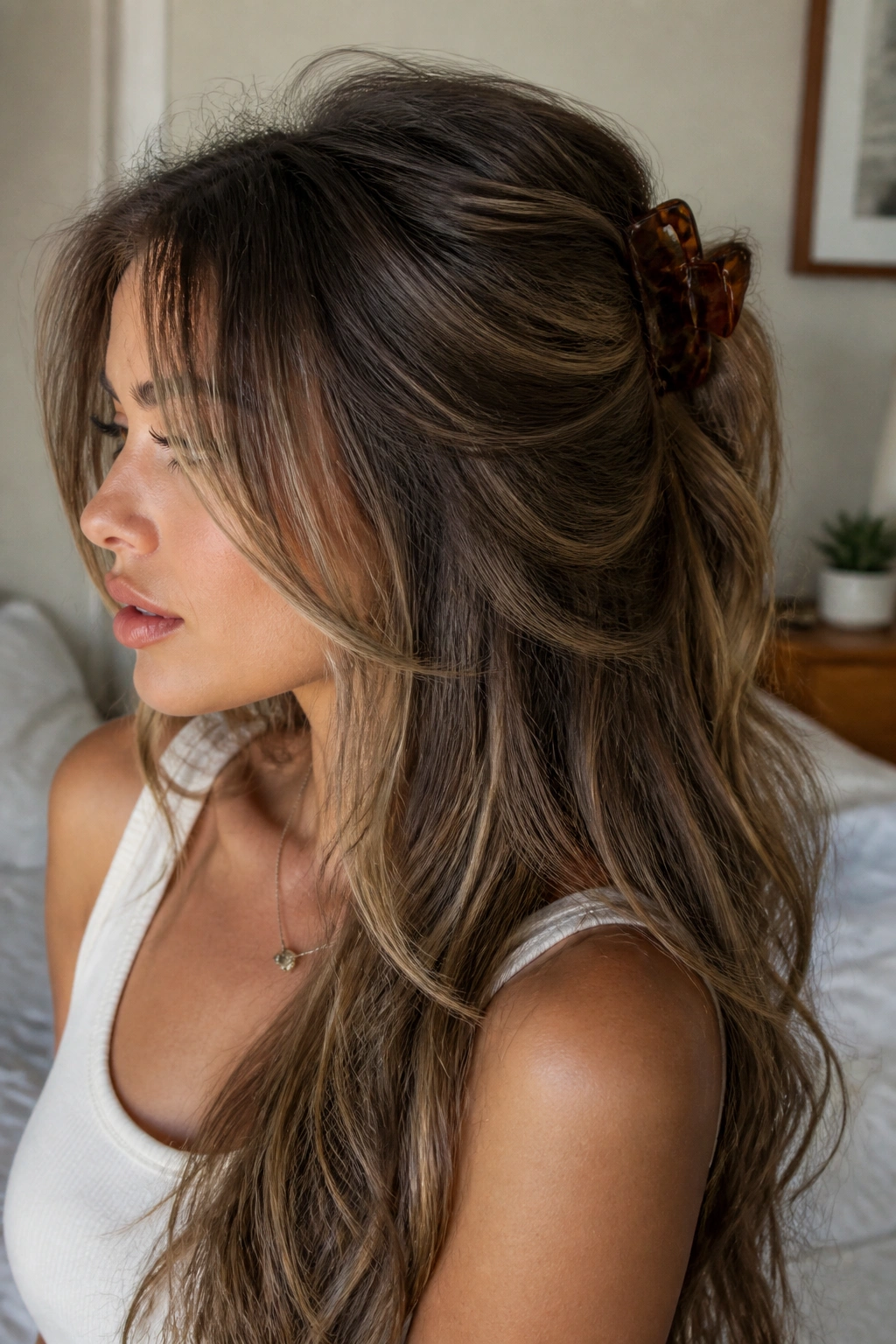
On busy days, the half-up clip is where butterfly layers earn their keep. A good cut leaves enough face-framing movement to soften the top half while still letting the back hang long and full. That means you can pin some of it up and the style still looks finished.
The secret is not pulling everything back. Leave the shortest front layers loose around the face and crown, then gather the upper section just above the ears or at the top of the head. A claw clip works better than a tight elastic if you want a soft shape. A small bun can look cute too, but the clip keeps the volume from collapsing.
A Few Smart Details
- Tease the crown lightly before clipping if your hair is slippery.
- Pull a few front strands forward so the face stays framed.
- Keep the half-up section loose enough that the layers can drape.
- Use dry texture spray only at the roots if you need grip.
This is the kind of style that makes the haircut feel practical. You still get long hair, but you don’t have to wear all of it down to prove it’s there. And honestly, that’s a relief on warm, long days when hair starts feeling like too much of a good thing.
11. High Ponytail Butterfly Cut
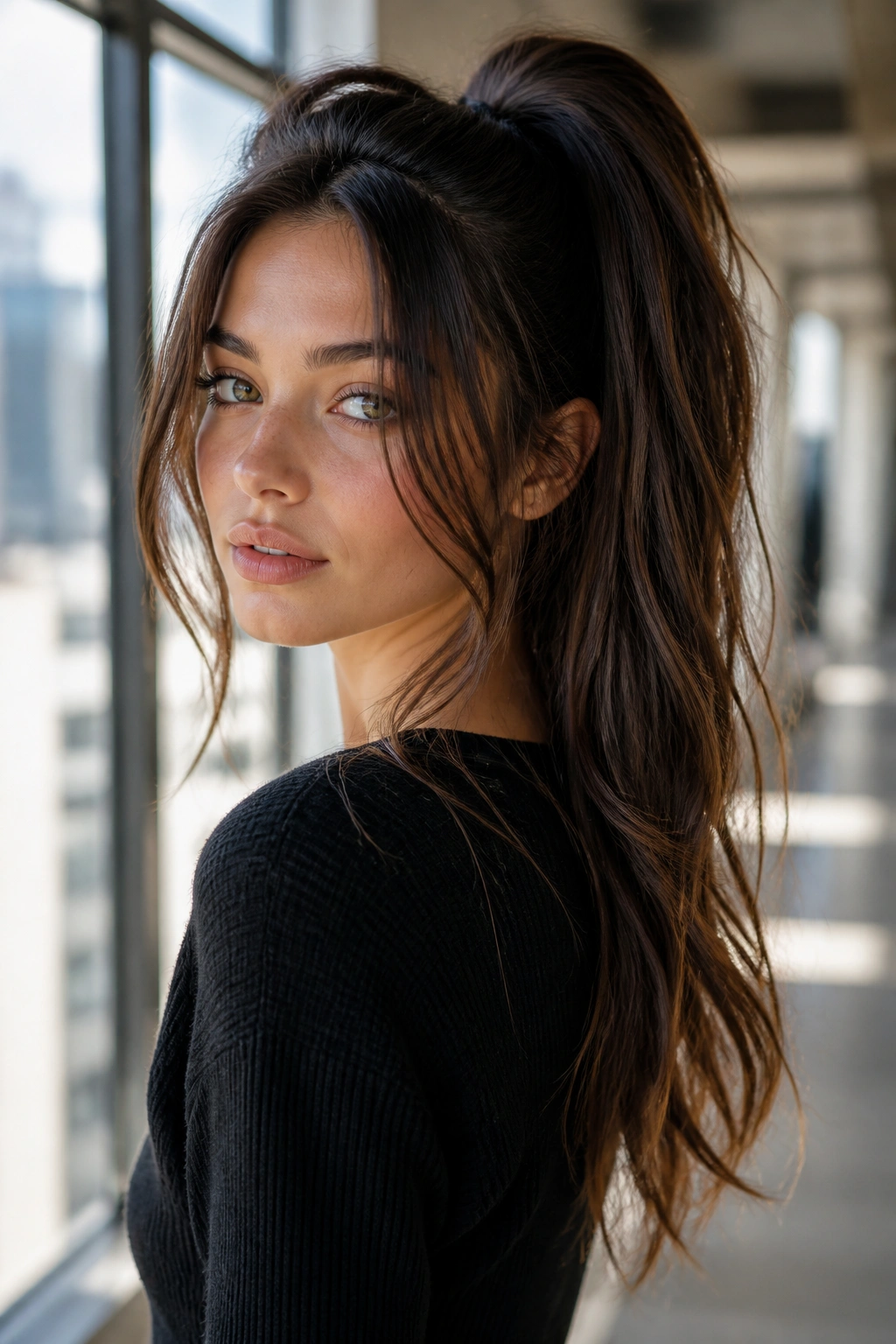
A high ponytail is where bad layering shows itself. If the layers are cut carelessly, they poke out in awkward little chunks. If they’re done well, the ponytail looks bouncy, soft, and almost animated.
Butterfly cuts are good at this because the front layers can stay out around the face while the longer lengths sweep into the ponytail. You get lift at the crown, movement around the temples, and a tail that does not look like a blunt rope. That matters more than it sounds like it should. A ponytail is one of those styles that tells the truth.
Place the elastic about 1 to 2 inches above the crown for a strong lift, then wrap a small section of hair around the band to hide it. If your hair is heavy, a bungee elastic holds better than a standard tie. A little root spray at the crown can help too, especially if your hair tends to slide downward within an hour.
I like a high ponytail version when the layers are long enough to fall back into the tail instead of sticking out. Short, choppy pieces can make the top look messy in a bad way. Long butterfly layers give you movement without the chaos.
12. Old Hollywood Curls with Butterfly Layers

Old Hollywood curls and butterfly layers make a surprisingly elegant pair. The cut gives the curl pattern a place to fall, so the style does not end up as one giant round cloud. Each layer catches the next one. That is the whole point.
Use a 1.25-inch curling iron or hot rollers if you want a more set finish. Curl sections away from the face in the front, then alternate directions through the back so the hair keeps some body instead of forming a single loop. Once the curls cool, brush them out with a soft paddle brush or wide brush until they turn into smooth waves with a polished bend.
The Curl Pattern
The shortest layers should still be visible when the hair is styled, but they shouldn’t break the line. If they disappear completely, the haircut loses its structure. If they sit too high, the style looks dated fast.
This version works best when the ends are healthy and the hair has enough shine to reflect the light from root to tip. A small amount of smoothing cream on damp hair and a finishing spray at the end usually does the job. Too much product is where these curls go wrong. They turn sticky and lose that soft, brushed-out finish that makes the style feel rich instead of stiff.
I’d wear this one for dinner, photos, or any event where the hair should look deliberate without looking frozen in place.
13. Butterfly Cut with Braided Texture
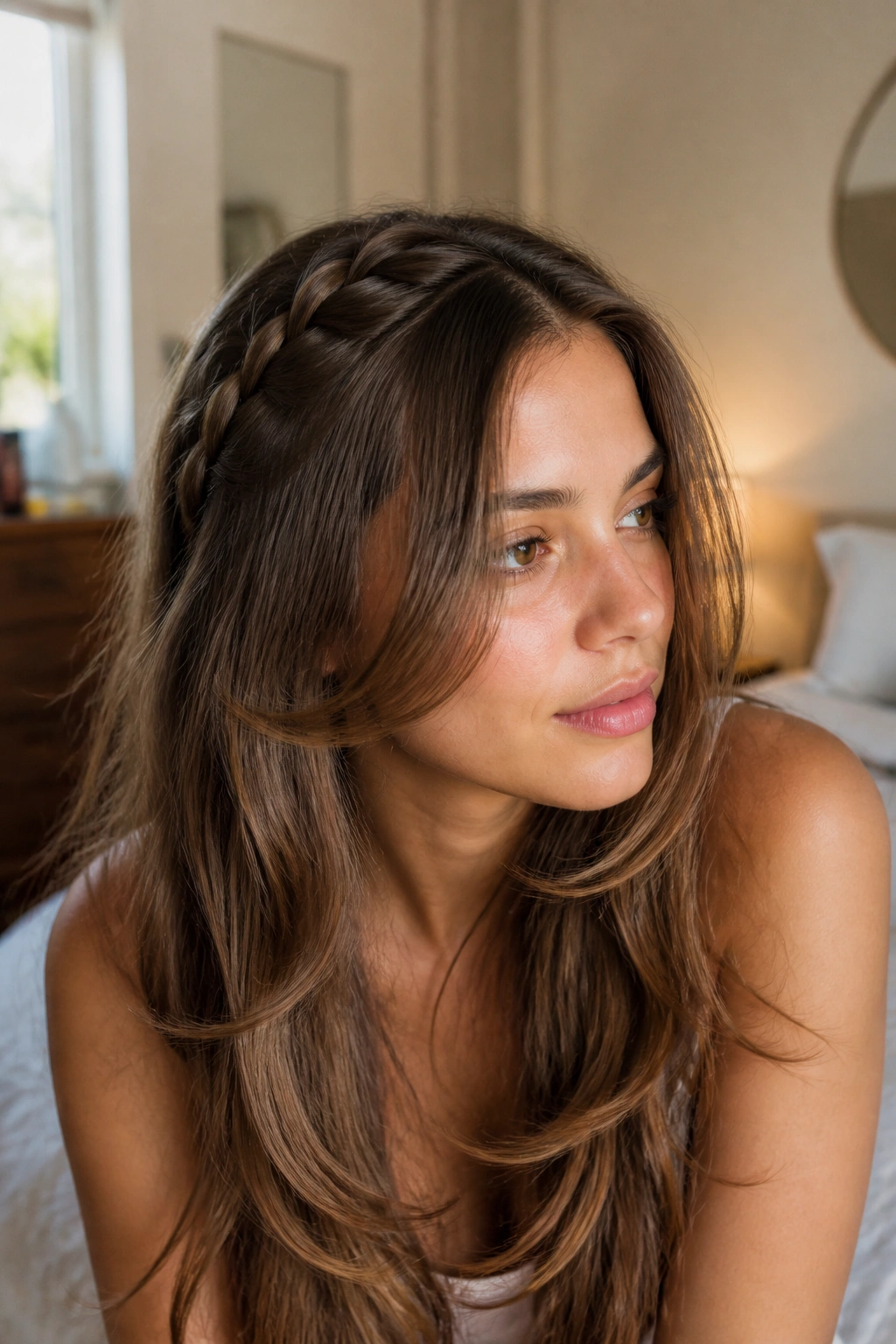
Braids and butterfly layers are a good match if you like hair that still moves after you take the plait out. The shorter front pieces fall free around the face, while the longer lengths give the braid enough length to feel substantial. You get shape before the braid and shape after it.
A loose Dutch braid, a single low braid, or even two slim braids can all work. The exact braid matters less than where it starts. If you want a soft next-day wave, begin the braid from around the mid-lengths instead of right at the scalp. Starting too high can create a crimped root line that fights the haircut.
A few details make this easier:
- Smooth the top with a light leave-in before braiding.
- Keep tension even so the layers do not pop out randomly.
- Secure the braid with a small elastic and leave the end a little loose.
- Undo it only when the hair is fully dry if you want lasting wave.
This style is good for people who wear their hair up often but still want a pretty frame around the face. It also hides a million small hair problems on days when your ends are tired. That’s a win in my book.
14. Butterfly Cut with Balayage Dimension

A cut like this loves color that shows off the layers. Balayage does exactly that because it places lighter pieces where the hair moves most: around the face, through the top layers, and toward the ends. The shape becomes easier to see, even from across a room.
The brightest ribbons should usually sit on the shorter front pieces and the first few layers around the face. That keeps the attention where the cut does its best work. If the light pieces are scattered everywhere, the eye has nowhere to land. You lose the clean winged effect.
This is a strong choice if your butterfly cut feels a little too subtle on its own. Color can sharpen the shape without changing the haircut. Warm caramel, soft beige blonde, copper, or a deep chocolate base with lighter ribbons all work, depending on your skin tone and maintenance habits. What matters most is contrast. Gentle contrast. Not stripy contrast.
I’m partial to this version when the ends are long and the layers are soft. The balayage makes each bend visible, so the haircut feels richer without looking heavily styled. It’s a simple trick, but a good one.
15. Curly Butterfly Cut with Shaped Springy Layers
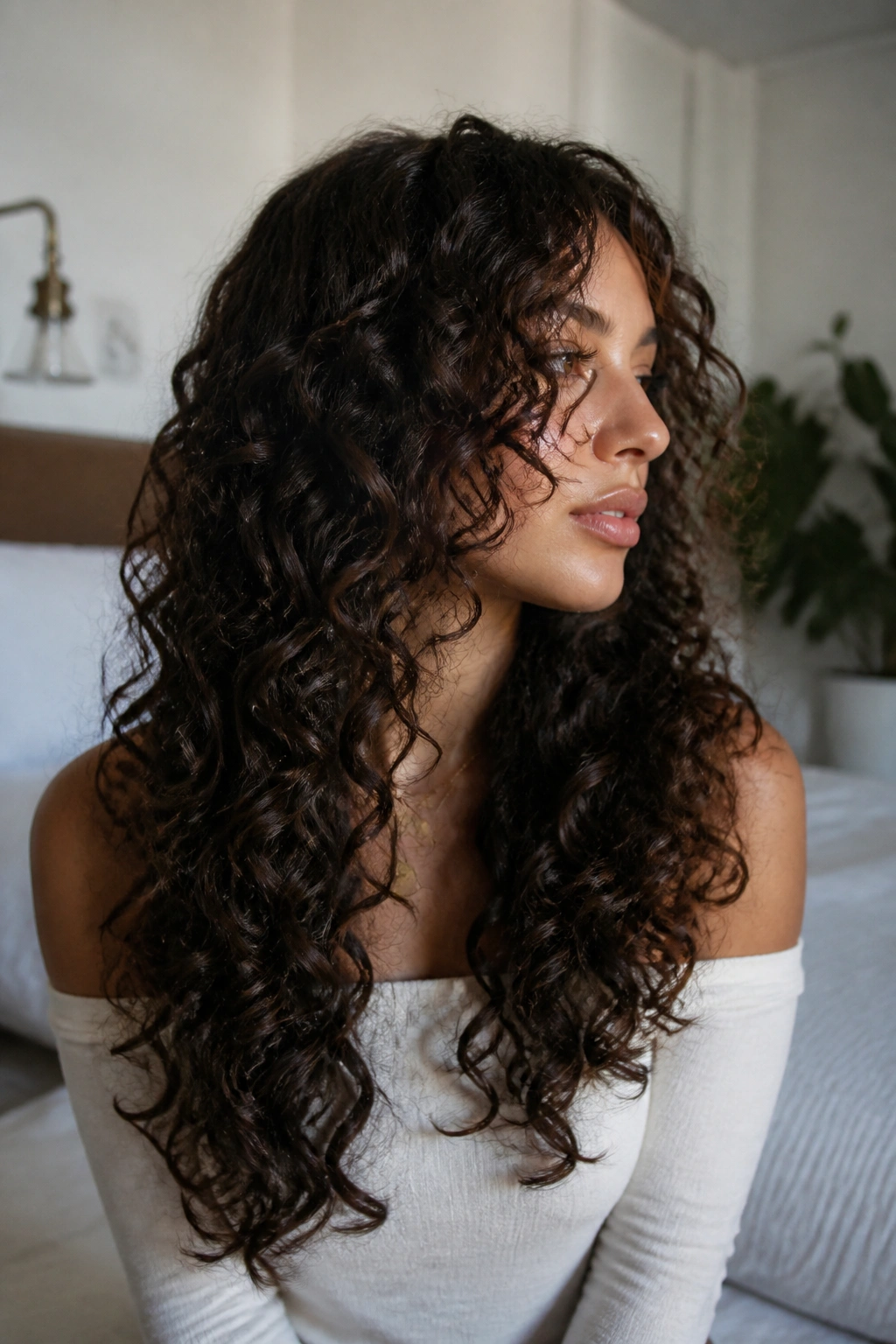
Curly hair needs a different kind of butterfly cut, and pretending otherwise is how people end up with lopsided volume. The shortest layers on curls usually need to be longer than they would on straight hair because shrinkage can steal inches in a hurry.
That means the shape should be cut with the curl pattern in mind, not after the fact. A dry cut or a curl-by-curl approach often gives the cleanest result because the stylist can see where each spring actually lands. Wet curls lie. They always do. A layer that looks fine soaking wet can bounce up three inches once it dries.
What to Ask For
- Length left on the shortest face-framing curl so it does not spring above the cheekbone.
- Rounded layering through the sides to keep the silhouette soft.
- Enough weight at the bottom so the hair does not puff out like a triangle.
- Diffused drying on low heat, or air-drying with a curl cream and leave-in.
This is the version I recommend to anyone who wants movement without losing curl pattern. It works best when the stylist respects the curl’s natural shape instead of forcing a straight-hair blueprint onto it. If that sounds obvious, good. It should be. Still, plenty of bad cuts happen because nobody planned for shrinkage.
The final look can be gorgeous—springy, light around the face, and still long enough to pull back when you need to.
Final Thoughts
The reason butterfly cut long hairstyles keep showing up is not mystery or hype. They solve a real problem: long hair often needs movement at the top and density at the bottom, and this cut can do both when it’s shaped well.
Pick the version that matches your daily life, not the one that looks best in a single photo. If you blow-dry often, go for curtain bangs or soft blowout layers. If you live in braids and clips, keep the front pieces long enough to fall loose. If your hair is curly, protect the curl pattern first and chase the shape second.
Bring pictures, sure. Better yet, bring photos of your hair on an ordinary day, because that shows a stylist what they’re actually working with. That tiny bit of honesty saves a lot of regret later.