



Medium hair has a strange advantage: it can look polished with almost no effort, or messy in a way that feels deliberate, and the difference usually comes down to the cut. A little movement goes a long way when hair sits around the shoulders, which is exactly why choppy layered hairstyles for medium hair keep showing up in salons and on real heads that have to deal with school runs, office chairs, humidity, and the occasional bad blow-dry.
The trick is not “more layers.” That advice gets tossed around so often it has almost stopped meaning anything. What actually matters is where the layers begin, how much weight gets removed, and whether the ends are broken up with scissors, point-cutting, or a razor so the shape still has some backbone. If the layers are placed well, medium hair can feel lighter without looking thin. If they’re placed badly, the whole cut turns fuzzy and loses its shape fast.
That’s why this length is so interesting. It can handle a shag, a lob, face-framing pieces, a soft wolf-inspired shape, or something much cleaner with only a little grit at the ends. It can lean glossy or piecey. It can be flattering on straight hair, wavy hair, or curls that need a bit of release around the sides. It’s flexible, but not forgiving in a sloppy way. You still need a plan.
Some of the best versions are understated. Others have a little attitude. A few look almost quiet until the light hits them and you notice the movement around the jaw and collarbone. Start with the shape that matches how you actually wear your hair, not the one that photographs best in a salon chair. That matters more than people admit.
1. Face-Framing Choppy Lob for Medium Hair

This is the cut I recommend to people who want movement but do not want to look like they lost a fight with a razor. The base usually lands somewhere between the collarbone and the top of the chest, with the front pieces cut a little shorter so they fall around the cheekbones and jaw. It keeps the outline clean while the inside of the cut does the soft, choppy work.
Why It Works
A lob already has enough length to tuck behind the ear, throw into a claw clip, or wear half-up on lazy days. Add broken-up layers around the face and you get shape without sacrificing that easy, medium-length feel. It’s one of the easiest medium layered haircuts to wear straight, waved, or curled under at the ends.
What to Ask For
- Collarbone length with a blunt-ish perimeter
- Shorter face-framing pieces that start around the cheekbone or jaw
- Soft internal layers, not heavy stacking at the crown
- Point-cut ends so the line doesn’t look too sharp
Best for: straight to wavy hair, especially if you want movement without a full shag.
One small warning: if the face frame starts too high, the cut can feel disconnected fast. Keep it close to the face, not floating above it.
2. Textured Shag with Curtain Bangs
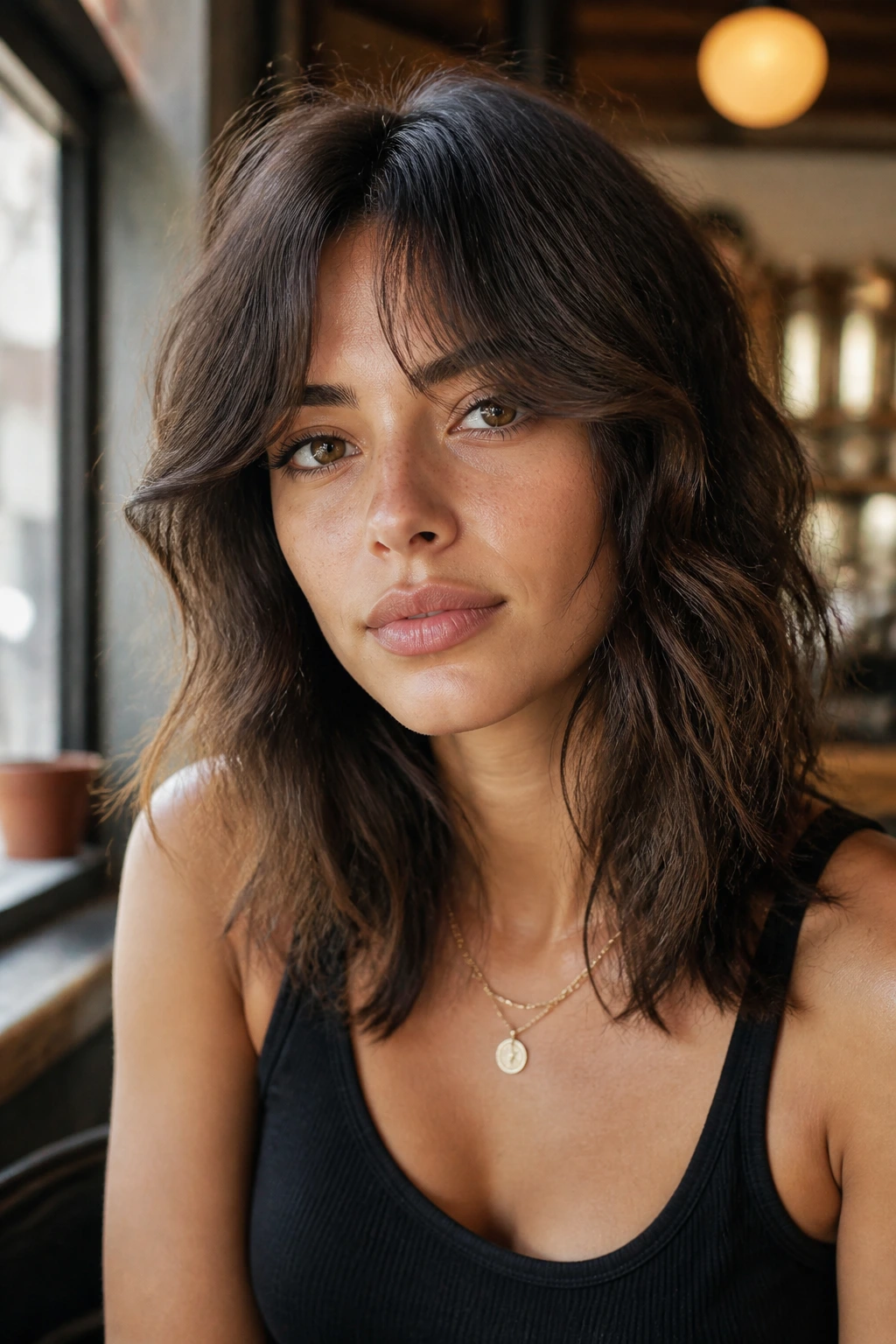
A shag on medium hair can look brilliant. It can also look like you forgot to finish the haircut. The difference is restraint. A good shag keeps the crown airy, the sides broken up, and the curtain bangs long enough to blend rather than sit there like a separate haircut.
Why It Feels Softer Than a Classic Shag
The classic shag can get wild in a hurry. On medium hair, a softer version is usually better because the length still needs some weight to stop it from puffing out. Curtain bangs help anchor the front, and the layers around the cheekbones keep the whole cut from collapsing into one flat sheet.
A little mousse at the roots goes a long way. So does a diffuser if your hair bends naturally. If you prefer a round brush, lift the fringe away from the face and finish the ends with a loose bend, not a tight curl.
Styling Notes
- Dry the fringe first so it does not split awkwardly
- Use a pea-sized amount of texture cream on the ends
- Skip heavy oils near the roots
- Pinch the curtain bangs apart while they cool for a more open shape
This one has personality. A lot of it.
3. Tousled Collarbone Cut

Not every layered cut needs obvious chunks. Some of the nicest medium-length styles are the ones that look like hair that simply lives well. The collarbone cut sits right in that sweet spot: long enough to feel feminine and easy to tie back, short enough that the layers can do real work.
The choppy part usually lives in the ends and around the face. That keeps the shape relaxed. You get movement when the hair swings, but it doesn’t look overworked. I like this version on medium hair that tends to go limp after day one, because the layers keep it from falling into a single heavy curtain.
Air-drying works better here than people expect. Scrunch in a light mousse, twist a few front pieces while damp, and let the natural bend do the rest. If you blow it dry, use your hands first and a brush only at the end. Too much brushing kills the easy texture.
This is one of those cuts that gets better when it’s not perfect.
4. Feathered Layers with a Side Part
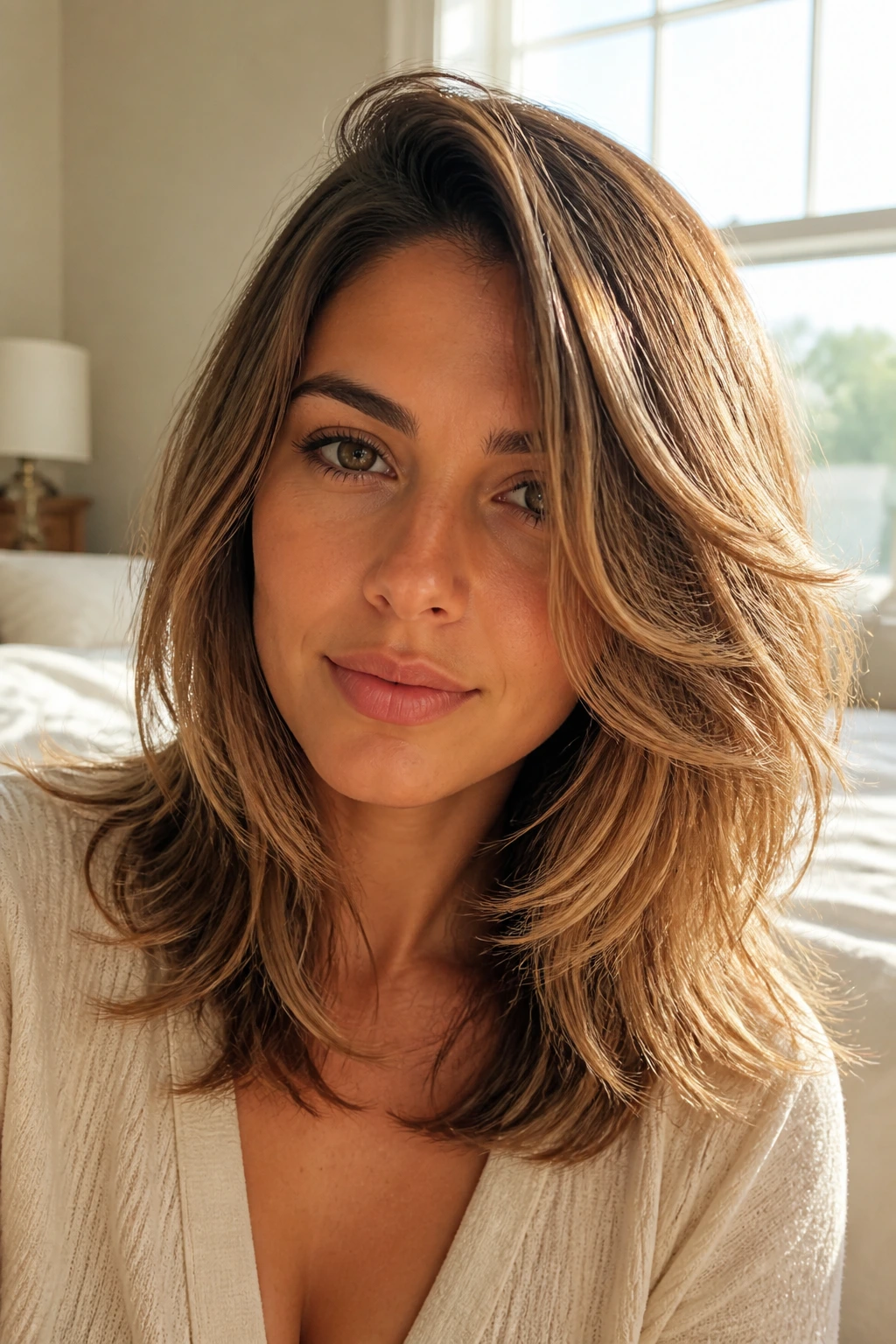
Feathered layers have a reputation for being dated, which is a little unfair. Done badly, yes, they look stiff. Done well, they make medium hair swing instead of hanging there. The side part matters a lot here, because it gives the cut a built-in lift before you even touch a hot tool.
What Makes It Different
A center part spreads the weight out. A deep side part pushes one side up and lets the layers fall with more shape across the cheek. That gives the haircut some movement at the top and a softer line through the rest of the hair. It’s especially nice if your hair is fine and needs help looking full near the roots.
Ask for feathering around the front and the top layer, but keep the perimeter solid. That blunt edge is what keeps the style from disappearing. If the ends are too thin, the haircut can look wispy in a bad way.
Good Styling Habits
- Blow-dry the roots opposite the part first
- Use a medium round brush to sweep the front away from the face
- Finish with a light mist, not a sticky spray
- Tuck one side behind the ear for a clean line
A side part does a lot of heavy lifting here. Honestly, more than people think.
5. Soft Wolf-Inspired Cut

A wolf cut on medium hair does not have to scream. It can whisper, which is a lot more wearable. The soft version keeps the crown short enough for lift, but the layers aren’t chopped so high that the shape turns edgy for no reason. You still get that lived-in, slightly rebellious feel. Just less drama.
The best thing about this cut is the movement through the middle of the hair. It creates a little gap between the root volume and the ends, which keeps the hair from looking heavy through the sides. If your hair gets flat at the roots but puffs at the bottom, this shape can make both problems easier to manage.
Why People Like It
- It gives fine and medium hair more lift
- It works with natural wave patterns
- It looks better a bit messy than overly polished
- It grows out with less awkwardness than a sharper shag
Be careful with the crown layers if your hair is already dry or frizzy. Too much cutting up top can make the texture fray. A softer version is usually smarter.
6. Piecey Midi Cut with Razored Ends

There’s a big difference between texture and frizz. A razor-cut midi can give you the first one without sliding into the second, but only if the hair can handle it. On medium hair with some bend or density, razored ends create those separated, piecey strands that move when you walk.
What Makes It Work
The razor breaks the ends into thinner sections, so the haircut looks lighter and less blocky. That is useful if your hair naturally forms a hard line at the bottom. It also helps curls and waves sit a little more loosely, which can take the puff out of thicker hair.
How to Wear It
- Use a smoothing cream on damp hair, not a heavy butter
- Rough-dry first, then polish a few pieces with a brush
- Add a tiny bit of wax to the ends only
- Curl random sections away from and toward the face for variation
If your hair is very fine or prone to breakage, ask whether a razor is the right choice. Sometimes point-cutting with scissors gives the same finish with less roughness. The finish matters more than the tool.
7. Choppy Layers with a Full Fringe

A full fringe changes the whole mood of medium hair. It makes the cut feel more deliberate, even when the rest of the layers stay loose and broken. That contrast is the point. The bangs give you a clean line up front, and the choppy layers keep the rest from feeling too neat.
This style works especially well if you like hair that frames the eyes. The fringe draws attention up high, while the medium-length layers keep the sides from puffing out. It’s a nice balance for straight or slightly wavy hair. On very curly hair, the bang line takes more effort, and I would not pretend otherwise.
What to Watch For
- Trim bangs every 4 to 6 weeks if you want them sitting right above the eyes
- Keep the layers around the temples soft so the fringe blends
- Dry the fringe side to side so it doesn’t split in the middle
- Use a tiny round brush or flat iron just on the front section
A full fringe adds maintenance. No way around it. But if you like the look, it’s worth the extra two minutes in the morning.
8. U-Shaped Layered Cut

A U-shape is one of the smartest ways to keep medium hair full. The back stays a touch longer, the sides arc forward, and the layers are carved in so the cut feels lighter without losing its rounded outline. It sounds subtle. It is subtle. That’s the appeal.
Why It Flatters Thick Hair
The U-shape removes bulk from the sides and gives the cut a softer sweep toward the front. Thick medium hair often gets wide at the shoulders, and this shape pulls it back into something cleaner. It also keeps the bottom looking denser than a V-shape would.
The Details Matter
- Ask for layers that follow the U, not short chopped pieces everywhere
- Keep the shortest front layers around the jaw or mouth
- Leave enough weight at the hem so the ends do not frizz out
- Use a large barrel brush or a blow-dry brush for a curved finish
This cut is not flashy. It’s better than flashy. It gives you shape that holds up on day two.
9. Layered Bob Grown Out to Medium

When a bob grows past the chin and hits that medium length, it can look awkward fast if you leave it alone. A few strategic choppy layers turn the grow-out into a real style instead of a halfway point. That’s the magic here.
The goal is not to erase the bob completely. Keep enough structure around the bottom so the cut still feels contained. Then add movement in the upper lengths and around the face, where the bulk often sits after a bob grows out. You end up with something between a strong bob and an easy lob.
I like this cut for people who don’t want to commit to long hair but are done with the strictness of a chin-length shape. It can be tucked, waved, or worn sleek, and it still has a little swing to it.
A straightener or flat brush gives it polish. A few bends with a curling iron make it look more relaxed. Either way, the layers should be soft enough that you do not see hard steps.
10. Airy Layers for Thick Hair

Thick medium hair needs space to move. If it doesn’t get that space, it sits like a helmet or flips out at the wrong places. Airy layers solve that by reducing bulk in the middle and letting the length breathe a little.
Where the Weight Comes Off
A good stylist will usually remove weight from the interior of the cut rather than hacking away at the ends. That keeps the outline looking full while the inside of the shape feels lighter. Point-cutting helps too, especially near the jaw and through the lower third of the hair.
What Helps at Home
- Dry with a nozzle so the hair lays smoother
- Use a leave-in conditioner only from mid-length to ends
- Avoid too much thinning shears on coarse hair
- Flip the ends with a brush if you want movement, or keep them straight for a sleeker finish
The biggest mistake with thick hair is over-layering the top and leaving the bottom skinny. That gives you volume in the wrong place. Better to keep the ends strong and release weight from inside the cut.
11. Invisible Layers for Fine Hair

Fine hair and layers can be a tricky pair. Too many short pieces, and the hair looks sparse. Too few, and it falls flat. Invisible layers are the middle road, and on medium hair they can be a lifesaver.
How They Create Lift Without Looking Choppy
The layers are cut just enough to stop the hair from hanging in one sheet, but not so high that they show as separate steps. The perimeter stays fuller, which is what gives the illusion of density. Around the face, the movement is soft and almost sneaky.
That is the part people often miss. Fine hair usually looks best with some weight left in the cut. You want lift, yes, but not so much texture that the ends start to look stringy.
Small Styling Moves That Matter
- Blow-dry with a root-lifting spray at the crown
- Use a large round brush only on the top sections
- Finish with a light texturizing mist, not dry shampoo everywhere
- Keep oils away from the roots unless your scalp is very dry
If your hair is fine, ask for “barely there” layers and a fuller hemline. Those words matter.
12. Razor-Cut Flip Ends

Flip ends are back because they make medium hair look like it has a little attitude. A razor cut helps get that shape by softening the bottom edge so it turns outward instead of hanging straight and heavy. It has a retro feel, but not in a costume-y way.
The best version keeps the top smooth and the ends loose. That contrast is what makes the haircut feel deliberate. If everything flips, the style gets busy. If only the ends turn out a little, it looks sharp and playful.
You’ll want a round brush or a medium hot brush to build the bend. Wrap the lower inch or two of the hair away from the neck and let it cool before touching it. That cooling step matters more than people realize. It sets the shape.
This cut can be especially nice on medium hair that has a little natural bounce. Straight, stubborn hair can still wear it, but you may need a bit more heat and a touch of styling cream at the tips.
13. Midi Cut with Bottleneck Bangs

Bottleneck bangs are one of those details that can change the whole haircut without taking over. They’re shorter in the center, then widen softly as they blend into the sides, which gives medium hair a nice frame without the hard line of a blunt fringe.
The shape works because it opens and closes the face in a controlled way. You get attention around the eyes and cheekbones, but the bangs do not sit like a curtain that needs constant fixing. On medium hair, that balance is hard to beat.
Best Pairings
- Shoulder-grazing or collarbone-length cuts
- Soft wave styling
- A bit of root lift at the front
- Longer layers around the jaw so the fringe can blend
This is a smart option if you want bangs but don’t want to spend all day managing them. They still need trims, though. Bangs always do. There’s no magic around that part.
14. Choppy Layers with Balayage Dimension

Color and cut can do each other a favor, and choppy layers are one of the best cases for that. When the hair has lighter pieces painted through the surface, the layers stop blending into one flat block. You can actually see the movement.
Why Dimension Shows Better on Medium Hair
Medium hair sits in a useful middle zone. It’s long enough to hold a visible color pattern, but short enough that the contrast between layers still reads clearly. If the lighter pieces sit around the face and the ends, the haircut looks more textured even when the styling is simple.
A few things help here:
- Keep brighter pieces near the front layers
- Ask for lowlights if the hair needs depth
- Avoid placing all the light color only on the top layer
- Style with a loose wave so the pieces separate a little
This is a good place to say something blunt: a layered cut with flat color can still work, but dimension makes it easier. The cut does not need help to be good. It just gets more visible when the color has some contrast.
15. Shoulder-Grazing Cut with Flipped-Out Ends

Shoulder-grazing hair has a built-in swing to it, and flipped-out ends make the swing visible. The cut usually lands right at the shoulders or just below, with the layers broken enough that the ends can move instead of sticking to the neck.
This is one of the more playful options on the list. It reads polished from the front and a little cheeky from the side. A round brush gives you the classic flip, but a flat iron can do it too if you bend the final inch outward and keep the rest smooth.
The shape is especially useful if your hair tends to curl inward at the shoulders and make your head look boxy. A soft outward turn breaks that up. It also works nicely with a center part if you want the cut to feel modern rather than retro.
Keep the ends healthy here. Flipped styling shows damage fast. If the bottom is rough, the whole look collapses.
16. Curly Choppy Layers

Curly medium hair loves layers when the layers are cut for the curl pattern, not against it. That is the whole game. Choppy layers can take a curly shape from triangle-heavy to rounded and springy, but only if the stylist respects shrinkage and density.
Ask for Dry Shaping if Possible
Curl behaves differently when it’s wet. That’s not a small detail. A dry cut, or at least a cut that takes the curl pattern into account as it falls, usually gives a better result because the length and volume show up where they actually live.
What the Layers Should Do
- Remove bulk from the sides, not just the bottom
- Keep the top from ballooning out
- Preserve enough length that curls stack nicely
- Shape the face frame so it falls with the curl pattern
A diffuser helps, but so does restraint. Don’t rake through the curls too much while drying. Scrunch, hold, release. Then stop touching it. Curly choppy layers are at their best when they look like they were never fussed over too hard.
17. Wavy Layered Cut with Face Frame

If your hair bends naturally, this is the sweet spot. The waves do half the styling for you, and the choppy layers simply steer them into a shape that feels alive. Medium length helps because the waves have enough room to move without getting weighed down.
The face frame matters here. A few shorter pieces around the cheekbones can make a simple wave pattern look intentional instead of random. That detail also helps the hair open up around the face, which is useful when medium-length hair starts to sit too close to the jaw.
I like this one with a light curl cream and a quick twist of the front pieces while they’re damp. No need to build a perfect curl. A bend is enough. Let the hair dry, then separate the waves with clean hands.
It’s a forgiving cut. Messy in a good way. If that sounds like your speed, this is one to keep in mind.
18. Sleek Layered Lob

Not every layered style has to be tousled. A sleek lob with subtle choppy layers is a strong choice for people who want movement but still like a clean finish. On medium hair, that means the ends stay tidy while the layers keep the shape from looking too square.
The best version usually has layers that are more visible when the hair moves than when it’s still. That keeps the cut from looking overdone. When straightened, the silhouette stays smooth. When you turn your head, the layers show a bit of swing through the sides.
A drop of serum on the mid-lengths is enough. More than that, and the hair can start to look greasy. If the roots need lift, use a blow-dry spray at the crown instead of loading the whole head with product.
This is the cut for people who like their hair neat but not boring. That’s a real category, and it’s a useful one.
19. Asymmetrical Choppy Layers

A small asymmetry can make medium hair feel sharper without turning it into a statement haircut you have to explain to everyone. Usually, one side is a little longer or fuller, or the front layers sweep more heavily in one direction. Keep the difference subtle. One to two inches is enough.
The point is movement and tension. Your eye notices that the shape is slightly off-center, which makes the haircut feel modern and a bit unexpected. It also helps if your hair naturally falls to one side, because the asymmetry can work with that pattern instead of fighting it.
Who Should Try It
- People who want something a little bolder than a standard lob
- Medium hair that lays flat on one side
- Faces that suit side-swept volume
- Anyone who likes a sharper edge without a dramatic cut
This style can look especially good with a deep side part and tucked-behind-the-ear styling on the shorter side. Not for everyone. But when it works, it looks very intentional.
20. Layered Cut with Money Piece

A money piece is the bright framing section at the front, and on medium hair it can make choppy layers read much more clearly. The light pieces catch the edge of each layer, so the haircut seems lighter and more dimensional even if the cut itself is pretty simple.
This works best when the front pieces are only a shade or two lighter than the rest of the hair. Too much contrast and the face frame starts to look separate from the cut. Keep it soft. Let the layers do the rest.
There’s a practical upside too. If you wear your hair down a lot, the brighter front pieces make the whole style look intentional even on days when the rest is just air-dried and tucked behind one ear. Lazy, but not sloppy.
If your hair is medium brown, dark blonde, or auburn, this can be a very effective way to bring out the movement without going full highlight. Subtle wins here.
21. Shattered Ends with a Deep Side Part
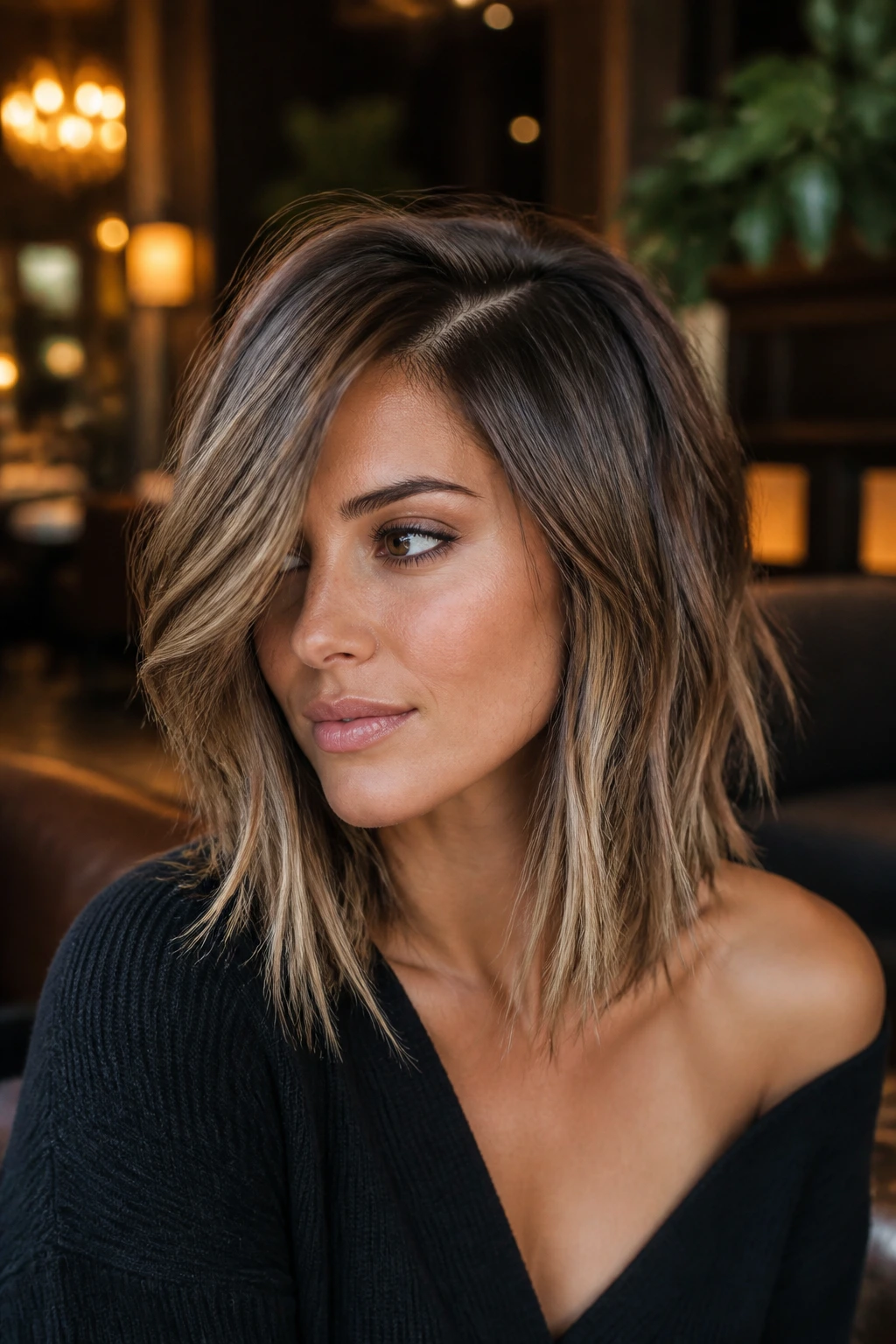
Shattered ends are exactly what they sound like: ends that are broken up enough to move, but not so thin that the haircut looks ragged. Pair that with a deep side part and medium hair suddenly has more lift, more shape, and a little more drama at the crown.
The side part is doing a lot of the work. It gives height at the roots, especially on the heavier side, and lets the layers fall with more separation through the lengths. That makes this cut a good choice for flat hair that needs a little help staying awake.
Styling Details That Matter
- Flip the part while the hair is still damp and let it set
- Use a root spray at the crown, not on the ends
- Keep the ends piecey, not dry-looking
- Finish with a brush only if you want a smoother surface
This one feels a bit glam without demanding a formal blowout. That’s a nice combination.
22. Low-Maintenance Grown-In Layered Haircut
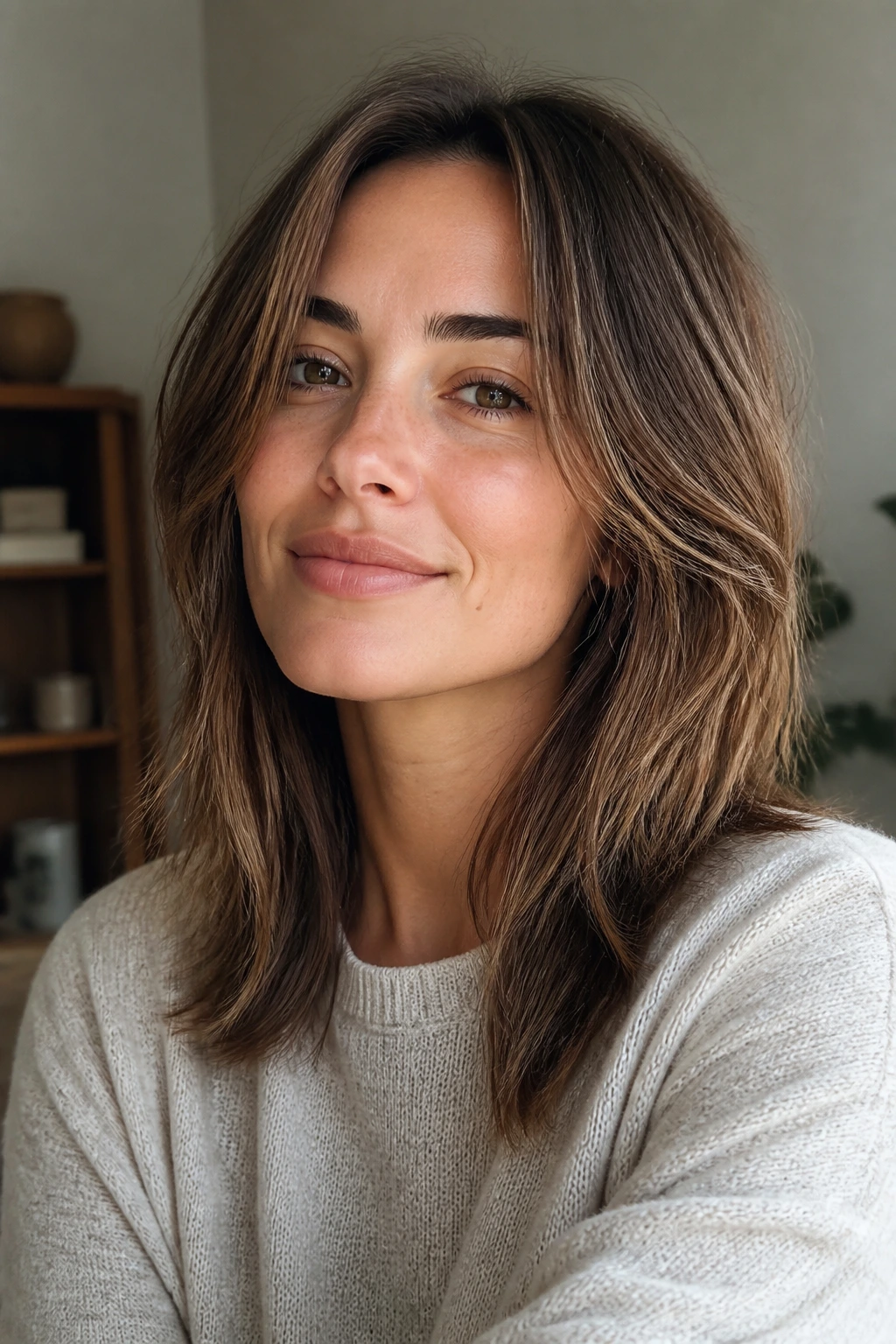
The best haircut is often the one that still looks decent after you forget about it for a week. This grown-in version keeps the layers long, soft, and blended so medium hair does not scream for attention every time it starts to lose shape. The front may sit around the cheekbone or jaw, while the rest of the cut stays relaxed and roomy.
That looseness is the point. You are not chasing a perfect finish here. You are building a shape that can handle air-drying, clips, ponytails, and the occasional lazy brush-through. If you want choppy layered hairstyles for medium hair that won’t feel high-maintenance, this is the one to keep on the short list.
It also grows out well, which matters more than people think. A cut that survives eight weeks without turning into a triangle is worth its weight in time saved. Keep the ends textured, keep the face frame soft, and avoid over-layering the crown if your hair is fine.
No haircut solves everything. This one comes close on the days that matter.
