



The wrong haircut on thick hair has a very specific look: it starts with hope, then turns into a triangle, a shelf, or a puffball that eats your neck. Layered haircuts for thick hair are supposed to solve that, but only the good ones actually do. The rest just move the bulk around and call it texture.
Thick hair is sneaky. Sometimes it’s coarse and sturdy, sometimes it’s soft but packed tight, and sometimes it looks manageable until the first humid day or blow-dry attempt. A cut that works on fine hair can fall flat on dense hair, while a cut that looks airy in photos can turn into frizz if the layering is too aggressive. That’s why the shape matters so much.
The best layered cuts don’t just “thin things out.” They decide where the weight should live, where the movement should start, and how much length should stay at the bottom. That’s the difference between hair that bends with you and hair that takes over the room.
Some of these cuts are long and polished. Some are choppy and a little rebellious. A few are for people who want to keep as much length as possible, and a few are for anyone ready to cut the bulk and get some actual air around their head. Start with the one that matches how you wear your hair, not the photo you saved because it looked cute in a car mirror.
1. Long Invisible Layers for Heavy, Straight Hair
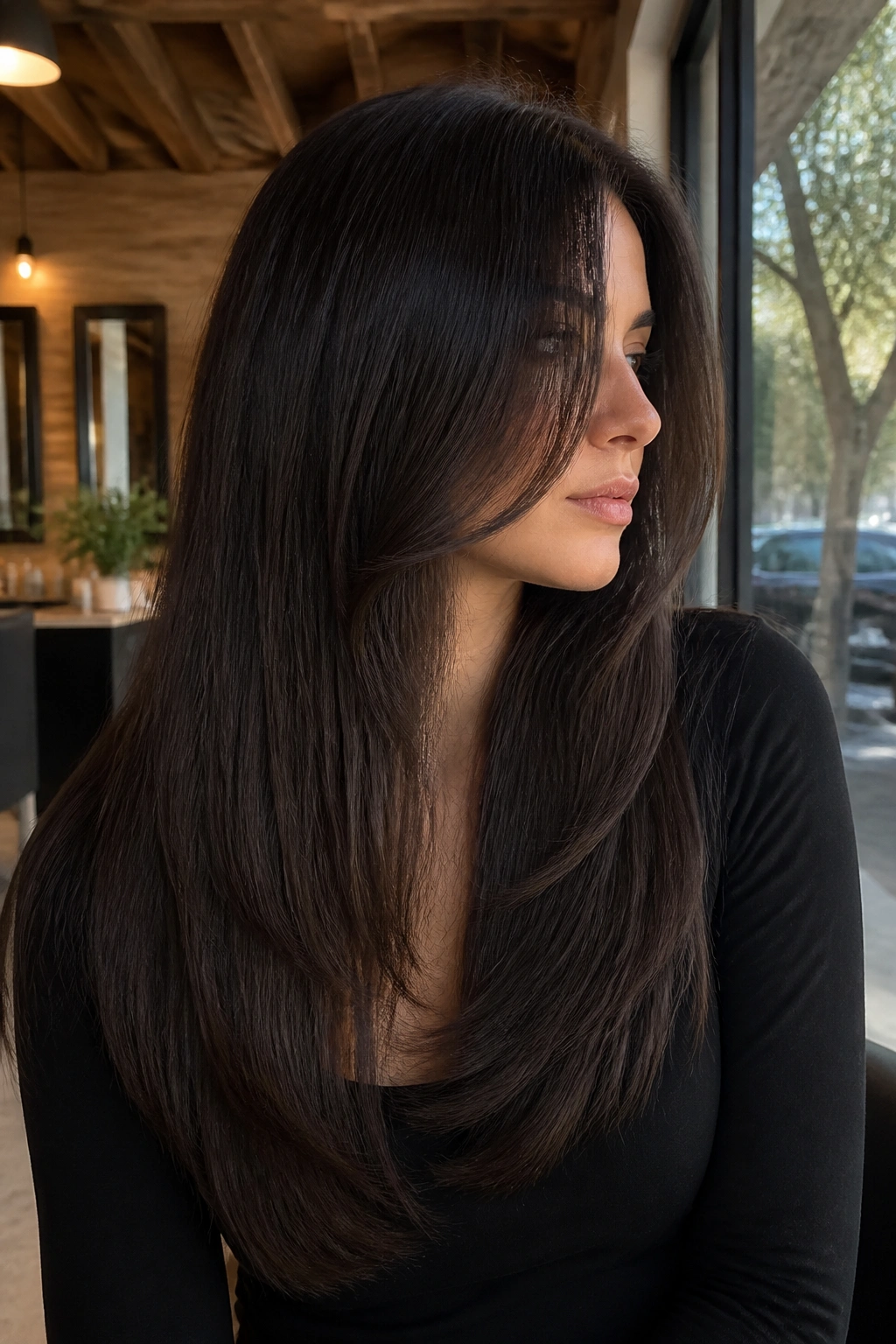
Long invisible layers are the quiet answer for people who want movement without advertising the cut. The trick is simple: the stylist removes weight from the inside of the hair, not from the perimeter, so the ends still look full and clean. On thick hair, that matters. A blunt line with a little interior shaping often looks more expensive than a bunch of short, choppy pieces.
I like this cut for straight or softly waved hair that feels heavy through the mid-lengths. Ask for the shortest layer to start below the chin, and keep the face frame soft enough that it doesn’t jump out at the cheek. If the layers start too high, the whole thing can poof out around the crown.
This cut is also one of the easiest to live with. It air-dries into a shape instead of a cloud, and it still works with a quick blowout when you want it smoother. If your thick hair keeps bulking up at the ends, this is usually the first cut I’d reach for.
2. The Butterfly Cut With Short Front Layers and Long Back Length
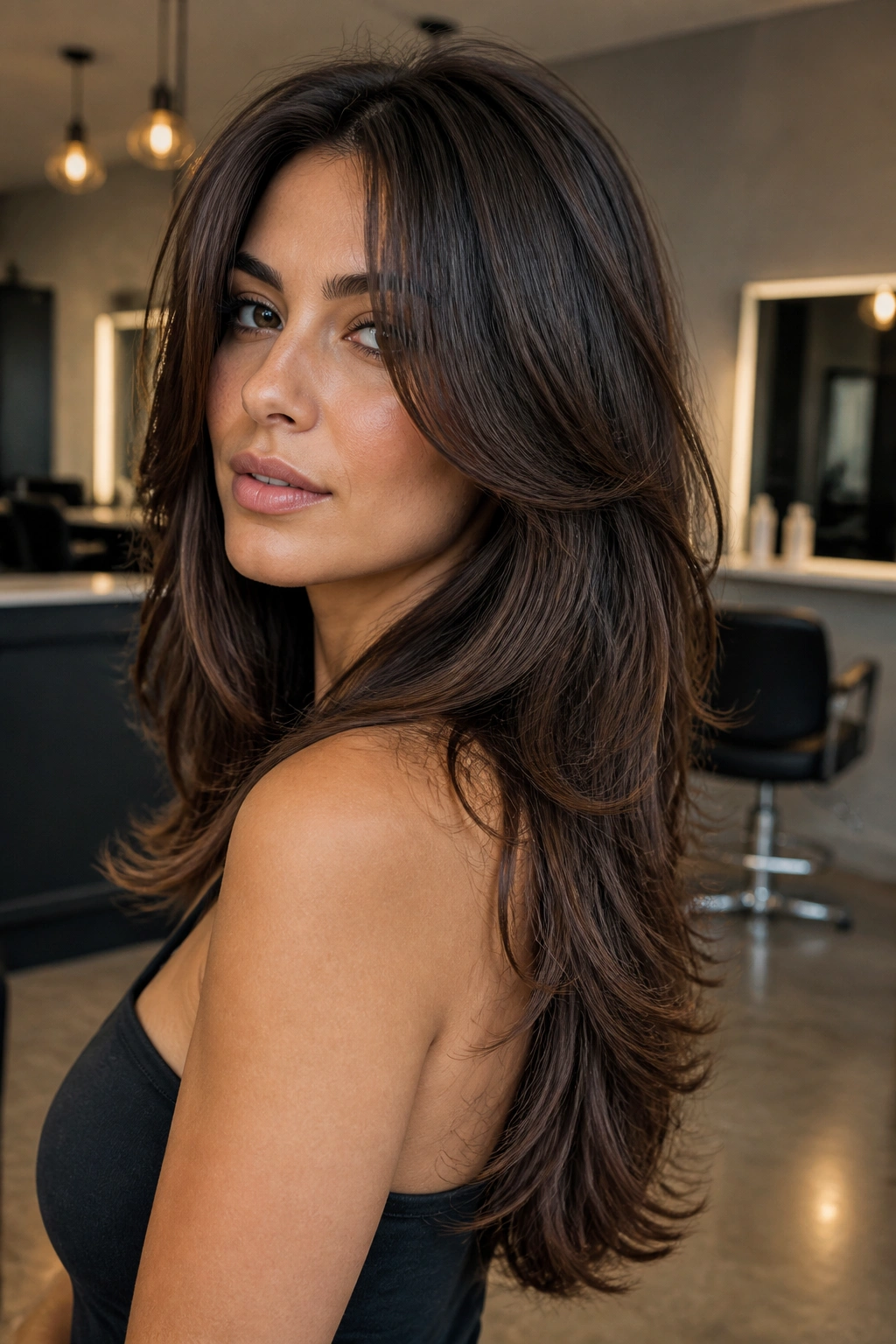
The butterfly cut looks dramatic on paper and surprisingly wearable on thick hair. Shorter front layers hit around the cheekbone or lip, then longer layers keep the back long and swingy. The whole point is contrast. You get lift near the face without sacrificing the length down your back.
Why It Works
The shorter pieces create that blowout shape people chase with a round brush, but the longer back keeps the haircut from feeling too light. On dense hair, that balance is gold. You get movement where your hair usually feels frozen.
- Best for hair that’s long enough to hold a strong shape, usually past the shoulders.
- Works well if you like volume around the face and crown.
- Needs a little styling, especially if your hair is very straight.
- Ask for the shortest layers to hit no higher than the cheekbone unless you want a stronger, more obvious shape.
What to Watch For
Too many short layers can make thick hair look fluffy instead of lifted. That’s the line you want to avoid. The butterfly cut should feel airy, not chopped.
3. Curtain Bangs With Soft Face-Framing Layers

Why do curtain bangs show up so often with thick hair? Because they break up a heavy front section without forcing you into a full fringe. Thick hair can make the front look like a curtain in the worst sense — a solid wall. Curtain bangs split that wall and let the face breathe.
The best version starts with a center piece that opens around the brows and fans into longer face-framing layers by the cheekbone or jaw. You do not need the shortest piece to be tiny. In fact, on thick hair, I’d usually keep it a little longer so it doesn’t balloon up after a blow-dry.
How to Ask for Them
Tell your stylist you want bangs that blend into the haircut, not a separate bang line. A good cut should let you tuck the shorter sides behind your ears on busy days and still look intentional.
How to Style Them
Use a medium round brush or a blow-dry brush and pull the bangs away from the face, then slightly back. That little bend matters. It keeps the front from sitting flat and sticky against your forehead.
One sentence helps here: If you hate high-maintenance bangs, curtain bangs are the safest place to start.
4. U-Shaped Layers for a Full, Swingy Finish
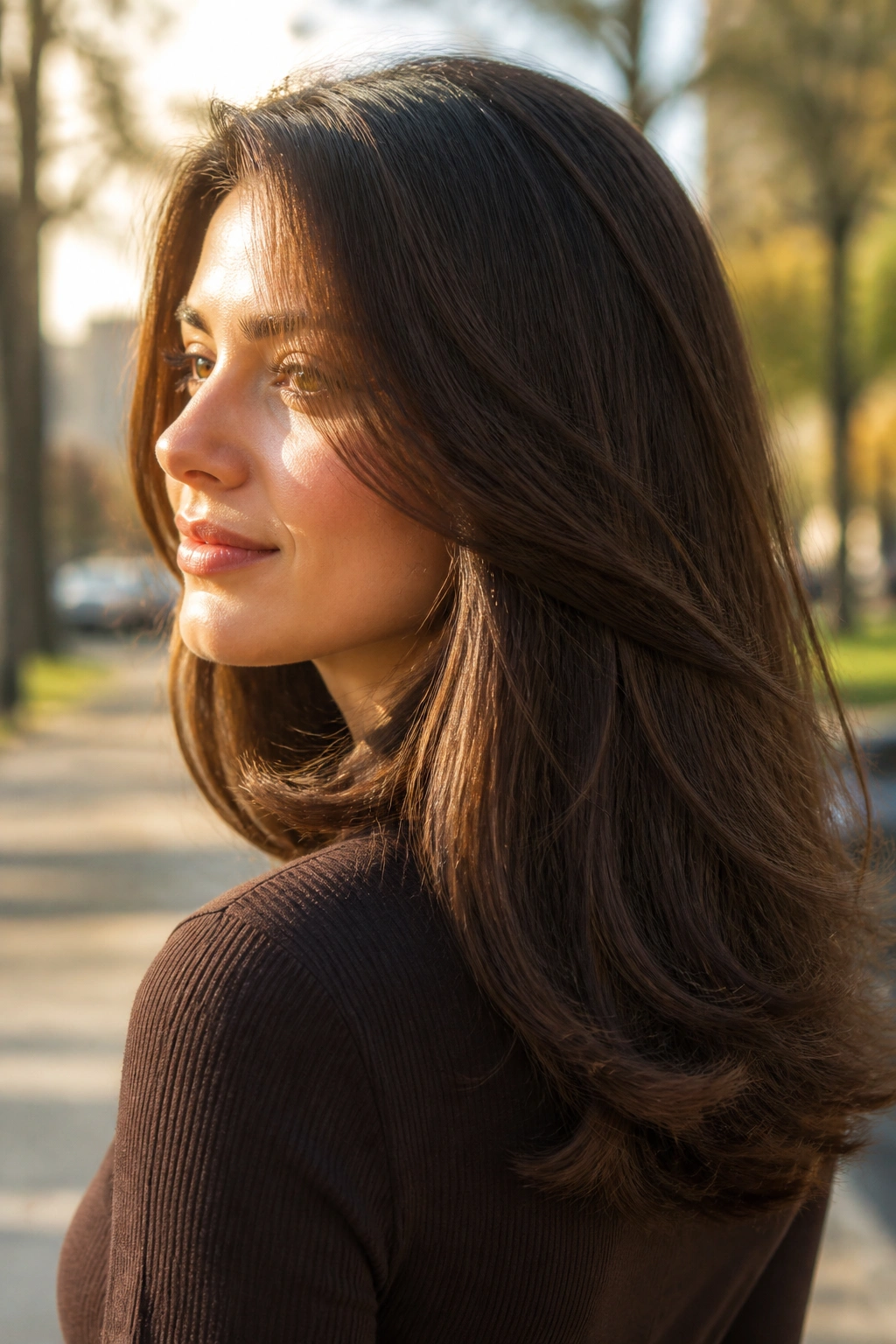
A U-shape sounds subtle, and that’s exactly why it works. The bottom line curves gently upward at the sides, which gives long thick hair a softer outline than a straight-across hem. It keeps the length looking lush while easing some of the visual weight from the back.
This cut is especially nice if your hair grows out heavy and dense at the nape. The rounded perimeter stops the style from feeling boxy. You still get fullness, but it moves when you walk. That swing is the whole point.
- Best on medium-long to long hair.
- Good if you wear your hair down more than up.
- Easier to grow out than a sharper shape.
- Works with layers that start low and stay blended.
The U-cut is the haircut I recommend to people who want to keep their length and still feel a little less buried by it. It’s not flashy. It just works.
5. V-Cut Layers That Build Shape Down the Back
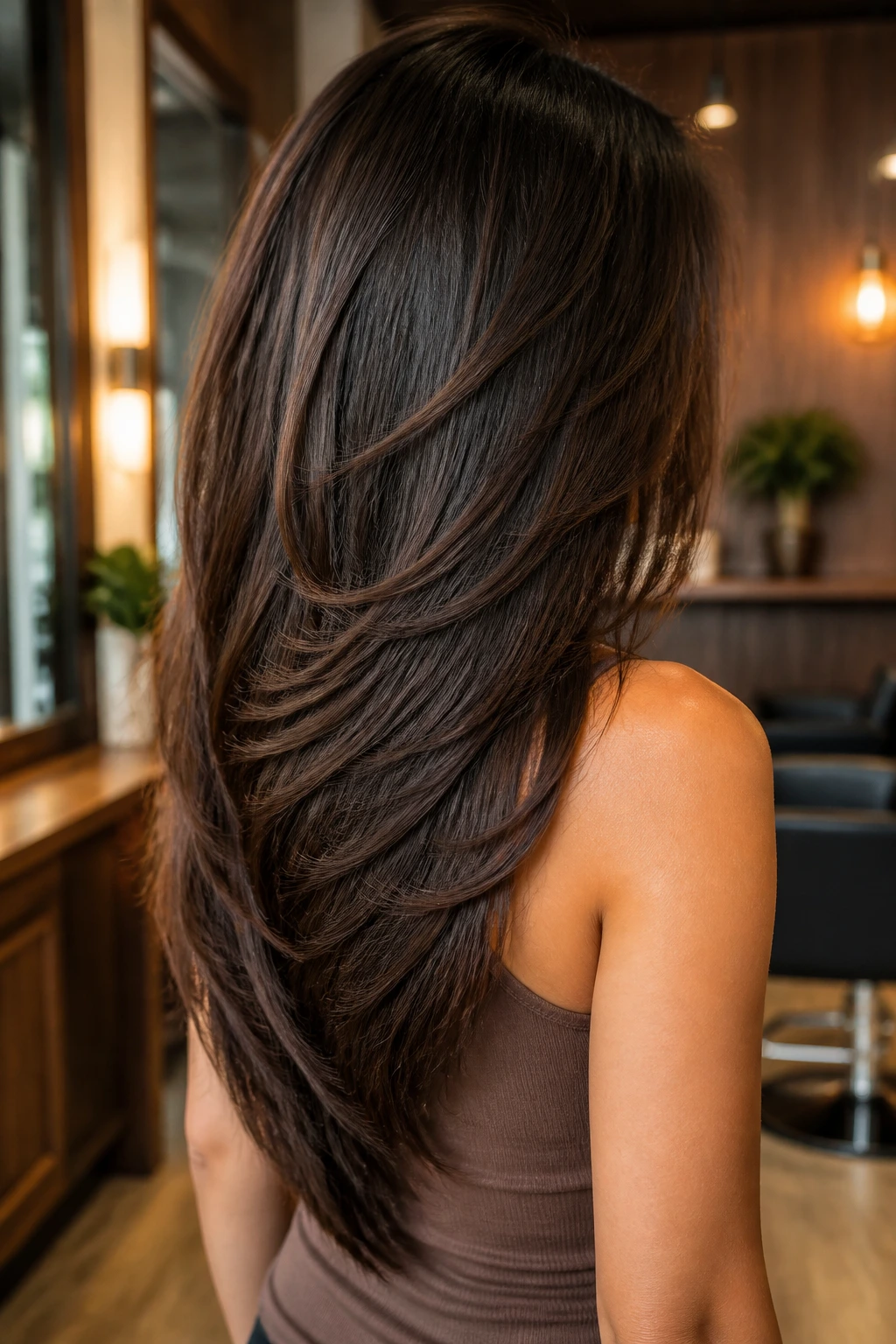
A V-cut gives thick hair a more dramatic line, especially when it’s long enough to show off the taper. The center back stays longest, while the sides angle inward to form that pointed V. On dense hair, that shape can be lovely because it keeps the perimeter from turning into a square wall.
It also makes the back of the hair look longer than it is, which is handy if you want length without endless waiting. The layers inside can be kept soft and low so the haircut still moves, but the outline stays bold.
I like this cut on hair that’s already pretty healthy through the ends. If your lengths are thin or frayed, the V shape can exaggerate that. It also needs a little care when you ponytail it, since the point can sit in an awkward place if the cut is too short.
Long, thick hair and a V-cut have a good relationship. They look balanced together.
6. The Modern Shag for Thick Hair That Needs Air
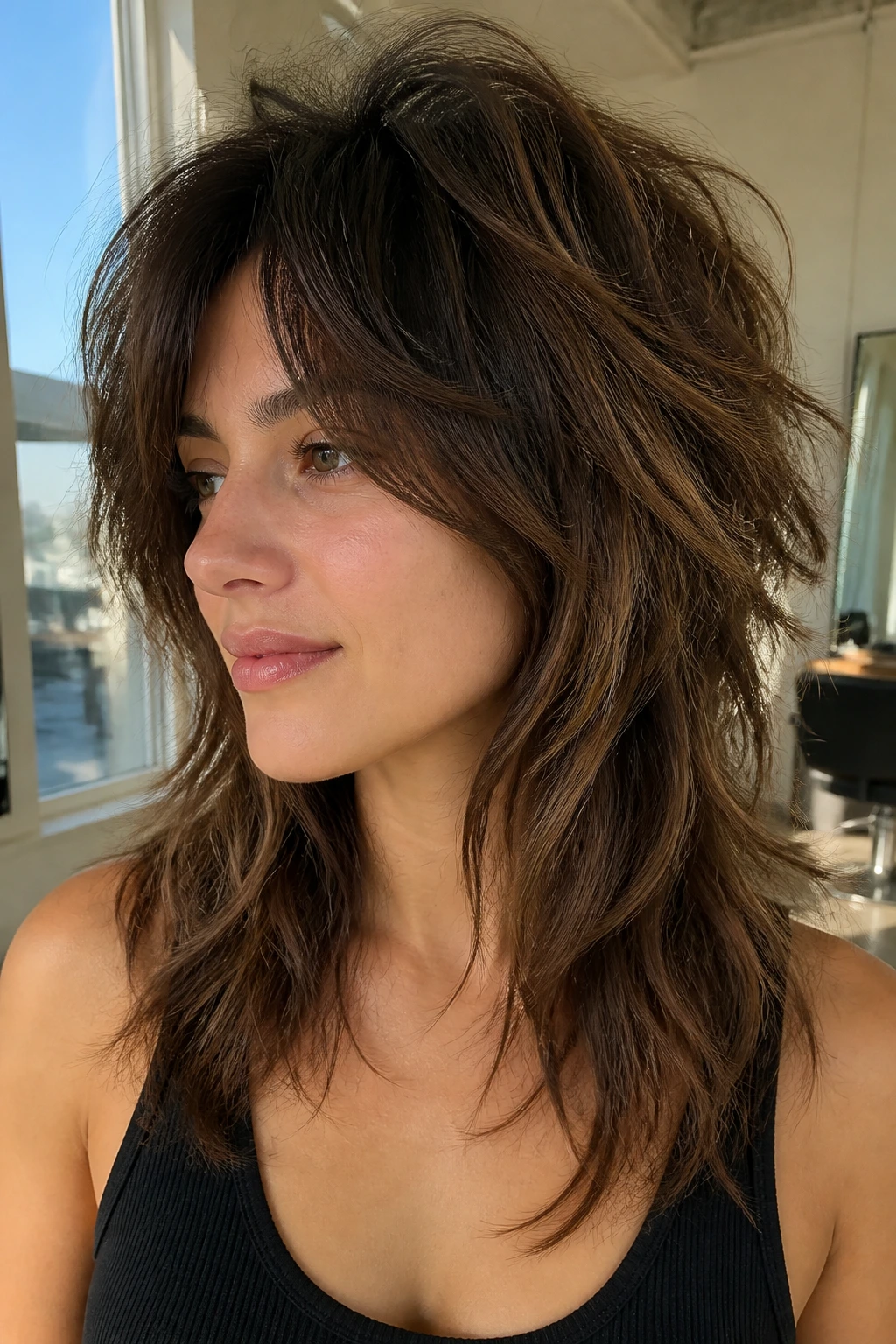
The modern shag is what happens when thick hair stops apologizing for itself. It’s choppier, looser, and more lived-in than a classic layered cut, with shorter pieces around the crown and face and softer length below. If your hair feels heavy, hot, or way too controlled, this cut gives it room to breathe.
The Pieces That Matter
You need a stylist who knows how to balance the shape. A good shag on thick hair keeps enough weight at the bottom so it doesn’t look stringy.
- Crown layers that create lift without standing up.
- Face-framing pieces that land around the cheekbone or lip.
- A fringe or wispy bang that breaks up the front.
- Textured ends, but not shredded ends.
What Can Go Wrong
Over-thinning is the enemy here. If a stylist attacks thick hair with thinning shears all over the place, you can end up with a fuzzy top and a weak bottom. That is not a shag. That’s damage with layers.
The best shag feels intentional and a little cool, not messy in a lazy way. It should look like your hair has shape, not like it escaped.
7. Shoulder-Length Lob With Internal Layers

A lob on thick hair can be a dream or a brick. The difference is internal layering. Without it, the cut often flips out at the shoulders and sits there like it’s offended by your head. With it, the whole shape loosens up.
Shoulder-length is a sweet spot if you want enough length to tuck, braid, or pull back, but not so much hair that drying takes forever. Internal layers take some of the bulk out of the center of the haircut, which helps the ends fall instead of puff. That makes this one of my favorite cuts for people who want clean lines without the heaviness.
Blessing, not burden.
Ask for the perimeter to stay strong. You want movement inside the shape, not a feathered bottom that disappears. If you like a smooth finish, a paddle brush and a quick bend at the ends is usually enough.
8. Feathered Layers for a Softer, Brushed-Out Look
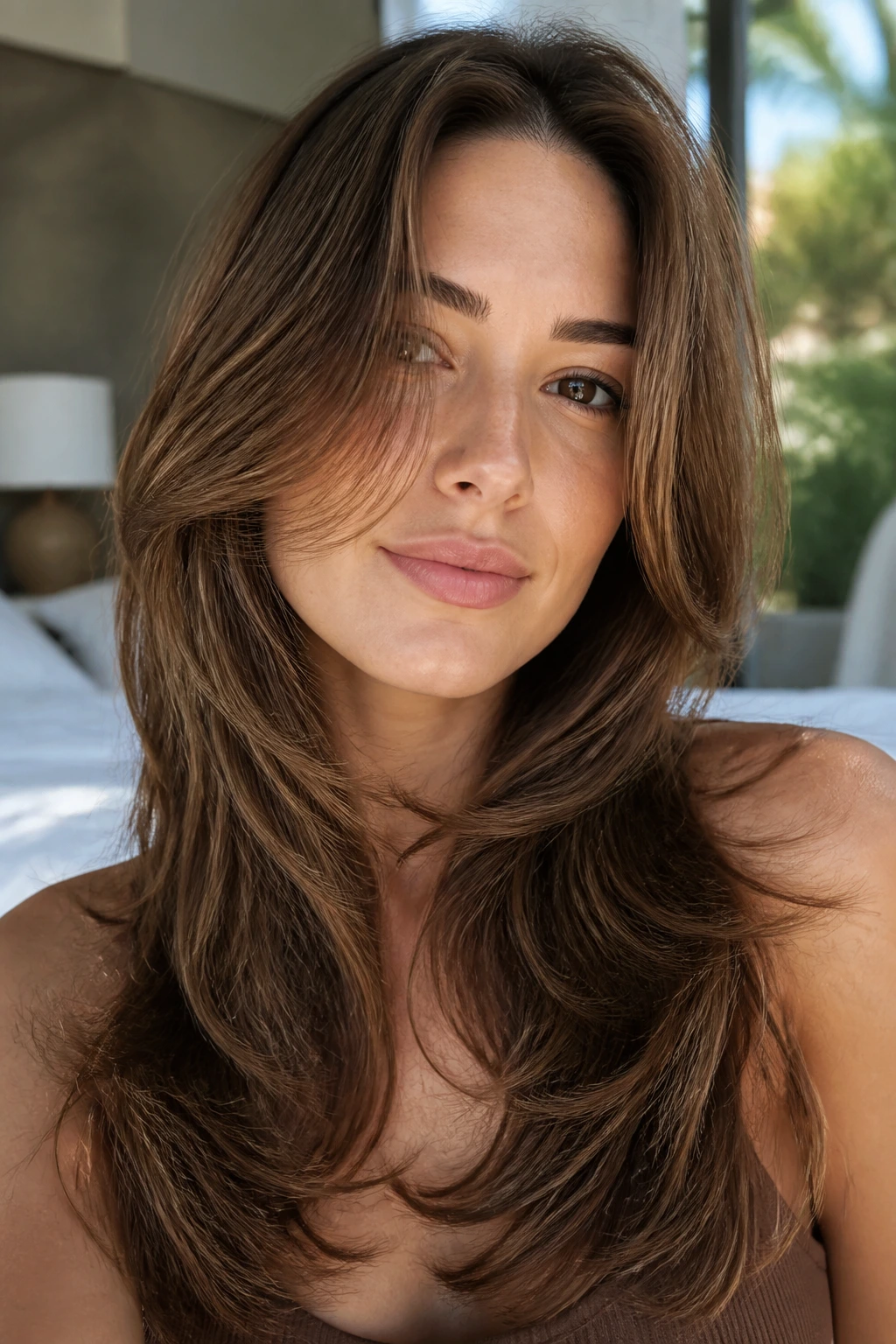
Feathered layers are one of those cuts that can look dated in bad hands and gorgeous in good ones. On thick hair, the good version is all about softness. The hair is cut so the layers taper and float instead of sitting in blunt blocks, which gives the style that brushed-out motion.
Why I Like It on Dense Hair
Feathering works because it removes visual heaviness without stripping the haircut of body. The edges don’t feel hard. They just fade into each other.
If your hair is coarse, feathering can be especially nice because it keeps the surface from looking too solid. A good blow-dry with a round brush makes the ends turn under or away from the face in a loose, smooth way. That motion is what sells the cut.
A little warning: this is not the one to ask for if you want a sharp, architectural shape. It’s softer than that. Much softer.
9. Razor-Cut Layers for Wavy Thick Hair
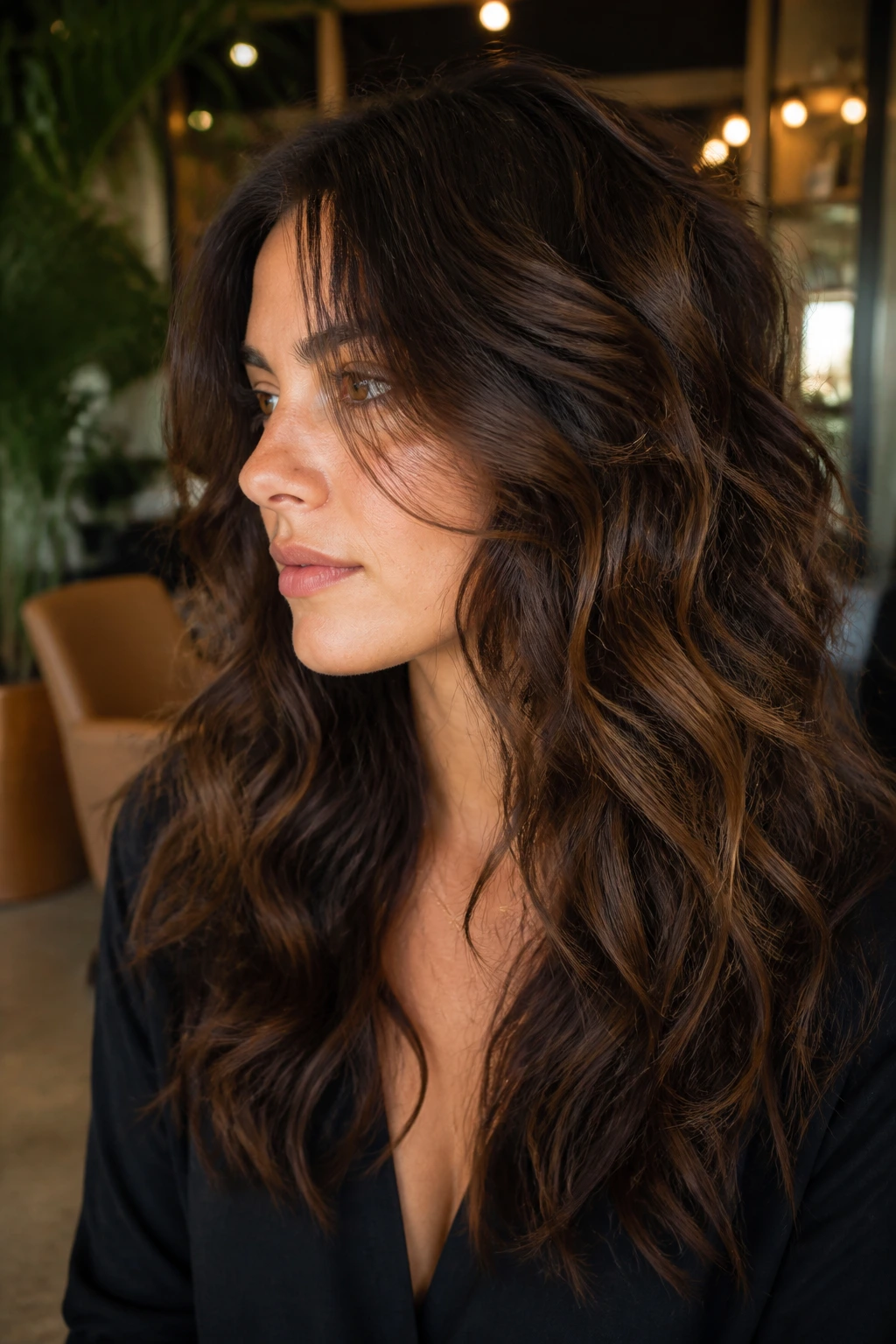
Can a razor cut help thick hair? Absolutely — when the hair texture can handle it. Wavy dense hair often benefits from a razor because the tool slices soft edges into the ends instead of leaving hard steps. The result is movement that looks natural rather than overworked.
When a Razor Helps
A razor is useful when the hair is healthy, the wave pattern is loose to medium, and you want a little edge around the layers. It can make thick hair feel less blocky and more fluid. On the right head of hair, the ends almost melt into one another.
When It Does Not
Dry, frizzy, or damaged ends can get worse with a razor. So can very curly hair if the stylist doesn’t know how the curl spring behaves. You want someone who cuts with a light hand and checks the hair as it falls.
I’d ask for razor work only through the mid-lengths and not at the very ends if you’re nervous. That gives you softness without the shredded look. Razor cuts are a tool, not a shortcut.
10. The Octopus Cut for Volume at the Crown

The octopus cut looks a little weird in a flat photo. On a real head, it can be brilliant. It keeps the crown and upper layers fuller and more rounded, while the lower lengths stay long and separated, almost like tentacles. Thick hair gives this cut something to work with, which is why it tends to hold shape better than you’d expect.
It’s especially useful if your hair gets bulky near the top but you still like long ends. The crown gets lift, the lower layers stay loose, and the whole style feels lighter. The contrast is what makes it interesting.
I’d call this a high-style cut, not a lazy one. It likes a diffuser, a round brush, or at least a good scrunch and some product that gives definition. If you want your hair to look a little wild on purpose, this is a strong choice.
A low-heat diffuser on damp hair usually brings out the shape without blowing it apart.
11. Face-Framing Layers With Bottleneck Bangs
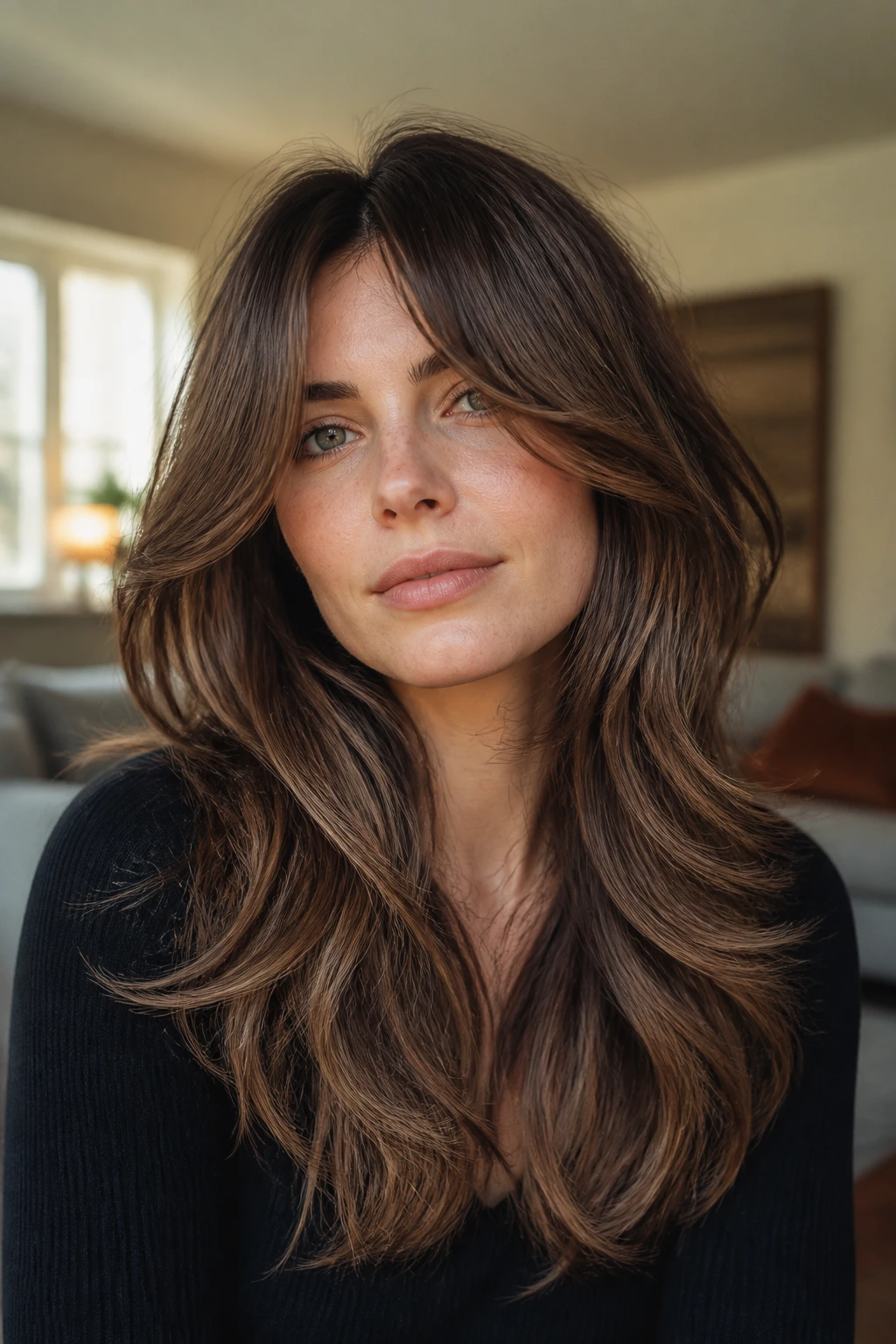
Bottleneck bangs are a smarter version of fringe for thick hair. They’re narrow at the center, then widen as they move outward, which keeps the front from feeling heavy or boxed in. Paired with soft face-framing layers, they give thick hair some structure without stealing too much length.
The nice part is the grow-out. Because the bang pieces blend into the sides, the cut doesn’t scream for a trim every few weeks. That matters if your hair grows fast or if you hate feeling trapped by bangs.
This style works best when the shortest pieces sit between the brows and cheekbone, not way up high. You want the bangs to open the face, not sit like a shelf over it. That small difference changes the whole mood of the haircut.
If your thick hair tends to fall forward in one heavy sheet, this is a very useful fix.
12. Curly Layers That Let Ringlets Stack Without Pyramids
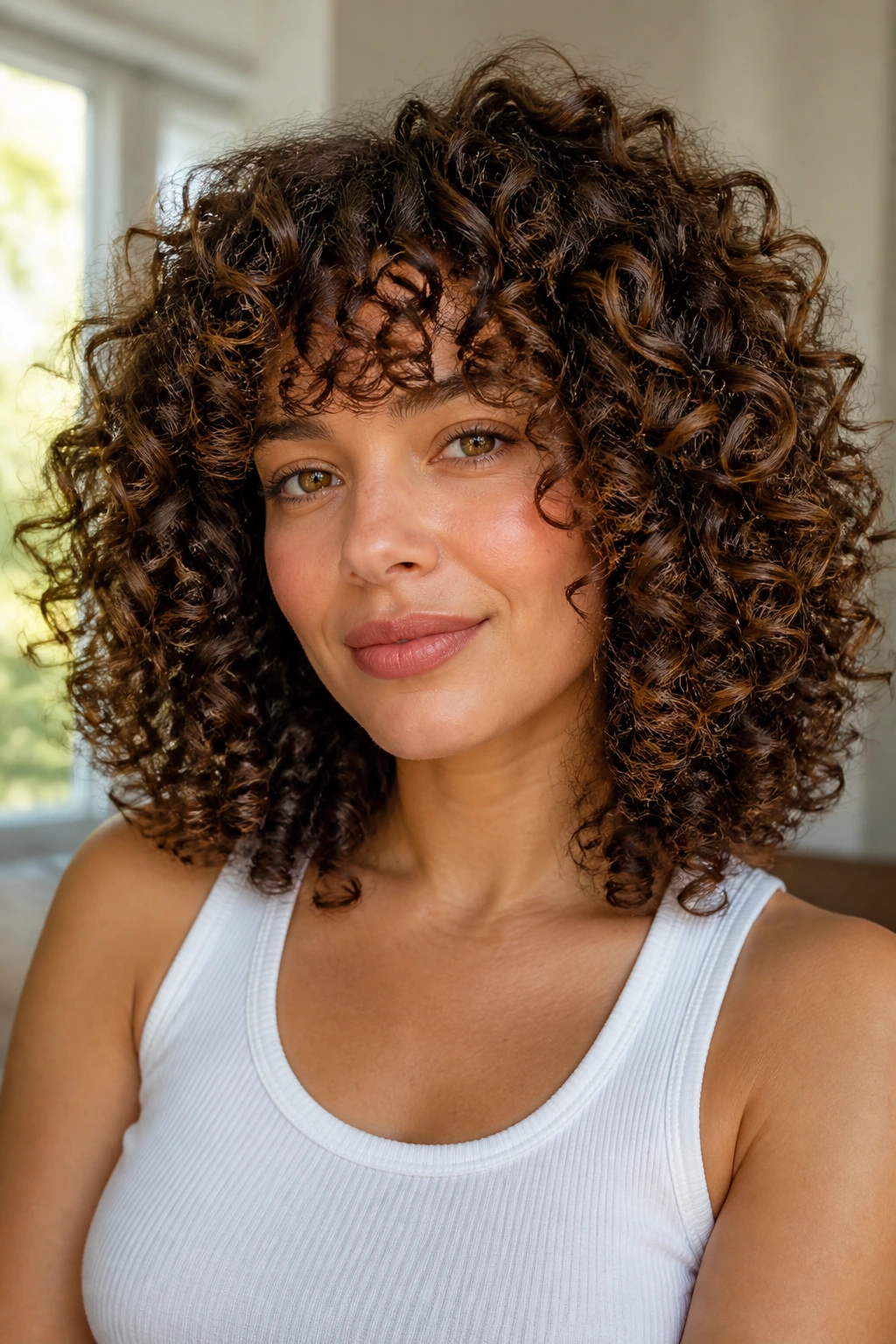
Curly thick hair has one major complaint about bad layering: the pyramid. Too much bulk gets left at the bottom, or the layers are cut in the wrong places, and suddenly the hair stacks outward instead of down. Good curly layers solve that by letting the curls sit on top of each other in a real shape.
Cut It in the Curl’s Own Shape
Dry-cutting, or cutting curls in their natural state, often gives the best result because the curl spring is visible. A curl that looks long when wet may shrink an inch or more when dry, and that changes where each layer lands. A stylist who understands that will shape the cut around the curl, not against it.
Best Way to Wear It
- Diffuse on low heat and low speed.
- Use a curl cream or gel with enough hold to keep the pattern separate.
- Scrunch out the crunch once the hair is fully dry.
- Ask for layers that create roundness, not a sharp stack.
Curly thick hair can look enormous when it’s cut badly. It can also look spectacular when the shape is right. That is the whole game.
13. Tapered Layers With a Blunt Bottom Edge
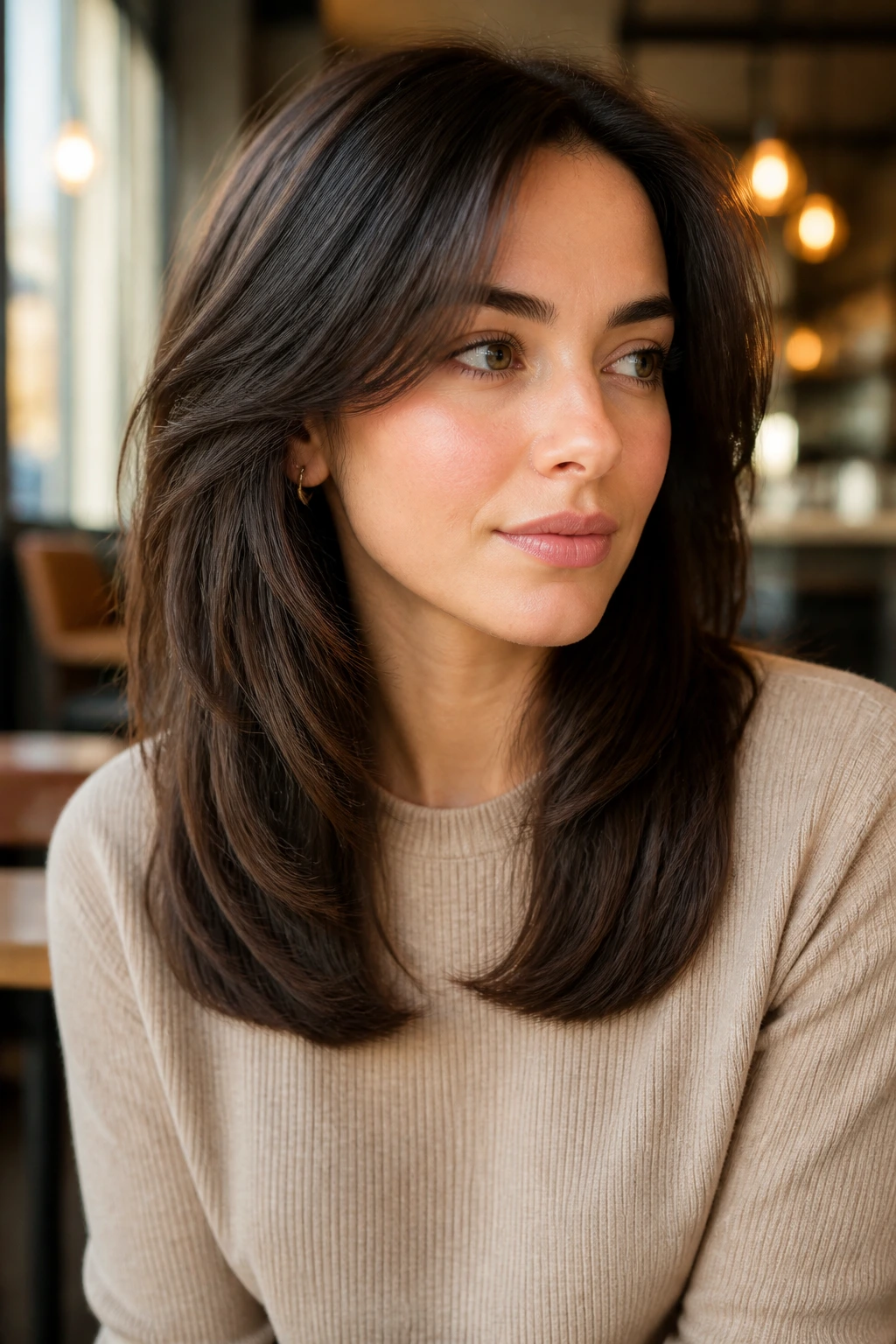
This is the cut for someone who wants movement but refuses to give up that solid, heavy line at the ends. Tapered layers pull some bulk out of the interior and upper lengths, while the bottom stays blunt and full. On thick hair, that contrast looks polished instead of bulky.
I prefer this shape for people who like their hair to feel dense and luxurious but not helmet-like. The ends keep their weight, which helps the haircut fall neatly over the shoulders. The taper does the quiet work under the surface.
A blunt edge also makes the hair easier to style fast. You can rough-dry it, smooth the top, and leave the ends alone. They already do the heavy lifting. This is a calm haircut with a lot of structure underneath.
If you’ve had too many wispy layers and you miss a strong finish, this is the correction.
14. A Deep Side-Part Layered Lob

A deep side part can change a thick layered lob more than an entire extra inch of cutting. It shifts volume to one side, creates lift at the root, and makes the cut look fuller without adding more layers. For anyone whose crown goes flat or whose hair falls in one stubborn direction, that matters.
The lob itself should stay around collarbone length, with layers that encourage bend rather than fluff. A deep part gives the style a little drama, but the haircut has to support it. If the layers are too short, the side part can turn lopsided fast.
I like this cut for people who want something easy to refresh during the day. Flip the part, bend the ends with a flat iron or 1.25-inch iron, and suddenly the hair has a different personality. Small change, big payoff.
It’s also one of the best cuts for thick hair that needs body on top more than it needs more volume everywhere.
15. The Wolf Cut for Thick Hair That Wants Edge
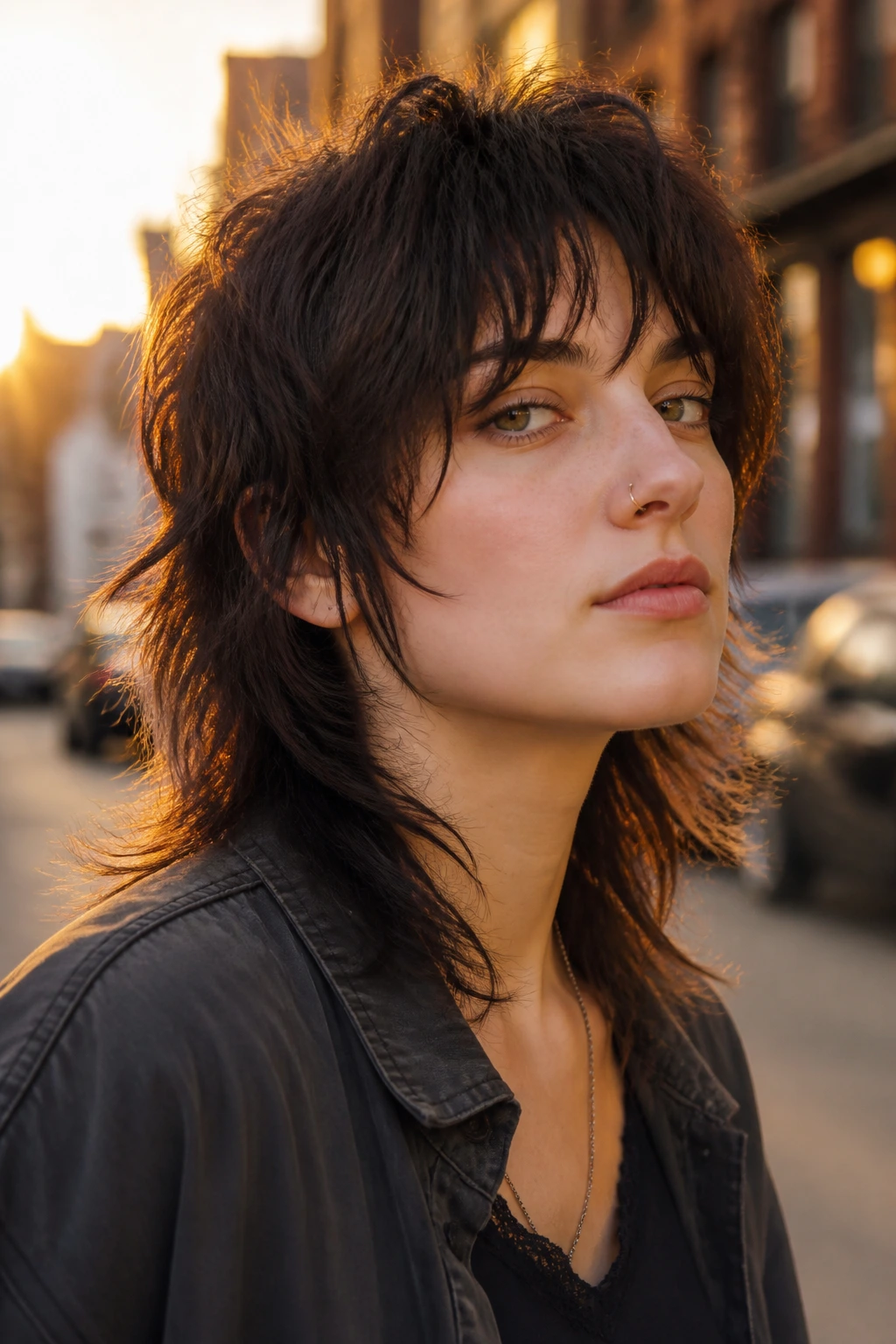
The wolf cut gets overdone fast, and most of the bad versions fail for the same reason: too many short pieces, not enough plan. On thick hair, though, the right wolf cut can be fantastic because the density supports the shape. You get crown lift, face framing, and textured ends without the haircut collapsing.
How to Keep It Chic
Ask for longer top layers than you think you need. That keeps the cut from drifting into mullet territory unless that’s the goal. The fringe should blend, not sit like a separate costume piece.
- Keep the perimeter long enough to anchor the shape.
- Let the crown be choppy, but not spiky.
- Use texture paste or light mousse, not a heavy cream that turns the top soft and flat.
- Skip aggressive thinning on the ends.
The wolf cut works best when it looks deliberate, a little messy, and still balanced. It should have attitude, not chaos.
16. Soft Rounded Layers for a Polished, Full Shape
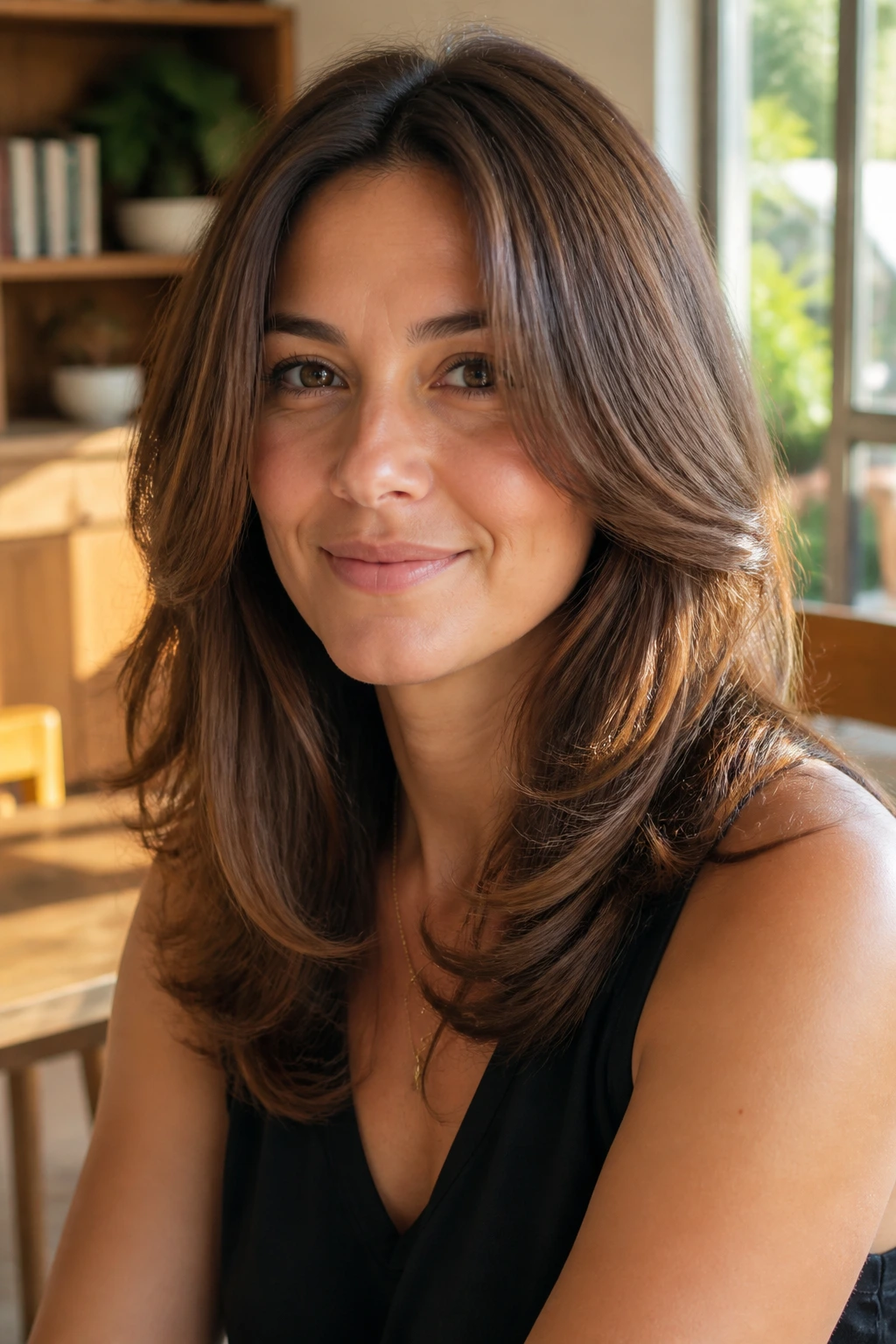
Square cuts can make thick hair feel blocky. Rounded layers solve that by curving the shape around the head, jaw, and shoulders so the whole style feels smoother. There’s no harsh corner at the bottom, and no obvious shelf where one layer ends and the next begins.
This is one of the best cuts for someone who wants fullness but hates anything too shaggy. The roundness keeps the hair from sitting out in a box. It also grows out gracefully, which matters more than people admit. Hair spends more time growing than it does in the salon chair.
Nope, it’s not boring. It’s practical.
A rounded shape looks especially good when the hair is blow-dried with a large brush, then tucked under just a little at the ends. The finish is soft, clean, and easy to wear with both casual and dressier clothes. It’s one of the most forgiving choices on this list.
17. Internal Crown Layers for Reducing Bulk Up Top
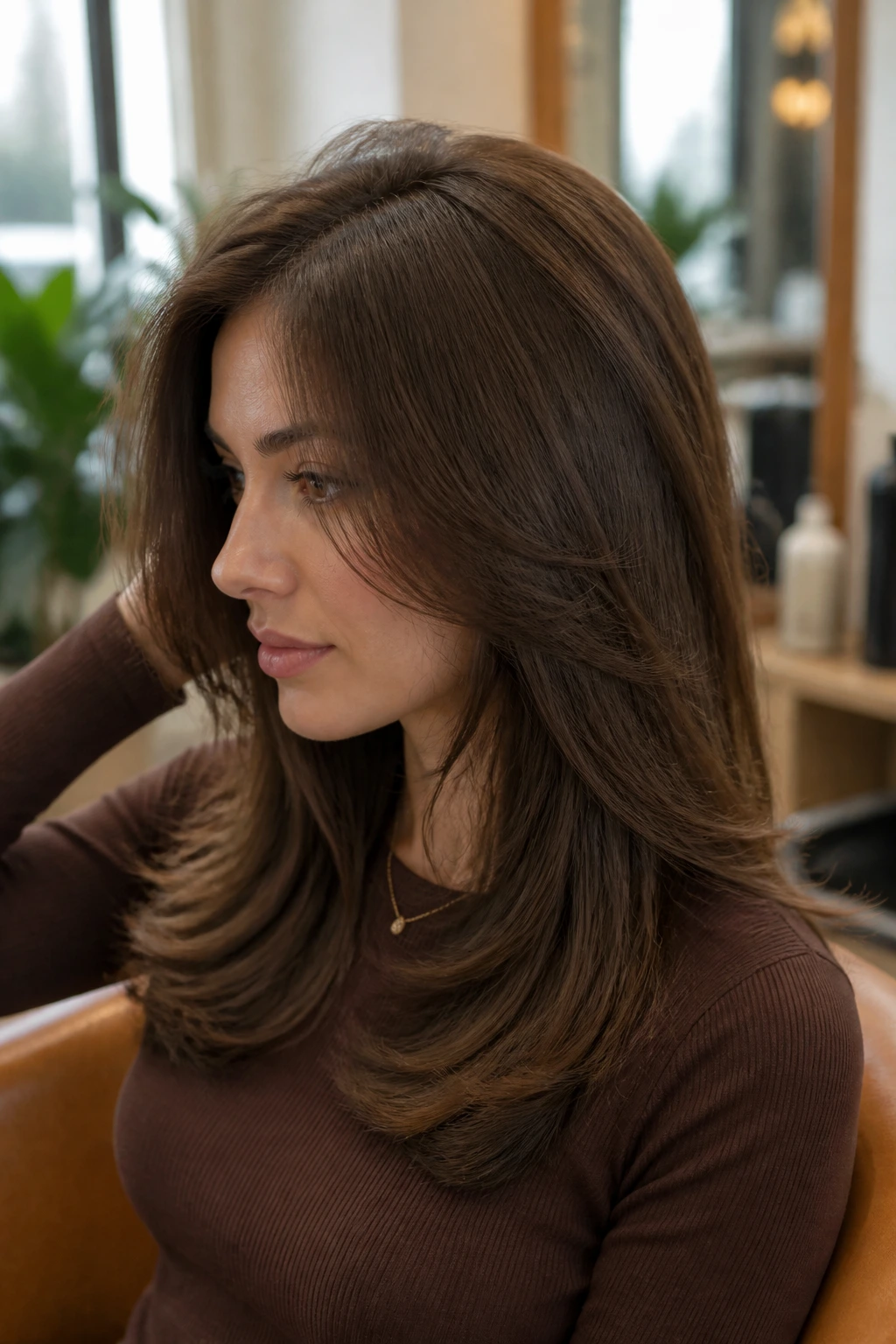
Some thick hair isn’t heavy at the ends. It’s heavy at the crown. That’s when internal crown layers earn their keep. Instead of removing length from the outside, the stylist cuts hidden layers in the top third of the head to reduce the “helmet” effect that dense hair can create.
This technique is useful if your hair looks too wide through the top but still feels thin enough at the ends that you want to protect the perimeter. The trick is to lift enough weight out of the crown so the silhouette sits closer to the head, but not so much that the top turns wispy.
What to Ask For
Say you want invisible shaping through the crown and keep the outer line full. Those words matter more than asking for “some layers.” Some layers can mean anything, and on thick hair, vague requests usually lead to regret.
Who It Helps Most
- People whose hair puffs near the roots.
- Anyone who wears a middle part and wants less width.
- Thick straight hair that lies too flat in the wrong places and too full in others.
The cut is subtle, but the difference is not. It changes the shape without screaming about it.
18. Choppy Mid-Length Layers for Airy Movement
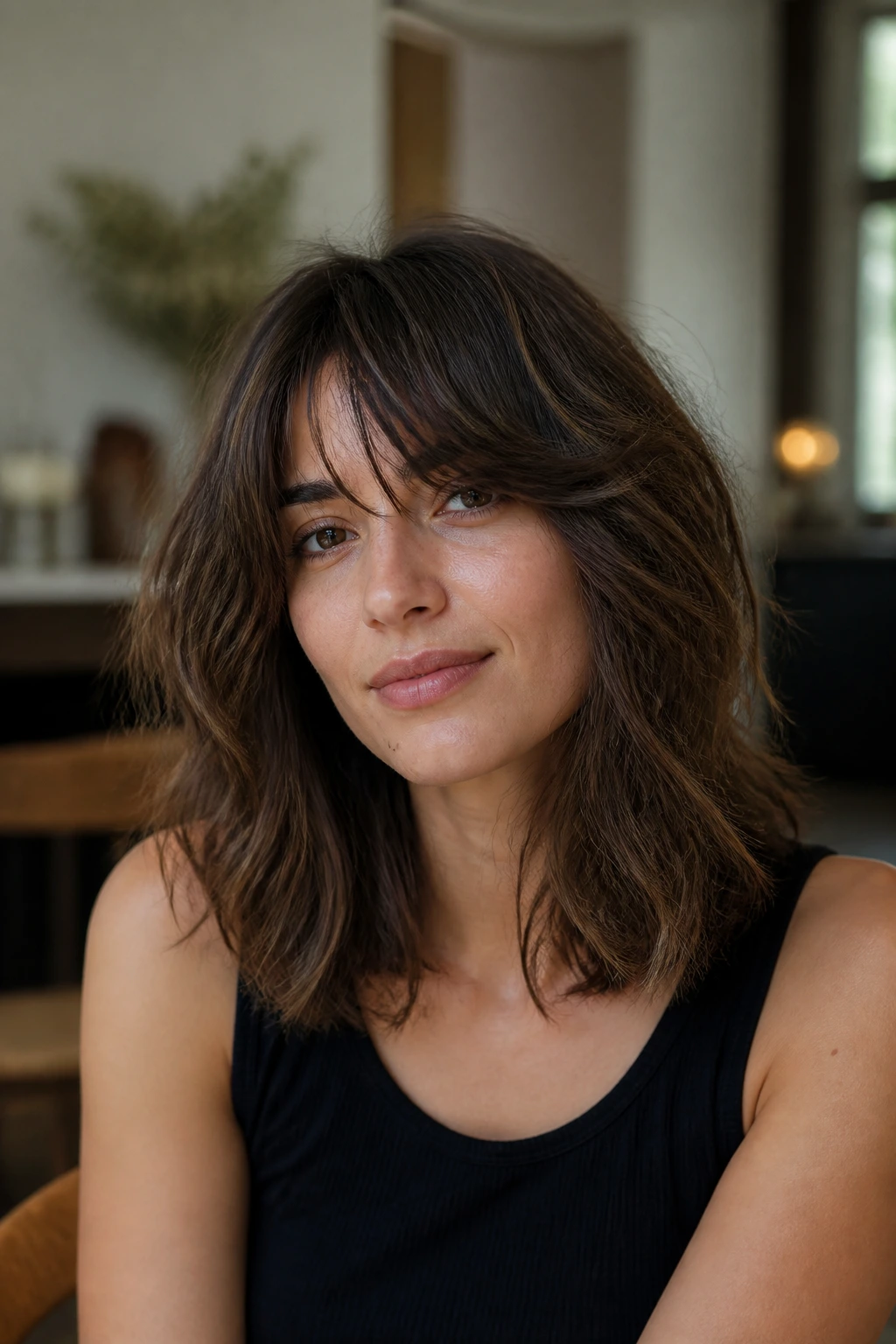
What if you like a little mess in your hair, but not the full shag? Choppy mid-length layers hit that middle ground. They work especially well on thick hair that sits around the shoulders or collarbone and wants movement without looking overstyled.
The ends are usually point-cut or lightly textured so they don’t make a heavy, blunt block. That keeps the shape from feeling too perfect. I like this cut for people who air-dry a lot and don’t want to wrestle with a brush every morning.
It does have a personality. Clean, sleek hair can make choppy layers look too broken up if the cut is taken too far. So if you love a smooth finish, this may not be your cut. If you like a little texture spray and finger-styling, it can be a good fit.
This is the haircut for movement, not polish.
19. Piecey Layers With Long Fringe

Piecey layers are the haircut equivalent of leaving the room before it gets too serious. They break thick hair into readable sections, which helps when your hair tends to look like one giant mass. A long fringe softens the front while the layers around the sides and ends create separation and lightness.
I like this on second-day hair. A little dry shampoo at the roots, a quick twist with a 1-inch curling wand through a few front pieces, and the haircut wakes right up. That makes it handy for people who do not want to start from scratch every morning.
The Details That Matter
- Keep the fringe long enough to tuck back.
- Ask for separation, not shredded ends.
- Use a light spray or cream that gives hold without weighing the pieces together.
- Let a few front tendrils stay longer than the rest.
The best piecey cuts look accidental in the good way, not careless in the bad one. That’s a narrow line, and a good stylist knows it.
20. A Layered Pixie or Bixie for Thick Hair
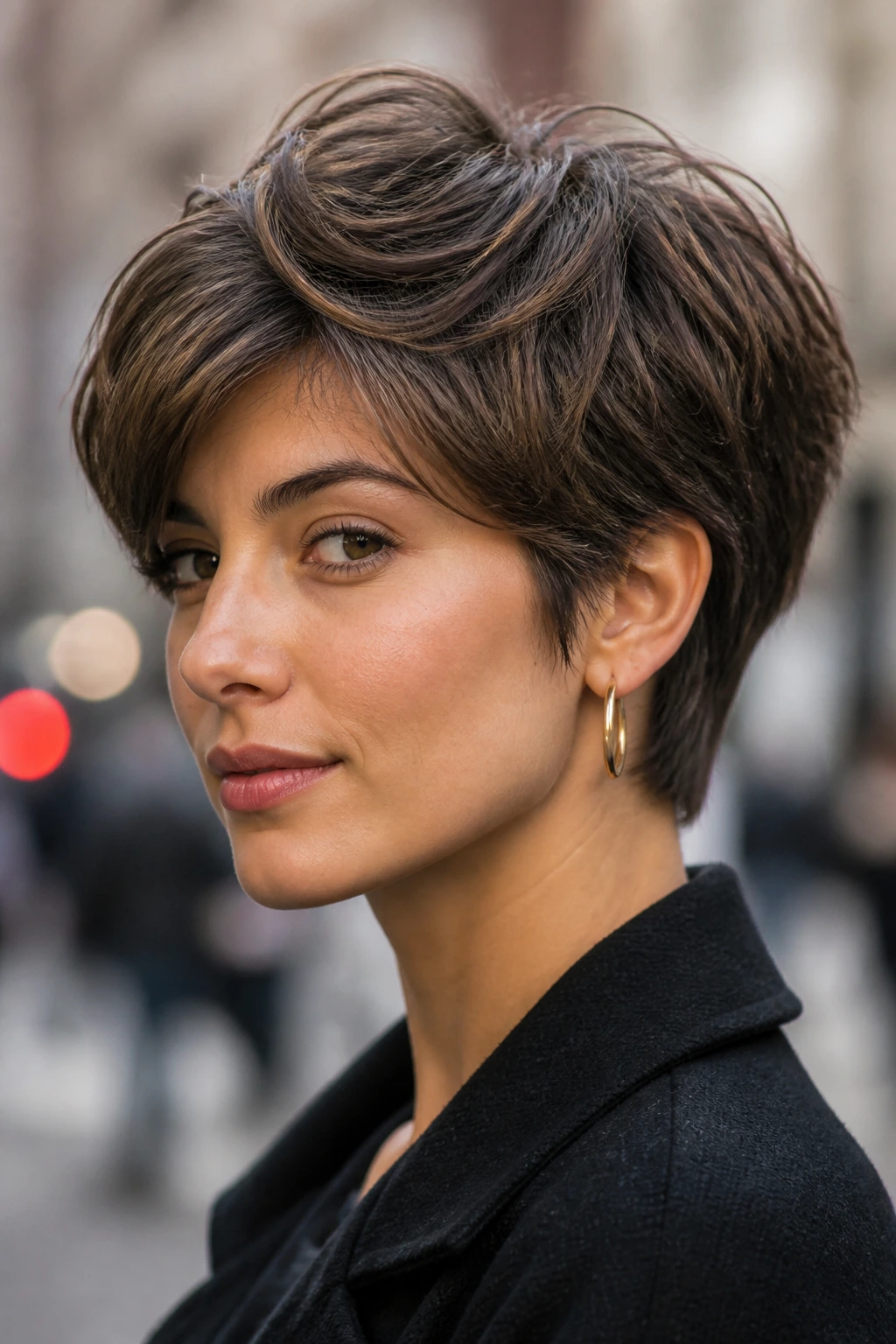
Short hair on thick hair can be excellent when it’s cut with intention. A layered pixie or bixie — that in-between length with a pixie feel and a little more softness — takes advantage of density instead of fighting it. The hair has enough body to hold shape, which means the crown can lift, the sides can hug the head, and the top can stay piecey instead of flat.
The Small Details That Make It Work
A good short layered cut on thick hair needs shape in the nape, length on top, and enough softness around the ears to keep it from looking helmet-like. Ask for the top to stay longer than the sides so you can push it forward, sweep it over, or fluff it up with a bit of paste.
- Keep the nape tapered, not bulky.
- Leave at least 2 to 3 inches on top for styling options.
- Use a matte paste or light pomade on the ends.
- Ask for texture only where the hair is dense, not everywhere.
This cut is not for someone who wants to air-dry and leave the house without thinking. It does ask for a minute or two of styling. But it pays you back fast. Thick hair makes short layers look full, not flimsy, and that’s a rare advantage.
The right layered pixie does not shrink your hair. It gives it shape, and that’s a better deal.
