



Thick hair at shoulder length can be a gift or a headache, sometimes in the same afternoon. The right shoulder length layered cuts for thick hair take that density and turn it into swing, shape, and movement; the wrong ones puff at the ends, sit like a box, or swell the second humidity shows up.
That’s why a good cut matters more than a great blowout. You can smooth thick hair into submission for one day, maybe two if you’re lucky. But if the shape underneath is off, you spend every morning negotiating with your own head.
The trick is not to strip the hair thin. That’s bad advice, and I see it ruin more thick hair than it helps. What thick hair usually needs is smart weight removal, a perimeter that makes sense, and layers placed where they change the silhouette instead of just hacking at the bulk.
Some of the cuts below are polished and clean. Some are shaggy and loose. A few are built for a round brush, others for a diffuser, and a few can survive an air-dry with a little cream and a prayer. The useful part is knowing which shape does what before you sit in the chair.
1. Collarbone Layers with Soft Face-Framing Pieces
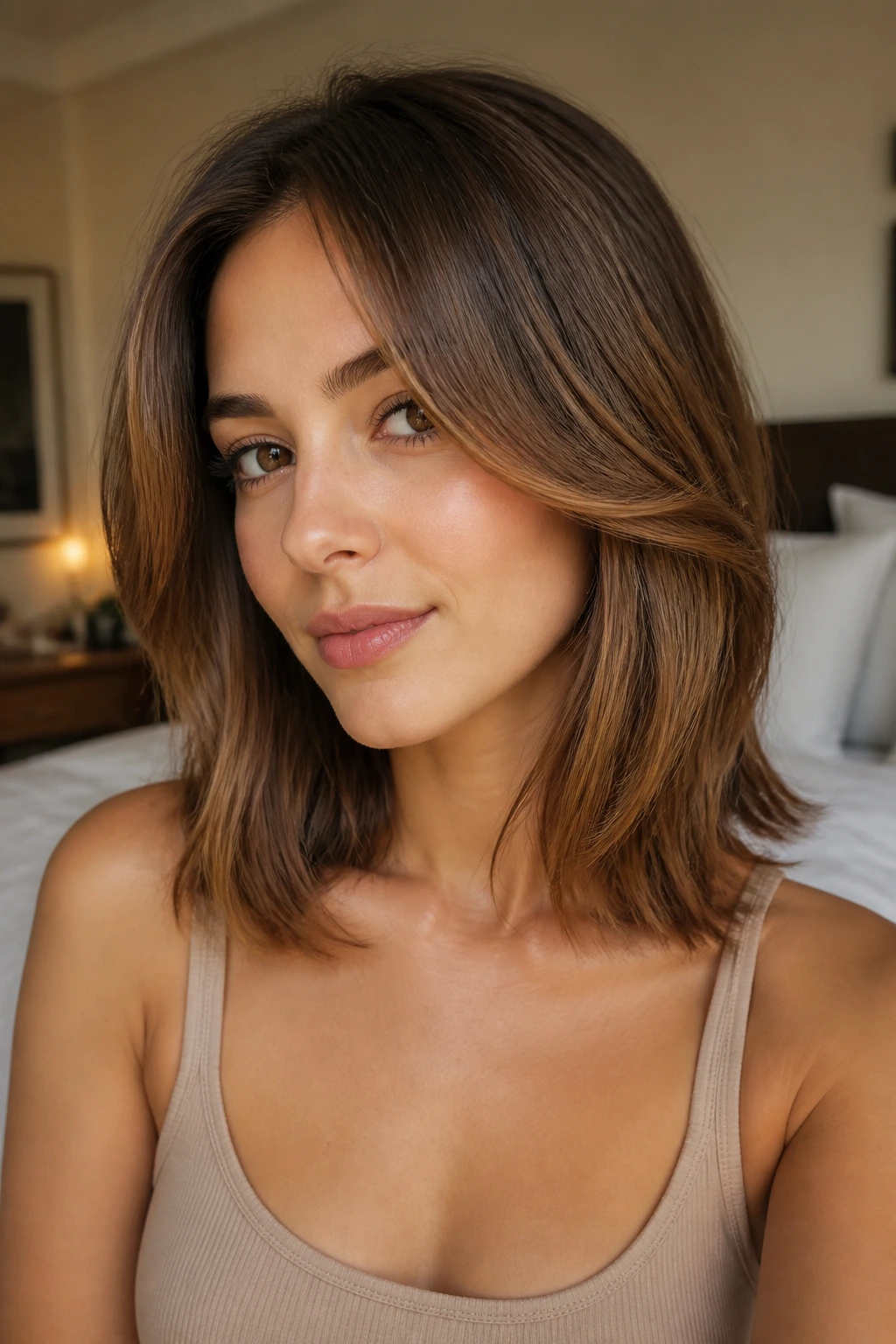
This is the cut I recommend when thick hair needs movement but you still want it to look like hair, not a stack of texture tricks. The length lands near the collarbone, which gives you enough weight to keep the ends from flaring out, while the front pieces skim the cheekbones and jaw.
Why It Works for Dense Hair
The best thing about this shape is the way it keeps the perimeter grounded. Thick hair can get puffy fast at shoulder length, and a slightly longer front softens that edge without making the whole cut feel heavy. It’s tidy. Not severe.
Ask for the shortest face-framing pieces to start around the cheekbone, then let the longer layers fall into the collarbone zone. That keeps the top from ballooning while still giving you movement near the face.
- Best for: straight to wavy thick hair
- Styling note: a 1.25-inch round brush gives the front pieces a clean bend
- Maintenance: a trim every 8 to 10 weeks keeps the shape honest
- Watch for: layers cut too high, which can make the crown look frizzy
One good rule: if your hair already has a lot of body, keep the layers soft and the ends blunt-ish.
2. Butterfly Layers with Lift at the Crown
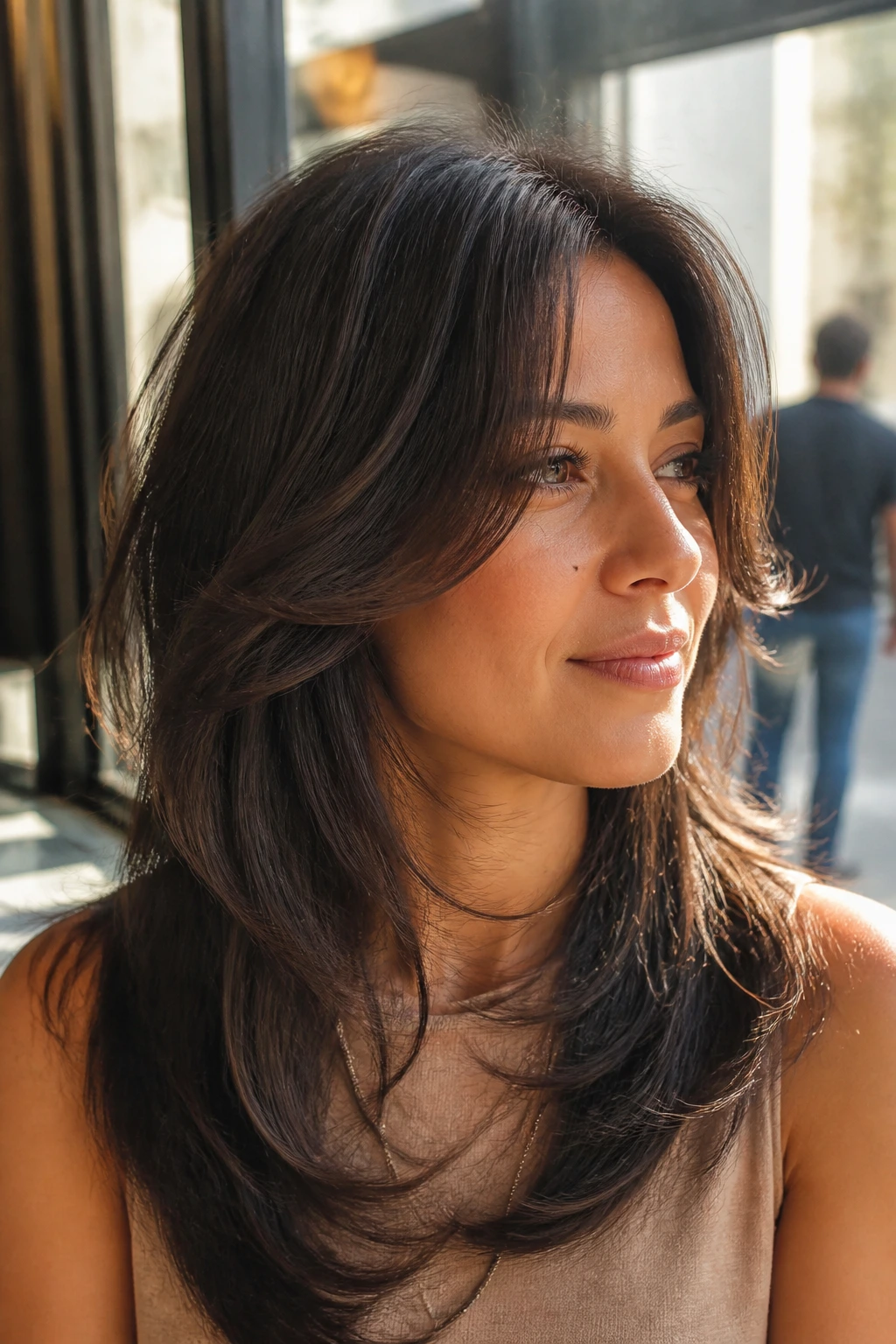
Butterfly layers are the cut that makes thick hair look lighter without looking thinned out. That’s the whole appeal. You get shorter pieces around the face and crown, then longer lengths underneath, so the hair opens up instead of sitting as one heavy sheet.
This shape works especially well if your hair feels dense at the top and bulky through the mid-lengths. The top layers create lift when you blow-dry, but the long bottom layers keep enough weight to stop the ends from fraying into fuzz. It’s a smarter version of volume. Less drama, more control.
The catch is placement. If the crown layers are too short, the whole cut can start to feel jumpy and over-styled. You want the shortest pieces to fold into the rest of the hair, not sit on top like a separate haircut. A blowout brush helps, but the shape should still make sense when you let it fall naturally.
If you like a bouncy finish and don’t mind a little styling time, this one earns its keep fast.
3. Feathered Shag with Tapered Ends
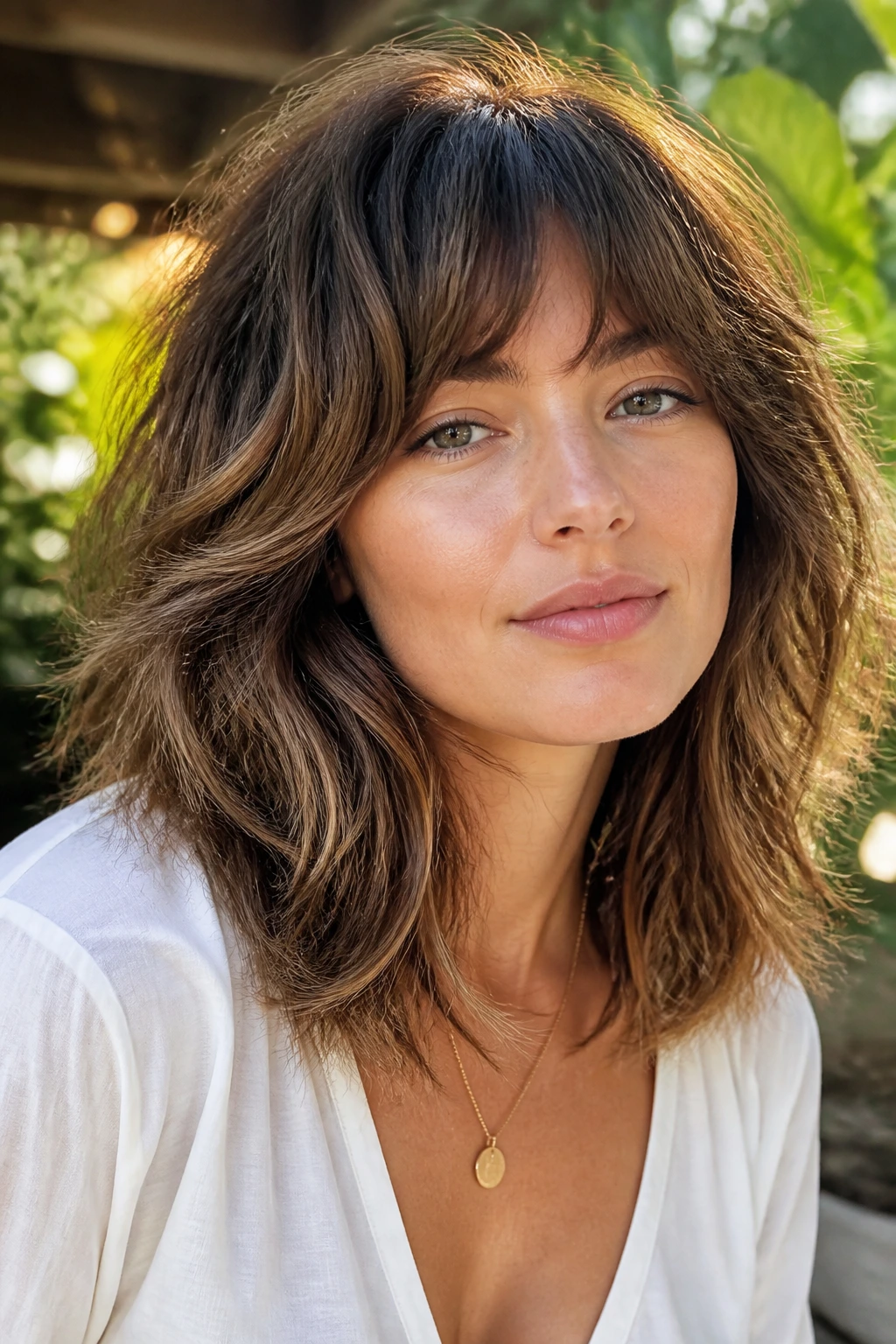
Why does the shag keep coming back? Because thick hair can wear texture better than thin hair can. A feathered shag uses that density instead of fighting it, and the tapered ends keep the cut from turning into a triangular blob.
The best version lands right at shoulder length or a touch below it. That gives the layers room to stack without making the overall look too short or too choppy. If your hair has a natural wave, even better. The cut will pick up bend in all the right places and look alive instead of over-made.
How to Wear It
A little mousse at the roots and a diffuser is enough if your hair is wavy. Straight hair needs a bit more help, usually from a round brush or a quick pass with a flat iron to bend the ends outward. Don’t overthink the finish. The shag looks better when it moves.
- Best for: wavy, coarse, or thick hair with some texture
- Ask for: feathering around the face and tapered ends through the bottom
- Skip if: you want a sleek, glossy look every day
- Best styling tool: diffuser or medium round brush
It’s a cut with personality. No pretending otherwise.
4. Blunt Lob with Hidden Interior Layers

If your thick hair tends to feel boxy, this cut is a quiet fix. From the outside, it reads as a blunt lob, which gives you that strong line and clean finish. Underneath, though, the interior carries subtle layering that removes weight where you don’t want it.
That hidden structure matters. A lot. Thick hair often looks best when the edges stay full and the inside gets the lightest touch of debulking. Too many visible layers at this length can make the ends look wispy, and wispy ends on thick hair usually age the cut fast.
This is the haircut for people who like polish more than fuss. It sits well in a ponytail, it flips under neatly, and it doesn’t scream for product. You’ll still want a smoothing cream or heat protectant if you blow-dry, but the shape itself does most of the work.
A clean lob with invisible weight removal is one of those cuts that looks expensive because it behaves.
5. Curtain Bangs and Long Shoulder Layers

Curtain bangs are popular for a reason, and on thick hair they make even more sense than they do on finer textures. They break up the front line, pull attention to the eyes, and let the rest of the hair fall in long shoulder-skimming layers that don’t feel heavy.
The nice part is that curtain bangs don’t demand a full fringe commitment. They grow out gracefully, which matters if you change your mind halfway through. Thick hair gives them enough body to curve away from the face instead of collapsing flat, and the longer side pieces blend into the layers below them.
I like this cut on people who wear a middle part most of the time but want a little softness around the face. It can make a broad forehead look balanced and a strong jaw look gentler, without chopping the hair into a bunch of short pieces. That balance is the win here.
If you blow-dry only one part of your hair, make it the bangs. The rest can do its own thing.
6. U-Shaped Layers That Keep the Length
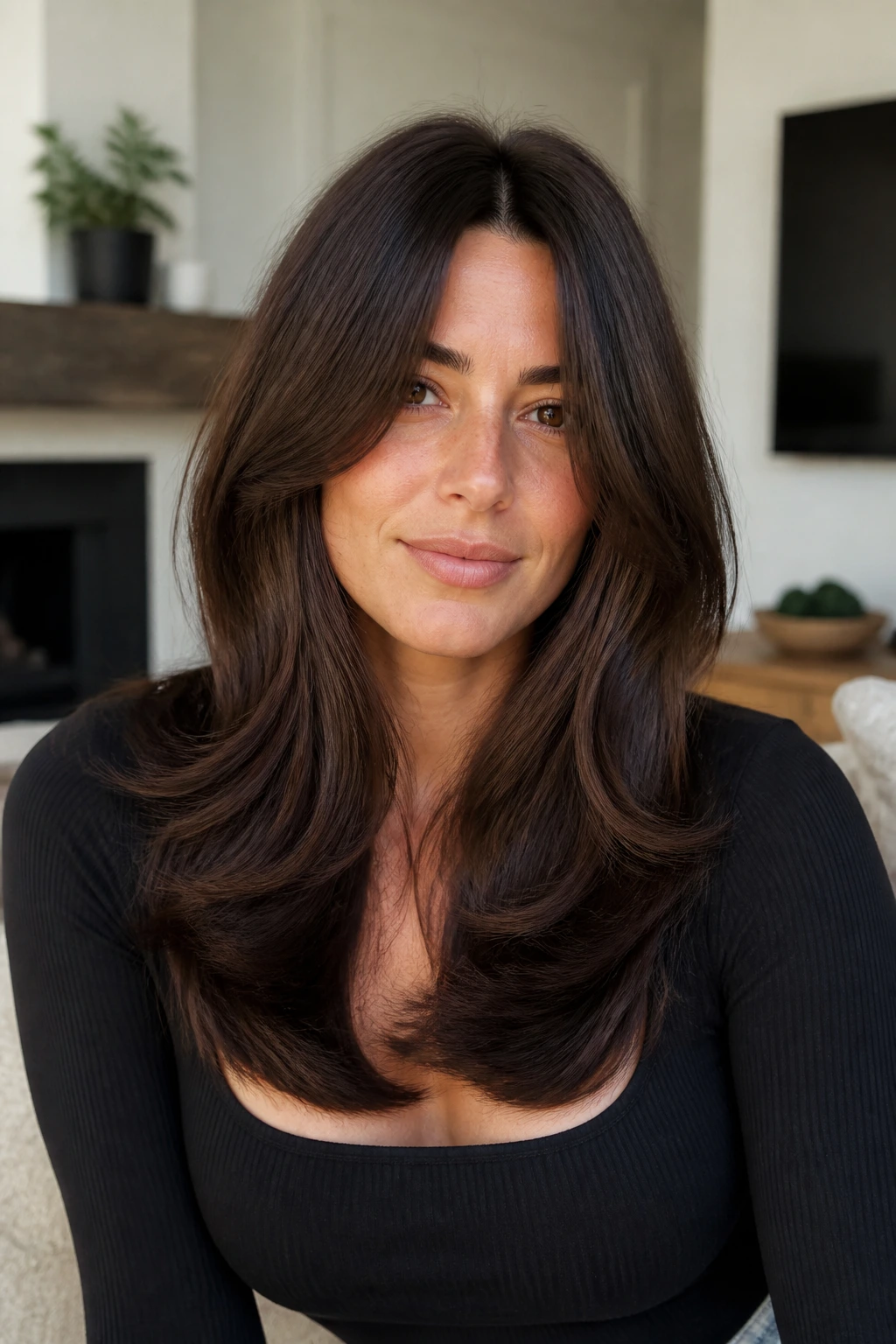
A U-shaped cut sounds subtle because it is subtle, and that’s exactly why it works on thick hair. The back stays a little longer than the sides, so the silhouette curves softly instead of cutting off in a hard line. The effect is smooth and expensive-looking without trying too hard.
Compared with a straight-across hem, this shape takes some visual bulk out of the sides. Compared with a heavily layered shag, it keeps the body of the hair intact. That middle ground is useful if you love thick hair but hate the feeling of it sitting like one big block.
This cut is especially good when you wear your hair down a lot. It gives the impression of movement even when the hair is just hanging there. Ask your stylist to keep the longest layer close to the upper back and let the front angle in a touch.
The U-shape is not flashy. That’s the point.
7. Razored Lob for Dense, Heavy Hair

A razor can be a gift or a mess, depending on who’s holding it. On dense thick hair, a razored lob breaks up weight fast and gives the ends a piecey, airy look that scissors alone sometimes can’t create. When it’s done well, the cut feels lighter without looking over-thinned.
What to Ask For
You want soft slicing through the mid-lengths, not a shredded perimeter. That distinction matters. A heavy-handed razor job can leave thick hair frizzy at the ends, especially if your hair is coarse or prone to puffing in humidity. A careful stylist will feather the interior and keep the outside line clean enough to hold shape.
Who This Suits
- Thick hair that feels stiff or helmet-like
- Wavy textures that need movement
- People who like a lived-in finish with minimal fuss
My opinion: this cut looks best when you lean into texture products instead of fighting them. A small amount of cream or light paste, rubbed through damp hair, goes a long way.
If your hair takes forever to dry, a razored lob can cut down the bulk enough that your styling time drops too.
8. Choppy Midi Cut with Side-Swept Fringe
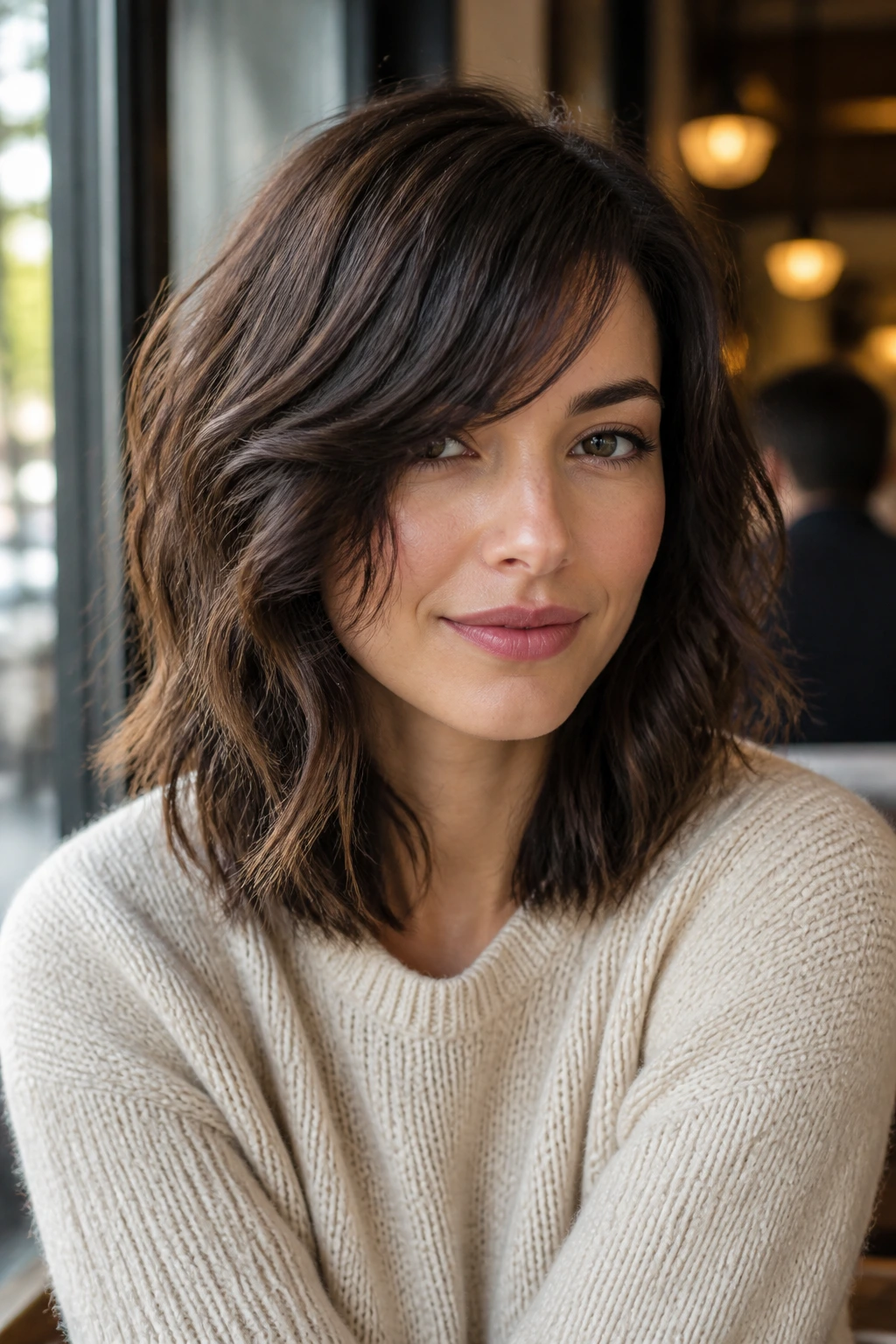
This is the cut for thick hair that needs edge, not extra puff. The choppy midi length sits around the shoulders, and the side-swept fringe breaks up the front so the whole shape feels less symmetrical and more alive.
The chop matters because it keeps the eye moving. Thick hair can sit too steadily if every layer is the same length. A little irregularity changes that. It keeps the silhouette from becoming stiff, especially if your hair has a natural bend or you like to rough-dry it instead of blow-drying every time.
Side-swept fringe also helps with volume control. It redirects fullness away from the center of the face and gives you a softer line near the temples. That’s useful if your hair spreads wide when it dries.
This cut suits square and oval faces especially well, but honestly, it’s one of those shapes that just looks good when the texture is doing some of the talking. It doesn’t need a perfect finish. Good news, because thick hair rarely gives you one without a fight.
9. Rounded Layers for Straight Thick Hair
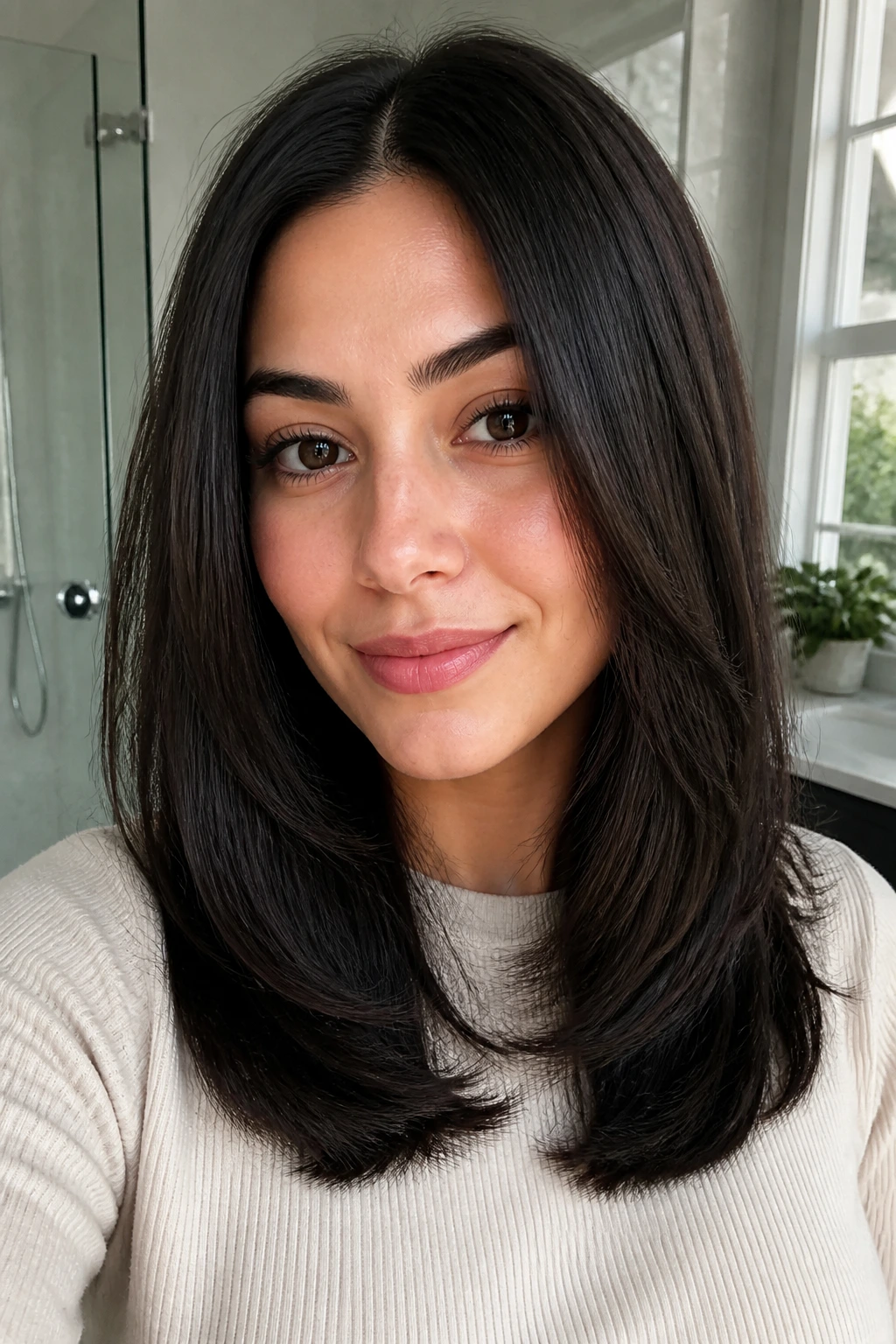
Why do rounded layers matter so much on straight thick hair? Because straight texture shows every hard line. If the cut is too blunt, the ends can stick out like a shelf. If it’s too shaggy, the weight disappears in the wrong places and the hair loses its shape.
Rounded layering fixes that by curving the silhouette inward. The back and sides taper gently, so the hair hugs the head a little better and doesn’t feel wide at the cheeks or flared at the shoulders. It’s especially useful if your hair is thick but not especially wavy, since straight texture can make blunt cuts look boxy fast.
How to Wear It
Use a paddle brush first, then finish the ends with a medium round brush so they bend under just enough to show the shape. You do not need a barrel curl. You need a curve.
- Works best with: medium to coarse straight hair
- Styling time: about 10 to 15 minutes for a clean blow-dry
- Finish with: a pea-size smoothing cream
- Avoid: too much texturizing spray, which can make straight thick hair feel rough
It’s a practical cut, but not a dull one.
10. Center-Part Layers with Long Front Pieces
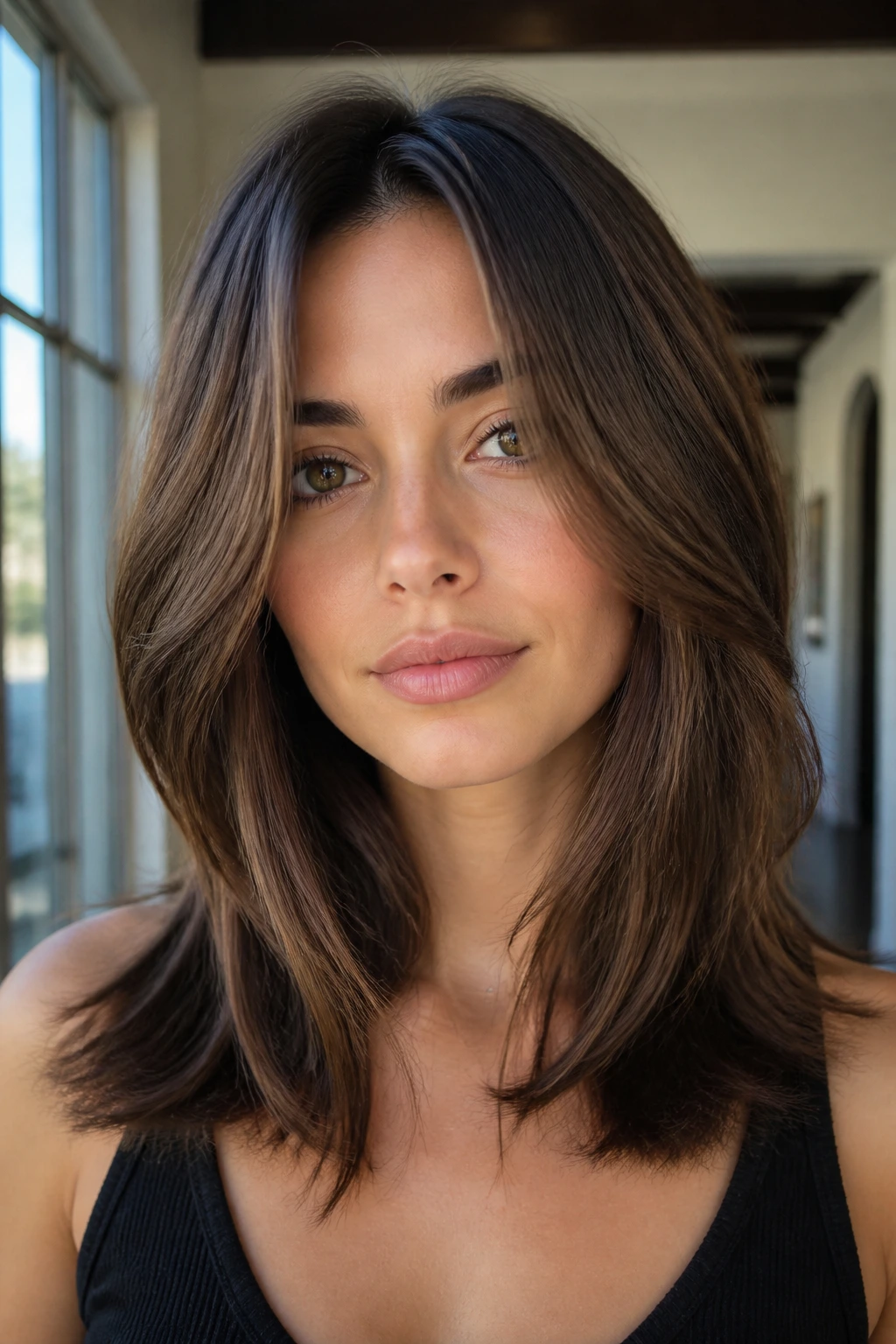
A center part on thick hair can look severe if the cut is wrong. Give it long front pieces, though, and the whole thing relaxes. The sides soften, the face opens up, and the shoulder-length layers fall in a way that feels balanced instead of heavy on one side.
I like this shape for people who want their hair to look symmetrical and calm. There’s no big fringe to babysit, no dramatic angle to keep in line. The long front pieces do the talking, and the rest of the haircut stays focused on movement through the lengths.
The trick is to keep those front pieces long enough to tuck behind the ears without sticking out. A few inches below the chin is usually the sweet spot, though that depends on your face shape and neck length. Thicker hair can handle the extra length because it won’t disappear the moment you layer it.
If you wear glasses, this cut behaves well. That alone makes it worth considering.
11. Invisible Layers for a Sleek Finish
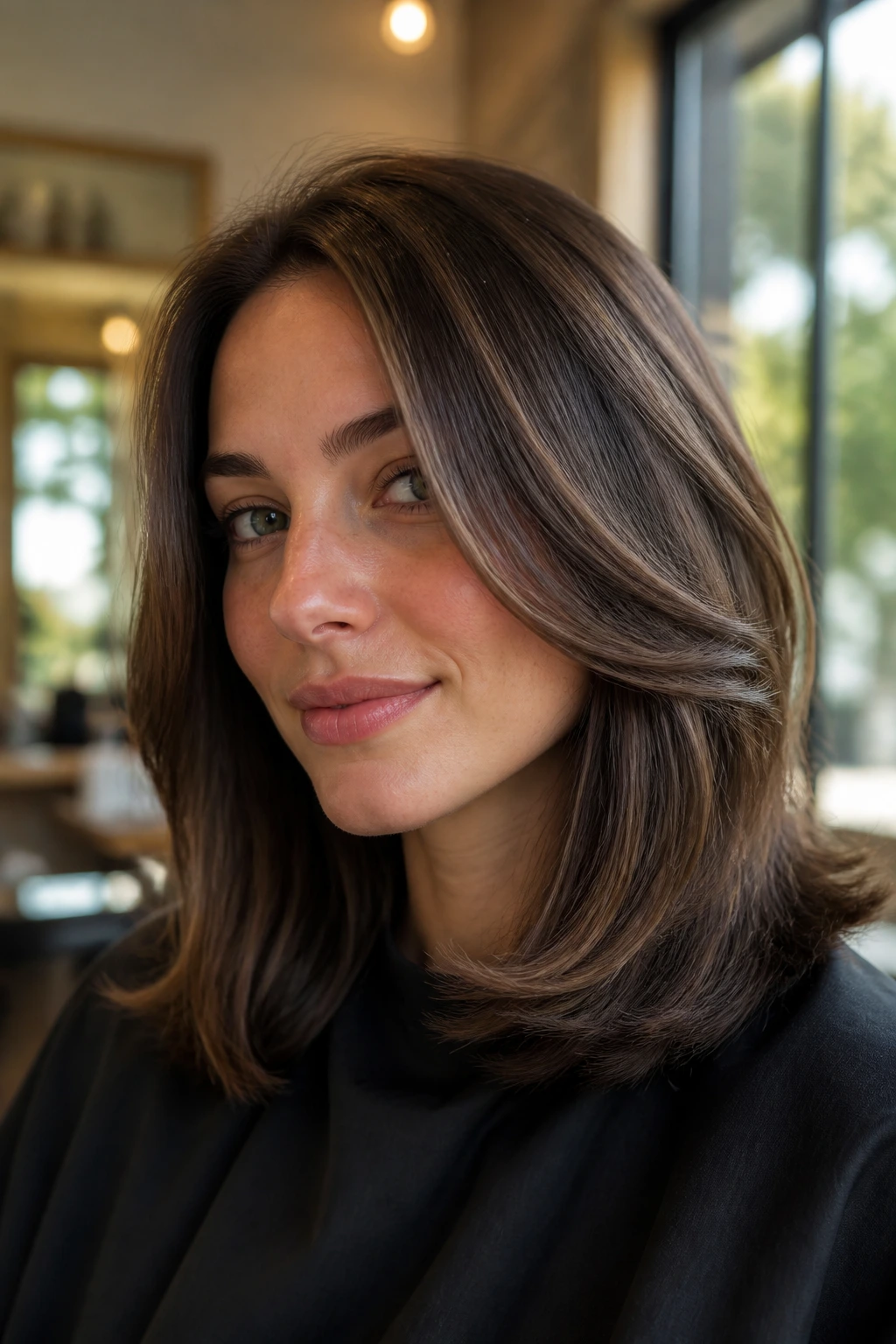
Invisible layers are for people who want movement without the obvious “I got layers” look. The haircut keeps the outer shape clean while removing weight inside the hair, so thick strands fall more smoothly and don’t bunch up at the shoulders.
The benefit is subtle until you style it. Then it becomes obvious. The hair dries with a softer bend, the ends lie flatter, and the whole shape looks controlled without feeling flat. It’s a strong choice if your thick hair gets bulky fast but you still want a polished surface.
This is one of those cuts that rewards a good blow-dry brush and a little patience. But it also works better than you’d think on air-dried hair, especially if you add a smoothing cream to damp lengths and leave the roots mostly alone.
No one will point and say, “Ah, invisible layers.” They’ll just notice that your hair sits better. Which is kind of the whole point.
12. Wolf Cut Lite at Shoulder Length

The wolf cut gets a lot of attention, and honestly, most versions are too extreme for everyday thick hair. The shoulder-length version is the useful one. Shorter crown layers create lift, longer bottom layers keep the weight, and the whole thing has a rougher, cooler shape without turning into a costume.
Compared with a full shag, this cut is a little less wild and a little easier to live with. Compared with a traditional layered lob, it has more attitude. That makes it a good middle ground if your thick hair looks flat when it’s too controlled but feels huge when it’s all one length.
It also works well if you already like a bit of mess in your styling. A spray with a soft hold, a quick scrunch, and maybe a diffuser is enough. The cut wants movement, not precision.
If your hair is thick and you get bored easily, this one has enough personality to stay interesting.
13. Angled Lob with Extra-Long Fronts
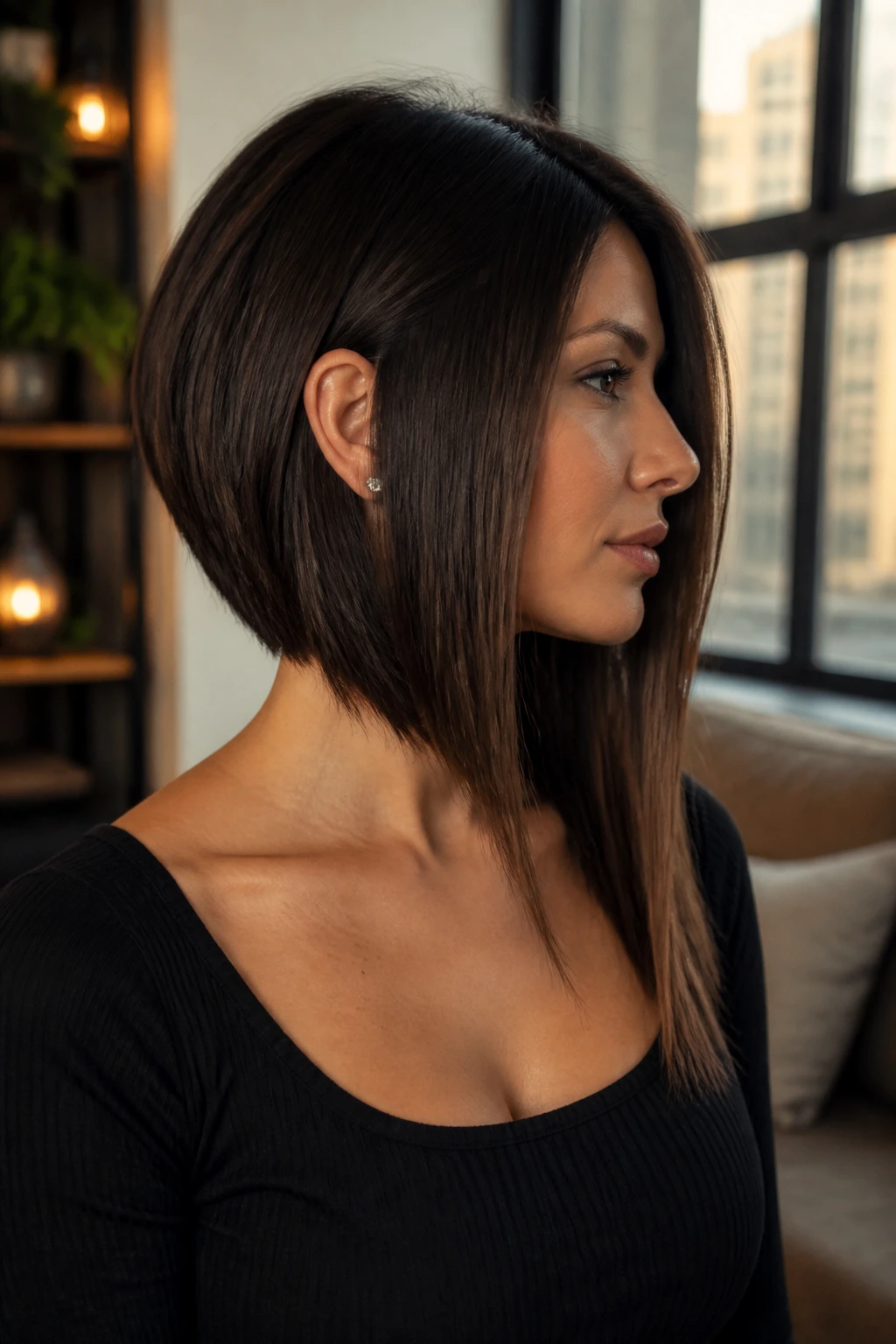
An angled lob is the haircut version of a good side profile. The back sits a little shorter, the front stretches longer, and thick hair gets a shape that feels lean without losing density. That front angle can be dramatic or modest, depending on how much length you want to keep.
What Makes It Different
The angle draws the eye downward, which helps thick hair look less wide at the shoulders. It also makes the neck look a touch longer, especially when the hair is tucked behind one ear. I like that trick because it’s simple and it works.
How to Ask for It
- Keep the back near the shoulder line
- Let the front fall 1 to 3 inches longer
- Use soft layering through the interior, not choppy steps
- Ask for the front to frame the collarbone, not stop at the jaw
This cut suits round faces, but it’s not exclusive to them. Anyone who wants a sharper outline without going full asymmetric can wear it well. The front pieces give you movement; the shorter back keeps the shape from sagging. Clean. Smart. Easy to style.
14. Layered Cut for Wavy Thick Hair

Wavy thick hair needs layers that follow the wave, not fight it. That’s the difference between a haircut that sits nicely and one that explodes into a triangle by lunch. When the layers are placed with the wave pattern in mind, the cut has room to bend, curl, and settle on its own.
The best version of this cut usually lands around the shoulders with soft graduation through the ends. You want enough removal to stop the hair from stacking up, but not so much that the wave pattern loses its weight and turns fluffy. That balance matters more than almost anything else here.
A good stylist will often dry some of the hair first, then refine the shape while the wave pattern is visible. That’s the practical part most people miss. Thick wavy hair changes when it dries, and a cut done only on wet hair can end up wrong by an inch or two in every direction.
Air-dry cream, a diffuser, or both. Pick your path. The haircut should cooperate either way.
15. Bottleneck Bangs with Soft Movement
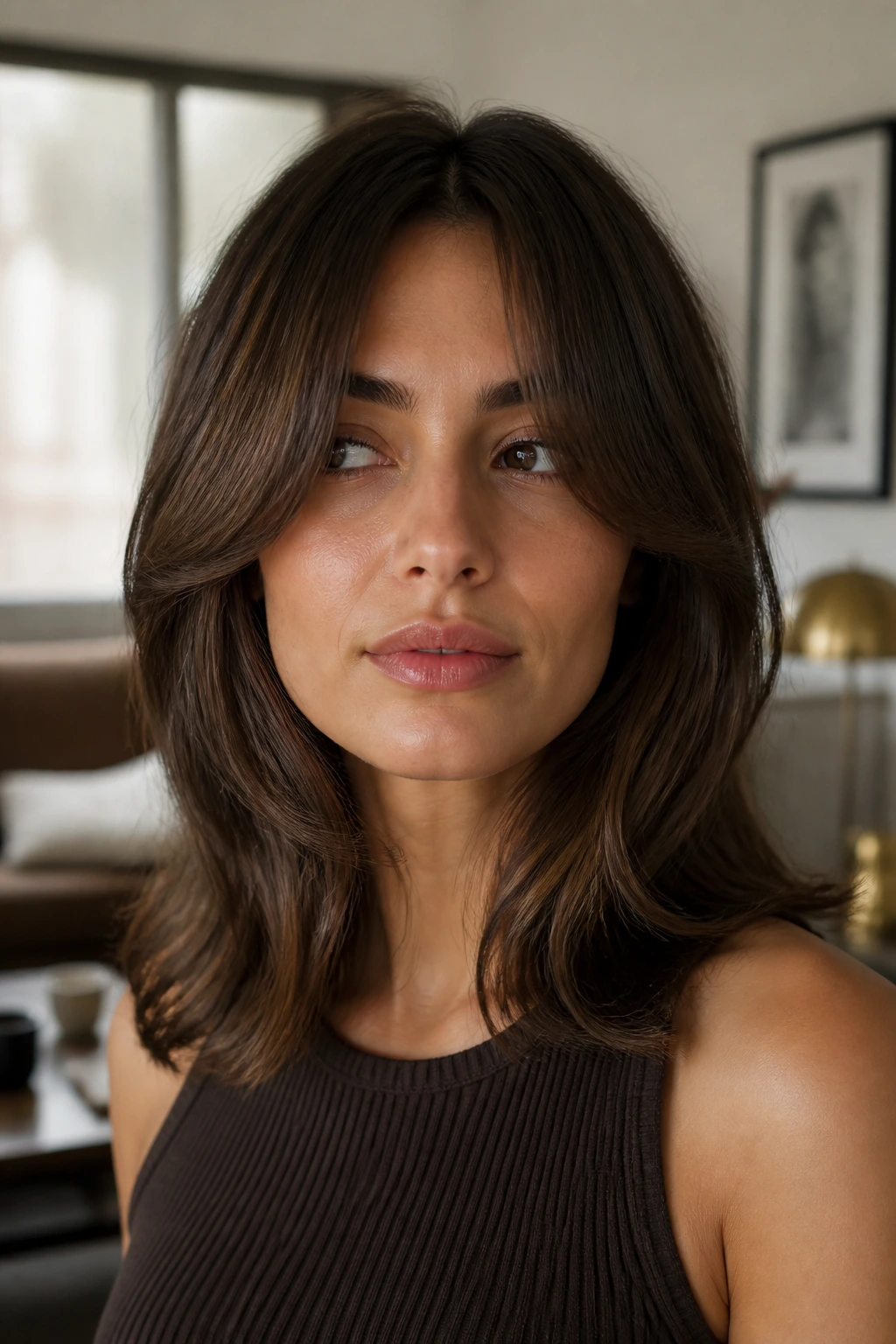
Why are bottleneck bangs so flattering on thick hair? Because they give you the effect of fringe without the blunt heaviness that can make thick hair feel crowded around the face. They start narrower near the center and open up softly toward the cheekbones, which is a clever way to frame without sealing the forehead off.
The rest of the hair usually falls into shoulder-length layers that keep the shape soft. That pairing matters. If you put a strong fringe on thick hair without balancing it below, the cut can feel top-heavy. Bottleneck bangs avoid that by staying light at the center and broader only where the face can use the shape.
How to Wear It
A round brush at the roots and a tiny bit of smoothing cream on the bang area usually does the job. If you let them air-dry completely untouched, they can separate in odd places.
- Best for: thick hair with a middle or soft side part
- Good face match: oval, heart, and longer faces
- Maintenance: trim the bangs more often than the rest
- Styling warning: do not overload them with oil
This cut feels modern without shouting about it.
16. Deep Side-Part Layers That Control Volume
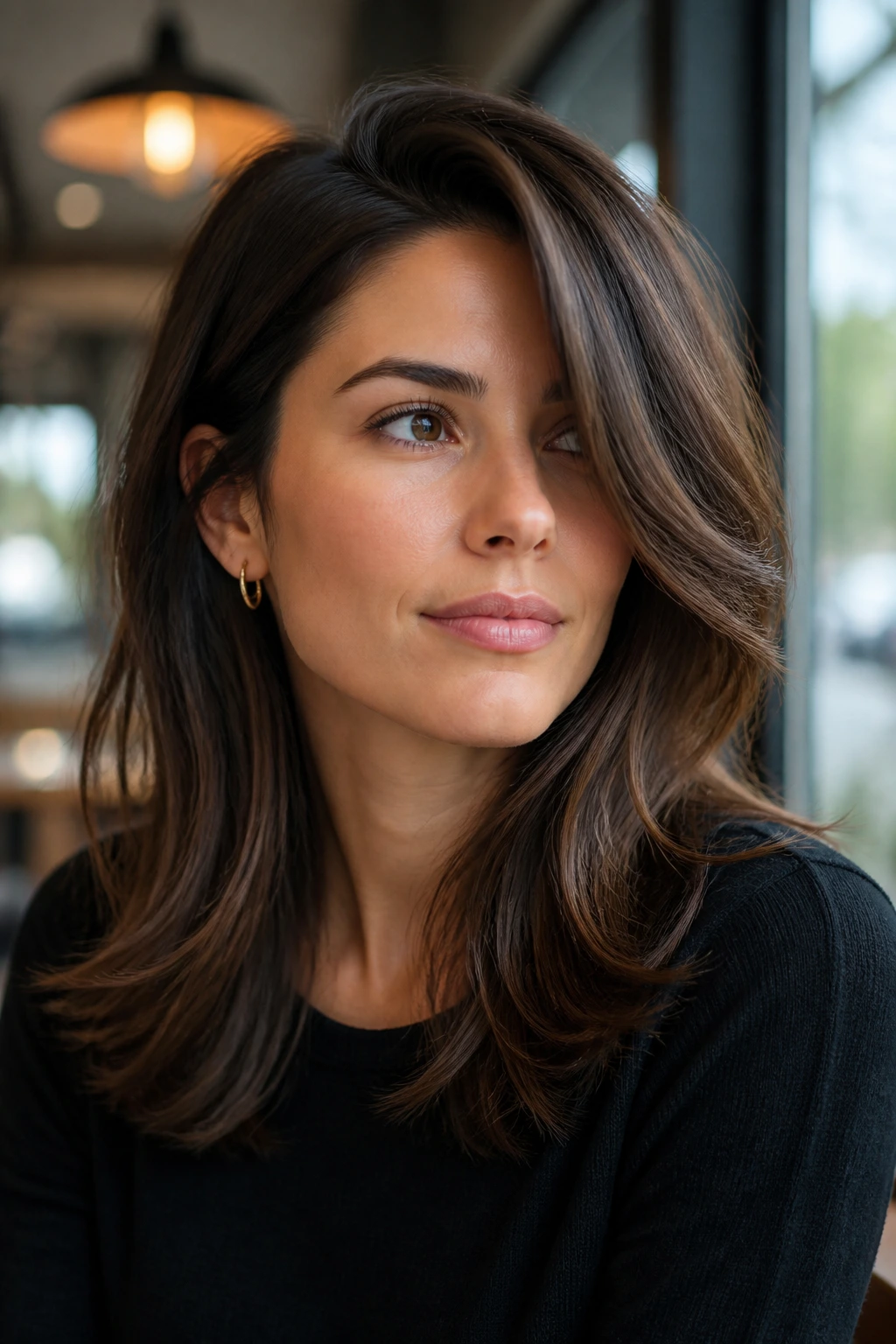
A deep side part can change thick hair more than a lot of people expect. Shift the part, and you shift the weight, the lift, and the whole attitude of the haircut. With shoulder-length layers, that side part creates a flattering sweep that keeps the volume from sitting evenly on both sides of the head.
It’s especially useful if your hair naturally grows in a way that fights a center part. Instead of forcing symmetry, the cut works with the imbalance. The longer side falls closer to the cheek and collarbone, while the shorter side lifts a bit at the crown. That asymmetry gives the hair motion without asking for a dramatic chop.
This is one of those styles that looks a little plain in a photo and much better in motion. The movement is the point. Thick hair can look bulky when every strand is parked in the same direction, and a side part breaks that habit fast.
If you want drama but not extra work, start here.
17. Piecey Textured Cut with Tapered Ends
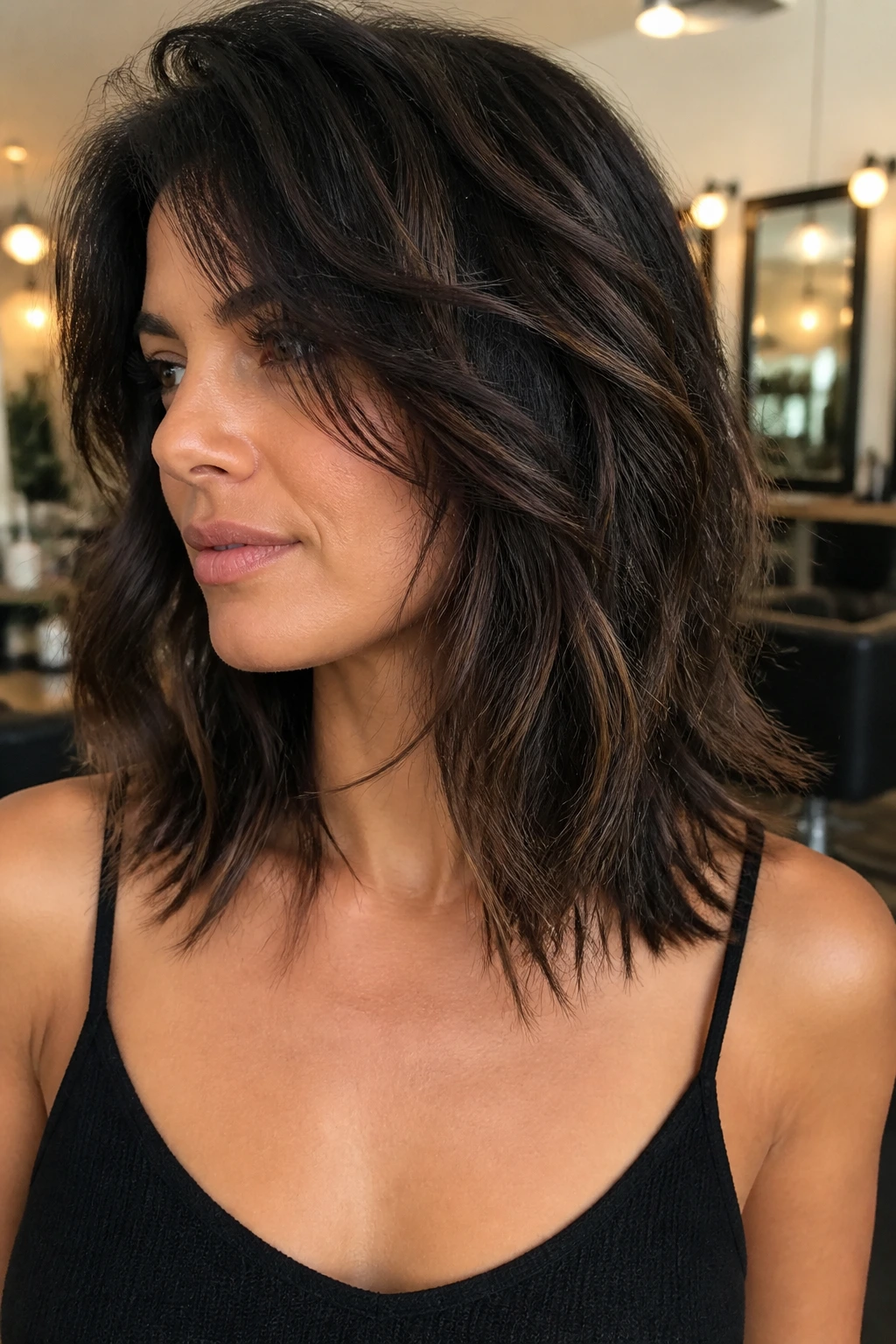
A piecey cut is what happens when thick hair stops trying to be one smooth curtain and starts acting like several intentional sections. The ends are tapered, the layers are separated, and the finish has definition instead of fluff.
The danger with this look is over-texturizing. Too much and the hair looks dry at the tips. Too little and it collapses into a lump. The sweet spot is a medium amount of internal layering with a little separation at the ends, then a styling product that holds pieces apart without making them sticky.
This cut is especially good if your hair has some natural wave and you like using a bit of paste or wax. A tiny amount, worked through the ends after drying, gives the layers shape and keeps the haircut from blending into one soft mass.
It’s not a soft-focus haircut. It has edges. That’s the fun part.
18. Full Fringe with Shoulder-Skimming Layers
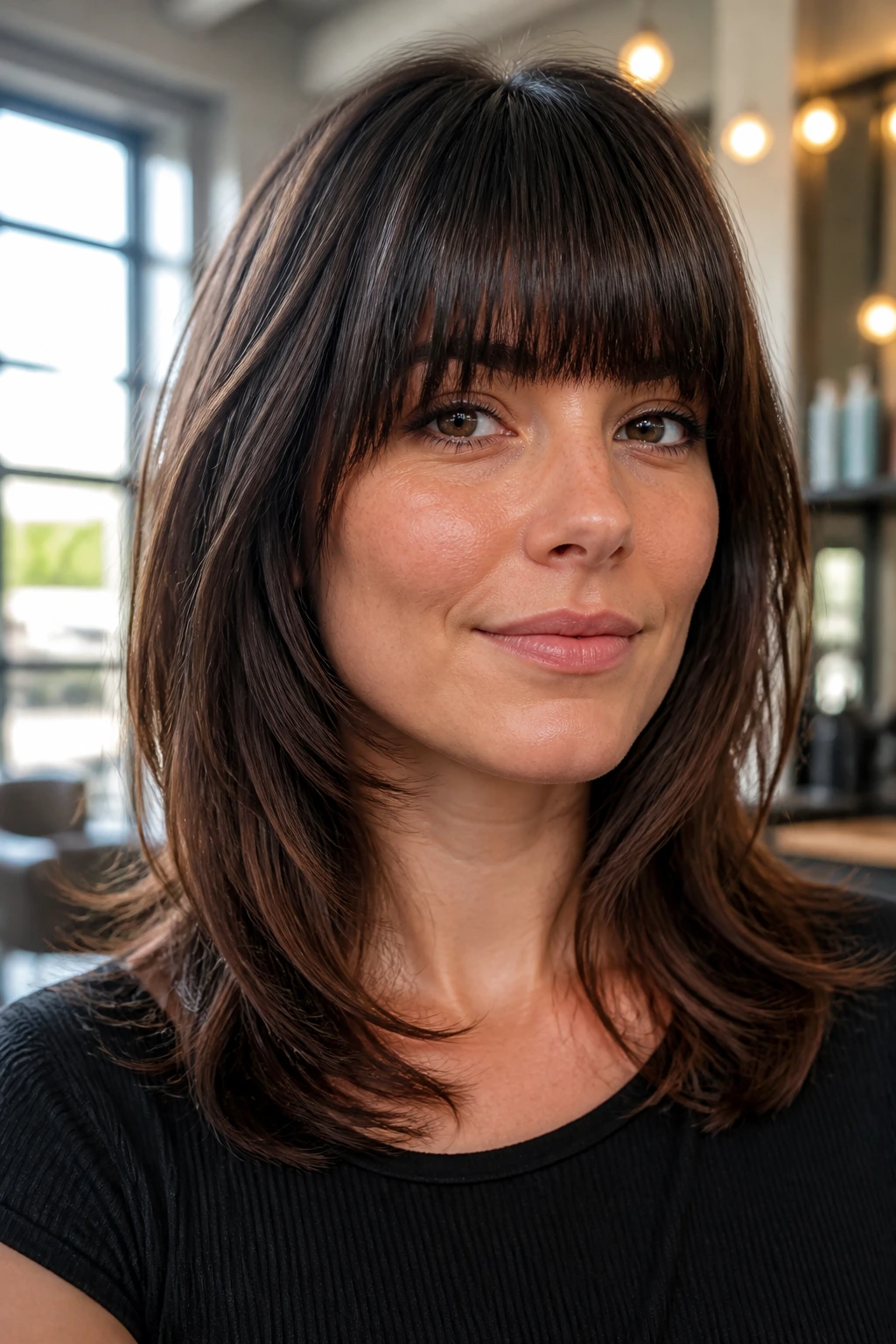
A full fringe on thick hair is a commitment, but when it works, it really works. The bluntness of the bangs balances the softness of the shoulder-skimming layers below, so the cut feels intentional instead of overgrown. It’s a strong shape.
Compared with curtain bangs, a full fringe gives you more face coverage and a clearer line. That can be useful if your forehead feels like the biggest part of your face or if you simply like the drama of bangs. The rest of the hair needs to stay gentler so the front does not overwhelm the whole look.
You will need to style the fringe. There’s no getting around that. Thick bangs dry with a mind of their own, and if you leave them alone, they can split or kick out at the sides. A flat brush and a quick blow-dry usually fix it.
This cut is for someone who doesn’t mind a little maintenance and wants the haircut to be the statement, not the outfit.
19. Curly Shoulder-Length Layers That Bounce
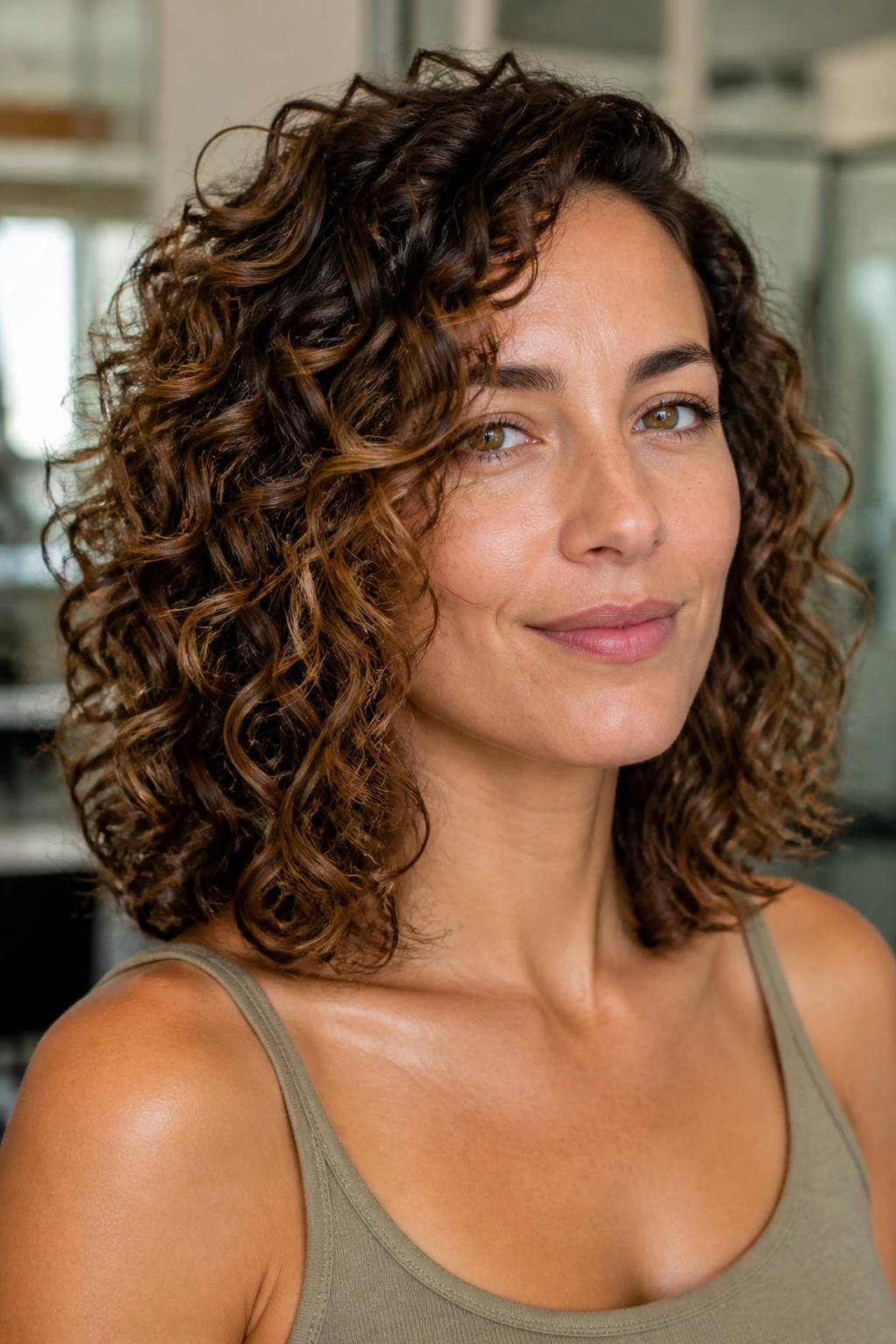
Curly thick hair at shoulder length needs a different approach. If the layers are too short, you get the dreaded pyramid. If they’re too long and heavy, the curls stretch and collapse. The right layered cut gives the curls room to spring while keeping enough length to hold their shape.
Why the Curl Pattern Matters
A good stylist will cut curls in a way that respects shrinkage. That means the visible length after drying may be several inches shorter than it looked wet. People forget that, then wonder why the cut feels too short. It isn’t. It’s just curly hair being curly hair.
What to Request
- Layers that follow the curl family, not random chopping
- A shoulder line that still leaves room for bounce
- Face-framing pieces that start around the chin or cheek
- Light shaping at the ends, not aggressive thinning
A diffuser helps, but the cut does most of the real work. If you’ve got thick curls, this shape can be one of the easiest to live with once it’s right.
20. Flipped-Out Layers for a Retro Blowout

Flipped-out layers give thick hair a bit of swagger. The ends turn away from the face, the shoulders, and sometimes the collarbone, which makes the whole cut feel lively even when the rest of your styling is simple. It’s a throwback look, sure, but it still works because thick hair holds that bend well.
The key is the layers. If they’re cut too bluntly, the flip looks forced. If they’re too shredded, it turns messy instead of playful. You want enough internal movement that the ends can catch the brush and turn outward in a clean line.
This is one of my favorites for people who like a polished blowout but don’t want the hair to hang flat the second they step outside. A medium round brush, some root lift spray, and a quick turn at the ends are usually enough. Hot rollers work too, if you’re the patient type.
It’s a little glamorous, a little practical, and never boring.
21. Air-Dry Friendly Layered Cut
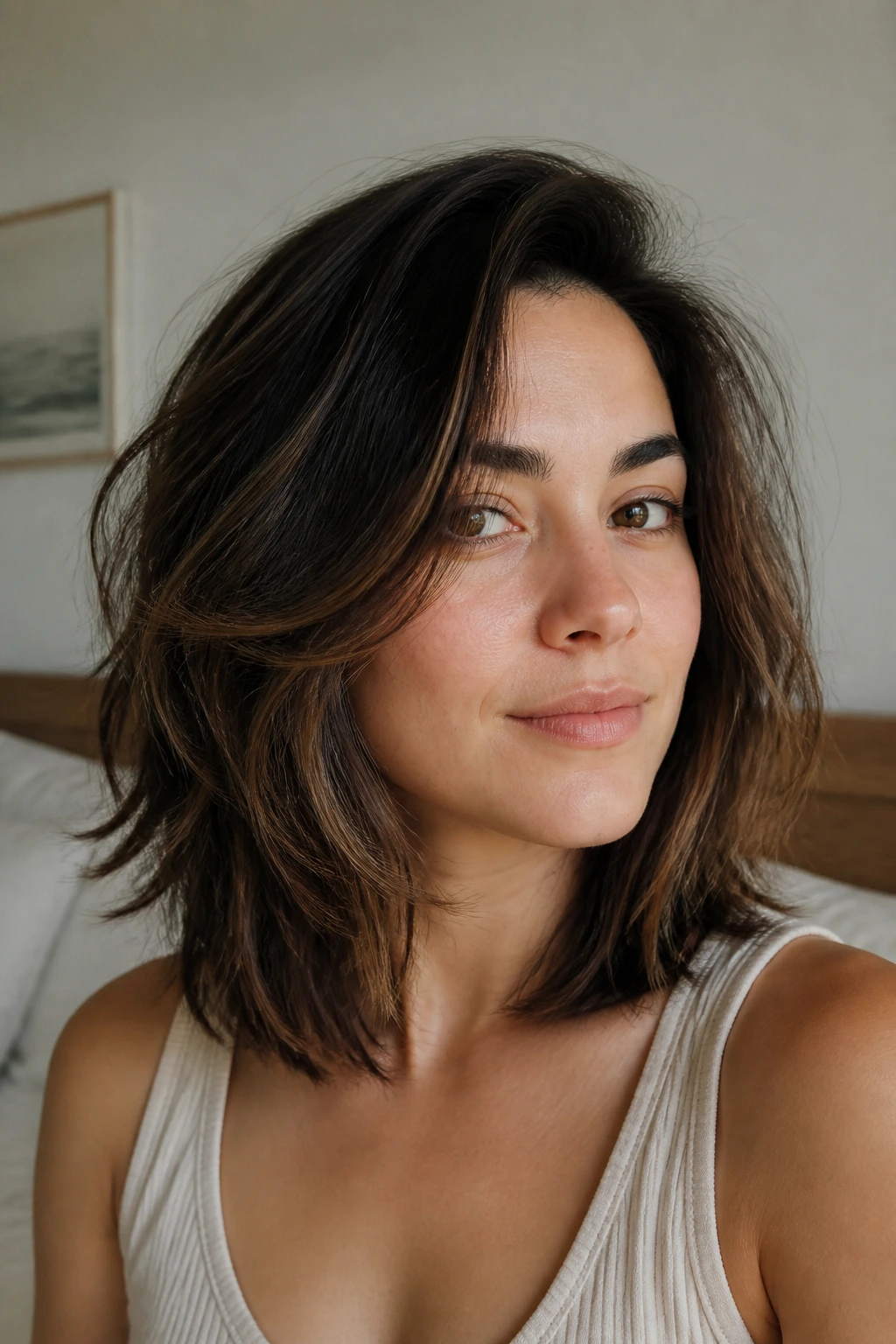
Can a layered cut look good without heat? Absolutely. Thick hair often does better with less heat anyway, as long as the shape is set up for it. An air-dry friendly cut keeps the layers long enough to prevent puffing, but not so long that the hair turns into one heavy sheet.
The secret is controlled weight removal. You want the stylist to take bulk out of the right spots—usually the interior and the lower sections—while leaving enough fullness around the outline to keep the cut from going limp. That gives the hair a natural bend as it dries, which is worth its weight in dry shampoo.
This works best if you add a leave-in cream or light gel to damp hair and then leave it alone for a while. Don’t touch it every five minutes. That’s how you get frizz and odd bends. Let the hair set.
If your routine is low effort by design, this is the cut to bring in. It behaves.
22. Tapered Back Layers with Longer Sides
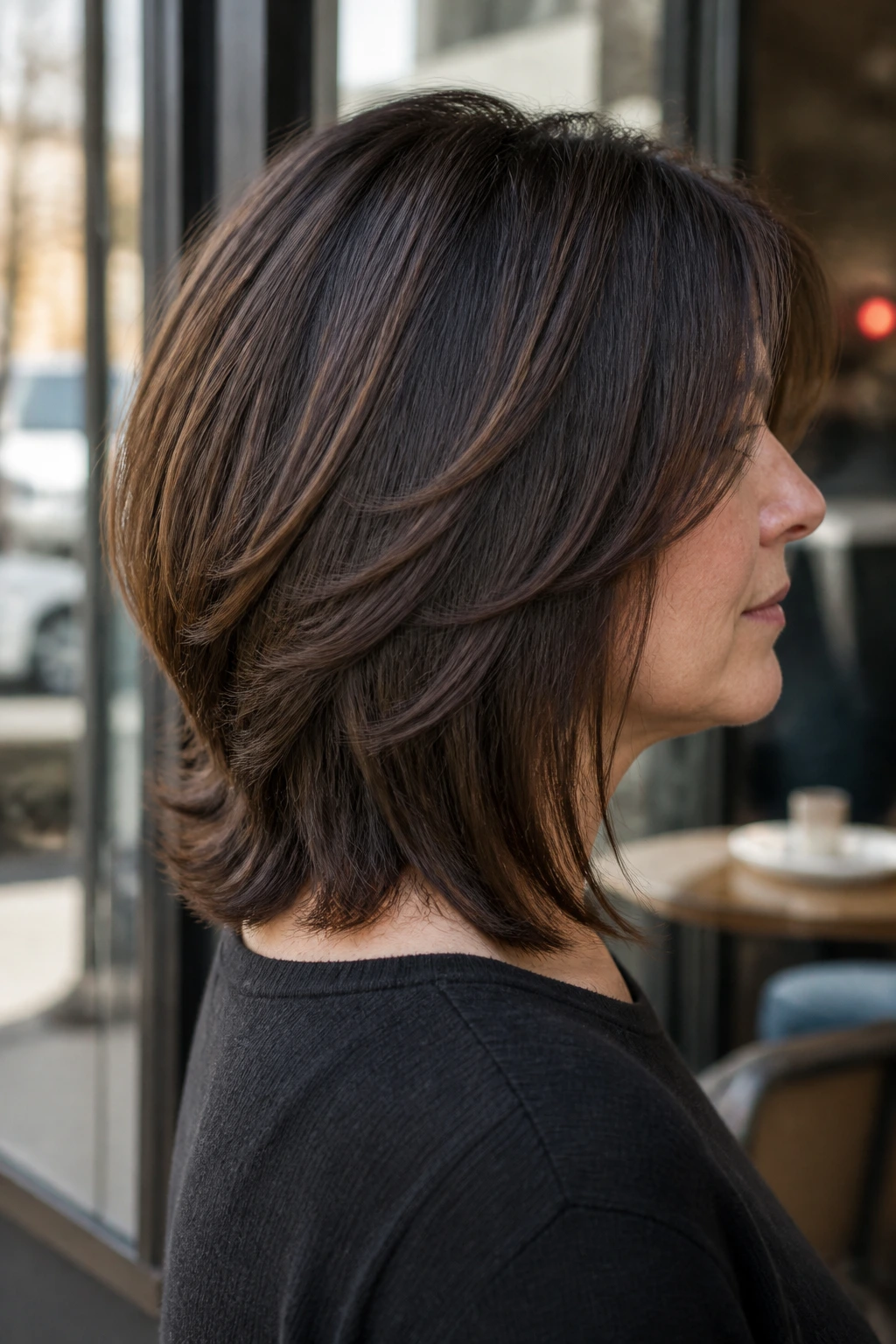
A tapered back cut is quietly useful for thick hair that grows heavy at the nape. The back is shaped a little shorter, while the sides stay longer and softer, so the head doesn’t look square from behind. It also takes some weight off the spot where thick hair often feels most stubborn.
What You Notice in the Mirror
The crown lifts a bit. The sides fall more easily. The neckline stops looking like a wall of hair. Small changes, yes. Big payoff.
This cut suits people who wear their hair tucked behind the ears, clipped back, or half-up a lot. The shorter back keeps the bulk from bunching up under collars and jackets, which is a nuisance with thick hair that sits right on the shoulder line.
- Good for: dense hair with a heavy nape
- Better with: a subtle bend at the ends
- Less ideal for: people who want one-length fullness everywhere
- Styling trick: dry the back first so it doesn’t stay damp and puffy
It’s not flashy from the front. From the side and back, though, it earns its place.
23. Long Layers with Subtle Weight Removal
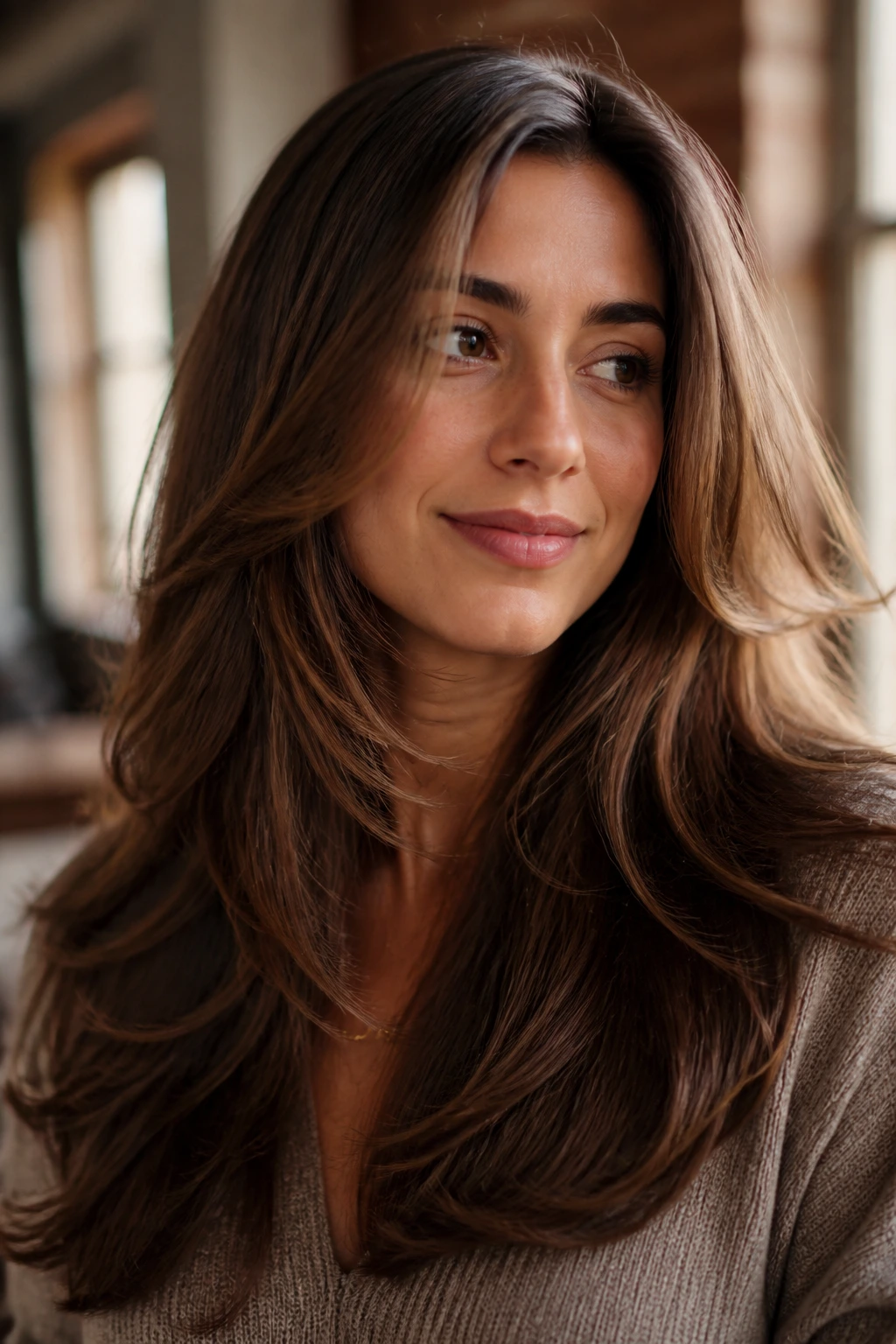
Sometimes the smartest move is not to chase a dramatic new shape. Long layers with subtle weight removal keep thick hair full, but they stop it from building into one solid mass. The change is soft enough that people may not notice the haircut itself—they’ll just notice that the hair moves better.
That’s useful if you’re attached to length or you’re nervous about losing density. The layers can start below the chin and continue through the mid-lengths with a gentle hand, leaving the ends thick enough to look healthy. No wispy edges. No weird hollow spots.
This cut also ages well between salon visits. Because the layers are gradual, the grow-out is less awkward than with a choppier style. The shape stays decent even when the trim is overdue by a week or three.
If you want thick hair to feel lighter without looking “cut up,” this is the quiet answer.
24. Glossy Layered Lob with a Clean Perimeter
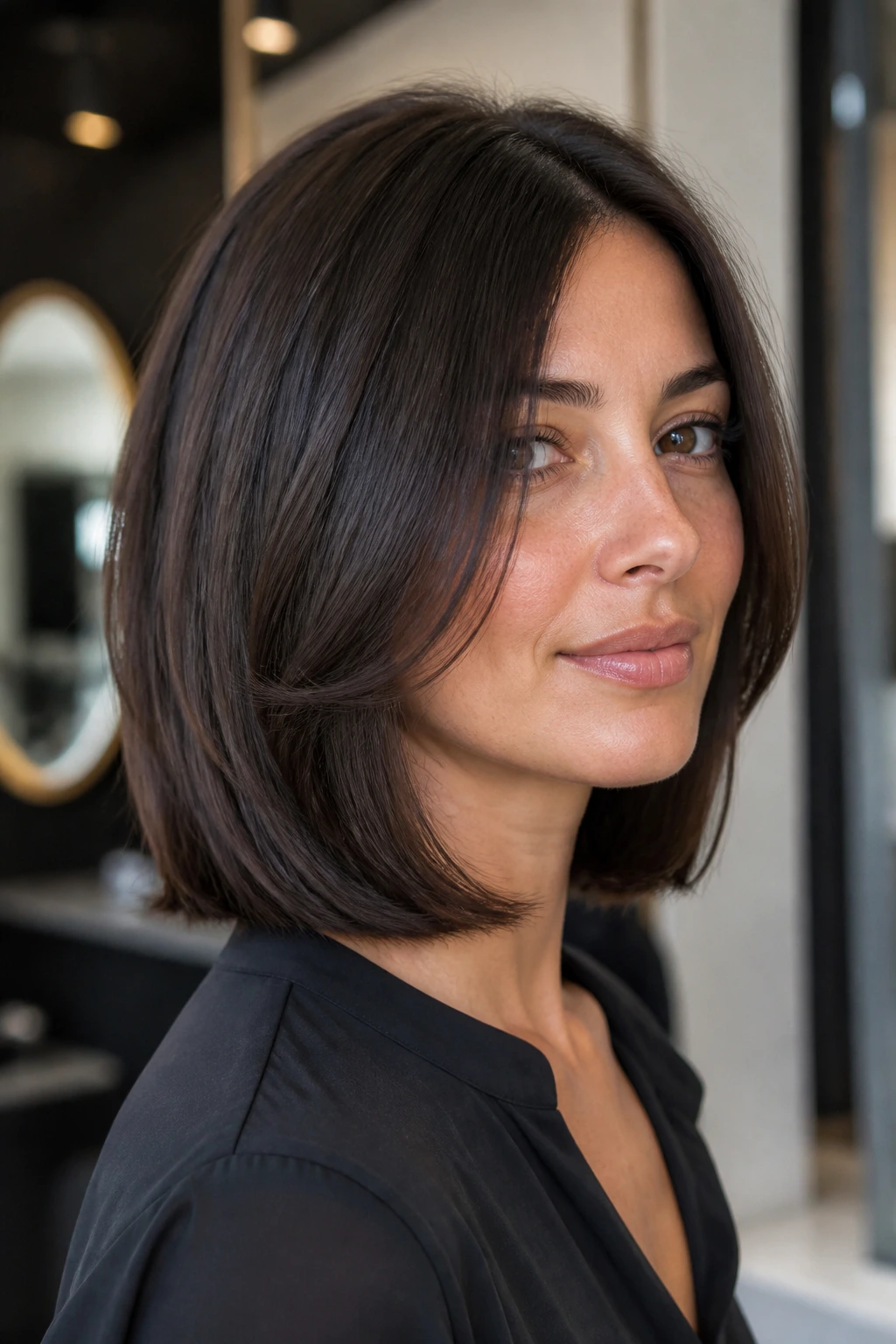
A glossy layered lob is the haircut for thick hair that wants order. The perimeter stays clean, almost blunt, and the layers live inside the shape where they can move without making the cut look ragged. It gives you that sleek surface people love, but with enough internal motion that the hair doesn’t feel stiff.
Compared with a shag, this is much more restrained. Compared with a straight blunt lob, it has more bend and less bulk. That balance makes it a strong pick if you like your hair to look smooth, trimmed, and deliberate.
The shine matters here. Thick hair often looks best when the cut lets the light hit a smooth surface, so a blow-dry with a paddle brush or a straight brush helps. A lightweight serum on the ends can make the line look cleaner, but don’t drown it. Heavy oil flattens the movement.
This one is polished without being fussy. That’s rare.
25. Heavy-Edged Layers That Keep Thickness but Cut Bulk
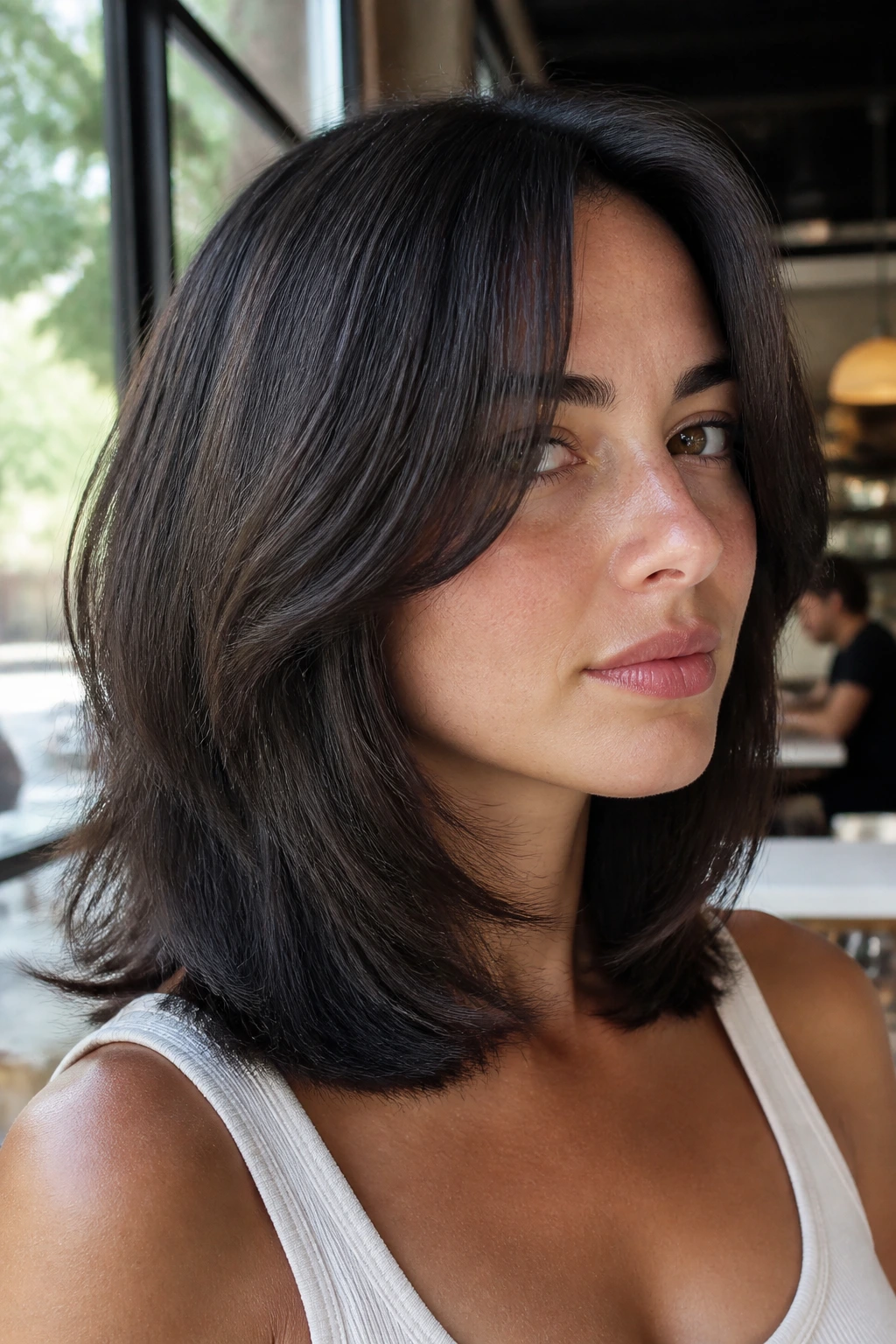
A lot of people with thick hair are afraid of losing the fullness they actually like. Fair. Thick hair can be a pain, but it also gives you a strong, healthy-looking edge that fine hair never quite has. This cut keeps that advantage and removes bulk in the places that make the shape hard to wear.
The Shape to Ask For
Tell your stylist you want thickness at the perimeter and weight removed inside the cut. That usually means long layers starting below the chin, a clean edge around the shoulders, and no aggressive thinning at the ends. The goal is to keep the outline solid while making the mid-lengths sit flatter.
Why It’s the safest option
- It preserves density where thick hair looks best
- It softens the triangle effect that shoulder-length hair can get
- It grows out cleanly
- It works with air-drying, blowouts, and quick ponytail days
If you’re torn between cutting less and shaping more, start here. It gives you the most hair in the mirror and the least annoyance in daily life.
A good thick-hair cut should feel like relief, not loss. This one gets that part right.
If your thick hair keeps turning into a shelf at the shoulders, bring photos that show the silhouette you want, not just the bangs. Shape matters more than trend names, and the right shoulder-length cut usually comes down to where the weight sits, where the movement starts, and how much fullness you want left at the ends.
