



Fine hair can go limp before lunch, and the wrong layers make it look thinner, not fuller. Medium length layered cuts for fine hair sit in a sweet spot: enough length to keep the outline full, enough movement to keep the whole shape from hanging flat.
The trick is not “more layers.” It’s smarter layers. If the perimeter is too chewed up, the ends start to look see-through; if the cut is too blunt, the crown can sit like a helmet. The best medium-length shapes keep a solid edge and place lift where the eye wants it — around the face, at the crown, and just below the cheekbone.
That balance matters more than people think. A half-inch shift in where the layers begin can change whether a lob looks airy or stringy, and the difference is obvious once the hair dries. I care a lot about that because slender strands do not hide bad cutting. They announce it.
The cuts below stay in that useful zone: collarbone, shoulder, and a little bit above. Some are sleek, some are shaggy, and a few lean polished. All of them are better than the usual advice to “just add texture,” which is how a lot of fine hair gets thinned out by accident.
1. The Collarbone Lob With Soft Layers

If I had to pick one cut that flatters the widest range of fine hair, this is it. The collarbone length keeps the outline strong, and the soft layers add movement without stripping away the ends.
Why It Gives Lift Without Looking Choppy
The real win here is balance. The hair still sits on the shoulders and collarbone, so the silhouette feels full, but the layers start low enough that you get swing instead of fluff. That matters when your strands are light and tend to separate.
Ask for a blunt base with long internal layers. That phrase does a lot of work. It tells the stylist to keep the edge solid while removing some bulk inside the shape, which is usually what fine hair needs most.
- Best for straight, softly wavy, or loose-curled hair.
- Keep the shortest layers around the chin or just below it.
- A 1.25-inch round brush gives the front pieces a clean bend.
- Skip aggressive texturizing shears if the ends already feel sparse.
Pro tip: blow-dry the crown first with a side-to-side lift at the roots. It keeps the top from lying flat while the rest of the cut stays neat.
2. The Blunt Lob With Hidden Internal Layers
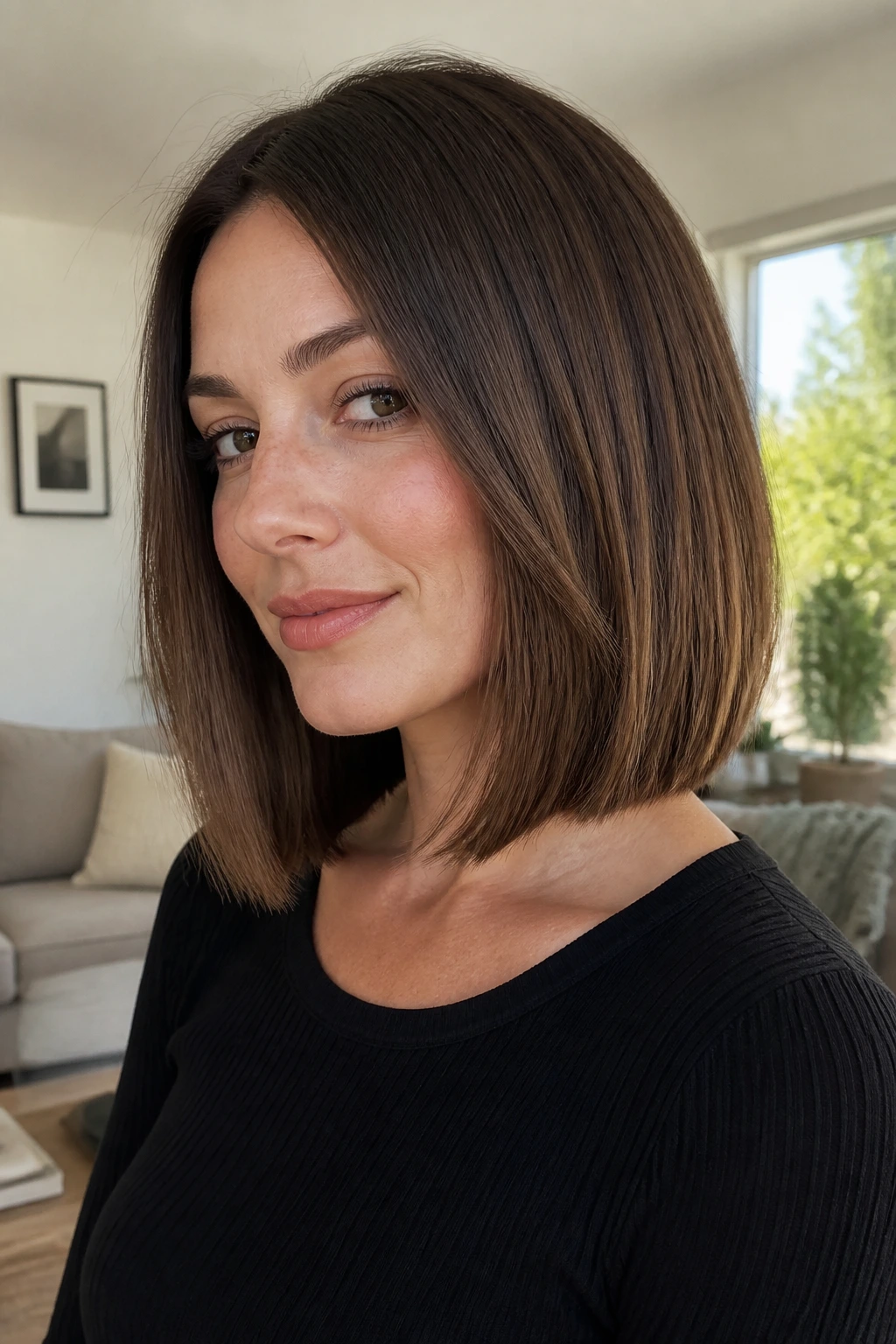
A blunt edge can make thin-looking hair read thicker in a mirror. That sounds almost too simple, but it works because the eye sees one clean line instead of a scattered, wispy outline.
The hidden part is where the movement comes from. Your stylist can remove a little weight underneath the top layer, especially around the crown and upper sides, without breaking up the perimeter. The result is a lob that still feels polished but doesn’t collapse by noon.
I like this cut for hair that is fine and pin-straight. It does not need a lot of help to look smooth, and too many visible layers can make it fall apart fast. Keep the top surface intact, and let the movement live inside the haircut.
One small thing matters here: the ends should look deliberate, not chopped up. If the finish looks too soft or frayed, the cut loses the illusion of density. Clean lines do more for this style than most people realize.
3. Face-Framing Layers That Start at the Cheekbones
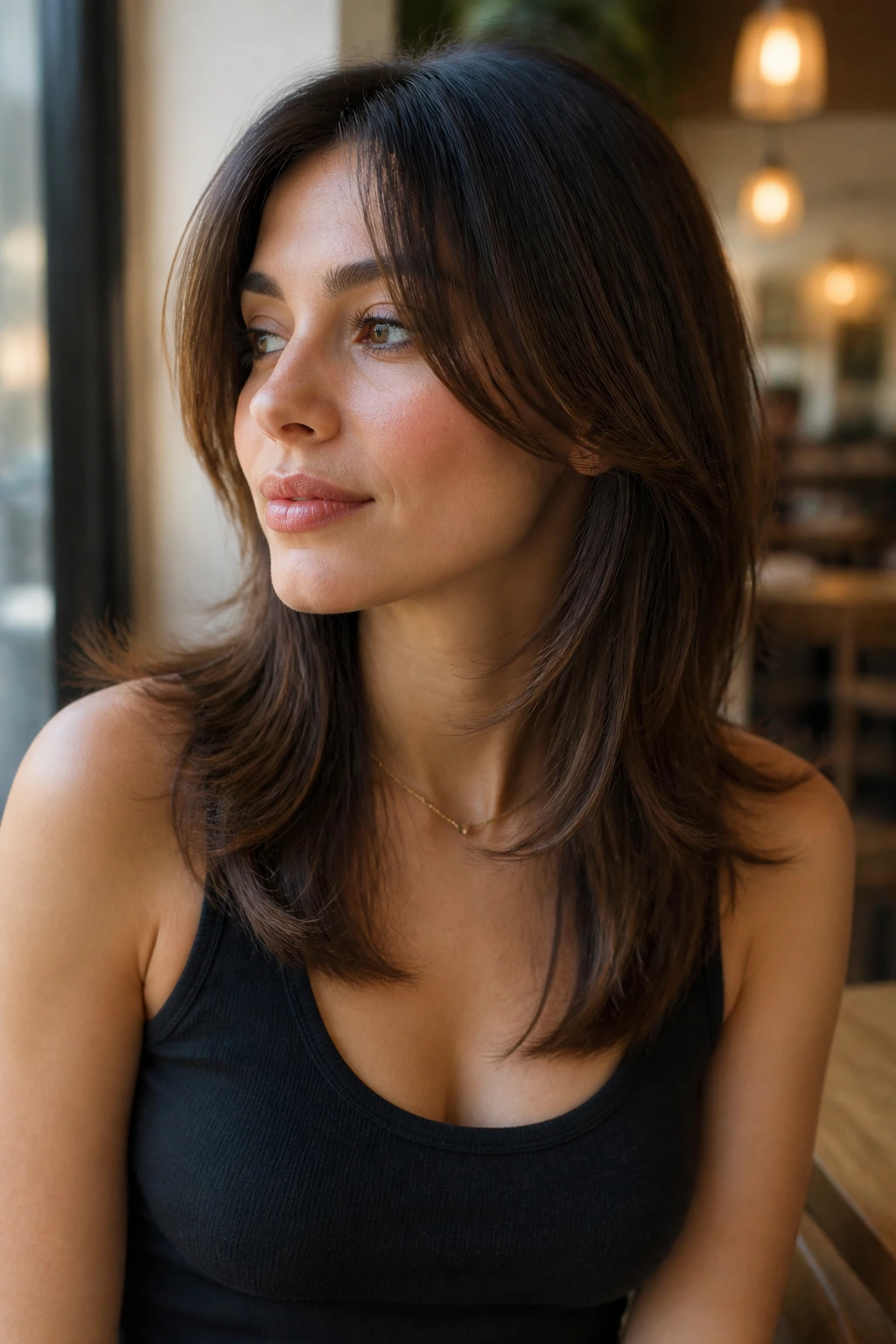
Why do some layered cuts make the face look brighter while others just look thinned out? Placement. If the first layer hits around the cheekbone, it opens the face without eating into the full shape below.
What Makes the Shape Work
Cheekbone-level layers are a sweet spot for medium-length fine hair. They create movement around the front, where people actually notice the shape first, while leaving the back long enough to keep weight. That keeps the cut from feeling puffy at the bottom.
If your face is round or square, this can be especially good because the front pieces soften the edges without sitting too high. If your face is longer, keep the shortest front layer a little lower — near the jaw, not the temples — so the cut doesn’t stretch you out more.
How to Wear It
- Blow-dry the front pieces away from the face with a round brush.
- Use a light mousse at the roots, not heavy cream.
- Curl the front sections away from the face for a soft bend.
- Bring a photo that shows the layer starting point you want.
One warning: if the layers begin too high, you lose the fullness that makes fine hair look healthy. That part matters.
4. Curtain Bangs With Shoulder-Grazing Layers

A client walks in wanting more shape but hates heavy bangs. This is usually where curtain bangs make sense. They break up the forehead area, create a little lift around the eyes, and blend into shoulder-grazing layers without forcing the whole cut to go short.
The nice thing about curtain bangs is that they work with movement instead of fighting it. Fine hair often looks best when the front pieces can fall a little loosely, and these bangs do exactly that. They’re softer than a blunt fringe and easier to grow out than a straight-across bang.
The shoulder length keeps the rest of the haircut from getting stringy. If the layers end right around the shoulders, the bangs have something to merge into, which makes the whole shape feel connected rather than detached.
A good version of this cut needs maintenance around the front. Not a ton. Just enough to keep the curtain shape from dropping into your eyes. A trim every 6 to 8 weeks usually keeps it neat.
5. The Soft Shag With Wispy Ends
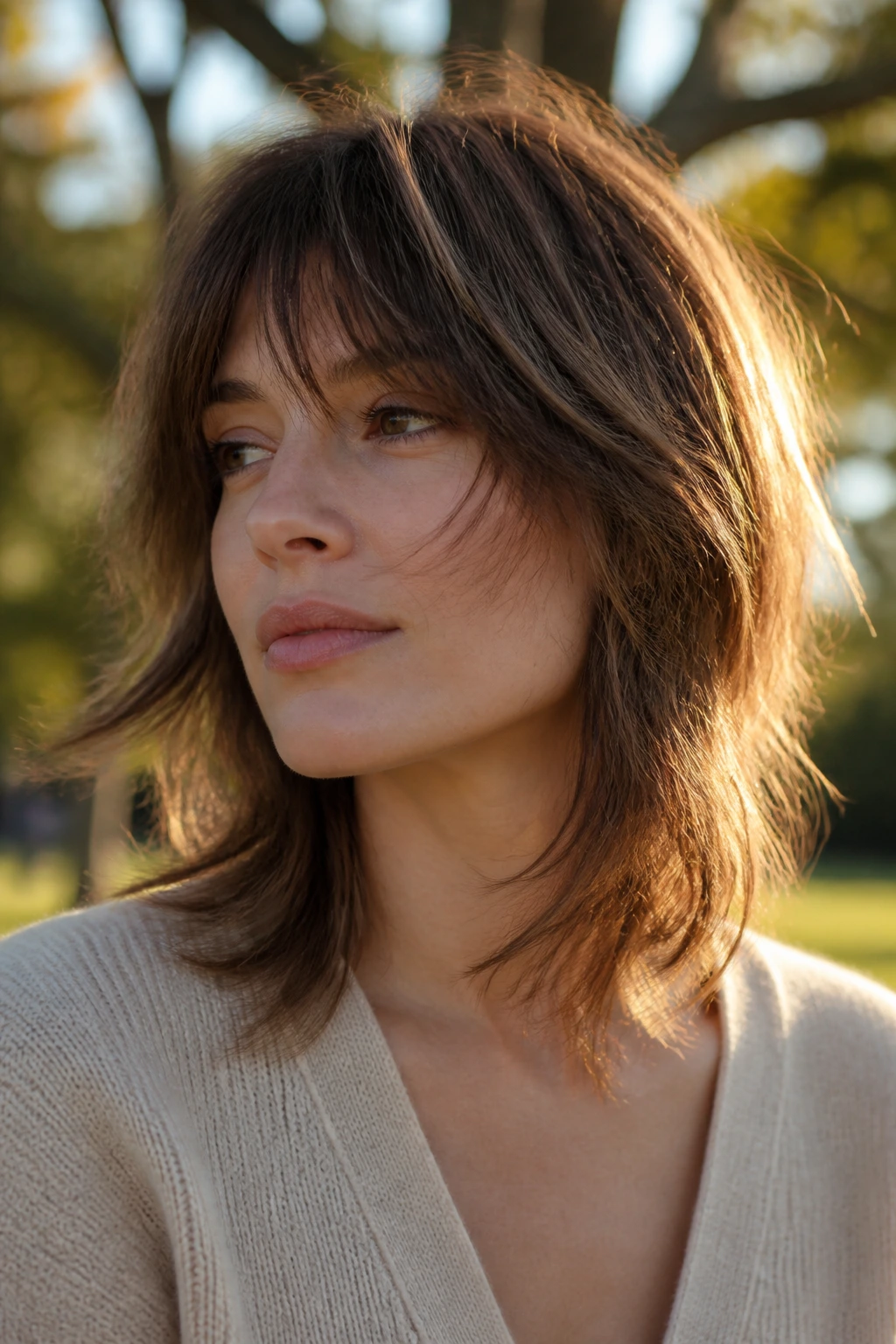
The soft shag is where fine hair either wakes up or gets overcut. There’s a thin line between airy and scraggly, and I’m much more interested in the airy version.
What makes this cut work is restraint. The layers should move, but they should not be so short that the top puffs out while the ends disappear. The best version keeps a little length around the collarbone and uses texture mostly through the mids, not the very ends.
I like this shape on hair that already has a slight bend. It doesn’t need perfect curl formation. It needs enough natural movement that a little scrunching or diffuser work can bring the layers forward. Add a dab of mousse at the roots, let the hair dry about 80 percent on its own, then finish with a cool blast to settle the shape.
Too much thinning ruins it.
That’s the catch with shags on slender strands. If the stylist goes wild with the razor, the haircut can look cool for a day and tired for the next six weeks. Ask for softness, not shredding.
6. The Butterfly Cut on Medium Length Hair

Unlike a shag, the butterfly cut keeps the bottom length intact. That’s why it works so well for fine hair that needs lift up top but still wants some weight at the ends.
The short face-framing pieces sit higher — usually around the cheekbone or upper lip — while the long layer underneath keeps the rest of the hair looking full. You get a two-layer illusion without losing the solid outline. It’s a clever cut, and I mean that in the practical sense, not the marketing sense.
This is a strong pick if your hair looks flat at the crown but you still like the idea of ponytail length and swing. The front pieces can be blown out away from the face with a round brush, then the lower section can be left smooth or given a soft bend. The whole thing feels more styled than it is.
If you hate cuts that look trendy for 10 minutes and then awkward as they grow out, this one is worth a close look. It has a built-in soft landing.
7. U-Shaped Layers That Keep the Perimeter Full

A gentle U shape gives medium-length hair a softer finish without stealing density from the bottom. That’s a useful trick when the ends are fine and you want the cut to look thick from every angle.
What to Ask For
Tell your stylist you want a soft U, not a sharp V. The difference is bigger than it sounds. A dramatic V can make the back feel long and the sides feel thin, while a shallow U keeps the outline smooth and more even.
- Keep the longest point near the center back.
- Let the side pieces drift a little shorter.
- Leave enough weight at the bottom to avoid a see-through hemline.
- Use point cutting only on the very ends, if at all.
The shape is especially good on straight hair because it keeps the length looking deliberate when it hangs naturally. It also works on soft waves, where the curve of the cut shows up a little more once the hair dries.
If your hair tends to split apart at the bottom, this shape helps more than aggressive layering does. That’s the whole appeal.
8. The Modern Rachel Cut for Fine Hair

This cut has a little nostalgia baked into it, but the modern version is far cleaner than the one people remember from old television clips. The reason it still gets copied is simple: it makes the hair move.
The layers are structured, but not bulky. The front pieces sweep back from the face, the ends flip a little, and the overall effect is light without looking flimsy. On fine hair, that matters. You want the haircut to show shape, not a bunch of separated wisps.
I’d especially consider this if you like a blow-dry with a round brush. The cut looks best when the ends get a little bend, whether that’s turned under or kicked out at the shoulders. Straight and limp is the enemy here. A quick pass with a large brush and a nozzle dryer can change the whole thing.
The modern Rachel works because it understands restraint. You get visible layers, but the perimeter still has enough weight to hold the style.
9. The Collarbone Cut With a Side-Swept Fringe

Does your hair collapse at the front but feel fine everywhere else? A side-swept fringe can solve that without forcing you into a heavy bang.
Why the Side Part Helps
A side-swept fringe gives the illusion of lift at the front because it breaks the flat line around the face. It also draws the eye diagonally, which is useful when fine hair tends to hang straight down and look narrow.
The part itself does some of the work. Start the part a little off-center, then direct the fringe across the forehead with a blow-dryer and a round brush. If you let it cool in that direction, it holds better than if you just brush it over and hope for the best.
This cut is a good pick if you want something softer than a curtain bang. It’s less fussy and usually easier to grow out. The rest of the hair can stay collarbone length with long layers, which keeps the shape solid.
One practical note: keep the fringe light. If it gets too heavy, it will sit like a curtain and swallow the face. A little lift goes a long way.
10. Choppy Mid-Length Layers for Added Movement

A cut like this is for someone who wants the hair to look piecey on purpose. It’s not polished in the clean-lob sense, and that’s exactly why it works.
The choppiness gives slender strands more separation, which can be useful if the hair naturally clumps into flat sections. A few deliberately uneven pieces through the mids create motion when the hair moves, especially around the shoulders. The shape feels relaxed, almost a little undone.
The Details That Matter
- Ask for the layers to be cut with the hair held around 90 degrees.
- Keep the bottom edge from being too thinned out.
- Use a light mousse or airy foam, not a heavy cream.
- Finish with a small amount of texture spray only at the mids and ends.
This haircut needs judgment. Too much chopping and it starts to look scruffy; too little and the texture disappears. If your hair is already fragile at the ends, I would not go too far with this style. But if you want movement and a bit of edge, it can be a strong choice.
The best version still has some weight left in the outline. That’s what keeps it from looking accidental.
11. The Textured Lob With Tapered Ends

A textured lob with tapered ends gives you softness without a full shag attitude. It sits between polished and lived-in, which is where a lot of fine hair looks best.
The tapering should be gentle. You want the ends to soften enough that the haircut doesn’t look boxy, but not so much that they fray into nothing. On fine hair, that balance is hard to get right, and it’s why I usually prefer a light point-cut finish over aggressive thinning.
This cut makes sense for wavy hair that needs shape but not drama. Air-dried, it falls in a nice loose way. Blow-dried, it reads neater and a little more expensive-looking, for lack of a better phrase. The shape is useful either way.
If you like to tuck your hair behind one ear, this cut behaves well. The taper keeps the side from jutting out, and the length still feels present. That tiny detail matters more than people think.
12. Long Layers With a Deep Side Part
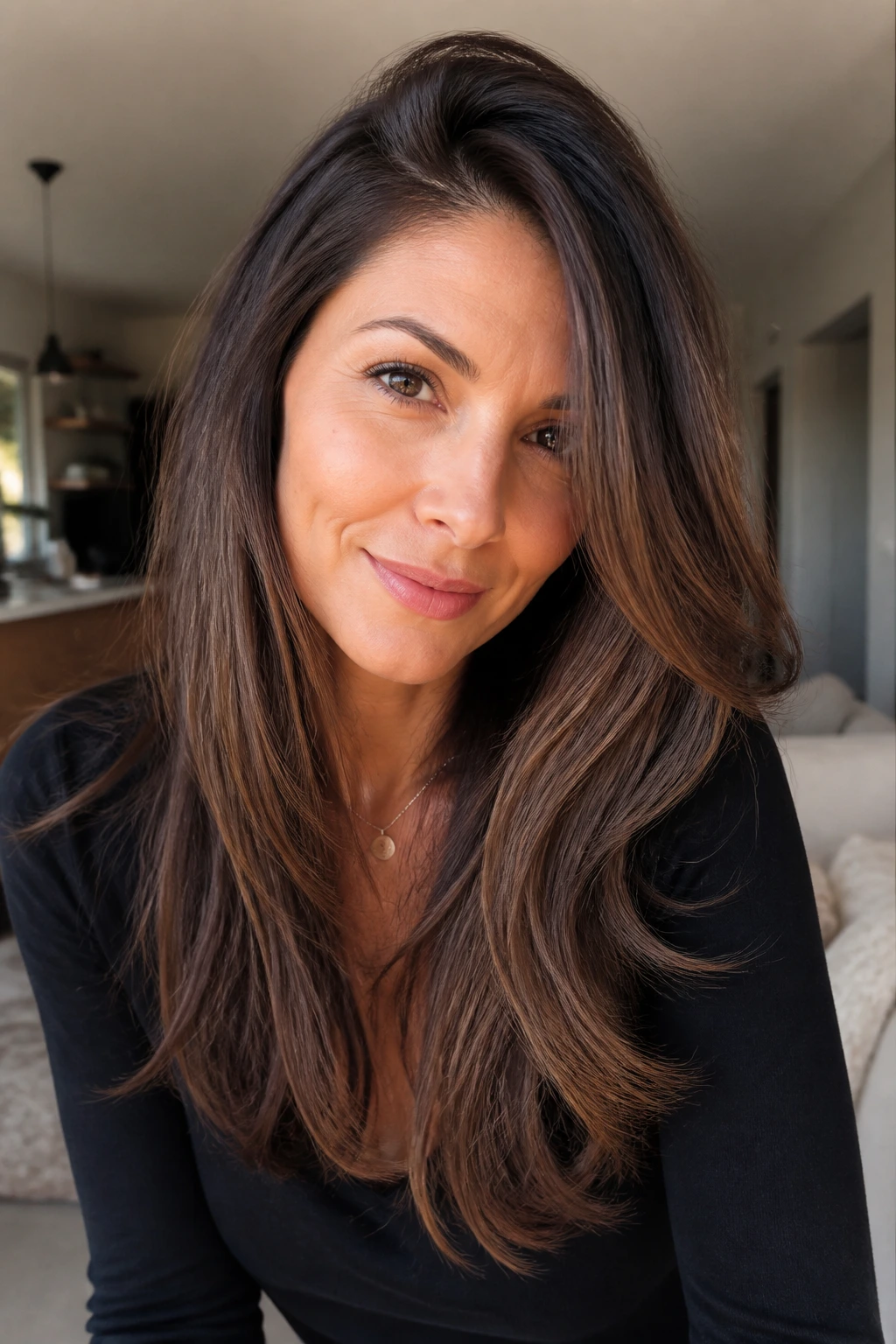
Middle parts can be unforgiving on low-density hair. A deep side part changes the whole mood by moving volume to one side and giving the crown a more lifted shape.
That lift is the main reason this cut works. The layers themselves can stay fairly long, which protects the bottom from looking skimpy, while the side part makes the top look fuller. It’s a smart optical trick, and it does not require a dramatic haircut.
I like this option for people whose hair lies very flat at the roots or separates at the temples. A deep part, a little root-lifting spray, and a round brush at the crown can change the shape without needing a ton of product. The cut itself just needs enough layering to keep the sides from dragging down.
There’s also a nice side effect: it softens the face in a way that feels grown-up rather than fussy. That’s hard to find in a lot of layered cuts, and I think it’s why this one keeps hanging around.
13. The Razor-Soft Layered Cut for Straight Fine Hair

A razor can rescue straight fine hair — or wreck it. There is no in-between if the hand doing the cutting is too heavy.
When to Say Yes
This technique works best when the hair is healthy, smooth, and not already dry at the ends. A light razor pass can soften the shape, create movement, and stop the haircut from looking too blunt or stiff. But the blade should skim, not shred.
- Ask for soft razored ends, not aggressive thinning.
- Keep the length around the collarbone or just below.
- Pair the cut with a smoothing blow-dry cream.
- Walk away if the stylist wants to carve out half your ends.
I’m picky about this one because it can make such a difference on straight hair. Done well, it creates a little edge and keeps the cut from sitting like a helmet. Done badly, it leaves the ends ragged and hard to style.
The best razor cut still looks like a haircut, not a mistake. That’s the standard.
14. The Air-Dried Wavy Cut With Barely-There Layers

Sometimes the best layer count is barely a count at all. That sounds odd, but for fine hair with a natural wave, too many layers can pull the shape apart and leave the ends looking thin.
This cut keeps the outline medium length and uses only subtle internal shaping. The goal is to let the wave pattern do the work. If the hair dries with a gentle bend, the haircut should support it, not fight it. That means no dramatic chopping through the surface and no over-thinning at the bottom.
I like this style for people who do not want to spend half their morning with a brush. A leave-in conditioner, a pea-sized amount of curl cream, and a quick scrunch are enough for many heads of hair. The cut should look decent even if you do almost nothing to it.
That’s the appeal. It is low drama. It is also much easier to live with than the overlayered cuts that look great only under perfect styling.
15. The Low-Maintenance Grow-Out Cut

What should you ask for if you want a layered cut that still looks good when it gets a little long? A soft, medium-length shape with a blunt perimeter and controlled layers.
What to Say at the Chair
Be direct. Tell the stylist you want the hair to keep its fullness at the ends and only lose weight where it helps the shape. That usually means:
- Keeping the perimeter around the collarbone or shoulder line.
- Starting the shortest face-framing pieces no higher than the cheekbone.
- Avoiding heavy texturizing through the bottom third.
- Checking the cut when the hair is dry, not only when it’s wet.
That last point matters more than people think. Fine hair can lie to you when it’s wet. It stretches, looks denser, and hides problems that show up an hour later.
I like this kind of cut because it buys you time. It does not fall apart the second it grows a quarter inch. The shape softens a little, sure, but the haircut still looks intentional. That is the thing people forget when they chase layers: a good cut should still make sense on a lazy day.
If you want one medium-length layered style that does not demand constant fussing, this is the one I’d hand to you first. A strong outline, soft movement, and a little restraint go a long way. And honestly, that’s the whole story with fine hair — if the cut keeps its backbone, everything else becomes easier.
