



Long curly shag haircuts are one of the few cuts that can make curls look lighter without making them look thin or chopped up. Done well, the shape gives you lift at the crown, movement through the mids, and ends that fall with purpose instead of hanging like one heavy curtain.
Done badly, it can turn into frizz with bangs. That usually happens when the shortest layers sit in the wrong place, the stylist ignores shrinkage, or the curl pattern gets treated like straight hair with a few lazy snips added for drama.
Curly hair has its own rules. A 2C wave, a loose 3A ringlet, and a dense 3B coil will all react differently to the same shag, which is exactly why the best versions feel tailored rather than copied from a mood board.
That is also why these cuts stay interesting. Some lean soft and bohemian, some have a wolf-cut edge, and some are built to keep thick hair from swallowing your face whole. The shape changes everything.
1. Soft Face-Framing Curly Shag
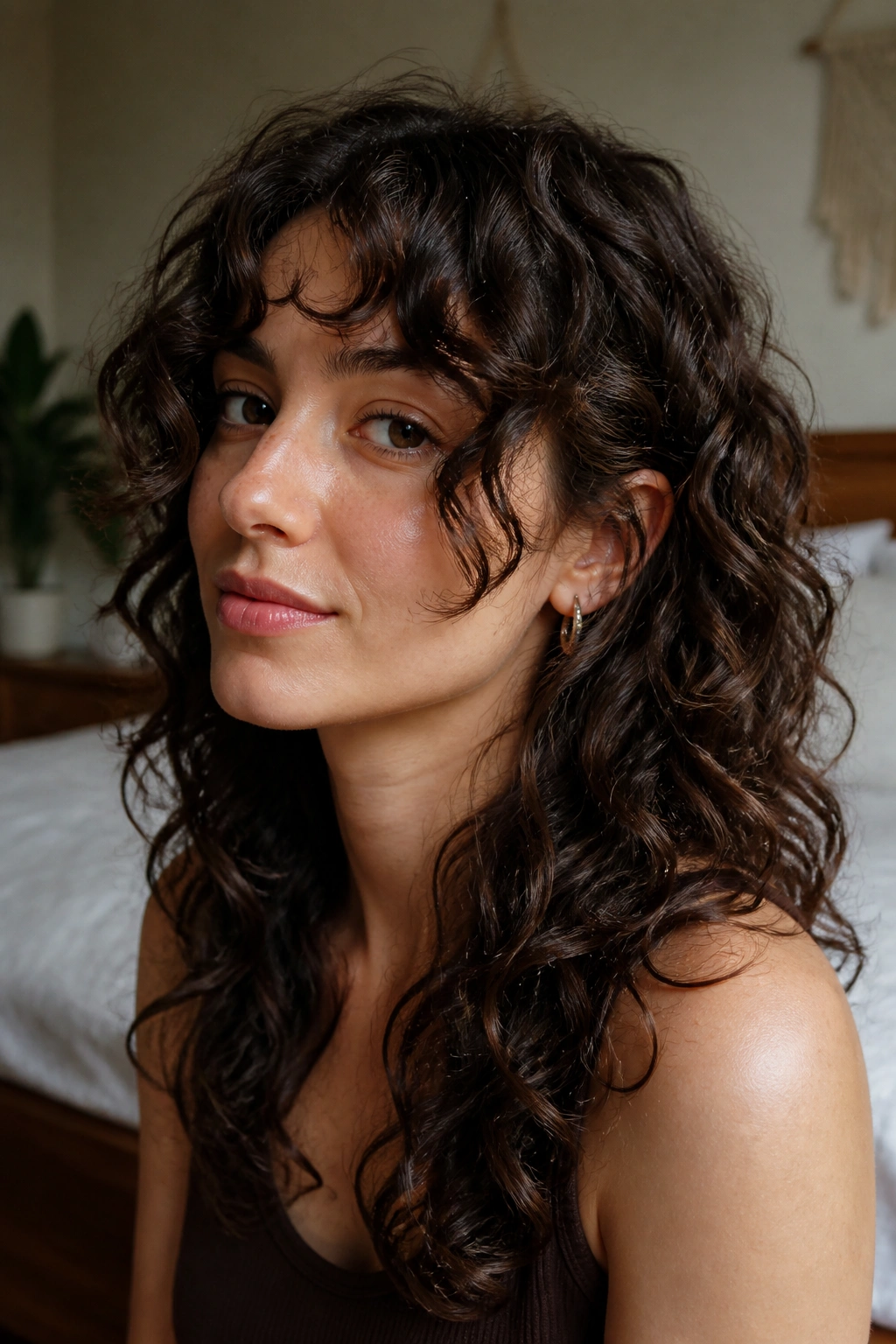
This is the shag I recommend most often for women who want movement without losing the feeling of length. The shape starts with long layers that open around the cheekbones and jaw, then melts into longer ends so the curl pattern can keep doing its thing.
Why It Works
The soft face frame gives you shape right where the eye lands first. That matters more on curly hair than people think, because curls can hide structure if the cut is too uniform.
Ask for the shortest pieces to land around the cheekbone or just below it, then let the rest step down gradually. You want the cut to move when you shake it out, not to look like it was carved with a ruler.
- Best on 2C, 3A, and loose 3B curls
- Keeps enough length for ponytails and twists
- Easy to air-dry with a little curl cream
- Looks especially good with a middle part or a soft off-center part
My favorite detail: keep the front layers long enough to tuck behind the ear. That tiny bit of flexibility makes the whole cut feel less fussy.
2. Heavy Fringe Curly Shag
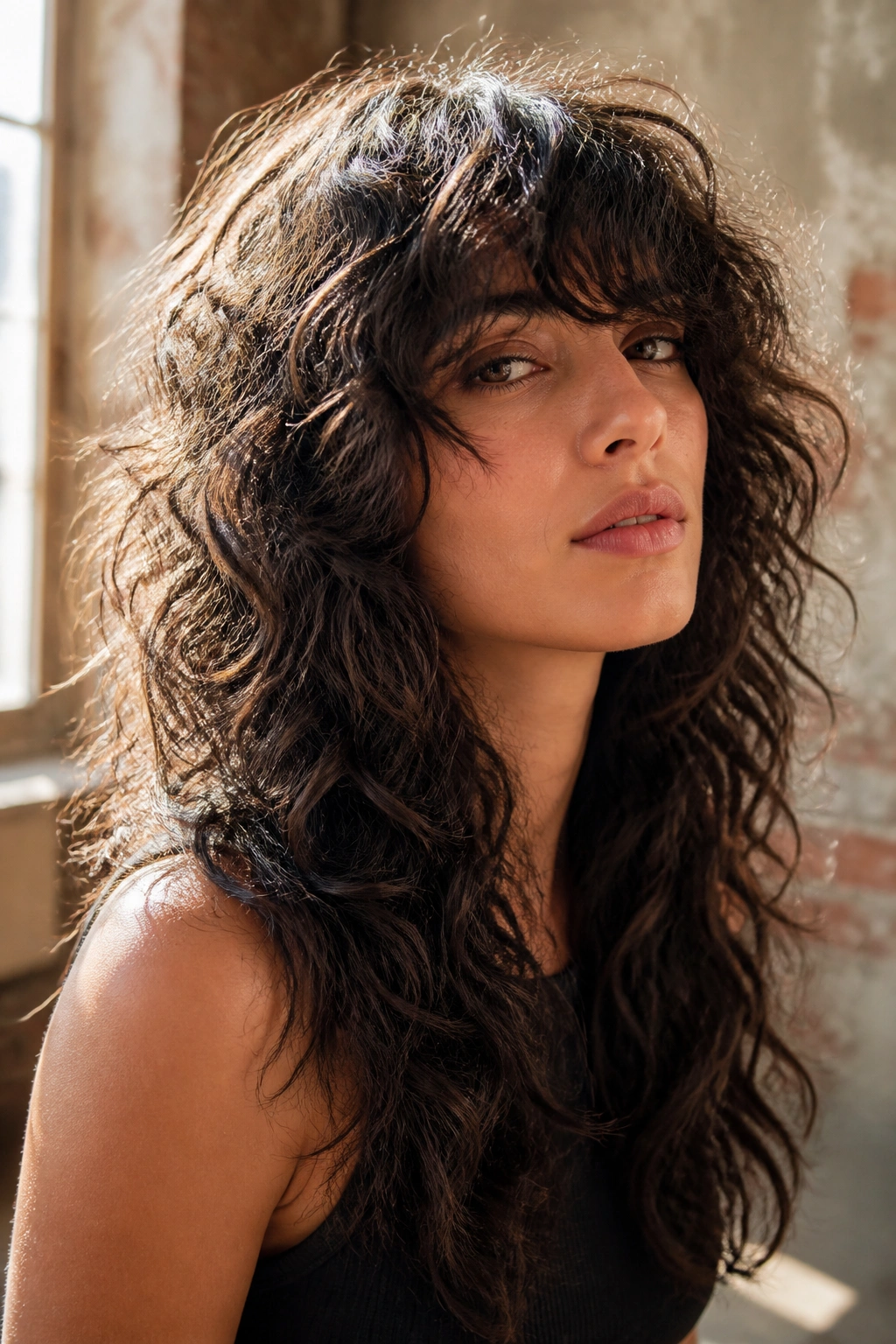
A heavy fringe changes the mood fast. Suddenly the haircut feels a little artsy, a little messy, and a lot more deliberate.
The trick is not to make the bangs too short unless you enjoy getting surprised by shrinkage every morning. Curly fringe needs room to spring up, and a good stylist will cut it longer than your instinct says is necessary. That is not hesitation. That is experience.
With this version, the rest of the shag can stay long and loose so the fringe does most of the talking. It works well on thicker curls that need weight removed from the top without exposing too much scalp. The best styling move is a diffuser on low heat, then a light pass with fingers once everything is dry. Not before. Before is how you get puffiness.
3. Wolfy Long Curly Shag
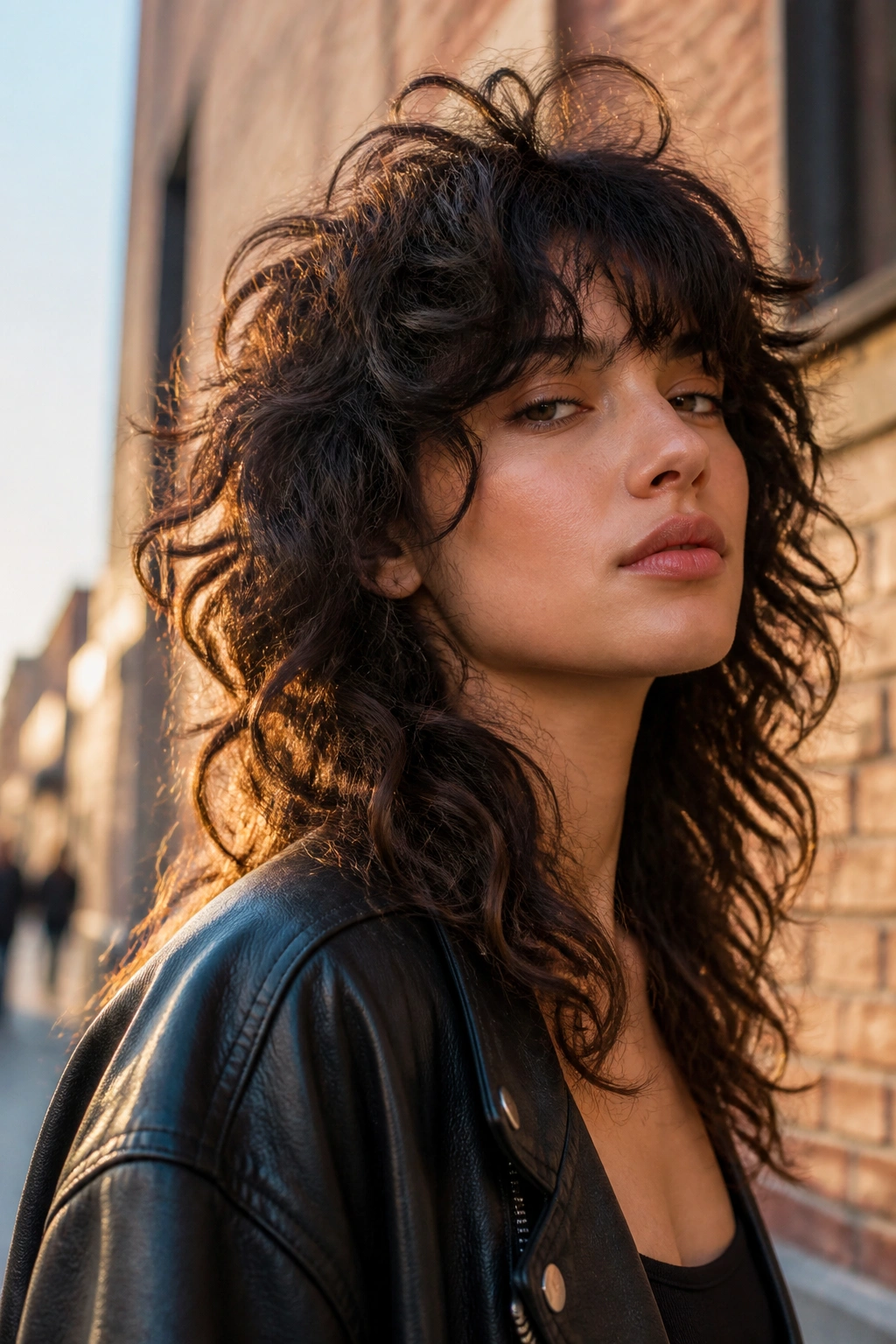
This one has edge. More edge than the soft shag, anyway.
The wolfy version pushes the crown shorter and lets the back stay longer, which gives curly hair that slightly wild silhouette people either love immediately or need one photo to warm up to. It is a good cut if your curls have plenty of body and you want the shape to feel lived-in instead of polished.
What Makes It Different
The top layers are more pronounced here, so the head shape reads taller and more lifted. That can be a blessing for dense hair that tends to sit flat at the root and explode at the bottom.
It also means the cut needs a stylist who understands curl shrinkage. If they cut too aggressively near the crown, the whole thing can spring up higher than you planned. That’s not a minor issue when the back is intentionally longer. The balance matters.
I like this shape on women who wear boots, oversized tees, and a little smudged eyeliner. It has personality. Maybe more than personality. A little attitude.
4. Bottleneck Bangs and Long Layers
Bottleneck bangs are a smart choice when you want fringe but do not want to commit to a blunt curtain that sits heavy across the forehead. They start narrower near the center, then open out toward the temples, which helps curly hair soften the whole face.
That opening shape is the whole point. It gives you texture around the eyes without making the front feel boxed in, and it works especially well if your curls have a tighter bend that tends to jump upward after washing.
The rest of the haircut should stay long and layered so the bangs do not feel disconnected. I like this on oval, heart, and slightly round faces because it creates a gentle vertical line. If your bangs tend to separate during the day, that is not a failure. It’s part of the look, and a little finger reshaping after lunch usually fixes it.
5. Boho Curly Shag with Piecey Ends
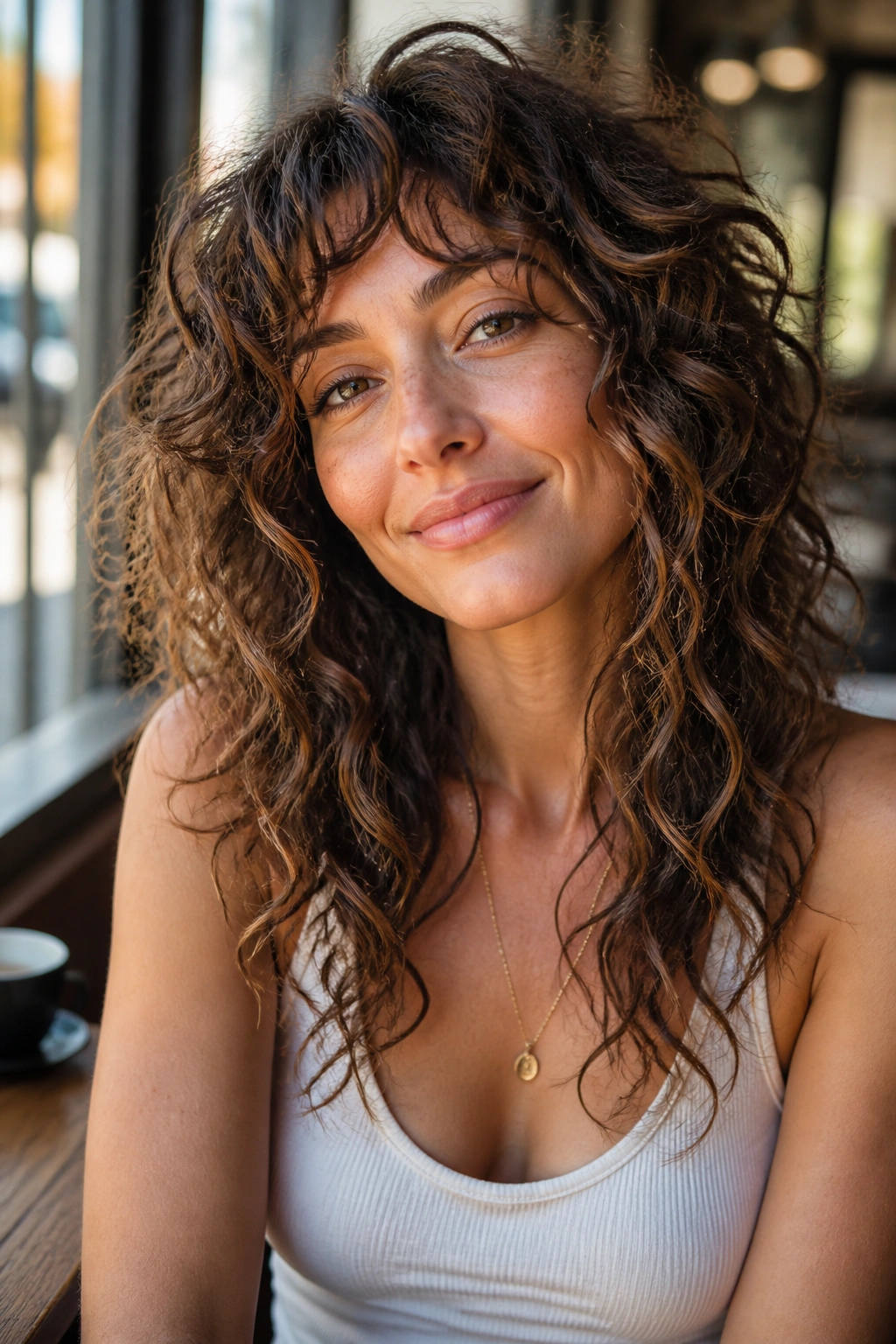
This is the shag that looks like you slept on a silk pillowcase, walked to a coffee shop, and somehow still ended up looking better than everyone else there. It’s relaxed, soft around the face, and a little separated at the ends.
The key is restraint. You do not want the stylist to over-layer the perimeter, because the boho effect comes from a loose, shaggy outline rather than a sliced-up finish. A light cream, a soft hold gel, and a squeeze of the curls once they’re fully dry will usually give you that piecey look without turning the whole head into static.
If your hair is fine but curly, this can work beautifully. If your hair is very thick, ask for less interior thinning and more long, visible layers. The difference between breezy and frizzy is usually two or three thoughtful snips.
6. Rounded-Crown Curly Shag
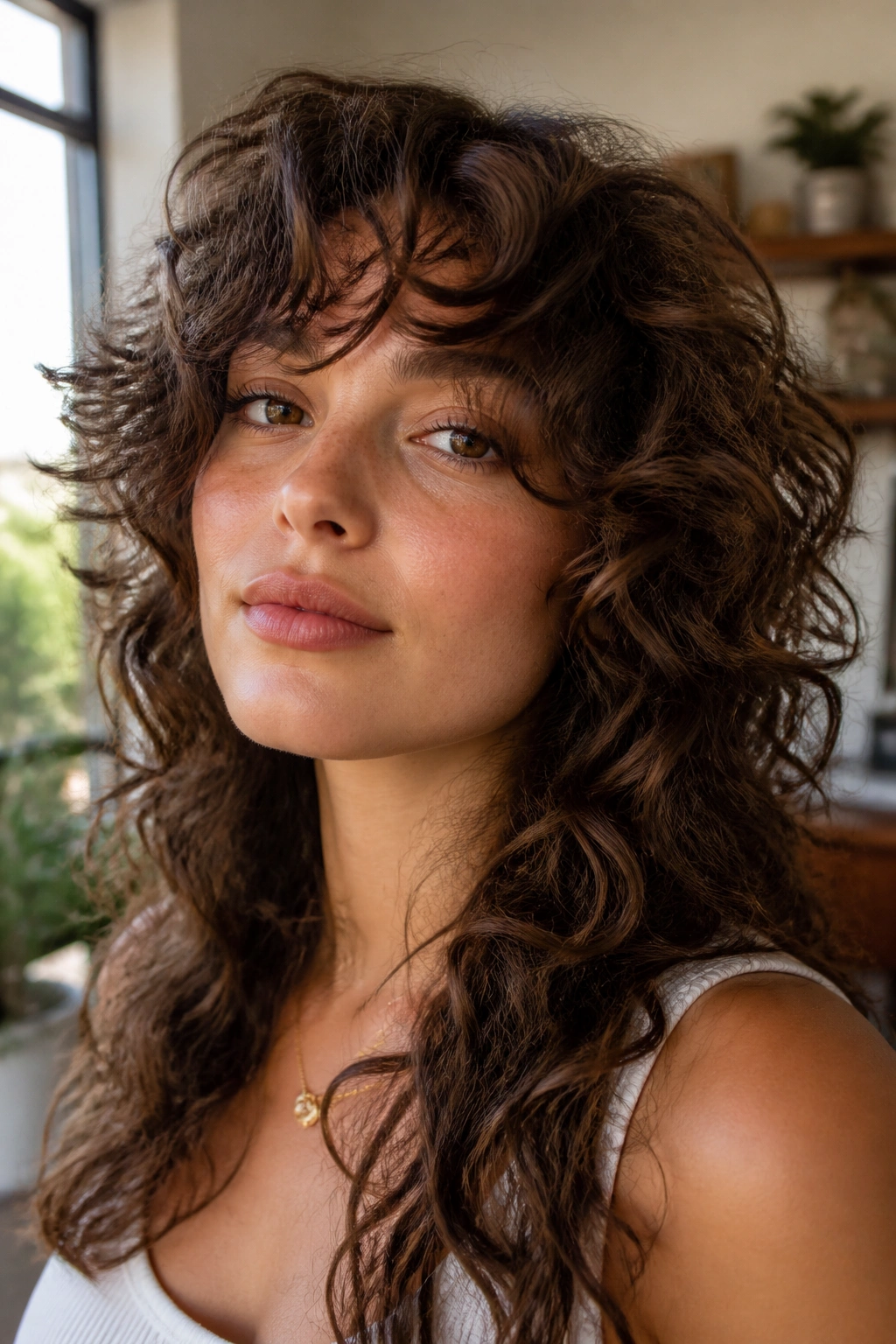
A rounded crown changes everything when your curls have a tendency to fall flat on top and swell at the bottom. This cut builds structure above the ears and around the upper head so the silhouette feels balanced instead of bottom-heavy.
It’s a strong choice for dense curls, especially if your hair has a habit of forming a triangular shape by day two. You know the look. Wide at the ends, small at the top, and a little too reminiscent of a Christmas tree. This cut fixes that by creating a fuller top curve and letting the lengths taper down with more intention.
Keep the face layers soft and the crown layers controlled. Too many short pieces near the top can make the shape puff out in a way that looks messy rather than full. There’s a line between airy and chaotic, and curly hair will find it fast.
7. Invisible-Layer Curly Shag
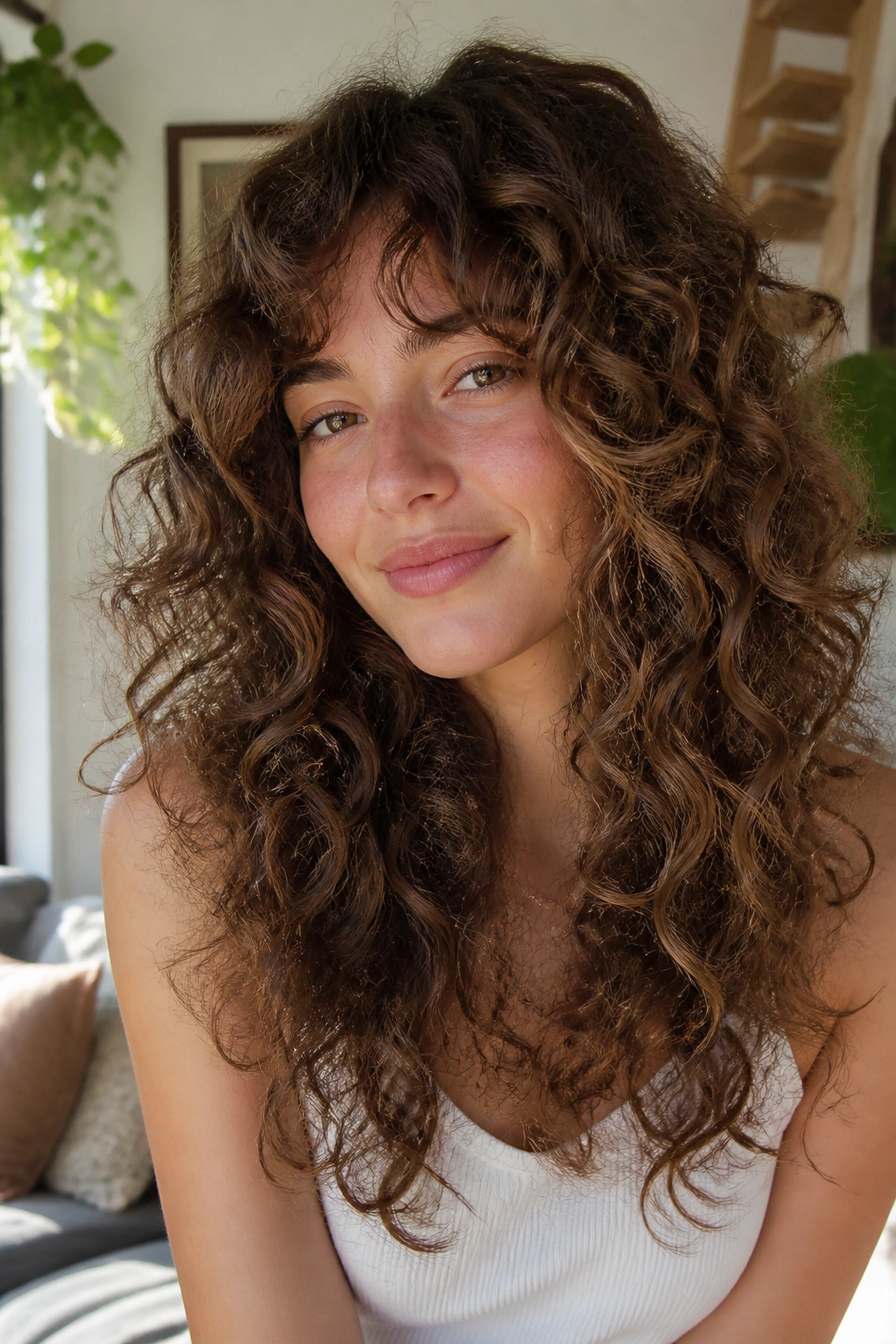
Invisible layers are one of my favorite tools for people who want movement but hate the idea of obvious steps in the haircut. The layers live inside the shape, not on the outside, so the silhouette stays long while the bulk gets removed from the middle.
Best for Hair That Feels Heavy
This version is especially good if your curls are uniform and thick from root to ends. Without hidden weight removal, the hair can sit like one dense block, which looks neat for about ten minutes and then collapses.
Ask for internal layers that start below the cheekbone and continue through the mids. The outside line should still feel long and clean. That is what separates this from a choppier shag.
- Helps reduce bulk without shortening the visible length
- Good for people who wear their curls natural most of the time
- Easier to tie back than a heavily broken-up shape
- Works well with a center part or a deep side part
8. Curly Mullet-Shag Hybrid
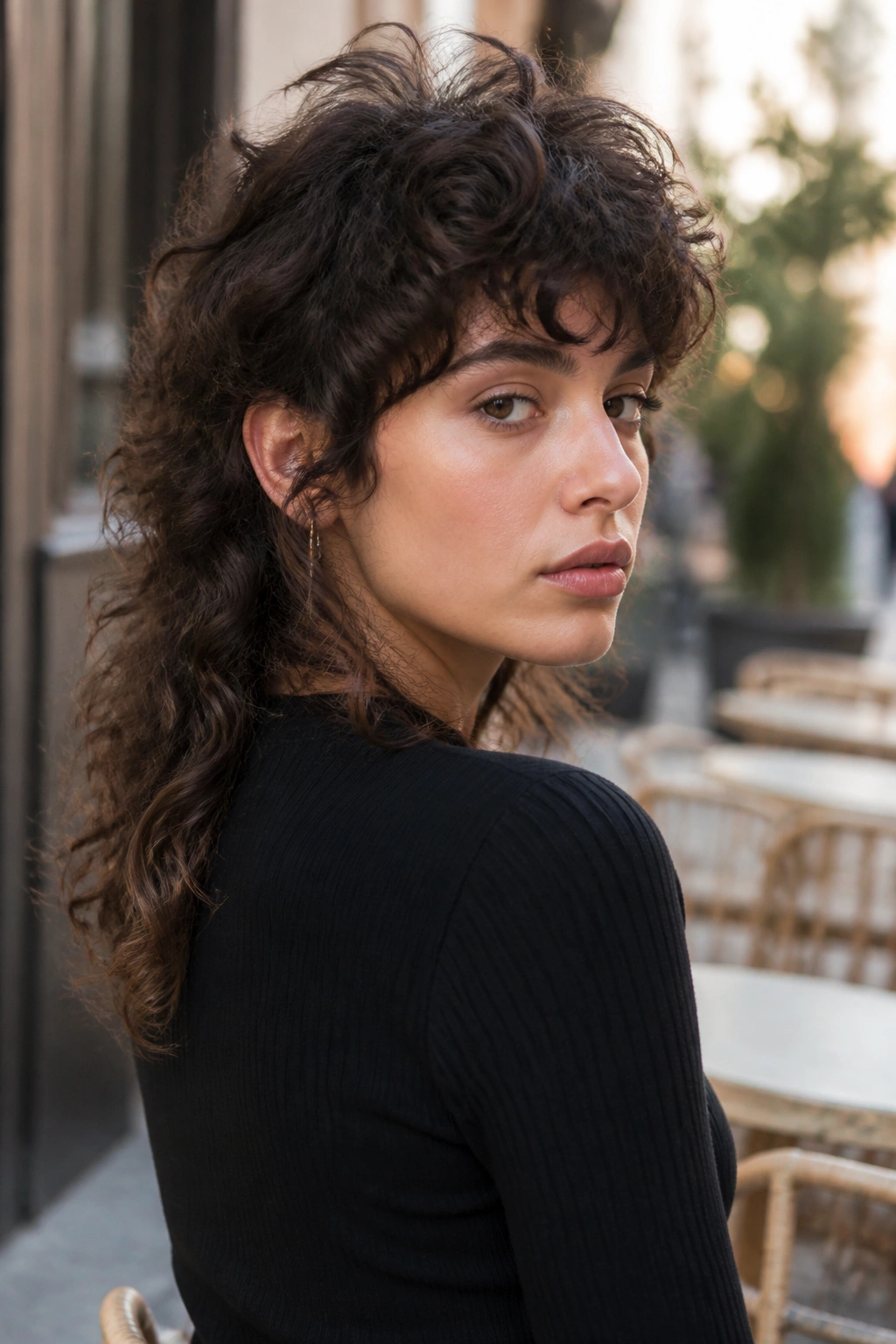
Yes, this one is bolder. That is the whole appeal.
The mullet-shag hybrid keeps more length in the back while giving the front and crown a more shredded, lifted shape. On curly hair, the transition feels softer than it does on straight hair, which is why it can look surprisingly wearable instead of costume-y.
I like this cut on women who want edge but still need enough length to pull the hair up. The back can brush the shoulders while the top stays lively and slightly undone. That contrast is the point. It’s also the reason this cut usually looks better with a bit of grit in the styling — mousse, diffuser, maybe a touch of texture spray once the curls are dry.
Not everyone will love it. If you want your hair to look neat from every angle, skip this one. If you like a haircut with a little bite, keep going.
9. Side-Bang Curly Shag
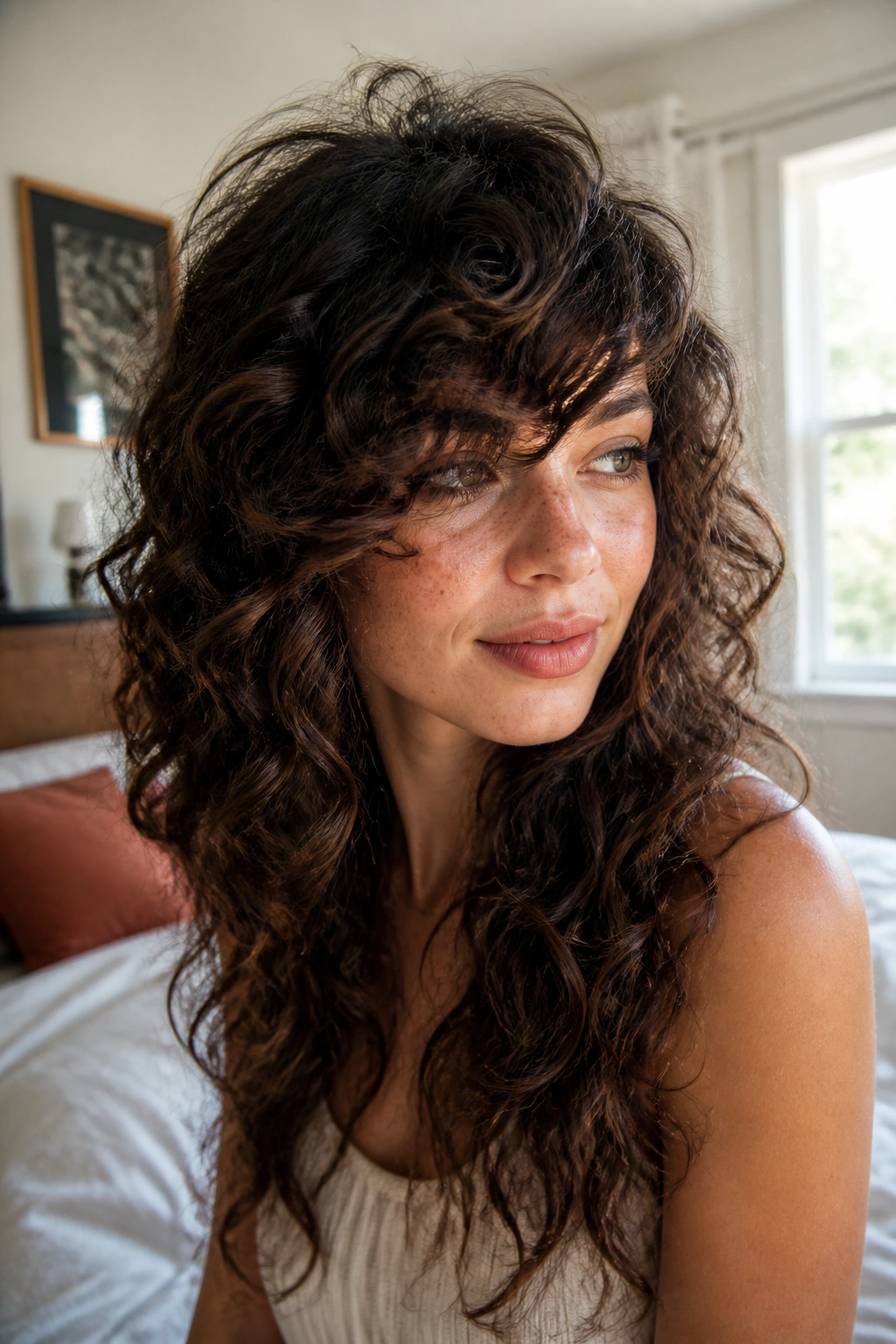
A deep side bang softens a face in a way center-part shags sometimes can’t. It pulls the eye diagonally, which is useful if you want to narrow a wider forehead or make a strong jaw feel less square.
How to Wear It
The best side-bang version on curls is never stiff. It should sweep, bend, and mix into the rest of the layers so it feels like part of the haircut rather than a separate piece glued to the front.
That means the stylist has to cut the fringe where it naturally falls, not where it behaves for ten seconds in the chair. Curly side bangs need room to move, and they often look best when they’re a touch longer than expected. Let them sit just below the brow at first. You can always go shorter later.
This cut is also one of the easiest to refresh on a rough hair day. Flip the part, mist with water, and scrunch the front into place. Done.
10. Airy Curly Shag for Fine Hair
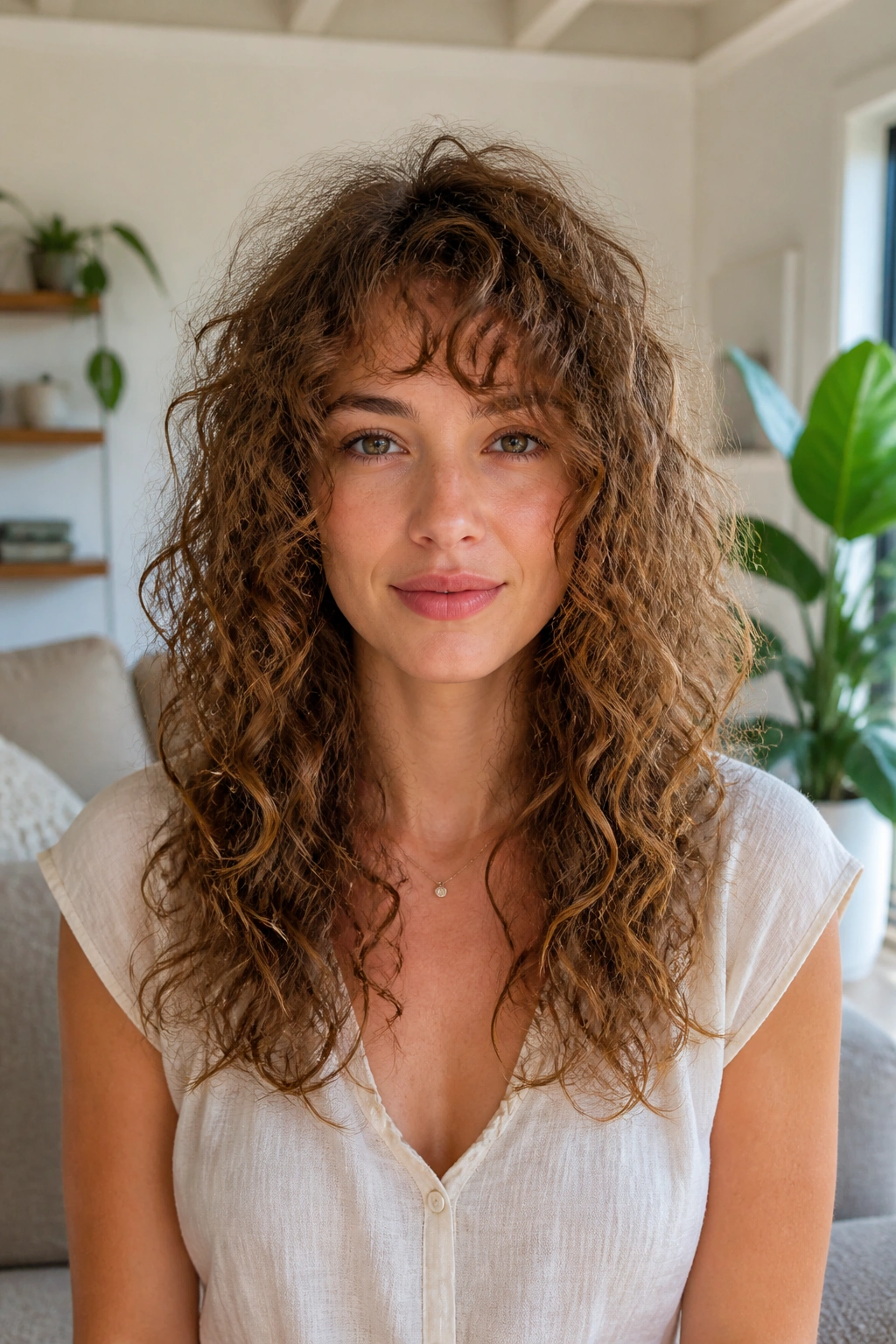
Fine curly hair can handle a shag, but it needs a lighter hand. Too many layers and the ends start to fray out, which leaves the whole style looking sparse rather than airy.
The version that works best keeps long interior layers and only a modest amount of face framing. The goal is movement, not removal. If you can see the line of the cut but still feel the body of the hair, the balance is right.
This is also one of the better cuts for women who rely on mousse and root clips. A little lift at the crown goes a long way on fine curls, and the shag shape gives those tools something to hold onto. Avoid over-thinning. That stuff sounds helpful in theory and can turn into a mop in real life.
11. Big-Volume Curly Shag for Dense Hair
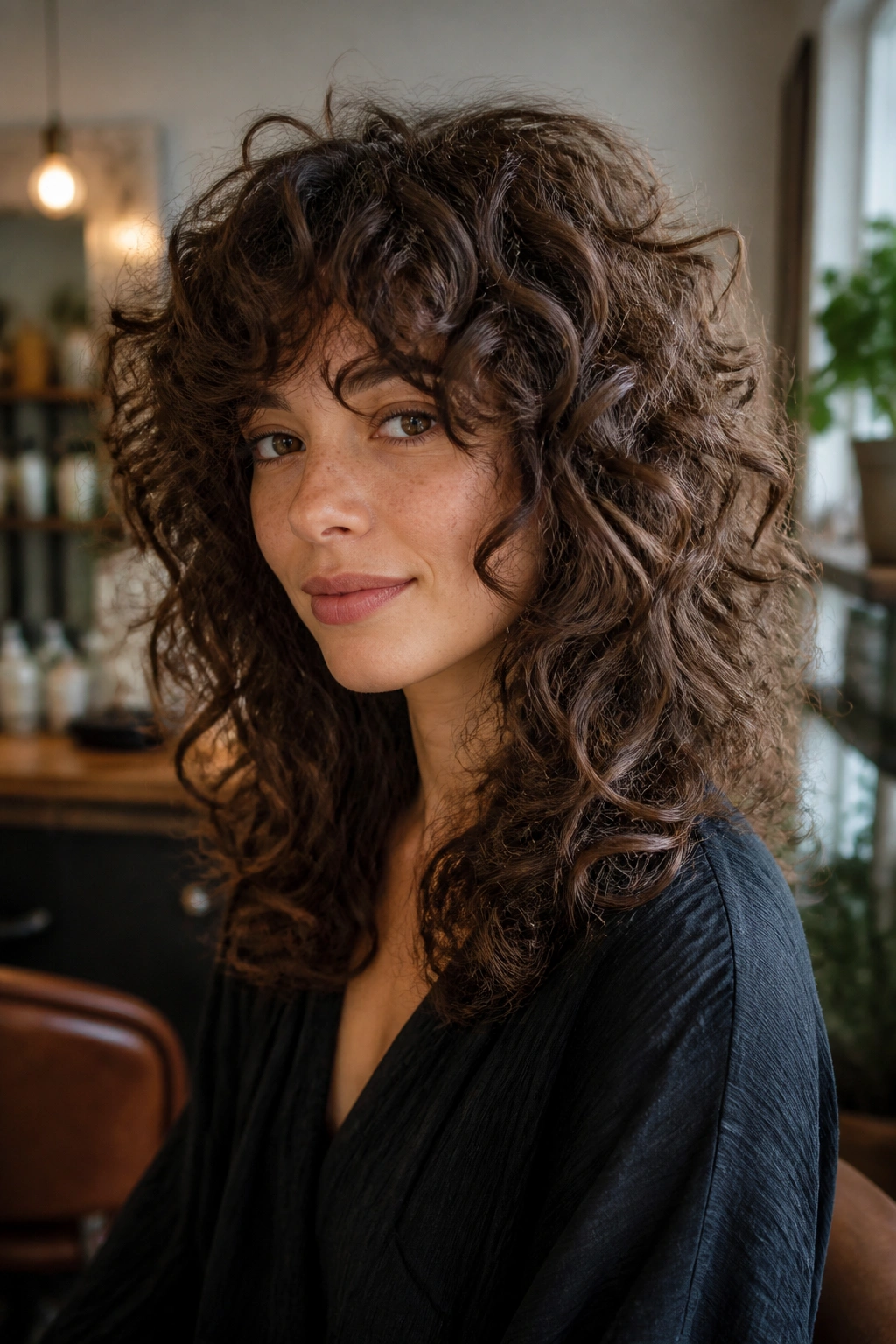
Dense hair wants room. If it does not get that room, it turns into a heavy triangle and starts working against you by lunchtime.
This shag uses more aggressive internal layering to release bulk from the crown and the sides, especially around the lower back of the head where dense curls tend to pack together. The perimeter stays long enough to keep the cut grounded, but the top and mids get enough movement to stop the shape from looking blocky.
A stylist who cuts curls dry can be helpful here because density shifts a lot once the hair is dry and springy. That said, dry cutting is not magic. It still depends on a good eye and a steady hand.
What to Ask For
- Long visible layers, not short choppy ones
- Bulk removal inside the shape, not at the ends
- A crown that sits lighter and less compressed
- Enough weight left in the outline to avoid frizz
12. Collarbone-Skimming Curly Shag
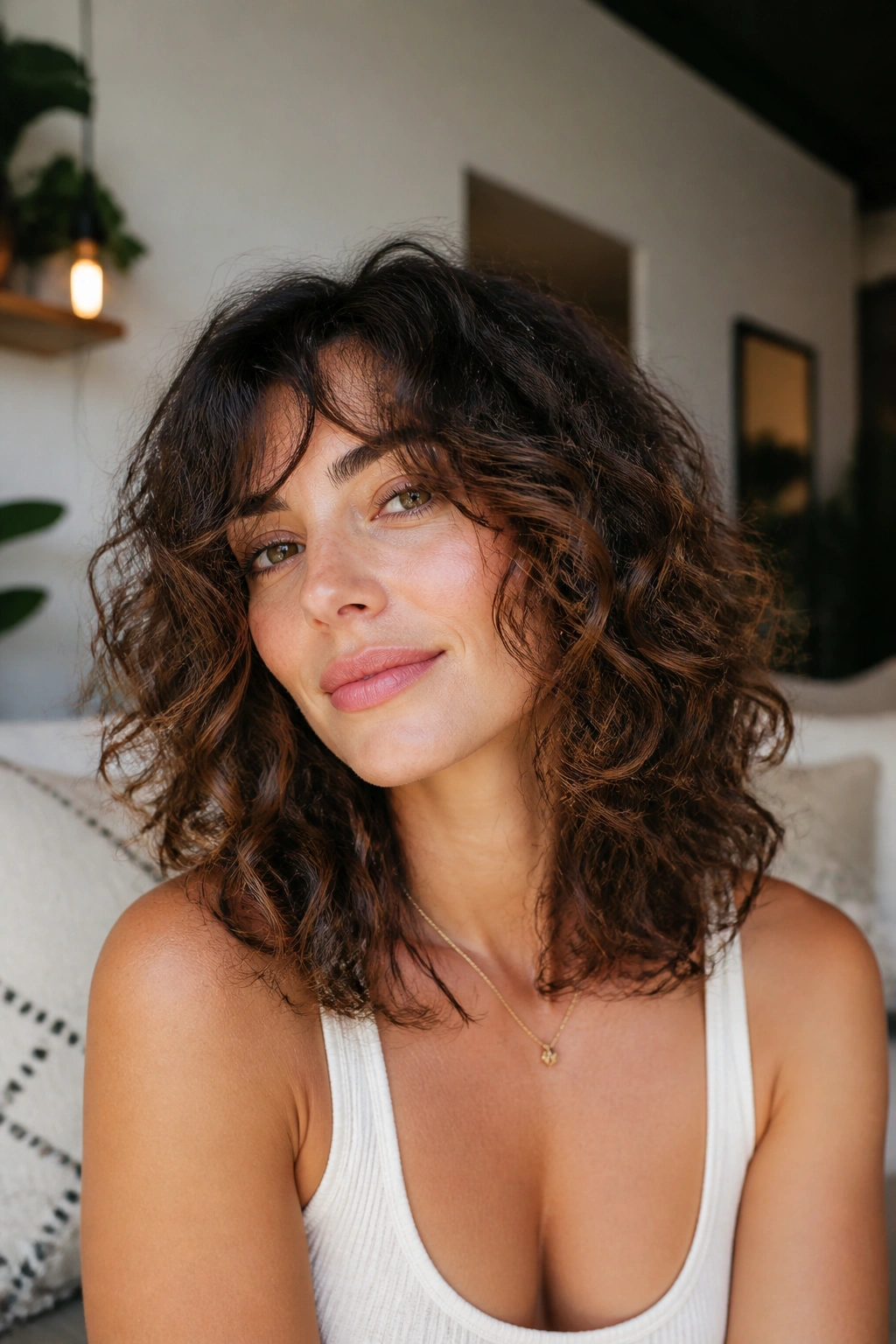
If you want the shag look but are nervous about going too short, this is a safe and smart middle ground. The collarbone length keeps the haircut feeling feminine and easy to style, while the layers add enough lift that it does not fall flat.
The shape works especially well when the curls hit a mix of lengths around the shoulders. That little bit of variation makes the haircut feel softer and more natural. It also plays nicely with jackets, scarves, and anything that tends to rub against the ends.
This cut is quietly flattering. Not flashy. Just good. If you like the idea of a shag but still want your hair to feel polished for work, dinners, or anywhere you do not want to look too edgy, this is one to bookmark.
13. Curtain-Bang Curly Shag
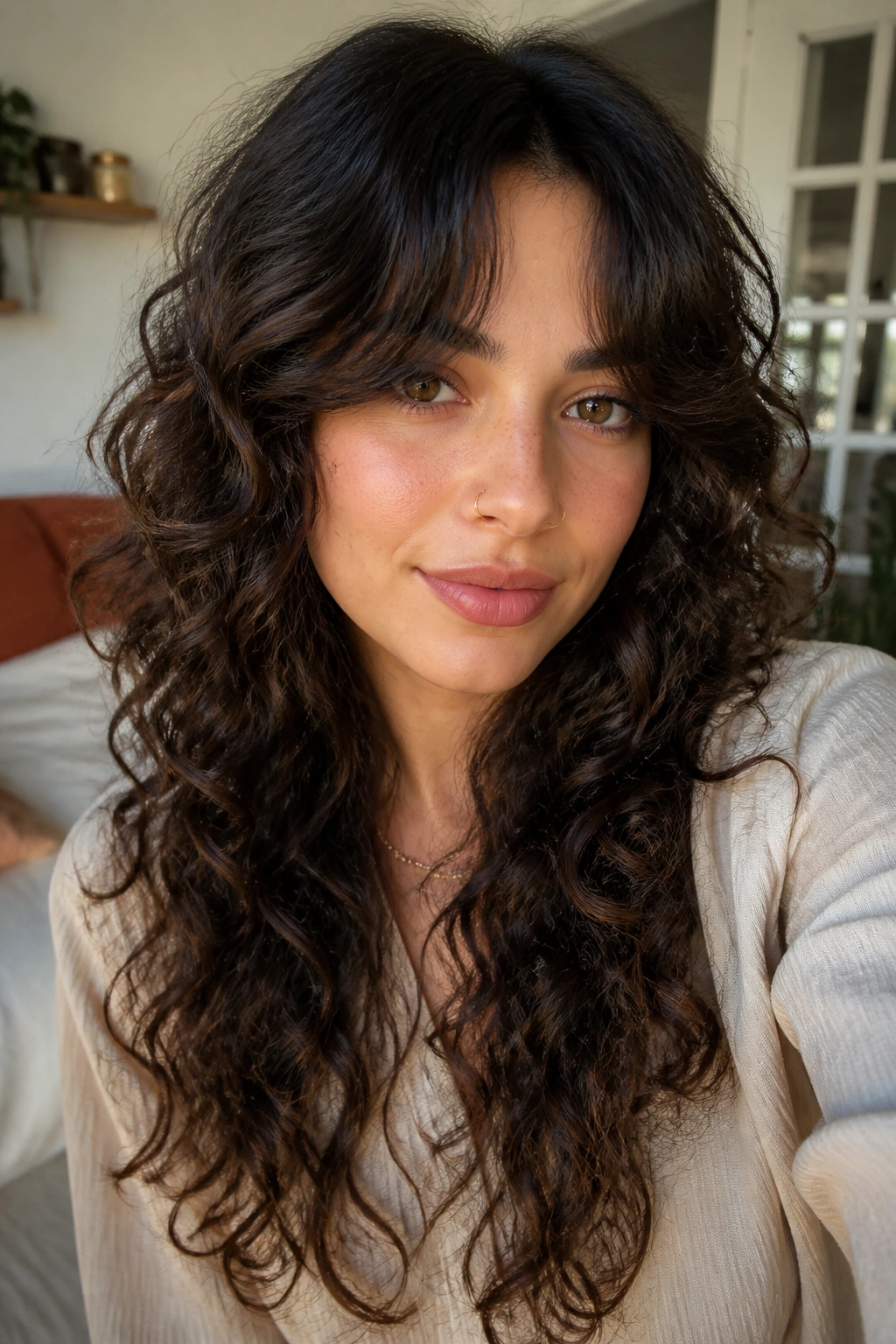
Curtain bangs on curly hair can be gorgeous when they’re cut with enough length to move. The center part opens the face, and the longer sides fall into the rest of the layers like they were meant to be there all along.
The biggest mistake is cutting them too short. Curly curtain bangs spring up more than straight hair, and once they do, they can sit awkwardly high above the brows. A good rule is to start longer and shape them after they dry. That seems obvious, but people still get this wrong.
A Good Fit If You Want Versatility
This version is excellent if you like changing your part. Wear the bangs parted down the middle on cleaner days, or sweep them to one side when you want the face to feel softer. The same cut can shift between polished and relaxed without much effort.
It also grows out better than a blunt fringe, which makes it a practical choice for anyone who hates frequent trims.
14. Low-Maintenance Air-Dry Curly Shag
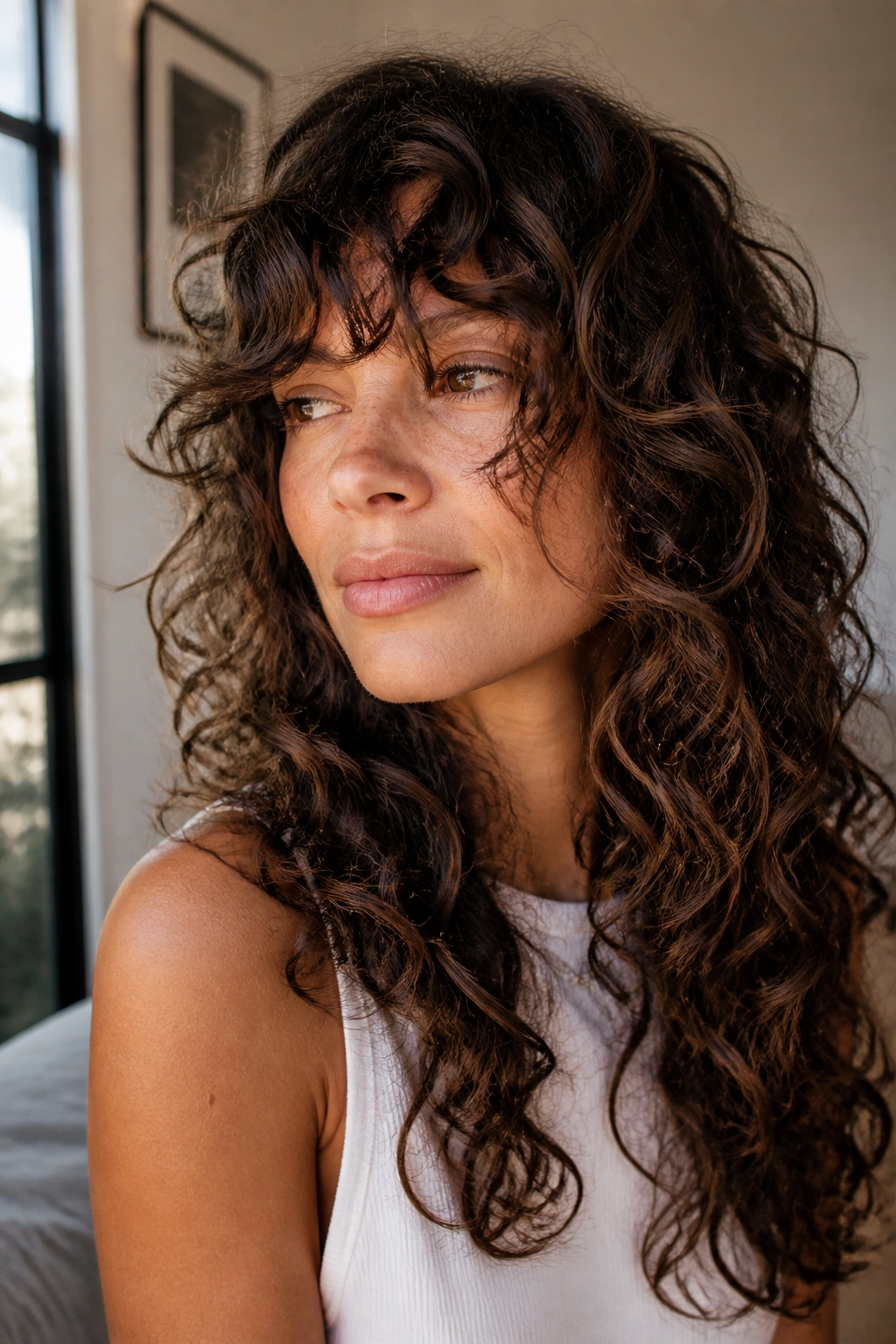
Some shags ask for styling. This one behaves better when you let it be.
The cut should follow the natural fall of your curls, with layers that sit where your hair already wants to move. That means fewer battles in the morning and less dependence on hot tools. A leave-in conditioner, a light gel, and a clean scrunch are usually enough.
The style is especially good for women who want their haircut to look better after a little lived-in time. Day one is fine. Day two can be even better. Day three, if the weather is kind, often looks like the cut finally settled into itself.
Just don’t confuse low-maintenance with no maintenance. You still need a good cut and a decent product routine. Lazy cutting and lazily applied products are not the same thing.
15. Glam Curly Shag with Polished Ends
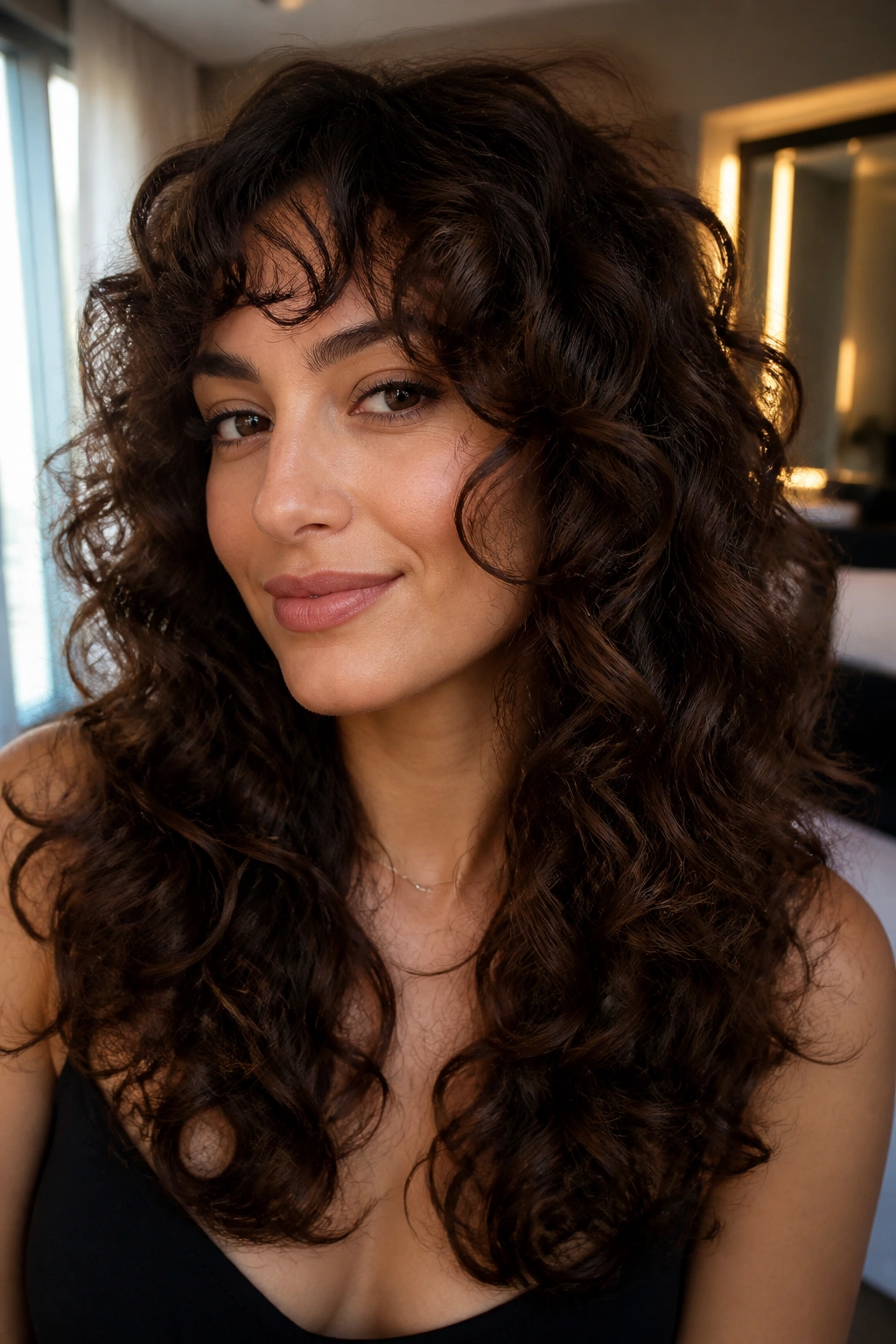
This is the shag for people who like their curls defined, shiny, and a little more finished. The layers are still there, but they’re blended in a way that keeps the outline smooth and the ends controlled.
It’s a good choice if you diffuse often, use stronger hold products, or like to wear your curls more separated. The haircut gives you movement without making the ends look shredded. That matters if you prefer a neater finish.
The polished shag can be a nice bridge between everyday curl and full dress-up hair. Add a side part, a little glossing serum on the ends, and the shape starts to feel a little more intentional. Not stiff. Just composed.
16. Razor-Textured Curly Shag
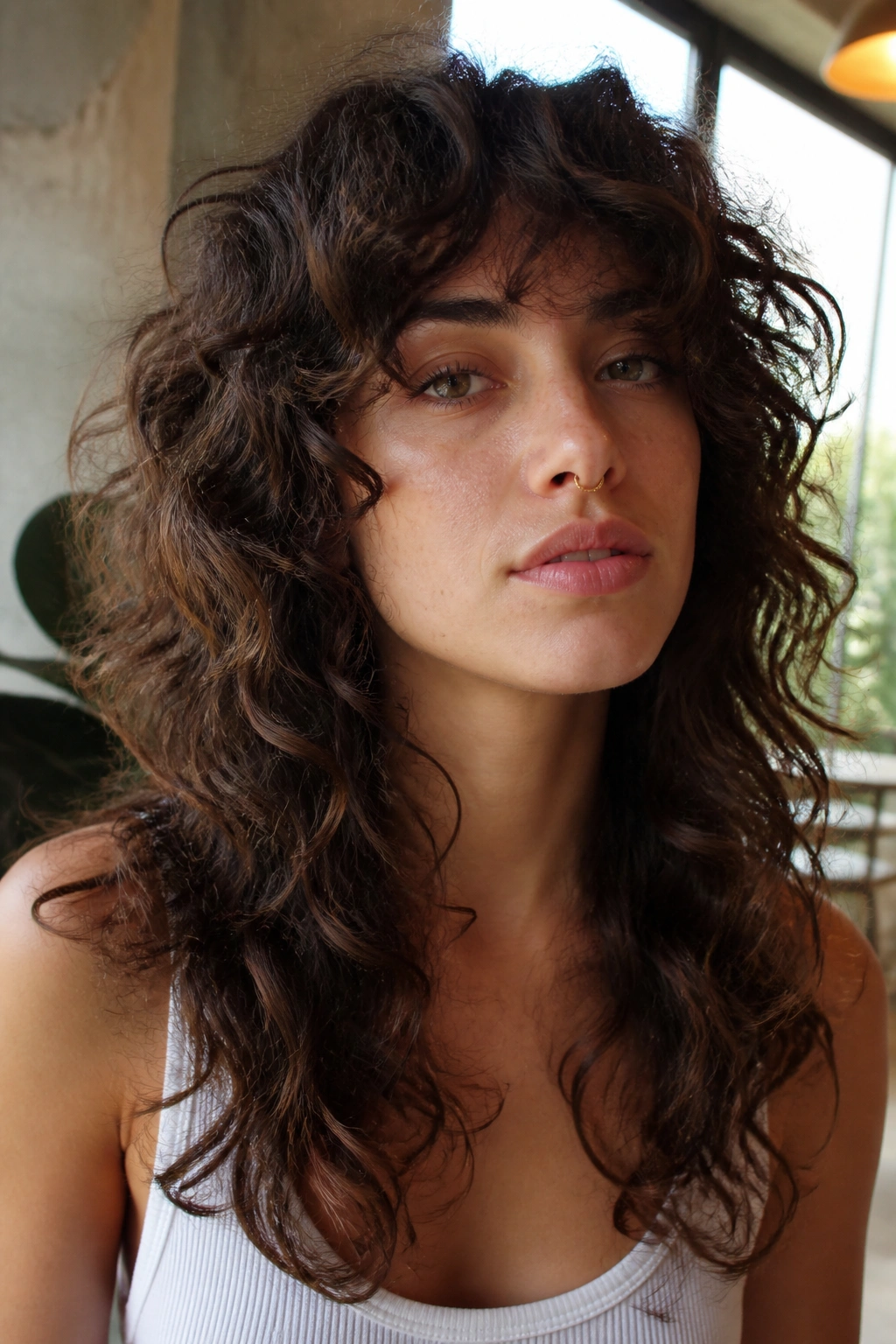
A razor can be useful on curly hair, but only when the stylist knows how to use it. Done well, it softens the ends and removes harsh lines that can make a shag feel bulky or blunt.
Done poorly, it can fray the hair and invite frizz. That is especially true on curls that are already dry, porous, or damaged from color. So yes, this is a stylist-dependent cut. I would not hand this one to someone who mainly cuts straight bobs.
The razor-textured shag tends to work best on medium to coarse curls with good elasticity. The cut feels lighter, the edges look more lived-in, and the whole style gets a softer swing when you walk. It’s a little less tidy than a scissor-cut shag, and that’s part of the charm.
17. Tapered Curly Wolf Shag
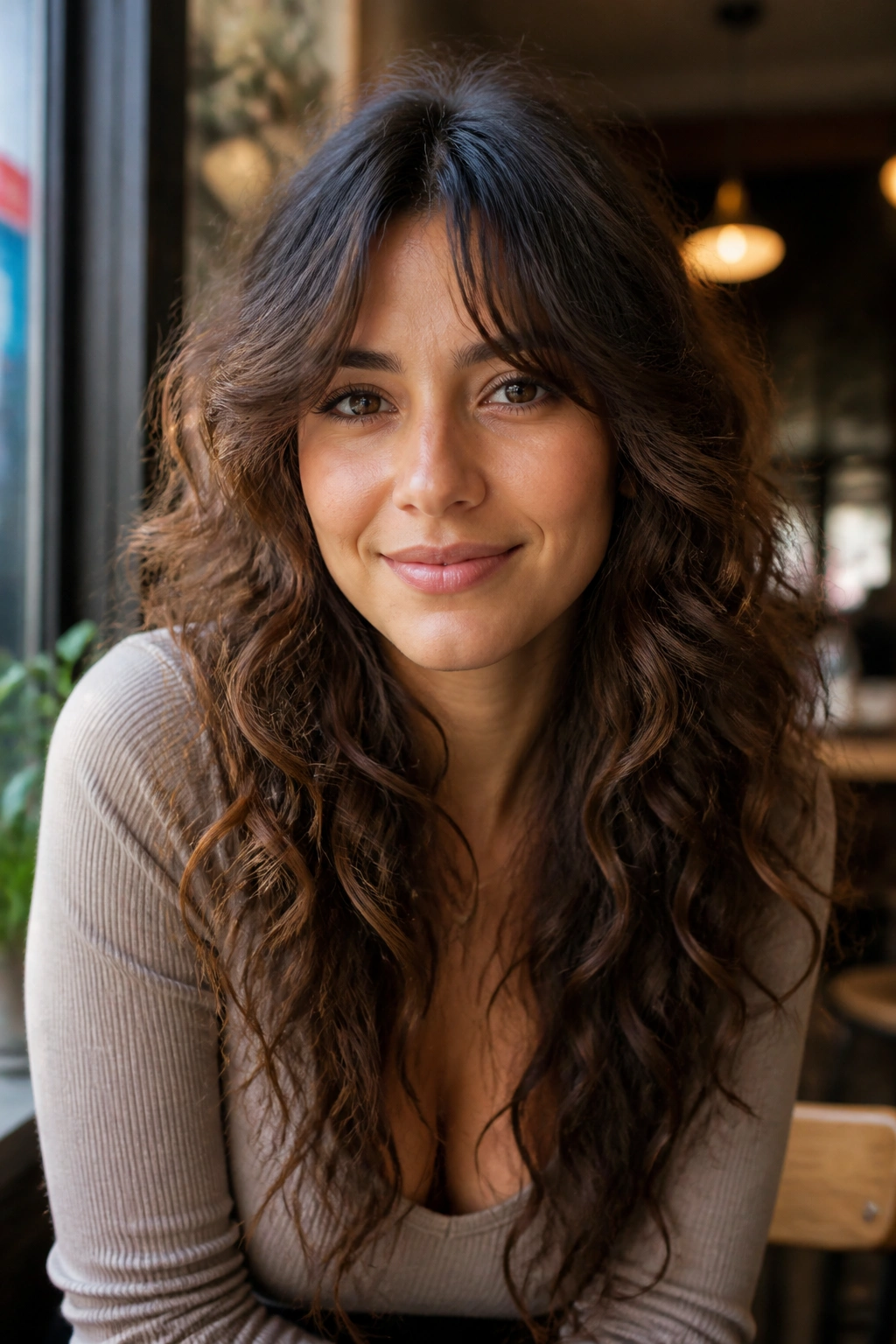
This style leans more angular than the softer shag versions. The nape and sides taper in a controlled way, while the crown and front keep their lift, giving the haircut that slightly fierce wolf-cut energy.
Where It Shines
Tapering helps curly hair avoid a heavy, square shape. That is a real issue when the hair is thick through the lower half, because curls can puff outward before they fall. Removing some bulk near the nape keeps the silhouette cleaner.
The cut reads best when the front pieces are long enough to graze the collarbone or chest. That keeps the haircut from feeling too short or too trendy. You still get the attitude, but the length keeps it wearable.
- Good for thick 3A to 3C curls
- Works with deeper side parts or a center part
- Needs a trim before the shape gets fuzzy
- Looks strongest with a bit of root lift
18. Long Shag for 2B Waves and Loose Curls
Not every curly shag needs a dramatic fringe or heavy layering. For 2B waves and loose curls, a gentler cut often works better because the pattern can flatten if it loses too much weight.
The best version keeps the front light, the mids mobile, and the ends long enough to keep the wave pattern intact. You want movement, not hollowness. That difference matters a lot on looser textures, where over-layering can make the hair look stringy by the second day.
This is the shag for people who want softness with a little edge. It won’t scream wolf cut. It won’t read as retro. It just gives the hair a better shape than a straight cut ever would. Sometimes that is enough.
19. Cheekbone-Bang Curly Shag
Cheekbone-length bangs are a nice choice when you want the face frame to do more of the work. They sit right in that flattering middle zone — long enough to blend, short enough to matter.
The effect is subtle but strong. The bangs draw attention upward and outward, which can sharpen a softer face shape and give the eyes a little extra focus. On curly hair, that works especially well because the movement keeps the front from feeling flat or heavy.
How to Get the Length Right
Ask for the bangs to be cut while the curls are in their natural state, or very close to it. If they’re stretched straight in the chair, you can end up with pieces that bounce too high once dry.
I like this look on oval and heart-shaped faces, but it can work elsewhere too if the rest of the layers are balanced. The whole cut feels more expressive than plain face-framing layers, and that is the point.
20. Face-Slicing Layered Curly Shag
Face-slicing layers are longer diagonal pieces that start near the part and sweep down through the face, usually ending around the jaw, chin, or collarbone. They create motion without turning the front into bangs.
That shape is useful if you want your curls to open up around the face but still keep the front long enough to tuck, clip, or pin back. It also helps narrow wider cheeks a little, which is why so many people like it once they see it on.
The best part is how easy it is to style. A quick twist with your fingers while the hair is damp can help the front pieces fall in the right direction. After that, the rest can do its own thing. The haircut carries more of the work than the styling routine does.
21. Deep U-Shaped Curly Shag
A deep U shape gives long curly hair a softer outline than a blunt edge. Instead of ending in one hard line, the hair falls in a rounded curve that feels elegant and loose at the same time.
Why Thick Hair Loves This Shape
Thick curls can get bulky fast, especially if the perimeter is too straight. A U shape removes some of that visual weight while keeping the length intact, which is a smarter trade than chopping off inches just to make the ends behave.
The layers inside the cut keep the shape from feeling heavy, but the outer line still looks long and deliberate. That makes it a strong choice for anyone who wants their hair to stay glamorous rather than edgy. It’s not the loudest shag in the room. It does not need to be.
If you wear your hair down a lot, this one is worth a serious look. It has enough shape to feel current, but it still photographs like long curly hair, which matters more than people admit.
22. Maximum-Movement Long Curly Shag
This is the fullest expression of the long curly shag haircut: crown lift, long face framing, layers through the mids, and ends that move the second you turn your head. It’s the style for someone who wants the hair to feel alive.
The cut needs a careful hand because every layer has a job. Too much taken from the top and the shape gets wild. Too little and you lose the movement that makes a shag worth having in the first place. The sweet spot is a cut that still looks long from the front but has enough internal lift to keep the curls separated.
It’s especially good for women who enjoy diffusing, scrunching, and encouraging their natural curl pattern instead of fighting it. That said, it can also air-dry into something easy and pretty if your curls are cooperative. Some days they are. Some days they have opinions.
Final Thoughts
A long curly shag works best when the cut respects the curl pattern instead of trying to tame it into straight lines. That usually means careful layering, smart fringe placement, and a real understanding of how much your hair shrinks once it dries.
The best version for you depends on one thing more than anything else: how much shape you want to see when your hair is loose. If you want soft movement, stay with face-framing layers and longer bangs. If you want attitude, lean into wolfier shapes, fringe, or a mullet-shag hybrid.
Bring photos, yes, but bring photos of curls that behave like yours. That detail saves people from bad haircuts more often than any other.
