



A soft shag haircut for mid length hair can solve that annoying middle-ground problem where your hair feels too heavy to move, but not long enough to drape neatly. The cut gives you lift, swing, and a little attitude without tipping into the wild, over-chopped territory that scares off a lot of people.
That balance is why it works so well on collarbone and shoulder-length hair. Layers can start high enough to create motion around the crown, then melt into the rest of the shape so the ends still look full. You get softness, not scraps. That matters.
The real trick is where the weight comes out. A good shag removes bulk from the right places and leaves enough density through the perimeter that the haircut still looks lived-in, not thin. If the layers are cut with some restraint—usually with point-cutting, slide-cutting, or a careful razor finish—the whole thing moves in a way that feels easy rather than messy.
Some versions lean romantic. Some have a little edge. A few are almost sneaky in how subtle they are, which is probably why so many people keep coming back to this shape once they try it the first time.
1. Curtain Bang Soft Shag
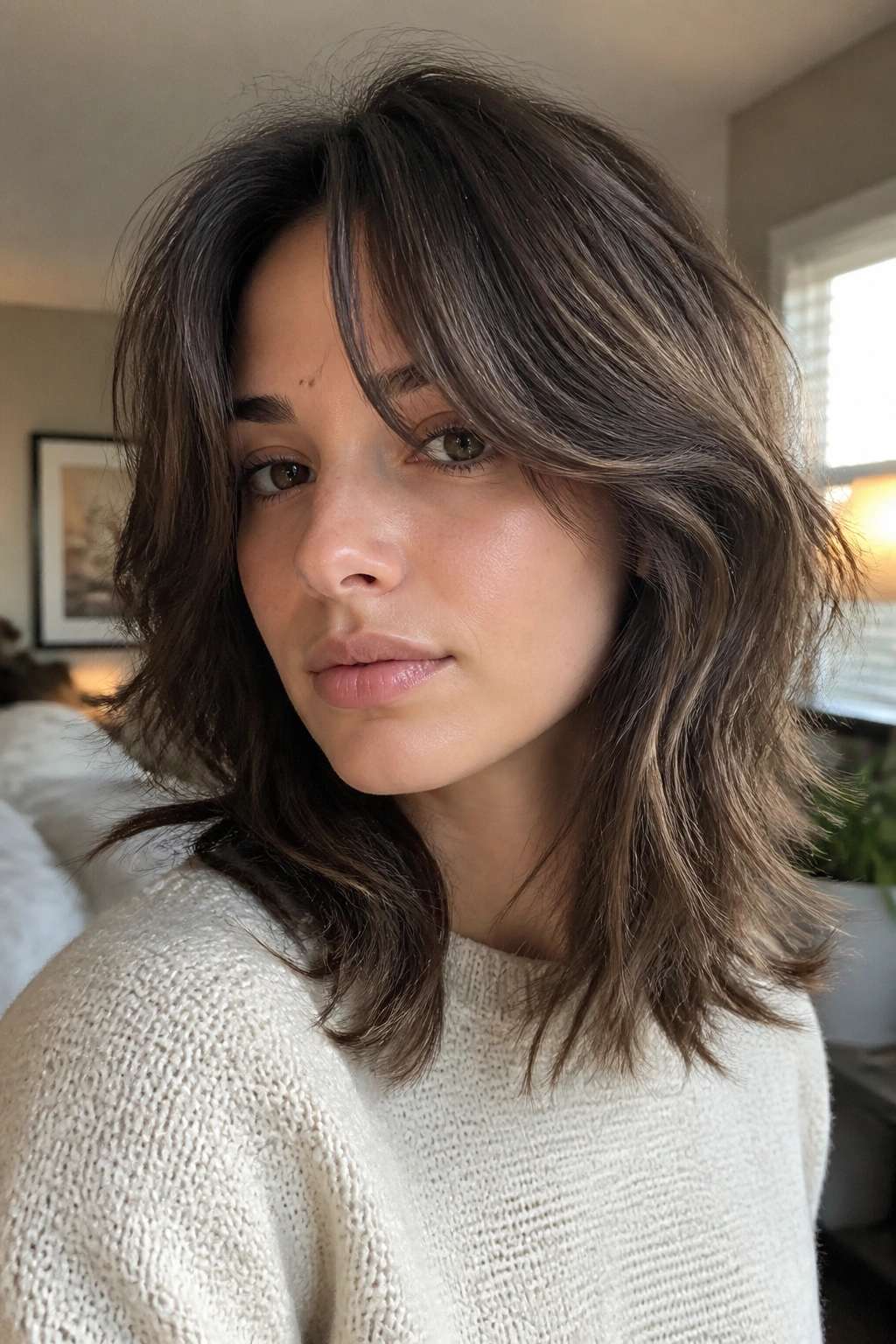
Curtain bangs are the easiest way to make a soft shag feel friendly instead of edgy. They split the front of the haircut, open up the face, and blend into the side layers so the shape looks intentional even when it’s a little undone.
The mid-length version is especially good because the bangs can fall into cheekbone-skimming layers without swallowing your features. A stylist can start the shortest pieces around the brow or just below it, then let the rest of the fringe taper into the face frame. The result feels airy, not heavy.
What to ask for at the salon
- Shorter pieces that open from the center part and sweep toward the cheekbones.
- Layering that starts below the chin so the ends keep some weight.
- Soft, point-cut ends instead of blunt, square edges.
- A blowout-friendly fringe that can also air-dry without looking stiff.
The nice part is how forgiving this cut is on day two. A little dry shampoo at the roots and a quick bend through the front pieces is usually enough. That’s the whole appeal, really. It looks like you fussed, even when you didn’t.
2. Collarbone Feathered Shag
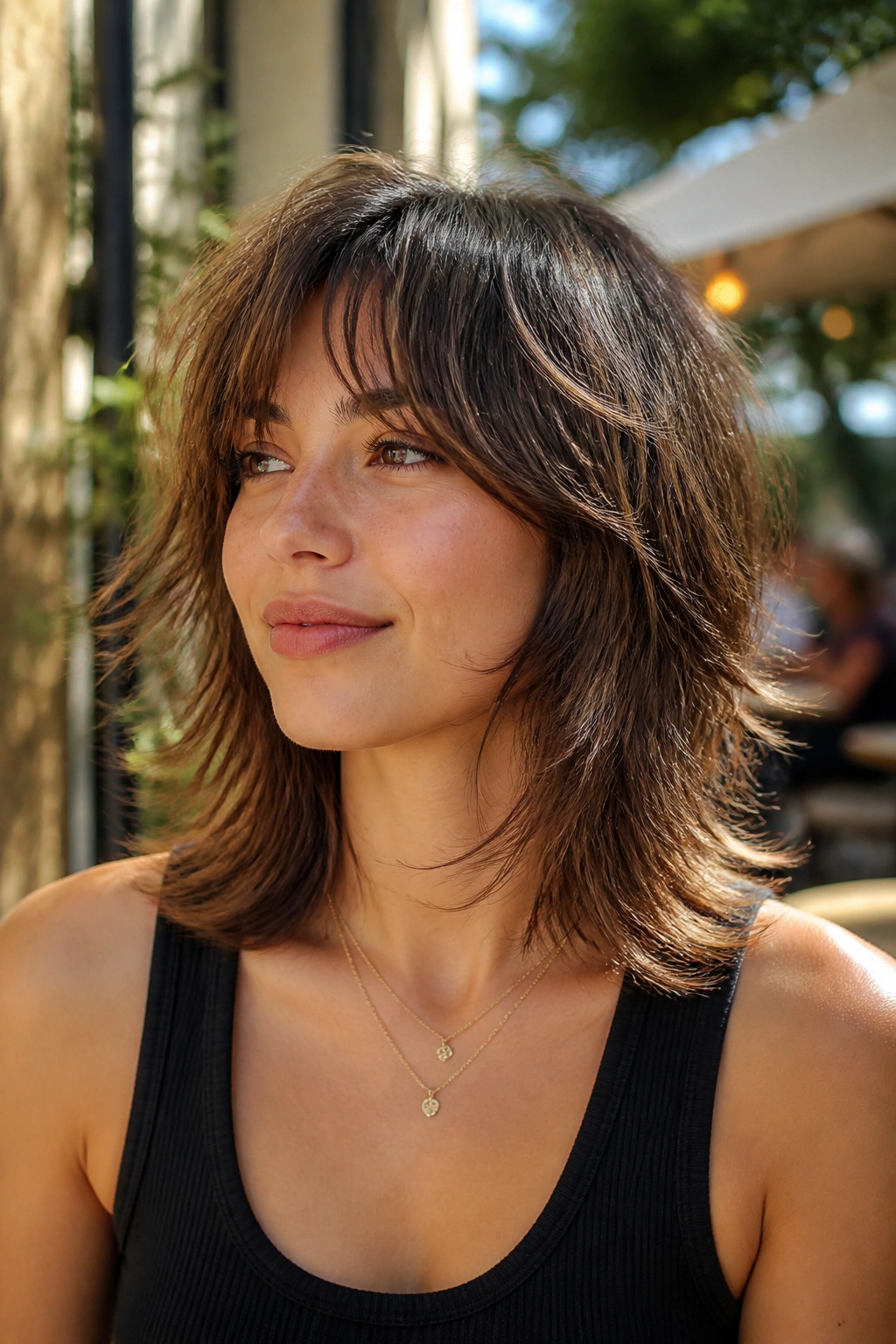
Why does a collarbone feathered shag look so polished even when it’s barely styled? Because the length sits right in that sweet spot where the haircut has room to move, but the perimeter still feels strong. You get shape without the heavy curtain effect that mid-length hair sometimes falls into.
Feathered layers soften the line around the shoulders, which matters more than people think. Hair that ends exactly at the collarbone can look blocky if it’s one length. Add softer edges and a few interior layers, and the whole cut starts to lift away from the neck instead of clinging to it.
This one is especially good if you are growing out a blunt lob or trying to keep some length while changing the silhouette. It does not need a lot of styling. A round brush helps if you like bounce, but a quick twist with your fingers and a little smoothing cream can be enough.
Why it grows out nicely
The soft feathering hides the grow-out better than a hard, chopped edge. That means fewer awkward weeks between salon visits, which is a small mercy and a real one.
3. Choppy Razor Shag

Not every soft shag has to be gentle at the ends. Some of the best versions keep a little bite, especially on thick, straight, or slightly wavy hair that looks bulky when it’s all the same length. A razor shag removes that extra weight fast.
The razor finish gives the haircut a broken-up edge, but when it’s done with restraint, the result still reads soft. That sounds contradictory, yet it’s exactly the point. You want separation in the layers, not a jagged mess. On mid-length hair, that difference shows up most clearly around the jaw and collarbone.
This cut shines if your hair tends to puff out at the sides or sit flat at the crown. The choppy texture creates movement where the hair needs to bend, while the overall shape stays loose. It also works well with a little sea salt spray or matte texturizing cream, since the finish helps the layers stand apart.
A blunt, uniform edge would fight this look. A razor cut leans into it.
4. Wavy Air-Dry Shag

If your hair already bends on its own, a wavy air-dry shag can be the least annoying haircut you ever get. The layers help the wave pattern show up instead of collapsing into a triangle, and the mid-length shape keeps the whole thing from feeling too long to move.
This is the version I’d point people toward when they say they want a wash-and-go cut but don’t mean “I want to look unfinished.” You can scrunch in mousse, clip the roots for a bit of lift, and let the rest dry in the open air. A diffuser helps, sure, but it is not mandatory every time.
The fastest styling routine
- Work a golf-ball-sized amount of mousse through damp hair from roots to ends.
- Add a nickel-sized bit of curl cream to the front pieces if they frizz easily.
- Scrunch upward with your hands for 20 to 30 seconds.
- Leave it alone until about 80 percent dry.
- Break up any stiff spots with a touch of lightweight oil.
The wave does the hard part for you. Tiny detail, huge payoff. And because the layers are soft, the shape still looks good even if the day gets humid or you end up tossing it into a clip.
5. Soft Wolf-Shag Blend

A soft wolf-shag blend is the right move when you want some attitude, but not the full sharpness of a wolf cut. The crown has a little more lift, the layers are a bit more dramatic, and the outline still feels wearable for everyday life.
The difference lives in the edges. A full wolf cut can get severe fast, especially if the shortest layers are pushed too high. A softer blend keeps the top lively while leaving enough length through the lower sections that the haircut doesn’t look like it’s been hacked apart. It’s a nicer choice for people who want texture but still need their hair to look tidy enough for work, class, or anything with a dress code.
What makes it softer than a wolf cut
- The top layers are shorter, but not extreme.
- The lower lengths stay connected instead of dropping off sharply.
- The fringe, if you wear one, should be broken and airy rather than blunt.
- The shape looks better with a little bend than with pin-straight styling.
This is the cut for someone who wants a little rock-and-roll in the mirror, then wants that same hair to behave at lunch. Fair ask.
6. Bottleneck Bang Shag
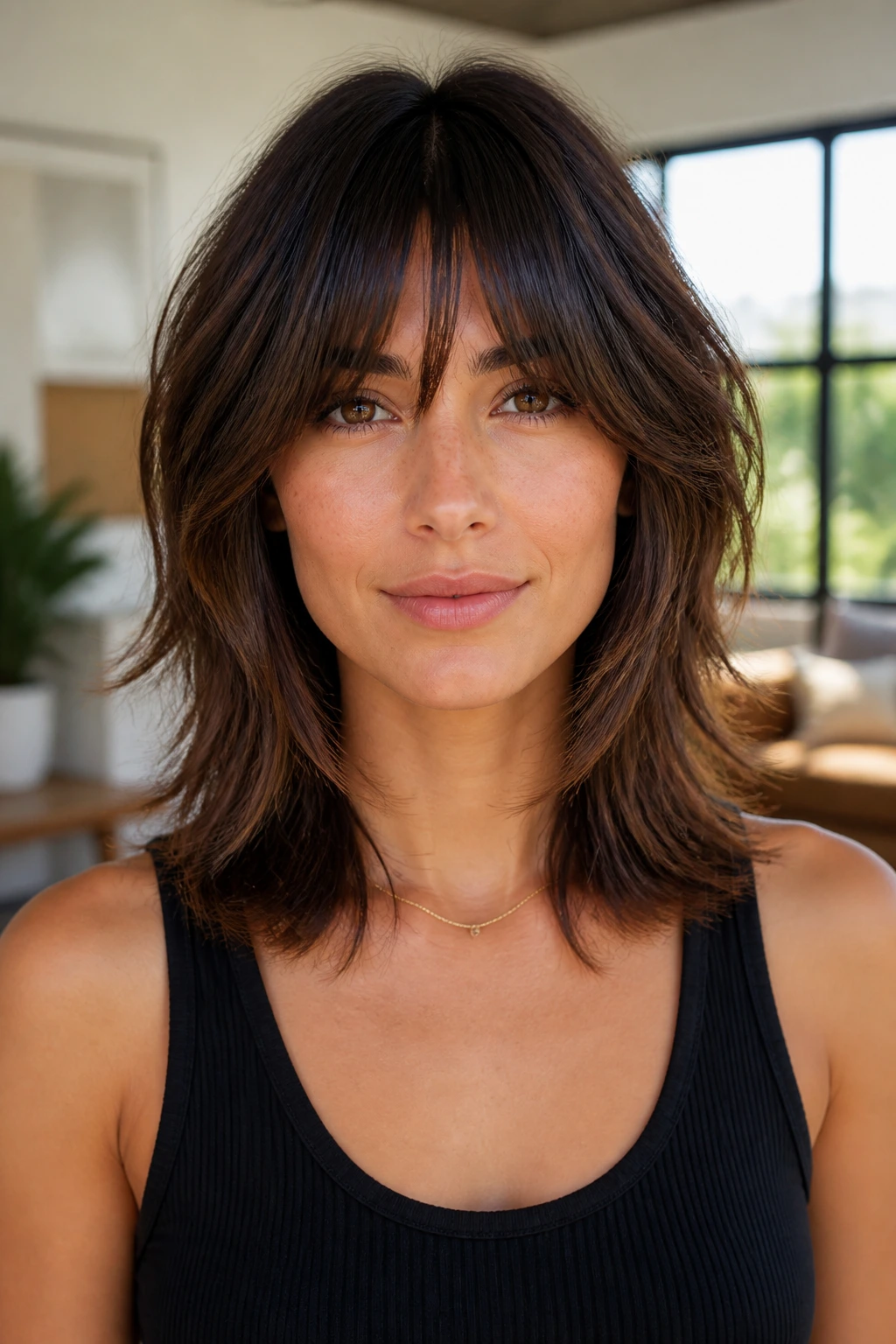
A bottleneck bang changes the face framing in a way curtain bangs just can’t quite match. It’s narrower at the center, then opens out as it moves toward the cheeks, so the whole front of the haircut feels more sculpted.
That shape works especially well on mid-length shags because the rest of the haircut can stay soft while the bang carries some visual interest. The front pieces don’t need to be very short. In fact, they usually look better when they skim the brow and then land around the cheekbones. That keeps the cut airy and stops the fringe from taking over.
This is a good choice if you want your eyes to stand out without committing to a heavy fringe. It also flatters people who like a bit of structure in their haircut but do not want to lose the relaxed feel of a shag. Just be honest about upkeep. Fringe hair needs trims more often than the rest, and if it grows too long, the shape gets sleepy fast.
A trim every 4 to 6 weeks usually keeps it looking crisp.
7. Long Layered Shag with Face-Framing Pieces
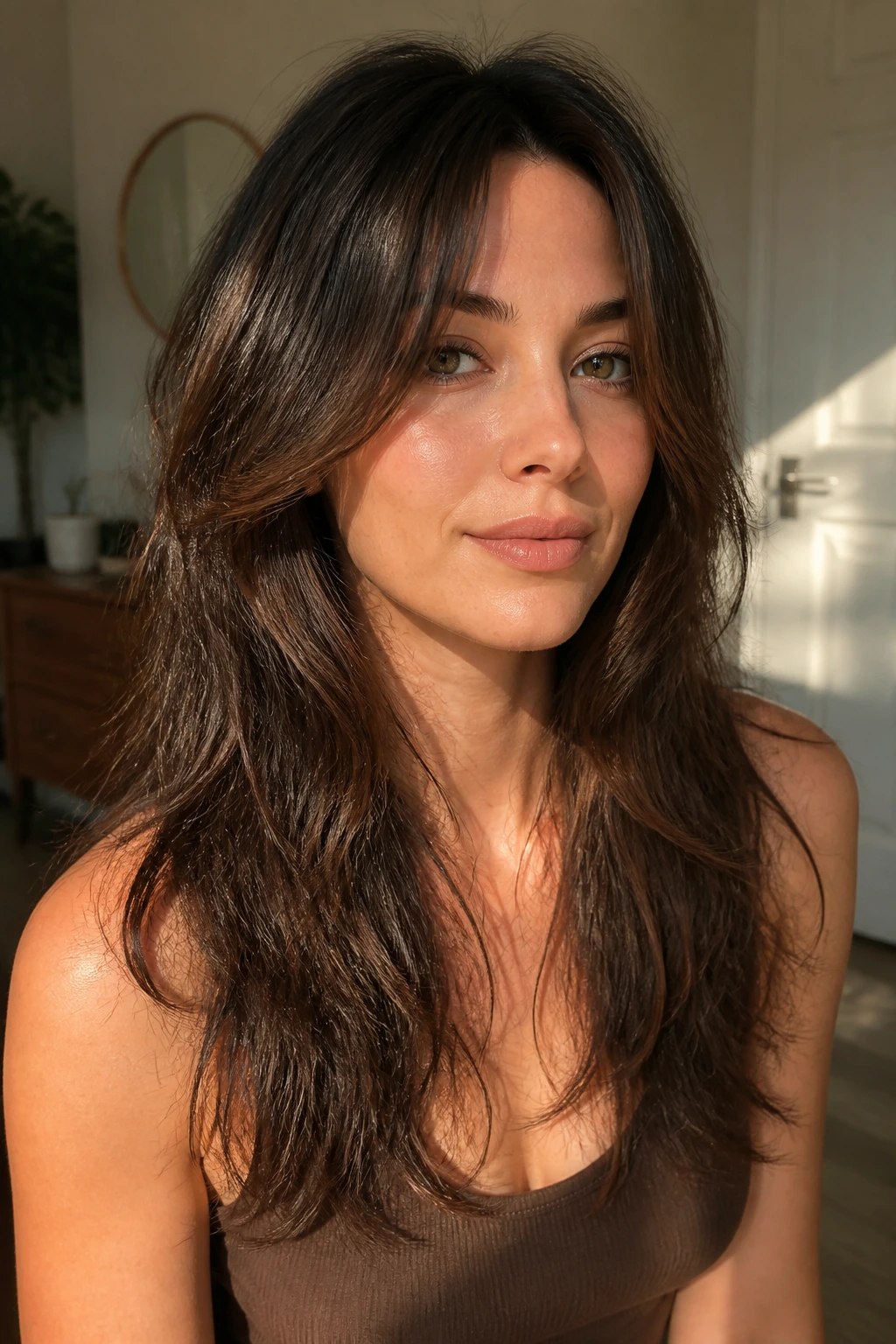
I keep coming back to this one because it’s the safest place for a lot of people to start. The long layered shag with face-framing pieces gives you the shag feeling without asking you to give up too much length or live with a dramatic change overnight.
The layers begin low enough that the haircut still feels dense through the body, which matters if you’re nervous about thin ends. Then the face frame comes forward in soft sections that can hit around the cheekbones, lips, or just below the jaw, depending on what you want to highlight. That slight move around the front changes the whole mood.
If your hair is medium density and you like to tuck it behind your ears, this shape is especially useful. It gives you movement when the hair hangs loose, then falls back into place when you pin it up. No drama.
A lot of stylists use this kind of shag when a client says, “I want something different, but not too different.” That sentence has appeared in enough salon chairs to deserve its own category.
8. Curly Soft Shag
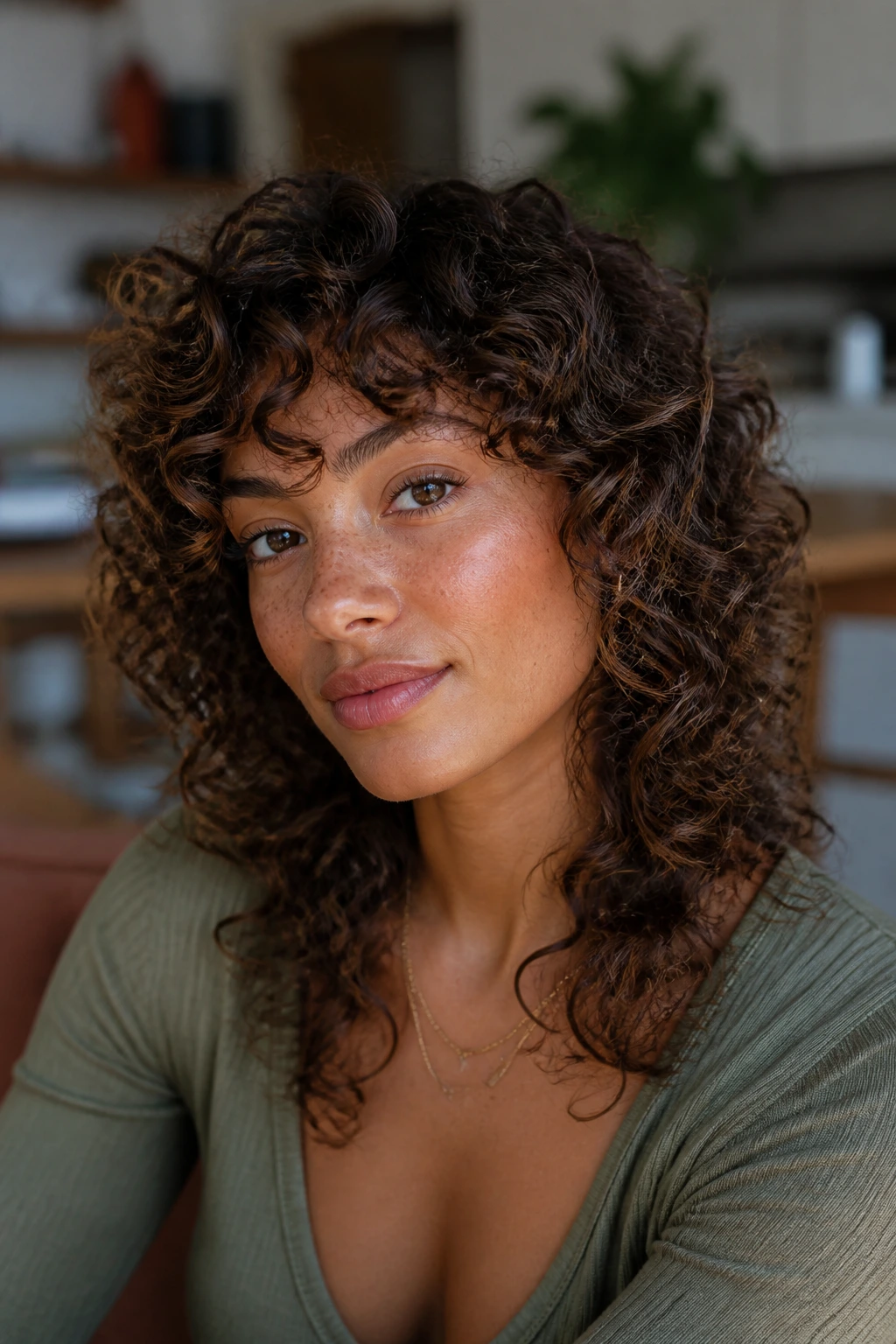
How do you cut a shag on curls without wrecking the shape? Carefully, and with a lot more respect for shrinkage than straight-haired people usually realize. Curly hair needs layers that follow the curl pattern, not fight it, or the whole cut can pop out in strange places.
A soft curly shag works best when the weight is removed where the curls stack up too densely. That usually means around the crown, the sides, and sometimes under the surface layers. The perimeter stays soft and connected, so the shape doesn’t break apart when the hair dries. Dry-cutting often helps here, because curls tell the truth better when they’re in their natural state.
How to wear it
- Use a curl cream or leave-in that gives slip without heaviness.
- Diffuse on low heat if you want more root lift.
- Let a few front pieces dry forward, then separate them once they’re fully dry.
- Avoid over-brushing, which turns soft curls into fuzz.
This is one of those cuts that looks even better when it’s not overstyled. Curls already have movement. The shag just gives them a frame.
9. Shoulder-Grazing Shag with Internal Layers
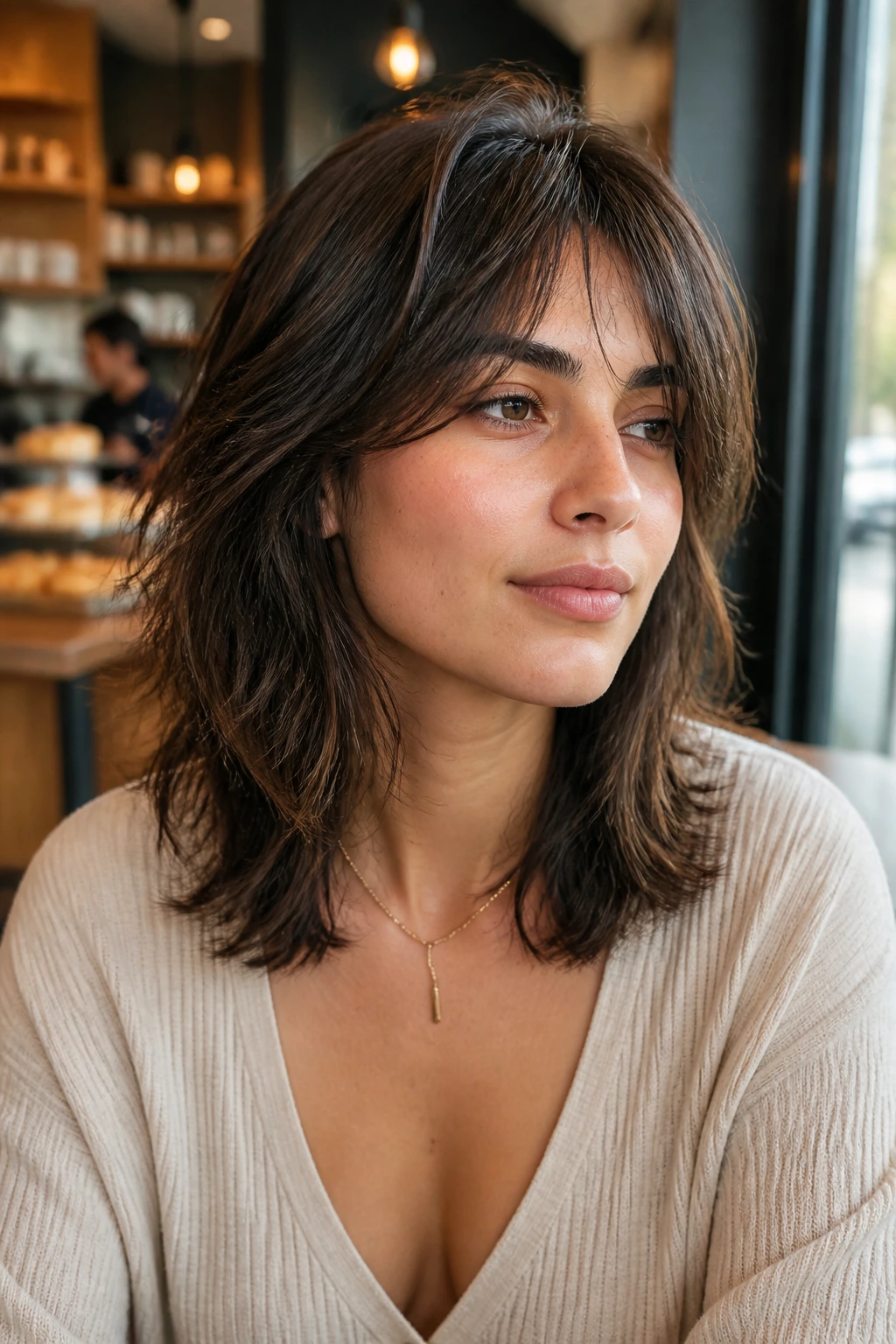
Shoulder-grazing hair is where internal layers matter most. If the cut is too blunt, it can puff out at the ends and go flat near the scalp. Internal layers fix that by taking weight out from the inside without leaving obvious stair-steps on the outside.
That makes this version a smart choice for fine-to-medium hair that needs lift, or for thicker hair that gets broad and boxy around the shoulders. The outer line still looks smooth, which is part of the appeal. You can wear it sleek and let the hidden layers do the work, or rough-dry it and get that loose, tousled effect.
Who should pick this shape
- People who want movement without a visibly choppy cut.
- Anyone whose hair sits heavily at the shoulders.
- Fine hair that needs root lift but not extra thinning at the ends.
- Mid-length hair that grows wide instead of long.
The best part is how normal it looks from the front. Then you turn your head, and the texture shows up. That little reveal is satisfying in a way I do not think enough haircuts get credit for.
10. Piecey Mid-Length Shag with Subtle Fringe

A piecey mid-length shag with a subtle fringe is for people who want texture to show, but not in a loud way. The fringe is there, but it doesn’t dominate. The pieces break up the front enough to keep the haircut interesting, while the rest of the layers stay light and touchable.
This look works especially well on straight-to-wavy hair because the separation reads clearly. A small amount of styling paste on the ends can define the pieces without making them crunchy. The trick is to use almost nothing—seriously, a pea-sized amount can go farther than people expect.
There’s a nice contrast here between the softness of the cut and the bitty texture in the front. That contrast is what gives the style its shape on days when you don’t feel like fully styling it. It still looks planned, even when it’s not perfect.
A subtle fringe also gives you an exit route. If you get tired of it, the pieces blend into the layers more easily than a heavy bang.
11. Rounded Soft Shag with Airy Ends
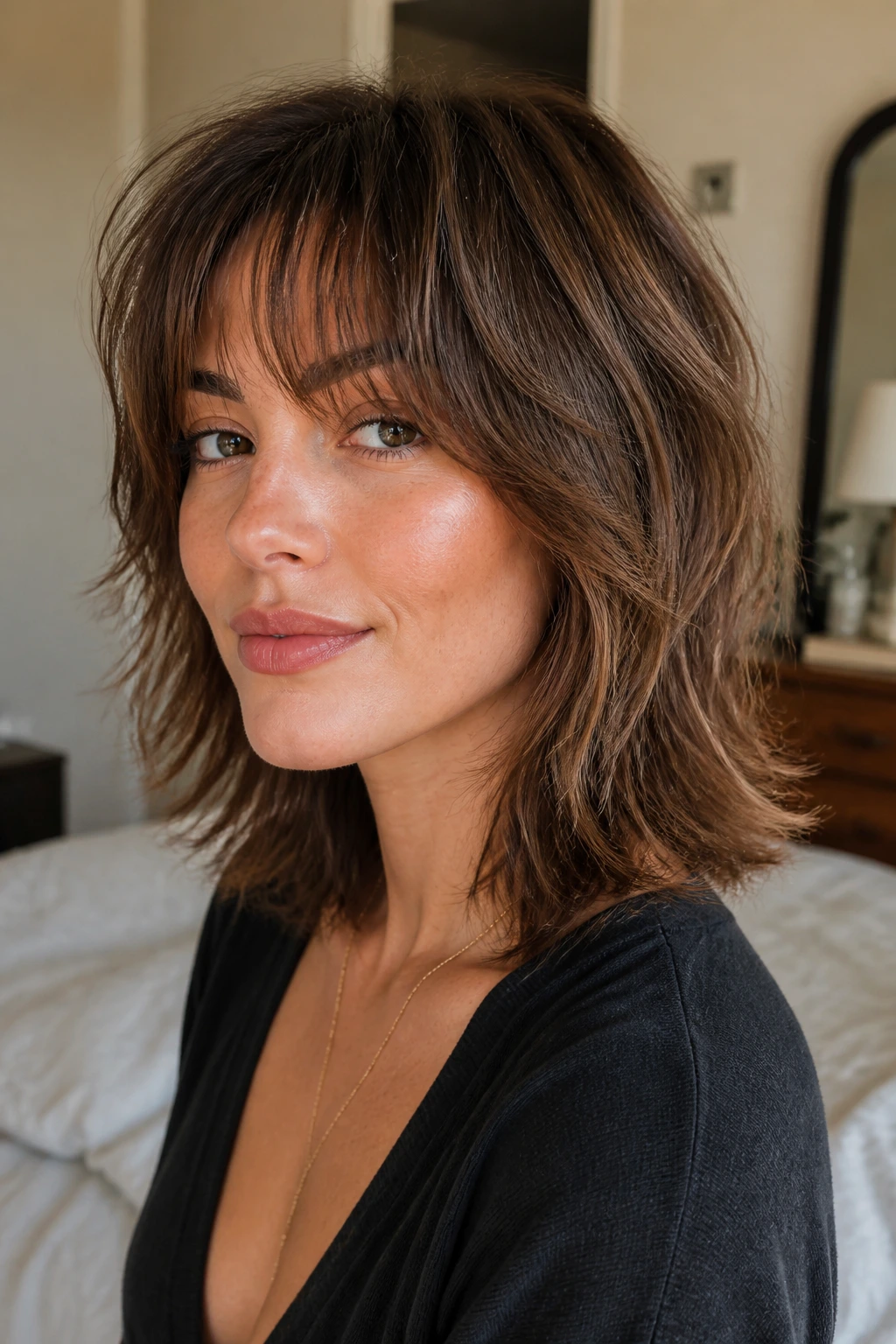
Some cuts are about edge. This one is about balance.
A rounded soft shag keeps the silhouette curved instead of boxy, which is a smart move if your hair tends to flare out at the sides. The layers are distributed in a way that hugs the head a little more closely through the top and then opens out lightly around the ends. That shape can be especially flattering on shoulder-length and collarbone-length hair.
The airy ends matter because they stop the haircut from looking thick in a bulky way. You still want enough weight to make the line feel healthy. You just don’t want a hard, blunt finish that sits there like a shelf. A round brush helps if you’re blow-drying, but this cut can also air-dry into a soft curve with a little cream worked through the lower half.
It’s a gentle haircut, really. Not boring. Gentle.
And gentle haircuts are underrated, especially when you want something that works on a regular Tuesday and not only in a photo.
12. Invisible-Layer Shag for Fine Hair
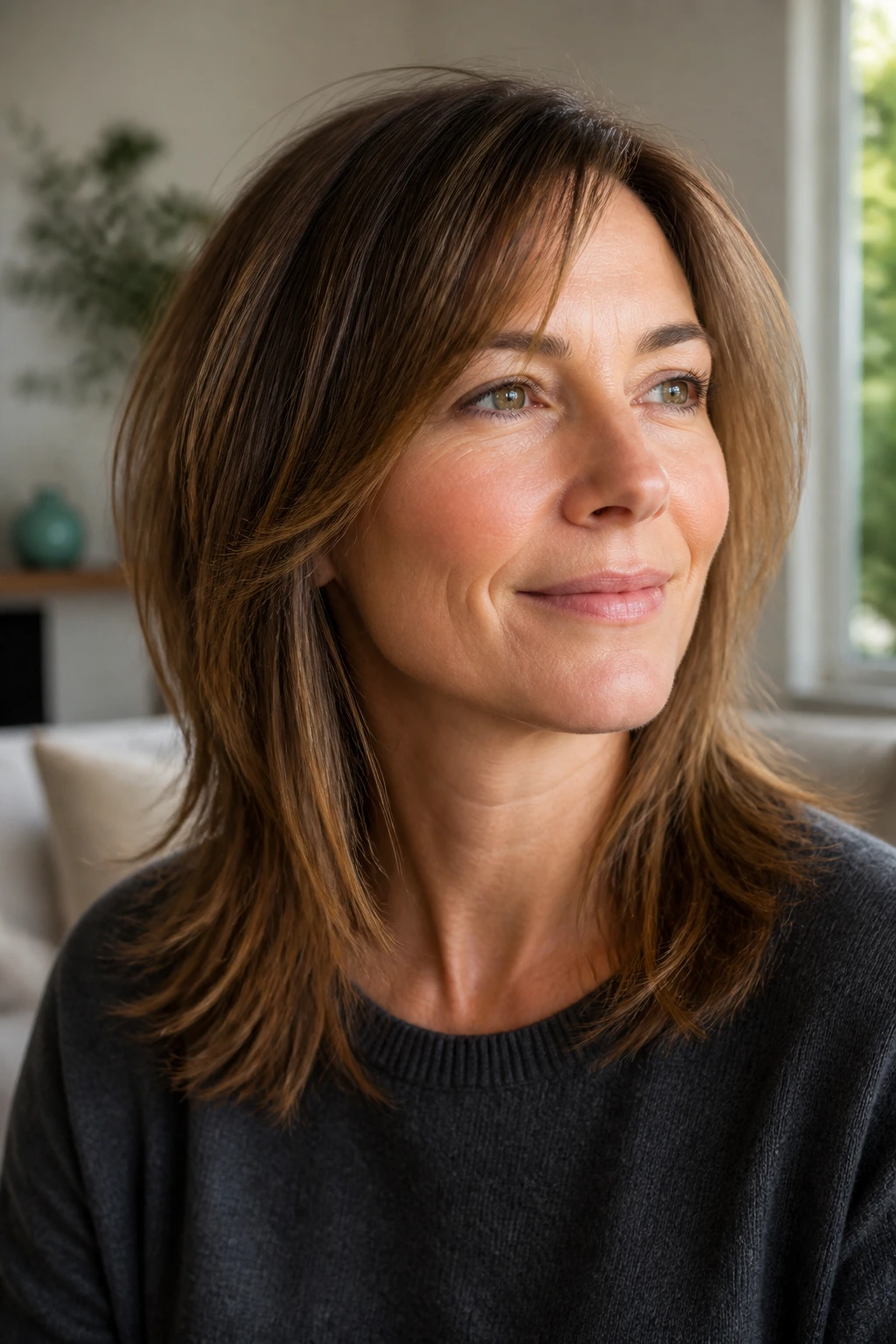
Fine hair does not need a pile of chopped layers to look full. In fact, too many obvious layers can leave the ends looking wispy and the whole shape a little exhausted. An invisible-layer shag solves that by putting the movement inside the haircut instead of hacking at the outside.
The outer line stays mostly intact, so the hair still looks solid. Underneath, though, the stylist removes weight in small, careful sections that help the crown lift and keep the sides from falling flat. On mid-length hair, that balance is gold. You get movement without losing the impression of thickness.
Keep the perimeter dense
- Ask for internal layers rather than heavy graduation.
- Keep the shortest pieces below the cheekbone if your hair is very fine.
- Use root-lifting mousse at the crown, not all over.
- Skip thick oils near the top, since they can flatten the shape fast.
This is the kind of shag that people mistake for “just good hair.” That is the compliment, even if nobody says the haircut part out loud.
13. Heavy Fringe Soft Shag
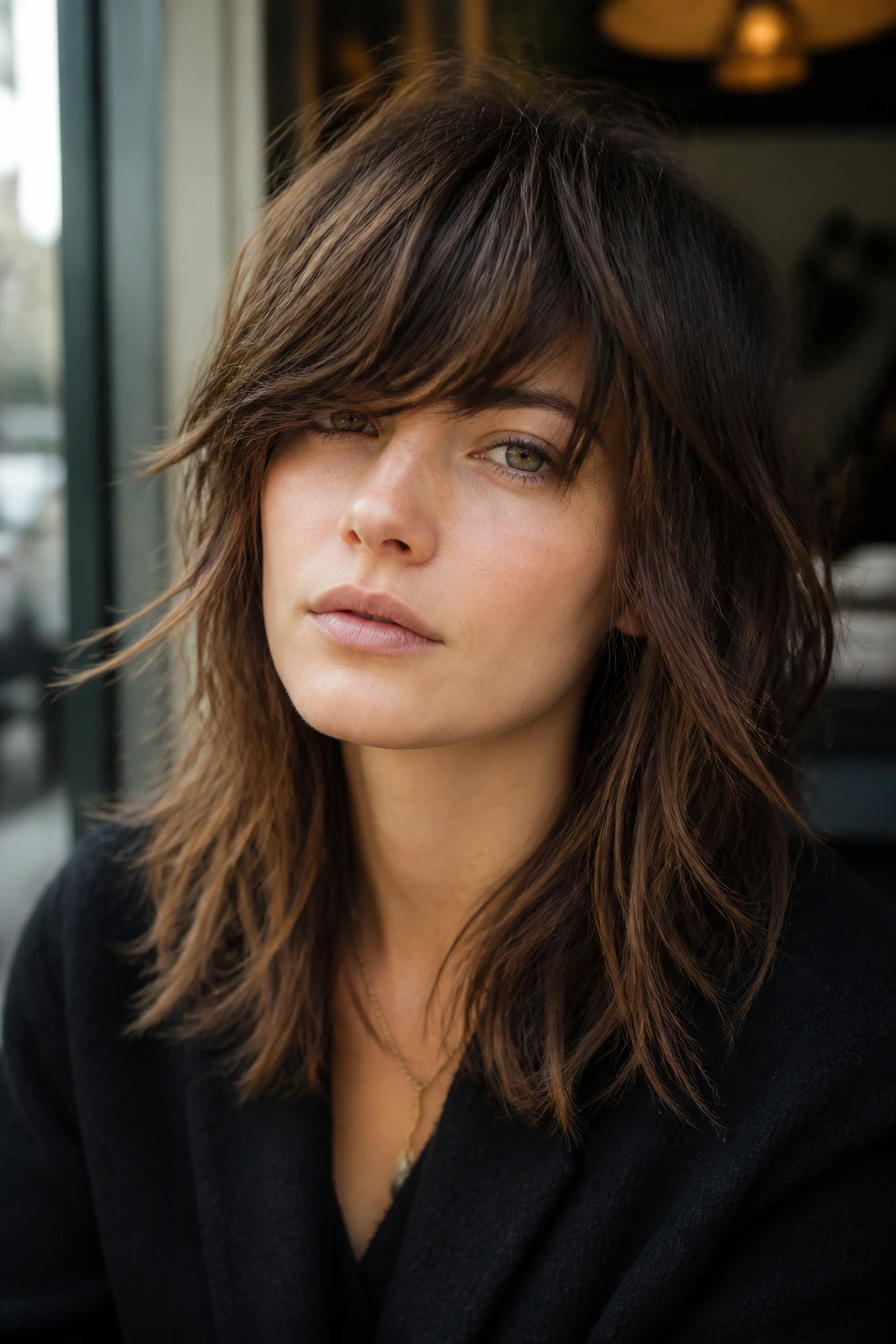
What if you want bangs to do more of the heavy lifting? Then a heavy fringe soft shag makes sense. The fringe carries the front of the haircut, giving it a little mood, while the layers around the sides and ends stay softer so the whole thing doesn’t feel severe.
This works best when the fringe sits around brow length or just below it and is cut with some feathering through the bottom edge. If it’s too blunt, the cut can stop feeling soft. If it’s too wispy, the whole point of the heavy fringe disappears. There’s a narrow lane here, which is probably why I only recommend it to people who are willing to trim it regularly and actually style the front.
How to wear heavy fringe
Use a flat brush and a blow dryer to direct the fringe side to side until it settles, then finish with a tiny bit of dry shampoo at the roots if it starts to separate. The rest of the haircut can stay messy. The fringe should not.
This is a good choice if you have a longer forehead, like the look of a denser front section, or just want a shag that feels a little more dramatic without getting messy in the wrong way.
14. Textured Shag Lob
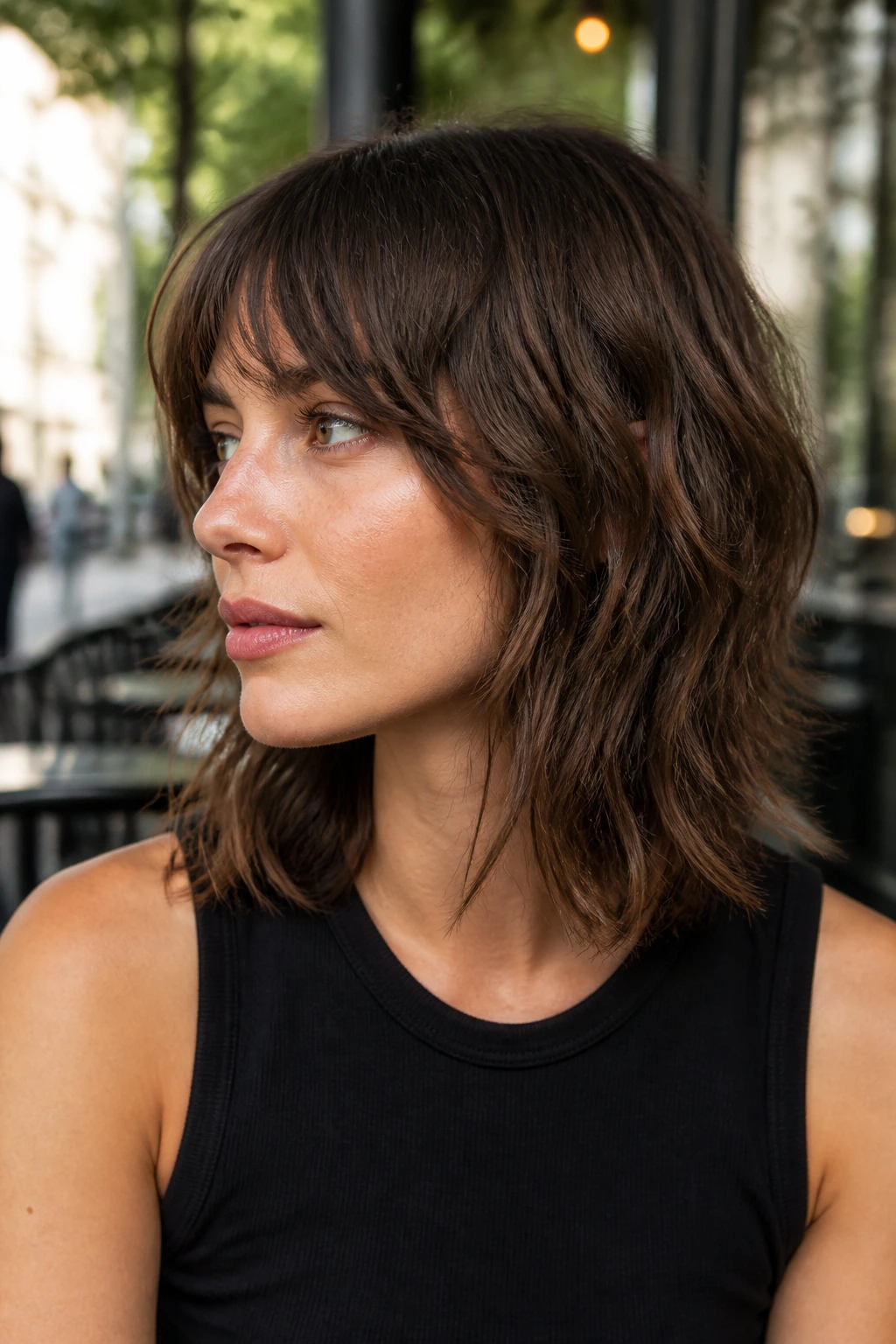
A shag lob gives you the movement of a shag and the clean shape of a lob, which is why it tends to be a favorite for people who want something modern without going too far off the rails. The length usually sits between the jaw and the collarbone, so it still reads as polished even with texture built in.
The trick is not to over-layer it. A shag lob should keep enough line to look deliberate. Add texture through the mid-lengths and around the front, then leave the ends soft so the shape doesn’t fray out. This is the haircut that looks good in a turtleneck, good under a blazer, and good when you throw it behind one ear.
A few things that help
- A 1 to 1.25-inch curling iron gives a bend without making tight curls.
- A light mist of texturizing spray is enough; heavy spray makes the layers sticky.
- A center or slightly off-center part usually shows the shape best.
- Brush it out once the curls cool, or the finish can look too neat.
It’s not flashy. That’s the point.
15. Low-Maintenance Soft Shag with Soft Ends
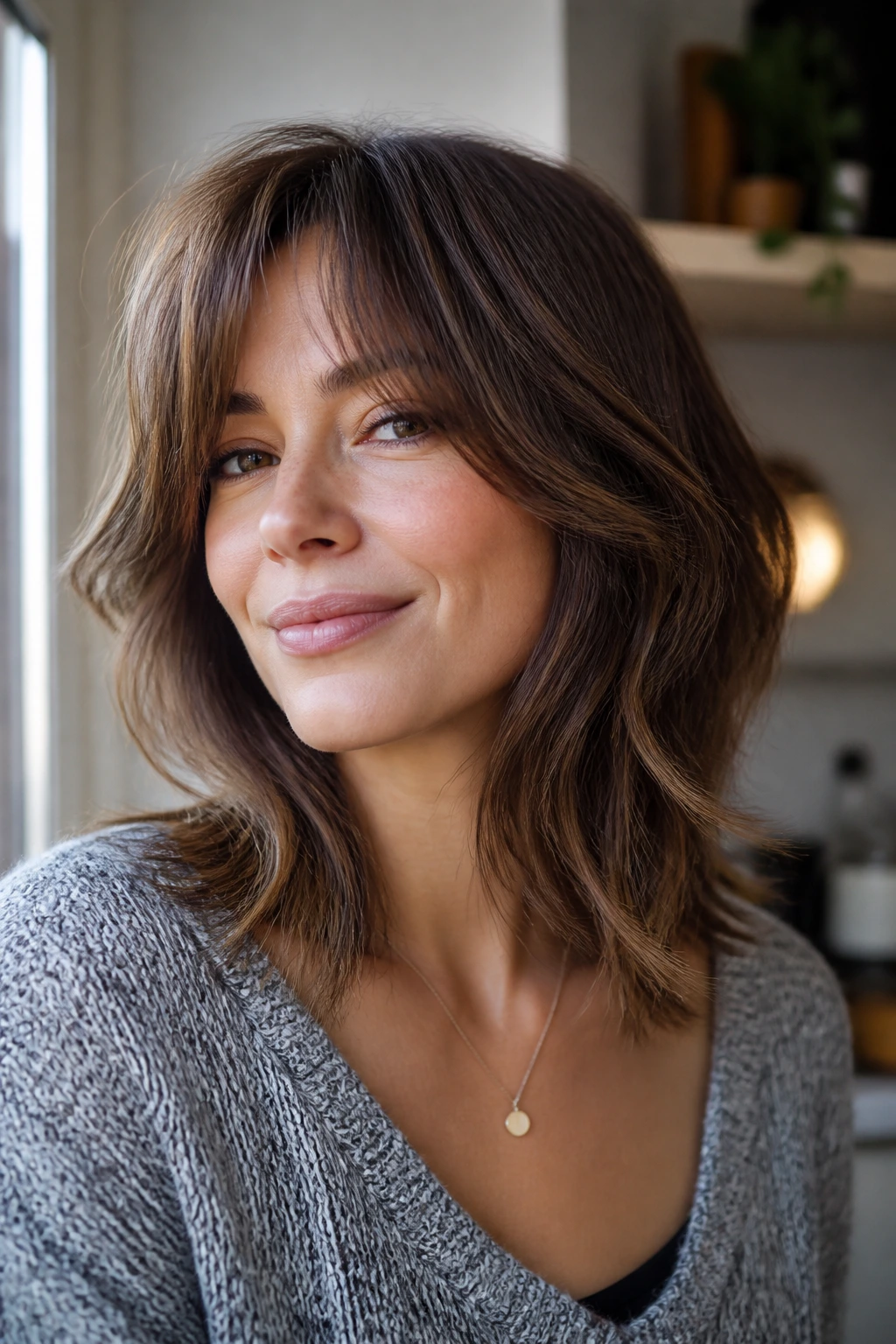
If you hate spending ten minutes with a round brush, this is the version to ask for. A low-maintenance soft shag keeps the layers gentle, the ends soft, and the overall shape relaxed enough to air-dry or rough-dry without much fuss.
The cut works because it doesn’t lean too hard in any direction. The crown gets a little lift, the sides get enough movement to avoid puffiness, and the perimeter stays plush instead of shredded. On mid-length hair, that usually means less fighting with your own texture and more letting the haircut do its job.
This is the shape I’d choose for someone who wants their hair to look better with normal life, not special effort. A decent leave-in, a wide-tooth comb, and a quick scrunch with a towel are usually enough to get through the day. If you want more polish, add a small round brush to the front pieces only. No need to make a project out of it.
Soft shag haircuts for mid length hair work because they give you movement without asking your hair to be something it isn’t. That’s the part I like most. A good one should feel easy on a messy morning and still hold up when you actually leave the house.
