



Ask for a wolf cut butterfly cut hybrid and you’re really asking for movement without giving up the length you spent years growing. That’s the whole draw: the wolf cut brings bite, lift, and a little chaos, while the butterfly cut keeps the long ends soft and airy around the face.
The two cuts live close together, but they do not behave the same way. One leans shaggy and piecey. The other leans feathered and blown out. Put them together the right way and you get a haircut that can look polished on a Monday, a little wild on a Friday, and still tie back without looking like you lost a fight with a hedge trimmer.
That balance matters more than people think. Too much thinning, and the shape turns wispy in a bad way. Too little, and you’re left with heavy sides that drag the whole head down. Flat roots hate that. So does thick hair. And fine hair usually needs a gentler hand than the inspo photos suggest.
The 15 wolf cut butterfly cut ideas below move from soft and wearable to bolder and more fashion-forward, because the best version of this haircut is the one that fits your hair density, your texture, and how much time you want to spend with a round brush.
1. Shoulder-Grazing Wolf Cut with Curtain Bangs

This is the cut I’d point to first if you want the wolf cut butterfly cut look without going too edgy. The length sits around the shoulders, so it still flips, moves, and tucks behind the ear, but the curtain bangs keep the front soft enough to read as flattering rather than jagged.
Why It Works
Shoulder-grazing layers are a smart middle ground. They create lift around the crown and cheekbones, then let the bottom stay long enough to feel feminine and versatile. On medium-density hair, that balance looks intentional fast.
- Best on straight, wavy, and loose curly textures
- Curtain bangs should usually start around the cheekbone, not the eyebrow
- A 1-inch or 1.25-inch round brush gives the front a cleaner bend
- Trim every 8 to 10 weeks if you want the fringe to sit nicely
Tip: Ask for soft point cutting at the ends, not heavy razoring, if your hair tends to frizz.
The thing I like here is how forgiving it is. If you air-dry it, you still get shape. If you blow it out, the layers separate and swing a little more. Easy hair. Rare, honestly.
2. Long Butterfly Layers with a Wolfy Crown
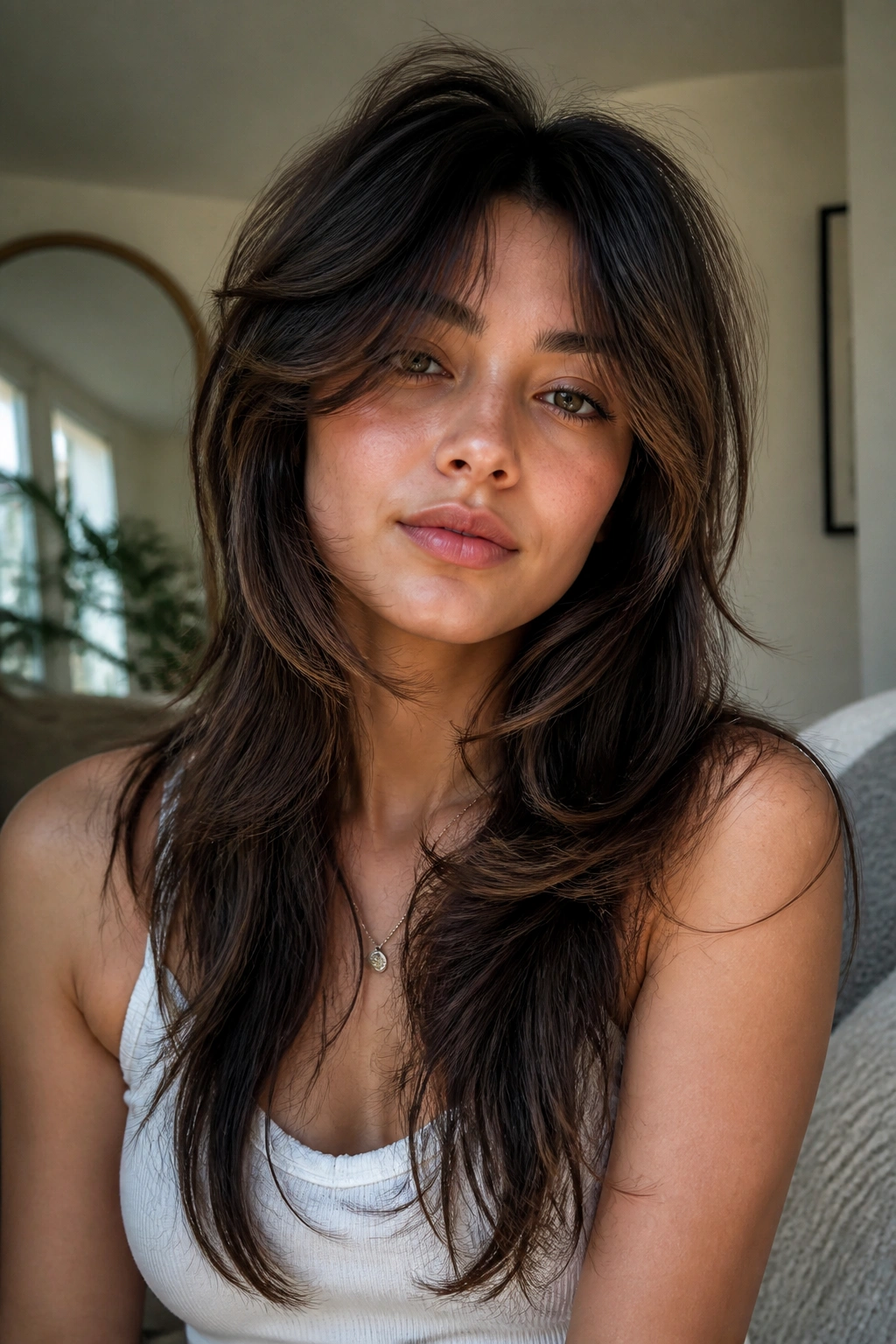
This is the safest bet if you want movement but refuse to lose your long hair. The top section gets carved into short, airy layers that lift around the face, while the length stays intact below the shoulders. It looks like a butterfly cut with a little more attitude at the crown.
The key is restraint. A good stylist won’t chop the top so high that the haircut starts looking disconnected. Instead, the shortest layers should blend from the collarbone area down into the longer lengths, which gives you that fluttery effect without turning the back into a mullet.
It suits women who like to wear their hair straight, blown out, or in loose waves. The long ends keep the cut elegant, while the shorter face layers give you shape even when the rest is flat. That mix is the reason this style photographs so well in real life—not because it’s “dramatic,” but because the outline stays clean.
3. Curly Wolf Cut with Soft Face-Framing Layers
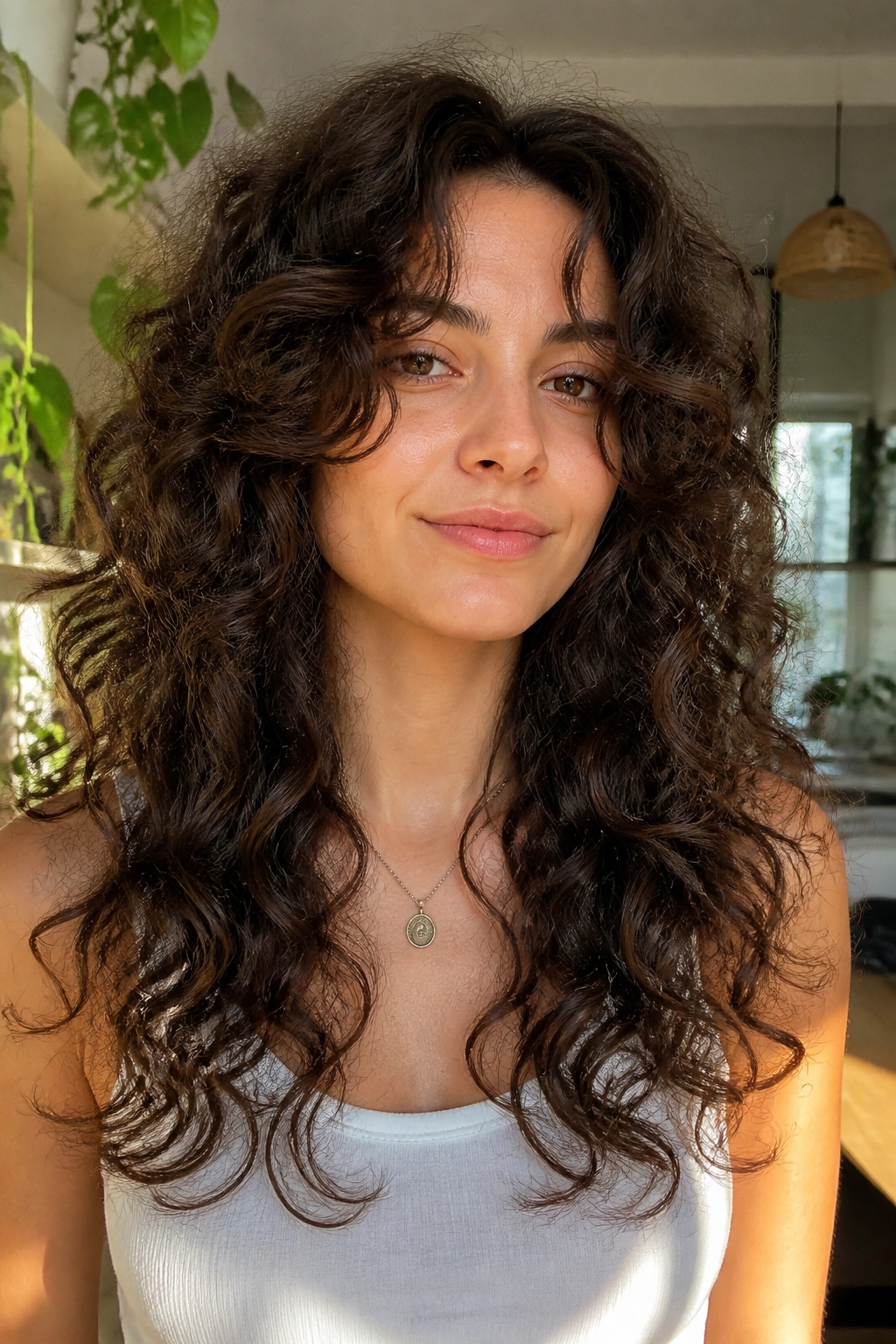
What happens when curls meet a wolf cut butterfly blend? You get one of the most flattering textured cuts around, if the layering is done with care. Curly hair needs room to spring up, and a good hybrid cut gives it that space without removing too much weight from the wrong places.
The biggest mistake is cutting curls like straight hair. Don’t do that. Dry cutting or cutting on damp, well-clumped curls usually gives a cleaner result because the stylist can see how each curl lands. For looser curls, the crown can take a little more layering. For tighter curls, the face frame should stay longer so the shape does not shrink too far.
How to Wear It
A diffuser, low heat, and a light gel or curl cream usually do the job. Let the roots dry a bit before you touch them. If you scrunch too soon, the cut can puff out in weird places.
- Keep the shortest face layers around the cheekbone or jaw
- Use a wide-tooth comb only when conditioner is in
- Dry the roots upward for lift at the crown
- Finish with a drop of oil on the ends if they look dry
The whole point is shape, not fluff. Big difference.
4. Collarbone Cut with Bottleneck Bangs and Flipped Ends
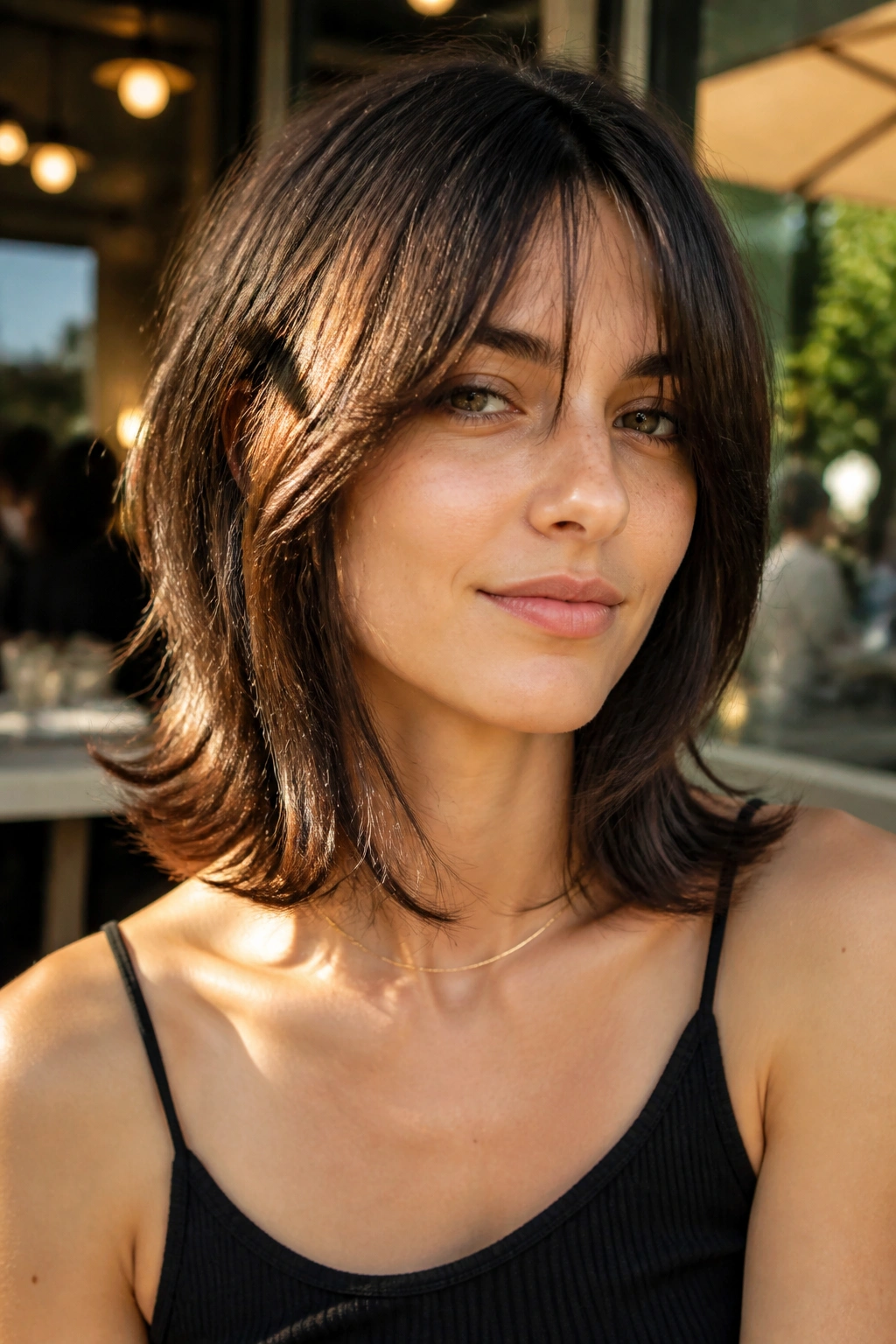
If you’ve ever left the salon with hair that looked fine from the front and flat from the side, this version fixes that problem fast. The collarbone length keeps the perimeter strong, while bottleneck bangs and flipped ends give the haircut a softer, more styled shape without needing much effort.
The bangs are the interesting part. Bottleneck bangs start narrower near the center and widen as they fall toward the cheekbones, which makes them less blunt than a full fringe and less fussy than a strict curtain bang. They also blend well into the butterfly layer pattern, which is where this cut gets its charm.
- Length sits at or just below the collarbone
- Ends are styled away from the face for a lifted finish
- Works well with a flat iron or medium round brush
- Nice choice if you like to tuck one side behind the ear
A cut like this looks especially good when the bottom edge is kept clean. Too many wispy ends and the shape loses its punch. Keep the perimeter crisp, and let the movement come from the top.
5. Thick-Hair Wolf Butterfly Hybrid with Razor Ends
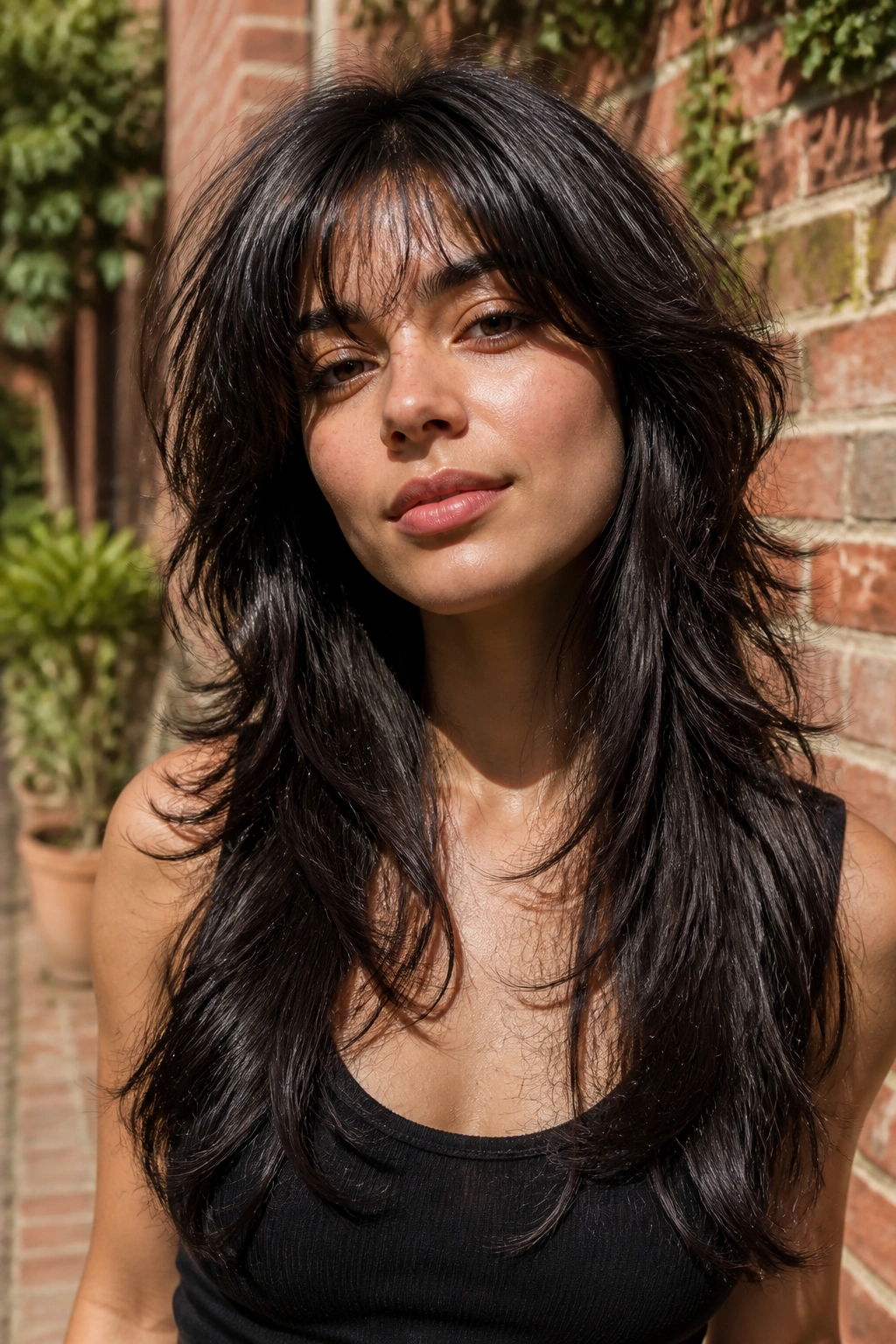
Thick hair is where this haircut earns its keep. A heavy, one-length cut can turn into a helmet fast, and nobody wants that. The wolf cut butterfly hybrid breaks up the bulk around the crown and mid-lengths, then leaves enough length at the bottom so the hair still feels full instead of hacked apart.
Razor ends can help here, but only if the hair can handle them. Coarse or very dense strands often need internal weight removal more than aggressive feathering. That means the stylist takes bulk out from inside the shape instead of shredding the perimeter to pieces. Much cleaner. Much better movement.
Flat roots hate this haircut when it’s cut too blunt. But thick hair loves a little air around the face and through the upper layers. You can wear it blown smooth, with loose waves, or half up with the top layers pulled back and the bottom left swinging.
The only real danger is over-thinning the ends. Once that happens, thick hair starts looking stringy at the bottom and puffy at the top, which is the exact opposite of what you want.
6. Fine-Hair Butterfly Wolf Cut with Soft Internal Layers

This version is not about drama. It’s about making fine hair look like it has more body than it does. The trick is to keep the perimeter blunt enough to hold visual weight while sneaking in soft internal layers that lift the crown and frame the face.
Unlike a heavily razored shag, this cut does not strip the ends bare. That matters. Fine hair can look wispy in a hurry, and once it does, there is no styling product in the world that fully fixes it. A smart butterfly-wolf blend keeps the bottom line visible, almost like an anchor.
This is the one I’d suggest if your hair goes flat by lunchtime. A mousse at the roots, a small round brush, and a quick bend through the front layers can make the whole style look twice as full. You do not need giant curls. You need shape.
If you want volume without the “I got too many layers” problem, this is the safer cut. Clean, soft, and still moving.
7. Wavy Lob with a Long Curtain Fringe
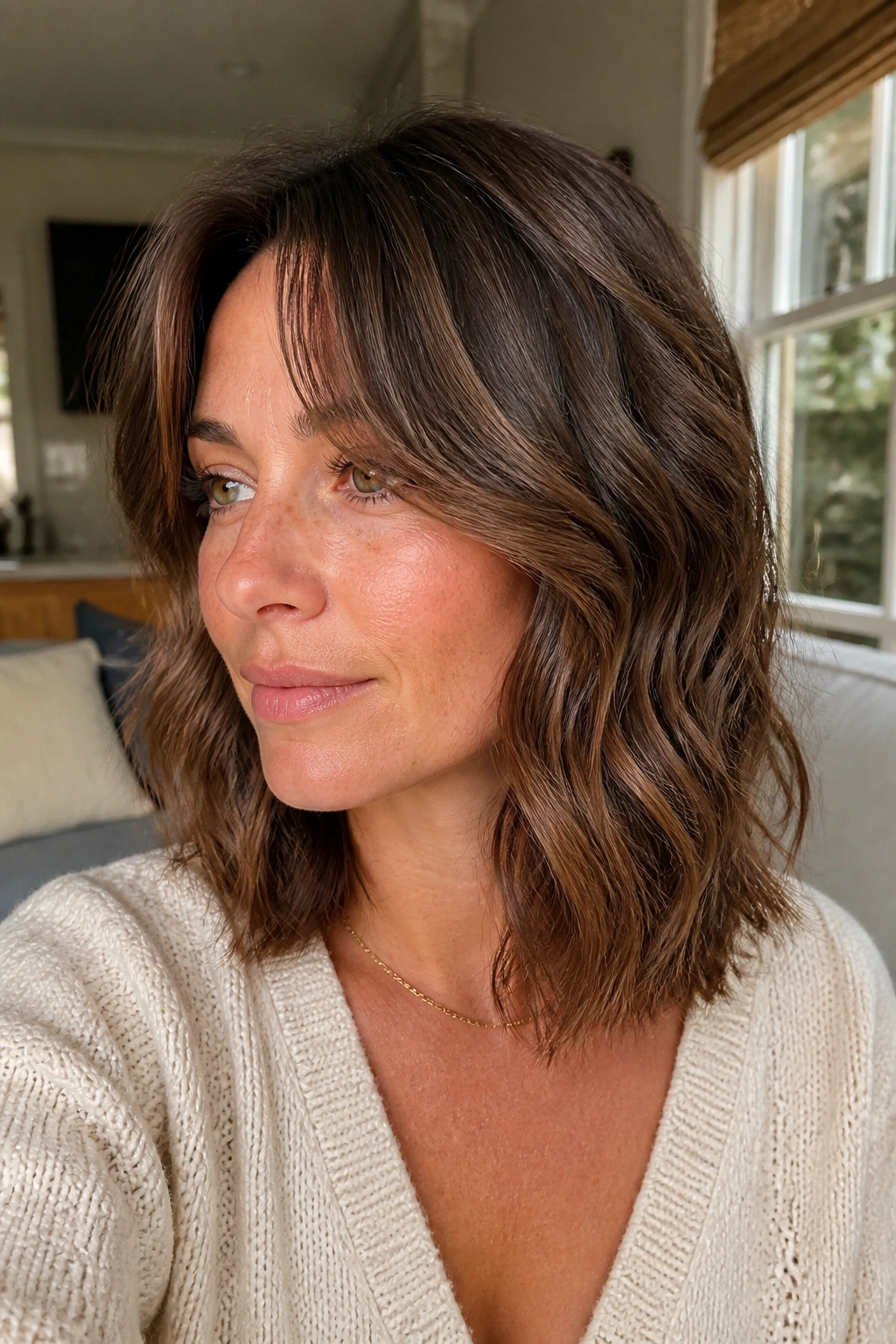
A wavy lob is one of those cuts that looks like it took more work than it did. Add a long curtain fringe and some butterfly-inspired face framing, and you’ve got a cut that can wear naturally textured hair instead of fighting it.
The Shape Behind It
The lob sits between the chin and the shoulders, which gives the hair enough length to swing but not so much that it collapses. The long fringe is what keeps the front interesting. It slides around the eyes and cheekbones, then blends into the rest of the hair instead of sitting there like a separate piece.
Styling Notes That Matter
- Spray a light mousse through damp roots
- Scrunch the mid-lengths with your hands, not a brush
- Dry with a diffuser or let the hair air-dry 80 percent of the way
- Finish with a light texture spray only on the ends
This cut works because it respects wave pattern. If your hair already bends on its own, don’t flatten that out with too much heat. A little bend looks better than a too-perfect curl, every time.
8. Micro-Bang Wolf Cut with Rocker Texture
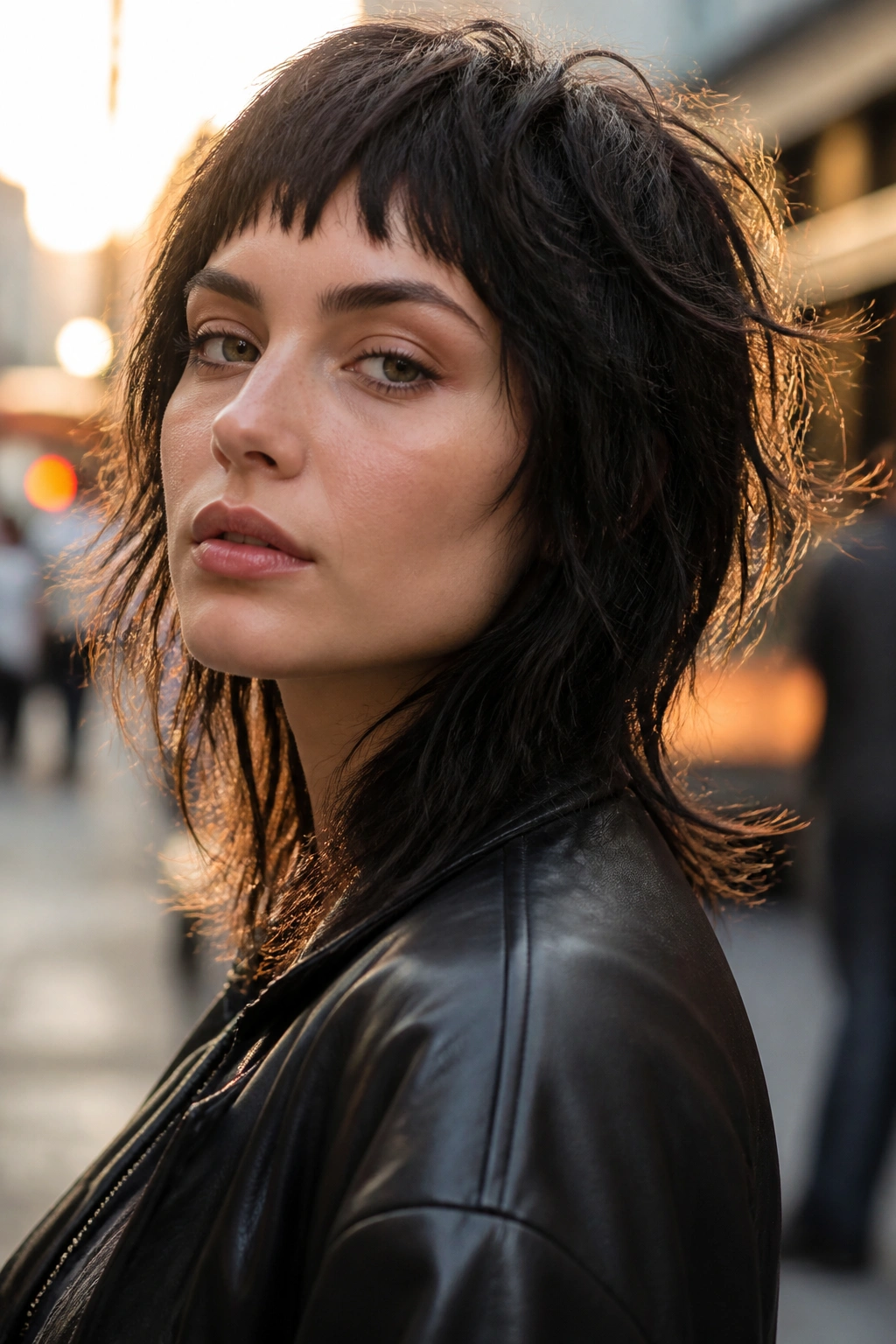
This one is not shy. A wolf cut with micro bangs has a sharper, more fashion-forward edge than the softer butterfly versions, and that’s exactly why some women love it. The short fringe pulls attention straight to the eyes and brow line, while the choppy layers around the sides keep the haircut from feeling too precious.
The best version still has some softness through the crown and sides. If everything is cut blunt and short, the result can look severe. But with shaggy texture and slightly longer pieces around the ears, the cut feels deliberate instead of costume-y.
It suits strong features, glasses, and people who actually like their hair to make a statement. It also works well on naturally textured hair, because the uneven pieces add to the shape instead of fighting it. Straight hair can wear it too, but it usually needs more styling to keep the fringe from sitting flat.
And yes, you do need to commit a little. Micro bangs are not a casual decision. That’s the fun part.
9. Feathered Blowout Butterfly Cut with a U-Shaped Back
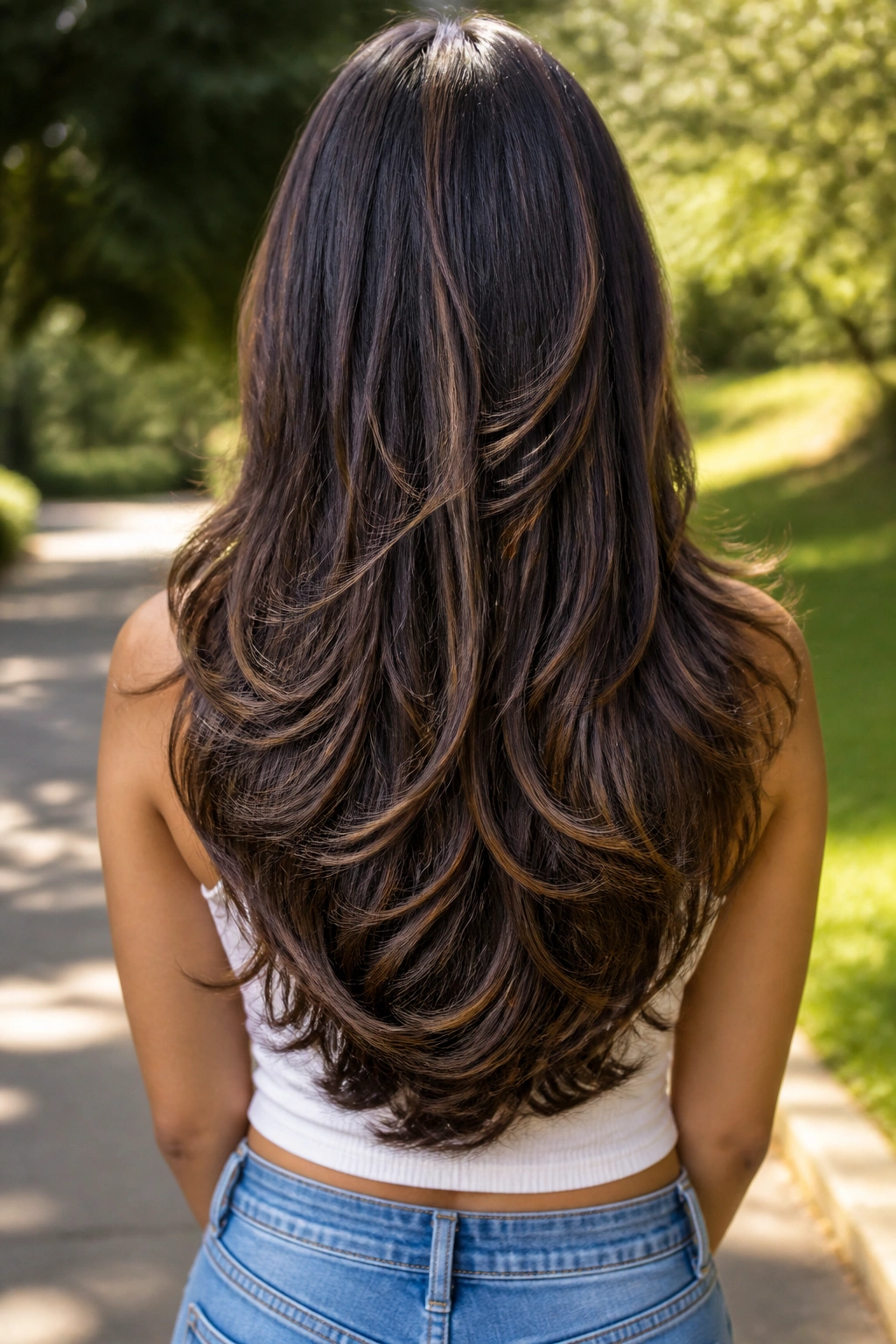
Can a haircut look styled even on a lazy day? Absolutely, if the layers are feathered correctly and the back is cut in a soft U shape. This version leans more butterfly than wolf, but the slight shag influence keeps it from looking too neat.
The U-shaped back matters because it gives the ends a natural curve instead of a hard line. That helps the shorter face-framing pieces fall into the rest of the cut, which makes the whole thing feel lighter and more expensive without any actual theatrics.
How to Use It
A medium round brush, a blow dryer with a nozzle, and a few clips are enough for most styling sessions. Work the top layers first, then flip the ends out just a little for that airy finish. You do not want tight curls. You want bend.
- Face frame starts around the cheekbone
- Longest length can stay past the chest
- Best for straight to wavy hair
- Looks especially good with a center part
The result is polished but not stiff. That matters if you want a cut that can handle office days, dinner plans, and air-dried weekends without looking like three different people.
10. Choppy Mid-Length Wolf Cut with a Deep Side Part

A deep side part changes everything. Seriously. The same cut can look softer, taller, and a bit more dramatic just by moving the part two inches off center and letting the front layers fall diagonally across the face.
This mid-length version usually lands around the collarbone or a little below, which gives the layers room to break up the shape without making the hair too short. The choppiness lives mostly in the crown and upper sides, where the lift makes the most difference. The bottom stays mobile, not ragged.
- Great for round or heart-shaped faces
- The heavier side can be tucked behind the ear
- Works well with a volumizing spray at the roots
- Needs a quick refresh if your hair falls flat easily
The side part is the sneaky hero here. It gives instant asymmetry, and asymmetry is what keeps a layered haircut from reading as plain. If your face feels washed out by a middle part, this is the fix.
11. Soft Mullet Butterfly Blend with a Tapered Nape
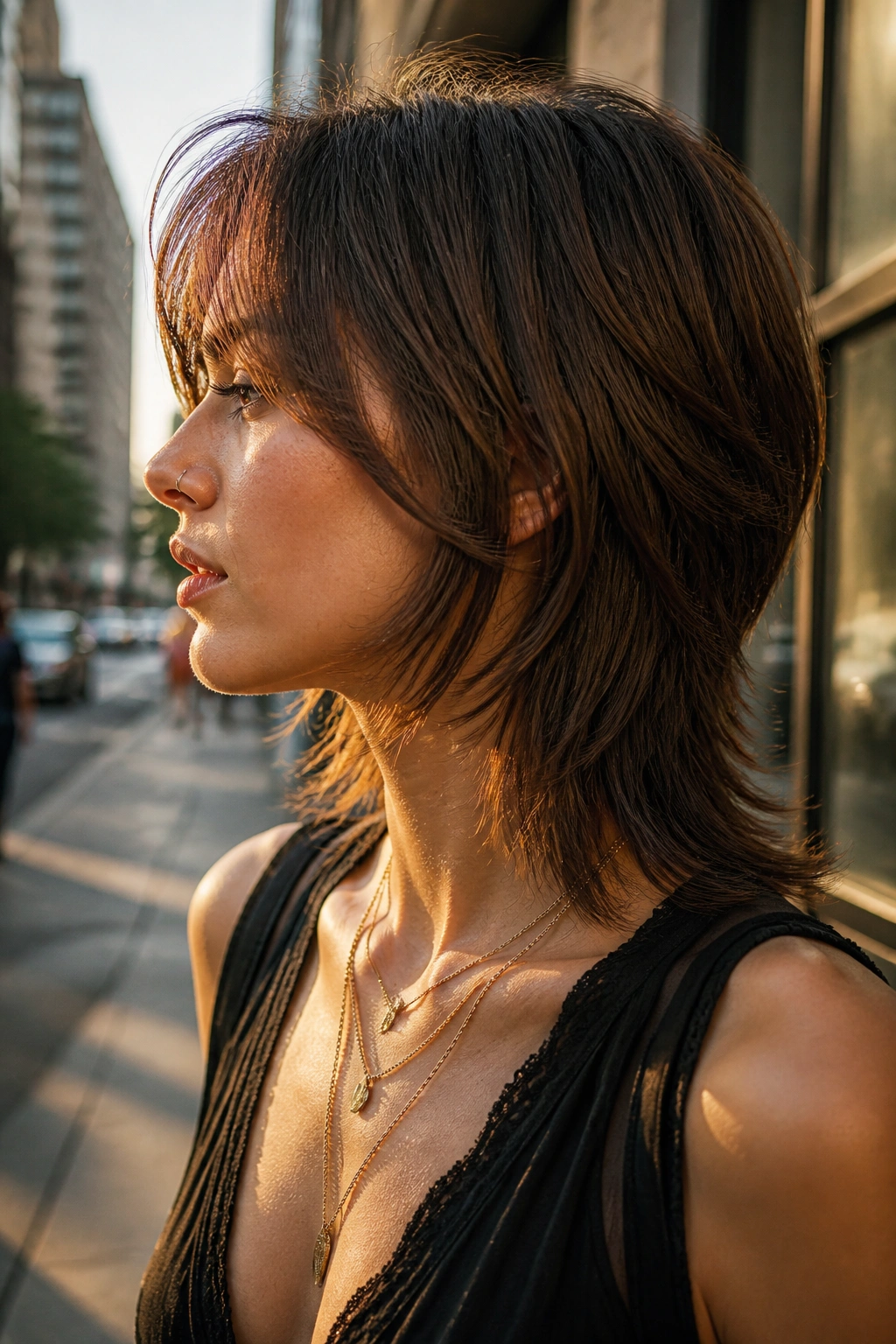
This is the boldest option in the set, and I mean that in the best way. A soft mullet butterfly blend keeps the front face-framing and airy, then tapers toward the nape so the back has attitude without turning into a hard-edged mullet from the eighties.
The difference is in the finish. A harsh mullet has a sharp disconnect between front and back. This one keeps the sections blended enough that the haircut moves when you do. The crown gets lift, the sides get shape, and the nape stays neat enough to tuck into collars without a fight.
It suits women who like a little edge but still want something wearable. If you wear hoops, leather jackets, oversized shirts, or just plain love a haircut that feels a bit cool without trying too hard, this version makes sense.
One sentence, though: it is not the cut for someone who wants invisible layers. It wants to be seen.
12. Air-Dried Shaggy Butterfly Layers for Natural Texture

Some cuts look their best after a salon blowout. This one looks best when you leave it alone. Shaggy butterfly layers are a gift for natural waves and loose curls because they let the texture do the heavy lifting instead of forcing everything into one polished shape.
Unlike the blowout-heavy versions, this cut should not rely on round-brush styling to make sense. The face frame can be soft and blended, the crown can stay light, and the ends can kick out on their own. That raw, slightly undone finish is the point.
A leave-in conditioner, a small amount of curl cream, and a bit of scrunching usually get you there. If your hair is very dense, use less product than you think. Too much cream makes the layers clump. Too little makes them puff. Hair is annoying like that.
The nice part is how forgiving this cut feels after a long day. It gets a little messier, not worse.
13. Long Layered Cut with Invisible Face Framing

This is the version for people who want to look like they changed nothing and somehow ended up with better hair. The layers are long, the face framing is soft, and the overall length stays intact, which makes the cut easy to wear up, down, braided, or clipped back.
Why It Works
The face frame is hidden in the flow of the haircut, not cut in a way that screams for attention. That keeps it office-friendly and low-drama, while the wolf-butterfly layering adds just enough lift to keep the hair from hanging like one solid sheet.
Best Ways to Style It
- Blow-dry with a large round brush for a soft bend
- Curl only the front pieces for a quick refresh
- Add dry shampoo at the roots, not the ends
- Trim the face frame before the rest of the length gets too heavy
This is the cut I’d recommend to someone who likes their hair to feel expensive but not obvious. There’s a reason stylists keep coming back to invisible layers—they solve the heavy-hair problem without stealing the length you came in to protect.
14. Razor-Soft Wolf Cut with Floating Curtain Bangs
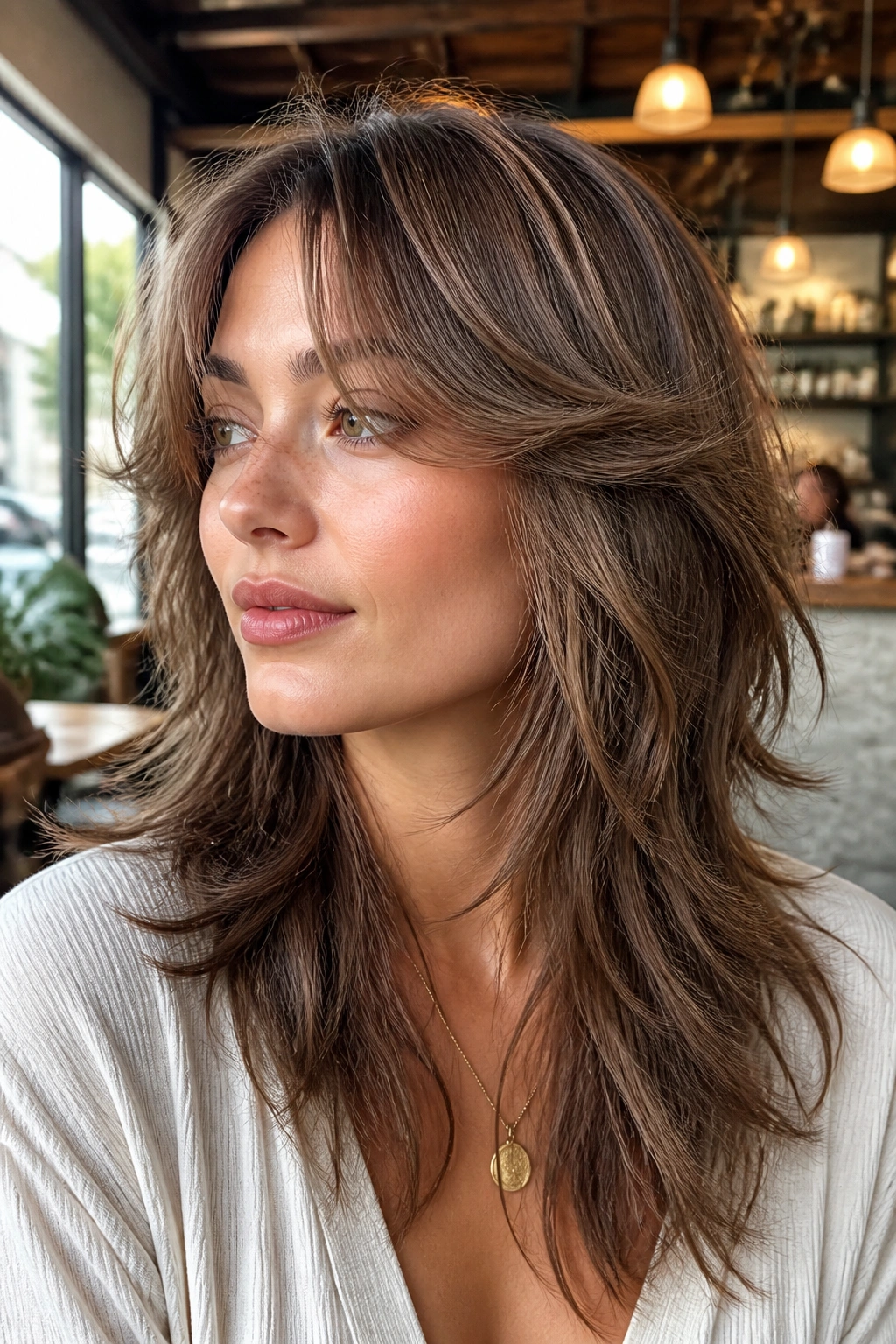
A razor-soft version can look beautiful on the right hair, but it needs a light touch. The goal is not to shred the ends into nothing. The goal is to make the layers float, especially around the cheekbones and jaw.
This cut works best on medium-density hair that already has some natural movement. The floating curtain bangs blend down the sides and can be pushed away from the face with almost no effort. If you style with a blow dryer, the shape gets airy. If you air-dry, it still lands with texture.
The catch is that razor cutting is not forgiving on dry, frizzy, or very porous hair. In those cases, the ends can get fuzzy fast. So if your hair already has a halo around it in humid weather, ask for soft slide cutting or point cutting instead.
It’s a good look, though. Light, loose, and a little lived-in.
15. Modern Mullet with Heavy Crown Volume and Soft Length

This is the one for women who want the wolf cut butterfly idea pushed all the way toward edge, but without losing the softness that makes the style wearable. The crown is built up for volume, the front is kept long enough to frame the face, and the back tapers with enough length to still feel feminine and easy to style.
The best thing about this cut is the contrast. The top looks lifted and airy. The bottom stays longer and softer. That tension gives the haircut energy, especially when worn with a center part or a messy half-up style. It also works nicely with strong texture, since the layers are already doing some of the visual work.
- Good for women who like fashion-forward cuts
- Needs a stylist who understands weight removal, not just “more layers”
- Can be air-dried, but a root lift spray helps a lot
- Pairs well with textured ends and a little shine serum
The modern mullet has a bad reputation when it’s cut lazily. Done well, it’s sharp, flattering, and easy to wear. Done poorly, it looks like someone got impatient halfway through. That difference lives in the blending.
Final Thoughts
The best wolf cut butterfly cut ideas for women all share the same basic trick: they keep the face soft and the crown alive without wrecking the length. That’s why the style works across so many hair types. It gives shape where hair usually falls flat, and movement where heavy layers usually drag everything down.
If you’re deciding between softer butterfly layers and a choppier wolf cut finish, look at your hair density first, then your texture, then how much styling you’ll actually do. The prettiest version on a mood board is not always the smartest one for your daily routine.
Bring reference photos that show the front, the side, and the back. Haircut language varies more than people think, and a good stylist will care about where the shortest pieces hit the cheekbone, where the crown starts lifting, and how the bottom line should sit when your hair is down. That’s the real difference between a cut that looks cute for one day and one that keeps working for months.
