



A textured wolf cut can do what a blunt cut rarely manages on its own: it gives hair movement before you ever touch a curling iron. For women who want shape, lift, and a bit of grit around the edges, the wolf cut sits in a sweet spot between a shag and a mullet. It has crown volume, broken-up ends, and face-framing layers that don’t behave like they were ironed into place. That’s the point.
The catch is that a wolf cut is not one haircut. It’s a family of cuts. On fine hair, it can look airy and cool without falling flat. On thick hair, it can remove that heavy triangle shape that makes the ends feel like a blanket. Curly hair changes the equation again, because the layers need to respect shrinkage and spring. If the shape is wrong, the whole thing can look puffy or chopped in a bad way. If the shape is right, it looks lived-in in the best sense.
That’s why the details matter more than the label. Where the shortest layers hit. How much weight stays at the nape. Whether the fringe is wispy, blunt, or split down the middle. Those choices change the whole mood of the cut, and they change how much time you’ll spend styling it in the morning.
1. Soft Wolf Cut With Curtain Bangs
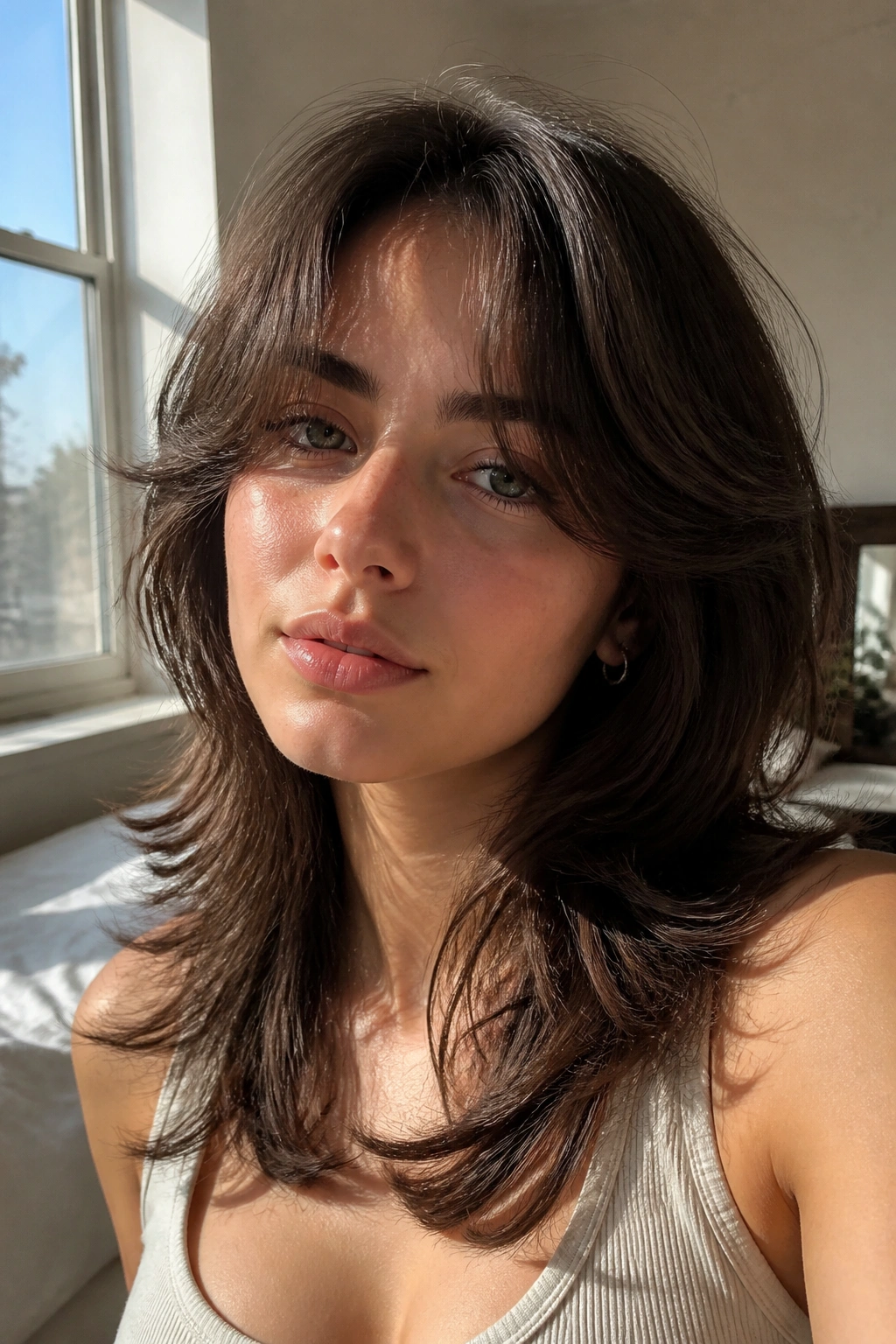
A soft wolf cut with curtain bangs is the version most women can wear without feeling like they’ve signed up for a full punk makeover. The layers still give you that crown lift and broken texture, but the edges are feathered enough to keep the shape flattering instead of severe.
Why It Works
Curtain bangs do a lot of the heavy lifting here. They open up the face, blend into the cheekbones, and make the cut feel a little more polished than a choppier fringe would. That matters if you want movement but not chaos.
The best part is how forgiving this shape is during grow-out. The bangs slide into the front layers, and the rest of the cut keeps its outline even when you miss a trim by a few weeks. It’s a calm wolf cut. Still cool. Just less dramatic.
- Best for straight, wavy, or slightly curly hair
- Works well at chin length through the shoulders
- Air-dries nicely with a light mousse
- Needs a round brush only if you want extra bend at the front
Pro tip: Ask for the shortest layers to sit at or just above the cheekbone, not up near the eyes, or the bangs can take over the whole cut.
2. Shoulder-Length Textured Wolf Cut for Fine Hair
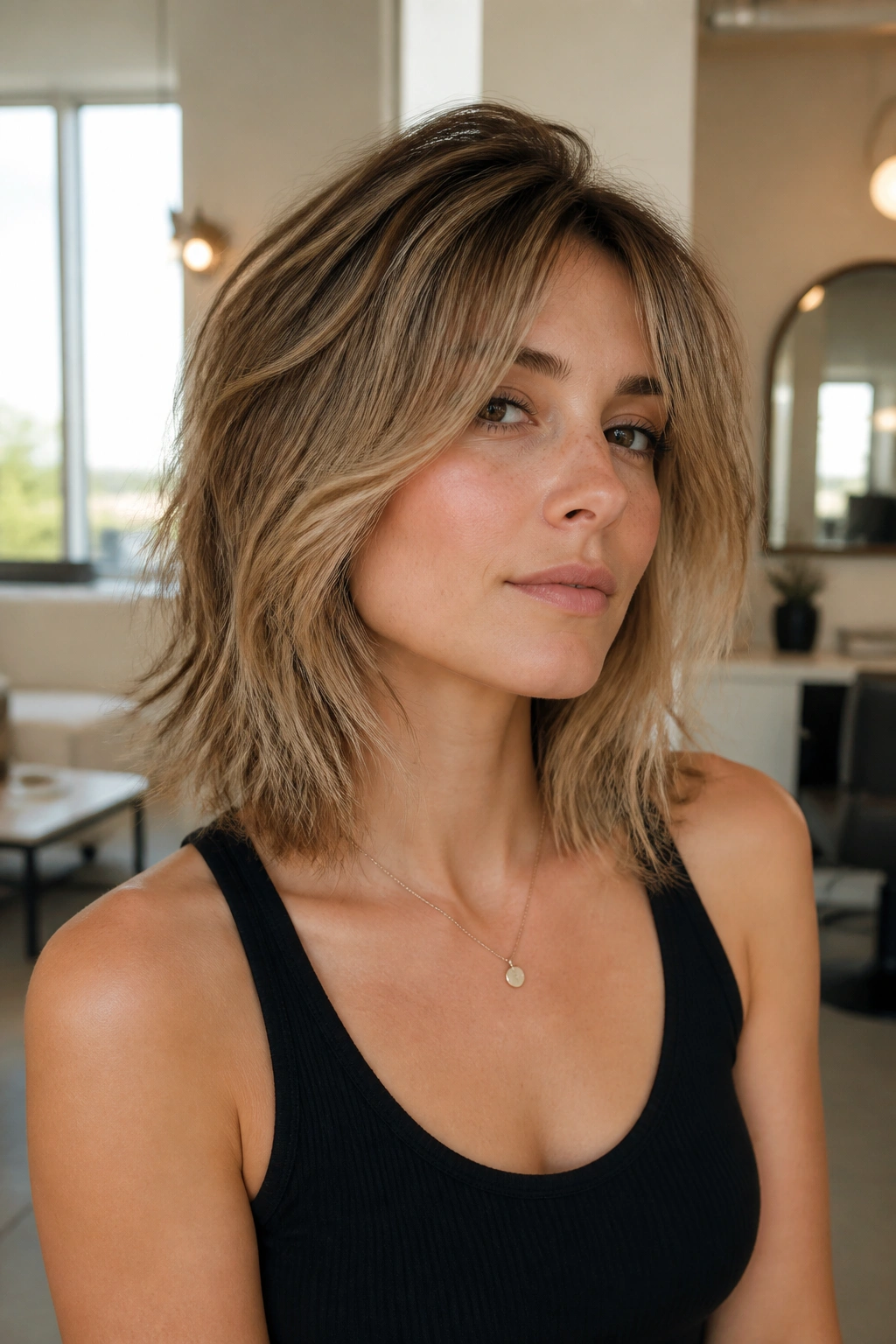
Fine hair loves this shape when the layers are kept light. Too much slicing, and the ends start looking thin and wispy in a way that feels accidental. A shoulder-length textured wolf cut keeps enough length to make the hair look fuller, while the crown gets that lifted, piecey finish people usually want from the style.
This version works because it does not try to turn fine hair into something it isn’t. It leans into movement, a little separation, and soft volume at the top. The result is less “big hair” and more “hair that has a pulse.”
If your hair collapses by lunch, this is the version to ask about. A root-lifting spray at the scalp and a small amount of mousse through damp hair can make a big difference. Skip heavy creams. They drag the shape down fast.
The sweet spot is a cut that brushes the shoulders with longer face-framing pieces and a slightly shorter crown. That gives you lift without the ends disappearing.
3. Curly Wolf Cut With Rounded Layers
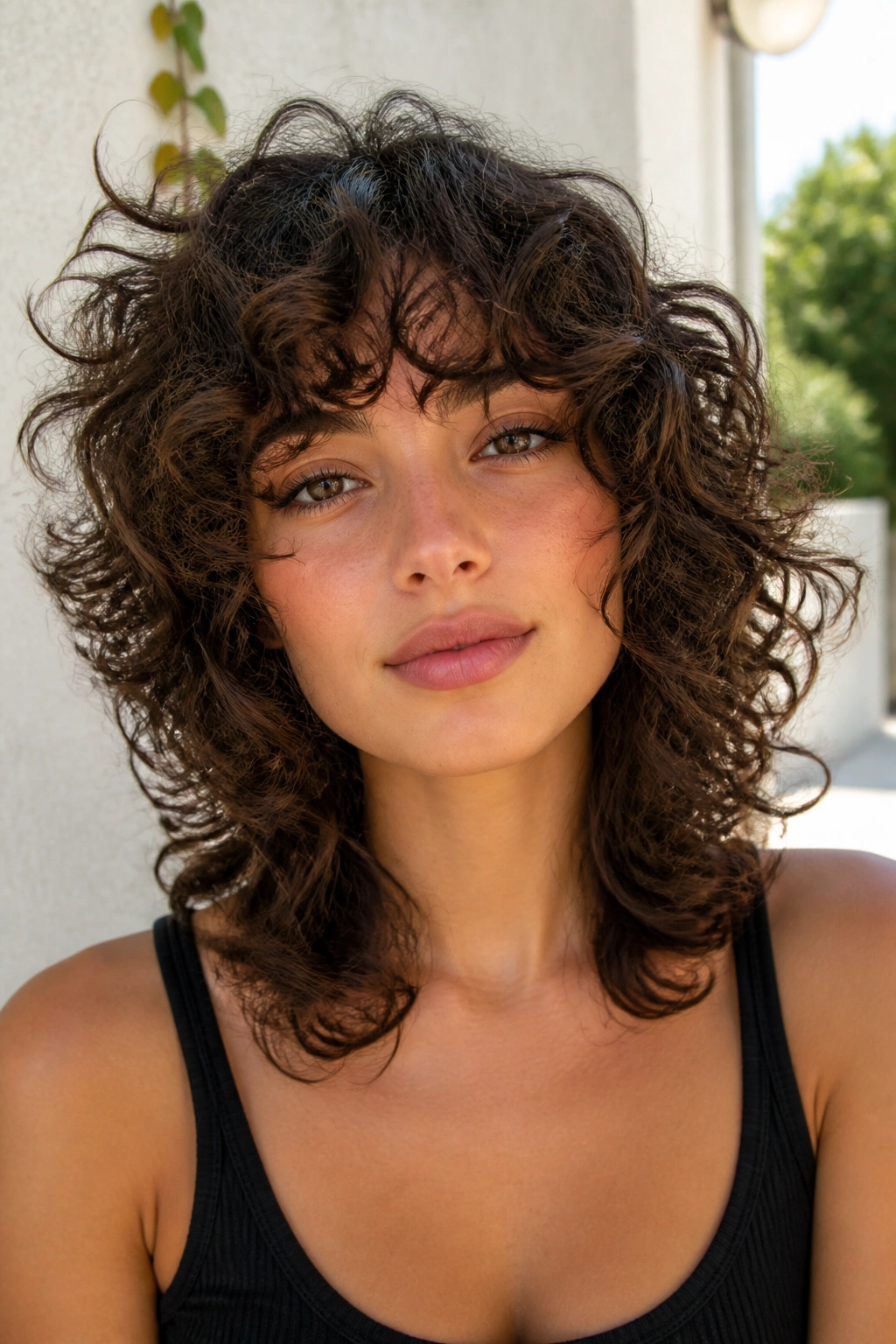
Why does a curly wolf cut look so good when the layering is done properly? Because curls already create their own texture, and the cut just needs to give them room to move. The best versions don’t fight the curl pattern. They shape it.
A rounded layer pattern is the key. Instead of carving hard, disconnected steps, the stylist follows the curl’s spring so the silhouette feels airy and balanced. That keeps the sides from bulking out too much and stops the crown from puffing into a helmet.
How to Ask for It
Tell your stylist you want curly layers with shape at the crown and softness at the perimeter. That wording helps more than saying you want it “messy,” because messy can mean almost anything.
- Keep the shortest curls around the top front, not too deep into the crown
- Leave enough weight in the lower layers to avoid frizz halo
- Diffuse on low heat or let it air-dry with gel
- Trim curly wolf cuts dry if possible, so the shrinkage is real, not guessed
A good curly wolf cut should look better when it moves. That is the whole charm. If it only looks good frozen in place, something is off.
4. Razor-Feathered Wolf Cut for Thick Hair
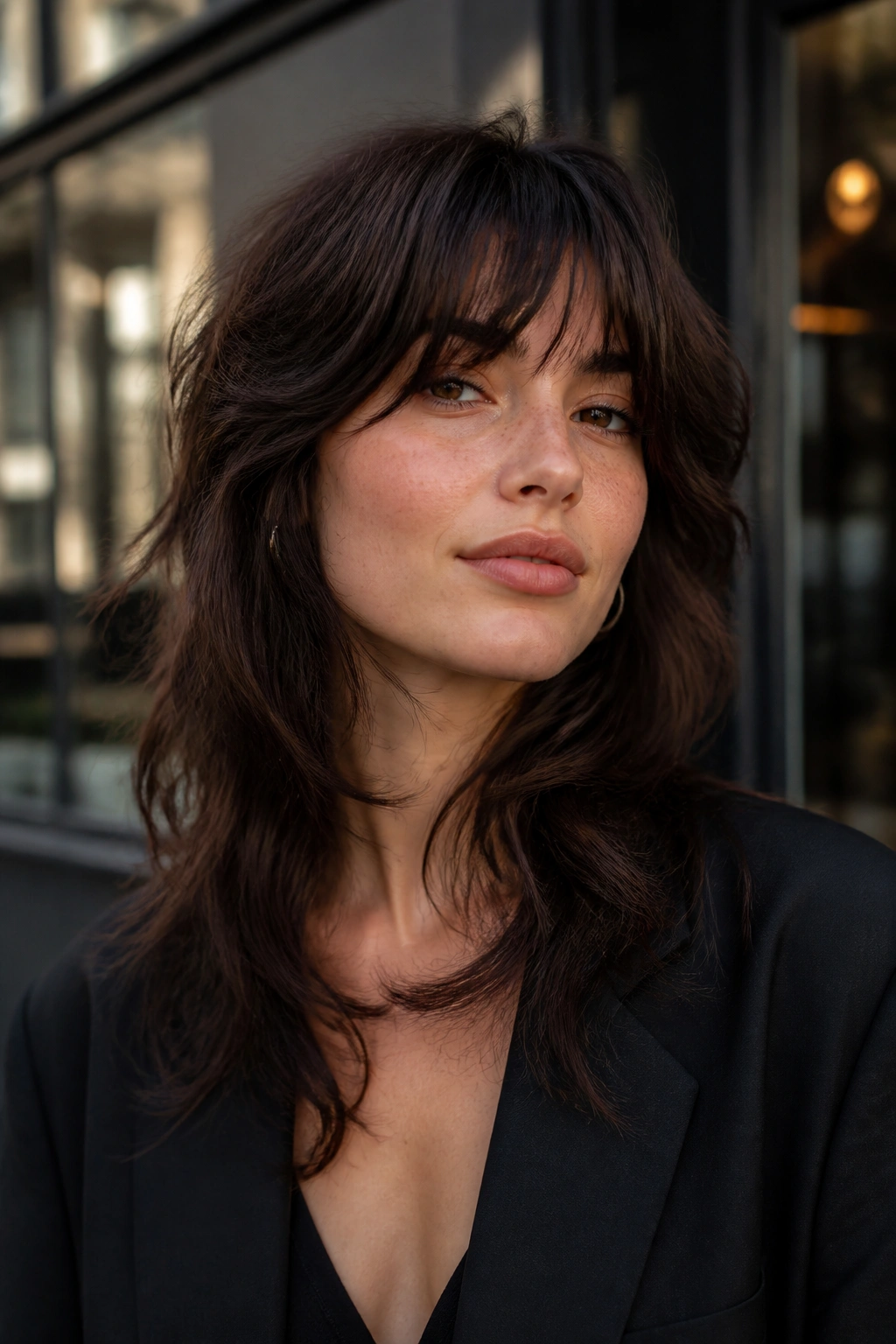
Picture thick hair that keeps flipping out at the ends and swallowing your neck on humid days. That’s exactly where a razor-feathered wolf cut earns its keep. It removes bulk without flattening the whole head into a sad, over-thinned outline.
The razor work softens the ends so they move instead of sitting like a shelf. Used well, it gives the cut a slightly wind-tossed finish that feels lighter the second you shake it out. Used badly, it can shred the hair. So yes, the hand matters.
- Best for dense, heavy hair that feels triangular
- Ask for internal layers, not just surface texture
- Keep some weight at the bottom so the cut does not fray
- Style with a heat protectant and a medium round brush if you want the layers to show
Watch for this: if your hair already gets fuzzy at the ends, too much razor work can make it look dry. In that case, a point-cut finish is safer and still gives plenty of movement.
This is the wolf cut for women who want shape, not fluff.
5. Long Wolf Cut With Waterfall Layers
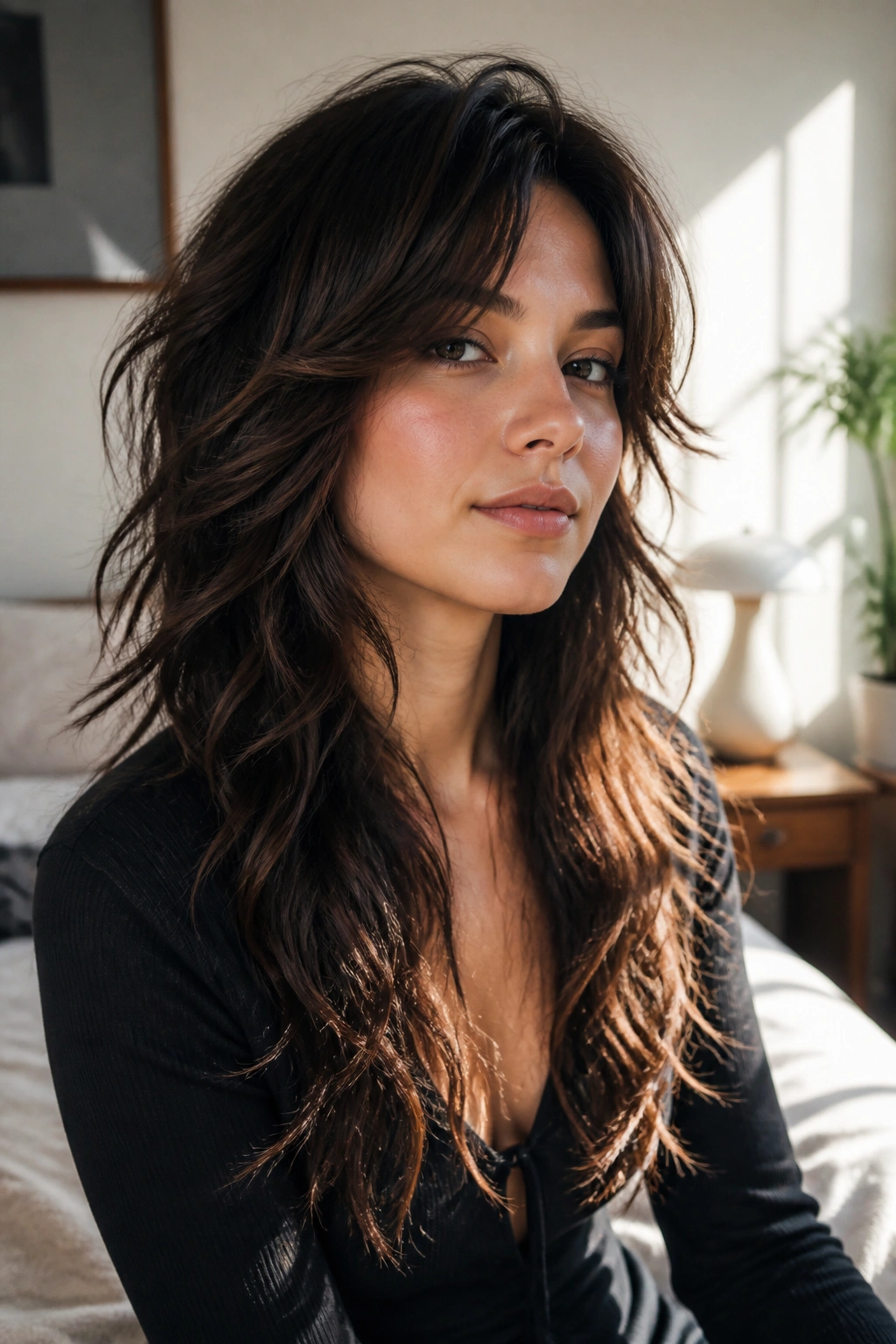
A long wolf cut changes the mood completely. The drama moves lower, the face-framing pieces stretch out, and the whole thing feels more like a laid-back rock cut than a short shag. It’s a smart choice if you love length but hate the weight that usually comes with it.
The best long version keeps a clear crown lift and a visible transition from short-to-long layers. That transition is what gives the cut its shape. Without it, you just have long hair with some uneven bits, which is not the same thing at all.
There’s a nice side effect here: long wolf cuts tend to look better on second-day hair than freshly blown-out hair. A little texture spray through the mids and ends gives the layers separation, and that separation is what makes the shape read from across the room.
A waterfall effect in the front keeps the cut soft around the face. I like this version on women who want movement but still want to pull the hair into a low clip or loose braid when needed. It’s one of the few textured cuts that stays useful when you get tired of wearing it down.
6. Pixie-Length Wolf Cut With Micro Fringe
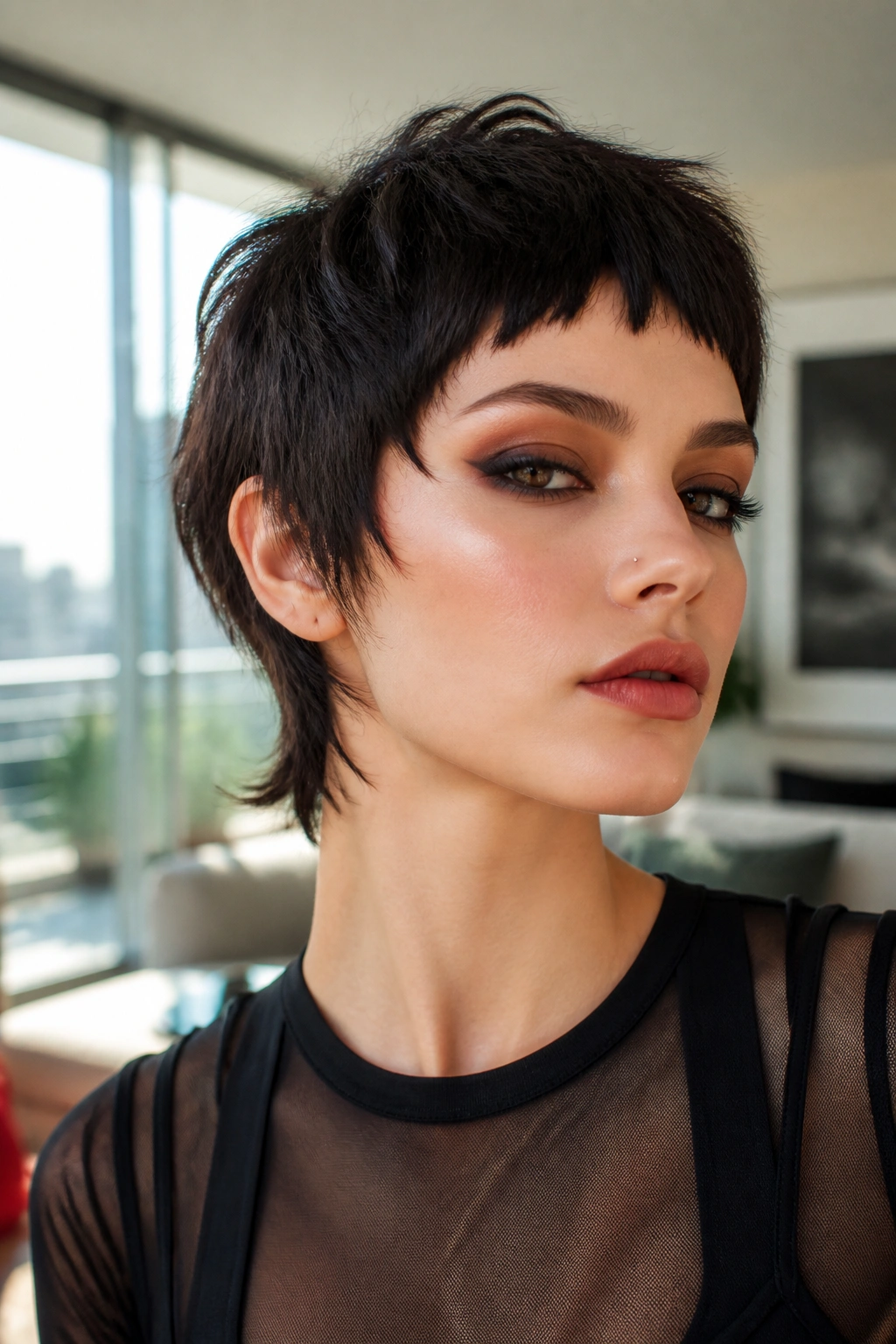
Short wolf cuts are not shy. They show every line, every layer, every decision. That makes a pixie-length wolf cut with a micro fringe a much sharper choice than the softer shoulder-length versions.
Unlike a classic pixie, this cut keeps a little extra length through the back and sides so the shape feels shaggy rather than neat. The micro fringe gives it a sharp front edge, which works best if you like your hair to look edited and slightly rebellious.
This is not the most forgiving cut on the list. It grows out fast, and the bang length can turn awkward if it lands in your lashes. Still, when it’s fresh, it has a cool, lean shape that’s easy to style with a dab of matte paste and a quick finger tousle.
It suits women who want low drying time and don’t mind trims every 4 to 6 weeks. If you live for soft, romantic hair, this is not your cut. If you want a little attitude with hardly any length, it’s a strong one.
7. Choppy Wolf Cut With Bottleneck Bangs
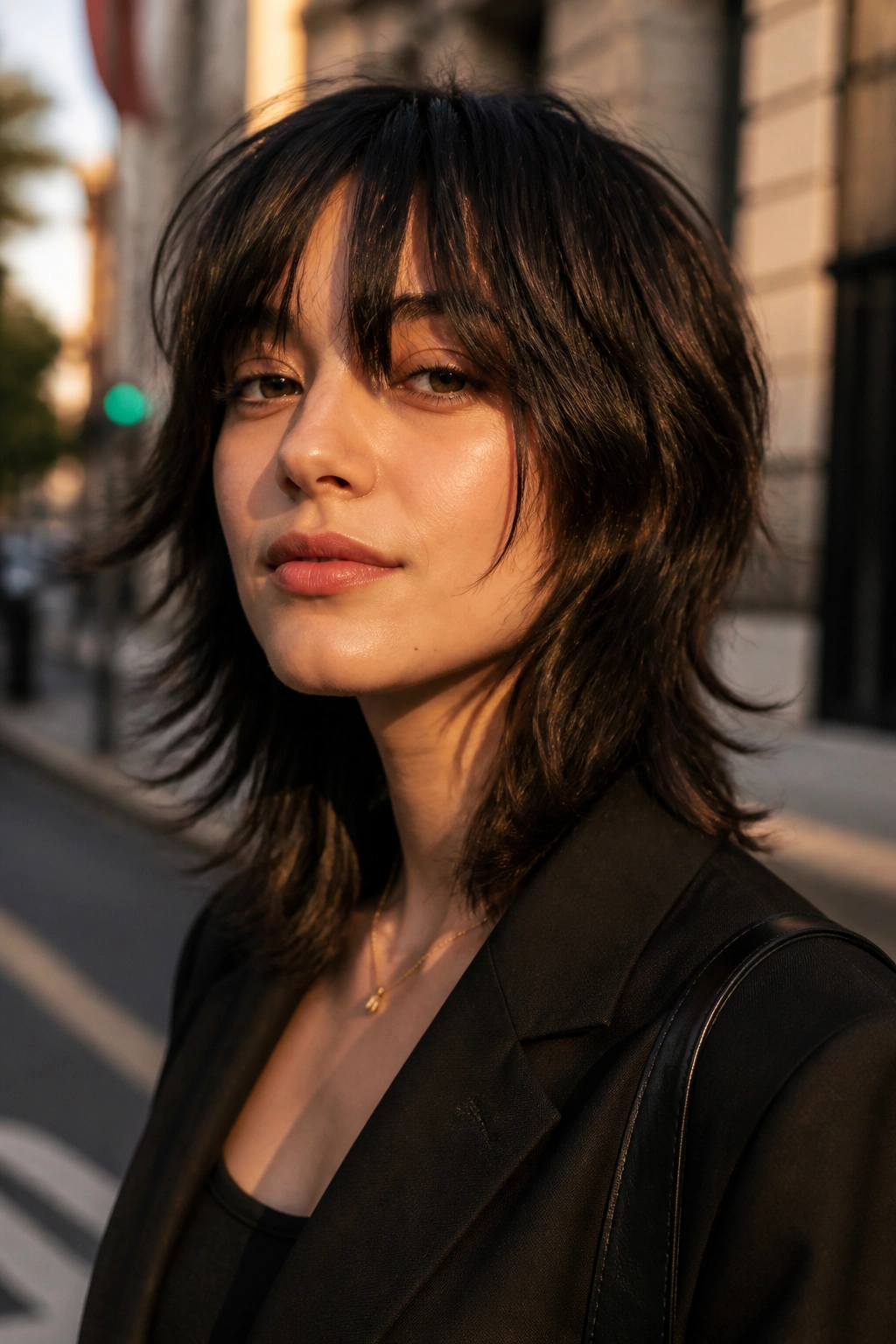
A choppy wolf cut with bottleneck bangs sits right between soft and edgy, which is why so many women end up loving it. The fringe starts narrower near the center and opens out as it reaches the cheeks, so the whole face gets a framed look without the heaviness of a full blunt bang.
The choppy layers keep the cut from feeling too sweet. There’s a little roughness to it, a little separation, and that’s what keeps the wolf cut identity intact. It also means the style looks good with a tiny bit of grit in the hair — dry shampoo, texture spray, or the natural bend you get after a long day.
What to Watch For
If your hairline is cowlick-prone, bottleneck bangs need a careful cut. Too short in the center and they kick up. Too wide too soon and they can swallow your temples.
The nicest thing about this version is the grow-out. The bangs soften into curtain pieces, and the cut still reads as intentional even when it’s a little grown in. That buys you time, which is always welcome.
8. Wavy Wolf Cut With Face-Framing Money Pieces
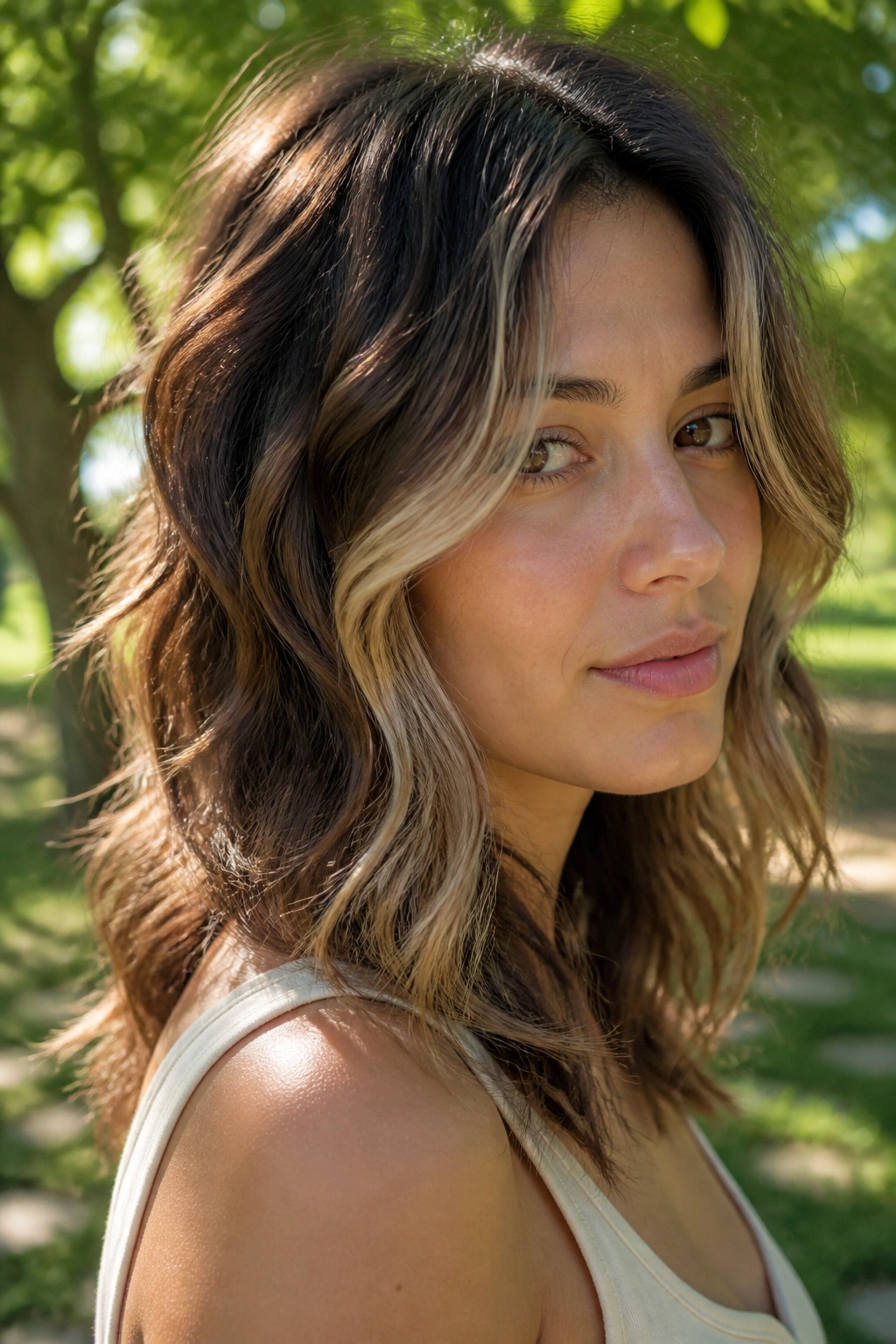
Highlighting the front layers changes the whole haircut. A wavy wolf cut with face-framing money pieces keeps the movement of the cut, but the lighter front sections pull the eye upward and forward. It’s a smart move if you want the layers to show without relying on heavy styling.
The waves already do half the styling for you. Add lighter pieces around the cheekbone and jaw, and the cut looks more lifted, especially when the waves are loose and a little imperfect. The contrast also makes the texture read more clearly, which is helpful if your natural color is solid and the layers might otherwise disappear.
This version is for women who like a softer edge. It’s not as shaggy as the micro-fringe cut, not as dramatic as the mullet-heavy one later on, and not as plain as a regular layered cut. It has a bit of brightness built in.
Use a curling wand with a 1-inch barrel if your wave pattern needs help, but leave the ends out on a few pieces. That gives the hair a lived-in bend rather than a polished spiral, and that bend is where the wolf cut really starts to sing.
9. Air-Dry Wolf Cut for Fine Hair
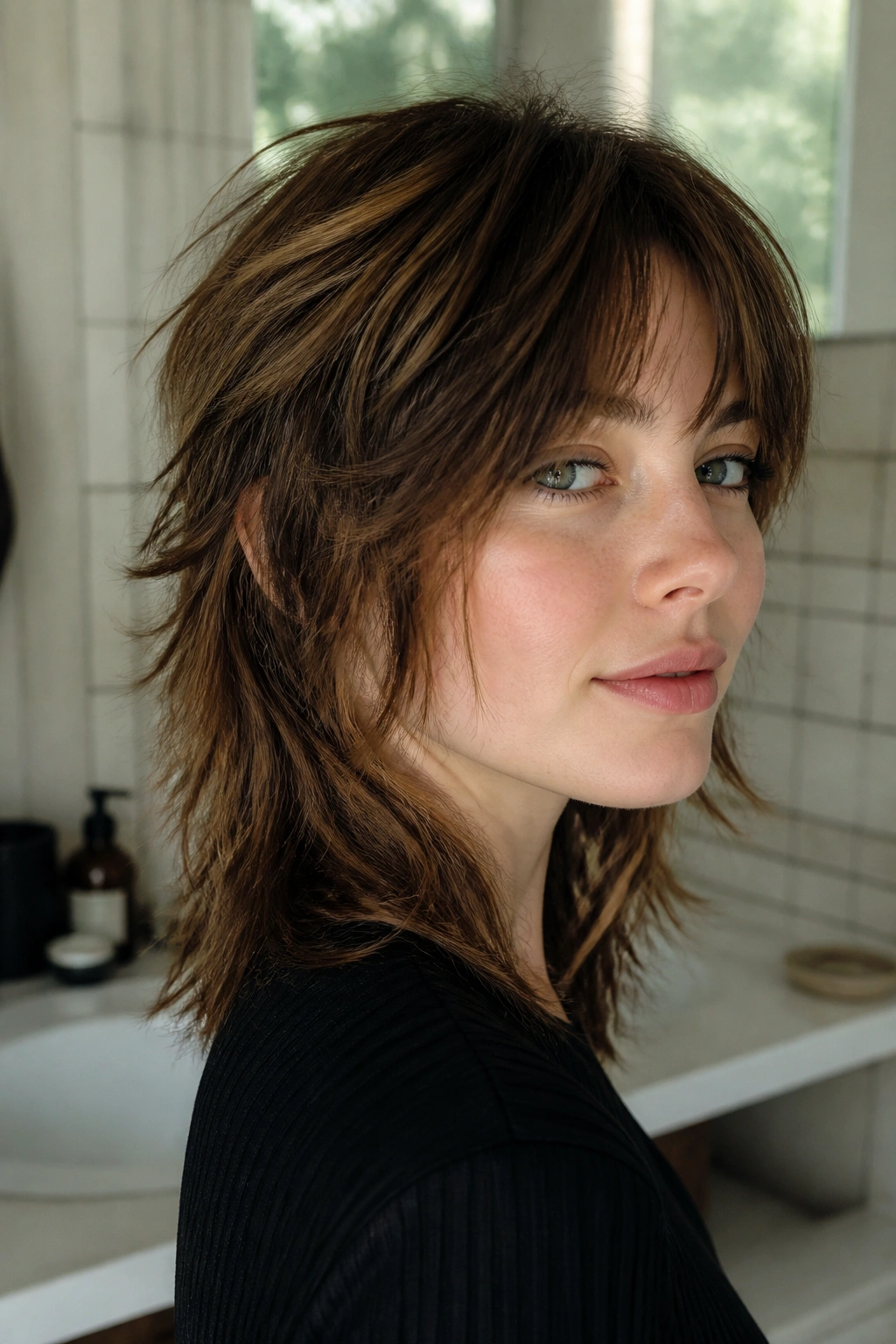
Can a wolf cut work without hot tools? Yes, if the layers are cut with air-drying in mind. A lot of people ruin this style by assuming the texture will appear on its own. It won’t. The cut needs the right internal shape, especially on fine hair that loses body fast.
The trick is to keep the layers soft and not too short at the crown. Then the hair can dry into bend and separation instead of sticking flat to the head. A light mousse, a few scrunched twists, and a side part can do more than a round brush ever will on the wrong day.
How to Style It
- Squeeze out water with a microfiber towel, not a rough bath towel
- Apply mousse from roots to mids while the hair is still damp
- Twist 4 to 6 sections away from the face
- Let the hair dry fully before touching it
The best air-dry wolf cut has movement without looking overdone. If you keep messing with it while it dries, the texture gets fuzzy and the layers lose their definition. Leave it alone. That’s the hard part.
10. Asymmetrical Wolf Cut With Side-Swept Fringe
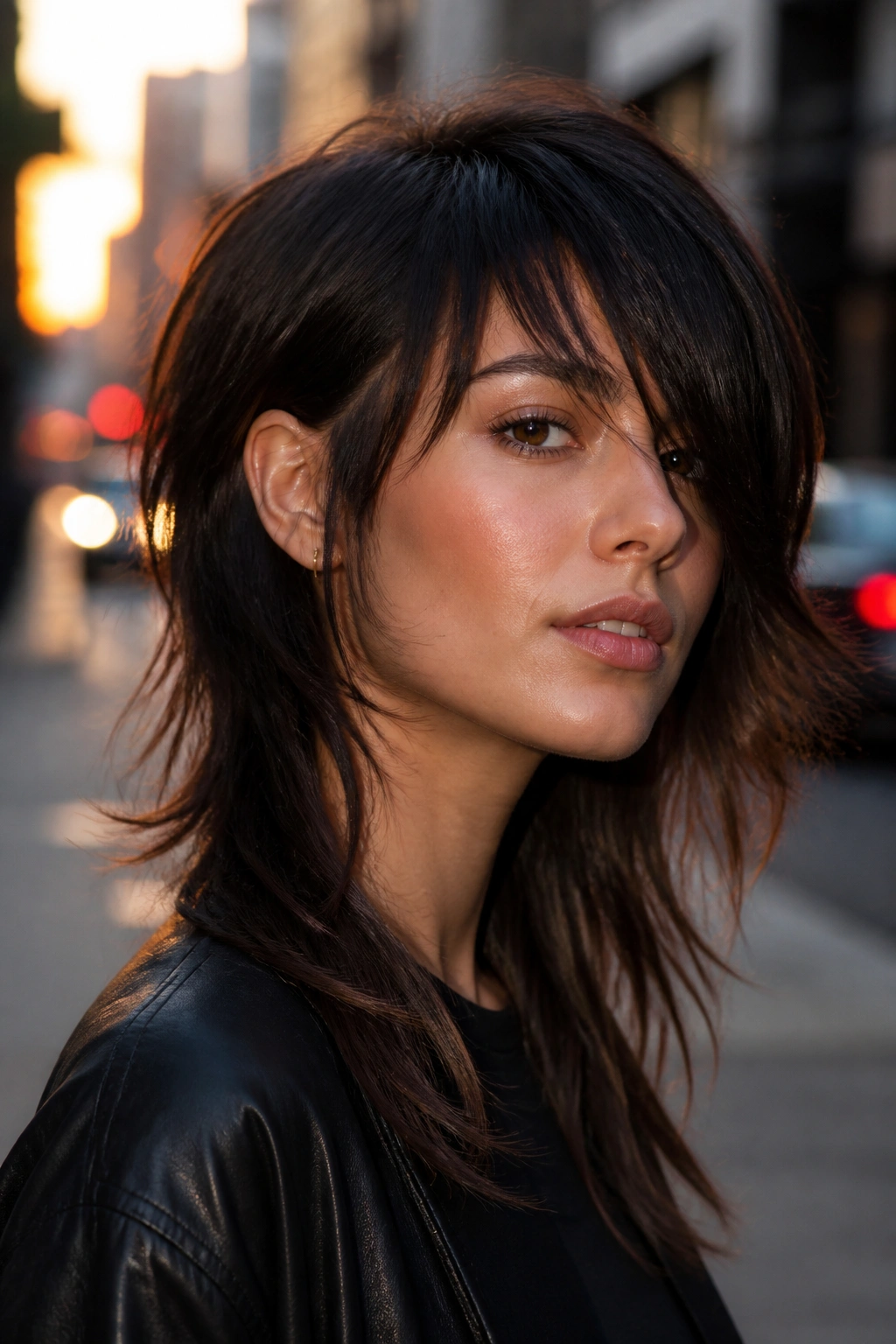
A side-swept fringe changes the balance of the wolf cut in a way that feels a little more polished. One side falls heavier, the other side opens up, and the whole shape starts looking less like a standard shag and more like a deliberate cut with personality.
This is a good option if you want texture but dislike the split-center look that curtain bangs bring. The asymmetry can also flatter strong cheekbones and softer jawlines, because it creates motion across the face instead of boxing it in.
Think of this as a wolf cut with a built-in lean. The layers do the usual crown lift and broken ends, but the fringe gives the shape direction. That direction matters when you wear your hair tucked behind one ear, which I still think is one of the easiest ways to show off a good haircut.
Keep the side-swept piece long enough to brush the cheekbone. Too short, and the angle looks abrupt. Too long, and it starts behaving like a grown-out bang. There’s a narrow sweet spot here, and it’s worth protecting.
11. Collarbone Wolf Cut With Invisible Layers
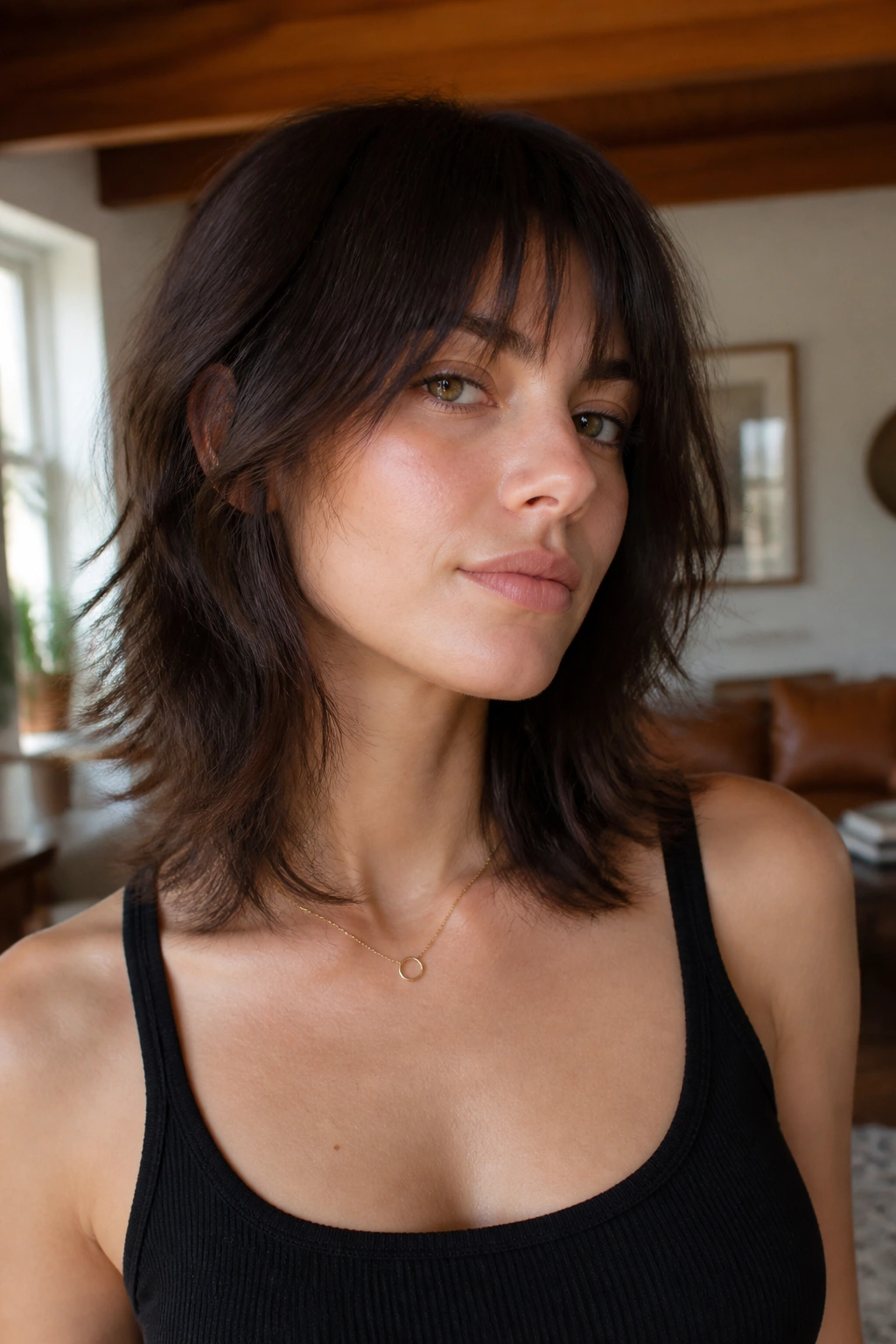
Invisible layers are one of my favorite tricks when someone wants a wolf cut but hates the look of obvious chopping. The shape still has movement, but the layering is tucked inside the haircut so the perimeter looks smooth at first glance.
A collarbone length gives this version room to breathe. It’s long enough to feel feminine and easy to tie back, but short enough that the texture actually shows. On straight hair, the movement comes from the cut itself. On wavy hair, it comes from a little natural bend and the way the layers fall against each other.
The clean edge around the collarbone keeps the cut from looking too messy for work or more formal settings. That matters. Some women love a full shag. Some want texture they can wear without announcing it. This cut is for the second group.
A light blow-dry with a paddle brush can smooth the outer layer while the inner layers keep their bend. That contrast is the whole appeal. Soft on top, a little wild underneath. Nice and simple.
12. Wolf Cut for Coily Hair With Stretch and Shape
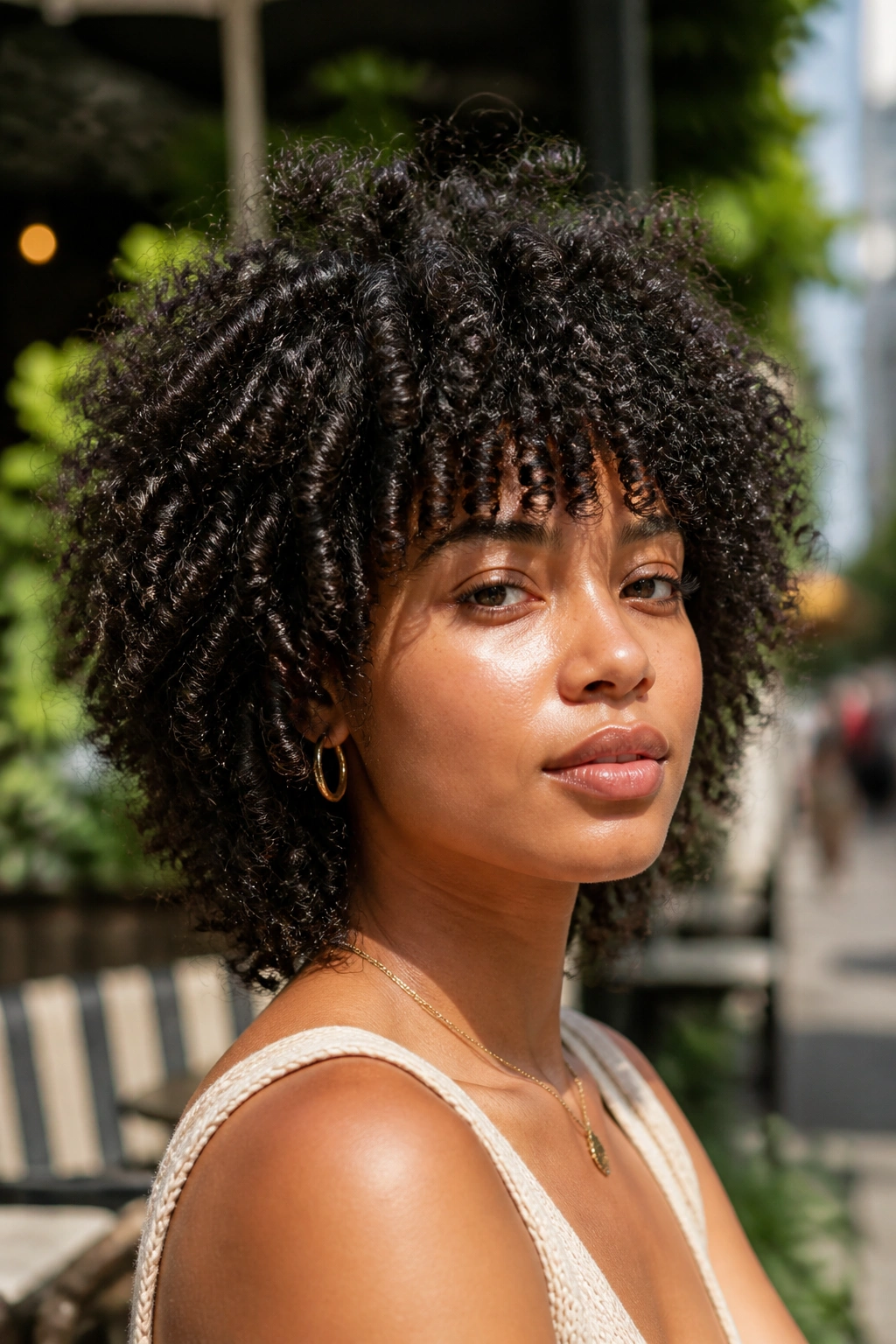
A wolf cut on coily hair needs a different mindset. The shape has to respect shrinkage, and the layers need to be placed where the coils can move without turning into a cloud. Done well, it looks sculpted, alive, and full of dimension. Done badly, it looks like someone took scissors to the hair in a hurry.
The best coily wolf cuts keep a rounded silhouette with careful length control at the crown and sides. The goal is not to flatten the coils. It’s to give them tiered movement so the shape opens up instead of ballooning outward.
What Makes It Different
The cut should be done on dry or stretched hair whenever possible. Wet hair lies. It shrinks more than people expect, and that can leave the shortest layers far shorter than intended.
- Ask for curl-by-curl or coil-by-coil shaping
- Keep enough length in the perimeter to anchor the silhouette
- Use a light cream plus gel mix for hold
- Diffuse on low heat or stretch-dry in sections
A coily wolf cut can look stunning with a little asymmetry and a lot of confidence. It should not feel like a compromise.
13. Shaggy Wolf Cut With Soft Highlights

A shaggy wolf cut gets even better when the color supports the shape. Soft highlights around the layers make the texture easier to see, especially if your base color is dark or very even. You don’t need stripey contrast here. That would fight the cut. You want gentle ribbons that follow the movement.
The shaggy version is all about broken texture and a slightly undone outline. It feels more casual than the collarbone cut and less severe than the razor-feathered one. Highlights help because they create tiny shifts in light across the layers, and those shifts make the haircut look fuller.
This is a nice choice if you want people to notice your hair without being able to point to one obvious reason why. That’s usually the mark of a good cut and color pairing. Nothing shouts. Everything works together.
A styling cream with a small amount of hold helps keep the pieces separated without making them crunchy. If the highlights are placed near the face and through the top layers, the cut usually reads brighter and more lifted in daylight. Subtle is the word here.
14. Mullet-Leaning Wolf Cut With Bold Nape Length
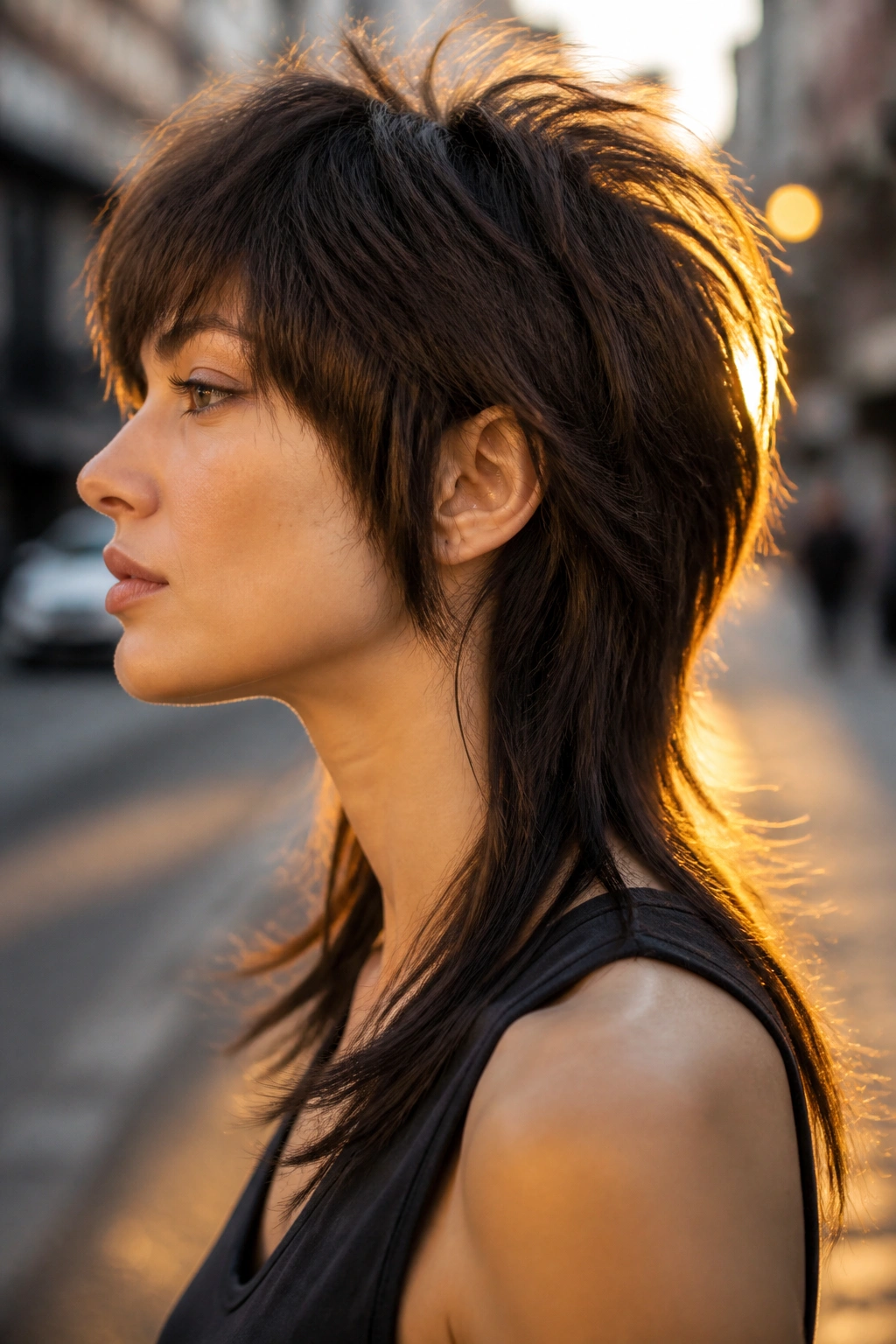
This is the edge case. A mullet-leaning wolf cut keeps more length in the back, shortens the crown enough to create lift, and lets the contrast between the two do the talking. It is less soft, more attitude. If you like your hair to look a little fearless, this one delivers.
The nape length is what makes it feel less like a shag and more like a wolf cut with actual bite. The back can graze the shoulders while the top stays much shorter, which creates that unmistakable silhouette people either adore or avoid completely.
It works best when the rest of the cut is tidy enough to hold the shape. Too much randomness and it starts looking unfinished. Too little, and it loses the point. That balance is why this version tends to look best on women who don’t mind being noticed.
Use a root-lifting mousse, rough-dry the crown, and keep the ends piecey rather than curled under. The shape should have movement, not sweetness. That’s the whole deal.
15. Wolf Cut With a Blunt Fringe

A blunt fringe gives the wolf cut a jolt. It changes the personality fast, because suddenly the front is strong and graphic while the rest of the cut stays shaggy and broken. I like that contrast. It keeps the cut from feeling too soft or predictable.
This version works especially well if you have a longer face or want to shorten the appearance of the forehead a little. The fringe creates a solid line, and the layers underneath balance it by keeping the rest of the style light.
How to Keep It From Looking Heavy
Blunt bangs need clean styling. If they separate too much, the line disappears. If they’re too dense, they can feel like a curtain sitting on your eyes. The fix is a precise cut and a quick blow-dry with a flat brush.
Use a small round brush only at the ends if you want a tiny bend. Keep the rest of the wolf cut airy so the fringe becomes the statement instead of swallowing the haircut whole. That’s a mistake I see all the time.
16. Low-Maintenance Wolf Cut With Minimal Styling
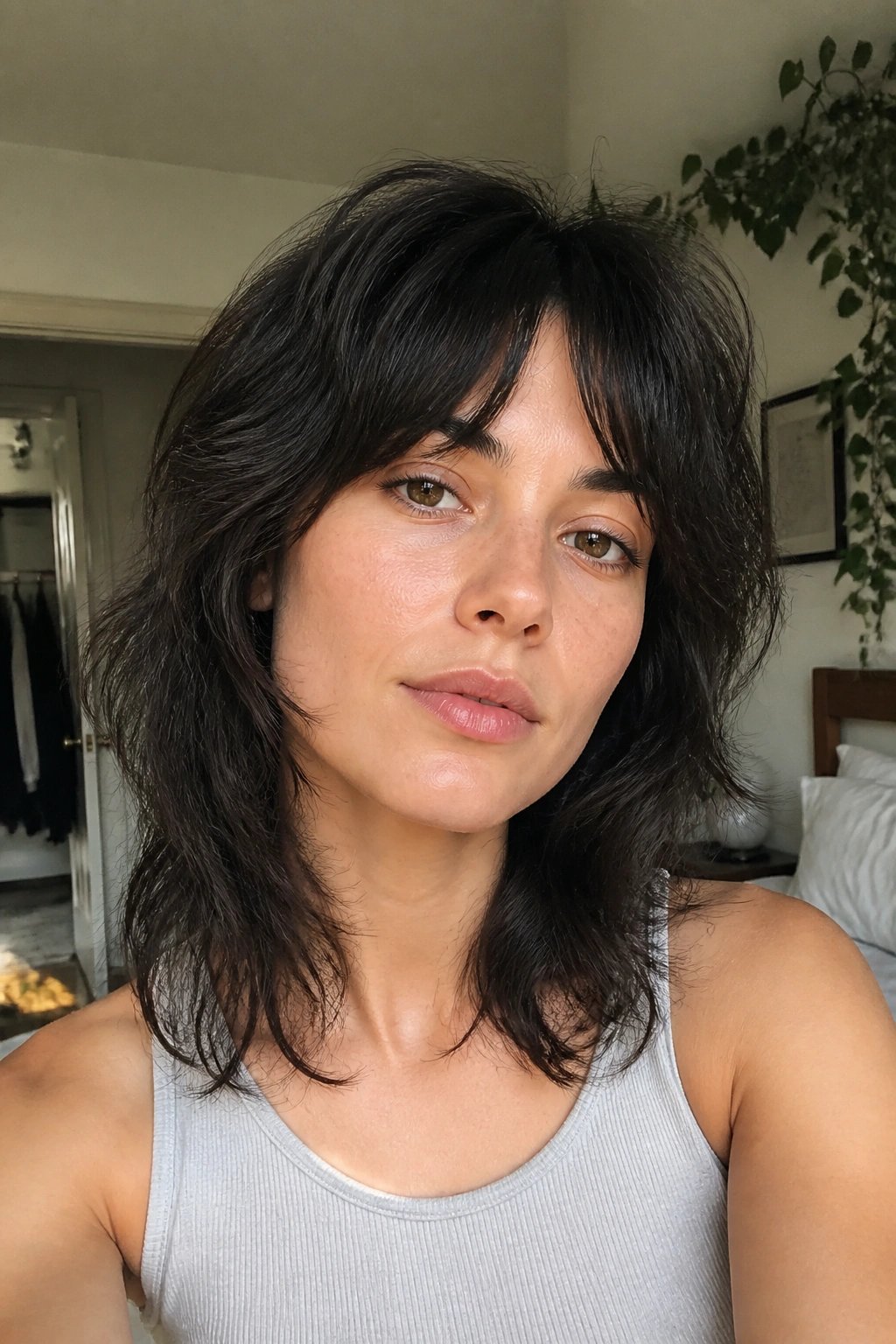
Some wolf cuts need a little daily coaxing. This one doesn’t. A low-maintenance version keeps the layers soft, avoids extreme contrast, and works with your natural texture instead of insisting on a full styling session every morning.
The shape still has the wolf-cut DNA: crown lift, face-framing layers, and movement through the ends. But the layering is blended enough that you can wash, scrunch, and go most days. That matters if your life does not include a 20-minute blow-dry before coffee.
A mid-length version is usually the easiest to live with. Short enough to avoid heavy bulk, long enough to clip up when needed, and not so layered that the ends flip out in awkward directions. A little leave-in conditioner and a touch of texture spray is usually enough.
If you want hair that looks better after sleeping on it, this is the cut to ask about. It should wake up with personality already built in. Lucky, really.
17. Wolf Cut for Round Faces

Round faces can wear wolf cuts beautifully when the layers create vertical lines instead of extra width. That is the difference between a flattering cut and one that makes the face look fuller than it really is.
The most useful pieces are the ones that start below the cheekbone and fall past the jaw. Those longer front layers pull the eye downward, while the crown lift keeps the silhouette from going flat. Short bangs can work here, but they need to be handled carefully. A wispy or split fringe tends to be kinder than a heavy, straight-across one.
I’d avoid a version that ends right at the widest point of the cheeks. That can box the face in. A little more length in the front fixes the problem fast.
If you wear glasses, this shape can be especially nice, because the layers don’t fight the frames. They sit beside them. Small detail, big payoff.
18. Wolf Cut for Oval Faces
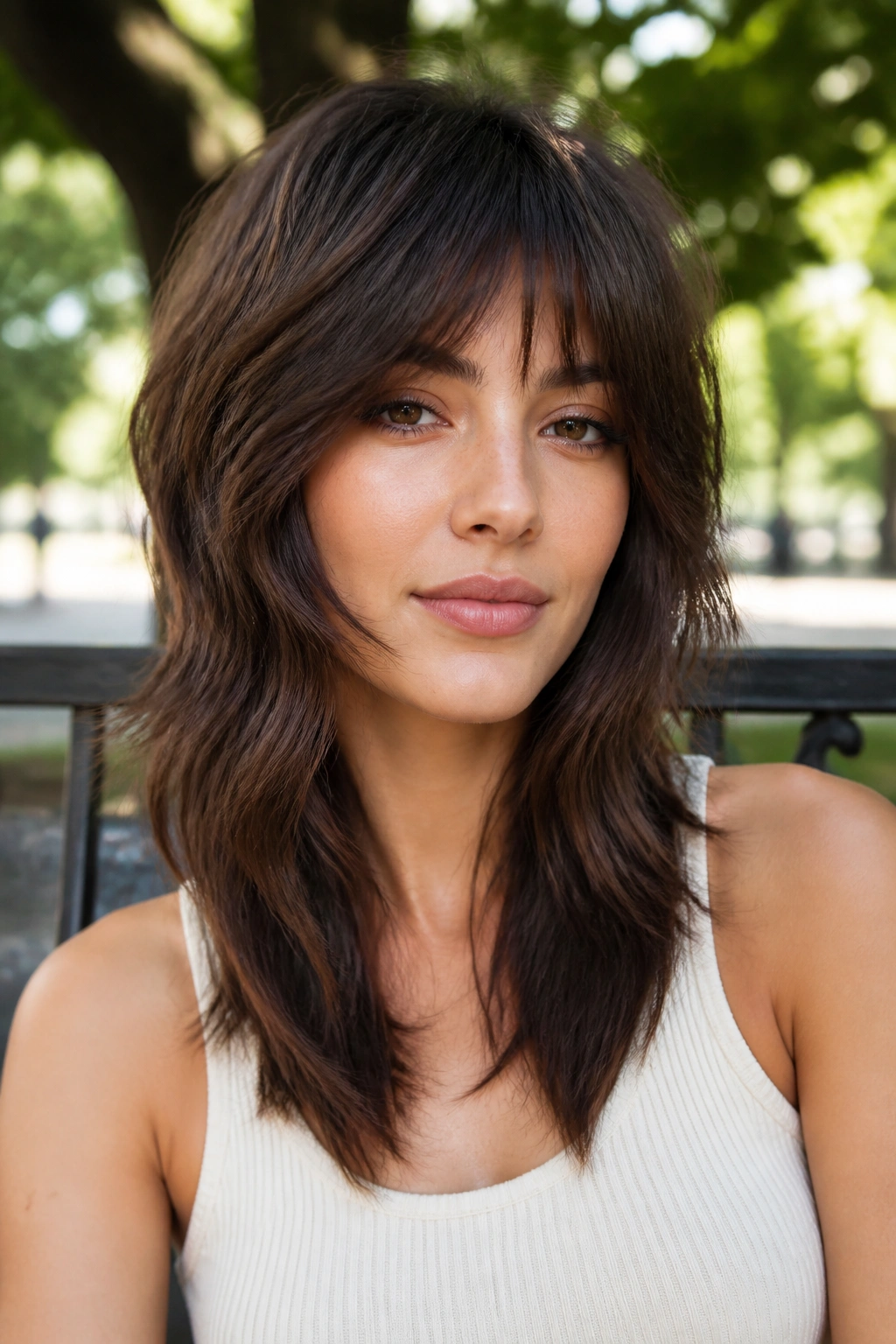
Oval faces usually have the easiest time with wolf cuts, which is annoying but true. The proportions already give the stylist room to play, so the cut can go softer, sharper, shorter, or longer without throwing the balance off.
That said, not every wolf cut on an oval face should look the same. A longer version makes the face feel elegant and stretched. A choppier one adds punch. A short one brings attention to the eyes and cheekbones. You get to choose the mood.
What Makes It Work
The key is not to hide the face shape. It’s to match the energy. If your features are delicate, too much fringe can swallow them. If your face is defined, a stronger bang or tighter crown can add drama.
- Long layers keep the profile sleek
- Shorter face-framing pieces make the cheekbones pop
- Side parts give a softer line
- Middle parts feel sharper and more modern
This is the one face shape where I’d say have a little fun. The haircut probably won’t fight you.
19. Wolf Cut With an Undercut Nape
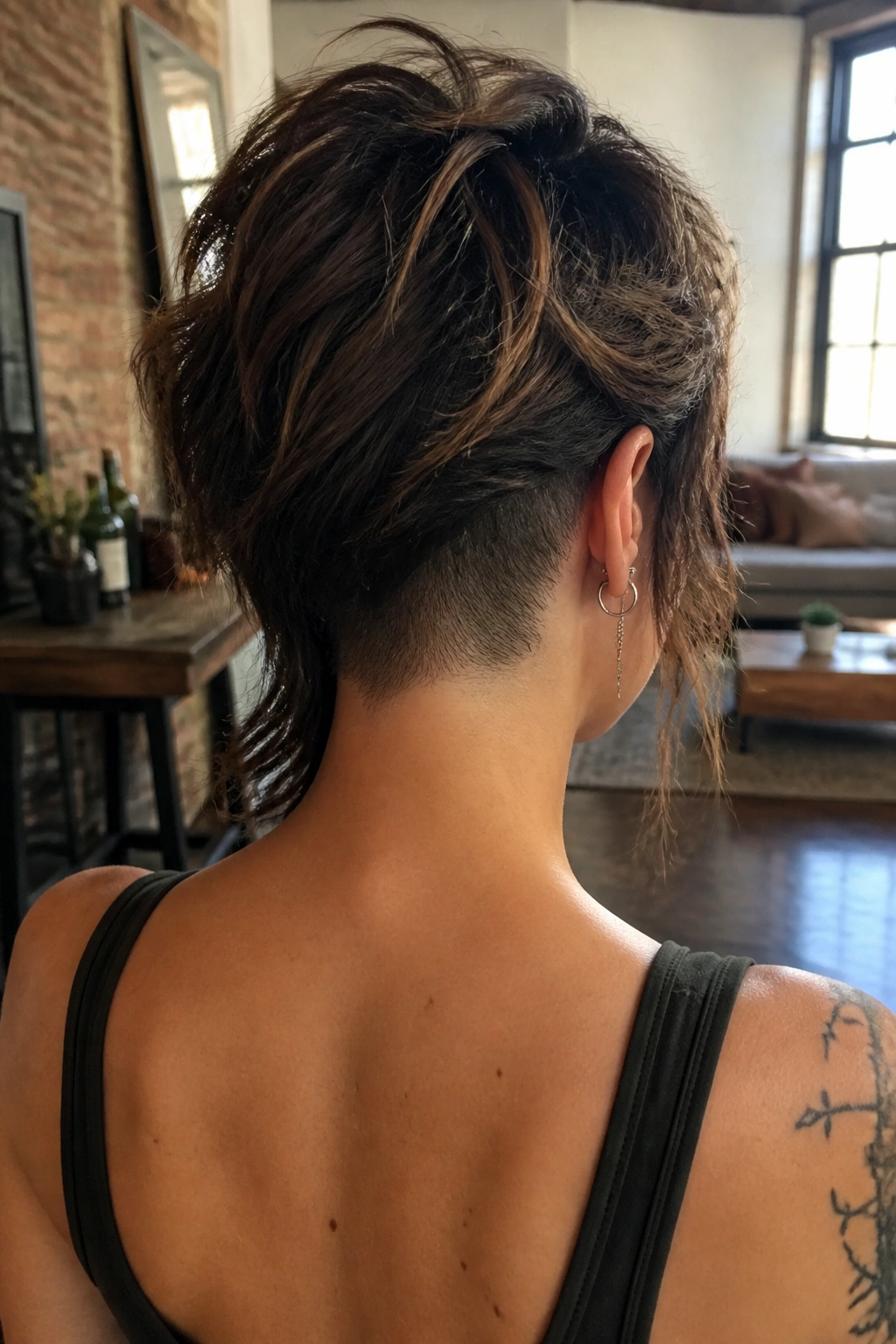
An undercut nape is the sneaky move that makes a wolf cut easier to wear on thick or heavy hair. It removes bulk where it usually sits unnoticed, which lets the top layers fall better and keeps the back from turning into a hot, heavy curtain.
The beauty of this version is that the undercut stays hidden unless you wear the hair up. Down, it just reads as lighter and cleaner through the back of the cut. Up, you get a little surprise. I like that. It feels practical and slightly rebellious at the same time.
This is a strong option if your hair collects heat at the neck or if you’re tired of the bottom section puffing out. The top layers can still stay shaggy and textured while the nape gets carved out underneath.
It does need regular upkeep. Not weekly, but enough that the undercut does not grow into fuzz. If you like the idea of a cut with a secret, this one has one built in.
20. Textured Wolf Cut With Punk Edge
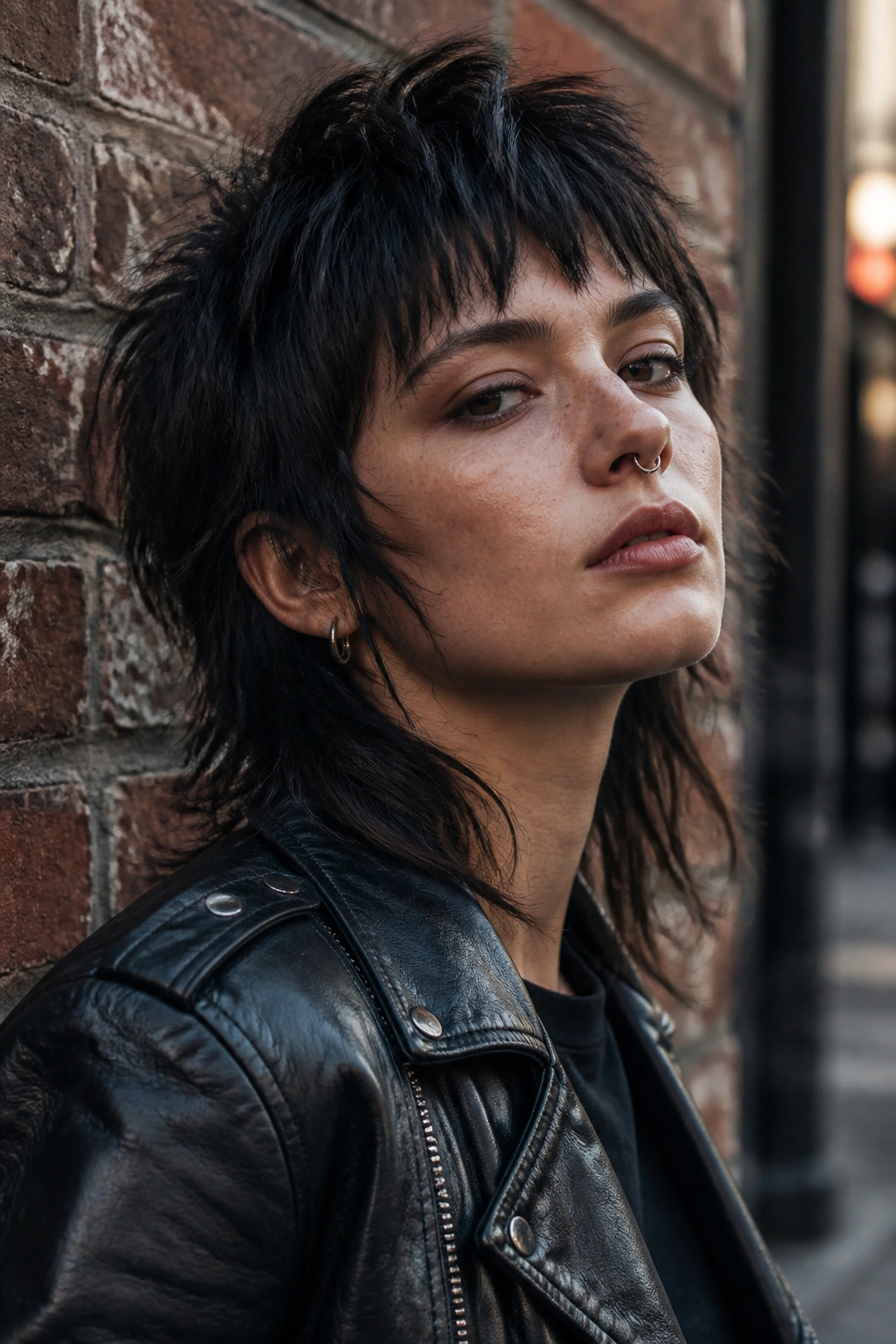
A textured wolf cut with punk edge is the loudest version here, and that’s exactly why some women keep coming back to it. The crown is short enough to stand up a little, the fringe is choppier, and the ends are broken in a way that looks intentionally rough.
This is the cut that wants matte texture paste, air-drying, and maybe a little mess. Not chaos. Mess. There’s a difference. The shape still needs structure at the crown and a clear line through the back, or it slides into “bad haircut” territory fast.
It suits anyone who likes a sharper wardrobe, stronger makeup, or hair that doesn’t behave politely. Leather jacket hair. Boots hair. The kind of style that looks good when it’s been slept on a little. If you want softness, pick one of the earlier versions. If you want attitude first, this is the one.
The nicest thing about a punk-leaning wolf cut is that it still has a feminine line when it’s cut well. Tough, yes. But not harsh. That balance keeps it wearable, and it’s why the style keeps showing up on women who want edge without giving up shape.
