



A medium-length shag haircut has a useful kind of swagger. It sits in that sweet spot where the hair still feels swishy and touchable, but it no longer needs the kind of effort a longer cut asks for. The right version lands around the shoulders, collarbone, or just below, with layers that move when you turn your head instead of hanging there like a curtain.
That’s why this cut keeps coming back. It can look soft, edgy, airy, messy, polished, or a little retro, depending on how the layers are placed and what happens around the face. Too short and it starts to feel closer to a pixie or a cropped wolf cut. Too long and the whole point gets lost under the weight.
The best medium shag haircuts for women usually do one thing well: they make texture look intentional. A good shag should have shape even when you air-dry it badly, sleep on it, or throw it in a clip before lunch. A bad one looks like it was thinned out with no plan. There’s a difference, and it shows fast.
Curtain bangs, wispy fringe, piece-y ends, soft razoring, longer face-framing layers — all of these can work here, but not in the same way. The trick is choosing the version that plays nicely with your hair type instead of fighting it. That’s where the good cuts live.
1. Curtain-Bang Medium Shag
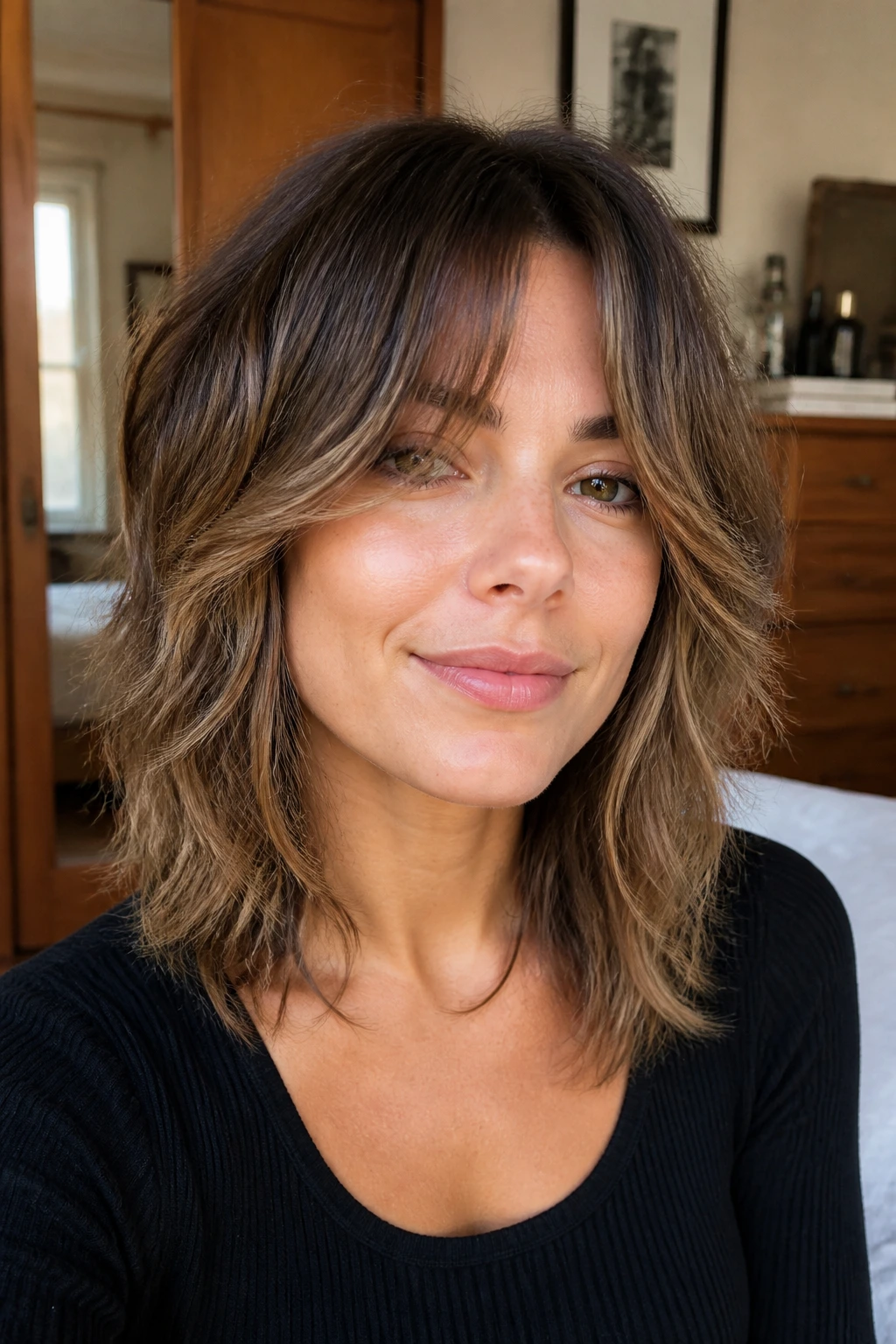
Curtain bangs are the safest and smartest starting point if you want a medium shag haircut without going full rock-and-roll. They part at the center, skim the cheeks, and blend into the rest of the layers instead of sitting on top like a separate piece. That alone makes the whole cut feel softer.
Why the Shape Works
The longest curtain pieces usually begin around the cheekbone or just below it, then melt into shoulder-length layers. That keeps the front open and light while still giving the face some frame. If your hair has a natural bend, this cut looks good with almost no drama.
For round or square faces, the opening at the center helps lengthen the look a bit. For longer faces, keep the fringe fuller and let the side pieces sweep lower. The cut is flexible, but it does need a little thought at the front.
- Ask for the shortest face-framing piece to land around the cheekbone.
- Keep the perimeter near the collarbone for swing.
- Use a round brush or large Velcro roller on the front pieces.
- Leave the ends slightly soft, not blunt.
Best move: ask your stylist to dry the bangs before trimming the final shape. Wet fringe lies.
2. Feathered Shag with a Soft Blowout
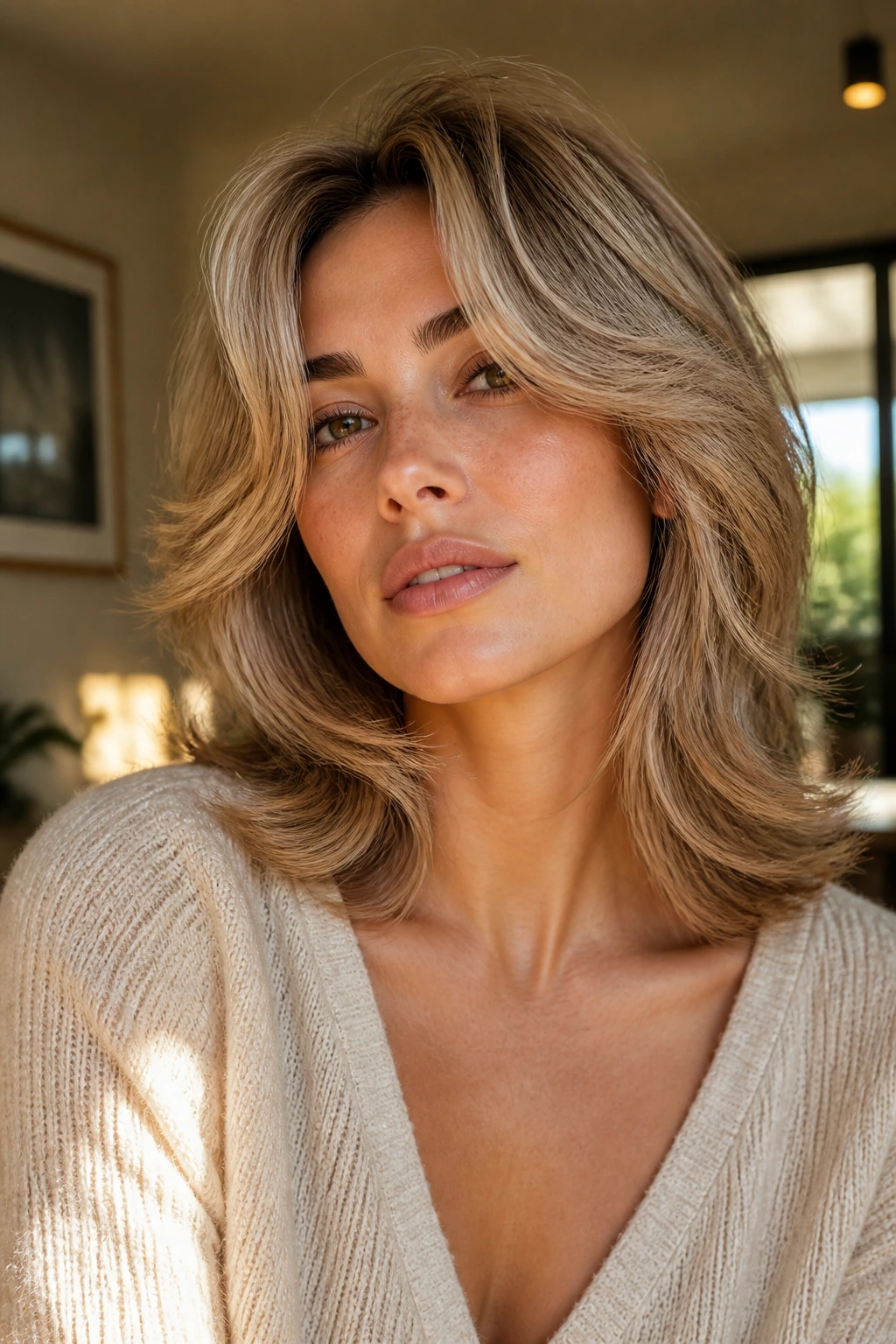
This is the cleanest-looking shag on the list. If you like movement but hate the choppy, punky edge some shags can have, a feathered version is the better lane. The layers are cut to flip away from the face and feather through the ends, so the hair feels lifted without looking shredded.
The styling is part of the appeal. A medium round brush, a light mousse, and a quick pass with a blow-dryer can bring out the shape in a way that feels polished but not stiff. You get that soft, lifted bend near the cheek and jaw, then a little swing at the ends.
I like this version on hair that falls flat at the crown but still has decent density through the lengths. It gives the illusion of more movement without demanding a ton of product. If you have to be out the door fast, this is one of the easier shags to live with.
The catch? It can look too tidy if the layers are cut too evenly. Ask for some variation in the lengths so the feathering doesn’t turn into a helmet.
3. Razor-Cut Shag for Extra Air
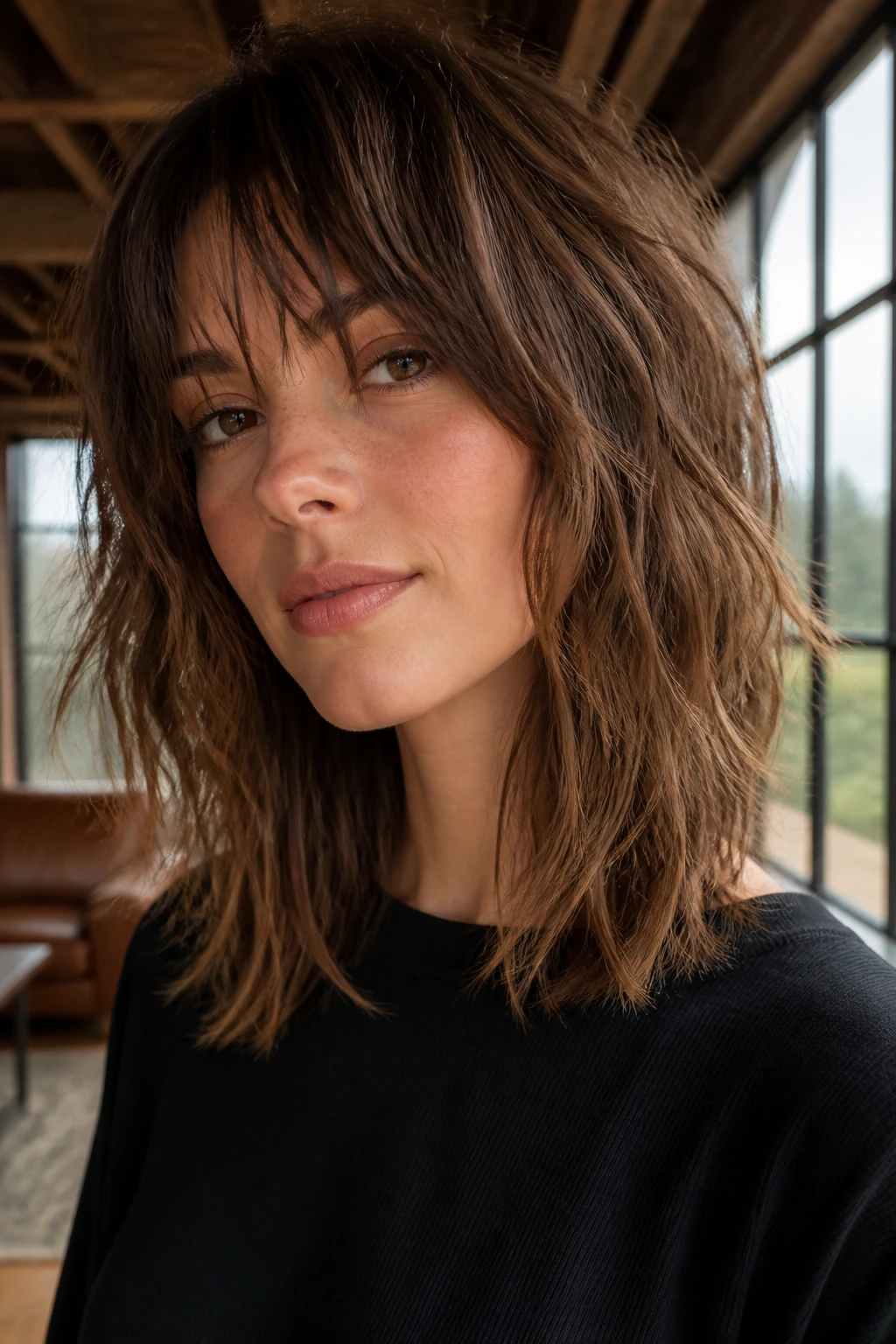
Why does a razor-cut shag feel lighter than a scissor cut? Because the blade takes off weight in a softer, more broken-up way, which helps the layers move instead of sitting in a hard line. That can be a very good thing on medium-length hair.
The finish is a little more undone. Ends look softer, the interior layers break up bulk, and the whole shape gets that lived-in texture people usually want from a shag anyway. It works best when the hair has some natural wave or a bit of grit.
How to Use It
- Keep the razor work mostly around the mid-lengths and ends.
- Avoid too much slicing if your hair is fragile, bleached, or prone to frizz.
- Pair it with a light cream or spray, not a heavy oil.
- Let the front sections fall around the cheekbone rather than cutting them too short.
A razor can be a disaster in the wrong hands. It can also be perfect. If your hair frays easily, I’d ask for scissors with point-cutting instead. That gives you texture without the ragged look.
4. Curly Medium Shag
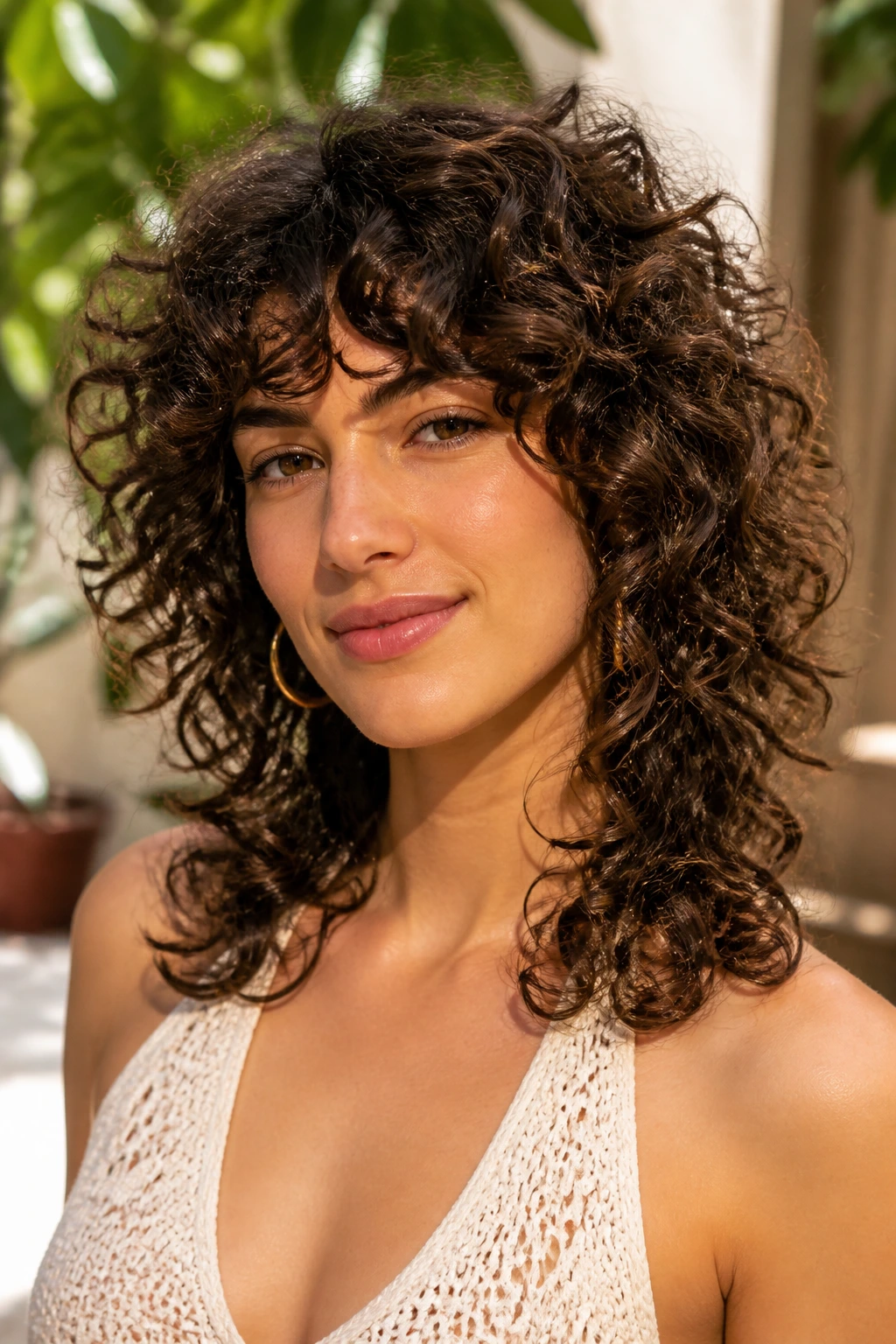
Picture curls that usually puff out at the bottom and lose shape by noon. A good medium shag fixes that by letting the curls stack in a cleaner way. The layers remove weight from the right places, so the curl pattern can spring instead of collapsing.
This cut works best when it’s shaped with the curls in mind, not dragged straight and cut like a normal layered style. Dry cutting is often the move here, because curls shrink, bend, and bunch in ways that wet hair hides. A stylist who knows curls will leave more length than you think.
- Keep the shortest layers around the upper cheek or lip line.
- Leave enough length in the back so the curls don’t puff upward.
- Skip aggressive thinning shears if your curls already frizz.
- Use a diffuser on low heat and low speed.
The nicest part is how forgiving it is. A curly shag can look great on day one, day two, and sometimes day three if you refresh it with water and a little curl cream. That’s not a small thing.
5. Wavy Balayage Shag
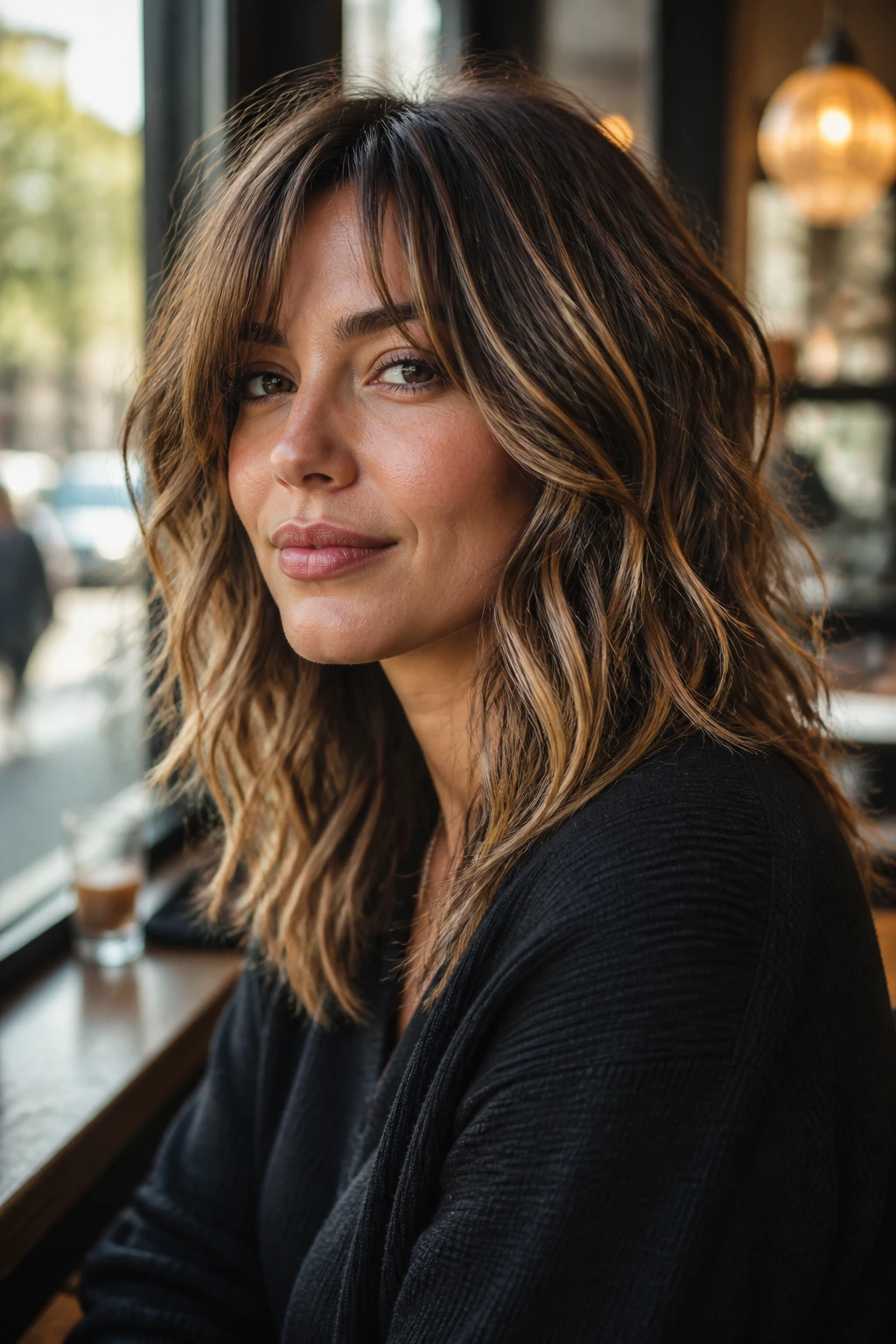
Wavy hair and a medium shag are old friends. Add balayage, and the cut gets another layer of depth because the lighter pieces show off the movement in the layers instead of hiding it. The color does not need to be loud. A few ribbons through the mid-lengths are enough.
The reason this version works so well is simple: waves already create uneven texture, and shag layers help that texture look deliberate. Balayage makes the separation between pieces easier to see. The result is a cut that looks like it has more motion than it does on the hanger.
I’d keep the shortest face-frame pieces just below the cheekbone here, then let the lower layers stay loose and broken. If the layers are too short, the wave can pop outward in a way that feels bulky. If they’re too long, the whole thing goes heavy fast.
A 1-inch curling iron, wrapped in alternating directions, can help the ends stay piece-y instead of forming one giant wave. Finish with a dry texture spray at the mid-lengths, not the roots.
6. Bottleneck Bangs and a Medium Shag
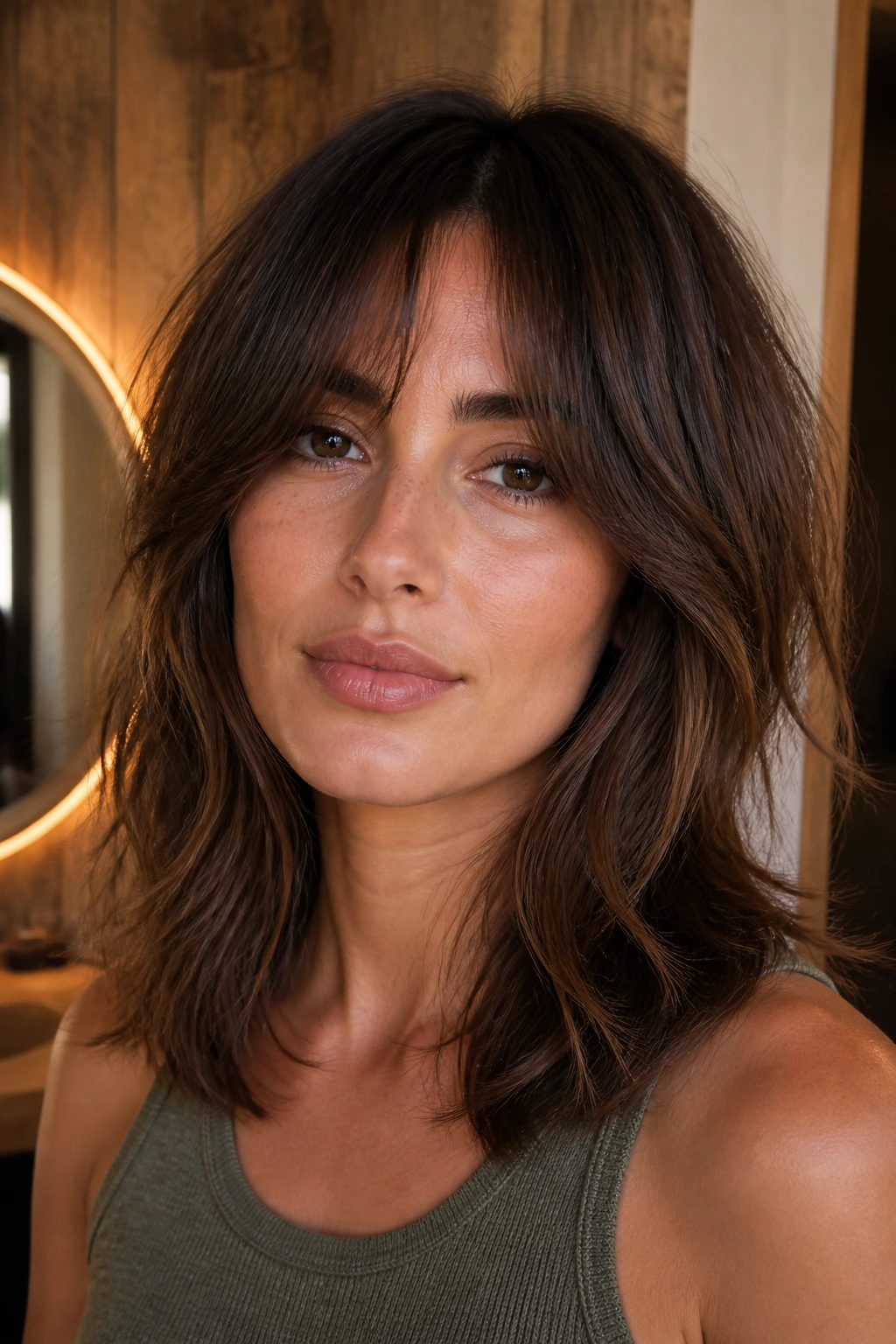
Bottleneck bangs give a shag a more refined edge than blunt fringe does. They start narrow in the center, then widen around the brow and cheek area, which means the front of the haircut feels soft but still has shape. It’s a neat little trick.
Unlike blunt bangs, bottleneck fringe doesn’t sit there as a hard block. It opens the face up a bit and blends better into layered lengths, which makes it a strong choice if you want a medium shag but don’t want to commit to a heavy bang line. The grow-out is kinder, too.
This style suits people who want fringe without constant maintenance. The bangs can be pushed apart, tucked a little, or worn center-parted on lazy days. That flexibility matters more than people admit.
If you like a strong salon shape but don’t want the haircut to box you in, this is probably the one. Ask for the shortest center section to stay soft and narrow, with the side pieces starting somewhere around the brow tail and cheekbone.
7. Wolf-Shag with Shoulder-Grazing Length

The wolf-shag is the more rebellious cousin in the family. It keeps the shag’s layered movement but borrows the looser back shape and stronger top texture of a wolf cut. On medium hair, that means the cut can look edgy without going extreme.
What Makes It Different
The crown tends to stay a little fuller, while the back length drops toward the shoulders. The front pieces can be shorter and messier, which gives the cut a more thrown-together feel. It’s not neat. That’s the point.
This version suits people who like hair with personality. If you wear boots, band tees, or a sharp blazer and want the hair to keep up, the wolf-shag gets that job done. It does need some styling paste or texturizing spray if you want the separation to show.
- Ask for a soft mullet silhouette, not a hard one.
- Keep the perimeter long enough to tuck behind the ear.
- Use fingers, not a brush, to break up the layers.
- Trim the back before it starts to look overgrown.
A wolf-shag can go from cool to messy in a hurry. That’s part of the charm, but it does mean you need a stylist who knows where to stop.
8. Fine-Hair Shag That Adds Lift Without Eating the Ends
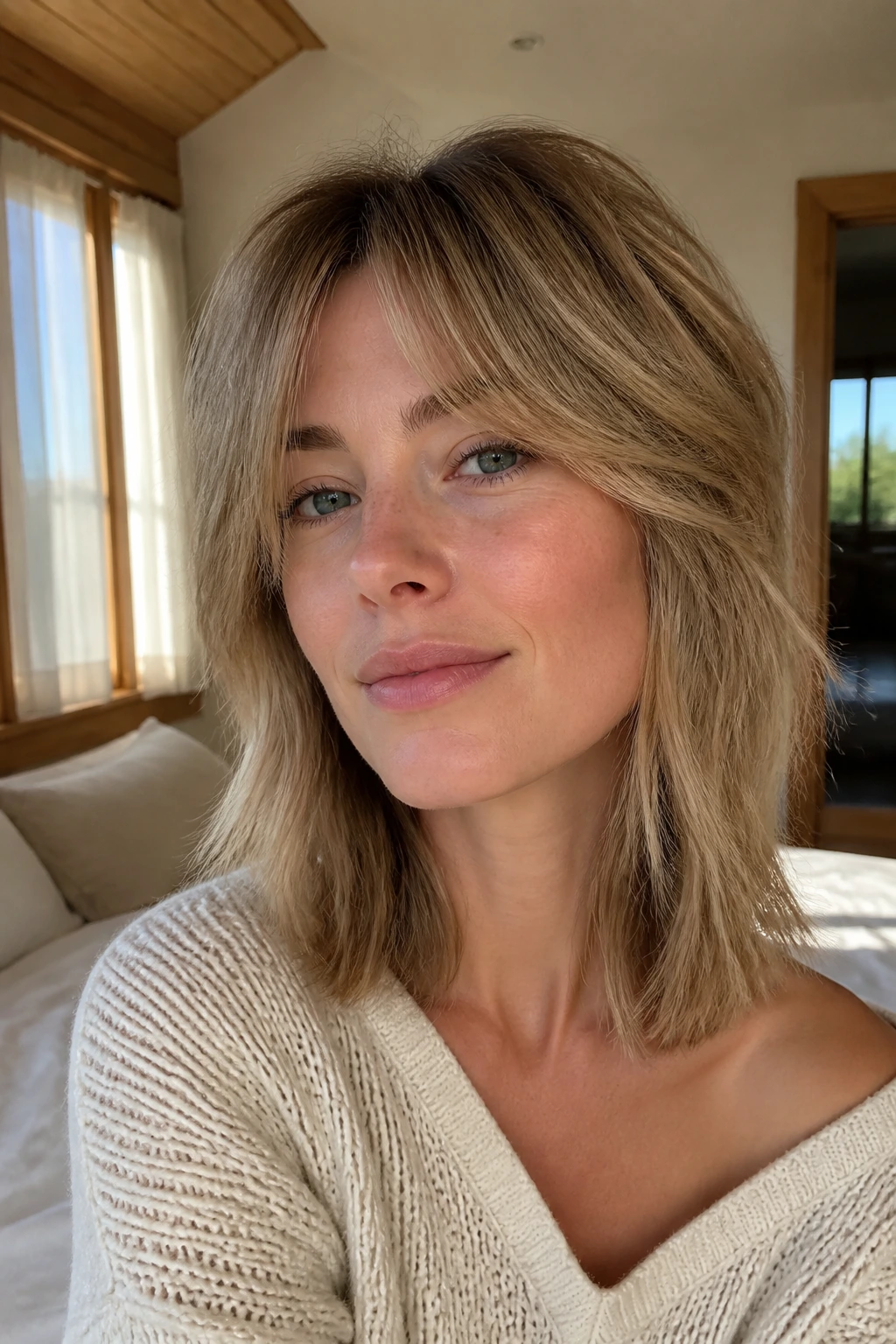
Fine hair usually looks better with a shag than people expect. The trick is not to overdo the layering. Too many short layers can leave the ends see-through, and then the haircut starts to look thinner instead of fuller.
A smarter version keeps the perimeter solid at the shoulders or just below them, then adds longer internal layers for movement. That gives the crown some lift and keeps the length looking intact. You want texture, not a wispy outline.
Dry shampoo at the roots can help, but I’d put more faith in a light root lift spray and a rough blow-dry with your head upside down. That creates a little air at the base before you even touch the brush. It matters.
The best fine-hair shag has a bit of softness around the face and enough bluntness at the bottom to keep the shape from disappearing. If a stylist starts talking about “taking out bulk” on hair that already lacks bulk, pause and ask what that really means.
9. Thick-Hair Shag with Internal Layers
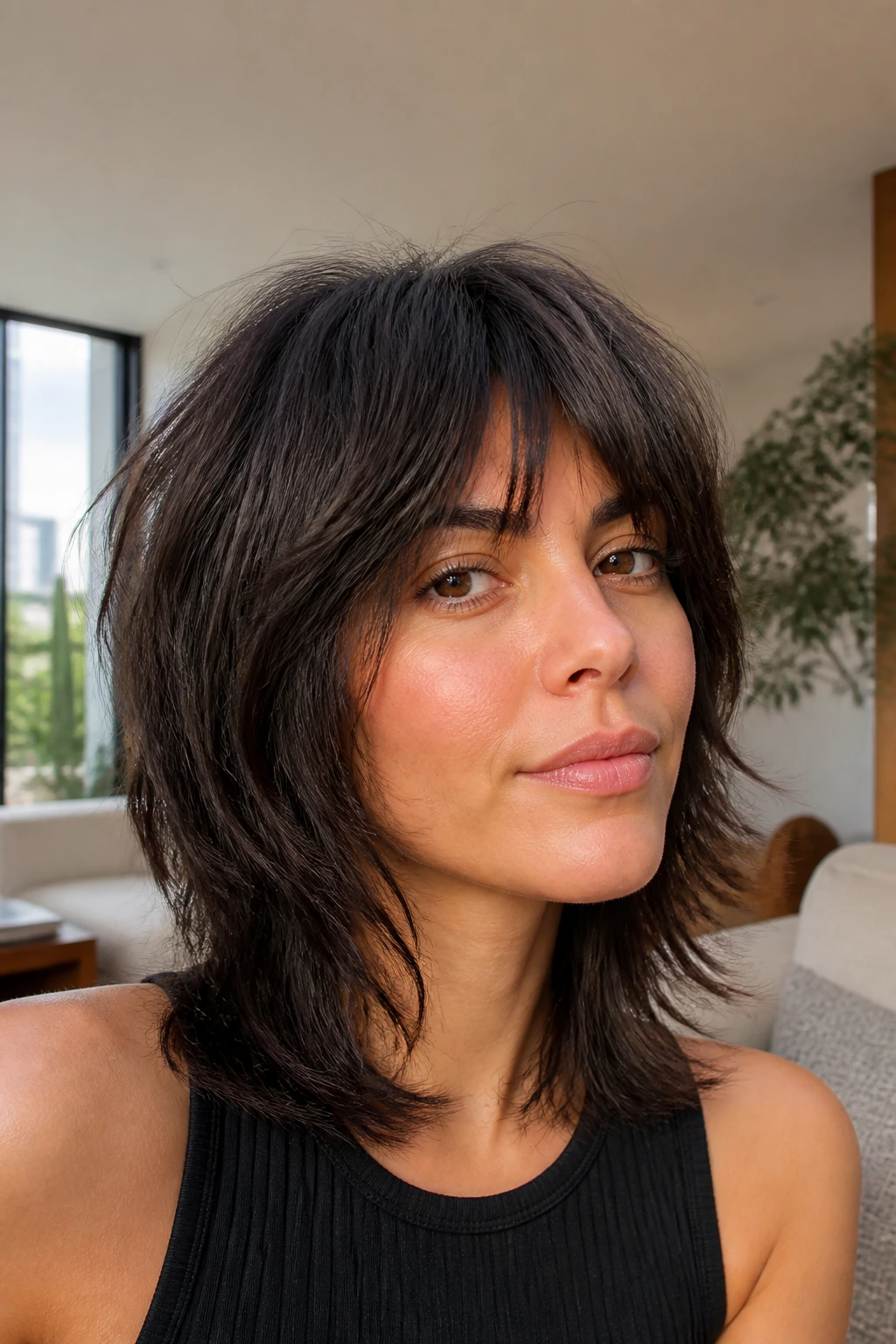
Can thick hair wear a shag without exploding into a triangle? Yes — if the cut removes weight in the right places instead of hacking at the surface. That’s the whole game.
Thick hair needs internal layering, not random thinning. The inside of the haircut should carry the movement, while the outer edge stays controlled enough to hang with a little shape. A good stylist will leave the perimeter long and use slide cutting or careful point cutting where the bulk lives.
What to Ask For
- Keep the longest layers below the chin so the ends still have weight.
- Remove density from the mid-section, not the outer shell.
- Avoid heavy texturizing near the crown if your hair puffs there.
- Style with a smoothing cream first, then add texture where you want it.
This cut can look gorgeous air-dried when the layers are placed well. It can also turn into a wide, fuzzy cloud if the top is thinned too hard. I would rather see a little heaviness than a shag that lost its shape by the third week.
10. Choppy Shag with Piece-Y Ends
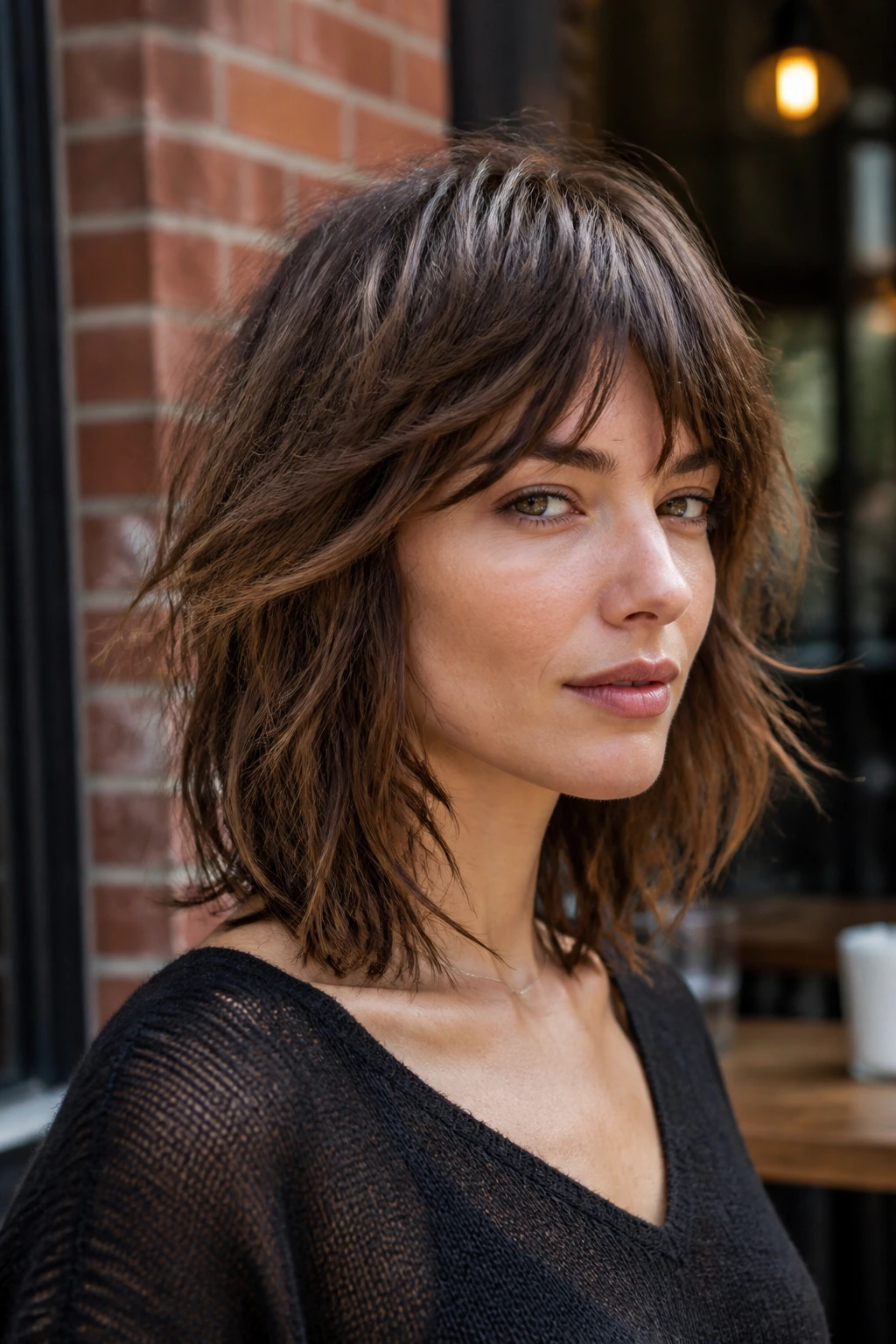
If you want a haircut that still looks good after a rushed morning, this is the one. Choppy ends give medium-length hair a bit of bite, and the uneven pieces keep the shape from falling flat the second the humidity shows up.
The key here is controlled irregularity. You want enough contrast in the layer lengths to create movement, but not so much that the haircut feels jagged or unfinished. The best version has visible texture around the face and a soft, broken hemline at the bottom.
I think this cut works especially well on hair that has a tiny bit of wave. Straight hair can wear it too, though you may need to bend the ends with a flat iron so the pieces read properly. Otherwise, the shape can look too smooth and lose its edge.
A little matte cream through the mid-lengths helps define the chunks. Use less than you think. Too much product and the separation turns greasy fast, which kills the whole effect.
11. Collarbone Shag with Soft Movement

Collarbone length is one of those sweet spots that hairstylists return to for a reason. It gives the shag enough room to move, but it still sits close enough to the face to feel fresh and modern. You can tuck it, clip it, twist it, or leave it loose.
The collarbone version tends to look cleaner than a shorter shag because the ends have some weight. That makes it a nice middle ground for women who want layers but don’t want a cut that feels too edgy or too short around the neck. It’s a useful haircut on busy days.
I especially like this shape on straight or slightly wavy hair because the movement stays visible without asking for constant styling. A quick pass with a blow-dryer and a round brush around the front pieces is often enough. If the ends bend out a little, even better.
There’s a quiet practicality here. The cut can grow out for a while before it loses its shape, which matters if you’re not in the chair every six weeks. Some haircuts are needy. This one isn’t.
12. Soft Mullet Shag for a Modern Edge
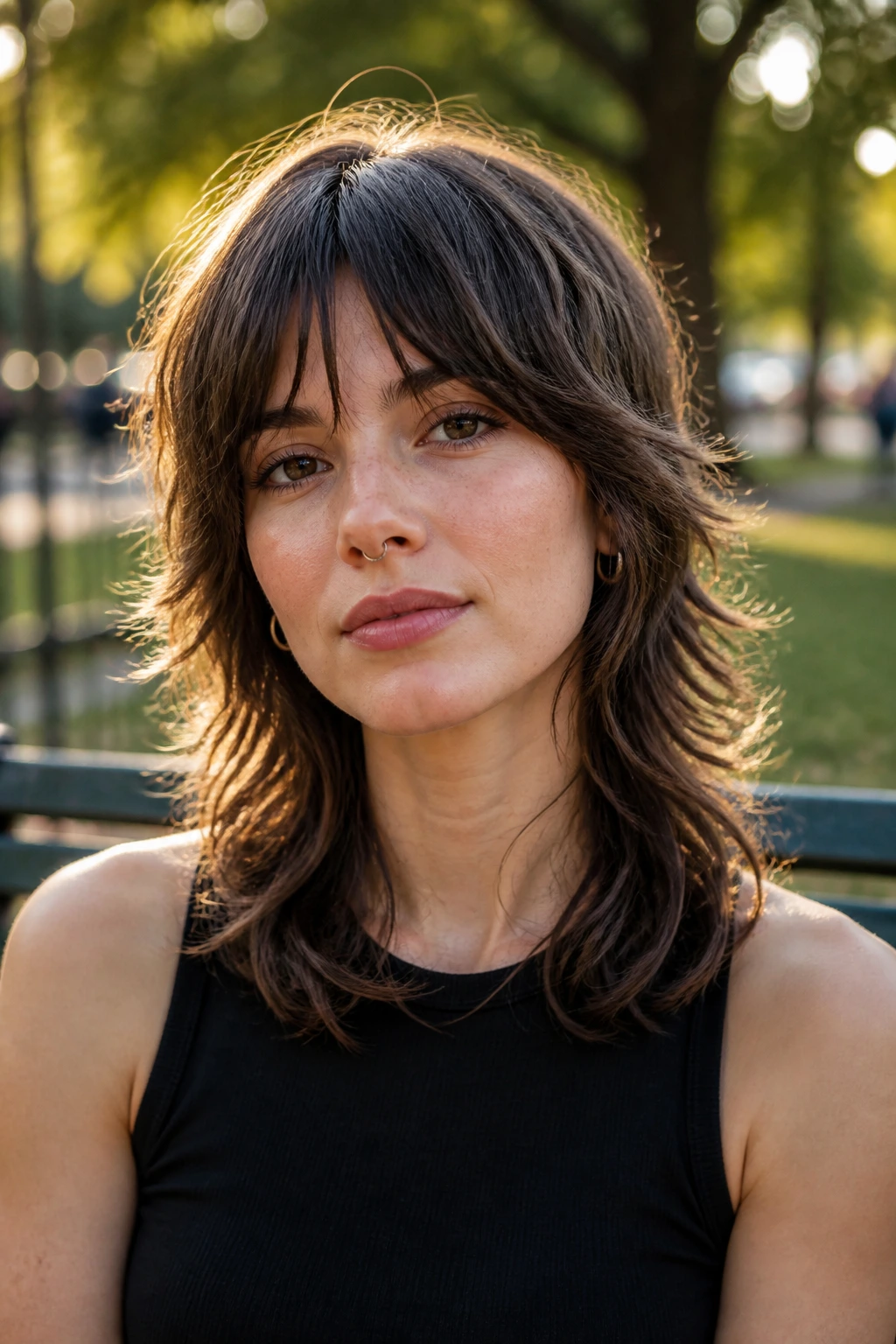
A soft mullet shag is for people who want shape at the back but do not want the haircut to shout. Compared with a classic mullet, the difference is subtle: the front stays longer, the back stays airy, and the transition between the two is much smoother.
That softer transition makes it easier to wear in everyday life. You still get the lift at the crown and the extra length in back, but the line doesn’t feel harsh. It’s a better fit if you like a little attitude and still need the hair to sit nicely under a coat collar or in a clip.
This cut looks best when the longest back pieces land just past the shoulders, with the front layers kept around the cheekbone or lip. That balance keeps the silhouette from getting too dramatic. It also gives you room to style it messy or smooth.
If you love the idea of a wolf cut but want something a little calmer, this is the version I’d point you toward first. It has enough character without turning into a costume.
13. Face-Framing Shag with Long Front Layers
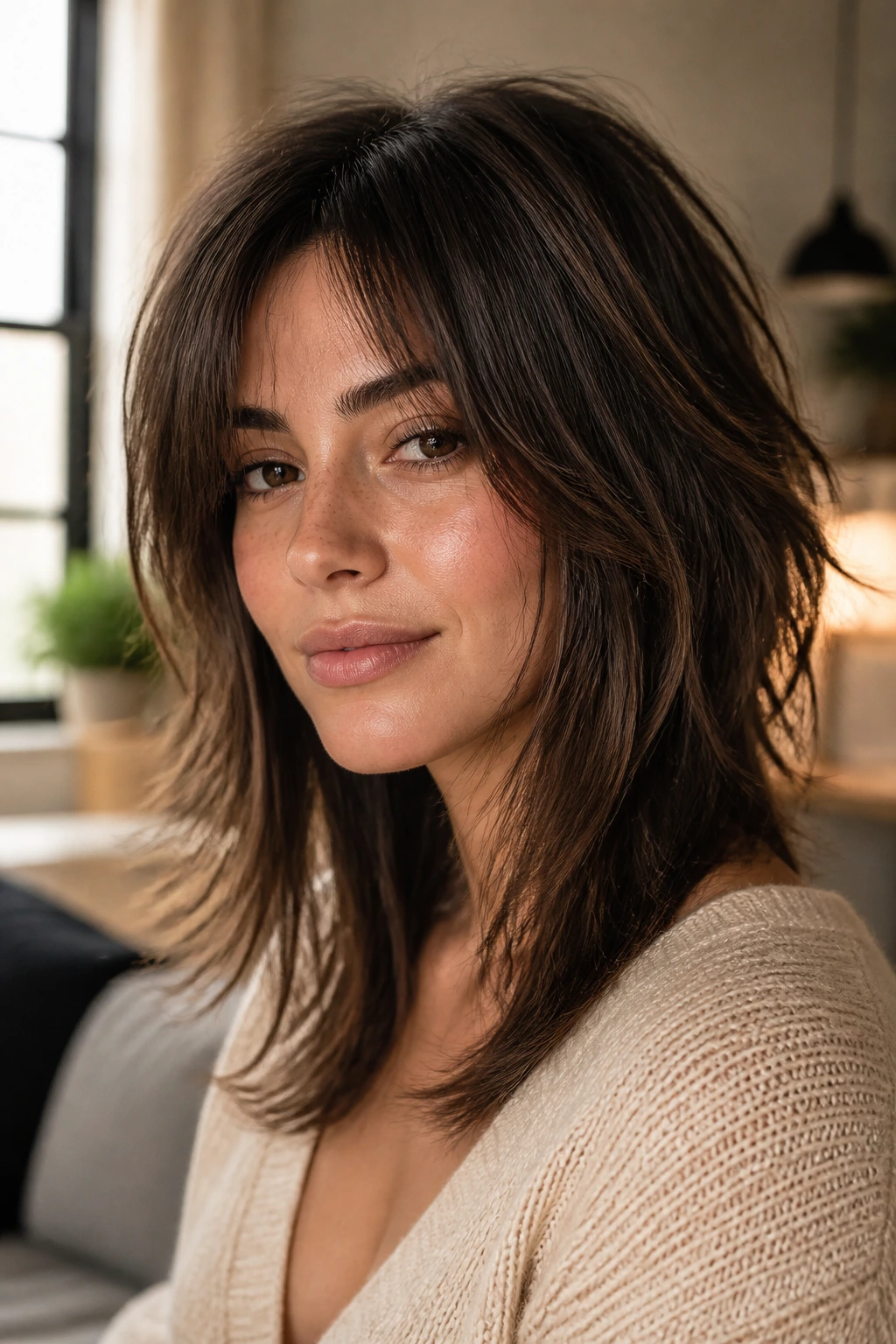
Long face-framing layers can make a medium shag look softer without making it vague. The front pieces do a lot of work here. They narrow or widen the face visually, guide the eye downward, and keep the whole shape from feeling blunt.
Where the Shortest Layer Should Land
The shortest front layer usually looks best around the cheekbone, jawline, or just below the lip line, depending on face shape and texture. If the piece starts too high, the haircut can feel dated fast. If it starts too low, the shag loses its point.
I like this version for women who want movement around the face more than all-over choppiness. The rest of the cut can stay fairly soft, which makes it easier to wear with glasses, clips, or a tucked-behind-the-ear style. It’s a subtle move, but a smart one.
- Keep the front pieces longer if your face is already short or round.
- Let the back stay one inch longer than you think.
- Use a blow-dry brush only on the front sections.
- Ask for a soft blend, not a hard stair-step layer.
Best tip: bring a photo that shows the front and the back. One angle is never enough with this haircut.
14. Air-Dry Shag Built for Low Effort
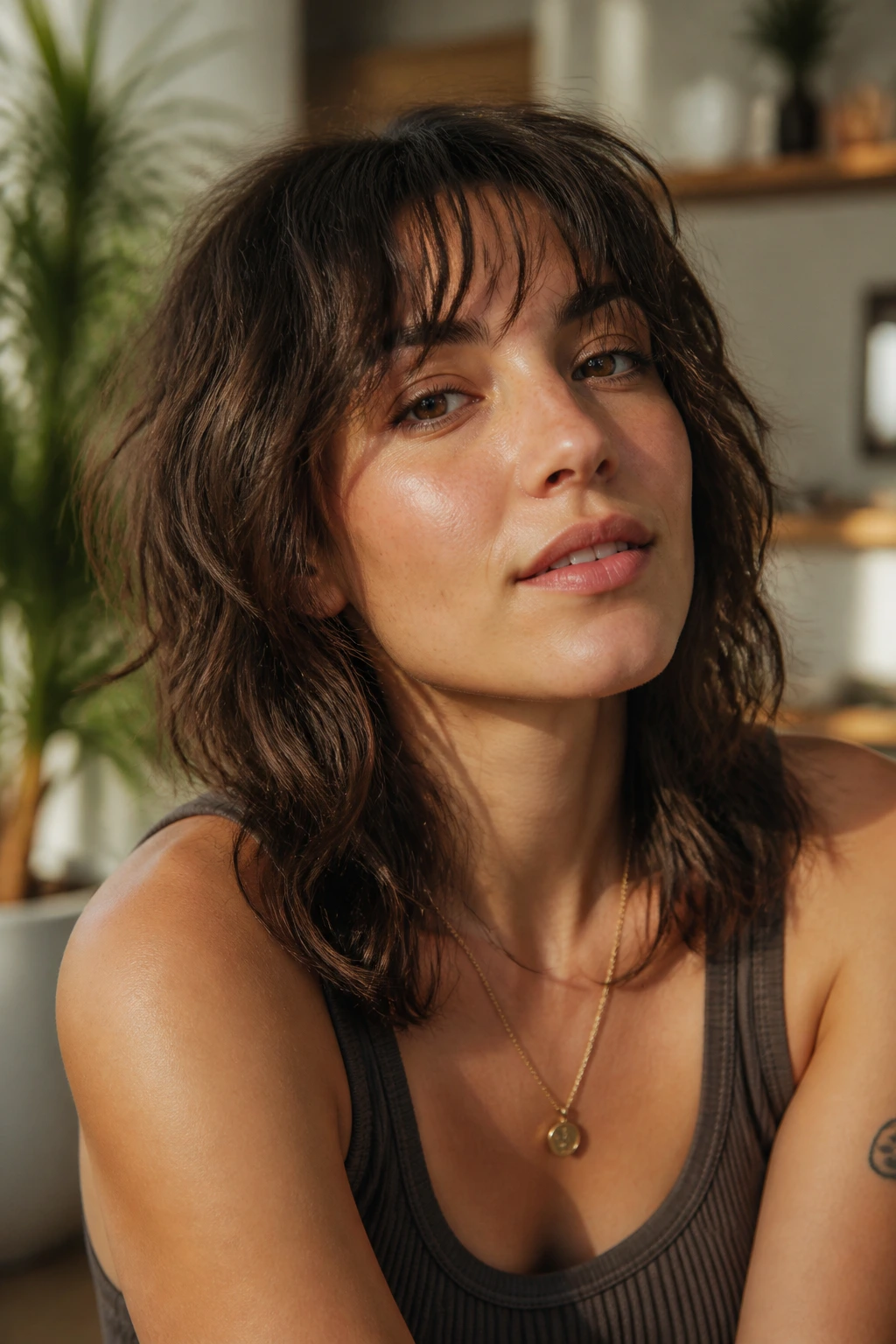
If you hate hot tools, build the shag around that truth. The best air-dry version has layers that fall into place on their own, not layers that only look good after twenty minutes with a brush and iron.
The shape should be loose enough to dry without puffing out, but structured enough that the haircut still reads as a shag. That usually means keeping the perimeter controlled and letting the movement live in the interior. A leave-in conditioner, a little mousse, and a microfiber towel can do most of the work.
Scrunching helps, but only if you stop before the hair gets frizzy. I’d apply product to damp hair, twist a few front pieces away from the face, and then leave it alone. Touching it every five minutes is how air-dry styles lose their shape.
This is one of the best medium shag haircuts for women who want texture without a morning project. It’s honest hair. Not fussy. Not overprocessed. Just shaped well enough to do its own job.
15. Micro-Bang Shag with a Sharp Top Line
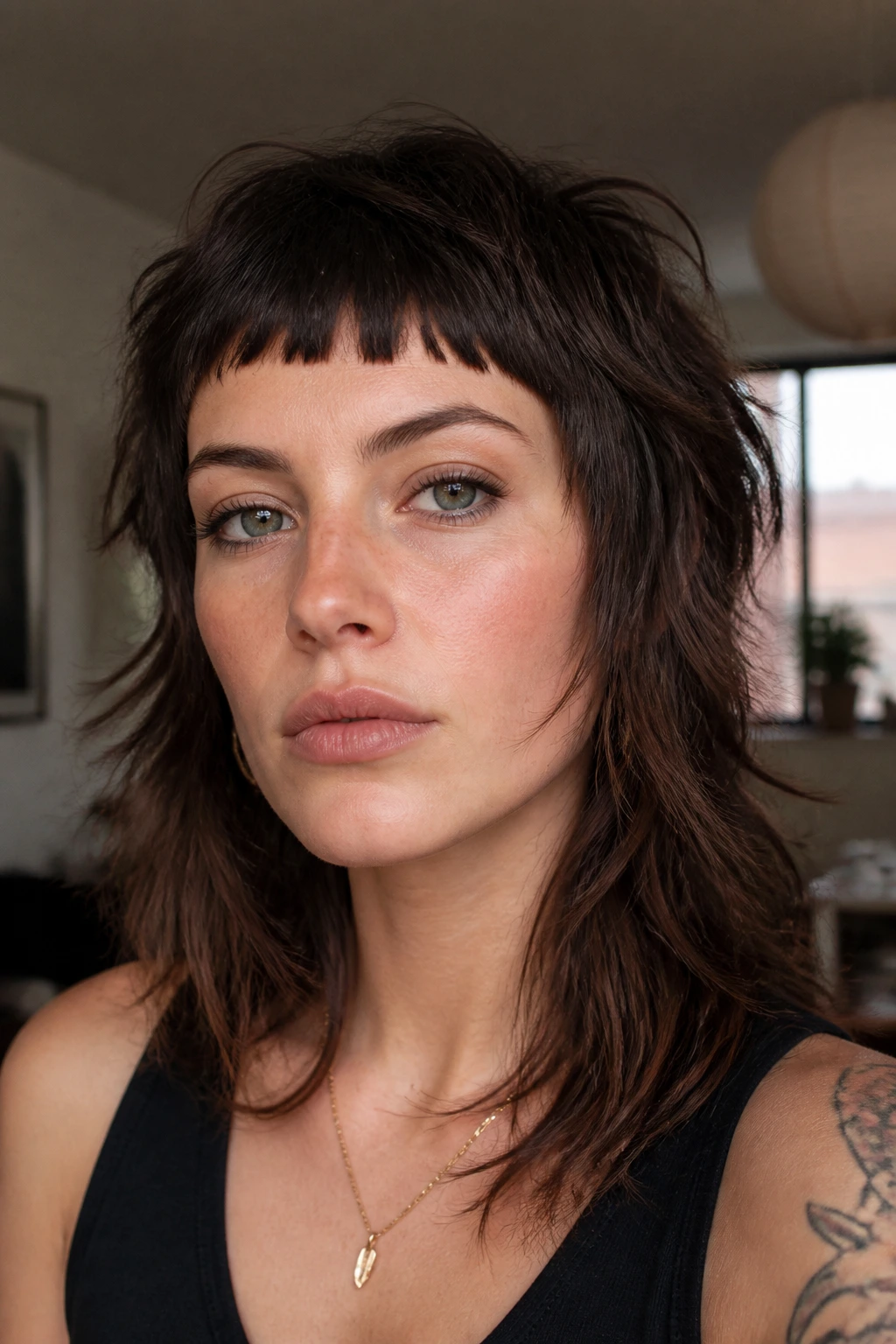
Why do micro bangs change a shag so much? Because they put a hard little punctuation mark at the top of the face, and that contrast makes the layers below feel even more relaxed. The haircut stops being soft-only and starts having a point of view.
Micro bangs work best when the rest of the cut is kept medium and layered, not shaggy from root to tip. You want the fringe to be the sharpest part, then let the sides and ends loosen out. That contrast is what makes it interesting.
How to Wear It
A micro-bang shag usually suits people who don’t mind regular trims, because even a quarter-inch of growth changes the look. It also pairs better with strong brows and a little confidence. This is not the most forgiving fringe, which is part of its appeal.
A few things matter here:
- Keep the bangs textured, not blunt like a strip.
- Leave enough weight in the sides so the cut doesn’t feel too severe.
- Style the fringe separately with a tiny round brush or fingertips.
- Use a light wax on the ends if you want separation.
If you like your hair to look a little artsy, this cut can be a gem. If you want easy softness, skip it.
16. Rounded Shag for Straight Hair
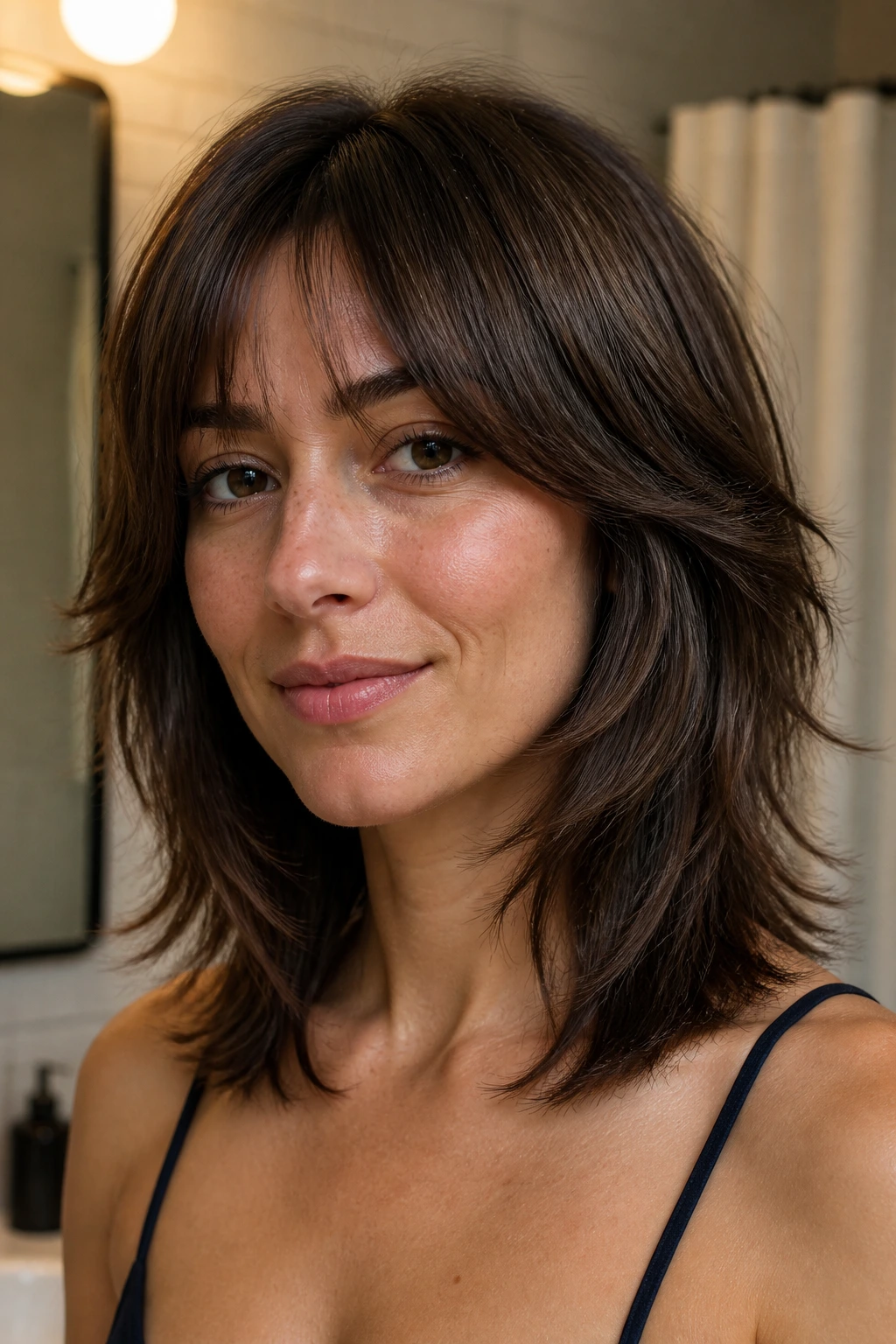
Straight hair can make a shag look flat if the layers are cut too hard or too high. A rounded shag solves that by building a softer silhouette through the mid-lengths and ends, so the shape bends inward instead of hanging in a straight sheet.
The roundness matters. It keeps the haircut from turning into a stack of disconnected ends. You still get movement, but the outline feels smoother and more balanced. On straight hair, that often looks better than an aggressively choppy finish.
This cut usually benefits from a blow-dryer and round brush, but only at the last few inches. Focus on a slight bend at the ends and a little lift at the crown. If you overwork it, the shape can start looking puffy in a strange way.
- Ask for longer layers that curve around the jaw.
- Avoid severe razoring if your hair is poker-straight.
- Add a small bend with a flat iron if the ends stick out.
- Keep the front soft so the face doesn’t get boxed in.
A rounded shag is the quiet one here, but it’s often the easiest to wear day after day.
17. Dimensional Brunette Shag with Deep Color Contrast
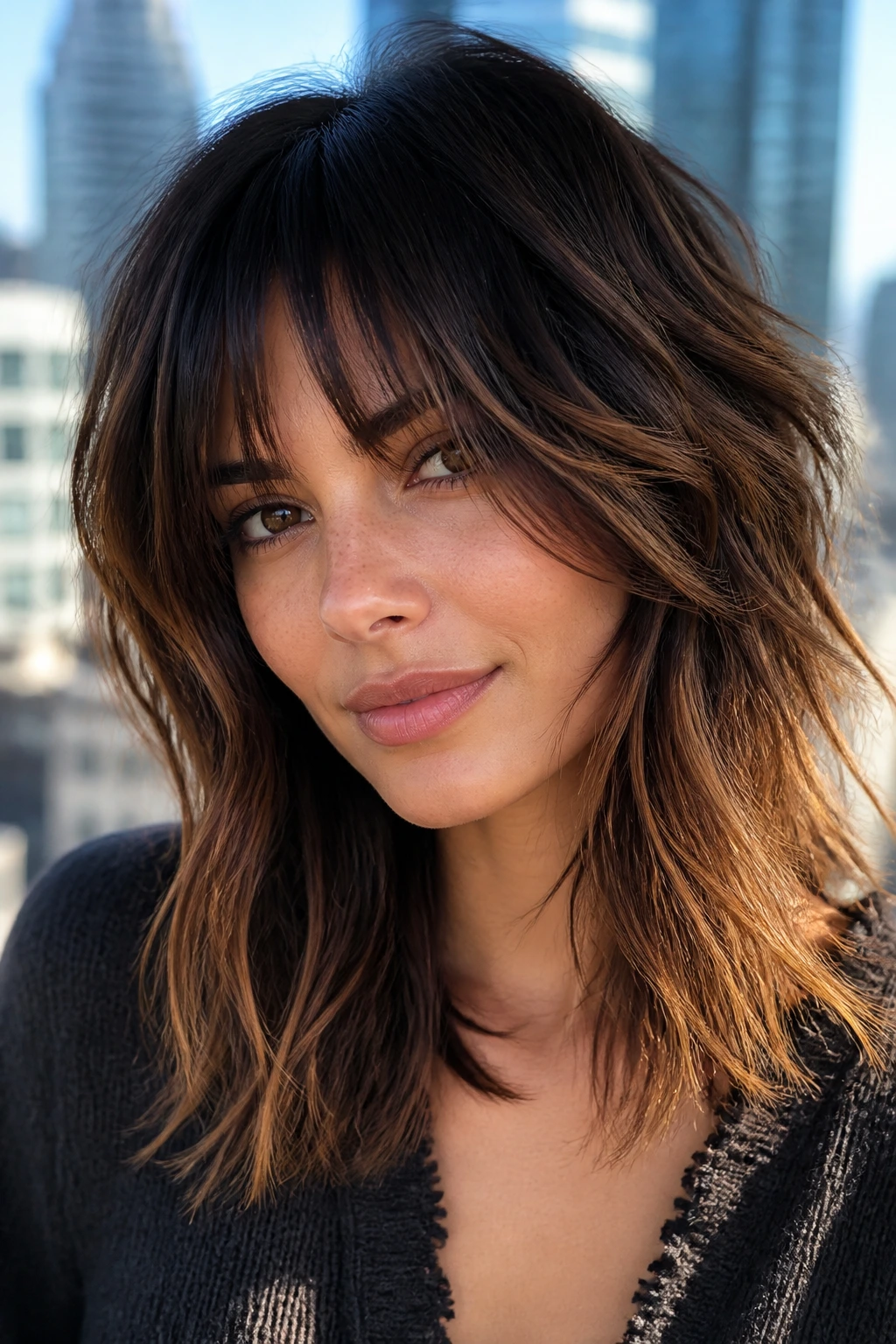
Dimensional brunette hair and a shag get along because the layers give color more places to show up. Dark roots, chestnut mids, caramel ribbons, and softer ends can all sit inside the same haircut without looking busy. That’s the advantage.
The cut itself does not need to be wild. In fact, a medium shag with medium-soft layers is often better here because the color already brings plenty of interest. If the haircut is too chopped up, the dimension can turn noisy. If it’s too blunt, the color loses the room it needs.
I like this look with a deep side part or a center part, depending on how much face framing you want. A few brighter pieces around the front can open the shape, while the darker interior keeps it grounded. It’s a useful mix.
This is also one of the easier ways to make a shag feel expensive without making it fussy. That may sound like a silly word, but it fits. The cut moves, the color shifts, and the hair has enough depth to hold its own in daylight.
18. Retro-Inspired Shag with Flipped Ends
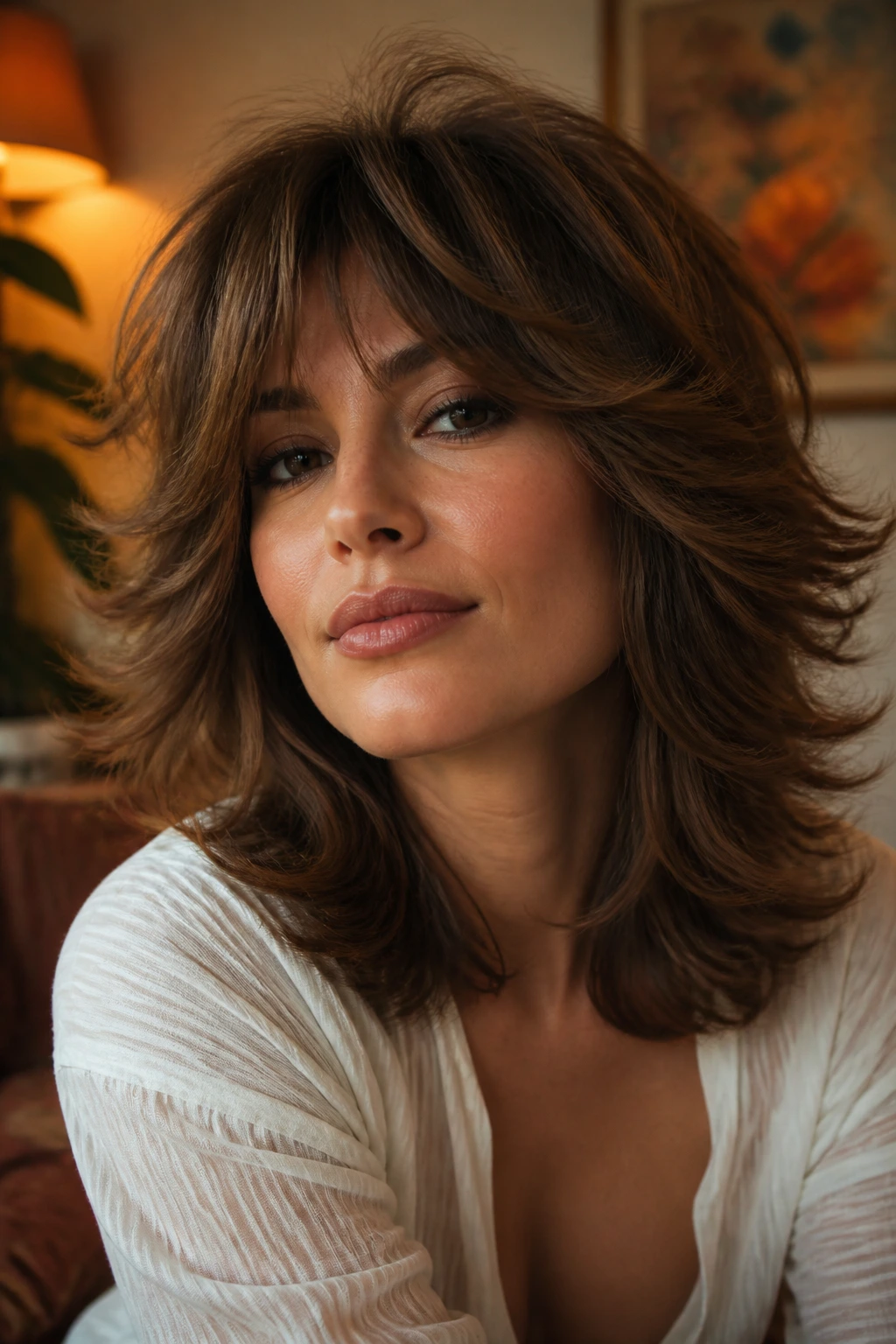
A retro shag leans into the older, feathered shapes from the 70s but keeps the length more wearable. The ends often flip out or away from the face, the fringe is fuller, and the top has more lift than a modern soft shag. It has a bit of drama.
Unlike a wolf cut, which usually feels rougher and more broken up, this version wants polish in the styling. A round brush, a medium hold spray, and a careful bend at the ends give it that classic shape. It is not meant to look accidental.
This cut suits women who like their hair to have a strong outline. The shape is visible from across a room. That can be fun, and it can also be a little much if you live in a baseball cap.
If you want a medium length shag haircut that feels like it has a point of view without going fully edgy, this is a sharp choice. It’s one of those styles that looks best when you commit to it instead of half-styling it.
19. Low-Maintenance Shag That Grows Out Gracefully
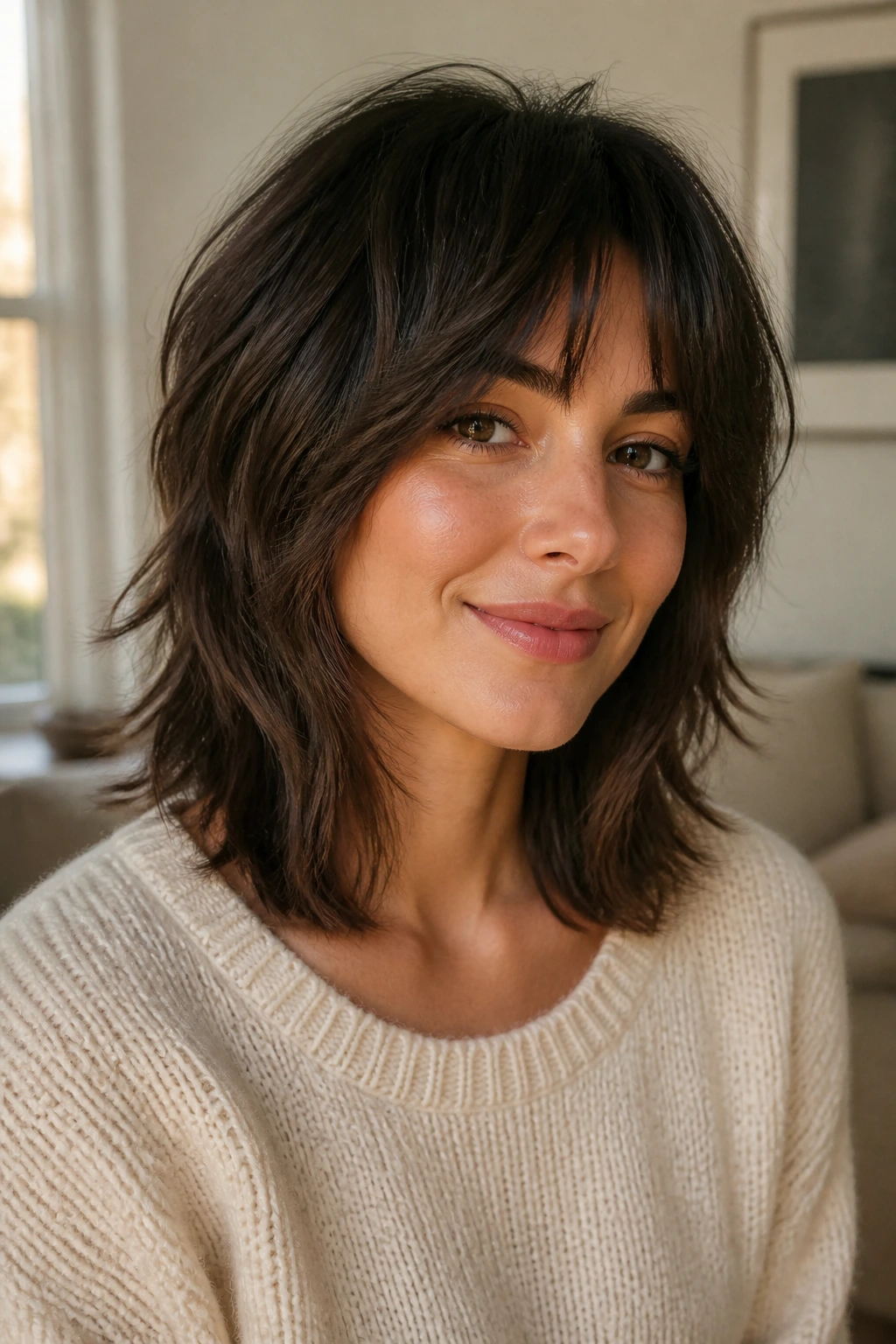
Some shags need frequent cleanups. This one doesn’t. A low-maintenance medium shag is built with softer layers and a perimeter that keeps enough weight to hold its shape as it grows. That makes it easier to live with if you don’t want the salon to become a second home.
What to Ask For
- Keep the shortest layers below the eyebrow line.
- Let the face frame blend into the lengths instead of stopping abruptly.
- Leave the ends slightly blunt so they don’t disappear.
- Ask for texture that shows even when the hair is air-dried.
This version is especially good if you like to wear your hair in a clip, a low bun, or a half-up twist. The layers still move when it’s down, but they don’t fight you when you pull the hair back. That matters more than people think.
The styling is mercifully simple. A leave-in mist, a touch of cream on the ends, and a quick scrunch is often enough. If you want a shag that behaves on school runs, office days, or travel days, this is the one to watch.
My advice: choose this if you want shape more than edge.
20. Polished Everyday Shag with Soft Edges

A polished everyday shag is the version I’d point most women toward first if they want the haircut to feel wearable, not dramatic. It keeps the movement, the face-framing, and the little bit of messiness that makes a shag interesting, but it stops short of looking too chopped or too trendy.
The best everyday version usually lives at the collarbone or just above it, with layers that start around the cheekbone and taper down gently. That gives you swing without losing the clean outline. It also means the cut still looks decent when you tuck one side behind the ear or wear a barrette.
This is the haircut for someone who wants texture that behaves. A little bend at the front, a soft break at the ends, and enough structure to grow out without regret. That’s the sweet spot. Not the loudest shag. Not the softest either. Just the one that keeps showing up looking good after sleep, wind, and a rushed morning.
If you’re choosing between two medium shag photos, pick the one with better shape around the face and the calmer ends. That tiny difference usually decides whether the haircut feels easy or annoying. And annoying hair, frankly, gets old fast.
