



Long thick hair looks rich when the cut respects the weight. The same hair can look blunt, puffy, and oddly motionless when all the length sits in one heavy block.
The right layered hairstyles for long thick hair change that balance fast. They keep the length, but they stop the ends from dragging the whole shape down like a blanket.
A good stylist will think about where the bulk lives, not just how much hair comes off. That usually means face-framing pieces, internal weight removal, and a perimeter that still looks full when you wear it straight, wavy, or pulled into a ponytail. Heavy-handed thinning shears are a gamble. Sometimes they help. Sometimes they leave the ends fuzzy and the middle oddly flat.
Choose the shape with your real life in mind. If you air-dry, style in waves, wear your hair up half the week, or want your blowout to hold past lunch, the cut matters a lot more than the photo you saved on your phone.
1. Soft Face-Framing Layers for Long Thick Hair
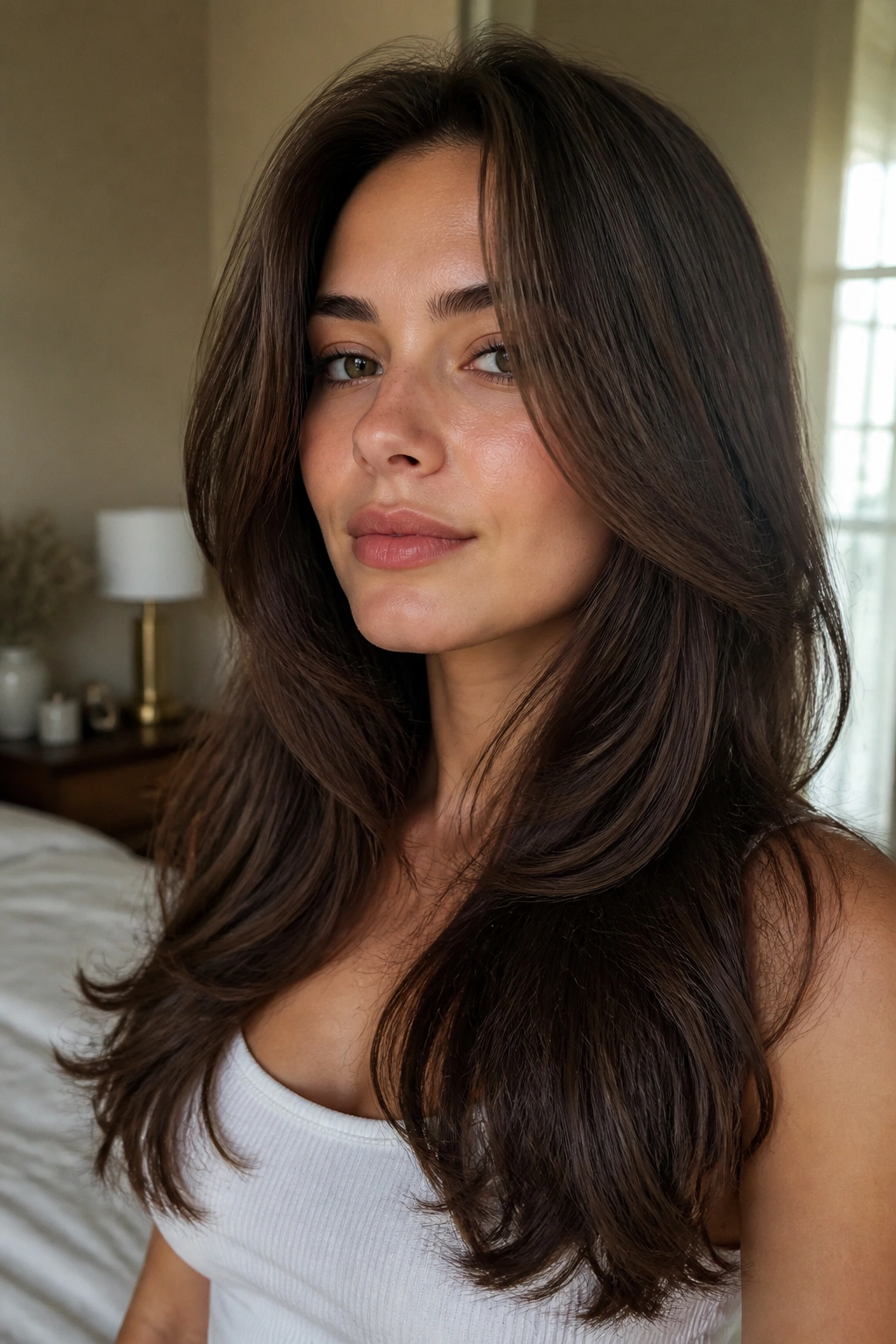
Soft face-framing layers are the easiest place to start if your hair feels too heavy around the front. The cut usually begins around the chin or just below it, then melts into the rest of the length so the front doesn’t look chopped up.
Why It Flatters Heavy Hair
The trick is balance. Thick hair often needs movement near the face before it needs drastic length removal at the bottom, and these layers do that without stealing the fullness from the back.
A center part makes the effect feel even cleaner. A side part makes it softer. Either way, the front pieces bend around the cheeks instead of hanging like straight curtains.
- Ask for the shortest piece to land around the jaw or cheekbone, not the middle of the cheek.
- Keep the ends blunt enough to still look dense.
- Style with a 1.25-inch round brush or a loose bend from a curling iron.
- Skip super-short front pieces if your hair grows fast; they’ll start living in your mouth.
Best tip: keep the first face frame a little longer than you think you need. Thick hair shrinks upward when it dries.
2. Curtain Layers with a Center Part
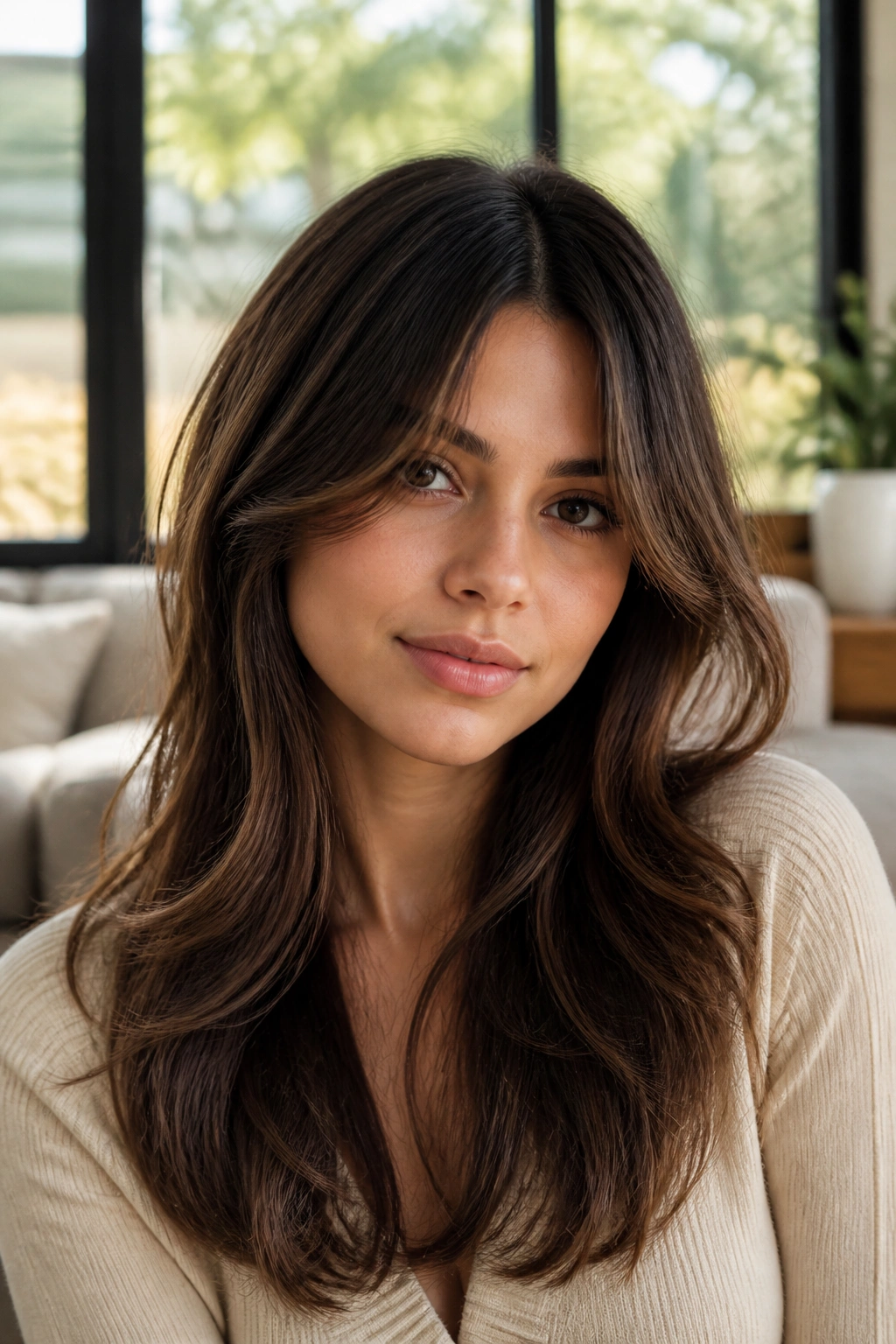
Curtain layers are the haircut equivalent of opening a window. They split softly at the center and fall away from the face, which is a nice fix when thick hair starts to feel like it’s wearing you.
The beauty of this shape is that it doesn’t fight your natural width. It works with it. The front stays airy, the sides stay polished, and the length keeps its heft, which matters if you hate that stringy look some heavily layered cuts can create.
I like this shape on hair that wants movement but not drama. You can blow it out with a large round brush, or let it dry with a few big bends and a bit of serum on the ends. Either way, the line around the face stays soft, which is the whole point.
A center part can make the layers feel more balanced, especially on thick hair that tends to puff at one temple more than the other. If the crown feels too flat, ask for a little extra lift at the top of the front section. Tiny change. Big difference.
3. Butterfly Layers for Big Volume Up Top

Why do butterfly layers keep showing up on long thick hair? Because they give you two things at once: shorter, bouncy layers near the top and long length that still reads as long. That sounds simple. It isn’t, and that’s why people mess it up.
The cut works best when the top layers start high enough to move when you style your hair, but not so high that the ends look abandoned. On thick hair, that matters. You want the crown to have air, not a helmet effect, and you want the lower half to stay full enough to braid or wear sleek.
How to Style It
Blow-dry the top layers first with a round brush and clip them up while you work on the rest. That extra bit of setting time helps the shorter pieces stay lifted instead of collapsing into the longer lengths.
If you wear waves, butterfly layers are even better. The upper pieces kick out, the lower pieces fall in long ribbons, and the whole shape looks more expensive than it has any right to.
A one-length cut can look heavy on thick hair. Butterfly layers fix that fast.
4. U-Shaped Layers That Keep the Ends Full

Picture the back of the hair falling in a soft U instead of a blunt line. That’s the heart of this cut, and on thick hair it keeps the perimeter looking full while easing up some of the weight in the middle.
It’s a smart shape if you love long hair and do not want the ends to go wispy. The curve gives the hair a gentle landing, which makes it easier to style in waves or a rounded blowout. Straight hair also benefits, because the U shape keeps the bottom from looking like a wide shelf.
- The center back is usually the longest point.
- Side sections taper a little higher so the shape feels softer.
- It works well with thick strands that need movement, not radical thinning.
- It grows out neatly, which is part of why stylists keep coming back to it.
The catch? If the curve is too subtle, it can look like a mild trim instead of a shape. Ask for enough rounding that you can actually see it when the hair is down. Otherwise, you’re paying for a whisper.
5. V-Cut Layers for a Sharper Silhouette
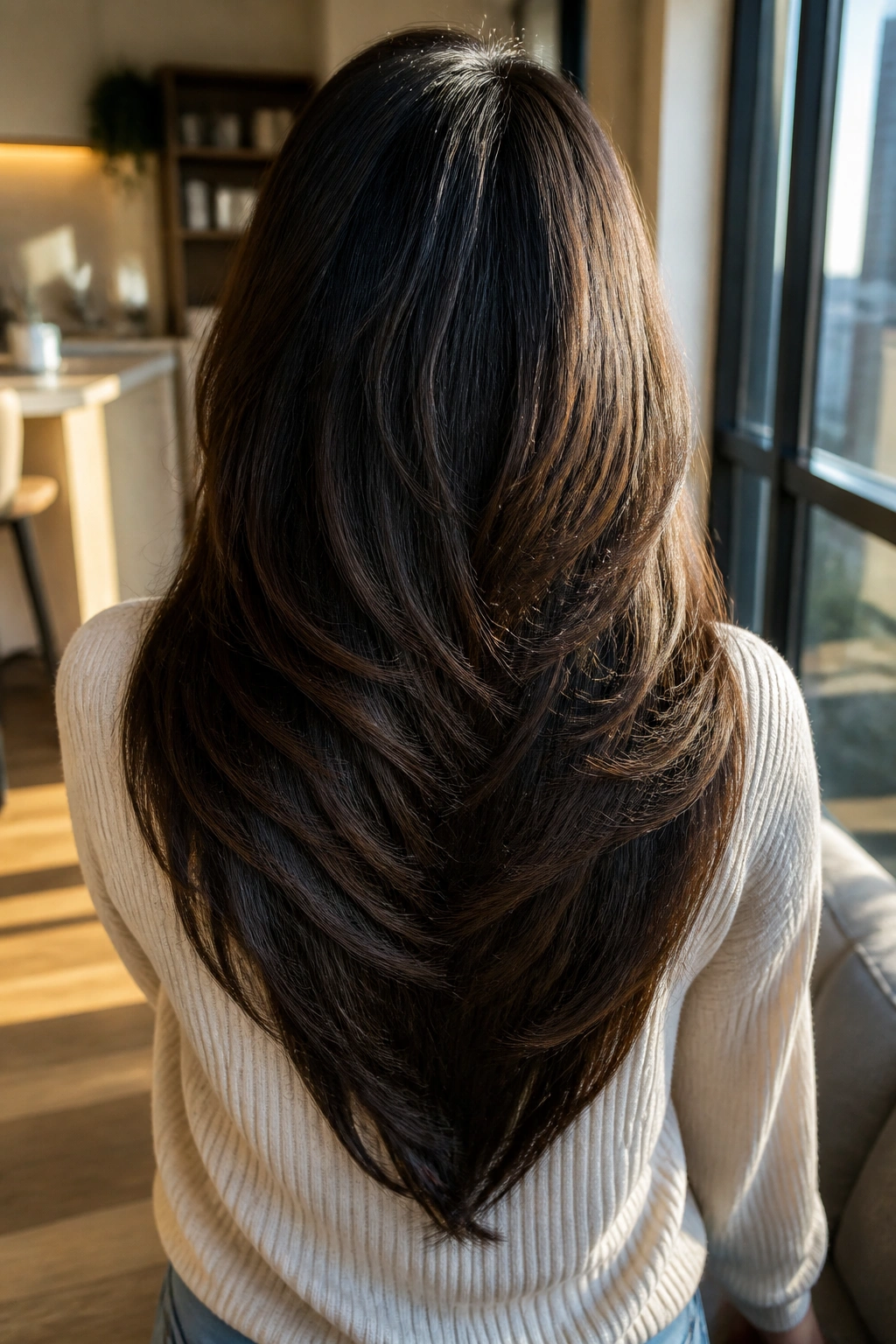
A V-cut brings edge to long thick hair. The back narrows toward the center, so the length ends in a pointed shape instead of a soft curve, and that makes the whole haircut feel more deliberate.
This is not the quietest choice on the list. Good. Thick hair can handle a little attitude. The V shape pulls the eye down the center, which is useful if your hair tends to bloom outward at the sides and steal width from your frame.
The part people miss is that the layers should support the point, not fight it. If the layers are too short or too scattered, the V starts looking ragged. If they’re controlled, the cut looks sharp in a braid, a low ponytail, and especially in loose waves where the taper shows up clearly.
It does ask a bit more of the ends. Dry, split, rough ends show faster in a V shape because the eye naturally follows the line. If your hair is rough at the bottom, trim before you ask for this cut. Trust me. The point is only as good as the fabric around it.
6. Long Shag Layers with Razored Ends

A long shag is for the person who wants movement and does not mind a little mess. It’s not polished in the glossy salon-poster way. That’s the charm.
The reason it works on thick hair is simple: the shag breaks up bulk in different zones instead of stripping weight all over the place. The crown gets lift, the mid-lengths get swing, and the ends usually feel lighter because they’ve been shaped with texture rather than left in a blunt block.
Unlike a sleek layered cut, the shag looks better when it’s a bit imperfect. Air-dried waves, diffused curls, or a quick bend from a flat iron all suit it. A razor can help create that broken edge, but it needs a steady hand. Too much razor work on coarse thick hair can leave the ends looking shredded. Nobody wants that.
Who it suits: thick hair with some natural wave, people who like a lived-in finish, and anyone tired of hair that feels too heavy to do anything with.
Who should skip it: anyone who wants the ends to look straight and clean every day. This cut has opinions.
7. Invisible Layered Hairstyles for Long Thick Hair

Invisible layers are the sneaky ones. From the outside, the hair can still look long and smooth, but underneath, there’s movement and weight removal that keeps it from behaving like a single solid sheet.
That hidden structure is a gift for thick hair. You keep the strong outline at the bottom, which matters if you like your length to look full in photos or in a braid, but you lose the drag that makes washing and drying feel endless.
What They Do Under the Surface
The stylist cuts inside the mass of the hair rather than taking obvious steps around the outside. The result is softer movement, less bulk, and a shape that doesn’t announce itself every time you turn your head.
I’d call this the cleanest answer for someone who wants change without drama. The haircut can look almost simple, and that’s exactly why it works. You notice the difference in how the hair falls, not in obvious stair-step layers.
If your hair has a lot of density but you hate obvious layering, this is the one to ask about.
8. Chunky ’90s Layers with a Blowout Finish

Chunky layers have that old-school bounce people keep trying to copy with hot brushes and giant rollers. Thick hair is one of the few hair types that can wear this shape without looking flimsy.
The sectioning is more visible than in invisible layers, and that’s the point. You get distinct movement around the face and through the lengths, which gives the hair some personality when it’s styled smooth and round. A big brush, a round blowout, and a little root lift are enough to make this haircut feel fully alive.
The maintenance is honest. If you leave it to air-dry with no shaping, the layers can look blunt in a not-great way. But with a proper dry, the cut lands beautifully: full at the crown, soft through the mid-lengths, and glossy at the ends.
A small hot roller set can make this look even better than a straight blow-dry. The hair holds the bend because thick strands tend to hold shape longer than fine ones. That’s one area where having more hair is a very good thing.
9. Long Wolf Cut with Softer Edges

Is the wolf cut too much for long thick hair? Not when it’s softened and stretched out. A long wolf cut keeps the rebellious shape at the crown and around the face, then leaves enough length to stop it from feeling too chopped.
The key is restraint. The top should have lift, the sides should feather out a bit, and the bottom should still carry weight. If every section is aggressively razored, the hair can puff in weird spots. Thick hair already has enough body. You do not need to overcook it.
This cut suits people who like texture more than shine, movement more than perfect symmetry. It also works well if your hair gets a little wild in humidity, because the shape already expects some chaos. That sounds like a joke. It’s not.
For styling, a texture cream or light mousse helps the layers separate without turning crunchy. Scrunch, diffuse, and walk away. That’s the right spirit for this one.
10. Side-Swept Layers for a Softer Frame

A deep side part changes everything. Thick hair that feels too heavy in the middle can suddenly look lifted, softer, and more sculpted just by moving the part and shaping the layers to follow it.
This style is especially nice if you want to soften a strong jaw, widen a narrow forehead, or add movement without going all the way into a shag. The layers sweep across the face instead of splitting it evenly, which gives the cut a more romantic feel. Less rigid. More flow.
The side-swept line also helps thick hair fall away from one side of the face, which can make the whole look feel lighter. That’s useful on days when your hair has decided to sit flat at the top and bulky at the bottom. It happens.
A round brush helps here, but so does a simple tuck-behind-the-ear on the heavier side. One side gets lift, the other gets direction. That asymmetry is what makes it work.
11. Long Layers with Curtain Bangs
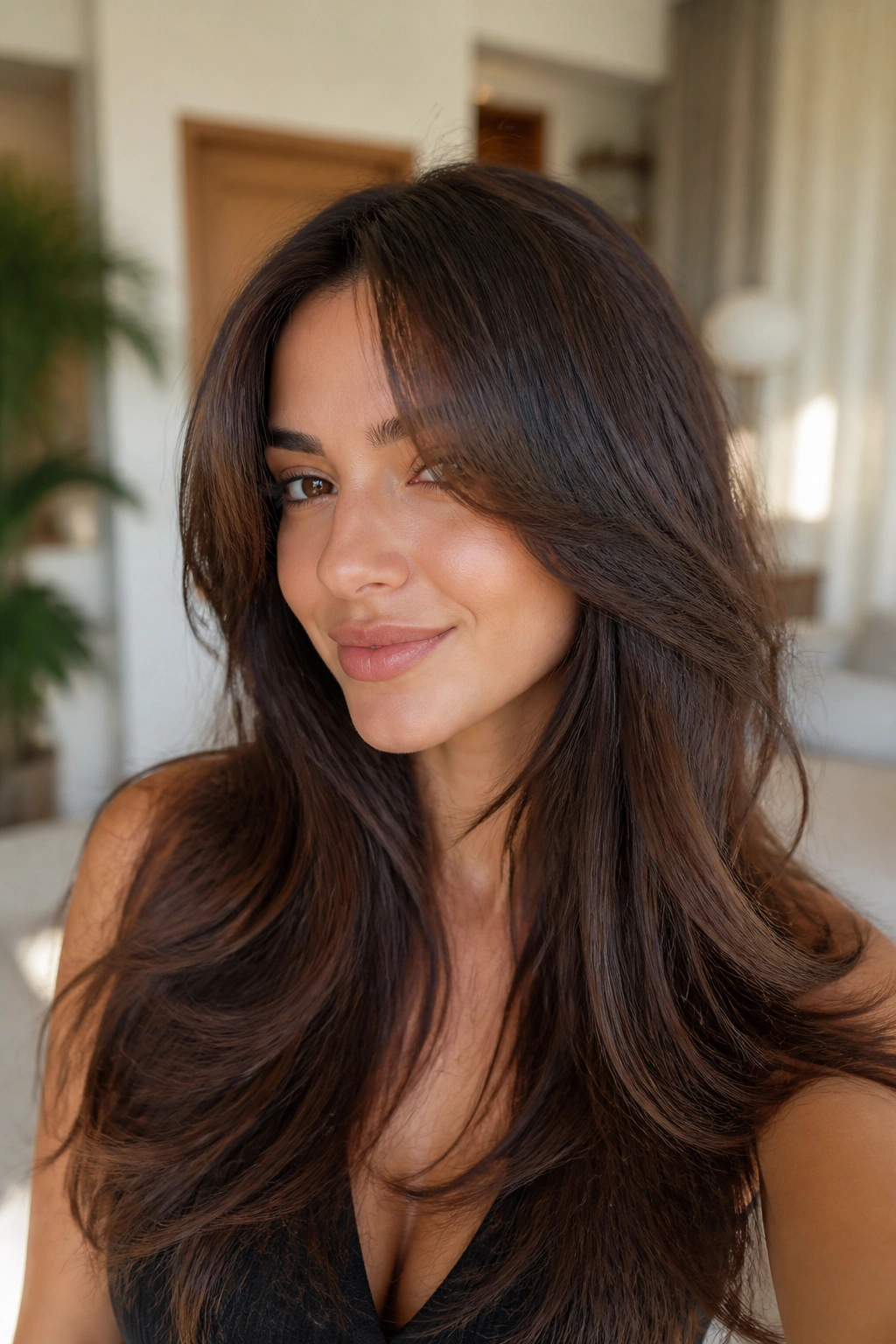
Curtain bangs and long layers are cousins, and thick hair is one of the best places for that pairing. The bangs break up the front, the layers keep the rest of the hair from sitting like a wall, and the whole cut feels balanced without losing length.
The big advantage is how seamlessly the front moves into the sides. Instead of one dramatic bang line and then a separate haircut, you get a soft transition that frames the face from the forehead down through the cheeks. It looks good with a center part, which is helpful if you like your hair symmetrical but not severe.
There is a catch, though. Curtain bangs ask for attention. They need a quick round-brush pass, a blow-dry in the right direction, and a trim before they start poking into your eyes. If you are allergic to maintenance, they may annoy you.
Still, on long thick hair, they do something most bangs cannot: they lighten the front without making the rest of the style feel chopped. That’s a nice trade.
12. Rounded Layers for Fuller-Sounding Shape

Rounded layers are built to make the hair feel plush. The silhouette curves inward a little at the sides and softly fills out the back, which gives thick hair a rounder, more polished look.
This is a strong choice if your hair is straight or only slightly wavy and tends to fall into a blunt column. A rounder shape keeps the length from looking boxy. It also makes the ends feel better when you wear the hair down because the bottom line no longer sits as one hard edge.
A round brush is your friend here. So are big Velcro rollers if you want the shape to stay. The haircut itself does a lot of the work, but the styling gives it that fuller, salon-finish feeling.
I like this cut for people who want their hair to look expensive without looking fussy. The shape is soft. The upkeep is manageable. The result is a little more elegant than a straight one-length cut, and a lot less boring.
13. C-Shape Layers That Curve Inward

Ever notice how some hair looks like it folds gently toward the collarbone instead of hanging straight down? That’s the C-shape working. It’s a flattering move on thick hair because it turns excess bulk into a softer curve.
The longest pieces usually remain around the back and sides, while the front and mid-lengths curve inward. It’s not flashy, which is why people underestimate it. Then they see it in motion and realize the hair suddenly has a shape.
How to Wear It
This cut loves a blowout with a medium round brush. Start at the roots, roll the brush under through the mid-lengths, and let the ends curve in just enough to show the shape. A straightener can do it too, but the brush gives it more life.
If your thick hair tends to flip out at the ends, this cut can calm that down. If you like your hair to swing when you move, even better. The curve makes the whole style feel softer around the face and less heavy at the bottom.
14. Internal Layers for Weight Removal
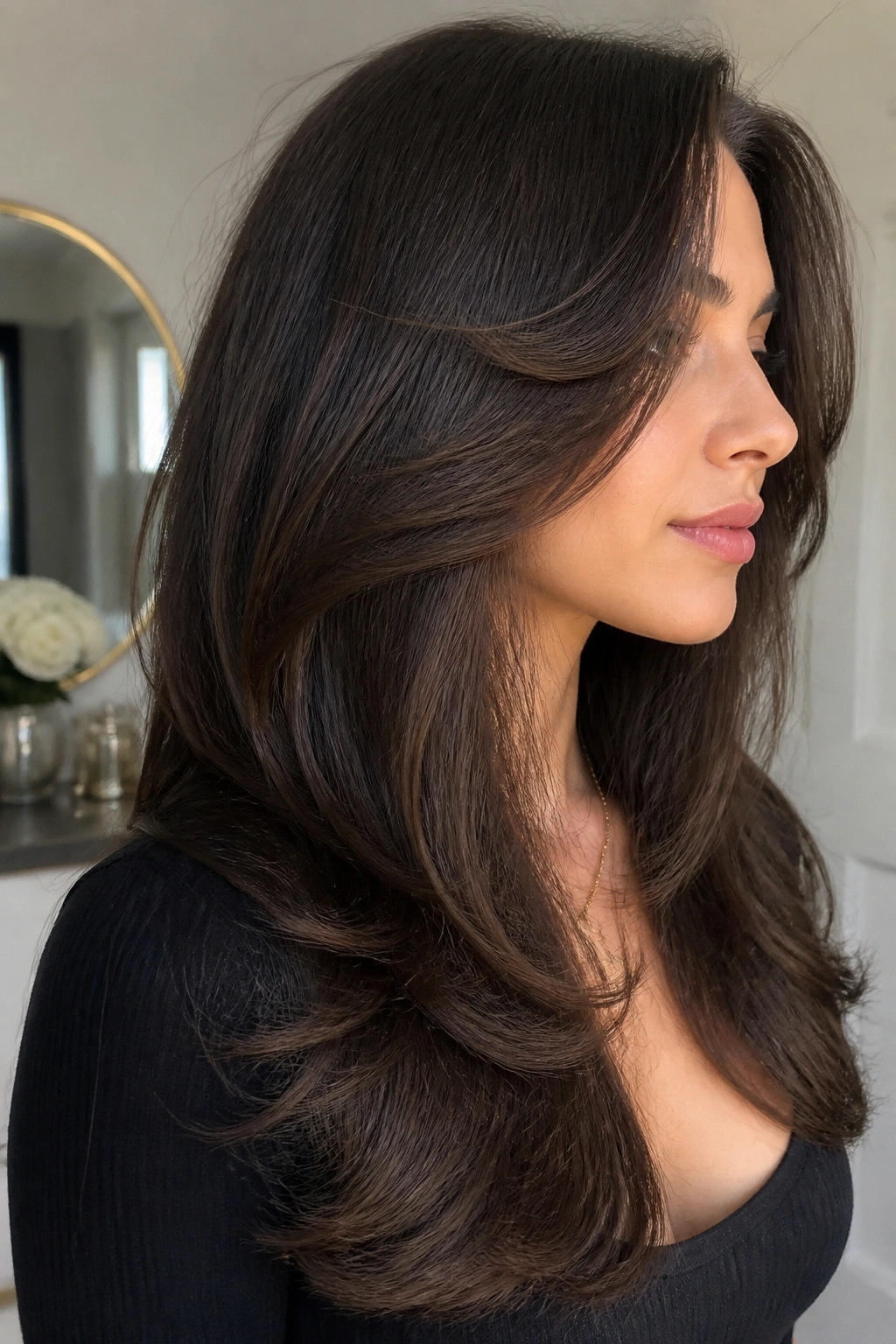
Internal layers are not the same thing as thinning. That distinction matters. Internal layers live inside the haircut, under the top surface, so the outside still looks thick while the bulk gets redistributed where it won’t weigh the whole style down.
That makes them a solid fit for long thick hair that feels hot, slow to dry, or too dense at the back of the head. You keep the perimeter strength, which is what keeps long hair from looking stringy, but you take some of the load off the middle. The result is movement without obvious steps.
- Ask for weight removal inside the mid-lengths rather than heavy thinning at the ends.
- Tell your stylist you want the outline to stay full.
- Bring up how you wear your hair most often: straight, wavy, clipped up, or in a braid.
- If your hair is coarse, mention that too. Coarse hair and over-thinning do not always get along.
This is one of those cuts that sounds dull on paper and feels fantastic in real life. You notice it when your ponytail sits better and your blow-dry takes less time.
15. Feathered Layers with Flipped Ends
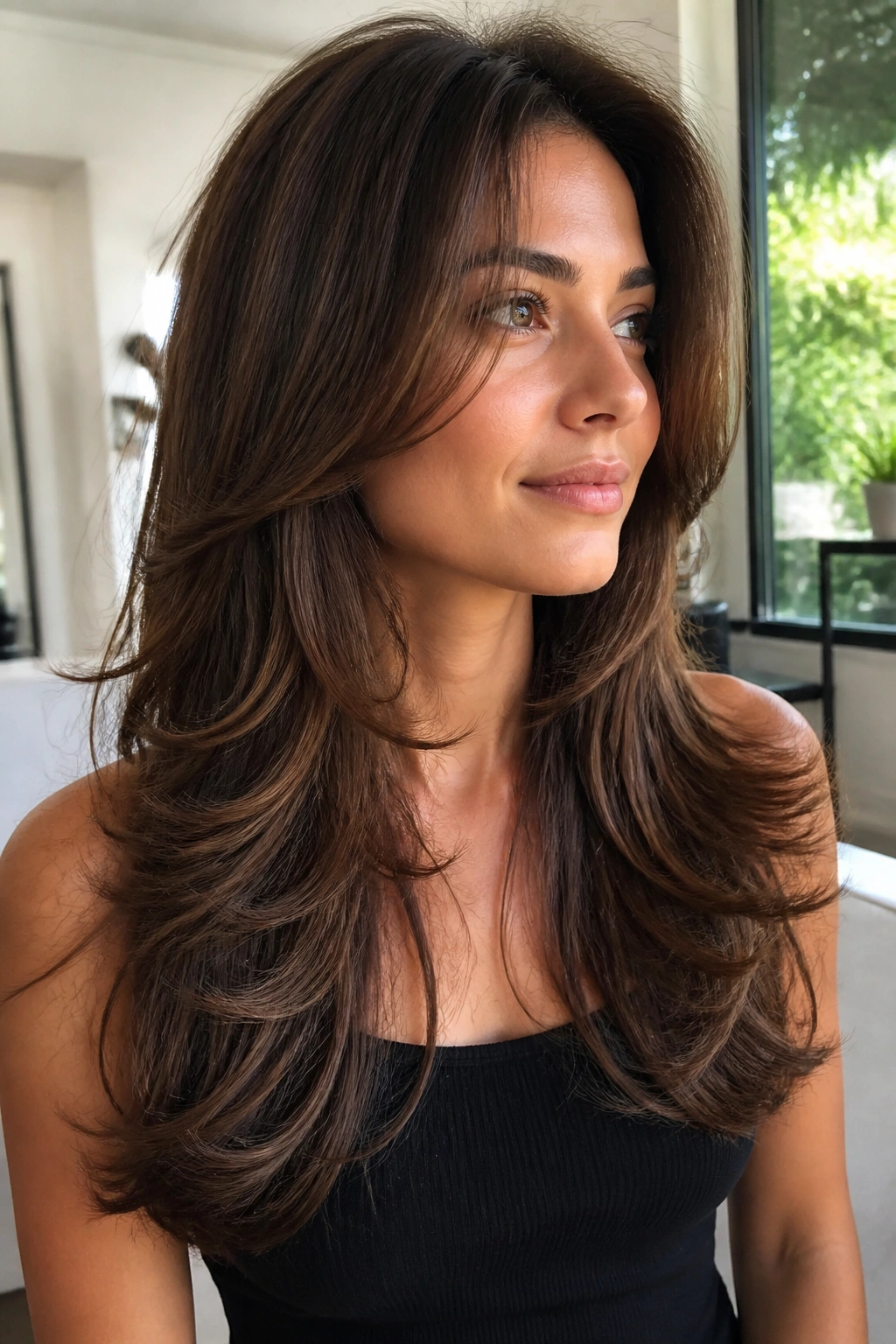
Feathered layers have a light, airy quality that thick hair can wear well if the cut is controlled. The layers are shaped so the ends soften and bend outward a little, which gives the hair movement without the rough, chopped look some razor cuts create.
Think of this as a more polished cousin of the shag. The silhouette is still lively, but it leans smoother and less undone. That’s useful if you want the hair to move when you walk, yet still look neat enough for work, dinner, or anywhere you don’t want to look like you rolled out of bed on purpose.
The flipped ends help the haircut show up, especially on hair that usually falls straight. A round brush, a large barrel curling iron, or even a quick dry with a paddle brush can bring out the shape. If your hair has a slight natural bend, even better. It will hold the feathering with less effort.
It’s one of the prettier options for long thick hair, and I mean that in the plain old-fashioned sense. Soft. Easy to read. No drama required.
16. Boho Waves with Long Layers
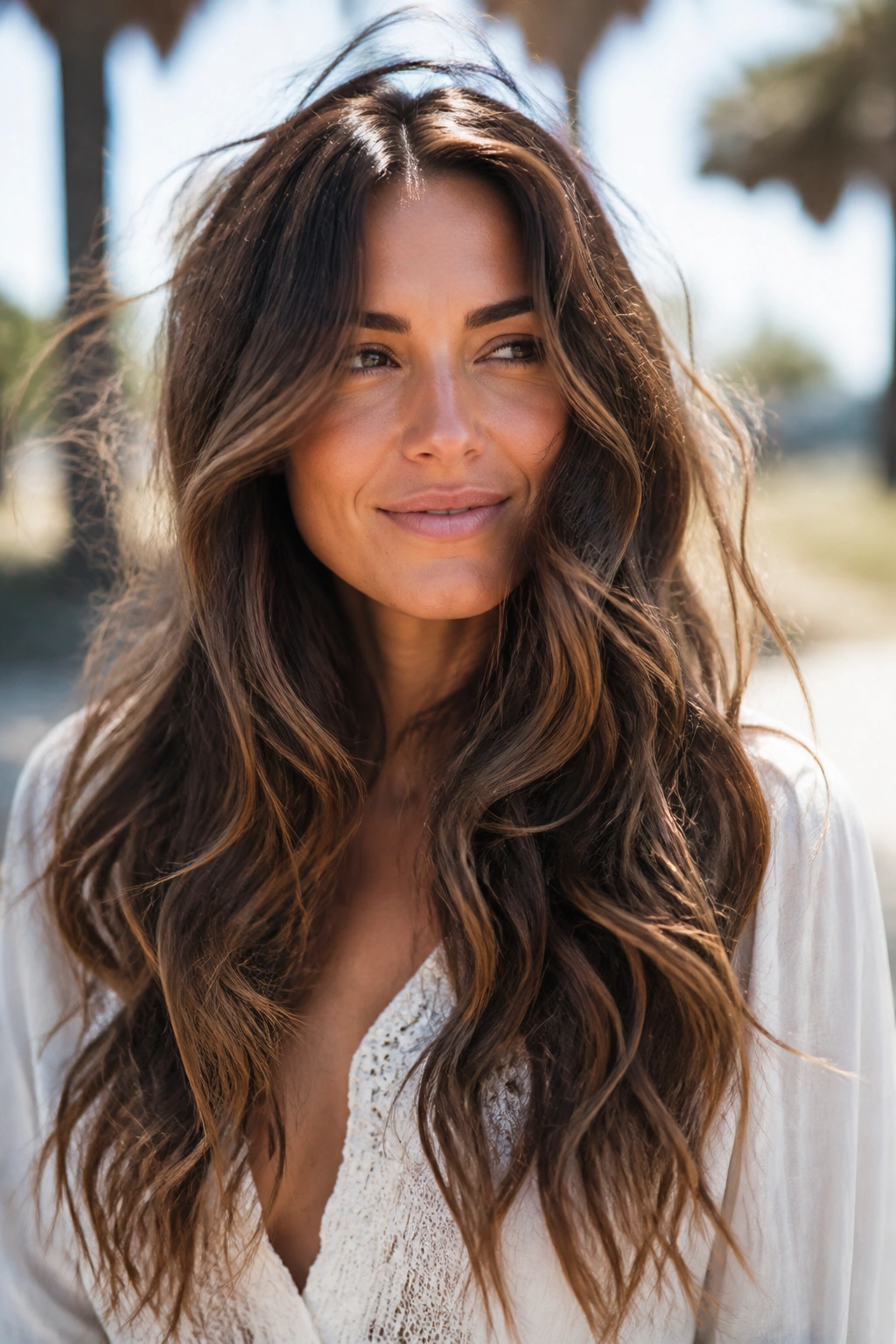
Some layered cuts do not look like much until you wave them. This is one of them. Long layers give boho waves their shape, and thick hair gives those waves the body they need to last.
The trick is not making every wave identical. You want a little looseness, a little variation in size, and a cut that lets the bends fall over each other instead of stacking into one dense lump. Long layers help break up the mass so the waves can actually move.
A 1.25-inch to 1.5-inch curling iron is usually enough. Alternate directions through the mid-lengths, leave the ends a touch straighter, then rake the waves apart with your fingers once they cool. A mist of lightweight hairspray helps, but heavy spray can make thick hair feel sticky and dull.
This style is especially good when you want length to show, not disappear into bulk. The waves keep it feminine and relaxed. The layers keep it from looking like one giant sheet of hair.
17. Glossy Straight Layers
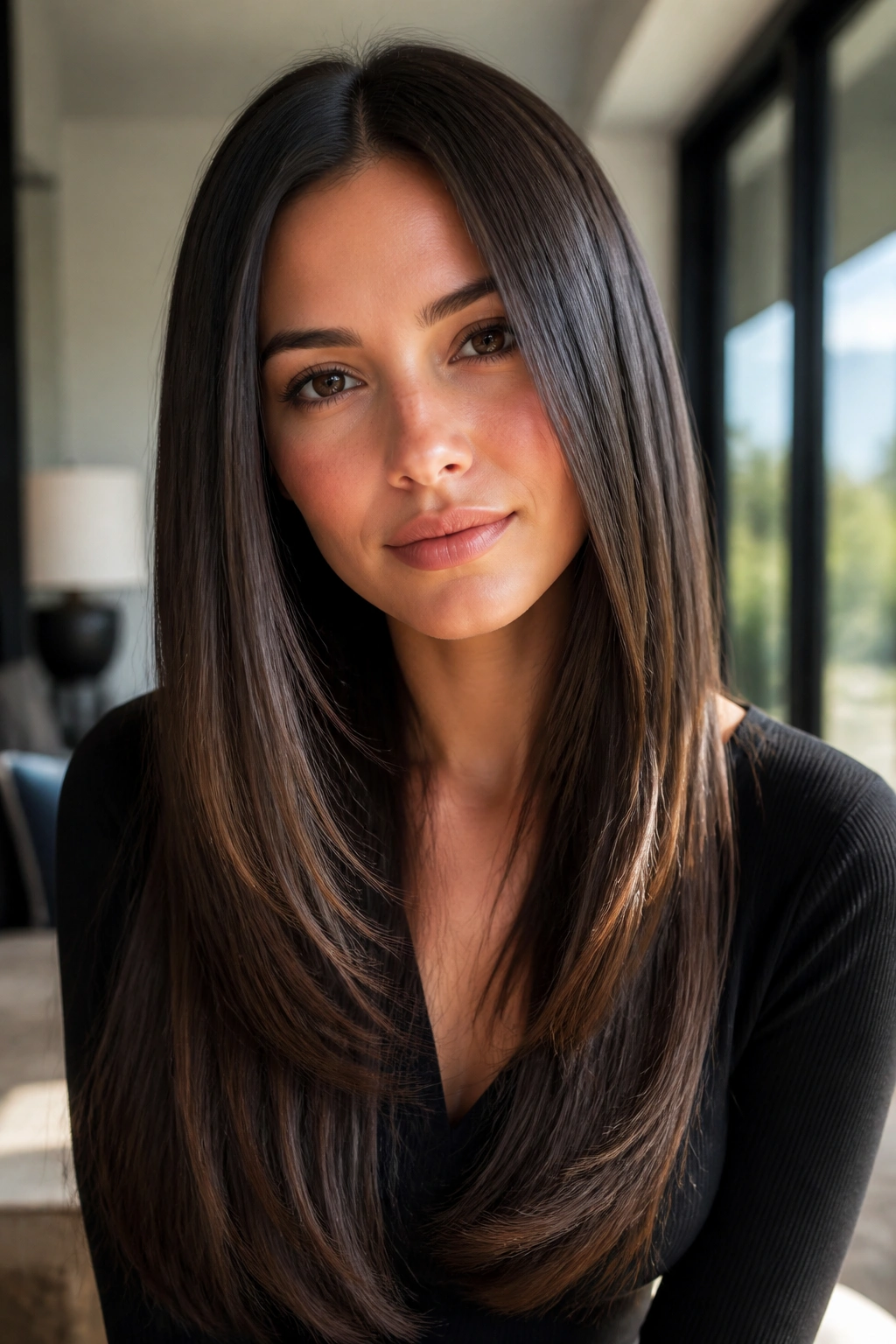
Straight hair on a thick head of hair can look stunning, but only if the layers are placed with care. Too many steps and the cut looks busy. Too few and it turns into a heavy rectangle. The sweet spot is a clean, glossy shape with just enough movement to keep the ends from feeling frozen in place.
This style is all about the finish. A careful blow-dry, a heat protectant, and a little serum at the mids and ends can make the layers read as sleek instead of choppy. The haircut should look almost quiet when it’s done right. That’s not boring. That’s discipline.
A lot of people think thick hair needs obvious texture to look modern. Not true. Sometimes the smartest move is a subtle layered cut with a smooth surface, especially if you wear tailored clothes or like a polished feel. The layers are there to remove weight, but they do it without screaming for attention.
If your hair gets frizzy at the ends, use a flat iron only where needed and keep the heat moderate. Thick hair can handle a fair amount, but the ends still remember.
18. A Layered Ponytail-Friendly Cut

Do you wear your hair up most days? Then the best layers are the ones that still look good when the hair leaves your shoulders. That means no awkward short pieces that stick out of a ponytail like little tails, and no face frame so short it won’t cooperate with clips or scrunchies.
A ponytail-friendly cut usually keeps the longest layers below the shoulder blade while placing just enough shape around the face and crown to stop the style from feeling flat. Thick hair benefits a lot here because the ponytail can turn heavy fast. Layers make the base easier to wrap, easier to secure, and less bulky at the elastic.
The smart move is to test the shape in both down and up styles. If you love a high ponytail, ask your stylist to keep the crown layers longer. If you wear low buns, you can go a little shorter around the front. Small choices like that save you from daily annoyance.
This is practical hair, and I mean that as a compliment. It looks good down, but it also behaves when life gets busy.
19. Chin-to-Collarbone Graduated Layers
Graduated layers create a steady step from the chin down to the collarbone and into the lengths, which is especially useful on thick hair that needs direction without a huge haircut overhaul.
The shape gives the eye a path to follow. Instead of hair dropping in a straight block, it eases down through the face frame and mid-lengths, which makes the whole style feel lighter. The graduation also helps if you’re growing out an older cut and want the transition to look intentional instead of awkward.
- The shortest visible layers usually land near the chin.
- The main weight line should still sit lower, around the collarbone or chest.
- It works well with both straight and wavy styling.
- The shape grows out cleanly, which matters if you don’t go to the salon often.
This is one of the safest ways to add movement without losing too much length. Safe sounds boring. It isn’t, not when you’ve spent years growing your hair and do not want to start over because of one overenthusiastic haircut.
20. Deep Side-Part Glam Layers
A deep side part can make thick hair look instantly fuller at the roots and softer through the lengths. Pair it with layers that sweep across the face, and you get a glamorous shape that feels deliberate without being stiff.
This style has a nice contrast. One side gets lifted, the other side falls heavier, and the layers connect the two so the whole haircut feels balanced. Thick hair handles this kind of asymmetry well because it has enough density to keep the look from going limp halfway through the day.
I reach for this shape when someone wants drama but not a full cut change. The part alone changes the mood. Add layers that support the sweep, and you get something that works with a blowout, soft waves, or a pinned-back side for evening.
It also helps when your hair has one side that behaves better than the other. We all have one. The side part lets you work with that quirk instead of wrestling it into submission.
21. Mermaid Waves with Long Disconnected Layers
Mermaid waves need space to breathe, and that is where long disconnected layers earn their keep. The haircut keeps the length luxurious, but the layers are separated enough to let the wave pattern show instead of collapsing into one heavy mass.
This style looks best when the waves are loose, glossy, and slightly irregular. Think long ribbons, not tight curls. Thick hair holds this texture well, which is the main reason it looks so good on it. There’s enough body to keep the wave from dropping too fast, but the layers stop the style from becoming a solid wall.
A 1.25-inch iron usually gives enough bend. Wrap sections away from the face, leave the last inch or two out if you want the ends to look soft, then brush everything out lightly with a wide brush or your fingers. Too much brushing turns the look into fluff. Not enough leaves it too set.
This is the kind of style that makes long hair feel cinematic without demanding a full glam routine. That’s a useful trade.
22. Low-Maintenance Long Layers with Minimal Face Framing
If you want the easiest version of long layered hair, keep the framing subtle and let the rest of the shape do the work. This cut keeps most of the weight in the length while adding only enough movement to stop thick hair from looking blocky.
That sounds plain because it is plain. Plain works. Especially when your hair is already doing a lot. The best low-maintenance layered styles are the ones that still look good when you air-dry, braid your hair, sleep on it, and brush it out the next morning without a whole production.
Ask for long layers that start below the shoulders, with just a small face frame around the cheek or jaw. That gives you shape without a high-maintenance grow-out. It also means you can go longer between trims without the cut falling apart.
For a lot of people, this is the haircut that actually sticks. Not because it’s the flashiest one in the room, but because it keeps long thick hair feeling like hair again instead of a full-time project.
