



Thick hair can be a blessing and a headache in the same breath. In the wrong cut, it sits heavy at the ends, balloons at the sides, and refuses to move. The right long layered haircuts for thick hair do the opposite: they keep the length, take weight out of the right places, and make the shape look clean without turning it wispy.
That balance matters more than people think. With thick hair, a blunt one-length cut can look gorgeous for about ten minutes, then the bottom starts to feel like a shelf. Layers fix that, but only when they’re placed with care. Too many short layers and the haircut puffs up. Too much thinning and the ends start to look dry, even when they aren’t.
I’ve always preferred layers that work with the hair’s natural bulk instead of fighting it. A good layered cut should move when you turn your head. It should still look full when you tuck it behind one ear. And it should grow out in a way that doesn’t make you book another appointment the second the outline softens.
The styles below do that in different ways. Some are soft and face-framing. Some are sharper and more sculpted. A few are better for waves, a few for straight hair, and a few for anyone who wants thick hair to feel lighter without losing the length they worked to grow.
1. Long Face-Framing Layers That Start at the Cheekbones

These are the layers I reach for when someone wants movement without losing that long, glossy curtain of hair. The cut starts high enough to open up the face, but not so high that the whole shape turns fluffy. On thick hair, that sweet spot matters. A cheekbone start keeps the front light while the back still looks full.
Why They Work So Well
The longest pieces stay below the shoulders, which keeps the haircut from feeling chopped up. The shorter front sections soften a strong jaw, narrow a wide forehead, and give straight thick hair a little bend around the face. That’s the part people notice first anyway.
- Ask for the shortest face-framing piece to hit around the cheekbone or just below it.
- Keep the rest of the layers long so the ends don’t fray into pieces.
- Style with a round brush only on the front sections if you want a quick finish.
My favorite part: this shape grows out gracefully. You can wait a little longer between trims and still look polished.
2. Butterfly Layers With a Lifted Crown

Why does this cut look so different on thick hair? Because it gives the illusion of short hair around the crown while keeping the length intact underneath. That top section lifts the hair away from the head, which is a small miracle if your roots flatten easily. The long bottom layer keeps the haircut from losing its drama.
The butterfly cut has a lot of range. With thick hair, it can look soft and airy or big and blown out, depending on how you dry it. The trick is to keep the upper layers long enough that they fold into the rest of the hair instead of sitting on top like separate pieces.
How to Ask for It
Tell your stylist you want shorter crown layers that blend into long lengths. Ask them not to over-thin the ends. You want lift, not gaps.
If you like a round brush blowout, this shape is a dream. If you air-dry, it still works, but the upper layers need a little encouragement from a mousse or light styling cream.
3. The U-Shaped Cut for Soft Ends and Full Length
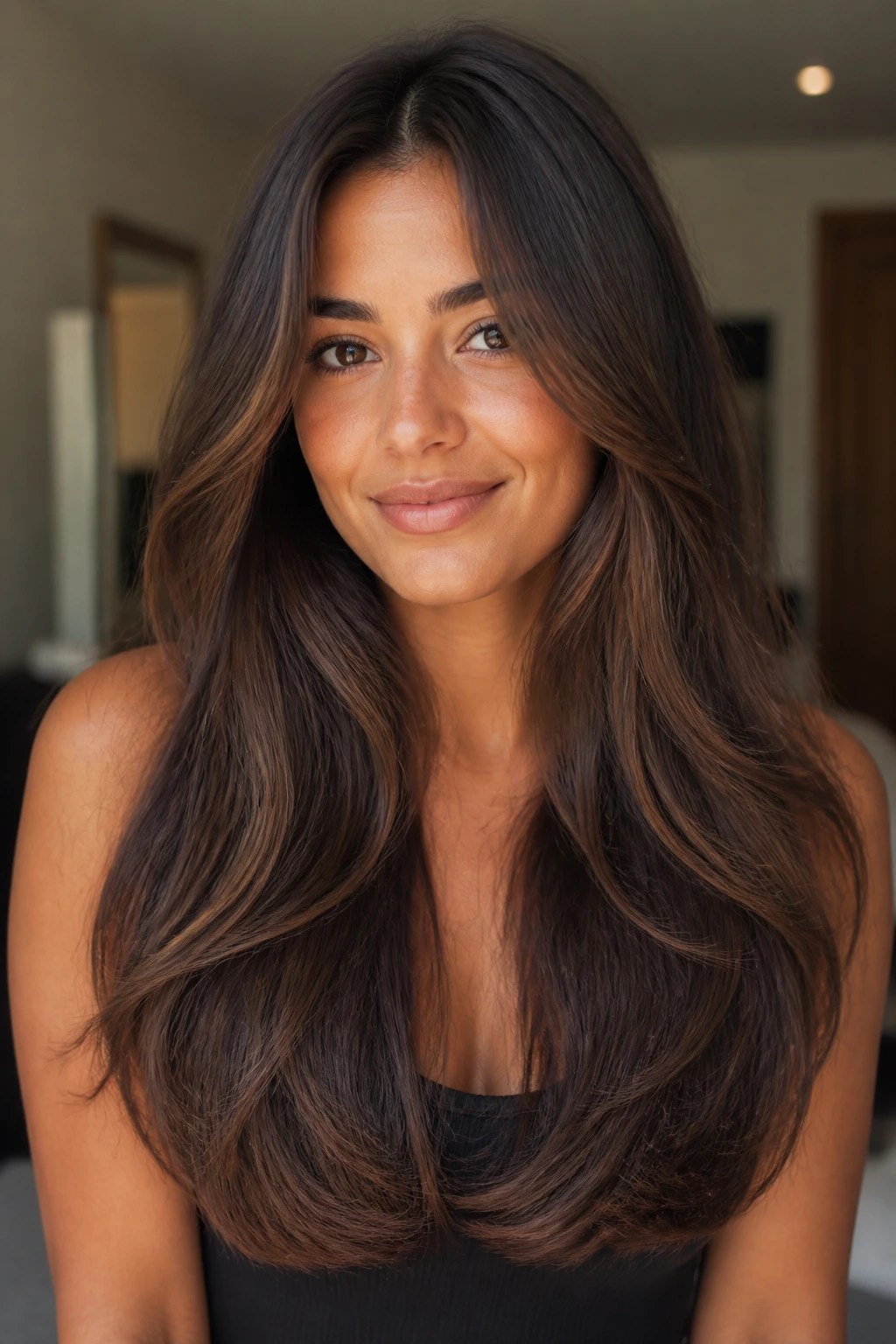
A U-shaped layered cut is a quiet fix for heavy hair. From the back, the hemline curves softly instead of cutting straight across, so the ends look fuller and less boxy. Thick hair loves that curve. It keeps the perimeter soft and makes the whole cut feel smoother when it falls over the shoulders.
This one is especially useful if your hair is very dense through the lower half. Straight across ends can make that density feel blunt in a way that’s more helmet than style. A U shape eases that off without stripping away volume.
Where It Helps Most
- Thick, straight hair that hangs heavy at the bottom.
- Long hair that feels bulky when pulled into a half-up style.
- Anyone who wants layers, but not a choppy finish.
A U shape also plays nicely with loose waves. The curved edge gives the wave pattern something better to sit on, so the hair looks softer from every angle. And no, it does not need to be dramatic to matter. Even a subtle U can make the whole cut feel lighter.
4. V-Cut Layers for a Stronger Silhouette
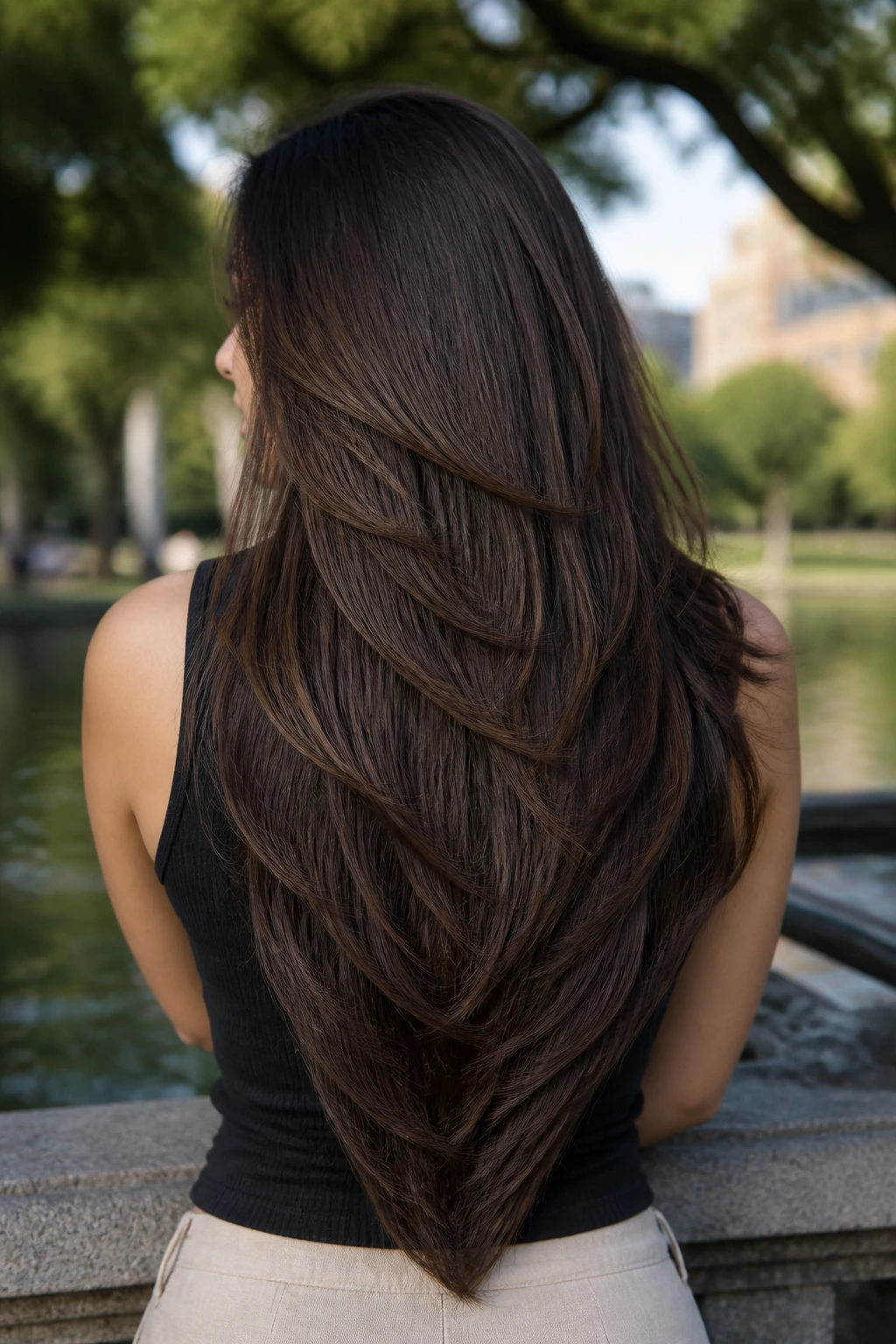
The V-cut is sharper than a U-cut, and that’s the point. The center back drops lower, while the sides taper up. On thick hair, that creates a long, lean line that keeps the length looking intentional instead of heavy. It’s especially good if your hair tends to spread wide at the bottom.
I like this shape for people who wear their hair down often. It looks polished with minimal styling because the outline already does a lot of the work. The layers help the sides fall away from the face, so the whole cut feels slimmer from the front and more dramatic from behind.
The catch? You need enough density to support it. Fine hair can go stringy in a V shape. Thick hair, though, holds the structure beautifully. If your ends are healthy and you want a stronger profile, this cut has real presence.
5. Soft Cascading Layers From Mid-Length Down

Some cuts shout. This one doesn’t. It takes the weight out of the lower half of thick hair by starting the layers around the mid-lengths, then letting them fall in a gentle cascade. The result is movement that feels relaxed rather than obviously chopped.
That matters if you like your hair to look long first and layered second. The shape stays readable from a distance, but up close you get the shift in length that keeps thick hair from sitting like one giant curtain. The layers also help when you curl the hair, because each bend lands on a different level and the style gets depth without needing a ton of product.
This is a good option if you hate the look of short pieces around your face. The whole haircut feels softer, more blended, and a little more grown-out in the best way. It’s the sort of cut that looks better the second day, which I always count as a point in its favor.
6. Long Shag Layers With Airy Movement
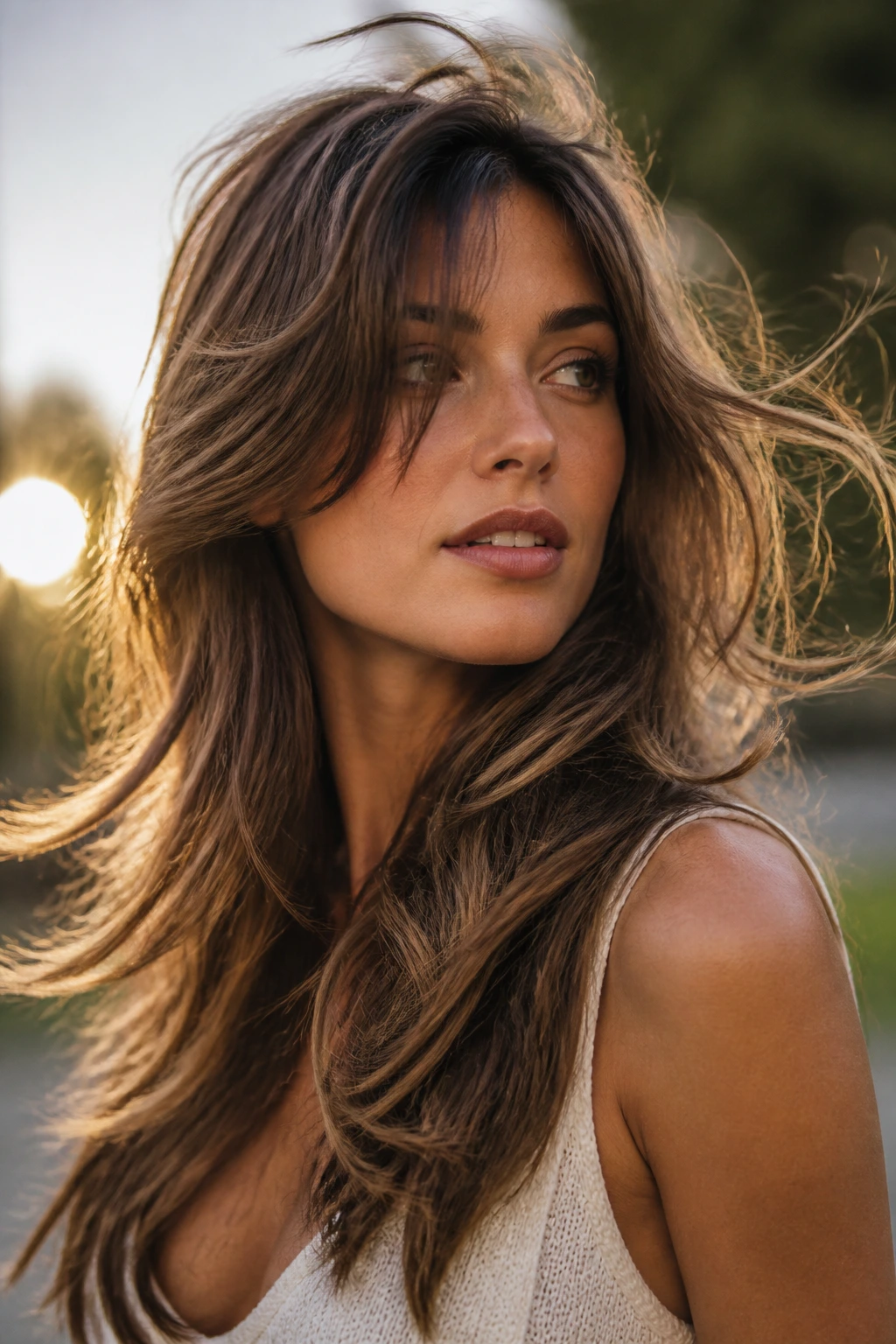
Long shag layers are for thick hair that needs attitude. Not mess. Attitude. The shape usually includes a lifted crown, broken-up mids, and face-framing pieces that don’t all land at the same point. That unevenness is what gives the cut its swing.
Why does it work on dense hair? Because the shag removes bulk in pockets instead of chopping off a huge block of length. You keep the body, but you lose the heaviness that makes thick hair look flat at the roots and puffy at the bottom. It’s also one of the better cuts for people who like a lived-in finish.
How to Wear It
A little salt spray or mousse goes a long way here. Rough dry the roots, then twist a few sections around your fingers for shape.
- Ask for long, broken layers rather than short, jagged ones.
- Keep the face frame soft so the cut does not turn too retro.
- Avoid heavy oils near the crown; they flatten the lift fast.
This is not the neatest cut on the list. It’s one of the most forgiving, though.
7. Invisible Internal Layers That Remove Bulk Without Looking Choppy

Run your fingers through this kind of cut and you can feel the difference before you can see it. The outside still looks long and smooth, but the inside has been relieved of some of its weight. That’s what makes internal layers so useful on thick hair. They take out bulk where it counts without advertising every cut line.
The Quiet Magic of Hidden Layers
A stylist usually works these layers deeper in the haircut, often around the middle and lower sections. The top stays intact, so the surface keeps its gloss. The ends stop feeling like a solid slab, and the hair swings more easily when you walk.
This is a smart choice if you wear your hair straight most of the time. It keeps the finish sleek, which is hard to do when the hair is dense all the way through.
- Best for people who want movement without obvious steps.
- Great when you need the hair to dry faster.
- Helps thick hair sit closer to the head instead of fanning out.
A lot of people ask for “just a trim” when what they really want is less bulk. This is the cut that solves that quietly.
8. Curtain Bangs Paired With Long Layers
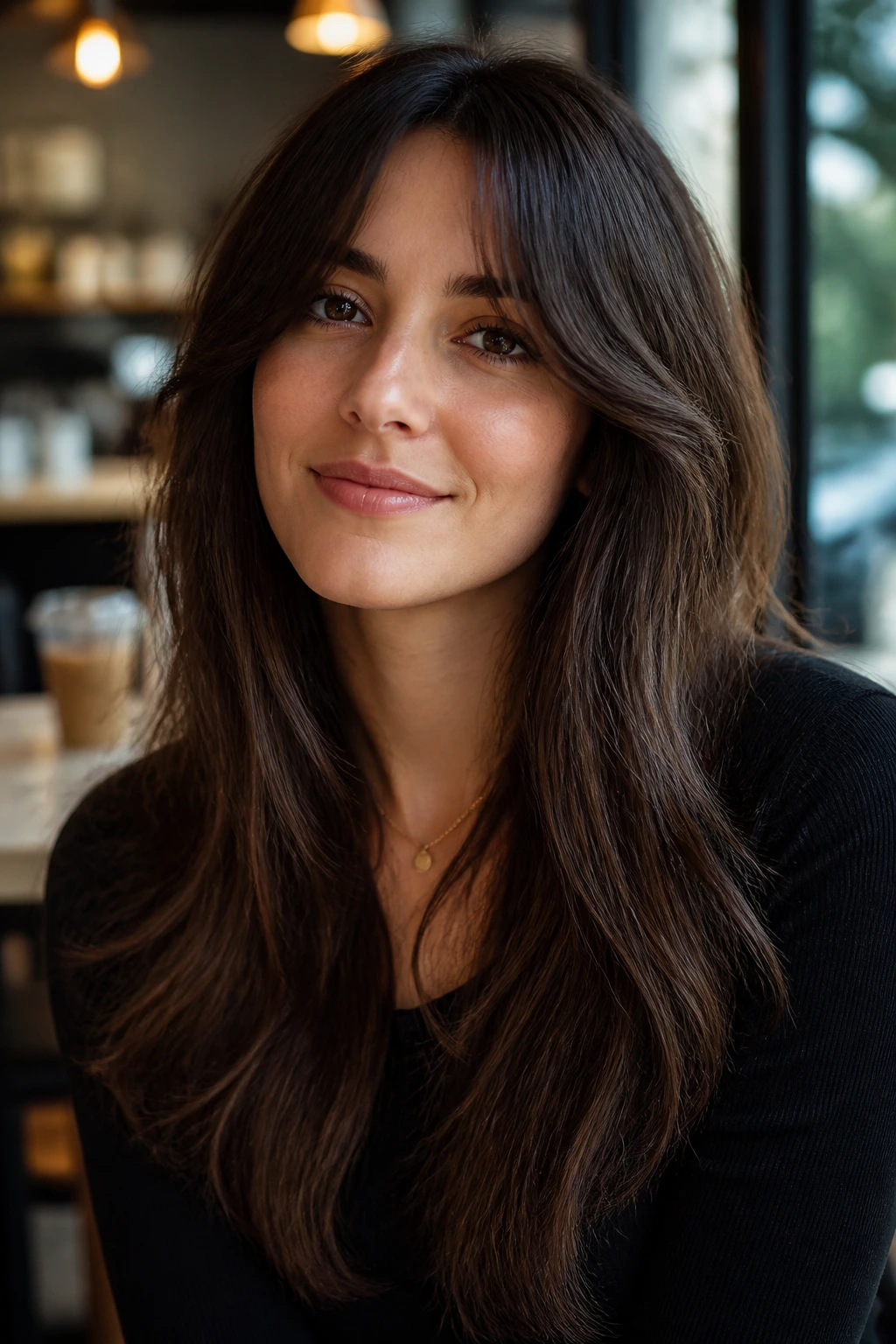
Curtain bangs can change the feel of a haircut fast. On thick hair, they break up all that length around the face and make the style feel lighter without giving up the long silhouette. The best version starts somewhere near the cheekbones and opens toward the jaw, so the fringe blends into the layers instead of sitting on top of them.
This cut works because it gives the eye a place to rest. Thick hair can sometimes read as a single wall of color and texture. Curtain bangs interrupt that in a soft, flattering way. They also give you options. Wear them centered, split slightly off-center, or tucked back on a rushed morning.
The one thing I’d say is this: don’t let the bangs get too short if your hair is very dense. Short fringe on thick hair can swell up and need more daily styling than you probably want. Keep them long enough to sweep.
9. Rounded Layers for Big, Bouncy Volume
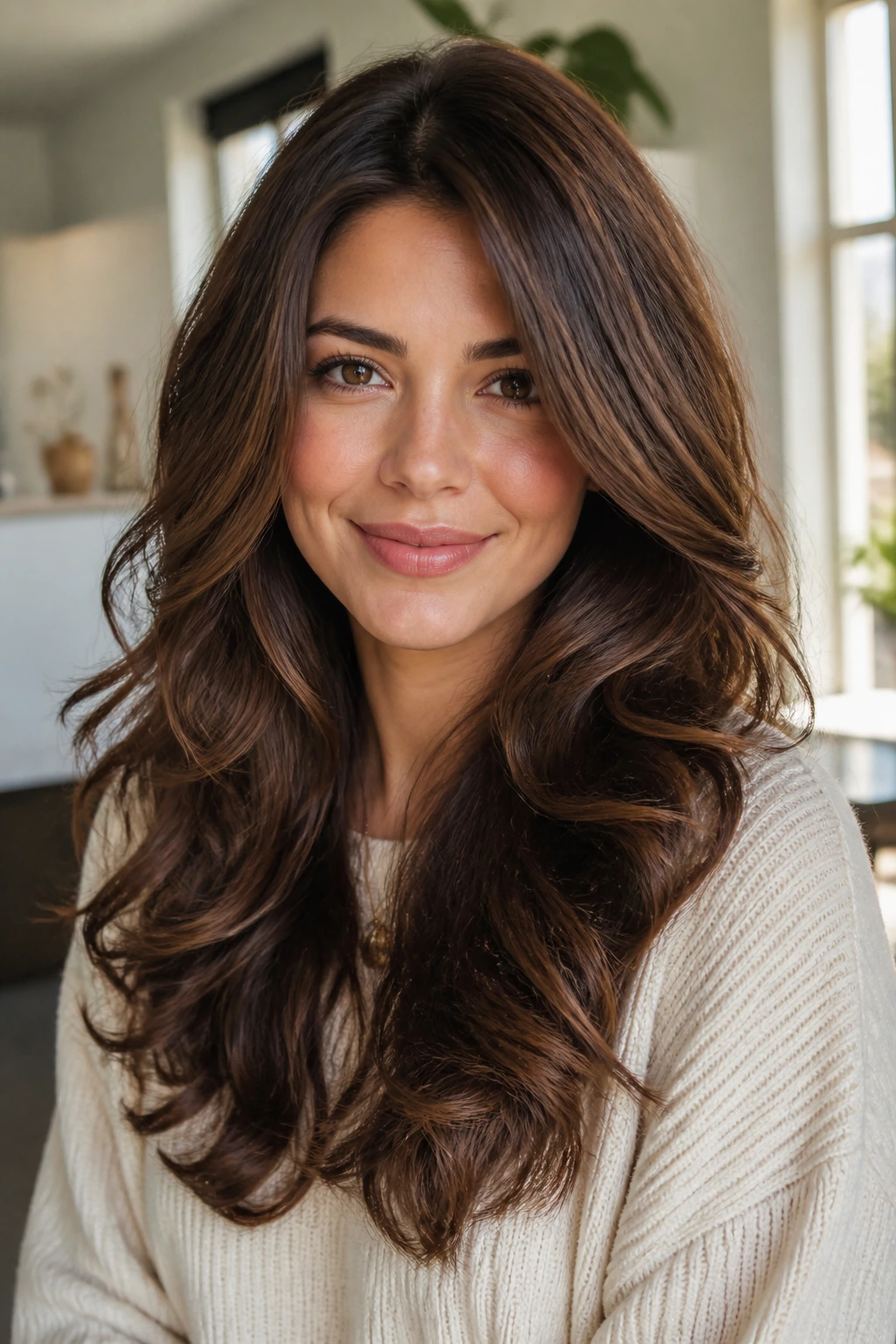
If your thick hair goes flat at the top but poofs at the bottom, a rounded layered shape can help balance the whole head. The cut follows the natural curve of the skull and then softens through the lengths, so the silhouette looks full in a deliberate way rather than bottom-heavy.
This is a very flattering cut for people who like body. Not frizz. Body. There’s a difference. Rounded layers give the ends enough lift to turn inward or outward when you blow-dry, which makes thick hair look lively instead of stiff.
A round brush brings this haircut to life, but you do not need a salon blowout every day. Even a quick dry with a paddle brush can show the shape. The important part is that the layers are graduated smoothly, not hacked in. If they’re too short or too disconnected, the round outline turns into puff.
10. Long Layers With Blunt Ends for Extra Density
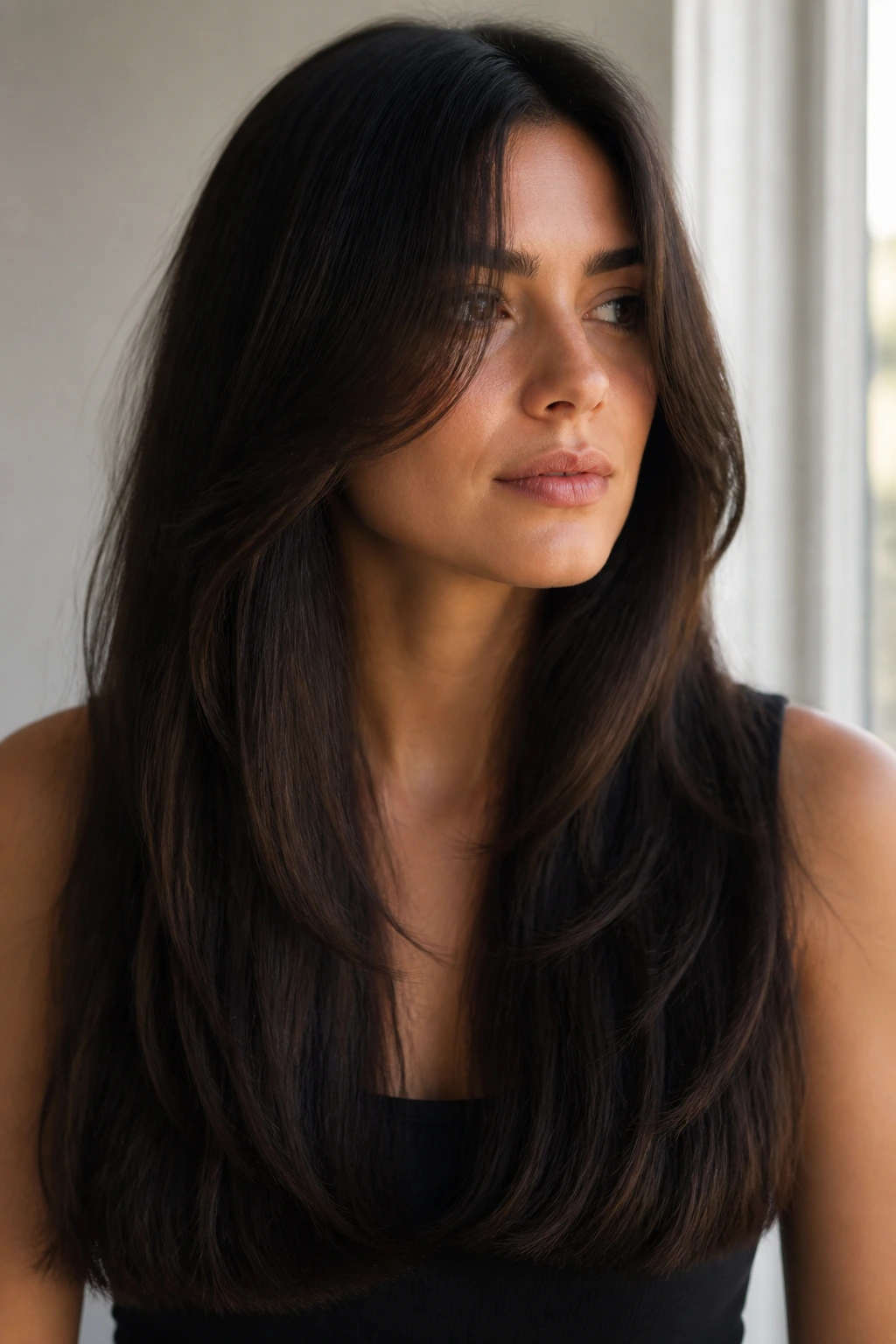
This cut is for people who want movement but refuse to give up that thick, solid hemline. The top and middle get layered, while the ends stay blunt enough to look full. It’s a smart compromise, and honestly, one of the easiest ways to keep long hair looking expensive without making it look thin at the bottom.
Unlike heavily feathered cuts, this one keeps the lower edge strong. That matters if your hair naturally loses density as it gets longer. The layers give shape. The blunt ends hold the weight.
It also photographs well in real life, not in the fake shiny way people talk about. The line at the bottom is crisp, the movement sits above it, and the hair still reads as thick from a distance. If your hair is coarse or expands in humidity, this shape tends to behave better than super-soft ends.
11. Waterfall Layers That Blend the Length

Waterfall layers have a softer fall than a standard step cut. The shorter pieces dissolve into the longer ones, so the eye moves down the hair in a smooth line. On thick hair, that blending keeps the haircut from feeling sliced apart.
Does that mean it looks subtle? Yes, and that’s the point. Some people want layers that announce themselves. Others want hair that just looks easier. Waterfall layers belong to the second group. They’re especially nice if you wear your hair loose most of the time and want shape without too much edge.
The best way to ask for this cut is to mention soft blending from the cheekbone through the mid-lengths. A good stylist will know that the goal is movement, not visible steps. If your hair is wavy, this cut can be especially pretty because the bends stack in a loose, flowing way that feels natural.
12. Collarbone-Grazing Front Pieces With Long Back Layers
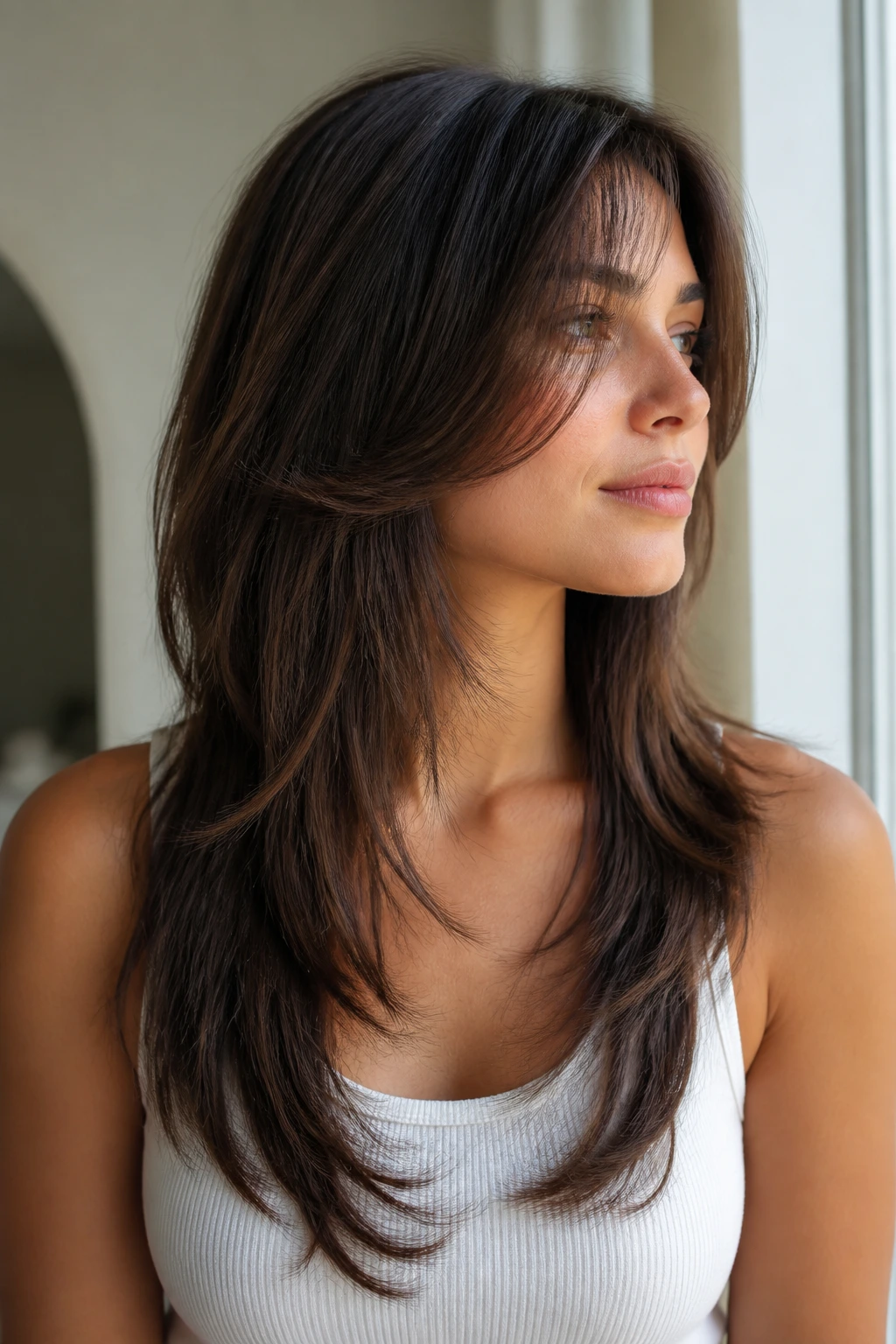
This is a face-changing cut. The front pieces land around the collarbone, which gives thick hair a little swing right where it frames the neck and jaw. The back stays long, so you still get the length you wanted, but the silhouette feels lighter around the front.
I like this shape for hair that feels too heavy when it’s all one length. The collarbone length in front softens the line of the haircut and makes even a plain center part look more finished. It also behaves nicely in a loose ponytail, which matters more than people admit. A cut can be pretty and still be annoying in daily life. This one usually isn’t.
Styling Notes That Matter
A medium round brush gives the front pieces a soft bend. If you air-dry, tuck them behind the ears while they’re damp to keep the shape open.
The back should not be over-layered. Keep it long and smooth so the contrast reads as shape, not as a disconnected haircut. That’s the difference between chic and accidental.
13. Razor-Softened Layers for Thick, Straight Hair

A razor cut can be a mess on the wrong head of hair. On thick, straight hair with healthy ends, though, it can create a cleaner fall than scissors alone. The blade softly removes weight from the edges, which helps the layers move instead of sitting in a stiff block.
What to Ask For
- Use a razor only on strong, dense, healthy hair.
- Keep the blade work light near the ends.
- Ask for long, feathered pieces rather than shredded texture.
- Skip this if your hair frays easily or already feels dry.
That last point matters. Razor cutting on brittle ends can make them look tired fast. But when the hair is in good shape, the result is airy and soft, with a little swing through the lower half.
I especially like this on naturally straight hair that resists curl. A razor can make the ends turn just enough to keep the shape from hanging flat. It is not the safest choice for everyone. It is a very good choice for the right hair.
14. Curly or Wavy Long Layers That Keep the Shape Intact

Thick hair with wave or curl needs a different kind of layering. Cut it the wrong way and you get frizz, pyramid shape, or odd shelves that never quite blend. Cut it well and the curls spring into shape, with enough room to stack without fighting each other.
The best long layered haircuts for thick hair with texture are often cut in a way that respects the pattern first. That usually means longer layers, fewer harsh lines, and a shape that follows how the hair actually falls when it dries. Dry cutting can help here, since wet curls often lie and then surprise everyone later.
If your waves form loose S-shapes, ask for layers that start lower. If your curls are tighter and shrink a lot, keep the shortest layers long enough to avoid a halo effect. That part is easy to get wrong.
A good textured layered cut should make your hair look fuller in a clean way, not bigger in a frizzy way. Big difference.
15. Choppy Long Layers for Natural, Piecey Texture

Choppy layers are a little more casual than the soft blended cuts above. They create visible movement and a touch of separation through the ends, which can be great on thick hair if you like a lived-in finish. The style gives the haircut some bite.
This cut works especially well when your hair has natural wave or when you wear it with a bit of texture spray. The pieces don’t all sit in one smooth sheet, so the shape feels modern and easy rather than formal. It also helps thick hair avoid that “all one mass” look that can happen when the layers are too gentle.
The trick is restraint. Choppy does not mean hacked up. The shortest pieces still need to connect to the rest of the cut. If they’re too disconnected, you’ll spend your mornings trying to make them behave. And no one needs that.
This is a good option if you like your hair to look a little undone on purpose.
16. Long Layers Cut to Sit Well in a Ponytail
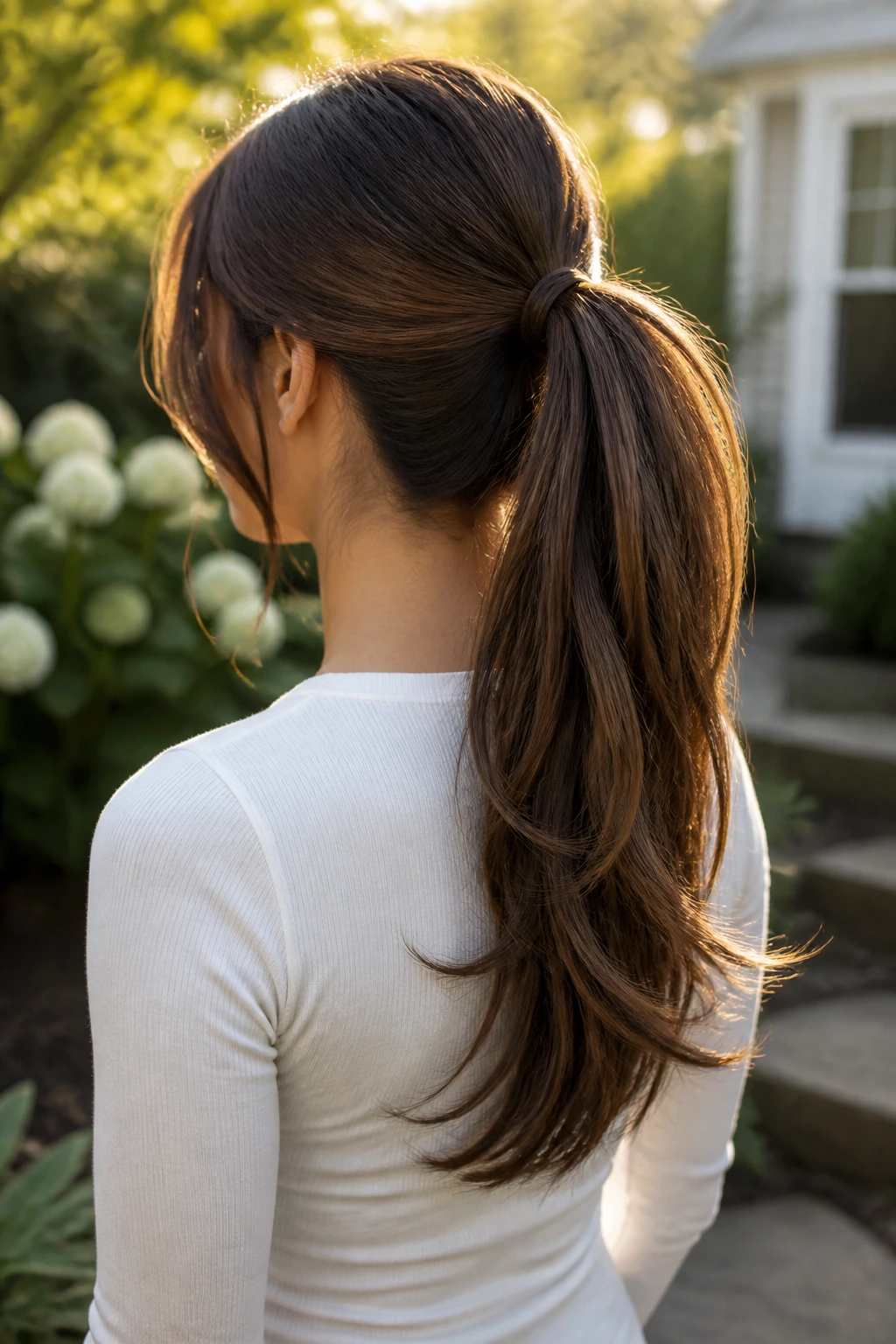
A lot of layered cuts look great down and irritating up. This one tries to solve that problem. The layers are placed so they still frame the face when your hair is loose, but they do not fall apart the second you pull the hair into a ponytail or clip.
That makes a real difference if you wear your hair tied back most days. Thick hair can feel heavy at the nape, and badly placed layers can create short pieces that stick out in every direction. A ponytail-friendly cut keeps the shortest layers long enough to stay tucked in with the rest of the hair.
The Practical Bit
- Keep face-framing pieces at least collarbone length.
- Avoid a very short crown layer if you want a tidy updo.
- Ask for softness around the front, not gaps through the top.
This is the haircut for people who live in their hair, not just style it once in a while. It’s neat, flexible, and far less annoying than a pretty cut that falls apart the minute you pick up a hair tie.
17. Long Layers With a Deep Side Part

A deep side part changes the whole shape of thick hair. It adds lift at the roots, sweeps one side across the forehead, and gives layered lengths a sense of movement without needing a dramatic chop. Pair it with long layers and the result feels fuller at the crown and softer around the face.
I like this one for straight or wavy hair that falls flat in the center. A side part creates instant asymmetry, which keeps thick hair from looking too square. It also makes the layers show up more clearly, especially around the cheek and jaw.
The part itself needs a little thought. Go too deep and the hair can collapse on one side. Not deep enough and you lose the effect. Somewhere around the outer arch of the eyebrow is a strong place to start, then adjust a half inch either way.
This cut is a small change with a big visual payoff. That’s usually the kind I trust.
18. Long Feathered Layers With Soft, Flicked Ends
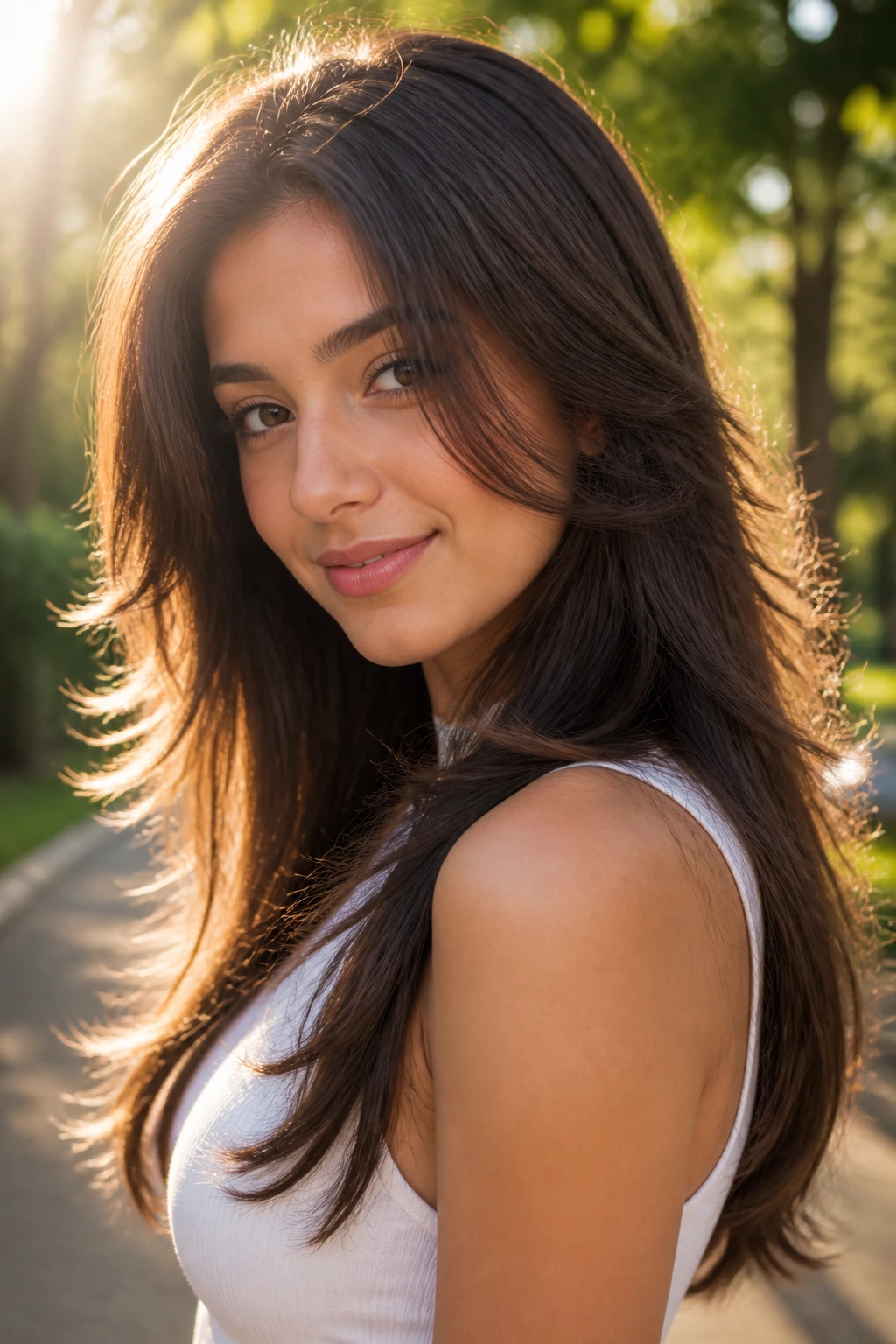
Feathered layers are the graceful cousin of a choppier cut. The ends are softened so they flick away from the face and shoulders instead of sitting in blunt, heavy lines. On thick hair, that feathering keeps the length from feeling like a solid block while still preserving a lot of body.
This is the cut I’d point to for someone who wants movement but hates obvious layering. The layers should blend enough that the haircut looks smooth from a distance, then open up when you move. It’s especially good if you like a blow-dried finish with a little bend at the ends.
A soft feathered shape also makes thick hair easier to live with on rushed mornings. You can air-dry it, clip the front pieces back while you get ready, or add a loose bend with a large barrel brush. It still looks like you made an effort. Not too much. Enough.
If I had to choose one shape for thick hair that needs polish without fuss, this would be high on the list.
